Category: Philosophy

  • Karl Popper and the fireplace poker

    Karl Popper and the fireplace poker

    The two great philosophers Ludwig Wittgenstein and Karl Popper – who both had a rap of abusive discussion style met only once: on the 25th October 1946.  The meeting in a crowded classroom in Cambridge went bad. Legends formed rapidly to their loud and aggressive confrontation, Wittgenstein supposedly used a red-hot fireplace poker to emphasize his points, gesturing with it as also the argument grew more heated.

    Wittgenstein claims: In philosophy, there are no real problems, the language feigns them for us. Philosophical problems are only fake problems. Only mathematical, science or logical problems can be solved. Wittgenstein opened with the common language term “missed team spirit”. He explained that this term does not mean, that there is a being with this name. So before philosophizing one has to clarify bewitched language, has to exercise language critic in order to clarify what problem is worth to think about.

    Popper disagrees: In philosophy, there are real problems,  the  language is not the problem. In his view there valid physical problems exit and presented a prepared list of philosophical problems which can be solved through rational thinking:

    • The problem if we can know things by senses or by thinking. Reply: this is not a philosophical but logical problem.
    • The problem of the infinite. Wittgenstein replied that is a mathematical problem
    • The problem of moral problem principles. Wittgenstein replied – name one.  Popper was only mildly impressed and replied with an explanation of his moral principles: “you should not threaten scholars with a poker when they are guest lectures.”

    What happened really? Who were these two great philosophers? What was the point?. The majority of the philosophers in the  20th century followed Wittgenstein. How is it in the 21st century?

    Popper tried to determine how we can ascribe truth to the claims made by science, religion and politics. Karl Popper has criticized Hegel’s dialectic, Marx, Freudian psychoanalysis and Wittgenstein’s Tractatus as re-inforced dogmatism. He also argued,that scientific theories can never be proved to be true, but are tested by attempts to falsify them. Attempts to present theories such as Marxism,  Freudian psychology and Astrology as scientific are subjected by Popper to his own analysis of falsificationism, and fail the test.

    Wittgenstein’s relationship with science, religion and psychoanalysis is ambivalent.  For example, to him Sigmund Freud succeeded to merge the semantic and empirical level in his theory so successfully, that still many think of him as a great scientist. Wittgenstein declined the psychoanalysis as a theory of the human psyche in the fiercest form as unscientific and dangerous. “What says Freud about the unconscious”, Wittgenstein blasted once in a lecture, “sounds like science, but actually it’s just a means of representation to persuade the reader or the patients and to accept a specific image”.

    Popper was not member of the Vienna Circle, that group of logical positivists who, following on from the work of Wittgenstein (i.e.Tractatus) aimed at the unification of the sciences and the wholesale rejection of metaphysics. Popper’s antipathy to Wittgenstein meant of course, that he was not invited – although Wittgenstein was not a neo-positivist either.

    Popper took a stand against an empiricist view of science, endeavouring  falsificationism. The key difference between Popper and the Logical Positivists is that their division was between science and nonsense, in that a non-scientific statement was of no value, whereas Popper’s was between science and non-science, in that a non-scientific statement had a value, just not a scientific one. Popper seems to have been a radical inductionist. Only conclusions based on induction and therefore subject to falsification – for instance the arrival of a black swan to contradict the conclusion that all swans are white – have any validity. The best we can hope for is not truth but more or less useable correlations. For Popper a theory is an ideology if it is based as it is on deductive logic generalizing the empirical evidence.

    It is perhaps worth noting that Popper’s own doctorate was in psychology. Popper’s had, as Wittgenstein a distaste for the psychological models of Freud’s for different reasons, in particular for attempts to present psychology as a science. Popper pointed out, psychological theories are unfalsifiable in principle.

    Each generation got their own problems, and in Europe we have plenty of real ones. With regard to analytic philosophy, it has undergone a very good transformation keeping the treasure of  Wittgenstein’s language critics without getting too much back into the puzzle-solving mode. It gave way to a ‘ general language philosophy’, whereby here the emphasis on must be “language”, which shares its theme with the linguistics and in some other philosophy branch which looks and feels more than sociology than philosophy. To make it short: I think that in this century a synthesis born between philosophy and natural sciences will leave both areas transformed – naturally the philosophy more than the natural sciences. In the moment I see (as an layman) in French and German philosophy more sociology than philosophy. This was a value statement.

  • Wittgenstein meets C.G. Jung

    Wittgenstein meets C.G. Jung

    Wittgenstein and C.G. Jung will be in this essay in a highly subjective and indirect way connected to C.G. Jung. I  stumbled recently over the connection between Sigmund Freud and the very innovative Ludwig Wittgenstein, an Austrian-born philosopher and contemporary of Freud. Wittgenstein’s  ( and C. G. Jung’s) contributions while not in everybody’s mind like Freud’s, are more significant and much more widely still in use today. I have to admit, that I have been only mildly interested in Freud’s theories, which have been discredited from many sides. On the other hand I do regard C.G. Jung’s psychoanalytic theory particularly the collective unconscious and its approach to self-understanding and spirituality as very useful. Most people have heard of C.G. Jung, often linking him vaguely with Sigmund Freud, and although the terms ‘complex’, ‘introvert’, and ‘extrovert’ are often used in everyday speech, few realize that they were coined by him not speaking about major concepts like personality types and collective archetypes.

    C.G. Jung and Wittgenstein never meet, so this intellectual exercise is  based on bibliographic facts, quotes and indirectly by the Jung-Freud-Wittgenstein triangle. The reader should kindly be aware, that even if I know a thing or two about C.G. Jung, I am still learning about Wittgenstein.  Most accounts on Wittgenstein on psychoanalytic methods, philosophy of religion, alchemy (magic) and mystic are either not his own writings but notes of conversations and lectures or interpretation of those. A thesis can be made, that Wittgenstein was closer to C.G. Jung than to Freud in any aspects of this scope and by studying  Wittgenstein’s and Jung’s texts, it is evident that both viewed Freud’s basic concepts as a break-through and starting point but finally dismissed Freud’s psychology, sometimes for the same reasons.

    Jung-Freud-Wittgenstein biographic facts

    C.G. Jung was the son of a protestant pastor in Basel, whereas Wittgenstein and Freud, had both a secular background and shared a very well off bourgeois upbringing. The Wittgenstein’s were large and wealthy family of assimilated Jews origins. No doubt the father Karl Wittgenstein was overwhelming father figure. The and steel magnate made his family fortune within a relatively few years as sizable as the Rothschild’s. Ludwig hat a hard time to give his heritage away In 1914, he donated  the equivalent to today half a million euros) for needy artists (e.g Georg Trakl and Rainer Maria Rilke). He distributed his considerable paternal heritage 1919 to his siblings. Three of his four brothers committed suicide, Rudolf, who was obviously gay, poisoned himself in a Berlin restaurant in melodramatic way, his brother Hans by drowning overseas and Kurt an army officer of the k. u. k., shot himself at the end of the first world war on the collapsed Italian front. The three sisters were more visible and pragmatic. Margaret Stonborough was painted by Klimt (a very famous painting). But the older sisters, Hermine and Helene were after 1938 at risk. Because the Nazis had no access to their foreign capital bunkered in a Swiss foundation, they chose the means of blackmail. In tough negotiations with representatives of the Reichsbank in New York and the Switzerland millions were reclaimed from the Ludwig Wittgenstein, to get his Sisters out. The Nazis certified  the Grandfather Christian promptly “Aryan” descent – to claim  tax money from Switzerland accounts Germans authorities already then went the extra mile.

    In a nutshell  C.G.Jung can be understood best as an “avant-garde conservative” intellectual (Jay Cherry). To the contrary Wittgenstein and Freud were definitely closer to the left spectrum – one might say “salon communists”. The principal historical difference lie partly in Wittgenstein’s sympathy for certain aspects of the left in the 1930s—he is said to have described himself as “a communist, at heart”.  It seems that Wittgenstein believed like C.G. Jung in mystical truths that somehow cannot be expressed meaningfully but that are of the utmost importance.

    Wittgenstein, a very handsome man having considerable success with women, was homosexual. Francis Skinner a friend, collaborator was an alleged longtime lover of Wittgenstein. In 1934, the two made plans to emigrate to the Soviet Union. Throughout his life, Freud experienced competitive feelings in male-female-male triangles (John and Pauline; Wilhelm Fliess and Emma Eckstein ; C.G. Jung and Sabina Spielrein) with a male intimate companion.   It is perhaps ironic that when Sigmund Freud – who lived by the psychoanalytic theory that sexual desire was the prime driver for human beings – found out his young protégé, Carl Jung, was having an extra-marital affair Sabina Spielrein, a 22-year-old Russian who was a patient in the Swiss hospital at which Jung worked, and later became one of his most brilliant students, and committed lover. Sabina Spielrein, seems not the only femal patient with whom C.G. Jung had an relationship, he was a decidedly heterosexual man of impressive stature. Note: that part seems to be a interesting topic for another essay.

    Carl Gustav Jung and Freud interaction

    Carl Gustav Jung and Freud first met in person 1907 and corresponded extensively until 1914, with Freud viewing Jung as protégé and innovative and original heir to psychoanalysis. Jung, however, soon questioned some of the basic tenets of Freudian theory. Freud’s reaction to the defection of Jung, and later that of Alfred Adler, was to close ranks and further guard his theories. C.G. Jung’s view fit nicely to contemporary thinking, that innovative conservatism, which is called for to protect freedom -and- the world environment as well as western heritage. C.G.Jung’s cultural roots were decisively neo-romantic drawn to symbolism and irrationality or at least mystic and he uniquely connected psychology and religion. In politics he questioned democracy and rejected socialism preferring elitism – but certainly not Nietsche’s kind. He criticized also the rationalistic, “disenchanted” view of the world, Freud’s hostility against religions and contradicted him on many theses. More or less, he thought that Freud was to one-dimensional and a product of a special, narrow and bourgeois short overcome period.

    Ludwig Wittgenstein and Freud interaction

    Ludwig Wittgenstein lived in Vienna when Freud was developing psychoanalysis and was in contact with people who were either undergoing treatment or ‘experimenting’ with these new ideas. Wittgenstein, who had delivered a devastating critique of traditional philosophy was a severe critic of Freud’s scientific claims and held a coherently ambivalent view of Freud. Wittgenstein, however, never wrote a paper on Freud or on Psychoanalysis. Everything that we know about, so his criticisms on Freudian psychoanalysis has been either passed on to us through third party, who carefully some conversations with Wittgenstein on the subject (see “Conversations on Freud” in Lectures and Conversations on Aesthetics, Psychology and Religious Belief), or through some minor remarks made by Wittgenstein himself in his writings. Freud’s objectivity seems sometimes to function as a pseudo-religion.  It’s usefulness for science I don’t deride. What bothers many is positivists’ making a petty-god of it the the claim of Marxism as well as Freud’s theories of being scientific. This is where motive meets epistemology and Jung meets Wittgenstein.

    The Jung-Freud-Wittgenstein triangle

    /1/ The psychoanalytic theory –  are they plausible?

    For same basic information about C.G. Jung please refer to my article. While sharing basic terminology and concepts, Freud and C.G.Jung differ completely.  Freud view of an accomplished life is being materially established in society and having a healthy relationship (money and sex).  C.G. Jung’s view of an accomplished life is having accomplished individuation and finding spirituality (not necessarily within a religion). Freud’s psychology focuses on the years when persons achieve maturity, knowledge and assurance, settle into their careers and family lives.  C.G. Jung focuses after it inner growth and development to establish the whole self. 

     When Jung joined psychoanalysis in 1907, it could plausibly claim to be a radical new psychology. Later both became players on a world stage, but while Freud’s psychoanalytic movement guarded by orthodox body-guards (or academic and media priests) tinkering with the peripheral concepts and core premise of childhood sexuality, more original and fertile new hypotheses were developed by practitioners like C.G. Jung who in one way or another were considered “unorthodox.”

    Did Freud present a scientific hypothesis about the unconscious, as he always maintained and as many until today keep repeating? Freud claimed that there are two innate forces or instincts behind human behaviour, is life instinct (Eros – life force and sexual drive) and death instinct (Thanatos – aggression towards ourselves or/and others). Freud’s theory of psychoanalysis was developed from this views on early psychological development and it has as its cornerstone the hypothesis of the unconscious as answer to ‘mental problems’. Eros and Thanatos make up the ‘Id’ (Es), which is the first part of personality to develop and operates solely on those instincts of life and death, i.e. those urges in the unconscious mind to satisfy desires and survival needs. Later the rational and logical ‘Ego’ develops, which is the conscious part of the child’s personality dealing with the outside world. At the age of three the child develops the third component of its personality, that is, the ‘Superego’.Freud believed that the Superego was divided into two parts, namely ‘Conscience’ (what we should not do) and ‘Ego Ideal’(what we should do). Freud and Jung disagreed on what constituted the unconscious. Freud viewed the unconscious as a collection of images, thoughts and experiences the individual refused to process, which lead to neuroses.

    Jung drew a complex and rich multi-layered concept of the subconscious. C.G. Jung criticized that Freud’s concept of the unconscious was to narrow, overly negative and too focused on sexuality as a motivating force. Instead of simply being an evil storage room of repressed thoughts and motivations, as Freud believed, Jung argued that the unconscious is one of the major energy foe creativity. The theory of the unconscious was for Wittgenstein a new form of thinking and speaking, or rather, a new symbolic language context, for Jung a source of potential positive energy to be employed. As later been shown, both saw dreams as a message in a (coded and context sensitive) language.

    /2/ The psychoanalytic methods – are they consistent?

    Wittgenstein maintained that Freud’s methodology on interpretation of dreams were utterly mistaken or at best arbitrary based on the cultural context of the chosen symbolic. Wittgenstein criticised the fact that Freud seems to argue sometimes that the right interpretation of dreams is the one provided by the analyst and, at other times, the one which favours the best outcome for the patient. For Wittgenstein as mathematical mind this is unacceptable. Wittgenstein’s Therapeutic Positivism or Philosophical Method is based on his Theory of Meaning, which says that the  meaning of a word is never completely given, i.e. there is always an uncovered facet to the meaning of a word because the meaning of a word is linked to its usage. In the same way, for Wittgenstein, the meaning of a dream depends upon how the dream is recalled or reported by the subject – a subject’s choice and use of words influences the meaning of a dream, which is not given all at once but is something that unfolds during the course of a narrative. Wittgenstein also understands that there is nothing hidden in a dream, everything in a dream is in principle accessible to the dreamer who already knows everything he needs to know about the dream. Wittgenstein says: “when a dream is interpreted we might say that it is fitted into a context in which it ceases to be puzzling…”. Likewise C.G. Jung  first contextualizes dreams in this method, with the (real) context of the person or (in the case of individuation) with the archetypical cultural background of the collective unconscious. A collective unconscious, a group of shared images and archetypes common to all humans often bubbles up to the surface of the personal unconscious. Individuation dreams could be better interpreted by understanding the symbolic reference points of universally shared symbols. The similarity of the basic thoughts is strikingly.  Wittgenstein’s and Jung’s criticism on Freud cannot be entirely ignored and the charges that the Freud’s methodology of dream interpretation is somehow arbitrary (and stereotyped), and that it is only a sort of self made mythology that is being offered to the patient, cannot be overlooked. The use of interpretations of dreams,  within Wittgensteins’s constraints, that is, only insofar as a dream is reported or recalled by a patient (i.e. his or her choices of words will impinge on the meaning of the dream, and the meaning of the dream is something that unfolds during the course of the narrative) is contextualizing. The goal of the therapist, according to Jung, was to help the person recognize the work of the unconscious, and thus to assist the patient in understanding how better to strive for individuation which would produce a “whole” person.

    /3/ The psychoanalytic benefit – does it work or does it harm?

    Wittgenstein also criticised Freud’s use of the technique of ‘free-association’ because it is all-embracing, that is, everything has an explanation and is significant. Psychoanalysis satisfies patients by providing easy explanations,which makes patient’s lives ‘easier’, just as mythology did in the past or still does in some parts of the world today. He says: ‘Analysis is likely to do harm. Because although one may discover in the course of it various things about oneself, one must have a very strong…criticism in order to recognise and see through the mythology that is offered or imposed to one. A powerful mythology’ (Wittgenstein, 1966, pp. 51-52). C.G. Jung questioned Freud’s, therapeutic approach similar: “May I say a few words to you in earnest? … I would, however, point out that your technique of treating your pupils like patients is a blunder. In that way you produce either slavish sons or impudent puppies (Adler-Stekel and the whole insolent gang now throwing their weight about in Vienna). I am objective enough to see through your little trick. You go about sniffing out all the symptomatic actions in your vicinity, thus reducing everyone to the level of sons and daughters who blushingly admit the existence of their faults. Meanwhile you remain on top as the father, sitting pretty. For sheer obsequiousness nobody dares to pluck the prophet by the beard and inquire for once what you would say to a patient with a tendency to analyze the analyst instead of himself. You would certainly ask him: “who’s got the neurosis?” (McGuire, 1974, 534-535).
    Jung’s assault on Freud’s theories and practice is frontal.  Freud has never come to terms with his own neurosis. To him Freud’s methods are one-sided sexual. His self-understanding is flawed, and he is — in the case where it matters most — no therapist but projects his shortcomings onto his disciples.

    /4/ The psychoanalytic science claim

    The most interesting criticism raised by Wittgenstein against Freudian psychoanalysis is that it is just a sort of myth. Part of Wittgenstein’s fame in modern times is due to the fact that he claimed to have found a therapeutic process analogous to psychoanalysis. This therapeutic process was very often referred to as ‘Therapeutic Positivism’ in the years just after the Second World War. It has been noted, that the word positivism is most unfortunate for the original positivists argued that all thinking should follow the patterns used by the sciences, whilst Wittgenstein tried to show that there are areas of human knowledge which are not accessible through a science. Wittgenstein’s criticism is that Freud provides new meanings to events which would be normally seen as ordinary. Wittgenstein claims similarly to Jung, that Freud is offering the patient a sort of own mythology – a mythology with no cultural, historical and empirical foundation. One could say, and it has been said, just based on values and interpretation of a male in a narrow historical and class context.  While Freud made small use of Greek mythology (Oedipus complex), C.G. Jung’s concept of collective unconsciousness is broadly and deeply based of mythology and historical and anthropological context.

    /5/ The philosophy of religion 

    With regard to religion, Wittgenstein is often considered a kind of Anti-Realist (see below for more on this). He opposed interpretations of religion that emphasize doctrine or philosophical arguments intended to prove God’s existence, but was greatly drawn to religious rituals and symbols. Although his writings on religion were few,Wittgenstein nevertheless developed a distinctive way of understanding religious belief that holds great appeal for many readers and philosophers, especially those who do not view theistic religion as simply a form of superstition or irrationality. Leading Wittgenstein scholars have varying views on the correct interpretation, and acceptability, of Wittgenstein’s writings on religion. Wittgenstein’s comments on religion (and mystic) stress the distinctive character of religious discourse. He emphasizes how we can misunderstand its nature if religious statements are viewed as contradicting scientific ones. If one compares Wittgenstein’s views on creation, magic and free will, with Kierkegaard and C.G. Jung, it sheds new light on the perennial debate between faith and reason. It highlights the disagreements between Wittgenstein and the religious sceptics especially Freud (and Bertram Russell). Freud felt religion was an escape and a fallacy,which ought not to be propagated. His relationship to religion resembles that of the materialists. Jung conversely believed that religion was an important place of safety for the individual during the process of individuation, exploring and accepting all parts of the self. Religion further was a means of communication between all types of people, because although religions ar based on common archetypes and offers needed symbols. Jung stressed also the positive impact of confessions an its similarity to psychoanalytic sessions: “You can take away a man’s gods, but only to give him others in return.”

    Wittgenstein is primarily known for his work on philosophy of logic and language and mind, but he was a cult figure at Cambridge when he taught there in the first half of the 20th century. Maybe it has to do with his eccentric but enduringly fascinating views on ethics and religion. He was deeply touched by Dostoyevsky’s romance The Brothers Karamazov. Wittgenstein made once a telling remark to his friend Maurice O’Drury: “I am not a religious man but I cannot help seeing every problem from a religious point of view.” It’s curious because Wittgenstein was like Jung not religious in the traditional sense. Yet both were deep thinker, passionate about his own attitude toward life and spiritual men. There is the famous word of C.G. Jung: I cannot prove to you that God exists, but my work has proved empirically that the pattern of God exists in every man and that this pattern in the individual has at its disposal the greatest transforming energies of which life is capable. Find this pattern in your own individual self and life is transformed. 

    Wittgenstein likewise distrusted and disapproved of any attempt to prove the existence of God, asserting even that none of the usual proofs could bring about belief: A proof of God’s existence should really be something by which one could convince oneself of God’s existence. But I think that believers who have provided such proofs, have wanted to give their ‘belief’ an intellectual analysis and foundation, although they themselves would never have come to believe through such proofs. Perhaps one could ‘convince someone of God’s existence’ through a certain kind of upbringing, by shaping his life in such and such a way. Life can educate one to a belief in God. And also experiences can do this; but not visions and other forms of sense experience which show us the ‘existence of this being’ – but, e.g. sufferings of various kinds. These neither show us God in the way a sense impression shows us an object, nor do they give rise to conjectures about him. Experiences, thoughts, – life can force this concept on us.

    Wittgenstein, was baptized and raised catholic, became after the first world war – in his own way – spiritual and religious. He was a very unique man, and I doubt whether one can really knew what manner of man he was. Just like C.G. Jung he was, however leaning on the catholic side.  Wittgenstein worked as a gardener’s assistant at a Benedictine monastery near Vienna after he left school teaching, and,more than once considered becoming a monk or priest: “Religious faith and superstition are quite different. One of them results from fear and is a sort of false science. The other is a trusting. “A friend of Wittgenstein’s, a Dominican priest said prayers beside Wittgenstein’s death-bed and at his graveside and on Ludwig Wittgenstein’s wish, his funeral was done with catholic rites. Like for C. G. Jung religious symbols, Wittgenstein called them “religious pictures” his respect for sincere religious faith was much broader than his respect for the Christian faith alone. To Drury he once said: “All religions are wonderful … The ways in which people express their religious feelings differ enormously.” Wittgenstein’s own faith was non institutionalized (or, to use his word, “ascetic”), that is, without dogma, with mythology serving only as life-guiding pictures. To Drury: The symbolism of Catholicism are wonderful beyond words. But any attempt to make it into a philosophical system is offensive. However austere it may have been, however, Wittgenstein’s faith must have been deep because it lasted to the end of his life.

    C.G. Jung had a great interest in the Christian sacraments, particularly in the Mass. He repeatedly stated that he considered Catholicism a far more complete religion than its Protestant counterparts. The mystery of the sacraments, said Jung, had great value, and produced a degree of psychological health among Catholics that was not found among Protestants and atheists. (One wonders whether he would have made the same statement about the post-Vatican II rituals.) Jung contended that the Eucharistic sacrifice contained a vital mystery: The ritual act [of the Mass] consecrates both the gift and the givers. It commemorates and represents the Last Supper which our Lord took with His disciples, the whole Incarnation, Passion, Death and Resurrection of Christ. But from the point of view of the divine, this anthropomorphic action is only the outer shell of husk in which what is really happening is not a human action at all but a divine event. To revert to magical terminology once again, there are two main categories of magic. According to Jung, the Mass, when properly understood, is best treated as an act of “high magic” (a word also used by Wittgenstein).

    Conclusion Wittgenstein and C.G. Jung

    Contemporary philosophy and psychology share a common heritage. Both stem from the older discipline of classical (pre-Kantian) philosophy. Whereas classical philosophy included psychology and was motivated by a life-long search for self-knowledge (as epitomized by the maxim, ‘Know thyself’). Nowadays philosophy and psychology are generally regarded as distinct disciplines, often the contemporary philosophy being very limited and abstract. The past two centuries have witnessed an important rupturing of philosophy, with the fragments blurring sometimes borders between philosophy, (soft and hard) science and psychology.Humans are driven by their need to achieve individuation, wholeness or full knowledge of the self. Many emotions drive humans to act in psychologically unhealthy ways, but all these ways were a longing for the desire to feel complete.

    Bibliography C.G. Jung and S. Freud

    Vorlesungen und Gespräche über Ästhetik, Psychoanalyse und religiösen Glauben
    Vorlesungen von Ludwig Wittgenstein in Cambridge aus dem Jahr 1938

    Tractatus logico-philosophicus Suhrkamp Verlag;
    Ludwig Wittgenstein

    Philosophische Untersuchungen Suhrkamp Verlag;
    Ludwig Wittgenstein

    Wittgenstein Reads Freud 
    Jacques Bouveresse

    Wittgenstein: Eine Einführung Reclam
    Joachim Schulte

    Wittgenstein: A Religious Point of View?
    Norman Malcolm

    Short essay on youtube.

    Wittgenstein and faith (BBC)

  • 40 years later Munich Olympia revisited

    40 years later Munich Olympia revisited

    Today, the 26th of August, on the 40th anniversary of the openings of Olympic Park I biked with my family there to join the local festivities.   Somehow I became a little bit distracted as rather memories of the Black September event than of Olympia 1972 kept coming up.

    This slideshow requires JavaScript.

    For many the park is the best what was built there over 100 years and a forgotten vision of the young Federal Republic – according to Christopher Young, in his book “Munich 1972 Olympics in the character of modern Germany.” Or at least back door in a time in which the future was also better – according do the local Comedian Carl Valentin (“Früher war alles besser, sogar die Zukunft”). Alexander Mitscherlich and his wife Frau Margarete Mitscherlich, researchers at the Sigmund Freud Institute in Frankfurt, released 1967 a classic essays of social psychology. On the basis of psychoanalysis and their experience of the Nazi dictatorship, as well as the post-war years under Adenauer they commented on the mental state (“Foundations of collective behavior”) of Germans. Most important was ” the inability to mourn: a German way” is addressed . It seems to be a mass phenomenon  how moral behavior is built .

    I can hardly believe that it’s been 40 years since the 1972 Munich Olympics. “Where have you been at the time of opening”, asked my wife. “Travelling in Persia or Afghanistan”, I said ” I was student that time and on the road three months that summer. I came back to Munich mid September when everything was over”. When I watched the “attractions” today, nothing reminded on the sad event.

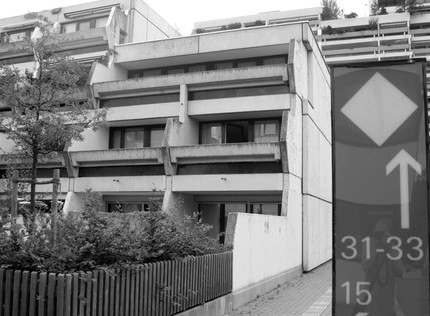
    It was 4:30 in the morning on Sept. 5, 1972, when five terrorists climbed the six-foot six-inch fence surrounding the Olympic Village.


    These five were met by three more men who are presumed to have obtained credentials to enter the village. The Palestinians then used stolen keys to enter two apartments being used by the Israeli team at 31 Connollystraße. The burly Weinberg knocked one of the intruders unconscious and stabbed another with a fruit knife before being shot to death. Weightlifter and father of three Yossef Romano, 31, also attacked and wounded one of the intruders before being killed. The terrorists then succeeded in rounding up nine Israelis to hold as hostages.

    After 40 years, official documents were released. Very recently the Bavarian public  broadcasting (BR) reported, that ten hours before the bloody Olympics attack in 1972 in Munich, the Munich police had been warned very specifically. According to the news, a German Federal Office sent  a telex with names of five terrorists and pointed out that the Olympic Games were to be attacked. The telex receipt for the warning of the Federal Office (some sort of internal secret service to protect the constitution) supposedly wears the shortcut signature of the then on-duty shift supervisor in the police headquarters of Munich. The police officer was later apparently never heard as witness or officially interrogated. The police shift diary available in the public prosecutor office starts strangely enough 23.50 p.m. – it lacks the page 19 for 7 pm, the time when the telex of constitutional protection office was sent. Already in August 1972 Germany’s Ambassador in Beirut notified his superiors that Palestinians are planning an assassination attempt on the occasion of the Olympic Games. The Foreign Office sent Klaus Kinkel, then Bureau Chief of Interior Minister Hans Dietrich Genscher, the report of the Ambassador with the note, you need to ‘make sure that the matter is known to your Minister and your House and the required action taken’. Four times, authorities were informed of assassination plans, the safety precautions were increased but not significantly. The PLO had significant contacts then with the left terrorists group RAF and between East Germans Minsterium für Staatsicherheit  also significant  connections to West German terrorists existed. The Spiegel claims the planner of the attacks was assisted by German Neo-Nazi Willi Pohl, according to the 40-year-old German intelligence documents. This Spiegel article fails to mention, however, its own reporting of 1981 and 1985. The group of Willi Pohl had via one of its members, Udo Albrecht, proven contacts to the East German secret service (MvS) and the West German secret service (BND). When PLO terrorist Abu Daud arrived in Munich, Albrechts friend Pohl admitted in an interview, that he escorted him and helped him contact a document-counterfeiting operation. Those rumors, that the right-wing groups were involved which died, not surprisingly, very quickly. The very hesitant reaction of the current officials to all the 1972 cover ups would certainly point more  in a longtime shady  direction. A lot of those right culprits were actually East German MfS (Stasi) Agents and /or right wing patsys, like the infamous Berlin police men Kürass, who killed a student during a demonstration, which sparked 1968 the West German youth rebellion.  

    No speech I heard, no mourning at the festivities reminded on those Israelis who lost their life a few hundred meters ago. That is somewhat surprising, since Germans today get  the  “Kampf gegen Rechts” shoved down their throats by Germans media and well meaning politicians every single day.  “The resistance against Hitler  is all the stronger the longer the Third Reich is gone”. Soon after the fall of the Berlin wall were everywhere in Berlin cautionary graffiti to see: “No Fourth Reich!” “Germany never again!” A generation that fought the “consumerism” and paid homage to Che Guevara, necessarily wanted to prevent a new power – which I am sure would be managed, if she only knew against whom she should move in the fight. The basis of the current militant anti-fascism is the lack of a fascist movement(although Germany becomes more anti-democratic every day). “Never again dictatorship!” the call should be, but this slogan is not so popular by the institutionalized Antifa than todays inexpensive anti-fascism. For this reason, in 2008 even a Hitlers wax figure had to been assassinated in London. There was, however, no trace of those 11 Jewish heroes or memories of their families, but only usual kids entertainment, sport of course, mostly marketing events of “outdoor” companies in thin disguise.

    In 1982 I attended a Rolling Stones concert at Olympic Stadium in Munich, that was the last time I was in the stadion. I passed Connollystraße with the bike many times, however, since I used to live during mid-eighties in the parallel street before I moved to the States. Yes, life had moved on, but that memory was even etched in my mind. It was traumatic for most of us in Munich at that time. Sadly, there is still no closure to this Olympic horror story, as the International Olympic Committee refused even in London to acknowledge this tragedy with a moment of silence during an Opening Ceremony. According to the US Media, Palestinians did thank the IOC for ‘Moment of Silence’ Decision, where words such as ”divisiveness” and “racism” are used to explain the decision.

    Why is that strange collective behavior, I thought, do they think the wrong people killed the right people or the right people killed the wrong people, or even worse the right people killed the right people? How sad, no of the officials seemed to care in Munich today to remember their names:

    Moshe Weinberg (wrestling coach), Yossef Romano (weightlifter), Ze’ev Friedman (weightlifter), Bavid Berger (weightlifter),Yakov Springer (weightlifting judge), Eliezer Halfin (wrestler) Yossef Gutfreund (wrestling referee), Kehat Shorr (shooting coach), Mark Slavin (wrestler), Andre Spitzer (fencing coach), Amitzur Shapira (track coach) and also some Bavarian police men.

    One of the helicopters holding the Israelis was blown up by a terrorist grenade. The remaining nine hostages in the second helicopter were shot to death by one of the surviving terrorists.

    Reliving the events that took place in Munich and Fürstenfeldbruck will convince anyone that not allowing a moment of silence to honor the victims is a morally questionable decision – in London as I felt there were forgotten too today in Munich.


  • Mao’s great famine – Our blight is ideologies — Revolution is not a dinner party.

    Mao’s great famine – Our blight is ideologies — Revolution is not a dinner party.

    When I worked in Beijing during the late nineties I got invited by a local resident consultant (an expat) to a dinner party at a very chic ethnic event restaurant.  Mao’s great famine was long forgotten. My colleague was a little bit esoteric, but knew her city. There was good food and even a better spirit.  Expats and local people from all over China would  dance after work together, even onetime doing some kind of polonaise. The open spirit, however, became immediately sober when a Mao Zedong-imposer entered the stage. The faces of the Chinese colleagues, of all Chinese, froze and some timidly touched the fabric of the actors costume, 20 years after Mao Zedong’s death, as if to make sure that “he” will not come back.

    Recently, more than ten years later,  I read the book of Frank Dikötter  Mao’s Great Famine: The History of China’s Most Devastating Catastrophe . The book was selected as one of the Books of the Year in 2010 by The Economist, The Independent, the Sunday Times, the London Evening Standard (selected twice), The Telegraph, the New Statesman and the BBC History Magazine, and won the 2011 Samuel Johnson Prize for Non-Fiction, Britain’s most prestigious book award for non-fiction.

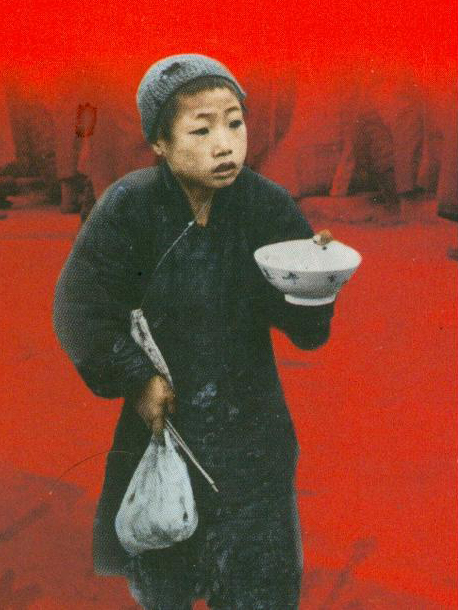
    Between the years 1959 and 1961, 30 to 45 million people were starved, killed or worked to death as a result of Mao Zedong’s failed attempt at industrialization in this period of the great leap.Frank Dikötter researched the catastrophe for years and documented his findings. It was h highly centralized mismanagement that can lead a country to disaster. All checks like tradition, family and religion were swept away leaving everybody, particularly the weak,  exposed without restraint to cruelty, pure arrogance, boundless ignorance and a merciless disregard of farmers, workers and even party members.

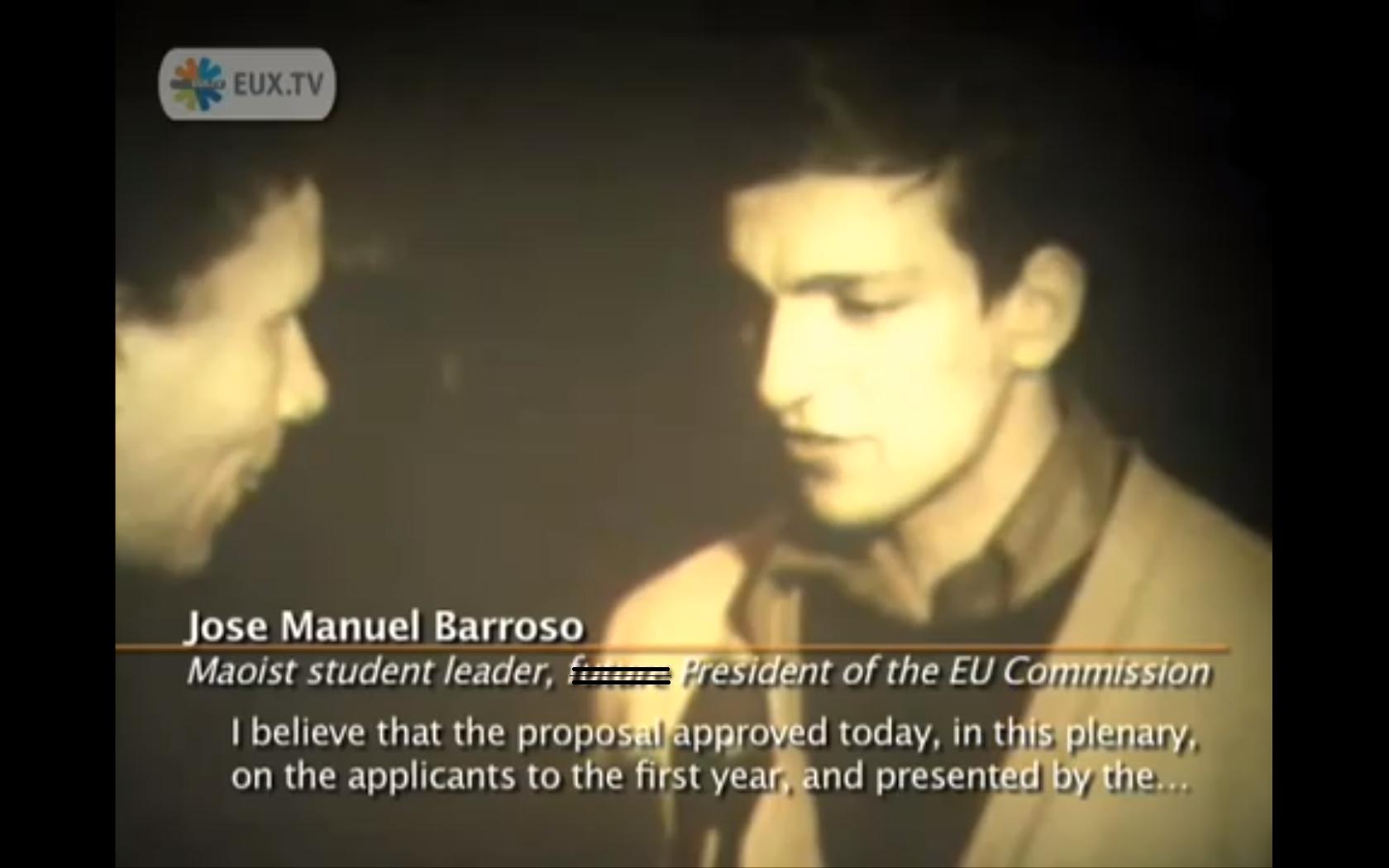
    I just knew just the basics of the big leap and the subsequent famine that hit the People’s Republic around 1960.  But Dikötter’s painstaking research using newly opened local archives makes his estimate all too credible  that the death toll reached 45 million people. The book opened my eyes, as the man-made disaster was on the scale of the Nazis, Stalin and Pol Pot, but different in a way as the intend supposedly was good in a “we know better” attitude. When I read the book , I was reminded to the bureaucracy of the European Union. We don’t get killed and starved yet (although the latter does happen in Greece), but the propaganda and the arrogance of the EURO-phil bureaucracy are very much the same. It is no coincidence, that many of the former and current EU leaders, those who pushed Maastricht treaty or the never ending crises measures through against all good advice of experienced experts, were former admirer of Mao or even active Maoists. Their leadership performance during the EU crisis is of striking similarity, mismanagement  runs Europe against the wall and destroys all tangible and non tangible assets.

    Dikötter provides a detailed list of the degree of suffering this “Great Statesman” unleashed and the inhumane manner in which his apparatus operated. Horrors pile up as he tells of the spread of collective farms and the vast projects that caused more harm than good and involved the press-ganging of millions of people into forced labour. As the pressure mounted to provide the all-powerful state with more and more output, the use of extreme violence became the norm, with starvation used as a weapon to punish those who could not keep up with the work routine demanded of them. The justice system was abolished. Brutal party cadres ran amok. “It is impossible not to beat people to death,” one county leader said.

    The inefficiency, waste and destruction in China were of course even more  gigantic. The masses in whose name the Communist party claimed to rule were eminently disposable. The economic campaign used farmers and industrial workers as fodder expected to sacrifice themselves for the cause dictated from on high purposefully trying to get rid of the weak,the women, the children, the elderly. Cannibalism and people eating mud in search of sustenance, was the outcome of the famine caused by the Great Leaps failure and the diversion of labour from farming.  Initially launched to enable China to overtake Britain and Russia, Mao’s programme took a deadly turn, In order to maintaining food exports when the country was starving, the slogan was: “When there is not enough to eat, people starve to death. It is better to let half of the people die so that the other half can eat their fill.”

    The book gives the details, but is extremely clearly written and presents the facts very structured: (1) The pursuit of Utopia;  (2) Through the Valley of death;  (3) Destruction;  (4) Survival; (5) The Vulnerable;  (6) Ways of Dying;  The book starts slow and becomes a page turner but can also be accessed afterwards via a good index.  It describes thourougly the Sino-Soviet split, and Mao’s tricks to blame the Russians ( and other factors) for his own doing,  after it was too late and the truth could not buried any more. As family bonds and every decency broke down, basically the whole country became one contraction camp. Methods were used in the cities, just like by the IG Farben in the second world war, working people to death in an unhealthy environment without pay and sometimes without food locked in the factory. Often there was not a direct intend to kill, but human were abundantly streaming to the factories. On the countryside  dissidents or underachievers, even people who digged one potato  became literally fertilizer. Kids were conveniently lost by mothers, women had to prostitute themselves or were routinely raped by local authorities routinely in some provinces .

    The Cultural Revolution is widely remembered, the Great Leap much less so. When Maoists launched the Cultural Revolution in 1966, the  Red Guards had little new to learn, as Frank Dikötter states. Stability returned to China with the Maoists’ ouster in the late 1970s. Having gone through those two experiences, not to mention the mass purges that preceded them and the Beijing massacre of 4 June 1989, it is little wonder if the Chinese of today are set on a very different course that rejects ideology in the interests of material self-advancement but also religion is on the rise.

    As soon as people get together in masses and submerge the individual, the shadow is mobilized, and, as history shows, may even be personified and incarnated. Carl Gustav Jung , The Archetypes and the Collective Unconscious , Collected Works, 9/1, par.478

    It is in this context it is  interesting to consider is Jung’s point of view toward religion in general, and his various attitudes with regards to fanatics and totalitarian ideologies and states: “Of course, it is not a spiritual religion in the sense in which we ordinarily use the term. But remember that in the early days of Christianity it was the church which made the claim to total power, both spiritual and temporal! Today the church no longer makes this claim, but the claim has been taken by the totalitarian states which demand not only temporal but spiritual power”.

    If one looks to his quotes closely we find, that he just says there are similar concepts between totalitarian religions and totalitarian systems. Jung is speaking about the UDSSR  and Nazi Germany in a sense that was not only religious, but also political. He then compares in the context of political figures.  Jung speaks here about religion not only demanding spiritual obedience but temporal as well and the beliefs not only cover the spiritual aspects of the human condition but also the mundane as well.  In Jung’s book “Psychology and the East”( From Vols. 10, 11, 13, 18 Collected Works), Jung recounts his journey to India. One of the essays entitled “The Dreamlike world of India” show Jung expressing his utter positive attitude and amazement at the Indian subcontinent and their religious and ethnic culture. In a second essay entitled “What India can Teach Us” he concludes that the psychological and religious claimant is something that we in the West should take a page from.  There is respect for and admiration to all religions and their text. I sometimes wonder what he would say today. Called or uncalled, God is present. Religious experience plays an important role in Jungian psychology. Jung, a Christian maybe of more Gnostic virtue, believed that this experience is nothing but a product of the psyche, and consequently viewed other world religions as an expression of one psychic function that has its roots deep in the collective unconscious of mankind. If religion is absent, this is rarely  good thing, but if it rules the secular space its worse…

    Our blight is ideologies — they are the long-expected Antichrist!  C. G. Jung The Tibetan Book of the Great Liberation (1954)

  • Confession of an unchurched spiritual and religious person.

    Confession of an unchurched spiritual and religious person.

    For the past decades, steps forward to my Self (as defined by C.G. Jung) or spirituality have always been attempted at moments of incipient crisis time or when I had time to take a breath. Confession: None, though, has been really followed through. The ability and given a chance to switch my career to a lower gear and the turmoil of the death of my mother, both last year, triggered the next leap.

    I started seriously to question my belief system and state of my individuation. For that reason I went back to psychoanalysis theory C.G. Jung) and its connection to religion and mystic but also digging deeper in catholic credo and history. Subsequently I started a blog, which initially contained only my private notes as a scratchpad, but also opened additional avenues to other blogs. I stumbled over one article with title: “Am I Religious or Am I Spiritual?” – A very popular question in the US.

    Well, good question. Similar to my question I have been pondering; do you believe in a (personal) god? Don’t get me wrong, I answered to myself the question 20 years ago, after I stepped out of a tent backpacking at Mt. Rainer. Just like C.G. Jung the conclusion was: “I know God exists.” Jung said that on more than one occasion.

    “Am I Religious or Am I Spiritual?” Maybe that is a question, which I should ask myself first? One of the biggest assets of the Catholicism is, religion and spirituality are not as separated as in Protestantism for some reason. “Bells and Smells, said a Benedictine monk and C.G. Jung emphasised the big psychological benefit of the confession.

    Going after the headline “Survey: 72% of young adults ‘more spiritual than religious”, this seems to mean rarely or never:

    • pray with others, and pray by themselves either,
    • attend worship services,
    • read the Bible or sacred texts.

    To my surprise this would indicate I am religious.

    As an article in psychology magazine pointed out for personality tests, by checking the “atheist” box (if there actually were one), you’ll be waiting a long time for your matches. But if you describe yourself as “spiritual but not religious” your chances are markedly improved (though the problem now is that you’ll see a lot of new age types showing up). Why?

    Despite the fact that more and more people are comfortable “coming out” as atheists, the word is still very much associated with being immoral, or at the very least agnostic. That is to say in the US. The results of a survey in a German news magazine suggested than 80% could happily check the “atheist” box. It seems, Atheism is in Europe the belief of the masses, Voltaire is even more dead than god to them.

    Enter the word “spiritual,” which is becoming synonymous with claiming all that is good in a religious person, without the religion.

    spiritual (spîr´î-ch¡-el) adjective
    1. Of, relating to, consisting of, or having the nature of spirit; not tangible or material. See synonyms at immaterial.
    2. Of, concerned with, or affecting the soul.
    3. Of, from, or relating to God; deific.
    4. Of or belonging to a church or religion; sacred.
    5. Relating to or having the nature of spirits or a spirit; supernatural
    .

    Ignoring (4) and (2) – dictionaries adapt slowly – what exactly, does it mean to be just plain spiritual? One obvious interpretation is (5) taking the word literally: if you are spiritual you believe in spirits. A second possibility (1) is that spiritual is meant to indicate someone who devotes energy to cultivate “spirit,” as opposed to just being concerned with “material” things. That’s a pretty Gnostic definition trying to become  pneumatics the highest order of humans.

    A third interpretation would be: pondering philosophical or environmental questions and reflecting psychologically, behaving ethically ant otherwise correct and compassionately, and also nurturing ones aesthetic sense through arts and blogs. Okay, by that definition, I am also spiritual. However, by this definition, almost everybody is spiritual – some more than others.

    By the way, although I would not check the “atheists” box, I would happily check the humanist box (assuming one or more is allowed). I do suggest that we value the separation of church and state the mutual benefit of belief and rationality since the Renaissance and even pagan Hellenism. As I indicated, in addition I would need to check the “mystic” box.

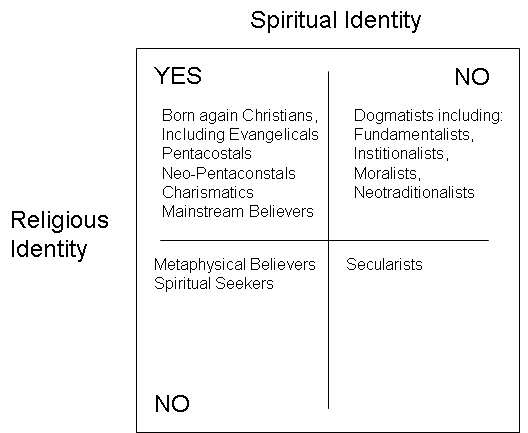
    Besides holding a degree in applied economics I’m just an average engineer who tends to check facts and does not believe anything not seen or touched. Working as a management consultant did not help either. Lets do a (googled) quadrant:

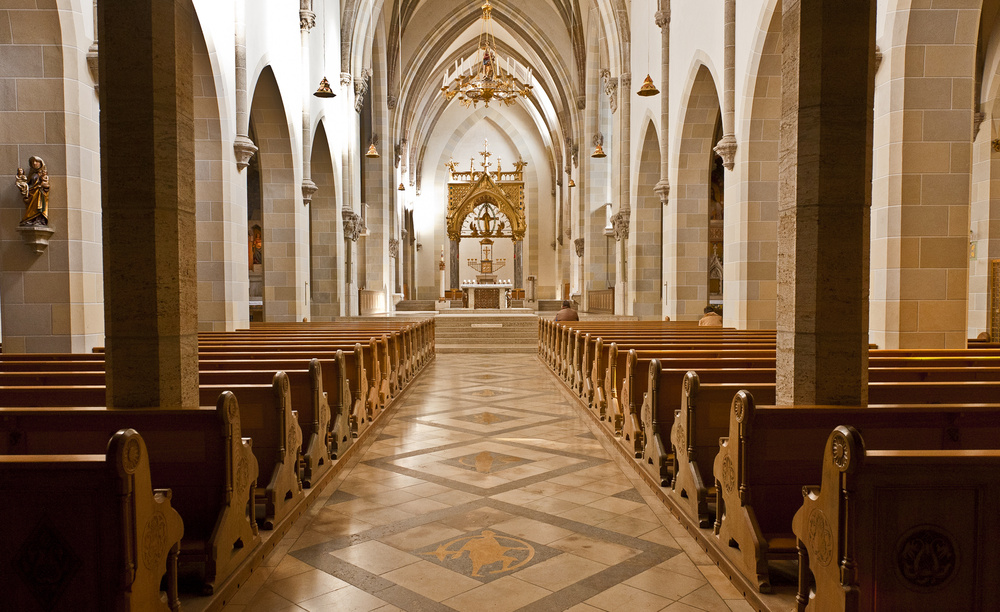
    According to this quadrant I am a mainstream believer.  On the other hand, I attend Catholic mass and routinely check in a Catholic monastery for a few days (sometime with my family), although technically not being affiliated with any religious organization. I am attracted by Taoist thoughts and my wife is Buddhist. On the other hand I like the pope, the global institution and the absolute moral system of the Catholicism not to speak of their powerful symbolism and mystic. I cannot relate to New Age, although having lived for five years in California where  I learned to meditate at Big Sur. On the other hand, I connect easily astronomy and modern physics with Astrology and C.G. Jung’s Synchronicity which is not far away of “The Dancing Wu Li Masters” – a popular New Age book.

    I come to the conclusion “being spiritual but not religious” does not make a lot of sense – to me at least even if I am legally “unchurched”. I can relate to an intelligent professing atheist; we may have fewer than we think however ,  but lots of empty check boxes.