Latest Entries
Crazy Wisdom – the Archetype of the Fool, the Clown, the Jester and the Trickster.
Archetypes / C.G.Jung

Crazy Wisdom – the Archetype of the Fool, the Clown, the Jester and the Trickster.


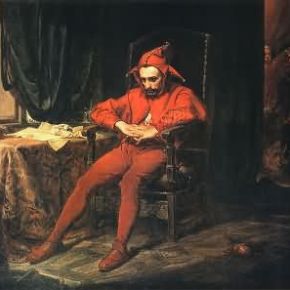
When I lived in California I listened often to the KFOG radio commentator Wes (“Scoop”) Nisker who happened to be also a comedian:  “If you don’t like the news … go out and make some of your own”, was his frequent catchphrase.  Comedians are often called jester, fool, trickster and clown. Very recently many European ( foolish) fools call an Italian comedian a clown. Because he … Continue reading

Jungian Archetype Checklist for Tolkien’s Lord of the Rings
Archetypes / C.G.Jung / Literature / Literature & Art

Jungian Archetype Checklist for Tolkien’s Lord of the Rings


In his masterpiece The Lord of the Rings, J.R.R. Tolkien created what he called a “new mythos”. There is undoubtedly much in Tolkien’s Lord of the Rings that invites us seeing it through the Jungian framework.  However, on a closer look, comparatively few archetypes are present, and the main protagonist’s (Frodo’s) individuation arguably fails. A Jungian view must … Continue reading

C. G. Jung’s Red Book in a hurry – Narrative
C.G.Jung / Dreams / Eastern / Gnostic / Mystics / Other Gods

C. G. Jung’s Red Book in a hurry – Narrative


Prelude The «Red Book» created between 1914 and 1930 can be described as a visual diary of dreams.  Jung  described this book – its language and emotions seem at times almost embarrassing – as important testimonies of his psychological and spiritual development. The psychoanalyst referred to his unfinished work as a !necessary but annoying ‘aesthetic … Continue reading

Sufism the Gnostic chameleon – muscle and brain of Islam
C.G.Jung / Gnostic / History / Religion / Spiritual / Sufism

Sufism the Gnostic chameleon – muscle and brain of Islam


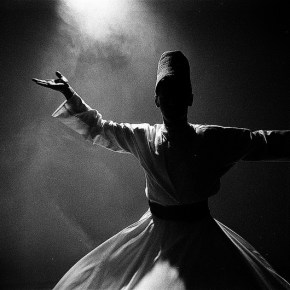
Sufism came recently  into the CNN spotlight when Al Qaeda-linked Mali Islamists armed with Kalashnikov’s and pick-axes destroyed centuries-old mausoleums of saints in the UNESCO-listed city of Timbuktu. Sufism is historically known  from the 5th century A.D on (first Sufi order was founded 657), and has survived as the only mystic (gnostic) religion the purges of the three fighting monotheist religions.  This article wants … Continue reading

“Don’t be a maybe” – a Junganian view of postmodern, post-metaphysical, post-philosophical neo-pragmatism
C.G.Jung / Ethics / History / Philosophy / Religion / Spiritual / West

“Don’t be a maybe” – a Junganian view of postmodern, post-metaphysical, post-philosophical neo-pragmatism


That movie title “Do the Right Thing” of Spike Lee would not fly today. Rather Raymond Chandlers “The Big Sleep”. Maybe. Something feels not right any more. Specifically the “Right” (as opposed to Wrong not to Left) is an endangered species. One has to decode first all the Western mental systems before separating Wright from … Continue reading

The footprints of Aquarius and New World Order – a Jungian view
Astrology / Astronomy / C.G.Jung / Other Gods / Religion / Science / Spiritual

The footprints of Aquarius and New World Order – a Jungian view


The Aquarius Age (aka New Age or New World Order) is a period defined by the passage of the spring equinox (literally “Equal Night”) into the Aquarius zodiac sign. What does the Aquarius age promise? What are its footprints? Is it the blue pill or the red – hope or despair? What had Jung  to say…? … Continue reading

Queen, Mother, Wise Woman and Lover: Rediscovering the Archetypes of the Mature Feminine
Archetypes / C.G.Jung / Gnostic / History / Philosophy / Religion / West

Queen, Mother, Wise Woman and Lover: Rediscovering the Archetypes of the Mature Feminine


This article complements the concepts explored in my article “Archetypes of the Mature Masculine” and applies them to the other half of humanity—women. In doing so I apply the same principles, not in a mechanistic way, but in the spirit of Jung’s archetypes and their rationale. Lets start with a few words of C. G. Jung himself where he talks about the Anima.
Thomas Moore and Douglas Gillette adopted and extended Jung’s approach in their exploration of the masculine psyche by using the collective archetypes of the King, the Warrior, the Magician, and the Lover. Obviously those four male archetypes can be translated and mapped in female clusters of virtues, specific attributes associated with four major female archetypes: the Queen, the Mother, the Wise Woman and the (female) Lover found in history and myths. This has been done before. Continue reading

Burning Ahmed Baba and Alexandrian library – Is Sufism haram?
Astrology / Contemporary / Gnostic / History / Medival / Religion / Science / Sufism

Burning Ahmed Baba and Alexandrian library – Is Sufism haram?


In another defining act of intellectual barbarism, “Islamist extremists” (term borrowed by AP – Activists, Islam fighters nor Islamists won’t do) in Mali destroyed a number of tombs in the ancient city of Timbuktu, which in the last year fell under control of a separatist insurgency. Home of the prestigious Sankore University, Timbuktu was an intellectual and spiritual capital and a centre for the propagation of Sufism (an Islam faction) throughout Africa in the 15th and 16th centuries. Its three great mosques, Djingareyber, Sankore and Sidi Yahia, recall Timbuktu’s golden age. “The destruction is a divine order,” said a spokesman from Ansar Dine, a radical outfit with alleged links to al-Qaeda. Ansar Dine or “defenders of the faith” in Arabic is group led by a prominent leader of the Tuareg rebellion in the 1990s which wants the imposition of strict Sharia law across Mali.The Associated Press Posted Jan 28, 2013 @ 07:32 AMSEVARE, Mali (AP) — Islamist extremists torched a library containing historic manuscripts in Timbuktu, the mayor said today, as French and Malian forces closed in on Mali’s fabled desert city. Continue reading

Jungian Models applied to global corporations: Kings, warriors, magicians and lover archetypes
Archetypes / C.G.Jung

Jungian Models applied to global corporations: Kings, warriors, magicians and lover archetypes


Recently I attended yet another team building “Engagement workshop”. It occurred to me, while I do understand that this sector in a well performing multinational corporation has rather particular objectives by its mission, why it has such multiple and interesting cultural contexts. Culture is something we all experience, but have great difficulties defining. I want in this article to align C.G. Jung’s … Continue reading

C.G. Jungs Self in Quaternio Series of Aion – Jesus or Abraxas?
Archetypes / C.G.Jung / Christian / Gnostic

C.G. Jungs Self in Quaternio Series of Aion – Jesus or Abraxas?


C. G. Jung had shown a pronounced and informed interest in Gnosticism and Alchemy. This is evident in the Quaternio Series of the Self in his book. “Aion”.  In his early works “Seven Sermons to the Dead” (“Die sieben Reden an die Toten ”) and “The Red Book” (recently published) he perceived the outstanding psychological relevance of Gnostic insights. Was Jung really a Gnostic? I … Continue reading

Can Hitler go to heaven? The evil presented in Mao, Stalin, Hitler, Pol Pot.
C.G.Jung / Contemporary / History / Philosophy / Spiritual

Can Hitler go to heaven? The evil presented in Mao, Stalin, Hitler, Pol Pot.


The problem of evil has been a subject of interest in religion and philosophy.  For our purpose here we want to approach the question in a inductive and  psychoanalytic way looking at historic persons: Mao, Stalin, Hitler, Pol Pot: what is evil and what is the cause of it.  If we consider them evil – and I do – what … Continue reading

From language games to mysticism – Allan Watts and Wittgenstein’s Tractatus
C.G.Jung / East / Philosophy / West

From language games to mysticism – Allan Watts and Wittgenstein’s Tractatus


This article explores Wittgenstein’s Tractatus as a mystical, metaphysical insight in the light of Eastern philosophy, Catholic mysticism and C. G Jung. Please be gentle and read this as an (intuitive) essay not as a scholarly article. There are methodological implications of Wittgenstein’s doctrine of silence for transcendental philosophy, Zen Buddhism, psychoanalysis and metaphysics. Or there is a line from Lao-Tse to Wittgenstein, connected … Continue reading

PTSD and Moral Injury seen from C.G. Jung – Achilles in modern wars
C.G.Jung / Contemporary / Ethics / History

PTSD and Moral Injury seen from C.G. Jung – Achilles in modern wars


The Newsweek article “A New Theory of PTSD and Veterans: Moral Injury” was probably the best article I ever read about PTSD – besides Shay’s Achilles in Vietnam. Yes most important factors may very well be moral injury, traumatic events and being betrayed by leadership.  But, there is more  – ethical, Jungian depth psychological and political circumstances: Villains don’t … Continue reading

“become what you are” C. G. Jung’s answer to aging
C.G.Jung / Spiritual

“become what you are” C. G. Jung’s answer to aging


Todays answer to aging of medicine, psychology and sociology (or the happy union of postmodern and materialistic society) is contrary to common sense and spiritual void: Accept to be incomplete and fragmentary and the own life – regardless of the question how incomplete, unsuccessful void it has been. Consume if you have money, don’t bother us if you don’t. To the contrary C. G. … Continue reading

The Death of the Ego as prerequisite to find God
C.G.Jung / Catholic / General / Spiritual

The Death of the Ego as prerequisite to find God


Translation of my article “Gedanken zur Predigt in St. Ottilien 2012-11-18 The Death of the Ego as prerequisite to find God“ By fallenAngel This sunday sermon in St. Ottilien (2012-11-18-0915-konventamt.mp3) addressed an interesting line of thought: in order to experience God (via the Self), we need to kill the Ego in us. A very tough call indeed. “We … Continue reading

The Self – God’s window between pantheistic Taoism and Catholic personal god
C.G.Jung / Catholic / East / Gnostic / Philosophy / Spiritual / West

The Self – God’s window between pantheistic Taoism and Catholic personal god


Last Saturday (yesterday). I went on a retreat (religious exercise) at the Benedictine monastery St. Ottilien with twenty others men and women looking after their private center and true selves: “Looking for the self” What do we know of the psyche and soul? The discussion was lead by two monks – the longtime Prior Claudius and … Continue reading

Blogsphere as Hesse’s Glass Bead Game against the ‘Feuilletonistic‘ world
C.G.Jung / Gnostic / Literature / Meditation

Blogsphere as Hesse’s Glass Bead Game against the ‘Feuilletonistic‘ world


In Herman Hesse’s final novel The Glass Bead Game, which won him the Nobel Prize for Literature in 1946, he introduces essentially a hypothetical meta game, which has been compared with a  “neural network of cosmic mind”. This gave me the idea to probe today’s social and knowledge networks of the Internet as it were The Glass Bead Game, … Continue reading

Male and female archetypes in Wong Kar Wai Films – Draft
Archetypes / C.G.Jung / Literature & Art

Male and female archetypes in Wong Kar Wai Films – Draft


For the uninitiated, Wong’s films seem pointless and confusing, which is reinforced by the director’s trademark cinematic indulgences, laggard pacing and minimalist plotting. However, upon closer inspection, it is easy to become intrigued by the rampant symbolism, the metaphor-laden dialogue, and the philosophical and psychological underpinnings of his films. Maybe its a problem of “if … Continue reading