Category: Literature

  • The universe as aesthetic experience – Jung’s  “archetype of the storm” 

    The universe as aesthetic experience – Jung’s “archetype of the storm” 

    A Jungian view of my astrophotography ‘The Veil Nebula‘, the universe interpreted though Maxim Gorky’s famous poem and the philosopher Kant. Immanuel Kant saw the universe as a profound source of aesthetic experience, especially through the concept of the sublime—like the infinite universe or a violent storm— which he distinguished from beauty.

    Beauty reflects harmony between imagination and understanding, while the sublime emerges when we face something so vast or powerful that our imagination is overwhelmed.

    This dynamic is vividly echoed in art and literature: Van Gogh’s Starry Night and the spiral grandeur of Messier 51 mirror the mathematical sublime ( Van Gogh was likely inspired by the nebula M51 from a best-selling book on French astronomy); while Maxim Gorky’s The Song of the Stormy Petrel and the ghostly filaments of NGC 6960 capture the dynamical sublime—the majesty and terror of nature’s force, met by human mind’s resilient and fierce response.

    The Cry Before the Storm: The Veil Nebula

    “Let it break in all its fury —
    Let the storm burst forth!”
    — Maxim Gorky, Song of the Stormy Petrel (1901)

    Nowhere is this fusion of the outer storm and inner cry more visceral than in the luminous wreckage of a supernova shell catalogued as NGC 6960: the Veil Nebula West (the right third of my full Veil Nebula mosaic).

    Veil Nebula

    The Mosaic

    This 2.92° × 2.05° mosaic spans the luminous filaments of the Veil Nebula, the visible remains of a massive supernova in Cygnus, exploding 10,000–20,000 years ago. At the western edge lies NGC 6960, the so-called “Sturmvogel”—a nickname (storm bird, stormy petrel) popularized in early astrophotographic work by Max Wolf (1863–1932) at the Heidelberg Observatory. The filaments likely evoked the bird’s wings riding a cosmic storm. Just to the north (rotated east) lies Pickering’s Triangle, a chaotic sea of shock fronts, while the eastern arc comprises NGC 6992, NGC 6995, IC 1340, and NGC 6974. Together, they form the bright perimeter of the Cygnus Loop, a vast supernova remnant stretching across 3 degrees of sky.


    The imago

    This widefield mosaic reveals the Veil Nebula, the torn and glowing remains of a massive star that exploded between 10,000 and 20,000 years ago in the constellation Cygnus. The image covers the most prominent filaments of the Cygnus Loop, a supernova remnant still expanding into the interstellar medium. The progenitor star is estimated to have been 20 times more massive than the Sun, and its explosion may have rivaled Venus in brightness, even visible in daylight to early humans.

    The nebula is powered by shock fronts—high-velocity shells of ionized gas colliding with the surrounding medium, lighting up filaments rich in oxygen (O III), hydrogen (Hα), and sulfur (S II). These glowing arcs are what we now see as NGC 6960 in the West, Pickering’s Triangle, and the complex Eastern tangle of NGC 6992, NGC 6995, IC 1340, NGC 6974, and NGC 6979.

    The western portion, NGC 6960, became known in early 20th-century German literature as the “Sturmvogel”—a storm bird or stormy petrel. Though the origin of the name is uncertain, it was Max Wolf, the Heidelberg astronomer and pioneer of astrophotography, who brought the term into the astronomical community through his deep-sky survey plates and publications. His 1900s-era astrographs, taken with large plate cameras, helped to popularize poetic imagery and inspired the mapping of thousands of nebulae—Wolf’s catalogs eventually included over 6,000 entries.

    The “Sturmvogel” metaphor is more than lyrical. If the image is rotated 90° counterclockwise from north-up (placing east at top), the filaments of NGC 6960 unfurl like a bird in flight, its wings flaring through the turbulent ether of the surrounding shockwaves. Just “beneath” it in this orientation lies Pickering’s Triangle—a chaotic lattice of luminous threads, often overlooked but physically adjacent to NGC 6960. This region resembles a choppy, foaming sea, as though the bird skims low over stormy cosmic surf.

    The eastern arc, comprising NGC 6992, NGC 6995, IC 1340, and nearby filaments, forms the other wing of the explosion’s outer shell. Together, these bright edges trace a nearly complete hemispherical shell roughly 130 light-years across, expanding at speeds between 150 and 600 km/s. The gas within glows for tens of thousands of years after the explosion, allowing us to see this dramatic transformation in slow motion.

    Though shaped by physics, the Veil Nebula also invites metaphor and archetype. In its wisps we glimpse not just shockwaves, but stories: death and rebirth, flight and disintegration, solitude and cosmic defiance. This Sturmvogel, like Gorky’s revolutionary storm petrel, does not fear the coming storm—it becomes its herald. Turn it. Rotate the image 90° counterclockwise—place North to the left, and East to the sky.

    The poem

    Maxim Gorky’s 1901 poem, The Song of the Stormy Petrel, (in the English Translation) was written as the czarist state trembled with revolution. It was, at once, a coded call to rebellion and a hymn to those rare spirits who thrive in the coming chaos. While lesser birds cower in fear — gulls, loons, and penguins scuttling to shelter — the stormy petrel soars, shrieking, a “black lightning bolt” against the leaden clouds.

    “The clouds are darkening the sky,
    The waves groan beneath them.
    The storm! The storm is coming soon!”

    Der Originaltitel von Maxim Gorkis poem “Das Lied vom Sturmvogel” ist „Песня о Буревестнике“ (Pesnja o Burevestnike).  A special stamp was dedicated by the communist GDR post office to Gorky’s “Sturmvogel” in 1968. The stormy petrel—Sturmvogel—shrieking in the dark heavens above a choppy, silvery sea.

    Here, in the Veil Nebula, we see that storm brewing—in literal astrophysical terms.

    To call the nebula Sturmvogel—as German astronomer Max Wolf did in the early 20th century—is to see more than a name. Dr. Wolf often assigned names inspired by myth, animal shapes, and poetic metaphor.

    Beneath the arc—now the “sky” of this rotated scene—lies a tangled field of mist and filament. These lower tendrils correspond to the chaotic region extending toward the Pickering Triangle, itself a fragment of the same blast. But in this orientation, it becomes the silver sea—choppy, dispersed, alive with current.

    “The sea, with lightning crashing down on it,
    Holds the thunder in its depths.”

    The psychological dimension is impossible to ignore. To rotate this nebula is to awaken its archetypal charge.

    Toward the Storm, Toward the Self

    In standard orientations, it is just beautiful. Rotated — it becomes prophetic or as Kant said sublime. Just as Gorky’s poem was banned, feared, and venerated, this image speaks of thresholds — the point where silence ends and scream begins.

    To witness the Veil Nebula as Sturmvogel is to stand at the edge of a cosmic battlefield. A soul cries out — not in despair, but in jubilation. It is ready. It does not retreat. The stars themselves have torn open,. and from their shreds, a winged cry rises.

    The night is not quiet.
    The storm is not tragedy.
    The nebula is not death.
    It is all a prelude to flight.

    In Jungian psychology, the “archetype of the storm” can be understood through several interconnected lenses, encompassing divine power, emotional turmoil, the force of chaos, and the potential for transformation and judgment. It is not a singular, codified archetype but rather a multifaceted symbol that manifests in various ways within the collective unconscious and individual psyche, often associated with deities like Zeus and Odin (Wotan). 

    Key Aspects of the Storm Archetype in Jungian thought:

    • Divine Power and Judgment: Storms, particularly those involving thunder and lightning, are often associated with powerful sky gods like Zeus and Odin. These deities are seen as masters of spiritual phenomena and embody divine justice and judgment, capable of both creation and destruction. The storm can symbolize divine intervention or the manifestation of a higher power.
    • Emotional Turmoil and Internal States: On a personal level, storms can represent powerful and overwhelming emotions, internal struggles, and psychological crises. The “eye of the storm” can symbolize the need for centering and navigating these internal tempests towards clarity and resilience. This can be seen in dream symbolism, where storms may signify repressed emotions or significant life changes.
    • Chaos and Disorder: The storm can also embody the archetype of chaos and the destructive forces of the unconscious, as seen in mythological figures like Typhon, the Greek monster of chaotic destruction. It represents the unsettling and unpredictable aspects of life and the psyche, often linked to a struggle for consciousness against overwhelming forces.
    • Transformation and New Beginnings: Despite their destructive potential, storms can also be seen as catalysts for profound change and renewal. Emerging from the turmoil of a storm can lead to a new paradigm, a resetting of paths, and a transformation in consciousness, akin to a “new beginning” or the emergence of a new understanding.
    • The “Wotan” Archetype: Carl Jung specifically explored the “Wotan” (Odin) archetype as a powerful, dormant force within the Germanic psyche that reawakened with terrifying force, linking it to the “storm clouds” gathering over Europe in his time. This highlights how archetypal patterns can manifest in historical and collective contexts, influencing societal movements and psychological states. 

    “Let the storm burst forth—
    The proud stormy petrel soars,
    Like a black lightning bolt…”

    The Veil Nebula is not the remnant of death but literally rebirth, transformation or revolution.
    We are all stardust.

    The first stars burned their fuel quickly and were able to make only a few elements heavier than hydrogen and helium. When those stars went supernova, they expelled the elements they had produced and seeded the next generation of stars.

    Back to Kant, reason steps in to conceive the universe’s magnitude, producing a unique aesthetic response that combines awe, respect, and an awareness of both human limitation and rational capacity.

    • Mathematical Sublime: Arises when we confront immense size—like the vast universe—that imagination cannot grasp, but reason can conceptualize as infinite.
    • Dynamical Sublime: Emerges in the face of overwhelming natural power, such as storms, evoking fear yet affirming reason’s ability to comprehend from a safe vantage.
    • Aesthetic Judgment: Kant held that judgments of the sublime, though rooted in feeling, carry a claim to universal validity, expecting shared recognition.
    • Transcendental Aesthetic: Refers to Kant’s idea that space and time are forms imposed by the mind, shaping how we perceive the universe from the outset.

    1. Stormy Petrel in Flight

    l
    • Visual feature: The filamentary arc, sharply defined and curving like a wing, cutting diagonally across the lower right (now “south”) quadrant.
    • Interpretation: The stormy petrel itself — sharp-beaked, wing extended mid-cry.
    • Poetic line: “High above the silvery sea wind / Screeches the stormy petrel, / A black lightning bolt…”
    • Science: This structure is a shock front — compressed, illuminated gas being shaped like wind-sculpted feathers.
    • The rift in the emission line appears as wings opened wide against wind — almost tearing through the stars.

    2. Choppy, Silver Sea Below

    • Visual feature: The fragmented, turbulent lower-left tendrils of nebulosity, dispersed and broken up.
    • Interpretation: This is the sea whipped by storm — erratic, fragmented lines resembling waves crashing.
    • Poetic line: “The sea — under the storm’s assault — / Holds the thunder in its depths…”
    • The Veil’s wispy structure renders a heaving, unsettled ‘sea’ of starlight, luminous and restless.

    3. Darkness and Thunderclouds

    • Visual feature: Opaque, darker patches and intersections between arcs of light — spaces of visual silence.
    • Interpretation: These become thunderclouds — the pressure between light and void, mirroring psychological tension.
    • Poetic line: “The storm! The storm will break soon! / The bold petrel flies proudly in the lightning.”
    • The bright-limb–dark-core contrast functions almost as chiaroscuro — a painterly invocation of rolling storm clouds.

    4. Lightning and Cry

    • Visual feature: Sharp, high-contrast transitions and electric blue Hβ or OIII filaments, especially if narrowband data is used.
    • Interpretation: Lightning across the sky — like the scream of the petrel, jagged and divine.
    • Poetic line: “The storm — it is coming! / Let it burst in all its fury!”
    • The emission filaments serve as luminous nerve endings of the storm — prophetic and electric.

    WHY THIS ROTATION MATTERS

    Most published astrophotographs of NGC 6960 orient North up or East left — creating a sweeping horizontal arc that reads more like a curtain or a wave. But when North is turned left:

    • The arc becomes a soaring, vertical figure — winged, crying, slicing through the heavens.
    • The Veil becomes a storm landscape, not a peaceful emission cloud.
    • The entire field becomes psychologically activated: no longer passive beauty, but visionary unrest.

    This is what Max Wolf may have seen — not just a nebula, but a cosmic Sturmvogel singing against the void.


    PSYCHOANALYTIC PARALLEL

    The Veil Nebula, when viewed this way, externalizes an internal or external psychological structure:

    • The stormy petrel = archetype of the prophetic Self or Hero archetype, unafraid to confront chaos.
    • The storm = collective upheaval, unconscious energies breaking into consciousness.
    • The sea = psychic depths — turbulent but luminous, full of potential.
    • The Veil itself = the psychic boundary between known and unknown, being torn open.

    In this light, your astrophotography of the Veil is not just scientific image-making, but active imagination — to Jung a lens into cosmic individuation or as to Gorky to a historical revolution.

    1901 Poem by Maxim Gorky “Song of the Petrel” Google translation from Russian https://ruverses.com/

    Over the gray plain of the sea the wind gathers clouds. Between the clouds and the sea the Petrel proudly flies, like black lightning.
    Now touching the waves with its wing, now soaring like an arrow to the clouds, it cries, and — the clouds hear joy in the bird’s bold cry.
    In this cry — thirst for a storm! The clouds hear the power of anger, the flame of passion and confidence in victory in this cry.
    The seagulls moan before the storm — moan, rush about above the sea and are ready to hide their horror before the storm at the bottom.
    And the loons also moan — they, the loons, do not have access to the enjoyment of the battle of life: the thunder of blows frightens them.
    The stupid penguin timidly hides his fat body in the cliffs… Only the proud Petrel flies boldly and freely above the sea gray with foam!
    The clouds are sinking darker and lower over the sea, and the waves are singing, and rushing upward to meet the thunder.
    The thunder is roaring. The waves are moaning in the foam of anger, arguing with the wind. Now the wind embraces the flocks of waves with a strong embrace and throws them with all its might in wild anger onto the cliffs, smashing the emerald masses into dust and spray.
    The petrel flies with a cry, like a black lightning, pierces the clouds like an arrow, tears off the foam of the waves with its wing.
    Here it flies like a demon, – a proud, black demon of the storm, – and laughs and sobs… He laughs at the clouds, he sobs with joy!
    In the wrath of thunder, – a sensitive demon, – he has long heard fatigue, he is sure that the clouds will not hide the sun, – no, they will not hide!
    The wind howls… The thunder roars…

    The flocks of clouds blaze with a blue flame over the abyss of the sea. The sea catches the arrows of lightning and extinguishes them in its depths. Like fiery snakes, the reflections of these lightnings curl in the sea, disappearing.
    Storm! The storm will soon break out!

    This is the brave Petrel proudly fluttering between the lightning over the angrily roaring sea; then the prophet of victory cries out:
    Let the storm break out stronger!

    Maxim Gorki Das Lied vom Sturmvogel

    Ob der grauen Meeresebene schart der Wind Gewölk zusammen.
    Zwischen Wolken und Gewässern gleitet stolz der Sturmverkünder,
    einem schwarzen Blitz vergleichbar.
    Bald die Flut mit Flügeln streifend, bald als Pfeil die Wolken treffend,
    schreit er hell.
    Die Wolken hören Lust im Schrei des kühnen Vogels.
    In dem Schrei klingt Sturmessehnsucht! Kraft des Zornes, Glut der Leidenschaft
    und Siegeszuversicht.
    Dies hören in dem Schrei die Wolken.

    Vor dem Sturm die Möwen stöhnen. —
    Stöhnen, treiben überm Meere,
    möchten ihre Angst vorm Sturme auf dem Meeresgrund verbergen.
    Auch die Tauchervögel stöhnen.
    Ihnen ist er unzugänglich, der Genuss des Lebenskampfel.
    Sie erschrecken vor dem Donner.
    Der Pinguin, der dumme, feige,
    birgt den feisten Leib im Felswerk.
    Nur der stolz Sturmverkünder, frei und stolz,
    beherrscht die Höhe überm grauen Schaum des Meeres!

    II

    Immer finsterer und tiefer zieh‘n die Wolken überm Meere,
    und die Wogen singen, dringen hoch, dem Donner zu begegnen.
    Donner kracht.
    Wutschäumend , ächzend streiten mit dem Wind die Wellen.
    Er umfasst sie rudelweise, drückt sie in die starken Arme.
    Schleudert wuchtig sie in blindem Wüten an die Klippen,
    wo die hell-smaragdnen Wogen-berge
    laut zu Staub und Schaum zerschellen.
    Schreiend schießt der Sturmverkünder, einem schwarzen Blitz gleich,
    pfeilschnell durch die Wolken.
    Seine Flügel reißen Gischt vom Kamm der Wogen.
    Seht, er rast dahin! Ein Dämon — stolz.
    Des Sturmes schwarzer Dämon!
    Und sein Lachen tönt, sein Schluchzen.
    Er verlacht die finstern Wolken, und er weint und schluchzt vor Freude.
    Längst vernimmt des Dämons waches Ohr im Donnergroll: Erschöpfung.
    Das Gewölk, weiß er, es kann nicht, – kann die Sonne nicht verbergen!

    III

    Sturmwind heult — und Donner poltert.
    Überm abgrundtiefen Meere flammen blau die Wolkenschwärme.
    Und das Meer fängt Blitzespfeile, löscht sie aus in seinem Strudel.
    Und wie Feuerschlangen winden sich im Meere — und verschwinden
    Spiegelbilder dieser Blitze.
    „Sturmwind! Bald erdröhnt der Sturmwind!“
    Sehrt den stolzen Sturmverkünder! Stolz hin schwebend zwischen Blitzen,
    überm Zorngebrüll des Meeres, schreit er —
    ein Prophet des Sieges.
    „Immer stärker tobe, Sturmwind!“ 

    Unknown Translation https://ruverses.com/
  • Faust and C.G. Jung – What holds the world together at its core

    Faust and C.G. Jung – What holds the world together at its core

    Goethe and C.G. Jung

    “Faust I”, the Germans’ favorite drama is about a scholar who wants the impossible, who wants to know what keeps the world together at heart. Goethe’s Faust failed on this worldly question, which ultimately leads either straight to Augustine’s heaven or Dante’s hell. Therefore Faust needed and accepted diabolical assistance. But what keeps the world together is also a fundamental question of today’s particle physics. The essay approaches Faust’s complex question from philosophy,  depth psychology, religion and science. Many suggestions and thoughts derived from a monastery-retreat with that title and C.G. Jung, who was aware and fond of Johann Wolfgang von Goethe.

    Faust I
    To enlighten me more,
    What Holds the world together at its innermost core
    All this potency and seed I shall see,
    And stop peddling in words that mean nothing to me.
    Daß ich erkenne, was die Welt
    Im Innersten zusammenhält,
    Schau alle Wirkenskraft und Samen,
    Und tu nicht mehr in Worten kramen.

    Faust’s path leads from science to magic from humanistic enlightenment to liberal entrepreneurship, from Troy’s  Helena to artificial intelligence ultimately to  Christianity. Mephisto is not an archetype, but a very personal and likable devil, partly spirit of good and action, partly evil. Faust II and especially Faust I contains the classic devil’s pact (Teufelsbund) motive.
    Faust embodies that human curiosity that was the moving principle of modern Enlightenment. Mephisto teaches the magic of FIAT money creation, through which capitalism became a dominant force. That “spirit” is emancipating itself from ecclesiastical institutions, which exposes the internal corruption – in Faust II – by power and money.

    Johann Wolfgang von Goethe worked extensively on Faust for more than 60 years. Between 1773 and 1775, in the area of enlightenment and four years shy of the French revolution, the Urfaust was born.

    TimeLine of Faust Genesis

    In 1808 the first part of the Faust tragedy appeared during the German Classic period and German Romanticism. Historically this is the Napoleonic era, which begins roughly 1799 with Napoleon Bonaparte’s coup d’état. Napoleon’s armies soon conquered the Iberian and Italian peninsulas, occupied lands, forced feudal Austria, Prussia, and Russia to ally with him and respect French hegemony in Europe until the Battle of Waterloo 1815. The Congress of Vienna quickly restored Europe to pre-French Revolution days, restore Feudalism that is to say.

    “Faust II” was written in 1825 until the summer of 1831, was published in 1832 (a few months after Goethe’s death) and was a continuation of “Faust I” but integrated the classical Helena part, written long before. The second part of the tragedy, however, differs markedly in its narrative structure and style from its predecessor. In the first part, the play deals exclusively with the tormented soul of Faust (inner world). In the second part, Goethe places the figure of the scholar in a historical, cultural and political context of 19th century, at the time of the beginning capitalism (outer world) .

    Synopsis Faust I and II

    Faust I

    Who is more likable

    Goethe’s “Faust – The First Tragedy” contains  many elements of a tragedy, and can be divided into three parts: Exposition (“Prologue in Heaven” and the “prelude to the theater”), Scholar tragedy (Devil pact) and Gretchen tragedy. So Mephisto will try again and again to pull Faust into nothing and yet fail in the last. The sparks of good will always strike from magic, from the destructive, that is, from the evil intended and affected by Mephisto. Faust, after the conclusion of pact and bet, renounces “knowledge” in favor of “sensuality,” the secluded scholarly existence. After rejuvenation in the “witch’s kitchen” begins the love drama. But sexual desire creates the mystery of the love of Faust and Gretchen, which Mephisto cannot destroy. Mephisto does manage to pull Faust and Gretchen down into the criminal (death of the mother and Valentine, Gretchen’s infanticide, Gretchen’s death). At the end of Faust I, four tragic deaths have occurred.

    Faust II

    Faust I kills Grete’s Brother

    On the other hand, “Faust – the tragedy of the second part” corresponds in its formal structure to the dramatic poetics of Aristotle and the classical German drama: in five acts Goethe designs the story of his protagonist. But the strict five-act structure is only the outer framework. A series of sometimes confusing acts that tell self-contained stories, as well as interludes, mythical scenes with ancient figures and different stages of time through which Faust lives, complicate the overall understanding. It begins with Goethe’s outrageous idea of having Faust awaken on the classical soil. Faust is now brought back to his former study, the student scene repeats itself with exchanged omens: now the “old man” Mephisto is cornered by the advancing Baccalaureate Studiosus. Wagner, as a kind of Prometheus caricature, seeks to fabricate a human being from the retort, which is indicative of the hubris of a technical science. Faust becomes an entrepreneur, again fails morally but ultimately goes to heaven. Not because he was good, but at least endeavored.

    The inner world – C.G. Jung’s view

    The anima / animus theme

    Faust I u Grete II
    Faust I u Grete II

    The Faust in the first part is in a serious life crisis because he despairs on the borders of traditional science. He makes a pact with the devil to help him. If that succeeds, Faust must leave devil his soul as a reward.
    Something ostensibly has C.G. Jung with his lecture ‘Faust and Alchemy’ [2] given the alchemical reference and also on the anima/animus theme – especially to scholars this has spoken extensively. Many such Jungian papers say more about the imagination than about the ‘Faus’ and seem to have emerged without any involvement with the many other interpretations of Faust.
    The Gnostic C.G. Jung is fascinated by the neutral evaluation of sin as inner preparation and the role of evil in the salvation of men in Goethe’s Faust. As in Luke’s Gospel, sinners are especially soft-painted (Luke 11:37). Also, the meaning of the individual figures and the events of the Faust tragedy can – symbolically – be understood as (failed) individuation process.

    Faust I kills Grete’s Brother

    Mephisto quickly leads the lonely housemaid in Faust I to erotic ways; Faus promptly falls in love with Margarete (Gretchen), his anima, who admires him, the scholar. The catastrophe takes its course: she kills unknowingly her mother with Mephisto’s “sleeping aid”, becomes pregnant by Faust; he stabs her brother Valentin, who wants to take revenge on the scholar. Margarete finally murdered her (and his) child. The court condemns them to death, but at the end of the tragedy, God saves their soul. Faust, together with the devil, seeks his shadow and wakes up in the second part of the tragedy from a healing sleep. A series of evil – four dead bodies- on Faust’s account still lead at least for Gretchen to salvation.

    Augustine’s heaven or after Dante’s hell?

    Mephisto and God – Evil and Good

    The nullity of evil comes from Augustine because God could not and should not be thought of as the author of evil. The entire proof of the nullity of evil is thus directed against the Gnostic (Manichaeism) dualism. Augustine, at an early stage of his intellectual development, was a follower of the Manichaean sect, a Gnostic religion founded in the third century AD by the Syrian Mani. But since Augustine, with Neo-Platonism against the Manichaean concept, emphasizes the ontological vanity of evil, he must find another explanation for the obvious malum in the world. His answer: Man, by removing himself from the good, and willingly. Although this relieves God of the responsibility for moral evil, man now carries it himself, since he has the freedom to act morally evil. In the course of the development and execution of his theory, Augustine

    establishes this “evil will” (to which man freely decides) by means of original sin, which makes him a priori rejected, who can only be redeemed by the grace of God.

    RENNES-LE-CHATEAU Church Devil

    This contradicts C.G. Jung, he even felt “recognized” in Goethe’s Faust, for in the division Faust / Mephisto he found his inner discord described: “It poured like a miracle balm into my soul. Finally a human being, I thought, taking the devil seriously and even concluding a blood pact with the adversary … Finally, I had found confirmation that there were or had been people who saw the evil and its global power and more that is, the mysterious role it plays in the salvation of people from darkness and suffering. To that extent Goethe became a prophet to me … “[3.65-66].
    The Enlightenment, especially some French enlighteners and German Romantics, were, however, convinced that man is good by nature. Of course, Rousseau, an opponent of Voltaire, meant it requires their re-education so that they accept virtuous, peaceful and happy the common good as a will of their own. In this context, C.G. Jung fit Goethe’s Faust in his Gnostic worldview;

    “Faust triggered a resonance in me and hit me in a way I could not understand otherwise than personally. Above all, it was the problem of the opposites of good and evil, of spirit and matter, of light and dark that touched me deeply. My inner contradictions appeared dramatized here. In a way, Goethe gave a basic drawing and a scheme of my own conflicts and solutions. The division Faust – Mephisto drew me together in a single human being, and that was me. In other words, I was affected and felt recognized, and since it was my destiny, all the peripetia of the drama affected me as well “[3,238-239].
    Exactly the good, as well as the evil, was invested by Goethe as two individuals. For Faust, this Manichaean conception means in the (unchristian) consequence that man is not wholly responsible for his evil actions. Goethe’s answer is of his time, that of enlightenment and romanticism “omne bonum ab homini” or, as Kant says, at least his inclination to do good.
    C. G. Jung’s point of view about the “summum bonum” and negation of man as “omne malum ab homini” is an idiosyncratic synthesis of Gnosticism and Augustine of Hippo. It seems that C.G. Jung recognizes a theodicy in Goethe’s Faust, a Christianity in need to add to his own always more theses (theory of the will, the theology of the original sin) and in fact arrives at the very dualistic model it denied.

    rb-J-S-E
    The Red book: Jung, Salome, Elijah

    In the chapter about life after death in [3] C.G. Jung touches the famous final scene of Faust II (3,312), not only because Jung resumes the Septem Sermones ad mortuos here (3, 310 f.), but also because he also outlines a vision of life purpose that is probably his own and his vision of a successful individuation:
    “The unconscious wholeness appears as the actual spiritus rector of all biological and psychic events. […] Consciousness is a culture in the broadest sense, and self-knowledge, therefore, the essence and heart of this process.” (3,327).
    What Jung describes here defines precisely the psychological dynamics that he also illustrates in his Red Book: Like [all do-gooders], [the spiritual deaf] will fall victim to unconsciousness. On the contrary, the aim of man would be to become aware of transcendence pressing from the unconscious, in order to become authentic [and good].

    The mystic world – Faust as an alchemist

    The Lapis (Alchemy) Quaternia
    The Lapis (Alchemy) Quaternia

    Alchemy did not appear to be consistent in the early modern period. A distinction should, therefore, be made between the “Alchemia transmutatoria”, the art of metal transformation, as found, for example, in the alchemistic “Florilegium Rosarium phosphonium”, the “Alchemia medica” which tried Medicines against diseases produce and last but not least the “Alchemia mystica”, which tried to reconcile “mystical-Christological elements with science”. The origin of the Alchemiet, which can certainly be regarded as a precursor of modern chemistry was classical Greece, Hellenistic Egypt. The ‘philosophers’ of medieval alchemy: seem to have called, based on the sweeping, Egyptian’ enthusiasm, on the mysteries and revelations of the Nile: the God Thoth, later the Greek Hermes, originally a magic demon, equated with the hermetic writings ascribed to him as the oldest authority,

    Walpurgisnacht

    In this context, natural-philosophical aspects lay the foundations, on which Goethe created a being that is without any precedent in literature. Paracelsus and his natural philosophy are regarded as the source and model for Goethe’s Homunculus, so here too a historical basis must be created. Above all, it is Goethe’s scientific knowledge, which is important in terms of decoding the homunculus, without forgetting the alchemical origin or wanting to interpret the homunculus purely biologically.
    In the words of Wagner that describe so aptly what happens in the laboratory scene, because “it is made a man”. The creation of a human being is less reminiscent of the creation myth than of modern genetic engineering and of today’s reproductive medicine and the Artificial Intelligence under development.
    In Faust II, Goethe presents himself as a “progress-oriented poet” who deals with “forward-looking topics and visions”. Unlike to the first part of Faustus, which presents a homogeneous unity of persons and action, the second part breaks down into broadly unfolded individual scenes, in which the abundance of symbols present the fast üacing time.

    Political utopias and its nasty realities

    Faust I u Grete IV
    Faust meets Grete in prison

    Johann Wolfgang von Goethe undertakes in Faust II the daring attempt to guide his protagonist through the history and myths of the Medival Ages to the upheavals of the Enlightenment, right up to his own time the begin of capitalism and entrepreneurs. In his period, there were a number of significant political and social upheavals and changes, to which Goethe refers to his work. Above all, the disintegration of the feudal late medieval society in the transition to entrepreneurship with the current monetary system and the French Revolution with Rousseau’s totalitarian utopia and restoration represent central themes in “Faust II”.

    This period is based on an important feature of the Enlightenment: man is portrayed as something good. The most important content-related features of the classical period are: harmony, self-determination, humanity and tolerance, beauty and the French Revolution were influential. In the French Revolution, people advocated that the same rights should apply to all. But the success achieved with the Declaration of Civil and Human Rights did not last long. During the reign of Robespierre, people went through a time of terror and terror. It was not until 1795, after Robespierre was overthrown, that there was a transitional government. This held until four years later, Napoleon came to power and in 1804 even became emperor. He stood after this troubled time for (not feudal) order and security – and for wars and oppression. Meanwhile, significant reforms were initiated in Prussia to liberate and educate the population. At the Battle of Waterloo (1815) Napoleon’s reign ended with his defeat. In the same year, the reorganization of Europe was sealed in the Congress of Vienna, which provided a restoration of the old order before Napoleon’s reign.

    Still, there is a lot of utopia and criticism of the capitalism felt in the second part of Faust. Or no? Faust dies in anticipation of the fulfillment of his utopia of creating an earthly paradise in which many people can live in a “free country in freedom”. This promised paradise on earth became in the 20th century several times and inevitably hell on earth. Faust indulges in materialism and loses his bet and therefore his soul to the devil. He still focuses his gaze on the here and now, not the hereafter. The megalomania of an ideology destroyed Faust. But still, the angels wrest the prey from the devil. They raise Faust to heaven because they have always endeavored – to do good things according to the Calvinistic work ethics which was the core of the industrial revolution. Goethe only gives us the subtle, but inconclusive hint.

    During the mentioned weekend retreat we approached Faust’s question from the angle of science and philosophy. A monk and priest with a somewhat fitting Faustian cv, who had worked for 12 years in his former profession as particle physicist gave lectures and moderated the discussion.

    Science and Religion

    Quarks and leptons keep the world together

    Credits Contemporary Physic Education Project

    Science has come a long way to answer basic questions. What does matter consist of? How is the universe structured? How did it come about? What is the nature of space and time on both a large and a small scale? What is the role of humans and the earth in the cosmos?

    For this purpose, the basic components of visible matter, the quarks and leptons and the most important composite particles are named in the standard model. Of course, this is not (yet) a philosophical outline of the meaning and universality of our laws of nature throughout the universe. The standard model is a hugely successful theory of fundamental particles and how they interact. It incorporated all that was known about subatomic particles today and successfully predicted the existence of additional particles as well. There are seventeen named particles in the standard model, organized into the chart shown above. The last particles discovered were the W and Z bosons in 1983, the top quark in 1995, the tau neutrino in 2000, and the Higgs boson in 2012.

    The fine tuned universe and the anthropic principle

    The Fined Tuned Universe
    The Fined Tuned Universe

    The peculiarity of our theories, however, goes even further. If the values ​​of many constants of nature were only slightly different, life in space would hardly be possible. For example, the stable ground state of carbon, without it, there would be no heavy elements that allow for complex chemistry, and correspondingly no life. So our existence depends on the thread. Points such a coincidence to intelligent design?
    There are some physicists and philosophers who deny this question and refer to the so-called anthropic principle: in its weak version, it simply says that the very fact that we exist answers why the universe must be such that it exists can.
    Some are not very satisfied with this form of the anthropic principle because, strictly speaking, it nevertheless does not explain why our universe is now exactly as it is. String theory has a more sophisticated to muddle the water. It assumes that we live in a multiverse that hosts a multitude of universes. All of these universes have different properties, different values ​​of the natural constants. Ironically particle physics arrived at a level of speculation that cannot be falsified in the Popperian sense. Structurally, we are no longer so far from religion, which likes to say that you can not prove the non-existence of a god. If empirical data becomes too scarce, the problem of underdetermination of theories is means, we can no longer decide on the basis of empirical evidence how to interpret the data, but we can only believe. Or not.

    Of course, sub determination is not limited to astrophysics but occurs in all sciences. However, astrophysics and particle physics might support (but not answer) philosophical questions, because they are dealing with the unimaginable vastness of the cosmos and creation  – and this borders to traditional cosmology.

    I like the approach of the legendary String Theory developer Leonard Susskind, who wrote 2006: “Let me be up front and state my prejudices right here. I thoroughly believe that real science requires explanations that do not involve supernatural agents… Evidence has been accumulating for an explanation of the ‘illusion of intelligent design’ that depends only on the principles of physics, mathematics, and the laws of large numbers. This is what ‘The Cosmic Landscape’ is about: the scientific explanation of the apparent miracles of physics a cosmology and its philosophical implications.” ( [4] Pg. xi)

    He continues, “On one side are the people who are convinced that the world must have been created or designed by an intelligent agent with a benevolent purpose. On the other side are the hard-nosed, scientific types who feel certain that the universe is the product of impersonal, disinterested laws of physics, mathematics, and probability—a world without a purpose… By the first group… I am talking about thoughtful, intelligent people who look around at the world and have a hard time believing that it was just dumb luck that made the world so accommodating to human beings.”( [4] Pg. xi)

    It is, therefore, unwise when gifted astrophysicists overreach their philosophical expertise and make theological claims like God did not create the universe Nor hold  theistic arguments any weight in science.

    Literature

    [1] Goethes Faust (Goethe, Johann Wolfgang von / kommentiert von Erich Trunz) Beck, C.H, 1998, Leinen

    [2] Faust und die Alchemie. Von JUNG, Carl Gustav: Vortrag im Psychologischen Club, Zürich, vom 8. Oktober 1949. Sowie DIENER, Gottfried: Fausts Weg zu Helena. Urphänomen und Achetypus. Darstellung und Deutung einer symbolischen Szenenfolge aus Goethes Faust. Stuttgart 1961, S. 249.

    [3] Erinnerungen, Träume, Gedanken von C. G. Jung Aufgezeichnet und herausgegeben von Aniela Jaffé, WALTER VERLAG ZÜRICH UND DÜSSELDORF

    [4] The Cosmic Landscape: String Theory and the Illusion of Intelligent Design | Leonard Susskind, Back Bay Books; Auflage: Reprint (2006)

    [5] Goethe als Alchemist. Von Gustav F. Hartlaub (Heidelberg). Euphorion : Zeitschrift für Literaturgeschichte 3. Folge, 48 (1954), S. 19-40

    [6] KOSTRETSKA, Antonia: Der künstliche Mensch. Vergleich auf der Grundlage der Texte von Goethe, Shelley und Bulgakow. München 2011.

    [7] ARENS, Hans: Kommentar zu Goethes Faust II. Heidelberg 1989. (Beiträge zur neueren Literaturgeschichte, Folge 3, 86)

    [8] Vgl. u.a. HARTLAUB, Gustav Friedrich: Der Stein der Weisen. Wesen und Bilderwelt der Alchemie. (Bibliothek des Germanischen Nationalmuseums Nürnberg zur deutschen Kunst- und Kulturgeschichte, Band 11, Bilder aus deutscher Vergangenheit). München 1959.

    [9] Faust-Festival München Kulturjournal “Vom Himmel durch die Welt zur Hölle”

    [10] Mephisto: Roman einer Karriere Karriere von Klaus Mann –  Film

    [11] Foto Credits:  Faust I (Johann Wolfgang von Goethe) Will Quadflieg, Gustaf Gründgens Deutsches Schauspielhaus Hamburg, 1960 youtube

    [12]  Interview Günter Gaus im Gespräch mit Gustaf Gründgens (1963)

  • Dante’s Divine Comedy – symbolism and archetypes

    Dante’s Divine Comedy – symbolism and archetypes

    Dante is not just any poet. With his epic poem “Commedia”, in English “Divine Comedy” he created an Italian cultural Monument, a journey through Hell, Purgatory and Paradise full of symbols, archetypes, historical and allegorical references. The article wants to revisit the work of Poet Dante Alighieri from a Jungian view in the light of 2015.

    Synopsis

    Dante’s Commedia was written from 1307 to 1321 and is the most famous Otherworld journey of world literature. Accompanied by Virgil, the poet passes through the Gates of Hell to the icy center of the earth, and from there to the paradise flying high with his beloved Beatrice. On the way, he meets almost six hundred celebrities from politics, literature and mythology for their salvation, repent of their sins, who tell the poet of their life. It was a longitudinal study of the Western World at that time.

    See above a short powerpoint as an introduction if you are in the visuals or not sure to where this article will lead: Dante in a hurry.

    Is Dante meaningful today?

    My answer is yes. Yes, period. Not only, because i every time you go in a museum, you will find pictures representations of Dane’s allegories and poems. Like Dante sensed a big transition. our world seemingly falls apart.  We all know, that transcendental illiterates try to create a paradise on earth, but achieved hell. Jihadists have created hell on earth to get into their paradise.

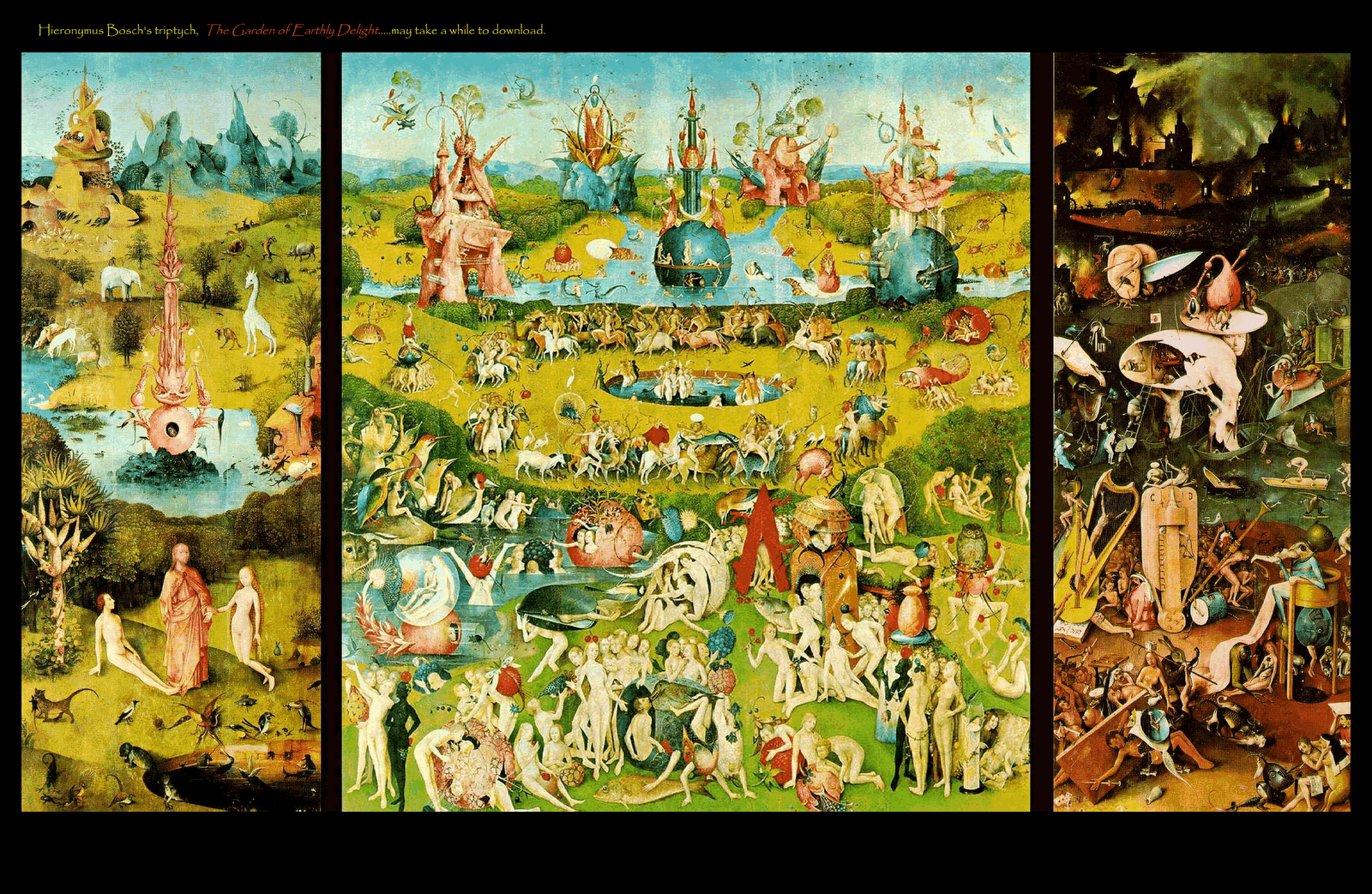
    Dantes Inferno Lust - bosch garden
    Dantes Inferno Lust

    Could it be, that one or more of Dante’s circles is as subversive today as it was then?  As a reader of my blog might expect, I am interested in Dante’s reflection in art and society and last but not least of his concept of evil, since the 34th song of his journey inspects Lucifer himself.

    •  Literal and historical: around 600 real people mentioned pointing out the disconnect between medieval and classical practice
    •  Allegorical: archetypal representative of Dante’s belief system and values
    • Moral: makes points about morality where the big questions in the Divine Comedy are:
      • What is man?
      • Why does he act as he does?
      • What is Good and what is Evil?
      • When it so often looks like “The Good loses,” why should anyone be good?

    Warning – reading Dante might be harmful

    True and False - Right or wrong - good or evil - black or white
    True and False – Right or wrong – good or evil – black or white

    The great works of world literature, Antigone, Hamlet, Faust, torture not only students’ hearts but all hide an eternal sting. This warning upfront, it is not to harmless to engage with Dante. Next to the Bible is the ‘Divine Comedy’ the most commented book in World literature. The phenomenon is even more amazing, because Dante is the most difficult, least accessible poet of world literature. Dante combines the whole scholarly tradition of the Latin Middle Ages and asks of his readers to have this knowledge or debark, before the ship leaves the safe shore:

    O voi che siete in piccioletta barca,
    desiderosi d’ascoltar, seguìti
    dietro al mio legno che cantando varca
    tornate a riveder li vostri liti:
    non vi mettete in pelago; chè forse
    perdendo me, rimarreste smarriti.

    The human rights organization “Gherush92” has claimed some chants of “Commedia” are full of racist, anti-Semitic and Islamophobic stereotypes and by the way, I add not even equal opportunity – fewer women suffer in hell.

    For the contemporary reader it is, however, not only the scholarly high sea of political correctness, in which they could get  lost. Further difficulties are added: spatial, temporal, and formal ones.

    Spatial context

    We must see the world through the eyes of Dante. The world view of Dante in the first two decades of the 14th century, his image of the earth and the structure of the three kingdoms   corresponds to the Ptolemaic system, unchallenged until Copernicus three hundred years later. This makes up the basis of Dante’s astronomy, described by his prose ‘Convivio’

    Dante’s heavenly scheme

    Comedy's geography
    Comedy’s geography

    Claudius Ptolemy concluded in the middle of the second century AD in Alexandria his main work, the ‘Megale syntaxis (‘ Big assortment ‘), his world-view: The stationary center of the universe is the spherical earth, of which only one half
    occupied with the vertex Jerusalem, the other is covered by ocean.  Down into the sea, now obviously no longer Ptolemy, but Dante, as an exact antithesis to Jerusalem, is the mountain of purification, the scene of the second part of the ‘Comedy’: the ‘Purgatorio’.  More closely tied to Ptolemaic ideas are the spatial relationships his understanding of space and stage. Albert Ritter sketched the Comedy’s geography from Dante’s Cantos:
    Hell’s entrance is near Florence with the circles descending to Earth’s centre; sketch 5 reflects Canto 34’s inversion as Dante passes down, and thereby up to Mount Purgatory’s shores in the southern hemisphere, where he passes to the first sphere of heaven at the top.

    Paradiso

    Dantes Divine Comedy - Paradiso
    Dantes Divine Comedy – Paradiso

    Around the earth revolve in outward increasing speed nine concentrically enclosing transparent hollow spheres. Seven blessed spheres with the earth as center and five planets known in his time have attached the heavenly bodies: Moon, Mercury, Venus, Sun, Mars, Jupiter and Saturn.  The ninth circle are the fixed stars, identical with what “le stelle” at Dante’s.  Beyond those nine celestial spheres is the seat of the supreme deity, the empyrean, “cielo di fiamma o vero luminoso or “the light and flame sky – itself immobile – like the earth.

    This heavenly scheme is matched by Dante’s topography of the ‘Purgatorio’ and ‘Inferno’.

    Purgatorio

    Purgatorio
    Dante’s Divind Commedy Purgatorio

    The Purgatorio rises on the apex of the uninhabited area covered by the ocean opposite to Jerusalem. It is the location of the passion and death of Jesus Christ, and also divided into nine districts. At the bottom of the beach belt land, the souls that are shipped to death first wait on a ledge and into a ravine for the entry in the actual Purgatorio, located on the ring terrace The Prayer and Purification passage leads through seven by rock walls separated ring terraces. On the top is the  abandoned earthly paradise.

    Inferno

    Inferno
    Dante’s Divine Comedy Inferno

    Likewise, the Inferno is precisely located  in the Ptolemaic system of Dante. Hell corresponds to the conical Purgatory at its negative hollow image. It is located in the interior of the inhabited hemisphere. Lucifer has bored with the insubordinate angels after his fall into the earth to its center. Thus, the funnel-shaped narrowing again be divided into nine circles Hellmouth has emerged. Where did the displaced Earth’s mass go? In this creation model, it was reused as material for the Purgatory and therefore the mountain’s height  matches the hell crater’s depth.

    Temporal context

    Poets write  for eternity, but within a Zeitgeist. Dante had his contemporary readers in mind, to achieve certain political effects. Much of this vision of the afterlife is therefore based on the period of history and culture he lived in. Naturally, as in any art, this requires explanation, if the  context is not there anymore nowadays. Like his topographic structure, are the conditions in Dante’s temporal structures coherent whole. Its center is natural is located in Rome.  As a matter of fact, in a trinity of  Rome. The Classical Rome of Augustus, the New Byzantine Rome and the Rome of the Holy Roman Empire – the papal Rome. The history of the latter began on Christmas in the year 800 with the coronation of Karl (Karl the Great) to the Roman emperor, executed by the pope Leo III.  Around 1160 the official denomination Imperium Romanum changed  into Sacrum Imperium and 1254 the empire was named Sacrum Imperium Romanum and became in the 15th century the Holy Roman Empire of German Nation. The title of the supreme monarch was initially “king”. The emperor’s honor could only be achieved only by the coronation of the pope.

    Historical context

    As an ambassador of his native city of Florence, Dante came 1301 AD to Rome. The contradiction between idea and reality on court of Pope Boniface VIII traumatized him.  Jerusalem, taken 1099,  was lost 1187, but the Crusaders had relocated their dwindling Kingdom of Jerusalem to Cyprus around 1300 but the Mamluks besieged and captured the last Templer fort Ruad in 1302. Constantinople would hold only 150 years more.  Dante’s central idea is of unity and  continuity of Roman and to him this is world history under the sign of the eagle. In the sixth canto  ‘Paradiso’ the Eastern Roman Emperor Justinian (527-565) describes the trajectory of the eagle (the Roman character)  together with history lessons. As the author of the corpus juris civilis,  on which the Napoleon code and the whole  Western legal system is based.
    Justinian is the representative of the Roman Empire. The eagle will start with Troy westward to Lazio. Under Augustus, the conquest consolidated in the golden Aion. Constantine, who moved his residence 326 moved to Constantinople against the natural and divinely ordained east-west direction and through the donation of the Papal States, repealed the division of sacred and secular rule. The Imperium Romanum was for Dante the epitome of everything that he wanted to see realized in history. Not the Sacrum but the center of the Civitas Dei, with its dual objective: eternal blessedness of the man through the exercise of the theological virtues (faith, hope and love) – under the leadership of church; earthly well-being through the use of intellectual and moral faculties – under the leadership of a worldly State with Plato’s virtues (Prudence, Justice,  Courage, Temperance).

    More problematic is the difficulty in understanding the political references: What can we do with them now? They include all a closed world view: Catholic of the Middle Ages. That is why one meets a lot of Popes and even Mohammed in Dante’s hell. To him, a natural state order has its historical origin in the classical Roman Empire. To me this the first glimpse into the area of enlightenment, to invoke a secular (one might say pagan) legitimation of power again.

    Northern Italy’s political struggle

    Conclave_Vatican_yesterdayIn Northern Italy’s political struggle between Guelphs and Ghibellines, Dante was part of the Guelphs, who in general favored the Papacy over the Holy Roman Emperor.
    Dante wrote in his political credo in ‘De Monarchia’ about the basic  relationship between empire and papacy  (Imperium and Sacerdotium), or secular and religious rule. Only in the harmonious coexistence of the two powers Dante saw a guarantee for a just and peaceful world order in which the salvation of humanity can be accomplished. Florence’s Guelphs split into factions around 1300: the White Guelphs, who opposed secular rule by Pope Boniface VIII and who wished to preserve Florence’s independence, and the Black Guelphs, who favored the Pope’s control of Florence.
    Dante was among the White Guelphs who were exiled in 1302 by the Lord-Mayor Cante de’ Gabrielli di Gubbio, after troops under Charles of Valois entered the city, at the request of Boniface and in alliance with the Blacks.
    The Pope said if he had returned he would be burned at the stake.

    Form of poetry

    We encounter now the third hurdle, with which the reader is confronted reading Dante: the formal aspects of the ‘Divine Comedy’. Three elements are highlighted here:

    •     the language,
    •     the symbolism
    •     and the symbolism.

    Dante has decided, his main work in the so-called vernacular: in Italian and that was all but self-evident at that time.
    The Italian cannot be seperated from the ‘Divina Commedia’. However, its rhythmic form, the tercet, does not occur in Italian poetry.

    Sacred numbers

    Here you find Dante’s sacred numbers:

    • 3: trinity
    • 9: 3X3
    • 33: multiple of 3
    • 10: considered number of perfection
    • 100: 10 X 10 absolute perfection

    Living systems are recursive systems
    Living systems are recursive systems

    Three verses are together, of which the first and third rhyme, while the second rhyme will be picked up in the next Tercet. So the terza rima form an elaborate chain. Three 3 cantiche, each formed of 33 cantos, adding up to 99, which with the addition of the first introductory canto, adds up to 100. The Poem is written in Teresa Rima: 3 line stanzas with a rhyme scheme aba, bcb, cdc, ded etc, so each rhyme is used 3 times.

    The big Munich Romanist Wilhelm Ritter von Hertz, whose translation of the ‘Purgatorio’ and the ‘Paradiso’ I use, dominates the iambic rhythm, rhyme and the trisection. The three rhymes belong to the center of Dante’s symbolism ultimately, together with the Trinitarian concept of God. The symbolism of numbers plays in the ‘Divine Comedy’ a very important role just as with C.G. Jung. Each of the three main parts of the work, called cantiche , consisting of thirty-three songs, canti, which indicate the years of the life of Christ. An additional song of the introduction is to increase the total number of canti to hundred. The hundred is ten times the number ten, which, according to the View in Dante’s was a symbol of perfection. The Inferno is divided into nine circles and the court; in the ‘Purgatorio’ there are pre-Purgatorio and the earthly Paradise on the top of nine circles; the nine heavens are completed by the Divine Office: the empyrean – again to number ten. The three-rhyme has not only aesthetic, but symbolic, one might almost say metaphysical significance.
    The whole work is almost saturated with symbolism. Here are more difficulties for the contemporary Dante reader. Without reading scholarly commentary, the symbols remain a very superficial affair. For example, refer the three wild animals in the first canto of the Inferno to the main vices: Sensuality (Panther), Pride (Lion), Greed (wolf). Whether something is right or left, to Sun and Star is never random. In the architecture of the poem, there are numerous, but not obvious correspondences. For example, the sixth Song of the ‘Paradiso’, in which, as mentioned, the Roman eagle represents the continuity of world history has an inner relationship to both the sixth canto of the Inferno and the ‘Purgatorio’ – pointing to the different factions in Florence.

    The 9 circles of inferno in a hurry

    First Circle (Limbo) – The virtuous Pagans

    Luke Warm. Neither sinned nor believed in Christ.
    Luke Warm. Neither sinned nor believed in Christ.

    Here reside the unbaptized and the virtuous pagans, who, though not sinful, did not accept Christ.

    Heaven does not claim them, Hell does not want them. They are not punished in an active sense, but rather grieve only because of their separation from God, without hope of reconciliation. Without baptism (“the portal of the faith that you embrace”) they lacked the hope for something greater than rational minds can conceive. Limbo includes green fields and a castle, the dwelling place of the wisest men of antiquity.

    Second Circle – The Lustful

    Lust Blown about in darkness.
    Lust Blown about in darkness.

    Those overcome by lust, are punished by violent storm in this circle. Blown about in darkness.  Dante condemns these “carnal malefactors” for letting their appetites sway their reason. They are the first ones to be truly punished in Hell. These souls are blown about to and fro by the terrible winds of a violent storm, without hope of rest. This symbolizes the power of lust to drive one  needlessly and aimlessly.

    Third Circle – The Gluttonous

    gluttony
    gluttony

    Gluttons are forced to lie in the mud under continual cold rain and hail. Deprived of individuality. Each is alone, cold, and miserable. Cerberus guards the gluttons, forced to lie in a vile slush produced by ceaseless foul, icy rain (Virgil obtains safe passage past the monster by filling its three mouths with mud).  The gluttons lie here sightless and heedless of their neighbours, symbolising the cold, selfish, and empty sensuality of their lives. Just as lust has revealed its true nature in the winds of the previous circle, here the slush reveals the true nature of sensuality – which includes not only overindulgence in food and drink, but also other kinds of addiction.

    Forth Circle – The Hoarders & Wasters

    Dante's greedy
    Dante’s greedy

    Hoarders and Wasters push as two groups a great weight against the heavy weight of the other group. Dependency toward material goods deviated from the appropriate means. They include the avaricious or miserly (including many “clergymen, and popes and cardinals”), now bankers ans politicians who hoarded possessions, and the prodigal, who squandered them. The two groups are guarded by Plutus, the Greek god of wealth (who uses the cryptic phrase Papé Satàn, papé Satàn aleppe). The two groups joust, using as weapons great weights which they push with their chests

    Fifth Circle  – The Wrathful

    Wrathful and Sullen
    Wrathful and Sullen

    In a swamp-like water of the river Styx, the wrathful fight each other on the surface. The sullen lie gurgling beneath the water, withdrawn “into a black sulkiness which can find no joy in God or man or the universe.” Phlegyas reluctantly transports Dante and Virgil across the Styx in his skiff.The lower parts of Hell are contained within the walls of the city of Dis, which is itself surrounded by the Stygian marsh. Punished within Dis are active (rather than passive) sins. The walls of Dis are guarded by fallen angels.  Oh well, fallenangel.

    Sixth Circle –  The Heretics

    Heretics are in tomb.
    Heretics are in tomb.

    Heretics are trapped in flaming tombs of the City of Dis. Heretics, such as Epicurians (who say “the soul dies with the body”) are trapped in flaming tombs. Pausing for a moment before the steep descent to the foul-smelling seventh circle, Virgil explains the geography and rationale of Lower Hell, in which violent and malicious sins are punished. In this explanation, he refers to the Nicomachean Ethics and the Physics of Aristotle. In particular, he asserts that there are only two legitimate sources of wealth: natural resources (“nature”) and human activity (“art”). Violence, to be punished in the next circle, is therefore an offence against both.

    Seventh Circle – The Violent

    The seventh circle houses the violent. Its entry is guarded by the Minotaur, and it is divided into three rings:

    Outer ring

    Violent
    Violent

    Violent against people and property,  are immersed in Phlegethon, a river of boiling blood and fire, to a level commensurate with their sins: Alexander the Great is immersed up to his eyebrows. The Centaurs, commanded by Chiron, patrol the ring, firing arrows into those trying to escape.

    Middle ring

    In this ring are the suicides, who are transformed into gnarled thorny bushes and trees, excluded from resurrection. Here are the suicides (the violent against self), who are transformed into gnarled thorny bushes and trees, which are fed on by the Harpies. Unique among the dead, the suicides will not be bodily resurrected after the final judgement, having given their bodies away through suicide. Instead they will maintain their bushy form, with their own corpses hanging from the limbs. The trees are a metaphor for the state of mind in which suicide is committed. The other residents of this ring are the profligates, who destroyed their lives by destroying the means by which life is sustained (i.e. money and property). They are perpetually chased by ferocious dogs through the thorny undergrowth.

    Inner ring

    The violent against God (blasphemers), the violent against nature (sodomites), and the violent against art (usurers), all suffer in a desert of flaming sand with fiery flakes raining from the sky. The blasphemers lie on the sand, the usurers sit, and the sodomites wander about in groups

    Eighth Circle (Malebolge) – The Fraudulent

    Fraudulent
    Fraudulent

    The fraudulent—those guilty of deliberate, knowing evil—are located in a circle named Malebolge (“Evil Pockets”), divided into ten Bolgie, or ditches of stone. The circle named Malebolge (“Evil Pockets”), is divided into ten  ditches of stone, with bridges spanning the ditches:

    Bolgia 1 (Canto XVIII):

    Panderers and seducers walk in separate lines in opposite directions, whipped by demons.

    Bolgia 2 (Canto XVIII:

    Flatterers are steeped in human excrement. )

    Bolgia 3 (Canto XIX):

    Those who committed simony are placed head-first in holes in the rock, with flames burning on the soles of their feet. One of them, Pope Nicholas III, denounces as simonists two of his successors, Pope Boniface VIII and Pope Clement V.

    Bolgia 4 (Canto XX):

    Sorcerers and false prophets have their heads twisted around on their bodies backward, so they can only see what is behind them and not into the future.

    Bolgia 5 (Cantos XXI through XXIII):

    Corrupt politicians (barrators) are immersed in a lake of boiling pitch, guarded by devils, the Malebranche (“Evil Claws”).

    Bolgia 6 (Canto XXIII):

    Hypocrites listlessly walking along wearing gold-gilded lead cloaks.

    Bolgia 7 (Cantos XXIV and XXV):

    Thieves, guarded by the centaur (as Dante describes him) Cacus, are pursued and bitten by snakes, which make them undergo various ugly transformations.

    Bolgia 8 (Cantos XXVI and XXVII):

    Fraudulent advisors are encased in individual flames. Dante

    Bolgia 9 (Cantos XXIX and XXX):

    A sword-wielding demon hacks at the sowers of discord. As they make their rounds the wounds heal, only to have the demon tear apart their bodies again. Muhammad tells Dante to warn the schismatic and heretic Fra Dolcino. (Cantos XXVIII and XXIX).

    Bolgia 10:

    Groups of various sorts of falsifiers (alchemists, counterfeiters, perjurers, and impersonators) are afflicted with different types of diseases.

    Ninth Circle (Cocytus) – The Treacherous (Canto 34).

    Frozen in a sheet of ice with only their face exposed to show the pain. Degree of depth based on degree of betrayal

    SatanCenter
    SatanCenterb

    Satan is trapped in the frozen central zone in the Ninth Circle of Hell, Inferno. The Ninth Circle is ringed by classical and Biblical giants. Each group of traitors is encased in ice to a different depth, ranging from only the waist down to complete The circle is divided into four concentric zones.

    Zone 1: Caïna (Canto XXXII)

    Named after Cain, is home to traitors to their kindred. The souls here are immersed in the ice up to their necks.

    Zone 2: Antenora  (Cantos XXXII and XXXIII)

    Traitors to political entities, such as party, city, or country, are located here. The souls here are immersed at almost the same level as those in Caïna, except they are unable to bend their necks.

    Zone 3: Ptolomæa (Canto XXXIII):

    Traitors to their guests are punished here. The souls here are immersed so much that only half of their faces are visible. As they cry, their tears freeze and seal their eyes shut- they are denied even the comfort of tears.

    Zone 4: Judecca

    Named for Judas the Iscariot, Biblical betrayer of Christ, is for traitors to their lords and benefactors. All of the sinners punished within are completely encapsulated in ice, distorted to all conceivable positions.

    Center of Ninth an all circle:  Perverted Trinity (Canto XXXIV)

    Condemned to the very center of hell for committing the ultimate sin (treachery against God) is Satan, represented as a giant, terrifying beast. He is waist deep in ice, and beats his six wings as if trying to escape, but the icy wind that emanates only further ensures his imprisonment. He is chewing on Brutus and Cassius, who were involved in the assassination of Julius Caesar, and Judas Iscariot. What is seen here is a perverted trinity. Satan is impotent, ignorant, and evil while God can be attributed as the opposite: all powerful, all knowing, and good.

     Conclusion

    The Question is:  Are we seven hundred years after the birth of the ‘Divina Commedia’ able to understand Dante’s  world and relate to Dante’s symbolism. My answer is defintely. Not only because Dante’s Inferno is now an action-adventure video game . The story is based on Inferno, the first canticle of Dante Alighieri’s Divine Comedy, and shares many similarities with the poem.

    Sources

    lDivine Comedy.” Wikipedia.   http://en.wikipedia.org/wiki/The_Divine_Comedy

    lThe World of Dante. Institute for Advanced Technologies in the Humanities http://www.worldofdante.org/

    lDante’s Divine Comedy I-III Translated by Mark Musa

    lDante’s Die göttliche Kommödie I-III Translated by Willhelm G. Hertz

  • Shakespeare’s “Macbeth” from a Jungian view

    Shakespeare’s “Macbeth” from a Jungian view

    when they all know the good as good, there arises the recognition of evil.
    When they all know the good as good, there arises the recognition of evil.

    This article explores the psychological underpinnings of  Shakespeare’s “Macbeth” from a Jungian view. Carl Jung left a great deal of ambiguity surrounding his work. He understood, as long as there have been men and they have lived, they have all felt this tragic ambiguity and everybody must accept his or her “Shadow” during the individuation process. Ambiguity between good an evil, and a failed individuation is the core theme in the tragedy Macbeth: “Fair is foul, and foul is fair” say the three witches in the beginning of the play and this paradox is touched again by Macbeth: “So foul and fair a day I have not seen”. The enemy and death is “foul” – bad – but the outcome of the battle is “fair” – good, only because he has won.So the play Macbeth is about the evil, but as we see mostly the evil in us, and this evil is first impersonated by the witches. That is why Macbeth is also called the “Scottish play” by the superstitious theater folk. The play has gotten a reputation for being bad luck in terms of productions and those who act in it, and so it is referred from them to as “the Scottish play” to avoid naming it. The play is about the good consumed by the evil. However, Tao says Tao is eternal and so are the two principles Yang and Yin, so that good and evil must be eternal, as necessary elements of our world.

    Secularism, particularly relativism has tried to blur the line between good and evil where belief systems and philosophies used different approaches to mask the ambiguity between “evil and good”.  Dualistic has the view that the world consists of or is explicable as those two fundamental entities. It is God, love, death, suffering and infinity that open us to the non-dualistic mind, or contemplation. Dualism means eliminating everything that is not like you (or projecting all your rejected attributes to others). Lao-Tse and Jesus were masters of non-dualistic thinking. The Jungian System is a fine example of an non-dualistic psychology : the more inflated your self-image (Ego), the bigger your shadow will be. Macbeth looses his soul (his Self) failing to differentiate between Persona and his inflated Ego and overwhelmed by his shadow and his anima utilized by the ambitious Lady Macbeth. 

    Jung’s vastly varying influences have helped shape a psychology that has influenced a great many scholars, theorists, psychologists, and artists of various specialties. While still maintaining an empirical stance Carl Gustav Jung has taken the influential elements of literature, symbolism, religion, and the alchemy and has formed these raw, primordial factors into a unparalleled  psychoanalytic system. Jung’s view of literature was ambivalent. He was fascinated by Nietzsche, and lectured on Nietzsche’s Zarathustra, Besides of German literature C. G. Jung appears to have been influenced by Shakespeare. In particular Jung was interested in the mythic and archaic elements in literature. Hermann Hesse’s novel Demian was inspired by Jung’s theory of individuation whereas Macbeth seems to be the prototype of a failure to achieve successful ego-individuation.

    The play Macbeth

    title_macbeth
    title_macbeth

    Jung found literature to be a psychological process which includes the process of materials being “drawn from man’s conscious life; and the visionary dealing with primordial images that transcend human understanding.” Jung found that the archetypal symbols he worked with could, quite naturally, be found in the works of various ages. “It is to be expected… that the poet will turn to these mythological images to give suitable expression to his own experiences.”

    Macbeth, when you analyze it, is a psychological battle between good and evil, and between evil ambition and order. Darkness is a symbol of the characters forgetting all about honor or goodness. The play demands that the audience think about how we make excuses in our life to pursue false ambitions that are wrong. Macbeth makes this mistake and ultimately it leads to his death. Darkness in Macbeth is a key theme. The play begins with the brief appearance of a trio of witches and then moves to a military camp, where the Scottish King Duncan hears the news that his generals, Macbeth and Banquo, have defeated two separate invading armies—one from Ireland, led by the rebel Macdonwald, and one from Norway. Macbeth and Banquo encounter the witches who prophesy that Macbeth will be made thane (a rank of Scottish nobility) of Cawdor and eventually King of Scotland. Macbeth and Banquo treat their prophecies skeptically until some of King Duncan’s men come to thank the two generals for their victories in battle and to tell Macbeth that he has indeed been named thane of Cawdor. Macbeth is intrigued by the possibility that the remainder of the witches’ prophecy—that he will be crowned king—might be true, but he is uncertain what to expect. It remins me a little bit of Wagners Rhinemaidens, who have a magical gold treasures with magical powers. Alberich an ugly dwarf, trys to score on them but they laugh at him. So he robs their treasure with  the ring (the key to power and wealth). To do this, he must renounce love. I think Macbeth never could love, neither himself nor others.

     Lady Macbeth suffers none of her husband’s uncertainty. She desires the kingship for him and wants him to murder Duncan in order to obtain it. When Macbeth arrives at Inverness, she overrides all of her husband’s objections and persuades him to kill the king that very night. He and Lady Macbeth plan to get Duncan’s two chamberlains drunk so they will blame the murder on the chamberlains. While Duncan is asleep, Macbeth stabs him, despite his doubts and a number of supernatural portents, including a vision of a bloody dagger. When Duncan’s death is discovered the next morning, Macbeth kills the chamberlains—ostensibly out of rage at their crime—and easily assumes the kingship. Duncan’s sons Malcolm and Donalbain flee to England and Ireland, respectively, fearing that whoever killed

    C_G_JUNG_FEMALE_ARCHETYPES
    C_G_JUNG_MALE_FEMALE_ARCHETYPES

    Duncan desires their demise as well. Fearful of the witches’ prophecy that Banquo’s heirs will seize the throne, Macbeth hires a group of murderers to kill Banquo and his son Fleance. They ambush Banquo on his way to a royal feast, but they fail to kill Fleance, who escapes into the night. Macbeth becomes furious: as long as Fleance is alive, he fears that his power remains insecure. At the feast that night, Banquo’s ghost visits Macbeth. When he sees the ghost, Macbeth raves fearfully, startling his guests, who include most of the great Scottish nobility causing Macbeth’s kingship to incite increasing resistance from his nobles and subjects. Frightened, Macbeth goes to visit the witches in their cavern. There, they show him a sequence of demons and spirits who present him with further prophecies: he must beware of Macduff, a Scottish nobleman who opposed Macbeth’s accession to the throne. Macbeth orders that Macduff’s castle be seized and, most cruelly, that Lady Macduff and her children be murdered. It should be clear by now, that Macbeth represents the archetypes of weak king and becomes a cruel sadistic warrior, whereas Lady Macbeth seems to own foremost frigid witch qualities.

    When news of his family’s execution reaches Macduff in England, he is stricken with grief and takes revenge and with Prince Malcolm, Duncan’s son, and the support of the Scottish nobles, who are appalled and frightened by Macbeth’s tyrannical and murderous behavior. Lady Macbeth, meanwhile, becomes plagued with fits of sleepwalker in which she bemoans what she believes to be bloodstains on her hands. Before Macbeth’s opponents arrive, Macbeth receives news that she has killed herself, causing him to sink into a deep and pessimistic despair.

    He is struck numb with fear, however, when he learns that the English army is advancing on Dunsinane shielded with boughs cut from Birnam Wood. Birnam Wood is indeed coming to Dunsinane, fulfilling half of the witches’ prophecy. In the battle, Macbeth hews violently, but the English forces gradually overwhelm his army and castle and he realizes that he is doomed, Macbeth continues to fight until Macduff kills and beheads him.

    Failed Individuation in Shakespeare’s Macbeth

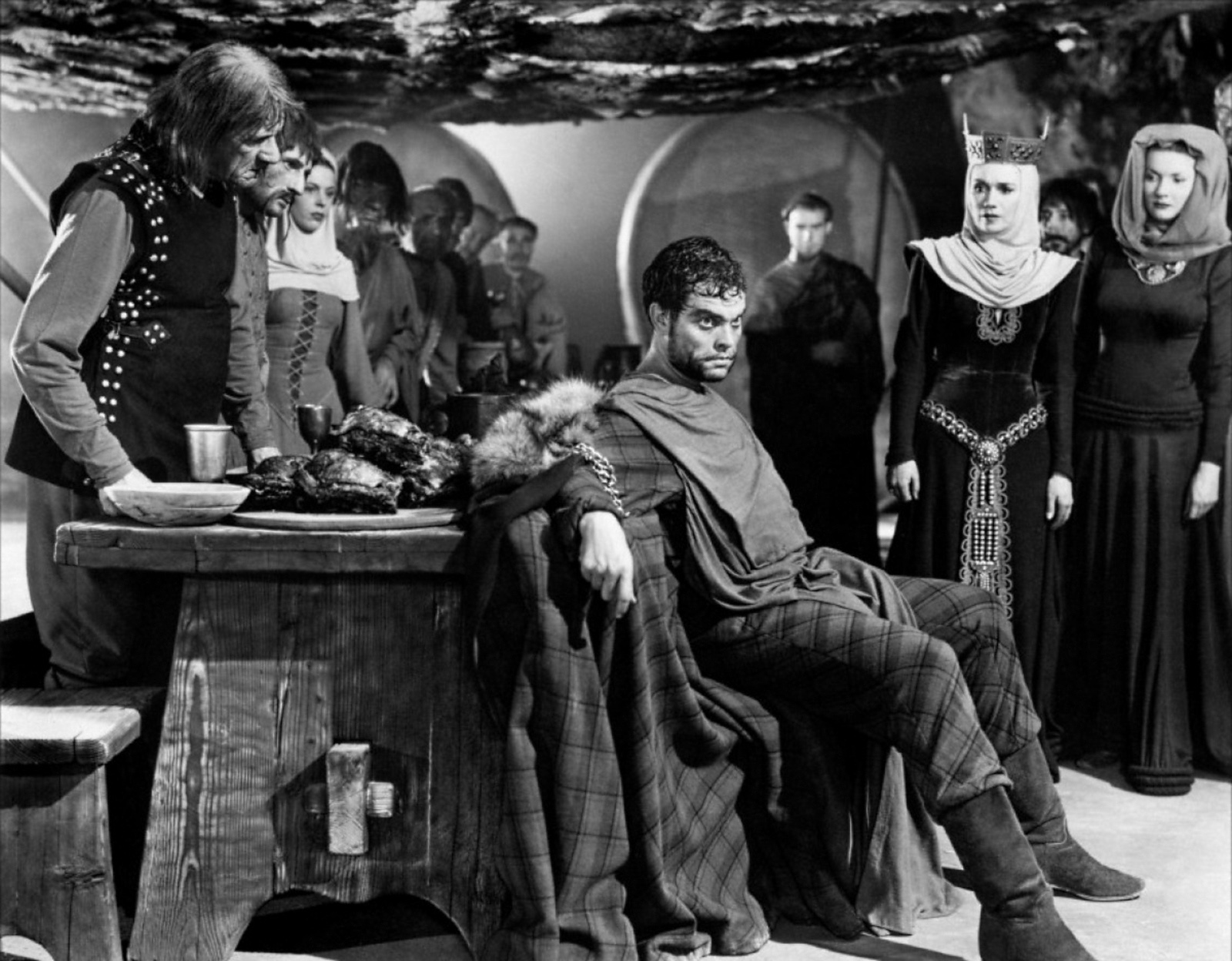
    macbeth
    macbeth

    Macbeth has not begun to deal with the adult developmental task of individuation. According to Jung, in the process of individuation “unconscious potentials are explored and reintegrated with the “Self”. The exploration of certain parts of the unconscious brings to consciousness unacknowledged ” missing pieces. Macbeth’s failure to individuate successfully is reflected by the distance between his rigid Persona and his real personality, and his inability to confront the shadow aspects of his psyche, and the complete rejection of his anima. Tellingly those developmental issues only seem able to get Macbeth’s attention through his hallucinations and visions. Jung said that “only through the adult development of individuation can the person become truly an ‘individual’ and not simply a carrier of unconscious images and other people’s projections”. This “carrier of unconscious images” and receptacle of “other people’s projections” is exactly how Shakespeare paints Macbeth: Macbeth is Duncan’s “O worthiest cousin” (I, iv, 17), the murderers’ “Highness,” “liege,” “lord” (III, I, 81, 102, and 131), and Malcolm’s “tyrant” (Iv, iii, 14). Throughout the play Macbeth’s identity is formed by Shakespeare’s other characters. The tragedy of Macbeth is that he has failed to explore his unconscious and discover and accept his true identity. Because he has not individuated, he can be molded and pushed into identities and actions that others project onto him. Macbeth is very conscious of his persona and of the positive reputation he has cultivated, and he enjoys thinking of himself in this way. According to Jung, the Persona (literally the mask) is the aspect of personality that adapts to the world to be accepted in society. Throughout the play Macbeth attempts to put on a “false face” (I, vii, 9 5) so that he can hide what his “false heart doth/know” (I, vii, 95-96). When he has plotted Banquo’s death and is preparing to make merry with his guests, Macbeth  believes that he can cover not only his conscious knowledge of his role in Banquo’s death from others but keep his unconscious feelings of fear, shock, and guilt at arranging a murder from himself. During dinner Macbeth has a hallucination. He sees the ghost of Banquo come to haunt him and denies his guilt: “Thou canst not say I did it. Never shake/ Thy gory locks at me” (III, iv, 61-62). Throughout the play Macbeth refuses to own his unconscious; he places supreme importance on appearances (Persona), his consciousness and refuses to deal with any desires and actions which challenge his idealized Ego.

    instinctive powerful, beast
    Shadow- instinctive powerful, beast

    His rejection and disregard of this “shadow” keep him ignorant of its motivational power and the gulf that develops between his persona and real personality. Jung described the shadow as “those aspects of the psyche that are rejected from consciousness by the ego (during sozialization in the first half of life), because they are inconsistent with one’s self-concept. Macbeth’s history of denying his shadow is detailed throughout the play. In Act I, after learning of Duncan’s intention of having Malcolm succeed to the throne, Macbeth rejects his ambitiously motivated ability to become a traitor. Jung says that as we show our persona to others and conceal our shadow from ourselves, “the shadow gets more and more ugly, and the split between persona and shadow … widens”. For Macbeth, this is true. After he kills Duncan, Macbeth refuses to believe that he could be a murderer – one although this ability to murder is present in Macbeth’s character. After his second meeting with the Weird Sisters, Macbeth resolves to kill Macduff’s family in the Thane of Fife’s absence Macbeth has progressed from ambitious regicide to familial mass murderer. Because  Macbeth has not confronted his shadow and haven’t taken the effort caused by introduction of the shadow to consciousness, Macbeth cannot follow an intrinsic moral compass. This allows him to commit his atrocities without having to justify them. Ironically, part of Macbeth’s anima is positive, but it is repressed because he believes it to contain negative qualities.

    anima
    anima

    According to Jung, men have “repressed feminine-typed qualities” (their anima) and women have “repressed masculine-typed qualities” (their animus). While this area of Macbeth seems cloudy, I believe that Macbeth cannot explore what Jung would call the inner feminine qualities of empathy and emotion because Lady Macbeth is constantly questioning his identity as a man, struggling herself to be a women and with her animus. Two passages support this theory. When Macbeth begins to vacillate between killing Duncan and maintaining his honorable reputation, Lady Macbeth chastises him for not being man enough to take what he wants (I, vii, 3 9-49). She also calls him to task for not being a man of his word (I, vii, 53-67). Lady Macbeth claims that she, a woman, is more manly than Macbeth. Macbeth is expressing fear and guilt, emotional inner controls, and Lady Macbeth makes fun at him. Later, when Macbeth is confronted with his hallucination of Banquo’s ghost, he expresses fear and revulsion at what he has done to Banquo through the ghost’s horrible appearance. Lady Macbeth tells him to stop acting like a hysterical woman and to live in reality. She even asks Macbeth, “Are you a man” (III, iv, 70). While Macbeth clearly rejects his “inner woman,” as shown by the ease with which he is manipulated by gender role identification (making him vulnerable to Lady Macbeth evilness), he is severely hampered in uncovering his anima by her disparaging of his male identity.

    Personal Layers
    Personal Layers

    Macbeth’s strict adherence to his inflated Ego a false Persona, his unwillingness to deal with his shadow. According to Jung rejecting anima have psychological consequences – sometimes the shadow and anima merge and overpower the consciousness (Ego); he has hallucinations.  Jung interpreted psychotic hallucinations and delusions as expressions of the collective unconscious archetypes, which can be interpreted as visions or a type of dream, manifesting their meaning from his personal unconscious. Act II’s floating dagger can be read as a symbol forcing its way into consciousness. Through his visions, Macbeth’s unconscious is trying to show him the issues he must deal with. One of the sadder aspects of the tragedy is that he is constantly dissuaded from looking at them. The moral conflict needed to mitigate his personal not to speak collective un consciousness  is not present.  This is why poor Macbeth (like many powerful men and women) is so far from the mark with his comments on life. They does not know enough about themself to allow anything but a shallow, two-dimensional interpretation of life, letting them be directed by passions unseen, greed and manipulative persons around them.

    Anima and Animus in Shakespeare’s Macbeth

    Lady Macbeth
    Lady Macbeth

    There appears to be some critical discord in connection to the classification of Lady Macbeth, whether she qualifies as an innocent, supportive wife, or, in Malcolm’s words, as a “fiend-like queen.” (Shakespeare V. ix. 35) However, Shakespeare’s text simply does not support the idea that the Lady Macbeth did not play a serious role in the murder of King Duncan and. The concept which seems to lie at the core of critical discussion in relation to Lady Macbeth, is gender. Lady Macbeth herself, makes the argument about gender in her famous speech, wherein she appeals to the powers of dark spirits to “unsex” her, and replace any feminine tendency in her with “direst cruelty” (Shakespeare I. v. 42-43). She wishes to take all that she perceives as weak and feminine in herself, and seeks to substitute it with an evil. Jung believed that all men and women were made up of masculine and feminine energies, the former being called the animus and the latter being called the anima and this unconscious selves of individuals can be used to understand Lady Macbeth’s actions. It can be argued, that Lady Macbeth’s vehement denial of her feminine self (or her anima) that causes her to manipulate her husband into committing the murder of Duncan, affected her relationship with her husband (unable to maintain it) and ultimately led to her insanity and death.

    Conclusion

     “Fair is foul, and foul is fair” : What the line points to is the play’s concern with the discrepancy between appearance and reality: that is, the difference between how someone seems and how someone really is. It is a central concern of Shakespeare’s, and obviously one that fits well with the medium of theatre, which relies on actors seeming to be something that they most definitely aren’t. This is one of the last lines in Act 1 Scene 1 when the witches are foreshadowing events to come in the play. With these words, they are predicting the evil that will cloud Macbeth’s judgments and that those judgments will appear to Macbeth as fair and just. This line also could refer to the witches believing that things some consider to be foul and ugly are just and beautiful to them because they embody evil.

  • Archetype of the vampire in todays culture of Narcissism

    Archetype of the vampire in todays culture of Narcissism

    The vampire breaks the rules of the gods, society or nature, sometimes maliciously sometimes cunning or foolish or both.  This article wants to explore the connection between Narcissism, Vampires and contemporary politicians. We experience right now a difficult transition especially in Europe, led by an élite bred more than ever by an increasing culture of Narcissism  The psyche of world leaders, almost everybody in power (over us) can been interpreted narcissistic and the power behind (the money cluster and NWO matrix) as a sort of vampires.

    I have written not much lately. The reason was, that I joined a start-up party in the upcoming German election. It is a major election, as Europe is standing on fiscal and value cliff. Basically it is about „Freedom or Euro“ or “democracy or serfdom”. The majority of those party members are highly educated and professional, but  I have seen so many fellow party members quit under flashy and sometimes infantile circumstance, that I could not help to diagnose that narcissistic disorders must be an important topic especially in politics. Therefore I decided to do case studies, based on my experience in this political party. This article is work in progress ro structure my bewilderment a little bit. Indeed, within this new Euro critical party “start-up”  I met more narcissistic hurt people I ever cared for. It was the first time, when I understood why politics is so sick – it lures sick people in a sick mental framework and gives the worst of them an advantage. This political culture reminds me of Ann Rice’s vampires or zombies.
    In this new party, I experienced an active engagement with the tension between destruction and creation. With these developments, an individual – and a party and its voters – cannot easily engage in an effective dialogue that mitigates the coming apocalypse of Europe.

    Vampire myth

    The vampire myth has appeared over the centuries in almost every culture, beginning with the earliest recorded epic from Babylonia, about 2000 years B.C the Gilgamesh.  Although there are cultural variations in the various legends, there is always one defining trait of a vampire: a vampire sucks blood. Blood stands for life in Christianity, and is the archetypal symbol of the soul (life energy). The Sumerian vampires  Ekimmu, not to be confused with Ekindu, were a type of evil spirit (Utukku) riding on a wolf (you might recall a recent article of mine about the archetype of the wolves). The Assyrians of Mesopotamia believed the Ekimmu or Edimmu came into existence when their people died before their time. These unfortunate souls were refused admission to the underworld, causing them to become violent and ill tempered, hence the name “ekimmu” which translates to “that which was snatched away.I When the hero, Gilgamesh, prays to the god Nergal to restore his friend Ea-bani the request is granted, for the ground gapes open and the Utukku of Ea-Bani appears “like the wind”; that is, a transparent spectre in hishuman shape.

    Gilgamesch-Epos
    Gilgamesch-Epos

    In studying analytical psychology we can begin to look at the vampire myth in psychological terms. It is a fatal symbiosis and a nourishing of one self with another’s vitality (two central points of vampire legends). As said before these traits are also inexplicable components of many human relationships. Most psychological interpretations of the vampire legend are Freudian, and see the legend in terms of incest, homosexuality, sadism and masochism. These interpretations miss a core meaning of the vampire, one of our oldest, most recognizable archetypal figures. The vampire has been cursed, denied eternal rest because of some unredeemed sin.  The Ekimmu, or Departed Spirit was the soul of a dead person who for some reason could find no rest and wandered over the earth seeking to seize the living. As inmost later vampire tales, the Ekimmu and its victim had some mysterious psychic connection, which made the victim particularly vulnerable to attack. The Ekimmu could walk through, doors or walls to take up residence in house. It would then drain the life from the household, usually killing the owner and many of his relatives and servants.

    The earliest Sumerians didn’t have gods and goddesses in human-like form. Instead, the early Sumerians believed in spirits in every object. This type of belief is known as animism, which assigns spirits and life to all things-the rocks, the sun, plants, and all animals. The Ekimmu could suck the life out or could take over a person’s body. They mostly preyed upon the young and those asleep (like Dracula).  The Sumerians later worshipped four all-powerful creation gods. And their creation myth is similar to later myths. Even the Judeo-Christian story of Adam and Eve can be traced back to later Sumerian writings. Yet even in their creation story, the gods breathe life-or spirit-into men. So the belief in a spirit never fully leaves the religion.

    In Babylonia, as in Christianity, the vampire archetype describes a collective darkness: a group of heretics and criminals, raging against mankind and ceaselessly devouring blood. The vampire is not primarily a personification of personal darkness of the Freudian unconscious, but a scourge of the society an archetype from the collective unconscious.  The vampire is therefore a religious figure like the Christian devil, but even older than Lucifer. The Vampire archetype and the Redemptive archetype (Christness) are the first polar opposites of the same archetypal energy (just note that we Catholics believe in drinking Jesus’ blood). They emerge from the collective unconscious as a dividable pair. Although the association is less clear today, vampires always have been closely associated with religions. In Babylonia, China, Greece, and Egypt, and Christianity, the person likely to become a vampire was one who neglected religious rituals, or defied community moral standards.

    Vampire facts

    First impressions or how behaves a political vampire or a person with a narcissistic disorder in a party environment? According to existential-analytical understanding, the narcissistic pathology has its basis in a disorder of the self-value. This point of view could indeed  illustrated with the aid of my phenomenological observation, of the personal fundamental motivations  in politics as well as of my  personal analysis.

    If you go to a person with a narcissistic disturbance hits, one often discovers spontaneously a pleasant persona. One thinks here a very sympathetic guy! So refined, so intelligent, so charming, how can anyone be so perfect! When the presentation is stronger, it may also well happen that in a sense envy or eat least admiration is discovered – both are common reactions when one  has to do with a narcissistically wounded people.

    The Self-concept of a narcissistic disturbed people between is determined between two opposite poles – the sense of grandiosity on one hand and the feeling of the notation for annulment on the other. Dominate outward a striking magnificence and mightiness. A narcissistic is attractive and impresses with its alluring manner. They have a good sense of how well he can come and what he must do to get admiration. In a politic business it gives an edge to draw all eyes to oneself and to place own achievements and successes in the focus. Even in party work, a narcissist gives initially a grandiose and powerful show of ability and wisdom, particularly if not under stress.

    The male vampire

    For Freud, the vampire is largely representative of brutal, primal sexuality coupled with images of death in dark attempts to reach immortality. The vampire to Freud was a very old archetype that compressed one’s projected fears and repressed desires. From a Jungian perspective, the vampire image could be understood as an expression of what he termed the “shadow,” those aspects of the self that the conscious ego suppresses and is unable to recognize during socialization. Some aspects of the shadow were positive. But usually the shadow contained repressed wishes, anti-social impulses, morally questionable motives, childish fantasies of a grandiose nature, and other traits felt to be shameful. Jung interpreted the vampire as an unconscious complex that took over control over the psyche like a curse or spell. I observed particularly auto-erotic, autistic, or otherwise narcissistic personality traits in some party members which behaved fact predatory, anti-social, and parasitic on the life energy to me and others. We had one candidate, who turned out not to advocate the political agenda of this party, but only his own emotional (and maybe financial) needs. His record was one of a long, long but largely unsuccessful political career of a minor politician. He was a basically a political vampire. After his speech was not greeted with warm welcome, he stepped back to preserve his “delusions of grandeur” and his behavior to everybody became destructive and erratic. I sensed a deep narcissistic disappointment which was held up only by a rigid super-inflated Ego.

    I meet some other similar disturbed party members, but the old politician was a prime example what in contemporary psychology and psychiatry this type is called a “narcissistic personality disorder.”

    Island_of_the_Dead,_AfDNarcissistic personalities are characterized by a “very inflated concept of themselves and an inordinate need for tribute from others.” Capable of only a shallow emotional life they have difficulty experiencing any empathy for the feelings of others. Their ability to enjoy life, except for their experiences of their own grandiose fantasies and the tributes that they can manipulate others into giving them, is severely limited. They easily become restless and abusive unless new sources are feeding their self esteem. They envy what others possess and tend to idealize the few people from whom they desire food for their narcissistic needs. They depreciate and treat with contempt any from whom they do not expect nurturance and their relationships with other people are clearly exploitative and parasitic. This description of the narcissistic personality sounds as if it were crafted to describe contemporary Western politicians: It is as if they feel they have the right to control and possess others and to exploit them without guilt feelings-and behind the surface, which very often is charming and engaging, one senses coldness and ruthlessness.

    The female vampire

    The female Vampire
    The female Vampire

    Jungian interpreters often highlight the parallels between the vampire image and narcissistic psychopathology. Some, for example, have noted that the vampire is both narcissistic and autistic and emphasize that the vampire experiences “narcissistic self-destruction as a result of their intensely selfish desires. In Germany politics at large, there is one “successful” politician whose imago fits perfectly the shadow of the narcissistic mother – the female vampire. She makes a largely symbolic politic which is clearly against the interest of her voters. But 65% of the German think she does a good job. The narcissistic mother, while appearing on the surface to have good will and a nurturing attitude toward the child, in fact drains the energy of the child and weakens the child through subtle (and not so subtle) emotional exploitation. This pattern provides insight into the psychological experiences that underlie the numerous folktales of vampires preying on children. There is reason to believe that the incidence of such predatory behavior toward citizens is increasing.

    The Vampire and the Culture of Narcissism: Although Jung and subsequent Jungian interpreters have noted these and other narcissistic aspects of vampire myths, they did not adequately explore narcissistic psychopathology, the chief psychological dynamic underlying vampire narratives and the major reason for the current burgeoning fascination with the vampire image. However, others assumed the lead in psychoanalytic research into pathological narcissism and its social formation as a “culture of narcissism.”

    The culture of Narcissism

    Political VampiresThere is a rapidly spreading climate of moral self-absorption that has emerged in the wake of modernization and secularization – in Germany it’s the Green party which after decades of errors flourish and in the US the liberals (in power). Both have not the slightest self doubt to scan the internet and intimidate or use the free press. Our contemporary penchant for narcissistic self indulgence has resulted from the eclipse of any absolute ethic with its emphasis on spiritual involvement and temporal values. Contemporary alterations in culture indicated a fundamental shift in our psychological development. One Jungian suggested “that the dominant or modal personality of our culture has shifted to a narcissistic psychological organization.” He tied this recent phenomenon to the process of a gradual erosion of a religious view of the world. I agree, the collapse of any ethic restraint as a bulwark against pathological self involvement was only the last in a long line of cultural and religious developments leading to today’s increasing narcissism. Wall Street was always populated by vampires, but today we begin to discern the chief psychological dynamic underlying the increasing popularity of vampire images and narratives. “If our society is a culture of narcissistic self-involvement, then the vampire image is a perfect icon to express the psychological character configuration underlying it.”

    What goes wrong to cause an individual, group or society to develop a narcissistic personality disorder? As C.G. Jung emphasized, the development of a “happy” personality requires a creative interplay between the innate potentials of the Self and the emotional environment.

    An inadequate nurturing environment like broken families, corporations which treat their employees like cattle in the Global competition and of course our distorted political organizations cause significant damage in the form of “narcissistic wounds.” The development of the self is arrested and the emerging self is left in a weakened condition in an ongoing struggle with overwhelming longings and unmet emotional needs. When normal development is disturbed in this way, the resulting state of emotional disequilibrium necessitates that the individual seek to compensate for the resulting deficit or weakness in the structure of the self. Therefore, the person who has not successfully built a psychological internal structure remains pathologically needy and dependent upon others to perform functions, not able to execute. Others must be “used” in various ways to bolster a fragile sense of self and to attempt to fill an inner emptiness. This primal dependency is at the root of “vampiric” predatory patterns in relationship of our failed party candidate – the weak vampire.

    Symptoms resulting from such emotional disturbances have characteristic features. Patients often report feeling depressed, depleted, and drained of energy. They report feelings of emptiness, dulled emotions, inhibited initiative, and not being completely real. Our weak vampire completely lacked empathy for the feelings and needs of others, had attacks of uncontrolled rage or pathological lying in blogs and mail attacks. However, we shall see below that the tie between narcissistic pathology and the vampire is much tighter than merely sharing the same set of symptoms.

    Stage-hungry vampires

    FRANCE-EU-ELECTION-GREENSNarcissistic wounds and resulting pathology manifests in a wide spectrum of clinical syndromes ranging from psychosis to narcissistic character disorders. At work they may find themselves constricted in creativity and unproductive. In social interaction they may have difficulty in forming and sustaining interpersonal relationships. They may become involved in delinquent and anti-social activities. Despite their discomfort about their need to display themselves and despite their sometimes severe rejection they must go on trying to find new self objects whose attention and recognition they seek to induce.

    Such stage-hungry personalities often manifest arrogant superiority. There is one minister who arrogantly abused his press speaker before open cameras. If, as it was the case with the weak vampire, this arrogance is not affirmed and accepted they will often withdraw into what self psychologists call “a grandiose retreat” seeking refuge in isolation in order to shore up their self esteem. The dynamics of stage-hunger also helps us to understand the combination of grandiosity and immortality in the vampire mythology. Adult untransformed grandiosity makes unrealistic claims on others. The more disappointment experienced by the stage-hungry person, the more they resort to the grandiose retreat from social involvement. What is Dracula’s remote castle on the top of a difficult to reach mountain if it is not a “grandiose retreat?”

    Stage-hungry personalities often manifest a kind of “counter-dependency.” That is, they will often seek to avoid expressions of emotional need and dependency. Underlying this reluctance to admit chronic unmet needs to self or others is the fear of a disastrous, even fatal, depletion of the person who is seen as a potential source of gratification.

    Vampires and Sexuality

    A archetypal symbol of vampire mythology has been the powerful erotic imagery accompanying the vampire attack. One can find that in politics too. The systemic pedophile behavior of leading members of the Green Party (one of them a current member of the European parliament) has been successfully suppressed for thirty years in the press even if openly admitted by some and one time party program. Only recently, more and more victims, who were abused by those archetypes of “pedophile vampires”, when they were children, speak out.

    TheGreenMonsterSexual contacts, which are portrayed in these vampire stories utilize images of the innocent youth becoming the target of compulsive blood-lust.  Psychologically speaking, narcissistic wounds often lead the individual to seek narcissistic nourishment through sexual activity – be it so soft as begging to be fondled with an open fly. Still Sexuality and aggression fuse in a manner that leads to the infection and death of the victim or scars for a lifetime. A facade genital sexual behavior masks a quest for what Freudian’s have called oral (not genital) gratification. The compulsive quality of this sexual behavior is grounded in the individual’s narcissistic psychopathology. Today this pathology is widely understood to be the emotional foundation of sexual addictions. The Dracula story captures this combination of apparently erotic behaviors that are, in fact, expressions of a deep inner emptiness, not human affection.

    Vampire Group behaviour

    The projection of this image onto other social groups is undoubtedly one of the powerful psychosocial mechanisms that fuel malignant racism, anti-Semitism, political correctness, and other expressions of scapegoating . That has been very evident in this start up party, but is also evident in the EU-Crisis, where Germans are depicted as Nazis if not paying through the nose and the ailing countries as lazy folk punished by austerity.

    Vampires and political correctness
    Vampires and political correctness

    In the dynamic of scapegoating, we find someone or some group that can be used as a receptacle for the projection of the vampiric image. Then the scapegoat can be blamed, cast out of the community, and/or persecuted with various degrees of violence. This externalization of the vampiric image enables the person or “in-group” to feel better-guiltless or “cleansed.” As a social dynamic such scapegoating both allocates blame and seems to “inoculate” against further disappointments by evicting or eliminating the cause of one’s “disease.”

    Hate rhetoric is frequently fueled by the projection of the image of the vampire onto other social groups. An example of this recently became international news when a leader of an NGO publicly characterized Jewish people as “bloodsuckers,” imaging them as parasites draining the lifeblood of their community. The projection of this image enables the dehumanization of its target group-allowing the rationalizations needed to justify ruthless racial discrimination and violence. Narcissistic rage seeks the utter destruction of the independent personhood of the other-either through death or ruthless enslavement and exploitation. Thus the vampire within projects its image onto the other-thereby justifying its own predatory intentions – which is a standard procedure for politicians.

    neverminddemocracy if you have the euro
    neverminddemocracy if you have the euro

    We cannot see the energies that these ‘political’ vampire draw from the human population, but we can feel them.  This energy is often described as ‘vibes’ – the good and bad ‘vibes’ that we feel emitting from people we meet. If we could switch our frequency to see deeper realms of reality, we would see that what we are feeling on the ‘physical’ level in emotional ‘feelings’ is the expression of an energy pouring from us (on frequencies outside of visible light) whenever we think or go into emotional states.  This is what the ‘political’ vampires are doing – feeding off lower vibrational human emotion like fear, stress, worry, guilt, hatred etc. These are, in fact, all subdivisions of the one energy that we call hate generated by fear.  The more that humans can be manipulated to feel and therefore generate the energy of fear, the more energetic sustenance is made available to these energy vampires. We hear about blood vampires, but what is blood? It is a massive conduit for human energy and as has been said an synonym for the soul.  Humans have indeed been turned, as Morpheus said in The Matrix, into ‘one of these’:

    Conclusions

    An attempt was made to trace the manner in which my brief stint into politics along with many unpleasant experiences in this culture of Narcissism can be interpreted by vampire archetypes. Each of these perspectives contributed to my understanding of the rich mythological and symbolic narratives of vampire lore, which views the vampire as a primary icon representing essential aspects of narcissistic psychopathology. Personally, even if I want to moved out of this matrix of darkness, I did understand for the first time the attraction of being part of a political organization. It’s not only the greed and lust for power which lures contemporary politicians to the dark side.