Category: Fine Art

  • The universe as aesthetic experience – Jung’s  “archetype of the storm” 

    The universe as aesthetic experience – Jung’s “archetype of the storm” 

    A Jungian view of my astrophotography ‘The Veil Nebula‘, the universe interpreted though Maxim Gorky’s famous poem and the philosopher Kant. Immanuel Kant saw the universe as a profound source of aesthetic experience, especially through the concept of the sublime—like the infinite universe or a violent storm— which he distinguished from beauty.

    Beauty reflects harmony between imagination and understanding, while the sublime emerges when we face something so vast or powerful that our imagination is overwhelmed.

    This dynamic is vividly echoed in art and literature: Van Gogh’s Starry Night and the spiral grandeur of Messier 51 mirror the mathematical sublime ( Van Gogh was likely inspired by the nebula M51 from a best-selling book on French astronomy); while Maxim Gorky’s The Song of the Stormy Petrel and the ghostly filaments of NGC 6960 capture the dynamical sublime—the majesty and terror of nature’s force, met by human mind’s resilient and fierce response.

    The Cry Before the Storm: The Veil Nebula

    “Let it break in all its fury —
    Let the storm burst forth!”
    — Maxim Gorky, Song of the Stormy Petrel (1901)

    Nowhere is this fusion of the outer storm and inner cry more visceral than in the luminous wreckage of a supernova shell catalogued as NGC 6960: the Veil Nebula West (the right third of my full Veil Nebula mosaic).

    Veil Nebula

    The Mosaic

    This 2.92° × 2.05° mosaic spans the luminous filaments of the Veil Nebula, the visible remains of a massive supernova in Cygnus, exploding 10,000–20,000 years ago. At the western edge lies NGC 6960, the so-called “Sturmvogel”—a nickname (storm bird, stormy petrel) popularized in early astrophotographic work by Max Wolf (1863–1932) at the Heidelberg Observatory. The filaments likely evoked the bird’s wings riding a cosmic storm. Just to the north (rotated east) lies Pickering’s Triangle, a chaotic sea of shock fronts, while the eastern arc comprises NGC 6992, NGC 6995, IC 1340, and NGC 6974. Together, they form the bright perimeter of the Cygnus Loop, a vast supernova remnant stretching across 3 degrees of sky.


    The imago

    This widefield mosaic reveals the Veil Nebula, the torn and glowing remains of a massive star that exploded between 10,000 and 20,000 years ago in the constellation Cygnus. The image covers the most prominent filaments of the Cygnus Loop, a supernova remnant still expanding into the interstellar medium. The progenitor star is estimated to have been 20 times more massive than the Sun, and its explosion may have rivaled Venus in brightness, even visible in daylight to early humans.

    The nebula is powered by shock fronts—high-velocity shells of ionized gas colliding with the surrounding medium, lighting up filaments rich in oxygen (O III), hydrogen (Hα), and sulfur (S II). These glowing arcs are what we now see as NGC 6960 in the West, Pickering’s Triangle, and the complex Eastern tangle of NGC 6992, NGC 6995, IC 1340, NGC 6974, and NGC 6979.

    The western portion, NGC 6960, became known in early 20th-century German literature as the “Sturmvogel”—a storm bird or stormy petrel. Though the origin of the name is uncertain, it was Max Wolf, the Heidelberg astronomer and pioneer of astrophotography, who brought the term into the astronomical community through his deep-sky survey plates and publications. His 1900s-era astrographs, taken with large plate cameras, helped to popularize poetic imagery and inspired the mapping of thousands of nebulae—Wolf’s catalogs eventually included over 6,000 entries.

    The “Sturmvogel” metaphor is more than lyrical. If the image is rotated 90° counterclockwise from north-up (placing east at top), the filaments of NGC 6960 unfurl like a bird in flight, its wings flaring through the turbulent ether of the surrounding shockwaves. Just “beneath” it in this orientation lies Pickering’s Triangle—a chaotic lattice of luminous threads, often overlooked but physically adjacent to NGC 6960. This region resembles a choppy, foaming sea, as though the bird skims low over stormy cosmic surf.

    The eastern arc, comprising NGC 6992, NGC 6995, IC 1340, and nearby filaments, forms the other wing of the explosion’s outer shell. Together, these bright edges trace a nearly complete hemispherical shell roughly 130 light-years across, expanding at speeds between 150 and 600 km/s. The gas within glows for tens of thousands of years after the explosion, allowing us to see this dramatic transformation in slow motion.

    Though shaped by physics, the Veil Nebula also invites metaphor and archetype. In its wisps we glimpse not just shockwaves, but stories: death and rebirth, flight and disintegration, solitude and cosmic defiance. This Sturmvogel, like Gorky’s revolutionary storm petrel, does not fear the coming storm—it becomes its herald. Turn it. Rotate the image 90° counterclockwise—place North to the left, and East to the sky.

    The poem

    Maxim Gorky’s 1901 poem, The Song of the Stormy Petrel, (in the English Translation) was written as the czarist state trembled with revolution. It was, at once, a coded call to rebellion and a hymn to those rare spirits who thrive in the coming chaos. While lesser birds cower in fear — gulls, loons, and penguins scuttling to shelter — the stormy petrel soars, shrieking, a “black lightning bolt” against the leaden clouds.

    “The clouds are darkening the sky,
    The waves groan beneath them.
    The storm! The storm is coming soon!”

    Der Originaltitel von Maxim Gorkis poem “Das Lied vom Sturmvogel” ist „Песня о Буревестнике“ (Pesnja o Burevestnike).  A special stamp was dedicated by the communist GDR post office to Gorky’s “Sturmvogel” in 1968. The stormy petrel—Sturmvogel—shrieking in the dark heavens above a choppy, silvery sea.

    Here, in the Veil Nebula, we see that storm brewing—in literal astrophysical terms.

    To call the nebula Sturmvogel—as German astronomer Max Wolf did in the early 20th century—is to see more than a name. Dr. Wolf often assigned names inspired by myth, animal shapes, and poetic metaphor.

    Beneath the arc—now the “sky” of this rotated scene—lies a tangled field of mist and filament. These lower tendrils correspond to the chaotic region extending toward the Pickering Triangle, itself a fragment of the same blast. But in this orientation, it becomes the silver sea—choppy, dispersed, alive with current.

    “The sea, with lightning crashing down on it,
    Holds the thunder in its depths.”

    The psychological dimension is impossible to ignore. To rotate this nebula is to awaken its archetypal charge.

    Toward the Storm, Toward the Self

    In standard orientations, it is just beautiful. Rotated — it becomes prophetic or as Kant said sublime. Just as Gorky’s poem was banned, feared, and venerated, this image speaks of thresholds — the point where silence ends and scream begins.

    To witness the Veil Nebula as Sturmvogel is to stand at the edge of a cosmic battlefield. A soul cries out — not in despair, but in jubilation. It is ready. It does not retreat. The stars themselves have torn open,. and from their shreds, a winged cry rises.

    The night is not quiet.
    The storm is not tragedy.
    The nebula is not death.
    It is all a prelude to flight.

    In Jungian psychology, the “archetype of the storm” can be understood through several interconnected lenses, encompassing divine power, emotional turmoil, the force of chaos, and the potential for transformation and judgment. It is not a singular, codified archetype but rather a multifaceted symbol that manifests in various ways within the collective unconscious and individual psyche, often associated with deities like Zeus and Odin (Wotan). 

    Key Aspects of the Storm Archetype in Jungian thought:

    • Divine Power and Judgment: Storms, particularly those involving thunder and lightning, are often associated with powerful sky gods like Zeus and Odin. These deities are seen as masters of spiritual phenomena and embody divine justice and judgment, capable of both creation and destruction. The storm can symbolize divine intervention or the manifestation of a higher power.
    • Emotional Turmoil and Internal States: On a personal level, storms can represent powerful and overwhelming emotions, internal struggles, and psychological crises. The “eye of the storm” can symbolize the need for centering and navigating these internal tempests towards clarity and resilience. This can be seen in dream symbolism, where storms may signify repressed emotions or significant life changes.
    • Chaos and Disorder: The storm can also embody the archetype of chaos and the destructive forces of the unconscious, as seen in mythological figures like Typhon, the Greek monster of chaotic destruction. It represents the unsettling and unpredictable aspects of life and the psyche, often linked to a struggle for consciousness against overwhelming forces.
    • Transformation and New Beginnings: Despite their destructive potential, storms can also be seen as catalysts for profound change and renewal. Emerging from the turmoil of a storm can lead to a new paradigm, a resetting of paths, and a transformation in consciousness, akin to a “new beginning” or the emergence of a new understanding.
    • The “Wotan” Archetype: Carl Jung specifically explored the “Wotan” (Odin) archetype as a powerful, dormant force within the Germanic psyche that reawakened with terrifying force, linking it to the “storm clouds” gathering over Europe in his time. This highlights how archetypal patterns can manifest in historical and collective contexts, influencing societal movements and psychological states. 

    “Let the storm burst forth—
    The proud stormy petrel soars,
    Like a black lightning bolt…”

    The Veil Nebula is not the remnant of death but literally rebirth, transformation or revolution.
    We are all stardust.

    The first stars burned their fuel quickly and were able to make only a few elements heavier than hydrogen and helium. When those stars went supernova, they expelled the elements they had produced and seeded the next generation of stars.

    Back to Kant, reason steps in to conceive the universe’s magnitude, producing a unique aesthetic response that combines awe, respect, and an awareness of both human limitation and rational capacity.

    • Mathematical Sublime: Arises when we confront immense size—like the vast universe—that imagination cannot grasp, but reason can conceptualize as infinite.
    • Dynamical Sublime: Emerges in the face of overwhelming natural power, such as storms, evoking fear yet affirming reason’s ability to comprehend from a safe vantage.
    • Aesthetic Judgment: Kant held that judgments of the sublime, though rooted in feeling, carry a claim to universal validity, expecting shared recognition.
    • Transcendental Aesthetic: Refers to Kant’s idea that space and time are forms imposed by the mind, shaping how we perceive the universe from the outset.

    1. Stormy Petrel in Flight

    l
    • Visual feature: The filamentary arc, sharply defined and curving like a wing, cutting diagonally across the lower right (now “south”) quadrant.
    • Interpretation: The stormy petrel itself — sharp-beaked, wing extended mid-cry.
    • Poetic line: “High above the silvery sea wind / Screeches the stormy petrel, / A black lightning bolt…”
    • Science: This structure is a shock front — compressed, illuminated gas being shaped like wind-sculpted feathers.
    • The rift in the emission line appears as wings opened wide against wind — almost tearing through the stars.

    2. Choppy, Silver Sea Below

    • Visual feature: The fragmented, turbulent lower-left tendrils of nebulosity, dispersed and broken up.
    • Interpretation: This is the sea whipped by storm — erratic, fragmented lines resembling waves crashing.
    • Poetic line: “The sea — under the storm’s assault — / Holds the thunder in its depths…”
    • The Veil’s wispy structure renders a heaving, unsettled ‘sea’ of starlight, luminous and restless.

    3. Darkness and Thunderclouds

    • Visual feature: Opaque, darker patches and intersections between arcs of light — spaces of visual silence.
    • Interpretation: These become thunderclouds — the pressure between light and void, mirroring psychological tension.
    • Poetic line: “The storm! The storm will break soon! / The bold petrel flies proudly in the lightning.”
    • The bright-limb–dark-core contrast functions almost as chiaroscuro — a painterly invocation of rolling storm clouds.

    4. Lightning and Cry

    • Visual feature: Sharp, high-contrast transitions and electric blue Hβ or OIII filaments, especially if narrowband data is used.
    • Interpretation: Lightning across the sky — like the scream of the petrel, jagged and divine.
    • Poetic line: “The storm — it is coming! / Let it burst in all its fury!”
    • The emission filaments serve as luminous nerve endings of the storm — prophetic and electric.

    WHY THIS ROTATION MATTERS

    Most published astrophotographs of NGC 6960 orient North up or East left — creating a sweeping horizontal arc that reads more like a curtain or a wave. But when North is turned left:

    • The arc becomes a soaring, vertical figure — winged, crying, slicing through the heavens.
    • The Veil becomes a storm landscape, not a peaceful emission cloud.
    • The entire field becomes psychologically activated: no longer passive beauty, but visionary unrest.

    This is what Max Wolf may have seen — not just a nebula, but a cosmic Sturmvogel singing against the void.


    PSYCHOANALYTIC PARALLEL

    The Veil Nebula, when viewed this way, externalizes an internal or external psychological structure:

    • The stormy petrel = archetype of the prophetic Self or Hero archetype, unafraid to confront chaos.
    • The storm = collective upheaval, unconscious energies breaking into consciousness.
    • The sea = psychic depths — turbulent but luminous, full of potential.
    • The Veil itself = the psychic boundary between known and unknown, being torn open.

    In this light, your astrophotography of the Veil is not just scientific image-making, but active imagination — to Jung a lens into cosmic individuation or as to Gorky to a historical revolution.

    1901 Poem by Maxim Gorky “Song of the Petrel” Google translation from Russian https://ruverses.com/

    Over the gray plain of the sea the wind gathers clouds. Between the clouds and the sea the Petrel proudly flies, like black lightning.
    Now touching the waves with its wing, now soaring like an arrow to the clouds, it cries, and — the clouds hear joy in the bird’s bold cry.
    In this cry — thirst for a storm! The clouds hear the power of anger, the flame of passion and confidence in victory in this cry.
    The seagulls moan before the storm — moan, rush about above the sea and are ready to hide their horror before the storm at the bottom.
    And the loons also moan — they, the loons, do not have access to the enjoyment of the battle of life: the thunder of blows frightens them.
    The stupid penguin timidly hides his fat body in the cliffs… Only the proud Petrel flies boldly and freely above the sea gray with foam!
    The clouds are sinking darker and lower over the sea, and the waves are singing, and rushing upward to meet the thunder.
    The thunder is roaring. The waves are moaning in the foam of anger, arguing with the wind. Now the wind embraces the flocks of waves with a strong embrace and throws them with all its might in wild anger onto the cliffs, smashing the emerald masses into dust and spray.
    The petrel flies with a cry, like a black lightning, pierces the clouds like an arrow, tears off the foam of the waves with its wing.
    Here it flies like a demon, – a proud, black demon of the storm, – and laughs and sobs… He laughs at the clouds, he sobs with joy!
    In the wrath of thunder, – a sensitive demon, – he has long heard fatigue, he is sure that the clouds will not hide the sun, – no, they will not hide!
    The wind howls… The thunder roars…

    The flocks of clouds blaze with a blue flame over the abyss of the sea. The sea catches the arrows of lightning and extinguishes them in its depths. Like fiery snakes, the reflections of these lightnings curl in the sea, disappearing.
    Storm! The storm will soon break out!

    This is the brave Petrel proudly fluttering between the lightning over the angrily roaring sea; then the prophet of victory cries out:
    Let the storm break out stronger!

    Maxim Gorki Das Lied vom Sturmvogel

    Ob der grauen Meeresebene schart der Wind Gewölk zusammen.
    Zwischen Wolken und Gewässern gleitet stolz der Sturmverkünder,
    einem schwarzen Blitz vergleichbar.
    Bald die Flut mit Flügeln streifend, bald als Pfeil die Wolken treffend,
    schreit er hell.
    Die Wolken hören Lust im Schrei des kühnen Vogels.
    In dem Schrei klingt Sturmessehnsucht! Kraft des Zornes, Glut der Leidenschaft
    und Siegeszuversicht.
    Dies hören in dem Schrei die Wolken.

    Vor dem Sturm die Möwen stöhnen. —
    Stöhnen, treiben überm Meere,
    möchten ihre Angst vorm Sturme auf dem Meeresgrund verbergen.
    Auch die Tauchervögel stöhnen.
    Ihnen ist er unzugänglich, der Genuss des Lebenskampfel.
    Sie erschrecken vor dem Donner.
    Der Pinguin, der dumme, feige,
    birgt den feisten Leib im Felswerk.
    Nur der stolz Sturmverkünder, frei und stolz,
    beherrscht die Höhe überm grauen Schaum des Meeres!

    II

    Immer finsterer und tiefer zieh‘n die Wolken überm Meere,
    und die Wogen singen, dringen hoch, dem Donner zu begegnen.
    Donner kracht.
    Wutschäumend , ächzend streiten mit dem Wind die Wellen.
    Er umfasst sie rudelweise, drückt sie in die starken Arme.
    Schleudert wuchtig sie in blindem Wüten an die Klippen,
    wo die hell-smaragdnen Wogen-berge
    laut zu Staub und Schaum zerschellen.
    Schreiend schießt der Sturmverkünder, einem schwarzen Blitz gleich,
    pfeilschnell durch die Wolken.
    Seine Flügel reißen Gischt vom Kamm der Wogen.
    Seht, er rast dahin! Ein Dämon — stolz.
    Des Sturmes schwarzer Dämon!
    Und sein Lachen tönt, sein Schluchzen.
    Er verlacht die finstern Wolken, und er weint und schluchzt vor Freude.
    Längst vernimmt des Dämons waches Ohr im Donnergroll: Erschöpfung.
    Das Gewölk, weiß er, es kann nicht, – kann die Sonne nicht verbergen!

    III

    Sturmwind heult — und Donner poltert.
    Überm abgrundtiefen Meere flammen blau die Wolkenschwärme.
    Und das Meer fängt Blitzespfeile, löscht sie aus in seinem Strudel.
    Und wie Feuerschlangen winden sich im Meere — und verschwinden
    Spiegelbilder dieser Blitze.
    „Sturmwind! Bald erdröhnt der Sturmwind!“
    Sehrt den stolzen Sturmverkünder! Stolz hin schwebend zwischen Blitzen,
    überm Zorngebrüll des Meeres, schreit er —
    ein Prophet des Sieges.
    „Immer stärker tobe, Sturmwind!“ 

    Unknown Translation https://ruverses.com/
  • “The Monk by the Sea”  – infinity and mortality

    “The Monk by the Sea” – infinity and mortality

    Two of the most famous paintings from Germany’s Romantic period are back on display at a central Berlin museum after a two-year restoration. I recently visited that exibition and appreciated the famed landscape painter Caspar David Friedrich.

    The Monk is back.
    The making of a perfect piece of art has always been a purification process of the artists soul. Especially in Romanticism, in which artworks supposedly not only depict an object, but represent holistic the artists inner side: artwork and artist converge in the Ego. As defined by C.G. Jung, probably not the Ego alone, but the personal and collective Unconscisiousness and finally the Self. When the Artist finished his work, he knew that gods and humans alike would feel pleasure when they see the painting.

    Monk-on-theSeee


    “The Monk by the Sea” (“Der Moench am Meer”) Caspar David Friedrich

    True. Crowds clustered araound the paintings “The Monk by the Sea” (“Der  Moench am Meer”) and “The Abbey in the Oakwood” (“Abtei im Eichenwald”), which were created as a composite work. Investigation of nature, incorporated always proportion, harmony, and unity. Similarly, in his Metaphysics, Aristotle found that the universal elements of beauty were order, symmetry, and definiteness. That was clearly revived in Caspar David Friedrich’s art. What is perhaps the most famous Caspar David Friedrich,”Monk by the Sea”, was completed in 1810, and is large-scale oil paintings in landscape mode 175 x 110 cm. That painting the Monk by the Sea (Der Moench am Meer) has an impressive usage of line and space, but also “uniformity and boundlessness”, as Heinrich von Kleist once remarked: “Nothing can be sadder and more uncomfortable than this position in the world: the only spark of life in the vast realm of the dead the lone center shared circle the picture, with its two or three mysterious objects like an the apocalypse, as if it had Edward Young’ Night Thoughts. And, since it in its uniformity and boundlessness it has nothing but the frame in the foreground“. This sentence was written by the poet Heinrich von Kleist one year before his suicide in an review of this painting “Monk by the Sea”.

    Psychoanalytic interpretation

    In my humble opinion, this painting of the central Berlin Alte Nationalgalerie on Berlin’s Museum Island, is also a showcase, both for photography and psychoanalytic interpretation. Where are your leading lines directing you? Well – to infinity. There is only on vertical in this painting, that is, that silhouette of the monk. In fact, so I reaffirm this psychoanalytic formulation, the painting has something visionary. It offers an insurmountable simplicity in the composition. Three horizontal zones divide the painting: the sky with raspberry mist, black sea and almost white sand, each delimited by the yank edge and the horizon. The only vertical line is the monk, a point, a human counterpart to the vastness of nature – in the void. Exceptional the human: Upright and defenseless.

    Monk-on-theSeeeFull


    “The Monk by the Sea” (“Der Moench am Meer”) Caspar David Friedrich

    In his painting, Friedrich steps over all valid rules of landscape painting or a  landscape photography, more radical than ever before. There is now nothing more to see. The creation has no perspective, no depth anymore, the narrow dunes shore is just a whitish stripe, that rises at an obtuse angle to the left and from the apex. By the monk, the only vertical line, the dunes shore decreases to the left. In a traditional landscape, the foreground is kept dark, only in the middle distance, the colors are lightened up. Exposed on the horizon,  abruptly drawn as with a ruler, and extremely low in between the narrow dark strip of water, is actually: nothing
    This is because the image is composed almost entirely of heaven. Up to the horizon line one can find some orientation, because there are still proportions visible, especially the monk.
    He represents something like a scale, but embodying the background no proportion can any longer be detected
    The background clearly represents the non-measurable, the unconsciousness, the spirituality in nature.  This refers to the shoreline because the sky seals over the deep blue in a way that the shoreline is mirrored at the height of the monk figure. All lines literally flee like rays, from the middle of the painting and also the blue awakens the illusion of depth. An impression of  bright clouds just above the monk separates the horizon line sharply and creates two zones. The land-maritime zone ínteracts like one, single surface starting at horizon.

    The monk vertainly represents Friedrich himself, according to the romantic ideal that every art has to show the inner form of the artist – paintng and artist are the same.  Or on other words, the artist paints, what he sees in himself. No wonder, das this art can be easily related to C.G. Jungs concept of our inner world.

    Lines

    From the worn out “rule of a third” in photography composition, only the horizontal division is viable: pre-foreground, middle ground, background. Each is associated with a natural element: Air, Water, Earth.  Drastically, the sky occupies five sixth of the image. Any limiting scenes, like rocks, shrubs, trees or a main motive to frame and highlight is missing. Only the wooden frame limits the image content. This creates openness to all sides and the impression of virtual infinity. As an infrared photograph has shown,  Caspar David Friedrich painted over two ships, in the interests of this elementary space and line experience. The deliberately thoughtful, geometric composition of the painting receives its special emphasis through two successful Invasions: The monk is placed by the painter on a little promontory, which protrudes into the sea, like lighthouse. Geometrically his horizontal position conforms to in Golden Ratio , which – in accordance with a classical Cartesian theory of proportions was the harmony ideal of Greek art. The golden ratio (“sectio aurea”) is the division of a straight line in two uneven portions such that the entire route to greater leg behaves like the greater part of the route smaller leg.

    Golden_ratio_line
    Golden_ratio_line

    This golden ratio, also known as the divine proportion, golden mean, or golden section, is a number often encountered when taking the ratios of distances in simple geometric figures such as the pentagon, pentagram, decagon and dodecahedron. In mathematics, two quantities are in the golden ratio if their ratio is the same as the ratio of their sum to the larger of the two quantities or: a+b to a as a is to b. The figure on the right illustrates the geometric relationship. This image outlines generated more excitement than the central axis. If you follow the shore line, one ends on the horizon, the other on th border of the clouds and blue sky.

    Colors

    There are no contrasting colors, which stand out significantly from one another, dominate the picture, but an uniform gray tone with flowing transitions. The image is designed tone on tone. Whitish-brownish extends the sandy beach. Leaden grayish, to almost black surging water. Variations of blue and gray piles up the sky. It gives a gloomy, uneasy feeling, very much the opposite of the light in French impressionism. Well, it is the North Sea with dark water, in pale, melancholical light.

    Monk-on-theSeeeCut
    “The Monk by the Sea” (“Der Moench am Meer”) – cut

    The land lacks any vegetation, just a barren soil. The blowing of the wind and the noise of waves and a cold breath of unconsciousness seems to meet us. The monk looks vulnerable and lost with himself and the infinity. Although small and fragile, he is not meaningless, because he is the only living creature, aware of the situation, the only vertical in a structure of horizontal. No object no without observer. The Monk represents the opposite of infinity – mortality and consciousness.

    Symbolism

    abby
    The Abbey in the Oakwood

    The Abbey in the Oakwood (German: Abtei im Eichwald) is the oil painting by Caspar David Friedrich adjecent to the “Monk by the Sea. It was painted between 1809 and 1810 in Dresden. The ruin is again the golden ratio;  the dead trees rise up to the sky.

    The Western Monasticism is often not characterizes by contemplatives alone (except strict orders) like Sufism. Benedikt von Nursia, the father of Western Monasticism created that proverbial: “Ora et labora”, pray and work. In other words, following Max Weber’s great sociological-religious studies, rationality and spirituality merge.

    Caspar David Friedrich’s painting “Monk by the Sea” has psychological content. It represents the existential fundamental loneliness of man in the universe. A modern, a worldly symbol of the finite ego as guest of the infinite. Both literally and figuratively located in one the “border situation” on the Land border and in the face of centreless limits. It is increasingly strengthened and reaches finally this extreme situation, which may, as C. G. Jung believed, to be the point, at which the collective unconscious opens to an “ubiquitous continuum That continuum represents “an unextended omnipresence” or the “death of the ego”. The picture shows in a metaphysical sense the minor role of the ego, the individual against collective archetypes of the unconsciousness.He also suggested that finding the Self is like a marriage which becomes rarely or perhaps never smoothly and without crises a personal relationship; “There is no consciousness without pain”. The first step to the individuality is the

    Caspar_David_Friedrich_-_Der_Wanderer_über_dem_Nebelmeer
    Caspar_David_Friedrich_-_Der_Wanderer_über_dem_Nebelmeer

    break off with the unconsciousness of the herd. “It is the loneliness of mature man,  who no  longer ´depends on the value judgements of his environment, but in his relationship to the Self is firmly established.”

    Like in another of my favorite painting of him: “The wanderer above the mist”. Both, “The “monk” in landscape mode and  “The wanderer” in portrait orientation show the same basic human condition, in complementary settings, sea and mountains. The theme of the solitary wanderer and his longing for primeval nature is a common one in German Romantic literature. But Caspar David Friedrich sought to express in painting his own mystical or pantheistic view of nature. “The divine is everywhere,” he once wrote, “even in a grain of sand.” He was lonely, a serious and solitary figure, who spent most of his life alone, painting the countryside of his beloved Germany. His mysterious and haunting landscapes expressed not only a love of nature, but also an intense inner world.

    Conclusion

    To me, Friedrich had a truly unique style; he could transform landscapes from a mere forest to a wooded wonderland where each branch symbolized something greater, something deeper. He was an early symbolist, to early for him. His trees were no longer just trees, but beautiful wooden creatures that represented the German strength or the longing for transcendence. The rays of the sun didn’t just serve to illuminate the ground but to show the light of heaven.

    Unfortunately, reception of Friedrich’s work deteriorated as he aged. Eventually even his patrons lost interest. Friedrich died while his art was no longer wanted. Critics thought it too personal to understand, completely disregarding what made the work so original in the first place.

    However, his works were regarded highly later, by Symbolist and Surrealist artists, such as Max Ernst. The time took note of the allegorical meanings that saturated Friedrich’s canvases as a great source of inspiration and foundation. Carl Gustav Carus was a friend of Casper David Friedrich. Carus, a painter, nature philosopher and scientist, was seen by C.G. Jung as forerunner of psychoanalysis.

    Caspar David Friedrich's The Solitary Tree
    Caspar David Friedrich’s The Solitary Tree

    Another fascinating painting in this room: The Lonely Tree (German: Der einsame Baum). This is an 1822 oil-on-canvas painting also by German painter Caspar David Friedrich. The work depicts a panoramic view of a German landscape of plains with mountains in the background. A solitary oak tree dominates the foreground. Notice the broken, rotten top pointing to the sky. Despite the missing tree crown, the old tree still hangs on live visible by its green leafage.  The roots, supposedly symbolizing the German people and their culture are firm and deep. The rotten top represents the German elite at that time, during the counterrevolution, 25 years before the tragically failed Revolution 1848. Just like today, a rotten, broken elite, but will the tree survive this time?Not with destroyed roots.

    Friedrich loved encryption but coded his messages with clear symbols: The ancient tree, perhaps a German oak, is at the very  center; at his feet is a swampy waterhole, a shepherd leaning on the tree and watching over his little flock. Behind, bathed in bright light, we can see a village surrounded by pastures, bushes  and fields. Far in the background rises a steeple from behind the hills, the roofs of a city are visible. The city with its gothic church towers shall be read as metaphor for the Christian Middle Age. The painting is thus divided into a row of staggered, parallel planes, from the distant past to the present.

    man_and_woman_contemplating_the_moon_300px

    Friedrich influenced quite a few artists. It is no surprise, that among his admirers was another outstanding painter , the Norwegian Symbolist Edvard Munch, whose work has been explicitly related to Friedrich’s.  Munch could identify with Friedrich’s symbolism and in one of his work a clear reference is seen to Friedrich’s “Man and Woman Contemplating the Moon” on the left.

    munch

    Caspar David Friedrich’s paintings tell a lot of the early nineteenth century, inspired by the French occupation and the Napoleonic Wars, the era of Metternichs Restoration, the connection between early nationalism, which was at that time a progessive, liberal movement. The art historian Jens Christian Jensen attaches a clear political meaning to this work: his commitment to  liberal political ideas of republicans, who were prosecuted as ‘demagogues’ and disturbance.

    Sources

    Boime, Albert. Art in an Age of Counterrevolution, 1815-1848. University of Chicago Press, 2004

    Jens Christian Jensen, Caspar David Friedrich – Leben und Werk, 1974. 10 Auflage 1995

    Rüdiger Safrabski, Romantik eine deutsche Affäre, Hanser 2007

    Kurt Kersten, Die Deutsche Revolution 1848-1849, Kassel 1055

    WSJ review of ‘Monk by the Sea,’ missunderstands Caspar David Friedrich as “eccentric, driven and dream-obsessed as any Romantic figure”.

  • Dante’s Divine Comedy – symbolism and archetypes

    Dante’s Divine Comedy – symbolism and archetypes

    Dante is not just any poet. With his epic poem “Commedia”, in English “Divine Comedy” he created an Italian cultural Monument, a journey through Hell, Purgatory and Paradise full of symbols, archetypes, historical and allegorical references. The article wants to revisit the work of Poet Dante Alighieri from a Jungian view in the light of 2015.

    Synopsis

    Dante’s Commedia was written from 1307 to 1321 and is the most famous Otherworld journey of world literature. Accompanied by Virgil, the poet passes through the Gates of Hell to the icy center of the earth, and from there to the paradise flying high with his beloved Beatrice. On the way, he meets almost six hundred celebrities from politics, literature and mythology for their salvation, repent of their sins, who tell the poet of their life. It was a longitudinal study of the Western World at that time.

    See above a short powerpoint as an introduction if you are in the visuals or not sure to where this article will lead: Dante in a hurry.

    Is Dante meaningful today?

    My answer is yes. Yes, period. Not only, because i every time you go in a museum, you will find pictures representations of Dane’s allegories and poems. Like Dante sensed a big transition. our world seemingly falls apart.  We all know, that transcendental illiterates try to create a paradise on earth, but achieved hell. Jihadists have created hell on earth to get into their paradise.

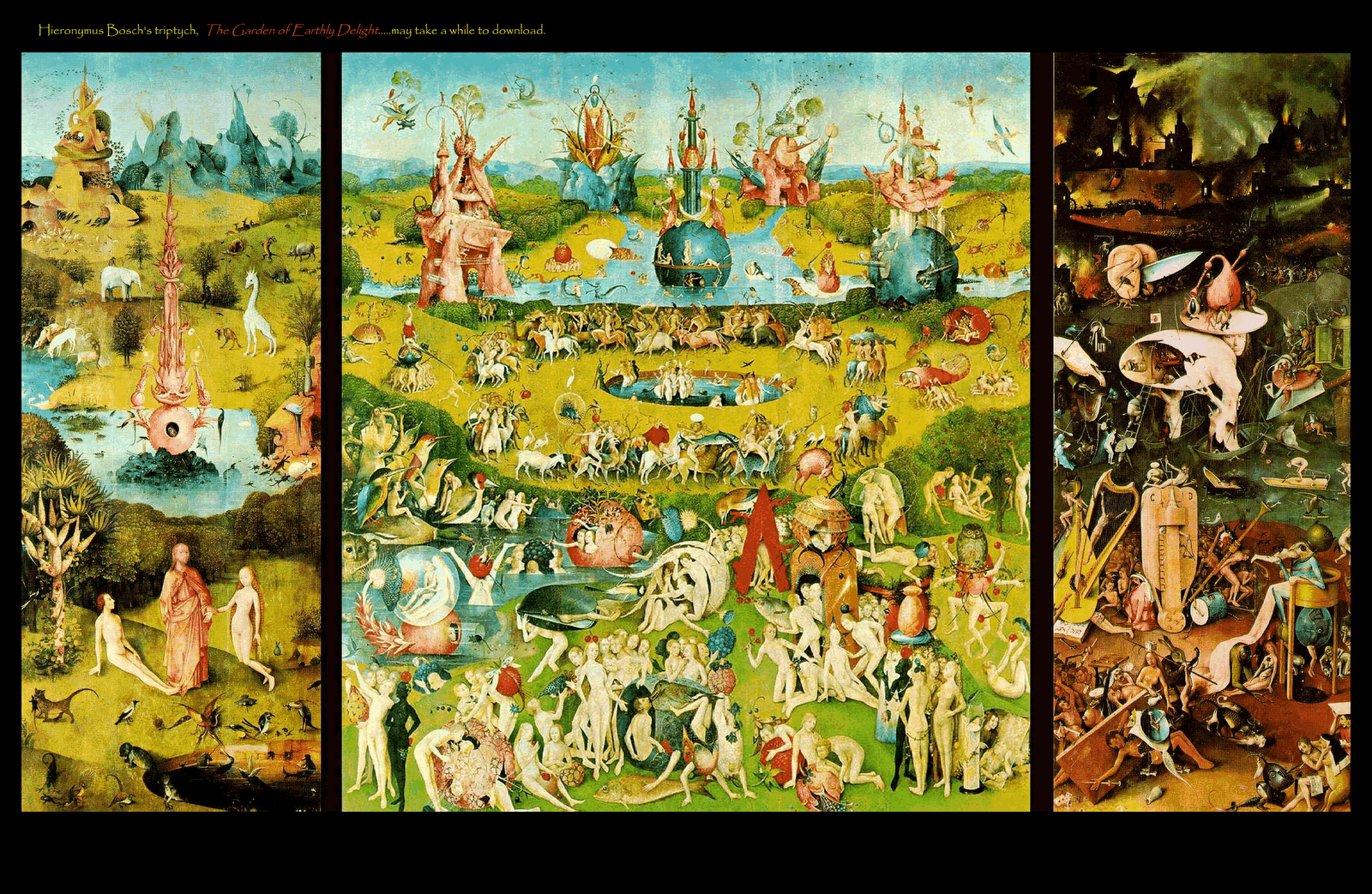
    Dantes Inferno Lust - bosch garden
    Dantes Inferno Lust

    Could it be, that one or more of Dante’s circles is as subversive today as it was then?  As a reader of my blog might expect, I am interested in Dante’s reflection in art and society and last but not least of his concept of evil, since the 34th song of his journey inspects Lucifer himself.

    •  Literal and historical: around 600 real people mentioned pointing out the disconnect between medieval and classical practice
    •  Allegorical: archetypal representative of Dante’s belief system and values
    • Moral: makes points about morality where the big questions in the Divine Comedy are:
      • What is man?
      • Why does he act as he does?
      • What is Good and what is Evil?
      • When it so often looks like “The Good loses,” why should anyone be good?

    Warning – reading Dante might be harmful

    True and False - Right or wrong - good or evil - black or white
    True and False – Right or wrong – good or evil – black or white

    The great works of world literature, Antigone, Hamlet, Faust, torture not only students’ hearts but all hide an eternal sting. This warning upfront, it is not to harmless to engage with Dante. Next to the Bible is the ‘Divine Comedy’ the most commented book in World literature. The phenomenon is even more amazing, because Dante is the most difficult, least accessible poet of world literature. Dante combines the whole scholarly tradition of the Latin Middle Ages and asks of his readers to have this knowledge or debark, before the ship leaves the safe shore:

    O voi che siete in piccioletta barca,
    desiderosi d’ascoltar, seguìti
    dietro al mio legno che cantando varca
    tornate a riveder li vostri liti:
    non vi mettete in pelago; chè forse
    perdendo me, rimarreste smarriti.

    The human rights organization “Gherush92” has claimed some chants of “Commedia” are full of racist, anti-Semitic and Islamophobic stereotypes and by the way, I add not even equal opportunity – fewer women suffer in hell.

    For the contemporary reader it is, however, not only the scholarly high sea of political correctness, in which they could get  lost. Further difficulties are added: spatial, temporal, and formal ones.

    Spatial context

    We must see the world through the eyes of Dante. The world view of Dante in the first two decades of the 14th century, his image of the earth and the structure of the three kingdoms   corresponds to the Ptolemaic system, unchallenged until Copernicus three hundred years later. This makes up the basis of Dante’s astronomy, described by his prose ‘Convivio’

    Dante’s heavenly scheme

    Comedy's geography
    Comedy’s geography

    Claudius Ptolemy concluded in the middle of the second century AD in Alexandria his main work, the ‘Megale syntaxis (‘ Big assortment ‘), his world-view: The stationary center of the universe is the spherical earth, of which only one half
    occupied with the vertex Jerusalem, the other is covered by ocean.  Down into the sea, now obviously no longer Ptolemy, but Dante, as an exact antithesis to Jerusalem, is the mountain of purification, the scene of the second part of the ‘Comedy’: the ‘Purgatorio’.  More closely tied to Ptolemaic ideas are the spatial relationships his understanding of space and stage. Albert Ritter sketched the Comedy’s geography from Dante’s Cantos:
    Hell’s entrance is near Florence with the circles descending to Earth’s centre; sketch 5 reflects Canto 34’s inversion as Dante passes down, and thereby up to Mount Purgatory’s shores in the southern hemisphere, where he passes to the first sphere of heaven at the top.

    Paradiso

    Dantes Divine Comedy - Paradiso
    Dantes Divine Comedy – Paradiso

    Around the earth revolve in outward increasing speed nine concentrically enclosing transparent hollow spheres. Seven blessed spheres with the earth as center and five planets known in his time have attached the heavenly bodies: Moon, Mercury, Venus, Sun, Mars, Jupiter and Saturn.  The ninth circle are the fixed stars, identical with what “le stelle” at Dante’s.  Beyond those nine celestial spheres is the seat of the supreme deity, the empyrean, “cielo di fiamma o vero luminoso or “the light and flame sky – itself immobile – like the earth.

    This heavenly scheme is matched by Dante’s topography of the ‘Purgatorio’ and ‘Inferno’.

    Purgatorio

    Purgatorio
    Dante’s Divind Commedy Purgatorio

    The Purgatorio rises on the apex of the uninhabited area covered by the ocean opposite to Jerusalem. It is the location of the passion and death of Jesus Christ, and also divided into nine districts. At the bottom of the beach belt land, the souls that are shipped to death first wait on a ledge and into a ravine for the entry in the actual Purgatorio, located on the ring terrace The Prayer and Purification passage leads through seven by rock walls separated ring terraces. On the top is the  abandoned earthly paradise.

    Inferno

    Inferno
    Dante’s Divine Comedy Inferno

    Likewise, the Inferno is precisely located  in the Ptolemaic system of Dante. Hell corresponds to the conical Purgatory at its negative hollow image. It is located in the interior of the inhabited hemisphere. Lucifer has bored with the insubordinate angels after his fall into the earth to its center. Thus, the funnel-shaped narrowing again be divided into nine circles Hellmouth has emerged. Where did the displaced Earth’s mass go? In this creation model, it was reused as material for the Purgatory and therefore the mountain’s height  matches the hell crater’s depth.

    Temporal context

    Poets write  for eternity, but within a Zeitgeist. Dante had his contemporary readers in mind, to achieve certain political effects. Much of this vision of the afterlife is therefore based on the period of history and culture he lived in. Naturally, as in any art, this requires explanation, if the  context is not there anymore nowadays. Like his topographic structure, are the conditions in Dante’s temporal structures coherent whole. Its center is natural is located in Rome.  As a matter of fact, in a trinity of  Rome. The Classical Rome of Augustus, the New Byzantine Rome and the Rome of the Holy Roman Empire – the papal Rome. The history of the latter began on Christmas in the year 800 with the coronation of Karl (Karl the Great) to the Roman emperor, executed by the pope Leo III.  Around 1160 the official denomination Imperium Romanum changed  into Sacrum Imperium and 1254 the empire was named Sacrum Imperium Romanum and became in the 15th century the Holy Roman Empire of German Nation. The title of the supreme monarch was initially “king”. The emperor’s honor could only be achieved only by the coronation of the pope.

    Historical context

    As an ambassador of his native city of Florence, Dante came 1301 AD to Rome. The contradiction between idea and reality on court of Pope Boniface VIII traumatized him.  Jerusalem, taken 1099,  was lost 1187, but the Crusaders had relocated their dwindling Kingdom of Jerusalem to Cyprus around 1300 but the Mamluks besieged and captured the last Templer fort Ruad in 1302. Constantinople would hold only 150 years more.  Dante’s central idea is of unity and  continuity of Roman and to him this is world history under the sign of the eagle. In the sixth canto  ‘Paradiso’ the Eastern Roman Emperor Justinian (527-565) describes the trajectory of the eagle (the Roman character)  together with history lessons. As the author of the corpus juris civilis,  on which the Napoleon code and the whole  Western legal system is based.
    Justinian is the representative of the Roman Empire. The eagle will start with Troy westward to Lazio. Under Augustus, the conquest consolidated in the golden Aion. Constantine, who moved his residence 326 moved to Constantinople against the natural and divinely ordained east-west direction and through the donation of the Papal States, repealed the division of sacred and secular rule. The Imperium Romanum was for Dante the epitome of everything that he wanted to see realized in history. Not the Sacrum but the center of the Civitas Dei, with its dual objective: eternal blessedness of the man through the exercise of the theological virtues (faith, hope and love) – under the leadership of church; earthly well-being through the use of intellectual and moral faculties – under the leadership of a worldly State with Plato’s virtues (Prudence, Justice,  Courage, Temperance).

    More problematic is the difficulty in understanding the political references: What can we do with them now? They include all a closed world view: Catholic of the Middle Ages. That is why one meets a lot of Popes and even Mohammed in Dante’s hell. To him, a natural state order has its historical origin in the classical Roman Empire. To me this the first glimpse into the area of enlightenment, to invoke a secular (one might say pagan) legitimation of power again.

    Northern Italy’s political struggle

    Conclave_Vatican_yesterdayIn Northern Italy’s political struggle between Guelphs and Ghibellines, Dante was part of the Guelphs, who in general favored the Papacy over the Holy Roman Emperor.
    Dante wrote in his political credo in ‘De Monarchia’ about the basic  relationship between empire and papacy  (Imperium and Sacerdotium), or secular and religious rule. Only in the harmonious coexistence of the two powers Dante saw a guarantee for a just and peaceful world order in which the salvation of humanity can be accomplished. Florence’s Guelphs split into factions around 1300: the White Guelphs, who opposed secular rule by Pope Boniface VIII and who wished to preserve Florence’s independence, and the Black Guelphs, who favored the Pope’s control of Florence.
    Dante was among the White Guelphs who were exiled in 1302 by the Lord-Mayor Cante de’ Gabrielli di Gubbio, after troops under Charles of Valois entered the city, at the request of Boniface and in alliance with the Blacks.
    The Pope said if he had returned he would be burned at the stake.

    Form of poetry

    We encounter now the third hurdle, with which the reader is confronted reading Dante: the formal aspects of the ‘Divine Comedy’. Three elements are highlighted here:

    •     the language,
    •     the symbolism
    •     and the symbolism.

    Dante has decided, his main work in the so-called vernacular: in Italian and that was all but self-evident at that time.
    The Italian cannot be seperated from the ‘Divina Commedia’. However, its rhythmic form, the tercet, does not occur in Italian poetry.

    Sacred numbers

    Here you find Dante’s sacred numbers:

    • 3: trinity
    • 9: 3X3
    • 33: multiple of 3
    • 10: considered number of perfection
    • 100: 10 X 10 absolute perfection

    Living systems are recursive systems
    Living systems are recursive systems

    Three verses are together, of which the first and third rhyme, while the second rhyme will be picked up in the next Tercet. So the terza rima form an elaborate chain. Three 3 cantiche, each formed of 33 cantos, adding up to 99, which with the addition of the first introductory canto, adds up to 100. The Poem is written in Teresa Rima: 3 line stanzas with a rhyme scheme aba, bcb, cdc, ded etc, so each rhyme is used 3 times.

    The big Munich Romanist Wilhelm Ritter von Hertz, whose translation of the ‘Purgatorio’ and the ‘Paradiso’ I use, dominates the iambic rhythm, rhyme and the trisection. The three rhymes belong to the center of Dante’s symbolism ultimately, together with the Trinitarian concept of God. The symbolism of numbers plays in the ‘Divine Comedy’ a very important role just as with C.G. Jung. Each of the three main parts of the work, called cantiche , consisting of thirty-three songs, canti, which indicate the years of the life of Christ. An additional song of the introduction is to increase the total number of canti to hundred. The hundred is ten times the number ten, which, according to the View in Dante’s was a symbol of perfection. The Inferno is divided into nine circles and the court; in the ‘Purgatorio’ there are pre-Purgatorio and the earthly Paradise on the top of nine circles; the nine heavens are completed by the Divine Office: the empyrean – again to number ten. The three-rhyme has not only aesthetic, but symbolic, one might almost say metaphysical significance.
    The whole work is almost saturated with symbolism. Here are more difficulties for the contemporary Dante reader. Without reading scholarly commentary, the symbols remain a very superficial affair. For example, refer the three wild animals in the first canto of the Inferno to the main vices: Sensuality (Panther), Pride (Lion), Greed (wolf). Whether something is right or left, to Sun and Star is never random. In the architecture of the poem, there are numerous, but not obvious correspondences. For example, the sixth Song of the ‘Paradiso’, in which, as mentioned, the Roman eagle represents the continuity of world history has an inner relationship to both the sixth canto of the Inferno and the ‘Purgatorio’ – pointing to the different factions in Florence.

    The 9 circles of inferno in a hurry

    First Circle (Limbo) – The virtuous Pagans

    Luke Warm. Neither sinned nor believed in Christ.
    Luke Warm. Neither sinned nor believed in Christ.

    Here reside the unbaptized and the virtuous pagans, who, though not sinful, did not accept Christ.

    Heaven does not claim them, Hell does not want them. They are not punished in an active sense, but rather grieve only because of their separation from God, without hope of reconciliation. Without baptism (“the portal of the faith that you embrace”) they lacked the hope for something greater than rational minds can conceive. Limbo includes green fields and a castle, the dwelling place of the wisest men of antiquity.

    Second Circle – The Lustful

    Lust Blown about in darkness.
    Lust Blown about in darkness.

    Those overcome by lust, are punished by violent storm in this circle. Blown about in darkness.  Dante condemns these “carnal malefactors” for letting their appetites sway their reason. They are the first ones to be truly punished in Hell. These souls are blown about to and fro by the terrible winds of a violent storm, without hope of rest. This symbolizes the power of lust to drive one  needlessly and aimlessly.

    Third Circle – The Gluttonous

    gluttony
    gluttony

    Gluttons are forced to lie in the mud under continual cold rain and hail. Deprived of individuality. Each is alone, cold, and miserable. Cerberus guards the gluttons, forced to lie in a vile slush produced by ceaseless foul, icy rain (Virgil obtains safe passage past the monster by filling its three mouths with mud).  The gluttons lie here sightless and heedless of their neighbours, symbolising the cold, selfish, and empty sensuality of their lives. Just as lust has revealed its true nature in the winds of the previous circle, here the slush reveals the true nature of sensuality – which includes not only overindulgence in food and drink, but also other kinds of addiction.

    Forth Circle – The Hoarders & Wasters

    Dante's greedy
    Dante’s greedy

    Hoarders and Wasters push as two groups a great weight against the heavy weight of the other group. Dependency toward material goods deviated from the appropriate means. They include the avaricious or miserly (including many “clergymen, and popes and cardinals”), now bankers ans politicians who hoarded possessions, and the prodigal, who squandered them. The two groups are guarded by Plutus, the Greek god of wealth (who uses the cryptic phrase Papé Satàn, papé Satàn aleppe). The two groups joust, using as weapons great weights which they push with their chests

    Fifth Circle  – The Wrathful

    Wrathful and Sullen
    Wrathful and Sullen

    In a swamp-like water of the river Styx, the wrathful fight each other on the surface. The sullen lie gurgling beneath the water, withdrawn “into a black sulkiness which can find no joy in God or man or the universe.” Phlegyas reluctantly transports Dante and Virgil across the Styx in his skiff.The lower parts of Hell are contained within the walls of the city of Dis, which is itself surrounded by the Stygian marsh. Punished within Dis are active (rather than passive) sins. The walls of Dis are guarded by fallen angels.  Oh well, fallenangel.

    Sixth Circle –  The Heretics

    Heretics are in tomb.
    Heretics are in tomb.

    Heretics are trapped in flaming tombs of the City of Dis. Heretics, such as Epicurians (who say “the soul dies with the body”) are trapped in flaming tombs. Pausing for a moment before the steep descent to the foul-smelling seventh circle, Virgil explains the geography and rationale of Lower Hell, in which violent and malicious sins are punished. In this explanation, he refers to the Nicomachean Ethics and the Physics of Aristotle. In particular, he asserts that there are only two legitimate sources of wealth: natural resources (“nature”) and human activity (“art”). Violence, to be punished in the next circle, is therefore an offence against both.

    Seventh Circle – The Violent

    The seventh circle houses the violent. Its entry is guarded by the Minotaur, and it is divided into three rings:

    Outer ring

    Violent
    Violent

    Violent against people and property,  are immersed in Phlegethon, a river of boiling blood and fire, to a level commensurate with their sins: Alexander the Great is immersed up to his eyebrows. The Centaurs, commanded by Chiron, patrol the ring, firing arrows into those trying to escape.

    Middle ring

    In this ring are the suicides, who are transformed into gnarled thorny bushes and trees, excluded from resurrection. Here are the suicides (the violent against self), who are transformed into gnarled thorny bushes and trees, which are fed on by the Harpies. Unique among the dead, the suicides will not be bodily resurrected after the final judgement, having given their bodies away through suicide. Instead they will maintain their bushy form, with their own corpses hanging from the limbs. The trees are a metaphor for the state of mind in which suicide is committed. The other residents of this ring are the profligates, who destroyed their lives by destroying the means by which life is sustained (i.e. money and property). They are perpetually chased by ferocious dogs through the thorny undergrowth.

    Inner ring

    The violent against God (blasphemers), the violent against nature (sodomites), and the violent against art (usurers), all suffer in a desert of flaming sand with fiery flakes raining from the sky. The blasphemers lie on the sand, the usurers sit, and the sodomites wander about in groups

    Eighth Circle (Malebolge) – The Fraudulent

    Fraudulent
    Fraudulent

    The fraudulent—those guilty of deliberate, knowing evil—are located in a circle named Malebolge (“Evil Pockets”), divided into ten Bolgie, or ditches of stone. The circle named Malebolge (“Evil Pockets”), is divided into ten  ditches of stone, with bridges spanning the ditches:

    Bolgia 1 (Canto XVIII):

    Panderers and seducers walk in separate lines in opposite directions, whipped by demons.

    Bolgia 2 (Canto XVIII:

    Flatterers are steeped in human excrement. )

    Bolgia 3 (Canto XIX):

    Those who committed simony are placed head-first in holes in the rock, with flames burning on the soles of their feet. One of them, Pope Nicholas III, denounces as simonists two of his successors, Pope Boniface VIII and Pope Clement V.

    Bolgia 4 (Canto XX):

    Sorcerers and false prophets have their heads twisted around on their bodies backward, so they can only see what is behind them and not into the future.

    Bolgia 5 (Cantos XXI through XXIII):

    Corrupt politicians (barrators) are immersed in a lake of boiling pitch, guarded by devils, the Malebranche (“Evil Claws”).

    Bolgia 6 (Canto XXIII):

    Hypocrites listlessly walking along wearing gold-gilded lead cloaks.

    Bolgia 7 (Cantos XXIV and XXV):

    Thieves, guarded by the centaur (as Dante describes him) Cacus, are pursued and bitten by snakes, which make them undergo various ugly transformations.

    Bolgia 8 (Cantos XXVI and XXVII):

    Fraudulent advisors are encased in individual flames. Dante

    Bolgia 9 (Cantos XXIX and XXX):

    A sword-wielding demon hacks at the sowers of discord. As they make their rounds the wounds heal, only to have the demon tear apart their bodies again. Muhammad tells Dante to warn the schismatic and heretic Fra Dolcino. (Cantos XXVIII and XXIX).

    Bolgia 10:

    Groups of various sorts of falsifiers (alchemists, counterfeiters, perjurers, and impersonators) are afflicted with different types of diseases.

    Ninth Circle (Cocytus) – The Treacherous (Canto 34).

    Frozen in a sheet of ice with only their face exposed to show the pain. Degree of depth based on degree of betrayal

    SatanCenter
    SatanCenterb

    Satan is trapped in the frozen central zone in the Ninth Circle of Hell, Inferno. The Ninth Circle is ringed by classical and Biblical giants. Each group of traitors is encased in ice to a different depth, ranging from only the waist down to complete The circle is divided into four concentric zones.

    Zone 1: Caïna (Canto XXXII)

    Named after Cain, is home to traitors to their kindred. The souls here are immersed in the ice up to their necks.

    Zone 2: Antenora  (Cantos XXXII and XXXIII)

    Traitors to political entities, such as party, city, or country, are located here. The souls here are immersed at almost the same level as those in Caïna, except they are unable to bend their necks.

    Zone 3: Ptolomæa (Canto XXXIII):

    Traitors to their guests are punished here. The souls here are immersed so much that only half of their faces are visible. As they cry, their tears freeze and seal their eyes shut- they are denied even the comfort of tears.

    Zone 4: Judecca

    Named for Judas the Iscariot, Biblical betrayer of Christ, is for traitors to their lords and benefactors. All of the sinners punished within are completely encapsulated in ice, distorted to all conceivable positions.

    Center of Ninth an all circle:  Perverted Trinity (Canto XXXIV)

    Condemned to the very center of hell for committing the ultimate sin (treachery against God) is Satan, represented as a giant, terrifying beast. He is waist deep in ice, and beats his six wings as if trying to escape, but the icy wind that emanates only further ensures his imprisonment. He is chewing on Brutus and Cassius, who were involved in the assassination of Julius Caesar, and Judas Iscariot. What is seen here is a perverted trinity. Satan is impotent, ignorant, and evil while God can be attributed as the opposite: all powerful, all knowing, and good.

     Conclusion

    The Question is:  Are we seven hundred years after the birth of the ‘Divina Commedia’ able to understand Dante’s  world and relate to Dante’s symbolism. My answer is defintely. Not only because Dante’s Inferno is now an action-adventure video game . The story is based on Inferno, the first canticle of Dante Alighieri’s Divine Comedy, and shares many similarities with the poem.

    Sources

    lDivine Comedy.” Wikipedia.   http://en.wikipedia.org/wiki/The_Divine_Comedy

    lThe World of Dante. Institute for Advanced Technologies in the Humanities http://www.worldofdante.org/

    lDante’s Divine Comedy I-III Translated by Mark Musa

    lDante’s Die göttliche Kommödie I-III Translated by Willhelm G. Hertz

  • Art Symbols future and past – Ernst Ludwig Kirchner 2014 and 1937

    Art Symbols future and past – Ernst Ludwig Kirchner 2014 and 1937

    Reminds me of Beckmann
    Symbols to mask connotations that are unclear or hidden

    Now, what is art anyway? Ernst Ludwig Kirchner’s art works are symbolic patterns, which have connotations that are unclear or hidden. They may have interferences  with the Zeitgeist and references to the past, both integrated through and with  the individual artist’s situation at a given moment. Art, like the symbol has a future in a psychoanalytic sense.

    To the psychoanalytic C.G. Jung, a symbol is a real instance of a collective or personal archetype from the past. The past does not suffice to interpret it – neurologically speaking, everything beyond 3 seconds, is considered future to our brain. The current exhibition by the  “Pinakothek der Moderne”, using UV, infrared and X-ray images, make signatures and overpainting visible and to give a comprehensive insight into the working process of the artist.  We see by those means the past of an art work. Good art at the time of creation in its environment is encrypted future. So this essay is about past, present and future of Kirchner’s art work – 2014, 1937 in Munich.

    Short excursion to history. Kirchner must have love-hated Munich. 1937 there was a opening of two exhibitions in Munich, the first “Great German Art Exhibition” in the then newly built “Haus der Kunst” and the “Degenerate Art” exhibition in the Hofgarten,  it was ultimately the shunned modern art which triumphed. While the artificially created chaos of the “degenerate” art show – which included Kirchner’s work, who lived in Switzerland already –  provided viewers with a unique overview of modern German and international art and got 2 million visitors, the properly displayed paintings and sculptures in the light-filled halls of the “House German Art” showed merely mediocre, provincial works, art that was not, like Hitler promised, revolutionary, but rather aesthetic primitively politicized. 

    Fast forward to 2014. The German Expressionists Ernst Ludwig Kirchner and the Norwegian Edward Munch are my most favourite painters. Although Kirchner played a determining role as a pioneering “bridge” Artists for the color revolution at the beginning of the last century, he was scarcely been recognized as the cunning “color man” he was (at least to me). Particularly photographs, but also drawings, sketchbooks, prints show Kirchner’s multi-talented cross-media design and give insight to his private life. Major loans from many museums in Europe, especially from Switzerland, as well as high-ranking German and Swiss private collections help quite a bit, because Munich for various reasons has had not as many “Kirchners” it should, although this has been getting much better lately. For the first time, both sides of selected double-sided painted canvas were made accessible. Handwritten revisions allow to present another unusual practice of Kirchner: The correction of his earlier work and the adaptation to his current style. The stunning Kirchner exhibition gives insight in his systematic way to color and his confrontation with the controversial tradition of color theory. Basis of the presentation is a joint research project, which was conducted by the Bavarian State Painting Collections in cooperation with the State Academy of Fine Arts in Stuttgart and the Kirchner Museum Davos in Switzerland to examine systematically Kirchner’s painting technique.

    IMG_20140803_131200_bearbeitet-2

    Ernst Ludwig Kirchner studied  art in Munich at the Kunsthochschule. Though critics have often tied Kirchner to influences such as Fauvism (Matisse in particular), Cubism, and Post-Impressionism, the artist himself always denied the influence of others. True, while Kirchner shows a very subjective response to reality and bold, undisguised brushstrokes and vibrant colors those did not come directly from the tube at all. Nor were they spontaneous – Kirchner was a pioneer new tar (artificial carbon) colours and he uniqely himselfprepared the canvas and mixed them with wax an cleaning solution to get the results he wanted. Like Klee he digged in colour theory als physically shown nicely in the presented dancing scenes. The Fauvist movement and German Expressionism, both projecting  indebted to the same late nineteenth-century sources, especially Van Gogh. Hoewver, the French were more concerned with the formal aspects, while the German Expressionists were more emotionally involved in their subjects.

    In 1905, Kirchner became one of the founding members of the “Die Brücke” group of avant-garde artists. These artists worked together to develop cross-media skills in drawing, painting, woodcut and lithography. Even when the design was based on his paintings, Kirchner’s preparation of the matrices and often hand-coloring of the prints, made each print became a unique artistic work. Their group lived counter culture, Kirchner’s studio was real bohemian, full of paintings lying all over the place, drawings, books and artist’s materials — much more like an artist’s romantic lodgings than the home of a well-organised architecture student, a place without social conventions to allow casual love-making and frequent nudity. Kirchner moved to Berlin in 1911, where he produced his most forlorn street scenes, such as the painting, “Potsdamer Platz” and the related woodcut, “Women in Potsdamer Platz”. The city facinated him, in particluarly varite, circuse and – dancers. Many of his friends and models were dancers, Erna and Nina Hard and/or very young women.

    Like Lina Franziska Fehrmann (1900-1950), the adolescent model for Seated Girl, who met Kirchner in 1910. She and her siblings regularly posed for artists in the Die Brücke group. Today Kirchner most likely he would share the fate with Roman Polanski. The painter’s point of view as an expressionist is summed up in a letter which Kirchner wrote to his friend and dealer, Curt Valentin, in 1937 – oned year before his suicide “Dear Mr. Valentin,. . . Did you know that as far back as 1900 I had the audacious idea of renewing German art? Indeed I did, and the impulse came to me while looking at an exhibition of the Munich Secessionists in Munich. Their pictures were dull both in design and execution, the subjects uninteresting, and it was quite obvious that the public was bored. Indoors hung these anemic, bloodless, lifeless studio daubs and outside life, noisy and colorful, pulsated in the sun. In those days I was a strong and healthy lad, not like I am today when the spirit is still active but the body often fails me. I was filled with the desire to try and grasp what they had missed; I did and I am still doing so today.“

    Not only were teenage models somehow more “authentic” than adults, they also had the advantage of being much more sympathetic to artists. Girls’ slender, nearly hermaphroditic bodies could be sexual without being exploited. Much art was in effect allowing artists to run through feelings on paper or canvas before committing to full-fledged adult relationships. In this respect, the Kirchner’s teenage nudes constitute one component in the process of identity formation as he, like almost all the Expressionists, were in their twenties when he executed his breakthrough works.

    After the separation from the Brücke Group 1913 he established an individual artist identity. Despite Kirchner’s artistic success during the Berlin years, identity crisis hit the troubled artist. His neurosis may be largely influenced, like those of C.G. Jung and Herman Hesse by the impending war, which all three had viewed with a tragic sense of foreboding and fear from the outset. According to the psychoanalyst C.G. Jung, the unconscious expresses itself primarily through symbols. Although no specific symbol or image can ever fully represent an archetype (which is a form without specific content), the more closely a symbol conforms to the unconscious material organized around or in us, the more it evokes a strong, emotionally charged response. The symbol has a very complex meaning because it defies reason; it always presupposes a lot of meanings that can’t be comprehended ill a single logical concept. The symbol has a future. The past does not suffice to interpret it, because germs of the future are included in every actual situation That’s why, in elucidating a case, the symbolism is spontaneously applicable for it contains the future. Jung is concerned with two kinds of symbols: individual and collective. By individual symbols Jung means “natural” symbols that are spontaneous productions of the individual psyche, rather than images or designs created deliberately by an artist. In addition to the personal symbols found in an individual’s dreams or fantasies, there are important collective symbols, which are often  images such as the cross, the six-pointed Star of David, and the Yin Yang symbol. Symbolic patterns and images represent concepts that we cannot completely define or fully comprehend.

    In a state of nervous anxiety, and fearing that he would get called up, Kirchner began to drink absinthe and developed an increasing dependency on sleeping pills and morphine. He volunteered to the Great Wat, but was discharged after a complete nervous breakdown. Due to mental deterioration, Kirchner emigrated 1917 to Switzerland and was admitted to the Bellevue Sanatorium and became patient of the psychoanalytic Ludwig Binswanger, whose patients  included illustrious names: the Russian dancer Nijinsky, the actor and director  Gustaf Gründgens and many others. Ernst Ludwig Kirchner made 22 woodcuts there.

    He settled finally in the Swiss mountains near Davos.  He remained in a log cabin for the rest of his life, receiving medical treatment at regular intervals. Although he continued to paint this inspired him to depict alpine scenes of mountain farmers, rather than the urban milieu of Dresden and Berlin.  His reputation grew through the rest of the decade; he became a member of the Prussian Academy of Arts in 1931. By this time, all the major museums of modern art had acquired works by him and he was regularly included in exhibitions. That changed after the Nazis came to power in 1933.

    Kunst

    In October 1991 a Los Angeles art show – tentatively titled ”1937: Modern Art and Politics” paied homage to the artists the Nationalsozialists attemped to degrade. Of the 650 works exhibited by the Nazis in Munich only 150 appeared in there.
    During the eighties and the early 90ties I lived in California and ha a chances to see the restaging of the Munich “Degenerate Art” exhibition at the Los Angeles County Museum of Art.
    The original exhibition Degenerate Art” first  opened in Munich on 19 July 1937 and showed 650 works of art confiscated from 32 German museums. By April 1941, the show had  travelled to twelve other cities and attracted over 3 million visitors. This ”Entartete Kunst,” or ”Degenerate Art,” was displayed the Nazis with the aim of demonstrating the ”immoral” influence of the avant-garde on German culture. Besides denouncing the great artists of the avant-garde, it disparaged Picasso, Wassily Kandinsky and Paul Klee and  hundreds of others whose work was considered ”un-German.” Jews and communists, abstract pioneers, and especially the Expressionists of the “Die Brücke”were condemned as sick, poisonous artists. It was one of the most infamous exhibitions of the 20th century; it was also one of the best from contents and best attended. And its effects are being felt even today – numerous paintings in that show had been sold worldwide. That is the reason that one needs to travel, if you like German expressionists. A total of 639 works by Kirchner alone were identified as “degenerate” by the Nazis and subsequently confiscated from museums, before being sold abroad or destroyed, prompting the first thoughts of suicide in Kirchner. In 1938, soon after Nazis annexed Austria, Kirchner becomes increasingly paranoid, destroys some of his works and finally committed suicide. His longtime companion Erna, gets legal custody of his work and stay in the cabin until her death 1945. Ironically, in a Fahrenheight 451 even,  customs police recently discovered in Munich  an unimaginable artistic heritage of classical modernism. A cache of approximately 1,500 saved painting by Picasso, Matisse and others which were hidden in the apartment of a 80year-old including many works that had been confiscated by the Nazis.


    Contemorary_20140803_140218_bearbeitet-1
    Contemporary modern art. Forgot name and artist….

    While I strolled out of the special exhibition I saw this gray painting of contemporary art. If this reflects our life, watching wars on TV, why art today seems to be void of any despair I feel in Kirchner’s work? It is easy to point out the psychologically disturbed or cynical players who learn to manipulate the system to get their fifteen minutes or a nice big check from a foundation, or the hangers-on who play the game in order to get invited to the right parties. But every human field of endeavor has its hangers-on, its disturbed and cynical members, and they are never the ones who drive the scene.

    The question is: Why did cynicism and commerce come to be the game you had to play to make it in the world of art? By now the main themes of modern art are clear to us. Standard histories of art tell us that modern art died around 1970, its themes and strategies exhausted, and that we now have more than a quarter-century of postmodernism behind us. The big break with the past occurred toward the end of the nineteenth century. My take is that post-modern art never challenged political powers like modern art did. Edvard Munch got there first (The Scream, 1893): If the truth is that reality is a horrifying, disintegrating swirl, then both form and content should express the feeling. Kirchner, C.G. Jung, Herman Hesse got there felt it and many others. Francis Coppola and Oliver Stone felt it.If the truth is that reality is fractured and frightening, then both form and content must express that.  If the truth is, that reality is unintelligible, then art can teach this lesson by using realistic forms against the idea that we can distinguish objective reality from irrational, subjective dreams. It has always been my understanding that the truest definition of art is something that touches us in some way,emotionally, or makes us think.That needs skills and hunches. I still adhere to this.
    Artistic revolutions are made by a few key individuals. At the heart of every revolution is an artist who achieves originality. A novel theme, a fresh subject, or the inventive use of composition, figure, or color marks the beginning of a new era. Artists truly are gods: they create a world in their work, and they contribute to the creation of our cultural world.Throughout the history of art it seems that a any new artistic movement is born of a rebellion against its predecessor.  have seen many artists in recent years seemingly create for the shock value. Many times it comes across as simple disrespect and disdain, perhaps revealing the insecurities and psychological devils of the creator. I have always had a problem with a select few dictating what is art and what isn’t art, when it is a very personal thing.  The Greek said: beauty cannot be evil. Keats said it: beauty and truth. What to move on to next? Perhaps the pendulum will always swing back. This world could use more focus on beauty and truth at the moment. And no, it’s not a celebrate  beauty. And we should have expectations of art. Art is future coded in symbols.

    As always, pictures if not indicated otherwise are mine but can be used giving proper credit.

    • Kirchner Museum Davos
    • The Brücke Museum, Berlin
    • Ernst Ludwig Kirchner, Mountain life, Kunstmuseum Basel
    • Ernst Ludwig Kirchner,in Berlin, Brücke Museum Berlin 2009
    • Expressiv, Albertina Wien
    • Expressionisten, Sammlung Bucheim, München
    • The Museum og Modern Art, New York
    • The Expressionists, Thames and Hudson
    • Farbenmensch Kirchner Link

  • Shakespeare’s “Macbeth” from a Jungian view

    Shakespeare’s “Macbeth” from a Jungian view

    when they all know the good as good, there arises the recognition of evil.
    When they all know the good as good, there arises the recognition of evil.

    This article explores the psychological underpinnings of  Shakespeare’s “Macbeth” from a Jungian view. Carl Jung left a great deal of ambiguity surrounding his work. He understood, as long as there have been men and they have lived, they have all felt this tragic ambiguity and everybody must accept his or her “Shadow” during the individuation process. Ambiguity between good an evil, and a failed individuation is the core theme in the tragedy Macbeth: “Fair is foul, and foul is fair” say the three witches in the beginning of the play and this paradox is touched again by Macbeth: “So foul and fair a day I have not seen”. The enemy and death is “foul” – bad – but the outcome of the battle is “fair” – good, only because he has won.So the play Macbeth is about the evil, but as we see mostly the evil in us, and this evil is first impersonated by the witches. That is why Macbeth is also called the “Scottish play” by the superstitious theater folk. The play has gotten a reputation for being bad luck in terms of productions and those who act in it, and so it is referred from them to as “the Scottish play” to avoid naming it. The play is about the good consumed by the evil. However, Tao says Tao is eternal and so are the two principles Yang and Yin, so that good and evil must be eternal, as necessary elements of our world.

    Secularism, particularly relativism has tried to blur the line between good and evil where belief systems and philosophies used different approaches to mask the ambiguity between “evil and good”.  Dualistic has the view that the world consists of or is explicable as those two fundamental entities. It is God, love, death, suffering and infinity that open us to the non-dualistic mind, or contemplation. Dualism means eliminating everything that is not like you (or projecting all your rejected attributes to others). Lao-Tse and Jesus were masters of non-dualistic thinking. The Jungian System is a fine example of an non-dualistic psychology : the more inflated your self-image (Ego), the bigger your shadow will be. Macbeth looses his soul (his Self) failing to differentiate between Persona and his inflated Ego and overwhelmed by his shadow and his anima utilized by the ambitious Lady Macbeth. 

    Jung’s vastly varying influences have helped shape a psychology that has influenced a great many scholars, theorists, psychologists, and artists of various specialties. While still maintaining an empirical stance Carl Gustav Jung has taken the influential elements of literature, symbolism, religion, and the alchemy and has formed these raw, primordial factors into a unparalleled  psychoanalytic system. Jung’s view of literature was ambivalent. He was fascinated by Nietzsche, and lectured on Nietzsche’s Zarathustra, Besides of German literature C. G. Jung appears to have been influenced by Shakespeare. In particular Jung was interested in the mythic and archaic elements in literature. Hermann Hesse’s novel Demian was inspired by Jung’s theory of individuation whereas Macbeth seems to be the prototype of a failure to achieve successful ego-individuation.

    The play Macbeth

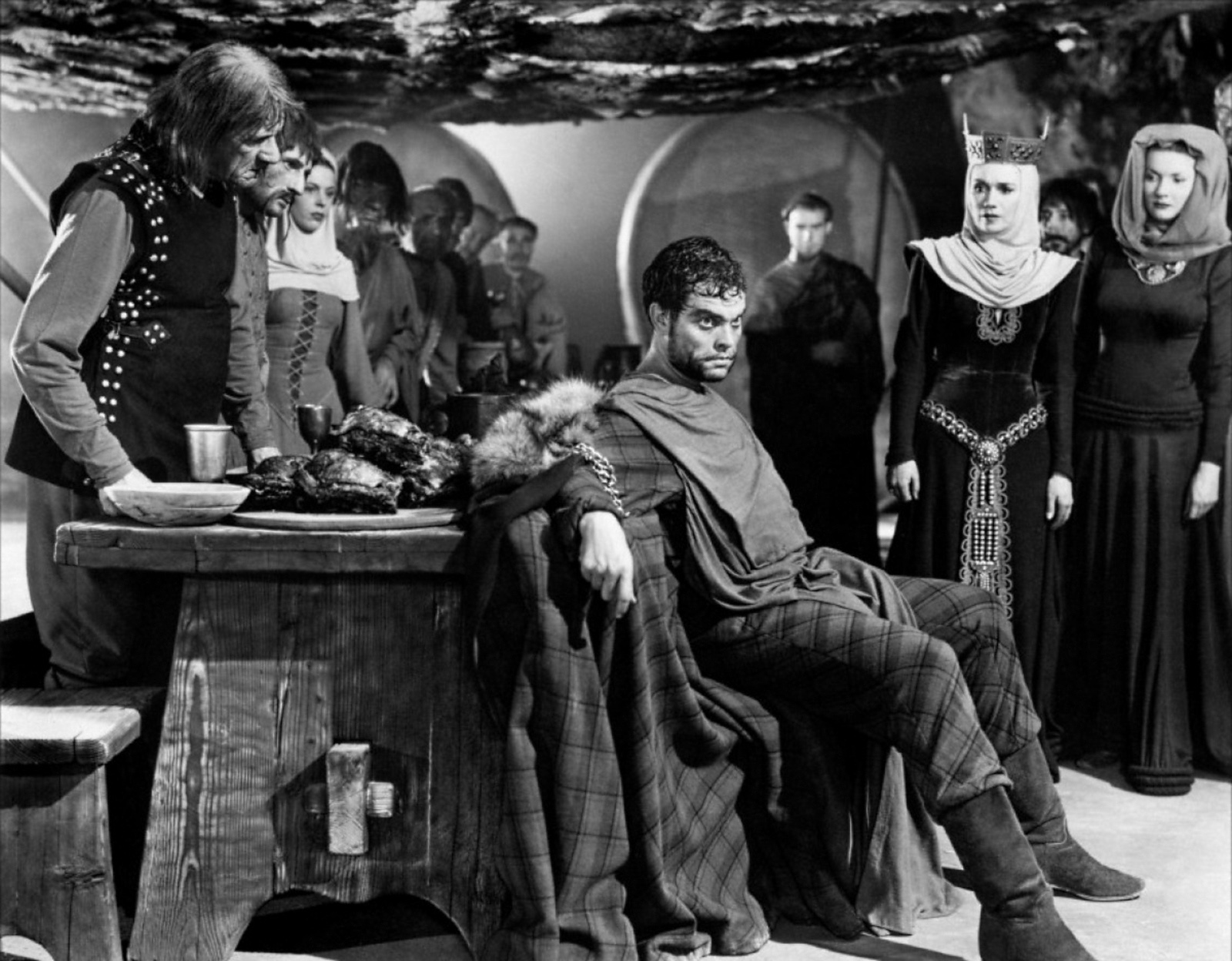
    title_macbeth
    title_macbeth

    Jung found literature to be a psychological process which includes the process of materials being “drawn from man’s conscious life; and the visionary dealing with primordial images that transcend human understanding.” Jung found that the archetypal symbols he worked with could, quite naturally, be found in the works of various ages. “It is to be expected… that the poet will turn to these mythological images to give suitable expression to his own experiences.”

    Macbeth, when you analyze it, is a psychological battle between good and evil, and between evil ambition and order. Darkness is a symbol of the characters forgetting all about honor or goodness. The play demands that the audience think about how we make excuses in our life to pursue false ambitions that are wrong. Macbeth makes this mistake and ultimately it leads to his death. Darkness in Macbeth is a key theme. The play begins with the brief appearance of a trio of witches and then moves to a military camp, where the Scottish King Duncan hears the news that his generals, Macbeth and Banquo, have defeated two separate invading armies—one from Ireland, led by the rebel Macdonwald, and one from Norway. Macbeth and Banquo encounter the witches who prophesy that Macbeth will be made thane (a rank of Scottish nobility) of Cawdor and eventually King of Scotland. Macbeth and Banquo treat their prophecies skeptically until some of King Duncan’s men come to thank the two generals for their victories in battle and to tell Macbeth that he has indeed been named thane of Cawdor. Macbeth is intrigued by the possibility that the remainder of the witches’ prophecy—that he will be crowned king—might be true, but he is uncertain what to expect. It remins me a little bit of Wagners Rhinemaidens, who have a magical gold treasures with magical powers. Alberich an ugly dwarf, trys to score on them but they laugh at him. So he robs their treasure with  the ring (the key to power and wealth). To do this, he must renounce love. I think Macbeth never could love, neither himself nor others.

     Lady Macbeth suffers none of her husband’s uncertainty. She desires the kingship for him and wants him to murder Duncan in order to obtain it. When Macbeth arrives at Inverness, she overrides all of her husband’s objections and persuades him to kill the king that very night. He and Lady Macbeth plan to get Duncan’s two chamberlains drunk so they will blame the murder on the chamberlains. While Duncan is asleep, Macbeth stabs him, despite his doubts and a number of supernatural portents, including a vision of a bloody dagger. When Duncan’s death is discovered the next morning, Macbeth kills the chamberlains—ostensibly out of rage at their crime—and easily assumes the kingship. Duncan’s sons Malcolm and Donalbain flee to England and Ireland, respectively, fearing that whoever killed

    C_G_JUNG_FEMALE_ARCHETYPES
    C_G_JUNG_MALE_FEMALE_ARCHETYPES

    Duncan desires their demise as well. Fearful of the witches’ prophecy that Banquo’s heirs will seize the throne, Macbeth hires a group of murderers to kill Banquo and his son Fleance. They ambush Banquo on his way to a royal feast, but they fail to kill Fleance, who escapes into the night. Macbeth becomes furious: as long as Fleance is alive, he fears that his power remains insecure. At the feast that night, Banquo’s ghost visits Macbeth. When he sees the ghost, Macbeth raves fearfully, startling his guests, who include most of the great Scottish nobility causing Macbeth’s kingship to incite increasing resistance from his nobles and subjects. Frightened, Macbeth goes to visit the witches in their cavern. There, they show him a sequence of demons and spirits who present him with further prophecies: he must beware of Macduff, a Scottish nobleman who opposed Macbeth’s accession to the throne. Macbeth orders that Macduff’s castle be seized and, most cruelly, that Lady Macduff and her children be murdered. It should be clear by now, that Macbeth represents the archetypes of weak king and becomes a cruel sadistic warrior, whereas Lady Macbeth seems to own foremost frigid witch qualities.

    When news of his family’s execution reaches Macduff in England, he is stricken with grief and takes revenge and with Prince Malcolm, Duncan’s son, and the support of the Scottish nobles, who are appalled and frightened by Macbeth’s tyrannical and murderous behavior. Lady Macbeth, meanwhile, becomes plagued with fits of sleepwalker in which she bemoans what she believes to be bloodstains on her hands. Before Macbeth’s opponents arrive, Macbeth receives news that she has killed herself, causing him to sink into a deep and pessimistic despair.

    He is struck numb with fear, however, when he learns that the English army is advancing on Dunsinane shielded with boughs cut from Birnam Wood. Birnam Wood is indeed coming to Dunsinane, fulfilling half of the witches’ prophecy. In the battle, Macbeth hews violently, but the English forces gradually overwhelm his army and castle and he realizes that he is doomed, Macbeth continues to fight until Macduff kills and beheads him.

    Failed Individuation in Shakespeare’s Macbeth

    macbeth
    macbeth

    Macbeth has not begun to deal with the adult developmental task of individuation. According to Jung, in the process of individuation “unconscious potentials are explored and reintegrated with the “Self”. The exploration of certain parts of the unconscious brings to consciousness unacknowledged ” missing pieces. Macbeth’s failure to individuate successfully is reflected by the distance between his rigid Persona and his real personality, and his inability to confront the shadow aspects of his psyche, and the complete rejection of his anima. Tellingly those developmental issues only seem able to get Macbeth’s attention through his hallucinations and visions. Jung said that “only through the adult development of individuation can the person become truly an ‘individual’ and not simply a carrier of unconscious images and other people’s projections”. This “carrier of unconscious images” and receptacle of “other people’s projections” is exactly how Shakespeare paints Macbeth: Macbeth is Duncan’s “O worthiest cousin” (I, iv, 17), the murderers’ “Highness,” “liege,” “lord” (III, I, 81, 102, and 131), and Malcolm’s “tyrant” (Iv, iii, 14). Throughout the play Macbeth’s identity is formed by Shakespeare’s other characters. The tragedy of Macbeth is that he has failed to explore his unconscious and discover and accept his true identity. Because he has not individuated, he can be molded and pushed into identities and actions that others project onto him. Macbeth is very conscious of his persona and of the positive reputation he has cultivated, and he enjoys thinking of himself in this way. According to Jung, the Persona (literally the mask) is the aspect of personality that adapts to the world to be accepted in society. Throughout the play Macbeth attempts to put on a “false face” (I, vii, 9 5) so that he can hide what his “false heart doth/know” (I, vii, 95-96). When he has plotted Banquo’s death and is preparing to make merry with his guests, Macbeth  believes that he can cover not only his conscious knowledge of his role in Banquo’s death from others but keep his unconscious feelings of fear, shock, and guilt at arranging a murder from himself. During dinner Macbeth has a hallucination. He sees the ghost of Banquo come to haunt him and denies his guilt: “Thou canst not say I did it. Never shake/ Thy gory locks at me” (III, iv, 61-62). Throughout the play Macbeth refuses to own his unconscious; he places supreme importance on appearances (Persona), his consciousness and refuses to deal with any desires and actions which challenge his idealized Ego.

    instinctive powerful, beast
    Shadow- instinctive powerful, beast

    His rejection and disregard of this “shadow” keep him ignorant of its motivational power and the gulf that develops between his persona and real personality. Jung described the shadow as “those aspects of the psyche that are rejected from consciousness by the ego (during sozialization in the first half of life), because they are inconsistent with one’s self-concept. Macbeth’s history of denying his shadow is detailed throughout the play. In Act I, after learning of Duncan’s intention of having Malcolm succeed to the throne, Macbeth rejects his ambitiously motivated ability to become a traitor. Jung says that as we show our persona to others and conceal our shadow from ourselves, “the shadow gets more and more ugly, and the split between persona and shadow … widens”. For Macbeth, this is true. After he kills Duncan, Macbeth refuses to believe that he could be a murderer – one although this ability to murder is present in Macbeth’s character. After his second meeting with the Weird Sisters, Macbeth resolves to kill Macduff’s family in the Thane of Fife’s absence Macbeth has progressed from ambitious regicide to familial mass murderer. Because  Macbeth has not confronted his shadow and haven’t taken the effort caused by introduction of the shadow to consciousness, Macbeth cannot follow an intrinsic moral compass. This allows him to commit his atrocities without having to justify them. Ironically, part of Macbeth’s anima is positive, but it is repressed because he believes it to contain negative qualities.

    anima
    anima

    According to Jung, men have “repressed feminine-typed qualities” (their anima) and women have “repressed masculine-typed qualities” (their animus). While this area of Macbeth seems cloudy, I believe that Macbeth cannot explore what Jung would call the inner feminine qualities of empathy and emotion because Lady Macbeth is constantly questioning his identity as a man, struggling herself to be a women and with her animus. Two passages support this theory. When Macbeth begins to vacillate between killing Duncan and maintaining his honorable reputation, Lady Macbeth chastises him for not being man enough to take what he wants (I, vii, 3 9-49). She also calls him to task for not being a man of his word (I, vii, 53-67). Lady Macbeth claims that she, a woman, is more manly than Macbeth. Macbeth is expressing fear and guilt, emotional inner controls, and Lady Macbeth makes fun at him. Later, when Macbeth is confronted with his hallucination of Banquo’s ghost, he expresses fear and revulsion at what he has done to Banquo through the ghost’s horrible appearance. Lady Macbeth tells him to stop acting like a hysterical woman and to live in reality. She even asks Macbeth, “Are you a man” (III, iv, 70). While Macbeth clearly rejects his “inner woman,” as shown by the ease with which he is manipulated by gender role identification (making him vulnerable to Lady Macbeth evilness), he is severely hampered in uncovering his anima by her disparaging of his male identity.

    Personal Layers
    Personal Layers

    Macbeth’s strict adherence to his inflated Ego a false Persona, his unwillingness to deal with his shadow. According to Jung rejecting anima have psychological consequences – sometimes the shadow and anima merge and overpower the consciousness (Ego); he has hallucinations.  Jung interpreted psychotic hallucinations and delusions as expressions of the collective unconscious archetypes, which can be interpreted as visions or a type of dream, manifesting their meaning from his personal unconscious. Act II’s floating dagger can be read as a symbol forcing its way into consciousness. Through his visions, Macbeth’s unconscious is trying to show him the issues he must deal with. One of the sadder aspects of the tragedy is that he is constantly dissuaded from looking at them. The moral conflict needed to mitigate his personal not to speak collective un consciousness  is not present.  This is why poor Macbeth (like many powerful men and women) is so far from the mark with his comments on life. They does not know enough about themself to allow anything but a shallow, two-dimensional interpretation of life, letting them be directed by passions unseen, greed and manipulative persons around them.

    Anima and Animus in Shakespeare’s Macbeth

    Lady Macbeth
    Lady Macbeth

    There appears to be some critical discord in connection to the classification of Lady Macbeth, whether she qualifies as an innocent, supportive wife, or, in Malcolm’s words, as a “fiend-like queen.” (Shakespeare V. ix. 35) However, Shakespeare’s text simply does not support the idea that the Lady Macbeth did not play a serious role in the murder of King Duncan and. The concept which seems to lie at the core of critical discussion in relation to Lady Macbeth, is gender. Lady Macbeth herself, makes the argument about gender in her famous speech, wherein she appeals to the powers of dark spirits to “unsex” her, and replace any feminine tendency in her with “direst cruelty” (Shakespeare I. v. 42-43). She wishes to take all that she perceives as weak and feminine in herself, and seeks to substitute it with an evil. Jung believed that all men and women were made up of masculine and feminine energies, the former being called the animus and the latter being called the anima and this unconscious selves of individuals can be used to understand Lady Macbeth’s actions. It can be argued, that Lady Macbeth’s vehement denial of her feminine self (or her anima) that causes her to manipulate her husband into committing the murder of Duncan, affected her relationship with her husband (unable to maintain it) and ultimately led to her insanity and death.

    Conclusion

     “Fair is foul, and foul is fair” : What the line points to is the play’s concern with the discrepancy between appearance and reality: that is, the difference between how someone seems and how someone really is. It is a central concern of Shakespeare’s, and obviously one that fits well with the medium of theatre, which relies on actors seeming to be something that they most definitely aren’t. This is one of the last lines in Act 1 Scene 1 when the witches are foreshadowing events to come in the play. With these words, they are predicting the evil that will cloud Macbeth’s judgments and that those judgments will appear to Macbeth as fair and just. This line also could refer to the witches believing that things some consider to be foul and ugly are just and beautiful to them because they embody evil.