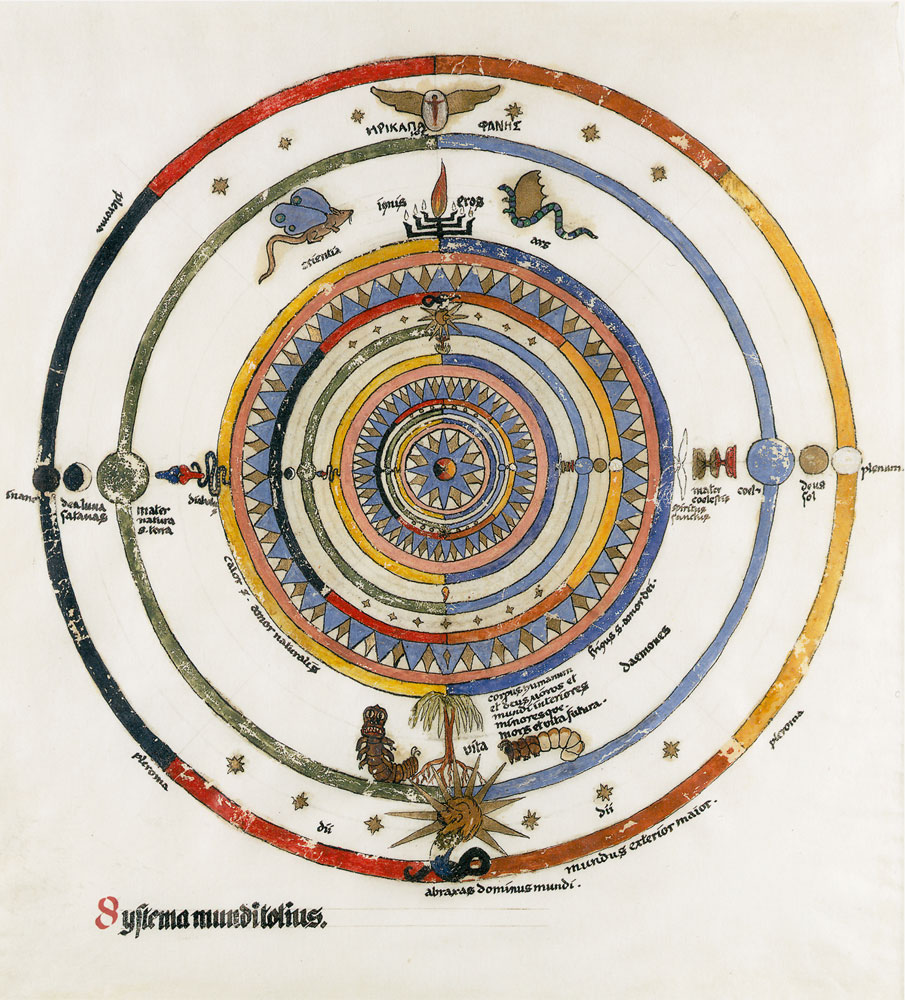
The «Red Book» created between 1914 and 1930 can be described as a visual diary of dreams. Jung described this book – its language and emotions seem at times almost embarrassing – as important testimonies of his psychological and spiritual development. The psychoanalyst referred to his unfinished work as a !necessary but annoying ‘aesthetic elaboration”‘. This is the crux of the matter. The price is annoying and the ‘ Red Book ‘ combines beauty with an aura of art and mystery. I highly recommend it to anyone who is involved with C.G. Jung, because it is a key work in the history of spirituality. It is also beautiful. This article contains my notes to the Red Book in form of a narrative and how I understood it for myself. A brief narrative is attached as appendix.
You will need not reconsider C.G. Jung after reading this book. However, the ‘ red book ‘ is more than a psychological art catalogue. Visions and fantasies are analyzed and gaudy documented. It is C. G. Jung’s handwritten and painted legacy. Jung says later: ‘ all my work, everything that I have mentally created comes from the initial imaginings and dream. ‘ Including the sentence ‘In us is the way, the truth and the life’ set heavily on modern Christianity of the Benedictine monk Anselm Grün but also of the Gnostics reminiscen. The book may come at the right time, a time in which Europe denies his roots.
This book consists of three major parts:
An introduction by Sonu Shamdasani.
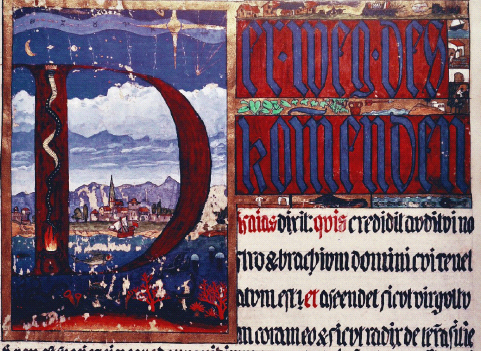
The actual ‘ red book ‘Liber Novus’ a scanned calligraphic text with Imaginations and reflections and pictures painted by him, which look like a medieval illuminated manuscript.
The manuscripts of the Liber Novus (Liber Primus, Liber Secundus, and attachments) in normal print.
Introduction
The Red Book has been characterized according do the New York Times variously as a creative psychosis, a descent into the underworld, a plunge in insanity, a narcissistic self-deification, a transcendence experience, a midlife crisis and an inner disturbance foreseeing the upheaval of World War I and afterwards. Whatever the case, in 1913, Jung, who was then 38, got lost in troubling visions and heard inner voices. In that age successful and well married men are prone to midlife crises. In any case Carl Gustav Jung’s personal crisis between 1913 and 1918 was a complex, multi-layered breakdown. It was not caused by a single isolated event; rather, it was a perfect storm of professional isolation, marital tension, and profound psychological disorientation.
1. The Breakup with Sigmund Freud (Professional Crisis)
The Context: Freud had groomed Jung to be his “crown prince” and the heir to psychoanalysis.
The Rift: By 1912, Jung published Transformations and Symbols of the Libido, directly challenging Freud’s dogma that all unconscious impulses are sexual.
The Fallout: Their formal split in 1913 left Jung completely isolated. He resigned from the International Psychoanalytic Association and his lectureship at the University of Zurich. He was blackballed by mainstream psychology, labeled a mystic, and cut off from his professional community.
This harsh split with his mentor Freud, throw him into a period of profound uncertainty regarding his psychology and philosophy. In 1913 the relationship with Freud came to an end and 1914 Jung resigned as president of the International Psychoanalytic Association. In was in these intense years, however, that he created a complete different psychology than Freud’s cold machinery – one could rekindle spirituality. Jung sought to find a new conception of God that would be more psychologically whole. Wholeness is a key feature in Jung’s psychology, both in terms of each human integrating or assimilating lost and undeveloped potentials of the Self, but also in terms of seeking to understand God as combining both light and dark.
2. The Premonitions of World War I (The Visions)
The Cataclysm: In October 1913, Jung experienced an overwhelming waking vision while traveling: he saw a monstrous flood covering Europe, turning completely to blood and filled with thousands of floating corpses. This terrifying vision recurred multiple times over the following months.
The Fear of Psychosis: Because he had no logical explanation for these apocalyptic images, Jung genuinely feared he was undergoing a psychotic break or “doing a schizophrenia”.
The Realization: When World War I broke out in August 1914, Jung experienced immense relief. He realized his mind had not broken down; rather, he had tapped into a collective, precognitive layer of the human psyche. This realization laid the groundwork for his theory of the Collective Unconscious.
3. Personal and Domestic Tensions (The Private Crisis)
Domestic Strain: During this exact window, Jung’s personal life was highly volatile. His marriage to Emma Jung was severely strained.
The Affair: He began a profound, lifelong, and highly complex extramarital relationship with Toni Wolff, a former patient who became his intellectual collaborator and guide through his darkest unconscious explorations.
Instead of medicating himself or repressing these terrifying voices and images, Jung made a radical choice: he chose to dive directly into them. He used a technique he called Active Imagination, forcing himself to consciously interact with the figures haunting his mind. The Red Book is the exact, raw laboratory notebook of that experiment. Henri Ellenberger later categorized this period as a “creative illness”—a temporary, functional psychological collapse from which an individual emerges with an entirely new, transformative worldview.
Some private remarks
The Red Book
Jung’s Red Book has to do with Zürich – something previously hidden reveals itself, therefore a few words about my Zürich as a stranger, if I may. The city is an excellent city for Jungian’s, pretty much for any minority; here they have found a certain quiet niche. Zürich, for Jungian’s, is spiritually loaded. It’s a kind of Jerusalem, the place where C. G. Jung began. It is one of the last cities, where you can strike a meaningful conversation in bookstores, especially about C.G. Jung and Freud. It is the city of Max Frisch, my favorite writer, Thomas Mann, Einstein and Lenin lived there.
In 2010 I saw the Red Book in the exhibition in Zürich and wanted to own a copy of it. The original was a nearly 100-year-old book, bound in red leather. The book is big and heavy and its spine is etched with gold letters that say “Liber Novus,” which is Latin for “New Book. The Book is odd in regards to color already. Red is an no-no color in Zürich Finance, which I learned the hard way presenting in a large Swiss bank once. No Red Book of Mao, no red Letters in Powerpoint, no red Figures in Excel – please.
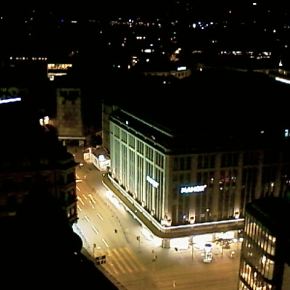
Shot from Urania observatory in the Lindenhof quarter of Zurich, Switzerland. The muse of astronomy in Greek mythology
Zürich is, despite the beautiful landscape around it, is neither pretty nor impressive, but one of Europe’s more purposeful cities. Lots of money and many hookers, neatly and orderly lined up like the SBB trains which glide in and out on a flawless schedule. Fondue restaurants full of tourists and chocolatiers full of Swiss.
Tough natives ride their bicycles up the hill, pedaling suicidal over the Hart fly over. In summer, white-steam ships puff around Lake Zürich; in winter, the mountains glitter on the horizon in direction of the “Pnüsli coast”. This is where I lived six+ years, working in Zürich and all over Switzerland. Zürich has really good theaters, operas and small art movie cinemas but its Zwingli flavor gets boring after 6 months. Not an easy city, but after 2 years a Swiss father/men group – of straight middle class men – took me under its wing. I am still grateful to them, since I learned how the city ticks, and made my peace with it. During lunch hour year-round, young business men stride the Bahnhofstrasse in their power suits and rich, well-kept women go shopping. It’s not a fantastic tourist destination either nor a good place to hide money anymore. However, a book was hidden for almost fifty years in a bank vault in Switzerland. Is long-awaited publication in October, 2009 was a signal event for Jungian’s. Jung’s entire corpus, is as enigmatic as profound and Jungian’s, a species of thinkers who subscribe to the theories of Carl Jung, by definition get enthused anytime something previously hidden reveals itself. That is what C. G. Jung is all about, right?
The Drama
Nachdenken und Rede sind nun wohl zwar dasselbe, nur dass das Gespräch, welches in der Seele mit sich selbst ohne Laut vor sich geht, bei uns den Namen Nachdenken erhielt? PLATON
Jung, who was at that point, when he “wrote” the Red Book, an outwardly successful and ambitious man with a young family, a thriving private practice and a big, elegant house on the shores of Lake Zürich, felt his own psyche deteriorated in a life-altering crisis. For about six years, Jung worked to prevent his conscious mind from blocking out what his unconscious mind wanted to show him with actually induced hallucinations — what he called “active imaginations.” “In order to grasp the fantasies which were stirring in me ‘underground,’ ” Jung wrote at the end of his life in his book “
C.G. Jung Active Imagination
“I knew that I had to let myself plummet down into them.” Writing in German, he filled 205 oversize pages with elaborate calligraphy and with richly hued, staggeringly detailed paintings. It was not a dispassionate, academic essays on psychiatry, nor a straightforward diary. Instead, the book was a kind of Gnostic theater play, driven by the idea that a person might move beneficially between the poles of the rational and irrational, the light and the dark, the conscious and the unconscious — that provided the core for his later work and for what analytical psychology would become. The book tells the story of facing his own demons as they emerged from the Shadow. He worked on his red book — and he called it just that, the Red Book — on and off for about 16 years, long after his personal crisis had passed, but he never managed to finish it. The structure sounds like a severe midlife crisis of a psychiatrist: Man encounters midlife and loses his soul. Man goes looking for soul. After much hardship and adventure — genius and madness, possession and obsession taking place entirely in his head — he finds his soul again. It was in such states that a drama played itself out; Jung would have lengthy dialogues with the imaginal beings that spontaneously presented themselves. For Jung this was not play acting, since he took these presences as real and allowed himself to experience real emotions ranging from bliss and surprise to nausea, disgust, guilt and shame. The experiences were so intense that Jung said that at times he had to grip the table with both hands to steady himself as he endured the experiences brought on by the unconscious. For this reason he called this period of self-exploration a “confrontation with the unconscious.”
The Cast
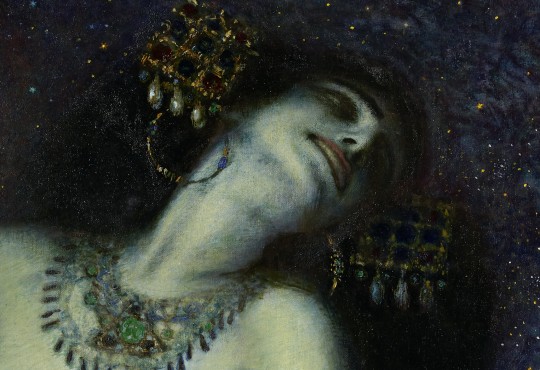
Active Imagination, a dialogue with mystical or invented figures like Salome (Anima) and Elijah (Father, wise old man) in effect archetypes, became a hallmark of Jungian method. Entering into the world of a dream allowed him to be fully affected by the unconscious . Interpretation is most often the goal and conclusion of working with a dream. This is not the case with Jung’s method. Finding an interpretation of a dream is only the first step in unleashing the power of an image. The Red Book is essentially a narrative of Active Imaginations (wake dreams) together with Jung’s discoveries during this endeavor. In the Red Book we witness the first time what Jung called a “confrontation” with unknown aspects of himself, giving voice to the inner figures that spontaneously arose during his descents into his unconscious. Jung’s method of dialogue with images and presences within himself was undoubtedly influenced by his observation of mediums that would go into trance states and perform séances, a widespread and common practice throughout Europe in the early part of the 1900’s.
The major Player- Jung, Salome, Elijah
In the book, Jung travels the land of the dead, falls in love with Salome, gets squeezed by a giant serpent and, in one terrifying moment, becomes Jesus. At one point, even the devil criticizes Jung as hateful. After he has traversed a desert, scrambled up mountains, carried God on his back, committed murder to Siegfried the Hero, visited hell; and he has had long and inconclusive talks with Philemon an FatherArchetype. Salome, a female Archetype Anima, tells him not to fear madness but to accept it, even to tap into it as a source of creativity: Madness is not to be despised and not to be feared, but instead you should give it life. If you want to find paths, you should also not spurn madness,since it malees up such a great part of your nature. Man strives toward ·reason only so that he can make rules for himself. Life itself has no rules“
The Red Book is not an easy journey — it is larger than life,medieval and like so much else about Carl Jung, a willful oddity, synched with a alchemy and mystic. The text is dense, often poetic, always strange. The art is arresting and equally strange. While the Red Book contains many beautiful paintings, he was not doing art. His artistic expressions were a means of evoking meaning rather than being primarily an aesthetic experience to gain a deeper connection to the inner figures of his imagination. It was a way of making the representation of his inner experiences more real. In other words, he did art not for art’s sake, but rather part of the method.
The publishing
“There can be few unpublished works that have already exerted such far-reaching effects upon twentieth-century social and intellectual history as Jung’s Red Book,” so writes the translator of Carl Jung’s recently published personal journal. By Jung’s own admission, the period of self-examination at mid-life that was recorded in the Red Book was source for all that Jung would write about for the next several decades. Even Jung’s popular autobiography, Memories, Dreams, Reflections, is drawn from the Red Book, yet the document itself had been closely guarded and withheld from the public for fifty more years. The question whether Jung wanted to share his encounter with the unconscious with the future generations,however, remains unsolved, because he expressed himself only ambivalent on this. On the one hand he instructed his children that the Red Book should remain in the family, on the other hand he showed different versions of the work two dozen people. It is quite understandable, that Jung’s heirs declined those recordings to the professional world and interested readership for so long. A reason may be, that the author even was not sure. This indecision is quite evident in the fact, that Jung in the epilogue, which he added 1959, breaks off in the middle of the sentence in after having left the book more or less untouched for 30 or so years. He wrote:
Epilogue 1959
I worked on this book for 16 years. My acquaintance with alchemy in 1930 tool( me away from it. The beginning of the end came in 1928, when Wilhelm sent me the text of the “Golden Flower,” an alchemical treatise. There the contents of this book,found their way into actuality and I could no longer continue working on it. To the superficial observer, it will appear like madness. I t would also have developed into one, had I not been able to absorb the overpowering force of the original experiences. With the help of alchemy, I could finally arrange them into a whole. I always knew that these experiences contained something precious, and therefore I knew of nothing better than to write them down in a “precious,” that is to say, costly book and to paint the images that emerged through reliving it all-as well as I could. I knew how frightfully inadequate this undertaking was, but despite much work and many distractions I remained true to it,even if another possibility never …
Credit Photo: hammer.ucla.edu
Yet the very fact he wrote an epilogue close to the end of his life, seems to indicate that he wanted to find the right audience, but only after he took great care that this will happen after his career (and death).
Decisively for the publication of the work clouded in secrecy work was the discovery of copies by Sonu Shamdasani. The Historian meet in 1997 for the first time to the family Jung and persuaded during three years its members, to release the Red Book for the publication. Jung’s grandchildren soon recognised, that there could be hardly a more experienced Jung historian than Shamdasani.
Underlying concepts
Jung understood the psyche as an inherently more spiritual and fluid place, an ocean that could be fished for enlightenment and healing. Whether or not he would have wanted it this way, Jung — who regarded himself like Freud as a scientist — is today remembered more as an icon, a proponent of spirituality inside and outside religion. He is indeed the ultimate champion of dreamers and seekers. Unknown to many his more down to the earth methods were forerunner of the Myers-Briggs personality test and cross cultural trainings utilized by smart consultants. The existence of a collective unconscious and the power of archetypes — have influenced also the shallow domain of New Age thinking.
For an introduction to the concepts of “C.G. Jung in hurry” see a few slides:
The Author
C.G. Jung Source Astro Wiki
Even after Freud’s theories have been largely discounted for all practical purpose, C.G. Jung still remains at the fringes of orthodox, “serious” psychology. Well, they borrow his concepts liberally without giving credit but labeled him often as non-scientific and inherently politically dubious. No wonder, Jung was interested in the psychological aspects of séances, of astrology, and of witchcraft. I own for example, a book of the late 1950s that examined the psychological phenomenon of flying saucers. He broke with the established ranks of his profession. Even worse, Jung was a well-off conservative, but also a bookish James Bond, with a famously magnetic appeal with women and prone to dangerous affairs. He even worked once for the OSS (a predecessor of the CIA) and the US president. In short, he was quite a man. Jung pored over Dante, Goethe, Kant and Nietzsche as well as mythology, world religions and cultures. Somewhere along the way, he started to view the human soul — not as an organ to be repaired or drugged — but requiring spiritual development, an idea that pushed him into a province long occupied by artists and priests but not so much by medical doctors and empirical scientists. To him the purpose of analysis was not about handing over problems to a godlike specialist or to give life back to someone who’s lost it. Jung found himself in opposition not just then but also today. Psychiatrists constitute a dominant sect with a language of symptom and diagnoses. Today the just changed asylum wards with Psychopharmaca, or even worse, sometimes project the patients ills to the society and align with political fashions.
Conclusion
Quite an Anima: “I am Elijahls and this is my daughter Salome.” Jung: “The daughter of Herod, the bloodthirsty woman?”
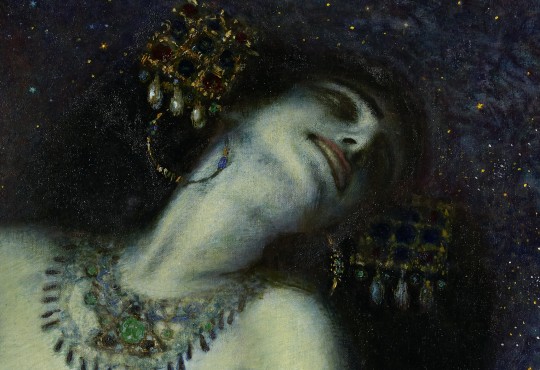
Even the Jungian world is cautious about regarding Carl Jung as a sage — a history of political incorrect remarks and his rather patriarchal views of women spells trouble today. I have privately gotten insights from Jungian psychology for more than 12 years and am particularly drawn to the breadth of Jung’s psychology, his knowledge of philosophy, art and world religions. His works include references to Wagner, Faust, (Franz Stuck’s) Salome, Ovid, the Norse gods Odin and Thor, the Egyptian deities Isis and Osiris,the Greek goddess Hecate, ancient Gnostic texts, Greek Hyperboreans, King Herod, the Old Testament, the New Testament, Nietzsche’s Zarathustra, alchemy and astrology, Buddha and Lao-tse. And that’s just naming a few. Jung opened to me encounters with my soul and explained to a “Homo Faber” magic, coincidence and the mythological symbols. I would not like to give most “shrinks” my hand, but found Jung’s work extremely helpful for men (and women) in the second half of their lives. The broader goals of self-discovery and wholeness — a maturation process Jung himself referred to as “individuation” – are timeless: The blond hero lay slain. The black beetle is the death that is necessary for renewal; and so thereafter, a new sun glowed.
Note: Of course the Red Book must not read not in a hurry. As I said, those are just my notes sprinkeld with some quotes and personal memories. I am currently expanding them, since I re-read the book. I hope it makes appetite.
The Narrative
Jung made once a rather informative remark about the difficult language of his Red Book: „archetypes speak the language of high rhetoric, even of bombast. (…) I had no choice but to write everything down in the styles selected by the unconscious itself.“ (Jung in 1963). It is also noteworthy that he admits to have lost the control of this self-experiment („(„Today I might equally well say that it was an experiment which was being conducted with me.“). The two most important archetypes, who accompanied him in his dream wanderings are The wise old and more fatherly Man (Elijah, then Philemon resulted from this figure) and the girl Salome (his Anima). Other women come up, usually representing his soul, as well as one big black Serpent appear also in impressive drawings in the Red Book again. The employment of these and to other figures of his dreams and awake imagination led him to the deciding insight, namely that there are things in the psyche which avoid our control, show themselves and develop an own way of life. More than 16 years, it was for Jung, primarily about closing the gap between that cosy and orderly outside world and his inside world of the pictures and to understand the interaction of both worlds. Only when the contradiction between “Inside” and “Outside” was solved for him, he could conclude this self-experiment.
The Red Book is a testament to what might be called Religion or a spirituality that is developed from the ever evolving Self that is indeed as aspect of nature. It was Jung’s experience to see what the “Deep Knowledge” would present him if he simply put aside his dominant mode of apprehension, the linear, analytical mind, and allowed what else was in him to manifest itself. The conversations we see in the Red Book are a detailed description of what Nature did with Jung. It can be the same with us as well, since our dreaming is unconscious speaking with us. All that is required is that we learn how to enter into the imaginal dialogue that would allow this other intelligence to be understood.
Jung was very adamant that each of us can and must enter into our own experiment with the unconscious. Ultimately, if we are to become the full potential of our being then we cannot have heroes above us who do things that we cannot do. In Jung’s words, we must be the Christ; that is, we must live our lives as distinctly and as uniquely and as fully as Christ lived his life, taking on himself the full weight of a human life and being true to all that he was.
“The images of the unconscious place a great responsibility upon a man. Failure to understand them, or a shirking of ethical responsibility, deprives him of his wholeness and imposes a painful fragmentariness on his life.” Liber Novus is an unfinished manuscript corpus, and it taken from series of manuscripts, of which no single version can be taken as final.
.
The Red Book: Liber Primus
Prologue
Main proponents: Spirit of the Time, Spirit of the Depth Gospel of John, Bible
The Way of What is to Come
Jung’s Prologue starts with a prophesy announcing Jesus: For unto us a child is born, unto us a son is given: and the government shall be upon his shoulder: and his name shall be
called Wonderful, Counsellor, The mighty God, The everlasting Father, The Prince of Peace. (Isaiah 9:6) and continues with an vers of the famous prologue in the Gospel of John: And the Word was made flesh, and dwelt among us (and we beheld his glory; the glory as of the only begotten of the Father), full of grace and truth. (John 1:14). Then Jung himself discards the spirit of this time (Zeitgeist) who just wants only to hear about benefit and value. But I did not consider that the spirit of the depths from time immemorial and for all the future possesses a greater power. Melting sense and anti-sense leads to a supreme (sense) meaning – to “The Way of What is to Come“, – the bridge to what is coming – but not to God himself but to his image offering inspiration and knowledge from the Depths but also visions of the coming first Wold War.
But the spirit of the depths said: “No one can or should halt sacrifice. Sacrifice is not destruction, sacrifice is the foundation stone of what is to come … You should carry the monastery in yourself . The desert is within you. The desert calls you and draws you back … Truly; I prepare you for solitude.”
After this, my humanity remained silent. Something happened to my spirit, however, which I must call mercy.
The Prologue closes:
There is only one way and that is your way. You seek the path, I warn you away from my own. It could also be the
wrong way for you.
One eye of the Godhead is blind, one ear of the Godhead is deaf,
the order of its being is crossed by chaos.
The Red Book: Liber Primus, Chapters I-VII
Pages filled with cramped calligraphy that seemed at once controlled but also written feverishly.
(1) Refinding the soul
Main proponents: Jung himself reflecting of the Soul and the Spirit of the Depth.
Main thought: The soul contains the images which the half (of Platon’s) world.
If we possess the image of a thing, we possess half the thing.
The image of the world is half the world. He who possessesthe world but not its image’ possesses only half the world, sincehis soul is poor and has nothing. The wealth of the soul exists inimages.He who possesses the image of the world, possesses halfthe world, even if his humanity is poor and owns nothing.
(2) Soul and God
Main proponents: Jung himself reflecting of the Soul and God.
Main thought: One has to recognize and accept that Anima and Animus is which is irrational. Anima and Animus is the first internal God you meet. Dreams as knowledge of the heart.
If you are boys, your God is a woman.
If you are women, your God is a boy.
If you are men, your God is a maiden.
The God is where you are not.
So: it is wise that one has a God; this serves for your perfection.
A maiden is the pregnant future.
A boy is the engendering future.
A woman is: having given birth.
A man is: having engendered.
So: if you are childlike beings now, your God will descend from the heightof ripeness to age and death.
(3) On the Service of the Soul
Main proponents: Jung fighting seven Nights against the spirit of the Depth, writing down dreams
Main thought: Open the gates of the soul to let the dark flood of chaos flow into your order and meaning.
Christ taught: God is love. But you should know that love is also terrible.
Christ totally overcomes the temptation of the devil, but not the temptation
of God to good and reason.
The slave to virtue finds the way as little as the slave to vices.
If you believe that you are the master of your soul, then become servant.
If you were her servant, yourself master, since she needs to be
ruled. These should be your first steps.
(4) The Dessert
Main proponents: Jung going in the desert to find his Self
Main thought: Why is my self a desert? Have I lived too much outside of myself in men and events? Why did I avoid my self?
When you say that the place of the soul is not, then it is not.
But if you say that it is, then it is. Notice what the ancients said
in images: the word is the creative act. The ancients said: in the
beginning was the Word. Consider this and think upon it.
The words that oscillate between nonsense and supreme
meaning are the oldest and truest.
Experiences in the Desert
Main proponents: Jung and his Soul – after 25 nights his soul speaks to him, lectures him
Main thought: After 25 nights his soul speaks to him, lectures him: “I am not your mother.”
Should everything fall into your lap ripe and finished? You are
full, yes, you teem with intentions and desirousness!-Do you
still not know that the way to truth stands open only to those
without intentions?”
The Zeitgeist considers itself extremely clever, like every such
spirit of the time. But wisdom is simple-minded, not just simple.
Many will laugh at my
foolishness. But no one will laugh more than I laughed at myself.
So I overcame scorn. But when I had overcome it, I was near to my soul,
and she could speak to me, and I was soon to see the desert becoming green.
(5) Descent into Hell in the Future
Main proponents: Many confused voices, thousand serpents, Jung falling, spirit of the depth, blond slain hero
Main thought: I am seized by fear.
The spirit of the depths opened my eyes and I caught a glimpse of the inner things, the world of my soul, the many-formed and changing.
I see a gray rock face along which I sink into great depths.I hear the flow of underground waters. I see the bloody head of a man on the dark stream. Someone wounded, someone
slain floats there. I see a large black scarab floating past on the dark stream. In the deepest reach of the stream shines a red sun, radiating through the dark water. Serpents on the dark rock walls, striving toward the depths, where the sun shines. A thousand serpents crowd around, veiling the sun. Deep night falls. A red stream of blood, thick red blood
springs up, surging for a long time, then ebbing. I am seized by fear.
To the extent that the Christianity of this time lacks madness, it lacks divine life.
But also speak of sick delusionwhen the spirit of this time does not leave a man and forces himto see only the surface, to deny the spirit of the depths and to
take himself for the spirit of the times. The spirit of this time isungodly; the spirit of the depths is ungodly; balance is godly.
The spirit of the depths is pregnant with ice,fire, and death. You are right to fear the spirit of the depths, as
he is full of horror.
Blood shone at me from the red light of the crystal, and when
I picked it up to discover its mystery; there lay the horror uncovered
before me: in the depths of what is to come lay murder.
The blond hero lay slain. Therefore I take part in that murder; the sun of the depths
also shines in me after the murder has been accomplished; the
thousand serpents that want to devour the sun are also in me. I
myself am a murderer and murdered, sacrificer and sacrificed.
The upwelling blood streams out of me.
The heroic in you is the fact that you are ruled by the
thought that this or that is good, that this or that performance
is indispensable, this or that cause is objectionable, this or that
goal must be attained in headlong striving work, this or that
pleasure should be ruthlessly repressed at all costs. Consequently
you sin against incapacity. But incapacity exists. No one should
deny it, find fault with it, or shout it down.
(6) Splitting of the Spirit
Main proponents: Jung’s Ego, His Soul in God mask and Devils mask
Main thought: Going to hell is equal to becoming hell.
My soul: “Who gives you thoughts and words? Do you malice
them? Are you not my serf a recipient who lies at my door and
picks up my alms? And you dare think that what you devise and
speak could be nonsense? Don’t you know yet that it comes from
me and belongs to me?”
As the first vision had predicted to me, the assassin appeared
from the depths, and came to me just as in the fate of the people
of this time a nameless one appeared and leveled the murder
weapon at the prince. ( Black Book 2 continues: ”Are you neurotic? Are we neurotic?”
Everything that becomes too old becomes evil, the same is true of your
highest. Learn from the suffering of the crucified God that one can also betray
and crucify a God, namely the God of the old year. If a God ceases being the
way of life, he must fall secretly. The God becomes sick if he overstep the height of the zenith. That is why the
spirit of the depths took me when the spirit of this time had led me to the summit.
(7) Murder of the Hero
Main proponents: Jung, Siegfried (the hero), the spirit of the depth); Siegfried was a heroic prince who appears in old German and Norse epics. In the twelfth-century Nibelunglied, he is described as follows: ”And in what magnificent style Siegfried rode! He bore a great spear, stout of shaft and broad of head; his handsome sword reached down to his spurs; and the fine horn which this lord carried was of the reddest gold” His wife, Brunhild, is tricked into revealing the only place where he could be wounded and killed. Richard Wagner reworked these epics in The Ring of the Nibelung.
Main action: Jung ambushes and shoots Siegfried, Jung is reborn, vision of illuminated white men
Main thought: “The highest truth is one and the· same with the absurd.”
What does Siegfried mean for the Germans! What does it
tell us that the Germans suffer Siegfried’s death! That is why
I almost preferred to kill myself in order to spare him. But I
wanted to go on living with a new God.
After death on the cross Christ went into the underworld
and became Hell. So he took on the form of the Antichrist, the
dragon. The image of the Antichrist, which has come down to
us from the ancients, announces the new God, whose coming
the ancients had foreseen.
Gods are unavoidable. The more you flee from the God, the
more surely you fall into his hand.
The Red Book: Liber Primus, Chapters VIII-XI
Of Gods and Prophets.
(8) The Conception of the God
Main proponents: Child, Jesus
Main action: Christ’s descent into Hell ( contained in several gnostic apocryphal gospels. In the ”Apostles Creed,” it is stated that “He descended into Hell. The third day He
arose again from the dead.” Jung commented on this motif in Psychology and Alchemy, 1944, CW 12, §61n, 440, 451; Mysterium Coniunctionis, 1955/56, CW 14,475). It is the psychological equivalent of an integration with the collective unconscious and an essential part of the individuation process. (Aion, CW 9,2, §72). But the serpent is also life. In the image furnished by the ancients, the serpent put an end to the childlike magnificence of paradise; they even said that Christ himself had been a serpent” commented on this motif in 1950 in Aion, CW 9, 2.
Main thought: God combining beauty and goodness, beautiful and hateful, good and evil, laughable and serious, human and inhuman. Definition of hell. Why the hero needs to be slain.
You new spark of an eternal fire, into which night were you born?’
When my prince had fallen, the spirit of the depths openedmy vision and let me become aware of the birth of the new God.
The divine child approached me out of the terrible ambiguity,the hateful-beautiful, the evil-good, the laughable-serious, the
sick-healthy, the inhuman-human and the ungodly-godly.
Therefore after his death Christ had to journey to Hell,otherwise the ascent to Heaven would have become impossible
for him. Christ first had to become his Antichrist, hisunderworldly brother.No one knows what happened during the three days Christ
was in Hell. I have experienced it.
The dead matter will change into black serpents.
What do you think of the essence of Hell? Hell is when the depths come to you with all that you no longer are or are not yet
capable of Hell is when you can no longer attain what you could attain. Hell is when you must think and feel and do everything
that you know you do not want. Hell is when you know that your having to is also a wanting to, and that you yourself are responsible
for it. Hell is when you know that everything serious that you have planned with yourself is also laughable, that everything fine is also brutal, that everything good is also bad, that everything high is also low, and that everything pleasant is also shameful.
But the deepest Hell is when you realize that Hell is also no Hell, but a cheerful Heaven, not a Heaven in itself, but in this
respect a Heaven, and in that respect a Hell.
That is the ambiguity of the God: he is born from a dark ambiguity and rises to a bright ambiguity. Unequivocalness is
simplicity and leads to death.141 But ambiguity is the way of life.
I must say that the God could not come into being before the hero had been slain. The hero as we understand him has become an
enemy of the God, since the hero is perfection. The Gods envy the perfection of man, because perfection has no need of the Gods. But
since no one is perfect, we need the Gods.
That will be a time of salvation and the dove, and the eternalfire, and redemption will descend.
Then there will no longer be a hero, and no one who canimitate him.
The hero must fall for the sake of our redemption, since he isthe model and demands imitation.
(9) Mysterium encounter
Main proponents: Jung, Elijahls (old man, prophet), Herod’s bloodthirsty daughter Salome, black serpent
Main action: Meets Salome (his Anima) and Elijah who was one of the prophets of the Old Testament. Jung replied used once Elijah as an archetype, describing him as a “living
archetype” who represented the collective unconscious and the self. Salome was the daughter of Herodias and the step-daughter of King Herod danced once before Herod . She requested the head of John the Baptist, who was then beheaded. In the late nineteenth this archetype of the Feminine Evil, or femme fatale fascinated painters and writers, including
Oscar Wilde, and Franz von Stuck.
Main thought: Why ones Anima must be feared and loved.
I: “Forgive my astonishment, am I truly in the underworld?”
S: “Do you love me?”
I: “How can I love you? How do you come to this question? Isee only one thing, you are Salome, a tiger, your hands are stainedwith the blood of the holy one. How should I love you?”
S: “You will love me.”
I: “I? Love you? Who gives you the right to such thoughts?”
S: “I love you.”
I: “Leave me be, I dread you, you beast.”
I: “I am horrified. Who wouldn’t be horrified if Salomeloved him?”
E: ”Are you cowardly? Consider this, I and my daughter have been one since eternity.”
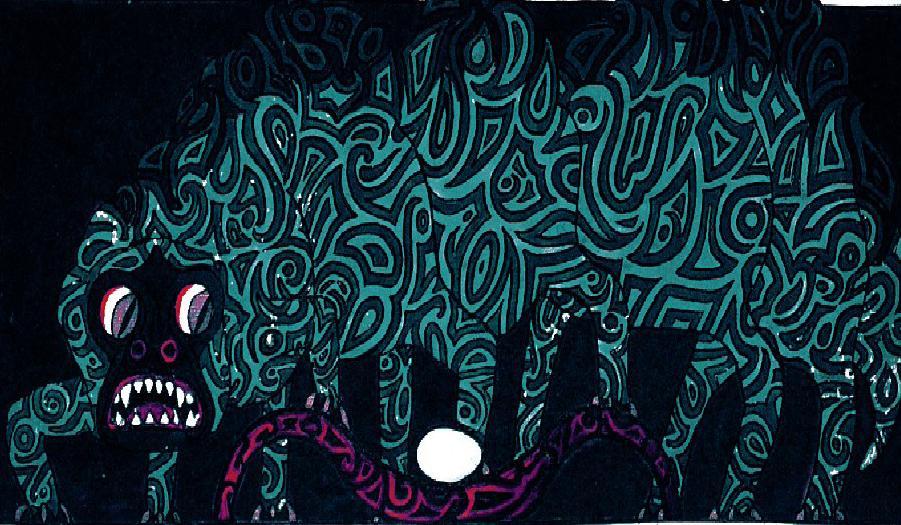
I see how the black serpent writhes up the tree, and hides inthe branches. Apart from Elijah and Salome I found the serpent as a third
principle. It is a stranger to both principles although it isassociated with both. The serpent is the
earthly essence of man of which he is not conscious.
Elijah said: “You should recognize her through her love!” Notonly do you venerate the object, but the object also sanctifies
you. Salome loved the prophet, and this sanctified her. Theprophet loved God, and this sanctified him. But Salome did not
love God, and this profaned her. But the prophet did not loveSalome, and this profaned him. And thus they were each other’s
poison and death. May the thinking person accept his pleasure,and the feeling person accept his own thought. Such leads one
along the way.
(10) Instruction
Main proponents: Jung, Elijahls (old man, prophet), Herod’s bloodthirsty daughter Salome, black serpent
Main action: Loves Salome (his Anima) becomes prophet.
Main thought: Sensuality is the lowest and commonest form of pleasure. This is represented by Kali. Salome is the image of his pleasure, that suffers pain, Salome is Jungs soul. Pope in Rome has become an image and-symbol for us of how God becomes human.
You see, prophet, I am tired, my head is as heavy as lead. I am
Elijah and Salome stand smiling before me.
Elijah is silent. Heaviness lies on me. Then Salome steps in, comes
over to me and lays her arm around my shoulder. She takes me for
her father in whose chair I sat.
On account of my thoughts, I had left myself; therefore my
self became hungry and made God into a selfish thought.
Salome embraced me and I thus became a prophet, since I had
found pleasure in the primordial beginning, in the forest, and in
the wild animals.
(11) Resolution
Main proponents: Jung, Elijahls (old man, prophet), Herod’s bloodthirsty daughter Salome, black and white serpent, Wagner dwarf mime.
Main action: Dialogue between Christ and Salome. Christ states that he has come to undo the work of the female, namely; lust, birth, and decay: To Salome’s question of how long shall death prevail, Christ answered, as long as women bear children. In Wagner’s Ring of the Nibelung, the Nibelung dwarf Mime is the brother of Alberich and a master craftsman. Alberich stole the Rhinegold from the Rhinemaidens; through renouncing love, he was able to forge a ring out of it that conferred limitless power. In Siegfried, Mime, who lives in a cave, brings up Siegfried so that he will kill Fafner the giant, who has transformed into a dragon and now has the ring. Siegfried slays Fafner with the invincible sword that Mime has fashioned, and kills Mime, who had intended to kill him after he had recovered the gold. Fight of the two snakes: the white means a movement into the day, the black into the kingdom of
darkness, with moral aspects too. Compare Dante’s Inferno. The Gnostics express this same idea in the symbol of the reversed cones. In Aion, Jung also noted that serpents were a typical pair of opposites, and that the conflict between serpents was a motif found in medieval alchemy (1951, CW 9,2, §181).
War was not only adventure, criminal acts and killing, but the mystery of self-sacrifice. Love brings the self-sacrificer and self-sacrifice. Love is also the mother of my self-sacrifice. In that I hear and accept this, I experience that I become Christ, since I recognize that love makes me into Christ. My willing, which earlier served the spirit-of-this-time [“Zeitgeist”] went under to the spirit of the depths, and just as it was previously determined by the spirit of the time, it is now determined by the spirit of the depths, by forethinking, by that image of the sighted Salome. What is presented here develops the notions of the conflict between opposing functions, the identification with the leading function, and the development of
the reconciling symbol as a resolution of the conflict of opposites, which are the central issues of psychological Types (CW 6), the process of the fusion of the two currents to the transcendent function.
Main thought: Jung once recounted that after Salome’s declaration that he was Christ was deification. The animal face which I felt mine transformed into was the famous [Deus] Leontocephalus of the Mithraic mysteries, the figure which is represented with a snake coiled around the man, the snake’s head resting on the man’s head, and the face of the man that of a lion … In this deification mystery you make yourself into the vessel, and are a vessel of creation in which the opposites reconcile. All say that they are fighting for the good and for peace, but one cannot fight one another over the good. No one can judge history in terms of right and wrong. Because one-half of mankind is wrong, every man is half wrong. The psychological processes, which accompany the present war , above all the incredible brutalization of public opinion, the mutual slanderings, the unprecedented fury of destruction, the monstrous flood of lies, and man’s incapacity to call a halt to the bloody demon-are suited like nothing else to powerfully push in front of the eyes of thinking men the problem of the restlessly slumbering chaotic unconscious under the ordered world of consciousness. This war has pitilessly revealed to civilized man that he is still a barbarian … But the psychology of the individual corresponds to the psychology of the nation. What the nation does is done also by each individual, and so long as the individual does it, the nation also does it. Only the change in the attitude of the individual will do.
The rock separates day and night. On the dark side lies a bigblack serpent, on the bright side a white serpent.
Elijah climbs down from the stone, his form becomes smallerin descending, and finally becomes dwarf like. The serpents
become infinitely small. I feel as if I too am shrinking.
E: “You wanted to come here far too much. I did not deceiveyou, you deceived yourself He sees badly who wants to see; you
have overreached yourself”
Salome draws near. The serpenthas wound itself around my whole body, and my countenance
is that of a lion.
Salome says, “Mary was the mother of Christ, do you understand?”
Then she cries, “I see light!” Truly; she sees, her eyes are open. The serpentfalls from my body and lies languidly on the ground. Elijah transforms into a huge flame of white light.
The hero strives after the utmost in the pure principle, and therefore he finally falls for theserpent.
Love and forethinking are in one and the same place. Lovecannot be without forethinking, and forethinking cannot be
without love. Man is always too much in one or the other. Thiscomes with human nature.
You are Christians andrun after heroes, and wait for redeemers who should take the
agony on themselves for you, and totally spare you Golgotha.
The spirit of the depths clutched the fate of man unto itself as itclutched mine. He leads mankind through the river of blood
to the mystery: In the mystery man himself becomes the twoprinciples, the lion and the serpent.
Because I also want my being other, I must become a Christ. I am made into Christ, I must suffer it. Thus the redeeming blood
flows. Through the self-sacrifice my pleasure is changed and goesabove into its higher principle. Love is sighted, but pleasure is
blind. Both principles are one in the symbol of the flame. Theprinciples strip themselves of human form.
The mystery showed me in images what I should afterwardlive.I did not possess any of those boons that the mystery showed
me, for I still had to earn all of them.
finis. part. prim. (End of part one)
The Red Book: Liber Secundus, Chapters I-VII
Strange soulmaking encounters.
(1) The Images of the Erring
Hearken not unto the words of the prophets that prophesy unto you: they make you vain: they speak a vision of their own heart, and not out of the mouth of the Lord.” (Jeremiah 23: 16)
(2) The Red One
Main proponents: Jung, the Devil (The Red One)
Main proponents: Jung, the Devil (The Red One)
Main action: Funny dialogue
Main thought: It does not help that we say in the spirit of this time: There is no personal devil. There is one I earnestly confronted my devil and behaved with him as with a real person. Take seriously every unknown wanderer who personally inhabits the inner world, since they are real because.
T. R.: ”Are you a doctor of theology, who examines Christianity from the outside and appreciates it historically, and therefore a sophist after all?”
I: “You’re stubborn. What I mean is that it’s hardly a coincidence that the whole world has become Christian. I also believe that it was the task of Western man to carry Christ in his heart and to grow with his suffering, death, and resurrection.”
(2) The Castle in the Forest
Main proponents: Jung, old castle owner and his daughter
Main action: Overnight in a castle in the wood
Main thought: You are a slave of what you need in your soul. The most masculine man needs women, and he is consequently their slave. Become a woman yourself; and you will be saved from slavery to woman.The acceptance of femininity leads to completion. The same is valid for the woman who accepts her masculinity. The feminine in men is bound up with evil. I find it on the way of desire. The masculine in the woman is bound up with evil.
I: “But for Heaven’s sake, tell me one thing: in all earnestness must I assume that you are real?”
She weeps and does not answer.
I: “Who are you, then?”
She: “I am the old man’s daughter. He holds me here in unbearable captivity; not out of envy or hate, but out of love, since
I am his only child and the image of my mother, who died young.”
(3) One of the Lowly
Main proponents: Jung, a tramp (former convict)
Main action: Wandering in a homely, snow-covered country, overnight in a country tavern.
Main thought: At your low point you are no longer distinct from your fellow beings. You are not ashamed and do not regret it, since insofar as you live the life of your beings and descend to their lowliness / you also climb into the holy stream of common life, where you are no longer an individual on a high mountain, but a fish among fish, a frog among frogs. Your heights are your own mountain, which belongs to you and you alone. Becoming belongs to the heights and is full of torment. How can you become if you never are?
He: “You can go to the cinema in the evenings. That’s great and it’s cheap. You get to see everything that happens in the world.” I have to think of Hell, where there are also cinemas for those who despised this institution on earth and did not go there because everyone else found it to their taste. I: “What interested you most about the cinema?” He: “One sees all sorts of stunning feats. Oh, today’s miracles are simply somewhat less mythical than technical.
(4) The Anchorite
Main proponents: Jung, anchorite of the Libyan Desert
Main action: hot dry yellow sand desert, discussion about the prologue of the gospel of John
Main thought: The God of words is cold and dead and shines from afar like the moon. Honor the darkness as the light, and you will illumine your darkness.
I: “But Philo Judeaus, if this is who you mean, was a serious philosopher and a great thinker. Even John the Evangelist included some of Philo’s thoughts in the gospel.” A: “You are right. It is to Philo’s credit that he furnished language like so many other philosophers. He belongs to the language artists. But words should not become Gods.”
A: “Guard against being a slave to words.
I: “‘And life was the light of men and the light shines in the darkness and the darkness has not understood it. But it became a person sent from God, by the name of John, who came as a witness and to be a witness of the light. The genuine light, which Philo Judeaus, also called Philo of Alexandria (20 BCE-50 CE), was a Greek-speaking Jewish philosopher. His works presented a fusion of Greek philosophy and Judaism. For Philo, God, to whom he referred by the Platonic term “To On” (the One), was transcendent and unknowable. A: “I ask you, was this [Logos] a concept, a word? It was a light, indeed a man, and lived among men. You see, Philo only lent John the word so that John would have at his disposal the word ‘logos’ alongside the word ‘light’ to describe the son of man.
(5) Dies II.
Main proponents: Jung, anchorite of the Libyan Desert
Main action: Morning in the Desert
Main thought: Things also change, but you do not notice this if you do not change. But if you change, the countenance of the world alters. The manifold sense of things is your manifold sense. It is useless to fathom it in things. And this probably explains why the solitary went into the desert, and fathomed the thing but not himself.
Then he said: “Dear Ammonius, I have delightful tidings for you: God has become flesh in his son and has brought us all salvation.” “What are you saying,” I called, “you probably mean Osiris, who shall appear in the mortal body?
“No,” the old man insisted, “he was the Son of God.” “Then you mean Horus the son of Osiris, don’t you?”
I answered.
“No, he was not Horus, but a real man, and he was hung from a cross.” “Oh, but this must be Seth, surely; whose punishments our old ones have often described.”But the old man stood by his conviction and said: “He died and rose up on the third day.”
“Well, then he must be Osiris,” I replied impatiently.“No,” he cried, “he is called Jesus the anointed one.”
”Ah, you really mean this Jewish God, whom the poor honor at the harbor, and whose unclean mysteries they celebrate in cellars.” “He was a man and yet the Son of God,” said the old man staring at me intently.
“That’s nonsense, dear old man,” I said, and showed him to the door. But like an echo from distant rock faces the words returned to me: a man and yet the Son of God. It seemed significant to me, and this phrase was what brought me to Christianity.
I: “But don’t you think that Christianity could ultimately be a transformation of your Egyptian teachings?”
A: “If you say that our old teachings were less adequate expressions of Christianity, then I’m more likely to agree with you.”
(6) Death
Main proponents: Jung, the Death
Main action: Wandering the Northern land meeting death
Main thought: We need the coldness of death to see clearly. Life wants to live and to die, to begin and to end.74 You are not forced to live eternally; but you can also die, since there is a will in you for both.
We answered: “Stranger, you may well stand by me, if it is not too cold for you. As you can see, I am cold and my heart has never beaten.”
“I know, you are ice and the end; you are the cold silence of the stones; and you are the highest snow on the mountains and the most extreme frost of outer space. I must feel this and that’s why
I stand near you.” “What leads you here to me, you living matter? The livings are never guests here.
When I see the lamentation and nonsense of the earth and consequently enter death with a covered head, then everything I see will indeed turn to ice. But in the shadow world the other rises, the red sun.
The ancients said: Inter faeces et urinas nascimur. For three nights I was assaulted by the horrors of birth. On the third night junglelike.
(7) The Remains of the Earlier Temples
Main proponents: Jung, the Devil two strange journey men probably: an old monk and a tall gangly thin man with a childish gait and discolored red clothes. The all one is the Red Rider. The old monk is Ammonius.
Main action: wide meadows spread out before me-a carpet of flowers-soft hills-a fresh green wood in the distance.
Main thought: They had got caught in the muck, and so they called the living a devil and traitor. Because both of them believed in themselves and in their own goodness, each in their own way, they ultimately became mired in the natural and conclusive burial ground of all outlived ideals.
Ammonius exclaims horrified: ”Apage, Satanas!” The Red One: “Damned pagan riffraff!” I: “But my dear friends, what’s wrong with you? I’m the Hyperborean stranger, who visited you, Oh Ammonius, in the desert.84 And I’m the watchman whom you, Red One, once visited.” Ammonius: “I recognize you, you supreme devil. My downfall began with you.” The Red One looks at him reproachfully and gives him a poke in the ribs. The monk sheepishly stops. The Red One turns haughtily toward me.R: ”Already at that time I couldn’t help thinking that you lacked a noble disposition, notwithstanding your hypocritical seriousness. Your damned Christian play-act-“
The Red Book: Liber Secundus, Chapters VIII-XI
The healing of Izdubar
(8) First day
Main proponents: Jung, enormous man with bullhead (Izdubar)
Main action: Discussion with Izdubar
Main thought: The outer opposition is an image of my inner opposition.
I: “In the course of the centuries men have made many discoveries, through precise observation and the science of outer things.” Iz: “But this science is the awful magic that has lamed me. How can it be that you are still alive even though you drink from this poison every day?”
I: “We’ve grown accustomed to this over time, because men get used to everything. But we’re still somewhat lamed. On the other hand, this science also has great advantages, as you’ve seen.What we’ve lost in terms of force, we’ve rediscovered many times through mastering the force of nature.”
Iz: “Isn’t it pathetic to be so wounded? For my part, I draw my own force from the force of nature. I leave the secret force to the cowardly conjurers and womanly magicians. If I crush another’s skull to pulp, that will stop his awful magic.”
I: “But don’t you realize how the touch of our magic has worked upon you? Terribly; I think.”
Iz: “Unfortunately; you are right.”
(9) Second Day
Main proponents: Jung, Izdubar who is sick
Main action: Carrying Izdubar to the Western Land (Land of the Death in Egypt). Jung reduced Izdubar to the size of an egg so he could secretly carry Izdubar into the house and enable his healing.
Main thought: Jung said to Aniela Jaffe concerning these sections that some of the fantasies were driven by fear, such as the chapter on the devil and the chapter on Gilgamesh-Izdubar.
Set the egg before you, the God in his beginning. And behold it. And incubate it with the magical warmth of your gaze.
(10) The Incantations
Main proponents: Jung, Izdubar who is in the Egg
Main action: Christmas has come. The God is in the egg.
Main thought: In “Dreams,” Jung wrote: “17 I 1917 Tonight: awful and formidable avalanches come crashing down the mountainside, like utterly nightmarish clouds; they will fill the valley on whose rim I am standing on the opposite side. His soul tells him to help the Gods and to sacrifice to them. She tells him that the worm crawls up to Heaven, it begins to cover the stars and with a tongue of fire he eats the dome of the seven blue heavens. The God is coming, Jung should get ready to receive him.
My God, I love you as a mother loves the unborn whom she carries in her heart. Grow in the egg of the East, nourish yourself from my love, drink the juice of my life so that you will become a radiant God. We need your light, oh child. Since we go in darkness, light up our paths. May your light shine before us, may our fire warm the coldness of our life. We do not need your power but life.
(11) The Opening of the Egg
Main proponents: Jung, Izdubar who is healed
Main action: Izdubar comes out of the Egg
Main thought: Nature is playful and terrible. Some see the playful side and dally with it and let it sparkle. Others see the horror and cover their heads and are more dead than alive. The way does not lead between both, but embraces both. It is both cheerful play and cold horror.
Iz: Where am I How narrow it is here, how dark, how cool-am I in the graver Where was I ? It seemed to me as if I had been outside in the universe-over and under me was an endlessly dark star ,glittering sky and I was in a passion of unspeakable yearning.Streams of fire broke from my radiating body- I surged through blazing flames. I swam in a sea that wrapped me in living fires- Full of light, full of longing, full of eternity- I was ancient and perpetually renewing myself- Falling from the heights to the depths, and whirled glowing from the depths to the heights hovering around myself amidst glowing clouds as raining embers beating down like the foam of the surf, engulfing/ myself in stiffing heat-Embracing and rejecting myself in a boundless game-Where was I was completely sun. “
I: “Oh Izdubar! Divine one! How wonderful! You are healed!”
The Red Book: Liber Secundus, Chapters XII-XIII
The descent to the hell
(12) Hell
Main proponents: Jung, young maiden, death,
Main action: Jung reached the underworld
Main thought: No one should be astonished that men are so far removed from one another that they cannot understand one another, that they wage war and kill one another. One should be much more surprised that men believe they are close, understand one another and love one another.
(13) The Sacrificial Murder
Main proponents: Jung, a woman with covered by an impenetrable veil –his soul
Main action: Jung eats gods liver
Main thought: The sacrifice has been accomplished: the divine child, the image of the God’s formation, is slain, and I have eaten from the sacrificial flesh. The child, that is, the image of the God’s formation, not only bore my human craving, but also enclosed all the primordial and elemental powers that the sons of the sun possess as an inalienable inheritance. The God needs all this for his genesis.
S: “So, take part in his act, abase yourself and eat. I need atonement.”
I: “So shall it be for your sake, as you are the soul of this child.” I kneel down on the stone, cut off a piece of the liver and put it in my mouth. My gorge rises-tears burst from my eye cold sweat covers my brow-a dull sweet taste of blood I swallow with desperate efforts-it is impossible-once again and once again I almost faint-it is done. The horror has been accomplished.
S: “I thank you.”
She throws her veil back-a beautiful maiden with ginger hair. S: “Do you recognize me?”
I: “How strangely familiar you are! Who are you?”
S: “I am your soul.”
The Red Book: Liber Secundus, Chapters XIV-XVIII
The Library, the Kitchen, and the Madhouse
(14) Divine Folly
Main proponents: Jung, a librarian
Main action: In a hall. Reflections about Thomas a Kempis’s The Imitation of Christ.
Main thought: The Imitation of Christ exhorts people to be concerned with the inner spiritual life as opposed to outer things, gives advice as to how this is to be lived: ”Anyone who wishes to understand and to savor the words of Christ to the full must try to make his whole life conform to the pattern of Christ’s life”
(15) Nox Secunda
Main proponents: Jung, fat women in kitchen, Ezechiel (Anabaptist), fellow believers on pilgrimage, two doctors
Main action: Treated in a large sickroom.
Main thought: Every man has a quiet place in his soul, where everything is self-evident and easily explainable, a place to which he likes to retire from the confusing possibilities of life, because there everything is simple and clear, with a manifest and limited purpose. And even this place is a smooth surface, an everyday wall, nothing more than a snugly sheltered and frequently polished crust over the mystery of chaos.
(16) Nox tercia
Main proponents: Jung, Soul, Professor, the Fool
Main action: treated in a madhouse
Main thought: Commenting on transformation of Judeo- Christian God an incarnation of God after Christ”Ever since John the apocalyptist experienced for the first time (perhaps unconsciously) the conflict into which Christianity inevitably leads, mankind is burdened with this: God wanted and wants to become man” (CW II, §739). In Jung’s view, there was a direct link between John’s views and Master Eckhart’s views and points to the pleroma, and the future birth of the divine child, who, in accordance with the divine trend toward incarnation. This metaphysical process is known as the individuation process in the psychology of the unconscious.
You can never deny your knowledge of good and evil to yourself, so that you could betray your good in order to live evil.For as soon as you separate good and evil, you recognize them. He who cannot bear doubt does not bear himself. Such a one is doubtful; he does not grow and hence he does not live. Doubt is the sign of the strongest and the weakest. The strong have doubt, but doubt has the weak. My speech is neither light nor dark, since it is the speech of someone who is growing.
(17) Nox quarta
Main proponents: Jung, Soul, librarian
Main action: Jung joins a Wagner opera during the last act. One must kneel down as the Good Friday service begins: Parsifal enters-slowly
Main thought: In Parsifal, Wagner presented his reworking of the Grail legend. The plot runs as follows: Titurel and his Christian knights have the Holy Grail in their keeping in their castle, with a sacred spear to guard it. Klingsor is a sorcerer who seeks the Grail. Parsifal defeats Klingsor’s knights. Kundry is transformed into a beautiful woman, and she kisses him. In the discussion, Jung said: “Wagner’s exhaustive treatment of the legend of the Holy Grail and Parsifal would need to be supplemented with the synthetic view that the various figures correspond to various artistic aspirations. -The incest barrier will not serve to explain that Kundry’s ensnarement fails; instead this has to do with the activity of the psyche to elevate human aspirations ever higher
(18) The Three prophecies
Main proponents: Jung, Soul
Main action: Jung’s soul gave ancient things that pointed to the future. She gave me three things: The misery of war, the darkness of magic, and the gift of religion.
Main thought: A free man knows only free Gods and devils that are self-contained and take effect on account of their own force. If they fail to have an effect, that is their own business, and I can remove this burden from myself But if they are effective, they need neither my protection nor my care, nor my belief.
S: “Will you accept what I bring?”
I: ”’I will accept what you give. I do not have the right to judge or to reject.”
S: So listen.
The Red Book: Liber Secundus, Chapters XIX-XXI
Magic, Symbols and the Critique of Reason
(19) The Gift of Magic
Main proponents: Jung, Soul
Main action: Jung’s soul gets magic rod.
Main thought: Abyss, give birth to the unredeemed. Who is our redeemer? Who our leader? Where are the ways through black wastes? God, do not abandon us!
S: “Well, then, raise your hands and receive what comes to you.”
I: “What is it? A rod? A black serpent? A black rod, formed like a serpent-with two pearls as eyes-a gold bangle around its neck. Is it not like a magical rod?”
S: “It is a magical rod.”
I: “What should I do with magic? Is the magical rod a misfortune? Is magic a misfortune?”
S: “Yes, for those who possess it.”
(20) The Way of the Cross
Main proponents: Jung, Soul
Main action: Jung saw the black serpent, as it wound itself upward around the wood of the cross. It crept into the body of the crucified and emerged again transformed from his mouth. The black snake transformed into become white. It wound itself around the head of the dead one like a diadem, and a light gleamed above his head, and the sun.
Main thought: The symbol is the word that goes out of the mouth, that one does not simply speak, but that rises out of the depths of the self as a word of power and great need and places itself unexpectedly on the tongue.
The ancients devised magic to compel fate. They needed it to determine outer fate. We need it to determine inner fate and to find the way that we are unable to conceive.
(21) The Magician
Main proponents: Jung, Philemon ( the magician) and his wife, Bankis, Salome Serpent
Main action: Jung’s soul gave ancient things that pointed to the future. She gave me three things: The misery of war, the darkness of magic, and the gift of religion.
Main thought: The devil is the sum of the darkness of human nature. He who lives in the light strives toward being the image of God; he who lives in the dark strives toward being the image of the devil. Because I wanted to live in the light, the sun went out for me when I touched the depths. It was dark and serpentlike.I united myself with it and did not overpower it. I took my part of the humiliation and subjugation upon myself, in that I took on the nature of the serpent.
Elijah and Salome! The cycle is completed and the gates of the mysteries have opened again. Elijah leads Salome, the seeing one, by the hand. She blushes and lowers her eyes while lovingly batting her eyelids.
E: “Here, I give you Salome. May she be yours.”
I: “For God’s sake, what should I do with Salome? I am already married and we are not among the Turks.”
E: “You helpless man, how ponderous you are. Is this not a beautiful gift? Is her healing not your doing? Won’t you accept her love as the well-deserved payment for your trouble?”
I: “It seems to me a rather strange gift, more burden than joy. I am happy that Salome is thankful to me and loves me. I love her too-somewhat. Incidentally, the care I afforded her, was, literally, pressed out of me, rather than something I gave freely and intentionally. If my partly unintentional 1 ordeal has had such agood outcome, I’m already completely satisfied.”
Salome to Elijah: “Leave him, he is a strange man. Heaven knows what his motives are, but he seems to be serious. I’m not ugly and surely I’m generally desirable.”
Salome to me: “Why do you refuse me? I want to be your maid and serve you. I will sing and dance before you, fend off people for you, comfort you when you are sad, laugh with you when you are happy. I will carry all your thoughts in my heart. I will kiss the words that you speak to me. I will pick roses for you each day and all my thoughts will wait upon you and surround you.”
I: “I thank you for your love”.
The Red Book: Liber Tertitius – Scrutinies (I)
Philosophical and Theological Reflections. The Scrutinies consists of the Black Books 5-6 (April 1914-June 1916), Septem Sermones (1916) a handwritten and printed draft of the Red book. There are three parts, of which part and III be a final reflection after the individuation.
I, Self, Prophet, Soul and God
The Red Book: Liber Tertitius Scrutinies (II)
“The Seven Sermons to the Dead” I have written about this in another article. This version is expanded.
The Red Book: Liber Tertitius Scrutinies (III)
Final Encounters with Elijah and Salome and Reflections
Sources
Biographical Scholarship: Toni Wolff & C. G. Jung: A Collaboration (2017) by Nan Savage Healy, Ph.D. (Funded via grants from the Joseph Campbell Foundation and Harvard University’s Countway Library of Medicine). Historical Biography: Jung: A Biography (2003) by Deirdre Bair (Winner of the National Book Award). Primary Text History: The Red Book: Liber Novus (Edited and introduced by prominent historian Sonu Shamdasani, 2009)
The Red Book (German Version). 2008 Pictures: Taken from a pdf published and freely available on the internet under public domain.
The psychoanalytic C.G.Jung and the famous astronomer Kepler were both intuitive thinkers and empiric scientists with strong mystic tendencies. Pauli was a famous particle physicist, who collaborated with C.G. Jung on the concept synchronicity. When I studied Kepler’s work, I found a similarity of C.G. Jung’s and Kepler’s view on astrology and to my surprise, that Kepler even used the term archetype just in the way C.G. Jung did. This is touched in Pauli’s essay on Kepler. Kepler, Pauli and Jung were trailblazers in their own disciplines as well as in the realm of collaboration across disciplines. Their similar approach as scientist or physician and the concept of synchronicity and archetype form a triangle.
C.G.Jung valued astrology as one of the intuitive methods he used like the I Ching. For him astrology is based upon the synchronicity principle, i.e. meaningful coincidence: “Astrology is a naively projected psychology in which the different attitudes and temperaments of man are represented as gods and identified with planets and zodiacal constellations”.
Kepler is recognized as one of the founders of modern science. He was a devout Christian with mystical tendencies (obvious in his book Harmonices Mundi) working as astrologer of General Albrecht von Wallenstein, a successful soldier of fortune for Rudolph II. Keplers (two) horoscopes of Wallenstein are studied and books written about them until today. Kepler lived during turbulent times, the 30 Year’s War, in “Germany”. This war, by no means only a religious war, decimated half of its population. Kepler was not only working as astrologer in order to make ends meet (he got never paid for his job as court astronomer and adviser of the Habsburg Holy Roman Emperor Rudolph II). Although Kepler was deeply dissatisfied with the way some astrology was practised, he strove to improve the predictive capability by strengthen the theoretical underpinnings of astrology with both mathematical and philosophical models and his superior ephemeris (his Rudolphine Tables). He used carefully selected methods (sun arc directions – and secondary directions – one ephemeris day equals one year of life – but not for planets but axis, which is actually a primary direction i.e.one degree on the Zodiac equals one year of life). For Kepler the sun/earth relation is paramount..He also compared astrological predictions correcting assumed birth time and was able to use “true time” that is actual pace of the Sun not the mean time.
Kepler strongly believed that ‘The world of nature, the world of man, the world of God—all three fit together.In particular, Kepler reasoned that because the universe was designed by an intelligent Creator, it should function according to some logical pattern.Kepler converted to the Copernican heliocentric universe early in his career but was also strongly influenced by neo-Platonic philosophy, which saw the divine in the regularity of geometry (“God always geometrizes”, Plato). It is no exaggeration to say that Kepler was one of the most outstanding and dramatic figures under all his contemporaries and a scientist who repeatedly attacked dogmas of astronomy or astrology. He not only ensured that the Copernican theory became widely recognized, but actually gave it the needed physical and mathematical underpinnings. Before Kepler’s Laws, the basic Copernican model was neither more reliable, nor physical more accurate or mathematical less complicated than the old Ptolemaic model: All astronomers assumed (wrongly) uniform circular motion. When Kepler worked in the Prague period on the “Astronomia nova“, he discovered the famous second law of planetary motion (“planets moved in elliptical orbits, in which a focal point the Sun is”) with the millennia-old paradigm. This needed intellectual courage of Kepler, because it was a break with the tradition of all great astronomers from Ptolemy and Copernicus and the concept of the perfect form – the circle. Nonetheless, after numerous calculations and double-checks Kepler regretfully accepted, basically apologizing to god in his foreword. Kepler also calculated without wavering the birth date of Jesus Christ new. In his work “About the date of birth of God’s true Jesus Christ” Kepler identified the star of Bethlehem with the great conjunction of Saturn and the Jupiter and calculated that this event on the third year CE.
Pauli, a “Wunderkind” may be called a pioneer of quantum physics and leading member of the group of theoretical physicists, including Niels Bohr, Werner Heisenberg and Erwin Schrödinger. The group transformed our understanding of the way matter behaves at the subatomic level encountering a new world where Einstein’s theories (and Newtons Laws) do not apply. Exploration of the Pauli-Jung collaboration is particularly interesting because of the holistic view of his major scientific work, which won him the Nobel prize.The Pauli exclusion principle explains how matters form and a variety of astrophysic effects.
On the psychic side, the Pauli effect was named after the anecdotal bizarre ability of his to break experiments simply by being in the vicinity and his sarcastic remarks toward colleagues. Pauli has always been a strong drinker, which did not seem to hamper his scientific genius. His marriage with a bar singer-dancer became a complete disaster within one year. His mother committed suicide. Despite his Jewish origins Pauli was baptised catholic. Pauli met with Jung, whom he consulted regularly till 1934 in a deep psychological crisis. Especially Pauli’s dreams, which were full of symbolism from alchemy, were extensively discussed.
Pauli himself had written an article called “The Influence of Archetypal Ideas on the Scientific Theories of Kepler” which appeared later in a volume with an essay of Jung’s on synchronicity. The Pauli-Jung collaboration aimed at explication of a unifying or connecting principle bridging the gap between mind and matter or (quantum) physics with psychoanalysis. Jung’s theory of synchronicity stipulated that certain events-often called coincidences-actually reveal the operation of an non-causal connection between mental and physical events through meaning. The history of Jung’s reception by the scientific and scholarly communities is cautious – they largely discredited theories of Freud are considered scientific, but although many Jung’s concepts are widely used his overall work is labeled often as unscientific. Synchronicity has been the prime target for criticism of Jung, but is for me a natural extension of Jung’s view of the intuitive function.
Synchronicity
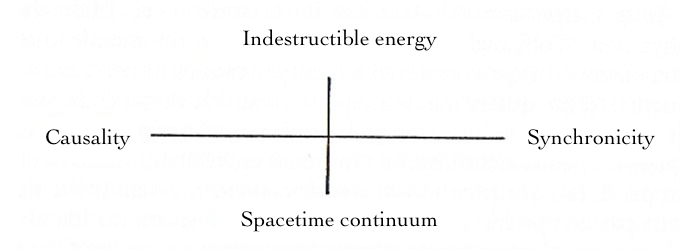
Jung coined the word to describe what he called “temporally coincident occurrences of acausal events” or “meaningful coincidence” and “acausal parallelism in which archetypes and the collective unconscious are governing a dynamic that underlies the whole of human experience and history — social, emotional, psychological, and spiritual.
Synchronicity does not admit causality in the analogy between terrestrial events and astrological constellations … What astrology can establish are the analogous events, but not that either series is the cause or the effect of the other. (For instance, the same constellation may at one time signify a catastrophe and at another time, in the same case, a cold in the head.) … In any case, astrology occupies a unique and special position among the intuitive methods… I have observed many cases where a well-defined psychological phase, or an analogous event, was accompanied by a transit (particularly when Saturn and Uranus were affected). – Carl G. Jung
Jung’s paradigmatic example of a synchronicity occurred during a therapy session, and the connecting meaning in a synchronistic event is subjective, related to the individual’s psychological maturation, or individuation. Jung and Pauli believed, events like this occur too often enough to be only meaningless coincidence. Jung noted taking as usual phenomenological stance, while it would be “absurd” to consider the conjunction of dream material and life events to be causal, “it is wise to consider the fact that [these coincidences] do happen…The East…considers coincidences as the reliable basis of the world rather than causality. Synchronism is the prejudice of the East; causality is the modern prejudice of the West.”
Jung mentioned the concept again in his commentary to Wilhelm’s translation of “The Secret of the Golden Flower”. He concluded that “the causality principle” cannot explain “psychic parallelisms” that must somehow be connected but are not causally related and equated synchronicity with the Chinese Tao. Jung would write about this concept again, and when he did, his focus would shift from the empirical and phenomenological aspects of synchronistic phenomena to the ontological and archetypal nature of such events. Pauli thought that the probabilistic nature of quantum theory and the Uncertainty Principle offered the possibility of discovering something beyond the mind-matter gap which transformed Jung’s understanding of synchronicity. As a result of his interaction with Pauli, Jung gradually came to see this non-causal connecting principle as an explanatory theory must be seen in combination with causality to lead to a better understanding reality, rather than having only a subjective meaning.
Astrology and Alchemy
C.G.Jung saw alchemy as continuation of Gnostic thoughts and wrote: “The starry vault of heaven is in truth the open book of cosmic projection, in which are reflected the mythologies, i.e., the archetypes. In this vision astrology and alchemy, the two classical functionaries of the psychology of the collective unconscious, join hands”.
In his book “Psychology and Alchemy” of C.G. Jung contains Pauli’s early dreams which provided Jung with a rich resource for theoretical exploration, and his own interpretations played a role in Jung’s theories. Pauli clearly believed that this effort was scientific; he said that “even the most modern physics also lends itself to the symbolic representation of psychic processes, even down to the last detail.” In his final version of the synchronicity essay (The Interpretation of Nature and the Psyche Part 2), Jung wrote that the “archetype represents psychic probability”. Pauli wrote in his Kepler essay (published there as part one), that “pure logic” is not capable of establishing a “bridge between the sense perceptions and the concepts.” Kepler himself thought that scientific ideas discerned by humanity exist eternally as archetypes in the mind of God, and Jung’s theories understand archetypes similar “as ordering operators and image-formers” in the symbolic. “It would be most satisfactory” said Pauli, “if physics and psyche could be seen as complementary aspects of the same reality.”
Kepler expressed also original ideas in relation to astrology almost like something the physical resonance theory like: the celestial bodies themselves exert no influence on the human fate, but fixed the angle between the rays toward the heavenly bodies the soul at the moment of human birth and later responds specifically to them. He used actually the term archetypes in his astrological work and not only his Wallenstein horoscope legendary. Kepler ideas, as Wolfgang Pauli observed, identify important intermediate stage between archaic, logical symbolic, and new, quantitative and mathematical description of nature. Much of what was later separated in scientific and non-scientific knowledge was at that time merged inseparably. Similar to representatives of scholastic science, Kepler relied on accuracy, allegory, speculative ideas, and mysticism, but unlike the Scholastics he tested constantly each theory and carefully compared the results with the rich observations of Tyco Brahe and calculations. C.G. Jung derived lekewise many of his insights from observation he made treating his patients.
Ancient wisdom in a global world
Our modern science begins with astronomy. Instead of saying that man was led by psychological motives, they formerly said he was led by his stars. … The puzzling thing is that there is really a curious coincidence between astrological and psychological facts, so that one can isolate time from the characteristics of an individual, and also, one can deduce characteristics from a certain time. Therefore we have to conclude that what we call psychological motives are in a way identical with star positions. Since we cannot demonstrate this, we must form a peculiar hypothesis. This hypothesis says that the dynamics of our psyche is not just identical with the position of the stars, nor has it to do with vibrations – that is an illegitimate hypothesis. It is better to assume that it is a phenomenon of time. … The stars are simply used by man to serve as indicators of time… – Carl G. Jung in 1929
The arrogance of today’s scholarstoward medieval age and traditional knowledge is incomprehensible and the humiliating assessments of Kepler activity, which can be found in the “history of Western philosophy” by Bertrand Russell who described Kepler is “an example of what can achieve mediocrity through hard work”. But Kepler, not Galileo came up for the mathematical proof and physical correct model of the heliocentric model. Kepler is particularly suitable for tracking the various sides and peculiarities of the epistemological concepts, problems of scientific paradigm change and the relations between the empirical and theoretical knowledge. Kepler himself speaks of primary images as being “archetypal” [archetypalis], and Pauli develops a detailed correspondence with Jung’s archetypes. Pauli writes: “the view of the universe was not as yet split into a religious one and a scientific one.” Indeed subjects of physics, religion, mathematics and astrology are all found in one single book of Kepler. His astrological and religious themes have been neglected and Jung’s broader view of psychoanalysis has until very recently been marginalized. The tide is slowly turning, though, and at least Jung may yet have his day. Physicists with a psychological or spiritual inclination have taken note of synchronicity and written of its validity for exploring the connection between quantum and classical physics. Others scientists have begun to explore theories of human cognition that rely on constructs very much like Kepler’s and Jung’s archetypes and his evolutionary understanding of human experience so useful in a globalized world, where I cross many cultural boundaries on a given day.To me Kepler’s astrology is not only superstition but contains some psychological facts (like theosophy) which are of considerable importance. Kepler never predicted the future but in possible (character) dispositions. His astrology connects at least culturally and historically the religion and psychology of antiquity with physics and astronomy of today.
Jung, C. G., Pauli, W. (1952): Naturerklärung und Psyche. Zürich: Rascher (Download)
C.G. Jung (1955) Synchronicity: An Acausal Connecting Principle
Wolfgang Pauli. Verzeichnis der Manuskripte und Korrespondenzen im Archiv der ETH Zürich
Wolfgang Pauli und die moderne Physik. Virtuelle Ausstellung der ETH-Bibliothek
Pauli Archives, CERN, Nachlassverzeichnis
W. Pauli, The Influence of Archetypal Ideas on the Scientific Theories of Kepler
Kepler, Harmonices mundi, Harmony of the Worlds, 1619
Die Innenwahrnehmung mit den Bildern, die aus dem Unbewussten aufsteigen – Aktive Imagination, ist gerade vor Ostern aus der Klarheit des Fastens bedeutsam für die innere Einkehr. Außen und Innen, Körper ung Geist entsprechen sich. In einem grossartigen Interview beschreibt C. G. Jung, dass beides, die materielle Aussenwelt und die innere Welt eben Fakt ist. Jedes Haus war einmal ein Gedanke.
Wir sind in unserem Stadteil sicher nicht eine dieser beinahe klinisch toten katholischen Großstadtgemeinden. Man geht aber – wenn überhaupt – alleine in die Messe und auch wieder alleine hinaus mit gelegentlichen zufälligen Begrüssungen. Der Pfarrer und seine ehren- und hauptamtlicher Mitarbeiter sind aufgrund wachsender Gemeindegrößen (zwei zusammengelegte Pfarreien – vier Kirchen) gefordert. Die angebotenen Veranstaltungen, insbesondere die Messe in der kleinen Kirche sind mehr als ein Minimum, stillen aber gerade in der Fastenzeit nicht immer den Durst auf Transzenden und Mystik. Ein Tor zum Unbewussten und damit zu Transzenden und Mystik ist die Aktive Imagination. Nach C.G. Jung ist Aktive Imagination der Königsweg zum Unbewussten. Nach einer entspannenden, in die innere Stille führenden Meditation öffnet und arbeitet der Einzelne mit Achtsamkeit, Nüchternheit, und Wertschätzung in seiner inneren Bilderwelt.
Die moderne Forschung der Naturwissenschaften, insbesondere der Physik, öffnet auch dem kritischen, zweifelnden Geist Erkenntnisse, die denen religiöser Systeme ähneln. Raum und Zeit sind verbunden. Zusammenhänge sind kausal aber auch akausal vernetzt. Nichts geschieht ohne zeitgleiche Auswirkung im gesamten Universum. Es verbinden sich der alte Grundsätz der alchemistischen und religösen Mystik.
Das Wissen darum ließ in allen großen Kulturen die Menschen aufbrechen, in ihren Initiationswegen einen Zugang zu suchen zu diesen anderen, dem bewussten Denken nicht zugänglichen Dimensionen. Beim Arbeiten mit der Bibel, spielt neben dem Lesen, die Möglichkeit zur Imagination als einen unmittelbaren Zugang zu den eigenen Bildern und Phantasien eine wichtige Rolle. ”Wenn wir von Imagination sprechen, dann sprechen wir von der Tätigkeit unserer Vorstellungskraft, unserer Einbildungskraft, von Phantasie, von Tagträumen. Auch wenn diese Phänomene untereinander verschieden sein können, betreffen sie alle den Bereich des Imaginativen, (…). Imaginative Fähigkeiten zu haben bedeutet, dass es den Menschen gegeben ist, mehr oder weniger anschaulich, ein Bild zu haben von etwas, das nicht mehr oder noch nicht präsent ist, das vielleicht überhaupt nie präsent sein wird. Diese Vorstellungen können sehr bildhaft sein, mehr von Farben oder Formen bestimmt; sie können sich aber auch durch eine Geruchserinnerung oder einer Geruchsvorwegnahme, durch eine Berührungserinnerung oder Berührungsphantasie oder durch akustische Erinnerungen oder Erwartungen ausdrücken. Sie können auch mehr gedanklicher Art sein.” (V. Kast, Imagination als Raum der Freiheit, Olten 1988). Die jedem Menschen gegebene Möglichkeit zur Imagination in bewusster und aktiver Weise zu gebrauchen und zu entfalten, ist ein Ziel. So wird die Fähigkeit, innere Bilder zu sehen und wahrzunehmen, angeregt, oder Mut gemacht, diese inneren Bilder zuzulassen, da die Fähigkeit zur Imagination das schöpferische Entwickeln und Gestalten von Spielstücken ermöglicht und wesentlich unterstützt. Ein wichtiger Schritt in dem Gebrauch der aktiven Imagination ist die Bewusstmachung und Gestaltung, der inneren Bilder zu einem biblischen Text wie z.B. Jesu’s Leidensgeschichte zu Ostern. C. G. Jung ist in seinen tiefenpsychologischen Forschungen jenseits des bewussten Erlebens genau dieser ganzheitlichen Dimension begegnet. Das Bewusstsein kann sie nicht vollständig erfassen sondern nur partiell erfahren, z.B. in Symbolen, Träumen und Imaginationen.
Eine ihn bewegende Frage, ein rätselhafter Traum, ein Wort der Bibel oder einfach die nach innen gerichtete Aufmerksamkeit helfen, sich auf die auftauchenden Bilder zu zentrieren und einzulassen. Fühlt man sich von einem Bild oder Geschehen angesprochen, tritt man in seiner Vorstellung aktiv handelnd – also mit seinem Ich verantwortlich beteiligt – in das Bild ein. Eine Handlung entwickelt sich. Aufgefallen ist mir dies schon beim nur gesamthaften Durchlesen der Bibel in St. Ottilien. Dieser primär “sinnliche” Zugang zum “Gesamtkunstwerk” Evangelium ist mächtig und zumindest gleichwertig zum intellektuellem Interpretieren der einzelnen Bibelstellen.
Aktive Imagination ist also aktives Wach-Träumen ähnlich den Visualisierungstechniken der Meditation keine passive Wahrnehmung in einem tranceartigen Zustand, auch keine Phantasiereise . Dieses inneren Drama, dessen Gestalter wir sind, enthüllt uns Möglichkeiten, Gegensätzlichkeiten, konfrontiert unser bisheriges Selbstbild mit den Grenzen des bewussten Ichs und der Unendlichkeit der Schöpfung .
Im sich daran unmittelbar anschließenden kreativen Gestalten – Jung nennt sie eine „phantasia vera“, entsteht eine „wahre Fantasie“, die uns verändern kann, wenn wir uns darauf einlassen. Sie hilft uns, zu uns selbst, zu unserem Lebenssinn in Christus zu finden, zu dem, was wir im Kern schon immer waren, was als Möglichkeit entwickelt und gelebt werden will.
Seven Sermons to the Dead (Septem Sermones ad Mortuos) is a collection of seven mystical or “Gnostic” texts written and privately published by C.G. Jung, under the title Seven Sermons to the Dead, written by Basilides of Alexandria, the city where East and West meet.
It is the only portion of his famous, deeply private The Red Book (Liber Novus) that Jung chose to share and privately distribute to select friends and students during his lifetime. Scholars widely consider these sermons to be the “summary revelation” and the foundational psychological nucleus of all of Jung’s later academic work.
Origins of the ‘The Seven Sermons to the Dead’
The Pseudonym: Jung did not publish the work under his own name. Instead, he attributed the text to Basilides of Alexandria, a prominent second-century Christian Gnostic teacher. [1, 2]
The Setting: Jung framing the sermons as being written in Alexandria, “the city where East and West meet,” to symbolize the bridging of rationalism and mysticism. [1, 2]
The Context: Jung wrote the sermons during a intense period of introspection following his 1913 professional split from Sigmund Freud. He referred to this tumultuous time as his “confrontation with the unconscious”.
The Core Narrative and Structure ‘The Seven Sermons to the Dead’
The ‘The Seven Sermons to the Dead’ begins with a haunting narrative framing: the spirits of dead Christian crusaders return from Jerusalem because they did not find what they were seeking. They gather at Jung’s house demanding answers, prompting the speaker to deliver seven distinct psychological and cosmological lessons:
Sermon I (The Pleroma): Introduces the Pleroma, a Gnostic term for the ultimate, undifferentiated fullness and nothingness where all opposites cancel out. Creation (Creatura) only exists because it differentiates itself from this void.
Sermons II & III (God and Abraxas): Introduces Abraxas, a supreme deity higher than both the traditional Christian God and Satan. Abraxas represents a force that unites all opposites, seamlessly blending life and death, good and evil, light and darkness.
Sermon IV (The Tree of Life): Explores how humanity splits into multiplicities and outlines the fundamental driving forces of spiritual and physical life.
Sermon V (The Community): Focuses on spirituality and the tension between human communities and individual distinctiveness.
Sermon VI (The Daemons): Outlines the inner spiritual guides influencing the soul, symbolized by the serpent (earthly sexuality and desire) and the white bird (celestial spirituality). [1]
Sermon VII (The Inner Star): Concludes by teaching the dead that man is a gateway to the cosmos. Redemption is found by following one’s own unique, inner guiding star. [1]
Availability and Influence of ‘The Seven Sermons to the Dead’
Upon hearing the seventh sermon, the enlightened dead express gratitude and peacefully depart. While the text remained obscure for decades, Jung eventually allowed it to be published as an appendix to his 1962 autobiography, Memories, Dreams, Reflections. Today, you can read or listen to the full text via platforms like the Gnostic Society Library text repository
‘The Seven Sermons to the Dead’ is a part of Jung’s Red Book and can be described as its “summary revelation.”
The Red Book
The ‘Red Book’ connects aesthetics with an aura of art and secrecy. It touches the layman like me, who gets involved with C.G. Jung, because it is a central work regarding the history of spirituality and it contains the roots of the works C.G. Jung with lots of reference to gnosticism. It is also beautiful.
The publisher, Sonu Shamdasani, a science historian, brings in the introduction the available texts of C. to G. Jung in culture and science-historical context and creates a connection to lives and work of the depth psychologist.
Contrary to C. G. Jung as scientist, ‘The Red Book’ documents subjective recordings of a self trial (active imagination). It contains the notes of the ‘Black book, reflections C.G.Jung wrote down over many years beginning after with separation from Freud. The book was created and accessible only for good friends and not published formerly. The language appears sometimes emotion-filled, but everyone, who wrote a diary (particularly during a crisis), may understand this.
Carl Gustav Jung was 37 when by most accounts he lost his soul. As psychological historian Sonu Shamdasani explained, “Jung had reached a point in 1912 when he’d achieved all of his youthful ambitions but felt that he’d lost meaning in his life, an existential crisis in which he simply neglected the areas of ultimate spiritual concern that were his main motivations in his youth.
Under no circumstances, we have to reconsider or re-evaluate C.G. Jung after reading this book. `The Red Book’ is, however, nevertheless more than a psychological picture book or an art catalog. Visions and fantasies are large-sized, ornate and colourful held. It is C.G. Jung’s hand written and painted legacy.
The book records more than its author’s spiritual crisis and is a foretaste of his evolving intellectual path. Liber Novus (Latin for “New Book”) documents such matters as his conversations with the winged “Philemon” during his daytime walks. The book records obviously the results of the ‘active imagination’ technique described later in his works.
C.G. Jung says later: `Everything my work, everything that I created mentally, comes from the initial imaginations and – dream. 1912 began it, that are now nearly 50 years ago. Everything that I did in my later life, is in them already contained, although only in the form of emotions or pictures. He continues, ‘In uns ist der Weg, die Wahrheit und das Leben’ , which reminds me strongly of modern Christianity. The book comes perhaps on the right time, a time, in which Europe denies its roots. One can call the ‘Red book’ created between 1914 and 1930, a visual dream diary. C. G. Jung qualified his book – whose language and emotions are often nearly embarrassing – as important documentation of its psychological and mental development.
No doubt, Jung was captivated by mandala’s, not merely because of his attraction to Eastern philosophy, but also because he thought the circular images represent the self or totality of the personality. It could be experienced Museum Rietberg “Carl Gustav Jung: Das Rote Buch Le Livre Rouge from December 2010 to March 2011 where Jung’s first-known mandala-inspired work, “Systema mundi totius”, illustrated in 1916 was on display. The brightly hued circular graphic shows a reference to very gnostic-like text ”The Seven Sermons to the Dead” he wrote 1916/1917. He had a striking parapsychological event in the winter of that year, in which the dead, whom he’d encountered in his fantasies about two years earlier, end up at his door. There is an interesting book evaluating and commenting ‘The Seven Sermons to the Dead’ from a gnostic point of view. Both books lay the foundation of his Jung’s legacy.
The original
When I had my last project in Zürich I had a chance to see the Red book. C.G. Jung marked its unfinished work, ‘a necessary, but annoying ästhetisierende elaboration’. The adjective “ästhetisierende” means to place an object into an aesthetic context and qualified by criteria as beautiful or ugly. That hits the core of the matter
The original ‘Red Book’ is approximately seven kilograms heavy work bound into red leather is written and in the ornate calligraphic of medieval handwriting held in a strangely high German language. The book, we can buy, has the format of the original and is bound in linen. One reason for the enigma surrounding Carl Jung’s Red Book is that he never finished it. The book ends 1958 mid-sentence in his normal hand writing (pg 190/191):
“Ich habe an diesem Buch 16 Jahre gearbeitet.“ “Die Bekanntschaft mit der Alchemie 1930 hat mich davon weggenommen. Der Anfang vom Ende kam 1928, als mir Willhelm den Text der Golden Blüte eines alchemistischenn Traktates sandte. Da fand der Inhalt diese Buches in die Wirklichkeit und ich konnte nicht mehr weiterarbeiten. Dem oberflächlichen Betrachter wird es wie eine Verrücktheit vorkommen. Es wäre auch zu einer solchen geworden, wenn ich die überwältigende Kraft der ursprünglichen Erlebnisse nicht mehr hätte auffangen können. Mit Hilfe der Alchemie konnte ich sie schließlich in ein Ganzes einordnen. Ich wusste immer, dass jene Erlebnisse Kostbares enthielten und darum wusste ich Nichts Besseres als sie in einem „kostbaren“ d.h. teueren Buch aufzuschreiben und die beim Wiederdurchleben auftretenden Bilder zu malen – so gut dies eben ging. Ich weiss, wie erschreckend inadäquat diese Unternehmung war, aber trotz vieler Arbeit und Ablenkung blieb ich ihr getreu, auch wenn ich nie eine andere Möglichkeit.“
Addon 2013: I own one facsimile of the Red Book. I penned a synopsis containing my notes and narrative of the Red Book . If you are interested, you find it here. I must warn you, even a short version of C.G. Jung results in a long article.