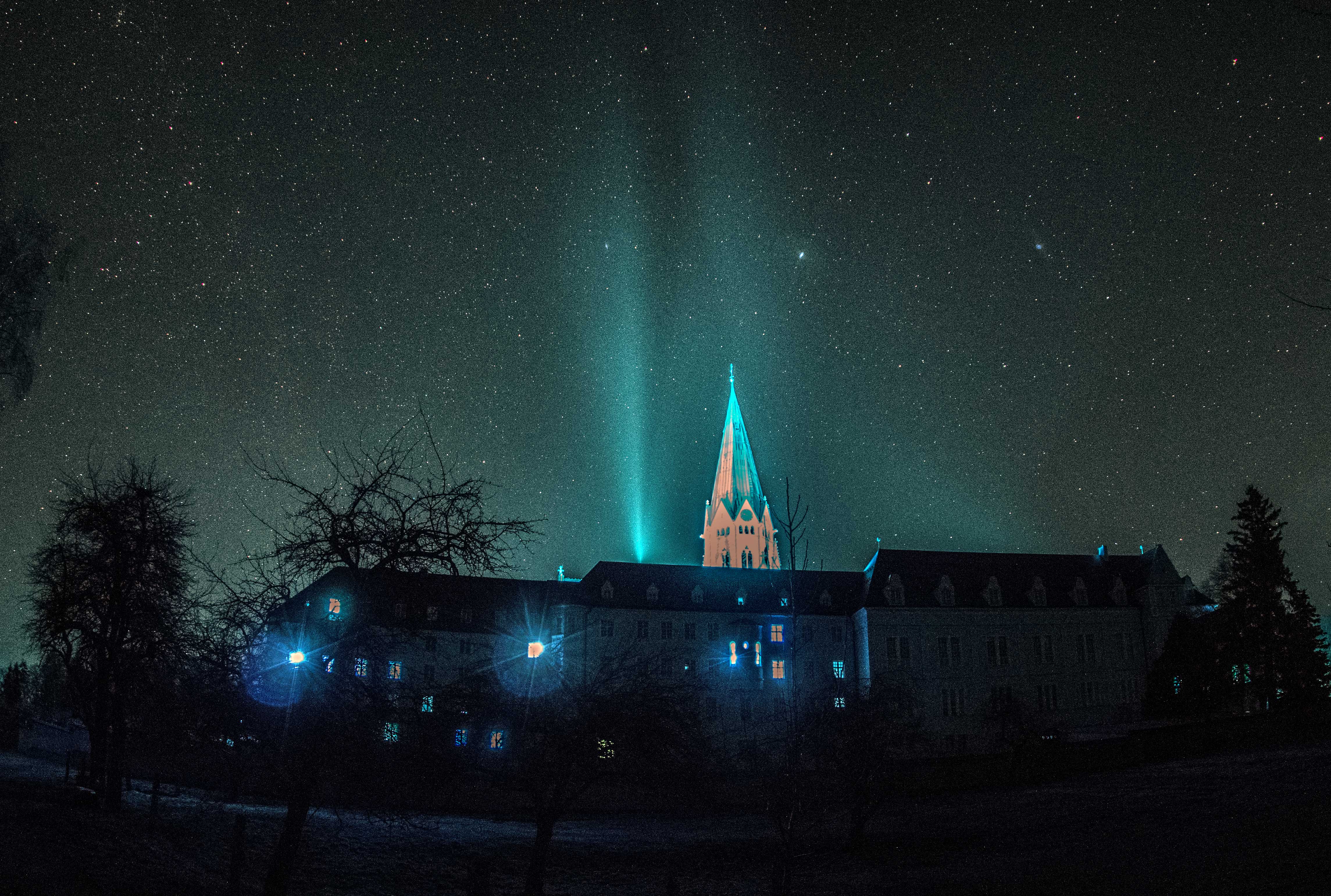
I have been silent for a while for various reasons, so I’ll start again sharing my Lenten “promise” this year here. Lenten promises should take us “out of our comfort zone” and should sharpen our heart.
No meat, no alcohol, no cheese, no sweets, which is easy, cutting down on twitter is about as far out of my comfort zone as I could get. Its been a difficult time So this year I decided (again), that I will not think unkindly of others for the season of Lent. I am very sorry to say that I fail occasionly – some days worse than others, but failing nonetheless.
Lent2019 Psalm 136:7-9 To Him who made the great lights, For His lovingkindness is everlasting: The sun to rule by day, For His lovingkindness is everlasting, The moon and stars to rule by night, For His lovingkindness is everlasting.
It has been difficult.
The key thing to me is cutting down on negativity. That’s not easy where evil and anti-christ seems to be in control. Prayers for all Christians – not nessarily the temporal church organization – would be much appreciated by the way. Even though the latter might need them most. We need all the help we can get on this. And I’m weak and I’m a sinner – I need, and want, to grow and to calm down.
Today is Ash Wednesday. Ash Wednesday marks the beginning of the Season of Lent. It is a season of penance, reflection, and fasting which prepares us for Christ’s Resurrection on Easter Sunday, through which we attain redemption. “Remember, Man is dust, and unto dust you shall return.”
God bless all.
Ask The Mountains
In the pursuit of learning, every day something is acquired.
In the pursuit of Tao, every day something is dropped. Less and less is done
Until non-action is achieved.
When nothing is done, nothing is left undone. The world is ruled by letting things take their course. It cannot be ruled by interfering.
Source: The Complete Tao Te Ching
Translated by Gia-Fu Feng (馮家福) and Jane English, Vintage Books, 1989
Last weekend I checked in for a three-day time-out at my local monastery to prepare for Christmas. The countdown to Christmas is on and for many, the Advent season is one of the most beautiful in the year. But! Have we ever realized, that this story with Mary and Joseph and birth of the Messiah was Matthew actually worth one single verse? Pope Benedict, in a speech in Freiburg during his 2011 apostolic journey to Germany, recommended a “profound liberation of the Church from forms of worldliness” (Entweltlichung) so that the Church becomes a more credible witness and regains her spiritual role. To me ‘Entweltlichung‘ sums up the central theme of the three-day retreat and its topic, the Gospel of John nicely.
Rudolf Bultmann claims in his Theology of the new testament a closer similarity with the Gnostic myth of redemption. There is no nativity scene in the Gospel, no shepherds or three Kings/Magi can be found. John packs the birth of Jesus in a single verse, which has become famous (John 1:14): “And the Word (Logos) became flesh and dwelt among us, and we have looked at his glory, a glory as a native of the Father, full of grace and truth”. Mentioned only briefly, it comes with infinite knowledge and reflection.
Psychology was a major vehicle for revisiting Gnostic thoughts in the last century. Carl Gustav Jung, especially in his early years drawn to mysticism, wrote extensively on ancient Gnostic thinkers and mythology in works like Seven Sermons to the Dead (1916). As I wrote earlier about the psychoanalytic interpretation of the Gospel of John: the usage of the Gnostic „trademark “Logos”, was immediately interpreted by C.G. Jung as “Nous” or Sophie. In his book “Answer to Job”. Jung describes Sophie (Wisdom) as the wife of Yahweh, a good “co-author” of this demiurge, the creator of the material world. Indeed the Greek word “Logos” has a strong philosophical background and is a term for a principle of order and knowledge, “reason”, “proportion”. However, as we will see, the author of the Gospel develops a new Christian counter-cosmology – and “Cosmos” is the word for order (opposite term of “Chaos“).
Anyway, during the monastery retreat, we wanted to understand the Christmas story presented by the Gospel of John. Let’s take a closer look at what this really means to us. Note: for the reader in a hurry a short presentation is included later in this article.
Christian Cosmology
Orion and Light
The author has dealt much more than the other three evangelists with a doctrine that young Christianity fought as a heresy: the so-called gnosis (Greek: knowledge). It may be said that if this doctrine had prevailed, Christianity would have quickly disappeared. The author of the Gospel of John began to grapple with Gnostic cosmology – to develop his own.
From a Gnostic point of view, the cosmos was divided into a realm of the material and a heavenly world of light. The soul of man was a splinter of light trapped on earth in the body of the human. The world as the power of darkness watched over the soul in the prison of matter forgetting its heavenly home.
Knowledge – gnosis – was the way to salvation, the remembrance of one’s own origin from the light. Jesus was seen in this context as a teacher of light – as one who reminds people of their true spirituality: “The real world is not just a stranger to man, but a prison, a dark, stinking cave into which he is thrown. ” Man is filled with “loneliness”, “terrible fear” of the noise and cunning of the world and its demonic powers. All life executions appear as “poisoned, demonically infected”. The God of Gnosticism was hostile to life and the world, unable to love and suffer, and above all, unwilling to maim with creation. God is radically non-world, and man can only despise his life, the world, and the people’s activities as outward appearances. The world is evil because the world it was created by evil powers. Another clear distinction is, while a Gnostic will speak of Satan as the God of this world, an apocalyptist will speak of Satan as the god of the present age. To Christians the world is not imperfectly created by a Demiurge, but comes from God. This creation is good – but with the freedom of man to worsen it.
1760 the Coptic text “Pistis Sophia” (Faith-Wisdom, or Faith of Wisdom), an allegorical account of the conception of the world of the Gnostics, was purchased by the British Museum and 1851 translated into Latin and Greek.G.R.S. Mead, the great popularizer of forgotten heresies, who made “The Gnostic John the Baptist (John the Baptist the Gnostic)” known as hidden gospels, described Pistis Sophia as a Gnostic gospel. The Pistis Sophia, mentioned Stephan A. Hoeller and Phillip Jenkins “Le Jésus des sectes”, begins with an allegory of the death and resurrection of Christ, which at the same time describes the ascension and descent of the soul – the promise of a two-way street for us.
Gnostic cosmology as presented in the “Pistis Sophia, is enumerating 32 carnal desires that must be overcome in order to attain salvation. Seven deadly sins, also known as cardinal sins, must be overcome in order to attain salvation, according to Christian teachings. This is the Gospel, the good message, which has freed people like the Apostle Paul to leave everything behind, to re-think God, and to bring these thoughts into the world.
The key to the Gospel of John, in any way we approach it, is provided by the 17-verse hymnodic prologue. Those poetic words are a kind of hostile takeover of the Gnostic doctrine and manifest the birth of a Christian cosmology. The dualistic worldview – light beings here, stinking matter there – is opposed to a thoroughly positive cosmology of creation: “In the Word was life, and life was the light of man.” For John, language becomes a mystical gateway between the world of God and that of man. His view seems similar to another critic of Gnosticism, Plotin, who in his notion of the means by which man is to become divine. The Gospel of John makes the natural appeal to Christ as the only son of God, while also rejecting the notion of a completely unknowable first god of the Gnostics.
Redemption myth
Between completorium and laudes matutinae… Light cannot be seen without darkness.
The conceptual world in which John moves is completely different from that of the Synoptic Gospels. It is almost always characterized by dualistic opposites: “light and darkness”, “lies and truth,” “above and below,” “father and son,” the “God-distant” cosmos, and the “Messenger and Revealer of God”. What is peculiar are the concepts that describe salvation: “life-water”, “bread of life”, “light of the world”: “In the beginning was the Word and the Word was with God, and the Word was God, and the same was in the beginning with God, all things became by the Word, and without the Word nothing became that which has become.” Words full of poetic, enigmatic beauty.
Essentially, the gospel follows the Gnostic redemption myth with one decisive exception – the Redeemer himself became man: “And the Word became flesh and dwelt among us, and we saw his glory, a glory as the only-begotten Son of the Father, full of grace and truth “.
To Gnosticism however, Jesus’ suffering was understood only as appearance, for that inner spark of light is well-caught, but essentially untouchable. Light does not suffer; it only shines. Thus, in the Gnostic view, the cross of Christ was only in the realm of matter. Christianity would have become a completely different religion if the Gnostic’s had prevailed. That God really became man, that he really suffers in and at his creation, that he does not abandon it, but accompanies it as a place of blessing and his dawning reign of God – all this was (and is today) at stake in this conflict.
John counters Gnosticism sharply with this unique feature – a unique selling proposition in the market of religious beliefs: “The Word became flesh and dwelt among us.”
Instead: The word was trapped in the flesh and lived only for appearance among us.
Instead: In a heresy, that later became the basis of ideologies disguised as religion, which degrades Jesus only as prophet and human being.
This is not just theological theory – this approach uniquely shapes concepts and language of John. Furthermore, this Gospel clearly and early defines Christianity, for which the ‘Jesus Wars‘ needed seven Councils, from the First of Nicaea (325) to the Second Council of Nicaea (787) and few centuries to settle.
Gospel of John – Ego Emi
Language unfolds in John like a fan: a word denotes a thing and something else; Concepts suddenly shine with meaning and ambiguity. Words matter in politics. Words do matter, of course, also in religious texts. The author of the Gospel of John was even better in Greek than the author of the Gospel of Luke and in his playful use of Greek, one can find also humor. Many crucial words in the author of the Gospel of John uses have in the Greek a double meaning. On the other hand, the messianic claim is made crystal clear with the unprecedented power of ego Emi (I Am) and delivers, at the same time, a poetic density unique in the New Testament.
There are only seven miracles – signs listed in John, but each tells us very special things we need to know about Jesus:
Changing water into wine at the wedding at Cana (Jn 2:1-11);
Healing the royal official’s son (Jn 4:46-54);
Healing the paralyzed man at the pool of Bethesda in Jerusalem (Jn 5:1-15);
Feeding the 5,000 (Jn 6:5-14);
Walking on water (Jn 6:16-21);
Healing the man born blind (Jn 9:1-7);
Raising Lazarus from the dead (Jn 11:1-45).
The seven “I am” words of Jesus are words full of theological force in which Jesus identifies his person with the abstract symbols of the seven signs (miracles):
I am the bread of life
I am the light of the world
I am the gate of the sheep
I am the good shepherd
I am the resurrection and the life
I am the truth and the life
I am the true vine stock
In such passages, it becomes clear time and again that the whole world, life, every detail and every life is something like an abstraction and a symbol of higher things. The outside of the world reflects the sky; you just have to look or listen, because all that is hidden in the language, in the word that is of divine origin to John and whose reflection fills every human word with spirit. Crucial is: salvation and knowledge of God are not special matters for initiated Pneumatics, but the Incarnation of Jesus shows a two-way street for all the people on.
Theological features
The Gospel of John is the most demanding of the Gospels. The language of Jesus is also very different in the Gospel of John than in the synoptic tradition. The author dealt with a doctrine dangerous to Christianity: the Gnostics. The Gospel of John differs considerably from the Synoptic Gospels, localities and temporal, as well as linguistic and content wise. The gospel is characterized by speeches of Jesus; Jesus’ acts serve either as a reason for his speeches or are incorporated into larger scenes with dialogues and speeches. The text shows clear traces of a prolonged growth process. For instance, it is widely undisputed, that John Chapter 21 is the addendum of an editorial board. The gospel is framed by the prologue and the remark about the purpose of the gospel.
Most of what Jesus in this Gospel says, can be found neither in the Gospel of Mark nor in Luke nor in Matthew. It is likely that the author of John’s Gospel knew the Gospel of Mark and Luke, but used his “sources” completely free. The theological profile identifies him as an author who considers the efficacy of Jesus at a considerable interval and with a high level of reflection. He could hardly belong to the generation of the disciples, since the author intensively uses traditions whose origins are to be found in Hellenistic Judaism. He himself may have been Jewish Christian.
The Christology of John’s Gospel shows similarities to pagan or Jewish gnosis and the writings of the Qumran community. The Gnosis (Greek: “knowledge”) was a religious-dualistic stream, which took Christianity, especially in the 2nd century. Gnosis described a world (as a result of a primeval case), people (who are connected to God through a spark of divine spirit), and salvation (through radical rejection of the here and the belief in the inalienable divinity of man). One may suspect the spiritual ground of John’s gospel in the imaginative world of Jewish gnosis and the ideas of the Qumran community (a Jewish sect in the second century BC to AD 68). Until the discovery of the Library of Nag Hammadi in 1945, Irenaeus’ [Against Heresies] was the best-surviving description of the Gnostics. The discovery of their Dead Sea Scrolls in the remote Judean Desert cave was not only the greatest archaeological event of the twentieth century but gave rise to new interpretations of the Gospels. The legacy of the Qumran community was found in abundance in those Qumran scrolls. Apparently, John used the language of Gnosticism to show that Jesus was the true religion of all Gentiles.
Background and Structure
The tradition of the Church has for while proclaimed John, the son of Zebedee and “gentleman of the gentleman, who was also at his [Jesus’] breast,” the author of the Gospel. (For example, Irenaeus 115-202, Bishop of Lyons) There are, however, numerous arguments against this, such as the Gnostic language of the Gospel and some interconnections with the Gospel of Mark. The author of the Gospel of John remains unknown to us. Possible discussed variants for the origin of the Johannes are Asia Minor (especially Ephesus) and Syria. From this area, also the authors of the letters of John and the New Testament apocalypse may have originated. The presupposed discussion about the Christological confession, the literary character of John and the oldest manuscript tradition suggest a genesis of the final version of John at the beginning of the 2nd century (c.100-110).
The origin of the Johannes community may be found in the Jewish Christian milieu but in its final form, John is certainly destined for a Gentile Christian community. At the time of writing the gospel is the new, changed conflict situation. At the time of writing the gospel is the new, changed conflict situation. Apparently, in the church, Christians have appeared who denied the salvific meaning of the crucifixion of Jesus Christ (Docetists).
The prologue
The author opens his gospel with a hymn to the pre-existent logos (Jesus / logos = word). In the final verse of the hymn (1: 14-18), the Logos is identified with the Son of God. In him, the Logos became flesh and worked on earth (1:14 paradoxical linking of “flesh” as a synonym for the earthly weakness of man and “glory”). Only the logo has direct access to God. People are dependent on his revelation and interpretation of God (1:18).
The Baptist, the first disciples
The main interest here lies in the relationship determination Jesus-Baptist. The Baptist expressly emphasizes that he is not the Messiah (1:20), but the subordinate forerunner of the coming. The first two disciples of Jesus come from within the circle of the Baptist. Three more discipleship calls follow.
The revelation of Jesus before “the world”
In the first half of his Gospel, John records the public activity of Jesus. This begins with the wine miracle at the wedding in Cana (2,1-12). The purification of the temple (2: 13-25) is at the beginning of John’s activity in John. In the end, the miracle is called a “sign” (semeion). This term plays a very important role understanding Jesus’ deeds in the Gospel of John.
In the discourse of Jesus, which grows out of the conversation with Nicodemus (3: 1-21), essential underpinnings of John’s theology are unfolded. In the mission of the Son, God’s love turns to the world. The attitude of the people to the son (faith/unbelief) decides here and now about their fate (present eschatology).
God must be worshiped “in spirit and in truth” (4:24). God as the Father has given Jesus, as the Son, the authority to bring life to life (5:21).
In chapter 6 the sovereignty of Jesus is strongly emphasized (6,6) and the final attempt to make him king is not found among the Synoptic. Ultimately, however, the feeding miracle serves as the occasion for the opening speech on the bread of life. In the words of Jesus, a dispute is kindled among the disciples. But just among the faithful, Judas is the traitor.
Jesus announces his return to the Father in enigmatic words (7:33) and speaks of the gift of the Holy Ghost (7: 37f.).
In two short words of revelation, Jesus speaks of the veracity of his testimony. He is the light of the world (8:12). Afterwards, a sharp controversy between Jesus and Jews (!) evolves. Who believe in him is ignited (8: 31-59). Since they have not really accepted the deliverance of the Son, they are called sons of the devil (8:44). Jesus is greater than Abraham because he gives eternal life and was rather than this (pre-existence).
Jesus expressly opposes the traditional idea of sin (9,3). In the talk of the Good Shepherd, Jesus turns against the Pharisees and compares them to thieves, robbers, and hirelings. Jesus, on the other hand, gives his life for the sheep. At the temple there is a renewed confrontation with the Jews. In this context, the core the Gospel of John appears: “I and the Father are one.” (10:30).
The resurrection of Lazarus leads to the death of the High Council (11: 1-57). The resurrection is a sign of the mission of Jesus from God (11:42). In conversation with Marta, Jesus deals with the traditional hope of resurrection. Jesus is the resurrection and the life (11:25).
After the anointing in Bethany (12: 1-11), Jesus enters Jerusalem (12: 12-50) and the hour of glory has come. “Exaltation” and “glorification” are the concepts for the crucifixion of Jesus, which is interpreted as the victory of Jesus. After the verdict on the unbelief of the Jews (fulfillment of Isa. 6:10), Jesus, at the end of his public activity, calls for the decision of the saving faith once more.
The revelation of Jesus before “his own”
The scene of the last meal has been extended by the author of John for a long farewell speech of Jesus. For this the Lord’s Supper is missing.
In the centre of the first discourse (13.31-14.31) is the I-am-word in 14.6 (Jesus is way, truth and life). His departure is to be understood positively by the disciples.
In the second section (15:1-16:4a) the love commandment (13:34f.) and the consolation for situations of persecution take the center stage. The third part of the speech (16: 4b-24) announces again the mission of the Paraclete, who will convict the world (16:8). But he will lead the disciples “into the whole truth” (16:13). In the end, the theme of the mourning of the disciples about the departure of Jesus is again the theme, which will turn into joy (16:22)
The “high priestly prayer” of Jesus (17:1-26) completes the meal. Jesus gives account to the Father, asking for the sanctification of the disciples in the world and all believers.
The exaltation and glorification of the Revealer
Even the arrest scene shows that the author of John emphasizes even in the Passion the sovereignty of Jesus story to the utmost. The trial before Pilate describes masterfully the tearing of the earthly judge between the parties.
The solemn testimony in 19:35 emphasizes the salvific meaning of the crucifixion, and the appearances of the risen Christ are ultimately aimed at the word of Jesus in 20:29, for the disciples, must believe without seeing.
The End(s)
The editors of John added a supplementary chapter after the original conclusion of the Gospel (20: 30f.). It seems to be primarily concerned with clarifying the relationship between Peter and the favorite disciple. The favorite disciple recognizes Jesus (21: 7a), he remains until the coming of Jesus (21:22). In the end, the editors emphasize the truth of the testimony of the favorite disciple (21:24).
Conclusion
It seems today, this truth of the testimony sounds muted. Sermons aim to win an argument, instead of presenting transcendence they “negotiate” the meaning of the Word of God (or temporal demands) with the “powerful” and the “proud.” The (not entirely wrong) theory of the “marketplace of religion” emphasizes religious groups acting like businesses and political parties “innovating” their theologies and practices in response to consumer or voter demand. As in temporal realm, because of this Christian symbols became almost an empty or are actively supressed. The newly proposed, so-called missionary character of the Church, tastes very much like unreflected globalism or worse, even to give in to stale one-world ideologies and virulent expansive competition.
In this it seems, the general attitude of the Catholic Church runs contrary to what Benedict XVI said during his famous “Entweltlichung” speech to ecclesiastical and civic leaders in Germany: [The Church] “must constantly renew the effort to detach herself from her tendency towards worldliness and once again to become open towards God.” So do we. The Gospel of John invites to a journey within transcendence: Through a Jungian perspective, this is individuation. “Every conscious process of becoming as individuation, but also every science, leads to a higher level, to transcendence, to the self, to the image of God“. In this awareness, I experience myself as both limited and eternal, as one and the other. By being unique in my personal combination, that is ultimately limited, I have the opportunity to become aware of the limitless”. (C. G. Jung).
Merry Christmas 2017
Sources:
[1] Rudolf Bultmann, Theology of the new testament
[2 ] Phillip Jenkins, “Jesus Wars” How Four Patriarchs, Three Queens, and Two Emperors Decided What Christians Would Believe for the Next 1,500 Years
[3 ] C. G. Jung – Studienausgabe in 20 Bänden. Bd. 8: Antwort auf Hiob. Bd. 9: Psychologie u. Religion, Verlag: Zürich, Ex Libris, 1972
[4 ] C. G. Jung – Zur Psychologie westlicher und östlicher Religion: Gesammelte Werke 11 1995 Patmos Verlag
[5 ]Blank, Josef – Geistliche Schriftlesung Band 4/1a: Das Evangelium nach Johannes 1. Teil Verlag: Patmos, Düsseldorf (1981)
[6 ]Blank, Josef – Geistliche Schriftlesung Band 4/1b: Das Evangelium nach Johannes 2. Teil Verlag: Patmos, Düsseldorf (1981)
[7 ] Stephan A. Hoeller Der gnostische Jung und die sieben Reden an die Toten, Schatzkammer Verlag (1981)
[8 ] Gnosticism and Early Christianity (Englisch) Gebundene Ausgabe, Robert M. Grant 1967
The Monastery Last weekend I checked in for three-day time-out at my local monastery to prepare lent. Our group discussed with the monk the seven sins and the catholic image of the devil in the sixth century under Pope Pope Gregory I, called “…
Recently I attended a catholic retreat in a Benedictine mountain monastery. The theme was: The wolf in us. We discussed the archetypes and myths of the wolf, a topic I had explored in great length before, their archetypes here and here. The point was raised, that the wolf represents greed, one of the seven deadly sins. What was interesting, however, was at some point the monk, an American Swiss, who can flawlessly yodel, let us howl like wolves. A quite devoted group of catholics from all walk of life became a wolf pack. My experience during this long Whitsun weekend with an intimate and less organisational approach to spirituality is what I want to write about. Because, as I see it, the wolf in us, seen from a Jungian view, is our untamed shadow, but also a great source of energy. This article is so the third in cycle of the archetype of the wolf, a personal defense of the wolf from German romanticism (or if you want from Rousseau’s nobel savage) and includes some of my unsystematic associations. Nature never deceives us; it is always we who deceive ourselves – the philosopher Jean-Jacques Rousseau.
St. Francis and the wolf of Gubbio
animalschagall
The monk told us on the first day the most famous story of St. Francis is when he tamed the wolf that was terrorizing the people of Gubbio. While Francis was staying in that town he learned of a wolf so ravenous that it was not only killing and eating animals, but people, too. The people took up arms and went after it, but those who encountered the wolf were killed. The villagers became afraid to leave the city walls.
Francis took pity on the people and the wolf as well and decided to go out and meet the wolf. He was desperately warned by the people, but he insisted that God would take care of him. A brave friar and several peasants accompanied Francis outside the city gate. But soon the peasants became terrified and said they would go no farther.
Francis and his companion began to walk on. Suddenly the wolf, jaws wide open, charged out of the woods at the couple. Francis made the Sign of the Cross toward the wolf who immediately slowed down and closed its mouth. Then Francis called out to the wolf: “Come to me, Brother Wolf. I wish you no harm.” At that moment the wolf lowered its head and lay down at St. Francis’ feet, meek as a lamb.
St. Francis explained to the wolf that he had been terrorizing the people, killing not only other animals, but humans as well. “Brother Wolf,” said Francis, “I want to make peace between you and the people of Gubbio. They will harm you no more and you must no longer harm them. All past wrongs are to be forgiven.”
The wolf showed its assent by moving its body and nodding its head. Then to the absolute surprise of the gathering crowd, Francis asked the wolf to make a pledge. As St. Francis extended his hand to receive the pledge, so the wolf extended its front paw and placed it into the saint’s hand. Then Francis invited the wolf to follow him into town to make a peace pact with the townspeople. The wolf meekly followed St. Francis.
By the time they got to the town square, everyone was there to witness the miracle. Then he offered the townspeople peace, on behalf of the wolf. The townspeople promised in a loud voice to feed the wolf.
Apollo_Action
Then Francis asked the wolf if he would live in peace under those terms. He bowed his head and twisted his body in a way that convinced everyone he accepted the pact. Then once again the wolf placed its paw in Francis’ hand as a sign of the pact.From that day on the people kept the pact they had made. The wolf lived for two years among the townspeople, going from door to door for food. It hurt no one and no one hurt it. When the wolf finally died of old age, the people of Gubbio were sad.
Owning a Labrador, actually I thought during the session the wolf in me says; Come to me, Brother. My Labrador retrievers never fails to amaze me when he puts his paw in my hand. Which he does at least every morning, when I come down to the basement giving him his two pieces of a treat. Labs are known for their voracious appetites and mine seems always hungry. Apollo, thats his name, will never turn down food except when not feeling well (or one rare exception italian Rucola salad). His the most negative behaviors that need to be curtailed is begging while I cook, making long faces and pleading eyes. But is he or the wolf a symbol of greed? I think not. More a symbol of bonding. Both have developed the emotional need to constantly interact with the other members of the “pack”.
The (human) wolf pack
Wolfsklamm, gorge in Tyrol Alps in Karwendel
Most of us in the group of 15 knew the open-minded monk (who is priest and psychoanalyst) and each other, from past exercitation – but wolf howling created an extra physical and psychological experience of belonging and trust. As did two days of long mountain hikes, where we held a proper holy masses, one time on a wide mountain meadow and on the next day in three parts in two different churches and one capella. Again the experience was quite unique. Like wolves we roamed “our territory” with a resident monk, who explained us that most of this Tirol territory with its 20 high mountains still has been owned by the monastery in which we stayed. That opened many doors in this countryside area.
waterfallpfinsten
We hiked up a waterfall which carved out a deep canyon in limestone (called wolf gorge / Wolfsklamm). The Wolfsklamm in Karwendel impressed the nature lover with thundering waterfalls, emerald green pools and a rising spray creating rainbows. The strong spring floods, the roar of the stream lead up to the monastery of St. George mountain pilgrimage. We walked further in the nature reserve Karwendel. Just before reaching the Stall Alm, we reached a wide alpine meadow for the open air mass. The monastery of St. George – St. Georgenberg – was a mountain hermitage, which was first mentioned in 950 for the first time in writing. St. George Berg, is the oldest place of pilgrimage throughout the Tyrol. The monastery still exists, it is a place of power and offers personal retreats. We stayed this year down in the large monastery in Fiecht.
While I walked up against the current of the water, I could not help but seeing in the water flow a symbol of going back in (my life) time. I saw blocks and trees in the rapid water, going up river water the water was calm. You never now what the future holds for oneself down the river. I imagined a wolf pacing up the stones. Time is rapid water.
There is eternal timeless truth within our universe which expands since 13.8 Billion years. To the Hindus this is just on of many Shiva’s dreams, a representation of the creation of the universe at the beginning of each cosmic cycle – a reminder that the universe now newly created… will billion of years from now will be utterly destroyed or vanish. Creation. Destruction. But the the deep canyon also reflects the eternal truth and overall time. At least within the realm of one of Shiva’s dreams.
chapellpfingsten
Now back to the real wolves an wolfs howl. The groups conclusion was, that wolves and people did not get along well because their social behaviors is so similar. To find the wolf in us we imitated how it would be like wolves. That means, observing like they walk and how they use several forms of verbal communication, including high-pitched-barks, yips, whines, whimpers, and howls. Like my Labrador dog also wolves whine and whimper as indication of either physical or emotional discomfort or if they are hungry. A yip might be heard when a Wolf is suddenly frightened or hurt during play or ritual combat. Barks or woofs are generally short and warn against the approach of intruders or to attract the attention of another Wolf within visual range. Of all the sounds, none are as famous, haunting, or beautiful (and frightening) as a Wolf’s howl. Wolves howl also alone or together for a variety of reasons. To notify other Wolves of their whereabouts; such as when they wish to attract a mate, rally the pack together for the hunt, when distressed, during or after playing and other social interactions, and often just for the fun of it.
I have to admit it was fun to howl in a group, and actually the famous Bavarian or Tirol yodel may be a reminiscences of the lone howling (don’t try that in an urban environment):
Find a wide open space – opportune locations include fields, meadows, rolling hills, and/or the privacy of your own (large) backyard.
As the power rises within you, gather strength from your diaphragm and inhale deeply.
Exhale with force and feeling as you make an oval shape with your mouth.
During exhalation, let out a piercing and mournful cry,(also known as a “howl”) keeping your mouth in an oval shape
Let the howl resonate for seconds, gradually reducing inflection and fading out.
You can tell what a howl means by its pitch and strength. The longer the lasting, the more strength of the emotion. The higher the pitch, the happier the feeling. Quieter sounds mean more bland of an emotion.
Repeat if desired, until all frustration is let loose. Once howling has ceased, reflect on your wolf experience,It is better to do this with friends if your personality is like a “pack wolf” but if you’re a lone wolf..try doing it yourself. One howl a day keeps the doctor away.
Howling sessions among multiple Wolves generally begin as a series of short yaps, then howls that last from less than a second to longer than ten seconds. During the howl the voice may maintain a single tonal quality or cascade from high down to low and then back up to high. Group howls can take on a truly frenzied quality, and two or three howling Wolves can sound like a dozen or more. Larger Wolves tend to have a lower sounding howl. A Wolf’s howl can be heard for up to ten miles under optimal conditions. Wolves can howl while standing, sitting, or laying down. Wolves do not howl at the moon as so many people like to romanticize, studies have shown no correlation to (Wer-)Wolves howling and lunar phase; Wolves just love to howl, period.
Charismatic wolves
pentecostal
Rousseau, said also once, the world of reality has its limits; the world of imagination is boundless, which I would translate in C.G.Jung’s claim, the religion is out of scope of the temporal world but the desire for it is in every men. By chance I talked one time with the monks about the new pope Francis I and the pentecostal movement. The question was what can we use as catholics from “charismatic techniques” learning from the competition. I got mixed responses. A pragmatic response was, they spread the gospel, that is good. But not following liturgy literally raises also eyebrows. Once during dinner the head of the monastery greeted us and when we discussed our “three church mass” asked us quite ironically, he sure hopes we had celebrated catholic. It occurred to me then that our weekend experience was quite closer to the bible than to conservative church rituals and in a way proper catholic with some little charismatic sprinkles very appropriate to the special liturgy of Whitsun. We sung to the guitar every night after dinner and during the retreat sessions. The world of spirituality is boundless indeed.
I’m not very familiar with the pentecostal churches (outpacing in Africa and South America any other religion) but I have written a bit about them consider them historically interesting. Some have very charismatic leaders where everyone is memorised by their voice. The music, speaking in tongues etc puts people into a trance-like state where they are open to suggestion. Any person should know, who plays music to evoke the mood, to evoke emotion, to enable free thinking. Are they the wolves in sheep clothes, or allies? There seemed to be a psychological connection between our howling in the group and the pentecostal trance – at least this was a Whitsun weekend. I know it is a clumsy, if not even an offending comparison, but I am suspicious of group experiences. Furthermorehowling with wolves is a not well-meaning proverb.
Paul warned us that grievous wolves in sheep’s clothing would come into the Church. We know that in the history of the Church many wolves dressed in sheep’s clothing have devoured the flock. Today in our time there are many breeds of wolves in sheep’s clothing work in temporal institutions and religious organizations churches and ideologies dressed up as religions that are decimating the flock like never before. But is it? The writer and respected professor of history and religious studies Philip Jenkins who is also the author of “The Lost History of Christianity argues that the rapid growth of Christianity around the world (both within and alongside existing traditions) will literally reshape the world, with possible religious and geopolitic conflicts. Jenkins observes that especially Pentecostalism, mainly a protestant renewal movement within Christianity (German: Pfingstler, Pfingstkirche, Pfingstbewegung), is steadily winning millions of follower in Latin America, South America, Africa, India, Malaysia, China, and Eastern Europe, including Russia. There is even a Catholic Charismatic Renewal, which pope emeritus Benedict XVI once praised highlighting its positive contribution. According to the U.S. urban specialist Mike Davis “Pentecostalism is the largest self-organized movement of urban poor in the world”. Are they a wolf’s pack in a good sense to defend persecution, or wolves in sheep clothes? Can learn Christians from wolves – giving the bad rap they have within the bible? I think, yes we can.
The perils for Christians today are real. In the very monastery a young christian refuge from South Sudan had one time dinner with us on Sunday. He told us his story. His whole family and all relatives had been killed. He was assaulted as kid from the militias with machetes and survived just because he protected his head with his hand stopping the machete with his wrist. This cost him half of his hand and he was left for dead in a pool of blood. His journey went then on through Tchad, Libia often helped by Christians and lastly via a cargo ship to Europe. I saw this boys smile and his hand, who lives now with kids mainly from Afghanistan in a sort of foster home until he is 18. I believe his story. Persecution and poverty of which so much are made in the New Testament literature is very much the context of the majority of today’s southern Christians (not to mention those who await their moment a half-century hence). However, for whatever reason, Western investment in missions has been cut back dramatically at just the point it is most desperately needed, at the peak of the current surge in Christian numbers from self-centered European clergy. According to Philip Jenkins: “For the average Western audience, New Testament passages about standing firm in the face of pagan persecution have little immediate relevance…. “Millions of Christians around the world do in fact live in constant danger of persecution or forced conversion, from either governments or local vigilantes.”
When he says, “Looking at Christianity as a planetary phenomenon, not merely a Western one, makes it impossible to read the New Testament in quite the same way ever again”, he has a particular strong point pointing out the Book of Revelation. and that nevertheless, “Christianity is flourishing wonderfully among the poor and persecuted, while it atrophies among the rich and secure.” We could learn from the wolves breathtaking ability to bundle strength in a pack.
Conclusion
wolfhowling
„lupus est homo homini, non homo, quom qualis sit non novit.“ The phrase is sometimes translated as “man is man’s wolf” or “man is a wolf to his fellow man.” It is widely referenced when discussing the horrors of which humans are capable. But that Man to me is an errant Wolf not the Wolf an errant Man and I dislike Hobbes’s observation, claiming that all human are always inherently selfish.
Yes, there have never been so many human wolves in sheep’s clothing attacking from so many directions. With mass media the grievous wolves in sheep’s clothing have access to many sheep and they are fleecing the flock like never before in history. Some prosperity confession and temporal (taxing) powers teach sheep that coming to the Great Shepherd is to partake in the abundant life that will be provided for them while they are still on the hoof. To become a partner in this abundant lifestyle sheep just need to send them a hundred pounds of wool each month (or a one time annual gift of a thousand pounds). In return, these wolves will send the sheep a collector item bell to wear around their neck to remind them how much they enjoyed being fleeced. But are they wolves?
I agree with the idea being that Greed is a powerful, vicious force and a deadly sin. It is shameless in what it wants and how it takes it. Greed, bites down hard and shakes and tears into things, it is untamed and straightforward and devours all it can. While a greedy person may come off as wolfish, the actual feeling that one gets while in the grip of being greedy is unlike a wolf on the hunt. Pigs are better used to describe the so-called and admired star investors who shape our world today. Wolves in traditional symbolic meanings may differ from how an actual wolf behaves. Even the wolf of Gubbio was just hungry. I came to the conclusion after this retreat we were howling after what we lost, the connection to an untamed dangerous nature and the dream of the nobel savage.
Freedom
Many miles mankind went
To reach this point
They went to seek what they lost
What they lost before time
Before the first rays of light
When men settled down more domesticated than their dogs
Despair
Men, they the warriors they once were
They dedicated their existence to explore
To control
And to follow
Eternity and enlightenment
Men, they the thinkers they were
ended up trivialized
In a never-ending maze of
Confusion
Wolves so many lifetimes before
Had reached those points
Made the right decisions
And so many lifetimes to go
Greed and darkness
But Men still see only pieces of the
Complete puzzle
Emptiness
They – the wolves they were
Are now a never-ending maze of emptiness and
Greediness
The wolf their symbol for this major sin.
Really? The Dow Jones is up.
But the lone wolf still howls.
And avoids men.
2001-who is evil wolf or men
Back in Munich, during a visit of the newly opened Lenbach House, I came across a of this exuberant painting by the German painter Franz Marc (1880-1916.) Marc’s paintings of animals, mostly horses, had fluidity, grace and deep emotion. In 1911, Franz Marc, along with August Macke and Wassily Kandinsky, founded Der Blaue Reiter (The Blue Rider). They were a diverse group stylistically, but they held common beliefs in the spiritual nature of art, the link between visual art and music and the symbolic use of color to depict emotion. Sadly, Marc was killed by a shell splinter to the head in the Battle of Verdun in his twenties where people killed each other in the millions.