Category: Ethics

Ethics in Philosophy

  • Infernal Affairs: HE KILLED SIEGFRIED, HIS HERO –  Truth does not disappear. It loses its operational function.

    Infernal Affairs: HE KILLED SIEGFRIED, HIS HERO – Truth does not disappear. It loses its operational function.

    The Infernal Affairs trilogy (I- III) presents a double infiltration structure between the Hong Kong police force and a triad organization. Its deeper structure is about the psychological destabilization of identity under competing evaluative frameworks not about crime resolution. At its surface level, the narrative follows undercover operations, internal betrayal, and escalating exposure of moles within both systems.

    The structural layers of the Infernal Affairs Trilogy

    The Layer Architecture

    I. Immanent

    1. The Hong Kong Crime Story (The Reality):
      The raw, violent, everyday street reality of post-1997 Hong Kong crime and policing. This is the blood, the asphalt, the bodies falling from buildings, and the immediate physical horror of living a double life.
    2. The System Theory (The Machine):
      The abstract, institutional structure that drives the reality. It is a compromised system where Valhalla (the Police Hierarchy) and Nibelheim (the Triads) use identical, manipulative tactics. Both systems become structurally compromised and increasingly reproduce similar patterns of manipulation and sacrifice. Gods (Police) and Underworld systems operate to preserve themselves by almost casually destroying and compromising its individual members.
    3. The Jungian Layer (The Psychology):
      The internal, clinical collapse. The individual suffer under the weight of internal conflicts and the absence of truth, allowing the “Yan Complex” to become entirely autonomous. This culminates in the psychotic break of Ming, showing all signs possessed by his identification with his hero Yan.
    4. The Tragedy Layer (Archetypal images):
      The bridge from the system to the mind, rooted in the traditions of Aeschylean Greek drama and Wagnerian opera. The inevitability of fate where there is no difference between god an underworld, leading to a tragic twilight (Götterdämmerung) where all the good elements—like Siegmund (Yan)—are rejected and the whole Valhalla burns down.
    5. The Socio-Linguistic Layer (The Culture):
      The cultural and geopolitical trap of language. This spans from the weaponized Cantonese street intimacy (Ah-Yan / Ah-Ming) used to bind the moles, to the impenetrable Mandarin barrier (Gai tung ngaap gong) spoken by Mainland official Shen Cheng, which isolates Ming and triggers his fatal paranoia.

    II. Transcendent

    1. The Dantean Framework (The InfernoInfernal Affair):
      The architecture of structural sin and external psychological hell. In Dante’s symbolic universe, Ming would most naturally belong into the 9th Circle of Treachery, where their specific crimes of betrayal dictate their customized, permanent spiritual punishments (contrapasso). Note the wordplay Infernal.
    2. The Buddhist Framework (The Internal Void):
      The cosmic law of Karma: Wu Jian Dao (The Avici Hell). The universe denies Ming the release of his suicide attempt. His punishment is internal, unremitting, and intermissionless—trapping his conscious mind in a permanent, looping fire of his own guilt while his body is paralyzed. We might find Sam there, who is Buddhist. Maybe not.
    3. The Confucian Framework (The External Excellence & Morality):
      The destruction of earthly moral harmony. The system forces the characters to systematically mutilate the foundational Chinese pillars of filial piety, mentorship, and brotherhood. By destroying their families and comrades to survive, they fail the ultimate test of external moral excellence, sealing their absolute spiritual damnation.

    Dante’s Divine Comedy and Buddhist Avici, “The Hell of No Intermission”

    Analyzing the entire Infernal Affairs trilogy reveals a world play connection to Dante Alighieri’s Divine Comedy. The completed trilogy expands into a three-act structure that directly mirrors Dante’s overarching spiritual journey across the Inferno, Purgatorio, and Paradiso.

    Inferno — Infernal Affairs (2002): This first film focuses on an inescapable descent. Both the undercover cop Chan Wing Yan—played by Tony Leung Chiu-wai—and the triad mole Lau Kin Ming—played by Andy Lau—enter a deceptive underworld. I will refer them by Ming and others. They lose their true identities and become trapped in a psychological equivalent of Dante’s “9th Circle of Treachery.”

    Purgatorio — Infernal Affairs II (2003): This prequel functions exactly like Dante’s Purgatorio by exploring ancestral sins and history. Introducing younger versions of the protagonists—played by Shawn Yue (young Yan) and Edison Chen (young Ming)—the film traces how characters climb a mountain of moral compromise that they can never truly descend. The filmmakers deliberately timed the climax of the prequel to take place on June 30, 1997—the exact night of the China Handover.

    After 1997, Hong Kong was caught in a geographic and cultural double-bind. The Five Conditions of Avici Hell are quoted. Ming and Yan are the human manifestation of this political schizophrenia. An undercover cop must act like a triad because he sincerely wants to be cop. He has family connection to a high triad boss. A triad mole must act like a pristine superintendent while serving a hidden master.A semi-orphan with no family in Hong Kong anymore.

    Paradiso — Infernal Affairs III (2003): This finale acts as an inverted, psychological twist on Heaven. Lau Kin Ming (Andy Lau again) achieves what looks like “Paradise”—he is promoted, decorated, and clear of suspicion. However, because his paradise is built on fraud and the blood of Yan (Tony Leung Chiu-wai), it transforms into his ultimate, customized psychological torture chamber. This essay will focus on the Infernal Affairs III – and only its temporal part. A linguistic shift in Infernal Affairs III (2003) is deeply coded. The first two movies deal with the internal, local culture of Hong Kong (Cantonese) right to the transition. But Part III introduces Shen Cheng (Chen Daoming) speaking Mandarin.

    Avici, the “Continuous Hell”

    Infernal Affairs III explicitly quotes Avici, the Buddhist “Continuous Hell” or “The Hell of No Intermission” (无间地狱 – Wújiàn Dìyù). What is it? It may hint to ultimate theological destination of the trilogy, binding the Immanent and Transcendent layers together,

    The phrase “The Way Without Intermission” (Wu Jian Dao) is the literal translation of the film’s original Chinese title. In Buddhist cosmology, Avici is the lowest, deepest, and most terrifying layer of Hell, reserved for the absolute worst sins—specifically the betrayal of parents, mentors, and brothers.

    The ancient Buddhist texts describe Avici with five distinct “continuous” traits that map directly onto Lau Kin-ming’s (Andy Lau) fate at the end of Infernal Affairs III (2003):

    • Continuous Time: The suffering has no breaks, no sleep, and no end.
    • Continuous Space: The hell is customized perfectly around the sinner; it fills their entire vision so there is no escape.
    • Continuous Punishment: The instruments of torture never stop.
    • Continuous Rebirth: The sinner dies a thousand times, only to be instantly revived to suffer again.

    At the end of the movie physical death would have been a release for Ming. However his His catatonic, paralyzed physical state ensures Continuous Hell. Living hell.

    Reading Guardrails

    The use of Chinese Names is subtle and the order is Last name, First name. For short reference I prefer the informal Ming (Lau) and Yan. Sometimes you see Lau and Yan, which is mix using his Last name Lau. However, Ming is the street kid becoming a triad mole, while Yan has some influential (though black) family background as we learn in Infernal Affairs II.

    I decided to focus on the temporal layer: Hong Kong Crime Story, System Theory Layer and the Tragedy Layer. I keep the Jungian layer and lingo deliberately short. The psychology of the triad leaders would equally interesting.

    Anyway, I decided here to change the title of this essay and investigate different angles. Instead of writing patient records of the actors from the Burghölzli (Psychiatric University Hospital Zurich) perspective it seemed to me more appropriate to present two kinships relevant here: system theory (organisational psychology) and tragedy (Wagner’s Opera cycle The Ring and ancient Greek Aeschylus tragedian’s Prometheus). That does not mean I give the other layers less importance. Its more a private interest, since I worked on and off in Hong Kong during 1998-1999 the post-transition years, importantly addressed in the trilogy. This invoked many memories, archetypal images and intercultural connections of this multifaceted fast city and rich culture so aptly presented in this trilogy and also Wong Kar Wei’s movies.


    The Movie Plot Infernal Affairs III – a double infiltration

    At the narrative level, the police embed officer Yan inside the triad, while the triad embeds Ming and unknown number of other moles inside the police. The movie can also be told as a Tragedy: Ming kills Yan, his Hero; when reference systems converge, truth becomes no meaningful operator anymore. Both agents operate under conditions of sustained secrecy, limited information, and mutual surveillance between systems. Over time, key stabilizing figures are eliminated, and informational channels degrade. This leads to escalating misidentification, compromised operations, and the eventual collapse of both systems’ internal stability. Yan is ultimately exposed and killed, while Ming survives physically but undergoes severe psychological breakdown. After a suicide attempt which he survives, he is irrecoverable injured with a bullet in his brain. Sam and other major figures are eliminated as part of the broader systemic collapse

    Infernal Affairs Trilogy DVD cover: Ming (left) and Yan (right)

    Infernal Affairs has two parallel timelines:•

    • Post-Yan timeline (after Infernal Affairs I)
      • Lau Kin-ming (Ming) is now living with the consequences of Yan’s death.
      • He is separated from Dr. Lee.
      • He becomes obsessed with proving to himself that he is a legitimate police officer rather than a triad mole.
      • He starts investigating another senior officer, Yeung, because he suspects Yeung may also have had connections to Sam’s criminal network. In part, Ming is genuinely investigating corruption, but he is also projecting his own guilt and paranoia onto others.
    • Earlier timeline (before and during the events of Infernal Affairs I)
      • The film frequently cuts back to events that occurred before Yan died.
      • These scenes show interactions among Yan, Ming, Sam, and Shen Cheng (the mainland officer).
      • Many of these flashbacks reveal information that was hidden from the audience in the first film and provides new context for characters’ motivations.
    • The flashbacks in Infernal Affairs III are usually fairly easy to identify because:
      • Yan (Tony Leung) is alive in them.
      • Ming’s appearance is slightly different.
      • The police hierarchy and ongoing investigations correspond to events before the climax of the first film.
      • Shen Cheng (the mainland undercover officer) is still active
      • The police hierarchy and ongoing investigations correspond to events before the climax of the first film.
      • Shen Cheng (the mainland undercover officer) is still active.

    The obvious question: Why does the triad mole Ming suspect and investigate Superintendent Yeung

    Ming investigates Superintendent Yeung (Leon Lai) out of a desperate survival instinct that morphs into a profound psychological delusion.

    Yeung is the rising star of the Security Bureau. He is cold, brilliant, and ruthlessly efficient. Ming notices that Yeung is acting suspiciously, secretly meeting with a mysterious Mainland businessman (Shen Cheng). Because Ming is terrified of being exposed as the final mole, he begins investigating Yeung to find blackmail material or frame or unmask Yeung before Yeung can catch him. He has becomes suspicious of his connection to Shen Cheng (Chen Daoming), However the linguistic and cultural border makes it absolutely impossible for someone from the Mainland, like Shen Cheng, to ever be a mole for a local Hong Kong triad boss like Hon Sam. Same is true for the pay grade of Yeung.

    Psychologically, Ming is desperate to erase his criminal past and truly “become a good guy.” In his broken mind, the only way to prove he is a good cop is to catch a traitor. He projects his own dark secret onto Yeung. Ming convinces himself that if he can expose Yeung as a triad mole, he will finally earn his salvation and cleanse his own soul

    • On the surface, because he suspects corruption.
    • Psychologically, because he is trying to distance himself from his own past as a mole and convince himself he can be a “clean” cop.
    • As the film progresses, it becomes clear that his guilt and deteriorating mental state are driving much of his behavior and lead to his complete break down.

    This realization completely unravels Lau Kin-ming (Ming) and seals his tragic fate. Here is how the trilogy structurally and culturally proves why a Mainland mole for Sam could never exist:

    The Cultural Glass Ceiling on which Sam and Ming fail

    In Infernal Affairs I and II, we see how Hon Sam builds his empire. His recruitment of moles is deeply personal, local, and rooted in the Hong Kong streets. He took young, vulnerable Cantonese street kids—like a young Lau Kin-ming (Edison Chen)—and raised them.

    Sam could never replicate this with a Mainland operative. The cultural divide, the intense scrutiny on Mainland-Hong Kong border crossings, and the starkly different law enforcement systems meant Sam could never infiltrate or manipulate a Mainland figure like Shen Cheng. To Sam, Mainlanders were purely a business transaction to get guns or drugs—never people he could truly trust or control.

    Ming’s Paranoia and his Tragic Miscalculation

    Because Lau Kin-ming is losing his mind in Infernal Affairs III (2003), he projects his own reality onto everyone else.

    • Ming knows he is a mole.
    • He knows Yan was a cop masquerading as a triad.
    • Therefore, in his broken, paranoid mind, he assumes everyone could be a double agent.

    Ming suspects that Superintendent Yeung (Leon Lai) and Shen Cheng are secretly working together as a new network of moles for the deceased Hon Sam. Ming completely ignores the language and political border because his guilt has blinded him. He fails to see that a high-level Mainland security official would never take orders from a local Hong Kong street thug.

    The Mandarin Connection – Ming‘ unsubstantiated proof that Yeung and Shen Cheng are trad moles.

    Ming falls into a tragic trap because he completely misreads the political and linguistic reality of post-1997 Hong Kong.

    • The Tapes of the Past: Ming steals secret audio recordings of meetings between Yeung, Shen Cheng (Chen Daoming), and the late Hon Sam. In these tapes, they sound like they are plotting criminal activities. Because Ming is looking for a conspiracy, he takes these recordings at face value.
    • The Real Truth (The Counter-Operation): What Ming fails to understand—due to his lack of knowledge about Mainland networks—is that Shen Cheng was a undercover Mainland Public Security official all along. Shen Cheng had infiltrated Hon Sam’s triad network from the Mainland side. Superintendent Yeung was not a triad; he was simply working a highly classified, cross-border counter-espionage operation with Shen Cheng to bring Sam down from the inside.
    • The Psychological Break: By the climax of the film, Ming’s mind fractures completely. He hallucinates that he is Chan Wing-yan. When he marches into the police headquarters to arrest Yeung, he thinks he is the heroic undercover cop finally exposing the villains. He plays the tape out loud, expecting the entire police force to arrest Yeung and Shen Cheng. [1]

    Instead, the tape only proves that Ming was the one obsessively stalking his colleagues. He completely miscalculated the language of state authority for the language of the underworld. When the illusion shatters, Ming realizes he hasn’t caught any moles—he has only trapped himself.

    The climax – office shootout

    This misunderstanding leads directly to Ming’s ultimate downfall in the police headquarters:

    • Ming believes he is exposing Yeung and Shen Cheng as triads.
    • In reality, because Shen Cheng is a legitimate Mainland Public Security official, he was working with Hong Kong Internal Affairs to clean out the police force.

    When Shen Cheng and Yeung speak to each other in their precise, official Mandarin, they aren’t speaking the language of a criminal underground. They are speaking the language of state authority. By the time Ming realizes that Shen Cheng could never be Sam’s mole, he has already exposed himself as the real traitor. He is left trapped in his wheelchair, paralyzed and isolated in his own mind—the ultimate “Living Damned” in his self-made Inferno.

    A triade mole kills Yan and Ming kills his fellow mole (flash back)

    Officially, they were peer law enforcement officers. Lau Kin-ming was a Senior Inspector in the Criminal Intelligence Bureau (CIB). Inspector B was a fellow inspector within the same police unit. On paper, they were simply colleagues working cases side-by-side.

    Unofficially, they shared a dark, deeply hidden mirror relationship. Both men were moles planted inside the police force by triad boss Hon Sam (Eric Tsang). Crucially, they didn’t even know about each other’s secret identities until the very end of the first film. Hon Sam kept his moles entirely separated so they could never compromise one another.

    When Inspector B ambushes and kills Chan Wing-yan (Tony Leung) on the elevator roof, he thinks he is saving a fellow triad brother. He proudly reveals himself to Ming, expecting solidarity. Instead, because Ming is desperate to erase his criminal past and “become a good guy,” he immediately shoots B to silence the final link connecting himself to Hon Sam.

    Ming investigated for Inspector B’s Death (his cover story cleared)

    The investigation into Ming at the beginning of Infernal Affairs III (2003) is a standard, highly sensitive internal review following a multiple-fatality shooting involving police officers.

    • The Cover Story: After killing B, Ming constructs a carefully calculated lie for Internal Affairs. He claims that Inspector B was the true triad mole. He tells the investigators that B held Yan hostage and shot him in the head, forcing Ming to return fire and execute B in a desperate act of retaliation and defense.
    • The Suspicion: While the police force initially accepts B as the scapegoat to close Yan’s murder case, the internal hierarchy doesn’t completely buy Ming’s clean exit. The sequence of events on that rooftop and in the elevator was too messy, and both dead men (Yan and B) were intricately connected to Hon Sam’s syndicate.
    • The Demotion: Because of the immense gravity of having two inspectors and a deep-cover officer dead or compromised in a single afternoon, Ming is stripped of his active authority. He is demoted to a tedious, low-clearance administrative duty desk while Internal Affairs thoroughly scrutinizes the forensic evidence and his psychological profile.

    This exact investigation is what triggers Ming’s downward spiral into absolute madness in the third film. He is trapped doing paperwork, knowing that if the police dig just an inch deeper into Inspector B’s past, they will find the breadcrumbs that lead straight back to him.

    The role of Dr.Lee

    Then there is Dr. Lee, a police psychology counsel which is a strong clue there is a depth psychology layer as well. There are quite a few other hints. I will touch two examples in a chapter further on.

    Dr. Lee is not just Ming’s wife/ex-wife; she represents the life Ming wanted to have as a genuinely good man with a strong Ego. In Infernal Affairs I the couple is presented as a bright and professional Hong Kong upper middle class couple starting a life together, Throughout the trilogy, she is one of the few people who sees the possibility of a decent person beneath Ming’s deception. When she learns the truth, that relationship becomes another casualty of the lies he built his life on and cost Van’s life, who she treated on behalf of the police and learned to like.

    So after Yan’s death, Ming has several overlapping motives:

    • Guilt — He knows Yan was the real hero.
    • Self-preservation — He wants to erase evidence of his own criminal past.
    • Identity crisis — He no longer knows whether he is a gangster pretending to be a cop or a cop who once worked for gangsters.
    • Dr. Lee — She loved the version of Ming she thought existed. In a sense, that version was closer to the moral integrity that Yan actually possessed.

    There’s a tragic irony here: Ming spent years stealing Yan’s position in the police hierarchy, but after Yan dies, he begins trying to steal something even more impossible—Yan’s moral identity and authenticity.

    The film suggests that Ming envies Yan not only because Yan was admired or because Dr. Lee respected him, but because Yan had something Ming never had: a coherent sense of self. Yan suffered terribly, but he knew who he was. Ming achieved status, success, and relationships through deception, so when the deception collapses, he is left wondering who he really is.

    That’s why the ending of Infernal Affairs III is so bleak. Ming doesn’t merely miss Yan; he becomes obsessed with him. Yan turns into a kind of moral benchmark, almost a ghostly presence in Ming’s mind. Ming wants redemption, but he also wants something impossible: to rewrite the past so that he could have been the man Yan was.

    Whether Dr. Lee specifically loved Yan is left somewhat ambiguous, but it is clear that she comes to respect Yan’s authenticity and sacrifice. As analysis session she let him sleep one hour on her psychoanalytic couch; Alone. One hour safety. Maybe she is impressed how he holds together under pressure and by his boyish charm he till keeps).

    Ming understands that. Part of his pain is realizing that the qualities Dr. Lee valued most were precisely the qualities he lacked when he chose to become Sam’s mole. In that sense, certainly: losing Dr. Lee reinforces Ming’s desire to become “another Yan.” The tragedy is that wanting to be Yan and actually having lived Yan’s life are two very different things. Yan earned his integrity through years of sacrifice; Ming tries to acquire it after the fact. That’s the gap he can never fully close and one of the trilogy’s central paradoxes:

    • Yan is living a lie, but he remains authentic.
    • Ming is living a lie, and gradually becomes the lie.

    Yan’s undercover identity is a professional disguise. Internally, he never stops identifying as a police officer. In fact, much of his suffering comes from holding onto that identity despite years in the triads.

    Ming is the mirror image. He starts as a triad mole inside the police, but over time he genuinely wants the status and respect of being a cop. The problem is that instead of reconciling the contradiction, he keeps covering it up. By the third film, he barely knows who he is anymore.

    Then there is Yeung not another undercover mole in the same sense as Yan or Ming. The film deliberately encourages Ming to suspect that Yeung was secretly connected to Sam and may have protected or benefited from Sam’s network. Ming becomes convinced that Yeung is another hidden traitor. However, much of this investigation is driven by Ming’s paranoia. He starts seeing corruption everywhere because he knows corruption existed in himself.

    Who knows Yan’s true identity?

    The crucial point from the first film is that very few people knew Yan was an undercover police officer. After Superintendent Wong’s death, the number of people with definitive knowledge became extremely small.

    In Infernal Affairs III, Yeung possesses information and files relating to Yan and the undercover operations. This is one reason Ming becomes suspicious of him. Ming starts connecting dots and wondering how Yeung knows what he knows.

    Without spoiling every detail of the ending, the film ultimately reveals that Ming’s theory about Yeung is not as solid as he believes. Ming is partly investigating a real mystery, but he is also constructing a narrative that allows him to externalize his own guilt. If there is another traitor, another corrupt insider, then Ming is no longer uniquely guilty.

    How many moles were actually in the organisation?

    In the reality of the Infernal Affairs III movie, there is only one remaining major triad mole inside the police force during the events of 2003: Lau Kin-ming himself.

    By the time the third movie takes place, the other triad moles that Hon Sam (Eric Tsang) planted in the police force have already been dealt with. Inspector B (Lam Ka-tung): The mole who shot Yan on the elevator roof in the first film. Ming shot and killed him immediately after to erase any link to himself. The 5 Moles Exposed by Yeung: Early in Part III, Superintendent Yeung Kam-wing cleanly exposes and arrests a handful of low-level police officers who were secretly on Sam’s payroll.

    Once those low-level moles are wiped out, Ming is entirely alone. He is the last ghost standing, which is exactly why his paranoia reaches a fever pitch. He has no allies left, and the walls are closing in.

    3.

    Ming’s Failed Suicide as Permanent Dissociation

    Your observation that he is on the way to a “falling apart suicide” highlights the ultimate, devastating conclusion of the trilogy.

    When the illusion inevitably shatters inside the police headquarters—when he realizes he cannot rewrite history and that he has just murdered Superintendent Yeung (Leon Lai)—the autonomous complex collapses under the weight of reality.

    • The Attempt: Ming turns his actual service weapon on himself and shoots himself through the chin. This is a desperate, physical attempt by the remnants of his shattered Ego to escape the unbearable horror of his existence.
    • The Continuous Hell: The final scene of him paralyzed in the wheelchair signifies a state of permanent, irreversible dissociation. His Ego did not get the mercy of death. Instead, his conscious mind has completely shattered and drowned. He is left trapped in a vegetative state, where his finger eternally taps out Morse code—symbol of the “Yan” complex ruling over a dead mind?

    The psychology layer – Ming’s obsession

    By the time of Part III, Yan is dead. But Ming is obsessed with him.

    When the film cuts to replay Infernal Affairs I from Yan pointing the gun at Ming to the present-day scene ( in the hospital Infernal Affairs III) Ming pointing a finger into the air, we’re no longer watching a simple flashback. The movie is entering Ming’s subjective experience. The physical reality has completely vanished, but the psychological obsession has taken over. The Tragic Meaning: There is no one there. There is no real gun. He is pointing an invisible weapon at his own ghost. He is trying to perform a ritualistic exorcism of his own past, attempting to rewrite history by forcing himself into Yan’s heroic shoes.

    The Hallucination: Ming’s mind has fractured so deeply that he believes he is Yan standing on that rooftop.

    The Empty Gesture: He raises his hand, shapes his finger into the form of a gun, and points it into the empty air. He speaks Yan’s exact words: “Sorry, I am a cop.”

    The “finger pointing” Yan is often interpreted as:

    • Ming’s memory of Yan,
    • Mings guilty conscience,
    • a psychological projection,
    • his I/Ego is temporarily taken over
    • almost a ghost-like figure judging him.

    Not a literal ghost—the film isn’t supernatural—but the simplest interpretation is that Yan has become a presence as a complex in a Jungian definition in Ming’s mind.

    The original gun scene

    In the first film, Infernal Affairs (2002), Yan holds a real gun to Ming’s head on the sunlit rooftop. When Ming begs for a chance, saying, “I want to be a good guy,” Yan delivers the devastating moral judgment: “Sorry, I am a cop.” In that moment, Yan holds all the moral power. He is the true hero, and Ming is exposed as the fraud. After Yan has exposed Ming, Yan points a gun at him. Ming says something like:

    “Give me a chance.”

    Yan replies:

    “How do I give you a chance?”

    Then comes the famous line:

    “Sorry. I’m a cop.”

    The point is not literally “you’re not a cop.” Ming is a police officer by employment. Yan means to say:

    “I am a real cop. My loyalty is clear. You are a mole. I can’t just let this go.”

    It’s a statement of identity. After years undercover, Yan is finally reclaiming who he is.

    The psychoanalysis couch scene

    The scenes where Ming and Yan appear to occupy parallel spaces—sometimes sitting, facing each other, or sharing visual compositions—are generally not time shifts.

    They are cinematic representations of Ming’s mental state.

    Think of them as:

    Ming imagining a dialogue with Yan.

    Or:

    Ming measuring himself against the dead man he can never become.

    The film frequently blends:

    • actual flashbacks,
    • memories,
    • fantasies,
    • hallucinations,
    • symbolic imagery.

    Sometimes it doesn’t clearly signal which one you’re seeing because the audience is meant to experience Ming’s confusion or destruction.

    The System Layer – The Machine

    Competing Reference Systems

    At the structural system level, the trilogy can be understood in terms of competing reference systems—internal frameworks through which individuals interpret reality and evaluate their own actions. Two dominant systems are present: an institutional system grounded in law, hierarchy, and procedural legitimacy, and a criminal system grounded in loyalty, survival, and internal group coherence. Each agent operates not only within a role, but within an inherited evaluative logic that determines what counts as acceptable behavior.

    Two cross compromised Systems

    The central mechanism of the trilogy is the forced migration of individuals across these reference systems. Yan, originating from the institutional system, maintains a stable police internal reference structure even while embedded in the criminal environment. This produces high psychological coherence but increases external vulnerability. As his police institution is compromised by Sams moles, only his (integer) handler shield him from this danger. After his got killed he is basically without exposed to the degraded compromised police system. Ming, by contrast, originates from a criminal logic and becomes embedded within the institutional system. His adaptability allows survival and advancement, but at the cost of increasing internal inconsistency as conflicting evaluative standards accumulate.

    AI generated to the text of this chapter plus a few aesthetic hints . The background is an archetypal snapshot of the city’s visual identity and silently reminds that many competing reference systems are embedded within.

    Hong Kong, 1998–1999

    The accompanying above image was generated from this chapter together with a few aesthetic cues. Unexpectedly, it captured almost exactly the Hong Kong I remember from working there during 1998–1999: the Kowloon waterfront looking across Victoria Harbour toward Central. Whether geographically exact is beside the point. What struck me was not its documentary accuracy but its atmosphere.

    For me, the city view is more than a backdrop. It is the silent protagonist of Infernal Affairs. Beneath its spectacular skyline operated an extraordinarily dense network of information, finance, policing, organized crime, languages, and political transition. It felt less like a conventional static city than a fast living continuously adapting system. That intuition became one of the starting points for the systems-theoretical reading developed in this essay.

    It is therefore fitting that the visual language of Infernal Affairs carries echoes of Wong Kar-wai’s Hong Kong. Christopher Doyle, Wong’s longtime cinematographer, served as visual consultant on the film and helped shape its distinctive urban aesthetic together with Andrew Lau and Alan Mak. The city becomes more than scenery; it silently reminds us that every personal tragedy unfolds within a larger adaptive environment whose structures shape, constrain, and sometimes overwhelm individual lives.

    Individual degradation

    When individuals are required to operate under incompatible reference systems without stable integration, identity coherence degrades. Decision-making becomes unstable, evaluative criteria shift over time, and self-reference loses consistency. At the institutional level, this produces organizations in which trust is replaced by inference, and procedural legitimacy is undermined by informational fragmentation. The system no longer functions as a coherent structure but as a network of competing internal logics.

    Institutional System Break down

    The Infernal Affairs trilogy (Infernal Affairs, Infernal Affairs II, Infernal Affairs III) can be understood as a structural model of institutional breakdown under conditions of reciprocal infiltration, where multiple incompatible “reference systems” begin to coexist within the same organizational space. A reference system here means the internal evaluative framework through which agents interpret events, assign meaning, and decide action—such as legality and duty in the police system, or loyalty and survival logic in the triad system. Under normal conditions, such systems remain separated: each organization maintains its own internal logic, even when they oppose one another externally.

    The central destabilizing mechanism in the trilogy is the sustained insertion of agents carrying foreign reference systems into opposing systems. Yan operates inside the triad while retaining an institutional-police reference structure; Ming operates inside the police while carrying a criminal-adaptive reference structure. In isolation, such infiltration can be contained: the individual maintains internal compartmentalization, and the host system continues to function according to its dominant logic. However, the trilogy escalates this condition beyond containment through long-term reciprocal infiltration, repeated exposure between systems, and the removal of stabilizing intermediaries (handlers, supervisors, and trusted nodes of verification).

    Boundary eroding

    As a result, the boundary between reference systems begins to erode. The police system no longer operates purely according to legal-procedural logic, but increasingly incorporates inference-based, survival-oriented reasoning characteristic of the triad environment. Conversely, criminal operations become partially structured by surveillance logic, procedural anticipation, and counter-inference. This produces a hybrid system in which neither reference framework remains fully dominant. Decision-making becomes increasingly dependent on partial information, inferred intent, and positional advantage rather than stable rules or shared verification.

    Within this degraded structure, truth does not disappear, but loses its operational function. It continues to exist as informational content distributed across different actors, but it no longer functions as a stable coordinating operator that aligns perception, decision, and institutional response. This occurs because verification pathways are fragmented, trust between nodes is compromised, and the act of revealing truth often carries direct strategic cost. Consequently, truth becomes epistemically present but politically inert: it may be known in fragments, but it cannot reliably reorganize the system or restore coherence once disclosed.

    Psychological Dimension

    The psychological dimension mirrors this system degradation. Agents are forced to operate under incompatible reference systems without stable reconciliation. Yan maintains coherence by anchoring identity to an external institutional standard, which increases his exposure within the hostile environment. Ming, by contrast, adapts fluidly across systems, but this adaptability gradually erodes internal consistency, producing oscillation between evaluative frameworks and eventual identity destabilization. The institutional system thus produces divergent failure modes depending on whether coherence or adaptability is prioritized under conditions of systemic ambiguity.

    System Fragmentaton

    Ultimately, the trilogy suggests that institutional system collapse does not require the absence of structure, but can emerge precisely from excessive structural overlap without stable integration mechanisms. When reference systems contaminate one another and truth loses its coordinating function, the organization no longer behaves as a unified decision system. Instead, it becomes a fragmented network of competing logics in which actions remain possible, but coherent system-wide orientation is no longer recoverable. in short, he fights on his own.

    The tragedy – The slaying of Siegfried, the Hero.

    Heros’ suffering

    This brings the Wagnerian layer to its ultimate, tragic conclusion. In Götterdämmerung, Hagen stabs Siegfried in the back to steal his power. But in Infernal Affairs, Ming’s punishment is far more terrifying: Mings causes the killing of his hero (by Inspector B), only to realize that the hero’s purity was the only thing he actually wanted.

    Mingi s trapped in a perpetuous cycle. He cannot be Lau Kin-ming anymore because his guilt is too heavy, and he cannot be Chan Wing-yan because his hands are covered in blood. He is left standing in the wreckage of his own mind, wielding an invisible identity, completely lost in the “Way Without Intermission.”

    The trilogy demonstrates how structural conditions determine psychological outcomes: coherence becomes a liability under hostile environments, while adaptability becomes a source of internal fragmentation. The result is a tragedy in which neither survival nor integrity is fully sustainable under conditions of sustained institutional and informational contradiction. For Yan its worse, he finds himself as undercover agent working for a low/zero trust institution which involves him in reckless planned operations let alone being undercover within the triads a second low/zero trust environment. Like Wagner’s Ring cycle does the trilogy not openly distinguish between good and bad. Only a few can assumed being as good: Yan, Dr. Lee, Siegfried, Brünnhilde.

    Ultimately, the Infernal Affairs trilogy suggests that when agents are forced to operate across incompatible reference systems without mechanisms for integration, both individual identity and institutional stability degrade in parallel. The tragedy is not moral failure, but the structural impossibility of maintaining coherent self-reference within a fragmented and contaminated system.

    Vahlhalla burning down

    Both Wagner’s Ring cycle and Infernal Affairs depict systems that collapse under internally generated contradictions, but while Infernal Affairs collapses through informational and identity contamination, Wagner’s world collapses through a foundational corruption embedded in the very logic of power itself shared by Gods an Underworld.Like Wagner’s Ring cycle, Infernal Affairs depict a system that collapse under internally generated contradictions, but while Infernal Affairs collapses through informational and identity contamination, Wagner’s world collapses through a foundational corruption embedded in the very logic of power itself. It needs to be noted however, that it least it seems to me that Ming has reason to believe that the foundational corruption embedded in the police itself. After becoming psychological destroyed by living two reference systems he sees only one logical resolve for himself as both reference systems turned out questionable, to run amok and kills himself.

    Wagner’ Ring Cycle ( Kupfer 1988) Last scene of Götterdämmerung. Brünnhilde follows Siegfried into death.

    The Infernal Affairs trilogy can be read as a study of how institutions destabilize when multiple, competing reference systems are introduced and gradually contaminate one another through prolonged infiltration. Within the police–triad structure, each actor operates according to an internal evaluative framework—law, loyalty, survival, legitimacy—that serves as a reference system for interpreting reality and guiding action. Through reciprocal infiltration, these frameworks cease to remain compartmentalized and instead begin to influence institutional decision-making itself, producing a hybrid and increasingly unstable organizational logic.

    Truth does not disappear, but it loses its operational function.

    In this condition, truth does not disappear, but it loses its operational function. It continues to exist as information, dispersed among different actors, yet it no longer coordinates belief, action, or institutional correction in a consistent way. Fragmented information pathways, degraded trust, and incentives that discourage disclosure transform truth from an effective organizing principle into politically and institutionally inert knowledge. The institution becomes “polluted” in the sense that its original reference structures no longer dominate. Its capacity to stabilize identity, assign meaning, and resolve uncertainty gradually collapses under internally generated contradictions.

    Self Destruction

    In this respect, again the trilogy invites comparison with Richard Wagner’s Ring cycle. Both works depict systems that ultimately destroy themselves through contradictions generated from within rather than by external enemies. The mechanism, however, differs fundamentally. Infernal Affairs portrays collapse through informational fragmentation, reciprocal infiltration, and the erosion of institutional identity. Wagner’s Ring presents a world whose destruction follows from a corruption already embedded in the logic of power itself.

    The tragedy of Ming provides the trilogy with its deepest psychological dimension. Unlike Yan, who preserves his identity at the cost of his life, Ming survives physically while progressively losing the coherent self that once enabled him to navigate between worlds. Having lived for years within two competing reference systems, he reaches a point where neither offers a stable foundation for identity or action. His psychological disintegration is not merely personal but reflects the collapse of the institution that shaped him. The police organization no longer represents an uncontaminated moral order, while the criminal world offers only a return to the logic that originally corrupted him. The result is a state in which no internally consistent reference system remains.

    Gods and Underworld fall – Human Cost

    Whether one interprets Ming’s final violence and suicide attempt clinically, psychologically, or symbolically, they represent the collapse of a personality that can no longer reconcile incompatible identities. In this sense, Ming recalls Wagner’s tragic figures, although with an important inversion. He destroys the man who embodied the integrity he could never achieve—Yan, his moral counterpart and hero—and ultimately turns his violence upon himself. If Brünnhilde’s self-sacrifice purifies a world whose foundations have become irredeemably corrupted, Ming’s self-destruction offers no comparable redemption. It reveals only the human cost of a world that has lost the capacity to distinguish appearance from identity, loyalty from betrayal, and ultimately truth from the mechanisms by which power sustains itself.

    You may say, what about Wotan and Zeus? True, there were god’s, philandering though with humans, creating all sorts of tragedies and not much better if at all than the underworld. Easy to find synonym for gods. Immortality was sometimes a burden even to Wotan. Wotan’s favorite daughter Brünnhilde gave immortality away easily when she saw even the problematic love between Sigmund and Sieglinde, the incestuous parents of Siegfried. Brünnhilde followed her love Siegfried emasculating herself by jumping with her beloved horse into the burning, crashing Valhalla. Ming#s suicide attempt was not so lucky. We do not know where he ends up, but one can assume it might not be the same place as Brünnhilde, Siegfried, Yan.

    Identities are formed by the Worlds they inhabit

    Institutions shape the reference systems through which individuals construct meaning. When those system reference systems become contaminated, they no longer merely fail to protect integrity—they actively undermine it. The tragedy of Infernal Affairs is therefore not simply the corruption of individuals, but the corrosion of the very frameworks that make integrity possible.
    Perhaps the enduring power of Infernal Affairs lies in the fact that it never asks whether good people can survive in a corrupt institution. It asks a more disturbing question: What happens when the institution itself can no longer provide a coherent reference system for distinguishing truth from appearance, loyalty from opportunism, or integrity from successful performance?

    If that question is taken seriously, the trilogy ceases to be merely a crime drama. It becomes a tragedy—and of the people whose identities are formed by the worlds they inhabit.

    Conclusion

    In that sense, Infernal Affairs belongs to a much older dramatic tradition. Like Wagner’s Ring, it portrays not the triumph of good over evil, but the collapse of an ambiguous world whose internal contradictions have become irreconcilable. Its protagonists are neither heroes nor villains in any simple sense; they are individuals caught within systems that no longer provide a coherent framework for identity, loyalty, or truth. The tragedy lies not only in their deaths, but in the destruction of the very structures that once gave their lives meaning.

    Aeschylus’s Prometheus Bound and Wagner’s Ring are widely studied together, not as opposites, but as direct spiritual and structural kin. Readers may find different symbolic resonances—in Wagner, in Greek tragedy, or even in contemporary political conflicts. Such parallels should not replace the films themselves, but testify to their remarkable capacity to illuminate the recurring relationship between identity, power, and the fragile operational role of truth. We started with what looked like a straightforward crime trilogy. The depth psychology perspective hinted in the film cannot be ignored, but the needed underlying analysis is more structural and, in my view, has explanatory power beyond these trilogy. By the end, we had arrived at a coherent interpretive framework built around a tragedy with value reference systems, system contamination, identity coherence, and the fragile operational role of truth.

    Appendix:

  • Rethinking the Banality of the Good

    Rethinking the Banality of the Good

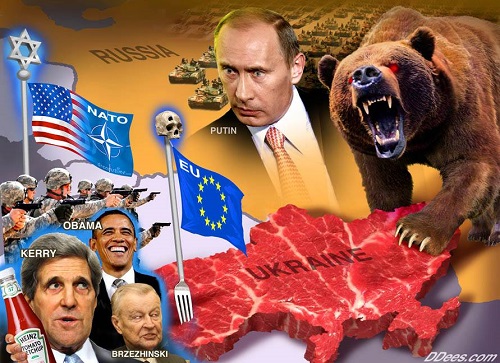
    The Banality of the Good or for many the most evil man in the world right now, seems to be a  retired lieutenant colonel of the Russian KGB, who is determined to reestablish the Soviet empire, to invade world and was likened to Hitler by a leading politician of a superpower. To others, President Vladimir Putin is a judo-chopping, IMF-taming, U.S.-defying global hero. But according to  the controversial biography of  Stanislav Belkovsky, a star columnist at a Moscow tabloid,  former speechwriter and insider, Putin represents the “Banality of the Good” (quote).  The striking similarity with Hannah Arendt’s remark, one of the 20th century’s great political thinkers did catch my eye and let me finish his book, which has its weaknesses. Now if “being good” is all, after a string of rumours and dirty laundry, which may or may not be true, what Stanislav Belkovsky, sworn enemy of Putin, came up against him, there must be something unworthy with all of us, not belonging to the élite.  I long fancied to write a psychological study of Putin, motivated by the C.G. Jung interview of H.R. Knickerbocker 1938 in the Cosmopolitan , reprinted in C.G. Jung Speaks (page 115-135). To qualify the banality of the good (or the evil) I will follow C.G. Jung’s method, the money flow and the little I really know about the person Putin – that is some minor direct account, my own remote observation, his own account and what his enemies say.

    The Banality of the Good and Evil

    This is how one understands the banality of the good: In order to gain a sense of selfworthiness of a normal citizen, it is not needed to be an hero or to be sacrified on the cross. It is completely sufficient (and required) to take good care of and raising kids, pay taxes, go to work, obey rules and laws. And not because one would be punished hard for not obeying them, but because one sees them as mandatory and essential in a sense of the Kant’s imperative.

    The Banality of the Good is often likened to the secondary virtues or vices. Secondary virtue was an important term of the German positivism dispute in the 1970s / 1980s.  Secondary virtues or civic virtue characteristics were classified as those virtues, which contribute to the practical accomplishment of everyday tasks and a trouble-free” operation of a society without having intrinsic ethical significance, provided they are not used to implement the primary moral virtues but held up as means in itself: Diligence, loyalty, obedience, discipline, sense of duty, punctuality, reliability, tidiness, courtesy, cleanliness.  That one can with “secondary virtues” easily run a concentration camp, was thrown at a fomer German chancellor Helmut Schmidt once. And this very assessment, secondary virtues and having a tendency to choose “non-Machiavelli none-elite” friends,  was the most serious allegation Stanislav Belkovsky brought up, besides Putin’s alleged accumulated wealth. Interesting circle, bringing us back to Hannah Arendt’s banality of evil of which I have written here, isn’t it? 

    Putin through the eyes of C.G. Jung

    Putin’s Ego

    Starting point of the consideration is Putin’s reportedly rather unhappy childhood. It does not matter if the gossip version of the birth and childhood of Putin states is true, that the future Russian President was born two years before the date that is otherwise formally specified as a birthday of PutinLater, the mother gave her son to childless relatives who are officially recognized as the birth parents, in what was then Leningrad. This version is buzzing around again in MoscowStanislav Belkovsky  concludes from that Putin was looking for a father figure, which he had initially in Anatoly Sobchak, the former mayor of St. Petersburg, and later found in Boris Yeltsin. Second argument was Putin’s encounter with the – at that time – very effective hard working Germans gave him according to Stanislav Belkovsky a culture shock with lasing implications. 

    Putin’s Persona

    PutinPersona
    PutinPersona

    The Persona is  the “mask” helps us get by in the world, the ideal image we have of ourselves. We latch onto these social identities to define us, but as a part of the “collective psyche” they do not distinguish us in any significant way. For the persona of a public person you just look at the best spin and pictures in the media. The media nowadays are just hooker,s printing what they are told. It’s no secret that Russia’s Prime Minister Vladimir Putin carefully presents his reputation of masculinity with various publicity stunts and photo ops. First of all, let’s look at physique. Putin does have a certain eagerness to flaunt his bare chest, and there’s definitely a Rambo quality to the man when he starts going after wildlife.

    Vladimir Putin is a Culture Warrior. Every Jungian must admit his effort and success who he carefully constructs an archetypal warrior identity. Is seems,  most media and most of his fellow world leaders , that he receives more hate for presenting the archetype of a warrior than anything else. The imago’ range from tagging dangerous animals, to stopping wildfires, to playing with guns on vacation. Putin may not want  be the most popular guy in the world but he sure manages to be one of the most interesting. Even action-star Arnold Schwarzenegger can’t outdo this is original WWP . He does judo, which lacks the pure bestial blood lust of American football; but when not using others’ own strength against them, he likes to take to the outdoors. On a horse. With a gun. He hunts wild animals. Tigers. Bears. Moose. He prowls around the Siberian woods, with no shirt, as a variety of fearsome beasts. The Western media used to say – not anymore – iIt’s lucky he’s got affairs of state to distract him, or extinction rates of rate animals would double overnight. And when he’s not hunting, he’s hang-gliding: 2012 he led a flock of endangered cranes on their migration route.

    Putin’s Shadow

    04_Putin_shadow_g_w

    The Shadow lives within us another side of our personality that is filled with all those aspects of ourselves we hide away, both from ourselves or others, as unacceptable. The shadow has a “dark side,” what we find morally reprehensible – and often project into others, but it also has a “bright side” containing our potentialities .For the shadow of a public person again you just look at the worst public rumors and gossip printed by the mainstream media. Stanislav Belkovsky is good too, he must have compiled all dirt one can openly find and was given to him. Biographies are often books about the authors themselves and sometimes amalgam between most banal kitchen psychology, insider knowledge, personal experiences and spreading rumors.  If informal decision-making processes prevail, the hour of psychology is rife. Belkovsky  insinuates that Putin, who is divorced with two daughters, might be gay. Belkovsky offers little proof for any of this also for his allegation of wealth. He also acknowledges that people who crossed about Putin (except in one case) never meet unfortunate ends – he even gives plausible versions of the case of an  journalist and a KGB traitor, who both  died under mysterious circumstances. Stanislav Belkovsky shows Putin as weak, soft KGB bureaucrat responsible for interior work rather than the foreign Cold War agent. Stanislav Belkovsky says Putin is shy, and would much rather spend his time with four-legged friends. “Therein lies the real Putin. He flees from people and his obligations to nature. Here we have Vladimir’s best friends; the Labrador Conny and the Bulgarian shepherd dog Buffy, his only roommates in the presidential residence.” A Russian political scientist summed up Belkovsky this way: “he can be considered to be either a little crazy or a business-minded manipulator whose utterances are always well paid for by someone in advance.”

    Putin like the German Schroeder and Berlusconi all pariahs are all self made out of their own strength. That is true. Surely Putin is driven by business interests and under him the flourishing corruption is not as visible anymore but still seems to be there. Putin might be indeed, feel an end time ruler who either might slow the decay, or maybe stop it 

    From narcissism and paranoia 

    In another attack of kitchen psychology Stanislav Belkovsky differentiates two type of politicians the schizophrenic and the paranoid, the former creative enforces, do creating empires the latter manager and beholders soonly administering decay. I do agree with his thesis, only the mentally unstable go into politics (se my article Archetype of the vampire in todays culture of Narcissism). I think, however he meant narcissism and paranoia, and here, having had my own encounter with politics, he defintly  got some point. Putin  to him, is of course the weak paranoid.   Narcissism and paranoia sounds like a pathology and it often is. However, those are dynamic opposites of the psyche even in healthy subjects but can actually reach down to the severest forms of psychopathology. Healthy narcissism is the desire to be loved and to provide adequately for their own well-being, and a healthy paranoia setting corresponds to what is called healthy skepticism. In a balanced way both guarantors for mental health.  Stalin was a sever case of paranoia, and according to Jung not a creator just a devourer.  Narcissism and paranoia in a slightly or severe pathological form is found in almost any politician. Slight pathological paranoia includes distrust and to be a little suspicious with the tendency of principle: You never know Such a person is cautious, somewhat aloof but of course also vigilant. The basic feeling is that you should always be on guard.Well in regards to Putin, if so it served him well. There is a deliberate elusiveness of the Russian system, in which all sorts of conspiracy theories flourish. But according to a Russian saying, just because you’re paranoid,  it does not mean that you will not be prosecuted.

    Projection of the Westen Shadow

    Pojection ot the Western Shadow on Putin.
    Pojection ot the Western Shadow on Putin.

    Is Putin like Stalin? To quote C.G. Jung again: Stalin [..]  is, however, not a creator. Lenin, created; Stalin is devouring the brood. He is a conquistador; he simply took what Lenin made and put his teeth into it and devoured it. He is not even creatively destructive. Lenin was that. He tore down the whole structure of feudal and bourgeois society in Russia and replaced – it with is own creation. Stalin is destroying that. Mentally, Stalin is not so interesting as Mussolini, who resembles him in the fundamental pattern of his personality, and he is not anything like so interesting as the medicine man, the myth—Hitler. Anybody who takes command of one hundred and seventy million people as Stalin has done, is bound to be interesting, whether you like him or not. No, Stalin is just a brute—a shrewd peasant, an instinctive powerful, beast—no doubt in that way far the most powerful of all the dictators. He reminds one of a) Siberian saber-toothed tiger with that powerful neck, those sweeping mustaches, and that smile like a cat which has been eating cream. I should imagine that Genghis Khan might have been an early Stalin. I shouldn’t wonder if he makes himself Czar.

    Maybe not.

    The West has a bad habit of personalizing foreign affairs and demonizing uncooperative leaders. Remember when Egypt’s Gamal Abdel Nasser was denounced as “Hitler on the Nile?”, “Khadaffi, Mad Dog of the Mideast?”, Assad  a butcher slaughter of the innocents, Hussein and many others. Vladimir Putin is the foreign bogeyman. He is being hysterically demonized by the  Western Media, an as we know we usually project out shadow in others.


    The Terror of the Good – Origins of Totalitarianism

    Journalists are awfully liberal, Arendt they
    Journalists are awfully liberal, Arendt they?

    I’ve read Hannah Arendt “Eichmann in Jerusalem” and “The Origins of Totalitarianism”, several times – it always amazes me. I find Arendt very hard to disagree with – she just seems so shrewd, so alert, annoyingly good at noticing everything that needs noticing; She must have it right. Writing 50 years ago, this great theorists of totalitarianism, noted that totality and irreversibility are related. It used to be thought that totalitarianism had repealed the law of history by which power sows the seeds of its own destruction. If sheer ruthless vigilance could destroy any center of opposition, even any island of independent thought, then — aside from external conquest, with humanitarian  pretext — totalitarian rule could never be reversed. Conversely, if total control fails due to today’s interconnected multipolar world, what happens to single-minded direction? If totalitarianism can decay, can it not be transformed? We don’t yet know. We know only that it can be modified. It can give way to a society with some space. How much? Well,  somewhat between 1984 with drones,  full coverage realtime surveillance and a brave new world of constructed realities – the terror of the Good.

    On 5 February 1794 Robespierre stated, “Terror is nothing else than justice, prompt, severe, inflexible.” The government in a war against terror is despotism of liberty against tyranny. Sounds like today’s war on terror. Stalin said “Ideas are more powerful than guns. We would not let our enemies have guns, why should we let them have ideas?” Well, we might have run out of ideas and ideals, but sure not of weapons. How much different is President Obama, when he declared gently that “we tortured some folks.  The West shrugged their shoulders, well than we tortured some folks.  Nobody is perfect, but we are exceptional.  This is the terror of the good, the soft terror for the good, but rather the banality of the evil than the banality of the good. My famous quote of Arendt is: The sad truth is that most evil is done by people who never make up their minds to be good or evil.

    The ordinary average guy

    Certainly the terror of the Good is not the same as the Banality of the Good: do or not doing something without fear of being caught by temporal or heavenly police as Alan Watts once said. When I lived in California I could not avoid to stumble over this song.

    I’m just an ordinary average guy
    We all live ordinary average lives
    With average kids
    And average wives …
    And every Saturday we work in the yard
    Pick up the dog do
    Hope that it’s hard (whaf whaf)
    Take out the garbage and clean out the garage…
    Ordinary average average guys.

    We are getting in archetypes if not stereotypes, but the banality of the Good is not so banal after all, just like the banality of the Evil. In an essay for Foreign Affairs, Joshua Yaffa notes a fascinating way Putin has responded to what Stanislav Belkovsky, described as grumbling Haute-Volée in Moskow during his last election (he called them “Bildungsbürger” which I cannot really translate, something like educated class, bourgeoise, maybe the chattering classes is good here, a term often used in the media and by political commentators). Putin instead reached out to the average guy, channeling populist politicians in the rhetoric of class-warfare: This dynamic perhaps explains why by the end of the campaign season in February and March, Putin sought to stir up a kind of Russian class-based politics. As he saw it, he was the leader of rural and industrial Russia, defending the country from those unnamed forces that want, as he said in a campaign speech, “to interfere in our affairs, to force their will on us.” In this speech and others, Putin has tried to link in the public consciousness the country’s middle-class protestors to enemies abroad that would wish Russia ill. On the night of his victory, he told the employees of a tank factory, “You put in their places those people who went one step too far and insulted the working man.” The real “Russian people,” he went on to say, are the “worker and the engineer.”

    The banality of the good or the evil?
    The banality of the good or the evil?

    Putin through the eyes of the cultural war

    I said half-jokingly the other day that it’s sometimes hard to tell the reporting of Western mainstream media  between Soviet-era Russia and Putin-era Russia.  If you ignore the personal insults, it’s impossible to tell the difference between now and the Cold War after JFK. In many cases, Putin is closer to the US and Europa’s ideals and interests than its own élite and global financial oligarchy. Plain stereotypes of the cold war are applied from them every day, but this is not my topic here. Lets go back to C.G.  Jung.

    H.R. Knickerbocker asked the famous question: What would happen if you were to lock Hitler, Mussolini, and Stalin in a room together and give them one loaf of bread and one pitcher of water to last them a week? Who would get all the food and water, or would they divide it? Jung’s answer included a cryptic remark:The true leader is always led. We can see it work in him. He himself has referred to his Voice.”  … “The demands of the unconscious act at first like a paralyzing poison on a man’s energy and resourcefulness, so that it may well be compared to the bite of a poisonous snake.

    Journalists are awfully liberal, Arendt they?
    Hillary Clinton, hardly a reasonable facsimile of gender icons going along.

    Let’s rephrase it, What would happen, if we were to lock Hillary, Merkel, Putin and Obama today  in a room together and give them one loaf of bread and one pitcher of water to last them a week? Putin seems to be a gentlemen but not a push over. The Russian president asked whether it would be worse to meet with Clinton than President Obama: “It’s better not to argue with women. But Ms Clinton has never been too graceful in her statements.”  From there, Putin added: “When people push boundaries too far, it’s not because they are strong but because they are weak. But maybe weakness is not the worst quality for a woman.”  So that is interesting, also with Mr. Merkel, there is divide of gender archetypes of a supposedly feminized west, calling this modern and a supposedly more traditional Russia with a positive image of the male archetype. I am not sure if this cultural war is the Russian response to a cultural revolution, or just one more warfare technique before an information, financial and hot/cold war.

    Putin and his friends and enemies

    Who is Putin? The question is as pressing today as it was 14 years ago when he became Russia’s president for the first timePutin’s supporters consider him the savior of Russia, opponents see him as a tyrannical ruler. Despite the rhetorical attacks on the chaotic conditions in Russia in the nineties Putin , Putin a heir of Yeltsin’ apparently made a deal with Yeltsin’s oligarchy (The Family”) between 2000 and 2004, but on his terms. From there on he seem to have accepted a mission which Mr. Putin’s role model, Czar Peter the Great, might have tolerated. The major oligarchs who survived under Putin are Roman Abramovich, Alexander Abramov, Oleg Deripaska, Mikhail Fridman, Mikhail Prokhorov, Alisher Usmanov, German Khan, Viktor Vekselberg, Leonid Michelson, Vagit Alekperov, Pyotr Aven, and still Vladimir Potanin and Vitaly Malkin.

    • Alisher Usmanov: The richest man in Russia and the 40th richest person in the world;
    • Oleg Deripaska: Aluminum magnate Deripaska embroiled in ‘yachtgate’;
    • Mikhail Prokorov: Ran as an independent candidate against Putin;
    • Roman Abramovich: The oil tycoon one of Putin’s closest allies.  He had a major dispute with Putin king-maker Boris Berezovsky, who committed suicide after loosing an $5 billion lawsuit against him.
    • Leonid Mikhelson: CEO of Novatek, one of Russia’slargest natural gas producers and art sponsor
    • Mikhail Khodorkovsky: Once the most wealthy Russian with Yukos oil, he’s now only worth $170 million anymore.

    A few more  business people have become oligarchs during his time, such as  Vladimir Litvinenko and  Arkady R. Rotenberg (Russian). Some had to go, who did not hold the bargain and subsequently coming under fire for various illegal activities, particularly tax evasion. Vladimir Gusinsky (MediaMost) and Boris Berezovsky both avoided legal proceedings by leaving Russia, and the mentioned, Mikhail Khodorkovsky , was arrested in October 2003 and only recently as released on December 2013. Like so many other oligarchs, he made his fortune when the Soviet Union privatized its resources in an ill-fated Western strategy, tying himself in to the country’s desasterous move to a typical IMF inflicted economy.  Khodorkovsky challenged Putin openly 2003 on behalf of the old Yeltsin oligarchy and Putin pardoned him only after a decade in prison, according to Stanislav Belkovsky the only really serious counter move, Putin has inflicted on  his enemies. Even after that Khodorkovsky was allowed recently  to address a crowd of protesters in Kiev, railing against the Russian government.

    Looking at the numbers, GDP (a hockey stick success curve, granted 50% from energy business)  and dept (none), I hate to say he  did “slightly” better than President Obama’s, TARP, American Recovery and Reinvestment Act, including the banking bailouts and fiscal stimulus in years of quantitive easing (QE). We generally overlook that his value to the system, like that of the czars who preceded him, is based on maintaining the balance among competing vested interests. Just as it was centuries ago, the main battles inside the Kremlin among these groups are about power, money and access to special privileges, not ideology.

    Conclusion

    I found something C.G. Jung could, maybe even would have said about the Putin Complex:The world is as it ever has been, but our consciousness undergoes peculiar changes. First, in remote times (which can still be observed among primitives living today), the main body of psychic life was apparently in human and in nonhuman objects: it was projected, as we should say now. Consciousness can hardly exist in a state of complete projection. At most it would be a heap of emotions. Through the withdrawal of projections, conscious knowledge slowly developed. Science, curiously enough, began with the  discovery of astronomical laws, and hence with the withdrawal, so to speak, of the most distant projections. This was the first stage in the despiritualization of the world. One step followed another: already in antiquity the gods were withdrawn from mountains and rivers, from trees and animals. Modern science has subtilized its projections to an almost unrecognizable degree, but our ordinary life still swarms with them. You can find them spread out in the newspapers, in books, rumors, and ordinary social gossip. All gaps in our actual knowledge are still filled out with projections. We are still so sure we know what other people think or what their true character is C. G. Jung -“Psychology and Religion” (1938) In CW II: Psychology and Religion: West and East. P. 140
    To be continued /expanded – published as a case of oops…

    Appendix:

    Hypothesis

    • Putin is the not a real macho nor a tyrant
    • Putin is the typical “little guy” a self-made man with business sense
    • Putin is not an imperialist but an anti-Soviet
    • Putin is an outsider  of the cultural chattering class (globally and in Russia)
    • Putin is an idealist who does not care for power
    • Putin was never the tough KGB agent but a disliked outsider; as his career was nearly destroyed by the KGB he dislikes it
    • Putin did not create a central Putin system, but rather a system of many power clusters not unlike the Czar’s
    • Putin was pro-West, first puzzled, later annoyed and now confronting Western geopolitics and wars
    • Putin is the real successor of Yeltsin but with a better sense for Russian interest
    • Putin is pro-German or pro-Europe in the sense of Czar Peter the Great, Peter
    • There is a big shiism between the Moskowitsch ( god-derived) and Peterism (rule based) autocratic system

    Expanded Definition of the Banality of the Good:

    • In order to gain a sense of selfworthiness of a normal citizen, it is not needed to be an hero or to be sacrified on the cross. It is completely sufficient (and required) to take good care of raising kids, pay taxes, go to work, obey rules and laws. And not because one would be punished hard for not obeying them, but because one sees them as absolutely required in a sense of the Kant’s imperative.
    • A real direct democracy is possible.
    • Citizen an stated must mutually respect each other.

    Bibliography

    • Wladimir: Die ganze Wahrheit über Putin von Stanislaw Belkowski von Redline Verlag,München  (Dezember 2013, Translation)
    • Aus erster Hand von Wladimir Putin Heyne (2000)
    • Chodorkowskij: Legenden, Mythen und andere Wahrheiten Gebundene Ausgabe – 9. März 2012 von Viktor Timtschenko
    • Eichmann in Jerusalem: A Report on the Banality of Evil (1963). (Rev. ed. New York: Viking)
    • The Origins of Totalitarianism (1951). second enlarged edition;  A MERIDIAN BOOK First Meridian printing
    • C.G. Jung Speaking: Interviews and Encounters (Bollingen Series)
    • C.G. Jung Synchronicity: An Acausal Connecting Principle
    • C.G. Jung Four Archetypes (Routledge Classics)
  • Habermas is wrong. Max Weber is right.

    Habermas is wrong. Max Weber is right.

    Couples
    My title: Singels – One kid families – Singles – Couples … Credit: yonaphoto.com: Post –  China in Transition.

    Reblogged via China in Transition #2: Weber believed that a move towards rational-legal authority was inevitable.

    Habermas meets Weber (erring) when he pipe-dreamed in his last book of a supranational democracy, without demos – the people  –  which at the end according to Max Weber derives its legitimacy only from institutional procedure… In no way a move towards rational-legal authority  is inevitable, irreversible on necessarily democratic.

    The picture even contradicts the thesis – there is no enlightenment nor positive rationalization.

    We entered a new feudal age in the West –  in the world. The sixties are over, 99% hold most of the assets and all of the power. Drones proved effective against asymmetric wars, NSA proved effective against freedom.  The reflective discourse has been Habermas’  fad. The MSM (MainStream Media) manufactures the common consent and controls the allowed dissent. Those in power have grown autistic. For the many it is panem et circenses. We live in our little internet sandbox –  watched. Never ever, so many knew so much, but could or would do so little. Max Weber is right. There are tree types of  legitimacy:

    1. Traditional legitimacy derives from societal custom and habit that emphasize the history of the authority of tradition.
    2. Charismatic legitimacy derives from the ideas and personal charisma of the leader.
    3. Rational-legal legitimacy derives from a system of institutional procedure.

    We have neither but raw financial power. Habermas’ thesis of public discourse is laughable. There is serious financial repression for the lucky. For the unlucky the global refugee figure passes 50m for first time since second world war not mentioning the global migration…

    Disagree? Drop a line.

  • A primatologist image of God: The Ultimate Chimp

    A primatologist image of God: The Ultimate Chimp

    A primatologist’s “Image of God” reimagines divinity through our closest evolutionary relatives, the Chimp (chimpanzee), which share ~ 98.4% of human DNA. By observing their capacity for culture, tool use, empathy, and social complexity, we are challenged to expand our understanding of the divine spark beyond purely human boundaries. Maybe it’s because I am an “unchurched”, humanist and cultural religious person, but today’s anti-religious tracts and rants do bore me.  However, a new book of  the primatologist Frans de Waal, raised hope for new insights: The Bonobo and the Atheist: In Search of Humanism Among the Primates. He made accidentally an interesting point – the reciprocal imago dei (God’s imago modeled after human) of today’s atheists (or spiritual deaf).

    I hold the opinion that God’s existence can’t be proved nor denied. God can only be experienced personally or by intuitive wisdom. Although I consider myself religious, I can only shrug my shoulder to fierce pro and con advocates. To me, religions have had a positive effect on morale and cohesion of society and intrinsic merits. Religion is formalized spirituality not an ideology, although some ideologies mutated in deadly and evil belief systems. Simply go with Kant’s categorical imperative:  How would a world look like, where everybody is… greedy, hedonistic, promiscuous and spiritual deaf? You say that would look like today’s globalized world? Bertolt Brecht concluded that 50 years ago: “Erst kommt das Fressen und dann die Moral”.

    Religions and the zoo

    According to Mr. de Waal it would look like a zoo. Doesn’t sound completely wrong to me either. Mr. de Waal has spent his career studying chimpanzees and bonobos, two of humanity’s closest living relatives. He draws on a lifetime of empirical research and claims his data provides plenty of evidence that religion is not necessary in order for animals to display something that looks strikingly like human morality. Consequently to him Gods imago is the “Great Chimp”.

    We all went in the zoo, right?  While I would admit, that apes look strikingly human, throwing excrement like – say politicians, those in power monopolizing sex and generally follow interaction pattern of large corporation, I am still surprised.  Is it my distorted view of moral or my different understanding of “Gods” image?  Now, that is exactly where we differ, Frans de Waal,  like the old Greeks, or Romans or Goths, proposes to model God after the worldly observation. Social science boldly constructs here not only the world, but also the heaven, and up there is the ultimate alfa male (chimp).  There is no place for the female Hindu goddess Kali, Confucius or pantheistic Taoism. Nevermind, lets look where this leads us to.

    7parvat-737408

    According to primatologist,  Chimps help in lab tests other chimps obtain food even though there is no benefit in doing so, or even refusing rewards themselves until their troop-mates get some. Examples also come from the wild: young chimps fetch water for oldsters who cannot manage themselves, for instance, or adopt orphaned youngsters from other families. Rhesus monkeys are recorded as tolerating handicapped  similar to human Down’s syndrome. Mr de Waal’s central aim is to attack the idea that morality makes human stand apart  “lower” animals. Thus, he concludes no religion is needed: No philosophy either. I doubt that. In Hinduism the goal of all mystical yearning is union of the individual soul with the universal soul. In the Adhyatma (‘spiritual’) Ramayana, a Sanskrit text dating from the fourteenth or fifteenth century, Sita represents the individual (jiva-atma), which has separated from the universal (param-atma) symbolized by Rama. In an almost  Jungian interpretation, Hanuman (the chimp) here is said to personify bhakti, which annihilates the ‘ahankara’ or ego (Ravana), and re-unites the two. That can be easily translated in the Jung context : The Death of the Ego as prerequisite to find God.

    Chimp Nature is our link with Creation.
    Nature is our link with Creation.

    In Hindu symbolism, a monkey signifies the human mind, which is ever restless and never still. This monkey-mind (consciousness) happens to be the only thing over which man has absolute control. We cannot control the world around us and cannot choose our life but we can choose the way we respond to it. Hanuman, when he was a child monkey, was tempted by the sun and he rushed towards it thinking it to be a delectable fruit. On his way however, he was distracted by the planet Rahu and changed his path. Thus Hanuman is the temperamental human intellect, which is unquiet and excitable. It is only by diverting it to the path of pure bhakti (devotion), that it can be made aware of its profound and silent essence. Hanuman is no ordinary monkey. While embarking on the search for Sita, the monkeys were confronted by the vast ocean lying between them and Lanka. They wondered how they would make their way across this mighty obstacle. Someone suggested that Hanuman jump and cross over the sea. But Hanuman was doubtful, “I cannot do that,” he said. At that moment, one of his companions reminded Hanuman of the awesome powers lying dormant within him. Instantly Hanuman regained memory of his divine strength and he successfully leaped across the ocean – the individuation. The monkey is us, specifically our conscious Ego , not God.

    Religion and philosophy

    Most people, the primatologist notes, accept that their bodies evolved from those of man’s predecessors, but the conceits of religion and philosophy make it much harder to accept that the same is true of human minds. I have indeed my difficulties, together with Descartes: I think – therefore I am.

    I agree, that human ethical codes arise from ancient social behaviours, but not exclusively. Different versions of this can be found in a variety of animals and variety of human tribes. Often it was ritualized in spiritual or religious conduct. For Mr. de Waal, religion is just a natural consequence of combining the built-in behaviours of an intelligent, sociable ape with strong dominance hierarchies and God’s image may very well be the ultimate, old, fat chimp with the red “bottom”. Mr de Waal’s sophisticated interpretation of religion seems to make it hard for him, however, to imagine that people can take religion allegorically and spiritually.

    I share his little patience for sometimes shallow, overly confident, assertive atheism of today, seeing it as tilting hopelessly against the strive for spirituality in human nature.  In other words, a crowd of crashing bores treating the gospel like a car manual. Called or uncalled, God is present, was written over C.G. Jung’s door. Religious experience plays an important role in Jungian psychology. Jung, a Christian maybe of more Gnostic virtue, believed that this experience is nothing but a product of the psyche, and consequently viewed other world religions as an expression of one psychic function that has its roots deep in the collective unconscious of mankind.  Jung and Mr. de Waal are strong empiricists, but to Jung religion and spirituality are based on complex archetypes not on low-level instincts.

    Religion and totalitarian systems

    The second thing to consider is Jung’s point of view toward religion in general, and his various attitudes with regards to fanatics and totalitarian ideologies and states: “Of course, it is not a spiritual religion in the sense in which we ordinarily use the term. But remember that in the early days of Christianity it was the church which made the claim to total power, both spiritual and temporal! Today the church no longer makes this claim, but the claim has been taken by the totalitarian states which demand not only temporal but spiritual power”.

    It is no coincidence that the three most religion-hating ideologies (Maoism, Stalinism and National-Socialism) killed also most humans known in history. Jung is speaking only about the USSR  and Nazi Germany (he died 1961) in a sense that those ideologies were not only secular and political, but also semi-religious.  Jung speaks about totalitarian belief systems not only demanding temporal obedience but spiritual as well and covering not only the spiritual aspects of the human condition but also mundane. If one looks to Jung’s quotes closely,  one can derive there are similar concepts between totalitarian religions and totalitarian systems. Thus, Mr de Waal has a wonderful convincing argument against himself.  Absolute religions always have striven for absolute secular power and vice versa, and both  versions exist and have power today. Deconstructional philosophy and tactics of social science is inherently inhuman. Thus, this sort of atheism is ironically also anti-humanism.  As the Tao Te Ching, written by Lao-tse  noted – this tactics are against the (divine) law:

    When people see some things as beautiful,
    other things become ugly.
    When people see some things as good,
    other things become bad.

    Manmade, constructed Gods  (even if just for the purpose of fighting religions) are more often than not – evil.

    Conclusion

    Very often  atheism employs a simple understanding of religions based on a personal god and ignores spirituality and pantheism. Mr de Waal’s shows  convincingly that social science has to catch up with 2000 years of philosophy. Humanism is not easily found in a zoo, nor can it be a substitute religion for humans need of spirituality.

    When human beings are deprived of any “image of god” (imago dei) they are reduced to numbers and seen as livestock (or primates) – result versus costs: anyone who is old, weak, sick, unwilling or just inconvenient would be starved to death or killed. It is Dante’s hell – the opposite from imago dei. Hitlers, Mao’s, Pol Pots, Stalin’s illusion of new societies, new men and totalitarian state religion crashed. Because it was not a spiritual religion, but an ideology and man-made cult utilizing instincts (and archetypes). Charley Chaplin pictured this funny in “The great Dictator”.

    Hitler’s, Stalin’s, Mao’s and Pol Pot’s approach had all in common that they wanted to form new people and themselves as supreme . Their leadership cult and the state consequently asked for religious obedience. If one looks closely we find, that the concepts of totalitarian religions and systems are similar. In their focus is hate, essentially hate against humanity and clearly defined external groups or simply against everybody, which in the last essence is self-hate. Nazi racism and evilness cannot by diluted by the historical observation of Stalin’s and Mao’s motivations which were often similar national or ethnic. The starving caused by their failed industrialization policies or flawed visions left  Stalin and Mao untouched by the death of double-digit millions  of humans.  Creating their imago as supreme semi-God, they fought a war against the nature, reason, tradition, spirituality and their own people, ultimately humanity: Can Hitler go to heaven? The evil presented in Mao, Stalin, Hitler, Pol Pot.

    It is sad, that humanist movements have become strongly aligned with secularism. Germans used the term humanism to refer to Italian Renaissance and classical learning. There is of course large benefit in learning from cultural, non-Christian sources. But solely centering philosophies and morality around human kind or primates, without attention to the divine is not sound practice. Humanism or human morality, spirituality or religion are all more than sharing a banana (within the tribe).

    Question: What imago (if so) you have of God?

  • “Don’t be a maybe” – a Junganian view of postmodern, post-metaphysical, post-philosophical neo-pragmatism

    “Don’t be a maybe” – a Junganian view of postmodern, post-metaphysical, post-philosophical neo-pragmatism

    That movie title “Do the Right Thing” – “Don’t be a maybe” of Spike Lee would not fly today. Rather Raymond Chandlers “The Big Sleep”. Maybe. Something feels not right any more. Specifically the “Right” (as opposed to Wrong not to Left) is an endangered species. One has to decode first all the Western mental systems before separating Wright from Wrong! Right? For example, is neoliberalism good or bad from a Gender perspective? “On the one hand”, says the young woman, “it fosters the image a sexless and faceless human capital against patriarchy“ – break – however, it is an antisocial, undemocratic élite project.

    My observation is that philosophy is going through a bit of a dry spell at the moment. Philosophy flowered beautifully from Plato, through the medieval ages, to the majestic insight of Kant and the last great unlikely prophets of our post-modern times, Nietzsche and Wittgenstein. But the last century was not kind to philosophy and it gets progressively worse. For all practical purposes science has taken over ontology and cosmology; pragmatism has taken over ethics, pseudo-religions have been taken over metaphysics, the Dow Jones social relevance; and psychology has taken over epistemology. Analytical Psychology is the most wide-ranging kind of psychology, unafraid to deal with anything. Jung was a pioneer who were “cutting edge” in his day. He was very much aware that knowledge was evolving rapidly, but his concept of collective archetypes contradicts postmodern relativism.

    “Don’t be a maybe”

    "Don't be a maybe"
    Generation Maybe

    Lets face it, in the West we live in a world of Maybe-Academics, Maybe-Journalist, Maybe-Analysts, Maybe-Churches and of course Maybe-Politicians. We, ourselves, are the Generation ” Maybe“. One cigarette company advertises with the slogan Don’t be a maybe”, but universalism is just as out as the truth, the evil and the good. One rather says „Yes, but“ and has learned that knowledge and facts are social constructs, all so-called facts one has to seen in the society-political context. We generate worlds, through generating languages, according to the “post-metaphysical”  philosopher Wittgenstein. Since him, an immense power has been awarded the language. The postmodern/deconstructionist claim „Nobody who has not made the experience, while something what is absolutely clear in one world, that in another world something absolutely differently can be equally clear, is able to talk even today competently.“ Scary really.

    Not, nevertheless, for Richard Rorty, for him even the existence of the dinosaurs beyond the language was unlikely: “The world does not speak. Only we do. The world can, once we have programmed ourselves with a language, cause us to hold beliefs. But it cannot propose a language for us to speak. Only other human beings can do that.”  For Jung, as for later cognitive psychologists, the human mind is not a simple, passive, externally programmed machine.  Our minds are part of the universe, participants in the same laws that created the universe. We are made, as Christians believe, in Gods image. Richard Rorty was a popular professor of philosophy at Princeton University and at Stanford University – sometimes called neo-pragmatist, for whom scientific and philosophical methods form merely a set of contingent “vocabularies” which  post-philosophers abandon or adopt as they please.  We old people shake our heads about the Wischiwaschis aka transitory trendy studies”. Mrs. Schavan, a so-called “modern christian” (and politician longtime responsible for education and science in Germany), recently lost her PhD title, because  essentially used copy cat in her PhD thesis. Here rather uninspiring doctorate was about truth and ethics, isn’t that funny?

    The Maybe Academics

    truth-is-out-of-fashion
    truth-is-out-of-fashion

    But they shape the world.  Historian in the meantime, pursue less fact research, they track now down narratives. Traditional historians believe, that primary sources should be used to research history, whereas  postmodern historians claim because of a different age in a different culture, the historian of today has no way of interpreting these sources accurately,therefore again they are not to be trusted and rely more on secondary sources and individual perception of historical events. Personally,I think post modernists are just too lazy to do proper, real research. Postmodernism has brought history dangerously close to the fairy tales. Postmodern historians, a term that, by its own definition, is difficult to define, is a line of thought still remains the discipline of choice of many historians today. It is best known, and equally best hated, for its relativism. For instance, R.G. Collingwood constantly states in `The Idea of History’ that history is the `history of thought.’ While the history of humanity itself may not have a purpose, the writing of historical accounts does. Resonating with Foucault’s approach to history is the view that the writing of history should promote an ideology.

    Truth is the story of the past told at present for present purpose.
    History is the story of the past told at present for present purpose.

    If, as Foucault declares, a claim to knowledge really is nothing but an attempt to overpower others, then retelling history serves the purpose of gaining power. This rewriting of the past to serve a purpose, known as revisionist history, contributes to empowering minorities. Thus feminist histories attempt to expose a male-dominated, patriarchal past and point the way for empowering women. Likewise, gender preference histories are put forward (in response to gender-preference-phobic repressions) to provide equality for all gender-preferences.  Religious histories emphasize the horrors of, say the crusade, to redress past misbehavior of the other side. Every repressed group—minorities of all colors, ethnicities, nationalities, and gender—has an injustice that must be exposed in order to rectify the abuses of the past –  except the White (Anglo-Saxon) Male, as the late NY mayor Ed Koch once quipped.

    The Maybe Journalists

    Meanwhile, Journalist promises in the “real” world of quality medias “facts, facts, facts”, and serve either opinions or sponsored, well, also narratives. There is no doubt that many produce not only (usually) left-leaning editorial and op-ed pages, but some news coverage was among the finest in the world.

    Embedded Journalism
    Embedded Journalism

    When did we reach the point where news articles in the established media were considered suspect? And if news in the quality medias can’t be trusted then what news sources can be? We truly reached the age of Post-Modern Journalism. Postmodernism, among other things, is the denial of objective truths, so Post-Modern Journalism would be the denial of basic facts. And it is. The Benghazi disaster, the involvement of trans-national financial powers in the Banking crisis, made smartly to an Euro crisis, Syria activism, or the Arab spring turned to Brotherhood winter are all a typical examples of a status in which baseline facts are in constant dispute. Post-Modern Journalism then is what happens when we – as a society – can no longer agree to these facts. When journalists can no longer collect, verify and report on the facts of a story – because the facts are in a constant state of contradiction – then we have reached the point of Post-Modern Journalism. The consequent step of traditional embedded Journalism of the Gulf Wars is the   “secret service and elite-embedded   Journalism”  in crisis . A multiple “news sources” at least claiming to be objective journalism but with varying definitions of what the baseline”facts” and “truths” has been replaced by single source  / view journalism (especially evident in  TV News).  It is any wonder that so many people no longer believe what they read and see from news organizations when we’ve reached this point? When any facts about the origin and political beliefs are under dispute or plain disinformation how can we trust anything written? The result is news organizations with different factual foundations – and ever skewing toward their audience’s perspectives. In simple terms: FOX-News vs. CNN or The Daily Beast vs. Blogs. There has been much ink spilled worrying about how the Internet is destroying journalism, but the change from the Post-Modern Journalism to Maybe Journalism is the real threat. It does not help, that Newsweek comes since January over Whisper Net.

    The Maybe Churches

    Confused Religions
    Confused Religions

    In the modern age, staunch atheists and, even worse, confused and misleading theologians have severed the link between humanity, the Church and the Creator: hence the mutation of human failures into systemic misbehavior.  So, because ideas have consequences, we cannot afford to overlook the effects of the radical “Maybe” in ethics and churches.  If everything is mere fiction, or even largely so, then those who deny, for example, the Nazi holocaust are validated , then Jesu and Hitler cannot be used as examples of good and evil. There are no “facts, there is no moral.” There are only various degrees of fiction.

    POSTMODERN RELIGION
    POSTMODERN RELIGION

    Jung, however, affirmed that the human unconscious, expressed spontaneously in religious practice, myth, and literature,transcends mere subjectivity. It is kind of perception, through us as a thing-in-itself, of things as they really are and by pouring into consciousness, it is the personality of the universe becoming self-aware. More than even many today’s theologians, Jung took seriously that the God of the Bible is a personality, and an omnipresent, and evolving one at that. Hence, Jung agreed that the Bible is on to something, namely, that consciousness and personality are not mere artifacts of electrons and energy-events, they’re a natural outgrowth of Creation, fundamental ontological characteristics of the universe itself. By including this biblical perspective he avoided one of the biggest failings of post-metaphysical philosophy, namely the denial of the reality of consciousness. In any mechanistic worldview, a view intuition is only used to make materialistic gains, truth becomes a victim of complexity. Not so for Jung.

    If one searches for contemporary courageous and outspoken critics of relativist ideologies, beside the stepped down pope Benedict XVI, finally, the truth finishes to be a valid currency. The airwaves are full of theologians like Küngs and other ex-catholic judging his truly modern (and truly anti-postmodern) pontificate after he stepped down.  Benedict XVI announcing resignation on 11 February 2013, only two months after his decision to join twitter could not have finished on a less coherent note. It has been said he stays on twitter. I have been a follower, and one can hope the ope never read the often disgusting comments I observed. Benedict XVI, soon Joseph Ratzinger again, has relied on the unbending and strong faith of a bright gifted Bavarian country boy: doctrinal solidity has been his asset as theologian and bishop, then, as the Prefect of the Congregation for the Doctrine of the Faith; and finally, as Pope Benedict XVI, the re-evangelizer of Europe in the name of faith -and- reason.  Since his early years, small is beautiful was his recipe, against the background of a world, and a Church, going crazily secular and going crazy. Catholicism teaches that our failures are the inevitable consequence of the original sin.

    Over Cross
    Over Cross

    Joseph Ratzinger was defined by what he saw as the spreading of Marxism in German faculties of theology after the Second Vatican Council.To him a polluted theology and a God-free philosophy of the 1960s and the 1970s produced anarchy. Acclaimed by Catholics worldwide as the greatest theologian of his time, and as the most powerful Catholic cleric he has inspired the Church, and stood firmly against the post modern, secular and relativistic age, within the church and outside.  In Benedict XVI,  a very old man when he was elected, the mixture of softness and hardness, of weakness and strength was inextricable. He fired one Jungian theologian and still was so typical Jungian. In this, of course, stepping down is not about diminishing the leadership and not about relinquishing control either.  Despite the isolation of his retreat in  the territory of Vatican City, he will be there. I found it remarkable that he read his announcement in Latin. He must have felt, that post-modern clerics are in the wait and huge tensions await the Catholic Church. The Pope has anticipated this decision often, and yet he is giving the Papacy a depth-psychological spin, once more acknowledged the Shadow of the Church. Benedict XVI will be remembered for this dramatic departure. The theologian who held relativism as the worst foe of the Church, will be a decisive Pope who may have led the church outside of this God-less, sterile post-modern mess. Even, if it is more than likely that he was hunted down by (financial) powers.

    Jung and truth

    Broadly speaking, philosophy can be broken up into four basic types of truth-claims: Empirical, Pragmatic,Subjective, and Rationalistic.

    • Empirical systems hold that reality is that which is observable, verifiable, and replicable. It’s major deficits are three. One, that there are some things, especially cultural and emotional phenomena, which are real, important, life and death issues that are not so predictable.Two, Empiricism leads to some untenable conclusions. Three, our knowledge is limited.
    • Pragmatic systems, like the bottom line question, “Does it work?” It’s danger is that purely practical”truth” can change,inaccurate beliefs and evil actions can be practical, hence, by Pragmatic standards, true. It would have been eminently practical, for example, in the 1930’s in Germany to believe in the inferiority of the international money system. Pragmatism too easily lends itself to self-centered ethics. Believing something is not enough to make it really True.
    • Subjective system especially in post-modern thought, since Nietzsche hold that reality is a matter of personal perception. Contemporary post-modern subjectivism  as shown above, loves to protest “hegemonic” world views, defend reality as social construct, and explore truth as defined by “power” relationships.There are  strengths three deadly dangers. One is that it is inherently negative. It protests and deconstructs, but chronic skepticism makes no real contribution and it allows anyone to retain any idea they wish by simply labeling contrary ideas and even evidence as “opinion”. The major danger is solipsism. All the assertions, “God exists.”, “Terrorists kill.”, “Activists kill”, and “lasagna taste great.” become the same in the end.
    • Rationalistic, systems particularly modern logic realizes that observed data may be flawed and is definitely limited. “Facts” change as observations improve and knowledge grows.  The weakness of this school is that every meaningful assertion must be tested in the real world.

    Empiricism and pragmatism are materialistic, subjectivism and rationalism are idealistic. Since Wittgenstein all of them spend a great deal of time discussing language as the medium of the philosophical enterprise. Jung, allowed elegantly with  his four function and synchronicity a synergy,.Being something out of his empiric scope, did not mean to him  it does not exist. What probably intrigues me most about Jung is his ability to bridge the gap between apparently different viewpoints, without post-modern relativism and connecting into the wide world of religion, history, anthropology, and philosophy. He does this primarily by distinguishing between the psychic functions while remaining adamant that they are necessarily complementary to each other. In this, Jung describes (in his ascetic,cross-cultural way) that naive post-modern thinking is too simple. We are not a tabula rasa nor a language programmed machine. Our Sensations provide facts to our Intuitions, our Intuitions provide organization for our Sensations. Sensations are not always reliable, but our intuition solve equations that describes intangible knowledge virtually perfectly.

    Conclusion

    George Soros made almost $1 billion since November from bets that the yen would tumble
    George Soros made almost $1 billion since November from bets that the yen would tumble €, USD will be next.

    Post-modern subjectivism is a tool to create complexity in order to hide reality and dress up totalitarian systems as pragmatic. Public faces of this unholy alliance of neoliberalism and neo-pragmatism are for example Mrs. Maybe-Merkel and Mr. Maybe-Obama. Of course they can be decisive holding on to their office. You vote for them. Those, however,  are only the first layer of the matrix.

    Definitely no “Maybe’s” is “star investor” Soros, one face behind those public faces. Behind him there are  G&S and other finance clusters,  for which we are less than a muppet.  Mr. Soros owns own analysts and is regularly in Davos publishing his views where and when he pleases.  Those behind the faces rule you in reality – say if you believe what Maybe Journalist and the Maybe Academics tell you. And if you listen to the Maybe Clerics, most likely you will not go to heaven either.  So the confusion of this young women is understandable. An antisocial, undemocratic élite project uses conveniently, whining, nihilistic depression, humanistic godlessness, subjectivism and linguistic niggling as it became the norm today.

    What do you think? Can reality be objective? Should it at least strive for objectivity? Or is this state of Post-Modern “ironism and confusionism” a permanent condition?