1. Introduction Apocryphal Gospels
This essay explores the apocryphal gospels that are not part of the New Testament and asks what distinguishes them from the four canonical Gospels of Matthew, Mark, Luke, and John
Thanks to the accounts in the Gospels of Matthew and Luke, we know the basic story of Jesus’ birth in Bethlehem. But where do the familiar images of the cave, the ox and the donkey beside the manger, warming the infant Jesus with their breath, come from? Or the important role of Mary Magdalene in both worlds, also the non-canonical —the explosive Gospel of Mary fragments. These details are not found in the canonical accounts instead from later Christian traditions preserved in apocryphal writings, particularly the infancy gospels.
The Greek apokryphos means”hidden” or “concealed”, and is applied to writings that were not included in the New Testament. That does not necessarily mean that a text is fraudulent or without historical value but simply that the text did not become part of the canonical collection.
2. The Apocryphal Gospels
The apocryphal gospels are a diverse collection of writings, many of them fragmentary, that recount events from the life of Jesus, Mary, the apostles, or other figures associated with the early Christian movement. They were not included in the New Testament and, over time, were excluded from the authoritative scriptural tradition of the emerging Church.

These writings began to appear particularly from the second century onward, although some may preserve earlier traditions. Their purposes varied. Some attempted to fill gaps in the canonical narratives; others offered theological interpretations, revelations, sayings of Jesus, or alternative accounts of his death and resurrection. Some were intended for devotional use, while others reflect distinctive theological or philosophical movements.
It is therefore misleading to regard all apocryphal gospels simply as distortions of the canonical Gospels. Some contain legendary material, some preserve traditions that may have circulated independently of the New Testament, and some reflect theological developments that differ substantially from emerging orthodox Christianity.
The apocryphal texts can broadly be divided into several groups:
- Infancy gospels, dealing with the childhood of Jesus and the lives of Mary and Joseph
- Jewish-Christian gospels, which appear to have developed within or near Jewish-Christian communities
- Gnostic or Gnostic-influenced gospels, emphasizing revelation, spiritual knowledge, and the awakening of the inner person
- Passion gospels, concentrating particularly on the suffering, death, and resurrection of Jesus
- Other apocryphal, fragmentary, lost, or homonymous gospels, whose original form or authorship is uncertain
2.1. Differences between canonical and apocryphal gospels
Canonical Gospels are generally dated to the first century: Mark is usually placed in the early first century, Matthew and Luke in the later first century, and John toward the end of the first century or around the beginning of the second.
Most surviving apocryphal gospels are dated from the second century onward. This chronological difference was important because the early Christian communities regarded continuity with the apostles as a major criterion of authority.
At the same time, chronology was not the only acceptance criterion. The formation of the New Testament canon was an editorial process rather than simple binary triage decisions. Several factors contributed to the eventual recognition of a text as authoritative, including:
- Apostolic connection — association with an apostle or with the apostolic generation
- Widespread use — particularly reading in Christian communities and worship
- Continuity with inherited Christian teaching
- Theological coherence with what eventually became recognized as orthodox Christianity
The later Church therefore did not simply ask whether a text was old. It also asked whether the text belonged to the inherited apostolic tradition and whether its theology was fitting with the faith developing within the wider Christian community and consistent in its messaging.
Another criterion was the literary form. Some apocryphal gospels contain elaborate narratives, new miracle episodes, dialogues, so-called secret revelations, or symbolism that are largely absent from the canonical Gospels. These may reflect popular devotion, theological reflection, or the literary conventions of their communities.
The distinction between canonical and apocryphal should therefore not be reduced to “true versus false or simply Gnostic.” The more interesting historical question is which communities produced these texts, what questions they were trying to answer, and why some traditions eventually became authoritative while others did not.
2.2, Apocryphal and Gnostic Gospels
As mentioned above, some key apocryphal gospels are associated with what modern scholars call Gnosticism. The term is itself complex because there was no single, unified ancient religion called “Gnosticism.” Rather, the term is used as a umbrella for a number of movements and texts that shared certain characteristics.
Elaine Pagels, a scholar of early Christianity and gnosticism notes a recurring idea is that human beings possess, or are capable of awakening to, a higher spiritual knowledge (gnosis). . Gnosticism,is a dualistic movement, it emphasized revealed knowledge for salvation and distinguished between an unknown supreme God and the Demiurge, identified as the Old Testament God. Some texts, such as the Gospel of Thomas and the Gospel of Mary, offer alternative interpretations of Jesus’ teachings and nature,
Some Gnostic systems developed a sharp distinction between the transcendent divine realm and the material cosmos. In certain systems, the creator or ruler of the material world is distinguished from the highest, unknowable God. Other texts are considerably less dualistic.
This diversity creates an important contrast with emerging orthodox Christianity. Christianity increasingly emphasized creation as fundamentally God’s creation, the goodness of embodiment, the incarnation of Christ, the historical death and resurrection of Jesus, and salvation through Christ rather than through secret knowledge possessed by an enlightened minority.
Nevertheless, the differences should not obscure the similarities. Both traditions drew upon Jewish scriptures, Jewish wisdom traditions, apocalyptic expectations, concepts of divine revelation, angels and heavenly realms, and the idea that human beings can encounter divine truth.
The relationship is therefore more complicated than a simple opposition between “Christianity” and “Gnosticism.” Some of these texts are best understood as competing interpretations of the early Christian message.
2.3 Texts commonly discussed
Among the texts commonly discussed in this context are:
- the Greek Gospel of the Egyptians
- the Gospel of Matthias
- the Gospel of Mary
- the Gospel of Judas
- the Apocryphon of John
- the Sophia of Jesus Christ
- the Gospel of Thomas
- the Gospel of Peter
Not all of these should, however, be classified as Gnostic without qualification. The Gospel of Peter, for example, is generally treated as a non-canonical passion narrative rather than a Gnostic gospel. The Gospel of Matthias survives only in fragments and is difficult to classify. The classification of the Gospel of Thomas has also been debated.
I have already written about the Gospel of Thomas and the Gospel of Mary Magdalene. In Languedoc-Roussillon, a land of myths, history, and remarkable beauty in southern France, I also followed the footsteps associated with Mary Magdalene, the Templars, and the Cathars.
The following section therefore looks more closely at these non-canonical writings and asks several questions:
Where did these texts come from, and what did their authors believe?
What similarities do they share with early Christianity and with Jewish religious and mystical traditions?
Where do they differ from the Christianity that eventually became orthodox?
What was the mystical and symbolic significance of Mary Magdalene?
And perhaps most importantly:
Why were these writings not included in the New Testament, even though some of the people and traditions associated with them—above all Mary Magdalene—became deeply important within Christianity?
These questions also connect with C. G. Jung’s interest in Gnostic traditions, particularly their use of symbolism, inner transformation, revelation, and the relationship between conscious and unconscious dimensions of religious experience.
3. The Gnostic and Non-Canonical Gospels: Sources, History, and Beliefs
The texts discussed below should not be treated as a single theological system. They come from different periods and communities and represent different ways of interpreting Jesus and the meaning of salvation.
Each subsection therefore asks four related questions:
- What is the text and where does it come from?
- What does it have in common with early Christianity and Jewish religious traditions?
- Where does it differ from emerging orthodox Christianity?
- What does it reveal about the mystical and symbolic world of early Christianity?
3.1 The Greek Gospel of the Egyptians
The Gospel of the Egyptians is known principally from quotations preserved by early Christian writers such as Clement of Alexandria. It should not be confused with the later Coptic Gospel of the Egyptians preserved in the Nag Hammadi library, which is a different work and belongs much more clearly to a Sethian Gnostic environment.
The Greek text appears to have circulated in the second century and probably originated in an Egyptian Christian environment. Its surviving fragments contain sayings and dialogues involving Jesus and figures such as Salome. Themes include asceticism, sexual renunciation, the overcoming of ordinary divisions, and the transformation of human existence.
Similarity to early Christianity:
It shares with early Christian traditions the use of sayings of Jesus, apocalyptic and ascetic themes, and the expectation of a radical transformation of human existence. Its concern with overcoming worldly attachment also has parallels with early Christian asceticism.
Similarity to Jewish and Gnostic thought:
Its language can be placed within the wider religious environment of Jewish wisdom traditions, Egyptian Christianity, and emerging Gnostic speculation. The emphasis on transcending ordinary existence and returning to a more fundamental spiritual condition is particularly significant.
Difference from emerging orthodoxy:
The text appears to give a much greater role to radical asceticism and esoteric interpretation than the canonical Gospels. It does not simply present Jesus as the teacher of a public community but as a revealer of a deeper spiritual reality.
Mystical significance:
The text illustrates an important feature of early Christian mysticism: salvation could be imagined as a transformation of the human being rather than merely as an external event. The body, sexuality, death, and the distinction between male and female could become symbols for overcoming the divisions of ordinary existence.
3.2 The Gospel of Matthias
The Gospel of Matthias is one of the most difficult texts in this group because it has not survived as a complete work. What we know comes primarily from references and quotations in early Christian authors.
It was attributed to Matthias, the apostle chosen to replace Judas Iscariot in Acts. Such attribution is important because the name of an apostle could lend authority to a text, although it does not demonstrate that the apostle actually wrote it.
Similarity to early Christianity:
The surviving fragments suggest a Christian environment concerned with the teachings of Jesus, moral discipline, and the interpretation of Christian revelation.
Similarity to Jewish and Gnostic thought:
There are indications that some traditions associated with Matthias may have emphasized hidden or deeper teachings. However, the surviving evidence is too limited to reconstruct a coherent Gnostic theology.
Difference from emerging orthodoxy:
It is impossible to define this difference with confidence because too little of the text survives. This is an important example of why classifications such as “Gnostic gospel” must sometimes be used cautiously.
Mystical significance:
Its greatest significance may lie in the existence of competing memories of the apostolic generation. The fact that a gospel could circulate under the name of Matthias shows how early Christians sought authority through apostolic figures and traditions.
3.3 The Gospel of Mary Magdalene and Her Role in the Accepted Gospels
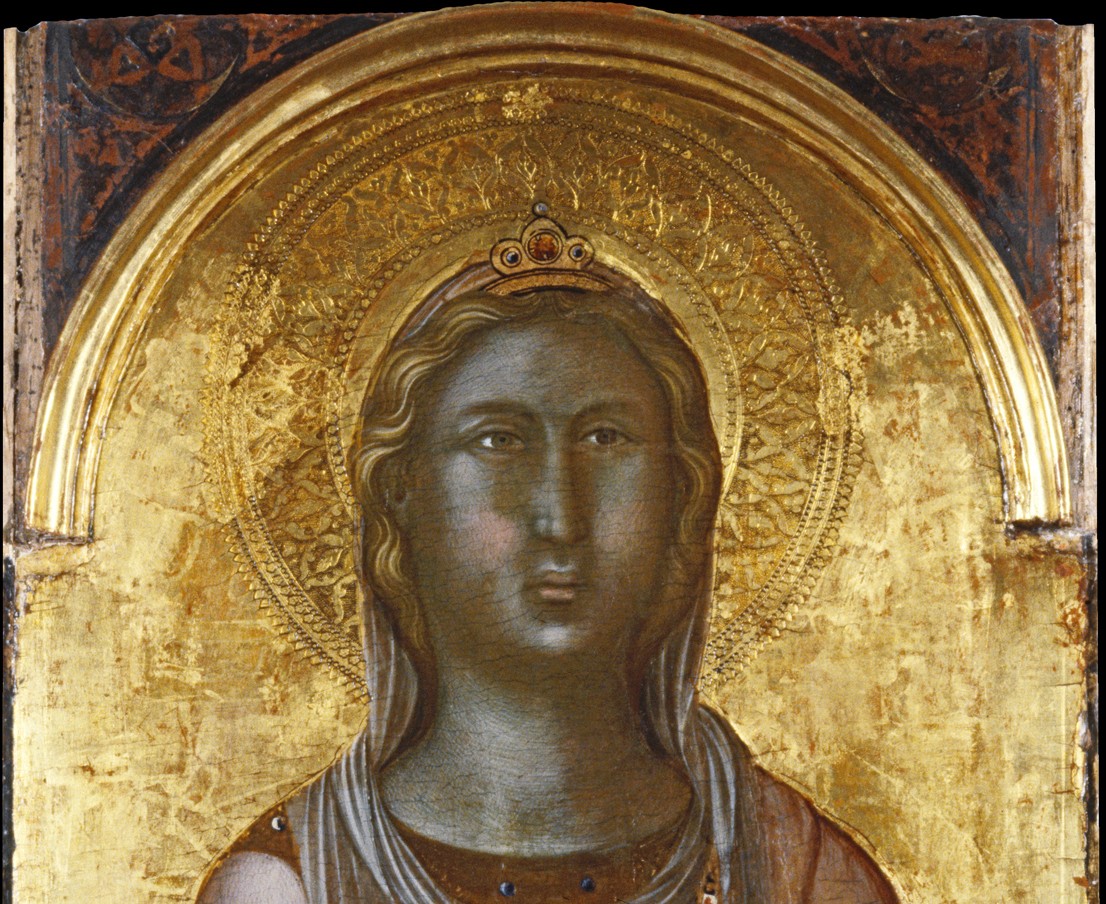
Mary Magdalene plays a vital and consistent role across all four canonical Gospels (Matthew, Mark, Luke, and John) as a primary witness to the death, burial, and resurrection of Jesus Christ. She plays an important role in both worlds, also the non-canonical —but the apocryphal Mary is often a threat. That is why the Gospel of Mary is so explosive: she is not just the first to see the risen Christ. She is the one who teaches the apostles. That is a direct challenge to emerging episcopal authority. And that is why a 1969 change is so revealing. It did not erase her. It neutralized her.. It gave her John 20—which was always hers—and took away Luke 7, so the the canonical Mary is a now commissioned witness.
Key Roles Across the Four Canonical Gospels
- The Gospel of Mark: Presents Mary Magdalene as a crucial witness at the crucifixion, a witness to Jesus’s burial by Joseph of Arimathea, and one of the first women to find the empty tomb.
- The Gospel of Matthew: Portrays her as a faithful follower who accompanied Jesus from Galilee, witnessed the crucifixion, and discovered the empty tomb alongside “the other Mary”.
- The Gospel of Luke: Introduces her early in the narrative as a prominent follower from whom Jesus cast out seven demons, noting that she provided for Jesus out of her means, though her visibility is reduced during the immediate burial and post-resurrection announcement scenes compared to the other accounts.
- The Gospel of John: Uniquely highlights Mary Magdalene as standing alone at the empty tomb, weeping, and becoming the first human to witness and recognize the risen Christ, who commissions her to go and tell the other disciples (earning her the historic title apostola apostolorum, or “apostle to the apostles”..
Yes: she was never formally an apostle. Not one of the Twelve. Not in the canonical lists. But “apostle” in the New Testament is not only an office. It means sent one. Paul calls Junia and Andronicus “outstanding among the apostles” (Rom 16:7). The word is broader than the Twelve. And in John 20, Mary is sent. Not by a committee. By the risen Christ. “Go to my brothers and say to them, ‘I am ascending to my Father and your Father, to my God and your God.’” That is a commissioning. That is apostolic in function, whatever the later institution says about office.
So “maybe more” is exactly right. She is not merely the apostle to the apostles. She is the one through whom the apostolic community receives the first resurrection proclamation. Without her, they do not hear. That is a dependency the institution Church has never been comfortable with. So it calls her “Apostle to the Apostles” and keeps her out of the apostolic college. It venerates her and does not listen to her. It puts her in the calendar and takes her out of the conversation.
John certainly thought so. In his Gospel, she is the first to see the risen Lord. The first to hear her name called. The first to be sent. The first to announce. Peter and the Beloved Disciple see the empty tomb, but they go home. She stays. She weeps. She sees. She is sent. She speaks. That is not just witness. That is mission. John gives her a priority that no title can contain and no bureaucracy can erase.
The text presents Mary as a recipient of a private revelation from Jesus. After Jesus has departed, she encourages the other disciples and recounts teachings that she received from him. Peter challenges her authority, while Levi defends her.
Here the contrast with the canonical tradition becomes particularly interesting.
Similarity to early Christianity:
Mary’s central position is not invented from nothing. In the canonical Gospels she is already one of the most important followers of Jesus. She witnesses the crucifixion and burial, discovers the empty tomb, and, particularly in the Gospel of John, encounters the risen Christ. She is therefore already a major resurrection witness.
Similarity to Jewish and Gnostic thought:
The Gospel of Mary presents salvation in terms of inner transformation and freedom from the powers that bind the soul. This resonates with Gnostic ideas of awakening and liberation, while also drawing upon broader Jewish and Christian traditions concerning wisdom, revelation, spiritual ascent, and the struggle against cosmic powers.
Difference from emerging orthodoxy:
The crucial difference concerns authority. The text gives Mary access to a revelation that appears to be unavailable to the other disciples. Authority therefore derives not only from institutional succession but also from direct spiritual revelation.
This creates a striking conflict between Peter as representative of emerging ecclesiastical authority and Mary as representative of direct revelation.
Mary Magdalene’s role as a mystical symbol may be the most important question in the entire discussion.
Mary Magdalene occupies a remarkable position between different Christian traditions. In the canonical Gospels she is a historical disciple and one of the principal witnesses to the resurrection. In the Gospel of Mary, she becomes something more: a revealer of hidden teaching and a model of spiritual understanding.
Her importance therefore does not depend upon the Gospel of Mary being accepted as scripture.
The Catholic tradition continued to venerate Mary Magdalene precisely because she already occupies an important place in the canonical resurrection narratives. Her cult became particularly strong in Provence and southern France, where traditions developed around places associated with her life, especially the Sainte-Baume and Saint-Maximin traditions.
It is important, however, to distinguish veneration from worship in Catholic theology. Mary Magdalene is venerated as a saint; worship in the strict theological sense is reserved for God.
The paradox is nevertheless fascinating: the woman became an enduring saint and major devotional figure even though the gospel attributed to her never became canonical.
That tells us something important about canon formation. A person could become central to Christian memory without every text associated with that person becoming authoritative.
3.4. The Gospel of Mary Origin and Content
The Gospel of Mary is one of the most important texts for understanding the different interpretations of Mary Magdalene in early Christianity. It survives primarily in a Coptic manuscript from the fifth century, together with fragments in Greek that are generally dated earlier.
The Gospel of Mary is anonymous — no known human author can be identified. It is not actually written by Mary Magdalene (or any other contemporary). The text is dating to roughly the 2nd century CE, composed well after the time of the historical Mary Magdalene. Some scholars, notably Karen King, have speculated the author may have been a woman, but this remains conjecture. The text was written by an unknown member of an early Christian community that elevated Mary Magdalene as a symbol of unmediated spiritual authority.
The title associates the text with Mary Magdalene as its spokesperson (she is the character who delivers the teaching in the narrative), but the surviving fragments carry no authorial attribution.
The Gospel of Mary opens after the resurrection. It is relatively short the first six pages are lost among others,
The Savior is answering his disciples’ questions about the end of the material world and the nature of sin. All things—material and spiritual—are currently interwoven, but each nature will eventually return to its own origin. Sin arises because people fail to recognize their spiritual nature and instead cling to the lower nature, which deceives them toward disease and death.
Salvation comes from discovering that true spiritual nature within and overcoming the entrapments of the body and the world. The Savior warns against following a heroic leader or a set of laws; instead, they are to seek the child of true Humanity within themselves. He commissions them to preach the gospel, then departs.
All disciples except Mary have failed to grasp the teaching. Distraught—fearful they might share his fate—they turn to her. Mary comforts them and recounts a vision in which the Savior explained the nature of prophecy, the soul’s ascent to its final rest, and how to defeat the illegitimate powers that keep the soul entrapped and ignorant of its true nature.
When she finishes, two disciples object. Andrew calls her teaching strange and refuses to believe it came from the Savior. Peter goes further: he denies that Jesus would have given such advanced teaching to a woman or preferred her to them, implying she fabricated the vision to elevate her status. Mary, taken aback, begins to cry. Levi immediately defends her, calling Peter a hothead and accusing him of treating Mary as an enemy. He admonishes them all: they should be ashamed, stop arguing, and go preach as the Savior commanded.
3.5 The Gospel of Judas
The Gospel of Judas survives in a Coptic manuscript discovered in the twentieth century and is generally dated to the second century in its original form.
Its most striking feature is its reversal of the familiar relationship between Jesus and Judas. Judas is presented not simply as the traitor but as the disciple who understands something that the other disciples do not.
Similarity to early Christianity:
Jesus remains the central revealer, and the text uses many familiar Christian themes: the disciples, the Last Supper context, sacrifice, resurrection, angels, and the relationship between Jesus and his followers.
Similarity to Jewish and Gnostic thought:
The text contains a highly developed cosmology involving heavenly beings and different levels of divine reality. It reflects a world in which the visible cosmos is not the whole of reality and in which spiritual knowledge reveals the structure behind appearances.
These ideas have parallels with Jewish apocalyptic speculation about heavenly realms and angelic beings, but they are developed into a more elaborate Gnostic cosmology.
Difference from emerging orthodoxy:
The most dramatic difference concerns Judas himself. Instead of being the simple embodiment of betrayal, he becomes an enigmatic figure who participates in a divine mystery.
The text also appears to criticize sacrificial and ritual practices associated with some Christian groups, suggesting a radical reinterpretation of Christian worship.
Mystical significance:
Judas becomes a symbol of the ambiguity of knowledge and obedience. The apparent villain may possess hidden knowledge, while the apparently faithful disciples may fail to understand the deeper truth.
This inversion is characteristic of several Gnostic texts: the person who appears to be outside the sacred story may, at another level, occupy its hidden centre.
3.6 The Apocryphon of John
The Apocryphon of John is one of the most important surviving texts for understanding Sethian Gnostic thought. Several versions survive, including copies among the Nag Hammadi manuscripts.
It presents a revelation given by the risen Christ to John. The text develops an elaborate cosmology beginning with the highest, transcendent divine reality and proceeding through emanations, heavenly beings, Sophia, and ultimately the creation of the material world.
Similarity to early Christianity:
Jesus is the revealer of divine truth, and the text is structured around revelation received by an apostle. It therefore remains recognizably Christian in its basic framework.
Similarity to Jewish thought:
Its cosmology draws heavily on the language and imagery of Genesis. Adam, Eve, the serpent, creation, wisdom, and the creator figure are reinterpreted through a radically different theological lens.
This is particularly interesting because the text does not simply reject Jewish scripture. It reinterprets Genesis against itself.
Difference from emerging orthodoxy:
The creator of the material world, commonly called the Demiurge, is not identical with the highest God. The material cosmos is consequently understood as the result of a lower level of divine activity.
This differs fundamentally from the emerging Christian doctrine of one God who creates the world and declares creation good.
Mystical significance:
The biblical creation story becomes an allegory of spiritual imprisonment and awakening. Humanity contains a divine element that has become trapped within the material world and must awaken to its true origin.
This is one reason Gnostic texts were of such interest to C. G. Jung: myth is not merely a historical story but can function as a symbolic description of psychic transformation.
3.7 The Sophia of Jesus Christ
The Sophia of Jesus Christ is another revelation dialogue in which the risen Jesus teaches his disciples about the structure of reality, creation, humanity, and salvation.
The Greek word Sophia means “wisdom,” a concept deeply rooted in Jewish religious literature. The biblical Wisdom tradition personifies Wisdom as a divine or quasi-divine reality associated with God’s creative activity.
Similarity to early Christianity:
Jesus functions as the revealer of divine wisdom, and the text is concerned with creation, salvation, resurrection, and the destiny of humanity.
Similarity to Jewish thought:
The relationship to the Jewish Wisdom tradition is particularly important. The concept of divine Wisdom provides a bridge between Jewish scripture and later Christian and Gnostic speculation.
Difference from emerging orthodoxy:
The text presents a more elaborate cosmology involving heavenly powers and levels of reality than the canonical Gospels. Salvation is connected with knowledge of this cosmic structure.
Mystical significance:
Here Sophia represents more than intellectual knowledge. Wisdom becomes a symbol of the divine order hidden behind the visible world.
This is an important point when considering Gnosticism: gnosis is not simply “knowing facts.” It is closer to recognition—a realization of who one is, where one comes from, and where one ultimately belongs.
3.8 The Gospel of Thomas
The Gospel of Thomas is a collection of 114 sayings attributed to Jesus. It was preserved in Coptic among the Nag Hammadi manuscripts, although Greek fragments from Oxyrhynchus demonstrate that Greek versions circulated earlier.
Unlike the canonical Gospels, Thomas contains almost no narrative. There is no developed passion narrative, no conventional account of the resurrection, and no continuous biography of Jesus.
Similarity to early Christianity:
Many sayings resemble material found in Matthew, Mark, and Luke. This is one reason the text is particularly important for historical study: it demonstrates that collections of Jesus’ sayings circulated independently of the four canonical narratives.
Similarity to Jewish and Gnostic thought:
The emphasis on discovering the meaning hidden within Jesus’ words can resemble Gnostic spirituality. Thomas repeatedly directs attention toward inner recognition and transformation.
However, calling Thomas simply a “Gnostic gospel” is too strong. Scholars disagree about the extent to which the text should be classified as Gnostic, and some of its sayings can be understood within broader early Christian and Jewish wisdom traditions.
Difference from emerging orthodoxy:
The emphasis is placed heavily on discovering the meaning of Jesus’ sayings rather than on his death and resurrection as the central events of salvation history.
Mystical significance:
Thomas is perhaps the clearest example of the idea that the Kingdom of God is not merely a future geographical or political reality but something that can be discovered through transformed perception.
This makes Thomas especially interesting from a Jungian perspective: the journey is inward as well as outward. The hidden meaning must be discovered rather than simply received as doctrine.
3.9 The Gospel of Peter
The Gospel of Peter is different from most of the texts discussed above. It is primarily a passion and resurrection narrative rather than a Gnostic revelation dialogue.
It contains an expanded account of the trial, crucifixion, burial, and resurrection of Jesus. Some passages appear to emphasize the supernatural character of the resurrection dramatically.
Similarity to early Christianity:
Its basic narrative framework is recognizably Christian and overlaps substantially with the canonical passion narratives.
Similarity to Jewish and Gnostic thought:
The text exists within the same wider religious world of Jewish scripture, Christian apocalypticism, and competing interpretations of the nature of Christ. Some passages have been interpreted as showing docetic tendencies, meaning that Jesus’ suffering or physical embodiment may be presented in a way that differs from the emerging orthodox understanding of the fully human Christ.
However, it is not accurate simply to classify the Gospel of Peter as a Gnostic gospel.
Difference from emerging orthodoxy:
Its treatment of the passion and resurrection differs from the canonical accounts, and some early Christian writers regarded aspects of its theology as problematic.
Mystical significance:
The text demonstrates how strongly the Passion and Resurrection had become subjects of theological imagination. The boundary between historical memory, liturgical proclamation, and symbolic narrative was already being explored in different ways by Christian communities.
3.10 What These Texts Have in Common
Taken together, these writings reveal that early Christianity was intellectually and spiritually much more diverse than the later New Testament canon might suggest.
Several recurring themes appear:
- Jesus as revealer of divine knowledge
- the possibility of direct spiritual revelation
- wisdom as a path to transformation
- heavenly realms and spiritual beings
- the interpretation of Genesis and Jewish scripture
- the distinction between appearance and deeper reality
- the struggle between spiritual and material existence
- the transformation or awakening of the individual
- alternative forms of authority within the Christian community
Yet there are also substantial differences.
Some texts remain close to Jewish-Christian traditions. Others develop elaborate Gnostic cosmologies. Some emphasize asceticism. Others concentrate on secret sayings. Still others are primarily narratives of Jesus’ Passion.
It is therefore better to speak of several competing Christian interpretations than of one unified Gnostic alternative to Christianity.
3.11 Why Were These Gospels Not Chosen?
The question of why these texts were not included in the New Testament cannot be answered simply by saying that the Church rejected them because they were “Gnostic.”
The process was considerably more gradual.
The four canonical Gospels acquired a unique position because they were associated with the apostolic generation, circulated widely, were read in Christian worship, and increasingly became recognized as expressing the common faith of the wider Church.
By contrast, many alternative gospels were later, geographically restricted, associated with particular communities, or regarded as inconsistent with the theological tradition that was becoming dominant.
Doctrine nevertheless mattered greatly.
As Christianity developed, several theological questions became decisive:
- Is there one God who created the material world?
- Is Jesus genuinely human as well as divine?
- Is his bodily death and resurrection central to salvation?
- Is salvation primarily God’s action in Christ, or can it be described principally as the awakening of hidden knowledge within the individual?
- Does authority rest principally upon public apostolic tradition, or can secret revelation received by an individual supersede that tradition?
The emerging orthodox Church answered these questions in ways that excluded several of the theological systems represented by the Gnostic writings.
But this does not mean that the excluded texts were simply “hidden because the Church feared them.” Their exclusion resulted from a much longer process involving theology, apostolic authority, liturgical practice, geographical distribution, and the formation of a common Christian identity.
The paradox of Mary Magdalene makes this particularly visible.
Mary herself could be accepted and venerated while a text attributed to her could remain outside the canon.
The same distinction applies to many other figures. An apostle’s name on a text did not automatically make the text apostolic, just as the rejection of a text did not erase the historical or symbolic importance of the person associated with it.
The canon was therefore not simply a list of everything early Christians considered interesting or spiritually valuable. It became a boundary around the writings that the emerging Church regarded as normative for Christian faith.
4. Why Shouldn’t We Trust the Non-Canonical Gospels — or Should We?
The question should perhaps be reformulated.
The non-canonical gospels should neither be accepted uncritically nor dismissed simply because they are non-canonical.
They are historical documents. They tell us something about the diversity of early Christianity, the development of Christian theology, the interpretation of Jewish scripture, and the ways in which different communities understood Jesus.
They are not, however, all equally valuable for reconstructing the historical Jesus. A text written several generations after Jesus cannot automatically be treated as an eyewitness account simply because it claims to preserve his words. Nor should a canonical text be assumed to be historically accurate in every detail merely because it became canonical.
The more useful distinction is between different kinds of historical evidence.
The canonical Gospels provide the earliest substantial narrative sources for the life and teaching of Jesus. The non-canonical texts provide additional evidence for how Jesus was remembered, interpreted, and reimagined by later Christian communities.
Their importance therefore lies not only in what they may tell us about the historical Jesus, but also in what they reveal about the history of Christian consciousness.
And this may be where the subject becomes particularly interesting from a Jungian perspective.
The Gnostic writings repeatedly transform historical figures and biblical stories into symbols of an inner drama: ignorance and knowledge, imprisonment and liberation, death and rebirth, masculine and feminine, authority and individual revelation.
A simple “orthodox Christianity versus Gnosticism” narrative collapses as soon as one looks carefully at the canonical Gospel of John. John contains extraordinarily high Christology, light/darkness dualism, heavenly descent and ascent, revelation, hidden meaning, and repeated language about knowing the Father and the Son. It is not a Gnostic gospel, but some of its conceptual vocabulary sits remarkably close to the religious environment from which later Gnostic traditions emerged.
That makes this question much more interesting:
Why did this particular constellation of texts, traditions and institutions become Christianity’s canonical form, while other interpretations did not?
Here I think a cultural “product” metaphor introduced implicitly by Rodney Stark can work very well — provided we distinguish historical description from the metaphor itself, His central question is his book The Rise of Christianity was: How the obscure, Marginal Jesus Movement Became the Dominant Religious Force. One reason was quality and consistency of messaging.
The “localized global product” idea:
The early Christian movement was not simply a fixed message transmitted unchanged from Jerusalem outward. It underwent translation, adaptation, selection, interpretation and institutionalization as it moved through different linguistic, cultural and political environments. In the canonical tradition she is a witness to the Resurrection. Paul is central to that story. The Pauline movement became one of the most important mechanisms through which the Jesus movement was translated into a form capable of crossing ethnic, linguistic and geographical boundaries.
4.1. Catholicism as an early global institution:
The Catholic Church eventually developed characteristics that are strikingly comparable to a transnational organization in the first global empire in the West – Rome :
- a universal identity transcending local ethnicity;
- standardized doctrine;
- a translocal hierarchy;
- mechanisms of appointment and succession;
- common liturgical practices;
- a shared textual canon;
- education and transmission networks;
- local institutions connected to a larger central structure;
- mechanisms for resolving doctrinal disputes;
- an enormous communications network;
- and eventually an institutional relationship with political power.
But there is an even more interesting point.
The Church did not become globally organized first and then develop uniform doctrine. The two processes reinforced one another. The councils are therefore not merely theological footnotes. They are part of the institutional standardization of Christianity. The first seven ecumenical councils are enormously important for the development of what became mainstream Nicene/Chalcedonian Christianity, naturally they did not simply “refine the product.” They also fought over competing interpretations of Christianity, and their decisions reflected theological argument, episcopal politics, imperial involvement, regional interests, and changing institutional power.
And this brings us back to Mary Magdalene. Mary Magdalene gives you a human figure who crosses the boundary between canonical Christianity and the enormous world surrounding the canon.
In Luke, she is already extraordinary. She is not merely an incidental woman appearing in the story. She belongs to the group accompanying Jesus and is explicitly associated with his ministry. Luke describes her as one from whom Jesus had cast out seven demons and identifies her as one of the women supporting the movement materially. Tellingly for 1400 years she was conflated with the unknown woman, a sinner washing Jesus’ feet. Until 1969 by an administrative act she wasn’t. No real explanation was given.
Why did the institution preserve Mary Magdalene while rejecting the particular theological tradition that later spoke in her name? Why did the canonical John gospel give her the outstanding role? Why did the institution silently disconnects her from the radical good, almost revolutionary act of Jesus letting her washing his feet?
John makes the questions even sharper. The canonical tradition itself contains material that demonstrates how wide the range of early Christian theological expression could be. The boundary between canonical Christianity and what later became labelled “Gnostic” was not originally a simple line. It was constructed historically.
The canon did not emerge simply because one group possessed Christianity’s original doctrine while another group invented Gnosticism. It emerged through a prolonged process in which competing interpretations of Jesus were evaluated, transmitted, institutionalized and eventually bounded by ecclesiastical authority.
In the Gospel of Mary she becomes a bearer of hidden knowledge. In later Christianity she becomes a saint and object of profound devotion. In southern France she becomes the centre of an extensive sacred landscape and devotional tradition.
The Gospel of Mary did not become canonical, but Mary Magdalene did not disappear from Christian memory.The history of the canon is not simply the history of which people were remembered and which were forgotten. It is also the history of which interpretations of those people became authoritative. A carefully managed process.
The non-canonical gospels therefore remain valuable precisely because they allow us to see some of the roads that early Christianity could have taken—but did not ultimately take as the normative Christian tradition.
Then the “global product” metaphor gets real analytical value:
Jesus movement → multiple local interpretations → missionary expansion → textual production → competition among traditions → canon formation →refinement of Jesus’ personality and trinity by the creeds→ doctrinal standardization → institutional consolidation → imperial partnership → global Church.
And Mary Magdalene runs through the entire process as a fascinating counterpoint: the person survives the selection process even when one interpretation of her does not.
That turns the initial question from trust into how authority and authoritative messaging was constructed. Clearly Paul was strategic architect of trans-cultural expansion and globalization did not merely follow doctrinal consolidation; it helped create the conditions that made doctrinal consolidation necessary.
4.2. Paul as the architect of expansion
Paul’s unusual combination of identities mattered enormously. He was Jewish, deeply educated in Jewish tradition, a excellent Greek-speaking communicator operating in a Hellenistic world, and a Roman citizen. His letters demonstrate an ability to address different social and cultural environments without abandoning the central claim of the movement.
His strategy was also remarkably network-oriented. He did not attempt to convert the entire Mediterranean world personally. Urbanity of Christianity is another point Rodney Stark makes. Paul concentrated on important urban nodes,—places such as Corinth, Ephesus, Thessalonica, Philippi and Rome—where communities could reproduce themselves and connect to wider networks of trade, travel and communication.
Paul was not merely adapting Christianity to different audiences. He was also changing what it meant to belong to the movement. The opening of the Jesus movement to Gentiles without requiring full conversion to Judaism was potentially transformational. It removed a major cultural barrier to expansion.
He become a pioneering architect of Christianity’s trans-cultural expansion. The movement’s expansion created a problem that a small Jewish sect in Palestine did not initially have:
How can thousands of communities separated by geography, language and culture still understand themselves as belonging to the same religion?
That produces an institutional need for something resembling a brand identity:
- Who is Jesus?
- Who is God?
- What is salvation?
- What constitutes the community?
- Which writings are authoritative?
- Which practices are legitimate?
- Who has authority to decide disputes?
- What makes a Christian community in Alexandria recognizably the same religion as one in Rome or Antioch?
That global reach changed the Church and messaging authority eventually required institutions capable of enforcing or at least transmitting those definitions across enormous distances.
4.3. Councils refining the uniqueness of Trinitarian and Christology
Calling the councils merely “standardization” is much too reductive. The Trinitarian and Christological controversies concerned something much deeper: how Christianity could maintain monotheism while making extraordinary claims about Jesus and the Holy Spirit.
The problem as the solution was almost mathematically elegant and rhetorically beautiful:
One God — yet Father, Son and Spirit.
And:
One Christ — yet genuinely divine and genuinely human.
The Church had to navigate between positions that could apparently lead toward tritheism/polytheism on one side and the denial of Christ’s full divinity or humanity on the other.
The resulting formulations—especially Nicaea and Constantinople on the Trinity, and Chalcedon on Christology—became sharp and compact intellectual instruments. They were no narratives but the essence of Christianity. They were attempts to establish boundaries within which Christian theology could continue to develop without collapsing into incompatible alternatives.
The creed became a kind of theological brand architecture: not a simplification of the product, but a precise definition of what could and could not legitimately belong to it.
And perhaps the term “USP” can be used, but I will use it knowingly as your modern metaphor. The Nicene-Constantinopolitan Creed was not a “unique selling proposition” in the commercial sense. But as an analogy, it captures something real: it expressed the distinctive identity of the Christian belief system in a compact, portable and repeatable form.
And this brings us again directly back to your Mary Magdalene question.
The Church’s eventual “brand” was not created by eliminating every competing tradition. It absorbed, transformed and selectively preserved enormous amounts of earlier material.
Christianity did not simply “keep Neoplatonism.” Rather, Christian thinkers progressively appropriated and transformed Platonic and later Neoplatonic philosophy. Augustine is the obvious major example; later Christian theology drew extensively on Neoplatonic metaphysics. So “absorbed” or “domesticated” would be more precise than “kept.”
Unlike Akhenaten’s reform attempted to reorganize Egyptian religion around the Aten and to suppress or marginalize the established cultic order. Whatever the precise motives and extent of the reform, the result was an unusually abrupt disruption of Egypt’s religious institutions, priesthoods, iconography and traditions. The old religious world was not simply reinterpreted; important parts of it were attacked.
Christianity followed a much more syncretic and absorptive trajectory:
- the Jewish scriptures remain sacred;
- Abraham, Moses and the prophets remain authoritative;
- Greek philosophical concepts can be used to articulate Christian theology;
- Platonic metaphysics can help explain divine transcendence;
- existing artistic languages can be repurposed;
- festivals, sacred spaces and local devotional practices can sometimes be Christianized;
- older symbolic languages can acquire new meanings;
- and yet the resulting system can insist very strongly on its own theological boundaries.
4.4. The paradox of Christian flexibility
Christianity developed an unusual combination of cultural flexibility and doctrinal rigidity.
It could translate itself into Greek intellectual language, Latin administrative culture, Egyptian symbolism, Syrian Christianity, Germanic Europe, later during the Tang dynasty into Daoist and Buddhist terminology, later Jesuit leaned on Confucianism. Eventually almost any cultural environment was encountered.
Some mishaps occurred: Jesuits were accused from the Vatican of blending the gospel with pagan heresy as the tolerated Ancestor veneration. The Vatican, far removed from the cultural context of Beijing, chose to draw a hard line. In 1704 and 1715, Pope Clement XI issued papal decrees strictly banning Chinese Catholics from practicing ancestor veneration and forbidding the use of Confucian concepts (1939 reversed).
While the Jesuits centuries later carefully distinguished Confucian philosophy from Buddhism, the Nestorians were discarded by the first seven ecumenical councils anyway. Dispersed into China they leaned so heavily into Buddhist and Daoist terms that the general public could barely tell the difference. In a Daoist state persecution 845 C.E, they became collateral damage. The “Luminous Religion” was banned alongside Buddhism, its monasteries were destroyed.
But underneath that flexibility it increasingly insisted upon very precise boundaries concerning paid off:
God → Christ → Trinity → Incarnation → Resurrection → Church → Sacraments → Scripture.
That may actually be one reason Christianity was able to expand without dissolving completely into local religions.
And there is a fascinating mulitnodal comparison available:
Akhenaten a failed monotheistic attempt:
Religious radical replacement.
Rabbinic Judaism:
Continuity through textual interpretation, law and communal identity after the destruction of the Temple.
Christianity:
Universalization through incorporation—Jewish scripture + Greek philosophy + Roman institutional structures + local cultures—while progressively defining doctrinal boundaries.
Islam:
Universalization through a powerful scriptural and prophetic framework, with its own strong theological and legal boundaries.
That makes Catholicism-as-“first global NGO succedding” analogy very interesting. The extraordinary achievement was not merely expansion. The Gnostic traditions could provide extraordinary symbolic and philosophical depth, but many of them posed a problem for this emerging universal system because they tended to locate religious authority in special revelation, esoteric knowledge and alternative cosmologies.
A universal institution needs something that can be taught publicly in Rome, Alexandria, Antioch and eventually elsewhere without requiring access to a private chain of initiation.
The Creed does exactly that.
So perhaps “global branding” metaphor reaches its most interesting form here:
Christianity’s extraordinary institutional achievement was not that it eliminated cultural difference. It learned to operate through cultural difference while progressively defining the theological limits of what could count as Christianity.
John demonstrates that the canonical product itself could contain extraordinarily mystical, metaphysical and symbolically charged material, which raised a binary question. Which forms of mystical interpretation could be incorporated into the universal Church — and which interpretations threatened the common theological architecture?
Some critique sees steely rigidness as an problematical attribute of monotheistic religion:
4.5. Boundary-setting rigidity or necessity
- Historical observation: monotheistic traditions have often developed strong boundaries around legitimate belief and practice.
- Interpretation: some historians and critics regard that boundary-setting as a source of rigidity or intolerance.
- Thesis: Christianity’s Trinitarian formulation may have provided a theological mechanism for maintaining monotheism while accommodating an unusually complex conception of the divine.
That third point is particularly worth developing. The Trinity did not “soften” monotheism in the sense of making Christian doctrine less exclusive—it remained emphatically monotheistic. What it did was make room within monotheism for plurality of divine persons. That was an extraordinary conceptual move. The Trinitarian solution in its final form was essentially:
One divine being, three persons.
Likewise, the Christological settlement eventually permitted:
One Christ, two natures.
Akhenaten’s reform can be seen as a radical replacement and exclusion of an existing polytheistic religious system. Christianity, by contrast, developed a way of incorporating plurality into a monotheistic metaphysical framework.In retrospect, the Christian doctrine of the Trinity can be understood as a remarkable solution to a problem inherent in Christian monotheism: how to accommodate the divinity of Christ and the Holy Spirit without abandoning the conviction that God is one.
This connoted the boundary-setting characteristic of the monotheistic religions as a problematic form of religious rigidity. Christianity’s doctrine of the Trinity, however, introduced a remarkable internal complexity into monotheism: it preserved the assertion of one God while allowing Father, Son and Holy Spirit to occupy distinct relational positions within the divine reality.
There was no ancient equivalent of a strategy meeting saying, “Lesson learned: incorporate Greek philosophy, retain Jewish scripture, develop a universal institution, and formulate a Trinity.” That would impose modern intentionality on a centuries-long historical process.
Instead is something closer to respect and connect to collective learning. There was no master plan behind this development. Yet centuries of theological dispute, cultural encounter, institutional competition and religious experience produced a form of collective learning. In Jungian terms, one might see something analogous to the retrospective emergence of an archetypal pattern: not consciously designed, but gradually given form through human experience
Religions are made by human beings—often not only conscious but that does not necessarily make their deepest experiences or symbols unreal.
Mary Magdalene then becomes almost the perfect vessel through which to examine that process.
She is simultaneously historical person, canonical witness, remembered disciple, mystical revealer, saint, cultural symbol and later mythological figure.
The fact that all of those layers accumulated around one woman—while the text attributed to her remained outside the canon—is precisely the kind of historical paradox your essay is now equipped to explore.. Jung repeatedly treated myths, religious symbols, and recurring cultural forms as phenomena that could express psychological structures without having been consciously invented by anyone.
Retrospectively, the history of Christianity can appear as a process in which collective experience, conflict, adaptation and symbolic imagination gradually produced an extraordinarily coherent structure.
And this formulation avoids a common trap: we are not saying, “Christianity is Jungian. We are saying that Jung provides terminology and methodological structure – at least in analogical way :
Did people create the symbols, or did the symbols, in some sense, create the people who carried them forward?
Jung said in an Interview: The unconsciousness is real”. Jung believed that the unconscious mind is an active, objective reality that shapes our lives just as much as the physical world does. Jung did not see the unconscious as a mere storage closet for forgotten memories. He viewed it as a living, independent (autonomous) force that can influence our thoughts, reality, and actions,
Men made the religions; but they did not necessarily make, consciously and deliberately, everything that religions came to contain.
The historical Mary Magdalene was a person; the Gospel writers made her a literary and theological figure; later Christianity transformed her again; Gnostic traditions made her a revealer of hidden wisdom; medieval Christianity surrounded her with additional legends; and modern culture continues to reinterpret her.
4.6. Mary Magdalene – a Jungian View
Yet the resulting Mary Magdalene is now a cultural and psychological reality in her own right. That is very close to what Jung meant by the autonomy of the symbolic world.
And I suspect this is also why my essay keeps returning to her: she is almost a perfect demonstration of the proposition “the unconscious is real” along of the ideas converged rather than becoming another sprawling side road.
The Magdalene is in Jungian term a psychopomp, and an archetypal vessel. In Jungian psychology. A psychopomp is a mediator between the conscious and unconscious mind. The word traditionally comes from the Greek term for a “guide of souls” to the afterlife. The tension between autonomous symbolic material and institutional ego, and the historical persistence of the figure despite repeated attempts to define her narrowly—seems the root cause why the institution Church also might have seen her unmanageable and John maybe valued her more as the apostles.
5. Conclusion
The connection between Saint Paul as an architect of Christianity’s global reach, the distinctive theological and mystical trajectory of John’s canonical Gospel, and Mary Magdalene as a resilient archetypal vessel illustrates the extraordinary power of early Christianity to expand beyond its original setting. These three elements, operating in different but complementary ways, helped transform a localized messianic movement—emerging at a particular historical moment and in a particular cultural setting—into a distinctive theological tradition and, ultimately, a global religion.
What I find particularly striking is the relatively unobtrusive manner in which the later conflation of Mary Magdalene with the unnamed woman who anoints Jesus and washes his feet in Luke’s Gospel was, in 1969, treated as something to be corrected or disentangled. From an institutional perspective, this may appear as a clarification of identities. Yet something may also have been lost in the process: the symbolism that had accumulated around the conflated figure. Those passages contain an unusually powerful expression of forgiveness, devotion, intimacy, and the radical good. In separating Mary Magdalene from the unnamed woman, the tradition may have aimed at historical precision while, perhaps inadvertently, diminishing some of the theological and archetypal force of her as a composite figure.
Table of Contents
Bibliography
Earlier Christian Apocrypha and Catholic Response
- While the Nag Hammadi Library represents the richest source of classical Gnostic texts, many other primary Gnostic documents were discovered in the century prior to the Nag Hammadi find. These are cataloged in the Classical Gnostic Scriptures and Fragments section.
- Of associated interest is the Christian Apocrypha and Early Christian Literature, a section containing other important Christian texts surviving outside canonical tradition, some of which manifest Gnostic influence.
- Opinion about the tradition was primarily based on Works Against the Gnostics by the Church Fathers. I included is a full text site search function.
- A large sample of these is presented in the Manichaean Writings collection, along with an introductory lecture.
- Also included in the library is a section devoted to Mandaean Texts and this still living Gnostic tradition.
- The Other God: Dualist Religions from Antiquity to the Cathar Heresy (Yale Nota Bene), Stoyanov, Yuri
- Gnosticism and Early Christianity by R. M. Grant
- Jesus Wars Harper, 2010 by Phillip Jenkins
- C.G. Jung, Aion Untersuchungen zur Symbolgeschichte
- A History of Egypt from the Earliest Times to the Persian Conquest, James Henry Breasted Kindle-Edition
- The Religions of Ancient Egypt and Babylonia A. H. (Archibald Henry) Sayce Kindle-Edition
- The Rise of Christianity: How the Obscure, Marginal Jesus Movement Became the Dominant Religious Force in the Western World in a Few Centuries by Rodney Stark
- The Lost History of Christianity: The Thousand-Year Golden Age of the Church in the Middle East, Africa, and Asia–and How It Died by Philip Jenkins
- Historia Mundi Volume IV, Lehnen Verlag, Die Kirche zur Zeit der Apostel und Märtyrer
- The Cults of the Roman Empire, Robert Turcan
- Haskins, S. Mary Magdalene: Myth and meaning, (1993) New York, NY: Riverhead Books
- Mithra: The Pagan Christ
Contemporary Gnostic Writings and Jungian Texts
Alchemy was recognized by C. G. Jung as another strand of Gnosticism;
- Alchemical Writings provides links to a comprehensive collection to it
- An Introduction to the Ecclesia Gnostica by Dr. Stephan A. Hoeller
- The Seven Sermons to the Dead (by Carl Gustav Jung).
- Collection of Texts from Modern Gnosticism
- Irenaeus, Bk V, Ch. IX, 1-2.
- Hypostasis of the Archons, 94:8-19
- Pagels, Elaine. The Gnostic Gospels. New York: Vintage Books, 1979, p. xii. xv-xxiii. avaiable as pdf
- Pagels. “The Gospel Truth.” New York Times. April 8, 2006
- Pagels. The Gnostic Gospels, pp. xv-xxiii.
- Gospel of Philip 22
- Pagels, Elaine. “The Suppressed Gnostic Feminism.” New York Review of Books. November 22, 1979.
- The Secret Book of John 10 and 3, respectively.
- Gospel of Mary 5:5, Philip 59.
- Irenaeus of Lyon. Against Heresies, Bk. I, Ch. VI, 3
- Gospel of Thomas 114.
- First Apocalypse of James 41:15-19; cf. Clement of Alexandria, Excerpts from Theodotus, 79,
- Commentary in Hippolytus, Refutation of All Heresies, 5.8.44.
- Wisdom of Jesus Christ (verses unnumbered; p. 118 of the Berlin Gnostic Codex)
The Nag Hammadi Library
- Excerpt from Elaine Pagels’ excellent popular introduction to the Nag Hammadi texts.
- The Nag Hammadi Library, a collection of thirteen ancient codices containing over fifty texts, was discovered in upper Egypt in 1945. This immensely important discovery includes a large number of primary Gnostic scriptures — texts once thought to have been entirely destroyed during the early Christian struggle to define “orthodoxy” — scriptures such as the Gospel of Thomas, the Gospel of Philip, and the Gospel of Truth. The discovery and translation of the Nag Hammadi library has provided impetus to a major re-evaluation of early Christian history and the nature of Gnosticism.
- We have add extensive resources on two centrally important texts from Nag Hammadi: The Gospel of Thomas and The Secret Book of John. Multiple authoritative translations of several Nag Hammadi scriptures are included in the collection.
- Valentinus and Valentinian Gnosis. Valentinus was one of the most influential Gnostic Christian teachers of the second century A.D., and was the only Gnostic considered for election as Bishop of Rome (Pope). He founded a movement which spread throughout Europe, the Middle East and North Africa. Despite persecution by developing orthodoxies, the Valentinian school endured for over 600 years. A large number of texts in the Nag Hammadi collection are influence by Valentinian tradition. Due to its importance, we have a large section of the library dedicated specifically to Valentinus and the Valentinian Tradition.
The Dead Sea Scrolls Collection
- The Dead Sea Scrolls Collection in the Gnostic Society Library is one of the largest and most referenced Dead Sea Scroll resources on the internet. During the middle years of the twentieth century two important but very different collections of ancient religious texts were unearthed in Palestine and Egypt: the Dead Sea Scrolls and the Nag Hammadi Library.