Recently I attended a catholic retreat in a Benedictine mountain monastery. The theme was: The wolf in us. We discussed the archetypes and myths of the wolf, a topic I had explored in great length before, their archetypes here and here. The point was raised, that the wolf represents greed, one of the seven deadly sins. What was interesting, however, was at some point the monk, an American Swiss, who can flawlessly yodel, let us howl like wolves. A quite devoted group of catholics from all walk of life became a wolf pack. My experience during this long Whitsun weekend with an intimate and less organisational approach to spirituality is what I want to write about. Because, as I see it, the wolf in us, seen from a Jungian view, is our untamed shadow, but also a great source of energy. This article is so the third in cycle of the archetype of the wolf, a personal defense of the wolf from German romanticism (or if you want from Rousseau’s nobel savage) and includes some of my unsystematic associations. Nature never deceives us; it is always we who deceive ourselves – the philosopher Jean-Jacques Rousseau.
St. Francis and the wolf of Gubbio
animalschagall
The monk told us on the first day the most famous story of St. Francis is when he tamed the wolf that was terrorizing the people of Gubbio. While Francis was staying in that town he learned of a wolf so ravenous that it was not only killing and eating animals, but people, too. The people took up arms and went after it, but those who encountered the wolf were killed. The villagers became afraid to leave the city walls.
Francis took pity on the people and the wolf as well and decided to go out and meet the wolf. He was desperately warned by the people, but he insisted that God would take care of him. A brave friar and several peasants accompanied Francis outside the city gate. But soon the peasants became terrified and said they would go no farther.
Francis and his companion began to walk on. Suddenly the wolf, jaws wide open, charged out of the woods at the couple. Francis made the Sign of the Cross toward the wolf who immediately slowed down and closed its mouth. Then Francis called out to the wolf: “Come to me, Brother Wolf. I wish you no harm.” At that moment the wolf lowered its head and lay down at St. Francis’ feet, meek as a lamb.
St. Francis explained to the wolf that he had been terrorizing the people, killing not only other animals, but humans as well. “Brother Wolf,” said Francis, “I want to make peace between you and the people of Gubbio. They will harm you no more and you must no longer harm them. All past wrongs are to be forgiven.”
The wolf showed its assent by moving its body and nodding its head. Then to the absolute surprise of the gathering crowd, Francis asked the wolf to make a pledge. As St. Francis extended his hand to receive the pledge, so the wolf extended its front paw and placed it into the saint’s hand. Then Francis invited the wolf to follow him into town to make a peace pact with the townspeople. The wolf meekly followed St. Francis.
By the time they got to the town square, everyone was there to witness the miracle. Then he offered the townspeople peace, on behalf of the wolf. The townspeople promised in a loud voice to feed the wolf.
Apollo_Action
Then Francis asked the wolf if he would live in peace under those terms. He bowed his head and twisted his body in a way that convinced everyone he accepted the pact. Then once again the wolf placed its paw in Francis’ hand as a sign of the pact.From that day on the people kept the pact they had made. The wolf lived for two years among the townspeople, going from door to door for food. It hurt no one and no one hurt it. When the wolf finally died of old age, the people of Gubbio were sad.
Owning a Labrador, actually I thought during the session the wolf in me says; Come to me, Brother. My Labrador retrievers never fails to amaze me when he puts his paw in my hand. Which he does at least every morning, when I come down to the basement giving him his two pieces of a treat. Labs are known for their voracious appetites and mine seems always hungry. Apollo, thats his name, will never turn down food except when not feeling well (or one rare exception italian Rucola salad). His the most negative behaviors that need to be curtailed is begging while I cook, making long faces and pleading eyes. But is he or the wolf a symbol of greed? I think not. More a symbol of bonding. Both have developed the emotional need to constantly interact with the other members of the “pack”.
The (human) wolf pack
Wolfsklamm, gorge in Tyrol Alps in Karwendel
Most of us in the group of 15 knew the open-minded monk (who is priest and psychoanalyst) and each other, from past exercitation – but wolf howling created an extra physical and psychological experience of belonging and trust. As did two days of long mountain hikes, where we held a proper holy masses, one time on a wide mountain meadow and on the next day in three parts in two different churches and one capella. Again the experience was quite unique. Like wolves we roamed “our territory” with a resident monk, who explained us that most of this Tirol territory with its 20 high mountains still has been owned by the monastery in which we stayed. That opened many doors in this countryside area.
waterfallpfinsten
We hiked up a waterfall which carved out a deep canyon in limestone (called wolf gorge / Wolfsklamm). The Wolfsklamm in Karwendel impressed the nature lover with thundering waterfalls, emerald green pools and a rising spray creating rainbows. The strong spring floods, the roar of the stream lead up to the monastery of St. George mountain pilgrimage. We walked further in the nature reserve Karwendel. Just before reaching the Stall Alm, we reached a wide alpine meadow for the open air mass. The monastery of St. George – St. Georgenberg – was a mountain hermitage, which was first mentioned in 950 for the first time in writing. St. George Berg, is the oldest place of pilgrimage throughout the Tyrol. The monastery still exists, it is a place of power and offers personal retreats. We stayed this year down in the large monastery in Fiecht.
While I walked up against the current of the water, I could not help but seeing in the water flow a symbol of going back in (my life) time. I saw blocks and trees in the rapid water, going up river water the water was calm. You never now what the future holds for oneself down the river. I imagined a wolf pacing up the stones. Time is rapid water.
There is eternal timeless truth within our universe which expands since 13.8 Billion years. To the Hindus this is just on of many Shiva’s dreams, a representation of the creation of the universe at the beginning of each cosmic cycle – a reminder that the universe now newly created… will billion of years from now will be utterly destroyed or vanish. Creation. Destruction. But the the deep canyon also reflects the eternal truth and overall time. At least within the realm of one of Shiva’s dreams.
chapellpfingsten
Now back to the real wolves an wolfs howl. The groups conclusion was, that wolves and people did not get along well because their social behaviors is so similar. To find the wolf in us we imitated how it would be like wolves. That means, observing like they walk and how they use several forms of verbal communication, including high-pitched-barks, yips, whines, whimpers, and howls. Like my Labrador dog also wolves whine and whimper as indication of either physical or emotional discomfort or if they are hungry. A yip might be heard when a Wolf is suddenly frightened or hurt during play or ritual combat. Barks or woofs are generally short and warn against the approach of intruders or to attract the attention of another Wolf within visual range. Of all the sounds, none are as famous, haunting, or beautiful (and frightening) as a Wolf’s howl. Wolves howl also alone or together for a variety of reasons. To notify other Wolves of their whereabouts; such as when they wish to attract a mate, rally the pack together for the hunt, when distressed, during or after playing and other social interactions, and often just for the fun of it.
I have to admit it was fun to howl in a group, and actually the famous Bavarian or Tirol yodel may be a reminiscences of the lone howling (don’t try that in an urban environment):
Find a wide open space – opportune locations include fields, meadows, rolling hills, and/or the privacy of your own (large) backyard.
As the power rises within you, gather strength from your diaphragm and inhale deeply.
Exhale with force and feeling as you make an oval shape with your mouth.
During exhalation, let out a piercing and mournful cry,(also known as a “howl”) keeping your mouth in an oval shape
Let the howl resonate for seconds, gradually reducing inflection and fading out.
You can tell what a howl means by its pitch and strength. The longer the lasting, the more strength of the emotion. The higher the pitch, the happier the feeling. Quieter sounds mean more bland of an emotion.
Repeat if desired, until all frustration is let loose. Once howling has ceased, reflect on your wolf experience,It is better to do this with friends if your personality is like a “pack wolf” but if you’re a lone wolf..try doing it yourself. One howl a day keeps the doctor away.
Howling sessions among multiple Wolves generally begin as a series of short yaps, then howls that last from less than a second to longer than ten seconds. During the howl the voice may maintain a single tonal quality or cascade from high down to low and then back up to high. Group howls can take on a truly frenzied quality, and two or three howling Wolves can sound like a dozen or more. Larger Wolves tend to have a lower sounding howl. A Wolf’s howl can be heard for up to ten miles under optimal conditions. Wolves can howl while standing, sitting, or laying down. Wolves do not howl at the moon as so many people like to romanticize, studies have shown no correlation to (Wer-)Wolves howling and lunar phase; Wolves just love to howl, period.
Charismatic wolves
pentecostal
Rousseau, said also once, the world of reality has its limits; the world of imagination is boundless, which I would translate in C.G.Jung’s claim, the religion is out of scope of the temporal world but the desire for it is in every men. By chance I talked one time with the monks about the new pope Francis I and the pentecostal movement. The question was what can we use as catholics from “charismatic techniques” learning from the competition. I got mixed responses. A pragmatic response was, they spread the gospel, that is good. But not following liturgy literally raises also eyebrows. Once during dinner the head of the monastery greeted us and when we discussed our “three church mass” asked us quite ironically, he sure hopes we had celebrated catholic. It occurred to me then that our weekend experience was quite closer to the bible than to conservative church rituals and in a way proper catholic with some little charismatic sprinkles very appropriate to the special liturgy of Whitsun. We sung to the guitar every night after dinner and during the retreat sessions. The world of spirituality is boundless indeed.
I’m not very familiar with the pentecostal churches (outpacing in Africa and South America any other religion) but I have written a bit about them consider them historically interesting. Some have very charismatic leaders where everyone is memorised by their voice. The music, speaking in tongues etc puts people into a trance-like state where they are open to suggestion. Any person should know, who plays music to evoke the mood, to evoke emotion, to enable free thinking. Are they the wolves in sheep clothes, or allies? There seemed to be a psychological connection between our howling in the group and the pentecostal trance – at least this was a Whitsun weekend. I know it is a clumsy, if not even an offending comparison, but I am suspicious of group experiences. Furthermorehowling with wolves is a not well-meaning proverb.
Paul warned us that grievous wolves in sheep’s clothing would come into the Church. We know that in the history of the Church many wolves dressed in sheep’s clothing have devoured the flock. Today in our time there are many breeds of wolves in sheep’s clothing work in temporal institutions and religious organizations churches and ideologies dressed up as religions that are decimating the flock like never before. But is it? The writer and respected professor of history and religious studies Philip Jenkins who is also the author of “The Lost History of Christianity argues that the rapid growth of Christianity around the world (both within and alongside existing traditions) will literally reshape the world, with possible religious and geopolitic conflicts. Jenkins observes that especially Pentecostalism, mainly a protestant renewal movement within Christianity (German: Pfingstler, Pfingstkirche, Pfingstbewegung), is steadily winning millions of follower in Latin America, South America, Africa, India, Malaysia, China, and Eastern Europe, including Russia. There is even a Catholic Charismatic Renewal, which pope emeritus Benedict XVI once praised highlighting its positive contribution. According to the U.S. urban specialist Mike Davis “Pentecostalism is the largest self-organized movement of urban poor in the world”. Are they a wolf’s pack in a good sense to defend persecution, or wolves in sheep clothes? Can learn Christians from wolves – giving the bad rap they have within the bible? I think, yes we can.
The perils for Christians today are real. In the very monastery a young christian refuge from South Sudan had one time dinner with us on Sunday. He told us his story. His whole family and all relatives had been killed. He was assaulted as kid from the militias with machetes and survived just because he protected his head with his hand stopping the machete with his wrist. This cost him half of his hand and he was left for dead in a pool of blood. His journey went then on through Tchad, Libia often helped by Christians and lastly via a cargo ship to Europe. I saw this boys smile and his hand, who lives now with kids mainly from Afghanistan in a sort of foster home until he is 18. I believe his story. Persecution and poverty of which so much are made in the New Testament literature is very much the context of the majority of today’s southern Christians (not to mention those who await their moment a half-century hence). However, for whatever reason, Western investment in missions has been cut back dramatically at just the point it is most desperately needed, at the peak of the current surge in Christian numbers from self-centered European clergy. According to Philip Jenkins: “For the average Western audience, New Testament passages about standing firm in the face of pagan persecution have little immediate relevance…. “Millions of Christians around the world do in fact live in constant danger of persecution or forced conversion, from either governments or local vigilantes.”
When he says, “Looking at Christianity as a planetary phenomenon, not merely a Western one, makes it impossible to read the New Testament in quite the same way ever again”, he has a particular strong point pointing out the Book of Revelation. and that nevertheless, “Christianity is flourishing wonderfully among the poor and persecuted, while it atrophies among the rich and secure.” We could learn from the wolves breathtaking ability to bundle strength in a pack.
Conclusion
wolfhowling
„lupus est homo homini, non homo, quom qualis sit non novit.“ The phrase is sometimes translated as “man is man’s wolf” or “man is a wolf to his fellow man.” It is widely referenced when discussing the horrors of which humans are capable. But that Man to me is an errant Wolf not the Wolf an errant Man and I dislike Hobbes’s observation, claiming that all human are always inherently selfish.
Yes, there have never been so many human wolves in sheep’s clothing attacking from so many directions. With mass media the grievous wolves in sheep’s clothing have access to many sheep and they are fleecing the flock like never before in history. Some prosperity confession and temporal (taxing) powers teach sheep that coming to the Great Shepherd is to partake in the abundant life that will be provided for them while they are still on the hoof. To become a partner in this abundant lifestyle sheep just need to send them a hundred pounds of wool each month (or a one time annual gift of a thousand pounds). In return, these wolves will send the sheep a collector item bell to wear around their neck to remind them how much they enjoyed being fleeced. But are they wolves?
I agree with the idea being that Greed is a powerful, vicious force and a deadly sin. It is shameless in what it wants and how it takes it. Greed, bites down hard and shakes and tears into things, it is untamed and straightforward and devours all it can. While a greedy person may come off as wolfish, the actual feeling that one gets while in the grip of being greedy is unlike a wolf on the hunt. Pigs are better used to describe the so-called and admired star investors who shape our world today. Wolves in traditional symbolic meanings may differ from how an actual wolf behaves. Even the wolf of Gubbio was just hungry. I came to the conclusion after this retreat we were howling after what we lost, the connection to an untamed dangerous nature and the dream of the nobel savage.
Freedom
Many miles mankind went
To reach this point
They went to seek what they lost
What they lost before time
Before the first rays of light
When men settled down more domesticated than their dogs
Despair
Men, they the warriors they once were
They dedicated their existence to explore
To control
And to follow
Eternity and enlightenment
Men, they the thinkers they were
ended up trivialized
In a never-ending maze of
Confusion
Wolves so many lifetimes before
Had reached those points
Made the right decisions
And so many lifetimes to go
Greed and darkness
But Men still see only pieces of the
Complete puzzle
Emptiness
They – the wolves they were
Are now a never-ending maze of emptiness and
Greediness
The wolf their symbol for this major sin.
Really? The Dow Jones is up.
But the lone wolf still howls.
And avoids men.
2001-who is evil wolf or men
Back in Munich, during a visit of the newly opened Lenbach House, I came across a of this exuberant painting by the German painter Franz Marc (1880-1916.) Marc’s paintings of animals, mostly horses, had fluidity, grace and deep emotion. In 1911, Franz Marc, along with August Macke and Wassily Kandinsky, founded Der Blaue Reiter (The Blue Rider). They were a diverse group stylistically, but they held common beliefs in the spiritual nature of art, the link between visual art and music and the symbolic use of color to depict emotion. Sadly, Marc was killed by a shell splinter to the head in the Battle of Verdun in his twenties where people killed each other in the millions.
Charismatic Christian (Whitsun) movements have been a huge challenge for the Roman-Catholic church in Africa, South America and India largely ignored by Europe’s clerical mainstream. I was first made aware of this by Philip Jenkins “The Next Christendom”. He gives not an entirely optimistic analysis but a profoundly helpful up-to-date eye opener. To me the election of Pope Francis addressed these phenomena for the first time with the needed attention. This article offers some thoughts based on empiric analyses of the charismatic movement within the Catholic church in the USA South America, the Philippines and Africa. “Experiences” with those movement of Catholic priests of the Philippines, from Nigeria, Congo, India, Poland and Brazil show various differences and influencing factors in local education and liturgy, the dogmatic base and mission of a Church and its effect on personal spirituality and sociological impact on the individual. As usual, this is neither a scholarly article nor a brief essay, merely working out a few questions I had to sociological aspects presented by Philip Jenkins and to the positioning of Pope Francis and the Pope Benedict XVI emeritus on the Charismatic Christianity.
Pentecostalism is based on a key event in the life of the early Christians: the baptism of the twelve disciples by the Holy Spirit on the day of Pentecost. Thus, Pentecostal refers to the New Testament experiences of the early Christian believers on the Day of Pentecost:
Pentecost, a was originally a Jewish feast, was celebrated 50 days after Passover, and pilgrims had come to Jerusalem from all over the world to celebrate the event. The 12 apostles – Judas Iscariot replaced by Mathias – were gathered together in a house when a terrific wind came from heaven and filled the place. They saw tongues that looked like fire, that separated and came down on each of them.. Immediately the apostles were filled with the Holy Spirit, who granted them the ability to address these foreign visitors in their own languages and to do many other miracles and wondrous signs. Before his ascension into heaven, Jesus had promised his disciples that he would send the Holy Spirit to give them strength and wisdom to spread the gospel throughout the world. (Acts 1:8). The crowd was so moved when Peter told them about Jesus’ crucifixion and God’s plan of salvation that they asked the apostles, “Brothers, what shall we do?” (Acts 2:37, NIV).The right response, Peter told them, was to repent and be baptized in the name of Jesus Christ for the forgiveness of their sins. He promised that they would receive the gift of the Holy Spirit.
Philip Jenkins , a respected professor of history and religious studies made me first aware of Pentecostalism within Christianity (German: Pfingstler, Pfingstkirche, Pfingstbewegung), which is steadily winning millions of follower in Latin America, South America, Africa, India, Malaysia, China, and Eastern Europe, including Russia. There is also a Catholic Charismatic Renewal, which Benedict XVI emeritus praised highlighting its positive contribution. According to the U.S. urban specialist Mike Davis “Pentecostalism is the largest self-organized movement of urban poor in the world”.
Those “Pentecostal” or Charismatic Christians are, however, are mainly Protestant movements who believe, that today the “manifestations of the Holy Spirit” can be experienced by modern Christians. Charismatic Christians are very an emotionally and close knit community often with modern style of religious service. They appeal worldwide above all to simple folk and give them the chance to experience their faith especially under difficult living circumstances and persecution. They gained so a significant momentum because they appeal extremely well to the emotions of the people, and lift “followers” on a center stage. Those, however, who do not talk in tongues or cure sick people or drive out demons – or have at least one of these three qualities – are not looked upon as Christians, because if the holy spirit did not come to them, God has not “accepted” them . There are some former members of such Whitsun municipalities who have felt a huge psychic pressure because they feared not to make “it well enough” .
Geopolitical aspects
Recent history
The rapid growth of Christianity around the world (both within and alongside existing traditions) will literally reshape the world, with possible religious and geopolitical conflicts not mentioning its decisive cultural cross road. At the beginning of the 20th century the Pentecostal movement, formed in Los Angeles a “third wave” of the Evangelical revival known as the Azusa Street revival. Their services were increasingly imbued with emotion and the action of the Holy Spirit. Their name derives from the biblical narrative of Pentecost the Holy Spirit in the form of tongues of fire on Jesus disciples descended and empowered them with special gifts. According to the Pentecostal faith, this is done with the today’s believers, which prophecy, healing, exorcising ghosts, or speaking in tongues to be given as gifts. The latter applies in the classical Charismatic Christians a clear sign of “baptism by the Holy Spirit”, which sealed the Evangelical “rebirth”.
The Pentecostal-charismatic movement emphasizes enthusiastic worship and the ability of individuals to discern God’s will through a personal connection with the Holy Spirit. The connection can manifest itself in New Testament practices such as healing prayer. The movement began humbly with the teachings of Charles Fox Parham in Topeka, Kansas, in the beginning of the 20th century, followed in a few years by the Azusa Street Revival in Los Angeles. But in the past century, Pentecostal-charismatic movements grew at nearly four times the rate of both Christianity and the global population, expanding from 1.2 million in 1910 to 584 million in 2010, according to the World Christian Database. The movements are multifaceted, ranging from traditional Pentecostal denominations such as the Assemblies of God and the International Church of the Foursquare Gospel to independent churches to charismatic movements within older denominations, including the Catholic Church. There were an estimated 177 million Catholic charismatics in 2010, according to the World Christian Database. To be sure, the Catholic Church, despite losses in much of Europe, is still experiencing dramatic global growth, particularly in Latin America and Africa. From 1990 to 2000, the Catholic Church added an average of nearly 13 million members a year, and by some estimates it is expected to grow to more than 1.5 billion members by the middle of the century, according to the Center for the Study of Global Christianity at Gordon-Conwell Theological Seminary. But this is a slower rate than the growth of renewalist movements, which are expected by some to go from a quarter to a third of the world’s Christian population as the Catholic Church holds on to about half of Christianity. From 1990 to 2000, for example, the Catholic Church lost an estimated 355,000 adherents a year after adding up converts to and from the church. In contrast, Pentecostal-charismatic churches gained 2.8 million adherents a year through conversions, according to the World Christian Database. .
An uncertain future
In contrast to the Catholic Church, the Pentecostal churches – despite some very large churches with Central bureaucracies – know no all-encompassing central instance. Rather, the Pentecostal movement consists of a fragmented, countless amount of individual churches, church associations and umbrella organizations. This fragmentation lends a high degree of flexibility, the Pentecostal the there them by early on allowed, be adapted and customized to regional realities and to grow together to a certain extent with the local culture. The Pentecostal Churches used this an unique advantage of for their missionary work. Although their spread was accompanied by missionary from the United States and Europe, an independent movement spread in Latin America quickly. So already there own Pentecostal “Awakenings” among evangelicals in Chile and Argentina in the first decade of the 20th century. But proselytizing efforts showed real success only from the 1950s, when a downright explosive spread of Pentecostalism in African and Latin American countries happened. Since then, the number of adherents on the subcontinent is growing rapidly and the phenomenon gaining presence in the public sphere and to a certain extent with the respective local culture to grow together. In Africa, this happens in an utterly hostile environment. Between 1900 and 2000, however, the number of Christians in Africa grew from 10 million to 360 million, and by 2025 is expected to reach 633 million. In a post-modern world, religion returned to center stage in the 90s, and Jenkins revisits Huntington from a Christian perspective and new data. Jenkins contests Samuel Huntington’s thesis in The Clash of Civilizations and the Remaking of World Order, that “the relative Christian share of global population will fall steeply in the [21st] century, and that this religion will be supplanted by Islam.” Huntington predicted that “in the long run . . . Muhammad wins out,” mainly because Islam is advanced by “conversion and reproduction,” whereas “Christianity spreads primarily by conversion.” Huntington and Jenkins share many valid points, and it seems we all have had difficulties to predict the future. Both do agree on the danger of potential conflicts caused by religious and cultural differences. Sociological and religious future trends interact – as always – and these perils are unfortunately today’s reality.
Phenomenology
To me Pentecostal movements are the opposite of Gnosticism, but they share one common point – to bring structure in its many deviations and flavors are a lost cause and fruitless tedious work.
When did it start? For a Pentecostal, the day would be “33 A.D. — the Day of Pentecost. And yes, not as much than with Gnostics, but still also roots of Pentecostal and Charismatic Christians can be found in early heretics (Montanism in the 2nd century). There have been further brief movements throughout Christian history that resembled some spiritual aspects of Pentecostalism, What we know as the Pentecostal/Charismatic movement didn’t really get started until the beginning of the 20th Century. Evangelical Christianity stresses a religion lived about rituals and religious affiliation. There is Babel in the Evangelical field. Therefore, the establishment of any classification even for expert is a difficult task. However, there are three characteristics that are commonly used for their description: firstly, a conception of salvation, which is reflected in a radical life change (conversion), which is often described as a rebirth. For this reason, Evangelicals ar often called as “born again Christians”. Furthermore, the Bible is seen as an infallible and final authority in all walks of life for evangelicals. Thirdly evangelicals are characterized by a missionary zeal, which is considered a personal commitment to the spreading of the Gospel. I tried to summarize some info (see also sources in the appendix).
Perhaps no movement has made more of an impact on the church world than Pentecostalism. Certainly no movement has done so in the last ten to twenty years. In addition to the Pentecostal Churches, there is a related movement which has come to be called ‘Neo-Pentecostalism.’ ‘
Tongue speaking (and other miracles and signs) did, of course, occur in the New Testament church. We find references to this in Mark 16, the book of Acts, and I Corinthians 12-24. It is noteworthy, however, that from A.D. 100 to 1900 tongue speaking virtually disappeared and is not to be found in the mainstream of the church. It is found among the Montanists in the second century and in the various other minority groups and sects. I would urge the reader to consult Brunner’s book for an excellent and detailed history of Pentecostalism.
Pentecostals themselves explain the virtual disappearance of tongue speaking and other miracles and gifts from the mainstream of the church as due to a lack of faith in or rejection of the Holy Spirit by the organized churches. Without the experience the believer, and consequently the church, will remain impotent, virtually dead.
It is out of this conviction that Neo-Pentecostals especially direct a very serious charge at the catholic churches and believers. They claim to hold fast to the ‘faith of the fathers’, the confessions of the church. Only, they claim to have something more, something in addition to the traditional teachings and practices of the church. And, that something more is the Baptism in the Holy Spirit with its resultant power and gifts which make the Christian and the church effective in service and life. This, they say, the non-Pentecostals lack; and therefore, the churches today are guilty of dead orthodoxy. They are lifeless, powerless, and ineffective and busy themselves sweeping around dusty dogmas.
(Neo)-Pentecostal (neo) understand that his view of the Baptism in the Holy Spirit radically affects the understanding of the truth of the Scriptures; his view of God, first of all (The Holy Spirit is God!); of God’s Christ. Jesus promised this return in the Spirit in the night of His betrayal (cf. John 14, 15, and 16). This promise Jesus further defines as the ‘baptism with the Holy Ghost and with fire’. Noteworthy in this connection is the fact that Jesus commanded them to wait in Jerusalem for the Spirit, but Jesus did not lay down a list of conditions which they had to fulfill in order to be baptized with the Holy Spirit. He simply told them to wait. Most of the heresies of the Pentecostals (if one wants to call of them so) come from the book of Acts. Acts 2 certainly points to the uniqueness, the once-for-all-time character, of the event of Pentecost. Prophecy has been fulfilled, the Day of the Lord has come, God begins calling His saints out of all nations through Jesus Christ crucified, raised, exalted. In the Spirit Christ has come into the Church, filling the hearts of the saints, in order to call such as should be saved. The final instance of tongue speaking in Acts is found in chapter 19:1-7 where Paul meets a band of twelve disciples. The point of this passage is plain. These twelve disciples were still living in the age of the shadows, at the door of the New Dispensation, but still in the shadows. They were unaware of the fact that the day of the Lord had come and had not even heard that there was a Holy Spirit. This event too is an extension of the unique wonder of Pentecost and the tongues and prophecy serves as a sure sign to believers that the Spirit of the crucified, risen Christ had indeed been poured out.
The catholic view
Evangelical Christianity stresses a religion lived about rituals and religious affiliation. There is Babel also in the whole Evangelical field. Therefore, the establishment of any classification even for expert is a difficult task. The Catholic Church differentiates and recognizes a multi dimension “localized” danger:
Latin America: The sociologist Brenda Carranza from Brazil sees of a “Pentecostalization” of the Catholic Church for instance in Brazil by the neo-charismatic movement and new Catholic communities which would led by non- professionals and is successful and industrious of the modern media used. The lack of catholic priest clearly adds to this danger urgency. I am convinced that will be addressed by both Pope Francis.
Africa: The Scholar Paul Gifford sees a direct link between the traditional ghosts and witches on the African continent and the local success of the Pentecostal movement. This brings back an enchanted worldview in Christianity. He criticized the fact that African theologians gave little attention to this aspect of enculturation.
Philippines: The sociologist and political scientist Kessler noted in its empirical investigation in the Philippines that the charismatic movement rather appeals to people with higher education. Hope for a way out of the misery, even on social change by ills such as corruption and violence do connect to the personal relationship with Jesus and the own spiritual transformation. I am convinced that will be addressed by both Pope Francis.
India: The Jesuit father Jerry Rosario from the region of Tamil Nadu in South India described the local Pentecostal as a phenomenon of the middle class. The movement is dominated by young people, to overcome the caste system, emphasize the lay Christianity and grant women more rights in the municipality.
Europe: The Dominican and journalist Tomasz Dante from Poland showed a correlation between the charismatic movement in the Polish Catholic Church and the political beginnings in the 1980s. That means the church must take a stand for the powerless. I am convinced that will be addressed by both Pope Francis.
Global: The theologian Eckholt handles the designation on the Pentecostal churches as “a new, fifth basic structure of Christian churches”. She asks why the Catholic Church could not meet the need of becoming a religious subject through an understanding of the Church as the people of God and sacrament of the peoples in pointing back to the Second Vatican Council. Clearly that has been addressed by both Pope Francis and Pope Benedict XVI emeritus.
John XXIII said, “It is not that the Gospel has changed: it is that we have begun to understand it better. Those who have lived as long as I have were faced with new tasks in the social order at the start of the century; those who, like me, were twenty years in the East and eight in France, were enabled to compare different cultures and traditions, and know that the moment has come to discern the signs of the times, to seize the opportunity and to look far ahead.” Pope Benedict has declared that a Year of Faith will begin this year on the 50th anniversary of the Second Vatican Council and yet rather than embrace this movement of the Holy Spirit. However, Pope Benedict warned also 2011 the Lutherans of what he called a ‘new form of Christianity’ that was challenging mainstream Christian churches. While not saying so, it was obvious by his comments that he was referring to Evangelicals and Pentecostals:
“Faced with a new form of Christianity, which is spreading with overpowering missionary dynamism, sometimes in frightening ways, the mainstream Christian denominations often seem at a loss.”
“This is a form of Christianity with little institutional depth, little rationality and even less dogmatic content, and with little stability. This worldwide phenomenon poses a question to us all: what is this new form of Christianity saying to us, for better and for worse?”
So it is with a sense of anticipation that many Catholics, who experienced the megastar papacy of John Paul II, are hopeful that the new Pope and successor to Benedict XVI can find an evangelist-in-chief to compete in the global marketplace. Having chosen someone from Latin America does ignite international interest in the billion-member institution , where more than half of the world’s Catholics now reside and not only be a significant affirmation of the global nature of the church, but will help stem defections to Pentecostal congregations in those southern regions. But what may matter more than the nationality of the next pope, is his commitment to allowing the growth of lay leadership (in the face of a shortage of priests) and culturally sensitive worship that is at the heart of the success of the Pentecostal movement.
“A new pope would do well to officially sanction some of this, rather than resist it,” said Donald Miller, the series editor of “Global Pentecostalism and Charismatic Christianity” and the executive director of the Center for Religion and Civic Culture at the University of Southern California. Catholics have considerable strengths – from a strong tradition and presence in many nations to well-organized networks of schools, hospitals and seminaries. And the church in Latin America and Africa has been in many ways supportive of charismatic practices within worship. But a hierarchical church with a priest shortage also faces significant challenges competing with Pentecostal and charismatic movements led by local leaders who provide an environment that is sometimes compared to a large extended family, observers say. Pope Francis may want to consider the importance of increasingly legitimizing the role of all people in the congregation, promoting practices such as healing prayer and integrating culturally meaningful music and forms of worship within congregations, scholars say. Todd Johnson, director of the Center for the Study of Global Christianity, said the training of local Catholics is critical both to evangelization and to address concerns that worship not veer from church teaching into areas such as advocating a prosperity gospel equating faith with health and wealth. The religious community needs to be more rooted in the actual experiences of the people, “which is of course the major insight of Pentecostalism, Many Latin American Catholicsstill consider themselves “the soul of Catholicism,” and electing a pope from the region may be seen as “a very powerful symbolic statement that they’re accepted and they’re recognized,” said Arlene Sanchez-Walsh, an associate professor of Latino church studies at Azusa Pacific University.
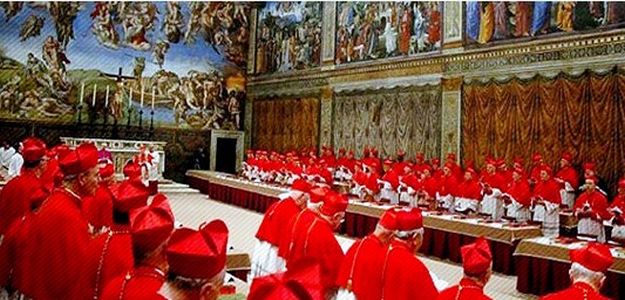
After nearly eight years of what many observers have characterized as a “Europe centered” papacy, the choice the cardinals enabled far-reaching consequences for Christianity’s most dynamic landscape – the Global South. It seems the New Pope Francis has a handful – not only in the pagan West, with a self centered decayed curie – but also in the South.
Case Study South America
Pentecostal churches are becoming stronger in Latin America. Their followers are steadily growing and its ability to mobilize them far exceeds the Catholic Church in some countries. Often, they occupy spaces, where state structures have failed. But they have also great influence on education and urban elite.
The priest throws a challenging look at the camera. Then he proclaimed his triumph: “today our TV channel in Mexico City has received collection. Give him a strong round of applause; it was a heroic deed of Jesus Christ! “. “Some people believe a TV show would have nothing to do with anointing, but Show as well as anointing!” Otherwise mostly dressed in a fine suit, on this day the charismatic pastor of Guatemalan Neo-Pentecostal Casa de Dios (“House of God”) wears a military uniform. He shows his finger at the camera and calls: “now you, who you sit at home, which only stands up to criticize the station listen to: this is the channel, which is now taken in honor of the Lord in the greatest city in the world.” The first broadcast in Mexico City is at the same time the opening of the Youth Congress “Hechos 29” in the Mexican Neo-Pentecostal Church Casa sobre la roca (“the House on the rock”). The representatives of the Neo-Pentecostal Church from Guatemala is here to attract new adherents and to spread his community’s influence beyond Guatemala’s borders- by stepping up to mass media.
In Latin America, are the largest religious group after the Roman Catholics already evangelicals and thus increasingly compete with the historically influential Catholic Church. Although still some over 80 percent of the Latin American population belong to the Catholic Church their number decreases steadily for 20 years. An estimated 15 to 20 percent of the Latin American population is Evangelical. Especially where poverty and exclusion are felt, Evangelical churches have large crowds. So Baptists, Methodists, Presbyterians, or seventh-day Adventists have become widespread. The overwhelming majority of Evangelicals in Latin America are members of Pentecostal churches – about 70 percent.
Media savvy
A new branch contributed to their rapid spread: the so-called Neo-Pentecostal, which later spread to Latin America, particularly from the 1970s onwards. These differ from the classical movement mainly through its strong media presence and the enterprises mentioned churches. Also female preachers dominate today the field of media savvy religion and are based on a diverse culture. Their repertoire includes concerts, international camps, conferences, plays, Telenovelas and healing spectacle that resemble rock concerts. Thus, Neo-Pentecostal is a pioneer a business-like, commercialized and transnationalized religion.
It is particularly noteworthy that the Neo-Pentecostal Churches in Latin America have developed their own regional “style” and thus now become now “Exporters of medicinal goods”. I think generally that is a concept looked by us European Catholics too. I am not advocating Healing spectacle like “Noches de Gloria” (glory nights)which are an export hit in all Latin America or Bill Graham. However to listen to Latin America’s or Africa’s or Asian’s preacher and understanding spirituality is probably what both popes have in mind. In the US those are often guests at thematic conferences in North America. That a country where the American evangelism by evangelicals played a very strong role – proselytize in the United States, testifies especially for Pentecostal churches – a reversal or at least change the traditional North-South order in the spread of Christianity of late modernity.
Prosperity theology
In addition to the targeted use of modern mass media, the Neo-Pentecostals are characterized above all by their “prosperity theology”. Their view of the world is less hereafter, but the here and now. This is a common to protestant and modernization activist and in my opinion a dead end. However, one has to acknowledge how Pentecostal pastors show the faithful strategies in dealing with their difficulties and desires in everyday life. Not only the material level, but also areas such as health, social relations or the peace of mind are part of the preached self help. As a Jungian I can related to this. However, it is not entirely helpful if Neo-Pentecostal address social problems only on individual success and God loyalty. While some Pentecostal churches maintain social programs as part of the good tone, they seem not interested in structural conditions of poverty and inequality nor would they live like pope Francis did in a Favellas. For this reason, I agree with sociologists, who see close parallels between the neo-liberal economic paradigm and Neo-Pentecostals. The rise of capitalism in the 19th century was to a good deal connected with protestant “work ethic” or money orientation In some Pentecostal churches, the trail to God’s blessings leads directly on the budgets of municipalities and their pastors. The faithful blessing is a “cause to donate”, where the wealth of the pastors should serve as a role model to the members of the community. The followers are taught that the more they are willing to sacrifice, the more God will show ready, to meet the needs of the faithful. On may arguably criticize this as a form of “exploitation of their believers”.
A large business Empire derives com from those Churches, for example of Latin America’s largest neo-Pentecostal Church: the Igreja universal do Reino de Deus (“UniversalChurch of the Kingdom of God”, IURD) from Brazil which is present in 170 countries. Highly controversial even within the Pentecostal churches, the IURD recorded impressive achievements not only in Latin America but also in Asia and Africa. The sale of religious talismans and financial offerings earn the IURD millions of dollars, as it called their mostly poor clients to dispose of a large part of their income to the Church. How influential the religious global player are, highlights the fact that the IURD has globally now 16 TV stations, 36 radio stations, two newspapers, two printers and a variety of other kinds of businesses.
Spiritual warfare
Popular is “spiritual warfare”, where demons will be forced out with neo-Pentecostal believers worldwide. Unemployment, family disputes, infidelity, illness or addiction are listed at the spiritual problems, caused by obsession or curses of demons. The persons concerned should be freed from the demons exorcism, laying on hands, and other techniques of blessing. The following scenario is happening similar every day in one of the numerous neo-Pentecostal churches of Latin America:
In the Church of Dios Amor (“God is love”) in Buenos Aires on a Thursday morning a suffering from insomnia woman of healing at the pulpit asked. With his hand on her forehead, the pastor prays aloud, prompting the woman to tremble and to yell begins. Her face warping to a grimace, her voice is dark. “Demon, in other words who you are?” screams the pastor and roars, as no answer of the woman: “responses, demon!” The supposedly possessed screams also, trembling all over his body and eventually falls to the ground. The pastor tells “Disappear from this body, Daemon!”, the woman winces and cries again. The following is an antiphonal between preacher and Congregation: “Fire of God!”, “Burn demon!” After about fifteen minutes, the battle is over and the pastor announced their healing.
Quieter it is, however, in a small and classical Pentecostal Church just in Mexico City, where daily a modest number of creditors come together. The modest Temple of the small Congregation is surrounded by the worldly hustle and bustle of the street market. While out there loud music accompanied the colorful range of street stalls, there is indoor devotional silence. This is a place to escape the reality of his life, which lurks out there not only loud, but often mercilessly. On their clothing to recognize the members of the community who enter the small temple: women with covered heads in long skirts, men who wear suits despite the heat – all in discrete colors, nothing reminds of the current Flash mode. In this temple, they praise the Lord, sing and pray in the catharsis, to requested the gifts of the spirit: healing, prophecy and speaking in tongues. The great spectacle from as in Dios but is Cupid.
From the above examples, it is evident that both communities belong to the Pentecostal faith, but are very different. While the classical Pentecostals rather represented traditional and conservative values, the Neo-Pentecostal tend to be spectacular mass rituals. Is should clear be understood, how difficult it is to define the Pentecostal movement as a whole. There is a diverse range of different styles. This increasingly blurs the boundaries between Neo-Pentecostal and traditional Pentecostal. Today, a large part of the Latin American Pentecostal churches is mixed. In addition, that Pentecostal is very dynamic, constantly changing and constantly adapts to new conditions. It characterizes the religiosity of other Evangelical churches, historic Protestant, as well as sectors of Catholicism so “Pentecostalization” of Christianity is indeed happening (although what does it mean really is in the eye of the beholder). The various versions of the Pentecostal offer a religious strategy in dealing with extreme marginalization and social shortcomings in large sections of the population. People seem to find a plausible alternatives, solidarity and community far from the consumption and capitalist meritocracy: spiritual worldview may seem at first glance as an escape from reality, but solidarity and networks generates also very concrete and substantive results.
In many Latin American countries the evangelicals are an increasingly important factor and influence in social processes and issues. Today, the very different Pentecostal churches assess and position increasingly their common interests publicly. In many Latin American countries, associations representing a Evangelical lobby, which brings together churches with remarkably social and faith substantive differences. On issues such as abortion or gay marriage, they even form a common front with the Catholic Church. This was recently highlighted in Mexico and Argentina: when the Governments acknowledged the right to adoption to homosexual couples, the evangelicals together with the Catholic Church, however, made the front. Pope Francis was an outspoken critic in Argentina and clashed with the Kirchner government with ties to lots of former “turncoat terrorists” and very hostile to any religion. However, the Evangelicals succeeded in many Latin American countries to take influence on the economic and political elites notable in the Brazil Parliament. In Guatemala, a country with long Evangelical tradition and about 30 percent of Evangelical population, the neo-Pentecostal movement is so strong rather questionable elites like nowhere else. Also in Chile, the influence of the Pentecostal on the policy is great. The national church Iglesia Metodista Pentecostal de Chile (“Methodist Pentecostal Church of Chile”, IMP) had always been close ties to the leaders. Although a vast majority of its adherents supported the Government of Salvador Allende, the leadership of the IMP predictably switched sides after the Pinochet coup.
The example of Chile makes it clear that it is difficult to measure whether the Pentecostal churches really influence the political elites, as is often claimed. Furthermore, the basis of the churches must not necessarily share the political tendencies of the church leadership and can resist attempts of influence or stay silent at the ballot box. One principle applies throughout Latin America: not just Evangelical churches have more and more supply, but also the group of those without religion is growing. And many opponents of the historic hegemony of the Roman Catholic Church are also skeptical to the rise of Evangelicals.
Revolutions are never prettier…
Religious revolutions were not, as Western intellectuals too often propose against the history, only mere spiritual, private matters. They bring with them profoundly this-worldly repercussions like genocides, wars, and what Samuel Huntington has famously termed ‘the clash of civilizations’. They can also renew and uproot societies. Arguable a ‘Christian revolution’ is already underway in the developing world, one that our political leaders ignore to the peril of all of us: “We are currently living through one of the transforming moments in the history of religion worldwide. ” The Christian center of gravity has shifted to Africa, Asia, and Latin America “By 2050, only about 1/5 of the world’s 3 billion Christians will be non-Hispanic Whites.” “The era of Western Christianity has passed within our lifetimes….” “The emerging Christian world will be anchored in the Southern continents.” Growing from a handful to several hundred million, the Pentecostal movement is the most successful social movement of the past century that places special emphasis on a direct personal experience of God through the baptism in the Holy Spirit.
There are parallels between the developments in the ‘South’ and those that characterized a similar time of awakening, urbanization, and religious effervescence in the industrializing North. Jenkins states, that “Up until the end of the eighteenth century, large-scale missionary efforts were strictly the preserve of the Catholic powers….” To connect the spread of Christianity only with imperial expansion is not entirely correct, since fate of the religion would be affected by the breakup of the old European empires. The countries with the largest number of Catholics are Brazil (137 million), Mexico (89 million), Philippines (61 million), the United States (58 million), and Italy (55 million). Catholic growth has been particularly dramatic in Africa, usually in former French and Belgian territories. In 1995, there were 16 million Catholics in all of Africa. Today, there are 120 million. Jenkins states, “For the foreseeable future, the characteristic religious forms of Southern Christianity, enthusiastic and spontaneous, fundamentalist and supernatural-oriented, look massively different from those of the older centers in Europe and North America.” and “In the coming decades, the religious life characteristic of those regions may well become the Christian norm.”
… Than evolutions
The history of Christian expansion shows us that it developed globally from the beginning. Particularly the modernization requests to and attempts the whole idea of ‘Western Christianity’ distorts the true scope of the religion’s development. In the Middle East, African and Asian regions subjugated by Islam, Christian loyalties survived for centuries in some cases until today: , “Arab Christians remained politically powerful until the rise of a new Muslim fundamentalism in the 1980s.” Westerners apologize for the Crusades but do not suggest that Muslims apologize for the aggressive acts that gave them power over these various lands in the first place. Westerners have forgotten the once-great Christian communities of the Eastern world. Undeniably, the Christian missions of this historical phase were intimately connected with political and imperial adventures, and Protestant and Catholic fortunes followed the success of the different empires. All the hypocrisy and the flagrantly self-serving rhetoric of the imperial age, the dedication of the missionaries was beyond question.” Jenkins states, “amazing as it may appear to a blasé West, Christianity exercises an overwhelming global appeal, which shows not the slightest sign of waning.” and “Many Westerners…see missionary Christianity as a kind of cultural leprosy.” But why did Africans and Asians adopt Christianity? “One all-too-obvious explanation is that individuals came to believe the message offered, and found this the best means of explaining the world around them.” Their convictions are illustrated by the many stories of zeal in the face of persecution.
New Christianity
Population growth and contraction look poised to reduce European populations radically while a boom in many southern states continues apace. When turning to religious indicators, all of them suggest that the surge in southern Christianity has barely begun. The picture becomes even more interestingly when population mobility is factored into the equation. Immigration to Europe may well establish a renewed Christian presence on that continent. America looks set to become even more of a Christian nation than it is today, again due to immigration. Southern nations are growing rapidly but Northern states are relatively static. – “The stagnation of Northern and particularly European populations will be one of the most significant facts of the twenty-first century.” “By 2050, there will be an ever-growing contrast between the age profiles of the global South and North, between the world of the young and very mobile and the world of the old and static.” “In another epochal change, these urban centers will be overwhelmingly Southern.” “A largely secularized First World confronts a rapidly growing ‘South’ in which religion thrives and expands.” But many in the South are moving north. “ “Looking at the spread of mosques across urban Europe, it would be easy to believe that Islam might indeed be Europe’s future religion. Yet a great many other European immigrants are Christian, and they raise the prospect of a revitalized Christian presence on European soil.” The number of Muslims in the U.S., is probably about 4 million or so, much less than the up to 8 million claimed. Many Arab-Americans are in fact Christian. “Any likely Muslim growth through immigration will be far exceeded by the continuing Christian influx from Africa, Asia, and above all, Latin America.” – “Christian predominance is likely to be still more marked in decades to come.”
Re-Designing secularity coexistence
There are varying models of “church and state§ that can be expected as important southern countries become demographically. The predictions are not all reassuring to heirs of a strong tradition of separation between the two. Americans keep church and state separate, but such a distinction is incomprehensible in much of the world. ‘Not only is Christianity flourishing in the Third World, but so are distinctively Christian politics. “Northerners are going to find themselves ever more out of touch with the religious dimensions that shape the new world, and literally unable to communicate with the new people of faith.” – “In one possible scenario of the world to come, an incredibly wealthy although numerically shrinking Northern population espouses the values of humanism, ornamented with the vestiges of liberal Christianity and Judaism.” “Meanwhile, this future North confronts the poorer and vastly more numerous global masses who waves the flags…of ascendant Christianity and Islam. …the have-nots will be inspired by the scriptures and the language of apocalyptic, rather than by the texts of Marx and Mao. In this world, we, the West, will be the final Babylon.” – “The North would be secular, rational, and tolerant, the South primitive and fundamentalist. The North would define itself against Christianity.”
Re-Designing interfaith coexistence
A world in which powerful adversaries take religion far more seriously than does today’s sophisticated North should keep strategic analysts alert. Simple parents like myself imagining the world in which my son will come of age already plans immigration for him out of Europe. Religious loyalties are at the root of many of the world’s ongoing civil wars and political violence, and in most cases, the critical division is the age-old battle between Christianity and Islam. The parochialism of Western (and World) public opinion is striking. When thousands are massacred on the grounds of their faith in Nigeria, Indonesia, or the Sudan, the story rarely registers. Come lives are worth more than others. This is bad news, as no less than 10 of the world’s 25 largest states in 2050 could be profoundly divided between Islam and Christianity, and judging by present trends, any or all of them could be the scene of serious interfaith conflict. Jenkins reminds, that “A number of European nations face huge disparities between very fertile immigrant groups and relatively static old-stock populations, and religious instability could easily result.” – “The fundamental question here is whether Islam and Christianity can coexist.” “Bitter lesson may be in progress in…Egypt, the home of the ancient community of Coptic Christians.” Some of the likely winners in the religious economy of the new century are precisely those groups who have a strongly apocalyptic mindset, in which the triumph of righteousness is associated with the vision of a world devastated by fire and plague. Jenkins warns, “the situation could become so sensitive that a global catastrophe could be provoked by the slightest misjudgment –just like 1914.” There is a pressing need to re-designing interfaith coexistence, which was recognized started by the Pope emeritus already.
Re-Thinking spirituality
The Pentecostal movement is very diverse but in addition to the key beliefs common to all Christians, there are common elements:
The experience of adult baptism is the central rite and key concept.
Holy Spirit comes personally into our hearts and lives, bringing to us the “charismata” – gift of grace.
Presence of the Holy Spirit will become manifest and evident by speaking in tongues, but other supernatural phenomena are also possible.
Individuals need to make a personal commitment to faith and to obtain presence of the Holy Spirit. If not. it indicates failure or worthlessness.
The style of worship is emotional, marked by clapping, chorusing, contemporary music and dynamic preaching.
Many Pentecostals believe that God rewards materially, as well as spiritually.
Scripture is interpreted literally.
The key concept in Pentecostal belief is: ‘The Baptism in, or with, the Holy Spirit.’ We find this in all four Gospel accounts; Matthew 3:11, Mark 1:18, Luke 3:16, and John 1:33. In these passages we learn that John the Baptist baptized with water unto repentance but prophesied that ‘One mightier than I,’ Christ, was coming after him and would baptize you with the Holy Ghost and with fire. In Acts 1:5 Jesus speaks of the fulfillment of this prophecy: ‘For John truly baptized with water; but ye shall be baptized with the Holy Ghost not many days hence.’
When in addition to being baptized into Christ by the Spirit we are baptized by Christ with the Spirit, the Holy Spirit comes personally into our hearts and lives, bringing to us the charismata (literally, ‘grace things’), the gifts and power that we need for personal growth and service to God in the Church and in the world. This baptism in or with the Spirit is evidenced initially by speaking in other tongues. When a believer is filled with or baptized in the Holy Spirit, the Spirit so overpowers him that he is in a state of ecstasy with no control over his faculties. The Spirit then enables him to speak in other languages the praises of Jesus. This is the sign that one has been filled or baptized with the Spirit. This experience of Spirit baptism and its initial evidence must be earnestly sought by believers. It doesn’t just happen; conditions must be met. Consciously, fervently, actively the seeker has to do these things. Often, too, he needs the assistance of others already filled with the Spirit. These must pray for him, lay hands on him before the Spirit will come. Conditions vary, but generally they are: worship, joyous faith, earnest expectation, praise and thanksgiving, obedience, separation from sin, intense desire, baptism, asking of God,.
Jenkins notes how churches in the Two-Thirds world `inculturate’ the gospel in their cultural contexts. Though the results are sometimes alarming to Western Christians, Jenkins’ view is rather more sanguine, claiming that most of these adaptations are well within the parameters of recognizably Christian faith. As demographic changes favor the Southern churches, their patterns of life and worship-often visceral supernatural in their orientation-are bound to become the dominant ones in a new Christendom. “The rising churches usually preach a strong and even pristine Christian message.” “Another new ‘missionary century’ may dawn, although next time, the missionaries would be traveling northward.” Events since the late 90s have given the author some hard facts to work with. The southern churches are almost all theologically and culturally more conservative than their northern partners. But are they so distinct so as to be incapable of re-evangelizing secularized Europe and the USA? A fundamental issue: How will the global North change in response to the rise of a new global Christianity? Will its religious character remain Christian, perhaps with a powerful Southern cast? Or will it entirely lose its Christian character?”While traditional Christianity is weakening in large sections of the North, it is indeed being reinforced and reinvigorated by Southern churches, by means of immigration and evangelization.
Conclusion
Theological answer
The Apostle of Jesus Christ by the will of God, do not forbid the proper use of tongues, neither do will he command it. Obviously even in the New Testament Church where tongues had a place they were not emphasized as by Pentecostals today. Now, some conclusions. First in the Acts passages (chapters 1,2,8,10,11,19), in none of the four occurrences, assuming the Samaritans spoke in tongues, were the believers fulfilling any conditions, praying for the baptism with the Spirit to be evidenced by speaking in tongues. In each of the four instances all the believers present received the sign of tongues along with other signs. It was not just some who received the baptism in the Spirit as Pentecostals teach. Second point is this. Tongues and the other miraculous gifts, healings, etc., suddenly are no more in the church. They were of short duration. Why? Because they are designed by God to serve as a sign, a sign not only to authenticate the gospel, but a sign to serve also as a means of making the content of prophecy and knowledge known. But when they have served their confirming purpose as a sign they cease without the least affecting the church’s possession of the mysteries of the faith.
Political Answer
From the view 2050 A.D., the persecution and poverty of which so much are made in the New Testament literatures very well in the context of the majority of today’s Christians. The cut back of Western investment in missions, which has been cut back dramatically at just the point it is most desperately needed, at the peak of the current surge in Christian numbers might be revised by the new pope. For the average Western audience, the New Testament passages about standing firm in the face of persecution have today little immediate relevance – they are mostly pagans. Millions of Christians around the world, however, do in fact live in constant danger of persecution or forced conversion, from either governments or local militia
Sociological answer
There is in our day a terrible despising of the pulpit. It is because the Church generally fails to expound the Word and comes with excellence of speech and worldly wisdom rather than preaching Christ crucified that a movement like Pentecostalism can make such an impact. The sheep of God are hungry and thirsty and are not being fed with the Bread and Water. These weak and sickly sheep are swept along by the bizarre, spectacular ‘successes’ and enthusiasm of Pentecostalism. What one could say then to a Pentecostal neighbor? Having shown him from the Scriptures the truth he will invariably say to you, ‘But how can you dismiss this? I’ve had the experience. It’s real.’ The answer you must give is, ‘The Bible teaches that tongues have ceased. I cannot and you may not base your faith on your experience. That is pure subjectivism.
Historical answer
But here we go. Looking at Christianity as a global phenomenon, not merely a Western one, makes it impossible to read the New Testament as before. “The Book of Revelation” shows that Christianity is flourishing wonderfully among the poor and persecuted, while it declines among those who consider themselves rich and secure.” The Western modernization response to empty churches is wrong and globally irrelevant. Pope Francis may prove a point again: “Christianity is never as weak as it appears, nor as strong as it appears. And whether we look backward or forward in history, we can see tat time and again, Christianity demonstrates a breathtaking ability to transform weakness into strength.”
Sources
A Theology of the Holy Spirit [Paperback] Frederick D. Bruner (Author), Frederick Dale Bruner
The Next Christendom: The Coming of Global Christianity (Future of Christianity Trilogy) [Paperback] Philip Jenkins
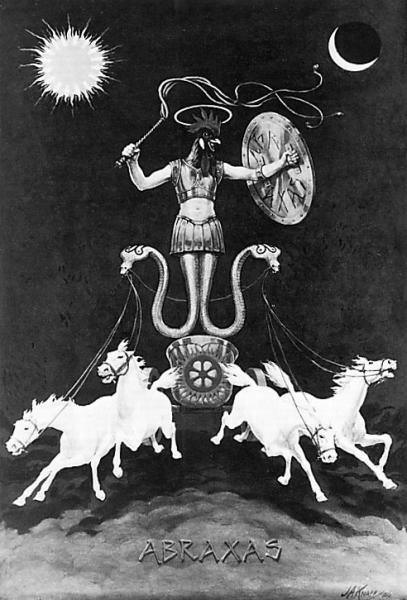
This article will try to summarise the narrative of Jesus’ Passion (the period between Easter and Ascension) based on Abraxas some Gnostic writings . We will particularly view the 1500 year old scripts of the Nag Hammadi library discovered in Egypt in 1945 and show strange repeating tracks in a supposedly pathless world of truth. On the other and is the recent development in Africa and Latin America, where population growth and contraction look poised to reduce European domination radically while a boom in many southern states continues apace. When turning to religious indicators, all of them suggest that the surge in southern Christianity has barely begun – and raises another problem, largely ignored by a self centered Chatholic Curie . The surge in Christanity in Africa and Lation America is due to Pentecostalism, Protestant renewal movement that places special emphasis on a direct personal experience of God through the baptism with the Holy Spirit. Most Christians will follow the lead of the new elected Pope in Rome and celebrate Easter in four weeks. Pentecost reminds to the descent of the Holy Spirit upon the followers of Jesus Christ, as described in the second chapter of the Book of Acts.Will be 2013 the Easter of Abraxas or Pentecostal?
cross-shine
The time between Easter and Ascension of Jesus has an important place in Christian Gnosticism. And, what is perhaps more surprising is that Gnosis and Easter are not mutually exclusive, although most secrets of the faith are virtually nonexistent in Gnosticism.
Easter marks the beginning of the Christian Church calendar, namely in recollection of the resurrection by Jesus after his crucifixion. Easter weekend is the culmination of the Christian faith, every other aspect of the religion being merely a footnote. But the Easter celebration is actually timeless, since the dying and rising is a classic motif found in many cultures representing the renewal of various aspects of Creation and nature. The Christian story, however, is very powerful: “O Death where is thy sting? O Hell where is thy victory? Christ is risen, and thou are overthrown. Christ is risen, and the demons are fallen. Christ is risen, and the angels rejoice. Christ is risen, and life reigns. Christ is risen, and not one dead remains in the grave. For Christ, being risen from the dead, is become the first fruits of those who have fallen asleep. To Him be glory and dominion unto ages of ages. Amen.” Lets see how the Gnostic versions compare to this.
Gnostic roots
Gnostic Roots
The Gnostics derived their leading doctrines and ideas from Plato and Philo of Alexandria, the Zend-avesta (Zoroastrianism), the Kabalah, and the Sacred books of India and Egypt; and thus introduced into the core of Christianity the cosmological and theosophical speculations. Those had formed the larger portion of the ancient religions of the Orient, joined to those of the Egyptian, Greek, and Jewish doctrines and were adopted by the Neo-Platonists. Mythologists have revealed strong Gnostic similarities with the Egyptian and Persian gods and Easter derive from very ancient times, including the holiday known as Sham el Nessim, which may have been celebrated as early as 4,500 years ago. It falls immediately on the first Monday following the Coptic Easter and it was related to agriculture in ancient Egypt which contained fertility rites that were later attached to Christianity and the celebration of Easter. Christians celebrate Easter on Sunday after the first spring full moon, which ties Easter to the vernal equinox (spring equal night). Linguistically the name “Easter” seems to be older than the Christianity itself. It can be derived from germanic “Ostara”, in the Anglo-Saxon it is Eastre or Eostre, the goddess of fertility and also a derivation of the name Ishtar, the Babylonian and Assyrian goddess of the love and fertility.
Gnostics and Plato
In Plato’s work we recognize dualism already. Platon makes a distinction between the world of the ideas and the discernible empiric world in the famous cage metaphor. However, the shadow is an effigy of the world of ideas, and thus the difference to the Gnosis becomes clear. For Plato both worlds hang together because of its dynamism (“prototype effigy theory”). Therefore, with Plato there is no radical separation of both worlds of each other and no refusal of the discernible world. Plotinus works from the 2nd century A.D. makes this particularly clear: “This world is so nice that there can be no one else who would be nicer.” A Gnostic could never say this.
The dualism of the Gnostics
The dualism of the Gnostics is more radical with two conflicting principles which are radically opposed. Good and fair stand against bad and evil, namely from the outset. Therefore for the Gnostic exits also a good and a bad world. Both worlds are separated radically of each other. A harmonization of the prototype and from the effigy does not succeed in the Gnosis. On the contrary: both worlds are intervened in a constant fight. Like in Buddhism to Gnosis all life is filled with suffering.
The dualism of the Christian Gnostics
Devil crushed
Before Christianity was stamped out Gnosis this radicalism has not taken over completely by Christian Gnosis. Christian Gnosis lets the world at the beginning be still a unity, a single entity. This state shows a sort of pre-beginning. It decreases to a divine principle which is not, however, identically with our God. This pre-beginning has an ancestor not at all known to the imperfect creator. Nevertheless, the unity of the world in its old state is actually meaningless. Since directly a part of this world from this monistic origin fell out. Cause for it was a fight in these first ones, the divine world at whose end a part from the divine Pleroma left this world in free choice. Secondly, the sensuous, earthly world, a world fallen from the outset originates from it from the first world. This is an image which can be also found in the New Testament, the second major part of the Christian biblical canon theology with several strong statements. The empire clearly hit back.
Christian Gnostic
Gnosis is defined by the Catholic Encyclopedia as follows: “Whereas Judaism and Christianity, and almost all pagan systems, hold that the soul attains its proper end by obedience of mind and will to the Supreme Power, i.e. by faith and works, it is markedly peculiar to Gnosticism that it places the salvation of the soul merely in the possession of a quasi-intuitive knowledge of the mysteries of the universe and of magic formulae indicative of that knowledge.”
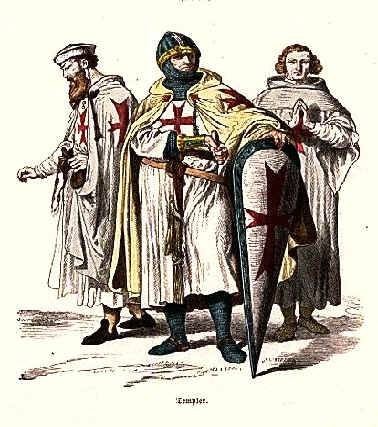
Many Gods of panentheism, either polytheism or monotheism had been conceived in various degrees of abstraction. The character Gnosis being mystic rather than religion, however, is inherently parasitic and syncretistic. Apparently like a virus, its construct of ideas cannot exist without a host. Gnosticism holds on to existing ideas and enters a connection with them. There is – as mentioned in other articles – for example, a Jewish (Cabals) and Islam Gnosis (Sufi). The Gnosis need a substrate around for its speculations. Accordingly it also came to a connection of gnostic body of thought with the Christianity two times in history ( the Templars being a secondary infection). As one of many variants, the Gnosis a Christian-gnostic announcement developed. The Roman Church acknowledged after struggling more to the divine or the human side with clear simplicity and crisp definition the concept of Trinity in Pope Leos creed. In opposition to Gnostic idealism, the Church avowed its faith in the real historical facts, that the Son of God truly became man, was born of the Virgin Mary, was truly crucified and died, truly rose again. Thus the Church rescued Christianity (See the review of Jesus Wars).
Gnostic concept of Christ
It has no interest in Jesus as a saviour and bearer of human redemption by taking away our sins by ding on the cross. In the Christian Gnosis the divine revelation is sufficient and equated quite simply with the of person Jesus Christ. For Gnostics Jesus Christ is nothing more than the personification of this divine revelation and the historic (and human) Jesus plays basically no role. He can’t, actually, because otherwise the saviour would be tied too strongly to this imperfect world in the the negative gnostic worldview. From there it is not surprising that for the Gnosis the earthly life of Jesus is rather dull. Above all, only the period between Easter and Ascension is important here and highlighted in primarily by gnostic texts.
In gnostic view Jesus has brought in a hermaphroditic shape revelation exactly during this tim to a select circle. The historic Jesus is almost counter productive for the role of a gnostic redeemer, and therefore is suppressed in most gnostic strains until almost nothing more is left. It is simply not comprehensible for the Gnosis that there should be a connection of God with this discernible world. With that the incarnation of Jesus Christ as Good into a Human could only be a an illusion. Which of course, in Christian terminology is called Docetism, according to which the phenomenon of Christ, his historical and bodily existence, and thus above all the human form of Jesus and his death, was altogether merely an illusion without any true. reality. The name comes from the Greek word [“dokein”], “seem”, and although Christ appears in the flesh, however, he is no “incarnation in flesh”. He seems only in such a way, the body of Jesus is completely thought as a false body or somebody else. Of course the atonement of the death of Christ in the Gnosticism caused by refusal of the worldly flesh.
Gnostic concept of redemption
redemption_
The redemption takes place in Gnosis completely by the revelation. Only the Greek word [“logos”], “word” is authoritative. The central concern of the Gnosis the knowledge and redemption given to the person on the way, who is trapped within a body thrown in an imperfect world. Besides, Gnosticism not about an intellectual and holistic knowledge processes. The object of the knowledge is first of all the person. The person recognises himself (better his divine spark) in the Gnosis, his origin and meaning. Accordingly the basic questions of the Gnosis can be outlined with Clemens of Alexandria:
“Who were we? What have we become? Where were we? Where have we thrown into? Where do we hurry? What are we released from? What is birth, and what is rebirth?”
It is important that the answers to these questions can’t be answered simply by a person. Gnosis is not rational and logical. The individual cannot find the answers to these questions by personal enlightenment either. One wins knowledge only if it is given to one, by being initiated. Therefore, Gnosis is about recognising revealed message. It is significant that the knowledge is intended for all people, but not all will receive it. Therefore Gnosticism defines itself as an “elitarian” knowledge which is given only to few chosen.
The gnostic world
Therefore, for the purposes of the Gnosis the sensuous world is something what was not planned, actually, not at all, rather something what might not have been. The second world is actually, something what should not be. The completely anti-cosmic position of the Gnosis arises from this. While the first world from divine (Pleroma) is surrounded so by the divine fullness, the second world is a world absolutely divorced from the divine space. This world is original nothing else than an emptiness. Now, however,from the first world sparks of the Pleroma got in us, parts from the divine world fell in the sensuous world.
Gnostic concept of Men
Sivine Spark
Divine sparks represent – one can probably say with restrictions – the human souls. According to Gnosis we are fallen souls caught within the body, within the flesh. The person carries a spark from the world of the divine Pleroma which is caught in the visible world, living dazed and ignorant, knowing nothing of it. Humans are like “a light ray in the darkness” or “woman in the brothel” or like “gold in the dirt”. The divine revelation releases the soul with it call from the world, coming from the space of the divine Pleroma and releasing Gnosis, knowledge.
Since, to the best of my ability, I have explained the unknown Gnosis, it seemed expedient likewise to give an example. The difference in the translation is strikingly. This psalm of theirs has been composed to celebrate all Gnostic mysteries in a Christianized psalm, the Psalm of the Nazarene ;
Homesick, drunken, sleepy and ignorant live the humans in our sensual world.
The world’s producing law was Primal Mind, And next was First-born’s outpoured Chaos; And third, the soul received its law of toil: Encircl’d, therefore, with an acqueous form, With care overpowered it succumbs to death. Now holding sway, it eyes the light, And now it weeps on misery flung; Now it mourns, now it thrills with joy; Now it wails, now it hears its doom; Now it hears its doom, now it dies, And now it leaves us, never to return.
Werdegesetz von allem war der erste Nous, Der zweite nach dem ersten war das Chaos, ausgeschüttet. Als drittes nahm die Psyche das Gesetz der Arbeit. Drum ist sie wie der Hirsch ins Fell gehüllt. Gepackt von Todesangst hetzt sie dahin.Bald hat sie Raum, sieht Licht, Bald weint ins Elend sie geworfen, bald lacht sie auf und weint doch schon. Bald weint sie auf und wird verdammt.Bald dann verdammt, fühlt sie das Sterben. Bald wird ihr Rückkehr. Die Unselige!
The godly revelation frees the soul with a call of the other world. Coming from the realm of Plemora it leads to the secret knowledge.
It, hapless straying, treads the maze of ills. But Jesus said, Father, behold, A strife of ills across the earth Wanders from thy breath (of wrath); But bitter Chaos (man) seeks to shun, And knows not how to pass it through.
Sie lief verwirrt ins Labyrinth.Da sprach Jesus: ” Schau doch, Vater! Als Beute des Bösen schweift`s über die Erde, Und doch von Deinem Hauch gebildet, Versucht`s zu fliehen bitteres Chaos, Und weiss doch nicht, wie durchzukommen.
On this account, O Father, send me; Bearing seals, I shall descend; Through ages whole I’ll sweep, All mysteries I’ll unravel, And forms of Gods I’ll show; And secrets of the saintly path, Styled “Gnosis,” I’ll impart.
Aus diesem Grunde schick mich, Vater. Mit Siegeln will herab ich steigen,Will jeden der Äonen überwandern, Mysterien, sie all offen machen.Die Gottgestalten will ich weisen: Das Abgetretene des heiligen Weges, Gnosis rufend, will ich bereiten”.
It needs a revelation to reveal the truth. But the Jesus of the Gnostic is quite different from the Jesus one knows from Christianity. According to Vaentinus: The compassionate, faithful Jesus was patient in his sufferings until he took that book, since he knew that his death meant life for many. Just as in the case of a will which has not yet been opened, for the fortune of the deceased master of the house is hidden, so also in the case of the All which had been hidden as long as the Father of the All was invisible and unique in himself, in whom every space has its source. For this reason Jesus appeared. He took that book as his own. He was nailed to a cross. He affixed the edict of the Father to the cross.’
In other words, the death of Jesus and Gnosis are truly in many Valentinian belief systems. In a sense, The Crossis the Tree of Knowledge (Gnosis)
The passion narrative in Gnosis
Many Gnostic texts, like The Letter of Peter to Phillip and The Gospel of Mary simply see the death and resurrection drama as a small intermission in the imparting of Gnosis by Jesus, as well as a test of faith for his followers. The great mysteries are truly passed on after Jesus has returned in an angelic shape and can no longer be harassed by the Archons. Some Gnostics were simply against the idea that Jesus Christ could suffer on Earth (or that he even possessed a human form). In The Apocalypse of Peter, Jesus mocks his execution and the spectacle around it, stating that it is actually Jehovah who has been replaced on the Cross: ‘Be strong, for you are the one to whom these mysteries have been given, to know them through revelation, that he whom they crucified is the first-born, and the home of demons, and the stony vessel in which they dwell, of Elohim, of the cross, which is under the Law. But he who stands near him is the living Savior, the first in him, whom they seized and released, who stands joyfully looking at those who did him violence, while they are divided among themselves. Therefore he laughs at their lack of perception, knowing that they are born blind.’
In The Acts of John, Jesus appears to the Apostle John after the crucifixion. He explains to the ‘Beloved Disciple’ that there were two crosses at Golgotha. One was the Cross of Light that stands above the material world and is the doorway to faith, hope, wisdom and the Pleroma itself. The other was the Cross of Wood that represents the lower nature of humanity dominant within all those who witnessed the crucifixion of nothing more than a phantom.
A person is no longer part of the crowds under the Cross of Wood staring at phantoms but within the Cross of Light, filled with faith, hope, wisdom and even the Pleroma: “Understand me then as the slaying of a Word, wound of a Word, hanging of a Word, suffering of a Word, fastening of a Word, death of a Word, resurrection of a Word, and defining this Word, I mean every man!”
Christ and human had become one.
The Gnostic Sage Basilides also believed that the crucifixion was a hoax to mock Jahweh, except that Simon of Cyrene was nailed to a cross. The Second Treatise to the Great Seth has a Simon replacing Jesus, but it’s unclear which Simon. This idea of Jesus avoiding his death by a slight of divine hand was later adopted by Islam, raising additional arguments to claims od historians that Mohammed might have been in contact with Gnostic sects and that the Koran itself was an amalgam of some heresies circulating among some Christians in the Seventh Century.
Despite the varied beliefs in Gnosticism, there is a common thread on most versions of the Passion narrative: The Savior arrives in a form recognizable to humans; his form is destroyed by the demons who rule the universe and lastly he returns in an astral manifestation to impart his greatest teachings to those who both had faith and understood his message from the beginning.
And because Gnostics believe in becoming Christlike while alive, the death and resurrection of The Savior symbolizes part of the process of Gnosis itself. You might remember my article and Death of the Ego as prerequisite to find God orC.G. Jung’s Self in Quaternio Series of Aion – Jesus or Abraxas? An individual who seeks ultimate spiritual freedom must get over his Ego, which is attached to the material world to reach the Self. This is found very differently in C.G. Jung’s thoughts, here the Ego must establish a channel to the Self. It has to be noted that C.G. Jung sees this Self also as Christlike.
Gnostic Deity
Barbelo
Barbelo is the primary goddess of Gnostic Magic. She equates to the Egyptian Nut, and also to Babalon, the Enoch’s goddess. The worship of Barbelo was so great, that one of the names given to the Gnostics was the Barbeloites. She is the first reflex of divinity, called the Invisible Spirit. As the Invisible Spirit is pure subjectivity, so Barbelo is pure objectivity, the two forming the first and most fundamental of all dualities.
Seth
The Egyptian Set and the Gnostic Seth are both equivalent to the Hindu Siva (sometimes spelled Shiva), the god of destruction, but also the god of mystics, yogis, and magicians. Christian theologians have equated Seth with Satan, but mythical he represents the spiritual impulse that opposes all material manifestation. The four letters of his name represent a synthesis (S) of science (E) and the reasoning processes (T) within the mind (H), identical with gnosis; an direct awareness and understanding of knowledge.
Norea
Norea , the Gnostic equivalent of the Egyptian goddess, Nephthys, is the name of Seth’s sister, the fourth child of Adam and Eve. Norea is always shown in Gnostic literature as highly intelligent and given to spiritual insight. In the Hypostasis of the Archons she is “an assistance for many generations of humankind.” However, Jewish tradition has equated Norea with wickedness, and, like Set/Seth, having a demonic nature.
Sophia
The Greek word Sophia means wisdom. Sophia was a goddess assigned to the thirteenth Aeon under the great Angel Eleleth . The Gnostics taught that it was Sophia who, on her own and without a masculine consort, gave birth to the material universe by creating the demiurge, Ialdabaoth. She then repented of her deed, but meanwhile the material world had come into existence. She represents spiritual capability and desire for expression that created . It is also interesting Sophia takes the form of The Tree of Knowledge in The Secret Book of John).
Ialdabaoth
This is the demiurge or archdemon who rules the worlds of manifestation below the Abyss. He was created by Sophia. The Gnostics equated Ialdaboth with the Hebrew Jehovah. Ialdabaoth represents physicality, the logic and reason of the human mind.
Sabaoth
The son of Ialdabaoth who saw the wickedness of his father and repented. Because his repentance was sincere, the gods granted him divine assistance.
Abraxas
Abraxas, is a Gnostic solar deity associated Yeshu (Jesus) and by the ancients with Yahweh, Mithras and the Celtic Belenus. Amulets and seals bearing with a figure of a cock head and the legs of serpents were used in the thirteenth century in the seals of the Knights Templar. A god of time and ruler of the days of the year, Abraxas bestows gifts on those who call to him; especially protection from all manner of harm. By medieval times, Abraxas was relegated to the ranks of demons. The image most associated with Abraxas is that of a composite creature with the head of a rooster, the body of a man, and legs made of serpents or scorpions. He carries a whip and shield, called wisdom and power, respectively. The word Abraxas was first proposed by the Alexandrian Gnostic scholar Basilides, and is created using the first letters of the names of the seven visible planets. The letters in Abraxas add to 365, the number of days in a solar year, and the number of Aeons, or divine emanations, in Gnostic cosmology. Each of the seven letters represents one of the seven planetary powers. Church father Tertullian, speaking of Basilides’ and Abraxas:
“Afterwards broke out the heretic Basilides. He affirms that there is a supreme Deity, by name Abraxas, by whom was created Mind, which in Greek he calls Nous; that thence sprang the Word; that of Him issued Providence, Virtue, and Wisdom; that out of these subsequently were made Principalities, powers, and Angels; that there ensued infinite issues and processions of angels; that by these angels 365 heavens were formed, and the world, in honour of Abraxas, whose name, if computed, has in itself this number. Now, among the last of the angels, those who made this world, he places the God of the Jews latest, that is, the God of the Law and of the Prophets, whom he denies to be a God, but affirms to be an angel.”
Basilides wrote, “God and devil are distinguished by the qualities fullness and emptiness, generation and destruction. Effectiveness common to both. Effectiveness joined them. Effectiveness, therefore, standeth above both; ia a god above god, since in its effect it united fullness and emptiness. This is a god whom ye knew not, for mankind forgot it. We name it by its name ABRAXAS.” And later he writes, “In this world is man Abraxas, the creator and the destroyer of his own world.”
The Swiss psychologist C.G. Jung wrote a Gnostic treatise in 1916 called Seven Sermons to the Dead, which called Abraxas a God higher than the Christian God and Devil, that combines all opposites into one Being. under the pen name of the ancient Gnostic sage called Basilides of Alexandria, who was a strong proponent of Abraxas. The Nobel prize winning novelist Herman Hesse uses Abraxas in his novel Demian, which explores the themes of good and evil. And the popular jazz guitarist Carlos Santana called an album Abraxas in the 70s.
Religion or a psychology?
NagHammadi Hidden in 345 AD. By whom? Why? For what future purpose? No one knows,
C. G. Jung had shown a pronounced and informed interest in Gnosticism and Alchemy. This is evident in the Quaternio Series of the Self in his book. “Aion“. Was Jung really a Gnostic? I seems to me, that “Aion” and another late work The “Answer to Job” give some evidence to the assertion: No, he wasn’t.
Throughout the twentieth Century the new scientific discipline of depth psychology has gained much prominence. The depth psychologists who have shown a pronounced and informed interest in Gnosticism was to C. G. Jung. Jung was instrumental in calling attention to the Nag Hammadi library of Gnostic writings in the 1950’s because he perceived the outstanding psychological relevance of Gnostic insights. His Red Book and the mentioned Seven Sermons to the Dead are famous psychoanalytical Gnostic texts.
In pantheism the universe is God whereas in deism the supreme deity is cold and indifferent (and unaware) to its creation like Abraxas. This main symbol (or word) for the Gnostic God, Abraxas, is known from the Gnostic writings of Simon Magus, father of the Gnostics and Basilides of Egypt. C.G. Jung described a three stages of human perception of God. The first stage was that God appears undifferentiated. The second stage is the moral dualism perception of personal benevolent God(s) and evil Devil(s) in which they are separated. The final stage is the integration of the good and the evil. One example for a thoroughly dualistic view is Abraxas. The name stands in connection with Mithras, also with one of Homer’s solar horses, and in Greek the magic name contains the numerical of its seven letters (weekdays) adding up to 365 days of the year. In numerous representations of Abraxas is shown with serpent feet and the bird head. He symbolizes creator, thus destructive force and saviour, the unknown and unnamed God of Revelation.In The Seven Sermons to the Dead C. G. Jung says
Jung’s reflections had long been immersed in the thought of the ancient Gnostics to such an extent that he considered them the as on of many form where religion is applied of ‘depth psychology’ . Gnosis, albeit in its form of universal religion helped him to clarify, if not invent, the nature of Jungian spiritual therapy.
jung_jesus
Is Gnosticism a religion or a psychology? The answer is that for Sufism or spiritual Catholicism it may very-well be both. Gnostic scriptures as the Bible possess psychological relevance and applicability. For instance the blind and arrogant creator-demiurge bears a close resemblance to the alienated human ego that has lost contact with the ontological Self. Also, the myth of Sophia resembles closely the story of the human psyche that loses its connection with the collective unconscious and needs to be rescued by the Self. Analogies of this sort exist in great profusion.
C.G. Jung said once,
[Abraxas] is… a thousand-armed polyp, coiled knot of winged serpents… the hermaphrodite of the earliest beginning… the lord of toads and frogs, which live in the water… abundance that seeketh union with emptiness.”
Hesse derived his understanding of the Western and Eastern religious foundation and Gnostic thoughts from C.G. Jung’s psychology. It opened a new thinking and a new, modern and fascinating way to interpret and to make his personal experiences fruitful for his poetic work. C.G. Jung’s teaching gives him the key for the synopsis of the world religions and specifically for the combination of psychology and religion, specifically in “Demian”. Even more C.G. Jung’s psychology of religion provides the theoretical justification for the central message of Hesse in his poetry: the identity of raising consciousness and experiencing God. It confirms his own hunches and insights on the common psychological and anthropological understanding of the world religions. For Hesse Abraxas this view in the nihilistic ‘chaos’ initiates innovative and the cyclic revelation, like the ‘everlasting mother’ in his poems . Soon after he meet C. G. Jung in 1917, he originates his Demian, partly inspired from dream analyses, with symbols like the young eagle who struggles from the nest, a dark and bi-polar God similar to the bird-like demiurge Abraxas from the Gnosis which must be overcome by love.
Gnostic and Christianity in the view of the Gospels
The church and the Gnostics continued to reinterpret Jesus, such as to strengthen (or weaken) apocalyptic eschatology. In the first place we find within Luke a complete new interpretation of the oral traditions. He treats it as historical, like in 19.11 “they supposed that the kingdom of God was coming immediately ” – indicating they did not understand Jesus. Besides the synoptic gospels, a complete different matter is the Gospel of John.-
Gospel of John(Johannes)
St. John
Critical opinions a have gone back and forth and interpretation moved like the tides. In the Gospel of John, there is little of the historical Jesus and clear strains of these gnostic systems are already found. Quite clearly visible in radical separation of God’s area and world, the way of the saviour as a descent and rise, the predetermination of the released and the remedial individualism are all striking signs of gnostic mentality. Of big importance has been the the question is the Johannes Gospel seduced by thee Gnosis of was a refute of it.
Indeed, remains to note that during the long discussion some concepts has been introduced to Christian apprenticeship from gnostic philosophy, particularly this is to be felt with the speech of spirit and flesh. It is the mind who brings life; the flesh is useless:The Spirit gives life; the flesh counts for nothing. The words I have spoken to you are spirit and they are life. (Joh 6.63).
This could also have formulated quite similar from a gnostic. However, well-chosen anti-gnostic points are already visible in the first half of the Johannes Gospel :
the confession of the creator’s God immediately at the beginning in the prologue of the Gospel (Joh 1.3),
the confession of the incarnation of the saviour (Joh 1.14),
the proclamation of the atonement death of the lamb (Joh 1.29).
The sequence is informative in Joh 3,13-14: the statement of the need of the suffering is followed by a strongly gnostic sentence. It is, however, paradoxical for us, that some Gnostics have made the Gospel of John to a favorite target in the New Testament, although it is by far insufficient to confirm non-Christian doctrines, in fact rather contradicts them. One sees his father in a wonderful representation giving a clear and convincing picture, especially in the prologue, which is in fulfillment of old testament prophecies. The glory of the risen Lord is so closely connected with his earthly Ministry, that the literary freedom gives a prophetic image of uniqueness. The key, therefore, is the beautiful prologue. Logos is usually translated with “the word (of God) but could be also reason, matter, thought. I apologize, but I prefer for aesthetic and other reasons the German version (my Greek is not sufficient).
1Im Anfang war der Logos, und der Logos war bei Gott, (kai theos en ho logos) und Gott war der Logos, 2dieser war im Anfang bei Gott.
3Alles ist durch ihn geworden und ohne ihn ist nichts geworden, was geworden ist.
4In ihm war das Leben, und das Leben war das Licht der Menschen. 5Und das Licht scheint in der Finsternis, und die Finsternis hat’s nicht erfasst.
And it ends with the unseen God.
18Keiner hat Gott je gesehen. Der Eingeborene, Gott, der im Schoß des Vaters ruht, er hat Kunde gebracht.
John is clearly imitating the Genesis, attempting a complex Midrashic speculation. The first verse of the song are verse 1-5. They are a Christological recap of the book of Genesis. Two quatrains frame a central couplet illuminates the theological requirements of the creation: God is the one and only, the father; He is from eternity. Before all the time, always has logos (as it is said in Greek: the word) ben part from God being the father. The second part of verse (1.3) is defined in the horizon John’s Christology that the world of God is a good creation. The third part of verse (1.4) brings to the people, and with him the dualism of light and darkness: there is darkness. But the light is stronger. That is not Gnostic. To me that Gospel was a well designed answer to the fight between Christianity and Gnosis. It has been said, that the Christian Gnostics were the first theologians – the posted the problems at least, which were solved differently by others. Church has been never a democracy, nor is truth found by majority vote. Under the leadership of the Roman Church Christian orthodoxy was victorious so was the Good Creation over the Aeons. The Church developed the weapons in the struggle of history over free imagination, objectivity over subjectivity which in essence enabled the Renaissance ( “re-birth”, “Rinascimento”) that spanned the period roughly a millennium later spreading to the rest of Europe. Yes, something was lost, but it was a good trade off, which is unfortunately in the danger of getting lost in a very similar fight today.
the doubt
The Gospel of Thomas
The Gospel of Thomas does not refer to Jesus as “Christ” or “Lord,” as the New Testament does, but does call him “Jesus,” and “Son of Man,” which are concurrent with the canonical Gospels. The Gospel of Thomas also lacks any mention of Jesus’ birth, baptism, miracles, travels, death, and resurrection However, some of the sayings in Thomas are similar to sayings and parables found in the canonical gospels. Oddly, this most popular Gnostic Scripture, The Gospel of Thomas, makes no mention of the death and resurrection of Jesus. In saying #55, Jesus does call for those to carry a cross as he does, but some scholars believe it was a common expression in those days of widespread Jewish executions by the Romans.
The Gospel of Judas
I certainly find the “new” Judas text fascinating, and understand why it is news. Denounced by Bishop Irenaeus in 180, this “gospel” sheds light on early Gnosticism. The Sethians in The Gospel of Judas express a disdain for any type of atoning death. This is revealed in a passage where Jesus mocks the Apostles and their belief in Jewish Temple rituals that includes blood sacrifice. However, Jesus does not see his fated execution as wholly negative since it means discarding his human clothes and once again becoming an Aeon. But does finding one of those rejected texts really paint a picture of a church that is trying to hide the truth? Or is it merely evidence of — a marketing induced — editing process, something to which all reporters ought to know a thing or two about? In one gnostic gospel, Jesus asks Judas to step away from the other disciples and offers to share with him secret knowledge, which right there should be a clue that this isn’t the Jesus that the Church had known.
The Gospels of Valentinus
There are various interpretations on how the Valentinian viewed the Passion of The Savior. One of the most interesting ones is that at the moment Jesus died, a cosmic explosion erupted that fully awakened the Pneumatic (The Elect) and gave a last choice to the Psychic (those in-between the spiritual and material realms).
valentinus
In The Gospel of Truth, Valentinus himself wrote a very inspirational passage on the crucifixion:
‘For this reason error was angry with him, so it persecuted him. It was distressed by him, so it made him powerless. He was nailed to a cross. He became a fruit of the knowledge of the Father. He did not, however, destroy them because they ate of it. He rather caused those who ate of it to be joyful because of this discovery.’
The Valentinian Gospel of Philip makes a connection instead between The Cross and The Tree of Life:
‘Philip the apostle said, “Joseph the carpenter planted a garden because he needed wood for his trade. It was he who made the cross from the trees which he planted. His own offspring hung on that which he planted. His offspring was Jesus, and the planting was the cross.” But the Tree of Life is in the middle of the Garden. However, it is from the olive tree that we got the chrism, and from the chrism, the resurrection.’
In The Secret Book of James, also a Valentinian work, Jesus plainly states ‘Remember my cross and my death, and you will live!’
Not all Gnostic sects viewed the Passion narrative in such positive terms.
Conclusion
Theology has been called an intellectual formalisation around the spiritual kernel of a religion. If this is true, then it is also true that often religions are being strangled and stifled by their wrappings. Gnosticism run the opposite danger, because its world view is stated in myth rather than in theology. Myths, including the Gnostic myths, may be interpreted in diverse ways. Transcendence, numinosity, as well as psychological archetypes along with other elements, play a role in such interpretation. But we have seen how wonderful the prologue introduces the content of the Gospel of John. It refers to God’s plan, his wisdom and power to, to his only begotten (indigenous) son. John points to this intimate relationship between the father and the son, which are a distinct person. In the struggle between light and darkness, the Gospels shows that the darkness is not in the position to win this fight. God became flesh in whom we recognize in the Lord Jesus Christ and his resurrection leads to important truths the identity of Jesus which correct the doctrinal errors of the Gnostics.
Of course, the Gnostic world view has always been timely, for it always responded best to the “Zeitgeist”. Abraxas is on his peak now. Two times in history conspiracies, secret meetings, Gnosticism, and heretic thinking became popular with strong attacks on Christianity. During the “Jesus Wars”, around the Crusades and today. Christianity’s foes have argued that the Church has kept the deep mysteries away from the public as a way to enhance its control. Mystery, New Age and patchwork religion is in, but not the kind that requires self-sacrifice, following rules, agape love, and understanding difficult teachings. Which is why seemingly intelligent people will believe just about anything — and there’s nothing new under the sun, and this resurgence of Gnosticism isn’t new either. A major indicator of Gnostic is their strong Dualism. To the lure of knowledge, come easy answers. Yet today, its timeliness is increasing, for the end of the second millennium has seen the radical deterioration of many secular ideologies which and religions, even politics evaded the great questions and those are seemingly addressed and answered by Gnosticism. The mix of ambiguity and frankness, of simplicity and complexity in Gnostic answers to questions of human predicament cannot fail to impress and (in time) to “convince” the multi-media educated. Even more, because there are some pearls hidden in the mud.
Less than two weeks after the historic papal resignation, a believe is shared, that the pope emeritus was not abandoning the Church in times of difficulties. Quite the opposite. His reign saw Muslim anger, atheist anger, the usual Western postmodern noise and finally betrayal within the rotten Vatican. What he has done is enough. It seems he inherently points to a “young man” to cope with the inside and outside tide of Abraxas. In the West, a great deal of contemporary Scholarship of hidden Gospels depend on the theory that the Catholic Church has been from its foundation a conspiracy to suppress spirituality, science, women, men – you name it. Ironically this is to a degree true, “Entweltlichung” (as Benedict said) and Pentecostal might bring spirituality back. But that will not come from Europe. In all throughout the history of the Roman Catholic Church, no person from Africa or the Indian subcontinent has ever been chosen as pope. It is high time for the current conclave in Vatican City to elect a Black archbishop as Pope Benedict XVI’s successor. In 2011, a document, “Toward Reforming the International Financial and Monetary Systems in the Context of a Global Public Authority,” amounted to a call by the Vatican for a World Political and Financial Authority. It was published by the Pontifical Council for Justice and Peace, which is headed by Cardinal Peter Turkson today still young in church terms at 63. The media was quick—inside and outside Christianity—to see the light side raising its head against “Globals” in power. And this is where things start getting interesting. The Associated Press stated once, “The pope has appointed Cardinal Peter Turkson of Ghana to head the Vatican’s justice and peace office, a high-profile post that cements his reputation as a possible future papal candidate”. The secretary of state, Cardinal Tarcisio Bertone, the very one who later defended the status quo in the Vatican Bank IOR, complained furiously about Turkson’s paper, precisely when the G20 and EU was coming to its weak and uncertain actions on the global financial crisis.
Vatican watcher and journalist Andrea Tornielli had stated as much earlier, documenting how Bertone had been consolidating his influence in the Vatican: …through a number of actions: he appointed bishops who are well known to him and friends in key roles, especially in positions involving the management and control of the Holy See’s finances. The last individual appointed, was the Bishop of Alexandria Giuseppe Versaldinew, to the position of President of the Prefecture for Economic Affairs of the Holy See… On the other hand, Bertone has done away with prelates who had moved against him in some way or another, such as Archbishop Carlo Maria Viganò, who had left the Government office to become Nuncio (ambassador) to the United States, or Bishop Vincenzo di Mauro, who left the Office of Economic Affairs to become Archbishop of Vigevano. One might fear with some certainty that Bertone is thus a shoo-in for the New World Order role of Petrus Romanus. However, as we move into Easter 2013, cracks are suddenly appearing in the foundation of his sand castle, and not everybody in the Curia may wind up as eager to support him as they once were. Will be Cardinal Peter Turkson elected as the first Black pope in the history of the Roman Catholic Church? There are others in South America. I trust, the next pope will not be an European.
“In times of universal deceit, telling the truth becomes a revolutionary act.” – George Orwell – Happy Gnostic or Catholic Easter.
Appendix
Secondary literature about or around Abraxas and Gnostics
Were the Templars – Gods militia or Gnostic warlords? Well, whings are never as they appear but also not otherwise. The Templars were the first trans-national financial and military organisation, comparable to a blend of Goldman & Sachs, Benedictine Monks and a Blackwater mercenaries elite force. Their secrecy, might and military achievements created awe, envy and myths. Hazy beginnings and their vanishing twenty years later allowed numerous conspiration theories. As soldiers they were the first to enter the battlefield and last to leave. The enemy respected and feared them for their incredible bravery and highly disciplined fighting. Friends, however, observed that they were hedging their bets based on a unique understanding of cultural complexity and on cunning strategic enemy relations. From the (failed) siege of Damascus on, this had raised doubts on which side they stood. Originally strictly catholic and ascetic , over the time leading Templars were seen as tainted by Gnostics thoughts. Rapid expansion and internal organisation created a need for a large backend and fighting force adding the inherent risks of a moral decline, by attracting not only talent and devotion but also some who saw them mainly as promising career path. As the Templars went “native” their rituals and symbols became increasingly dualistic, if not Gnostic. Financial motives were certainly behind their persecution, but the charges of heresy might not have been completely unfounded. As a Tibetan monk once stated: ” Things are never as they appear but also not otherwise“. This article wants to investigate briefly, how and why that organization was broken.
History is the story of the past told for present purpose
The politically correct version of this story attributes the Crusades to an outbreak of religious fanaticism and aggression on the part of Europe. However it is important to consider the 1000 years of history in the Holy Land before, its political situation and cultural context. And the spiritual and economic relevance of warrior monks from the Crusades — secret societies vowed to the purification and defense of their religions. Equally interesting than the topic itself, are the shifting reasons given by historians for their undoing, so the religious and secular leanings of the Templars will be touched. The Templars fought against Islam to reclaim the Holy Land for nearly two centuries. During that time the order grew into a international power, became a state within states and elite army, backed by an extensive network of preceptories in the Outremer and the West. In October 1307, all members of the Order were arrested on the orders of Philip IV, King of France, and charged with serious heresies, including the denial of Christ,homosexuality and idol worship. The ensuing proceedings lasted for almost five years and culminated in the suppression of the Order.
The beginning of the end
One unexpected consequence of the failed Crusades was the beginning of the end of the Roman Catholic Church’s control over Europe. In addition to the military defeat of Christian armies, there were spiritual causes for the fall of the Church’s political and religious hegemony. In the 11th century a second wave of Gnostic thoughts swapped to Europe, which was fought by pope Innocent III. That the Templar’s order did not take part taunted them for the first time with a suspicion of heresy. An assertive interpretation of a monarch’s role and his financial repression toward the orders was the visible and the primary motive of Phillip IV. All this resulted in a drive for centralized absolutist monarchies, by the Phillip IV who saw himself – not the weak Pope Clement V – in charge for the defense of Christianity in his realm. The theocratic conception of kingship and the refusal to recognise any temporal superior provided a firm base for developing a theory of the Kings sovereignty, which crystallised during the disputes with the pope. To the contrary for the Church (and the Templars) a kingdom was a government of a perfect community ordained from God and so different from oligarchy, tyranny and democracy, where, especially in the case of tyranny, the ruler is interested only in his own good.
Where the Templars came from
Lets go one step back to the hazy beginnings. The Templars were founded in 1119 twenty years after the Capture of Jerusalem by the First Crusade as a military elite force and monastic order, for the security of “Outremer”, i.e. the new crusader states in Palestine and Syria . During the twelfth and thirteenth centuries they acquired extensive property and were granted far-reaching ecclesiastical and jurisdictional privileges both by the popes to whom they directly reported, and by secular powers. They became untouchable, functioning as first global bankers, a position facilitated by their wealth, secure fortresses and international nature of their organisation. When in May 1291 after the loss of Acre, the Christian crusaders were driven out of Palestine by the Mamluks of Egypt, the Templars lost their main purpose power base both in the East and Europe. By coincidence, at that time a weak pope, Clemens V, shifted the balance toward secular forces . The Templar’s screwed and dubious warlord politicking, their legendary arrogance and greed had made them many enemies. The military backbone of the Christianity in the Holy Land became now both useless and vulnerable. In 1307, the leading brothers (Grand Master and Visitor) of this Order residing in France were arrested by the officials of King Philip IV in the name of the papal inquisitors.
The Trial
The battle-hardened Templar knights who were already returning to France, posed a military threat. A proposal to merge all the military orders and attempts for new Crusade failed. King Phillip IV of France wanted to destroy the Templar Order globally and confiscate all their treasuries and properties in France. King Phillip’s plan was to arrest the Templar in France, charge them with heresy, and extract confessions from them by torture. Pope Clement V was initially annoyed, but being the charges religious in nature, he could only comply and take the lead himself. Phillip IV managed to carry off a shockingly effective piece of work, instantly chopping off the head of the Order. 625 members of the Order were arrested in the first wave including the Grand Master; the Visitor-General; the Preceptors of Normandy, Cyprus, and Aquitaine; and the Templars’ Royal Treasurer. Due to torture, the overwhelming majority of the knights confessed to every charge that was put to them. The pope reacted just as Phillip had planned. Phillip leaned on Clement to issue papal arrest warrants all across Europe, but those were largely ignored or skirted by other monarchs outside of France. After the first shock, some Templars organized a credible defense. What they did not understand, however, was that the Templar order had become just a pawn in the power struggle of Phillip the Fair and Pope Clement, who was willing to sacrifice it. Its seems that the imprisioned Templars were just a shadow of their powerful and cunning ancestors who fought in the East. To break the defense Phillip ordered 54 of the knights to be burned at the stake in 1310, for the sin of recanting their confessions. That was it.
In 1312, Clement finally decided to end the situation at a council in Vienna to dissolved the Order. All Templar possessions apart from the cash were handed over to the Knights Hospitaller, and many lower rank Templars were assigned to other Orders. Those who did not confess were sent to the stake. Phillip charged a yearly fee from the Hospitallers. One plausible details of the Templar’s history cites the Grand Master, Jacques de Molay, who promised from the pyre 1313, both the pope and the king, that they will appear before the heavenly judge’s within one year. Fact is all leading persecutors died an early and unpleasant death: Pope Clemens V only one month later of an unsettled illness (perhaps, cancer) and King Philipp IV in December of the same year. Had the „curse of Jacques de Molay” come from earthly followers, possibly members of the secret Templar’s section which still continued to exist for years or by alchemy? Who knows?
Where the Templars went
However, some Templars were tipped off and the main treasure was smuggled out of Paris to the naval base. The whole Templar fleet escaped and was never found. The Templar trials went nowhere outside France, so it might pe possible that they went to Scotland. Rumors tell that some were involved in the founding of Switzerland with military and banking expertise. It has been established, that the Scottish freemasons borrowed later liberally Templar symbols. As organisation the Templars vanished into the haze of history. What, however, did become from the legendary wealth the Templar? Nobody knows. Most of it remained untraceable. Historians assume nowadays that their most important treasures have been of immaterial value. That skills and the treasures initiated religious and cultural creativity would result in the rise of esoteric (and economic) movements like Freemasonry. and later utilized by New Age and a New World Order.
Secular impact of the Templars
The Knights Templars are reputed to be the founders of some of the first banks. With the arrival of the Second and Third Crusades, the Templars were perceived in some quarters to have hedged their bets, as they were bankers not only to the local Christian population, but to many of the Saracen merchants as well. The banking system operated with the Templars taking an agreed charge on all monies held, thus ensuring that the Order never ran out of funds. Any monies subject to international transactions were sent under Templar guard to the nearest preceptory in the appropriate region and could be withdrawn somewhere else. Funds were thus able to move freely throughout Outremer and Europe with very little risk. Under Louis IX, the royal treasure was kept at the Temple. Until 1306 the Templars where deeply involved in the Royal financial administration since they had helped with cash in the Holy Land Luis VII during the second crusade 1148. They financed the whole crusade locally when he run out of money. Later they would lend the French Kings significant amount of monies. The acted as royal treasures but the state treasure was relocated from the Templars to the Louvre when around 1292 and 1295 the Templars lost their leading financial influence.
Between 1295 and 1306 Phillip IV debased his money system with FIAT Money effectively using inflation to reduce his debts. 1306 he returned to the silver-based currency on its original 1295 value – basically a partial semi-default. The money depreciated about 70% and riots took place.
The commercial view
Big property in the eyes of the Templars was no aim of original Christianity. They thought procuring money in such a way, that it lost his value after half a year. Who had money, needed to bring it in this period in circulation again, otherwise it would become be worthless. Creating money should not be at the disposal of states and other institutions in private hands. This resembles strongly non FIAT money. For long-term plans there should be special value money, which just worked in the service of the community similar to a monetary device like the MEFO Bills, with which Germany was able to break the chains of her reparation payments and Hjalmar Schacht overcame the Great depression induced by the US banking and stock crash. When Adolf Hitler became 1933 Chancellor of the German Reich he was supported by one paramount economic adviser, Hjalmar Schacht. Hjalmar Schacht (Horace Greely) was a Freemason of the Scottish Rite. He was connected to the English Scottish Rite Freemason Montagu Norman, and negotiated very successfully on behalf of Germany in the financial world of the City of London. As Eustace Mullins wrote in “Secrets of the Federal Reserve”, the Bank of England is under the control of the Rothschild family.
The early Christian Church declared that any usury was against Divine law. As Canon law had no authority over Jews, Christian monarchs looked to the Jews to supply capital to them. The Jewish usurers therefore had no competition in medieval Christian lands and could charge very high interest. As the Jews were ostracised from most professions they were pushed into marginal occupations considered socially inferior, such as tax and rent collecting and money lending. Naturally tensions between creditors and debtors were going to rise and added to social, political, religious, and economic strains. Judaism allowed interest under certain: „From strangers (Goiim) you may take (people Israel) interest” Jahweh (5. Mose 23.21). The Christian rulers have accepted this, because they often needed somebody, who borrowed them money. In the early Middle Ages the influence of these banks was not as big as in our present time only indirect. However, already in the Middle Ages speculation exists, in a certain manner also foreign exchange a monetary syndicates which lent money against interest and compound interest. This appeared to the Templars of evil. To remove this evil, they thought up a new monetary system. Money should serve exclusively the movement of goods, but not traded. It should also not be possible to be hoarded and accumulated.
The political view
This was of just the starting point of the idea of a centrally controlled economy, but it reached also in other areas. The position of the people should not be determined by birth, but exclusively by personal achievement. This would have been one frontal attack on the prerogatives of the nobility at that time. Templars also claimed monarchist ar under „God’s mercies” and this was valid of course also for the pope. Very briefly: the worldly ideas of the Templars were revolutionary and it is out of question that if the Templars had come to political power, an authoritarian world state would have been established. Every kind of vice would have been absolutely punished by draconian measures, like the Sharia. Anybody who thinks the Templar were tolerant Sufis are extremely wrong. This is also reflected in their order colours: „The white is for the good, the black for the evil, and the Red stand for the blood of Christ”. The faith of the Templars was a dualistic one and divided the world and the people in allegorically white and black in good and bad people, wise and ignorant.
Military Tactics
The Templars’ reputation in the field was unsurpassed. Saladin ordered that all the captive Templars and Hospitallers be executed, such was his conviction that the military orders were the Franks’ main weapon against Islam. The knights were the mediaeval equivalent of a tank, with their great war horses often standing up to 17 hands high. The horses – known as destriers – were taught to kick, butt and bite. Tactics were simple, but, when timed properly, were devastatingly effective. Initially, the infantry would provide cover, before the cavalry charge, which would form the main attack. A properly timed charge would wipe out everything in its path. In the early years of the Latin East, the Templars quickly developed a fearsome reputation as the best-trained soldiers , showing almost suicidal bravery. However, as the twelfth century gave way to the thirteenth, the Templars began to soften and became more cautious in battle.
Organization and Goals
One reason that the Templars posed a threat, because the also had big plans for a New World Order. In cooperation with a renewed Roman-German empire, including France they wanted to control the whole world – for the blessing and the well-being of all. The Templars felt and did not think nationwide. Their brothers came from members of many European countries. In a commercially radical different understanding of “Globalisation” as nowadays, the Templars can be seen as the first secret transnational organisation. Their goal was essentially a Gods state in an Augustine (or Islam) fashion. The Templars wanted to remove everything what the„western world” today cherishes Their vision resounds in twenty-first century as daringly and revolutionary as it did in their time. That is why the Templar were pictured as deadly threat to the secular forces and the otherwise relatively liberal republic Venice and the German Hanse issued against Templars draconian punishments.
The Templars and the East
templars
According to Historical records the Order of the Knights of the Temple of Jerusalem was originally founded by Hugo de Payens and Godfrey de St. Omar. The Temple of Jerusalem, where the title Templar originated, was the Al’Aqsa Mosque, rumoured to be the former site of the Temple of Solomon . In 1129 permitted king Balduin II of Jerusalem-Outremer young ones of a knight’s community which was then called „poor knights of Christ” (Paupere Militie of Christ), to use some parts of it as accommodation. Since then the order was called now: Poor knights of Christ and the Temple Solomon’s to Jerusalem (Pauperes commilitones Christ templique Salomonici Hierosalemitanis). Hence they were named “Templars” and with it the came the first documents and enlarged knowledge which should determine the fate and history of the order. With the removal of the partly ailing rooms of the “temple” which Balduin II had permitted, the knights found several documents which were obviously very old, small pieces, described in Aramaic or Hebrew writing. Nobody of the knights knew these languages. Later on all leading Templars in Outremer would employ Saracen secretary and some learned Arabic and Aramaic. For the devout knighthood to go through the old accounts was like a thunder-clap: Christ not Gods son, but they incarnation of the true, otherwise unknown God! Or maybe only a good, courageous person? And Allah of the Muslims could be no one than Satan, nevertheless, since the Koran was based on the same Pentateuch like the old testament of the Christian Bible. This could explain, why Christ called Satan „prince of this world”. What the knights thought at that time and felt, we are not able to imagine. With all confusion the knighthood kept wisely that knowledge under strict secrecy. Later Hugo of the Champagne procured some first Cathars writings, contents to which the accounts of the Eschaimin texts fitted. The sign of the Marcionites Gnostics was the red Thorn cross – exactly as later that of the Cathars. After the legend the mother Christ had tinkered from four thorns of the crown of thorns a small cross. This thorn cross became later the origin of all knight’s crosses. Till then the Templars had a simple Roman Cross in use. From now on it became the Red thorn cross on White.
Excursion to the first centuries
Now at this point we must undertake an excursion to the first centuries, in a time, in which different Christian and gnostic currents fought against each other violently. In the second century it was unclear, which direction Christianity would assert itself. Although one of the groups arguing with each other had the advantage of big of financial possibilities and a good organizational structure, nothing was yet decided. Whether the strongest formation held and also spread the truth and owned the highest wisdom, is more than in question. One very fractured group were gnostic who considered (Christian gnosis, not pagan gnosis) Christ as independent incarnation of the true light, the former unknown God. The Jewish Jahweh was looked by the Gnostics either as a demiurge, so as a negative world creator, or, as Satan (opponent of God).
The huge number of gnostic remains and prevailing religions originated in the Holy Land must have influenced the Templars – above gnosis also Judeo-Christianity, Sufi Islam and radical Shiitsm. The latter two contained significant gnostics thoughts. Those gnostic groupings, originally syncretism from oriental pagan god’s plagued in the first centuries Christianity. One best known of these groups became that of a man from Samaria who was called Simon Magus. Other names to be mentioned are particularly Valentinus and Markos. Many accounts regard the Gnostic weakened by a lack of self-assertion and unity. However, the (his)story would be told differently, if we lived now not a Christian, but a gnostic Europe. The chances for it stood good; particularly among the educated people gnostic groupings had numerous followers. If the Gnostics had united, they could absolutely have arisen as a winner in this fight of religions. However, a weakness also lay in the Gnosis itself. For a state religion like the Roman Church or a religious warrior ideology like the Islam, Gnosis was to complicated, too “elitarian” and actually a step back to polytheism. The demigods (and goddess) from the antiquity were extremely alien to the Middle Age. However, in some circles of the Templars, particularly with the associates, a female divinity had possessed a high value , presumably only in the South of France. In other seats of the Templar’s order, like in the headquarters to Paris, no tracks of this was found.
Templars and Baphomet
Myth of the Baphomet derived from its usage in Provence the centre of the Cathar Church in France,
The confessions of the Templars make a boring read. Little is in there of the accusations brought against the Knights Templar that they worshipped an idol, said to have taken the form of a head or sometimes a black cat. Baphomet representations, like one found in Paris, were in possession of the Templars. Modern scholars held the opinion that the name of Baphomet was an Old French corruption of the name Muhammad, with the interpretation being that some of the Templars, through their long military occupation of the Outremer, had begun incorporating Islamic ideas into their belief system. That heads were something which has no connection with the Bible and church faith. Baphomet lay long before the foundation of the Templar’s order; and, nevertheless, it is important for the understanding of his history, since they Templars themselves saw her mystic roots in the epoch of Christ, in the first and second century. The time after that was meaningless for them, because they went back to the origin of the Christianity and to its connection with gnostic communities and secret societies. Without all this the way of the Templar’s order would not presumably become such thrilling. However, the history wanted it that it should come differently for the Templars. The confirmation of Eschaimin notes from Jerusalem, were in many respects of vital importance for the internal circles of the Templars. As a result, the order developed a confidential apprenticeship which determined their second hidden personality.
The Templars who lived in the Holy Land, along with the masons they employed, had to deal with the local population on a regular basis. They often became fluent in Arabic, and many crusaders –Templars included — “went native”. That triggered other theories that “Baphomet” was derived from an Arabic term, _abufihamet_, meaning “Father of Understanding”, in Idries Shah’s “The Sufis”. The Sufi origins make sense: as an iconoclastic religion, Islam strictly forbids images, either painted or sculpted, of either God or Muhammad, quite different from Sufis who have Saints. Partner proved that Baphomet was a known entity before the demise of the Templars, and most likely a person with spiritual power. If Shah is correct in his assertions about Sufi influences on the Templars, there is a link between Sufism and Baphomet. As for the Templars and the Sufis, not only were there many documented contacts between Templars and Sufis (as well as other radical Muslims such as the Ismailis mentioned later) during their time in the Middle East, but there were also opportunities for contacts in Europe. One such individual was the tenth century Sufi martyr Husayn ibn Mansur al-Hallaj, who died in 922 AD. A pantheist, an alleged miracle worker, and a most definitely unorthodox Muslim, Hallaj was imprisoned and tried for blasphemy. Shah cited reasons connecting Hallaj to Hiram Abiff and the sect of Sufis known as “the Builders” , who built the Al Aqsa Mosque and the Dome of the Rock on the site of Solomon’s Temple in Jerusalem, which was the Holy Land headquarters for the Templars. Having already encountered books who hypothesized a connection between the Templars and Freemasonry and Templars participants in documented Sufi practices, Templars who “worshipped a head called Baphomet” may have had some factual basis, namely the commemoration of this decapitated Sufi martyr. However the above thesis, hopefully interesting to the reader, remains purely speculative.
Templars and the Assassins
Alamut – Eagles Nest
The Templars showed a great deal of tolerance towards Islam. As has been noted, Grand Masters always had Saracen secretaries, and it was not uncommon for Templars to learn Arabic. One group with whom the Templars had a less convivial relationship was the Assassins. They were a fanatical sect of Shi’ite Muslims, who had broken away in the late eleventh century from the Fatimids, the main Shi’ite regime, and set themselves up in the Elburz mountains in northern Persia and later in the mountains of the Lebanon; their leader became known to the Franks as ‘the Old Man of the Mountains’. In 1173, the King of Jerusalem, Amalric I (1162–74), attempted to negotiate an alliance with the Assassins, as Amalric was given to believe that the Old Man of the Mountains was about to convert to Christianity,, as the Old Man had, just a few years earlier, abrogated the law of the Prophet and proclaimed the Millennium, thus making himself and the rest of the sect heretical. Traditional Islam was declared heresy. The Qiyama heresy was promulgated in Syria by the charismatic Assassin leader Sinan. He was a contemporary and sometime ally of both Saladin and Richard Lion-heart. The Syrian Assassins were the channel by which the Ismaili Gnostic current entered the Knights Templar Order which had uneasy and shifting relations with the Assassins. A group of Templar knights ambushed Abdullah, the Old Man’s envoy, near Tripoli and killed him. If the ambush of the Assassins – which were often seen as Muslim equivalent of the Templar organization – was in agreement with the Grand Master is unknown.
Tho Old Men meditating upon a fortress Alamut which he and his flock could maintain their independence, pursue their religion, and spread the doctrines of pure Islam. For Hasan-i-Sabah, founder of the Assassins, understood the secret of the true line of succession from the Prophet Muhammad, and the proper direction for the faith.
When Muhammad died in 632, most Muslims (today known as Sunnis) believed he had endorsed his father-in-law Abu Bakr as his successor. An alternate contemporary faction (known as Shiites) claimed that Muhammad had actually appointed his son-in-law and cousin Ali as his heir. They asserted that leadership should be reserved for descendents of the Prophet through the marriage of Fatima and Ali. The 1400-year-old conflict over succession between Sunnis and Shiites has produced rivers of blood until today unfolding everyday on CNN. Shiism henceforth became a reformist movement seeking for a rebirth of spiritual purity. From the eighth century Shiism has hosted (seen form the outside) heretical strains contributed by new converts including Persians, Greeks, Gnostics, Sufis, Christians, Manichaean dualists, and Jewish kabbalistic. Doctrines of the purity of the bloodline of David, and of the Messiah, metempsychosis, reincarnation, magic, astrology, and numerology were absorbed. In 749, the Abbasids came to power in Baghdad where they would reign for five hundred years. Their political ascent had been heavily supported by Shiites. But the Abbasids abandoned their Shiite base the moment they seized the throne — declaring themselves to be a Sunni dynasty. Yet in 765, another dispute arose concerning the identity of the seventh Imam. Which of two brothers (both lineal descendants of the Prophet) had been given the spiritual mantle to lead Shiites? The supporters of one became known as Ismailis. While they were a minority, they went on to establish the first successful Shiite government in 909. The Fatimid Caliphate ruled Egypt and beyond for over two hundred years. In 1095, during the decline of the Fatimid Caliphate, another schism occurred that is central to our story. The Fatimid Imam (or caliph) concerning his son Nizar to succeed him. Hasan-i-Sabah e a leader of the Fatimid Ismaili mission in Persia supported the succession of Nizar. When he learned that Nizar had been killed, he declared Nizar’s son the true Imam, and founded the Nizari Ismailis. The sect remains flourishing to this day under the cosmopolitan leadership of the Aga Khan. Hasan built a community of believers in the northernmost regions of Iran near the Caspian Sea. His headquarters was named Alamut, the Eagle’s Nest. It was a secluded mountain fortress where he reigned for 35 years. Hasan’s strategic use of selective political murder to eliminate military threats to his community led to the Nizari Ismailis becoming known as Assassins. Hasan’s most illustrious successor was the fourth leader at Alamut named Hasan II. ordered the overturning of all outward observances of Islam in favor of a Gnostic enlightenment, a heaven on earth. He declared that Nizari Ismailis had entered a state of perfection in which the experience of God within was an ascertained reality.
Templars and Simon Magus
Most important has been from Templar’s view Simon Magnus. Within the history of the Templars the religious world and mindset of the Templars it must have been a shock for the devout knights to be exposed to that knowledge with roots in the first two centuries. Certainly a world broke down – their whole religious world. Following Simon Magus, the Bible appeared neither as a historical document nor heavenly revealed Truth. The Bible became a devils script which fancies in genesis 1.17 to Abraham with the words: „Ani ha El Schaddai” – I am El Schaddai. On the other hand – what is called the new testament – became a forgery pursued systematically in the earliest time.
The Templars and Abraxas
abraxas
The gnostic sign of the Abraxas is to be found also with the Templars, but it is uncertain in which meaning Abraxas was used by the Templars. There is an unequivocal explanation from Templar’s source themselves with regard to the use of the word “Abraxas” in magic connection; namely in „Small book”. There, however, one must consider that this passage of the „small book” is based of Venetian reconstructed scripts from the 16th century. Nearly everything speaks for the fact, that the postscript indeed are an original presentations of Templars from the Middle Age and Abraxas images used by the Templars. The key for the gate to all temporalities is called: ABRAXAS; and the key to the gates of all rooms is called: MaKaARa. There are four completely different times; and it is from high importance to make a distinction. The Saracen spoke Abracadabra, however it comes from the old Persians, also called Mogani from which also the word Magic is descended from and before this at first from the far away country of Arya-Varta which is called since later time also India. The gnostic relation with the Templars, most probably is a fragmentary tradition of Basilides influences (an Egypt born Gnostic of Greek descent) who he lived on approx. 85-145. Basilides defined Abraxas as a symbol of the highest divine being the driver oft the Archetypes of the Great Father and the Great Mother. In Abraxas five old forces united for Basilides: Mind, Power,Providence, Wisdom and Logos. The standing pentagram symbolises those five old forces and can be found with the Templars at several places.
The Templars and the West
Without question the Templar’s order was initially strictly Catholic. The word of the pope it was valid for the knights as pure and true, none of them doubted the contents of the Bible. They believed what had been taught them, but already a few decades later an invisible front line between the Templars and the official theology appeared. Was Jesus Christ the son of the Hebrew’s God Jahweh, how the Bible states? There discovered quite different perceptions . Only with the council of Nicäa in the year 325 four became the „new Testament” canonised. Now much older sources had been shown to the Templars. From the original one, true Gospel almost nothing was preserved, just as little from the real apostle’s letters? No one knew. The search for the truth of Christ became the most important internal job of the Templar’s order. All ideas arose directly or indirectly from this effort. Some Templar’s formations aimed for a new empire. Spiritual reasons became instruments of power to realise of higher forces.
The Templars and Gnostics
Many leading Templars leaned to the so-called apocalyptic testament form, believing that the Gospel of Christ had been falsified already in early time. Paulus also points to it in his letter to Titus(Tit.2.10-11), which has been preserved in the new testament. With a certain background the Templars interpreted Paulus words: The Gospel of Christ had been falsified massively. Christ was not a son of the Jahweh, but on the contrary appeared against another Jahweh son, which no one else is as the devil (see in the NT still tracks with Jo. 8.44). This also becomes clear in Templar’s symbolism: The representation of a fallen angel with devil’s head; and the reverse pentagrams means the turning away from the Pentateuch (five books of Mose). Thus one can conclude that some of the Templars were heretics, however, not in the form they were later accused. Unforgotten were Cathars or Waldenses and Church was on the alert. The history of this second fight against the Gnostics is well-kept in the Vatican confidential archives.
Templars and the Cathars
cathars-mass-buring
The 11th century was the century of monks and knights, but also of a second wave of religious disputes like in the first two centuries, the century of heretics. While waves of Crusaders were fighting in Palestine, the common people of Europe were experiencing a crisis of faith. They could not find God in the churches, with their corrupt clergy. Since Catharism represented a danger to Catholicism, Innocent III sen a call for another holy war. The Templars did never take part in the fight against the Cathars which raged around during half a century in Europe. They even accepted them to their order. In the original country of the Cathars, the Southern French province of Languedoc, two-thirds of the population were exterminated in this western “crusade”. Repeated requests, to act, were strictly rejected by the Templars. This had very good reasons. The Cathars based on writings of Marcion which were confirmed fragmentary notes from first century, which Templars had found in Jerusalem. In the most popular publications about the Templars one can read nothing about it. So the Templar’s order in ecclesiastical regard was not homogeneous Christian anymore. The Chatars rejected the so-called old testament of the Bible. They called themselves “veri christiani” (true Christians) and defended of a dualistic world view, which contained Marcionites elements. The name Cathars (derived by the Greek: katharós, “purely”) was changed in a linguistic detour from “Katharer” in Germany to the word “Ketzer (Heretic)”. Cathars were the biggest Christian lay-movement of the Middle Ages, in various regards comparable to the Marcionites of the first centuries . There are hints that the Templars Original possess manuscripts of the apostle Johannes, from Marcion origins (old christian heresy). Some of the Templar’s secrets living up to the present day. The Cathars most probably handed over sanctums and valuable texts to the Templars.
Templars and Christian Mystic
Esotericism – from in Ancient Greek terikós: “internally” – a knowledge, mean is accessible not publicly, but lives only in the internal circle of a community. The Templars were esoteric in the original sense. They wanted to experience that beyond the visible, beyond the Bible. In particular the alchemists among them related to Master Eckart who lived 260-1328. Doubts about the church as institution and new ideas lay apparently in the air. Indeed, like centuries later by C.G. Jung, the Templars claimed spiritual property as personal experience. The spiritual movement of the Middle Ages gave – to Cathars and to the Templars – the longing for the grasp of the supernatural. To what extent Eckart with might have stood in connection with Templars is unknown today. Fact is, however, at least one correspondence has existed. Eckart’s views would not have harmonized with those of Templars in Vienna. However, to him more moderate religious visions of the Templars in Paris would have partially fitted.
The Templars and C.G. Jung
Compare the thought above with C.G. Jung’s “Answer to Job”. Where the subject „The Templars” is touched, esoteric thinking and conspiracy theories are not far away. What demonstrate the Templars appeal so outstanding, is a synergy of semi-scientific, financial and gnostic components. Some of biggest creative thinker of the humanity, like C.G. Jung were de facto semi-gnostic and spiritualist. Might has always utilized symbols and collective archetypes. This is valid from Greek philosopher Plato, Dante Alighieri’s “La Divina Commedia”, up to Richard Wagner’s Parsifal, to name just a few. The biggest works of the humanity would not exist without turning to spiritual symbols and collective archetypes. To deal with them is not unscientific, because science is what creates knowledge – not only, what is available cited and adapted, as it is nowadays much too often the case. Science requires the boldness to venture in unknown of not secured terrain as C.G. Jung did. And of course: In the empire of the spiritual, in the unconscious, in those mysterious a lot lies under veils now and then.
Do you believe in the Conspiracy Theory?
Templar and Aquarian Age
An essential part of all efforts of the Templar’s order was to find truth of Christ and to renew to faith. Besides, the Templars also achieved other results. Soon some saw themselves as Guardian of a special, higher knowledge, which to them by divine chance had been given the key and spiritual knowledge. However, they believed, the time was not ripe yet, to carry this outside. Only if the new time had come which they expected, the knowledge could be made accessible to all. After early Christian tradition, Jesus Christ was born on the 19th of December of the year 749 of Roman calendar born, what corresponds to the Year 5 B.C. in our today’s calendar. For determining the „time of the new empire” that seems to correlate with the nowadays much-discussed „new age” of self-appointed “esoterics” – the so-called “Aquarius age”. To the most radicals the new testament contained only tracks of the truth, but not everything could be falsified. Christ became the incarnation of an unknown God, the true God. In this still lifeless duality he gave the divine spark life being the everlasting triad soul life. The spark everybody conceived, cannot be lost – there is no death. We all are in a certain manner, Fallen Angels and “Schaddain” (El Schaddai/Jahweh) (linguistically suitably to the psychoanalytic Shadow) the unwanted. It is our job, to recover the divine light of the Self, similar to the integration of consciousness, anima/animus and the shadow. But as Jung believed we enter the age of the Ani-Christ
The Fiat-Money of King Phillip.
The first central bank of Europe was created by the Knight Templars. After their fall, it is assumed, the Templars went underground and formed the secret society of the Freemasons to preserve their secret tradition. There is evidence that the Templars were the carriers of old mystical knowledge related to the Gnostics. The Knight Templar ran an early prototype of a central banking system, as their promises to pay were widely regarded, and many regard their activities as having laid the basis for the modern banking system. They were in effect bankers to the kings and became so powerful that they had to be destroyed. Capitalism has its origin in this secret society – one which the Masonic fraternity claims to be descended involved in the rise of Capitalism and the modern banking system. Because of their pivotal contributions, numerous modern financial terms, monetary concepts, and banking practices can be traced back to the Templar. Maybe there is an link between todays concentrated’s wealth and King Solomon’s treasure (believed by some to have been discovered by the Knights Templar), and the fabled “lost treasure of the Knights Templar.” The Gnostic thoughts were not a vast horde of gold, but a formula for creating wealth. This formula, the author says, was probably discovered by the Templars and passed on to certain Freemasons, who used it to construct the architecture of the US banking system. As has been shown, Phillip used FIAT money and maybe they were against the usage of Fiat-Money. With Fiat money the currency is not backed by anything but the promise of a country to enforce payment of taxes. Governments are able to create infinite amounts of value without any guarantee. The only guarantee is the trust in the economic system of the Country itself and the monetary repression of the Government to force their citizens to pay the necessary taxes. Look at the EU today. The Fiat-System has created an enormous amount of hyper inflated countries. The only way to pay back Fiat Money is to generate a high level of inflation and/or a tremendous debt. At this moment the, US, EU and UK and Japan print money on a large-scale. We might experience the same situation that existed in Germany in the Weimar Republic and in many other countries were the value of money became hyper inflated globally.
The Fiat-Money of the US.
Thomas Jefferson the third President of the US knew what would happen when the Fiat-System would be introduced in the US. This was his warning:
”I believe that banking institutions are more dangerous to our liberties than standing armies. If the American people ever allow private banks to control the issue of their currency, first by inflation, then by deflation, the banks and corporations that will grow up around [the banks]… will deprive the people of all property until their children wake up homeless on the continent their fathers conquered. …The issuing power should be taken from the banks and restored to the people, to whom it properly belongs“.
Before government could only cheat with coins by alter tine quality or the quantity of the precious metals by reducing the weight, mixing precious metals with other metals and/or covering cheap metals with precious metals. That did routinely happen – look at Faust and Wallenstein’s time. When paper money was introduced it became much easier to cheat. Paper Notes were copied and King Philip started to play with silver coins to back the paper notes. Most of the Central Banks are controlled by Government. An exception is the US FED, but also partially the EZB now run by an G&S allimini. The Elite created and sustained the Great Depression, the financial crises 2008, the EU crises any crisis. I don’t think the Knight Templar and the Free Masons are part of this conspiracy. I do believe the conspiracy (if it exists) has something to do with their Ancestors. The theory behind Financial Manipulation and Financial Warfare is an old theory. It was practiced by all the old Kings. They knew that the control of the foundation of the Money System was crucial to stay in Power. They also knew that they could win a war by destroying the financial center of their enemies. So everybody knows that when a small Elite in a huge Country has the power to issue money they are able to control the World. In a democratic country this power is controlled by Government and Parliament. Not anymore. The consequence is that the coming years, the prices of energy, food and metals will go through the roof. The new Depression will almost certainly lead to a New World Order. It is the only way to go they already claim to solve the EU crisis. All the structures to enforce World Government are already in place and most of them are already in control of the Financial Elite. Does this prove the Conspiracy Theories? They, the elite, wants to create global financial giants with Paulson’s own Goldman Sachs. What could be the aim? The aim could be to destroy their European and other worldwide Competitors.
Revenges
One of the interesting stories behind the Conspiracy Theories is the fact that the Presidents (Kennedy, Lincoln) who wanted to change the center of the Financial System, The FED, were assassinated. Likewise the career of a brilliant banker, Hjalmar Schacht ( mentioned above), who outsmarted the FED was destroyed. Hitler had him thrown into a concentration camp, as he was marginally involved in a the plot against Hitler. After the victory of WWII, he was liberated and became directly an US prisoner of war (!). Hjalmar Schacht must have been the only concentration camp inmate, who was tried in Nuremberg as war criminal and despite his acquittance became person non grata.
It seems the Templars werealso in the way to the absolute power of the French Kings. Another interesting detail: On the morning of 21 January 1793, the French king, Louis XVI, was led out into the Place de la Concord in Paris to face execution. He stepped up onto the platform where the guillotine had been erected, and turned to address the huge crowd who had come to watch him die. He announced that he forgave the revolutionary council who had voted for his death, and then gave himself over to the executioner. The blade fell at 10:15. The executioner held Louis’ decapitated head up by the hair to show that the king was dead. What happened next, according to some sources,1 took the crowd by surprise: a man jumped up onto the platform and dipped his fingers in the dead king’s blood. He held his hand aloft and shouted ‘Jacques de Molay, thus you are avenged!’ The crowd cheered, understanding the reference to the last Templar Grand Master, who was burned as a relapsed heretic in 1314; the long-held popular rumour that one day the Templars would have their revenge on the French monarchy – which had brought the Order down on dubious charges of heresy, blasphemy and sodomy – seemed to have come true. Indeed, speculation was rife that the Templars were among the instigators of the revolution that had swept through France in 1789, ultimately claiming the lives of Louis and his queen, Marie Antoinette.
Conclusion
The trial of the Templars can be explained in terms external to the Order, rather than through any of its internal failings: the financial needs of King Philip, the weakness of the papacy, the loss of Acre and the opportunity the sick Clement and James of Molay’s presence in France during one of the recurrent financial crises of Philip IV’s government offered. However, the secret context of the trial should not be ignored. The devil is constantly seeking to spread corruption throughout Christian society, and, by attacking the weak points of the structure, aims to break down its functional unity. Neither the mystic nor the secular ideas of the Templar’s order were realistic, not at their time – but their financial skills maybe. Think of Global banking and Sharia states today. It could be, that a nasty New World Order ( or two, one secular and one religious) could succeed. There is more than one similarity between the events today and then. Whether in the future this radical thinking will prevail, only heaven knows this. However, remarkably remains that Templars and Middle Age were so close to todays thinking (or our current state is so close to the Medieval Age). The chief executive of Goldman Sachs – which partners and alumni give advice to Europe’s governments and the EU how to solve problems their organization created, run European Governments (until Monday) like Italy and European Central Bank – believes banks serve a social purpose and are doing “God’s work.
“We are grateful to the Washington Post, the New York Times, Time Magazine and other great publications whose directors have attended our meetings and respected their promises of discretion for almost 40 years……It would have been impossible for us to develop our plan for the world if we had been subjected to the lights of publicity during those years. But, the world is more sophisticated and prepared to march towards a world government. The supranational sovereignty of an intellectual elite and world bankers is surely preferable to the national autodetermination practiced in past centuries.”
― David Rockefeller
Do I believe in conspiration theories and the dark secrets of the Templars myself? Secret rituals, symbolism, and myths surround the Knights Templar as they do the Free Masons. That they are related is believed in many areas and indeed there is evidence to support this view. Does anyone truly understand the origins and evolution of either group? I think that like all things, there is some truth, some myth and a lot of “we just don’t know”. I do not know either, but have found it entertaining to connect the dots – there are patterns visible. So much in history and contemporary politics today started to sound questionable, not speaking about the recognizable lies of todays published truth. We live again in interesting times.
Malcolm Barber, The Trial of the Templars (Cambridge University Press, 1978); The New Knighthood: A History of the Order of the Temple (Cambridge University Press, 1994)
Malcolm Barber & Keith Bate (translators & editors), The Templars: Selected Sources (Manchester Medieval Sources Series, Manchester University Press, 2002)
Edward Burman, Supremely Abominable Crimes:The Trial of The Knights Templar (Allison & Busby, 1994); The Templars: Knights of God (Inner Traditions, 1990)
Helen Nicholson, Templars, Hospitallers and Teutonic Knights: Images of the Military Orders (Leicester University Press, 1993); Love, War and the Grail:Templars, Hospitallers and Teutonic Knights in Medieval Epic and Romance, 1150–1500 (Brill, 2000); The Knights Templar: A New History (Sutton, 2001)
Peter Partner, The Murdered Magicians (Oxford University Press, 1981)
Piers Paul Read, The Templars (Weidenfeld & Nicholson, 1999)
Desmond Seward, The Monks of War: The Military Religious Orders (Penguin Books, 1992)
Judi Upton-Ward (trans.), The Rule of the Templars:The French Text of the Rule of the Order of Knights Templar (Boydell Press, 1992)
Speculative
Michael Baigent, Richard Leigh & Henry Lincoln, The Holy Blood and the Holy Grail (Jonathan Cape, 1982)
Michael Baigent & Richard Leigh, The Temple and the Lodge (Jonathan Cape, 1989)
Françine Bernier, The Templars’ Legacy in Montreal, the New Jerusalem (Frontier Sciences Foundation, 2002)
Alan Butler & Stephen Dafoe, The Warriors and the Bankers (Templar Books, 1998); The Templar Continuum (Templar Books, 1999)
Erling Haagensen & Henry Lincoln, The Templars’ Secret Island (Weidenfeld & Nicholson, 2002)
Christopher Knight & Robert Lomas, The Second Messiah (Random House, 1997)
Keith Laidler, The Head of God: The Lost Treasure of the Templars (Weidenfeld & Nicholson, 1998); The Divine Deception (Headline, 2000)
Jean Markale, The Templar Treasure at Gisors (Inner Traditions, 2003)
Lynne Picknett and Clive Prince, The Templar Revelation (Bantam, 1997)
Karen Ralls, The Templars and the Grail (Quest Books, 2003)
Andrew Sinclair, The Sword and the Grail (Century, 1993); The Secret Scroll (Sinclair Stevenson, 2001)
Related Interest
76 Jahre meines Lebens, Hjalmar Schacht, 1967
Das Ende der Reparationen. Hjalmar Schacht 1931
John Weitz, Hitler’s Banker (Great Britain: Warner Books, 1999).
Ellen Hodgson Brown, Web of Debt Fifth edition Third Millennium Press
Wolfram von Eschenbach, Parzival (Trans.AT Hatto Penguin Books, 1980)
Malcolm Godwin, The Holy Grail (Bloomsbury, 1994)
Joinville & Villehardouin, Chronicles of the Crusades (Penguin Books, 1963)
Helen Nicholson, The Knights Hospitaller (Boydell, 2001)
Mike Paine, The Crusades (Pocket Essentials, 2001)
Jonathan Riley-Smith, The Knights of St John in Jerusalem and Cyprus 1050–1310 (Macmillan, 1967) The Oxford Illustrated History of the Crusades (Oxford University Press, 1995)
Sir Steven Runciman, A History of the Crusades (3 Vols) (Penguin Books 1990–91)
Yuri Stoyanov, The Other God: Dualist Religion from Antiquity to the Cathar Heresy (Yale University Press, 2000)
Idries Shah, The Sufis (Octagon, 1964)
William Urban, The Teutonic Knights: A Military History (Greenhill Books, 2003)
William Watson, The Last of the Templars (Harvill, 1978)


 The perils for Christians today are real. In the very monastery a young christian refuge from South Sudan had one time dinner with us on Sunday. He told us his story. His whole family and all relatives had been killed. He was assaulted as kid from the militias with machetes and survived just because he protected his head with his hand stopping the machete with his wrist. This cost him half of his hand and he was left for dead in a pool of blood. His journey went then on through Tchad, Libia often helped by Christians and lastly via a cargo ship to Europe. I saw this boys smile and his hand, who lives now with kids mainly from Afghanistan in a sort of foster home until he is 18. I believe his story. Persecution and poverty of which so much are made in the New Testament literature is very much the context of the majority of today’s southern Christians (not to mention those who await their moment a half-century hence). However, for whatever reason, Western investment in missions has been cut back dramatically at just the point it is most desperately needed, at the peak of the current surge in Christian numbers from self-centered European clergy. According to Philip Jenkins: “For the average Western audience, New Testament passages about standing firm in the face of pagan persecution have little immediate relevance…. “Millions of Christians around the world do in fact live in constant danger of persecution or forced conversion, from either governments or local vigilantes.”