Category: Ethics

Ethics in Philosophy

  • The pope steps down – a philosopher hunted down.

    The pope steps down – a philosopher hunted down.

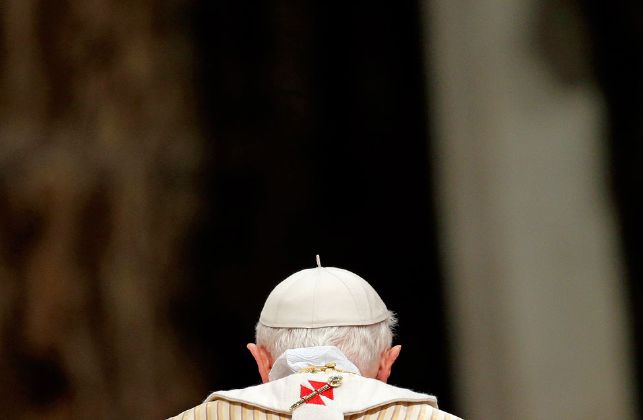
    This is a sad day: “Der Lotse geht von Bord”.  The pope steps down, our great spiritual and intellectual leader leaves the ship. I have respect for his decision, which must not have been an easy one for this modest man. I want to discuss the spiritual and political background of this.

    Spiritual consequences

    The pope steps down
    Der Lotse geht von Bord”
    Karikatur aus dem Londoner “Punch” vom 2. September 1890 zur Entlassung Bismarcks durch Wilhelm II.

    I pray that he has still enough time left and for his health. Catholicism does not depend like other “beliefs” on new doctrines and to hurry from fashion to fashion because opinions of yesterday’s turn out useless already today. Sometimes it seems only the Catholic church can preserve us from the embarrassing and degrading slavery of stupidity, decay and greed, of dark totalitarian forces being ideological motivated ones or creeping out of dark medieval ages. The catholic church is no invention of our time. She will survive as the first steely global organisation, even if  her enemies have not given up the hope to see catholic dying one day. Thanks to the Holy Father for his smart and modest guidance of our church. The pope was neither ultra conservative, nor a Church-CEO. He was as a bishop of Rome in the succession of Peter and is time of his life an intellectual thinker and light tower  for us Catholic Christians. And if one really deals with his writings and his work, one recognises how deeply religious this man is and what a luminous example he is to us Catholics.

    From a Jungian view I may not always have agreed with Pope Benedict ,  but I do thank him for his work, for taking a stand and wish him a few more quiet years in late autumn of his life. All the best for the future! I hope the next pope comes from a spiritual young Catholic church  – Asia, Africa or South America – not from the Western Ship of Fools. When the last pope resigned with Celestine V 1294 and Gregory XII 1415, it was on the eve of the fall of Constantinople,  of East Rome 1453,  of Christianity in the Middle East.  Pope Benedict XVI created a new Vatican department aimed at “re-evangelizing” the most secular regions of the globe, including areas of Europe that have become “de-Christianized.” That is needed indeed. In any case, Pope Benedikt is a universally educated high dignitary of the Church, willfully misunderstood by most,  never mind if they really have read a line from him. His level is another than coarse and vicious debate culture let alone the jaded role models for the masses. Ironically it became clear those last years, that he was a modern intellectual. He spoke out for freedom, also individual freedom, for separation of state and church, building bridges to other religions, to science and philosophy and fighting for a global church in countries where spirituality still prospers.

    Political reasons

    Pope Benedict XVI has made many enemies within and out of the Catholic church. An enlightened scholar and philosopher was hunted down by indignity. His relation with Germany was stressed. In his last speech in Germany he spoke of “Entweltlichung” hinting that German clerics live to cosy within the state concordat and lack spiritual drive. In the parliament he quoted for our “great” politicians St. Augustine: “What are the states without justice than only than a big band of robbers?“ (Book 4.4).  It can be also interpreted as: A state without God is at best a well organised band of robbers. Indeed, that was the European Union and Germany became. Given the disgusting public noise towards his person it was a sensible decision to retire. It was telling, that the German (cleric) officials referred only to Celestine V, a hermetic monk,  who,  overwhelmed and tired of the poisoned climate of the Vatican tepped down after five months. Some of them had wished a Pope Benedict XVI more streamlined, more postmodern or at least more protestant. He was neither. Joseph Ratzinger has recognised early that reforms, when they lead to a religious relativism, block the essentials, the faith in God and  lead in a dead-end. The 68er movement has made clear to the young theologian Ratzinger the dangers of the approaching spirit of the time. Today’s coinage very clearly drags everything onto the suction of a doctrinal secularism and dissolves thus the Christianity in pagan belief. In this respect one may see the big achievement pope Benedikts XVI to have held up those disastrous currents  and with it perserved the livelihood of the Catholic church. Besides, Joseph Ratzinger had to lead the discussion with the Marxist liberation theology arising in Latin America as a prefect of the religious congregation that has severely challenged the church just in these countries. Furthermore his achievements are indisputable regarding the unity of the Catholic faith. Newsweek stated gaffes statements are the red thread of his pontiff, and the Regensburger speech is stated as an example. Clearly who reduces such a speech into a 130 Twitter message comes to such a mistaken judgement. The speech opened even a dialog with moderate Muslims on a peer level in addition to the Orthodox and Jewish. Of course, there are many which want to misunderstand for political reasons. Many just wish a politically correct church –  Johannes Paul just as like Benedikt disappointed them and this is a good thing.

    Pope Benedict XVI’s spokesman has denied the pontiff will resign over the VatiLeak of confidential documents. However, there were smearing gossip articles lately and hints that some treacherous infighting was going on in the Vatican. He was the one who cleaned up the act of the church regarding the abuse cases, reaching out to the victims. Maybe he had alienated some preference groups with his “zero tolerance” policy and because he was firm on catholic tradition and truth. It seems clear, that the pope has deeply been made sick by the child abuse in the Catholic church and came to conflict with the cardinals. He will disappear from March, 2013 out of sight of the public and Vatican will provide for the fact that this also remains extensively so.

    As head of the state, Pope Benedict XVI has not done so well. Not always he trusted the right people. To be fair, the ailing pope before him left behind a big administrative and financial mess (not improved by the EU financial crisis). A cluster of banking scandals have been surfacing in Italy recently. They concern the Banca Monte dei Paschi di Siena (MPS) involving head of the European Central Bank Mario Draghi (G&S alumni) when he was still head of the Italian central bank. The history of the bank is a telling example of the murderous symbiosis of politics and investment banks. The fired boss of the bank, Giuseppe Mussari, is a leading Freemasons according to the  newspaper Il Fatto Quotidiano. Freemasons have a long tradition in Tuscany and numerous members of the socialist party. Those socialists who control the city of Siena since generations installed Goldman Sachs together with the Citigroup and Merill Lynching as a „joint Worldwide Coordinators“ and for buying  the Spanish Bank Antonveneta 2007 on the brink of the finance crises. One of the most important actors in the crime movie was Mario Draghi. It is completely implausible that Draghi has known nothing about the details about the state of the Antonveneta as he claimed of the G&S deals with Greece in the scandal around manipulated figures of the Greeks for the EU entry. As a boss of the EZB he is meanwhile the true ruler of Europe. The  EU installed Italian Prime Minister Mario Monti, also a Goldman adviser, has tried during the past years to keep the bank with tax money alive, and has pumped billions of taxpayer money into the bank.  While little has been said in the mainstream western press about the ongoing fiasco surrounding Siena’s Banca Monte dei Pasci, Italy’s third largest bank and the world’s oldest may get its third bailout in three years. The situation on the ground in Italy is getting more serious, and will have implications on both next month’s general election, on Mario Monti, on Silvio Berlusconi, as the scandal reaches as far up as the head of the ECB – Mario Draghi. Due to previously undisclosed derivative contracts first exposed by Bloomberg, the Siena bank has hidden as much as $1 billion in losses.  The “Latest Italian Bailout Scandal”, has far greater implications for the implied credibility of both the Bank of Italy, and especially the man who headed it for five years before becoming head of the ECB (where he now demands the same supervisory authority over all European banks that he had in Italy, only to supposedly let countless derivative fiascos slip through his fingers). Or in plain English, why the then-Draghi led Bank of Italy allowed this to happen not once, not twice, but at least three times.  This scandal maybe connected with Pope Bendict’s VVI significant problems of the Vatican bank IOR. The Italian press indicated that those scandals have an international dimension. The former Vatican IOR boss, Ettore Gotti Tedeschi, was before his engagement with the Vatican Chef of the Italian establishment of the Spanish Santander, the very bank who sold Antonvenet for an inflated price (and under investigation of kickback corruption) to the now troubled Banca Monte dei Paschi di Siena.

    Benedikt XVI attempted to resolve the shady behavior of the Vatican Bank by installing the former German Banker Tietmeyer. Bad customs, defamation, power plays, ambitions without barriers and theft led to the destruction of the Vatican Bank. Established financial power groups could be involved for their part in the Vatican bank scandal and may be also behind the butler who stole confidential papers from the desk of Pope Benedikt. The shadows behind the butler never came to light and the Pope sure must have been tired and disappointed. The Italian journalist Gianluigi Nuzzi ( he has to be taken with a bit of salt) is convinced: Pope Benedikt XVI has stepped down to put a sign against the mismanagement in Vatican. He has felt as a theologian not competent enough to solve the economic problems of the church state. He has had no friends in the Vatican. Above all his cardinal’s Assistant Secretary Tarcisio Bertone has built up a dangerous network of ropes and carries on opaque business with „dubious figures“. The pope has not stopped Bertone. The loyalty of the pope to a man who clearly damages  him is surprising: „They fit not really. Ratzinger is a subtle intellectual, a shepherd. Bertone is a cunning administrator who knows the Curia inside and by heart”, Nuzzi wrote. Fact is, the he former head of the IOR Ettore Gotti Tedeschi has been recently fired  for never revealed reasons and the pope has approved today the German layer Ernst von Freyberg as new head of the IOR. Pope Benedikt XVI. had tried to enforce stricter rules for the IOR  by founding 2011 an independent controlling institution and also favored Gotti Tedeschi proposal for compliance to international rules while some parts of the Vatican, particularily Secretary Tarcisio Bertone, wanted to keep its current “independent” mode.

    Conclusion

    One can argue, that the Pope did no solve the management crisis he inherited completely. This cheap criticism comes predictable from sides, however, which never liked a strong catholic faith. It is often just unfounded repetition or strange spin of  shady economic and political  clusters. To the resignation of pope Benedikt XVI the Freemasons have sharply criticised the economic behaviour of the Vatican. They hope for a complete coup. In the TV broadcasting “Öteki Gündem” the Turkish (!) journalist Aytunç has raised Altındal heavy charges against the parting pope based on hearsay of American (!) sources – John Patrick Quirk, a professor and former CIA advisor. It looks like the Pope emeritus has to watch his back even more now than before, also physically. Somebody has unleashed many dogs, after Pope Benedikt XVI forced the cleanup by his resignation.

    An observation of the history is always interesting:

    The more powerful the financial dynasties  became, the more and more audaciously the Christianity and the Catholic church was attacked. They control not only semi-secret organizations (Freemason, Bilderberger, CFR, trilateral commission, Illuminati, black nobility etc.), but manupilate politicians and transnational organisations (EU, IMF, UN) more and more violently the fate of us all.

    Pope Benedict XVI was a great admire of Augustine, a contemporary of the (declining) Roman Empire. This world state was taken over by the early Roman Church because of visible injustice. Similar like radical Islam outshines today corrupt secular governments. After the victory over the communism by Johannes Paul, to Pope Benedict those greater challenges became obvious. During the last years the Christianity has become the mostly persecuted religion of the world. The European West seems lost to the Christianity whose heritage it owes most. By failing Augustine’s – lets call it ethical – virtues the West fails its secular objectives too. Continuing this way, world finance and its paid servants will lead us back to the dark ages to either secular or religious totalitarian systems. One can take from the “God’s state” of Augustine the following eight elements:

    •  God’s image must be promoted. Secondly uniqueness of any person created after God’s image has to be acknowledged. In this the dignity of any person has its foundation.
    • Above all, man is made good. If man sins, he /she acts under his/her dignity and against possibilities and God’s order. The evil is the absences of the good, it has no substance in itself.
    • The states must allow the God’s love, that is „the true religion“. The God’s citizen who face God live the truth. The cosmopolitan who are aimed only to themselves live the lie.
    • The God’s state is formed by citizens who live the spirit, the world state by citizens who live after the flesh. The states should allow to live after the spirit.
    • The highest aim of the God’s state is peace. In order that anybody achieves the everlasting aim, the state must guarantee above all “freedom”.
    • The state being must provide for justice. The rhetorical question: „What are the states without justice differently than big bands of robbers?“ (Book 4.4), may be interpreted so also: A state without God is at best a well organised band of robbers.
    • Another important principle for the state is that it rules by virtue. Even the Roman’s empire – the first and only world state – has prospered according to Augustine, as long as Romans have practiced virtues.
    • The state authority who acknowledges God has a right to obedience if it concerns the worldly things. The state is no remedial way itself.

    One thinks this is old stuff – look around.

    References:

    Gianluigi Nuzzi works as an investigative journalist with the Italian magazine “Panorama”, before he was for the newspapers “Corriere della Sera” and „Il Giornale.

    • Vatikan AG – Ein Geheimarchiv enthüllt die Wahrheit über die Finanz- und Politskandale der Kirche, 360 Seiten, Ecowin-Verlag, 22,50 Euro
    • Seine Heiligkeit – Die geheimen Briefe aus dem Schreibtisch von Papst Benedikt XVI., 416 Seiten, Piper-Verlag, 22,99 Euro

    Note: One who is less a servant of God and more a servant of his own self-esteem might have embraced the power of the office he held and ignored the needs of the flock. Not so Pope Benedict, he truly accepted the second half of St. Peter’s exhortation: “Do not lord it over those assigned to you, but be examples to the flock.” His example tells us clearly that the needs of those we serve out-weigh our own.

    Added Note: February, 22th

    There has been a claim put forth by Italian daily newspaper La Republica, that pope’ decision was influenced by a  secretive “gay lobby” within the Vatican itself.

    Yesterday this paper published an article alleging that Pope Benedict XVI’s decision to resign this month was partly prompted by a report that accused Vatican officials of being under the influence of several internal lobbies, reportedly including a gay one. The nearly 300-page dossier would be passed on to pope’s successor, the report added.

    The Irish Times reports that Benedict commissioned the report after the Vatileaks scandal broke last year. The report, written by a trio of cardinals, concluded that “various lobbies within the Holy See were consistently breaking” the sixth and seventh commandments, “thou shalt not commit adultery” and “thou shalt not steal.”

    (The sixth commandment referencing adultery has historically been tied to the Catholic Church’s doctrine banning homosexuality.)

    Father Federico Lombardi, the Vatican spokesman, released an arguably vague statement about the accusations.

    Throughout his life, Pope Benedict XVI has professed our Lord Jesus as the Christ. No person needed to tell him this; he was truly given access to the will of the Holy Spirit. We, who like him, are adopted by Christ must now thank him for the gift of his life, energy, and service to the people of God and the Church. We look to the empty Chair of St. Peter and pray that, as in past Conclaves, a new Pontiff will emerge and that he will become stronger than he had ever thought possible.

    Today especially we conclude with Prayer:

    Lord, send forth your Holy Spirit and continue to guide and inspire our Holy Father Pope Benedict XVI during these final days of his papacy. Be with the College of Cardinals for the next conclave and fill them with your grace. Through Christ our Lord. Amen.
  • PTSD and Moral Injury seen from C.G. Jung – Achilles in modern wars

    PTSD and Moral Injury seen from C.G. Jung – Achilles in modern wars

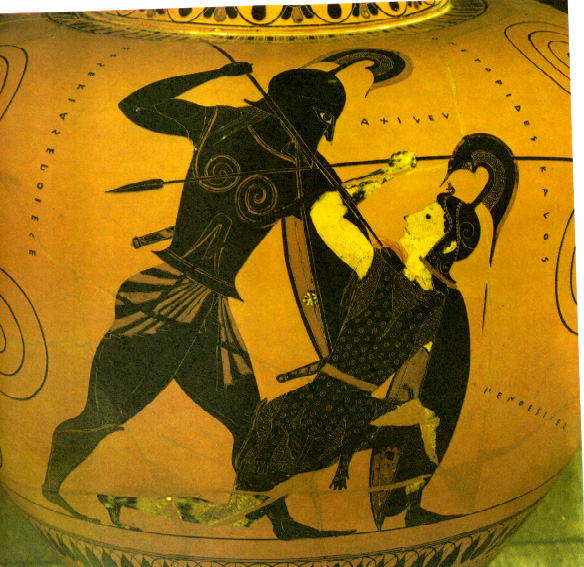
    The Newsweek article A New Theory of PTSD and Veterans: Moral Injurywas probably the best article I ever read about PTSD – besides Shay’s Achilles in Vietnam. Yes most important factors may very well be moral injury, traumatic events and being betrayed by leadership.  But, there is more  – ethical, Jungian depth psychological and political circumstances:

    • Villains don’t get PTSD: The individual (and its society) has to have moral standards and be reflective to experience moral injury.
    • Adding insult to injury:  Societies project their shadows on the soldiers traumatic events.
    • The line between Good and Evil:  PTSD is an Achilles heel made visible by modern media
    • Serving the Devil:  Differences between societies collective and individual  belief systems – the coming home effect (after winning and loosing) and the authoritarian mass psychology.
    • The contemporary despise of the Archetype of the Warrior – Do nothing, see nothing, hear nothing, and go nowhere, feeling good looking away.

    People never come back from war unchanged.

    I’m glad that the issue for individuals of crossing previously taboo lines of behavior, in the context of combat/trauma, is recognized as a significant factor. The example of the Marine Fox Company is very convincing and the arguments make a lot of sense. Send people to war today and a certain percentage will get PTSD, commit or see war crimes and suffer after coming home. Because war transforms also the country at war. Sometimes with a time delay. It took 50 years (protected by the American soldiers) before European social scientists and media were allowed to stereotype their fathers – all soldiers as war criminals.

    My father, a country boy, who was drafted with 17 during the Second World War, fought basically as “grunt” for his life. He served in Russia until 1945 and subsequently three years longer as prisoner of war in coal mine under very harsh conditions. 1948 he returned to Germany with empty hands, which lost not only a war but any moral standards and cared little about  foot soldiers busying itself with clearing the rubble and starting the Wirtschaftswunder. Nevertheless, he became a good father and husband and raised me fairly well. He told me little about this time, only that he almost got court marshalled two times. Once he was watched laughing over a propaganda poster and one time after a frontal assault of the russians (he was an army machine gunner). Reason was, he had to open his last ammunition box, having killed wave after wave of soldiers driven into the bullet hail by Stalin’s commissars. It was us or them, but his last box unfortunately contained food which he stashed away. But there is always more ammunition.

    Why was PTSD a lesser issue after the 2nd world war?

    It must be todays schism of moral standards imposed on the soldiers and reality – the  increased awareness of rotten political leadership sending them to war. I would argue it is the incredible difference between reality and moral standards reflected as hypocrisy of the society. If we’re serious about ending PTSD we must be serious about our shadow. Yes, there is moral injury, caused in large part by betrayal — not only from a field commander putting career over the lives of soldiers or betrayal by one’s government, namely, being sent to a war based on lies but also by us watching the war on TV projecting our undesired and evil wishes on them. The first duty of the ethically minded person is, from Jung’s psychological perspective, to become as conscious as possible of his or her own shadow.

    The good and the Evil – “good wars” and “wars of aggression”

    I would also argue there have been no “good wars” anymore after the second world war. If – and that’s at least a little  IF – even the Second World War was one. Lets assume it was. Outside of the political correct realm the older Germans remember the American soldiers (correctly) as a kind victor.

    But why did the RAF pilots who executed  ‘Bomber Commander Sir Arthur Harris’s  industrialized burning of German cities and civilians  not develop PTSD? Harris was appointed chief of Bomber Command in February 1942. His first raids were bombing of medieval Lubeck (‘more like a fire-lighter than a human habitation’, in Harris’s words) and the 1,000-bomber raid on Cologne. The Operations Order for the bombing of Hamburg in July envisaged the ‘total destruction’ of the city. And so it did. At least Harris was honest: his aim was to destroy whole German cities and their inhabitants. Others were not. The official British line was dishonest. The fires were far away. So I guess.

    Firestorm-1943: Source Universty of Exter
    Firestorm-1943: Source Universty of Exter

    Not comparing, evil with evil, few Nazis developed PTSD either. Derived from the history of  Nazi Germany, Jung would have to confront the shadow within the larger structures of any society. The ways in which a society is set up, through its laws and customs, has a lot to do with how evil is handled and perceived within its precincts. “Moral man and immoral society,” a concept of Reinhold Niebuhr’s, may be a guide here. Many scrupulous and well-intentioned individuals end up serving the Devil by being good and obedient citizens. And nobody is free of opportunistic strains, some outstanding artists and brilliant experts served dictators more or less knowingly or naively.

    Responsibility and Truth

    PTSD is itself not a moral injury. The Newsweek article rightfully does not equate PTSD with moral guilt. It makes the case, that there is a certain kind of (combat) guilt that could exacerbate or even trigger PTSD. The analysis does not blame the victim or smear the character of anyone else who suffers from PTSD. We are each responsible for our actions, but the “monies” who create the conditions and send people to war bear ultimate responsibility. That’s why the Nuremberg Tribunal judges ruled (before pre-emptive strikes became fashionable) that a “war of aggression” is the primary source of all other war-related evils – war crimes and crimes against humanity — flow. Sadly, we all own a piece of the responsibility regarding the latest generation of returning veterans and to believe what stipulates a war of aggression. War and guilt has been topic from greek tragedies, as Dr. Jonathan Shay’s points out very well in his “Achilles in Vietnam”.drshaybookachilles

    Guilt is a reflection of Evil. But what is Evil?

    It seems you need to reflect and to have a soul to develop PTSD, to accept a line between good and evil based on moral standards and coming to the conclusion to have failed on them.

    We need more understanding of human nature, because the only real danger that exists is man himself. He is the great danger, and we are pitifully unaware of it. We know nothing of man, far too little. His psyche should be studied, because we are the origin of all coming evil.(C. G Jung in an Interview , Bollinger Series or YouTube).

    Jung’s question to the problem of evil were:

    • Is the unconscious evil?
    • What is the source of evil?
    • What is the relation between good and evil?*
    • How should human beings deal with evil?

    Surely to him the unconscious is not the source of evil and Jung would answer in the affirmative that, yes, evil is real and it cannot be written off as the absence of good. Evil can inflict injuries indeed. Jung felt that a view like that  Augustin’s who espoused in his doctrine of “privatio boni” underestimated the problem of evil. Jung did not want to be soft on evil, which he thought is part of us. And yet, Jung did not want to see evil as an independent, self-standing and inherent part of nature, psychological, physical or metaphysical. This would lead to dualism. To him Evil is (like PTSD) most primarily a category of conscious thought, a judgment of the Ego, and therefore dependent for its existence upon consciousness:

    With no human consciousness to reflect themselves in, good and evil simply happen, or rather, there is no good and evil, but only a sequence of neutral events, or what the Buddhists call the Nidhanachain, the uninterrupted causal concatenation leading to suffering, old age, sickness, and death.

    The source of what we perceive as evil, then, is a mixture of psychological content (as defined by C.G. Jung as Shadow) and psychological dynamics that allow for, encourage, or require shadow enactments.

    Do nothing, see nothing, hear nothing, and go nowhere – But what is Good?

     chickenhawk-robert-mason-paperback-cover-art
    chickenhawk-robert-mason-paperback-cover-art

    I recently read Robert Mason’s narrative  of his experiences as helicopter pilot during the Vietnam War, “chickenhawk”. He comes across as perfectly decent and reflected person, who wanted to fly, enlisted and survived the war but failed bitterly afterwards in private life. Almost a prototype of the moral injury argument. He functioned perfectly in his profession, get shot at during more than thousand sorties, lost comrades, witnessed cruel violence, was abused by incompetent leadership and coming back home spit at by a society, which fancied the Anti-Archetype of the Warrior. Causes for PTSD include things like child abuse, rape, bad car accidents, or emergency calls. Some people are less prone to experience post-traumatic stress. But the only sure way to prevent PTSD is to do nothing, see nothing, hear nothing, and go nowhere, project all the own aggressions to the veterans – just be good – and let the evil, the “monies”, the Pol Pots, the Mao’s, the Stalin’s, the Hitler’s have their way.

    Religions and pseudo religions

    It has been said God is dead. Dimwits proudly announce on TV, that they are transcendental deaf and the anchoresses roll over in delight. In his reflections on Western religious history in Aion (C,G. Jung CW 9/2), published in the aftermath of the Second World War, Jung interprets the future with reference to the astrological sign of the Fishes. In this Platonic Year (the “aion” of Pisces), which has lasted for two thousand years, there has been an underlying theme of conflict between great opposing forces, which is symbolized in astrology by two opposite fishes. As Jung delineates this history, he sees the conflict as raging between spirituality and materialism (spirit vs. body) and a parallel conflict between good and evil.

    There is in Jung’s work a significant differentiation of collective shadow and individual shadow. At the very end, political correctness may be seen as today’s collective shadow. We want the paradise now and here. Ironically, the nickname of the Fox company was Saints and Sinners, but the concept of sin and confession has been largely discredited blocking to help mortals with the work of shadow awareness and integration. This is left now to a large extent to the single individual, often patched over by pharmacy or drugs. However, the work of confronting evil and dealing with it continues.The wider area of society and politics fanatical ideologies become demonic materialistic or ideological pseudo religions depending for their existence upon abuse of archetypal images, worshiped by the “Never Did Anything”.

  • Protected: Shadows of the Presidential debate 2012 part II : What is truth and does it matter?

    Protected: Shadows of the Presidential debate 2012 part II : What is truth and does it matter?

    This content is password-protected. To view it, please enter the password below.

  • 40 years later Munich Olympia revisited

    40 years later Munich Olympia revisited

    Today, the 26th of August, on the 40th anniversary of the openings of Olympic Park I biked with my family there to join the local festivities.   Somehow I became a little bit distracted as rather memories of the Black September event than of Olympia 1972 kept coming up.

    This slideshow requires JavaScript.

    For many the park is the best what was built there over 100 years and a forgotten vision of the young Federal Republic – according to Christopher Young, in his book “Munich 1972 Olympics in the character of modern Germany.” Or at least back door in a time in which the future was also better – according do the local Comedian Carl Valentin (“Früher war alles besser, sogar die Zukunft”). Alexander Mitscherlich and his wife Frau Margarete Mitscherlich, researchers at the Sigmund Freud Institute in Frankfurt, released 1967 a classic essays of social psychology. On the basis of psychoanalysis and their experience of the Nazi dictatorship, as well as the post-war years under Adenauer they commented on the mental state (“Foundations of collective behavior”) of Germans. Most important was ” the inability to mourn: a German way” is addressed . It seems to be a mass phenomenon  how moral behavior is built .

    I can hardly believe that it’s been 40 years since the 1972 Munich Olympics. “Where have you been at the time of opening”, asked my wife. “Travelling in Persia or Afghanistan”, I said ” I was student that time and on the road three months that summer. I came back to Munich mid September when everything was over”. When I watched the “attractions” today, nothing reminded on the sad event.

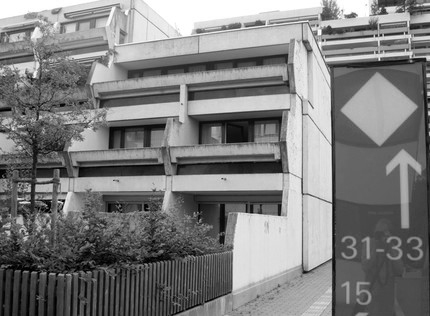
    It was 4:30 in the morning on Sept. 5, 1972, when five terrorists climbed the six-foot six-inch fence surrounding the Olympic Village.


    These five were met by three more men who are presumed to have obtained credentials to enter the village. The Palestinians then used stolen keys to enter two apartments being used by the Israeli team at 31 Connollystraße. The burly Weinberg knocked one of the intruders unconscious and stabbed another with a fruit knife before being shot to death. Weightlifter and father of three Yossef Romano, 31, also attacked and wounded one of the intruders before being killed. The terrorists then succeeded in rounding up nine Israelis to hold as hostages.

    After 40 years, official documents were released. Very recently the Bavarian public  broadcasting (BR) reported, that ten hours before the bloody Olympics attack in 1972 in Munich, the Munich police had been warned very specifically. According to the news, a German Federal Office sent  a telex with names of five terrorists and pointed out that the Olympic Games were to be attacked. The telex receipt for the warning of the Federal Office (some sort of internal secret service to protect the constitution) supposedly wears the shortcut signature of the then on-duty shift supervisor in the police headquarters of Munich. The police officer was later apparently never heard as witness or officially interrogated. The police shift diary available in the public prosecutor office starts strangely enough 23.50 p.m. – it lacks the page 19 for 7 pm, the time when the telex of constitutional protection office was sent. Already in August 1972 Germany’s Ambassador in Beirut notified his superiors that Palestinians are planning an assassination attempt on the occasion of the Olympic Games. The Foreign Office sent Klaus Kinkel, then Bureau Chief of Interior Minister Hans Dietrich Genscher, the report of the Ambassador with the note, you need to ‘make sure that the matter is known to your Minister and your House and the required action taken’. Four times, authorities were informed of assassination plans, the safety precautions were increased but not significantly. The PLO had significant contacts then with the left terrorists group RAF and between East Germans Minsterium für Staatsicherheit  also significant  connections to West German terrorists existed. The Spiegel claims the planner of the attacks was assisted by German Neo-Nazi Willi Pohl, according to the 40-year-old German intelligence documents. This Spiegel article fails to mention, however, its own reporting of 1981 and 1985. The group of Willi Pohl had via one of its members, Udo Albrecht, proven contacts to the East German secret service (MvS) and the West German secret service (BND). When PLO terrorist Abu Daud arrived in Munich, Albrechts friend Pohl admitted in an interview, that he escorted him and helped him contact a document-counterfeiting operation. Those rumors, that the right-wing groups were involved which died, not surprisingly, very quickly. The very hesitant reaction of the current officials to all the 1972 cover ups would certainly point more  in a longtime shady  direction. A lot of those right culprits were actually East German MfS (Stasi) Agents and /or right wing patsys, like the infamous Berlin police men Kürass, who killed a student during a demonstration, which sparked 1968 the West German youth rebellion.  

    No speech I heard, no mourning at the festivities reminded on those Israelis who lost their life a few hundred meters ago. That is somewhat surprising, since Germans today get  the  “Kampf gegen Rechts” shoved down their throats by Germans media and well meaning politicians every single day.  “The resistance against Hitler  is all the stronger the longer the Third Reich is gone”. Soon after the fall of the Berlin wall were everywhere in Berlin cautionary graffiti to see: “No Fourth Reich!” “Germany never again!” A generation that fought the “consumerism” and paid homage to Che Guevara, necessarily wanted to prevent a new power – which I am sure would be managed, if she only knew against whom she should move in the fight. The basis of the current militant anti-fascism is the lack of a fascist movement(although Germany becomes more anti-democratic every day). “Never again dictatorship!” the call should be, but this slogan is not so popular by the institutionalized Antifa than todays inexpensive anti-fascism. For this reason, in 2008 even a Hitlers wax figure had to been assassinated in London. There was, however, no trace of those 11 Jewish heroes or memories of their families, but only usual kids entertainment, sport of course, mostly marketing events of “outdoor” companies in thin disguise.

    In 1982 I attended a Rolling Stones concert at Olympic Stadium in Munich, that was the last time I was in the stadion. I passed Connollystraße with the bike many times, however, since I used to live during mid-eighties in the parallel street before I moved to the States. Yes, life had moved on, but that memory was even etched in my mind. It was traumatic for most of us in Munich at that time. Sadly, there is still no closure to this Olympic horror story, as the International Olympic Committee refused even in London to acknowledge this tragedy with a moment of silence during an Opening Ceremony. According to the US Media, Palestinians did thank the IOC for ‘Moment of Silence’ Decision, where words such as ”divisiveness” and “racism” are used to explain the decision.

    Why is that strange collective behavior, I thought, do they think the wrong people killed the right people or the right people killed the wrong people, or even worse the right people killed the right people? How sad, no of the officials seemed to care in Munich today to remember their names:

    Moshe Weinberg (wrestling coach), Yossef Romano (weightlifter), Ze’ev Friedman (weightlifter), Bavid Berger (weightlifter),Yakov Springer (weightlifting judge), Eliezer Halfin (wrestler) Yossef Gutfreund (wrestling referee), Kehat Shorr (shooting coach), Mark Slavin (wrestler), Andre Spitzer (fencing coach), Amitzur Shapira (track coach) and also some Bavarian police men.

    One of the helicopters holding the Israelis was blown up by a terrorist grenade. The remaining nine hostages in the second helicopter were shot to death by one of the surviving terrorists.

    Reliving the events that took place in Munich and Fürstenfeldbruck will convince anyone that not allowing a moment of silence to honor the victims is a morally questionable decision – in London as I felt there were forgotten too today in Munich.


  • Mao’s great famine – Our blight is ideologies — Revolution is not a dinner party.

    Mao’s great famine – Our blight is ideologies — Revolution is not a dinner party.

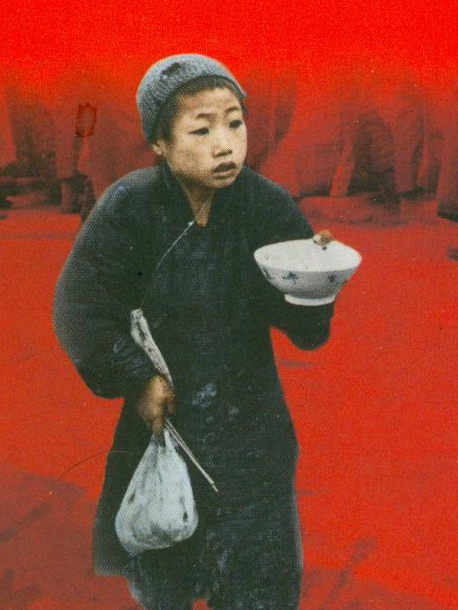
    When I worked in Beijing during the late nineties I got invited by a local resident consultant (an expat) to a dinner party at a very chic ethnic event restaurant.  Mao’s great famine was long forgotten. My colleague was a little bit esoteric, but knew her city. There was good food and even a better spirit.  Expats and local people from all over China would  dance after work together, even onetime doing some kind of polonaise. The open spirit, however, became immediately sober when a Mao Zedong-imposer entered the stage. The faces of the Chinese colleagues, of all Chinese, froze and some timidly touched the fabric of the actors costume, 20 years after Mao Zedong’s death, as if to make sure that “he” will not come back.

    Recently, more than ten years later,  I read the book of Frank Dikötter  Mao’s Great Famine: The History of China’s Most Devastating Catastrophe . The book was selected as one of the Books of the Year in 2010 by The Economist, The Independent, the Sunday Times, the London Evening Standard (selected twice), The Telegraph, the New Statesman and the BBC History Magazine, and won the 2011 Samuel Johnson Prize for Non-Fiction, Britain’s most prestigious book award for non-fiction.

    Between the years 1959 and 1961, 30 to 45 million people were starved, killed or worked to death as a result of Mao Zedong’s failed attempt at industrialization in this period of the great leap.Frank Dikötter researched the catastrophe for years and documented his findings. It was h highly centralized mismanagement that can lead a country to disaster. All checks like tradition, family and religion were swept away leaving everybody, particularly the weak,  exposed without restraint to cruelty, pure arrogance, boundless ignorance and a merciless disregard of farmers, workers and even party members.

    I just knew just the basics of the big leap and the subsequent famine that hit the People’s Republic around 1960.  But Dikötter’s painstaking research using newly opened local archives makes his estimate all too credible  that the death toll reached 45 million people. The book opened my eyes, as the man-made disaster was on the scale of the Nazis, Stalin and Pol Pot, but different in a way as the intend supposedly was good in a “we know better” attitude. When I read the book , I was reminded to the bureaucracy of the European Union. We don’t get killed and starved yet (although the latter does happen in Greece), but the propaganda and the arrogance of the EURO-phil bureaucracy are very much the same. It is no coincidence, that many of the former and current EU leaders, those who pushed Maastricht treaty or the never ending crises measures through against all good advice of experienced experts, were former admirer of Mao or even active Maoists. Their leadership performance during the EU crisis is of striking similarity, mismanagement  runs Europe against the wall and destroys all tangible and non tangible assets.

    Dikötter provides a detailed list of the degree of suffering this “Great Statesman” unleashed and the inhumane manner in which his apparatus operated. Horrors pile up as he tells of the spread of collective farms and the vast projects that caused more harm than good and involved the press-ganging of millions of people into forced labour. As the pressure mounted to provide the all-powerful state with more and more output, the use of extreme violence became the norm, with starvation used as a weapon to punish those who could not keep up with the work routine demanded of them. The justice system was abolished. Brutal party cadres ran amok. “It is impossible not to beat people to death,” one county leader said.

    The inefficiency, waste and destruction in China were of course even more  gigantic. The masses in whose name the Communist party claimed to rule were eminently disposable. The economic campaign used farmers and industrial workers as fodder expected to sacrifice themselves for the cause dictated from on high purposefully trying to get rid of the weak,the women, the children, the elderly. Cannibalism and people eating mud in search of sustenance, was the outcome of the famine caused by the Great Leaps failure and the diversion of labour from farming.  Initially launched to enable China to overtake Britain and Russia, Mao’s programme took a deadly turn, In order to maintaining food exports when the country was starving, the slogan was: “When there is not enough to eat, people starve to death. It is better to let half of the people die so that the other half can eat their fill.”

    The book gives the details, but is extremely clearly written and presents the facts very structured: (1) The pursuit of Utopia;  (2) Through the Valley of death;  (3) Destruction;  (4) Survival; (5) The Vulnerable;  (6) Ways of Dying;  The book starts slow and becomes a page turner but can also be accessed afterwards via a good index.  It describes thourougly the Sino-Soviet split, and Mao’s tricks to blame the Russians ( and other factors) for his own doing,  after it was too late and the truth could not buried any more. As family bonds and every decency broke down, basically the whole country became one contraction camp. Methods were used in the cities, just like by the IG Farben in the second world war, working people to death in an unhealthy environment without pay and sometimes without food locked in the factory. Often there was not a direct intend to kill, but human were abundantly streaming to the factories. On the countryside  dissidents or underachievers, even people who digged one potato  became literally fertilizer. Kids were conveniently lost by mothers, women had to prostitute themselves or were routinely raped by local authorities routinely in some provinces .

    The Cultural Revolution is widely remembered, the Great Leap much less so. When Maoists launched the Cultural Revolution in 1966, the  Red Guards had little new to learn, as Frank Dikötter states. Stability returned to China with the Maoists’ ouster in the late 1970s. Having gone through those two experiences, not to mention the mass purges that preceded them and the Beijing massacre of 4 June 1989, it is little wonder if the Chinese of today are set on a very different course that rejects ideology in the interests of material self-advancement but also religion is on the rise.

    As soon as people get together in masses and submerge the individual, the shadow is mobilized, and, as history shows, may even be personified and incarnated. Carl Gustav Jung , The Archetypes and the Collective Unconscious , Collected Works, 9/1, par.478

    It is in this context it is  interesting to consider is Jung’s point of view toward religion in general, and his various attitudes with regards to fanatics and totalitarian ideologies and states: “Of course, it is not a spiritual religion in the sense in which we ordinarily use the term. But remember that in the early days of Christianity it was the church which made the claim to total power, both spiritual and temporal! Today the church no longer makes this claim, but the claim has been taken by the totalitarian states which demand not only temporal but spiritual power”.

    If one looks to his quotes closely we find, that he just says there are similar concepts between totalitarian religions and totalitarian systems. Jung is speaking about the UDSSR  and Nazi Germany in a sense that was not only religious, but also political. He then compares in the context of political figures.  Jung speaks here about religion not only demanding spiritual obedience but temporal as well and the beliefs not only cover the spiritual aspects of the human condition but also the mundane as well.  In Jung’s book “Psychology and the East”( From Vols. 10, 11, 13, 18 Collected Works), Jung recounts his journey to India. One of the essays entitled “The Dreamlike world of India” show Jung expressing his utter positive attitude and amazement at the Indian subcontinent and their religious and ethnic culture. In a second essay entitled “What India can Teach Us” he concludes that the psychological and religious claimant is something that we in the West should take a page from.  There is respect for and admiration to all religions and their text. I sometimes wonder what he would say today. Called or uncalled, God is present. Religious experience plays an important role in Jungian psychology. Jung, a Christian maybe of more Gnostic virtue, believed that this experience is nothing but a product of the psyche, and consequently viewed other world religions as an expression of one psychic function that has its roots deep in the collective unconscious of mankind. If religion is absent, this is rarely  good thing, but if it rules the secular space its worse…

    Our blight is ideologies — they are the long-expected Antichrist!  C. G. Jung The Tibetan Book of the Great Liberation (1954)