Tag: jungian psychology

  • “become what you are” C. G. Jung’s answer to aging

    “become what you are” C. G. Jung’s answer to aging

    Todays answer to aging of medicine, psychology and sociology (or the happy union of postmodern and materialistic society) is contrary to common sense and spiritual void: Accept to be incomplete and fragmentary and the own life – regardless of the question how incomplete, unsuccessful void it has been. Consume if you have money, don’t bother us if you don’t.

    To the contrary C. G. Jung was of one of the first who explored the development and spiritual maturing of the second half of life and described life as a continuum. Jung called this process of lifelong learning and striving for wholeness “become what you are”  as individuation.

    Basic factors of happiness

    Jung answered  on the question during a Sunday Times interview on the occasion of his 85th birthday: “What do you consider to be more or less basic factors making for happiness in the human mind?”:

    • Good physical and mental health.
    • Good personal and intimate relationships, such as those of marriage, the family, and friendships.
    • The faculty for perceiving beauty in art and nature.
    • Reasonable standards of living and satisfactory work.
    • A philosophic or religious point of view capable of coping successfully with the vicissitudes of life.

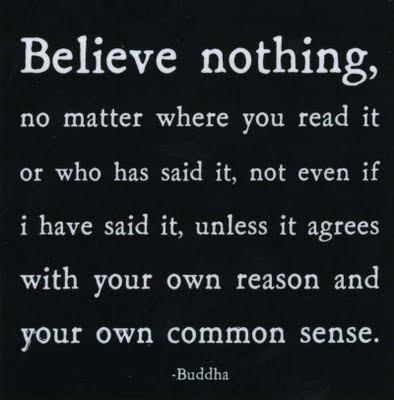
    He added that the list to define unhappiness would be much longer and under certain circumstances some factors of happiness can even cause the opposite. In the same interview Jung noted somewhat amused his contempt for intellectuals who do not read his books.  “Recently I had an intellectual as  visitor who I lectured 30 minutes without  any response from him. Finally he got enlightened, and muttered surprised: What you say Dr. Jung,  is common sense”.
    Common Sense
    Common Sense

    So it is. C.G. Jung is not a doctor without medicine but a doctor who does not need pharmacy. Despite his mystic tendencies, the basics in his writings  – especially in regards to individuation – are fairly easy to understand. No need for shrinks, experts and new age prophets. Without meaning it cynical, I found a supplement of roman-catholic belief with monastic a Jungian influence helpful. It can clearly be seen, that striving for those five key factors can and should be lifelong.

    The crisis which needs to be

    One conclusion, which I derived from the interview, was that a crisis is a perquisite for progress in one’s life, as the instinct will tell the solution – within the so-called “important dreams. While I phase gradually out of my job,  I definitely experience aging as crisis as well as an opportunity. The question I like to discuss therefore in this essay:  can I keep up these five success factors during this transition  – or do they turn against me?

    aging-marriage

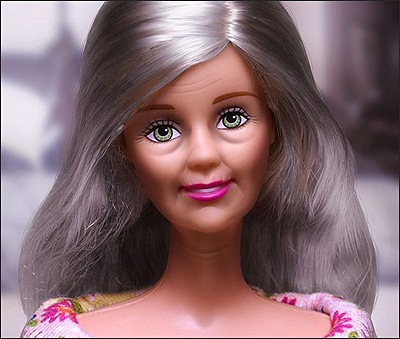
    Aging comes in a variety of very different shades:  the relieved faces of the well-off generation of 60-plus, enjoying life and the independence associated with it ;  fearful  faces of old people in nursing homes, which I saw while caring for my mother before death; There’s also the melancholy face of the age, which needs to acknowledge  limitations and the injuries to an inflated ego, correct narcissism, often behind a self-deprecating attitude; This new phase of life beyond 60  is not always an adventure awaited eagerly, but – according to the culturally mediated age stereotype – a dreaded lifetime expected as a period of degradation, loss of attractiveness, health and mental ability with fright and burden to society or, if the elderly target consumer is affluent,  shallow and pampered pseudo youth. The age itself is a sociopolitical issue, because society in Europe as a whole experiences serious demographic changes. Its macroeconomic implications raise additional issues for those who are aging.
    aging-barbie – Anything can be expolited

    The above statement of  C.G Jung contradicts todays point of view, which defines ages as imbalance between our physical capabilities and  problem-solving requirements. The Chinese character crisis means: risk, decision, peak, and turning point as well as chance.
    aging-crisis
    aging-crisis

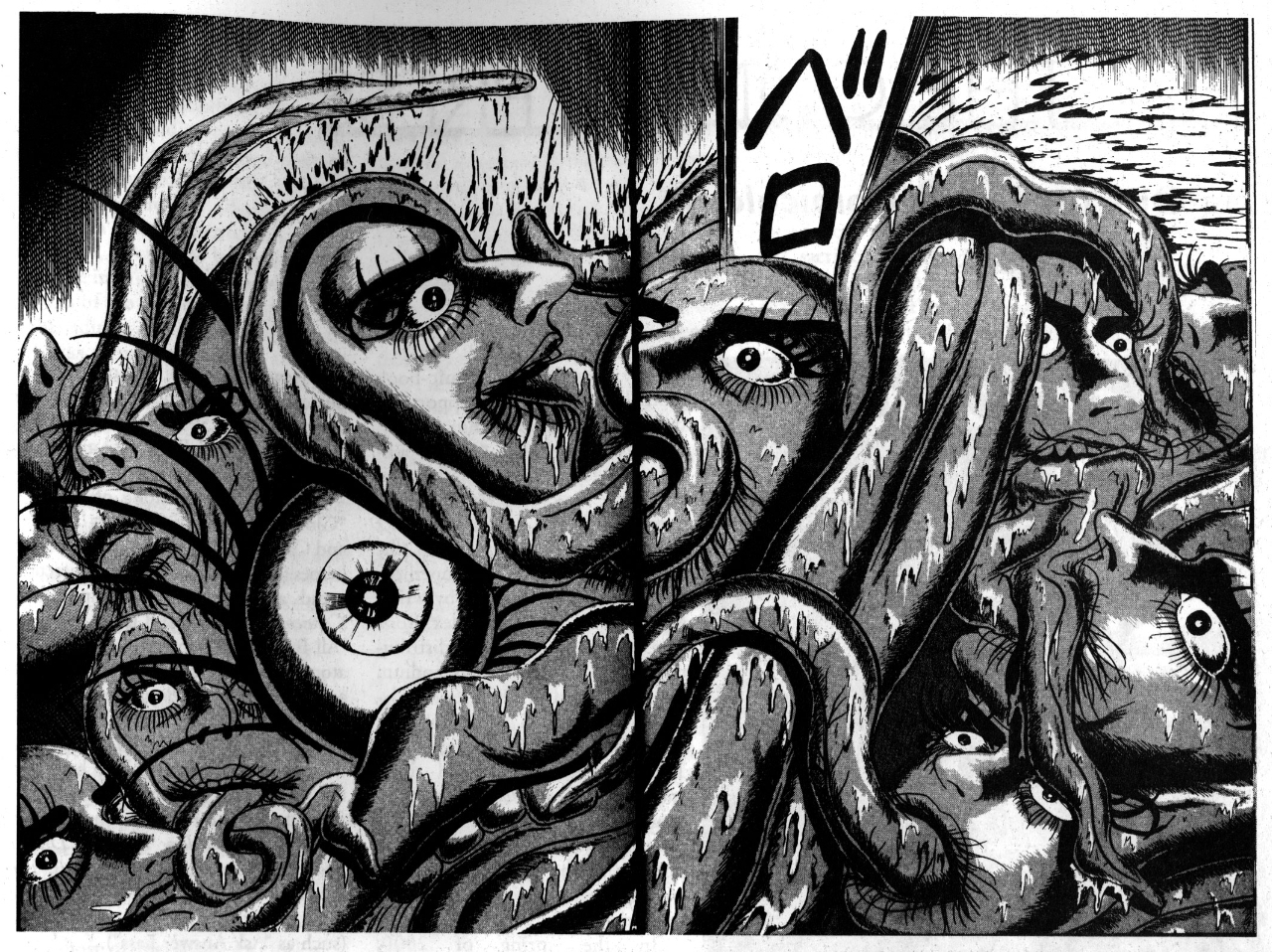
    But to Jung there is even more to it. Crises are the needed worsening of a situation where people are seized by panic and fear and see no way out and no longer can use their previous patterns to cope with the situation.  According to Jung such cross-border and transit situations are needed to break the pattern in order to follow ones instinct.  Crisis is the time in which the human being as a whole is in question and undergoes a change from which it emerges as a new energetic other with a spiritual outlook,  i.e. religiosity. To C.G. Jung Personal growth is:

    • Increase in awareness,
    • Increase in behavior options
    • Gain in ego-strength,
    • Increase in permeability,
    • Ultimately a mystery.

    He also suggested that finding the Self is like a marriage which becomes rarely or perhaps never smoothly and without crises a personal relationship; “There is no consciousness without pain”. The first step to the individuality is the break off with the unconsciousness of the herd. “It is the loneliness of mature man,  who no  longer ´depends on the value judgements of his environment, but in his relationship to the Self is firmly established.”

    All the wrong answers

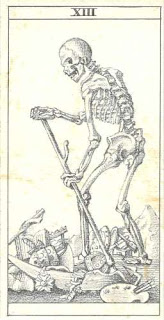
    Todays psychology is not helpful in that respect, almost destructive by focussing on the bad news, by  pointing out that almost a third of all suicides are carried out by people over 60 years of age being only a fifth of the population. The retirement, the loss of employment, experience of being “too old” on the labour market, the physical changes are fear factors during transition from middle adulthood to the age. Indeed, with noticing the seemingly ever faster rushing time by, a lot of questions come up: “This should have it been now? Was that my life worth? Have I fulfilled its meaning?  Can I and I will I survive my relationship?” . Not addressing the development and maturing tasks of age together may indeed result in aggressive-destructive and sometimes vicious behaviors. But todays media cacophony encourages older people to hide their hardships and problems not to face them.
    aging-postmodern

    Even if age researcher Gene D. Cohen speaks vehemently against the relativistic stereotype of aging as a foreclosure process, he misses individuation. Cohen’s theories are supported by results of recent brain research, but again his theses are purely neurological. being deaf towards spiritual potentials.

    • Remodeling is continually the human brain through learning and experience.
    • Through new brain cells are formed through the whole life.
    • The emotional connectivity patterns in the brain become more complex with age.
    • In older adults, the interplay between of the two halves of the brain is more balanced than in younger people. This allows more holistic, balanced reactions, DIS-embodied behavior than in recent years.
    • A mature brain has learned more as a junior. It can capture better therefore diverse aspects of life.
    • The complex neural structure of the older brain, which consists in decades of experience and everyday coping is a fundamental strength of older adults, the wisdom of their age.
    • Challenging mental activities stimulate the growth of neurons, as well as physical activity. And better networking and connectivity can make up a certain extent taking place gradually slowing down of the signal transmission and loss of nerve cells.

    Age as living and aging opportunity

    All life transitions are per definition phases of increased instability. Jungian Verena Kast says: “you are associated with anxiety, tension, and self-doubt. Conflicts that habitually are part of our lives, be difficulties that we have always had reactivated […]. It is a phase where it is vulnerable, which harbors the opportunity in itself but to old issues again, again himself and his creation to deal with.” She criticizes the gerontological medicine system with its predominantly arrested viewpoints of  Pathology, describing age almost exclusively as a foreclosure,  loss and descent to death.

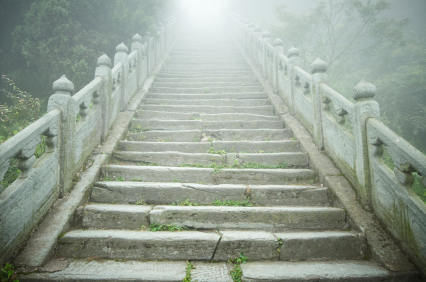
    Individuation is the centerpiece of Jungian analytical psychology. It involves an archetypical specific differentiation process in the dispute between Ego and Self as a conscious and unconscious search for spiritual wholeness and completeness. In the above mentioned Interview, the journalist Gordon Young asked him also how he sees  people after crossing the boundary to the second half of life.  Jung’s reply: “an ever-deepening self-awareness seems to me as  probably essential for the continuation of a truly meaningful life in the age, how uncomfortable this self-knowledge may be. Nothing is more ridiculous or unsuitable as older people who act as if they were still young — they lose even their dignity, the only privilege of age. The watch must be the introspection. Everything is revealed in self-knowledge, what is it, what it is intended to and about what and what for one lives. The wholeness of ourselves is certainly a rational not to complete something, but we are just so, and that must be lived as a unique, repetitive experience.”
    aging-individuation

    Where this wholeness is lacking, where people can find no transcendence of ay kind, no relationship in their life, we are often demoralized, blunt and atrophy in the age. Who can understand individuation without discarding postmodernism first? It is so important and necessary to seek his wholeness, which cannot been done without to accept one’s own life imperfectness. So one has to strive for wholeness and to learn, on the other hand but even more for transcendence and the death of the Ego.

    Conclusion

    The answer of today’s to the art of aging and mental health is common sense – read C.G Jung and ignore today’s social science and todays mechanistic medicine :

    • To learn even more and understand and even reconcile with the Self
    • Be at peace.
    • To learn yourself well to ensure the appropriate forms to find us.
    • In diverse forms of intellectual and other exchanges with others to stay.
    • To confront the fundamental spiritual questions, and to be able to give the own life meaning and importance.
    • Accept the different experiences of aging.
    • Death and dying need not to be hidden but  included.
    • To recognize that human life is embedded in a larger context of transcendent.
  • Presidential debate 2012 part III : Down in the catacombs of C.G. Jung’s collective unconscious

    Presidential debate 2012 part III : Down in the catacombs of C.G. Jung’s collective unconscious

    Thanks to the very unassuming moderation of Mr. Schieffer,  the Monday presidential debate was civilized and pleasant. How boring. Who won? Let’s look in the catacombs of C.G. Jung’s collective unconscious.

    As debates has become more ritualized over the decades, journalists (particular from CNN) have begun to sound like art or sport critics. Contests are analyzed on aesthetic or numerical grounds almost as though they are movies or football games.

    Third presidential’s debate split/smoke screen – The Romney/Obama Siamese twin show

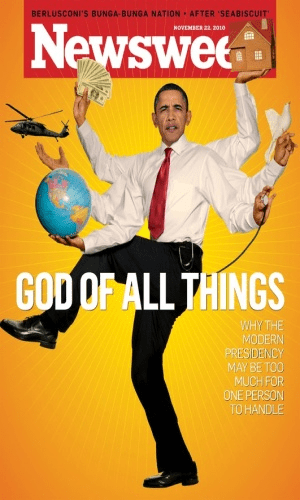
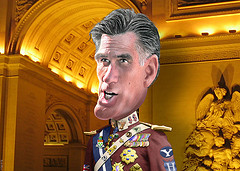
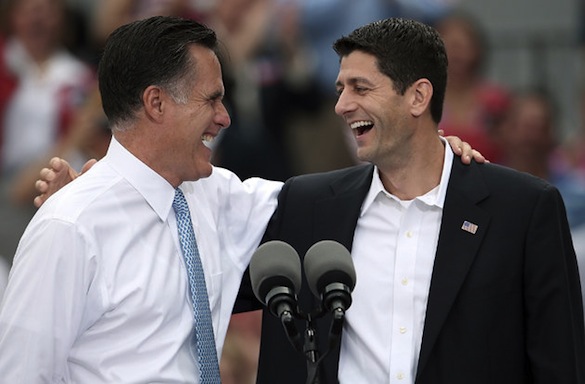
    A consensus emerged among the critics about Mondays debate: The foreign policy debate is a flop: Romney/Obama Siamese twins.The problem with treating politics as stagecraft, particularly this election, is that it mistakes the policies for the play and confuses theater with politics. Maybe not. Theater should provide entertainment, politicians should provide leadership. And it’s at this psychological level that this campaign is singularly confusing. Down in the catacombs of C.G. Jung’s collective unconscious where elections really occur, where the commenters don’t reach, and where the polls can barely penetrate, a mythological struggle is unfolding between two profoundly different archetypal figures: a lost boy who grew up with questions of identity, and a favorite son. Barack Obama, a lonely meritocratic smooth talker and Mitt Romney, from a family of pioneers. They’re even further divided by what they have in common. Both are outsiders, one because of the color of his skin, one because of the nature of his Mormon faith. One is caught in a politically (correct) suitable social worker language, the other in a CEO lingo.

    Mirror worlds

    Both candidates are campaigning in mirror worlds. Obama’s followers (also in Europe) have euphoric tendencies and a proven tolerance for paradox. The idea of “soft power” (killing by drones) makes sense to them, as does the notion that going into debt helps lift a sinking economy. Romney’s vision is a binder of women and balanced checking account, strictly suppressing his faith or any transcendent thought. In C.G. Jung’s Four Functions of Personality Obama is intuitive thinking and extrovert, Romney extrovert and sensing, and their contest strikes us as garbled and annoying because they create dissonances of a Mars and Venus sort of thing.

    Not since John F. Kennedy faced Richard Nixon, a good-looking man against a five o’clock shadow, has U.S. presidential politics united such constitutionally different beings. One man clings to words, the other to numbers. One educated himself by reading books, the other by scrutinizing balance sheets. On the screen, both personas and images (in the narrow meaning) seem almost identical fakes, like Siamese twins.

    I liked Mr. Schieffer’s Obama Bin Laden slip. It was not his fault, however, that it turned into an uninformative and rather anti-intellectual foreign debate. In this state of the race it was predictable that the candiates relied on rhetorics,  repeated soundbites and strayed to domestic economics.

    If you stop drinking the Whine of Change and smoking Hopium

    As usual Obama played ‘commander-in-chief’ card  – his most memorable (and correct) statement was: here’s one thing I’ve learned as commander in chief.. You’ve got to be clear, both to our allies and our enemies, about where you stand and what you mean. Was he the last 4 years?  To his enemies maybe – with the drone policy. To Europe, certainly not. In any case one should stop congratulating Obama for killing Bin Laden. The Navy Seals killed Bin Laden.

    Romney hit more content focused:  attacking me is not an agenda. Attacking me is not talking about how we’re going to deal with the challenges … we can’t kill our way out of this mess…

    Romney came across at least as informed and quick study and held his ground. Romney stated that the weak economy and apologetic policies are national security issue that has weakened America’s standing in the world.

    Hedge Funds Hot for Ailing Greece’s Debt again. Papanicolaou and his predecessor, Christoforos Sardelis, revealed a contract that helped Greece mask its growing sovereign debt to meet European Union requirements.“In secret deals, intermediaries have the upper hand and use it to squeeze taxpayers,” “The bargaining power is in investment banks’ hands.”

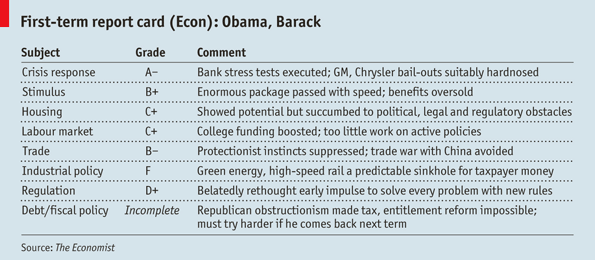
    Problem with Obama is, if you stop drinking the Whine of Change and smoking Hopium he has little to show of his first four years than headaches. In foreign policy – especially in the Middle East – he mostly reacted. During the banking crisis November 2008 actually Obama  proped up a financial system that was essentially a dead man walking. Some portrayed his top officials as, in effect, tools of Wall Street . These men and women have “no venality,” Krugman (NYT) hastened to say March 2009 in an interview with NEWSWEEK. But they are suffering from “osmosis,” from simply spending too much time around investment bankers and the like. Details of the administration’s bank-rescue plan  i.e. Troubled Asset Relief Program (TARP) settled on a financial plan that, in essence, assumes that banks are fundamentally sound and that bankers know what they’re doing. It’s as if the president were determined to confirm the growing perception that he and his economic team are out of touch, that their economic vision is clouded by excessively close ties to Wall Street.” When he had his chance to go after the big banks  March 2009 he didn’t touch them, sacrificing Europe (and the US citizens) to the big money complex. Resolving a systemic financial crisis ever since means now recapitalising weak financial institutions and moving their bad loans from the private to the public sector (vulgo taxpayer). The bail out money is borrowed by private banks increasing the deficit that gives him today the only good grade – from the financal system.  One wonders why.

    The election has a serious “B” word hang-up. Barack, Binders, bayonets, Big Bird, Benghazi, Bush, and recently bullshitter:

    The attack in Benghazi was by a spontaneous mob in response to some obscure YouTube video.” #Bullshitter

    You know who’s a #bullshitter? The guy who repackages his failed first term agenda and promises, no really, I’ll get it done this time.

    Not convinced of both.

    If you are satisfied with the next 4 years repeating the previous 4 years, then Obama is your man, if you are serious about something (unknown) not too different choose Romney. Both are in the pockets of Wall Street. The speculative money complex  has a binder full of European and American politicians.

  • Memories, Dreams, Reflections by C.G. Jung, Aniela Jaffe, Clara Winston

    Memories, Dreams, Reflections by C.G. Jung, Aniela Jaffe, Clara Winston

    It was always astonished when I heard C.G. Jung speaking (on YouTube) how well and simple he can explain his rather complex system. In this book several key ideas are equally well presented. This lead me to believe that the more casual and biographic books are  fine starting point for understanding Jung, not only his life and but also his thoughts:

    (more…)
  • Was Mary Magdalene a Penitent? NO! . . . well maybe if you look at it like that.

    Was Mary Magdalene a Penitent? NO! . . . well maybe if you look at it like that.

    Pope Gregory connected Mary Magdalene with the sinner (I think labeling her a prostitute came later) who washed the feet of Jesus with her tears and dried them with her hairs. Her name is not given in the Luke Gospel. Lk 7, 36-50 is the most beautiful – and sensual – part of my favorite Gospel. It is such a powerful image – Grace and Passion indeed. I strongly believe that Luke not only gives womanhood the uttermost respect, but also favors spiritual rule breakers. It would also believe Pope Gregory’s intention was not at all degrading women. Quite the opposite.

  • Archetypes of the presidential debate 2012 part I

    Archetypes of the presidential debate 2012 part I

    This US presidential election is a (no-) choice between two similar masks  for the future of America in the the Presidential debate.  But Obama actually  backed off March 2009 when he had some power over the banks and did not touch Wall Street ever since. After that the financial empire became unstoppable and started to attack Europe on its weakest link (Greece) and used subsequently the crisis they induced themselves to take over positions in Europe – essentially taking over Europe.

    The other choice is a more open-ended King Archetype  of entitlement due to personal virtues (or more likely personal wealth) who likes to fire people:

    The Vice Presidents debate left the impression – if not if a father son conflict – at least between an old cynical and a fresh (likable) Hero. The media too likes this sensationalism and the neck on neck horse race at 48%.

    Both President Obama and former Gov. Mitt Romney come with years of history, political and otherwise. One has a history of good rhetoric, and cool if not arrogant attitude. The other has a long history of deception, and ruthless business practices. One event – the media would like us to think it was the first debate – created myth and archetypes. Even the VP debate was influenced by it. Vice presidential candidate Paul Ryan’s workout photos were shot late last year, but Time delayed their release to achieve maximum embarrassment: It published them online just hours before the vice presidential debate, to discredit the young Hero (and make him look foolish).

    time_paulryan_theantihero
    time_paulryan_theantihero

    There is a long tradition of using archetypical images of male candidates—in most presidential races, the only kind—to illustrate their faults. Think of John Edwards fixing his hair, Michael Dukakis grinning from his perch on a tank,

    Michael_Dukakis_in_tank
    Michael_Dukakis_in_tank

    John Kerry windsurfing, and Nixon strolling down the beach in a pair of wingtips.

    These photos gained traction because they conformed with the electorate’s unconcisous idea of who these guys were: Edwards was all ego, Dukakis was a softie, Kerry was effete, and Nixon was the kind of unnatural creepy. And the Time photo shoot squares with Ryan’s vision of himself as Wisconsin’s own superhero, living at the peak of emotional and physical control. All the most powerful ideas in history go back to archetypes,” Jung wrote in his book The Structure of the Psyche. “This is particularly true of religious ideas”, but the central concepts of politics, science, philosophy, and ethics are no exception to this rule.

    Interested in the US election, I asked myself what are the archetypes used in the American election debate. Especially for the election debates pictures seem to be important, because they have a distinct advantage over the language effects: images transport more quickly archetypes than words – although they do – think of “Yes we can” of the last election. A further key stimulus is the (cross/specific) cultural body language, for which every human being has a genetically or by learning established. C.G. Jung drew up a picture of layers from personal unconscious to collective unconscious. He thinks that in all cultures, at all times and everyone was influenced from the collective unconscious expressed by those archetypes e.g. King. Warrior, Magician, The Great Mother, The Temptress, The Hero, Lover, Serpent, Dragon and many more, manifested by symbols. Those symbols are, according to Jung pictorial or gestural manifestations of archetypes.

    These symbols often find themselves in fairy tales, whereof politics is one of them. Jung says psychology was not necessary in the past because all cultures had their rituals and symbols to integrate these archetypes in the conscious living. That seems to be true for Religion, where psychoanalytic sessions replaced the confession. Many psychological problems exist only since there is the psychology before some religions ditched their symbols. However, rituals, the use of symbols, and the experience of the churches were not forgotten by the politics (and the politicians). Jung said also, that totalitarian systems want to replace and also ask for (and receive) religious worship. That was certainly true for Hitler, Mao, and Stalin not to speak of the Roman Caesars or Egyptian Pharos. I believe we move in this direction again also in the secular and so-called democratic states, especially at time of crisis. In today’s debate the Christian Division of good and evil and the symbol of fallen angel Lucifer symbolize the secession of evil from the good. We unconsciously lived this perception. A related feature of archetypes is that, while they shape our perceptions and behaviour, we only become conscious of them indirectly, as they are manifest in particular instances. It is rather like Schopenhauer and Kant’s notion of the inaccessibility of the “thing-in-itself”, upon which Jung drew: you can’t experience archetypes directly but only when they are manifested in symbols and images. Religious believers relate to the archetype of the wise man via the images available to them in their culture (given, for the sake of argument, that wisdom is what Jesus or the Buddha represent).

    But what does this mean? Look of the disastrous readings Obama got from the – traditional left leaning – media after the first election debate, almost a image of the fallen angel Lucifer crossed my mind. We often even do not understand why we reacted this way, and we feel guilty even if we are aware of it. At the case of presidential debates, what we see is an image but of the following plot we unaware. In history stories arise and figures emerge which made or broke the bid of presidency. One should interpret this flood of images and, it’s about experience the unconscious and not to interpret, because the unconscious is not fully open to rational analysis, logic, or form in otherwise. The most important task is to understand the dualism of good or evil in us. With other words we have to differentiate between Ego and Persona and recognize our Shadow and our Animus/Anima.How far you might want to follow Jung along this path is up to personal (i.e. cultural) experience. The shadow is a useful concept to many, as that side of our character which is often buried and sometimes, suddenly emerges. The notion of the animus and the anima, say, evident in Taoism.

    Seen from Europe, now what is the difference of the two presidential Egos in psychological terms after removing the mask? Answer, Nil.   Mitt Romney ran hard and successfully to the centre, and the president’s pathetic overall performance in the debate mirrored his economic performance the last four years.The same pathetic motivation speeches, but this time with bad bottom line economic figures on Obama’s watch. I have to admit, I liked the rhetoric four years ago, but it has become stale. The magic authority, his wisdom and magical transformation mantra (Yes we can) was not there anymore. Mitt Romney won the debate because he actually at least gave a convincingly impression, that he understands the issues and knows how he’s going to tackle them, not just presenting some empty rhetoric like Obama. Substance won over form, for a change. President Øbama was smart enough not to touch Wall Street the last four years, instead he left his US voters on dire street and supported the neo-con agenda in Europe to get better numbers at home  In foreign affairs, we will see. There Obama has not more to show, than his (correct) drone and terrorism strategy (i.e. Osama Bin Laden). That is not little, but in Europe and the Middle East he did not well and China does not take US (fiscal) policy serious anymore, working on plan B.

    This election is, as has been said, a (no-) choice between two similar masks (Persona) who both hide  by a plutocracy of wealth and corporate power; underway for 4 years by President Empty Chair or incoming President Cooperate Raider. Both  means that government would no longer serve the interests of the community but collaborate with their clients to establish a separate set of laws that entitle them to preferential treatment while creating barriers to competition by eliminating opportunities for others.

    The King seemed more centrist and plausible at the debate is because he crafted an exceptionally smart and pointed attack against the President’s record, and that stood in stark contrast to the lame deceptions of the Great Mother’s 30-second ads, sound bites and false and mischievous spin if the opposition intention. Mitt played actually quite reasonable and sophisticated the King’s role. For many Americans – including in my family – it was the first time they got a good impression of Mitt, and we will see if he can continue to ride on the white horse as the election approaches. Paul Ryan comes across young and authentic – not a superhero. He has potential. President Øbama was not helpful – if present at all – in Europe’s crises, Mitt could only be improvement but than he needs a steep foreign policy learning curve.

    Note October 16, 2012 – to be continued With no podium to hide behind in Tuesday’s debate, the candidates’ style and body language will be in the spotlight. In the shadow always wins the bank.