Tag: jungian psychology

  • Jianghu seen as Archetypes defined by C.G. Jung (Magician, King, Lover, Warrior and Hero)

    Jianghu seen as Archetypes defined by C.G. Jung (Magician, King, Lover, Warrior and Hero)

    The Jianghu is the fictional alternative universe coexisting with the actual historical in which many Chinese wuxia stories are set. It seems jianghu, a literary tradition going back to the Ming Dynasty,  can easily be explained  as collective unconscious in which the Chinese universal themes which run through all human life. Inwardly, the whole history of the human race, back to the most primitive times, lives on in us and the wuxia stories are myths bringing the archetypes  of the  collective unconscious. A strong element in the structure of jianghu, is the line between good and evil, right and wrong, is crystal clear; it is absolute, an in this movie you can see the Archetypes of the shadow, animus and anima of the personal unconsciousness. Typically, the heroes in Chinese wuxia fiction do not serve a lord, wield military power or belong to the aristocratic class. The Chinese wuxia stories can be contrasted with martial codes from other countries, such as the Japanese samurai’s bushido tradition, the chivalry of medieval European knights and America’s Western but moral and laws of physics my not apply in this grene.

    One example  is the cult movie Ashes of Time,  Wong Kar-Wai’s wuxiapian is the most uncompromisingly complex film of thinking man’s martial arts melodrama with very little action outlined like a greek tragedy. It features some of the  biggest stars in Hong kong Cinema and Christopher Doyle’s usual magnificent visuals, and William Chang’s predictably sublime art direction,  derived from the two characters  from Lois Chas’s novel The Eagelshooting Heros: Xidu (Emperor of the West) and Dongxie (Emperor of the East).  One is the anti-thesis of the other, they are implemented as the two negative Archetypes Ouyang (The Magicician) and Huang (The Lover).

    Wong’s goal is focusing on the psychological and emotional reasons that brought the characters to the behavior we see in the novel. The most striking example is the principal character Ouyang Feng (Leslie Cheung). In the film he’s still a man who trusts people, and is not completely selfish. His troubled relationship with a woman (the famous Maggie Cheung) shapes his character, and leads to his change to an evil and treacherous man.  The movie took a de-humanized world (where heroism was often more important than sentiments) and injected humanity into it. We’re presented with allegedly invincible characters who turn out to  crumble under the pressure and pain of rejection and memory.

    It’s pointless trying to write about Ashes of Time’s plot, as doing so would be entirely too superficial, and leave out important facets of the story. With a careful eye and a few repeated viewings the film’s story is not so hard to grasp. What’s important is the mood Wong Kar-Wai creates, and the symbols and Archetypes we feel in each and every character. For those who seek metaphors,  the movie presents the eye as well as the illusions of vision. One character is nearly blind. Another, a swordsman, goes blind in the middle of a horrendous battle. Two characters, Yin and Yang—one presented as a man, the other as his sister—are identical. And there is a brief appearance by a legendary sword fighter who hones his skills against his own reflection. Plenty of visual symbolism , from the Yin/Yang character to the motifs of water and the desert landscape. Two women hopelessly in love with the man who pines away for the woman who will never be his (and whom we do not learn about until the very end).

    Ouyang Feng (Leslie Cheung Kwok-Wing) the fallen swordsman commissioning assassins later known as the Poison of the West.The impotent Lover becoming the (cruel) Magician
    Hong Qigong  (Jacky Cheung Hok-Yau) the young idealistic swordsman, going north with his wife The Warrior in its fullness – The Hero
    Murong Yin (Brigitte Lin Ching-Hsia) daughter of Murong clan; Murong Yang the Brother one schyzophrene personBrother want to have Huang killed because of rejection of Murong’s love she his brother Animus and shadow under control of ego
    The Blind Swordsman (Tony Leung Chiu-Wai)
     The (weak) wandering King – Ödipus at Colonos
    Ouyang Feng’s love (Maggie Cheung Man-Yuk) she married his brother, because he asked her too late and waits her whole live for him The Mother Earth – center of the pentagon
    Huang Yoshi (Tony Leung Ka-Fai) adventurous swordsman and longtime friend of Ouyang Feng Huang is a burnt-out womanizer later he will be known as the Evil of the East. The (addicted) Lover
    The girl with the mule (Charlie Young Choi-Nei) The virgin (Maria?)
    Hong Qigong’s wife (Li Bai) The loyal wife
    Blind Swordsman’s wife (Carina Lau) The queen

    Leslie Cheung Kwok-Wing, Maggie Cheung Man-Yuk, Tony Leung Chiu-Wai, Tony Leung Ka-Fai, Brigitte Lin Ching-Hsia, Carina Lau Ka-Ling, Jacky Cheung Hok-Yau, Charlie Young Choi-Nei, Lau Shun

    Occurring over the five months of the Chinese calendar, Ashes of Time spends most of its length with two characters in particular, Ouyang Feng (Leslie Cheung) and Huang Yaoshi (Tony Leung Ka-fai). Old friends who meet once a year to catch up and drink a magic wine, the two serve as the nexus for the film’s overlapping narratives, mired in their own emotional crises.  Ouyang Feng’s  inn is the center of the action, as the stories are told by and about the visitors in the great Chaucerian tradition. Ouyang is morally bankrupt, yet manages to come up with some of the most poetic observations of human nature in his ruthless monologues.The story is not circular, despite the essentially equivalent monologue delivered by the protagonist at both ends of the film.  Ashes of time is a study of personalities and as such follows the convoluted logic of human relationships.  For the first half of the film characters come and go in seemingly pointless chaos. Yet, the travelers at the inn are connected, and their fates intertwined by the simplest passions. In a bizarre twist, one woman is the reason for Feng’s self-imposed hermitage, for he rejected her to marry his older brother even though they had both been in love and connects all main characters.

    Raised by his elder brother, Ouyang’s ambition is to become a famous swordsman  and faced with a choice 10 years earlier between the said woman he loves and martial adventures, he chooses the latter. Ouyang becomes cynical and materialistic,  runs a small inn at the edge of the desert,  commissioning assassins by  hiring young but poor swordsmen. Every year during the season in which peach trees blossom a close friend visits him, Huang Yaoshi. This year Huang brought something for his friend Ouyang, a magical wine that would make one forget the past.

    Huang Yaoshi, has, like Ouyang, also  a sad love story to tell–he once had an unconsummated affair with the wife of his best friend – which turns out the blind swordsman – at Peach Blossom Land. Over the next year, in the different seasons, many travellers pass by the inn each bringing their stories, many of them being about lost love and why would one wish to forget the past.   Ouyang  becomes an assassin contract from the schizophrenic Murong Yang/Murong Yin (Sister and Brother). He meets the down-and-out swordsman with failing eyesight (who turns out to be Huang’s friend who seduced his wife); an impoverished young girl with an mule who wants to avenge her brother’s death; and Hong Qi, another aspiring poor swordsman, and his loyal wife.

    Murong Yin/Yang (Brigitte Lin) at first it appears as if Yin and Yang are brother and sister, the brother wanting to kill the womanizer Huang for rejecting his sister, and the sister wanting to kill her brother for interfering with her relationship. As it turns out, however, Yin-Yang are one and the same physical person, who has developed a severe split personality disorder because of Huang’s rejection of Murong’s love.

    The pentagon.

    The Blind Swordsman (Tony Leung Chiu Wai) also suffers from rejected love, his wife having been seduced by said Huang on their wedding night. He wishes to complete one last job to raise the money to return home to see the “peach blossom,” later revealed to be the name of his wife, before his creeping blindness ensures he can never see her again.

    Carina Lau, playing the Blind Swordsman’s wife is shown wordlessly caressing her horse with such tenderness that the stallion becomes as much a symbol of virility and sexuality, The Blind Swordsman’s last job has him saving a village from a swarm of bandits, and the ensuing bloodbath is more visceral than anything to crop up in the last decade’s boom of arty martial arts films. Yet even that sequence is undercut by Wong’s directorial flourishes, the image bleeding into white when the swordsman looks up and has his already weakened vision bleached out by the sun. The entire scene builds less a sense of heroism than a mounting futility.

    Achetypes

    The other two strangers, Hung Chi (Jacky Cheung) and the Young Girl (Charlie Yeung), arrive separately only to influence each other’s lives profoundly. She wants to hire Feng to arrange the murder of some men, who have killed her brother. She has nothing to offer except eggs and her mule and Feng refuses to help, but suggests that her body is more marketable than her pitiful eggs. She refuses to yield and waits for someone to agree to help her. The young Hung is a master swordsman, but also a bit of an idealist. He works for Feng for a while but eventually takes pity on the girl and goes on a murderous rampage, slaughtering all those who had participated in the killing of her brother. In the brawl he loses his finger and thus the ability to wield a sword. He is undeterred, however, and when Feng refuses to send for a doctor hinting to the Girl again that she might have to prostitute herself for the sake of Hung, he forbids her to do so. He picks up where the Blind Swordsman fails. Where he has spent his entire life counting the money of each job to collect wealth, Hong redeems himself when he helped the poor village girl who paied  him a single chicken egg. The girl, the virgin with the donky leaves without trace. Visually, she is almost like a distorted Eastern Version of the Virgin Mary. She is also the only one not interconnected in the pentagon.  After he recovered Hung, heads with his loyal wife north, leaving Feng in envy of fulfilled love.

    In the books to which Ashes of Time serves as a prequel, the Ouyang and Huang are hard-hearted and violent, Huang someone who still believes in love but can never have it himself, Ouyang a man who rejects love entirely. Ouyang has fled from the woman who loves him, while Huang never follows through with the love he inspires . Maggie Cheung arrives near the end of the film to deliver a devastating monologue to Huang. Ouyang’s ex-lover, Cheung’s character ultimately married the man’s brother because she tired of waiting for Feng to return to her. She clarifies the reasons for Huang and Ouyang’s annual meeting and the woman who links them in pain, and her speech, framed in a simple, wide-angle close-up without trickery that lets all focus rest on her words, speaks directly and piercingly to the pain of unrequited love. When the story comes full circle and the two main characters discover the uselessness  deception of themselves, that the attempt to forget only further ensconces painful remembrances in memory, Cheung’s pain is fully visited upon Ouyang and Huang. Maggie Cheung’s five-minute  are the undisputed centerpiece of the film both in terms of story (she is the one link between most of the characters) and acting. Wai’s camera stares intently at her while she gazes beyond time and relives the past full of regret.

    Maggie is an accomplished actress, but this performance was beyond description.

    Her subtle agony is expressed obliquely and the one has to look into her eyes to touch the intensity of her feeling. Ouyang’s ex-lover, Cheung’s character gives Huang  the wine to forget and  dies soon afterwards. When she dies, the expression is beyond visual. Her body seems to become colder and shrinks, the eyes close, the flower wilds. She dies as there is no reason to live.

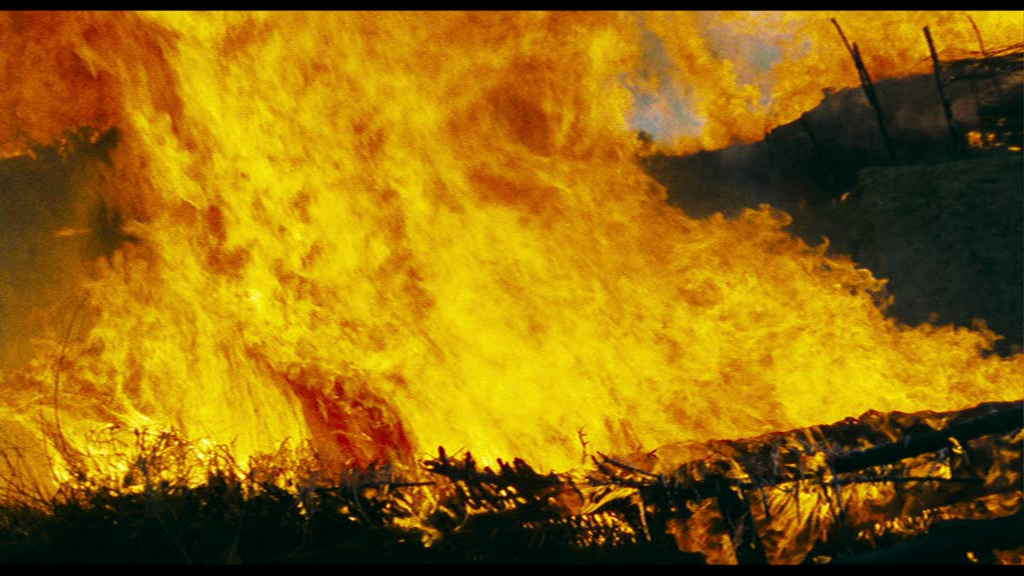
    The mesmerizing tale of lost chances, fear of abandoning oneself to another, and pain of betrayal stops by the individuation when Oyuand returns to White Camel Mountain after finding out that his beloved has died. Where in the youth he saw mountains only as obstacles that concealed a wonderful world behind them, where he would climb them, leaving his love to seek this world, where once there he would find that there’s nothing worth seeing; he now no longer wondered what hid behind the mountains. He burns  his inn and moves back later be known of the Poison of the West.

    The cinematography is out of this world. There is so much imagery that repeated viewing is a must. Complicated tracking shots, abrupt editing, impressionistic pastel-like blurred images, and static scenes, all mix together in a veritable whirlpool of technique and ideas. Christopher Doyle is perhaps one of the best, most imaginative, and daring cinematographers out there. Seeing is believing.
    http://www.youtube.com/watch?v=5VZfieiscO4

  • The symbol of serpent and dragon – an Jungian view

    The symbol of serpent and dragon – an Jungian view

    Serpent and dragon

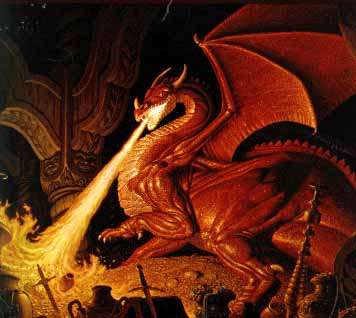
    Everywhere the symbol of the serpent and dragon is connected with the (d)evil. That does hurt me a little bit, as I am Serpent in the Chinese Zodiac – which is the least favored sign. The snake has a bad rap not only according to my wife, but certainly within Christianity. In defense of myself (and the snake), I wanted to look at the snake in symbolic terms, in Jungian terms and to explore this from all possible angles.  In alchemical symbolism dragons are associated with fire and the primal chaotic material. The Western concept of dragons is to portray them as to be feared, and destroyed, whereas in the Near East these negative traits are minimized, Furthermore in the  Far East the dragon possesses different aspects, in that it is simultaneously a creature of water, of earth, of the underworld, and of the sky. A self depicting serpent or dragon eating its own tail ( Ouroboros) is an ancient symbol which is often associated with Gnosticism, and Hermeticism. Carl Jung interpreted the Ouroboros as having an archetypal significance. Jung gave the serpent an important role in his Quaternio Series Diagrams in his book “Aion”.

    The Dragon

    This is one of the most easily recognized mythical beasts. It is also a pervasive symbol in a variety of cultures, giving rise to many interpretations about exactly what a dragon is, what it represents, and how it behaves. It can be associated with good luck, fortune and wisdom, or with bad luck, elemental evil and heresy. Carl Jung would have called the dragon a symbol of the universal unconscious, since so many cultures have myths associated with a dragon, or dragon like beasts.

    The symbol of serpent and dragon

    The dragon is for Carl G. Jung the personification of Sulphur and is by far the male element. Since the dragon is said to impregnate himself by swallowing his tail, then the tail is the male organ and the mouth is the female organ.  The winged dragon represents personal obstacles that must be overcome to insure a more-perfect being; thus, leading to the saying: “You conquer the dragon or he will conquer you.”   We see that Jung did, certainly, inspire awareness of the connections between modern psychology and ancient spiritual practice.  Some credit the Chinese as the inventors of dragon. The origins of dragon lore are a matter of some debate. It is known that at least as far back as 300 BCE, some bones of prehistoric animals were labeled as coming from dragons. In Christianity the dragon is generally a symbol of evil, a demon or the devil. The most famous Christian legend is that of St. George slaying the dragon.

    Much of dragon lore tells us that dragons were loathsome beasts and evil enemies to humankind. But dragons were born of a time other than men, a time of chaos, creation out of destruction. The dragon is a fabulous and universal symbolic figure found in most cultures thought the world.

    Symbology of the dragon:

    Gnostics: “The way through all things.”

    Alchemy: “A winged dragon – the volatile elements; without wings – the fixed elements.”

    Guardian of the ‘Flaming Pearl” symbol of spiritual perfection and powerful amulet of luck.

    Chinese: “The spirit of the way”‘ bringing eternal change.

    In Scripture the term dragon refers to any great monster, whether of the land or sea, usually to some kind of serpent or reptile, sometimes to land serpents of a powerful and deadly kind. It is also applied metaphorically to Satan.

    • Thou breakest the heads of the dragons in the waters. — Ps. lxxiv.13.
    •  Thou shalt tread upon the lion and adder; the young lion and the dragon shalt thou trample under feet. — Ps. xci.13.
    •  He laid hold on the dragon, that old serpent, which is the Devil and Satan, and bound him a thousand years. –Rev. xx. 2.
    •  In the New Testament the word “dragon” is found only in Rev. 12:3, 4, 7, 9, 16, 17, etc., and is there used metaphorically of “Satan.”

    The Serpent

    Aroused snake by the entrance to a Yezidee-temple. It is blackened by soot.
    Aroused snake by the entrance to a Yezidee-temple. It is blackened by soot.

    Of course, everybody knows the Biblical story of the fall of man tells of how Adam and Eve were deceived into disobeying God by a snake (identified as Satan by both Paul and John in II Corinthians and Revelation, respectively). In the story, the snake convinces Eve to eat fruit from the Tree of Knowledge of Good and Evil, which she then convinces Adam to do as well. As a result, God banishes Adam and Eve from the garden and curses the snake

    Dr. Jolande Jacobi signifies in her chapter “The Dream of the Bad Animal” the serpent initial material, in need of transformation, the chthonic, moist element of water, female, standing for unconscious  symbol for many things depending on the context, also wisdom. In the famous Houston Interviews (Bollinger, C.G. Jung Speaking or youtube) he talked about a  28-year-old woman who told Jung that “she had a black serpent in her belly.”  The woman was “only intuitive, entirely without a sense of reality.” Then she announced that the snake, which had been dormant, had suddenly become active. “One day she came and said that the serpent in her belly had moved; it had turned around,” Jung says. “Then the serpent moved slowly upward, coming finally out of her mouth, and she saw that the head was golden” 

    Jung amplifies the image of the snake in the abdomen by reference to the serpent in Kundalini Yoga. “I told you,” Jung says, “the case of that intuitive girl who suddenly came out with the statement that she had a black snake in her belly.” He situates the snake in the context of the collective unconscious. “Well now, that is a collective symbol,” he says. “That is not an individual fantasy, it is a collective fantasy.” The image of the snake in the abdomen, Jung says, “is well known in India.” Although the woman “had nothing to do with India” and although the image “is entirely unknown to us,” he says that “we have it too, for we are all similarly human.” When the woman first told Jung about the snake in her belly, he wondered whether “perhaps she was crazy,” but then he realized that “she was only highly intuitive.” She had intuited a typical, or archetypal, image. “In India,” Jung says, “the serpent is at the basis of a whole philosophical system, of Tantrism; it is Kundalini, the Kundalini serpent” (1977: 322).

    .

    Fighting with them – The Hero Myth

    In the fight with the dragon the hero battles the regressive forces of the unconscious, which threaten to swallow the individuating ego. The forces, personified in figures like Circe, Kali, Medusa, Sea Serpents, Minotaur, or Gorgon, represents the Terrible side of the Great Mother. The Hero may voluntarily submit to being swallowed by the monster, or to a conscious descent into Hades so as to vanquish the forces of darkness. This mortifying descent into the abyss, the sea, the dark cave, or the underworld in order to be reborn to a new identity expresses the symbolism of the night-sea journey through the uterine belly of the monster. It is a fundamental theme in mythology the world over — that of death and rebirth. All initiatory rituals involve this basic archetypal pattern through which the old order and early infantile attachments must die and a more mature and productive life be born in their place.

    The mythological goal of the dragon fight is almost always the virgin, the captive, or more generally, the ‘treasure hard to attain.’ This image of the vulnerable, beautiful, and enchanting woman, guarded by and captive of a menacing monster gives us a picture of the inner core of the personality and its surrounding defenses. The hero’s task is to rescue the maiden from the grasp of the monster and, ultimately, to marry her and establish his kingdom with her. This dragon fight and liberation of the captive is the archetypal pattern that can guide us through those major transitional passages in our personal development where a rebirth or reorientation of consciousness is indicated. The captive represents the ‘new’ element whose liberation makes all further development possible. In response to the call the hero undertakes  a dangerous journey to an unknown region full of both promise and danger.

    Getting there – the night sea journey.

    cropped-spiritualjung.jpg

    The night sea journey is a kind of descensus ad inferos--a descent into Hades and a journey to the land of ghosts somewhere beyond this world, beyond consciousness, hence an immersion in the unconscious [“The Psychology of the Transference,” CW 16, par. 455.]. Mythologically, the night sea journey motif usually involves being swallowed by a dragon or sea monster. It is also represented by imprisonment or crucifixion, dismemberment or abduction, experiences traditionally weathered by sun-gods and heroes: Gilgamesh, Osiris, Christ, Dante, Odysseus, Aeneas.

    In the language of the mystics it is the dark night of the soul.  Sometimes, as with Jonah, Aeneas, Christ, and Psyche, it is a descent into the depths — the sea, the underworld, or Hades itself. Always there is a perilous crossing. Sometimes the faintheartedness of the hero is balanced by the appearance of guardians or helpful animals that enable the hero to perform the superhuman task that cannot be accomplished unaided. These helpful forces are representatives of the psychic totality that supports the ego in its struggle. They bear witness to the fact that the essential function of the hero myth is the development of the individual’s true personality.

    Symbols of Spiritual Growth and Transformation

    Uroboros
    Uroboros

    The Ouroboros, the snake forever swallowing its own tail, is a famous alchemical symbol of transformation. Jung saw the Ouroboros much like he saw the mandala, as an archetypal template of the psyche symbolizing eternity and the law of endless return – and individuation.

    This Ouroboros symbol was first created in 1682. However, the idea of a snake/serpent eating its own tails can be referred to as far back as Ancient Egypt.

    The image, according to Dr. Jolande Jacobi, “shows a sinful world of creation, surrounded by the Serpent of Eternity, the Ouroboros, and characterized by the four elements and the sins corresponding to them; the whole circle relates to the center, the weeping eye of God, i.e., the point where salvation, symbolized by the dove of the Holy Ghost, may be achieved by compassion and love.”

    Ouroboros symbol in Alchemy

    The Uroboros symbol in Alchemy, was also seen as a symbol of assimilation. Consumption of the opposite. This sign was also regarded as a symbol for immortality as the serpent never dies and is always reborn.  The snake is seen as a sacred creature in Africa, especially in West Africa. The Ouroboros symbol is prevalent in many religious aspects in the form of the Oshunmare. The Oshunmare is also seen as a symbol for rebirth.

    Quaternio series: Moses - Shadow - Paradise - Lapis Quaternio
    Quaternio series: Moses – Shadow – Paradise – Lapis Quaternio

    In the Quaternio series; Man culminates in the of a good God, but rests below on a dark and evil principle (Devil or serpent). The serpent has its complement in the Paradise Quaternio which leads into the world of plants and animals. Indeed, this serpent actually dwells in the interior of the earth and is the pneuma that lies hidden in the stone. The point of greatest tension between the opposites…(is)…the double significance of the serpent, which occupies the center of the system. Being an allegory of Christ as well as of the devil, it contains and symbolizes the strongest polarity into which the Anthropos falls when he descends into Physis. Symbols of fear and cunning

    A lack of first hand experience with snakes makes the serpent a creature representing a fear of the unknown. As such, snake symbolize that unknown fear. The fear can be an intuitive warning or an unfounded anxiety about some undefinable, something hidden. Honest analysis provides the key to deciphering the snake symbol. In Christianity, the symbol pertains to Satan and the world we currently live in. It also refers to the men and women of this planet as being self-centered and “fallen”. The whole idea of the serpent itself is that it reflects something that is re-creating itself.  Be wise as serpents … – Serpents have always been an emblem of wisdom and cunning:

    Genesis 3:1. Now the serpent was more crafty than any beast of the field which the LORD God had made. And he said to the woman, “Indeed, has God said, ‘You shall not eat from any tree of the garden’?” 2The woman said to the serpent, “From the fruit of the trees of the garden we may eat; but from the fruit of the tree which is in the middle of the garden, God has said, ‘You shall not eat from it or touch it, or you will die.’” 4The serpent said to the woman, “You surely will not die! 5“For God knows that in the day you eat from it your eyes will be opened, and you will be like God, knowing good and evil.”

    Snakes as Sexual Symbols

    Sexuality greensnake
    Sexuality greensnake

    Snakes are usually symbolizing sex and sexuality. The feelings the snake evokes is key to its interpretation. Feelings of revulsion indicate sexual dissatisfaction.
    The Legend of the White Snake is one of the most famous folk tales in Chinese culture. Legendary actress Brigitte Lin, is a snake spirit who has come into the human world with her sister Green Snake. Human scholar Xu Xian  immediately catches White Snake’s attention from afar, and the two quickly fall in love and get married. However, a Taoist priest sees the two spirit sisters returning to their true self. There is an enigmatic seduction scene in there. Maggie Chung is the lusty maiden & titular character Green Snake, flirting erotically with thrilling, dynamic, not to say with perverse personality. Despite having accumulated 500 years of merit, her ability to remain in human guise is restricted by her delight in her own snakey sensuousness.

    She frequently reverts to her serpent form, in whole or in part. Green Snake in her unrestrained manner finds that she is attracted to the monk, & as White’s Snake disciple, she thinks it only correct that she find a human partner as admirable as Xu Xian has been for White Snake.

    Serpents as Symbols of Wisdom

    The Egyptians used the serpent in their hieroglyphics as a symbol of wisdom. Probably the thing in which Christ directed his followers to imitate the serpent was in its caution in avoiding danger. No animal equals them in the rapidity and skill which they evince in escaping danger. So said Christ to his disciples, You need caution and wisdom in the midst of a world that will seek your lives.

    My Chinese sign of the snake serves as embodiments of intellectual, elegance, wisdom and sensuality, but describes the bearer of the sign also as cold, arrogant and feared by many. For Chinese astrologers, the snake is a revered creature of  intuition, and spiritual development. The very same mystery and elusiveness causing fear in some gives rise to a fascination or intrigue in others. I connect to the sign of the snake as embodiments of elegance, sensuality,  the intuitive, introspective, refined and collected of the Animal Signs.  But am I dark  and  cunning,  plotting and schemes to make certain things turn out exactly as I want them to? I guess that would be similar to the “green snake”,  would be my shadow.


  • Phillip Jenkins book “Jesus Wars” seen from a Jungian view

    Phillip Jenkins book “Jesus Wars” seen from a Jungian view

    In his book book “Jesus Wars” Philip Jenkins is able to communicate complex ideas and complicated concepts in a manner that preserves their integrity  to a wide audience and at the same time renders them as a fascinating and lively story. I have been a fan of his books for some time.  His book “Jesus Wars” describes the historical intricacies that surrounded the theological debates of the fifth through eighth centuries of nature and person of Christ. The book  lives up to its subtitle — How Four Patriarchs, Three Queens, and Two Emperors Decided What Christians Would Believe for the Next 1,500 Years in more than one way.   “Jesus Wars” explains how arbitrary and narrowly the Orthodox belief won over what’s declared as Heresy. Phillip Jenkins  got me hooked from the first page by answering my key questions  about this Byzantine period of Christian schism in the 4th and 5th century (and beyond):

    • Why were theological battles about Jesus’  nature that  fierce and violent?
    • Were those Christian “civil wars” the primary cause of the “Fall of the Roman Empire”
    • Did those tensions in the cradle of Christianity lead to appeasement toward their  invaders?
    • How interacted religion, patriarchs and worldly powers?
    • Were the theological differences subtile or substantial?

    Orthodoxy (and of course the Roman Catholic Church) state that Jesus was both God and Human. Seen from C. G. Jung  it misses just one dimension why the most complex monotheistic symbol  (Trinity) prevailed.  As Phillip Jenkins explained in  another brilliant book  “The Lost History of Christianity” –  religions fight, prosper, flee, fade away, die or get even killed. His sociological understanding of religious history is always  helpful to connect related and interdependent events. He argues also convincingly from Mark gospel and even more from  (mystic and slightly gnostic) St. John the validation approaches. Approaching religious and the mystic questions with logic (!) is less convincing: “But when we have said that, we have raised more questions than we have answered, as the basic belief in Jesus Christ demands combining two utterly different categories of being”. 

    The book explains very well, the substance of different beliefs of Jesus’ nature and their political and philosophical implications. Such a transgression of boundaries indicated indeed a crossroad within Christianity between the “patriarchs” of Constantinople, Rome, Antiochian and Alexandria. It has been also hotly disputed, up today  by strict monotheists such as Muslims and Jews. If pressed to identify a deficiency in Jenkins’ telling of these debates it is that his text emphasis to the human and political factors in this drama. Modern history is somewhat deaf in regards of religious, transcendent and psychoanalytical importance of those positions  keeping  God at a distance.  Jenkins knows the Gospel but may underestimate the powerful value of combining the material (human) and the spiritual (divine), the power of archetypes and symbols and the importance of the female Mary leading to Quaternity.

    Seen only from the historian angle Phillip Jenkins notes correctly “What ultimately became accepted as Christian orthodoxy was hammered out in a process that was painfully slow, gradual, and often bloody. This conflict was marked by repeated struggles, coups, and open warfare spread over centuries. It is easy to imagine another outcome in which the so-called Orthodox would have been scorned as heretics, with incalculable consequences for mainstream political history, not to mention all later Christian thought and devotion.” Phillip Jenkins believes that this thing “turned on a dime.” Doctrinal shifts went back and forth and there was a time when the two-nature or God/Human description of Jesus was a heresy.  This is how one of the battles was won: “Caledonian ideas triumphed not because of the force of their logic, but because the world that opposed them perished.” “Looking at history, the process of establishing orthodoxy involved a huge amount of what we might call political accident” he claims — on the outcome of dynastic succession, on victory or defeat in battle, on the theological tastes and political plans of key figures. History is however, always a story of ifs, and matters might very easily have gone another way.  And yet the outcome — the Trinity and the supposed two natures of Jesus — form the bedrock of orthodox Christian belief.

    Jenkins asks if chance is a valid concept and when he says no — not from a Christian perspective – he steps over the border being a historian. Yes, Nestorians, or Monophysites could have won – but they didn’t – and so failed other competitors to the Roman Church. As Christians refused to worship the emperor as a god, persecution of the Christians and conflicts continued until the reign of Constantine in the early 4th century AD. Very popular with the military was for instance Mithraism, until by 392 AD, Emperor Theodosius I banned the practice of pagan religions in Rome altogether and Christianity was, without question, the official religion of the state. That is just another if.

    From  my catholic profession and Jungian point I would strongly disagree with Jenkins when he analyzes logically Monophysitism,Nestorianism and  the prevailing Orthodox concept of Trinity.  He leaves aside its  theological novelty, uniqueness and the symbolic value of the separated dual nature picture of Jesus. I share his critique of the basic political process: this is the truth and if you don’t believe it, you are a heretic. Philip Jenkins points out that these conflicts have “left an impact that survives into the present day.” He then makes what I feel is his most profound contribution: he says that the church councils which were responsible for the present-day creeds “remade a faith.” Quite frankly – yes-  this central and dogmatic approach is the very reason why the Roman Church became the first and still is the largest global organisation with the “biggest brand name” and not 38000 other Christian side branches.

    We all know that the winners write history but as Jenkins sees it, it is even worse than that — far worse. He rightfully argues that “historians write retroactively from the point of view of those who would win at some later point, even if that victory was nowhere in sight at the time they are describing.” Quite frankly, his story of twisted, tortured history applies also to the background of postmodern de-constructionism also known as political correctness.

    The author describes the key questions of an honest fight between concepts (or religions): How is it possible to possess two natures — what was their relationship?

    Arianism is the teaching that Jesus was not eternal, that he was a created being, created within the framework of earthly space and time, and thus not fully God. Arius was a priest in Alexandria, Egypt, who died in AD 336. Jesus was seen as the very best creature that God created.  Arius had triggered such turmoil within the churches that it was a leading cause of the Council of Nicaea in 325 AD. The Council examined the Scriptures that spoke of who and what Jesus was, in Paul’s letters and the first chapter of the Gospel of John, and declared Arianism to be a heresy. They wrote a creed that was mainly aimed at opposing Arianism. The struggle continued after Nicaea and after Arius’ death, and it even took on political implications. The chief of the opposition to Arianism was Athanasius. In 381, the Council of Constantinople once again called Arianism a heresy, mostly due to the Biblical and philosophical case that Athanasius had built over the years. Arianism faded fast after that.  The specific Arianist group Athanasius fought had died, but the basic idea did not. It resurrected itself many times throughout church history. Many of today’s groups that derived from Christianity have strong tendencies toward that belief, even if expressed very differently: Unitarianism and Jehovah’s Witnesses

    Docetism [ < Greek dokeo (to seem, appear to be)] : The idea that Jesus Christ was a totally divine being who only appeared to be human. It is the opposite idea to Arianism, in which Jesus was all-human and not in any way divine in nature. For docetists, Jesus was with us, but never really of us, and thus didn’t really suffer, and (for most Docetism) didn’t really die. Docetism is not a heretical group as much as it is a category, a basic idea which describes many schools of thought over the years.  Any idea that assigns a low worth to the material world and a high value to that which is deemed ‘spiritual’ will tend toward this idea. (See “Gnostic” below.) Docetism is a form of dualism, and like other dualisms, Docetism was rejected by the early church as not being in keeping with what Christ was about. God so loved us that God ‘incarnated’ (that is, became human) in Jesus, thus blessing the whole ‘material’ realm with the ‘spiritual’ impact of God. But like most heresies, Docetism tries to come in the back door; the churches, especially parts of Roman Catholicism, and fundamentalist Calvinists often draw a vigorous sacred/secular divide. Christian Gnostics are in effect docetists.

    Ebionitism [ < Heb. ‘ebyônim (the poor) < ‘ebyôn (a poor person)]: The idea that Jesus was a human being and not at all divine, but Jesus was given certain gifts by God’s spirit which set him apart from other people. Because of what God gave Him, Jesus was deemed the Messiah or Christ, but that meant only that He was chosen by God, not that He was savior of all humankind. The Law of Moses was still what counts with God. The church rejected the idea behind it, possibly as early as 110 AD.  Some scholars have made the claim that the Ebionites were pretty much the lineal descendents of the Jewish Christians that were led by James the Just at the time of Paul. (These scholars posit a stronger adversarial relationship between James himself and Paul than Acts or Paul’s letters show.) However, it would be much more accurate to put them in the context of other groups, both Jewish and Christian, that existed during the first two centuries of Christianity. There were many small Jewish groups (like the Essenes of Dead Sea Scrolls fame) with many different shades of practice, with many ideas and practices which bled into those of other groups, making a continuum. Like Judaism, Christianity also had small groups which took a different direction than the mainstream. Nearly all of these were moral rightist in some way — their behavior had to tightly conform to the Law of Moses, seen to varying degrees through the lens of Jesus’ sermons. And only some of them were rejected by mainstream Christianity. Ebionitism view of Jesus is shared by Islam.

    Apollinarism or Apollinarianism : Since the Nicean Council in 325, Christian theological-talk focused on what the Trinity meant, especially to explain how Jesus Christ could be fully God and fully human at the same time. Apollinaris the Younger (d. 390 AD) became bishop of Laodicea (in Syria) around 361 AD. He championed the idea that Jesus’ mind was solely divine and not human, that the creative Logos of God had in some way taken the place of the human Jesus’ mind. His human nature was confined to His body (physical nature), but even that was in a sense ‘glorified’. This made Jesus almost entirely divine and not fully human.  The trouble was that the churches had come to see in Scripture Jesus’ role in relating not just to God within the Trinity but to humans as a human. He was on both sides of the Divine/Human relationship. It was the only way he could effectively reunite and reconcile the two sides. Or, to use the language of the sacrifice: he was fully God, in order to be a pure and worthy sacrifice, and he was fully human like us, so he could be the sacrifice for us. Apollinaris’ approach makes Jesus un-like us and not quite like God, a third kind of being. Athanasius showed how Apollinaris’ approach poorly explained what Jesus Christ did, at a Synod (in Alexandria in 362. The “fully God, fully human” approach of Athanasius won the day in 381 at the Council of Constantinople.

    Eutychianism: In the Eutychian way of thinking, Christ was put through a blender – that is, His being God and His being human were so totally mixed together that He was homogenized into being Something Else. When theologians say that Christ has two natures, they mean that Jesus was fully God (and thus had the full power and ability to accomplish His mission of rescue) – and fully a human, living out a material human life (which made it possible to experience life such as what we have, to be in full solidarity with us, and to redeem us out of love). Jesus is one of us, and that is what makes what He did so real, what makes it matter. No third type of being could do it for real, because it wouldn’t be on either side of the relationship that was to be healed.

    Gnosticism  gnosis [ < Greek gnosis (knowledge)]. The Greek word gnosis is a basic word for any sort of knowledge. In a religious or philosophical context, it usually refers to the ‘secret’ or ‘special’ knowledge that is said to set one free from the ‘illusory’ material world. Gnosticism was a religious and philosophical movement of the late Hellenistic times, which according to modern scholar have Egyptian and Persian roots and arising out of Jewish mysticism.   Gnosticism arrived therefore even before  Christianity. It was the offspring of the mystery cults and pantheism religions of Greece, Persian Dualism, and Palestine, with Jewish sectarian apocalypse .

    The starting point is noble but it’s many ideas depressing.  The one God is without fail and perfect but the created world is on big mistake and illusion.  The contradiction is solved by an imperfect creator – the demiurge – created an illusionary world – in modern times the Movie “Matrix” has purely gnostic concepts:

    •  the material world is not an illusion for us to be freed from, it is a wonder-work of God’s creation we were made to be a part of, and God is still at work today to make it whole again;
    • the knowledge on which everything hangs is already revealed by (and as) Jesus Christ, and God sent the Spirit to reveal to all believers what God is up to — this is no ‘secret’, and even if it was, the Christian’s duty would be to give it away freely anyway.

    To the contrary, the Christian see a perfect world, created by a God as perfect creator. , in that the eval came by Gnosticism was more than a corruption of Christianity, which fought  it with furor. Even today you can read Christian qualify Gnostic as “fungus” and “cancer” trying to take over Christianity  which tried its best to suck in the strong, fledgling Christian faith and reshape it into its image.

    The gnostic “Jesus” is one who saves you from the world, not for it. A Gnostic god could never really be ‘God-with-us’, nor could it be so focused on loving those wallowing in the earthly mire. Gnosticism faded away as they most converted to Islam but recently raised again New Age and  left its traces in other places (Psychoanalysis). The idea of ‘secret’ or ‘special’ spiritual knowledge has historically had its strongest appeal among the intelligentsia and C.G. Jung was deeply influenced with Gnostic thoughts.

    Nestorianism, deriving from Antiochian school sees the Person of Christ as a single unified human person having two disjoint natures. Nestorianism stressed the distinction between the divine and the human in Christ to such an extent that it appeared that two persons were living in the same body and rejected the title Theotokos (“Bringer forth of God”) for the Virgin Mary.

    Monophysitism, from the Alexandrian school of thought (fashioned on the Gospel of John) see Jesus Christ, as the incarnation of the eternal Son or Word (Logos) of God, who had only a single (divine) nature.

    Miaphysitism holds that in the one person of Jesus Christ, Divinity and Humanity are mingled in one or single nature (“physis”). As Nestorianism had its roots in the Antiochene tradition and was opposed by the Alexandrian tradition, Christians in Syria and Egypt  wanted to distance themselves with this term. A scholarly used term only, Miaphysitism will be usually – and is also by Jenkins’ book – lumped together with Monophysitism. Note the subtile difference to Roman Catholic and Eastern Orthodox belief, which is mainly in understanding of the word nature.

    Roman Catholic and Eastern Orthodox belief explained the huge issue of a God better, who could suffer and die, strongly opposing Nestorius who said, “The creature did not bear the Creator, but she bore a man, the instrument of deity” and Cyril, Bishop of Alexandria, who thought that Christ was an abstraction, going into very grave heresies, seeing Jesus as a “nonresident alien.”  The Council of Chalcedon was the watershed of prevailing Roman Catholic and Eastern Orthodox belief. Human and divine natures of the Person of Christ co-exist, yet each is distinct and complete and the Council clearly distinguished between person and nature. The fight between Monophysitism and  Caledonians (later Roman Catholic) went on for 200 years after the Council of Chalcedon until Antioch and Alexandria came under -from Monophysitism welcomed- rule of the Islam with disastrous results. After a brief period of dimmni status,  this part of the world was in effect lost to Christianity after the Christians lost majority presecutution started.

    I appreciate, as always, Jenkins the fresh and unique historian and recommend this book, but I am a little bit disappointed in Jenkins’ description of “transcendent issues” and behavior of organisation in this “business”.  Great book though of  the best  scholar covering those issues and that time.

  • Leni Riefenstahl und C. G. Jung – Die Macht der Bilder

    Leni Riefenstahl und C. G. Jung – Die Macht der Bilder

    Das Werk des Schweizer Tiefenpsychologen C.G.Jung spielt in der heutigen öffentlichen Diskussion Deutschlands kaum eine Rolle obwohl fast alle Konzepte von ihm selbstverständliche Werkzeuge von Psychologen und Consultants und manche seiner Begriffe Teil der Alltagssprache sind. Ähnlich werden Leni Riefenstahls damals die Zukunft verwegnehmenden, filmischen Konzepte – Die Macht der Bilder – in Film und Kunst routinemässig eingesetzt.  Da ich Jung für den Psychanalytiker des 20. Jahrhunderts halte, der gerade zu Religion und Mythen uns heute noch viel zu sagen hat, ist es für mich notwendig, etwaige Vorwürfe mit dem innersten Kern seines Werkes zu vergleichen. Dabei stiess ich auf Leni Riefenstahl, ähnlich brilliant  und ebenso negiert in Deutschland. Leni Riefenstahl schuf in ihren 101 Jahren ein beeindruckendes Werk aus Filmen und Photos. Sie war gleichzeitig eine der einflussreichsten und eine der umstrittensten Filmschaffenden. Während ihre ästhetischen Ansätze und dokumentarischen Methoden noch heute vielfach imitiert werden, wurde ihr Name gleichbedeutend mit den Gegenständen ihrer Filme: Die Glorifizierung des Nazi-Regimes. .

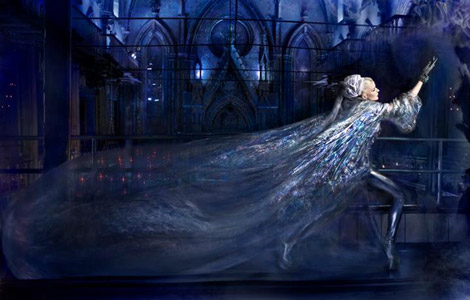
    Woman in blonde wig (Brigitte Lin)  Somehow I’ve become very cautious. When I put on a raincoat, I put on sunglasses too. Who knows when it will rain, or when it will turn out sunny?

    Oppertunismus und Karriere

    Auf dringende Bitten seiner Kollegen übernahm Jung den Vorsitz der “Ärztlichen Gesellschaft für Psychotherapie”, die einen internationalen Charakter hatte, und nutzte seinen Freiraum als Schweizer, um den internationalen Status und die politische Neutralität der Organisation zu garantieren und brachte auch den Nazis  Missliebige in der internationalen Sektion unter. Es gab also einen internationalen Dachverband mit verschiedenen Ländergruppen. Die offizielle Zeitschrift der internationalen Vereinigung war das “Zentralblatt für Psychotherapie”. Ein Stein des Anstoßes sind einige Formulierungen Jungs aus einem Aufsatz, den er 1934 im “Zentralblatt für Psychotherapie” veröffentlichte.  Probleme entstanden für Jung, als Prof. Göring  (der Vorsitzende der deutschen Ländergruppe) 1934 ein deutsches Beiheft (“Deutsche Seelenheilkunde”) plante, das auch in der regulären Nummer des Zentralblattes erschien, wodurch der Herausgeber Jung unfreiwillig in die Rolle des NS-Befürworters geriet.

    Leni Riefenstahl wird in Peter Wartson’s “German Genius” erwähnt. Leni Riefenstahl zeigte im “Blauen Licht” (1932), ihrer ersten eigenen Produktion, in der sie obendrein – aus Geldmangel – Regie führte was in ihr steckte. Der Film gewann bei der Biennale in Venedig Silber und viele weitere Auszeichnungen. Mit der Machtübernahme boten sich der Riefenstahl neue Aufgaben. Aufgaben, denen sie sich aber nur widerstrebend hingegeben haben will. Da kam der Hitler dazwischen, der Film  “Blauen Licht” und “Der heilige Berg” haben ihm gefallen.  Sie machte Dokumentarfilme, die Meilenstein der Filmästhetik waren, andererseits  perfekte Überhöhungen und Symbolik für das damalige Deutschland und die Nationalsozialisten boten.

    Zeitgeist
    Problematischer Zeit völkerpsychologische Unterscheidungen zwischen “Germanen” und “Juden” erwiesen sich als fatal. Unterscheidungen zwischen der Mentalität verschiedener Völker hatte zwar auch Jung’s Lehrer Sigmund Freud vorgenommen, der etwa seinem Kollegen K. Abraham schrieb, dass dieser aufgrund seiner jüdischen “Rassenverwandtschaft” Freud’s Auffassung von Psychoanalyse näher stünde als Jung. (2) l. So schrieb C.G. Jung in dem Aufsatz “Zur gegenwärtigen Lage der Psychotherapie”, der Jude sei aufgrund seiner langen Leidensgeschichte desillusionierter, habe keine eigene Kulturform und brauche zu seiner Entfaltung “ein mehr oder weniger zivilisiertes Wirtsvolk”. Demgegenüber seien die noch jungen germanischen Völker energiegeladener und enthielten “Spannkräfte und schöpferische Keime von noch zu erfüllender Zukunft.” (3).
    Liest man diese Begriffe ohne den Kontext des Gesamtwerkes, erschrickt man zunächst, aller5dings bewertet Jung keineswegs das “Barbarische” des Germanen pauschal höher gegenüber einem für minderwertig erklärten Judentum. Wenn er vom unterdrückten Barbaren im Deutschen spricht, schwingt immer auch Schrecken und Warnung mit. Schon in seiner Krise 1918 sah er voraus, dass archaische und unterdrückte Regungen gerade auch bei diesem “Kulturvolk” ein besonders gefährliches politisches Potential bilden könnten: “Das Christentum zerteilte den germanischen Barbaren in seine untere und obere Hälfte, und so gelang es ihm – nämlich durch Verdrängung der dunklen Seite – die helle Seite zu domestizieren und für die Kultur geschickt zu machen. Die untere Hälfte aber harrt der Erlösung und einer zweiten Domestikation. Bis dahin bleibt sie assoziiert mit den Resten der Vorzeit, mit dem kollektiven Unbewußten, was eine eigentümliche und steigende Belebung des kollektiven Unbewußten bedeuten muß. Je mehr die unbedingte Autorität der christlichen Weltanschauung sich verliert, desto vernehmlicher wird sich die ‘blonde Bestie’ in ihrem unterirdischen Gefängnis umdrehen und uns mit einem Ausbruch mit verheerenden Folgen bedrohen.” (4)
    Solche Formulierungen werden “(politisch) korrekten” Historikern nicht sonderlich gefallen,  sind aber bedenkenswert, vor allem wenn man sich mit der deutschen Neigung zum Undemokratischen auch mit psychologischen Überlegungen nähern will. Jung wertet die Juden nicht einfach ab, sondern sieht in ihnen ein im Gegensatz zu den Germanen viel älteres und abgeklärteres Kulturvolk, das sich infolge seiner langen Geschichte menschlicher Schwächen bewußter sei. Dies ermögliche ihnen, “mit vollem Bewußtsein in wohlwollender, freundlicher und duldsamer Nachbarschaft ihrer eigenen Untugenden zu leben, während wir noch zu jung sind, um keine ‘Illusionen’ über uns zu haben.” (5) Jung hat – bereits damals für solche Äußerungen angegriffen – seine Aussagen zunächst als legitime “Völkerpsychologie” bezeichnet, die einem Forscher erlaubt sein müsse, um Unterschiede herauszuarbeiten. Er hat ausdrücklich betont, dass es sich dabei nicht um Werturteile handle. Auch die Feststellung von Differenzen zwischen englischer und chinesischer Mentalität seien ja normal und
    schlössen nicht den Respekt vor einer alten Hochkultur aus.  M.L.v.Franz vertritt mit C.G.Jung die These, dass sich, tiefenpsychologisch gesehen, hinter dem Phänomen des Nationalsozialismus ein religiöses Problem verberge. Es gehe um die Erneuerung des Gottesbildes. Das nationalsozialistische Hakenkreuz kann durchaus als der Schatten des christlichen Kreuzes verstanden werden. Auch die DDR (und das heutige Deutschland) kannte und kennt pseudo-religiöse Rituale und die Ausgrenzung – heute als Rassist.
    Doch wäre es berechtigt, die Kapitalismuskritik von Karl Marx als Ganzes zu diffamieren, nur weil er den “Schacher” als das “Wesen des Judentums” bezeichnete oder von den Slawen als “Völkerabfällen” sprach, die vom nächsten Weltkrieg “vernichtet” werden müßten? (8) Jung mußte seinen eigenen Schatten – und die Antipathie zum Freudschen System – abarbeiten. Schon 1936, zwei Jahre nach den oben genannten problematischen Äußerungen, hält C.G. Jung einen Vortrag in London, wo er sich bestürzt über die politische Entwicklung in Deutschland äußert:
    “Wenn vor dreißig Jahren jemand vorauszusagen gewagt hätte, daß die psychologische Entwicklung in Richtung eines Wiedererwachens mittelalterlicher Judenverfolgung gehen, daß Europa erneut vor den römischen Liktorenbündeln und unter dem Marschtritt der Legionen erzittern würde … und daß statt des christlichen Kreuzes eine archaische Swastika Millionen von Kriegern zu Todesbereitschaft anködern würde – man hätte diesen Mann als einen mystischen Narren verschrien. Und heute? So bestürzend es erscheinen mag, dieser ganze Wahnsinn ist gräßliche Wirklichkeit.” (9)

    1933-1936 Bilder und Mythen
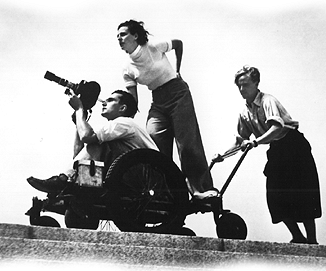
    Nach der Machtergreifung holte Propaganda Minister Göbbels alle Filmemache zu sich und zeigte Ihnen den Film von Eisenstein, ” Panzerkreuzer Potkim” – so wollte er Filmkunst gestalten – Kunst mit(unauffälliger) Propaganda und mit Dokumentationen.  Leni Riefenstahl  war damals eine wenig bekannte Schauspielerin aus Weimar, die sich als Regisseur gerade  selbst neu erfand.  Sie machte 1934 “Triumph des Willens” – der Nürnberger Parteitag der NSDAP, die Ankunft Hitlers und seiner Helfer.  Bewegte Kamera, wechselnde Perspektiven, souveräne Montagetechnik. „Triumph des Willens“ wurde durch Hitler selbst in Auftrag gegeben,  der sie sehr zum Unmut von Göbbels direkt protegierte (sie belegte zeitweise sein ganzen Kameras). Der Film fing die erste Parteiversammlung in Nürnberg mit 16 Kameras ein.  Nach zwei Jahren schneiden kam ein Film mit durchschlagendem Effekt heraus. Noch cleverer war „Olympia“ der die Spiele 1936 aufnahm. Ihr Ziel war – wieder mit hohem technischem Aufwand (89 Kameraleuten)  und einer heute kaum mehr erreichten Astethik – „ennobled good losers, supreme winners, and endwelled on fine musculature particularly of Jesse Owns … to Hitlers extreme displeasure.“

    Ebenfall 1936 (dem Jahr des Olympia Dokumentarfilms von Leni Riefenstahl) erscheint Jung’s berühmter “Wotan”-Aufsatz, der vom Aufbrechen eines “furor teutonicus” unter der dünnen Schicht christlich-aufgeklärter Kultur spricht und Deutschland als “geistiges Katastrophenland” bezeichnet, wo die Menschen eher von etwas “ergriffen” werden statt es zu “begreifen” (10). Alle von Jung’s folgenden Äußerungen zum Nationalsozialismus umkreisen von nun an die Frage, wie es ausgerechnet in einem hochentwickelten Kulturland zu einem solchen Verhängnis kommen konnte und aktualisieren seine Einsicht von der Notwendigkeit, sich intensiver mit den archaischen Regungen unterhalb der Zivilisationsoberfläche auseinander zusetzen. Was ihn einmal partiell fasziniert hatte – die euphorische Aufbruchsstimmung zu Beginn des Dritten Reiches – führt jetzt nicht nur zu Bestürzung und Ohnmacht, sondern zu tieferen Geschichtsanalysen, um einer bis heute kaum verstandenen Dynamik auf die Spur zu kommen. Dabei gibt es im Denkansatz übrigens Parallelen zur Frankfurter Schule, die ebenfalls im Nationalsozialismus eine nicht für möglich gehaltene Wiederkehr des Mythischen in “aufgeklärter Zeit” erblickten.(11) Jung findet seine alte Forschungshypothese bestätigt, daß Archetypen, kollektive Verhaltensmuster und archaische Bildwelten bewußt durchgearbeitet statt verdrängt oder unbewußt ausgelebt werden müßten. Nicht nur in Deutschland, sondern in ganz Europa sieht er das Phänomen der “Dissoziation” vor sich: eine Spaltung der Kultur in einen rational-fortschrittlichen Teil, der glaubt, “primitive Stufen” überwunden zu haben, während diese in Wirklichkeit verdrängt worden seien. Denn gerade das, was Christentum und Aufklärung verhindern wollten, geschah trotzdem: Kollektivrausch statt individueller Freiheit, Blutmystik statt Verstandesklarheit, Kriegerkult statt Pazifismus, Anbetung von archaischen Symbolen statt christlicher Werte von Mitleid und Versöhnung. Interessant und bis heute zu wenig bedacht sind Jung’s auf Gesamteuropa ausgedehnte Schlußfolgerungen, zu denen er seine Analyse des Nationalsozialismus erweitert: Auch die Inquisition, die Hexenverfolgung, kolonisatorische Raubzüge des “weissen Mannes”, blutige Revolutionen oder das Vernichtungspotential der Atombombe seien letztlich Folgen einer “schizophrenen” europäischen Kulturentwicklung, die vorgab, mittelalterliche “Primitivität” überwunden zu haben, um in noch barbarischere Exzesse zurückzufallen.(12) Eine wichtige und bestürzende Erkenntnis, die – wie wir im Hass auf alles religiöse sehen – auch heute noch kritisches Potential in sich birgt.

    Leni Riefenstahl bezeichnet sich als politisch nicht interessiert. Sie habe sich daher überfordert gefühlt von Hitlers Wunsch, dass sie den Parteifilm machen müsse. Doch hat sie, intuitiv oder geplant, Ablauf und Symbolik der Aufmärsche sofort erfasst – und filmisch überhöht. Sieht man “Tiumph des Willens”, scheint das also ein korrekte Analyse. Auch im Film “Triumph des Willens” ist ja nichts gestellt. Leni Riefenstah: “Das ist ein Zeitdokument. Das haben auch die Richter bei den Entnazifizierungen so gesehen. Es ist ein Zeitdokument. Ob es der Arbeitsdienst ist, oder ob es der Vorbeimarsch ist, oder die Jugend, vor der Hitler eine Rede hält. Das war damals so. Und damals waren die Leute, und nicht nur die Deutschen, auch die Ausländer, fasziniert. Und glauben Sie, dass der “Triumph des Willens” von Frankreich eine Goldmedaille bekommen hätte, kurz vor dem Ausbruch des Krieges, wenn sie den als Propagandafilm gesehen hätten, vorm Krieg, die Franzosen?”.

    Nach dem Krieg
    In einem 1946 geführten Gespräch mit dem Rabbiner und Auschwitz-Überlebenden Leo Baeck hat Jung Fehler eingestanden und sich entschuldigt, was zu einer Versöhnung zwischen den beiden führte. Der Kabbala-Spezialist Gershom Sholem berichtete diese Begebenheit, die für ihn ausschlaggebend war,weitere Einladungen Jung’s zu dessen Eranos-Tagungen anzunehmen. (13) Interessant ist diesbezüglich vor allem die Tatsache, daß sich jüdisch-amerikanische Gelehrte und Psychotherapeuten viel intensiver mit diesem Problem befaßten als ihre deutschen Kollegen. So gab es 1989 in New York eine wissenschaftliche Tagung (“Lingering Shadows”), die sich ausschließlich mit den Antisemitismusvorwürfen gegenüber Jung beschäftigte.(14) Hierbei wurde nicht mit Kritik gespart, doch ohne zu pauschalieren. Vor allem wurde auf das gespannte Verhältnis von Jung zu seinem jüdischen Lehrer Freud hingewiesen, das zu einigen überspitzten Verallgemeinerungen in dem oben genannten Aufsatz führte. Freud und Jung – anfangs auch eine Vater-Sohn-Beziehung – entzweiten sich unter Streit und Schmerzen, als die Unterschiede in ihrer Beurteilung der spirituellen Dimension der Seele zu eklatant wurden. Während Freud in der Religion nur unbewältigte Vaterproblematik, Aberglauben und Projektion erblickte, waren mythische Bilder und Gottsuche für Jung elementare Bedürfnisse des Menschen, sich mit verborgenen und transzendenten Kräften auseinander zusetzen. Er sah in Freud den Prototyp des säkularisierten Juden, der alle Spiritualität zugunsten eines “modernen” naturwissenschaftlichen Erkenntnisideals verleugnete und übertrug diese Meinung voreilig auf das gesamte Judentum.

    Leni Riefenstahl stieß als Fotografin nach dem Krieg rasch in die Weltspitze vor. Bildberichte über ihre Aufenthalte bei den Nuba erschienen zuerst in den Zeitschriften »Stern«, »The Sunday Times Magazine«,»Paris Match«, »L’Europeo«,»Newsweek« und »The Sun«. Vor allem ihre Bildbände »Die Nuba« und »Die Nuba von Kau« brachten ihr weitere Ehrungen und Auszeichnungen ein. Im Alter von 71 Jahren besucht  Leni Riefenstahl  einen Tauchkurs, um künftig auch als Unterwasser-Fotografin arbeiten zu können. Bald schon erwies sie sich auch in diesem Metier als Meisterin. Nochmal Leni Riefenstahl: “Insofern fühl ich mich schuldig, dass ich am Anfang, in den ersten Jahren so fasziniert war weil Hitler sein Versprechen gehalten hatte die Arbeitslosen wegzufischen und die ganze Not aus Deutschland zu verbannen. Aber ich hätte ja ebenso wie die anderen auch sehen müssen, dass man nicht in jüdischen Geschäften einkaufen durfte, sollte. Ich habe gekauft in jüdischen Geschäften aber es war an sich nicht erwünscht. Das alleine hätte mir zu denken geben müssen und das kann ich nicht verstehen heute, dass das nicht der Fall war. Ich war eben mit angesteckt von der ganzen fast hysterischen Begeisterung, die damals war.” Ich habe einmal eine Schauspielerin kennengelernt. die in dieser Zeit jung und produktiv waren. Vor diesem Hintergrund klingt das – für mich – plausibel- naiv .

    Gottesbilder und  atheistischen Utopien
    J. Marvin Spiegelman’s “Judaism and Jungian Psychology” (1993) weist daraufhin, daß gerade nach dem Zerfall der marxistisch-atheistischen Utopien in aller Welt Fragen nach religiösen Wurzeln und Identitäten wieder neubelebt würden. (16) Die spirituellen Bedürfnisse der Seele seien mehr als bloßes “Wunschdenken”.
    Tiefgreifende Lebensereignisse wie Tod, Verlust, Liebe, Krise und Verwandlung wollten auch bildhaftrituell erlebt werden. Gerade die Beschäftigung mit Jung habe Spiegelman auch wieder zu den eigenen religiösen Texten geführt und – etwa durch die Lektüre von dessen berühmter “Hiob” – Interpretation – zu einem vertieften Verstehen des jüdischen Gottesbegriffes.(19) Diesen wichtigen Essay von Jung ignoriert z.B. auch Richard Noll, der 1993 versuchte, dessen Psychologie als eine Art völkischer Ersatzreligion zu entlarven. (20) War Jahwe für Jung vielleicht anfangs noch eine einseitig strafende und überdimensionale Vaterfigur, so wird ihm 1952 durch die Lektüre der alttestamentarischen “Hiob”-Geschichte eine größere Vielschichtigkeit im Verhältnis von Jahwe zu den Menschen klar. (21) . Jung’s “Hiob”-Lektüre wird eine intensive Begegnung mit jüdischer Religion, aber er versucht auch, die Kontinuität innerhalb der Bibel zu verstehen, ohne das Alte gegenüber dem Neuen Testament abzuwerten. Im Gegenteil: Die Figur des Jesus Christus scheint ihm noch als zusätzliche Erfahrungsstufe Jahwes Sinn zu machen, aber als Jung bei der Johannes-Offenbarung ankommt, hat man den Eindruck, daß er die komplexe Figur des jüdischen Gottes doch seinem einseitig “guten” christlichen Pendant vorzieht. Er sieht sogar eine Gefahr darin, daß sich das Christentum hier zu einem schroff dualistischen Denken verengt, welches das “Böse” als “Satan” abspaltet und glaubt, es durch Verbannung aus der Welt schaffen zu können. Dies sei unrealistisches Wunschdenken, widerspräche der Realität der menschlichen Psyche und berge in sich die Anlage für zukünftige Katastrophen:  “Als Ganzheit ist das Selbst … immer eine complexio oppositorum, und seine Erscheinungsweise ist umso dunkler und drohender, je mehr das Bewußtsein sich Lichtnatur vindiziert und daher auf moralische Autorität Anspruch erhebt.” (22)

    Gut und Böse und Leni Riefenstahl
    Gerade die Lektüre von Jung’s “Hiob” eröffnet auch ein tieferes Verständnis der Problematik des “Bösen”: Nur wer lerne, in sich das gegensätzliche Nebeneinander von “Licht” und “Dunkel” zu akzeptieren, könne letztlich auch der Erfahrung des Göttlichen eine angemessene Heimstatt bieten. (23) Übertragen auf den Nationalsozialismus könnte das heißen: Der, der die Möglichkeit der eigenen Verfehlung für denkbar hält, ist gefeiter gegen ideologische Verführung und dualistisches Feindbilddenken, weil dieses ja stets die eigenen Schatten nach außen projiziert.  Was hat uns die Jung’sche Psychologie darüber hinaus heute noch zu sagen?  Jung’s Archetypenlehre wird manchmal vorgeworfen worden, reaktionär zu sein, weil sie unbeweisbare “Urbilder” oder “ewige Grundmuster” statuiere und damit den Menschen zur unfreien Marionette gegenüber statischen Kräften mache. Doch eigentlich ist das Gegenteil der Fall: Jung wiederholt in seinem gesamten Werk immer wieder die Forderung, unbewußte Verhaltensmuster und suggestive Bilder ins Bewußtsein zu heben, um den Menschen einen freien Umgang mit ihnen zu ermöglichen.

    Im Nationalsozialismus und mit Riefenstahl-Filmen geschah genau das Umgekehrte. Die Menschen gerieten in einen Rausch und überließen sich unbewußt atavistischen Strömungen und Symbolen, wurden von etwas “ergriffen” statt es zu “begreifen”. Sie traten nicht in ein kritisches oder befragendes Verhältnis zu archaischen Inhalten, sondern verfielen ihnen in blinder Hörigkeit. Ein Beispiel  wie mächtig Bilder sind, zeigte der Film “Triumph des Willens” eine Auftragsarbeit für die NSDAP von einer offensichtlich intelligenten jungen Frau und brillianten Künstlerin, die sich mit kulturlosen Halsabschneidern einliess. Es liegt im Wesen des Films (und von Bildern), dass die Umstände seiner Entstehung verblassen. Riefenstahls Werke sind dabei, etwas zu werden wie Jungs Werke, dem man das Leben und Leiden, das sich um ihn herum abspielte, nicht mehr ansieht. Es bleibt nur noch das Bild – und so wird es den Riefenstahl-Filmen auch ergehen. Der Werbefilm ist zu weiten Teilen von Riefenstahl beeinflusst, was sich im Mystifizieren und Dramatisieren von Dingen zeigt, sei es ein Trainingsschuh oder ein Auto. Extreme Kamerawinkel, Kreisfahrten, Auflösungen, Schnitttechniken – was sie erfunden hat, wenden die Werberegisseure heute alle an, vom Nike-Spot bis zu MTV. Die “Krieg der Sterne”-Trilogie enthält Anleihen bei Riefenstahl; der Helm von Darth Vader sieht aus wie von der Wehrmacht ausgeliehen, und die Klonkrieger in der neusten Folge marschieren wie bei Truppen beim Parteitag. Ohne Standpunkt (“gut” oder “böse§ kann man keine realen Alltagssituationen dokumentieren, keine Figuren entwickeln und keine Geschichten erzählen. Um die Inschrift zu paraphrasieren, die C.G. Jung auf seinen Grabstein setzen ließ: „Ob gerufen oder nicht, Gott wird da sein.“ Es liegt nahe, daß große Bilder eine große Ausstrahlung haben. Auch heute ist diese Problematik trotz aller “Aufklärung” nicht aus der Welt.  Aber “Vielleicht bedeutet die Kunst gar nichts, hat gar keinen Sinn, wenigstens so wie wir vom Sinn sprechen.” (23)

    Zusammenfassung
    Jung fordert keine nostalgische Aufwärmung alter Mythen, sondern eine neue Theorie symbolischen Denkens – sein Horizont ist jedoch  weiter als der von seelisch verarmten Rationalisten aber auch von denen dem Unbewussten mit Bildern huldigen, weil er die menschliche Sehnsucht nach Mythen und Bildern nicht nur verdammt, sondern ernstnimmt, aber ihre bewußte Durchdringung fordert.  Im Gegensatz ging Leni Riefenstahl im Sog der Symbole  unter.  Dass nach wie vor viele Menschen mythischen Bildern erliegen, die in Gewalt und Abhängigkeit münden können, beweisen problematische Kino- und Videofilme, politische Korrektheit, religiöser, anti-religiöser und anti-westlicher Fundamentalismus , rechte und linke Ausgrenzungswahn, ja  auch die Wiederkehr von pseudo-religöser Symbolik in der Politik.

    1) Aniela Jaffé: Aus Leben und Werkstatt von C.G.Jung, Zürich und Stuttgart 1968, 89f
    2) Ebd. 95
    3) C.G. Jung, Gesammelte Werke, Band 10, Solothurn und Düsseldorf 1995, 190f
    4) Ebd. 25
    5) Ebd. 190
    6) Ebd. 106, Jung spricht hier sogar vom “arischen Raubvogel” und seiner “unersättlichen Beutegier”, die ihn “über alle ihn nichts
    angehenden Länder führt” sowie von unserem “Größenwahn, der sich zum Beispiel einbildet, das Christentum sei die einzige
    Wahrheit, der weiße Christus der einzige Erlöser.”
    7) Ebd. 61f
    8) Karl Marx: “Zur Judenfrage”, MEW Bd.1, 376f und “Neue Rheinische Zeitung” 1849, zitiert in Konrad Löw: Das Rotbuch der
    kommunistischen Ideologie, München 1999, 74f. (Diese Stelle ist in der Marx-Engels-Gesamtausgabe nicht enthalten)
    9) Jung, Gesammelte Werke, Bd.9/1, 60f
    10) Jung, Gesammelte Werke, Bd.10, 203ff
    11) Max Horkheimer/ Theodor W. Adorno: Dialektik der Aufklärung, Philosophische Fragmente, Frankfurt/Main 1973
    12) Jung, Gesammelte Werke Bd. 10, 221f, 237f, 268ff, 273,
    13) Aniela Jaffé: a.a.O. 103f
    14) Aryan Maidenbaum/ Stephen A. Martin (Hg.): Lingering Shadows: Jungians, Freudians and Anti-Semitism, Boston/ London
    1991
    15) Ebd. 277ff
    16) J. Marvin Spiegelman: Judaism and Jungian Psychology, Boston/ London 1993, 21f
    17) Ebd. 47
    18) Ebd. 25f, 40
    19) Ebd. 56ff
    20) In seinem Buch “The Jung Cult. Origins of a Charismatic Movement” (Princeton 1994) versucht Richard Noll in reiner Konzentration auf das Frühwerk und auch dort vereinfachend nachzuweisen, daß Jung aus Aversion gegen das “Semitische” nur die “arisch-indoeuropäischen” Mythen interessiert hätten. Doch kommen in dessen frühen Schriften auch Symbole und
    Göttervorstellungen aus Ägypten und Asien vor. Ein paar Bemerkungen über “Siegfried”, “Walhall” und die “Walküren” sowie reale bzw. vermutete Bekanntschaften mit völkischen Autoren reichen noch nicht aus, um aus Jung einen völkisch orientierten Germanenmystiker á la Guido von List zu machen.
    21) C.G. Jung, Gesammelte Werke, Bd. 11, 363ff, siehe auch Micha Brumlik: C.G.Jung. Zur Einführung, Hamburg 1993, 110 ff
    22) C.G. Jung, Ges. Werke, Bd 11, 445

    23) C.G. Jung, Ges. Werke, Bd 15, 49/50

    24) C.G. Jung, Kommentar zu Richard Willhelm, das Geheimnis der Goldenen Blüte

    Leni Riefenstahl..

  • Aktive Imagination zur Fastenzeit

    Aktive Imagination zur Fastenzeit

    Die Innenwahrnehmung mit den Bildern, die aus dem Unbewussten aufsteigen – Aktive Imagination, ist gerade vor Ostern aus der Klarheit des Fastens bedeutsam für die innere Einkehr. Außen und Innen, Körper ung Geist entsprechen sich. In einem grossartigen Interview beschreibt C. G. Jung, dass beides, die materielle Aussenwelt und die innere Welt eben Fakt ist. Jedes Haus war einmal ein Gedanke.

    Wir sind in unserem Stadteil sicher nicht eine dieser beinahe klinisch toten katholischen Großstadtgemeinden. Man geht aber – wenn überhaupt – alleine in die Messe und auch wieder alleine hinaus mit gelegentlichen zufälligen Begrüssungen.  Der Pfarrer und seine ehren- und hauptamtlicher Mitarbeiter sind aufgrund wachsender Gemeindegrößen (zwei zusammengelegte Pfarreien – vier Kirchen) gefordert. Die angebotenen Veranstaltungen, insbesondere die Messe in der kleinen Kirche sind mehr als ein Minimum, stillen aber gerade in der Fastenzeit nicht immer den Durst auf Transzenden und Mystik. Ein Tor zum Unbewussten und damit zu Transzenden und Mystik ist  die Aktive Imagination. Nach C.G. Jung ist Aktive Imagination der Königsweg zum Unbewussten.  Nach einer entspannenden, in die innere Stille führenden Meditation öffnet und arbeitet der Einzelne mit Achtsamkeit, Nüchternheit, und Wertschätzung in seiner inneren  Bilderwelt.

    Die moderne Forschung der Naturwissenschaften, insbesondere der Physik,  öffnet auch dem kritischen, zweifelnden Geist Erkenntnisse, die denen religiöser Systeme ähneln.  Raum und Zeit sind verbunden. Zusammenhänge sind kausal aber auch akausal vernetzt. Nichts geschieht ohne zeitgleiche Auswirkung im gesamten Universum. Es verbinden sich der alte Grundsätz der alchemistischen und religösen Mystik.

    Das Wissen darum ließ in allen großen Kulturen die Menschen aufbrechen, in ihren Initiationswegen einen Zugang zu suchen zu diesen anderen, dem bewussten Denken nicht zugänglichen Dimensionen. Beim Arbeiten mit der Bibel, spielt neben dem Lesen, die Möglichkeit zur Imagination als einen unmittelbaren Zugang zu den eigenen Bildern und Phantasien eine wichtige Rolle. ”Wenn wir von Imagination sprechen, dann sprechen wir von der Tätigkeit unserer Vorstellungskraft, unserer Einbildungskraft, von Phantasie, von Tagträumen. Auch wenn diese Phänomene untereinander verschieden sein können, betreffen sie alle den Bereich des Imaginativen, (…). Imaginative Fähigkeiten zu haben bedeutet, dass es den Menschen gegeben ist, mehr oder weniger anschaulich, ein Bild zu haben von etwas, das nicht mehr oder noch nicht präsent ist, das vielleicht überhaupt nie präsent sein wird. Diese Vorstellungen können sehr bildhaft sein, mehr von Farben oder Formen bestimmt; sie können sich aber auch durch eine Geruchserinnerung oder einer Geruchsvorwegnahme, durch eine Berührungserinnerung oder Berührungsphantasie oder durch akustische Erinnerungen oder Erwartungen ausdrücken. Sie können auch mehr gedanklicher Art sein.” (V. Kast, Imagination als Raum der Freiheit, Olten 1988). Die jedem Menschen gegebene Möglichkeit zur Imagination in bewusster und aktiver Weise zu gebrauchen und zu entfalten, ist ein Ziel. So wird die Fähigkeit, innere Bilder zu sehen und wahrzunehmen, angeregt, oder Mut gemacht, diese inneren Bilder zuzulassen, da die Fähigkeit zur Imagination das schöpferische Entwickeln und Gestalten von Spielstücken ermöglicht und wesentlich unterstützt. Ein wichtiger Schritt in dem Gebrauch der aktiven Imagination ist die Bewusstmachung und Gestaltung,  der inneren Bilder zu einem biblischen Text wie z.B. Jesu’s Leidensgeschichte zu Ostern.  C. G. Jung ist in seinen  tiefenpsychologischen Forschungen jenseits des bewussten Erlebens genau dieser ganzheitlichen Dimension begegnet. Das Bewusstsein kann sie nicht vollständig erfassen sondern nur partiell erfahren, z.B. in Symbolen, Träumen und Imaginationen.

    Eine ihn bewegende Frage, ein rätselhafter Traum, ein Wort der Bibel oder einfach die nach innen gerichtete Aufmerksamkeit helfen, sich auf die auftauchenden Bilder zu zentrieren und einzulassen. Fühlt man sich von einem Bild oder Geschehen angesprochen, tritt man in seiner Vorstellung aktiv handelnd –  also mit seinem Ich verantwortlich beteiligt – in das Bild ein. Eine Handlung entwickelt sich. Aufgefallen ist mir dies schon beim nur gesamthaften Durchlesen der Bibel in St. Ottilien. Dieser primär “sinnliche” Zugang zum “Gesamtkunstwerk” Evangelium ist mächtig und zumindest gleichwertig zum intellektuellem Interpretieren der einzelnen Bibelstellen.

    Aktive Imagination ist also aktives Wach-Träumen ähnlich den Visualisierungstechniken der Meditation keine passive Wahrnehmung in einem tranceartigen Zustand, auch keine Phantasiereise . Dieses  inneren Drama, dessen Gestalter wir sind, enthüllt uns Möglichkeiten, Gegensätzlichkeiten, konfrontiert unser bisheriges Selbstbild mit den Grenzen des bewussten Ichs und der Unendlichkeit der Schöpfung .
    Im sich daran unmittelbar anschließenden kreativen Gestalten –  Jung nennt sie eine „phantasia vera“, entsteht eine „wahre Fantasie“, die uns verändern kann, wenn wir uns darauf einlassen. Sie hilft uns, zu uns selbst, zu unserem Lebenssinn in Christus zu finden, zu dem, was wir im Kern schon immer waren, was als Möglichkeit entwickelt und gelebt werden will.