Recently I read very good article and discussing a valid question, particularly for Germans. Yes, we do need also make friend with our “Warrior”.
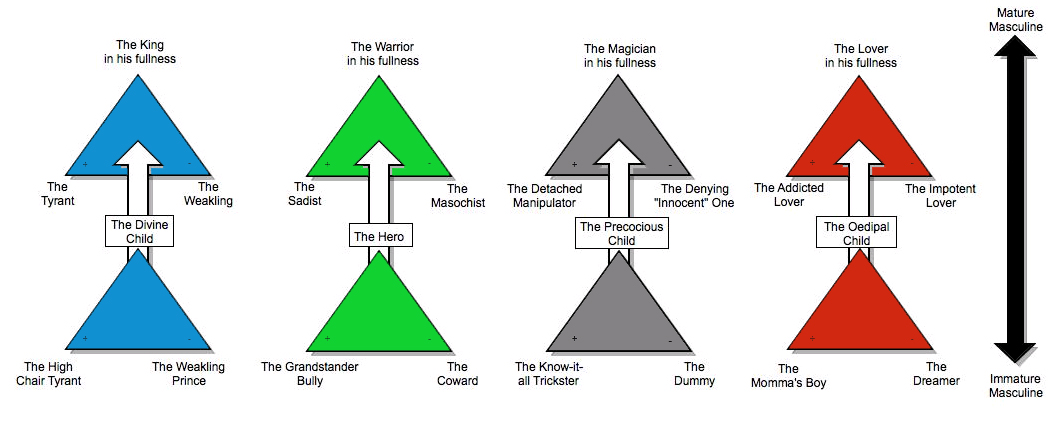
A year ago I went to a spiritual retreat in a catholic monastery led by a priest who holds a diploma in Jungian depth psychology. He based his group work on the Book on “King, Warrior, Magician, Lover – Rediscovering the Archetypes of the Mature Masculine” – a C. G. Jung based interpretation of masculine behavior and personality in the light of social context, mythology, poetry and art. Good book – that is if you cut out the New Age stuff. The book is loosely based on C.G. Jung using bipolar “shadows”.
During one discussion the monk asked us – men of all walks of (middle class) live – which archetype we most like and describes us best. No one went for “The Warrior”. Now “The Warrior” is today the most controversial of the archetypes, because of the cruel acts perpetrated by its shadow side particularly in Germany. The prototype of the warrior is the soldier, yet aggressiveness (call it assertiveness) is a highly needed characteristic responsible for all personal achievements and those of our culture. Properly accessed, “The Warrior” can do a great deal to empower us to live our lives, provide self-discipline, and protect. The two shadow sides are the Sadist (too much) and the Masochist (too little) – the bully or the one being bullied.
I that about this discussion mentioned above and came to the conclusion:
/1/ Archetypes can be applied on Nations or social groups.
/2/ Current German Culture clearly went on the “too little” side.
/3/ There are many reason for this like: lots of (good) men (and women) died in the war and many of them also left Germany before and after ww2.
/4/ Mediocrity stayed behind and imposed a “feminized male role imago” discrediting “The Warrior” even in its positive form.
/5/ Unfortunately suppressed shadows creep up in their negative form – be it skinheads with their Teutonic symbols, neo Nazi ideologies but also the righteousness in the Anti-Nazi ideologies who are claiming fighting against Nazis but actually fight more against democracy and The Warrior”.
In Hermann Hesse’s Demian, protagonist Emil Sinclair receives a note about the Gnostic deity Abraxas after sending a drawing, highlighting a union of divine and devilish aspects. This figure symbolizes a journey toward individuation and the synthesis of all things, prompting Sinclair to accept his complete human nature and abandon his restricted worldview. Introduced by Max Demian and explored through Pistorius, the concept encourages embracing, rather than suppressing, one’s inner darkness to achieve self-realization in Jungian terms the self.
The things we see are the same things that are within us. There is no reality except the one contained within us. That is why so many people live such an unreal life. They take the images outside them for reality and never allow the world within to assert itself.” ― Hermann Hesse, Demian
Herman Hesse is a Nobel Laureate who created four masterpieces – Demian, Siddhartha, Glasperlenspiel and Steppenwolf – that are well worth studying. Hesse, the son of missionaries represents the last blue flower of German romanticism and the philosophical ideas that took the great journey of wisdom to the East with Schopenhauer and C.G. Jung himself (very attracted by the Abraxas). He cannot be understood if separated from the roots of his literary tradition of German romanticism of Novalis and Hölderlin, Kleist and Nietzsche himself, which Hesse had admired so much and most of all, the psychoanalyst C.G. Jung.
Hesse derived his understanding of the Western and Eastern religious foundation and Gnostic thoughts from C.G. Jung’s psychology. It opened a new thinking and a new, modern and fascinating way to interpret and to make his personal experiences fruitful for his poetic work. C.G. Jung’s teaching gives him the key for the synopsis of the world religions and specifically for the combination of psychology and religion, specifically in “Demian”. Even more C.G. Jung’s psychology of religion provides the theoretical justification for the central message of Hesse in his poetry: the identity of raising consciousness and experiencing God. It confirms his own hunches and insights on the common psychological and anthropological understanding of the world religions and thus it opens access to those “summa metaphysica”.
The tracks of C. G. Jung’s core ideas become increasingly clear in Hesse’s Work since 1922. Central for the development of Hesse’s intellectual ideas between 1919 and 1943 was Existentialism of the subjectivity search for meaning by the way of Individuation, reinforced by the personal and longer fight – and many psychoanalytic sessions – with Joseph B. Lang and Carl Gustav Jung. With Thomas Mann, he shared the conservative (better middle) position against the Nazi attacks of the bourgeois, non national socialist readers in Germany. Both meet several times in the Switzerland and Hesse was referring Mann in the work as a friend of the later Nobel Prize winner. In all books the Christian theological message and those from the Far East, are amazingly preserved until today.
Siddhartha
The key influences are the crisis phases are 1919-22 with Siddhartha in response to the total change of circumstances: Moving to Switzerland after the failure of his first marriage, the death of his Father (a lonely painter) and his own transformation of all own values after the First World War. “But this man, Siddhartha, was not a follower of any but his own soul…” Born the son of a Brahmin, Siddhartha was blessed in appearance, intelligence and charisma. In order to find meaning in life, he discarded his promising future for the life of a wandering ascetic. At one point in the book, he says there are three things he can do – “I can pray, I can wait and I can fast. About 12 translations in Indian languages, of Siddhartha further ones into Chinese (three since 1968) and Japanese exit and proof its meaningful intercultural dialogue.
Steppenwolf
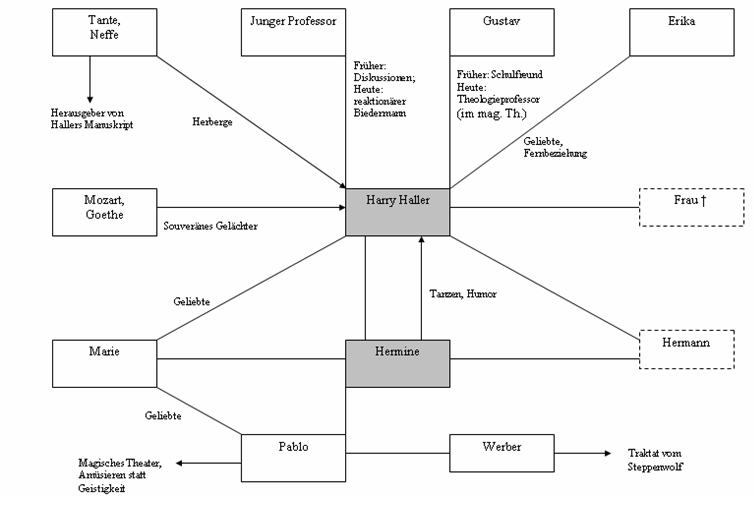
With its blend of Eastern mysticism and Western culture, Hesse’s best-known and most autobiographical work is one of literature’s most poetic evocations of the soul’s journey to liberation. In the bourgeois circles of Europe after the Great War, Harry Haller, a solitary intellectual, has all his life feared his dual nature of being human and being a beast. He’s decided to die on his 50th birthday, which is soon. He’s rescued by the mysterious Hermine, who takes him dancing, introduces him to jazz and to the beautiful and whimsical Maria, and guides him into the hallucinations of the Magic Theater, which seem to take him into Hell. In the German original of the Steppenwolf, the female actress Hermina means this is the feminine form of Hermann (Hesse). This is same alchemic tantric game such as in Mozart’s “Die Zauberflöte”: Pamino and Pamina. Hermann Hesse roots are like many other Germans in the great tradition in the music of Mozart and Bach. The female is an important and recurring motif for Hesse. Hesse pictures Freud’s Oedipus complex for Demian ( Emil’s Self) in his construction of Demians mother (Frau Eva) and in his exploration of her relationship with Emil Sinclair. His treatment of the female becomes more intricate, however, in Steppenwolf, as the prostitute Hermine becomes the Ego for Harry Haller. According to Jung, “Every man carries within him the eternal image of woman, not the image of this or that particular woman, but a definite feminine image…I have called this image the ‘anima’.” The character diagram mirrors Hesse’s experiences with psychoanalysis and his efforts to explore his subconsciousness:
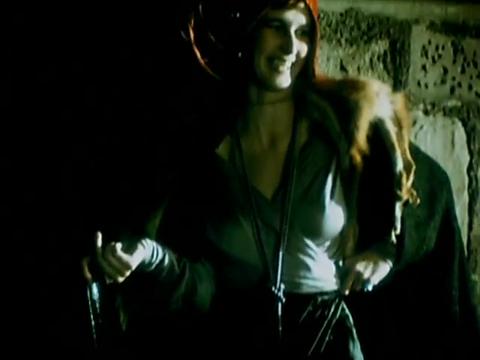
Hallucination, fantasy, and unreality are important elements in the novel. Consequentially it was tried to portray Hesse as a bohemian, as a hippie, as a follower of the drug culture or as a pacifist vagabond (he was by the way really pacifist) and to make Hesse to a consumer product. There is an impressing movie that is worth to see even with its primitive special effects/animation technology, are not convincingly covering the fantastic emotional/surreal visions of the book.
Glasperlenspiel
It is easy to belittle from postmodern mindset the “overachieving” epic unity. The insights Hesse about the collapse of opposites “yin and Yang, individualism and” Serve” in the reception “Eastern meditation techniques and the associated” Attitude” is caught up today by the spiritual multiculturalism fashion “ideal, that might have proved as hollow as the ideals the traditional values of good old Europe. Nonetheless the breaking out of the “self-sufficient spiritualism” at the end of the novel, his last “magnum opus” implies the “synthesis of spirit and life” for the continuing, global reader looking for a valid meaning of life. In this book are musical polarities Hesse and mathematical abstractions and similar as by C.G. Jung’s enigmatic holistic symbols of the Mandela.
Demian
Demian proves tha basic thesis that Hesse – merged autobiographical experiences and fictional plot elements-in the design of the main characters and themes, as well as in the his poetry. It is critical to understand the Jungian psychology individuation model and the dualistic view of the world to understand Demian and other works of Herrmann Hesse.
Under the influence of C.G. Jung’s (and Lang’s) psychoanalysis treatment, Hesse fell completely for the Germanic alchemical dream whose tendons to unity and the union of opposites. The inner self was revealed in Demian; the main character of his book was named, and loved and admired by Sinclair, i.e. of Hesse. Demian tells the story of a boy coming of age as a troubled German youth prior to WWI. Its imagery and plot have been the inspiration for countless songs, whether the composers read the book or not.
“Our god’s name is Abraxas and he is God and Satan and he contains both the luminous and the dark world.” ― Hermann Hesse, Demian
The book gives a vision of the two worlds: for Emil the main character, there is a bright world to which his parents and siblings belong and where everything is good and pious, and another, dark world, which starts at the door of his home and which is both wild and ghastly as well as mysterious and fascinating. Sometimes he would live like in the dark, forbidden world because he felt the other world as boring. At other times in turn it was comforting and wonderful to live in the light, religious world and to feel like an Angel.
Short overview of the book Demian.
1. Chapter – The Shadow
The story opens with Emil’s childhood experience, which earned him his first confrontation with the still so strange, dark world: Emil is little more than ten years old and visited the Latin school, when he met Franz Kromer, an older pupil of the elementary school. Franz is strong and quite malicious, so that it is feared among all kids. One afternoon, it happens that Emil and Franz talk about their school pranks. Emil spins a hero story to impress Franz how he stole apples with friends. As Emil wants to participate in the trip back, Kromer accompanied him and threatens Emil to reveal the theft, if he does not pay him two Reichsmarks the next day. After a few weeks, and Emil feels as he sinks ever further in the dark.
If you hate a person, you hate something in him that is part of yourself. What isn’t part of ourselves doesn’t disturb us.”
2. Chapter “The Self”
Emil is very fascinated of Max Demian, a new older student at the Latin school. He is some years older than Emil and visited a higher class. Initially, Emil is biased, but soon they deepen in a conversation about the story of Cain and Abel. Demian tells him that there are different interpretations for each story, and never one alone the truth corresponds to. Demian promises him that he will help him against Kromer. As the Self it leads Emil to the right decision. As Emil returns home that day, he confesses his parents which surprisingly listening to him and then forgive him. From now on he feels belong again the light world.
3. Chapter Ego and Persona
A few years later Emil and Demian in confirmation classes meet each other again. In the confirmation, the story is of the dying of Jesus tells them that there is no free will, however, it could affect the will of others if you focus just enough. A few days later Emil and Demian discuss the two worlds. Demian is impressed, and feels confirmed in his own, and comes to the conclusion that every person must find the right measure for themselves. The day of the confirmation is getting closer, and Emil decides to commit his recording in the mind at the same time with his inclusion in the Church. However, his parents decide that he should visit another school after the shortly upcoming holidays.
4. Chapter Beatrice the Anima (Dantes »Divina commedia«)
In his new boarding school, Emil receives little respect and sinks stages into melancholy and self-pity. Emil is now often in pubs with friends, where there lavishly richly celebrate and get drunk. So, his grades in school get always worse, and he is threatened even with the dismissal from the school. After the Christmas, which he spent at home, he falls in love with a girl, but does not dare however to attract them, and so he gives her the name Beatrice. His school grades improved, and again like he deals with spiritual themes. Also he starts to paint; first ornament and plants, and finally Beatrice. When the image is completed, Emil finds it not really resembles her, and later, he realizes that he had painted no her, but Demian. One night, Emil has a dream by Demian and the heraldic bird, which is placed over the door of his own home. He decides to paint this bird, and to send the image to Demian.
5. Chapter – Abraxas
Emil sends the drawing from his dream bird to Demian which come to a piece of paper. On it, he writes about a God named Abraxas, which is a combination of divine and devilish attributes. Emil is interested to understand this God and provides research, which remain however largely unsuccessful. One night Emil comes past on a walk on church organ music and stops and listens. The organist plays Bach is the pieces however, as Emil thinks, a passionate own note. From that day on, he often stands in front of the Church and listening to the music. One day he follows the musician, Pistorius, as he leaves the Church. He enters a bar on the outskirts of the city, and Emil sits down at the table to him. They start to talk amongst other things about and come on Abraxas.
6. Chapter The Jungian Adviser
From his conversations with Pistorius Emil finds his self-esteem and learns more of Abraxas, his new God. One evening, he is approached by a classmate named Knauer, who asks him about spiritualism. On the same evening still Emil begins to paint a picture. Again, it’s a face that he can map not a particular person. Emil comes to the conclusion, that for everyone a particular work or task is intended, and that Pistorius had missed his. The only important work in a person’s life, it is however to find themselves.
“Every man is more than just himself; he also represents the unique, the very special and always significant and remarkable point at which the world’s phenomena intersect, only once in this way, and never again. That is why every man’s story is important, eternal, sacred; that is why every man, as long as he lives and fulfills the will of nature, is wondrous, and worthy of consideration. In each individual the spirit has become flesh, in each man the creation suffers, within each one a redeemer is nailed to the cross.”
7. Chapter – The Great Mother the fulfilment of individuation
In the holidays Emil does looking after Demian and they meet and Demian recognizes his old friend, he invites him to his house, so that he could get to know his mother. During his visit, Emil discovered that Demian has his picture of the dream bird in the entrance hall to on slopes, what affects him deeply. He falls in love with Demians mother – his The Great Mother, but the (sexual) desire is rejected. Later in the war he gets injured by a grenade. Sinclair witnessed in one overwhelming vision the desirable rebirth of personal and collective by projecting the great mother into this:
“In den Wolken war eine große Stadt zu sehen, aus der strömten Millionen von Menschen hervor […] – Mitten unter sie trat eine mächtige Göttergestalt, funkelnde Sterne im Haar, groß wie ein Gebirge, mit den Zügen der Frau Eva. In sie hinein verschwanden die Züge der Menschen, wie in eine riesige Höhle, und waren weg […]. Ein Traum schien Gewalt über sie zu haben, sie schloß die Augen, und ihr großes Antlitz verzog sich in Weh. Plötzlich schrie sie hell auf, und aus ihrer Stirn sprangen Sterne, die schwangen sich in herrlichen Bögen und Halbkreisen über den schwarzen Himmel. Einer von den Sternen brauste mit hellem Klang gerade zu mir her, schien mich zu suchen. Da krachte er brüllend in tausend Funken auseinander, es riß mich empor und warf mich wieder zu Boden, donnernd brach die Welt über mir zusammen.”
C.G. Jung’s Psychology offers also attempt an explanation of this rebirth phenomenon. Jung notes that a mobilization the deeper archetypes – such as the “Anima” or of the “Self” only in a withdrawn and introverted life is possible. The Conclusion is valid, that Hesse was stimulated by reading C.G. Jung’s ” Symbole der Wandlung / Icons” of the”Conversion” to his haunting poetic design of Sinclair’s rebirth experience . The nature of incest fantasy is explained as regression of the libido into the unconscious, where they enable the compensating and healing powers.
I want to end with the power of the Self as a (spiritual) leader, which I have experienced over and over again:
Wenn der, der etwas notwendig braucht, dies ihm Notwendige findet, so ist es nicht der Zufall, der es ihm gibt, sondern er selbst, sein eigenesVerlangen und Müssen führt ihn hin.”
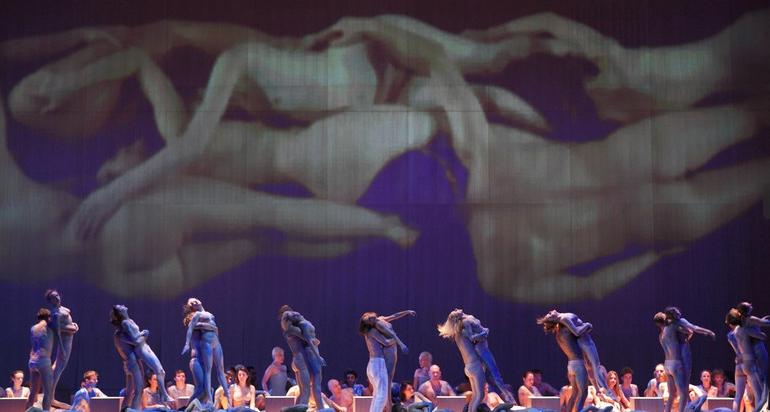
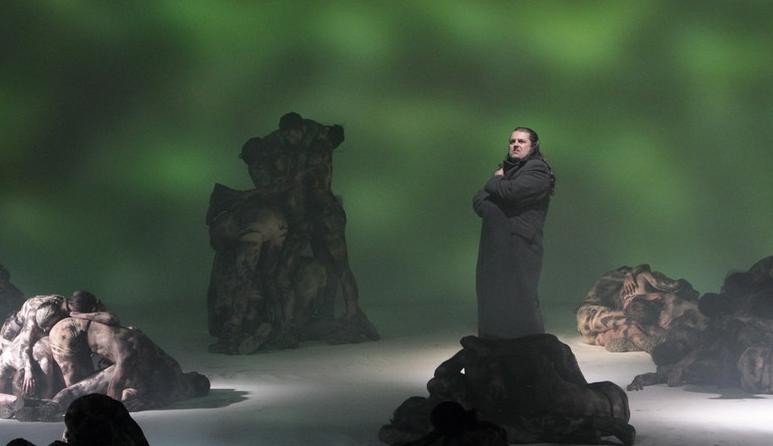
This is a very personal take on Götterdämmerung the last one in the four of the opera cycle by Richard Wagner’s “Ring” from a Jungian perspective. However also if the themes of the Ring, though universal, specifically apply to our lives today.
The Conductor Kent Nagano
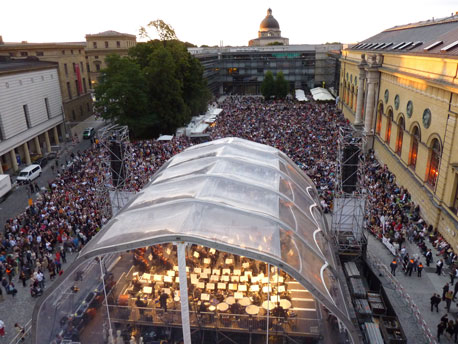
The Munich Opera Festival draws for over 130 years opera fans to Munich, and as one of the oldest international festival continues far beyond the city and national borders. Since fifteen years there is a free eopen air event “Opera for all”. Since the charismatic Conductor Kent Nagano came to Munich Opera, those two events “Opera for all” became even more cult for young folks not used to rattle the jewelry in plush seats. I saw him first time in California (Berkeley) and still appreciate Kent Nagano’s courageous and creative ways to transfer his subtle understanding of classical music to the audience. Already on Saturday – on a beautiful night – he conducted open air with the Bavarian State Orchestra excerpts from Richard of Wagner’s “Ring des Nibelungen”, an arrangement on 16 hours of Wagner’s ring issues put together in one hours without singer. Already raising eyebrows, as a bonus, there he played still another ring – parts of the film music for “Lord of the Rings”.
In any case, not entirely being a usual Wagner fan.
What’s the “Ring” all about?
Actually, Richard Wagner wanted not only to edit the well-known the German and Scandinavia legend of Siegfried’s death, a saga of gods and people of faith and fraud. Wagner takes the world of the Norse gods to the ring as a template for a critical interpretation of human society, around the failed revolution 1848. The ring and the gold as symbols of power and of the capital, the power versus rebellion and the failure of the hero Siegfried are all universal archetypes still up to date.
The Casts
In the figures we see the relationships of the various races of mortals and immortals: the immortal inhabitants of Valhalla, the Walküren who move between the worlds, the mortal Vaelsungs of the Forest, the Giants of Earth, the Gibichungs who inhabit the Rhine Castle, the Nibelung dwarfs of the shadows, and the Rhinemaidens who inhabit the source of life.
Siegfried (Tenor), Son of Sieglinde und Siegmund kills Fafner, wins the Ring and looses Brünnhilde
Dragon Fafner (Bass), guarding the the Ring
The Nornen (Sopran, Mezzosopran, Alt), three wise Daugters of Erda
Gunther (Bariton), Leader
Gutrune (Sopran), his Sister
Hagen (Bass), the son Alberichs and half-brother of Gunther.
Waltraute (Alt), Sister Walküren of Brünnhilde
The Ring Cycle
The Ring consists of four operas begins with a symbolics Genesis of the world (Water) and with its destruction (Fire).
Das Rheingold, Munich, 22 Sep 1869
Day1 Die Walküre, first Munich, 26 Jun 1870
Day 2 Siegfried, first Bayreuth, 16 Aug 1876
Day 3 Goetterdaemmerung, first Bayreuth, 17 Aug 1876
Prelude: The opera: ” Rheingold“
The Rhinemaidens have a magical gold treasures with magical powers. Alberich an ugly dwarf, trys to score on them but they laugh at him. So he robs their treasure with the ring (the key to power and wealth). To do this, he must renounce love. At the same time had the gods (Wotan) built a castle (Valhalla) built by the Giants Fasolt and Fafner. They price is the goddess Freia who guards the secret of eternal youth of the gods. As Wotan learns about Alberich’s theft he manages to remove the treasure and the ring, forged from the Rheingold from Alberich. Alberich curses the ring. The gods pay their castle with that treasure and the ring to the giants. The cursed ring does its effect one of the Giants (Fafner) which kills his brother (Fasolt). At the end of the story, the gods take the Castle Valhalla in possession. Wotan begins his reign based on free coexistence; from but still fears the danger of ring and its curse is not yet banned.
Day1: The opera “Die Walküren”
Walküren collect heroes from the battlefields and bring them toValhalla. A pair of twins: Siegmund and Sieglinde are separated by fate and now meet again in Hundings house and fall in love. Sieglindes husband, Hunding, challenges Siegmund therefore to fight with him. Wotan gives Brünnhilde (one of the Valkyries) order that should to support Siegmund. The wife of Wotan, Fricka does not accept Siegmunds adultery and incest and Wotan has to reverse e the order. But Brünnhilde decides to help him Siegmund anyway and Wotan influences the fight by himself. Siegmund is powerless against Wotan and dies, his famous sword shattered. Brünnhilde advises Sieglinde, who is pregnant, to move in the forest where Fanfer the dragon the dragon lives. Brünnhilde awaits Wotan’s anger and Wotan banishes her to a mountain, but protects her wit a ring of fire which only strongest hero” can redeem her (Brünnhilde thought this might be Sieglindes son …).
Day2: The opera “Siegfried”
Mime, Alberic’s brother and blacksmith raises Siegfried, Sieglindes son. Mime is hoping the boy would take the ring from Fafner who turned into a dragon . Mime is not able make Siegfried a suitable sword, so he refurbishes himself the sword Nothung of his father and kills the Dragon. A Bird (Waldvogel) whose song Siegfried can understand tells him what happens next: he should take the ring and the cloak of invisibility. Then, he advises him or how he would be able to get “the most beautiful woman” – Brünnhilde – on their fire rocks. Siegfried gladly accepts this advice rushes to Brünnhilde and falls in love with in infinity.
Day3: The opera “Die Götterdämmerung”
It is indeed my favorite Wagner opera. At the beginning, we see the Norns, weaving the rope of destiny. They tell the events of the beginning of conscious action on. As they approach they pull the rope. The Norns flee to Erda – the fate of the world is open.
Brünnhilde and Siegfried had married. At the Court of the Gibichungen Hagen (their sleazy half-brother and Ablrbrichs son) the weak royal brother and sister Gunther and Gutrune pointed out meanwhile that he can’t get Gunther Brünhilde as wife and Gutrune Sigfried as husband. Due to his magical drunk, Siegfried falls in love with Gutrune, and brings (his wife) Brünhilde to Gunter in the persona of Gunter and takes the ring from her.
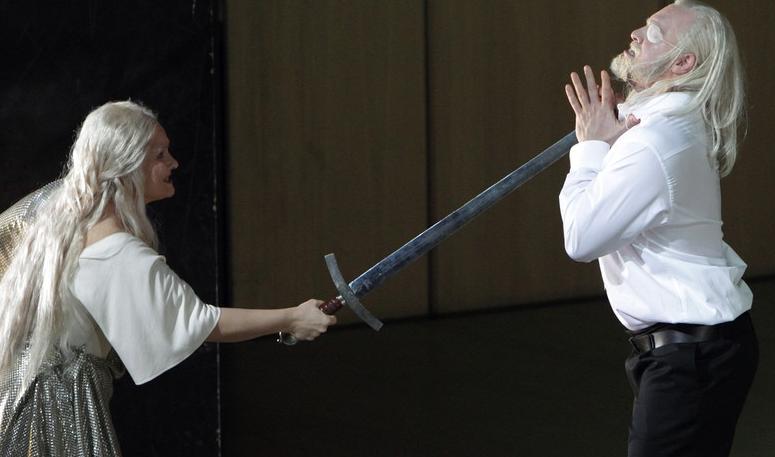
The double marriage happens. Brünhilde, recognizes the Ring on Siegfried’s hand and outraged of Siegfried’s betrayal, let Hagen kill him. Haunted by nightmares Gutrune wanders through the night. The dead Siegfried is brought. Hagen boasts defiantly with murder and wants the ring. Gunther rejects, but Hagen kills him too and “grabs Siegfried’s hand which lifts up ithreatening”. Brünnhilde appears now. She orders to build a stake on the edge of the Rhine to burn Siegfried and herself. She draws the ring from Siegfried’s finger. As the fire blazes, the Rhine water comes over the shores with the Rhine maidens. who get the treasure back and pull Hagen into the depths. In a bright glow of fire in the sky, you can see the burning Valhalla. As the gods of the flames are completely hidden, the curtain falls.
The most intense drama in the opera “Gotterdämmerung” as well as the ring cycle comes after Siegfried’s death, the central character in Wagner’s opera. Siegfried is dead, and his body is brought back and shown to both Brunnhilde and Getrune,who are taken with attacks of grief at the sight of the corpse of the man whom they both loved. The only real issue for the mischievous Hagen is the ring and to whom it should go to and he rids himself of his own brother to obtain the coveted ring. Siegfried’s dead hand moves in a clear indication that he is not ready to give up the ring. It is also as Siegfried’ body is being carried that we hear one of Wagner’s most powerful pieces which truly captures the moment with all that Siegfried was, the Archetype of the hero from dragon slayer to the one who was able to defeat Wotan but also Brunnhilde’s tender lover. In my opinion Wagner’s music captures the somber mood which is about as this once mighty hero lies dead and to illustrate in its harmonies the glory. Wagner’s music increases to the force of a hurricane as the fire from the pyre rises as high as to consume not only Valhalla but the deities who rule the world. Hagan however tries to prevent the ring from going back to where it came from and in doing so is drowned by the Rhine maidens, who finally have back what was taken from them at start.
Wager and psychoanalytic models
Lets allign the key concepts of Wager to psychoanalytic models. Both the Freudian and Jungian models of the psyche rely on the balance of forces among the elements of the psyche. A major difference between the two is in the chosen center-point or balance point. Freud’s model is primarily centered around the healthy functioning of the Ego in the society and (sexual) relationship; his model focusses on consciousness and the outer world – the unconsciousness is almost treated like a malfunction. By contrast, Jung’s model is Self-centered. That is, the whole self, conscious and alike. Jung uses the term Self both for the personal (experienced) god, and for the whole human psyche. Whereas Freud considered religion to derive from illusion, Jung considered religion as a way to the whole self, seeking to integrate the roalm of the spiritual with our lives in the outer world.
The Freudian view
Siegmund falls in love with his long lost sister Sieglinde. And, make no mistake, they know they are brother and sister and still engage in lust and plan on marriage even Sieglinde is already married. Their father is the god Wotan. Wotan had many affairs and Siegmund and Sieglinde are the product of one of those. Those characters would indicate Freud’s approach, that all thrive comes from sexuality. Fricka, Wotans wife wants Siegmund killed in a fight despised by such immorality. As the Goddess of marriage you’d expect her to say that, she represents the repressive factor. Very simplistic.
Adler’s view
Another superhuman being, Alberich, has given up love to more fully pursue power. Alberich’s giving up all love to gain power teaches Adler’s main force the lust for power may have different values but are playing to win. Wotan’s realization teaches us that power cannot be taken for granted and it cannot be sustained by constant uncontrolled,irresponsible and inconsiderate lust. Again too simplistic.
The Jungian view
Micha Brumlik interprets the depth psychology as romantic theory of the unconscious and uncovers their archetypical references to Richard Wagner’s magnificent operas, The Ring, provides an intense and amazing example. In high drama we get answers to the Authoritarian breakdown. Incest is one of this. There is some significance in Jung’s belief — or his occasional claim — that he was a descendant of Goethe. He was completely out of sympathy with the narrow materialism of nineteenth-century science. In an essay on Wagner, Thomas Mann quoted a dignitary of Seville cathedral, who is supposed to have said to the architect: ‘Build me a cathedral so enormous that people of the future will say: the chapter must have been mad to build anything so huge … ‘ Mann pointed out that the nineteenth century was full of this spirit of Balzac’s Human Comedy, Hegel’s System, Zola’s Rougon Macquart cycle, Wagner’s Ring, Tolstoy’s War and Peace. Jung’s sympathy was all with transcendence and myths. His psychology is built of the same mythological material as Wagner’s Ring.
Symbols
Though there are many symbols in the story, four symbols of personal power are central to our theme:
Wotan’s spear, his symbol of conscious (Ego) power is carved from the world ash tree of life.
The Chain of possession starts with the Rhinemaidens and ends with Flosshilde, a Rhinemaiden. The chain turns upon itself to form a ring.
The tarnhelm, or helmet, confers the power to change but it also entails the power to deceive. Wotan used it to get the ring from Alberich; Siegfried used it to regain the ring from Bruennhilde;
The sword, the weapon for the heroic struggle, was given by the father (grandfather Wotan), but it was broken; Siegfried had to reforged his own weapon for the struggle;
The Self
The ring itself represents for us the lure of gold, or or lust of power, from the Rhine, a them which has been reused by the lords of the ring. Possession of the ring confers power over the world. We set out to relate the life-cycle of the ring to the life-cycle of the psyche. The figure suggests how this might be done. The story begins in the realm of the Self, which has its origin in the value of life.
The Shadow
Alberich and his son Hagen inhabit the realm of Shadow, where reside rejection, frustration, anger, hate, evil.
In these storms of life are all the human ills — theft, deceit, betrayal, murder, incest, and all such. This is the considerable shadow energy of the psyche, seen in Alberich’s evil reaction to rejection, in Wotan’s awful betrayal of Youth and Beauty (Freia) to build his castle; in his stripping Bruennhilde of her immortality and his imprisoning her in the ring of fire in order to regain the ring of power.
Shadow energy is also seen in the struggle between Siegfried and Mime, his evil stepfather — the orphaned Siegfried is raised by his shadow, Alberich’s brother! That same shadow energy also provides resistance to the reintegration of the psyche. Siegfried had to slay a dragon, but he also had to struggle with the Gibichungs. They defend the castle which guards access to the Rhine. This reasoning teaches us that the underpinnings of morality rest on the ability to distinguish good from bad, the sacred from the profane.
The Ego
Wotan and his castle building express the realm of Ego inflation in which he and we deal with the giants of earth.The return of the ring into the deep currents of the flow of life completes this life cycle. The self is made whole. The cognitive conscious world of Ego is reconciled with its spiritual origin; the Self is reconciled.
The Archetypal Hero – Animus and Anima
Siegried reprents the archetypal hero. But re-establishing balance in the psyche requires an heroic struggle. Siegfried’s slaying of the dragon represents the start of re-establishing balance. His love of Bruennhilde represents the necessary union between the conscious realm and the realm of his Anima. In Siegfried’s death we see the individuation becoming, and in Bruennhilde’s immolation, similar burning away her self taken human mortality.
The Persona
As is morality, Wagner is very personal and philosophical. Wotan is a God. Watching his son die will not be easy. But as his son has transgressed the basic rules of decency in society Wotan understands the necessity of killing him. He tells his daughter, Brunnhilde the Valkyrie, but emotions cause her to disobey the cold moral.Like all great art, Wagner’s The Valkyrie teaches fundamental cultural lessons about society.
Rainy Sunday
On Sunday Nagano‘s new production “Götterdämmerung” of National Theatre completely sold out for a long time, came on a big screen. The weather did not want to play along on that day, and so the Open-Air visitors were hit repeatedly by – some long-lasting – showers. But with the right equipment, some fans including me held out over six hours on the Max-Joseph-Platz before the National Theater and eagerly pursued the Opera broadcast on the big screen. The singers of this show and Conductor Kent Nagano came out after the end of the opera to say thank you for this dedication.
Like the psyche, Wagner’s work has had influence for both good and evil. Nietzsche and Hitler both much admired Wagner’s work, and that nihilistic chain of influence was to give in the 20th century full expression to destruction and evil until today. Yet the same work also had a considerable influence on may others, notable King Ludwig the II. As we look back, it often seems as if the necrophiliac shadow aspects of our collective psyche have had the upper hand. In Goetterdaemmerung, one of the three Fates sings that the rope of the world’s destiny has been severely frayed by evil. As she sings that, the rope breaks completely.
We now are in Europe in the beginning of a turbulent transition from democracy to some new type of world-order at the threshold of another economic war – the “Third Geldkrieg”. The twilight of the gods will not be the twilight before the dawn, but before a new darkness. The lust for power and greed will represent the extinguishing of Psyche’s gods.
In that respect, Wagner is pointing to the current economic system, whose manipulator think they are gods. Our society would be better grounded if it spent more time with great art; pieces like Wagner’s Ring are entertaining, they create a shared vocabulary within our culture just like C.G. Jung’s Archetypes.
“Wagner’s Ring and Its Symbols” originally published 1984. Robert Donington (Wagner seen mainly throug C.G. Jungs eyes)
Index to “Richard Wagner”in the Collected Works of Carl G. Jung (mainly he was concerned with Wotan)
Volume 5: Symbols of Transformation
par. 421 (p.275) — fig. 28: Wotan on eight-legged horse Sleipnir; Wotan as Drosselbart half-man, half-horse
par. 422 (p.278) — horse \ wind; Wotan galloping in storm chasing the wind- bride
Sieglinde as “human mother”, Br. as “spirit mother”; Br. banished by Wotan for complicity (approval) of incest; Siegfried \ Horus; Sieglinde’s “night-sea journey to the east”;
par. 556 (p.358) — broken sword \ dismemberment
par. 559 (p.359) — Wotan \ persecution motif
par. 560 (p.360) — Bruenhilde “split off” from Wotan, a feminine emmisary for a martial god “somewhat remarkable”
par. 563 (p.360) — Bruenhilde. as anima attached to masculine deity, a dissociation; Wotan unconscious of his own femininity
par. 564 (p.361) — Wotan’s lament for Bruenhilde
par. 565 (p.361) — Br. support of Siegmund; the incest a projection: Wotan’s entering “into his own daughter to rejuvenate himself
par. 566 (p.361) — Sieglinde’s death; Mime of “a race who has abjured love”
par. 567 (p.362) — Br. asleep in ring of fire; Mime a masculine representative of the Terrible Mother; Siegfried drawn away by longing for Mother-imago
par. 568 (p.363) — the song of the Forest Bird \ mother Jung Index: “Richard Wagner” 10:18:36
par. 569 (p.363) — gold \ “treasure hard to attain” \ the “mother” \ unconscious; “magic cap” (tarnhelm) changes Alberich into serpent \ motif of rejuvenation; dragon’s blood \ understanding nature.
par. 598-600 (385-6) — Wotan (Wanderer) and Erda \ “fatal charm of the mother”
par. 602-11 (p.387-391) — Siegfried’s encounter with Bruenhilde, evokes mother; Br. \ mother-sister wife anima archetype; Siegfried as archetypal hero
Wong Kar Wai’s 2046 while still a beautiful movie, at first sight it is a bit disappointing after all the others spellbinding subtle storylines. 2046 doesn’t come near to it for me – some part of the story is even repetitive. Visually still top-notch as ever like Wong’s earlier works with his signatures throughout: quick cutting, slow motion, fast motion, freeze frames, black and white, tilt shots, color filters, neon-sign lighting, aided ably by three able cinematographers. Music by Shigeru Umebayashi is haunting and sets the right mood. While doing the stills, I tought every second scene – if not every one – was a pure and strangely beautiful picture. A photographers movie indeed.
Wong Kar Wai apparently intended initially to do three separate stories, all exploring the idea of sexual relations between humans and androids.
There are three different intermingled trails and flashbacks playing in reality that Tony Leung Chiu-Wai as Chow Mo-wan meets after losing his love:
Maggie Cheung as Su Li-Zhen, the lost love of “in the Mood for Love”
Gong Li as Another Su Li-Zhen. the “professional gambler”. Note the death card, coming up twice in this movie. I am very impressed about the gambler. A shadow of his old love Su maybe?
Faye Wong Wang Jing Wen “hotel owners daughter with the Japanese lover”. After finding out that she still misses her ex in Japan, he takes her to his office so that she can call him.
Zhang Ziyi as Bai Ling. beautiful call girl heart-broken by him. Big star in Hongkong and in Chungking Express.
The fourth is the world of 2046 and concerns futuristic train passenger falling in love with an android in the train to (or from) 2046.
The story is complex – I recommend the wiki article for hints about the plot. But what is it all about? I have three hypothesis.
(1) A sequel of in the Mood For Love.
In the eighties there was a documentary cult book in the liberal, leftist circles in Germany – „Tod des Märchenprinzen“ .- death of the fairy prince, an authentic story written from the point of view of a women. It was answered with a little brochure from the Märchenprinz in the book: „Ich war der Märchenprinz – I was the prince, to set things right. Similar, in a follow-up to the film, 2046 covers the aftermath of the doomed affair between Chow Mo-wan (Tony Leung Chiu Wai) and Su Li-zhen Chan (Maggie Cheung) from the „Mood For Love“, told from Chow’s perspective. In the first movie he was a the “Quiet Asian” and in 2046 he has become a lost womanizer, a typical addicted (weak) lover like in Ashes of Time .
That is one way to tell this story. From a Jungian point of view the change is from the „impotent lover“ to the „Addicted Lover“. But there is a complete different angle. Like ashes of time the few key final scenes have put all the random pieces together so perfectly to deliver a simply truth about transaction based love and the connected loss and Chow only once, with the hotel owners daughter becomes caring and human again. In all other cases he makes women unhappy and women make him unhappy. The Addicted Lover is a collector–of experiences, possessions, or women. But without any structure, unable to connect the women he collects, his life feels fragmentary and the Lover’s energy shatters into a million directions. A man possessed by the Addicted Lover is, as Moore puts it in his book, King, Warrior, Magician, Lover: Rediscovering the Archetypes of the Mature Masculine , “eternally restless.”
(3) The number 2046 and 2047.
With a fellow blogger in Hongkong I discussed the year 2047, that’s when Hongkong might lose its status as a window to the outside, its currency and will be fully integrated in the People Republic of China(PRC). Hong Kong is supposed to remain status quote up to 2047. Deng allowed HK another 50 years to “enjoy” the systems described in 2046. Wong Kar Wai picked 2046 as a title, thats when currency and fiscal sovereignty is handed over – which translates in political freedom. HK is on “borrowed time, borrowed place” . In Hongkong the change will be gradual so by 2047 HK will naturally and smoothly will become just another leading city of China.
The movie 2046 takes place in the late 1960’s, where Chow moves in the Orient Hotel, Hong Kong where he writes a science fiction novel. After a quick encounter with Mimi/Lulu, she gets killed in rom 2046 by her boyfriend. The number triggers the idea to the title. Since the bloodstained room needs to be cleaned he moves in room 2047 and stays there. So the big change is due 2047.
That maybe one reason, that Wong 2046 turns out it to be occupied by one of his old flames Lulu (Carina Lau), who was a former tenant in room 2046 before mysteriously vanishing. Some stills with Lulu are Art Nouveau. Fascinating red, and asynchrone camera angles.
The number triggers reflections on where he and Su Li-zhen used to go for afternoon romps, and serves as artistic inspiration. He creates a story about a place called 2046, where people go to find love and recall old memories. It’s a futuristic world with fast-paced trains, surreal colors, androids, and raw perspective not found regularly in real life. It resembles an acid-trip dream as enticing as it is frightening. As said before, the slow motion acting of the Androids don’t work.
The movie jumps back and forth from the present (1960’s) to the future (2046) where his fictional story is centered.
Reality: While staying at the hotel, Chow meets a gorgeous high-class call girl named Bai Ling (Zhang Ziyi). They become lovers and go out together, but he manages to provoke her to fall hopelessly in love with him. He treats her poorly, soliciting 10 USD per interaction for their afternoon encounters, even though she fell deeply for him. She ultimately breaks down from the emotional abuse, and let him go. To add insult to injury, he tells her to come over anytime she wants a quickie.
A new Su Li-zhen comes up, an enigmatic gambler and finally his old love Su in a flashback (below).
The daughter of the hotel owner, Jing (Faye Wong) is madly in love with her Japanese man, whose nationality leads her father Mr. Wang (Wang Sum), to sternly disapprove of them seeing each other. Chow befriends her and helps the two of them stay in contact by gathering love letters and arranging phone calls. In the process, he starts to have some feelings for her, acting even like a fatherly caring protector –almost like the cynical Rick in Casablanca discovering his good heart and quick to cover it up.
Further encounters take place in Chow’s life, but none that match the love story he experienced during In The Mood For Love. The most tortured woman in the movie is certainly Bai Ling, acted with sheer perfection by Zhang Ziyi, who expresses bottomless agony with a single teardrop.
Fiction: The futuristic story of 2046 is Chow’s way of turning those women into fictional. It’s his method of reflecting similar to the way discussing it within psychoanalysis. The random flashes into the world of 2046 are a therapy session in which Chow confronts his shadow and express the feelings that he has locked away inside. But what the use of those slow-moving androids? In a bad mood I would call it close to a boring relationship movie your wife/girlfriend drags you in. The pictures are great, however, the metaphor may hint either the politics or addicted lover theme.
2046 is a sequels and it shows. I have viewed all movies of Wong Kar Wai. Usually I write reviews of books or movies which are important to me, to collect my understanding of them. So far I did not understand 2046 yet. Chungking Express, Fallen Angles – source of my Avatar – provide fascinating psychoanalytic symbols and pictures but best of the best is Ashes of Time. So I thought, at least until I saw the last scene of 2046 a few times.
Last scene; Chow is stunned when Bai hands him a stack of money, each $10 bill representing one night they had spent together. He sets himself free staring empty into space, as the camera slowly follows a moving taxi. The last minutes makes the story round again. Lost souls.
Still highly recommended. I take my initial critique back, the last 5 minutes fuse all the story trails together. 2046 is actually a great movie, but not what it seems to be or the sound bites “The ultimate Love Film” suggests . As a man I give a piece of advice. Don’t drag your date on the first night in this movie (except she is an art movie buff). I did this one time with Chungking Express, with little success. Didn’t break the relationship, but she always was on guard after that. Suppose 2046 would work either…
George Orwell’s iconic 1984 stand as perfect examples of the societal structures Jung warns against. Granted, all dystopian literature set in a totalitarian future could fall into this category, but two of his books are probably the two best examples of the genre. Animal Farm, and Orwell’s novel, Nineteen Eighty-four show totalitarian systems and are highly relevant today.
Modeled after the Stalinism, the basic pattern was repeated by Mao’s Big Leap and the Cultural Revolution, by Pol-Pot, just to name a few. It’s about state totalitarianism, and if you look too much to right or to the left you become a road-kill by well-meaning national or transnational organization. The best example the European Union, the hunger of central power and the severe distortion of reality by language intended to disguise, distort, or obscure its real meaning was aptly foreseen in “Nineteen Eighty-four” Political language, George Orwell wrote nearly 60 years ago, is “designed to make lies sound truthful and murder respectable and to give an appearance of solidity to pure wind”. It is a pity that Orwell won’t be around to write a new book about the double-speak that passes for the European Union’s and the national finance ministers official discourse on the EU crises. A fundamental concept to control of the thought is to control of the past. Therefore, a gigantic effort is operated today to fit all existing publications of the current political correct line and to overpower by sheer mass production the unwanted. Especially worrisome can that be seen in dispute parts in some Wikipedia articles.
George Orwell lived out Jung’s theory of The Shadow. Dr. Carl Jung argues that the future depends on our ability to resist society’s mass movements. Only by understanding our unconscious inner nature-“the undiscovered self”-can we gain the self-knowledge that is antithetical to ideological fanaticism. In his book The Undiscovered Self, C.G. Jung points with logical assertions that “it is chiefly in times of physical, political, economic and spiritual distress that men’s eyes turn with anxious hope to the future”. The only way to combat these stresses and worries is for humanity to embrace its potential on both a conscious and unconscious level. Without a finely tuned awareness of self, we are doomed to pass control of the individual self onto an external collective entity such as the government. The Individual’s Understanding of Himself: “It has even become a political and social duty to apostrophize the capitalism of one and the communism of the other as the very devil, so as to fascinate the outward ey and prevent it from looking at the individual life within.”
Much of the book warns against succumbing to the will of the collective without first consulting the needs of the individual. Humanity must open itself up to acknowledging its equal capacity for good and evil. But perhaps the strongest evidence attesting Jung’s accuracy is the near rabid, even quasi-religious nature of the political debate even in, or perhaps especially in, the European Union which has ‘officially’ removed religion from its pitifully so-called failed “constitution”. The religion has gone underground, and political assertions of the churches in Europe have the air of dissident meetings. The same ist true for families in one parent stays at home.
Perhaps Jung’s approach is helping us to find the inner self first, and then unite to counter the mass-mindness and its pursuit for maximized profits, whether in the form of a government or a global corporation and the lure of a motherly state taking care of life’s hardship of the never-grew-ups.
Where there are many, there is security. What the many believe, must of course be true. What the many want, must be worth striving for, necessary, and therefore good. In the clamour of the many, lies the power to snatch wish-fulfilment by force. Sweetest of all however, is that gentle and painless slipping back into the kingdom of childhood, into the paradise of parental care, into happy-go-luckiness and irresponsibility…to all questions there is an answer…. C.G. Jung in “The Undiscovered Self
“Frightened though they were, some of the animals might possibly have protested, but at this moment the sheep set up their usual bleating of “Four legs good, two legs bad”, which went on for several minutes and put an end to the discussion.
George Orwell in “Animal Farm”