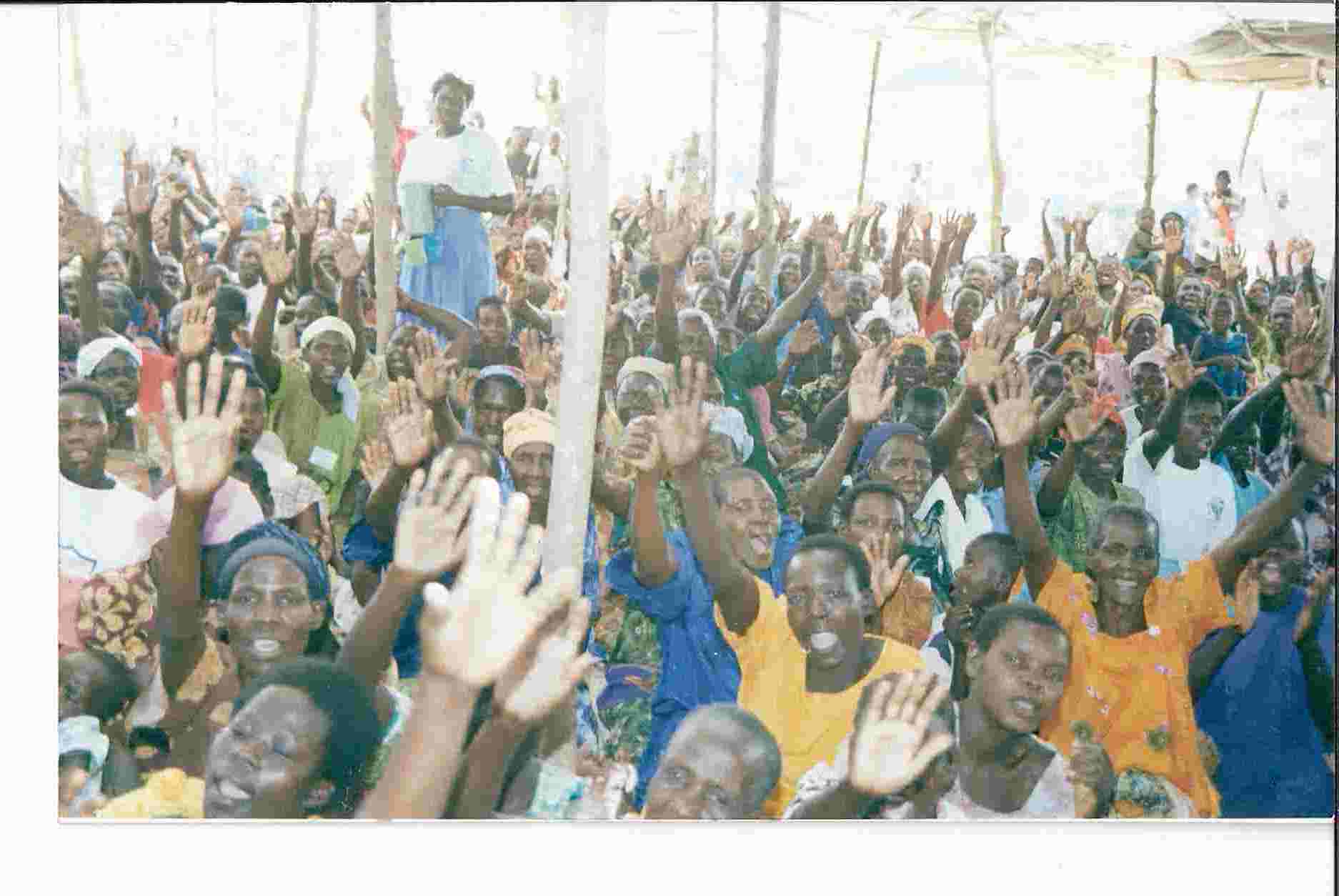
Tag: Pentecostal

  • The wolf in us from an Jungian view: “lupus est homo homini”

    The wolf in us from an Jungian view: “lupus est homo homini”

    Recently I attended a catholic retreat in a Benedictine mountain monastery.  The theme was: The wolf in us.  We discussed the archetypes and myths of the wolf, a topic I had explored in great length before, their archetypes here and here. The point was raised, that the wolf represents greed, one of the seven deadly sins.  What was interesting, however, was  at some point the monk, an American Swiss, who can flawlessly yodel, let us howl like wolves. A quite devoted group of catholics from all walk of life became a wolf pack. My experience during this long Whitsun weekend with an intimate and less organisational approach to spirituality is what I want to write about. Because, as I see it, the wolf in us, seen from a Jungian view, is our untamed shadow, but also a great source of energy. This article is so the third in cycle of the archetype of the wolf, a personal defense of the wolf from German romanticism (or if you want from Rousseau’s nobel savage) and includes some of my unsystematic associations.  Nature never deceives us; it is always we who deceive ourselves – the philosopher Jean-Jacques Rousseau.

    St. Francis and the wolf of Gubbio

    animalschagall
    animalschagall

    The monk told us on the first day the most famous story of St. Francis is when he tamed the wolf that was terrorizing the people of Gubbio. While Francis was staying in that town he learned of a wolf so ravenous that it was not only killing and eating animals, but people, too. The people took up arms and went after it, but those who encountered the wolf were killed. The villagers became afraid to leave the city walls.

    Francis took pity on the people and the wolf as well and decided to go out and meet the wolf. He was desperately warned by the people, but he insisted that God would take care of him. A brave friar and several peasants accompanied Francis outside the city gate. But soon the peasants became terrified and said they would go no farther.

    Francis and his companion began to walk on. Suddenly the wolf, jaws wide open, charged out of the woods at the couple. Francis made the Sign of the Cross toward the wolf who immediately slowed down and closed its mouth. Then Francis called out to the wolf: “Come to me, Brother Wolf. I wish you no harm.” At that moment the wolf lowered its head and lay down at St. Francis’ feet, meek as a lamb.

    St. Francis explained to the wolf that he had been terrorizing the people, killing not only other animals, but humans as well. “Brother Wolf,” said Francis, “I want to make peace between you and the people of Gubbio. They will harm you no more and you must no longer harm them. All past wrongs are to be forgiven.”

    The wolf showed its assent by moving its body and nodding its head. Then to the absolute surprise of the gathering crowd, Francis asked the wolf to make a pledge. As St. Francis extended his hand to receive the pledge, so the wolf extended its front paw and placed it into the saint’s hand. Then Francis invited the wolf to follow him into town to make a peace pact with the townspeople. The wolf meekly followed St. Francis.

    By the time they got to the town square, everyone was there to witness the miracle. Then he offered the townspeople peace, on behalf of the wolf. The townspeople promised in a loud voice to feed the wolf.

    Apollo_Action
    Apollo_Action

    Then Francis asked the wolf if he would live in peace under those terms. He bowed his head and twisted his body in a way that convinced everyone he accepted the pact. Then once again the wolf placed its paw in Francis’ hand as a sign of the pact.From that day on the people kept the pact they had made. The wolf lived for two years among the townspeople, going from door to door for food. It hurt no one and no one hurt it.  When the wolf finally died of old age, the people of Gubbio were sad.

    Owning a Labrador,  actually I thought during the session the wolf in me says; Come to me, Brother. My Labrador retrievers never fails to amaze me when he puts his paw in my hand. Which he does at least every morning, when I come down to the basement giving him his two pieces of a treat. Labs are known for their voracious appetites and mine seems always hungry. Apollo, thats his name, will never turn down food except when not feeling well (or one rare exception italian Rucola salad). His the most negative behaviors that need to be curtailed is begging while I cook, making  long faces and pleading eyes. But is he or the wolf a symbol of greed?  I think not.  More a symbol of bonding. Both have developed the emotional need to constantly interact with the other members of the “pack”.

    The (human) wolf pack

    Wolfsklamm, gorge in Tyrol Alps in Karwendel
    Wolfsklamm, gorge in Tyrol Alps in Karwendel

    georgenberg

    Most of us in the group of 15 knew the open-minded monk (who is priest and psychoanalyst) and each other, from past exercitation – but wolf howling created an extra physical and psychological experience of belonging and trust. As did two days of long mountain hikes, where we held a proper holy masses, one time on a wide mountain meadow and on the next day in three parts  in two different churches and one capella. Again the experience was quite unique. Like wolves we roamed “our territory” with a resident monk, who explained us that most of this Tirol territory with its 20 high mountains still has been owned by the monastery in which we stayed. That opened many doors in this countryside area.

    waterfallpfinsten
    waterfallpfinsten

    We hiked up a waterfall  which carved out a deep canyon in limestone (called wolf gorge / Wolfsklamm). The Wolfsklamm in Karwendel impressed the nature lover with thundering waterfalls, emerald green pools and a  rising spray creating rainbows. The strong spring floods, the roar of the stream lead up to the monastery of St. George mountain pilgrimage. We walked further in the nature reserve Karwendel. Just before reaching the Stall Alm, we reached a wide alpine meadow for the open air mass. The monastery of St. George – St. Georgenberg – was a mountain hermitage, which was first mentioned in 950 for the first time in writing. St. George Berg, is the oldest place of pilgrimage throughout the Tyrol. The monastery still exists, it is a place of power and offers  personal retreats. We stayed this year down in the large monastery in Fiecht.

    While I walked up against the current of the water, I could not help but seeing in the water flow a symbol of going back in (my life) time. I saw blocks and trees in the rapid water, going up river water the water was calm. You never now what the future holds for oneself down the river.  I imagined a wolf pacing up the stones. Time is rapid water.
    There is eternal timeless truth within our universe which expands since 13.8 Billion years. To the Hindus this is just on of many Shiva’s dreams, a representation of the creation of the universe at the beginning of each cosmic cycle – a reminder that the universe now newly created… will billion of years from now will be utterly destroyed or vanish. Creation. Destruction. But the the deep canyon also reflects the eternal truth and overall time. At least within the realm of one of Shiva’s dreams.

    chapellpfingsten
    chapellpfingsten

    Now back to the real wolves an wolfs howl. The groups conclusion was, that wolves and people did not get along well because their social behaviors is so similar. To find the wolf in us we imitated how it would be like wolves. That means, observing like they walk and how they use several forms of verbal communication, including high-pitched-barks, yips, whines, whimpers, and howls. Like my Labrador dog also wolves whine and whimper as indication of either physical or emotional discomfort or if they are hungry. A yip might be heard when a Wolf is suddenly frightened or hurt during play or ritual combat. Barks or woofs are generally short and warn against the approach of intruders or to attract the attention of another Wolf within visual range. Of all the sounds, none are as famous, haunting, or beautiful (and frightening) as a Wolf’s howl. Wolves howl also alone or together for a variety of reasons. To notify other Wolves of their whereabouts; such as when they wish to attract a mate, rally the pack together for the hunt, when distressed, during or after playing and other social interactions, and often just for the fun of it.

    I have to admit it was fun to howl in a group, and actually the famous Bavarian or Tirol yodel may be a reminiscences of the lone howling (don’t try that in an urban environment):

    • Find a wide open space – opportune locations include fields, meadows, rolling hills, and/or the privacy of your own (large) backyard.
    • As the power rises within you, gather strength from your diaphragm and inhale deeply.
    • Exhale with force and feeling as you make an oval shape with your mouth.
    • During exhalation, let out a piercing and mournful cry,(also known as a “howl”) keeping your mouth in an oval shape
    • Let the howl resonate for seconds, gradually reducing inflection and fading out.
    • You can tell what a howl means by its pitch and strength. The longer the lasting, the more strength of the emotion. The higher the pitch, the happier the feeling. Quieter sounds mean more bland of an emotion.
    • Repeat if desired, until all frustration is let loose. Once howling has ceased, reflect on your wolf experience,It is better to do this with friends if your personality is like a “pack wolf” but if you’re a lone wolf..try doing it yourself. One howl a day keeps the doctor away.

    Howling sessions among multiple Wolves generally begin as a series of short yaps, then howls that last from less than a second to longer than ten seconds. During the howl the voice may maintain a single tonal quality or cascade from high down to low and then back up to high. Group howls can take on a truly frenzied quality, and two or three howling Wolves can sound like a dozen or more. Larger Wolves tend to have a lower sounding howl. A Wolf’s howl can be heard for up to ten miles under optimal conditions. Wolves can howl while standing, sitting, or laying down. Wolves do not howl at the moon as so many people like to romanticize, studies have shown no correlation to (Wer-)Wolves howling and lunar phase; Wolves just love to howl, period.

    Charismatic wolves

    pentecostal
    pentecostal

    Rousseau, said also once, the world of reality has its limits; the world of imagination is boundless, which I would translate in C.G.Jung’s claim, the religion is out of scope of the temporal world but the desire for it is in every men. By chance I talked one time with the monks about the new pope Francis I and the pentecostal movement. The question was what can we use as catholics  from “charismatic techniques” learning from the competition. I got mixed responses. A pragmatic response was, they spread the gospel, that is good. But not following liturgy literally raises also eyebrows. Once during dinner the head of the monastery greeted us and when we discussed our “three church mass” asked us quite ironically, he sure hopes we had celebrated catholic. It occurred to me then that our weekend experience was quite closer to the bible than to conservative church rituals and in a way proper catholic with some little charismatic sprinkles very appropriate to the special liturgy of Whitsun. We sung to the guitar every night after dinner and during the retreat sessions. The world of spirituality is boundless indeed.

    I’m not very familiar with the pentecostal churches (outpacing in Africa and South America any other religion) but I have written a bit about them consider them historically interesting.  Some have very charismatic leaders where everyone is memorised by their voice.  The music, speaking in tongues etc puts people into a trance-like state where they are open to suggestion.  Any person should know, who plays music to evoke the mood, to evoke emotion, to enable free thinking.  Are they the wolves in sheep clothes, or allies? There seemed to be a psychological connection between our howling in the group and the pentecostal trance – at least this was a Whitsun weekend. I know it is a clumsy, if not even an offending comparison, but I am suspicious of group experiences. Furthermorehowling with wolves is a not well-meaning proverb.

    Paul warned us that grievous wolves in sheep’s clothing would come into the Church. We know that in the history of the Church many wolves dressed in sheep’s clothing have devoured the flock. Today in our time there are many breeds of wolves in sheep’s clothing work in temporal institutions and religious organizations churches and ideologies dressed up as  religions that are decimating the flock like never before.  But is it? The writer and respected professor of  history and religious studies Philip Jenkins who is also the author of The Lost History of Christianity argues that the rapid growth of  Christianity around the world (both within and alongside existing traditions) will literally reshape the world, with possible religious and geopolitic conflicts.  Jenkins observes that especially Pentecostalism, mainly a protestant renewal movement within Christianity (German: Pfingstler, Pfingstkirche, Pfingstbewegung), is steadily winning  millions of follower in Latin America, South America, Africa, India, Malaysia, China, and Eastern Europe, including Russia. There is even a Catholic Charismatic Renewal, which  pope emeritus Benedict XVI once praised highlighting its positive contribution.  According to the U.S. urban specialist Mike Davis “Pentecostalism is the largest self-organized movement of urban poor in the world”.  Are they a wolf’s pack in a good sense to defend persecution, or wolves in sheep clothes?  Can learn Christians from wolves – giving the bad rap they have within the bible? I think, yes we can.

    windowpfinsten106The perils for Christians today are real.  In the very monastery a young christian refuge from South Sudan had one time dinner with us on Sunday. He told us his story. His whole family and all relatives had been killed.  He was assaulted as kid from the militias with machetes and survived  just because he protected his head with his hand stopping the machete with his wrist. This cost him half of his hand and he was left for dead in a pool of blood. His journey went then on through Tchad, Libia often helped by Christians and lastly via a cargo ship to Europe. I saw this boys smile and his hand, who lives now with kids mainly from Afghanistan in a sort of foster home until he is 18. I believe his story. Persecution and poverty of which so much are made in the New Testament literature is very much the context of the majority of today’s southern Christians (not to mention those who await their moment a half-century hence).  However, for whatever reason, Western investment in missions has been cut back dramatically at just the point it is most desperately needed, at the peak of the current surge in Christian numbers from self-centered European clergy. According to Philip Jenkins:  “For the average Western audience, New Testament passages about standing firm in the face of pagan persecution have little immediate relevance…. “Millions of Christians around the world do in fact live in constant danger of persecution or forced conversion, from either governments or local vigilantes.”

    When he says, “Looking at Christianity as a planetary phenomenon, not merely a Western one, makes it impossible to read the New Testament in quite the same way ever again”, he has a particular strong point pointing out the Book of Revelation. and that nevertheless, “Christianity is flourishing wonderfully among the poor and persecuted, while it atrophies among the rich and secure.”  We could learn from the wolves breathtaking ability to bundle strength in a pack.

    Conclusion

    wolfhowling
    wolfhowling

    lupus est homo homini, non homo, quom qualis sit non novit.“ The phrase is sometimes translated as “man is man’s wolf” or “man is a wolf to his fellow man.”  It is widely referenced when discussing the horrors of which humans are capable. But that Man to me is an errant Wolf not the Wolf an errant Man and I dislike Hobbes’s observation, claiming that all human are always inherently selfish.

    Yes, there have never been so many human wolves in sheep’s clothing attacking from so many directions. With mass media the grievous wolves in sheep’s clothing have access to many sheep and they are fleecing the flock like never before in history. Some prosperity confession and temporal (taxing) powers teach sheep that coming to the Great Shepherd is to partake in the abundant life that will be provided for them while they are still on the hoof. To become a partner in this abundant lifestyle sheep just need to send them a hundred pounds of wool each month (or a one time annual gift of a thousand pounds). In return, these wolves will send the sheep a collector item bell to wear around their neck to remind them how much they enjoyed being fleeced. But are they wolves?

    I agree with the idea being that Greed is a powerful, vicious force and a deadly sin. It is shameless in what it wants and how it takes it. Greed,  bites down hard and shakes and tears into things, it is untamed and straightforward and devours all it can.  While a greedy person may come off as wolfish, the actual feeling that one gets while in the grip of being greedy is unlike a wolf on the hunt. Pigs are better used to describe the so-called and admired star investors who shape our world today. Wolves in traditional symbolic meanings may differ from how an actual wolf behaves. Even the wolf of Gubbio was just hungry. I came to the conclusion after this retreat we were howling after what we lost, the connection to an untamed dangerous nature and the dream of the nobel savage.

    Freedom

    Many miles mankind went
    To reach this point
    They went to seek what they lost
    What they lost before time
    Before the first rays of light
    When men settled down more domesticated than their dogs

    Despair

    Men, they the warriors they once were

    They dedicated their existence to explore
    To control
    And to follow

    Eternity and enlightenment

    Men, they the thinkers they were
    ended up trivialized

    In a never-ending maze of

    Confusion

    Wolves so many lifetimes before
    Had reached those points
    Made the right decisions

    And so many lifetimes to go

    Greed and  darkness

    But Men still see only pieces of the
    Complete puzzle

    Emptiness
    They – the wolves they were
    Are now a never-ending maze of emptiness and

    Greediness
    The wolf their symbol for this major sin.
    Really? The Dow Jones is up.
    But the lone wolf still howls.

    And avoids men.

    2001-manIsMnsWolf
    2001-who is evil wolf or men


    Back in Munich, during a visit of the newly opened Lenbach House, I came across a  of this exuberant painting by the German painter Franz Marc (1880-1916.)  Marc’s paintings of animals, mostly horses, had fluidity, grace and deep emotion. In 1911, Franz Marc, along with August Macke and Wassily Kandinsky, founded Der Blaue Reiter (The Blue Rider). They were a diverse group stylistically, but they held common beliefs in the spiritual nature of art, the link between visual art and music and the symbolic use of color to depict emotion. Sadly, Marc was killed by a shell splinter to the head in the Battle of Verdun in his twenties where people killed each other in the millions.

  • Charismatic Roman-Catholic’s?

    Charismatic Roman-Catholic’s?

    Charismatic Christian (Whitsun) movements have been a huge challenge for the Roman-Catholic church in Africa, South America and India largely ignored by Europe’s clerical mainstream. I was first made aware of this by Philip Jenkins “The Next Christendom”.  He gives not an entirely optimistic analysis but a profoundly helpful up-to-date eye opener. To me the election of Pope Francis addressed these phenomena for the first time with the needed attention.  This article offers some thoughts based on empiric analyses of the charismatic movement within the Catholic church in the USA South America,  the Philippines and Africa. “Experiences” with those movement of Catholic priests of the Philippines, from Nigeria, Congo, India, Poland and Brazil show various differences and influencing factors in local education and  liturgy, the dogmatic base and mission of a Church and its effect on personal spirituality and sociological impact on the individual.  As usual, this is neither a scholarly article nor a brief essay, merely working out a few questions I had to sociological aspects presented by Philip Jenkins and to the positioning of Pope Francis and the Pope Benedict XVI emeritus on the Charismatic Christianity.

    Pentecostalism is based on a key event in the life of the early Christians: the baptism of the twelve disciples by the Holy Spirit on the day of Pentecost.   Thus, Pentecostal refers to the New Testament experiences of the early Christian believers on the Day of Pentecost:

    Pentecost, a was originally a Jewish feast, was celebrated 50 days after Passover, and pilgrims had come to Jerusalem from all over the world to celebrate the event.  The 12 apostles –  Judas Iscariot replaced by Mathias – were gathered together in a house when a terrific wind came from heaven and filled the place. They saw tongues that looked like fire, that separated and came down on each of them.. Immediately the apostles were filled with the Holy Spirit, who granted them the ability to address these foreign visitors in their own languages and to do many other miracles and wondrous signs.  Before his ascension into heaven, Jesus had promised his disciples that he would send the Holy Spirit to give them strength and wisdom to spread the gospel throughout the world. (Acts 1:8). The crowd was so moved when Peter told them about Jesus’ crucifixion and God’s plan of salvation that they asked the apostles, “Brothers, what shall we do?” (Acts 2:37, NIV).The right response, Peter told them, was to repent and be baptized in the name of Jesus Christ for the forgiveness of their sins. He promised that they would receive the gift of the Holy Spirit.

    Philip Jenkins , a respected professor of history and religious studies made me first aware of Pentecostalism  within Christianity (German: Pfingstler, Pfingstkirche, Pfingstbewegung),  which is steadily winning millions of follower in Latin America, South America, Africa, India, Malaysia, China, and Eastern Europe, including Russia. There is also a Catholic Charismatic Renewal, which Benedict XVI emeritus praised highlighting its positive contribution. According to the U.S. urban specialist Mike Davis “Pentecostalism is the largest self-organized movement of urban poor in the world”.

    Those “Pentecostal” or Charismatic Christians are, however, are mainly Protestant movements who believe, that today the “manifestations of the Holy Spirit” can be experienced by modern Christians.  Charismatic Christians are very an emotionally and close knit community often with modern style of religious service. They appeal worldwide above all to simple folk and give them the chance to experience their faith especially under difficult living circumstances and persecution. They gained so a significant momentum because they appeal extremely well to the emotions of the people, and lift “followers” on a center stage.  Those, however, who do not talk in tongues or cure sick people or drive out demons – or have at least one of these three qualities – are not looked upon  as Christians, because if the holy spirit did not come to them, God has not “accepted” them . There are some former members of such Whitsun municipalities who have felt a huge psychic pressure because they feared not to make “it well enough” .

    Geopolitical aspects

    Recent history

    The rapid growth of Christianity around the world (both within and alongside existing traditions) will literally reshape the world, with possible religious and geopolitical conflicts not mentioning its decisive cultural cross road. At the beginning of the 20th century the Pentecostal movement, formed in Los Angeles a “third wave” of the Evangelical revival known as the Azusa Street revival. Their services were increasingly imbued with emotion and the action of the Holy Spirit. Their name derives from the biblical narrative of Pentecost the Holy Spirit in the form of tongues of fire on Jesus disciples descended and empowered them with special gifts. According to the Pentecostal faith, this is done with the today’s believers, which prophecy, healing, exorcising ghosts, or speaking in tongues to be given as gifts. The latter applies in the classical Charismatic Christians a clear sign of “baptism by the Holy Spirit”, which sealed the Evangelical “rebirth”.

    The Pentecostal-charismatic movement emphasizes enthusiastic worship and the ability of individuals to discern God’s will through a personal connection with the Holy Spirit. The connection can manifest itself in New Testament practices such as healing prayer. The movement began humbly with the teachings of Charles Fox Parham in Topeka, Kansas, in the beginning of the 20th century, followed in a few years by the Azusa Street Revival in Los Angeles. But in the past century, Pentecostal-charismatic movements grew at nearly four times the rate of both Christianity and the global population, expanding from 1.2 million in 1910 to 584 million in 2010, according to the World Christian Database. The movements are multifaceted, ranging from traditional Pentecostal denominations such as the Assemblies of God and the International Church of the Foursquare Gospel to independent churches to charismatic movements within older denominations, including the Catholic Church. There were an estimated 177 million Catholic charismatics in 2010, according to the World Christian Database.  To be sure, the Catholic Church, despite losses in much of Europe, is still experiencing dramatic global growth, particularly in Latin America and Africa. From 1990 to 2000, the Catholic Church added an average of nearly 13 million members a year, and by some estimates it is expected to grow to more than 1.5 billion members by the middle of the century, according to the Center for the Study of Global Christianity at Gordon-Conwell Theological Seminary. But this is a slower rate than the growth of renewalist movements, which are expected by some to go from a quarter to a third of the world’s Christian population as the Catholic Church holds on to about half of Christianity. From 1990 to 2000, for example, the Catholic Church lost an estimated 355,000 adherents a year after adding up converts to and from the church. In contrast, Pentecostal-charismatic churches gained 2.8 million adherents a year through conversions, according to the World Christian Database. .

    An uncertain future

    In contrast to the Catholic Church, the Pentecostal churches – despite some very large churches with Central bureaucracies – know no all-encompassing central instance. Rather, the Pentecostal movement consists of a fragmented, countless amount of individual churches, church associations and umbrella organizations. This fragmentation lends a high degree of flexibility, the Pentecostal the there them by early on allowed, be adapted and customized to regional realities and to grow together to a certain extent with the local culture. The Pentecostal Churches used this an unique advantage of for their missionary work. Although their spread was accompanied by missionary from the United States and Europe, an independent movement spread in Latin America quickly. So already there own Pentecostal “Awakenings” among evangelicals in Chile and Argentina in the first decade of the 20th century. But proselytizing efforts showed real success only from the 1950s, when a downright explosive spread of Pentecostalism in African and Latin American countries happened. Since then, the number of adherents on the subcontinent is growing rapidly and the phenomenon gaining presence in the public sphere and to a certain extent with the respective local culture to grow together. In Africa, this happens in an utterly hostile environment. Between 1900 and 2000, however, the number of Christians in Africa grew from 10 million to 360 million, and by 2025 is expected to reach 633 million. In a post-modern world, religion returned to center stage in the 90s, and Jenkins revisits Huntington from a Christian perspective and new data. Jenkins contests Samuel Huntington’s thesis in The Clash of Civilizations and the Remaking of World Order, that “the relative Christian share of global population will fall steeply in the [21st] century, and that this religion will be supplanted by Islam.” Huntington predicted that “in the long run . . . Muhammad wins out,” mainly because Islam is advanced by “conversion and reproduction,” whereas “Christianity spreads primarily by conversion.” Huntington and Jenkins share many valid points, and it seems we all have had difficulties to predict the future. Both do agree on the danger of potential conflicts caused by religious and cultural differences. Sociological and religious future trends interact – as always – and these perils are unfortunately today’s reality.

    Phenomenology

    To me Pentecostal movements are the opposite of Gnosticism, but they share one common point – to bring structure in its many deviations and flavors are a lost cause and fruitless tedious work.

    When did it start? For a Pentecostal, the day would be “33 A.D. — the Day of Pentecost. And yes, not as much than with Gnostics, but still also roots of Pentecostal and Charismatic Christians can be found in early heretics (Montanism in the 2nd century).  There have been further brief movements throughout Christian history that resembled some spiritual aspects of Pentecostalism, What we know as the Pentecostal/Charismatic movement didn’t really get started until the beginning of the 20th Century. Evangelical Christianity stresses a religion lived about rituals and religious affiliation. There is Babel in the Evangelical field. Therefore, the establishment of any classification even for expert is a difficult task. However, there are three characteristics that are commonly used for their description: firstly, a conception of salvation, which is reflected in a radical life change (conversion), which is often described as a rebirth. For this reason, Evangelicals ar often called as “born again Christians”. Furthermore, the Bible is seen as an infallible and final authority in all walks of life for evangelicals. Thirdly evangelicals are characterized by a missionary zeal, which is considered a personal commitment to the spreading of the Gospel. I tried to summarize some info (see also sources in the appendix).

    Perhaps no movement has made more of an impact on the church world than Pentecostalism. Certainly no movement has done so in the last ten to twenty years. In addition to the Pentecostal Churches, there is a related movement which has come to be called ‘Neo-Pentecostalism.’ ‘

    Tongue speaking (and other miracles and signs) did, of course, occur in the New Testament church. We find references to this in Mark 16, the book of Acts, and I Corinthians 12-24. It is noteworthy, however, that from A.D. 100 to 1900 tongue speaking virtually disappeared and is not to be found in the mainstream of the church. It is found among the Montanists in the second century and in the various other minority groups and sects. I would urge the reader to consult Brunner’s book for an excellent and detailed history of Pentecostalism.

    Pentecostals themselves explain the virtual disappearance of tongue speaking and other miracles and gifts from the mainstream of the church as due to a lack of faith in or rejection of the Holy Spirit by the organized churches.  Without the experience the believer, and consequently the church, will remain impotent, virtually dead.

    It is out of this conviction that Neo-Pentecostals especially direct a very serious charge at the catholic churches and believers. They claim to hold fast to the ‘faith of the fathers’, the confessions of the church. Only, they claim to have something more, something in addition to the traditional teachings and practices of the church. And, that something more is the Baptism in the Holy Spirit with its resultant power and gifts which make the Christian and the church effective in service and life. This, they say, the non-Pentecostals lack; and therefore, the churches today are guilty of dead orthodoxy. They are lifeless, powerless, and ineffective and busy themselves sweeping around dusty dogmas.

    (Neo)-Pentecostal (neo) understand that his view of the Baptism in the Holy Spirit radically affects the understanding of the truth of the Scriptures; his view of God, first of all (The Holy Spirit is God!); of God’s Christ. Jesus promised this return in the Spirit in the night of His betrayal (cf. John 14, 15, and 16). This promise Jesus further defines as the ‘baptism with the Holy Ghost and with fire’. Noteworthy in this connection is the fact that Jesus commanded them to wait in Jerusalem for the Spirit, but Jesus did not lay down a list of conditions which they had to fulfill in order to be baptized with the Holy Spirit. He simply told them to wait.  Most of the heresies of the Pentecostals (if one wants to call of them so) come from the book of Acts.  Acts 2 certainly points to the uniqueness, the once-for-all-time character, of the event of Pentecost. Prophecy has been fulfilled, the Day of the Lord has come, God begins calling His saints out of all nations through Jesus Christ crucified, raised, exalted.  In the Spirit Christ has come into the Church, filling the hearts of the saints, in order to call such as should be saved. The final instance of tongue speaking in Acts is found in chapter 19:1-7 where Paul meets a band of twelve disciples.  The point of this passage is plain. These twelve disciples were still living in the age of the shadows, at the door of the New Dispensation, but still in the shadows. They were unaware of the fact that the day of the Lord had come and had not even heard that there was a Holy Spirit. This event too is an extension of the unique wonder of Pentecost and the tongues and prophecy serves as a sure sign to believers that the Spirit of the crucified, risen Christ had indeed been poured out.

    The catholic view

    Evangelical Christianity stresses a religion lived about rituals and religious affiliation. There is Babel also in the whole Evangelical field. Therefore, the establishment of any classification even for expert is a difficult task.  The Catholic Church differentiates and recognizes a multi dimension “localized” danger:

    Latin America: The sociologist Brenda Carranza from Brazil sees  of a “Pentecostalization” of the Catholic Church for instance in Brazil by the neo-charismatic movement and new Catholic communities which would led by non- professionals and is successful and industrious of the modern media used.  The lack of catholic priest clearly adds to this danger urgency. I am convinced that will be addressed by both Pope Francis.

    Africa: The Scholar Paul Gifford sees a direct link between the traditional ghosts and witches on the African continent and the local success of the Pentecostal movement. This brings back an enchanted worldview in Christianity. He criticized the fact that African theologians gave little attention to this aspect of enculturation.

    Philippines: The sociologist and political scientist Kessler noted in its empirical investigation in the Philippines that the charismatic movement rather appeals to people with higher education. Hope for a way out of the misery, even on social change by ills such as corruption and violence do connect to the personal relationship with Jesus and the own spiritual transformation. I am convinced that will be addressed by both Pope Francis.

    India: The Jesuit father Jerry Rosario from the region of Tamil Nadu in South India described the local Pentecostal as a phenomenon of the middle class. The movement is dominated by young people, to overcome the caste system, emphasize the lay Christianity and grant women more rights in the municipality.

    Europe: The Dominican and journalist Tomasz Dante from Poland showed a correlation between the charismatic movement in the Polish Catholic Church and the political beginnings in the 1980s. That means the church must take a stand for the powerless. I am convinced that will be addressed by both Pope Francis.

    Global: The theologian Eckholt handles the designation on the Pentecostal churches as “a new, fifth basic structure of Christian churches”. She asks why the Catholic Church could not meet the need of becoming a religious subject through an understanding of the Church as the people of God and sacrament of the peoples in pointing back to the Second Vatican Council.  Clearly that has been addressed by both Pope Francis and Pope Benedict XVI emeritus.

    John XXIII said, “It is not that the Gospel has changed: it is that we have begun to understand it better. Those who have lived as long as I have were faced with new tasks in the social order at the start of the century; those who, like me, were twenty years in the East and eight in France, were enabled to compare different cultures and traditions, and know that the moment has come to discern the signs of the times, to seize the opportunity and to look far ahead.” Pope Benedict has declared that a Year of Faith will begin this year on the 50th anniversary of the Second Vatican Council and yet rather than embrace this movement of the Holy Spirit. However, Pope Benedict warned also 2011 the Lutherans of what he called a ‘new form of Christianity’ that was challenging mainstream Christian churches. While not saying so, it was obvious by his comments that he was referring to Evangelicals and Pentecostals:

    • “Faced with a new form of Christianity, which is spreading with overpowering missionary dynamism, sometimes in frightening ways, the mainstream Christian denominations often seem at a loss.”
    • “This is a form of Christianity with little institutional depth, little rationality and even less dogmatic content, and with little stability. This worldwide phenomenon poses a question to us all: what is this new form of Christianity saying to us, for better and for worse?”

    So it is with a sense of anticipation that many Catholics, who experienced the megastar papacy of John Paul II, are hopeful that the new Pope and successor to Benedict XVI can find an evangelist-in-chief to compete in the global marketplace.  Having chosen someone from Latin America  does ignite international interest in the billion-member institution , where more than half of the world’s Catholics now reside and not only be a significant affirmation of the global nature of the church, but will  help stem defections to Pentecostal congregations in those southern regions. But what may matter more than the nationality of the next pope,  is his commitment to allowing the growth of lay leadership (in the face of a shortage of priests) and culturally sensitive worship that is at the heart of the success of the Pentecostal movement.

    “A new pope would do well to officially sanction some of this, rather than resist it,” said Donald Miller, the series editor of “Global Pentecostalism and Charismatic Christianity” and the executive director of the Center for Religion and Civic Culture at the University of Southern California.  Catholics have considerable strengths – from a strong tradition and presence in many nations to well-organized networks of schools, hospitals and seminaries. And the church in Latin America and Africa has been in many ways supportive of charismatic practices within worship. But a hierarchical church with a priest shortage also faces significant challenges competing with Pentecostal and charismatic movements led by local leaders who provide an environment that is sometimes compared to a large extended family, observers say.  Pope Francis may want to consider the importance of increasingly legitimizing the role of all people in the congregation, promoting practices such as healing prayer and integrating culturally meaningful music and forms of worship within congregations, scholars say. Todd Johnson, director of the Center for the Study of Global Christianity, said the training of local Catholics is critical both to evangelization and to address concerns that worship not veer from church teaching into areas such as advocating a prosperity gospel equating faith with health and wealth. The religious community needs to be more rooted in the actual experiences of the people, “which is of course the major insight of Pentecostalism,  Many Latin American Catholicsstill  consider themselves “the soul of Catholicism,” and electing a pope from the region may be  seen as “a very powerful symbolic statement that they’re accepted and they’re recognized,” said Arlene Sanchez-Walsh, an associate professor of Latino church studies at Azusa Pacific University.

    After nearly eight years of what many observers have characterized as a “Europe centered” papacy, the choice the cardinals enabled far-reaching consequences for Christianity’s most dynamic landscape – the Global South. It seems the New Pope Francis has a handful – not only in the pagan West, with a self centered decayed curie  – but also in the South.

    Case Study South America

    Pentecostal churches are becoming stronger in Latin America. Their followers are steadily growing and its ability to mobilize them far exceeds the Catholic Church in some countries. Often, they occupy spaces, where state structures have failed. But they have also great influence on education and urban elite.

    The priest throws a challenging look at the camera. Then he proclaimed his triumph: “today our TV channel  in Mexico City has received collection. Give him a strong round of applause; it was a heroic deed of Jesus Christ! “. “Some people believe a TV show would have nothing to do with anointing, but Show as well as anointing!” Otherwise mostly dressed in a fine suit, on this day the charismatic pastor of Guatemalan Neo-Pentecostal Casa de Dios (“House of God”) wears a military uniform. He shows his finger at the camera and calls: “now you, who you sit at home, which only stands up to criticize the station listen to: this is the channel, which is now taken in honor of the Lord in the greatest city in the world.” The first broadcast in Mexico City is at the same time the opening of the Youth Congress “Hechos 29” in the Mexican Neo-Pentecostal Church Casa sobre la roca (“the House on the rock”). The representatives of the Neo-Pentecostal Church from Guatemala is here to attract new adherents and to spread his community’s influence beyond Guatemala’s borders- by stepping up to mass media.

    In Latin America, are the largest religious group after the Roman Catholics already evangelicals and thus increasingly compete with the historically influential Catholic Church. Although still some over 80 percent of the Latin American population belong to the Catholic Church their number decreases steadily for 20 years. An estimated 15 to 20 percent of the Latin American population is Evangelical. Especially where poverty and exclusion are felt, Evangelical churches have large crowds. So Baptists, Methodists, Presbyterians, or seventh-day Adventists have become widespread. The overwhelming majority of Evangelicals in Latin America are members of Pentecostal churches – about 70 percent.

    Media savvy

    A new branch contributed to their rapid spread: the so-called Neo-Pentecostal, which later spread to Latin America, particularly from the 1970s onwards. These differ from the classical movement mainly through its strong media presence and the enterprises mentioned churches.  Also female preachers dominate today the field of media savvy religion and are based on a diverse culture.  Their repertoire includes concerts, international camps, conferences, plays, Telenovelas and healing spectacle that resemble rock concerts. Thus, Neo-Pentecostal is a pioneer a business-like, commercialized and transnationalized religion.

    It is particularly noteworthy that the Neo-Pentecostal Churches in Latin America have developed their  own regional “style” and thus now become now  “Exporters of medicinal goods”.  I think generally that is a concept looked by us European Catholics too. I am not advocating Healing spectacle like “Noches de Gloria” (glory nights)which are an export hit in all Latin America or Bill Graham.  However to listen to Latin America’s or Africa’s or Asian’s preacher and understanding spirituality is probably what both popes have in mind.  In the US those are  often  guests at thematic conferences in North America. That a country where the American evangelism by evangelicals played a very strong role – proselytize in the United States, testifies especially for  Pentecostal churches – a reversal or at least change the traditional North-South order in the spread of Christianity of late modernity.

    Prosperity theology

    In addition to the targeted use of modern mass media, the Neo-Pentecostals are characterized above all by their “prosperity theology”.  Their view of the world is less hereafter, but the here and now. This is a common to protestant and modernization activist and in my opinion a dead end.  However, one has to acknowledge how Pentecostal pastors show the faithful strategies in dealing with their difficulties and desires in everyday life. Not only the material level, but also areas such as health, social relations or the peace of mind are part of the preached self help. As a Jungian I can related to this.  However,  it is not entirely helpful if Neo-Pentecostal address social problems only on individual success and God loyalty. While some Pentecostal churches maintain social programs as part of the good tone, they seem not interested in structural conditions of poverty and inequality nor would they live like pope Francis did in a Favellas. For this reason, I agree with sociologists, who see close parallels between the neo-liberal economic paradigm and Neo-Pentecostals. The rise of capitalism in the 19th century was to a good deal connected with protestant “work ethic” or money orientation In some Pentecostal churches, the trail to God’s blessings leads directly on the budgets of municipalities and their pastors. The faithful blessing is a “cause to donate”, where the wealth of the pastors should serve as a role model to the members of the community. The followers are taught that the more they are willing to sacrifice, the more God will show ready, to meet the needs of the faithful.  On may arguably criticize this as a form of “exploitation of their believers”.

    A large business Empire derives com from those Churches, for example of Latin America’s largest neo-Pentecostal Church: the Igreja universal do Reino de Deus (“UniversalChurch of the Kingdom of God”, IURD) from Brazil which  is present in 170 countries. Highly controversial even within the Pentecostal churches, the IURD recorded impressive achievements not only in Latin America but also in Asia and Africa. The sale of religious talismans and financial offerings earn the IURD millions of dollars, as it called their mostly poor clients to dispose of a large part of their income to the Church. How influential the religious global player are, highlights the fact that the IURD has globally now 16 TV stations, 36 radio stations, two newspapers, two printers and a variety of other kinds of businesses.

    Spiritual warfare

    Popular is  “spiritual warfare”,  where demons will be forced out with neo-Pentecostal believers worldwide. Unemployment, family disputes, infidelity, illness or addiction are listed at the spiritual problems, caused by obsession or curses of demons. The persons concerned should be freed from the demons exorcism, laying on hands, and other techniques of blessing. The following scenario is happening similar every day in one of the numerous neo-Pentecostal churches of Latin America:

    In the Church of Dios Amor (“God is love”) in Buenos Aires on a Thursday morning a suffering from insomnia woman of healing at the pulpit asked. With his hand on her forehead, the pastor prays aloud, prompting the woman to tremble and to yell begins. Her face warping to a grimace, her voice is dark. “Demon, in other words who you are?” screams the pastor and roars, as no answer of the woman: “responses, demon!” The supposedly possessed screams also, trembling all over his body and eventually falls to the ground. The pastor tells “Disappear from this body, Daemon!”, the woman winces and cries again. The following is an antiphonal between preacher and Congregation: “Fire of God!”, “Burn demon!” After about fifteen minutes, the battle is over and the pastor announced their healing.

    Quieter it is, however,  in a small and classical Pentecostal Church just in Mexico City, where daily a modest number of creditors come  together. The modest Temple of the small Congregation is surrounded by the worldly hustle and bustle of the street market. While out there loud music accompanied the colorful range of street stalls, there is indoor devotional silence.  This is a place to escape the reality of his life, which lurks out there not only loud, but often mercilessly. On their clothing to recognize the members of the community who enter the small temple: women with covered heads in long skirts, men who wear suits despite the heat – all in discrete colors, nothing reminds of the current Flash mode. In this temple, they praise the Lord, sing and pray in the catharsis, to requested the gifts of the spirit: healing, prophecy and speaking in tongues. The great spectacle from as in Dios but is Cupid.

    From the above examples, it is evident that both communities belong to the Pentecostal faith, but are very different. While the classical Pentecostals rather represented traditional and conservative values, the Neo-Pentecostal tend to be spectacular mass rituals.  Is should clear be understood, how difficult it is to define the Pentecostal movement as a whole. There is a diverse range of different styles. This increasingly blurs the boundaries between Neo-Pentecostal and traditional Pentecostal. Today, a large part of the Latin American Pentecostal churches is mixed. In addition, that Pentecostal is very dynamic, constantly changing and constantly adapts to new conditions. It characterizes the religiosity of other Evangelical churches, historic Protestant, as well as sectors of Catholicism so “Pentecostalization” of Christianity is indeed happening (although what does it mean really is in the eye of the beholder). The various versions of the Pentecostal offer a religious strategy in dealing with extreme marginalization and social shortcomings in large sections of the population. People seem to find a plausible alternatives, solidarity and community far from the consumption and capitalist meritocracy: spiritual worldview may seem at first glance as an escape from reality, but solidarity and networks generates also very concrete and substantive results.

    In many Latin American countries the evangelicals are an increasingly important factor and influence  in social processes and issues. Today, the very different Pentecostal churches assess and position increasingly their common interests publicly. In many Latin American countries, associations representing a Evangelical lobby, which brings together churches with remarkably social and faith substantive differences. On issues such as abortion or gay marriage, they even form a common front with the Catholic Church. This was recently highlighted in Mexico and Argentina: when the Governments acknowledged the right to adoption to homosexual couples, the evangelicals together with the Catholic Church, however, made the front.  Pope Francis was an outspoken critic in Argentina and clashed with the Kirchner government with ties to lots of former “turncoat terrorists” and very hostile to any religion. However, the Evangelicals succeeded in many Latin American countries to take influence on the economic and political elites notable in the Brazil Parliament.  In Guatemala, a country with long Evangelical tradition and about 30 percent of Evangelical population, the neo-Pentecostal movement is so strong rather questionable elites like nowhere else.  Also in Chile, the influence of the Pentecostal on the policy is great. The national church Iglesia Metodista Pentecostal de Chile (“Methodist Pentecostal Church of Chile”, IMP) had always been close ties to the leaders. Although a vast majority of its adherents supported the Government of Salvador Allende, the leadership of the IMP predictably switched sides after the Pinochet coup.

    The example of Chile makes it clear that it is difficult to measure whether the Pentecostal churches really influence the political elites, as is often claimed. Furthermore, the basis of the churches must not necessarily share the political tendencies of the church leadership and can resist attempts of influence or stay silent at the ballot box. One principle applies throughout Latin America: not just Evangelical churches have more and more supply, but also the group of those without religion is growing. And many opponents of the historic hegemony of the Roman Catholic Church are also skeptical to the rise of Evangelicals.

    Revolutions are never prettier…

    Religious revolutions were not, as Western intellectuals too often propose against the history, only  mere spiritual, private matters. They bring with them profoundly this-worldly repercussions like genocides, wars, and what Samuel Huntington has famously termed ‘the clash of civilizations’. They can also renew and uproot societies. Arguable a ‘Christian revolution’ is already underway in the developing world, one that our political leaders ignore to the peril of all of us: “We are currently living through one of the transforming moments in the history of religion worldwide. ” The Christian center of gravity has shifted to Africa, Asia, and Latin America “By 2050, only about 1/5 of the world’s 3 billion Christians will be non-Hispanic Whites.” “The era of Western Christianity has passed within our lifetimes….” “The emerging Christian world will be anchored in the Southern continents.” Growing from a handful to several hundred million, the Pentecostal movement is the most successful social movement of the past century that places special emphasis on a direct personal experience of God through the baptism in the Holy Spirit.

    There are parallels between the developments in the ‘South’ and those that characterized a similar time of awakening, urbanization, and religious effervescence in the industrializing North. Jenkins states, that “Up until the end of the eighteenth century, large-scale missionary efforts were strictly the preserve of the Catholic powers….” To connect the spread of Christianity only with imperial expansion is not entirely correct, since fate of the religion would be affected by the breakup of the old European empires. The countries with the largest number of Catholics are Brazil (137 million), Mexico (89 million), Philippines (61 million), the United States (58 million), and Italy (55 million). Catholic growth has been particularly dramatic in Africa, usually in former French and Belgian territories. In 1995, there were 16 million Catholics in all of Africa. Today, there are 120 million. Jenkins states, “For the foreseeable future, the characteristic religious forms of Southern Christianity, enthusiastic and spontaneous, fundamentalist and supernatural-oriented, look massively different from those of the older centers in Europe and North America.” and “In the coming decades, the religious life characteristic of those regions may well become the Christian norm.”

    … Than evolutions

    The history of Christian expansion shows us that it developed globally from the beginning.  Particularly the modernization requests to and attempts the whole idea of ‘Western Christianity’ distorts the true scope of the religion’s development. In the Middle East, African and Asian regions subjugated by Islam, Christian loyalties survived for centuries in some cases until today: , “Arab Christians remained politically powerful until the rise of a new Muslim fundamentalism in the 1980s.” Westerners apologize for the Crusades but do not suggest that Muslims apologize for the aggressive acts that gave them power over these various lands in the first place. Westerners have forgotten the once-great Christian communities of the Eastern world. Undeniably, the Christian missions of this historical phase were intimately connected with political and imperial adventures, and Protestant and Catholic fortunes followed the success of the different empires. All the hypocrisy and the flagrantly self-serving rhetoric of the imperial age, the dedication of the missionaries was beyond question.” Jenkins states, “amazing as it may appear to a blasé West, Christianity exercises an overwhelming global appeal, which shows not the slightest sign of waning.” and “Many Westerners…see missionary Christianity as a kind of cultural leprosy.” But why did Africans and Asians adopt Christianity? “One all-too-obvious explanation is that individuals came to believe the message offered, and found this the best means of explaining the world around them.” Their convictions are illustrated by the many stories of zeal in the face of persecution.

     New Christianity

    Population growth and contraction look poised to reduce European populations radically while a boom in many southern states continues apace. When turning to religious indicators, all of them suggest that the surge in southern Christianity has barely begun. The picture becomes even more interestingly when population mobility is factored into the equation. Immigration to Europe may well establish a renewed Christian presence on that continent. America looks set to become even more of a Christian nation than it is today, again due to immigration. Southern nations are growing rapidly but Northern states are relatively static. – “The stagnation of Northern and particularly European populations will be one of the most significant facts of the twenty-first century.” “By 2050, there will be an ever-growing contrast between the age profiles of the global South and North, between the world of the young and very mobile and the world of the old and static.” “In another epochal change, these urban centers will be overwhelmingly Southern.” “A largely secularized First World confronts a rapidly growing ‘South’ in which religion thrives and expands.” But many in the South are moving north. “ “Looking at the spread of mosques across urban Europe, it would be easy to believe that Islam might indeed be Europe’s future religion. Yet a great many other European immigrants are Christian, and they raise the prospect of a revitalized Christian presence on European soil.” The number of Muslims in the U.S., is probably about 4 million or so, much less than the up to 8 million claimed. Many Arab-Americans are in fact Christian. “Any likely Muslim growth through immigration will be far exceeded by the continuing Christian influx from Africa, Asia, and above all, Latin America.” – “Christian predominance is likely to be still more marked in decades to come.”

    Re-Designing secularity coexistence

    There are varying models of “church and state§ that can be expected as important southern countries become demographically. The predictions are not all reassuring to heirs of a strong tradition of separation between the two. Americans keep church and state separate, but such a distinction is incomprehensible in much of the world. ‘Not only is Christianity flourishing in the Third World, but so are distinctively Christian politics. “Northerners are going to find themselves ever more out of touch with the religious dimensions that shape the new world, and literally unable to communicate with the new people of faith.” – “In one possible scenario of the world to come, an incredibly wealthy although numerically shrinking Northern population espouses the values of humanism, ornamented with the vestiges of liberal Christianity and Judaism.” “Meanwhile, this future North confronts the poorer and vastly more numerous global masses who waves the flags…of ascendant Christianity and Islam. …the have-nots will be inspired by the scriptures and the language of apocalyptic, rather than by the texts of Marx and Mao. In this world, we, the West, will be the final Babylon.” – “The North would be secular, rational, and tolerant, the South primitive and fundamentalist. The North would define itself against Christianity.”

    Re-Designing interfaith coexistence

    A world in which powerful adversaries take religion far more seriously than does today’s sophisticated North should keep strategic analysts alert. Simple parents like myself imagining the world in which my son will come of age already plans immigration for him out of Europe. Religious loyalties are at the root of many of the world’s ongoing civil wars and political violence, and in most cases, the critical division is the age-old battle between Christianity and Islam. The parochialism of Western (and World) public opinion is striking. When thousands are massacred on the grounds of their faith in Nigeria, Indonesia, or the Sudan, the story rarely registers. Come lives are worth more than others. This is bad news, as no less than 10 of the world’s 25 largest states in 2050 could be profoundly divided between Islam and Christianity, and judging by present trends, any or all of them could be the scene of serious interfaith conflict.  Jenkins reminds, that “A number of European nations face huge disparities between very fertile immigrant groups and relatively static old-stock populations, and religious instability could easily result.” – “The fundamental question here is whether Islam and Christianity can coexist.” “Bitter lesson may be in progress in…Egypt, the home of the ancient community of Coptic Christians.” Some of the likely winners in the religious economy of the new century are precisely those groups who have a strongly apocalyptic mindset, in which the triumph of righteousness is associated with the vision of a world devastated by fire and plague.  Jenkins warns, “the situation could become so sensitive that a global catastrophe could be provoked by the slightest misjudgment –just like 1914.” There is a pressing need to re-designing interfaith coexistence, which was recognized started by the Pope emeritus already.

    Re-Thinking spirituality

    The Pentecostal movement is very diverse but in addition to the key beliefs common to all Christians, there are common elements:

    • The experience of adult baptism is the central rite and key concept.
    • Holy Spirit comes personally into our hearts and lives, bringing to us the “charismata” – gift of grace.
    • Presence of the Holy Spirit will become manifest and evident by speaking in tongues, but other supernatural phenomena are also possible.
    • Individuals need to make a personal commitment to faith and to obtain presence of the Holy Spirit. If not. it indicates failure or worthlessness.
    • The style of worship is emotional, marked by clapping, chorusing, contemporary music and dynamic preaching.
    • Many Pentecostals believe that God rewards materially, as well as spiritually.
    • Scripture is interpreted literally.

    The key concept in Pentecostal belief is: ‘The Baptism in, or with, the Holy Spirit.’ We find this in all four Gospel accounts; Matthew 3:11, Mark 1:18, Luke 3:16, and John 1:33. In these passages we learn that John the Baptist baptized with water unto repentance but prophesied that ‘One mightier than I,’ Christ, was coming after him and would baptize you with the Holy Ghost and with fire. In Acts 1:5 Jesus speaks of the fulfillment of this prophecy: ‘For John truly baptized with water; but ye shall be baptized with the Holy Ghost not many days hence.’

    When in addition to being baptized into Christ by the Spirit we are baptized by Christ with the Spirit, the Holy Spirit comes personally into our hearts and lives, bringing to us the charismata (literally, ‘grace things’), the gifts and power that we need for personal growth and service to God in the Church and in the world. This baptism in or with the Spirit is evidenced initially by speaking in other tongues. When a believer is filled with or baptized in the Holy Spirit, the Spirit so overpowers him that he is in a state of ecstasy with no control over his faculties. The Spirit then enables him to speak in other languages the praises of Jesus. This is the sign that one has been filled or baptized with the Spirit. This experience of Spirit baptism and its initial evidence must be earnestly sought by believers. It doesn’t just happen; conditions must be met. Consciously, fervently, actively the seeker has to do these things. Often, too, he needs the assistance of others already filled with the Spirit. These must pray for him, lay hands on him before the Spirit will come. Conditions vary, but generally they are: worship, joyous faith, earnest expectation, praise and thanksgiving, obedience, separation from sin, intense desire, baptism, asking of God,.

    Jenkins notes how churches in the Two-Thirds world `inculturate’ the gospel in their cultural contexts. Though the results are sometimes alarming to Western Christians, Jenkins’ view is rather more sanguine, claiming that most of these adaptations are well within the parameters of recognizably Christian faith. As demographic changes favor the Southern churches, their patterns of life and worship-often visceral supernatural in their orientation-are bound to become the dominant ones in a new Christendom. “The rising churches usually preach a strong and even pristine Christian message.” “Another new ‘missionary century’ may dawn, although next time, the missionaries would be traveling northward.” Events since the late 90s have given the author some hard facts to work with. The southern churches are almost all theologically and culturally more conservative than their northern partners. But are they so distinct so as to be incapable of re-evangelizing secularized Europe and the USA? A fundamental issue: How will the global North change in response to the rise of a new global Christianity? Will its religious character remain Christian, perhaps with a powerful Southern cast? Or will it entirely lose its Christian character?”While traditional Christianity is weakening in large sections of the North, it is indeed being reinforced and reinvigorated by Southern churches, by means of immigration and evangelization.

    Conclusion

    Theological answer

    The Apostle of Jesus Christ by the will of God, do not forbid the proper use of tongues, neither do will he command it. Obviously even in the New Testament Church where tongues had a place they were not emphasized as by Pentecostals today. Now, some conclusions. First in the Acts passages (chapters 1,2,8,10,11,19), in none of the four occurrences, assuming the Samaritans spoke in tongues, were the believers fulfilling any conditions, praying for the baptism with the Spirit to be evidenced by speaking in tongues.  In each of the four instances all the believers present received the sign of tongues along with other signs. It was not just some who received the baptism in the Spirit as Pentecostals teach.  Second point is this. Tongues and the other miraculous gifts, healings, etc., suddenly are no more in the church. They were of short duration. Why? Because they are designed by God to serve as a sign, a sign not only to authenticate the gospel, but a sign to serve also as a means of making the content of prophecy and knowledge known. But when they have served their confirming purpose as a sign they cease without the least affecting the church’s possession of the mysteries of the faith.

    Political Answer

    From the view 2050 A.D., the persecution and poverty of which so much are made in the New Testament literatures very well in the context of the majority of today’s Christians.  The cut back of Western investment in missions, which has been cut back dramatically at just the point it is most desperately needed, at the peak of the current surge in Christian numbers might be revised by the new pope.  For the average Western audience, the New Testament passages about standing firm in the face of persecution have today little immediate relevance – they are mostly pagans. Millions of Christians around the world, however, do in fact live in constant danger of persecution or forced conversion, from either governments or local militia

    Sociological answer

    There is in our day a terrible despising of the pulpit. It is because the Church generally fails to expound the Word and comes with excellence of speech and worldly wisdom rather than preaching Christ crucified that a movement like Pentecostalism can make such an impact. The sheep of God are hungry and thirsty and are not being fed with the Bread and Water. These weak and sickly sheep are swept along by the bizarre, spectacular ‘successes’ and enthusiasm of Pentecostalism.  What one could say then to a Pentecostal neighbor? Having shown him from the Scriptures the truth he will invariably say to you, ‘But how can you dismiss this? I’ve had the experience. It’s real.’ The answer you must give is, ‘The Bible teaches that tongues have ceased. I cannot and you may not base your faith on your experience. That is pure subjectivism.

    Historical answer

    But here we go.  Looking at Christianity as a global phenomenon, not merely a Western one, makes it impossible to read the New Testament as before. “The Book of Revelation” shows that Christianity is flourishing wonderfully among the poor and persecuted, while it declines among those who consider themselves rich and secure.” The Western modernization response to empty churches is wrong and globally irrelevant. Pope Francis may prove a point again: “Christianity is never as weak as it appears, nor as strong as it appears. And whether we look backward or forward in history, we can see tat time and again, Christianity demonstrates a breathtaking ability to transform weakness into strength.”

    Sources

    A Theology of the Holy Spirit [Paperback]  Frederick D. Bruner (Author), Frederick Dale Bruner

    The Next Christendom: The Coming of Global Christianity (Future of Christianity Trilogy) [Paperback]  Philip Jenkins


  • Die Johannesoffenbarung

    Die Erwartung der Rückkehr Christi zur Erde und die Johannesoffenbarung gehört zur Grundlage des christlichen Glaubens. Christus, der nach dem Hingang zu seinem Vater durch die Verkündigung und die Wirksamkeit seiner Zeugen auf Erden eine Gemeinde sammelt, die seine schon angebrochene Herrschaft bezeugt, wird zu einem nur Gott bekannten Zeitpunkt (Mt 24, 36; Mk 13, 32) zur Erde zurückkehren. Nach diesem Ereignis kosmischen Ausmaßes wird er im Auftrag seines Vaters über Gottes entschiedene Feinde Gericht halten und das lange zuvor verheißene Friedensreich aufrichten.

    Jesus selbst hat nicht nur in seinen Endzeitreden (Mt 24; Mk 13) von seiner Wiederkunft gesprochen. Nach neutestamentlichem Befund wird die Wiederkunft Christi die Menschen zunächst unvermutet “wie ein Dieb” (Mt 24, 42f) überraschen, so daß ihnen zu weiterer Besinnung keine Zeit bleibt. Deshalb ermahnt Jesus seine Jünger in direkter Rede und in Gleichnissen beständig zur Wachsamkeit (z.B. Mt 24, 42; 25, 1-13 u.ö.).

    Voraufgehen wird der Wiederkunft eine Zeit immer größer werdender Bedrängnis, Täuschung und gar Verführung der Glaubenden (vgl. Mt 24; Mk 13). Das Johannesevangelium und die Offenbarung machen aber deutlich, daß dieses Gericht die Treuen im Glauben nicht betreffen wird (vgl. Joh 5, 24). Vielmehr ist für diese die Wiederkunft Christi mit der Verheißung verbunden, daß sie für immer mit ihrem Herrn vereinigt sein (vgl. Mk 13, 27; Joh 14, 3) und für ihr treues Ausharren und die erduldeten Leiden belohnt werden.

    Nicht zuletzt ist an das Zeugnis des letzten Buches der Bibel zu erinnern, in dem die Ereignisse, die mit der Wiederkunft verbunden sind und ihr vorangehen, in wuchtigen, sich immer weiter entfaltenden Bildern visionär geschaut und dargestellt sind. Das Thema wird schon in Offb1, 7 vorgestellt: “Siehe, er kommt mit den Wolken” und klingt in den Sendschreiben durch (Offb 2, 16.25f; 3, 11.20). Ehe das Zeichen des Menschensohnes am Himmel erscheint, ergehen durch das verkündigte Wort und durch göttliche Plagen vielfache Aufforderungen an die Menschen, zu Gottes Wegen umzukehren. Schrecken des Gerichts erschüttern die Erde (Offb 8, 5-9; 16, 21), aber die Zeit zur Umkehr ist begrenzt (Offb 10, 6). Schließlich erklingt im himmlischen Chor die Botschaft vom Sieg des Lammes (Offb 11, 15; 12, 10f; 17, 14), und aus dem geöffneten Himmel (Offb 19, 11ff) zieht der Herr zum letzten großen Sieg aus, um inmitten seiner Gemeinde, die wie eine Braut für ihren Mann geschmückt ist (Offb 21, 2), die Erde trotz aller Angriffe Satans in Besitz zu nehmen (Offb 20, 4). Hier wird auch das letzte Ziel der Wiederkunft deutlich, wie es schon Paulus in 1.Kor 15, 23f zur Sprache gebracht hat: Christus wird am Ende des großen Versöhnungswerkes und nach dem Vollzug des Gerichtes die neue Erde Gott selbst übergeben, der dann unter seinem Volk, der versöhnten Menschheit, für immer wohnen und regieren wird (Offb 21, 3.5; 22

    Inhaltsverzeichnis der Johannesoffenbarung

    Kap. 1-11

    Prolog  1, 1-3

    Einleitung  1, 4-8

    Erster Hauptteil:
    “Was du gesehen hast” (Kap. 1, 19)  1, 9-20

    I. Die Vision des erhöhten Christus inmitten der sieben
    goldenen Leuchter  1, 9-18
    Exkurs 1: Das Reich Gottes und die Kirche
    Exkurs 2: Der Menschensohn
    II. Der Auftrag an Johannes  1, 19
    III. Das Geheimnis der sieben Sterne und der sieben
    goldenen Leuchter  1, 20
    Exkurs 3: Die Entstehung des Bischofsamtes
    in der frühen Kirche

    Zweiter Hauptteil: “Das, was (jetzt schon) ist”: Die sieben Sendschreiben  2, 1 –  3, 22

    I. An die Gemeinde in Ephesus  2, 1-7
    Exkurs 4: Wesen und Aufgabe des apostolischen Amtes
    II. An die Gemeinde in Smyrna  2, 8-11
    III. An die Gemeinde in Pergamon 2, 12-17
    IV. An die Gemeinde in Thyatira  2, 18-29
    Exkurs 5: Die frühchristliche Gnosis
    V. An die Gemeinde in Sardes  3, 1-6
    VI. An die Gemeinde in Philadelphia  3, 7-13
    VII. An die Gemeinde in Laodizea  3,14-22

    Dritter Hauptteil: “Was danach geschehen wird” (1,19)  4, 1  –  22, 5

    I. Die sieben Siegel  4, 1 – 8,  6
    A. Trostvoller Ausblick: Der Thron Jesu Christi
    inmitten der erlösten Menschheit  4,1-11
    Exkurs 6: Die katholisch-apostolischen Gemeinden
    B. Das Buch mit den sieben Siegeln und das Lamm vor
    dem Thron  5,1-14
    C. Die ersten vier Siegel  6, 1- 8
    1. Das erste Siegel  6, 1+2
    2. Das zweite Siegel  6, 3+4
    3. Das dritte Siegel  6, 5+6
    4. Das vierte Siegel  6, 7+8
    D. Das fünfte Siegel   6, 9-11
    E. Das sechste Siegel   6, 12-17
    F. Erster “gnädiger Zwischenakt”: Die beiden Visionen
    zwischen dem sechsten und dem siebten Siegel   7, 1-17
    1. Die Versiegelung der Hundertvierundvierzigtausend  7, 1-8
    Exkurs 7: Die geistliche Bedeutung der israelitischen Stammesnamen
    2. Die große Schar vor dem Thron Gottes  7, 9-17
    G. Die Öffnung des siebten Siegels und die Vorbereitung
    auf das Blasen der sieben Posaunen  8, 1-6
    II. Die Sieben Posaunen  8, 7  – 11, 19
    A. Die ersten vier Posaunen  8, 7-12
    1. Die erste Posaune  8, 7
    2. Die zweite Posaune   8, 8+9
    3. Die dritte Posaune 8, 10+11
    4. Die vierte Posaune   8, 12
    Exkurs 8: Die geistliche Bedeutung der ersten sieben
    ägyptischen Plagen
    B. Der dreifache Weheruf  8, 13
    Exkurs 9: Die geistliche Bedeutung der letzten drei
    ägyptischen Plagen
    C. Die fünfte Posaune  9, 1-12
    D. Die sechste Posaune  9, 13-21
    E. Zweiter “gnädiger Zwischenakt”: Die beiden Visionen zwischen
    der sechsten und der siebten Posaune  10,1 – 11,14
    1. Der starke Engel und das geöffnete Buch  10, 1-11
    Exkurs 10: Zum Verständnis der Heiligen Schrift
    2. Die zwei Zeugen  11, 1-14
    Exkurs 11: Die zwei Zeugen
    F. Das Blasen der siebten Posaune und die
    feierliche Begrüßung ihrer Tage  11, 15-19
    1. Die mächtigen Stimmen im Himmel nach dem Blasen der
    siebten Posaune  11, 15
    2. Das Gebet der vierundzwanzig Ältesten  11, 16-18
    3. Die Öffnung des Tempels im Himmel  11, 19

    Kap. 12-22

    III. Rückblick: Die Bedrohung des Volkes Gottes und seine
    Errettung in der Zeit des Endes  Kap. 12, 1 – 14, 20
    A. Die Frau, der Drache und das Kind  12, 1-6
    Exkurs 12: Die mosaischen Reinigungsvorschriften für neugeborene
    Jungen und Mädchen
    B. Der Kampf Michaels mit dem Drachen  12, 7-12
    C. Die Flucht der Frau vor dem Drachen  12, 13-17
    D. Das Tier aus dem Meer 12,18 – 13,10
    E. Das Tier aus der Erde  13, 11-18
    F. Die dreifache Errettung des Gottesvolkes   14,1-20
    1. Die Schar der “Erstlinge”: Das Lamm und die
    Hundertvierundvierzigtausend auf dem Berg Zion  14, 1-5
    Exkurs 13: Die Erntebestimmungen im dritten Mosebuch
    2. Die “große Ernte”: Die Botschaft der drei Engel während der Zeit
    der sechsten Posaune  14, 6-16
    3. Die “Nachlese”: Die große Kelter des Zornes Gottes  14, 17-20
    IV. Die sieben Zornschalen  15, 1 – 16, 21
    A. Das Vorspiel im Himmel: Die Vorbereitung auf das Ausgießen
    der Schalen  15, 1-8
    B. Das Ausgießen der sieben Zornschalen  16, 1-21
    1. Die erste Schale  16, 1-2
    2. Die zweite Schale  16, 3
    3. Die dritte Schale  16, 4-7
    4. Die vierte Schale  16, 8-9
    5. Die fünfte Schale  16, 10-11
    6. Die sechste Schale  16, 12-16
    7. Die siebte Schale  16, 17-21
    V. Die großen Ereignisse der Endzeit und die neue Welt Gottes
    17, 1 – 22, 5
    A. Die Hure Babylon und das Tier  17, 1-18
    1. Die Frau auf dem Tier  17, 1-6
    2. Das Tier mit den sieben Köpfen und den zehn Hörnern
    17, 7-14
    3. Das Gericht Gottes über die Hure, ausgeführt durch das Tier
    mit den zehn Hörnern  17, 15-18
    B. Das Gericht über Babylon  18, 1-24
    1. Der Ruf des Engels: Babylon, eine Behausung der Dämonen
    18, 1-3
    2. Die Stimme aus dem Himmel: “Geht hinaus aus Ihr, mein Volk”
    18, 4-8
    Exkurs 14: Die babylonische Gefangenschaft der Kirche
    3. Die Klagen über den Untergang Babylons  18, 9-19
    4. Der freudige Zuruf an die Himmelsbewohner  18, 20
    5. Die symbolische Vernichtung Babylons und der trostlose
    Zustand danach  18, 21-24
    C. Der Triumph im Himmel und die Hochzeit des Lammes  19, 1-9
    D. Die Reaktion des Sehers auf die Botschaft des Engels  19, 10
    E. Das Gericht über das Tier und seine Streitmacht  19, 11-21
    F. Das Tausendjährige Reich und die erste Auferstehung  20, 1-6
    Exkurs 15: Das Tausendjährige Reich
    G. Das Endgericht über Satan  20, 7-10
    Exkurs 16: Die Weissagungen über Gog und Magog
    H. Die allgemeine Auferstehung und das Weltgericht  20, 11-15
    I. Der neue Himmel und die neue Erde  21, 1-8
    Exkurs 17: Die Wohnung Gottes bei den Menschen
    J. Das neue Jerusalem  21, 9 – 22, 5
    1. Die Einleitung der Vision  21, 9+10
    2. Die Gesamtschau des neuen Jerusalem  21, 11-14
    3. Die Formen und Maße des neuen Jerusalem  21, 15-17
    4. Die Baustoffe des neuen Jerusalem  21, 18-21
    5. Die einzigartige Herrlichkeit des neuen Jerusalem  21, 22-23
    6. Das Leben der Völker im ewigen Licht des neuen Jerusalem
    21, 24-27
    7. Der Thron Gottes als ewige Quelle des Lebens  22, 1-5
    Der Schluß des Buches und seine Beglaubigung   22, 6 -21

    Wirklich gute Zusamenstellung unter http://www.johannesoffenbarung.ch/. Hörbar  http://bibelradio.de/org/jahwe/260/offb1/radio/ oder youtube.

    Die Jerusalembibel gefällt mir m besten von der Sprache:

    1.    Offenbarung Jesu Christi, die Gott ihm gegeben hat, damit er seinen Knechten zeigt, was bald geschehen muss; und er hat es durch seinen Engel, den er sandte, seinem Knecht Johannes gezeigt.
    2.    Dieser hat das Wort Gottes und das Zeugnis Jesu Christi bezeugt: alles, was er geschaut hat.
    3.    Selig, wer diese prophetischen Worte vorliest und wer sie hört und wer sich an das hält, was geschrieben ist; denn die Zeit ist nahe.
    4.    Johannes an die sieben Gemeinden in der Provinz Asien: Gnade sei mit euch und Friede von Ihm, der ist und der war und der kommt, und von den sieben Geistern vor seinem Thron
    5.    und von Jesus Christus; er ist der treue Zeuge, der Erstgeborene der Toten, der Herrscher über die Könige der Erde. Er liebt uns und hat uns von unseren Sünden erlöst durch sein Blut;
    6.    er hat uns zu Königen gemacht und zu Priestern vor Gott, seinem Vater. Ihm sei die Herrlichkeit und die Macht in alle Ewigkeit. Amen.
    7.    Siehe, er kommt mit den Wolken, und jedes Auge wird ihn sehen, auch alle, die ihn durchbohrt haben; und alle Völker der Erde werden seinetwegen jammern und klagen. Ja, amen.
    8.    Ich bin das Alpha und das Omega, spricht Gott, der Herr, der ist und der war und der kommt, der Herrscher über die ganze Schöpfung.
    9.    Ich, euer Bruder Johannes, der wie ihr bedrängt ist, der mit euch an der Königsherrschaft teilhat und mit euch in Jesus standhaft ausharrt, ich war auf der Insel Patmos um des Wortes Gottes willen und des Zeugnisses für Jesus.
    10.    Am Tag des Herrn wurde ich vom Geist ergriffen und hörte hinter mir eine Stimme, laut wie eine Posaune.
    11.    Sie sprach: Schreib das, was du siehst, in ein Buch und schick es an die sieben Gemeinden: nach Ephesus, nach Smyrna, nach Pergamon, nach Thyatira, nach Sardes, nach Philadelphia und nach Laodizea.
    12.    Da wandte ich mich um, weil ich sehen wollte, wer zu mir sprach. Als ich mich umwandte, sah ich sieben goldene Leuchter
    13.    und mitten unter den Leuchtern einen, der wie ein Mensch aussah; er war bekleidet mit einem Gewand, das bis auf die Füße reichte, und um die Brust trug er einen Gürtel aus Gold.
    14.    Sein Haupt und seine Haare waren weiß wie weiße Wolle, leuchtend weiß wie Schnee, und seine Augen wie Feuerflammen;
    15.    seine Beine glänzten wie Golderz, das im Schmelzofen glüht, und seine Stimme war wie das Rauschen von Wassermassen.
    16.    In seiner Rechten hielt er sieben Sterne und aus seinem Mund kam ein scharfes, zweischneidiges Schwert und sein Gesicht leuchtete wie die machtvoll strahlende Sonne.
    17.    Als ich ihn sah, fiel ich wie tot vor seinen Füßen nieder. Er aber legte seine rechte Hand auf mich und sagte: Fürchte dich nicht! Ich bin der Erste und der Letzte
    18.    und der Lebendige. Ich war tot, doch nun lebe ich in alle Ewigkeit, und ich habe die Schlüssel zum Tod und zur Unterwelt.
    19.    Schreib auf, was du gesehen hast: was ist und was danach geschehen wird.
    20.    Der geheimnisvolle Sinn der sieben Sterne, die du auf meiner rechten Hand gesehen hast, und der sieben goldenen Leuchter ist: Die sieben Sterne sind die Engel der sieben Gemeinden und die sieben Leuchter sind die sieben Gemeinden.

    1.    An den Engel der Gemeinde in Ephesus schreibe: So spricht Er, der die sieben Sterne in seiner Rechten hält und mitten unter den sieben goldenen Leuchtern einhergeht:
    2.    Ich kenne deine Werke und deine Mühe und dein Ausharren; ich weiß: Du kannst die Bösen nicht ertragen, du hast die auf die Probe gestellt, die sich Apostel nennen und es nicht sind, und hast sie als Lügner erkannt.
    3.    Du hast ausgeharrt und um meines Namens willen Schweres ertragen und bist nicht müde geworden.
    4.    Ich werfe dir aber vor, dass du deine erste Liebe verlassen hast.
    5.    Bedenke, aus welcher Höhe du gefallen bist. Kehr zurück zu deinen ersten Werken! Wenn du nicht umkehrst, werde ich kommen und deinen Leuchter von seiner Stelle wegrücken.
    6.    Doch für dich spricht: Du verabscheust das Treiben der Nikolaiten, das auch ich verabscheue.
    7.    Wer Ohren hat, der höre, was der Geist den Gemeinden sagt: Wer siegt, dem werde ich zu essen geben vom Baum des Lebens, der im Paradies Gottes steht.
    8.    An den Engel der Gemeinde in Smyrna schreibe: So spricht Er, der Erste und der Letzte, der tot war und wieder lebendig wurde:
    9.    Ich kenne deine Bedrängnis und deine Armut; und doch bist du reich. Und ich weiß, dass du von solchen geschmäht wirst, die sich als Juden ausgeben; sie sind es aber nicht, sondern sind eine Synagoge des Satans.
    10.    Fürchte dich nicht vor dem, was du noch erleiden musst. Der Teufel wird einige von euch ins Gefängnis werfen, um euch auf die Probe zu stellen, und ihr werdet in Bedrängnis sein, zehn Tage lang. Sei treu bis in den Tod; dann werde ich dir den Kranz des Lebens geben.
    11.    Wer Ohren hat, der höre, was der Geist den Gemeinden sagt: Wer siegt, dem kann der zweite Tod nichts anhaben.
    12.    An den Engel der Gemeinde in Pergamon schreibe: So spricht Er, der das scharfe, zweischneidige Schwert trägt:
    13.    Ich weiß, wo du wohnst; es ist dort, wo der Thron des Satans steht. Und doch hältst du an meinem Namen fest und hast den Glauben an mich nicht verleugnet, auch nicht in den Tagen, als Antipas, mein treuer Zeuge, bei euch getötet wurde, dort, wo der Satan wohnt.
    14.    Aber ich habe etwas gegen dich: Bei dir gibt es Leute, die an der Lehre Bileams festhalten; Bileam lehrte Balak, er solle die Israeliten dazu verführen, Fleisch zu essen, das den Götzen geweiht war, und Unzucht zu treiben.
    15.    So gibt es auch bei dir Leute, die in gleicher Weise an der Lehre der Nikolaiten festhalten.
    16.    Kehr nun um! Sonst komme ich bald und werde sie mit dem Schwert aus meinem Mund bekämpfen.
    17.    Wer Ohren hat, der höre, was der Geist den Gemeinden sagt: Wer siegt, dem werde ich von dem verborgenen Manna geben. Ich werde ihm einen weißen Stein geben und auf dem Stein steht ein neuer Name, den nur der kennt, der ihn empfängt.
    18.    An den Engel der Gemeinde in Thyatira schreibe: So spricht der Sohn Gottes, der Augen hat wie Feuerflammen und Beine wie Golderz:
    19.    Ich kenne deine Werke, deine Liebe und deinen Glauben, dein Dienen und Ausharren und ich weiß, dass du in letzter Zeit mehr getan hast als am Anfang.
    20.    Aber ich werfe dir vor, dass du das Weib Isebel gewähren lässt; sie gibt sich als Prophetin aus und lehrt meine Knechte und verführt sie, Unzucht zu treiben und Fleisch zu essen, das den Götzen geweiht ist.
    21.    Ich habe ihr Zeit gelassen umzukehren; sie aber will nicht umkehren und von ihrer Unzucht ablassen.
    22.    Darum werfe ich sie auf das Krankenbett und alle, die mit ihr Ehebruch treiben, bringe ich in große Bedrängnis, wenn sie sich nicht abkehren vom Treiben dieses Weibes.
    23.    Ihre Kinder werde ich töten, der Tod wird sie treffen und alle Gemeinden werden erkennen, dass ich es bin, der Herz und Nieren prüft, und ich werde jedem von euch vergelten, wie es seine Taten verdienen.
    24.    Aber euch Übrigen in Thyatira, denen, die dieser Lehre nicht folgen und die «Tiefen des Satans», wie sie es nennen, nicht erkannt haben, euch sage ich: Ich lege euch keine andere Last auf.
    25.    Aber was ihr habt, das haltet fest, bis ich komme.
    26.    Wer siegt und bis zum Ende an den Werken festhält, die ich gebiete, dem werde ich Macht über die Völker geben.
    27.    Er wird über sie herrschen mit eisernem Zepter und sie zerschlagen wie Tongeschirr;
    28.    (und ich werde ihm diese Macht geben,) wie auch ich sie von meinem Vater empfangen habe, und ich werde ihm den Morgenstern geben.
    29.    Wer Ohren hat, der höre, was der Geist den Gemeinden sagt.

    1.    An den Engel der Gemeinde in Sardes schreibe: So spricht Er, der die sieben Geister Gottes und die sieben Sterne hat: Ich kenne deine Werke. Dem Namen nach lebst du, aber du bist tot.
    2.    Werde wach und stärke, was noch übrig ist, was schon im Sterben lag. Ich habe gefunden, dass deine Taten in den Augen meines Gottes nicht vollwertig sind.
    3.    Denk also daran, wie du die Lehre empfangen und gehört hast. Halte daran fest und kehr um! Wenn du aber nicht aufwachst, werde ich kommen wie ein Dieb und du wirst bestimmt nicht wissen, zu welcher Stunde ich komme.
    4.    Du hast aber einige Leute in Sardes, die ihre Kleider nicht befleckt haben; sie werden mit mir in weißen Gewändern gehen, denn sie sind es wert.
    5.    Wer siegt, wird ebenso mit weißen Gewändern bekleidet werden. Nie werde ich seinen Namen aus dem Buch des Lebens streichen, sondern ich werde mich vor meinem Vater und vor seinen Engeln zu ihm bekennen.
    6.    Wer Ohren hat, der höre, was der Geist den Gemeinden sagt.
    7.    An den Engel der Gemeinde in Philadelphia schreibe: So spricht der Heilige, der Wahrhaftige, der den Schlüssel Davids hat, / der öffnet, sodass niemand mehr schließen kann, / der schließt, sodass niemand mehr öffnen kann:
    8.    Ich kenne deine Werke, und ich habe vor dir eine Tür geöffnet, die niemand mehr schließen kann. Du hast nur geringe Kraft, und dennoch hast du an meinem Wort festgehalten und meinen Namen nicht verleugnet.
    9.    Leute aus der Synagoge des Satans, die sich als Juden ausgeben, es aber nicht sind, sondern Lügner – ich werde bewirken, dass sie kommen und sich dir zu Füßen werfen und erkennen, dass ich dir meine Liebe zugewandt habe.
    10.    Du hast dich an mein Gebot gehalten, standhaft zu bleiben; daher werde auch ich zu dir halten und dich bewahren vor der Stunde der Versuchung, die über die ganze Erde kommen soll, um die Bewohner der Erde auf die Probe zu stellen.
    11.    Ich komme bald. Halte fest, was du hast, damit kein anderer deinen Kranz bekommt.
    12.    Wer siegt, den werde ich zu einer Säule im Tempel meines Gottes machen und er wird immer darin bleiben. Und ich werde auf ihn den Namen meines Gottes schreiben und den Namen der Stadt meines Gottes, des neuen Jerusalem, das aus dem Himmel herabkommt von meinem Gott, und ich werde auf ihn auch meinen neuen Namen schreiben.
    13.    Wer Ohren hat, der höre, was der Geist den Gemeinden sagt.
    14.    An den Engel der Gemeinde in Laodizea schreibe: So spricht Er, der «Amen» heißt, der treue und zuverlässige Zeuge, der Anfang der Schöpfung Gottes:
    15.    Ich kenne deine Werke. Du bist weder kalt noch heiß. Wärest du doch kalt oder heiß!
    16.    Weil du aber lau bist, weder heiß noch kalt, will ich dich aus meinem Mund ausspeien.
    17.    Du behauptest: Ich bin reich und wohlhabend und nichts fehlt mir. Du weißt aber nicht, dass gerade du elend und erbärmlich bist, arm, blind und nackt.
    18.    Darum rate ich dir: Kaufe von mir Gold, das im Feuer geläutert ist, damit du reich wirst; und kaufe von mir weiße Kleider und zieh sie an, damit du nicht nackt dastehst und dich schämen musst; und kaufe Salbe für deine Augen, damit du sehen kannst.
    19.    Wen ich liebe, den weise ich zurecht und nehme ihn in Zucht. Mach also Ernst und kehr um!
    20.    Ich stehe vor der Tür und klopfe an. Wer meine Stimme hört und die Tür öffnet, bei dem werde ich eintreten und wir werden Mahl halten, ich mit ihm und er mit mir.
    21.    Wer siegt, der darf mit mir auf meinem Thron sitzen, so wie auch ich gesiegt habe und mich mit meinem Vater auf seinen Thron gesetzt habe.
    22.    Wer Ohren hat, der höre, was der Geist den Gemeinden sagt.
    1.    Danach sah ich: Eine Tür war geöffnet am Himmel; und die Stimme, die vorher zu mir gesprochen hatte und die wie eine Posaune klang, sagte: Komm herauf und ich werde dir zeigen, was dann geschehen muss.
    2.    Sogleich wurde ich vom Geist ergriffen. Und ich sah: Ein Thron stand im Himmel; auf dem Thron saß einer,
    3.    der wie ein Jaspis und ein Karneol aussah. Und über dem Thron wölbte sich ein Regenbogen, der wie ein Smaragd aussah.
    4.    Und rings um den Thron standen vierundzwanzig Throne und auf den Thronen saßen vierundzwanzig Älteste in weißen Gewändern und mit goldenen Kränzen auf dem Haupt.
    5.    Von dem Thron gingen Blitze, Stimmen und Donner aus. Und sieben lodernde Fackeln brannten vor dem Thron; das sind die sieben Geister Gottes.
    6.    Und vor dem Thron war etwas wie ein gläsernes Meer, gleich Kristall. Und in der Mitte, rings um den Thron, waren vier Lebewesen voller Augen, vorn und hinten.
    7.    Das erste Lebewesen glich einem Löwen, das zweite einem Stier, das dritte sah aus wie ein Mensch, das vierte glich einem fliegenden Adler.
    8.    Und jedes der vier Lebewesen hatte sechs Flügel, außen und innen voller Augen. Sie ruhen nicht, bei Tag und Nacht, und rufen: Heilig, heilig, heilig / ist der Herr, der Gott, der Herrscher über die ganze Schöpfung; / er war und er ist und er kommt.
    9.    Und wenn die Lebewesen dem, der auf dem Thron sitzt und in alle Ewigkeit lebt, Herrlichkeit und Ehre und Dank erweisen,
    10.    dann werfen sich die vierundzwanzig Ältesten vor dem, der auf dem Thron sitzt, nieder und beten ihn an, der in alle Ewigkeit lebt. Und sie legen ihre goldenen Kränze vor seinem Thron nieder und sprechen:
    11.    Würdig bist du, unser Herr und Gott, / Herrlichkeit zu empfangen und Ehre und Macht. Denn du bist es, der die Welt erschaffen hat, / durch deinen Willen war sie und wurde sie erschaffen.

    1.    Und ich sah auf der rechten Hand dessen, der auf dem Thron saß, eine Buchrolle; sie war innen und außen beschrieben und mit sieben Siegeln versiegelt.
    2.    Und ich sah: Ein gewaltiger Engel rief mit lauter Stimme: Wer ist würdig, die Buchrolle zu öffnen und ihre Siegel zu lösen?
    3.    Aber niemand im Himmel, auf der Erde und unter der Erde konnte das Buch öffnen und es lesen.
    4.    Da weinte ich sehr, weil niemand für würdig befunden wurde, das Buch zu öffnen und es zu lesen.
    5.    Da sagte einer von den Ältesten zu mir: Weine nicht! Gesiegt hat der Löwe aus dem Stamm Juda, der Spross aus der Wurzel Davids; er kann das Buch und seine sieben Siegel öffnen.
    6.    Und ich sah: Zwischen dem Thron und den vier Lebewesen und mitten unter den Ältesten stand ein Lamm; es sah aus wie geschlachtet und hatte sieben Hörner und sieben Augen; die Augen sind die sieben Geister Gottes, die über die ganze Erde ausgesandt sind.
    7.    Das Lamm trat heran und empfing das Buch aus der rechten Hand dessen, der auf dem Thron saß.
    8.    Als es das Buch empfangen hatte, fielen die vier Lebewesen und die vierundzwanzig Ältesten vor dem Lamm nieder; alle trugen Harfen und goldene Schalen voll von Räucherwerk; das sind die Gebete der Heiligen.
    9.    Und sie sangen ein neues Lied: Würdig bist du, / das Buch zu nehmen und seine Siegel zu öffnen; denn du wurdest geschlachtet / und hast mit deinem Blut / Menschen für Gott erworben / aus allen Stämmen und Sprachen, / aus allen Nationen und Völkern
    10.    und du hast sie für unsern Gott / zu Königen und Priestern gemacht; / und sie werden auf der Erde herrschen.
    11.    Ich sah und ich hörte die Stimme von vielen Engeln rings um den Thron und um die Lebewesen und die Ältesten; die Zahl der Engel war zehntausendmal zehntausend und tausendmal tausend.
    12.    Sie riefen mit lauter Stimme: Würdig ist das Lamm, das geschlachtet wurde, / Macht zu empfangen, Reichtum und Weisheit, / Kraft und Ehre, Herrlichkeit und Lob.
    13.    Und alle Geschöpfe im Himmel und auf der Erde, unter der Erde und auf dem Meer, alles, was in der Welt ist, hörte ich sprechen: Ihm, der auf dem Thron sitzt, und dem Lamm / gebühren Lob und Ehre und Herrlichkeit und Kraft in alle Ewigkeit.
    14.    Und die vier Lebewesen sprachen: Amen. Und die vierundzwanzig Ältesten fielen nieder und beteten an.

    1.    Dann sah ich: Das Lamm öffnete das erste der sieben Siegel; und ich hörte das erste der vier Lebewesen wie mit Donnerstimme rufen: Komm!
    2.    Da sah ich ein weißes Pferd; und der, der auf ihm saß, hatte einen Bogen. Ein Kranz wurde ihm gegeben und als Sieger zog er aus, um zu siegen.
    3.    Als das Lamm das zweite Siegel öffnete, hörte ich das zweite Lebewesen rufen: Komm!
    4.    Da erschien ein anderes Pferd; das war feuerrot. Und der, der auf ihm saß, wurde ermächtigt, der Erde den Frieden zu nehmen, damit die Menschen sich gegenseitig abschlachteten. Und es wurde ihm ein großes Schwert gegeben.
    5.    Als das Lamm das dritte Siegel öffnete, hörte ich das dritte Lebewesen rufen: Komm! Da sah ich ein schwarzes Pferd; und der, der auf ihm saß, hielt in der Hand eine Waage.
    6.    Inmitten der vier Lebewesen hörte ich etwas wie eine Stimme sagen: Ein Maß Weizen für einen Denar und drei Maß Gerste für einen Denar. Aber dem Öl und dem Wein füge keinen Schaden zu!
    7.    Als das Lamm das vierte Siegel öffnete, hörte ich die Stimme des vierten Lebewesens rufen: Komm!
    8.    Da sah ich ein fahles Pferd; und der, der auf ihm saß, heißt «der Tod»; und die Unterwelt zog hinter ihm her. Und ihnen wurde die Macht gegeben über ein Viertel der Erde, Macht, zu töten durch Schwert, Hunger und Tod und durch die Tiere der Erde.
    9.    Als das Lamm das fünfte Siegel öffnete, sah ich unter dem Altar die Seelen aller, die hingeschlachtet worden waren wegen des Wortes Gottes und wegen des Zeugnisses, das sie abgelegt hatten.
    10.    Sie riefen mit lauter Stimme: Wie lange zögerst du noch, Herr, du Heiliger und Wahrhaftiger, Gericht zu halten und unser Blut an den Bewohnern der Erde zu rächen?
    11.    Da wurde jedem von ihnen ein weißes Gewand gegeben; und ihnen wurde gesagt, sie sollten noch kurze Zeit warten, bis die volle Zahl erreicht sei durch den Tod ihrer Mitknechte und Brüder, die noch sterben müssten wie sie.
    12.    Und ich sah: Das Lamm öffnete das sechste Siegel. Da entstand ein gewaltiges Beben. Die Sonne wurde schwarz wie ein Trauergewand und der ganze Mond wurde wie Blut.
    13.    Die Sterne des Himmels fielen herab auf die Erde, wie wenn ein Feigenbaum seine Früchte abwirft, wenn ein heftiger Sturm ihn schüttelt.
    14.    Der Himmel verschwand wie eine Buchrolle, die man zusammenrollt, und alle Berge und Inseln wurden von ihrer Stelle weggerückt.
    15.    Und die Könige der Erde, die Großen und die Heerführer, die Reichen und die Mächtigen, alle Sklaven und alle Freien verbargen sich in den Höhlen und Felsen der Berge.
    16.    Sie sagten zu den Bergen und Felsen: Fallt auf uns und verbergt uns vor dem Blick dessen, der auf dem Thron sitzt, und vor dem Zorn des Lammes;
    17.    denn der große Tag ihres Zorns ist gekommen. Wer kann da bestehen?

    .    Danach sah ich: Vier Engel standen an den vier Ecken der Erde. Sie hielten die vier Winde der Erde fest, damit der Wind weder über das Land noch über das Meer wehte, noch gegen irgendeinen Baum.
    2.    Dann sah ich vom Osten her einen anderen Engel emporsteigen; er hatte das Siegel des lebendigen Gottes und rief den vier Engeln, denen die Macht gegeben war, dem Land und dem Meer Schaden zuzufügen, mit lauter Stimme zu:
    3.    Fügt dem Land, dem Meer und den Bäumen keinen Schaden zu, bis wir den Knechten unseres Gottes das Siegel auf die Stirn gedrückt haben.
    4.    Und ich erfuhr die Zahl derer, die mit dem Siegel gekennzeichnet waren. Es waren hundertvierundvierzigtausend aus allen Stämmen der Söhne Israels, die das Siegel trugen:
    5.    Aus dem Stamm Juda trugen zwölftausend das Siegel, / aus dem Stamm Ruben zwölftausend, / aus dem Stamm Gad zwölftausend,
    6.    aus dem Stamm Ascher zwölftausend, / aus dem Stamm Naftali zwölftausend, / aus dem Stamm Manasse zwölftausend,
    7.    aus dem Stamm Simeon zwölftausend, / aus dem Stamm Levi zwölftausend, / aus dem Stamm Issachar zwölftausend,
    8.    aus dem Stamm Sebulon zwölftausend, / aus dem Stamm Josef zwölftausend, / aus dem Stamm Benjamin trugen zwölftausend das Siegel.
    9.    Danach sah ich: eine große Schar aus allen Nationen und Stämmen, Völkern und Sprachen; niemand konnte sie zählen. Sie standen in weißen Gewändern vor dem Thron und vor dem Lamm und trugen Palmzweige in den Händen.
    10.    Sie riefen mit lauter Stimme: Die Rettung kommt von unserem Gott, der auf dem Thron sitzt, und von dem Lamm.
    11.    Und alle Engel standen rings um den Thron, um die Ältesten und die vier Lebewesen. Sie warfen sich vor dem Thron nieder, beteten Gott an
    12.    und sprachen: Amen, Lob und Herrlichkeit, / Weisheit und Dank, / Ehre und Macht und Stärke / unserem Gott in alle Ewigkeit. Amen.
    13.    Da fragte mich einer der Ältesten: Wer sind diese, die weiße Gewänder tragen, und woher sind sie gekommen?
    14.    Ich erwiderte ihm: Mein Herr, das musst du wissen. Und er sagte zu mir: Es sind die, die aus der großen Bedrängnis kommen; sie haben ihre Gewänder gewaschen und im Blut des Lammes weiß gemacht.
    15.    Deshalb stehen sie vor dem Thron Gottes und dienen ihm bei Tag und Nacht in seinem Tempel; und der, der auf dem Thron sitzt, wird sein Zelt über ihnen aufschlagen.
    16.    Sie werden keinen Hunger und keinen Durst mehr leiden und weder Sonnenglut noch irgendeine sengende Hitze wird auf ihnen lasten.
    17.    Denn das Lamm in der Mitte vor dem Thron wird sie weiden und zu den Quellen führen, aus denen das Wasser des Lebens strömt, und Gott wird alle Tränen von ihren Augen abwischen.

    1.    Als das Lamm das siebte Siegel öffnete, trat im Himmel Stille ein, etwa eine halbe Stunde lang.
    2.    Und ich sah: Sieben Engel standen vor Gott; ihnen wurden sieben Posaunen gegeben.
    3.    Und ein anderer Engel kam und trat mit einer goldenen Räucherpfanne an den Altar; ihm wurde viel Weihrauch gegeben, den er auf dem goldenen Altar vor dem Thron verbrennen sollte, um so die Gebete aller Heiligen vor Gott zu bringen.
    4.    Aus der Hand des Engels stieg der Weihrauch mit den Gebeten der Heiligen zu Gott empor.
    5.    Dann nahm der Engel die Räucherpfanne, füllte sie mit glühenden Kohlen, die er vom Altar nahm, und warf sie auf die Erde; da begann es zu donnern und zu dröhnen, zu blitzen und zu beben.
    6.    Dann machten sich die sieben Engel bereit, die sieben Posaunen zu blasen.
    7.    Der erste Engel blies seine Posaune. Da fielen Hagel und Feuer, die mit Blut vermischt waren, auf das Land. Es verbrannte ein Drittel des Landes, ein Drittel der Bäume und alles grüne Gras.
    8.    Der zweite Engel blies seine Posaune. Da wurde etwas, das einem großen brennenden Berg glich, ins Meer geworfen. Ein Drittel des Meeres wurde zu Blut.
    9.    Und ein Drittel der Geschöpfe, die im Meer leben, kam um und ein Drittel der Schiffe wurde vernichtet.
    10.    Der dritte Engel blies seine Posaune. Da fiel ein großer Stern vom Himmel; er loderte wie eine Fackel und fiel auf ein Drittel der Flüsse und auf die Quellen.
    11.    Der Name des Sterns ist «Wermut». Ein Drittel des Wassers wurde bitter und viele Menschen starben durch das Wasser, weil es bitter geworden war.
    12.    Der vierte Engel blies seine Posaune. Da wurde ein Drittel der Sonne und ein Drittel des Mondes und ein Drittel der Sterne getroffen, sodass sie ein Drittel ihrer Leuchtkraft verloren und der Tag um ein Drittel dunkler wurde und ebenso die Nacht.
    13.    Und ich sah und hörte: Ein Adler flog hoch am Himmel und rief mit lauter Stimme: Wehe! Wehe! Wehe den Bewohnern der Erde! Noch drei Engel werden ihre Posaunen blasen.

    Der fünfte Engel blies seine Posaune. Da sah ich einen Stern, der vom Himmel auf die Erde gefallen war; ihm wurde der Schlüssel zu dem Schacht gegeben, der in den Abgrund führt.
    2.    Und er öffnete den Schacht des Abgrunds. Da stieg Rauch aus dem Schacht auf, wie aus einem großen Ofen, und Sonne und Luft wurden verfinstert durch den Rauch aus dem Schacht.
    3.    Aus dem Rauch kamen Heuschrecken über die Erde und ihnen wurde Kraft gegeben, wie sie Skorpione auf der Erde haben.
    4.    Es wurde ihnen gesagt, sie sollten dem Gras auf der Erde, den grünen Pflanzen und den Bäumen keinen Schaden zufügen, sondern nur den Menschen, die das Siegel Gottes nicht auf der Stirn haben.
    5.    Es wurde ihnen befohlen, die Menschen nicht zu töten, sondern nur zu quälen, fünf Monate lang. Und der Schmerz, den sie zufügen, ist so stark, wie wenn ein Skorpion einen Menschen sticht.
    6.    In jenen Tagen werden die Menschen den Tod suchen, aber nicht finden; sie werden sterben wollen, aber der Tod wird vor ihnen fliehen.
    7.    Und die Heuschrecken sehen aus wie Rosse, die zur Schlacht gerüstet sind; auf ihren Köpfen tragen sie etwas, das gold schimmernden Kränzen gleicht, und ihre Gesichter sind wie Gesichter von Menschen,
    8.    ihr Haar ist wie Frauenhaar, ihr Gebiss wie ein Löwengebiss,
    9.    ihre Brust wie ein eiserner Panzer; und das Rauschen ihrer Flügel ist wie das Dröhnen von Wagen, von vielen Pferden, die sich in die Schlacht stürzen.
    10.    Sie haben Schwänze und Stacheln wie Skorpione und in ihren Schwänzen ist die Kraft, mit der sie den Menschen schaden, fünf Monate lang.
    11.    Sie haben als König über sich den Engel des Abgrunds; er heißt auf hebräisch Abaddon, auf griechisch Apollyon.
    12.    Das erste «Wehe» ist vorüber. Noch zweimal wird das «Wehe» kommen.
    13.    Der sechste Engel blies seine Posaune: Da hörte ich eine Stimme, die von den vier Hörnern des goldenen Altars her kam, der vor Gott steht.
    14.    Die Stimme sagte zu dem sechsten Engel, der die Posaune hält: Binde die vier Engel los, die am großen Strom, am Eufrat, gefesselt sind.
    15.    Da wurden die vier Engel losgebunden, die auf Jahr und Monat, auf Tag und Stunde bereitstanden, um ein Drittel der Menschheit zu töten.
    16.    Und die Zahl der Reiter dieses Heeres war vieltausendmal tausend; diese Zahl hörte ich.
    17.    Und so sahen die Pferde und die Reiter in der Vision aus: Sie trugen feuerrote, rauchblaue und schwefelgelbe Panzer. Die Köpfe der Pferde glichen Löwenköpfen und aus ihren Mäulern schlug Feuer, Rauch und Schwefel.
    18.    Ein Drittel der Menschen wurde durch diese drei Plagen getötet, durch Feuer, Rauch und Schwefel, die aus ihren Mäulern hervorkamen.
    19.    Denn die tödliche Macht der Pferde war in ihren Mäulern und in ihren Schwänzen. Ihre Schwänze glichen Schlangen, die Köpfe haben, mit denen sie Schaden zufügen können.
    20.    Aber die übrigen Menschen, die nicht durch diese Plagen umgekommen waren, wandten sich nicht ab von den Machwerken ihrer Hände: Sie hörten nicht auf, sich niederzuwerfen vor ihren Dämonen, vor ihren Götzen aus Gold, Silber, Erz, Stein und Holz, den Götzen, die weder sehen, noch hören, noch gehen können.
    21.    Sie ließen nicht ab von Mord und Zauberei, von Unzucht und Diebstahl.

    .    Und ich sah: Ein anderer gewaltiger Engel kam aus dem Himmel herab; er war von einer Wolke umhüllt und der Regenbogen stand über seinem Haupt. Sein Gesicht war wie die Sonne und seine Beine waren wie Feuersäulen.
    2.    In der Hand hielt er ein kleines, aufgeschlagenes Buch. Er setzte seinen rechten Fuß auf das Meer, den linken auf das Land
    3.    und rief laut, so wie ein Löwe brüllt. Nachdem er gerufen hatte, erhoben die sieben Donner ihre Stimme.
    4.    Als die sieben Donner gesprochen hatten, wollte ich es aufschreiben. Da hörte ich eine Stimme vom Himmel her rufen: Halte geheim, was die sieben Donner gesprochen haben; schreib es nicht auf!
    5.    Und der Engel, den ich auf dem Meer und auf dem Land stehen sah, erhob seine rechte Hand zum Himmel.
    6.    Er schwor bei dem, der in alle Ewigkeit lebt, der den Himmel geschaffen hat und was darin ist, die Erde und was darauf ist und das Meer und was darin ist: Es wird keine Zeit mehr bleiben,
    7.    denn in den Tagen, wenn der siebte Engel seine Stimme erhebt und seine Posaune bläst, wird auch das Geheimnis Gottes vollendet sein; so hatte er es seinen Knechten, den Propheten, verkündet.
    8.    Und die Stimme aus dem Himmel, die ich gehört hatte, sprach noch einmal zu mir: Geh, nimm das Buch, das der Engel, der auf dem Meer und auf dem Land steht, aufgeschlagen in der Hand hält.
    9.    Und ich ging zu dem Engel und bat ihn, mir das kleine Buch zu geben. Er sagte zu mir: Nimm und iss es! In deinem Magen wird es bitter sein, in deinem Mund aber süß wie Honig.
    10.    Da nahm ich das kleine Buch aus der Hand des Engels und aß es. In meinem Mund war es süß wie Honig. Als ich es aber gegessen hatte, wurde mein Magen bitter.
    11.    Und mir wurde gesagt: Du musst noch einmal weissagen über viele Völker und Nationen mit ihren Sprachen und Königen.
    1.    Dann wurde mir ein Messstab gegeben, der aussah wie ein Stock, und mir wurde gesagt: Geh, miss den Tempel Gottes und den Altar und zähle alle, die dort anbeten!
    2.    Den Hof, der außerhalb des Tempels liegt, lass aus und miss ihn nicht; denn er ist den Heiden überlassen. Sie werden die heilige Stadt zertreten, zweiundvierzig Monate lang.
    3.    Und ich will meinen zwei Zeugen auftragen, im Bußgewand aufzutreten und prophetisch zu reden, zwölfhundertsechzig Tage lang.
    4.    Sie sind die zwei Ölbäume und die zwei Leuchter, die vor dem Herrn der Erde stehen.
    5.    Wenn ihnen jemand Schaden zufügen will, schlägt Feuer aus ihrem Mund und verzehrt ihre Feinde; so muss jeder sterben, der ihnen schaden will.
    6.    Sie haben Macht, den Himmel zu verschließen, damit kein Regen fällt in den Tagen ihres Wirkens als Propheten. Sie haben auch Macht, das Wasser in Blut zu verwandeln und die Erde zu schlagen mit allen möglichen Plagen, sooft sie wollen.
    7.    Wenn sie ihren Auftrag als Zeugen erfüllt haben, wird sie das Tier, das aus dem Abgrund heraufsteigt, bekämpfen, besiegen und töten.
    8.    Und ihre Leichen bleiben auf der Straße der großen Stadt liegen. Diese Stadt heißt, geistlich verstanden: Sodom und Ägypten; dort wurde auch ihr Herr gekreuzigt.
    9.    Menschen aus allen Völkern und Stämmen, Sprachen und Nationen werden ihre Leichen dort sehen, dreieinhalb Tage lang; sie werden nicht zulassen, dass die Leichen begraben werden.
    10.    Und die Bewohner der Erde freuen sich darüber, beglückwünschen sich und schicken sich gegenseitig Geschenke; denn die beiden Propheten hatten die Bewohner der Erde gequält.
    11.    Aber nach den dreieinhalb Tagen kam von Gott her wieder Lebensgeist in sie und sie standen auf. Da überfiel alle, die sie sahen, große Angst.
    12.    Und sie hörten eine laute Stimme vom Himmel her rufen: Kommt herauf! Vor den Augen ihrer Feinde stiegen sie in der Wolke zum Himmel hinauf.
    13.    In diesem Augenblick entstand ein gewaltiges Erdbeben. Ein Zehntel der Stadt stürzte ein und siebentausend Menschen kamen durch das Erdbeben um. Die Überlebenden wurden vom Entsetzen gepackt und gaben dem Gott des Himmels die Ehre.
    14.    Das zweite «Wehe» ist vorüber, das dritte «Wehe» kommt bald.
    15.    Der siebte Engel blies seine Posaune. Da ertönten laute Stimmen im Himmel, die riefen: Nun gehört die Herrschaft über die Welt / unserem Herrn und seinem Gesalbten; / und sie werden herrschen in alle Ewigkeit.
    16.    Und die vierundzwanzig Ältesten, die vor Gott auf ihren Thronen sitzen, warfen sich nieder, beteten Gott an
    17.    und sprachen: Wir danken dir, Herr, / Gott und Herrscher über die ganze Schöpfung, / der du bist und der du warst; denn du hast deine große Macht in Anspruch genommen / und die Herrschaft angetreten.
    18.    Die Völker gerieten in Zorn. / Da kam dein Zorn und die Zeit, die Toten zu richten: die Zeit, deine Knechte zu belohnen, / die Propheten und die Heiligen und alle, die deinen Namen fürchten, / die Kleinen und die Großen, / die Zeit, alle zu verderben, die die Erde verderben.
    19.    Der Tempel Gottes im Himmel wurde geöffnet und in seinem Tempel wurde die Lade seines Bundes sichtbar: Da begann es zu blitzen, zu dröhnen und zu donnern, es gab ein Beben und schweren Hagel.

    1.    Dann erschien ein großes Zeichen am Himmel: eine Frau, mit der Sonne bekleidet; der Mond war unter ihren Füßen und ein Kranz von zwölf Sternen auf ihrem Haupt.
    2.    Sie war schwanger und schrie vor Schmerz in ihren Geburtswehen.
    3.    Ein anderes Zeichen erschien am Himmel: ein Drache, groß und feuerrot, mit sieben Köpfen und zehn Hörnern und mit sieben Diademen auf seinen Köpfen.
    4.    Sein Schwanz fegte ein Drittel der Sterne vom Himmel und warf sie auf die Erde herab. Der Drache stand vor der Frau, die gebären sollte; er wollte ihr Kind verschlingen, sobald es geboren war.
    5.    Und sie gebar ein Kind, einen Sohn, der über alle Völker mit eisernem Zepter herrschen wird. Und ihr Kind wurde zu Gott und zu seinem Thron entrückt.
    6.    Die Frau aber floh in die Wüste, wo Gott ihr einen Zufluchtsort geschaffen hatte; dort wird man sie mit Nahrung versorgen, zwölfhundertsechzig Tage lang.
    7.    Da entbrannte im Himmel ein Kampf; Michael und seine Engel erhoben sich, um mit dem Drachen zu kämpfen. Der Drache und seine Engel kämpften,
    8.    aber sie konnten sich nicht halten und sie verloren ihren Platz im Himmel.
    9.    Er wurde gestürzt, der große Drache, die alte Schlange, die Teufel oder Satan heißt und die ganze Welt verführt; der Drache wurde auf die Erde gestürzt und mit ihm wurden seine Engel hinabgeworfen.
    10.    Da hörte ich eine laute Stimme im Himmel rufen: Jetzt ist er da, der rettende Sieg, / die Macht und die Herrschaft unseres Gottes / und die Vollmacht seines Gesalbten; denn gestürzt wurde der Ankläger unserer Brüder, der sie bei Tag und bei Nacht vor unserem Gott verklagte.
    11.    Sie haben ihn besiegt durch das Blut des Lammes / und durch ihr Wort und Zeugnis; sie hielten ihr Leben nicht fest, / bis hinein in den Tod.
    12.    Darum jubelt, ihr Himmel / und alle, die darin wohnen. Weh aber euch, Land und Meer! / Denn der Teufel ist zu euch hinabgekommen; seine Wut ist groß, / weil er weiß, dass ihm nur noch eine kurze Frist bleibt.
    13.    Als der Drache erkannte, dass er auf die Erde gestürzt war, verfolgte er die Frau, die den Sohn geboren hatte.
    14.    Aber der Frau wurden die beiden Flügel des großen Adlers gegeben, damit sie in die Wüste an ihren Ort fliegen konnte. Dort ist sie vor der Schlange sicher und wird eine Zeit und zwei Zeiten und eine halbe Zeit lang ernährt.
    15.    Die Schlange spie einen Strom von Wasser aus ihrem Rachen hinter der Frau her, damit sie von den Fluten fortgerissen werde.
    16.    Aber die Erde kam der Frau zu Hilfe; sie öffnete sich und verschlang den Strom, den der Drache aus seinem Rachen gespien hatte.
    17.    Da geriet der Drache in Zorn über die Frau und er ging fort, um Krieg zu führen mit ihren übrigen Nachkommen, die den Geboten Gottes gehorchen und an dem Zeugnis für Jesus festhalten.
    18.    Und der Drache trat an den Strand des Meeres.

    nd ich sah: Ein Tier stieg aus dem Meer, mit zehn Hörnern und sieben Köpfen. Auf seinen Hörnern trug es zehn Diademe und auf seinen Köpfen Namen, die eine Gotteslästerung waren.
    2.    Das Tier, das ich sah, glich einem Panther; seine Füße waren wie die Tatzen eines Bären und sein Maul wie das Maul eines Löwen. Und der Drache hatte ihm seine Gewalt übergeben, seinen Thron und seine große Macht.
    3.    Einer seiner Köpfe sah aus wie tödlich verwundet; aber die tödliche Wunde wurde geheilt. Und die ganze Erde sah dem Tier staunend nach.
    4.    Die Menschen warfen sich vor dem Drachen nieder, weil er seine Macht dem Tier gegeben hatte; und sie beteten das Tier an und sagten: Wer ist dem Tier gleich und wer kann den Kampf mit ihm aufnehmen?
    5.    Und es wurde ermächtigt, mit seinem Maul anmaßende Worte und Lästerungen auszusprechen; es wurde ihm Macht gegeben, dies zweiundvierzig Monate zu tun.
    6.    Das Tier öffnete sein Maul, um Gott und seinen Namen zu lästern, seine Wohnung und alle, die im Himmel wohnen.
    7.    Und es wurde ihm erlaubt, mit den Heiligen zu kämpfen und sie zu besiegen. Es wurde ihm auch Macht gegeben über alle Stämme, Völker, Sprachen und Nationen.
    8.    Alle Bewohner der Erde fallen nieder vor ihm: alle, deren Name nicht seit der Erschaffung der Welt eingetragen ist ins Lebensbuch des Lammes, das geschlachtet wurde.
    9.    Wenn einer Ohren hat, so höre er.
    10.    Wer zur Gefangenschaft bestimmt ist, geht in die Gefangenschaft. Wer mit dem Schwert getötet werden soll, wird mit dem Schwert getötet. Hier muss sich die Standhaftigkeit und die Glaubenstreue der Heiligen bewähren.
    11.    Und ich sah: Ein anderes Tier stieg aus der Erde herauf. Es hatte zwei Hörner wie ein Lamm, aber es redete wie ein Drache.
    12.    Die ganze Macht des ersten Tieres übte es vor dessen Augen aus. Es brachte die Erde und ihre Bewohner dazu, das erste Tier anzubeten, dessen tödliche Wunde geheilt war.
    13.    Es tat große Zeichen; sogar Feuer ließ es vor den Augen der Menschen vom Himmel auf die Erde fallen.
    14.    Es verwirrte die Bewohner der Erde durch die Wunderzeichen, die es im Auftrag des Tieres tat; es befahl den Bewohnern der Erde, ein Standbild zu errichten zu Ehren des Tieres, das mit dem Schwert erschlagen worden war und doch wieder zum Leben kam.
    15.    Es wurde ihm Macht gegeben, dem Standbild des Tieres Lebensgeist zu verleihen, sodass es auch sprechen konnte und bewirkte, dass alle getötet wurden, die das Standbild des Tieres nicht anbeteten.
    16.    Die Kleinen und die Großen, die Reichen und die Armen, die Freien und die Sklaven, alle zwang es, auf ihrer rechten Hand oder ihrer Stirn ein Kennzeichen anzubringen.
    17.    Kaufen oder verkaufen konnte nur, wer das Kennzeichen trug: den Namen des Tieres oder die Zahl seines Namens.
    18.    Hier braucht man Kenntnis. Wer Verstand hat, berechne den Zahlenwert des Tieres. Denn es ist die Zahl eines Menschennamens; seine Zahl ist sechshundertsechsundsechzig.

    1.    Und ich sah: Das Lamm stand auf dem Berg Zion und bei ihm waren hundertvierundvierzigtausend; auf ihrer Stirn trugen sie seinen Namen und den Namen seines Vaters.
    2.    Dann hörte ich eine Stimme vom Himmel her, die dem Rauschen von Wassermassen und dem Rollen eines gewaltigen Donners glich. Die Stimme, die ich hörte, war wie der Klang der Harfe, die ein Harfenspieler schlägt.
    3.    Und sie sangen ein neues Lied vor dem Thron und vor den vier Lebewesen und vor den Ältesten. Aber niemand konnte das Lied singen lernen außer den hundertvierundvierzigtausend, die freigekauft und von der Erde weggenommen worden sind.
    4.    Sie sind es, die sich nicht mit Weibern befleckt haben; denn sie sind jungfräulich. Sie folgen dem Lamm, wohin es geht. Sie allein unter allen Menschen sind freigekauft als Erstlingsgabe für Gott und das Lamm.
    5.    Denn in ihrem Mund fand sich keinerlei Lüge. Sie sind ohne Makel.
    6.    Dann sah ich: Ein anderer Engel flog hoch am Himmel. Er hatte den Bewohnern der Erde ein ewiges Evangelium zu verkünden, allen Nationen, Stämmen, Sprachen und Völkern.
    7.    Er rief mit lauter Stimme: Fürchtet Gott und erweist ihm die Ehre! Denn die Stunde seines Gerichts ist gekommen. Betet ihn an, der den Himmel und die Erde, das Meer und die Wasserquellen geschaffen hat.
    8.    Ein anderer Engel, ein zweiter, folgte und rief: Gefallen, gefallen ist Babylon, die Große, die alle Völker betrunken gemacht hat mit dem Zornwein ihrer Hurerei.
    9.    Ein anderer Engel, ein dritter, folgte ihnen und rief mit lauter Stimme: Wer das Tier und sein Standbild anbetet und wer das Kennzeichen auf seiner Stirn oder seiner Hand annimmt,
    10.    der muss den Wein des Zornes Gottes trinken, der unverdünnt im Becher seines Zorns gemischt ist. Und er wird mit Feuer und Schwefel gequält vor den Augen der heiligen Engel und des Lammes.
    11.    Der Rauch von ihrer Peinigung steigt auf in alle Ewigkeit und alle, die das Tier und sein Standbild anbeten und die seinen Namen als Kennzeichen annehmen, werden bei Tag und Nacht keine Ruhe haben.
    12.    Hier muss sich die Standhaftigkeit der Heiligen bewähren, die an den Geboten Gottes und an der Treue zu Jesus festhalten.
    13.    Und ich hörte eine Stimme vom Himmel her rufen: Schreibe! Selig die Toten, die im Herrn sterben, von jetzt an; ja, spricht der Geist, sie sollen ausruhen von ihren Mühen; denn ihre Werke begleiten sie.
    14.    Dann sah ich eine weiße Wolke. Auf der Wolke thronte einer, der wie ein Menschensohn aussah. Er trug einen goldenen Kranz auf dem Haupt und eine scharfe Sichel in der Hand.
    15.    Und ein anderer Engel kam aus dem Tempel und rief dem, der auf der Wolke saß, mit lauter Stimme zu: Schick deine Sichel aus und ernte! Denn die Zeit zu ernten ist gekommen: Die Frucht der Erde ist reif geworden.
    16.    Und der, der auf der Wolke saß, schleuderte seine Sichel über die Erde und die Erde wurde abgeerntet.
    17.    Und ein anderer Engel trat aus dem himmlischen Tempel. Auch er hatte eine scharfe Sichel.
    18.    Vom Altar her kam noch ein anderer Engel, der die Macht über das Feuer hatte. Dem, der die scharfe Sichel trug, rief er mit lauter Stimme zu: Schick deine scharfe Sichel aus und ernte die Trauben vom Weinstock der Erde! Seine Beeren sind reif geworden.
    19.    Da schleuderte der Engel seine Sichel auf die Erde, erntete den Weinstock der Erde ab und warf die Trauben in die große Kelter des Zornes Gottes.
    20.    Die Kelter wurde draußen vor der Stadt getreten und Blut strömte aus der Kelter; es stieg an, bis an die Zügel der Pferde, eintausendsechshundert Stadien weit.
    1.    Dann sah ich ein anderes Zeichen am Himmel, groß und wunderbar. Ich sah sieben Engel mit sieben Plagen, den sieben letzten; denn in ihnen erreicht der Zorn Gottes sein Ende.
    2.    Dann sah ich etwas, das einem gläsernen Meer glich und mit Feuer durchsetzt war. Und die Sieger über das Tier, über sein Standbild und über die Zahl seines Namens standen auf dem gläsernen Meer und trugen die Harfen Gottes.
    3.    Sie sangen das Lied des Mose, des Knechtes Gottes, und das Lied zu Ehren des Lammes: Groß und wunderbar sind deine Taten, / Herr, Gott und Herrscher über die ganze Schöpfung. Gerecht und zuverlässig sind deine Wege, / du König der Völker.
    4.    Wer wird dich nicht fürchten, Herr, / wer wird deinen Namen nicht preisen? Denn du allein bist heilig: / Alle Völker kommen und beten dich an; / denn deine gerechten Taten sind offenbar geworden.
    5.    Danach sah ich: Es öffnete sich der himmlische Tempel, das Zelt des Zeugnisses im Himmel.
    6.    Und die sieben Engel mit den sieben Plagen traten heraus; sie waren in reines, glänzendes Leinen gekleidet und trugen um ihre Brust einen Gürtel aus Gold.
    7.    Und eines der vier Lebewesen reichte den sieben Engeln sieben goldene Schalen; sie waren gefüllt mit dem Zorn des Gottes, der in alle Ewigkeit lebt.
    8.    Und der Tempel füllte sich mit dem Rauch der Herrlichkeit und Macht Gottes. Niemand konnte den Tempel betreten, bis die sieben Plagen aus der Hand der sieben Engel zu ihrem Ende gekommen waren.

    1.    Dann hörte ich, wie eine laute Stimme aus dem Tempel den sieben Engeln zurief: Geht und gießt die sieben Schalen mit dem Zorn Gottes über die Erde!
    2.    Der erste ging und goss seine Schale über das Land. Da bildete sich ein böses und schlimmes Geschwür an den Menschen, die das Kennzeichen des Tieres trugen und sein Standbild anbeteten.
    3.    Der zweite Engel goss seine Schale über das Meer. Da wurde es zu Blut, das aussah wie das Blut eines Toten; und alle Lebewesen im Meer starben.
    4.    Der dritte goss seine Schale über die Flüsse und Quellen. Da wurde alles zu Blut.
    5.    Und ich hörte den Engel, der die Macht über das Wasser hat, sagen: Gerecht bist du, der du bist und der du warst, du Heiliger; denn damit hast du ein gerechtes Urteil gefällt.
    6.    Sie haben das Blut von Heiligen und Propheten vergossen; deshalb hast du ihnen Blut zu trinken gegeben, so haben sie es verdient.
    7.    Und ich hörte eine Stimme vom Brandopferaltar her sagen: Ja, Herr, Gott und Herrscher über die ganze Schöpfung. Wahr und gerecht sind deine Gerichtsurteile.
    8.    Der vierte Engel goss seine Schale über die Sonne. Da wurde ihr Macht gegeben, mit ihrem Feuer die Menschen zu verbrennen.
    9.    Und die Menschen verbrannten in der großen Hitze. Dennoch verfluchten sie den Namen Gottes, der die Macht über diese Plagen hat. Sie bekehrten sich nicht dazu, ihm die Ehre zu geben.
    10.    Der fünfte Engel goss seine Schale über den Thron des Tieres. Da kam Finsternis über das Reich des Tieres und die Menschen zerbissen sich vor Angst und Schmerz die Zunge.
    11.    Dennoch verfluchten sie den Gott des Himmels wegen ihrer Schmerzen und ihrer Geschwüre; und sie ließen nicht ab von ihrem Treiben.
    12.    Der sechste Engel goss seine Schale über den großen Strom, den Eufrat. Da trocknete sein Wasser aus, sodass den Königen des Ostens der Weg offen stand.
    13.    Dann sah ich aus dem Maul des Drachen und aus dem Maul des Tieres und aus dem Maul des falschen Propheten drei unreine Geister hervorkommen, die wie Frösche aussahen.
    14.    Es sind Dämonengeister, die Wunderzeichen tun; sie schwärmten aus zu den Königen der ganzen Erde, um sie zusammenzuholen für den Krieg am großen Tag Gottes, des Herrschers über die ganze Schöpfung.
    15.    Siehe, ich komme wie ein Dieb. Selig, wer wach bleibt und sein Gewand anbehält, damit er nicht nackt gehen muss und man seine Blöße sieht.
    16.    Die Geister führten die Könige an dem Ort zusammen, der auf hebräisch Harmagedon heißt.
    17.    Und der siebte Engel goss seine Schale über die Luft. Da kam eine laute Stimme aus dem Tempel, die vom Thron her rief: Es ist geschehen.
    18.    Und es folgten Blitze, Stimmen und Donner; es entstand ein gewaltiges Erdbeben, wie noch keines gewesen war, seitdem es Menschen auf der Erde gibt. So gewaltig war dieses Beben.
    19.    Die große Stadt brach in drei Teile auseinander und die Städte der Völker stürzten ein. Gott hatte sich an Babylon, die Große, erinnert und reichte ihr den Becher mit dem Wein seines rächenden Zornes.
    20.    Alle Inseln verschwanden und es gab keine Berge mehr.
    21.    Und gewaltige Hagelbrocken, zentnerschwer, stürzten vom Himmel auf die Menschen herab. Dennoch verfluchten die Menschen Gott wegen dieser Hagelplage; denn die Plage war über die Maßen groß.

    1.    Dann kam einer der sieben Engel, welche die sieben Schalen trugen, und sagte zu mir: Komm, ich zeige dir das Strafgericht über die große Hure, die an den vielen Gewässern sitzt.
    2.    Denn mit ihr haben die Könige der Erde Unzucht getrieben und vom Wein ihrer Hurerei wurden die Bewohner der Erde betrunken.
    3.    Der Geist ergriff mich und der Engel entrückte mich in die Wüste. Dort sah ich eine Frau auf einem scharlachroten Tier sitzen, das über und über mit gotteslästerlichen Namen beschrieben war und sieben Köpfe und zehn Hörner hatte.
    4.    Die Frau war in Purpur und Scharlach gekleidet und mit Gold, Edelsteinen und Perlen geschmückt. Sie hielt einen goldenen Becher in der Hand, der mit dem abscheulichen Schmutz ihrer Hurerei gefüllt war.
    5.    Auf ihrer Stirn stand ein Name, ein geheimnisvoller Name: Babylon, die Große, die Mutter der Huren und aller Abscheulichkeiten der Erde.
    6.    Und ich sah, dass die Frau betrunken war vom Blut der Heiligen und vom Blut der Zeugen Jesu. Beim Anblick der Frau ergriff mich großes Erstaunen.
    7.    Der Engel aber sagte zu mir: Warum bist du erstaunt? Ich will dir das Geheimnis der Frau enthüllen und das Geheimnis des Tieres mit den sieben Köpfen und zehn Hörnern, auf dem sie sitzt.
    8.    Das Tier, das du gesehen hast, war einmal und ist jetzt nicht; es wird aber aus dem Abgrund heraufsteigen und dann ins Verderben gehen. Staunen werden die Bewohner der Erde, deren Namen seit der Erschaffung der Welt nicht im Buch des Lebens verzeichnet sind. Sie werden bei dem Anblick des Tieres staunen; denn es war einmal und ist jetzt nicht, wird aber wieder da sein.
    9.    Hier braucht man Verstand und Kenntnis. Die sieben Köpfe bedeuten die sieben Berge, auf denen die Frau sitzt. Sie bedeuten auch sieben Könige.
    10.    Fünf sind bereits gefallen. Einer ist jetzt da, einer ist noch nicht gekommen; wenn er dann kommt, darf er nur kurze Zeit bleiben.
    11.    Das Tier aber, das war und jetzt nicht ist, bedeutet einen achten König und ist doch einer von den sieben und wird ins Verderben gehen.
    12.    Die zehn Hörner, die du gesehen hast, bedeuten zehn Könige, die noch nicht zur Herrschaft gekommen sind; sie werden aber königliche Macht für eine einzige Stunde erhalten, zusammen mit dem Tier.
    13.    Sie sind eines Sinnes und übertragen ihre Macht und Gewalt dem Tier.
    14.    Sie werden mit dem Lamm Krieg führen, aber das Lamm wird sie besiegen. Denn es ist der Herr der Herren und der König der Könige. Bei ihm sind die Berufenen, Auserwählten und Treuen.
    15.    Und er sagte zu mir: Du hast die Gewässer gesehen, an denen die Hure sitzt; sie bedeuten Völker und Menschenmassen, Nationen und Sprachen.
    16.    Du hast die zehn Hörner und das Tier gesehen; sie werden die Hure hassen, ihr alles wegnehmen, bis sie nackt ist, werden ihr Fleisch fressen und sie im Feuer verbrennen.
    17.    Denn Gott lenkt ihr Herz so, dass sie seinen Plan ausführen: Sie sollen einmütig handeln und ihre Herrschaft dem Tier übertragen, bis die Worte Gottes erfüllt sind.
    18.    Die Frau aber, die du gesehen hast, ist die große Stadt, die die Herrschaft hat über die Könige der Erde.

    1.    Danach sah ich einen anderen Engel aus dem Himmel herabsteigen; er hatte große Macht und die Erde leuchtete auf von seiner Herrlichkeit.
    2.    Und er rief mit gewaltiger Stimme: Gefallen, gefallen ist Babylon, die Große! Zur Wohnung von Dämonen ist sie geworden, zur Behausung aller unreinen Geister und zum Schlupfwinkel aller unreinen und abscheulichen Vögel.
    3.    Denn vom Zornwein ihrer Unzucht haben alle Völker getrunken und die Könige der Erde haben mit ihr Unzucht getrieben. Durch die Fülle ihres Wohlstands sind die Kaufleute der Erde reich geworden.
    4.    Dann hörte ich eine andere Stimme vom Himmel her rufen: Verlass die Stadt, mein Volk, damit du nicht mitschuldig wirst an ihren Sünden und von ihren Plagen mitgetroffen wirst.
    5.    Denn ihre Sünden haben sich bis zum Himmel aufgetürmt und Gott hat ihre Schandtaten nicht vergessen.
    6.    Zahlt ihr mit gleicher Münze heim, gebt ihr doppelt zurück, was sie getan hat. Mischt ihr den Becher, den sie gemischt hat, doppelt so stark.
    7.    Im gleichen Maß, wie sie in Prunk und Luxus lebte, lasst sie Qual und Trauer erfahren. Sie dachte bei sich: Ich throne als Königin, ich bin keine Witwe und werde keine Trauer kennen.
    8.    Deshalb werden an einem einzigen Tag die Plagen über sie kommen, die für sie bestimmt sind: Tod, Trauer und Hunger. Und sie wird im Feuer verbrennen; denn stark ist der Herr, der Gott, der sie gerichtet hat.
    9.    Die Könige der Erde, die mit ihr gehurt und in Luxus gelebt haben, werden über sie weinen und klagen, wenn sie den Rauch der brennenden Stadt sehen.
    10.    Sie bleiben in der Ferne stehen aus Angst vor ihrer Qual und sagen: Wehe! Wehe, du große Stadt Babylon, du mächtige Stadt! In einer einzigen Stunde ist das Gericht über dich gekommen.
    11.    Auch die Kaufleute der Erde weinen und klagen um sie, weil niemand mehr ihre Ware kauft:
    12.    Gold und Silber, Edelsteine und Perlen, feines Leinen, Purpur, Seide und Scharlach, wohlriechende Hölzer aller Art und alle möglichen Geräte aus Elfenbein, kostbarem Edelholz, Bronze, Eisen und Marmor;
    13.    auch Zimt und Balsam, Räucherwerk, Salböl und Weihrauch, Wein und Öl, feinstes Mehl und Weizen, Rinder und Schafe, Pferde und Wagen und sogar Menschen mit Leib und Seele.
    14.    Auch die Früchte, nach denen dein Herz begehrte, sind dir genommen. Und alles, was prächtig und glänzend war, hast du verloren; nie mehr wird man es finden.
    15.    Die Kaufleute, die durch den Handel mit dieser Stadt reich geworden sind, werden aus Angst vor ihrer Qual in der Ferne stehen und sie werden weinen und klagen:
    16.    Wehe! Wehe, du große Stadt, bekleidet mit feinem Leinen, mit Purpur und Scharlach, geschmückt mit Gold, Edelsteinen und Perlen.
    17.    In einer einzigen Stunde ist dieser ganze Reichtum dahin. Alle Kapitäne und Schiffsreisenden, die Matrosen und alle, die ihren Unterhalt auf See verdienen, machten schon in der Ferne Halt,
    18.    als sie den Rauch der brennenden Stadt sahen, und sie riefen: Wer konnte sich mit der großen Stadt messen?
    19.    Und sie streuten sich Staub auf den Kopf, sie schrien, weinten und klagten: Wehe! Wehe, du große Stadt, die mit ihren Schätzen alle reich gemacht hat, die Schiffe auf dem Meer haben. In einer einzigen Stunde ist sie verwüstet worden.
    20.    Freu dich über ihren Untergang, du Himmel – und auch ihr, Heilige, Apostel und Propheten, freut euch! Denn Gott hat euch an ihr gerächt.
    21.    Dann hob ein gewaltiger Engel einen Stein auf, so groß wie ein Mühlstein; er warf ihn ins Meer und rief: So wird Babylon, die große Stadt, mit Wucht hinabgeworfen werden und man wird sie nicht mehr finden.
    22.    Die Musik von Harfenspielern und Sängern, von Flötenspielern und Trompetern hört man nicht mehr in dir. Einen kundigen Handwerker gibt es nicht mehr in dir. Das Geräusch des Mühlsteins hört man nicht mehr in dir.
    23.    Das Licht der Lampe scheint nicht mehr in dir. Die Stimme von Braut und Bräutigam hört man nicht mehr in dir. Deine Kaufleute waren die Großen der Erde, deine Zauberei verführte alle Völker.
    24.    Aber in ihr war das Blut von Propheten und Heiligen und von allen, die auf der Erde hingeschlachtet worden sind.

    1.    Danach hörte ich etwas wie den lauten Ruf einer großen Schar im Himmel: Halleluja! / Das Heil und die Herrlichkeit und die Macht / ist bei unserm Gott.
    2.    Seine Urteile sind wahr und gerecht. / Er hat die große Hure gerichtet, / die mit ihrer Unzucht die Erde verdorben hat. Er hat Rache genommen für das Blut seiner Knechte, / das an ihren Händen klebte.
    3.    Noch einmal riefen sie: Halleluja! / Der Rauch der Stadt steigt auf in alle Ewigkeit.
    4.    Und die vierundzwanzig Ältesten und die vier Lebewesen fielen nieder vor Gott, der auf dem Thron sitzt, beteten ihn an und riefen: Amen, halleluja!
    5.    Und eine Stimme kam vom Thron her: Preist unsern Gott, all seine Knechte / und alle, die ihn fürchten, Kleine und Große!
    6.    Da hörte ich etwas wie den Ruf einer großen Schar und wie das Rauschen gewaltiger Wassermassen und wie das Rollen mächtiger Donner: Halleluja! / Denn König geworden ist der Herr, unser Gott, / der Herrscher über die ganze Schöpfung.
    7.    Wir wollen uns freuen und jubeln / und ihm die Ehre erweisen. Denn gekommen ist die Hochzeit des Lammes / und seine Frau hat sich bereit gemacht.
    8.    Sie durfte sich kleiden in strahlend reines Leinen. / Das Leinen bedeutet die gerechten Taten der Heiligen.
    9.    Jemand sagte zu mir: Schreib auf: Selig, wer zum Hochzeitsmahl des Lammes eingeladen ist. Dann sagte er zu mir: Das sind zuverlässige Worte, es sind Worte Gottes.
    10.    Und ich fiel ihm zu Füßen, um ihn anzubeten. Er aber sagte zu mir: Tu das nicht! Ich bin ein Knecht wie du und deine Brüder, die das Zeugnis Jesu festhalten. Gott bete an! Das Zeugnis Jesu ist der Geist prophetischer Rede.
    11.    Dann sah ich den Himmel offen, und siehe, da war ein weißes Pferd, und der, der auf ihm saß, heißt «Der Treue und Wahrhaftige»; gerecht richtet er und führt er Krieg.
    12.    Seine Augen waren wie Feuerflammen und auf dem Haupt trug er viele Diademe; und auf ihm stand ein Name, den er allein kennt.
    13.    Bekleidet war er mit einem blutgetränkten Gewand; und sein Name heißt «Das Wort Gottes».
    14.    Die Heere des Himmels folgten ihm auf weißen Pferden; sie waren in reines, weißes Leinen gekleidet.
    15.    Aus seinem Mund kam ein scharfes Schwert; mit ihm wird er die Völker schlagen. Und er herrscht über sie mit eisernem Zepter, und er tritt die Kelter des Weines, des rächenden Zornes Gottes, des Herrschers über die ganze Schöpfung.
    16.    Auf seinem Gewand und auf seiner Hüfte trägt er den Namen: «König der Könige und Herr der Herren».
    17.    Dann sah ich einen Engel, der in der Sonne stand. Er rief mit lauter Stimme allen Vögeln zu, die hoch am Himmel flogen: Kommt her! Versammelt euch zum großen Mahl Gottes.
    18.    Fresst Fleisch von Königen, von Heerführern und von Helden, Fleisch von Pferden und ihren Reitern, Fleisch von allen, von Freien und Sklaven, von Großen und Kleinen!
    19.    Dann sah ich das Tier und die Könige der Erde und ihre Heere versammelt, um mit dem Reiter und seinem Heer Krieg zu führen.
    20.    Aber das Tier wurde gepackt und mit ihm der falsche Prophet; er hatte vor seinen Augen Zeichen getan und dadurch alle verführt, die das Kennzeichen des Tieres angenommen und sein Standbild angebetet hatten. Bei lebendigem Leib wurden beide in den See von brennendem Schwefel geworfen.
    21.    Die Übrigen wurden getötet mit dem Schwert, das aus dem Mund des Reiters kam; und alle Vögel fraßen sich satt an ihrem Fleisch.

    .    Dann sah ich einen Engel vom Himmel herabsteigen; auf seiner Hand trug er den Schlüssel zum Abgrund und eine schwere Kette.
    2.    Er überwältigte den Drachen, die alte Schlange – das ist der Teufel oder der Satan -, und er fesselte ihn für tausend Jahre.
    3.    Er warf ihn in den Abgrund, verschloss diesen und drückte ein Siegel darauf, damit der Drache die Völker nicht mehr verführen konnte, bis die tausend Jahre vollendet sind. Danach muss er für kurze Zeit freigelassen werden.
    4.    Dann sah ich Throne; und denen, die darauf Platz nahmen, wurde das Gericht übertragen. Ich sah die Seelen aller, die enthauptet worden waren, weil sie an dem Zeugnis Jesu und am Wort Gottes festgehalten hatten. Sie hatten das Tier und sein Standbild nicht angebetet und sie hatten das Kennzeichen nicht auf ihrer Stirn und auf ihrer Hand anbringen lassen. Sie gelangten zum Leben und zur Herrschaft mit Christus für tausend Jahre.
    5.    Die übrigen Toten kamen nicht zum Leben, bis die tausend Jahre vollendet waren. Das ist die erste Auferstehung.
    6.    Selig und heilig, wer an der ersten Auferstehung teilhat. Über solche hat der zweite Tod keine Gewalt. Sie werden Priester Gottes und Christi sein und tausend Jahre mit ihm herrschen.
    7.    Wenn die tausend Jahre vollendet sind, wird der Satan aus seinem Gefängnis freigelassen werden.
    8.    Er wird ausziehen, um die Völker an den vier Ecken der Erde, den Gog und den Magog, zu verführen und sie zusammenzuholen für den Kampf; sie sind so zahlreich wie die Sandkörner am Meer.
    9.    Sie schwärmten aus über die weite Erde und umzingelten das Lager der Heiligen und Gottes geliebte Stadt. Aber Feuer fiel vom Himmel und verzehrte sie.
    10.    Und der Teufel, ihr Verführer, wurde in den See von brennendem Schwefel geworfen, wo auch das Tier und der falsche Prophet sind. Tag und Nacht werden sie gequält, in alle Ewigkeit.
    11.    Dann sah ich einen großen weißen Thron und den, der auf ihm saß; vor seinem Anblick flohen Erde und Himmel und es gab keinen Platz mehr für sie.
    12.    Ich sah die Toten vor dem Thron stehen, die Großen und die Kleinen. Und Bücher wurden aufgeschlagen; auch das Buch des Lebens wurde aufgeschlagen. Die Toten wurden nach ihren Werken gerichtet, nach dem, was in den Büchern aufgeschrieben war.
    13.    Und das Meer gab die Toten heraus, die in ihm waren; und der Tod und die Unterwelt gaben ihre Toten heraus, die in ihnen waren. Sie wurden gerichtet, jeder nach seinen Werken.
    14.    Der Tod und die Unterwelt aber wurden in den Feuersee geworfen. Das ist der zweite Tod: der Feuersee.
    15.    Wer nicht im Buch des Lebens verzeichnet war, wurde in den Feuersee geworfen.

    Dann sah ich einen neuen Himmel und eine neue Erde; denn der erste Himmel und die erste Erde sind vergangen, auch das Meer ist nicht mehr.
    2.    Ich sah die heilige Stadt, das neue Jerusalem, von Gott her aus dem Himmel herabkommen; sie war bereit wie eine Braut, die sich für ihren Mann geschmückt hat.
    3.    Da hörte ich eine laute Stimme vom Thron her rufen: Seht, die Wohnung Gottes unter den Menschen! Er wird in ihrer Mitte wohnen, und sie werden sein Volk sein; und er, Gott, wird bei ihnen sein.
    4.    Er wird alle Tränen von ihren Augen abwischen: Der Tod wird nicht mehr sein, keine Trauer, keine Klage, keine Mühsal. Denn was früher war, ist vergangen.
    5.    Er, der auf dem Thron saß, sprach: Seht, ich mache alles neu. Und er sagte: Schreib es auf, denn diese Worte sind zuverlässig und wahr.
    6.    Er sagte zu mir: Sie sind in Erfüllung gegangen. Ich bin das Alpha und das Omega, der Anfang und das Ende. Wer durstig ist, den werde ich umsonst aus der Quelle trinken lassen, aus der das Wasser des Lebens strömt.
    7.    Wer siegt, wird dies als Anteil erhalten: Ich werde sein Gott sein und er wird mein Sohn sein.
    8.    Aber die Feiglinge und Treulosen, die Befleckten, die Mörder und Unzüchtigen, die Zauberer, Götzendiener und alle Lügner – ihr Los wird der See von brennendem Schwefel sein. Dies ist der zweite Tod.
    9.    Und es kam einer von den sieben Engeln, die die sieben Schalen mit den sieben letzten Plagen getragen hatten. Er sagte zu mir: Komm, ich will dir die Braut zeigen, die Frau des Lammes.
    10.    Da entrückte er mich in der Verzückung auf einen großen, hohen Berg und zeigte mir die heilige Stadt Jerusalem, wie sie von Gott her aus dem Himmel herabkam,
    11.    erfüllt von der Herrlichkeit Gottes. Sie glänzte wie ein kostbarer Edelstein, wie ein kristallklarer Jaspis.
    12.    Die Stadt hat eine große und hohe Mauer mit zwölf Toren und zwölf Engeln darauf. Auf die Tore sind Namen geschrieben: die Namen der zwölf Stämme der Söhne Israels.
    13.    Im Osten hat die Stadt drei Tore und im Norden drei Tore und im Süden drei Tore und im Westen drei Tore.
    14.    Die Mauer der Stadt hat zwölf Grundsteine; auf ihnen stehen die zwölf Namen der zwölf Apostel des Lammes.
    15.    Und der Engel, der zu mir sprach, hatte einen goldenen Messstab, mit dem die Stadt, ihre Tore und ihre Mauer gemessen wurden.
    16.    Die Stadt war viereckig angelegt und ebenso lang wie breit. Er maß die Stadt mit dem Messstab; ihre Länge, Breite und Höhe sind gleich: zwölftausend Stadien.
    17.    Und er maß ihre Mauer; sie ist hundertvierundvierzig Ellen hoch nach Menschenmaß, das der Engel benutzt hatte.
    18.    Ihre Mauer ist aus Jaspis gebaut und die Stadt ist aus reinem Gold, wie aus reinem Glas.
    19.    Die Grundsteine der Stadtmauer sind mit edlen Steinen aller Art geschmückt; der erste Grundstein ist ein Jaspis, der zweite ein Saphir, der dritte ein Chalzedon, der vierte ein Smaragd,
    20.    der fünfte ein Sardonyx, der sechste ein Sardion, der siebte ein Chrysolith, der achte ein Beryll, der neunte ein Topas, der zehnte ein Chrysopras, der elfte ein Hyazinth, der zwölfte ein Amethyst.
    21.    Die zwölf Tore sind zwölf Perlen; jedes der Tore besteht aus einer einzigen Perle. Die Straße der Stadt ist aus reinem Gold, wie aus klarem Glas.
    22.    Einen Tempel sah ich nicht in der Stadt. Denn der Herr, ihr Gott, der Herrscher über die ganze Schöpfung, ist ihr Tempel, er und das Lamm.
    23.    Die Stadt braucht weder Sonne noch Mond, die ihr leuchten. Denn die Herrlichkeit Gottes erleuchtet sie und ihre Leuchte ist das Lamm.
    24.    Die Völker werden in diesem Licht einhergehen und die Könige der Erde werden ihre Pracht in die Stadt bringen.
    25.    Ihre Tore werden den ganzen Tag nicht geschlossen – Nacht wird es dort nicht mehr geben.
    26.    Und man wird die Pracht und die Kostbarkeiten der Völker in die Stadt bringen.
    27.    Aber nichts Unreines wird hineinkommen, keiner, der Gräuel verübt und lügt. Nur die, die im Lebensbuch des Lammes eingetragen sind, werden eingelassen.
    1.    Und er zeigte mir einen Strom, das Wasser des Lebens, klar wie Kristall; er geht vom Thron Gottes und des Lammes aus.
    2.    Zwischen der Straße der Stadt und dem Strom, hüben und drüben, stehen Bäume des Lebens. Zwölfmal tragen sie Früchte, jeden Monat einmal; und die Blätter der Bäume dienen zur Heilung der Völker.
    3.    Es wird nichts mehr geben, was der Fluch Gottes trifft. Der Thron Gottes und des Lammes wird in der Stadt stehen und seine Knechte werden ihm dienen.
    4.    Sie werden sein Angesicht schauen und sein Name ist auf ihre Stirn geschrieben.
    5.    Es wird keine Nacht mehr geben und sie brauchen weder das Licht einer Lampe noch das Licht der Sonne. Denn der Herr, ihr Gott, wird über ihnen leuchten und sie werden herrschen in alle Ewigkeit.
    6.    Und der Engel sagte zu mir: Diese Worte sind zuverlässig und wahr. Gott, der Herr über den Geist der Propheten, hat seinen Engel gesandt, um seinen Knechten zu zeigen, was bald geschehen muss.
    7.    Siehe, ich komme bald. Selig, wer an den prophetischen Worten dieses Buches festhält.
    8.    Ich, Johannes, habe dies gehört und gesehen. Und als ich es hörte und sah, fiel ich dem Engel, der mir dies gezeigt hatte, zu Füßen, um ihn anzubeten.
    9.    Da sagte er zu mir: Tu das nicht! Ich bin nur ein Knecht wie du und deine Brüder, die Propheten, und wie alle, die sich an die Worte dieses Buches halten. Gott bete an!
    10.    Und er sagte zu mir: Versiegle dieses Buch mit seinen prophetischen Worten nicht! Denn die Zeit ist nahe.
    11.    Wer Unrecht tut, tue weiter Unrecht, der Unreine bleibe unrein, der Gerechte handle weiter gerecht und der Heilige strebe weiter nach Heiligkeit.
    12.    Siehe, ich komme bald und mit mir bringe ich den Lohn und ich werde jedem geben, was seinem Werk entspricht.
    13.    Ich bin das Alpha und das Omega, der Erste und der Letzte, der Anfang und das Ende.
    14.    Selig, wer sein Gewand wäscht: Er hat Anteil am Baum des Lebens, und er wird durch die Tore in die Stadt eintreten können.
    15.    Draußen bleiben die «Hunde» und die Zauberer, die Unzüchtigen und die Mörder, die Götzendiener und jeder, der die Lüge liebt und tut.
    16.    Ich, Jesus, habe meinen Engel gesandt als Zeugen für das, was die Gemeinden betrifft. Ich bin die Wurzel und der Stamm Davids, der strahlende Morgenstern.
    17.    Der Geist und die Braut aber sagen: Komm! Wer hört, der rufe: Komm! Wer durstig ist, der komme. Wer will, empfange umsonst das Wasser des Lebens.
    18.    Ich bezeuge jedem, der die prophetischen Worte dieses Buches hört: Wer etwas hinzufügt, dem wird Gott die Plagen zufügen, von denen in diesem Buch geschrieben steht.
    19.    Und wer etwas wegnimmt von den prophetischen Worten dieses Buches, dem wird Gott seinen Anteil am Baum des Lebens und an der heiligen Stadt wegnehmen, von denen in diesem Buch geschrieben steht.
    20.    Er, der dies bezeugt, spricht: Ja, ich komme bald. – Amen. Komm, Herr Jesus!
    21.    Die Gnade des Herrn Jesus sei mit allen!

  • Philip Jenkins “The Next Christendom” – in the long run . . . Christ wins out

    Philip Jenkins “The Next Christendom” – in the long run . . . Christ wins out

    Philip Jenkins argues that in his book the “The Next Christendom” – in the long run Christ wins out. He observes that especially Pentecostalism, mainly a protestant renewal movement within Christianity (German: Pfingstler, Pfingstkirche, Pfingstbewegung), is steadily winning  millions of follower in Latin America, South America, Africa, India, Malaysia, China, and Eastern Europe, including Russia. There is also a Catholic Charismatic Renewal, which  Benedict XVI praised  highlighting its positive contribution.  According to the U.S. urban specialist Mike Davis “Pentecostalism is the largest self-organized movement of urban poor in the world”. Philip Jenkins has a joint appointment  at Penn State University and at Baylor University and  is also  the author of “The Lost History of Christianity”, another excellent book.  A respected professor of  history and religious studies who has been known for “going against the flow,” Jenkins argues that the rapid growth of  Christianity around the world (both within and alongside existing traditions) will literally reshape the world, with possible religious and geopolitic conflicts.

    Between 1900 and 2000, the number of Christians in Africa grew from 10 million to 360 million, and by 2025 is expected to reach 633 million. In a post-modern world, religion returned to center stage in the 90s , and Jenkins revisits Huntington from a Christian perspective and new data. Jenkins contests Samuel Huntington’s thesis in The Clash of Civilizations and the Remaking of World Order, that “the relative Christian share of global population will fall steeply in the [21st] century, and that this religion will be supplanted by Islam.” Huntington predicted that “in the long run . . . Muhammad wins out,” mainly because Islam is advanced by “conversion and reproduction,” whereas “Christianity spreads primarily by conversion.” Both share many valid points, and even Philip Jenkins dryly notes in his own book difficulties to predict the future.  Both do agree on the danger of potential conflicts caused by religious and cultural differences.  Sociological and religious future trends interact – as always – and this perils are  unfortunately today’s reality.

    Philip Jenkins “The Next Christendom”  is not entirely an optimistic book, but it is profoundly helpful and up-to-date. Another eye opener.

    Ch. 1. The Christian Revolution

    Jenkins’ opening chapter provocatively suggests, religious revolutions are not, as Western intellectuals too often propose against the history, mere spiritual, private matters. They bring with them profoundly this-worldly repercussions like genocides, wars, and what Samuel Huntington has famously termed ‘the clash of civilizations’. They can also renew and uproot societies. Jenkins argues that a ‘Christian revolution’ is already underway in the developing world, one that our political leaders ignore to the peril of all of us: “We are currently living through one of the transforming moments in the history of religion worldwide. – ” The Christian center of gravity has shifted to Africa, Asia, and Latin America   “By 2050, only about 1/5 of the world’s 3 billion Christians will be non-Hispanic Whites.” “The era of Western Christianity has passed within our lifetimes….”  “The emerging Christian world will be anchored in the Southern continents.” Growing from a handful to several hundred million, the Pentecostal movement is the most successful social movement of the past century that places special emphasis on a direct personal experience of God through the baptism in the Holy Spirit.

    Ch. 2. Disciples of All Nations

    The chapter reviews the history of Christian expansion, showing that it developed globally from the beginning. particularly it questioned the modernization requests to and attempts of the christian institutions, like the Catholic Church as the whole idea of ‘Western Christianity’ distorts the true scope of the religion’s development.  As the author already pointed out in his former book, even in the Middle East, African and Asian regions subjugated by Islam, Christian loyalties survived for centuries in some cases until today. In the Middle East, “Arab Christians remained politically powerful until the rise of a new Muslim fundamentalism in the 1980s.” Westerners apologize for the Crusades but do not suggest that Muslims apologize for the aggressive acts that gave them power over these various lands in the first place. Westerners have forgotten the once-great Christian communities of the Eastern world.

    Ch 3. Missionaries and Prophets

    Jenkins, states – “Undeniably, the Christian missions of this historical phase were intimately connected with political and imperial adventures, and Protestant and Catholic fortunes followed the success of the different empires.” and  “For all the hypocrisy and the flagrantly self-serving rhetoric of the imperial age, the dedication of the missionaries was beyond question.” He continues, “amazing as it may appear to a blasé West, Christianity exercises an overwhelming global appeal, which shows not the slightest sign of waning.” and “Many Westerners…see missionary Christianity as a kind of cultural leprosy.”  But why did Africans and Asians adopt Christianity?  “One all-too-obvious explanation is that individuals came to believe the message offered, and found this the best means of explaining the world around them.” Their convictions are illustrated by the many stories of zeal in the face of persecution.

    Ch. 4. Standing Along

    When the demise of European empires brought forward the moment for non-Western churches to stand alone, they had little trouble doing so.  Jenkins observes parallels between the developments he surveys in the ‘South’ and those that characterized a similar time of awakening, urbanization, and religious effervescence in the industrializing North. He states, that “Up until the end of the eighteenth century, large-scale missionary efforts were strictly the preserve of the Catholic powers….” The book argues, to connect the spread of Christianity only with imperial expansion is not entirely correct, since fate of the religion would be affected by the breakup of the old European empires. The countries with the largest number of Catholics are Brazil (137 million), Mexico (89 million), Philippines (61 million), the United States (58 million), and Italy (55 million). Catholic growth has been particularly dramatic in Africa, usually in former French and Belgian territories. In 1995, there were 16 million Catholics in all of Africa. Today, there are 120 million.  Jenkings states, “For the foreseeable future, the characteristic religious forms of Southern Christianity, enthusiastic and spontaneous, fundamentalist and supernatural-oriented, look massively different from those of the older centers in Europe and North America.” and “In the coming decades, the religious life characteristic of those regions may well become the Christian norm.”

    Ch. 5. The Rise of the New Christianity

    Population growth and contraction look poised to reduce European populations radically while a boom in many southern states continues apace. When turning to religious indicators, all of them suggest that the surge in southern Christianity has barely begun. The picture becomes even more interestingly when population mobility is factored into the equation. Immigration to Europe may well establish a renewed Christian presence on that continent. America looks set to become even more of a Christian nation than it is today, again due to immigration. Southern nations are growing rapidly but Northern states are relatively static. – “The stagnation of Northern and particularly European populations will be one of the most significant facts of the twenty-first century.”  “By 2050, there will be an ever-growing contrast between the age profiles of the global South and North, between the world of the young and very mobile and the world of the old and static.” “In another epochal change, these urban centers will be overwhelmingly Southern.” “A largely secularized First World confronts a rapidly growing ‘South’ in which religion thrives and expands.” But many in the South are moving north. “ “Looking at the spread of mosques across urban Europe, it would be easy to believe that Islam might indeed be Europe’s future religion. Yet a great many other European immigrants are Christian, and they raise the prospect of a revitalized Christian presence on European soil.” The number of Muslims in the U.S., is probably about 4 million or so, much less than the up to 8 million claimed. Many Arab-Americans are in fact Christian. “Any likely Muslim growth through immigration will be far exceeded by the continuing Christian influx from Africa, Asia, and above all, Latin America.” – “Christian predominance is likely to be still more marked in decades to come.”

    Ch. 6. Coming to Terms

    In ‘Coming to Terms’ Jenkins surveys how churches in the Two-Thirds world `inculturate’ the gospel in their cultural contexts. Though the results are sometimes alarming to Western Christians, Jenkins’ view is rather more sanguine, claiming that most of these adaptations are well within the parameters of recognizably Christian faith. As demographic changes favor the Southern churches, their patterns of life and worship-often visceral supernatural in their orientation-are bound to become the dominant ones in a new Christendom. “The rising churches usually preach a strong and even pristine Christian message.” “Another new ‘missionary century’ may dawn, although next time, the missionaries would be traveling northward.”

    Ch. 7. God and The World

    Jenkins’ seventh chapter prognosticates about the varying models of church and state that can be expected as important southern countries become demographically. The predictions are not all reassuring to heirs of a strong tradition of separation between the two. Americans keep church and state separate, but such a distinction is incomprehensible in much of the world. ‘Not only is Christianity flourishing in the Third World, but so are distinctively Christian politics. “Northerners are going to find themselves ever more out of touch with the religious dimensions that shape the new world, and literally unable to communicate with the new people of faith.” – “In one possible scenario of the world to come, an incredibly wealthy although numerically shrinking Northern population espouses the values of humanism, ornamented with the vestiges of liberal Christianity and Judaism.” “Meanwhile, this future North confronts the poorer and vastly more numerous global masses who waves the flags…of ascendant Christianity and Islam. …the have-nots will be inspired by the scriptures and the language of apocalyptic, rather than by the texts of Marx and Mao. In this world, we, the West, will be the final Babylon.” –  “The North would be secular, rational, and tolerant, the South primitive and fundamentalist. The North would define itself against Christianity.”

    Ch. 8. The Next Crusade

    Jenkins acknowledges that a world in which powerful adversaries take religion far more seriously than does today’s sophisticated North should keep strategic analysts alert. Simple parents like myself imagining the world in which my son will come of age already plans immigration for him out of Europe.“Religious loyalties are at the root of many of the world’s ongoing civil wars and political violence, and in most cases, the critical division is the age-old battle between Christianity and Islam.” (163) “The parochialism of Western public opinion is striking. When a single racial or religious-motivated murder takes place in Europe or North America, the event occasions widespread soul-searching, but when thousands are massacred on the grounds of their faith in Nigeria, Indonesia, or the Sudan, the story rarely registers. Come lives are worth more than others. In addition, a kind of religious prejudice helps to explain the silence about nations like the Sudan.  “No less than 10 of the world’s 25 largest states in 2050 could be profoundly divided between Islam and Christianity, and judging by present trends, any or all of them could be the scene of serious interfaith conflict.” -. “A number of European nations face huge disparities between very fertile immigrant groups and relatively static old-stock populations, and religious instability could easily result.” – “The fundamental question here is whether Islam and Christianity can coexist.” “What is most disturbing about the Sudanese experience is that it shows how, in the new religious climate, existing non-Muslim minorities can be reduced or even eliminated. The same bitter lesson may be in progress in…Egypt, the home of the ancient community of Coptic Christians.” -. “Some of the likely winners in the religious economy of the new century are precisely those groups who have a strongly apocalyptic mindset, in which the triumph of righteousness is associated with the vision of a world devastated by fire and plague.” “The situation could become so sensitive that a global catastrophe could be provoked by the slightest misjudgment –just like 1914.”

    Ch. 9. Coming Home

    Events since the late 90s have given the author some hard facts to work with. The southern churches are almost all theologically and culturally more conservative than their northern partners. But are they so distinct so as to be incapable of re-evangelizing secularized Europe and the USA?  A fundamental issue: How will the global North change in response to the rise of a new global Christianity? Will its religious character remain Christian, perhaps with a powerful Southern cast? Or will it entirely lose its Christian character?” . “While traditional Christianity is weakening in large sections of the North, it is indeed being reinforced and reinvigorated by Southern churches, by means of immigration and evangelization.

    Ch. 10. Seeing Christianity Again for the First Time  

    In the last and best chapter analysis is exchanged for what becomes almost an indictment of northern Christian scenario. From the view 2050 A.D., the persecution and poverty of which so much are made in the New Testament literature is also the context of the majority of today’s Christians (not to mention those who await their moment a half-century hence): “For whatever reason, Western investment in missions has been cut back dramatically at just the point it is most desperately needed, at the peak of the current surge in Christian numbers.” and “For the average Western audience, New Testament passages about standing firm in the face of pagan persecution have little immediate relevance…. “Millions of Christians around the world do in fact live in constant danger of persecution or forced conversion, from either governments or local vigilantes.”

    When he says, “Looking at Christianity as a planetary phenomenon, not merely a Western one, makes it impossible to read the New Testament in quite the same way ever again”,   he has a particular strong point pointing out the Book of Revelation.  and that nevertheless,  “Christianity is flourishing wonderfully among the poor and persecuted, while it atrophies among the rich and secure.” I agree to the assertion,  “Christianity is never as weak as it appears, nor as strong as it appears. And whether we look backward or forward in history, we can see tat time and again, Christianity demonstrates a breathtaking ability to transform weakness into strength.”

  • Revelation of Saint John – Seeing it for Southern Christian Churches.

    Revelation of Saint John – Seeing it for Southern Christian Churches.

    The Revelation of Saint John scarcely merits the title. Far from being a revelation, it is the most disliked book of the anti-religious Westerners and even in some parts of the Western Christian Churches. An apocalyptic book describing the revelation Jesus Christ gave to John.  It connects the  beginning of the Bible (Genesis 1-11)  describing the downfall of mankind and his separation from God by giving the hope they are reconciled through Christ. When I read the book of Jenkins, a professor of history and religious studies at Penn State, The next Christendom” a remark stroked me to look at the Bible through the eyes of a souther church under severe persecution. The Revelation of Saint John was either written following the persecutions of Emperor Nero (but before the destruction of Jerusalem in AD70) or during the persecutions attributed to Emperor Domitian at the end of his reign AD81-96. It was when the seemingly all-powerful Roman Empire with its cult of emperor-worship was persecuting the followers of Jesus Christ. For modern Christians in Nigeria, Egypt, Sudan, Pakistan or Indonesia it is quite conceivable that they will be forced to renounce their faith upon threat of death. Even in societies not in state of extreme violence, there is a lingering sense of threat, a need to be alert, to avoid provocations. States, governed by anti-Christ martyrdom, and forcible removal are not only powerful religious symbols but quite possible outcomes of practicing faith. To quote Nestor Miguez, “the repulsive spirit of violence, race hatred, mutilation and exploitation roam the street of Babylon in Latin America (and the globe)”.  In this context, (and others I might add), the Book of Revelation just makes sense, in its description of a world ruled by evil demonic powers.  Jenkins  final chapter starts by considering Christianity in relation to the future, with particular regard to the new centers of population and the allocation of religious resources to the South. It points out that, for various reasons, including a lack of priests or clergy, the interest and commitment of many Northern/Western churches toward the global South is far less than it once was and that this problem is particularly serious in the Catholic Church. It also points out that Christianity, despite being and likely to continue being the largest religion in existence, now receives short shrift in Western education, especially as regards the voices of autonomous Southern Christianity. That  Southern Christianity gives a new perspective on something very familiar: the way that the newer churches read the Bible, which makes Christianity look like a wholly different religion from the faith of the prosperous advanced societies of Europe or North America.

    The Revelation follows a threefold division.

    The first part comprises the seven exhortatory letters.

    The leading idea in the second part is the wisdom of Christ. It is symbolized by the book with seven seals. In it are written the eternal decrees of God touching the end of the world, and the final victory of good over evil. No one except Jesus, the lamb slain for the sins of the world, is worthy to break the seals and read its contents.

    The third part describes the power of Christ over Satan and his kingdom. The lamb defeats the dragon and the beast. This idea is developed in a drama of five acts. In five successive scenes we see before us the struggle, the fall of Babylon the harlot, the victory, and final beatitude.

    The Book of Revelation is full of symbolism. Some of the symbols are outlined here together with their possible interpretation, both contemporary and eternal:

    THE SERVANTS OF GOD

    THE PREGNANT WOMAN – possibly representing God’s chosen people, both Jew and Christian; possibly the mother of the Messiah and the Church

    JESUS CHRIST, THE MESSIAH – possibly the male child born to the pregnant woman. Also THE LAMB and THE RIDER ON THE WHITE HORSE (but not the rider of Revelation 6:2, one of the four Horsemen of the Apocalypse)

    THE CHURCH OF CHRIST; also THE BRIDE

    ARCHANGEL MICHAEL – the Protector or guardian angel of Israel (Daniel 10:13,21; 12:1)

    THE SAINTS – God’s people, Christians, the saved

     POWERS OPPOSED TO GOD

    THE DEVIL or SATAN – possibly the Star fallen from heaven, the Angel or star of the Pit, Angel of the Abyss; personified as “Abaddon” (destruction) in Hebrew or “Apollyon” in Greek.

    Also THE DRAGON, the red dragon, the primeval Serpent who is called the devil or Satan, the Adversary, the Accuser

    HELL or THE GRAVE – the fathomless pit, the Abyss, “Sheol” or “Abaddon” (destruction) in Hebrew, “Hades” or “Apollyon” from the Greek; the place of the dead, where fallen angels are imprisoned, eternal separation from God

    DEMONS, EVIL SPIRITS – the locusts or scorpion locusts (Contemporary translation – the Parthian Empire across the River Euphrates, major threat to the Roman Empire)

    THE ANIMAL FROM THE SEA – the Beast from the Sea, an anti-God power, an authoritarian godless state (Contemporary translation – the Roman Empire)

    THE PROSTITUTE OR HARLOT; also “BABYLON”, THE WOMAN ( Contemporary translation – the city of Rome, eternally – the centre or centres of any world power)

    THE ANIMAL FROM THE EARTH – the Beast from the Earth, an anti-god power, state-sanctioned, state-dominated religion ( “high priests” )

    A NOTE ON TIMES

    “TIME, TIMES AND HALF A TIME” – “one year, two years and half a year” from Daniel 7:25, the 3 1/2 year period 168-165BC when the Jerusalem Temple was desecrated.