Durch das Gewicht welchem dem ” Kollektiven Unbewussten” zugeordnet wird und anderen reizvolle Themen, übersehen die meisten Leser wahrscheinlich die Tatsache, dass C.G. Jung ein guter Kantianer war. Seine berühmte Theorie der „Synchronizität” welche nicht-kausale Zusammenhänge beschreibt, basiert auf Kant’s Unterscheidung zwischen Phänomenen und der abstrakten „Ding-per-se“, und auf Kant’ s Theorie, das Kausalität im Falle „Ding-per-se“, auf eine andere Weise wie bei den eigentlichen Phänomenen abläuft. Seit Aristoteles wird zwischen dem unterschieden, was einer Sache nur aufgrund äußerer Umstände und an sich (per se), aufgrund einer inneren Notwendigkeit, zukommt. Dem Ding an sich kommen nach Kant nicht die Erkenntnisformen des Subjekts zu, z. B. Raum und Zeit. So könnte Kant Willensfreiheit (unbedingte Ursachen) beim„Ding-per-se“, zulassen, wie Jung Synchronizität” zulässt (” sinnvolle Zufälle “). Jung’s Verständnis in der Kant’schen Tradition ist allerdings auf einer Seite, die Kant vermutlich unangenehm gewesen sein würde, da Kant’s Systeme im Allgemeinen rein rationalistisch waren. So sah Kant Religion nur als typisch rationaler Ausdruck des Sittlichkeitsgefühls. Das Erschrecken und die Faszination durch Elemente der Religion und des gewöhnlichen Lebens sind ist bei Kant zu spüren. Jung’ s große Antwort auf Hiob Job stellt dagegen eine einzigartige Annäherung zur Religion dar. C.G. Jung’s Kantverständnis ermöglicht ihm, den Materialismus und den Reduktionismus von Freud zu vermeiden.
„Das Werk von Kant “Die Religion innerhalb der Grenzen der bloßen Vernunft“ (1793) zeigt aufbauend auf seinen beiden Hauptwerken „Kritik der reinen Vernunft“ und Kritik der praktischen Vernunft“: Von Gott kann vernünftig und für alle Menschen nachvollziehbar vor allem im Rahmen der praktischen Vernunft, also der Ethik, die Rede sein.
Kant betont, dass im Anruf des Sollens (also im Gewissen) erfährt der Mensch, jeder Mensch, einen unbedingten Anspruch, gut sein zu sollen. Dieser Anruf des Sollens führt zur freien Stellungnahme. Im Gewissen erlebt der Mensch eine fordernde Situation, so, als ob Gott spräche und wie ein Richter über die gute Entscheidung urteilt.
„Alles, was außer dem guten Lebenswandel der Mensch noch tun zu können vermeint, um Gott wohlgefällig zu leben, ist bloßer Religionswahn und Afterdienst Gottes“. (ebd.)
Allein das in uns vorhandene und entdeckte, unbedingt geltende moralische Gesetz (Kategorischer Imperativ) ist auch die Quelle des Glaubens. Dem Kategorischen Imperativ zu entsprechen (aus Pflicht), ist darum der wahrer Gottesdienst. Der kategorische Imperativ ist ein Kriterium für alle, jeder kann prüfen, ob seine Lebenseinstellung, seine Maxime, gut und wertvoll ist. Nur in dieser vernünftigen Prüfung wird die Menschheit ihrem Ziel näher kommen, nämlich der Gerechtigkeit, dem Frieden, der Freiheit für alle – in einer herrschaftsfreien Gesellschaft, natürlich auch ohne Klerus – Herrschaft.
Den Kern der Religion bildet nur der “moralische, die Seele durch Vernunft bessernde und erhebende Glaube”. Der Kirchenglaube, darf nicht selbst zum Glaubensartikel gemacht werden.
“Glaubenssätze, welche zugleich als göttliche Gebote gedacht werden sollen, sind nun entweder bloß für uns zufällig und als Offenbarungslehren, oder moralisch, mithin mit dem Bewusstsein ihrer Notwendigkeit verbunden und a priori erkennbar, das heißt Vernunftlehren des Glaubens. Der Inbegriff der ersteren Lehren macht den Kirchen-, der anderen aber den reinen Religionsglauben aus.” (ebd.)
Der “reine Religionsglaube” allein hat “Anspruch auf Allgemeingültigkeit (catholicismus rationalis)”. Kant protestiert gegen willkürlich festgesetzte religiöse Gebote und Verbote und beliebig festgesetzte Glaubensregeln, die das Leben des Frommen bestimmen sollen. Darin zeigt sich für Kant nur menschliche Willkür, die in der wahren Gottesverehrung nichts zu suchen hat. So sieht auch Kant die religiösen Texte, etwa die Bibel, als historisch überlieferte Offenbarungen, die als historische Erzählungen keinen Anspruch auf allgemeine Gültigkeit haben können.
Gott ist Kant für Kant – frappierend ähnlich wie bei C.G. Jung und gegensätzlich zugleich, Idee, “in uns”, “in der moralisch-praktischen Vernunft …, aber nicht als ein Wesen außerhalb der Menschen. “Gott ist nicht eine Substanz, sondern die personifizierte Idee des Rechts und Wohlwollens”. Jung versteht hingegen Religion als die Einstellung der menschlichen Psyche gegenüber dem Heiligen, das in der Tiefe der menschlichen Seele zu finden ist.
Nach Kant ist Gott “nicht Substanz außerhalb meiner Gedanken”, “nicht ein Wesen außer mir, sondern bloß ein Gedanke in mir”. Kantlexikon. Kant kann sich Jesus Christus als Gestalt des vollkommenen Menschen (außerhalb von uns eigenständig lebend) vorstellen. Wichtiger ist für Kant, Jesus als ein inneres Ideal wahrzunehmen, das uns inspiriert.
Für Jung ist Gott, der Archetypus “Gott”, nicht nur der Gott der Christen, sondern dieses Göttliche in uns, dieser göttliche Kern in uns, unserem Selbst. Für Jung ist Gott viel größer, das geheimnisvolle im Unbewussten in jedem von uns, das wir nicht greifen können, das wir nicht fassen können
Für Jung ist jeder Mensch absolut religiös im innersten Kern, und die Probleme, die vor allem in der Zeit der Lebensmitte auftreten, sind in Jungs Augen häufig darauf zurückzuführen, dass der Mensch den Bezug zum Unbewussten und damit zum Religiösen verloren hat. Und damit meint er jetzt nicht unbedingt den Bezug zu seiner Konfession, zu seiner Kirche, sondern den Bezug zu dem, was Jung Gott nennt, dieser unbewusste Teil in uns, der spirituell ausgelegt ist.
Im Blick auf die vielfältigen Erscheinungen des Religiösen wählt Jung stets die psychologische und empirische Perspektive. Er vertritt aber nicht den Standpunkt eines Glaubenden.
Beide waren nicht unbedingt vom Nutzen einer kirchlichen Institution überzeugt. Kants Hoffnung ist, dass eines Tages die Menschen auf Erden friedlich vereinigt sein werden, wenn sie den Tugendgesetzen folge. Der dogmatische Kirchenglaube wird verschwinden, es wird nur der ethisch reine Glaube übrig bleiben. Die moralische Religion, gegründet auf die Ethik, kann allen Menschen als nachvollziehbar vorgelegt werden. Alle Menschen als Wesen der Vernunft können diese philosophische Erkenntnis leisten.So wird das zentrale Anliegen Kants gelöst: Den Menschen aus Fremdbestimmungen, bloßem Autoritätsglauben, zu befreien. Wenn Gott in mir spricht, gibt es keine Fremdbestimmung, meint Kant. Nur moralisches Leben ist Gottesdienst: „Andachtsübungen und Liturgien bewirken nicht das ethisch gute Leben”
Jung sagt ähnlich, “Insoweit wir erkennen können, ist der einzige Zweck des menschlichen Bestehens, ein Licht im Dunkel des bloßen Seins anzuzünden. Es kann sogar angenommen werden, dass wir, also die Zunahme unseres Bewusstseins das Unbewusste beeinflussen”. [P. 326] Jedoch geht Jung eigentlich weiter: Bewusstsein als sinnhaftes etablieren des Bestehens geschieht durch den Prozess der Individuation.
Vonseiten christlicher Philosophie und Theologie wird die autonome Ethik Kants relativiert. Der katholische Theologe Hans Kessler (Frankfurt M.) schreibt: „Doch ist – etwa wenn Einsatz für Fremde mit eigenem Verzicht und schweren Einbußen verbunden ist – die Motivationskraft einer philosophischen Ethik nicht so stark wie die einer religiös, zumal einer monotheistisch begründeten Ethik. … Viele Texte im Neuen Testament laden zu einem altruistisch – zuvorkommenden Handeln ein, weil der Not leidende Mensch es braucht, etwa im Gleichnis vom barmherzigen Samariter und weil ich selbst schon grundlos – unverdient Güte (von Gott) empfangen habe. Diese Dankbarkeit ist die eigentliche Motivation einer an Jesus orientierten Ethik.“ („Wiederkehr des Atheismus“, Herder Verlag 2008).
Die Rezeption von C.G. Jung in der katholischen Kirche, z.B, der tiefenpsychologischen Exegese ist wesentlich wärmer, aber nicht ohne Grenzen. Ein wesentlicher Vertreter ist Eugen Drewermann, ein katholischer deutscher Theologe, suspendierter Priester, Psychoanalytiker, Schriftsteller der sich mit regelmässigen anti-katholischen und anti-westlichen Rundumschlägen profiliert. Der damalige Kurienkardínal und heutige Papst Beinidikt der XVI. wies den Paderborner Erzbischof an, Maßnahmen gegen Drewermann einzuleiten. Ich kenne genauso, zwei bemerkenswerte und in der katholischen Kirche hochangesehende Bendiktiner die auch Jungianer sind.
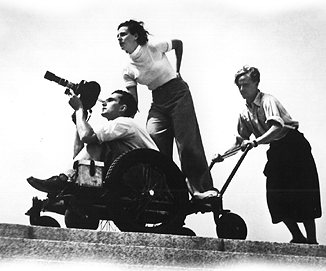
Das Werk des Schweizer Tiefenpsychologen C.G.Jung spielt in der heutigen öffentlichen Diskussion Deutschlands kaum eine Rolle obwohl fast alle Konzepte von ihm selbstverständliche Werkzeuge von Psychologen und Consultants und manche seiner Begriffe Teil der Alltagssprache sind. Ähnlich werden Leni Riefenstahls damals die Zukunft verwegnehmenden, filmischen Konzepte – Die Macht der Bilder – in Film und Kunst routinemässig eingesetzt. Da ich Jung für den Psychanalytiker des 20. Jahrhunderts halte, der gerade zu Religion und Mythen uns heute noch viel zu sagen hat, ist es für mich notwendig, etwaige Vorwürfe mit dem innersten Kern seines Werkes zu vergleichen. Dabei stiess ich auf Leni Riefenstahl, ähnlich brilliant und ebenso negiert in Deutschland. Leni Riefenstahl schuf in ihren 101 Jahren ein beeindruckendes Werk aus Filmen und Photos. Sie war gleichzeitig eine der einflussreichsten und eine der umstrittensten Filmschaffenden. Während ihre ästhetischen Ansätze und dokumentarischen Methoden noch heute vielfach imitiert werden, wurde ihr Name gleichbedeutend mit den Gegenständen ihrer Filme: Die Glorifizierung des Nazi-Regimes. .
Woman in blonde wig (Brigitte Lin) Somehow I’ve become very cautious. When I put on a raincoat, I put on sunglasses too. Who knows when it will rain, or when it will turn out sunny?
Oppertunismus und Karriere
Auf dringende Bitten seiner Kollegen übernahm Jung den Vorsitz der “Ärztlichen Gesellschaft für Psychotherapie”, die einen internationalen Charakter hatte, und nutzte seinen Freiraum als Schweizer, um den internationalen Status und die politische Neutralität der Organisation zu garantieren und brachte auch den Nazis Missliebige in der internationalen Sektion unter. Es gab also einen internationalen Dachverband mit verschiedenen Ländergruppen. Die offizielle Zeitschrift der internationalen Vereinigung war das “Zentralblatt für Psychotherapie”. Ein Stein des Anstoßes sind einige Formulierungen Jungs aus einem Aufsatz, den er 1934 im “Zentralblatt für Psychotherapie” veröffentlichte. Probleme entstanden für Jung, als Prof. Göring (der Vorsitzende der deutschen Ländergruppe) 1934 ein deutsches Beiheft (“Deutsche Seelenheilkunde”) plante, das auch in der regulären Nummer des Zentralblattes erschien, wodurch der Herausgeber Jung unfreiwillig in die Rolle des NS-Befürworters geriet.
Leni Riefenstahl wird in Peter Wartson’s “German Genius” erwähnt. Leni Riefenstahl zeigte im “Blauen Licht” (1932), ihrer ersten eigenen Produktion, in der sie obendrein – aus Geldmangel – Regie führte was in ihr steckte. Der Film gewann bei der Biennale in Venedig Silber und viele weitere Auszeichnungen. Mit der Machtübernahme boten sich der Riefenstahl neue Aufgaben. Aufgaben, denen sie sich aber nur widerstrebend hingegeben haben will. Da kam der Hitler dazwischen, der Film “Blauen Licht” und “Der heilige Berg” haben ihm gefallen. Sie machte Dokumentarfilme, die Meilenstein der Filmästhetik waren, andererseits perfekte Überhöhungen und Symbolik für das damalige Deutschland und die Nationalsozialisten boten.
Zeitgeist
Problematischer Zeit völkerpsychologische Unterscheidungen zwischen “Germanen” und “Juden” erwiesen sich als fatal. Unterscheidungen zwischen der Mentalität verschiedener Völker hatte zwar auch Jung’s Lehrer Sigmund Freud vorgenommen, der etwa seinem Kollegen K. Abraham schrieb, dass dieser aufgrund seiner jüdischen “Rassenverwandtschaft” Freud’s Auffassung von Psychoanalyse näher stünde als Jung. (2) l. So schrieb C.G. Jung in dem Aufsatz “Zur gegenwärtigen Lage der Psychotherapie”, der Jude sei aufgrund seiner langen Leidensgeschichte desillusionierter, habe keine eigene Kulturform und brauche zu seiner Entfaltung “ein mehr oder weniger zivilisiertes Wirtsvolk”. Demgegenüber seien die noch jungen germanischen Völker energiegeladener und enthielten “Spannkräfte und schöpferische Keime von noch zu erfüllender Zukunft.” (3).
Liest man diese Begriffe ohne den Kontext des Gesamtwerkes, erschrickt man zunächst, aller5dings bewertet Jung keineswegs das “Barbarische” des Germanen pauschal höher gegenüber einem für minderwertig erklärten Judentum. Wenn er vom unterdrückten Barbaren im Deutschen spricht, schwingt immer auch Schrecken und Warnung mit. Schon in seiner Krise 1918 sah er voraus, dass archaische und unterdrückte Regungen gerade auch bei diesem “Kulturvolk” ein besonders gefährliches politisches Potential bilden könnten: “Das Christentum zerteilte den germanischen Barbaren in seine untere und obere Hälfte, und so gelang es ihm – nämlich durch Verdrängung der dunklen Seite – die helle Seite zu domestizieren und für die Kultur geschickt zu machen. Die untere Hälfte aber harrt der Erlösung und einer zweiten Domestikation. Bis dahin bleibt sie assoziiert mit den Resten der Vorzeit, mit dem kollektiven Unbewußten, was eine eigentümliche und steigende Belebung des kollektiven Unbewußten bedeuten muß. Je mehr die unbedingte Autorität der christlichen Weltanschauung sich verliert, desto vernehmlicher wird sich die ‘blonde Bestie’ in ihrem unterirdischen Gefängnis umdrehen und uns mit einem Ausbruch mit verheerenden Folgen bedrohen.” (4)
Solche Formulierungen werden “(politisch) korrekten” Historikern nicht sonderlich gefallen, sind aber bedenkenswert, vor allem wenn man sich mit der deutschen Neigung zum Undemokratischen auch mit psychologischen Überlegungen nähern will. Jung wertet die Juden nicht einfach ab, sondern sieht in ihnen ein im Gegensatz zu den Germanen viel älteres und abgeklärteres Kulturvolk, das sich infolge seiner langen Geschichte menschlicher Schwächen bewußter sei. Dies ermögliche ihnen, “mit vollem Bewußtsein in wohlwollender, freundlicher und duldsamer Nachbarschaft ihrer eigenen Untugenden zu leben, während wir noch zu jung sind, um keine ‘Illusionen’ über uns zu haben.” (5) Jung hat – bereits damals für solche Äußerungen angegriffen – seine Aussagen zunächst als legitime “Völkerpsychologie” bezeichnet, die einem Forscher erlaubt sein müsse, um Unterschiede herauszuarbeiten. Er hat ausdrücklich betont, dass es sich dabei nicht um Werturteile handle. Auch die Feststellung von Differenzen zwischen englischer und chinesischer Mentalität seien ja normal und
schlössen nicht den Respekt vor einer alten Hochkultur aus. M.L.v.Franz vertritt mit C.G.Jung die These, dass sich, tiefenpsychologisch gesehen, hinter dem Phänomen des Nationalsozialismus ein religiöses Problem verberge. Es gehe um die Erneuerung des Gottesbildes. Das nationalsozialistische Hakenkreuz kann durchaus als der Schatten des christlichen Kreuzes verstanden werden. Auch die DDR (und das heutige Deutschland) kannte und kennt pseudo-religiöse Rituale und die Ausgrenzung – heute als Rassist.
Doch wäre es berechtigt, die Kapitalismuskritik von Karl Marx als Ganzes zu diffamieren, nur weil er den “Schacher” als das “Wesen des Judentums” bezeichnete oder von den Slawen als “Völkerabfällen” sprach, die vom nächsten Weltkrieg “vernichtet” werden müßten? (8) Jung mußte seinen eigenen Schatten – und die Antipathie zum Freudschen System – abarbeiten. Schon 1936, zwei Jahre nach den oben genannten problematischen Äußerungen, hält C.G. Jung einen Vortrag in London, wo er sich bestürzt über die politische Entwicklung in Deutschland äußert:
“Wenn vor dreißig Jahren jemand vorauszusagen gewagt hätte, daß die psychologische Entwicklung in Richtung eines Wiedererwachens mittelalterlicher Judenverfolgung gehen, daß Europa erneut vor den römischen Liktorenbündeln und unter dem Marschtritt der Legionen erzittern würde … und daß statt des christlichen Kreuzes eine archaische Swastika Millionen von Kriegern zu Todesbereitschaft anködern würde – man hätte diesen Mann als einen mystischen Narren verschrien. Und heute? So bestürzend es erscheinen mag, dieser ganze Wahnsinn ist gräßliche Wirklichkeit.” (9)
1933-1936 Bilder und Mythen
Nach der Machtergreifung holte Propaganda Minister Göbbels alle Filmemache zu sich und zeigte Ihnen den Film von Eisenstein, ” Panzerkreuzer Potkim” – so wollte er Filmkunst gestalten – Kunst mit(unauffälliger) Propaganda und mit Dokumentationen. Leni Riefenstahl war damals eine wenig bekannte Schauspielerin aus Weimar, die sich als Regisseur gerade selbst neu erfand. Sie machte 1934 “Triumph des Willens” – der Nürnberger Parteitag der NSDAP, die Ankunft Hitlers und seiner Helfer. Bewegte Kamera, wechselnde Perspektiven, souveräne Montagetechnik. „Triumph des Willens“ wurde durch Hitler selbst in Auftrag gegeben, der sie sehr zum Unmut von Göbbels direkt protegierte (sie belegte zeitweise sein ganzen Kameras). Der Film fing die erste Parteiversammlung in Nürnberg mit 16 Kameras ein. Nach zwei Jahren schneiden kam ein Film mit durchschlagendem Effekt heraus. Noch cleverer war „Olympia“ der die Spiele 1936 aufnahm. Ihr Ziel war – wieder mit hohem technischem Aufwand (89 Kameraleuten) und einer heute kaum mehr erreichten Astethik – „ennobled good losers, supreme winners, and endwelled on fine musculature particularly of Jesse Owns … to Hitlers extreme displeasure.“
Ebenfall 1936 (dem Jahr des Olympia Dokumentarfilms von Leni Riefenstahl) erscheint Jung’s berühmter “Wotan”-Aufsatz, der vom Aufbrechen eines “furor teutonicus” unter der dünnen Schicht christlich-aufgeklärter Kultur spricht und Deutschland als “geistiges Katastrophenland” bezeichnet, wo die Menschen eher von etwas “ergriffen” werden statt es zu “begreifen” (10). Alle von Jung’s folgenden Äußerungen zum Nationalsozialismus umkreisen von nun an die Frage, wie es ausgerechnet in einem hochentwickelten Kulturland zu einem solchen Verhängnis kommen konnte und aktualisieren seine Einsicht von der Notwendigkeit, sich intensiver mit den archaischen Regungen unterhalb der Zivilisationsoberfläche auseinander zusetzen. Was ihn einmal partiell fasziniert hatte – die euphorische Aufbruchsstimmung zu Beginn des Dritten Reiches – führt jetzt nicht nur zu Bestürzung und Ohnmacht, sondern zu tieferen Geschichtsanalysen, um einer bis heute kaum verstandenen Dynamik auf die Spur zu kommen. Dabei gibt es im Denkansatz übrigens Parallelen zur Frankfurter Schule, die ebenfalls im Nationalsozialismus eine nicht für möglich gehaltene Wiederkehr des Mythischen in “aufgeklärter Zeit” erblickten.(11) Jung findet seine alte Forschungshypothese bestätigt, daß Archetypen, kollektive Verhaltensmuster und archaische Bildwelten bewußt durchgearbeitet statt verdrängt oder unbewußt ausgelebt werden müßten. Nicht nur in Deutschland, sondern in ganz Europa sieht er das Phänomen der “Dissoziation” vor sich: eine Spaltung der Kultur in einen rational-fortschrittlichen Teil, der glaubt, “primitive Stufen” überwunden zu haben, während diese in Wirklichkeit verdrängt worden seien. Denn gerade das, was Christentum und Aufklärung verhindern wollten, geschah trotzdem: Kollektivrausch statt individueller Freiheit, Blutmystik statt Verstandesklarheit, Kriegerkult statt Pazifismus, Anbetung von archaischen Symbolen statt christlicher Werte von Mitleid und Versöhnung. Interessant und bis heute zu wenig bedacht sind Jung’s auf Gesamteuropa ausgedehnte Schlußfolgerungen, zu denen er seine Analyse des Nationalsozialismus erweitert: Auch die Inquisition, die Hexenverfolgung, kolonisatorische Raubzüge des “weissen Mannes”, blutige Revolutionen oder das Vernichtungspotential der Atombombe seien letztlich Folgen einer “schizophrenen” europäischen Kulturentwicklung, die vorgab, mittelalterliche “Primitivität” überwunden zu haben, um in noch barbarischere Exzesse zurückzufallen.(12) Eine wichtige und bestürzende Erkenntnis, die – wie wir im Hass auf alles religiöse sehen – auch heute noch kritisches Potential in sich birgt.
Leni Riefenstahl bezeichnet sich als politisch nicht interessiert. Sie habe sich daher überfordert gefühlt von Hitlers Wunsch, dass sie den Parteifilm machen müsse. Doch hat sie, intuitiv oder geplant, Ablauf und Symbolik der Aufmärsche sofort erfasst – und filmisch überhöht. Sieht man “Tiumph des Willens”, scheint das also ein korrekte Analyse. Auch im Film “Triumph des Willens” ist ja nichts gestellt. Leni Riefenstah: “Das ist ein Zeitdokument. Das haben auch die Richter bei den Entnazifizierungen so gesehen. Es ist ein Zeitdokument. Ob es der Arbeitsdienst ist, oder ob es der Vorbeimarsch ist, oder die Jugend, vor der Hitler eine Rede hält. Das war damals so. Und damals waren die Leute, und nicht nur die Deutschen, auch die Ausländer, fasziniert. Und glauben Sie, dass der “Triumph des Willens” von Frankreich eine Goldmedaille bekommen hätte, kurz vor dem Ausbruch des Krieges, wenn sie den als Propagandafilm gesehen hätten, vorm Krieg, die Franzosen?”.
Nach dem Krieg
In einem 1946 geführten Gespräch mit dem Rabbiner und Auschwitz-Überlebenden Leo Baeck hat Jung Fehler eingestanden und sich entschuldigt, was zu einer Versöhnung zwischen den beiden führte. Der Kabbala-Spezialist Gershom Sholem berichtete diese Begebenheit, die für ihn ausschlaggebend war,weitere Einladungen Jung’s zu dessen Eranos-Tagungen anzunehmen. (13) Interessant ist diesbezüglich vor allem die Tatsache, daß sich jüdisch-amerikanische Gelehrte und Psychotherapeuten viel intensiver mit diesem Problem befaßten als ihre deutschen Kollegen. So gab es 1989 in New York eine wissenschaftliche Tagung (“Lingering Shadows”), die sich ausschließlich mit den Antisemitismusvorwürfen gegenüber Jung beschäftigte.(14) Hierbei wurde nicht mit Kritik gespart, doch ohne zu pauschalieren. Vor allem wurde auf das gespannte Verhältnis von Jung zu seinem jüdischen Lehrer Freud hingewiesen, das zu einigen überspitzten Verallgemeinerungen in dem oben genannten Aufsatz führte. Freud und Jung – anfangs auch eine Vater-Sohn-Beziehung – entzweiten sich unter Streit und Schmerzen, als die Unterschiede in ihrer Beurteilung der spirituellen Dimension der Seele zu eklatant wurden. Während Freud in der Religion nur unbewältigte Vaterproblematik, Aberglauben und Projektion erblickte, waren mythische Bilder und Gottsuche für Jung elementare Bedürfnisse des Menschen, sich mit verborgenen und transzendenten Kräften auseinander zusetzen. Er sah in Freud den Prototyp des säkularisierten Juden, der alle Spiritualität zugunsten eines “modernen” naturwissenschaftlichen Erkenntnisideals verleugnete und übertrug diese Meinung voreilig auf das gesamte Judentum.
Leni Riefenstahl stieß als Fotografin nach dem Krieg rasch in die Weltspitze vor. Bildberichte über ihre Aufenthalte bei den Nuba erschienen zuerst in den Zeitschriften »Stern«, »The Sunday Times Magazine«,»Paris Match«, »L’Europeo«,»Newsweek« und »The Sun«. Vor allem ihre Bildbände »Die Nuba« und »Die Nuba von Kau« brachten ihr weitere Ehrungen und Auszeichnungen ein. Im Alter von 71 Jahren besucht Leni Riefenstahl einen Tauchkurs, um künftig auch als Unterwasser-Fotografin arbeiten zu können. Bald schon erwies sie sich auch in diesem Metier als Meisterin. Nochmal Leni Riefenstahl: “Insofern fühl ich mich schuldig, dass ich am Anfang, in den ersten Jahren so fasziniert war weil Hitler sein Versprechen gehalten hatte die Arbeitslosen wegzufischen und die ganze Not aus Deutschland zu verbannen. Aber ich hätte ja ebenso wie die anderen auch sehen müssen, dass man nicht in jüdischen Geschäften einkaufen durfte, sollte. Ich habe gekauft in jüdischen Geschäften aber es war an sich nicht erwünscht. Das alleine hätte mir zu denken geben müssen und das kann ich nicht verstehen heute, dass das nicht der Fall war. Ich war eben mit angesteckt von der ganzen fast hysterischen Begeisterung, die damals war.” Ich habe einmal eine Schauspielerin kennengelernt. die in dieser Zeit jung und produktiv waren. Vor diesem Hintergrund klingt das – für mich – plausibel- naiv .
Gottesbilder und atheistischen Utopien
J. Marvin Spiegelman’s “Judaism and Jungian Psychology” (1993) weist daraufhin, daß gerade nach dem Zerfall der marxistisch-atheistischen Utopien in aller Welt Fragen nach religiösen Wurzeln und Identitäten wieder neubelebt würden. (16) Die spirituellen Bedürfnisse der Seele seien mehr als bloßes “Wunschdenken”.
Tiefgreifende Lebensereignisse wie Tod, Verlust, Liebe, Krise und Verwandlung wollten auch bildhaftrituell erlebt werden. Gerade die Beschäftigung mit Jung habe Spiegelman auch wieder zu den eigenen religiösen Texten geführt und – etwa durch die Lektüre von dessen berühmter “Hiob” – Interpretation – zu einem vertieften Verstehen des jüdischen Gottesbegriffes.(19) Diesen wichtigen Essay von Jung ignoriert z.B. auch Richard Noll, der 1993 versuchte, dessen Psychologie als eine Art völkischer Ersatzreligion zu entlarven. (20) War Jahwe für Jung vielleicht anfangs noch eine einseitig strafende und überdimensionale Vaterfigur, so wird ihm 1952 durch die Lektüre der alttestamentarischen “Hiob”-Geschichte eine größere Vielschichtigkeit im Verhältnis von Jahwe zu den Menschen klar. (21) . Jung’s “Hiob”-Lektüre wird eine intensive Begegnung mit jüdischer Religion, aber er versucht auch, die Kontinuität innerhalb der Bibel zu verstehen, ohne das Alte gegenüber dem Neuen Testament abzuwerten. Im Gegenteil: Die Figur des Jesus Christus scheint ihm noch als zusätzliche Erfahrungsstufe Jahwes Sinn zu machen, aber als Jung bei der Johannes-Offenbarung ankommt, hat man den Eindruck, daß er die komplexe Figur des jüdischen Gottes doch seinem einseitig “guten” christlichen Pendant vorzieht. Er sieht sogar eine Gefahr darin, daß sich das Christentum hier zu einem schroff dualistischen Denken verengt, welches das “Böse” als “Satan” abspaltet und glaubt, es durch Verbannung aus der Welt schaffen zu können. Dies sei unrealistisches Wunschdenken, widerspräche der Realität der menschlichen Psyche und berge in sich die Anlage für zukünftige Katastrophen: “Als Ganzheit ist das Selbst … immer eine complexio oppositorum, und seine Erscheinungsweise ist umso dunkler und drohender, je mehr das Bewußtsein sich Lichtnatur vindiziert und daher auf moralische Autorität Anspruch erhebt.” (22)
Gut und Böseund Leni Riefenstahl
Gerade die Lektüre von Jung’s “Hiob” eröffnet auch ein tieferes Verständnis der Problematik des “Bösen”: Nur wer lerne, in sich das gegensätzliche Nebeneinander von “Licht” und “Dunkel” zu akzeptieren, könne letztlich auch der Erfahrung des Göttlichen eine angemessene Heimstatt bieten. (23) Übertragen auf den Nationalsozialismus könnte das heißen: Der, der die Möglichkeit der eigenen Verfehlung für denkbar hält, ist gefeiter gegen ideologische Verführung und dualistisches Feindbilddenken, weil dieses ja stets die eigenen Schatten nach außen projiziert. Was hat uns die Jung’sche Psychologie darüber hinaus heute noch zu sagen? Jung’s Archetypenlehre wird manchmal vorgeworfen worden, reaktionär zu sein, weil sie unbeweisbare “Urbilder” oder “ewige Grundmuster” statuiere und damit den Menschen zur unfreien Marionette gegenüber statischen Kräften mache. Doch eigentlich ist das Gegenteil der Fall: Jung wiederholt in seinem gesamten Werk immer wieder die Forderung, unbewußte Verhaltensmuster und suggestive Bilder ins Bewußtsein zu heben, um den Menschen einen freien Umgang mit ihnen zu ermöglichen.
Im Nationalsozialismus und mit Riefenstahl-Filmen geschah genau das Umgekehrte. Die Menschen gerieten in einen Rausch und überließen sich unbewußt atavistischen Strömungen und Symbolen, wurden von etwas “ergriffen” statt es zu “begreifen”. Sie traten nicht in ein kritisches oder befragendes Verhältnis zu archaischen Inhalten, sondern verfielen ihnen in blinder Hörigkeit. Ein Beispiel wie mächtig Bilder sind, zeigte der Film “Triumph des Willens” eine Auftragsarbeit für die NSDAP von einer offensichtlich intelligenten jungen Frau und brillianten Künstlerin, die sich mit kulturlosen Halsabschneidern einliess. Es liegt im Wesen des Films (und von Bildern), dass die Umstände seiner Entstehung verblassen. Riefenstahls Werke sind dabei, etwas zu werden wie Jungs Werke, dem man das Leben und Leiden, das sich um ihn herum abspielte, nicht mehr ansieht. Es bleibt nur noch das Bild – und so wird es den Riefenstahl-Filmen auch ergehen. Der Werbefilm ist zu weiten Teilen von Riefenstahl beeinflusst, was sich im Mystifizieren und Dramatisieren von Dingen zeigt, sei es ein Trainingsschuh oder ein Auto. Extreme Kamerawinkel, Kreisfahrten, Auflösungen, Schnitttechniken – was sie erfunden hat, wenden die Werberegisseure heute alle an, vom Nike-Spot bis zu MTV. Die “Krieg der Sterne”-Trilogie enthält Anleihen bei Riefenstahl; der Helm von Darth Vader sieht aus wie von der Wehrmacht ausgeliehen, und die Klonkrieger in der neusten Folge marschieren wie bei Truppen beim Parteitag. Ohne Standpunkt (“gut” oder “böse§ kann man keine realen Alltagssituationen dokumentieren, keine Figuren entwickeln und keine Geschichten erzählen. Um die Inschrift zu paraphrasieren, die C.G. Jung auf seinen Grabstein setzen ließ: „Ob gerufen oder nicht, Gott wird da sein.“ Es liegt nahe, daß große Bilder eine große Ausstrahlung haben. Auch heute ist diese Problematik trotz aller “Aufklärung” nicht aus der Welt. Aber “Vielleicht bedeutet die Kunst gar nichts, hat gar keinen Sinn, wenigstens so wie wir vom Sinn sprechen.” (23)
Zusammenfassung Jung fordert keine nostalgische Aufwärmung alter Mythen, sondern eine neue Theorie symbolischen Denkens – sein Horizont ist jedoch weiter als der von seelisch verarmten Rationalisten aber auch von denen dem Unbewussten mit Bildern huldigen, weil er die menschliche Sehnsucht nach Mythen und Bildern nicht nur verdammt, sondern ernstnimmt, aber ihre bewußte Durchdringung fordert. Im Gegensatz ging Leni Riefenstahl im Sog der Symbole unter. Dass nach wie vor viele Menschen mythischen Bildern erliegen, die in Gewalt und Abhängigkeit münden können, beweisen problematische Kino- und Videofilme, politische Korrektheit, religiöser, anti-religiöser und anti-westlicher Fundamentalismus , rechte und linke Ausgrenzungswahn, ja auch die Wiederkehr von pseudo-religöser Symbolik in der Politik.
1) Aniela Jaffé: Aus Leben und Werkstatt von C.G.Jung, Zürich und Stuttgart 1968, 89f
2) Ebd. 95
3) C.G. Jung, Gesammelte Werke, Band 10, Solothurn und Düsseldorf 1995, 190f
4) Ebd. 25
5) Ebd. 190
6) Ebd. 106, Jung spricht hier sogar vom “arischen Raubvogel” und seiner “unersättlichen Beutegier”, die ihn “über alle ihn nichts
angehenden Länder führt” sowie von unserem “Größenwahn, der sich zum Beispiel einbildet, das Christentum sei die einzige
Wahrheit, der weiße Christus der einzige Erlöser.”
7) Ebd. 61f
8) Karl Marx: “Zur Judenfrage”, MEW Bd.1, 376f und “Neue Rheinische Zeitung” 1849, zitiert in Konrad Löw: Das Rotbuch der
kommunistischen Ideologie, München 1999, 74f. (Diese Stelle ist in der Marx-Engels-Gesamtausgabe nicht enthalten)
9) Jung, Gesammelte Werke, Bd.9/1, 60f
10) Jung, Gesammelte Werke, Bd.10, 203ff
11) Max Horkheimer/ Theodor W. Adorno: Dialektik der Aufklärung, Philosophische Fragmente, Frankfurt/Main 1973
12) Jung, Gesammelte Werke Bd. 10, 221f, 237f, 268ff, 273,
13) Aniela Jaffé: a.a.O. 103f
14) Aryan Maidenbaum/ Stephen A. Martin (Hg.): Lingering Shadows: Jungians, Freudians and Anti-Semitism, Boston/ London
1991
15) Ebd. 277ff
16) J. Marvin Spiegelman: Judaism and Jungian Psychology, Boston/ London 1993, 21f
17) Ebd. 47
18) Ebd. 25f, 40
19) Ebd. 56ff
20) In seinem Buch “The Jung Cult. Origins of a Charismatic Movement” (Princeton 1994) versucht Richard Noll in reiner Konzentration auf das Frühwerk und auch dort vereinfachend nachzuweisen, daß Jung aus Aversion gegen das “Semitische” nur die “arisch-indoeuropäischen” Mythen interessiert hätten. Doch kommen in dessen frühen Schriften auch Symbole und
Göttervorstellungen aus Ägypten und Asien vor. Ein paar Bemerkungen über “Siegfried”, “Walhall” und die “Walküren” sowie reale bzw. vermutete Bekanntschaften mit völkischen Autoren reichen noch nicht aus, um aus Jung einen völkisch orientierten Germanenmystiker á la Guido von List zu machen.
21) C.G. Jung, Gesammelte Werke, Bd. 11, 363ff, siehe auch Micha Brumlik: C.G.Jung. Zur Einführung, Hamburg 1993, 110 ff
22) C.G. Jung, Ges. Werke, Bd 11, 445
23) C.G. Jung, Ges. Werke, Bd 15, 49/50
24) C.G. Jung, Kommentar zu Richard Willhelm, das Geheimnis der Goldenen Blüte
Die Innenwahrnehmung mit den Bildern, die aus dem Unbewussten aufsteigen – Aktive Imagination, ist gerade vor Ostern aus der Klarheit des Fastens bedeutsam für die innere Einkehr. Außen und Innen, Körper ung Geist entsprechen sich. In einem grossartigen Interview beschreibt C. G. Jung, dass beides, die materielle Aussenwelt und die innere Welt eben Fakt ist. Jedes Haus war einmal ein Gedanke.
Wir sind in unserem Stadteil sicher nicht eine dieser beinahe klinisch toten katholischen Großstadtgemeinden. Man geht aber – wenn überhaupt – alleine in die Messe und auch wieder alleine hinaus mit gelegentlichen zufälligen Begrüssungen. Der Pfarrer und seine ehren- und hauptamtlicher Mitarbeiter sind aufgrund wachsender Gemeindegrößen (zwei zusammengelegte Pfarreien – vier Kirchen) gefordert. Die angebotenen Veranstaltungen, insbesondere die Messe in der kleinen Kirche sind mehr als ein Minimum, stillen aber gerade in der Fastenzeit nicht immer den Durst auf Transzenden und Mystik. Ein Tor zum Unbewussten und damit zu Transzenden und Mystik ist die Aktive Imagination. Nach C.G. Jung ist Aktive Imagination der Königsweg zum Unbewussten. Nach einer entspannenden, in die innere Stille führenden Meditation öffnet und arbeitet der Einzelne mit Achtsamkeit, Nüchternheit, und Wertschätzung in seiner inneren Bilderwelt.
Die moderne Forschung der Naturwissenschaften, insbesondere der Physik, öffnet auch dem kritischen, zweifelnden Geist Erkenntnisse, die denen religiöser Systeme ähneln. Raum und Zeit sind verbunden. Zusammenhänge sind kausal aber auch akausal vernetzt. Nichts geschieht ohne zeitgleiche Auswirkung im gesamten Universum. Es verbinden sich der alte Grundsätz der alchemistischen und religösen Mystik.
Das Wissen darum ließ in allen großen Kulturen die Menschen aufbrechen, in ihren Initiationswegen einen Zugang zu suchen zu diesen anderen, dem bewussten Denken nicht zugänglichen Dimensionen. Beim Arbeiten mit der Bibel, spielt neben dem Lesen, die Möglichkeit zur Imagination als einen unmittelbaren Zugang zu den eigenen Bildern und Phantasien eine wichtige Rolle. ”Wenn wir von Imagination sprechen, dann sprechen wir von der Tätigkeit unserer Vorstellungskraft, unserer Einbildungskraft, von Phantasie, von Tagträumen. Auch wenn diese Phänomene untereinander verschieden sein können, betreffen sie alle den Bereich des Imaginativen, (…). Imaginative Fähigkeiten zu haben bedeutet, dass es den Menschen gegeben ist, mehr oder weniger anschaulich, ein Bild zu haben von etwas, das nicht mehr oder noch nicht präsent ist, das vielleicht überhaupt nie präsent sein wird. Diese Vorstellungen können sehr bildhaft sein, mehr von Farben oder Formen bestimmt; sie können sich aber auch durch eine Geruchserinnerung oder einer Geruchsvorwegnahme, durch eine Berührungserinnerung oder Berührungsphantasie oder durch akustische Erinnerungen oder Erwartungen ausdrücken. Sie können auch mehr gedanklicher Art sein.” (V. Kast, Imagination als Raum der Freiheit, Olten 1988). Die jedem Menschen gegebene Möglichkeit zur Imagination in bewusster und aktiver Weise zu gebrauchen und zu entfalten, ist ein Ziel. So wird die Fähigkeit, innere Bilder zu sehen und wahrzunehmen, angeregt, oder Mut gemacht, diese inneren Bilder zuzulassen, da die Fähigkeit zur Imagination das schöpferische Entwickeln und Gestalten von Spielstücken ermöglicht und wesentlich unterstützt. Ein wichtiger Schritt in dem Gebrauch der aktiven Imagination ist die Bewusstmachung und Gestaltung, der inneren Bilder zu einem biblischen Text wie z.B. Jesu’s Leidensgeschichte zu Ostern. C. G. Jung ist in seinen tiefenpsychologischen Forschungen jenseits des bewussten Erlebens genau dieser ganzheitlichen Dimension begegnet. Das Bewusstsein kann sie nicht vollständig erfassen sondern nur partiell erfahren, z.B. in Symbolen, Träumen und Imaginationen.
Eine ihn bewegende Frage, ein rätselhafter Traum, ein Wort der Bibel oder einfach die nach innen gerichtete Aufmerksamkeit helfen, sich auf die auftauchenden Bilder zu zentrieren und einzulassen. Fühlt man sich von einem Bild oder Geschehen angesprochen, tritt man in seiner Vorstellung aktiv handelnd – also mit seinem Ich verantwortlich beteiligt – in das Bild ein. Eine Handlung entwickelt sich. Aufgefallen ist mir dies schon beim nur gesamthaften Durchlesen der Bibel in St. Ottilien. Dieser primär “sinnliche” Zugang zum “Gesamtkunstwerk” Evangelium ist mächtig und zumindest gleichwertig zum intellektuellem Interpretieren der einzelnen Bibelstellen.
Aktive Imagination ist also aktives Wach-Träumen ähnlich den Visualisierungstechniken der Meditation keine passive Wahrnehmung in einem tranceartigen Zustand, auch keine Phantasiereise . Dieses inneren Drama, dessen Gestalter wir sind, enthüllt uns Möglichkeiten, Gegensätzlichkeiten, konfrontiert unser bisheriges Selbstbild mit den Grenzen des bewussten Ichs und der Unendlichkeit der Schöpfung .
Im sich daran unmittelbar anschließenden kreativen Gestalten – Jung nennt sie eine „phantasia vera“, entsteht eine „wahre Fantasie“, die uns verändern kann, wenn wir uns darauf einlassen. Sie hilft uns, zu uns selbst, zu unserem Lebenssinn in Christus zu finden, zu dem, was wir im Kern schon immer waren, was als Möglichkeit entwickelt und gelebt werden will.
Bestärkt von seinem Freund Wolfgang Pauli, dem weltbekannten Physiknobelpreisträger, nahm Jung an, das Prinzip der Komplementarität habe nicht nur in der Physik, sondern auch in der menschlichen Seelenkunde Geltung. Er verstand kausale und nicht-kausale Erklärungen, Trieb und Willen, aber auch – am umstrittensten – Gut und Böse als einander ergänzende Größen.
Viele Begriffe Jungs, bilden dieses Gegensatzpaar, etwa Introversion und Extraversion, Anima und Animus und in gewissem Sinne auch Persona und Schatten. “Schatten” steht für die abgewehrte, ins Dunkle verdrängte Seite des Menschen, also für alle Neigungen und Eigenschaften, die man an sich nicht wahrhaben will. “Persona” ist die Maske, die ein Mensch aufsetzt, um sich anzupassen und den Normen zu entsprechen. Nach Jung kann ein Mensch oft erst zu sich selber – zu seinem Zentrum, zum «Selbst» – finden, wenn er Schatten und Persona erkennt und sich mit dem kollektiven Unterbewussten durch die sogenannte aktive Imagination auseinandersetzt. Hermann Hesse, der in drei entscheidenden Krisensituationen seines Lebens (1916/17, 1921 und 1926/27) bei C. G. Jung Hilfe fand, hat diese imaginative Suche literarisch umgesetzt. “Steppenwolf” ist nach Hesses eigenen Worten die literarische Einlösung dessen, was er als das “Feuer“ seiner Analyse bezeichnet hat und illustriert auch das Anliegen Jungs, scheinbar Gegensätzliches zu verbinden und das im westlichen Denken vorherrschende Prinzip der Unterscheidung mit dem östlichen oder mystischen Prinzip der Synthese (wie „Yin und Yang“) zu ergänzen. Jungs Religionspsychologie liefert Hesse die theoretische Legitimation für die zentrale Botschaft seiner mittleren und späten Dichtung: die Identität von Selbsterfahrung und Gotteserfahrung. Sie bestätigt eigene Ahnungen und Erkenntnisse über die gemeinsamen psychologischen und anthropologischen Grundlagen der Weltreligionen. Hesse formuliert in in seiner Betrachtung “Weihnacht” aus dem Jahr 1917:
“Die Lehre Jesu und die Lehre Lao Tses, die Lehre der Veden und die Lehre Goethes ist in dem, worin sie das ewig Menschliche trifft, dieselbe. Es gibt nur eine Lehre. Es gibt nur eine Religion. Es gibt nur ein Glück. Tausend Formen, tausend Verkünder, aber nur einen Ruf, nur eine Stimme. Die Stimme Gottes kommt nicht vom Sinai und nicht aus der Bibel, das Wesen der Liebe, der Schönheit, der Heiligkeit liegt nicht im Christentum, nicht in der Antike, nicht bei Goethe, nicht bei Tolstoi — es liegt in dir, in dir und in mir, in jedem von uns. Dies ist die alte, einzig ewig gültigeWahrheit. Es ist die Lehre vom ‘Himmelreich’, welches wir ‘inwendig in uns’ tragen.”
In der Bibel ist hierzu das über den Menschen als Sünder Gesagte relevant. Im AT hat der Mensch die Freiheit zu wählen. In Gen 3-11 wird geschildert, dass der Mensch seine Grenzen nicht akzeptiert, wie Gott sein will und damit sein Verhältnis zu Gott, Mitmensch und Umwelt zerstört. Später hat man (die ätiologische und mythologische Erzählung) Gen 3 im Sinne einer Erbsündenlehre verstanden (Augustin; CA 2: „ … dass sie alle vom Mutterleib an voll böser Lust und Neigung sind und von Natur keine wahre Gottesfurcht, keinen wahren Glauben an Gott haben können…“). Das NT betont die Sünde als objektive Macht (vgl. Rö 7/8), die den Menschen beherrscht, erst durch Christus wird diese Macht gebrochen (wobei die endgültige Durchsetzung des Reiches Gottes noch aussteht). Spezifische Aussagen darüber, woher das Böse letztlich kommt, macht die Bibel ebensowenig wie woher Gott kommt.
Das Nachdenken über bestimmte Bibelstellen, eine bestimmte Predigt führte bei mir zur Erkenntnis, das Himmelreich ist heute schon da, es ist in Dir und Mir. Jungs Psychologie legitimiert, systematisiert und erweitert (für mich auch ganz persönlich) jene religiösen und psychologischen Einsichten. Eine Kernaussage im Taoismus ist ja zum Beispiel, das sich das Gute und das Böse ergänzt und bedingt. Jungs Psychologie bietet das Instrumentarium, um das religiöse Fundament und Denken auf eine neue, zeitgemäße und faszinierende Weise zu deuten. Ohne in eine Patchworkreligion abzugleiten gibt sie den Schlüssel in die Hand für jene Synopsis der Weltreligionen, Mythen, gnostischen und alchemistischen Denkrichtungen und namentlich für die Verbindung von Psychologie und Religion.
In diesem Essay sollen drei Sichten des Guten und Bösen angesprochen werden:
Die Sicht von jenseitsorientierten monotheistischen und polytheistischen „Religionen“. Die Gnostik nimmt hier mit dem subtilen Ansatz der Demiurgen eine Art Zwischenstellung ein.
Die Sicht von der diesseitsorientierten Psychoanalytik von C.G. Jung mit dessen Gottesbegriff (Selbst) auch im Zusammenhang mit weiteren vom Individuum (z.B. im Buddhismus) oder der Natur ausgehenden, pantheistischen Gottesvorstellungen wie z.B. im Taoismus.
Die anthropologische oder humanistische Sicht einer eigenverantwortlichen Persönlichkeitsentwicklung als weitere Ergänzung speziell zur christlichen (katholischen) Sicht.
Ausgehend von der Annahme von C.G. Jung, dass wir die Energie der dunklen Seiten in uns produktiv einsetzen können und müssen, ist meine zentrale Frage, wie kann ich dies mit dem humanistische Menschenbild – edel sei der Mensch hilfreich und gut – und mit dem christlichen Menschenbild – Gut ist nur Gott – vereinbaren. Ging mit dem was, das Christentum „verteufelt“ hat und mit der Verteufelung des Christentum durch Freud, nicht viel Positives verloren?
Seit der Frühzeit in der Geschichte des Menschen finden wir die Vorstellung des „Jenseits“, welches von guten oder bösen Wesen bevölkert ist. Während in polytheistischen Glaubenssystemen und Kulturen die jenseitigen Mächte auch gleichzeitig gut und böse sein können wird in etablierten monotheistischen Religionen (Judentum, Christentum und Islam) das Böse eindeutig dem Teufel und das Gute eindeutig Gott zugeodnet auch eindeutig festgelegt, was als Gut und Böse zu gelten hat. Allerdings fragen sich nicht nur Theologen, sondern nahezu jeder Mensch dann Warum lässt Gott das Leid zu? Warum gibt es Kriege, Naturkatastrophen, Hunger, Seuchen, Gewalt in den Familien und in der Gesellschaft? Wenn Gott gut und allmächtig ist warum gibt es dann das Böse?
Das religiöse Weltbild ist grundlegend bestimmt durch die Polarität von Diesseits und Jenseits und dem vom sterblichen Leib und unsterblicher Seele. Im Gegensatz dazu steht das positivistische, seelenlose Weltbild eines (aufgeklärten) Materialismus. Im archaischen Mythen konnte der transzendente sensible Mensch dem Jenseits noch direkt und konkret begegnen, dem Eingang in die Unterwelt dem Feuer im Dornbusch. Fast alles konnte dem Menschen noch Zeichen geben, Sonne Mond und Sterne, Donner und Blitz, Tiere, Pflanzen, Flüsse und Berge. Der Teufel symbolisiert oder besser personifiziert zum Beispiel im Christentum alles was die Gesellschaft als das Böse betrachtet. Luther knüpft an Paulus und Augustin an: Gott ist nur gut, der Mensch ist seiner Natur nach böse (ist aber für seine Schuld verantwortlich, vgl. CA 2), er kann von sich aus nichts zu seinem Heil tun, alles hängt vom Glauben an Christus ab ( solus christus, sola gratia, sola fide, sola scriptura). In dieser Welt bleibt der Mensch simul iustus et peccator. C.G. Jung bemerkt im Protestantismus das Fehlen der von ihm positiv gesehenen Beichte im Vergleich zum katholischen Glauben zum Umgang mit der Sünde aber auch der für Ihn so wichtigen Rituale.
Mit der Zunahme des Wissens wurde diese Welt entzaubert. Dennoch, der Glaube an die Macht des Gestirns hat bis zur heutigen Zeit überlebt. Mit der Ablehnung des Jenseits erst wird das religiöse Weltbild zerbrochen. Der Mensch wird auf sich selbst zurückgeworden und ist „verdammt zur Freiheit“. Mit dem Atheismus und Materialismus wurde das Jenseits und das personifizierte Böse abgeschafft, bestenfalls als Hypothese erklärt, welches der aufgeklärte Mensch nicht mehr nötig hat.
Die Philosophen haben dieametral unterschiedliche Ansichten welche unser “heute” wesentlich bestimmen. Da ist die Vorstellung von J.J.Roussseau (18. Jarhundert) vom edlen Wilden, die von Karl May bis zu den deutschen Linken gepflegt wird: Der Mensch ist von Natur aus gut, die Gesellschaft lässt ihn böse werden.„Alles ist gut, was aus den Händen des Schöpfers kommt; alles entartet unter den Händen des Menschen.“ Bei T. Hobbes (1588-1679) ist der Mensch ist von Natur aus böse”. Oft ist das Böse in der Philosophe nur ein Irrtum oder ein Erkenntnisproblem wie z.B. Sokrates. In der Psychologie bzw. Verhaltensforschung bzw. Hirnforschung ist bei C.G. Jung das Böse das nicht integrierter „Schatten“, bei A. Adler entsteht das Böse “durch eine Fehlkompensation des Minderwertigkeitsgefühls”, und bei K. Lorenz: Das sogenannte Böse (1963). heisst es: “Die gegenwärtig existierende Spezies Mensch ist nicht mehr als „daslanggesuchte Zwischenglied zwischen dem Tiere und dem wahrhaft humanen Menschen“.Die Anthropologie Freuds erklärt das Böse aufgrund des Triebmodells. Zu dem sogenannten Todes- bzw. Destruktionstrieb kann die vom Menschen durch die Kultur geforderte Triebverdrängung (vor allem des Sexualtriebes) zu von der Gesellschaft als „böse“ erlebten Verhaltensweisen führen. Unerfüllbare Anforderungen der christlichen Moral, insbesondere aus der vom Christentum geforderten Verdrängung der Sexualität führen je nach Veranlagung zu Angst oder Aggression. Die Zeit nach der Aufklärung führte den drei Kränkungen des Menschen:
Kopernikanische Kränkung (Erde/Mensch nicht Zentrum der Welt).
Darwinistische Kränkung (Mensch nicht Krone der Schöpfung).
Freud (Mensch nicht Herr im eigenen Haus, das Ich vom Unbewussten fremdgesteuert).
Letztlich steht durch letzteres auch der freie Wille in Frage, das Universum erscheint sinnlos, zufällig und chaotisch und Religion ein illusionärer Versuch diese trostlose Realität des Lebens zu verleugnen. Der Teufel ist dann konsequenterweise eine Personifikation des menschlichen Trieblebens, ein Komplex im Unbewussten. C.G. Jung übernahm das vom Unbewussten gesteuerte Ich, bot aber ein Erlösung (oder Erleuchtung durch die Individuation an. Diese Seelenlosigkeit und Religionsfeindlichkeit lehnte C.G. Jung vehement ab. Er beschrieb „kollektiven Archetypen“ des Unbewussten im Sinne von oben erwähnten Weltbildern, ihre langlebiger zäher Natur und das sie von kultureller Identität und kulturübergreifend von allen Individuen getragen werden. Es ist eine Kernaussage und Basis seiner empirischen Forschung, dass Religionen den Menschen beachtliche Lebenshilfe bietet:
Opfer (als Handlungsgeschäft mit dem diesseitigen Wesen)
Offenbarung (sorgfältige Beobachtung von Zeichen durch Seher oder Propheten und daraus abgeleiteten Handlungsanweisungen)
Rituale (als Basis von Magie oder im christlichem Kontext dem Geheimnis des Glaubens).
Neben den Zeichen bewirken direkte Offenbarungen (Träume und Visionen) einen direkten Einblick in das Jenseits oder – nach C.G. Jung in das Unbewusste. In der Eucharistie ist der Wandlungsprozess in der Lage, gewöhnliches Brot und gewöhnlichen Wein in den heilbringenden Leib und das erlösende Blut Christi tz verwandeln der sich für den Menschen geopfert hat.
Schon Platon spricht von einem inneren Zwiespalt in der Seele des Menschen. Einem Pferdegespann, das einen schön und gut himmelwärts strebend, das andere Sitz der Begierden erdwärts ziehend. Das ist auch im Gegensatz zwischen weiblichen (materiellen) und männlichen (geistigen) Prinzip (und etwas neutraler mit Yin und Yang sichtbar. Für Paulus ist dieses untere Pferd, eine autonome Kraft das die Absichten des Hellen durchkreuzt und die niederen Seelenkräfte im Teufel oder in Dämonen personifiziert.
Diese autonomen Komplexe beschreibt C.G. Jung, aber in seiner Psychoanalytik kann der Mensch wie im Christentum erlöst werden, wie im Buddhismus zur Ganzheit gelangen. Der Zwiespalt in uns zwischen der hellen und dunklen Seite (dem Schatten), der göttlichen und der teuflischen Stimme wird durch die Individuation aufgelöst.
Hat auch Gott vielleicht zwei Seiten, eine gütige und eine grausame Seite der Gott Hiobs?. Wie schon in dem Essay “Das Böse bei Markus” und im Essay “Die Intelligenz des Bösen” beschrieben, ist das ist dieses Gottesbild analog zum Mensch durchaus zwiespältig. Beim genaueren Hinsehen, ging C.G. Jung insbesondere in seinem Buch „Antwort auf Hiob“auf unterschiedliche Gottesbilder insbesondere auf das alttestamentarische/jüdische und gnostische ein. Im Buch von Hiob erschein Gott eben nicht als reine Liebe, und der gnostische Gott Abraxas (siehe Essay)vereinigt Gut und Böse in einer Person. Die Vermengung von Schatten und Anima, die oft im Individuum vorkommt, hat Jung klarsichtig, als Ursache der häufigen Projektion des Bösen oder zumindest des Niederen auf das weibliche in Religionen beschrieben.
Der Mythos vom Engelssturz schildert wie Satan aus dem Himmel gestürzt wurde. Jung verwirft diese Mythen nicht wie Freud, sonder deutet die Mythen und insbesondere die Bibel symbolisch bzw. allegorisch. Nebenbei bemerkt, diese demilitarisierte Zone in der katholischer Lehre zwischen wörtlicher Bibelauslegung und allegorischem Bibelverständnis ist seit den Zelten des Ringens mit den Gnostikern sehr brisant. Der Engelssturz oder der vorangegangene Aufstand gegen Gott ist ein Evolutionsschritt, die Aufteilung zwischen Gut und Böse. Dadurch wird das Ich (vielleicht auch die Persona) heller, der Schatten aber umso dunkler. Die Abendländisch Kultur wurde auf der Vorderseite gerechter (römisches Recht) aber auf der Rückseite dunkler mit den gesamten Kräften die nicht mehr erreicht und kultiviert werden können. Nach Jung wird ohne Integration des Schattens – aber auch ohne eine Erlösung durch die katholische Mystik, welche er auf eine ähnliche Stufe stellt, die Destruktivität zunehmen. C.G. Jung betrachtet die Entmythologisierung z.B. des Protestantismus aber auch des Materialismus als etwas Barbarisches. Für Jung bilde die Seele die Basis des religiösen Bewusstseins das im Selbst zentriert ist. Als Empiriker und durchaus von Kant beeinflusst, sah er sein Fachgebiet nicht als kompetent an, metaphysische Aussagen zu treffen.
Es ist dieser Komplementaritäts- und Integrationsansatz von Jung, der uns Menschen in einer globalisierten, fragmentierten und anti-religiösen Welt helfen kann. Da sich unsere Welt immer schneller verändert und das Gute immer mehr durch das Böse herausgefordert wird, stellt sich für viele Menschen die Frage nach den kulturellen Wurzeln und der religiösen Identität wieder dringender und anhaltender. Es hilft nicht nur gegen das Böse sondern auch gegen die den Totalitarismus des Guten, das auch das Böse verursacht. Der nüchterne Schluss lautet, es kann in der Welt nicht nur Gutes oder Böses geben aber es gibt einen Unterschied.
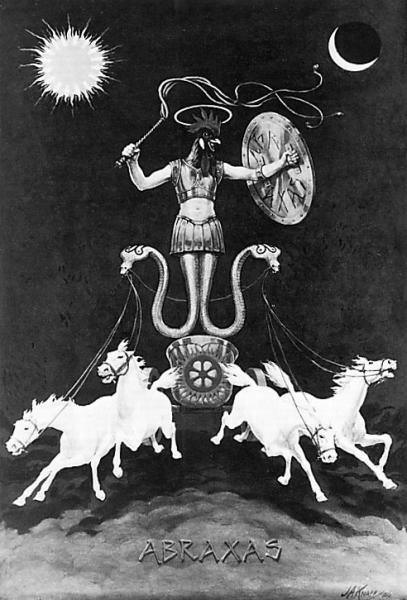
Mit Abraxas (griechisch Ἀβρασάξ, Ἀβράξας) bezeichnete der ägyptische Gnostiker Basilides in Alexandria um das 2. Jahrhundert das Symbol des höchsten Urwesens, aus dem die fünf Urkräfte Geist(Nous), Wort ( Logos), Vorsehung (Phronesis), Weisheit(Sophia) und Macht sowie sittliche Vollkommenheit und innerer Friede hervorgingen.Basilides verarbeitete verschiedene christlich-jüdische, persische und neuplatonische Überlieferungen zu einem dualistischen Weltbild.
Das frühe Christentum war stark gnostisch geprägt, gnostische Richtungen gab es auch im Judentum, und sogar der Islam hat seine Gnostiker (die Sufis). Die Gnostiker gehen davon aus, dass der Kern eines jeden Menschen ein “göttlicher Funke” ist. Der göttliche Funke ist unsterblich, er existiert außerhalb von Raum und Zeit. Solange der Mensch aber seinen wahren Zustand nicht erkannt hat, bleibt er in dieser Welt gefangen und muss immer wieder in einem neuen Körper reinkarnieren. Immer wieder einmal kommt aber ein Gesandter aus der Lichtwelt (bei den gnostischen Christen spielt Christus diese Rolle) auf die materielle Ebene, um dafür reif gewordene Seelen mit der Lichtkraft Gottes zu verbinden und es ihnen zu ermöglichen, dem Zugriff des falschen Gottes, des Demiurgen, zu entkommen. Der abrahamitische Gott ist dieser Demiurg. Daher haben die gnostischen Christen der Frühzeit das alte Testament rundweg abgelehnt.
Die Gnostiker sehen Abraxas als obersten Gott, der Gutes und Böses in einer Entität vereint, der Jesus als Sohn des alttestamentarischen Gottes Jahweh auf die Welt entsandt hat. Ähnlich wie C. G. Jung das im Alten Testament beschriebene Buch Ijob (Hiob) in seinem “Antwort auf Hiob” interpetiert hat (dort ist Jahweh sehr ambivalent beschrieben und Satan sein missratener Sohn).Anhänger des Basilides glaubten, dass der Körper von Jesus Christus eine Illusion war,während hier auf Erde weilte.
Aus dieser obersten Gottheit den die Anhänger des Basilides anbeteten, dem „ungewordenen Vater“, emanierten sieben göttliche Kräfte (nach der Zahl der Planeten), das erste Geisterreich aus dem in allmählich abnehmender Klarheit 364 weitere Geisterreiche, jedes mit sieben „Äonen“, hervorgingen. Die gesamten Geisterreiche werden zusammengefasst in dem Geheimwort Abraxas oder Abrasax, weil es die sieben griechischen Buchstaben enthielt, die numerisch gerechnet der Zahl 365 entsprechen. Abraxas wird auch unter die ägyptischen Götter eingeordnet. Er wurde auf Amuletten mit einer Peitsche in seiner Hand dargestellt. worden. Das mystische Wort Abrakadabra war von seinem Namen abgeleitet. Diese gnostischen Symbole wurden von vielen Gesellschaften angenommen, die Magie und Alchimie betrieben.
C.G. Jung schrieb in “Die sieben Belehrungen der Toten” unter dem literarischen Namen diese Basilides über Abraxas. Nach C.G. Jung kann ohne das Satan verstanden und integriert wird – wie bei Abraxas – der Mensch nicht erlöst werden. Wie soll aber nun Satan, der das Böse repräsentiert, integriert werden? Nach Jung nur durch einen Weg, das Böse (den Schatten) in das Bewusstsein zu heben. Bevor wir uns nicht völlig bewußt sind, wie entfremdet unser sozialisierter Zustand ist und wie wenig er unseren tieferen spirituellen Bedürfnissen genügt, so lange werden wir die Individuation nicht erreichen, durch die erst eine weitere und reifere Persönlichkeit entsteht.
Die Toten kamen zurück von Jerusalem, wo sie nicht fanden, was sie suchten. Sie begehrten bei mir Einlass und verlangten bei mir Lehre und so lehrte ich sie: Höret, ich beginne beim Nichts. Das Nichts ist dasselbe wie die Fülle. In der Unendlichkeit ist voll so gut wie leer. Das Nichts ist leer und voll. Ihr könnt auch ebenso gut etwas anderes vom Nichts sagen, zum Beispiel es sei weiß oder schwarz oder es sei nicht, oder es sei. Ein Unendliches und Ewiges hat keine Eigenschaften, weil es alle Eigenschaften hat. Das Nichts oder die Fülle nennen wir das PLEROMA. Dort drin hört Denken und Sein auf, denn das Ewige und Unendliche hat keine Eigenschaften. In ihm ist keiner, denn er wäre dann vom Pleroma unterschieden und hätte Eigenschaften, die ihn als etwas vom Pleroma unterschieden. Im Pleroma ist nichts und alles: Es lohnt sich nicht über das Pleroma nachzudenken, denn das hieße: Sich selber auflösen. Die CREATUR ist nicht im Pleroma, sondern in sich. Das Pleroma ist Anfang und Ende der Creatur. Es geht durch sie hindurch, wie das Sonnenlicht die Luft überall durchdringt. Obschon das Pleroma durchaus hindurch geht, so hat die Creatur doch nicht Theil daran, so wie ein vollkommen durchsichtiger Körper weder hell noch dunkel wird durch das Licht, das durch ihn hindurch geht. Wir sind aber das Pleroma selber, denn wir sind ein Theil des Ewigen und Unendlichen. Wir haben aber nicht theil daran, sondern sind vom Pleroma unendlich weit entfernt, nicht räumlich oder zeitlich, sondern WESENTLICH, indem wir uns im Wesen vom Pleroma unterscheiden als Creatur, die in Zeit und Raum beschränkt ist. Indem wir aber Theile des Pleroma sind, so ist das Pleroma auch in uns. Auch im kleinsten Punkt ist das Pleroma unendlich, ewig und ganz, denn klein und groß sind Eigenschaften, die in ihm enthalten sind. Es ist dies Nichts, das überall ganz ist und unaufhörlich. Daher rede ich von der Creatur als einem Theile des Pleroma, nur sinnbildlich, denn das Pleroma ist wirklich nirgends geteilt, denn es ist das Nichts. Wir sind auch das ganze Pleroma, denn sinnbildlich ist das Pleroma der kleinste nur angenommene, nicht seiende Punkt in uns und das unendliche Weltgewölbe um uns. Warum aber sprechen wir denn überhaupt vom Pleroma, wenn es doch Alles und Nichts ist ? Ich rede davon, um irgendwo zu beginnen, und um Euch den Wahn zu nehmen, dass irgendwo außen oder innen ein von vornherein Festes oder irgendwie Bestimmtes sei. Alles sogenannte Feste oder Bestimmte ist nur verhältnismäßig. Nur das dem Wandel unterworfene ist fest und bestimmt. Das wandelbare aber ist die Creatur, also ist sie das einzig feste und bestimmte, denn sie hat Eigenschaften, ja sie ist selber Eigenschaft. Wir erheben die Frage: wie ist die Creatur entstanden? Die Creaturen sind entstanden, nicht aber die Creatur, denn sie ist die Eigenschaft des Pleroma selber, so gut wie die Nichtschöpfung, der ewige Tod. Creatur ist immer und überall, Tod ist immer und überall. Das Pleroma hat alles, Unterschiedenheit und Ununterschiedenheit. Die Unterschiedenheit ist die Creatur. Sie ist unterschieden. Unterschiedenheit ist ihr Wesen, darum unterscheidet sie auch. Darum unterscheidet der Mensch, denn sein Wesen ist Unterschiedenheit. Darum unterscheidet er auch die Eigenschaften des Pleroma, die nicht sind. Er unterscheidet sie aus seinem Wesen heraus. Darum muss der Mensch von den Eigenschaften des Pleroma reden, die nicht sind. Ihr sagt: Was nützt es, davon zu reden? Du sagtest doch selbst, es lohne sich nicht, über das Pleroma zu denken. Ich sagte Euch das, um Euch vom Wahne zu befreien, dass man über das Pleroma denken könne. Wenn wir die Eigenschaften des Pleroma unterscheiden, so reden wir aus unsrer Unterschiedenheit und über unsre Unterschiedenheit, und haben nichts gesagt über das Pleroma. Über unsere Unterschiedenheit aber zu reden ist notwendig, damit wir uns genügend unterscheiden können. Unser Wesen ist Unterschiedenheit. Wenn wir diesem Wesen nicht getreu sind, so unterscheiden wir uns ungenügend. Wir müssen darum Unterscheidungen der Eigenschaften machen. Ihr fragt: Was schadet es, sich nicht zu unterscheiden? Wenn wir nicht unterscheiden, dann geraten wir über unser Wesen hinaus, über die Creatur hinaus und fallen in die Ununterschiedenheit, die die andere Eigenschaft des Pleroma ist. Wir fallen in das Pleroma selber und geben es auf, Creatur zu sein. Wir verfallen der Auflösung im Nichts. Das ist der Tod der Creatur. Also sterben wir in dem Maße, als wir nicht unterscheiden. Darum geht das natürliche Streben der Creatur auf Unterschiedenheit, Kampf gegen uranfängliche, gefährliche Gleichheit. Dieß nennt man das PRlNCIPIUM INDIVIDUATIONIS. Dieses Princip ist das Wesen der Creatur. Ihr seht daraus, warum die Ununterschiedenheit und das Nichtunterscheiden eine große Gefahr für die Creatur ist. Darum müssen wir die Eigenschaften des Pleroma unterscheiden. Die Eigenschaften sind die GEGENSATZPAARE, als das Wirksame und das Unwirksame, die Fülle und die Leere, das Lebendige und das Tote, das Verschiedene und das Gleiche, das Helle und das Dunkle, das Heiße und das Kalte, Die Kraft und der Stoff, die Zeit und der Raum, das Gute und das Böse, das Schöne und das Häßliche, das Eine und das Viele. etc. Die Gegensatzpaare sind die Eigenschaften des Pleroma, die nicht sind, weil sie sich aufheben. Da wir das Pleroma selber sind, so haben wir auch alle diese Eigenschaften in uns; da der Grund unsres Wesens Unterschiedenheit ist, so haben wir die Eigenschaften im Namen und Zeichen der Unterschiedenheit, das bedeutet: Erstens: die Eigenschaften sind in uns von einander unterschieden und geschieden, darum heben sie sich nicht auf, sondern sind wirksam. Darum sind wir das Opfer der Gegensatzpaare. In uns ist das Pleroma zerrissen. Zweitens: Die Eigenschaften gehören dem Pleroma, und wir können und sollen sie nur im Namen und Zeichen der Unterschiedenheit besitzen oder leben. Wir sollen uns von den Eigenschaften unterscheiden. Im Pleroma heben sie sich auf, in uns nicht. Unterscheidung von ihnen erlöst. Wenn wir nach dem Guten oder Schönen streben, so vergessen wir unsres Wesens, das Unterschiedenheit ist und wir verfallen den Eigenschaften des Pleroma, als welche die Gegensatzpaare sind. Wir bemühen uns, das Gute und Schöne zu erlangen, aber zugleich auch erfassen wir das Böse und Hässliche, denn sie sind im Pleroma eins mit dem Guten und Schönen. Wenn wir aber unserm Wesen getreu bleiben, nämlich der Unterschiedenheit, dann unterscheiden wir uns vom Guten und Schönen, und darum auch vom Bösen und Hässlichen, und wir fallen nicht ins Pleroma, nämlich in das Nichts und in die Auflösung Ihr werfet ein: Du sagtest, dass das Verschiedene und Gleiche auch Eigenschaften des Pleroma seien. Wie ist es, wenn wir nach Verschiedenheit streben? Sind wir dann nicht unserm Wesen getreu? Und müssen wir dann auch der Gleichheit verfallen, wenn wir nach Verschiedenheit streben? Ihr sollt nicht vergessen, dass das Pleroma keine Eigenschaften hat. Wir erschaffen sie durch das Denken. Wenn Ihr also nach Verschiedenheit oder Gleichheit oder sonstigen Eigenschaften strebt, so strebt Ihr nach Gedanken, die Euch aus dem Pleroma zufließen, nämlich Gedanken über die nichtseienden Eigenschaften des Pleroma. Indem Ihr nach diesen Gedanken rennt, fallet Ihr wiederum ins Pleroma und erreicht Verschiedenheit und Gleichheit zugleich. Nicht euer Denken, sondern euer Wesen ist Unterschiedenheit. Darum sollt Ihr nicht nach Verschiedenheit, wie Ihr sie denkt, streben, sondern NACH EUERM WESEN. Darum giebt es im Grunde nur ein Streben, nämlich das Streben nach dem eigenen Wesen. Wenn Ihr dieses Streben hättet, so brauchtet Ihr auch gar nichts über das Pleroma und seine Eigenschaften zu wissen und kämet doch zum richtigen Ziele kraft eures Wesens. Da aber das Denken vom Wesen entfremdet, so muss ich Euch das Wissen lehren, womit Ihr euer Denken im Zaume halten könnet.
Sermo II
Die Toten standen in der Nacht den Wänden entlang und riefen: Von Gott wollen wir wissen, wo ist Gott? Ist Gott tot? Gott ist nicht tot, er ist so lebendig wie je. Gott ist Creatur denn er ist etwas Bestimmtes und darum vom Pleroma unterschieden. Gott ist Eigenschaft des Pleroma, und alles was ich von der Creatur sagte gilt auch von ihm. Er unterscheidet sich aber von der Creatur dadurch, dass er viel undeutlicher und unbestimmbarer ist, als die Creatur. Er ist weniger unterschieden als die Creatur, denn der Grund seines Wesens ist wirksame Fülle, und nur insofern er bestimmt und unterschieden ist, ist er Creatur, und insofern ist er die Verdeutlichung der wirksamen Fülle des Pleroma. Alles, was wir nicht unterscheiden, fällt ins Pleroma und hebt sich mit seinem Gegensatz auf. Darum, wenn wir Gott nicht unterscheiden, so ist die wirksame Fülle für uns aufgehoben. Gott ist auch das Pleroma selber, wie auch jeder kleinste Punkt im Geschaffenen und im Ungeschaffenen das Pleroma selber ist. Die wirksame Leere ist das Wesen des Teufels. Gott und Teufel sind die ersten Verdeutlichungen des Nichts, das wir Pleroma nennen. Es ist gleichgültig, ob das Pleroma ist, oder nicht ist, denn es hebt sich in allem selber auf. Nicht so die Creatur. Insofern Gott und Teufel Creaturen sind, heben sie sich nicht auf, sondern bestehen gegen einander als wirksame Gegensätze. Wir brauchen keinen Beweis für ihr Sein, es genügt, dass wir immer wieder von ihnen reden müssen. Auch wenn beide nicht wären, so würde die Creatur, aus ihrem Wesen der Unterschiedenheit heraus, sie immer wieder aus dem Pleroma heraus unterscheiden.Alles was die Unterscheidung aus dem Pleroma herausnimmt, ist Gegensatzpaar, daher zu Gott immer auch der Teufel gehört. Diese Zusammengehörigkeit ist so innig, und wie Ihr erfahren habet, auch in euerem Leben so unauflösbar, wie das Pleroma selber. Das kommt davon, dass die Beiden ganz nahe am Pleroma stehen, in welchem alle Gegensätze aufgehoben und eins sind. Gott und Teufel sind unterschieden durch voll und leer, Zeugung und Zerstörung. Das WIRKENDE ist ihnen gemeinsam. Das Wirkende verbindet sie. Darum steht das Wirkende über beiden und ist ein Gott über Gott, denn es vereinigt die Fülle und die Leere in ihrer Wirkung. Dies ist ein Gott, von dem Ihr nicht wusstet, denn die Menschen vergaßen ihn. Wir nennen ihn mit seinem Namen ABRAXAS. Er ist noch unbestimmter als Gott und Teufel. ABRAXAS Um Gott von ihm zu unterscheiden, nennen wir Gott HELIOS oder Sonne. Der Abraxas ist Wirkung, ihm steht nichts entgegen, als das Unwirkliche, daher seine wirkende Natur sich frei entfaltet. Das Unwirkliche ist nicht, und widersteht nicht. Der Abraxas steht über der Sonne und über dem Teufel. Er ist das unwahrscheinlich Wahrscheinliche, das unwirklich Wirkende. Hätte das Pleroma ein Wesen, so wäre der Abraxas seine Verdeutlichung. Er ist zwar das Wirkende selbst, aber keine bestimmte Wirkung, sondern Wirkung überhaupt. Er ist unwirklich wirkend, weil er keine bestimmte Wirkung hat. Er ist auch Creatur, da er vom Pleroma unterschieden ist. Die Sonne hat eine bestimmte Wirkung, ebenso der Teufel, daher sie uns viel wirksamer erscheinen als der unbestimmbare Abraxas. Er ist Kraft, Dauer, Wandel. Hier erhoben die Toten großen Tumult denn sie waren Christen.
Sermo III
Die Toten kamen heran wie Nebel aus Sümpfen und riefen: Rede uns weiter über den obersten Gott.Der Abraxas ist der schwer erkennbare Gott. Seine Macht ist die größte, denn der Mensch sieht sie nicht. Von der Sonne sieht er das summum bonum, vom Teufel das Infimum malum, vom Abraxas aber das in allen Hinsichten unbestimmte LEBEN, welches die Mutter des Guten und des Übels ist. Das Leben scheint kleiner und schwächer zu sein als das summum bonum, weshalb es auch schwer ist zu denken, dass der Abraxas an Macht sogar die Sonne übertreffe, die doch der strahlende Quell aller Lebenskraft selber ist. Der Abraxas ist Sonne und zugleich der ewig saugende Schlund des Leeren, des Verkleinerers und Zerstücklers, des Teufels. Die Macht des Abraxas ist zwiefach. Ihr seht sie aber nicht, denn in Euern Augen hebt sich das Gegeneinander gerichtete dieser Macht auf. Was Gott Sonne spricht, ist Leben, was der Teufel spricht, ist Tod. Der Abraxas aber spricht das verehrungswürdige und verfluchte Wort, das Leben und Tod zugleich ist. Der Abraxas zeugt Wahrheit und Lüge, Gutes und Böses, Licht und Finsternis im selben Wort, und in derselben Tat. Darum ist der Abraxas furchtbar. Er ist prächtig wie der Löwe im Augenblick, wo er sein Opfer niederschlägt. Er ist schön wie ein Frühlingstag. Ja, er ist der große Pan selber und der kleine. Er ist Priapos. Er ist das Monstrum der Unterwelt, ein Polyp mit tausend Armen, beflügeltes Schlangengeringel, Raserei. Er ist der Hermaphrodit des untersten Anfanges. Er ist der Herr der Kröten und Frösche, die im Wasser wohnen und ans Land steigen, die am Mittag und um Mitternacht im Chore singen. Er ist das Volle, das sich mit dem Leeren einigt. Er ist die heilige Begattung, Er ist die Liebe und ihr Mord, Er ist der heilige und sein Verräter. Er ist das hellste Licht des Tages und die tiefste Nacht des Wahnsinns. Ihn sehen, heißt Blindheit, Ihn erkennen heißt Krankheit, Ihn anbeten heißt Tod, Ihn fürchten heißt Weisheit, Ihm nicht widerstehen heißt Erlösung. Gott wohnt hinter der Sonne, der Teufel wohnt hinter der Nacht. Was Gott aus dem Licht gebiert, zieht der Teufel in die Nacht. Der Abraxas aber ist die Welt, ihr Werden und Vergehen selber. Zu jeder Gabe des Gottes Sonne stellt der Teufel seinen Fluch. Alles, was Ihr vom Gott Sonne erbittet, zeugt eine Tat des Teufels. Alles, was Ihr mit Gott Sonne erschafft, giebt dem Teufel Gewalt des Wirkens. Das ist der furchtbare Abraxas. Er ist die gewaltigste Creatur und in ihm erschrickt die Creatur vor sich selbst. Er ist der geoffenbarte Widerspruch der Creatur gegen das Pleroma und sein Nichts. Er ist das Entsetzen des Sohnes vor der Mutter. Er ist die Liebe der Mutter zum Sohne. Er ist das Entzücken der Erde und die Grausamkeit der Himmel. Der Mensch erstarrt vor seinem Antlitz. Vor ihm giebt es nicht Frage und nicht Antwort. Er ist das Leben der Creatur. Er ist das Wirken der Unterschiedenheit. Er ist die Liebe des Menschen. Er ist die Rede des Menschen. Er ist der Schein und der Schatten des Menschen. Er ist die täuschende Wirklichkeit. Hier heulten und tobten die Toten, denn sie waren Unvollendete.
Sermo IV
Die Toten füllten murrend den Raum und sprachen: Rede zu uns von Göttern und Teufeln, Verfluchter. Gott Sonne ist das höchste Gut, der Teufel das Gegenteil, also habt Ihr zwei Götter. Es gibt aber viele hohe Güter und viele schwere Übel, und darunter giebt es zwei Gottteufel, der eine ist das BRENNENDE und der andere das WACHSENDE. Das Brennende ist der EROS in Gestalt der Flamme. Sie leuchtet, indem sie verzehrt. Das Wachsende ist der BAUM DES LEBENS, er grünt, indem er wachsend lebendigen Stoff anhäuft. Der Eros flammt auf und stirbt dahin, der Lebensbaum aber wächst langsam und stetig durch ungemessene Zeiten. Gutes und Übles einigt sich in der Flamme. Gutes und Übles einigt sich im Wachstum des Baumes. Leben und Liebe stehen in ihrer Göttlichkeit gegeneinander. Unermesslich, wie das Heer der Sterne ist die Zahl der Götter und Teufel. Jeder Stern ist ein Gott und jeder Raum, den ein Stern füllt, ist ein Teufel. Das Leervolle des Ganzen aber ist das Pleroma. Die Wirkung des Ganzen ist der Abraxas, nur Unwirkliches steht ihm entgegen. Vier ist die Zahl der Hauptgötter, denn vier ist die Zahl der Ausmessungen der Welt. Eins ist der Anfang, der Gott Sonne. Zwei ist der Eros, denn er verbindet Zwei und breitet sich leuchtend aus. Drei ist der Baum des Lebens, denn er füllt den Raum mit Körpern. Vier ist der Teufel, denn er öffnet alles Geschlossene; er löst auf alles Geformte und Körperliche, er ist der Zerstörer, in dem Alles zu Nichts wird. Wohl mir, dass es mir gegeben ist, die Vielheit und Verschiedenartigkeit der Götter zu erkennen. Wehe Euch dass Ihr diese unvereinbare Vielheit durch den einen Gott ersetzt. Dadurch schafft Ihr die Qual des Nichtverstehens und die Verstümmelung der Creatur, deren Wesen und Trachten Unterschiedenheit ist. Wie seid Ihr eurem Wesen getreu, wenn Ihr das Viele zum Einen machen wollt? Was Ihr an den Göttern tut, geschieht auch an Euch. Ihr werdet alle gleich gemacht und so ist euer Wesen verstümmelt. Um des Menschen willen herrsche Gleichheit, aber nicht um Gottes willen, denn der Götter sind viele, der Menschen aber wenige. Die Götter sind mächtig, und ertragen ihre Mannigfaltigkeit, denn wie die Sterne stehen sie in Einsamkeit und ungeheurer Entfernung von einander. Die Menschen sind schwach und ertragen ihre Mannigfaltigkeit nicht, denn sie wohnen nahe beisammen und bedürfen der Gemeinschaft, um ihre Besonderheit tragen zu können. Um der Erlösung willen lehre ich Euch das Verwerfliche, um dessentwillen ich verworfen ward. Die Vielzahl der Götter entspricht der Vielzahl der Menschen. Unzählige Götter harren der Menschwerdung. Unzählige Götter sind Menschen gewesen. Der Mensch hat am Wesen der Götter teil, er kommt von den Göttern und geht zum Gotte. So, wie es sich nicht lohnt über das Pleroma nachzudenken, so lohnt es sich nicht, die Vielheit der Götter zu verehren. Am wenigsten lohnt es sich, den ersten Gott, die wirksame Fülle und das summum bonum, zu verehren. Wir können durch unser Gebet nichts dazu tun und nichts davon nehmen, denn die wirksame Leere schluckt alles in sich auf. Die hellen Götter bilden die Himmelswelt, sie ist vielfach und unendlich sich erweiternd und vergrößernd. Ihr oberster Herr ist der Gott Sonne. Die dunkeln Götter bilden die Erdenwelt. Sie sind einfach und unendlich sich verkleinernd und vermindernd. Ihr unterster Herr ist der Teufel, der Mondgeist, der Trabant der Erde, kleiner und kälter und toter als die Erde. Es ist kein Unterschied in der Macht der himmlischen und der erdhaften Götter. Die himmlischen vergrößern, die erdhaften verkleinern. Unermesslich ist beiderlei Richtung.
Sermo V
Die Toten spotteten und riefen: Lehre uns, Narr, von Kirche und heiliger Gemeinschaft. Die Welt der Götter verdeutlicht sich in der Geistigkeit und in der Geschlechtlichkeit. Die himmlischen erscheinen in der Geistigkeit, die erdhaften in der Geschlechtlichkeit. Geistigkeit empfängt und erfasst. Sie ist weiblich und darum nennen wir sie die MATER COELESTIS, die himmlische Mutter. Geschlechtlichkeit zeugt und erschafft. Sie ist männlich und darum nennen wir sie PHALLOS, den erdhaften Vater. Die Geschlechtlichkeit des Mannes ist mehr erdhaft, die Geschlechtlichkeit des Weibes ist mehr geistig. Die Geistigkeit des Mannes ist mehr himmlisch, sie geht zum Größeren. Die Geistigkeit des Weibes ist mehr erdhaft, sie geht zum Kleineren. Lügnerisch und teuflisch ist die Geistigkeit des Mannes, die zum Kleineren geht. Lügnerisch und teuflisch ist die Geistigkeit des Weibes, die zum Größern geht. Jeder gehe zu seiner Stelle. Mann und Weib werden aneinander zum Teufel, wenn sie ihre geistigen Wege nicht trennen, denn das Wesen der Creatur ist Unterschiedenheit. Die Geschlechtlichkeit des Mannes geht zum Erdhaften, die Geschlechtlichkeit des Weibes geht zum Geistigen. Mann und Weib werden aneinander zum Teufel, wenn sie ihre Geschlechtlichkeit nicht trennen. Der Mann erkenne das Kleinere, das Weib das Größere. Der Mensch unterscheide sich von der Geistigkeit und von der Geschlechtlichkeit. Er nenne die Geistigkeit Mutter und setze sie zwischen Himmel und Erde. Er nenne die Geschlechtlichkeit Phallos und setze ihn zwischen sich und die Erde, denn die Mutter und der Phallos sind übermenschliche Dämonen und Verdeutlichungen der Götterwelt. Sie sind uns wirksamer als die Götter, weil sie unserm Wesen nahe verwandt sind. Wenn Ihr Euch von Geschlechtlichkeit und von Geistigkeit nicht unterscheidet und sie nicht als Wesen über Euch und um Euch betrachtet, so verfallt Ihr ihnen als Eigenschaften des Pleroma. Geistigkeit und Geschlechtlichkeit sind nicht Eure Eigenschaften, nicht Dinge, die Ihr besitzt und umfasst, sondern sie besitzen und umfassen Euch, denn sie sind mächtige Dämonen, Erscheinungsformen der Götter, und darum Dinge, die über Euch hinaus reichen und an sich bestehen. Es hat einer nicht eine Geistigkeit für sich oder eine Geschlechtlichkeit für sich, sondern er steht unter dem Gesetz der Geistigkeit und der Geschlechtlichkeit. Darum entgeht keiner diesen Dämonen. Ihr sollt sie ansehen als Dämonen und als gemeinsame Sache und Gefahr, als gemeinsame Last, die das Leben euch aufgebürdet hat. So ist Euch auch das Leben eine gemeinsame Sache und Gefahr, ebenso auch die Götter und zuvorderst der furchtbare Abraxas. Der Mensch ist schwach, darum ist Gemeinschaft unerläßlich; ist es nicht die Gemeinschaft im Zeichen der Mutter, so ist es sie im Zeichen des Phallos. Keine Gemeinschaft ist Leiden und Krankheit. Gemeinschaft in jeglichem ist Zerrissenheit und Auflösung. Die Unterschiedenheit führt zum Einzel sein. Einzel sein ist gegen Gemeinschaft. Aber um der Schwäche des Menschen willen gegenüber den Göttern und Dämonen und ihrem unüberwindlichen Gesetz ist Gemeinschaft nötig. Darum sei so viel Gemeinschaft als nötig, nicht um der Menschen willen, sondern wegen der Götter. Die Götter zwingen Euch zur Gemeinschaft. So viel sie Euch zwingen, so viel Gemeinschaft tut not, mehr ist von Übel. In der Gemeinschaft ordne sich jeder dem andern unter, damit die Gemeinschaft erhalten bleibe, denn Ihr bedürft ihrer. Im Einzel sein ordne sich einer dem andern über, damit jeder zu sich selber komme und Sklaverei vermeide. In der Gemeinschaft gelte Enthaltung, im Einzel sein gelte Verschwendung. Die Gemeinschaft ist die Tiefe, das Einzel sein ist Höhe. Das richtige Maß in Gemeinschaft reinigt und erhält. Das richtige Maß im Einzel sein reinigt und fügt hinzu. Die Gemeinschaft giebt uns die Wärme, das Einzel sein giebt uns das Licht.
Sermo VI
Der Dämon der Geschlechtlichkeit tritt zu unsrer Seele als eine Schlange. Sie ist zur Hälfte Menschenseele und heißt Gedankenwunsch. Der Dämon der Geistigkeit senkt sich in unsre Seele herab als der weiße Vogel. Er ist zur Hälfte Menschenseele und heißt Wunschgedanke. Die Schlange ist eine erdhafte Seele, halb dämonisch, ein Geist und verwandt den Geistern der Toten. Wie diese, so schwärmt auch sie herum in den Dingen der Erde und bewirkt, dass wir sie fürchten, oder dass sie unsere Begehrlichkeit reizen. Die Schlange ist weiblicher Natur und sucht immer die Gesellschaft der Toten, die an die Erde gebannt sind, solche, die den Weg nicht hinüberfanden, nämlich ins Einzel sein. Die Schlange ist eine Hure und buhlt mit dem Teufel und mit den bösen Geistern, ein arger Tyrann und Quälgeist, immer zu übelster Gemeinschaft verführend. Der weiße Vogel ist eine halbhimmlische Seele des Menschen. Sie weilt bei der Mutter und steigt bisweilen herab. Der Vogel ist männlich und ist wirkender Gedanke. Er ist keusch und einsam, ein Bote der Mutter. Er fliegt hoch über die Erde. Er gebietet das Einzel sein. Er bringt Kunde von den Fernen, die vorangegangen und vollendet sind. Er trägt unser Wort herum in den Dingen der Erde und bewirkt, dass wir sie fürchten, oder dass sie unsere Begehrlichkeit reizen. Die Toten blickten mit Verachtung und sprachen: Höre auf von Göttern, Dämonen und Seelen zu reden. Das wussten wir im Grunde schon längst.
Sermo VII
Des Nachts aber kamen die Toten wieder mit kläglicher Gebärde und sprachen: Noch eines, wir vergaßen davon zu reden, lehre uns vom Menschen. Der Mensch ist ein Thor, durch das Ihr aus der Außenwelt der Götter, Dämonen und Seelen eintretet in die Innenwelt, aus der größeren Welt in die kleinere Welt. Klein und nichtig ist der Mensch, schon habt Ihr ihn im Rücken, und wiederum seid Ihr im unendlichen Raume, in der kleineren oder inneren Unendlichkeit.In unermesslicher Entfernung steht ein einziger Stern im Zenith. Dies ist der eine Gott dieses Einen, dies ist seine Welt, sein Pleroma, seine Göttlichkeit. In dieser Welt ist der Mensch der Abraxas, der seine Welt gebiert oder verschlingt. Dieser Stern ist der Gott und das Ziel des Menschen. Dies ist sein einer führender Gott, in ihm geht der Mensch zur Ruhe, zu ihm geht die lange Reise der Seele nach dem Tode, in ihm erglänzt als Licht alles, was der Mensch aus der größeren Welt zurückzieht. Zu diesem einen bete der Mensch. Das Gebet mehrt das Licht des Sternes, es schlägt eine Brücke über den Tod, es bereitet das Leben der kleineren Welt, und mindert das hoffnungslose Wünschen der größeren Welt. Wenn die größere Welt kalt wird, leuchtet der Stern. Nichts ist zwischen dem Menschen und seinem einen Gotte, sofern der Mensch seine Augen vom flammenden Schauspiel des Abraxas abwenden kann. Mensch hier, Gott dort. Schwachheit und Nichtigkeit hier, ewige Schöpferkraft dort. Hier ganz Dunkelheit und feuchte Kühle, dort ganz Sonne. Darauf schwiegen die Toten und stiegen empor wie Rauch über dem Feuer des Hirten, der des Nachts seiner Herde wartete. ANAGRAMMA: NAHTRIHECCUNDE GAHINNEVERAHTUNIN ZEHGESSURKLACH ZUNNUS