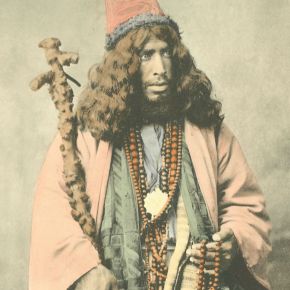
fallenAngel’s Fear is an obvious wordplay which crossed my mind after a blog reader pointed out that Bateson’s book Angels Fear: Towards an Epistemology of the Sacred might be of relevance to me. The title created immediately multiple associations and images, so I became curious and got the book. Bateson presents from a anthropologist view concepts and topology of structure- determined recursion – in a … Continue reading
Category Archives: C.G.Jung
A primatologist image of God: The Ultimate Chimp
Maybe it’s because I am an “unchurched”, humanist religious person, but todays anti-religious tracts and rants do bore me. However, a new book of the primatologist Frans de Waal, raised hope for new insights: The Bonobo and the Atheist: In Search of Humanism Among the Primates. He made accidentally an interesting point – the reciprocal imago dei (God’s imago modelled after human) of todays … Continue reading
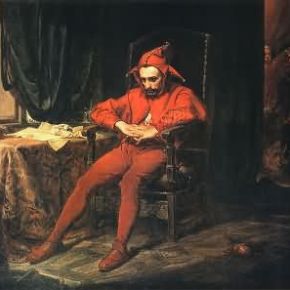
Crazy Wisdom – the Archetype of the Fool, the Clown, the Jester and the Trickster.
When I lived in California I listened often to the KFOG radio commentator Wes (“Scoop”) Nisker who happened to be also a comedian: “If you don’t like the news … go out and make some of your own”, was his frequent catchphrase. Comedians are often called jester, fool, trickster and clown. Very recently many European ( foolish) fools call an Italian comedian a clown. Because he … Continue reading
Jung’s Rebirth Archetypes and Transformation
A fellow blogger, SymbolReader, pointed out the Ressurection archetype in the latest James Bond movie “Skyfall”. In my last article I presented transformation as key element in Tolkiens Lord of the Rings. Both triggered a brief follow up about the Rebirth Renovatio aspect of C.G. Jung’s Transformation Archetype – written in the Easter Night. Jung enumerates … Continue reading
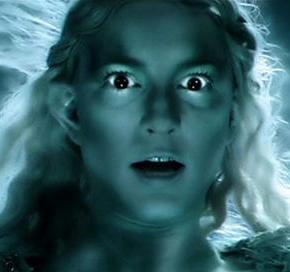
Jungian Archetype Checklist for Tolkien’s Lord of the Rings
In his masterpiece The Lord of the Rings, J.R.R. Tolkien created what he called a “new mythos”. There is undoubtedly much in Tolkien’s Lord of the Rings that invites us seeing it through the Jungian framework. However, on a closer look, comparatively few archetypes are present, and the main protagonist’s (Frodo’s) individuation arguably fails. A Jungian view must … Continue reading
You must be logged in to post a comment.