Category: Religion

Religion History

  • Sufism and female archetypes

    Sufism and female archetypes

    Love and Self
    Love and Self

    Some say Sufism, or Tasawwuf as it is known in the Muslim world, is Islamic mysticism; others say it is the primordial mystical tradition, much older than Islam, using Islam as a structural frame as Gnostics usually did. In this article, we will use Jungian concepts, Sufi poetry, and myths to explore the relationship of female Archetypes and  the Sufi path. Although the leaders of tariqas and participants in public dhikrs are (almost) always men, there have been some well-known Sufi women adepts, e.g. Rābiʿah al-Baṣrī, and many others, less well-known. Women participate considerably in popular Sufism, especially in visits to the tombs of walis, mulids.

    Perhaps Sufism is best defined as an universal path to union with God through self reflection – individuation. In Jungian psychology there are many concepts that illumine the relationship between soul and Absolute, human and God: the ego as the center of consciousness and the Self as a path to god; the individuation process whereby the ego increasingly realizes its source and dependence upon the Self; the alchemical conjunction of ego and Self.

    Sufis understand themselves as the only heir of a spiritual heritage, which had been split in many religions and sects.  Like Tao, Sufi is eternal, and uses  words like “drunkenness” or “grape” or “heart” … As Rumi puts it: Before garden, vine or grape were in the world Our soul was drunken with immortal wine. 

    I also found, to my astonishment, Sufism is addressing the greats belonging to a variety of cultures: Rumi, Shakespeare, Goethe and other influential thinkers and poets.  Goethe’s West-östlicher Divan, or West-East Divan, is a work with deep roots his knowledge of and love for Sufism. I regret to say, that Sufis even caught up with C.G. Jung, and the concept of individuation. C.G. Jung was aware, that any spiritual aware religion – for example Sufism and Catholicism – inherently resembles a psychoanalytic healing.

    Boundaries of Sufism

    Sufism in a hurry

    Well, in any case lets define the boundaries first,  but be aware that my understanding of Sufism is deeply influenced by Idries Shah and the interpretation of it by C.G. Jung. This article is not an attempt to feminize Islam, but to explore Sufism from this particular point of view.

    See above a slide show with some basic concepts of Sufism. You may press buttons to change slides manually or switch to full screen.

    •  Sufism is a dimension of Islam rather than a sect of Islam. Its mysticism and monastic order are hosted by Islam, but originating and reaching beyond Islam. The abstinence from pleasure, wealth, and prestige sought by most Sufi Masters, and their retiring from others to worship alone has of course a striking similarity to Christian monks. Sufi orders (Tariqas) can be found in Sunni, Shia and non-Islamic (or hardly Islamic) groups. Like the Christian monks Sufis were influential in spreading their belief, particularly to the furthest outpost world in Africa, India and the Far East.
    • Doris Lessing, stated once: “I found Sufism as taught by Idries Shah, which claims to be the reintroduction of an ancient teaching, suitable for this time and this place.” Arthur J. Deikman, a professor of psychiatry, expressed the view that Western psychotherapists could benefit from the perspective provided by Sufism”.
    • Sufis are emphatic, that knowledge should be learned from teachers and not exclusively from books. They view deceiving and fanatic fundamentalists seeing Sufis as haram and deceiving scholars as evil spirits, no wonder that these attempts to destroy Sufi heritage.
    • Tariqas can trace their teachers back through the generation. Modelling themselves on their teachers, students hope that they too will glean something of the Prophetic character. Although Sufis are relatively few in number they have shaped thought and history. Through the centuries Sufis contributed hugely to  literature for example Rumi, Omar Khayyám and Al-Ghazali’s is quoted by Western philosophers, writers and theologians.
    • This new voice of the Abrahamic tradition attempted to reestablish the recognition of the Unity of Being. It tried to address the imbalances that had arisen by the three religions of the books, advising respect and honor for the feminine as well as for the graciousness and harmony of nature.
    • From the early days onward, women have played an important role in the development of Sufism, which is classically claimed to have begun with the Prophet Muhammad, but Sufisms’s roots are most likely older. Within some Sufi circles, women were integrated with men in ceremonies; in other orders, women gathered in their own circles of remembrance and worshiped apart from men. Some women devoted themselves ascetic, apart from society, others chose the role of benefactress and fostered circles of worship and study. Many of the great masters had female teachers, students, and spiritual friends who greatly influenced their thought and being.  The Sufi Master Ibn Arabi (see below), tells of time he spent with one elderly woman mystic, Fatimah of Cordova:  “I served as a disciple one of the lovers of God, a gnostic, a lady of Seville called Fatimah bint Ibn al-Muthanna of Cordova. I served her for several years, she being over ninety-five years of age… “

    Panentheism

    panteistic god
    panteistic god

    Given the diversity of schools and the diversity of religious and philosophical ideas of their masters, it is very difficult to pin down the Sufi thoughts define. By some scholars Sufism is considered a perfect pantheism in the search for knowledge and reunion with the Divine. I prefer, therefore, not necessarily to speak of any religious doctrine in Sufism, as the Sufi belief system exceeds them Sufism is free because of its mindset – of every religious limit. Rather, it seems to me an attitude, an enlightened philosophy of the individual search for God.  Ibn al-‘Arabi (Ibn’ Arabi) (se also below)  is the most rigorous Sufi panentheism. Many theologians were scandalized by the apparently blasphemous expressions that occur in his writings, and taxed him with holding heretical doctrines, e.g., the incarnation of God in man (ḥulúl) and the identification of man with God (ittiḥád). Centuries passed, but controversies continue. To Ibn al-‘Arab everything, that exists is a part of and a manifestation of the Oneness of God. Humans are part of God. To him the idea of a separate self is the result of ignorance. Ibn al-‘Arabi was born in Spain, in AD 1165. At the age of twenty he was initiated into Sufism. From the 1190s he engaged in three decades of travels as a wandering scholar, poet and mystic, visiting the Maghreb, Egypt, Arabia, Syria and Asia Minor and finally settled in Damascus. Ibn’ Arabi ascribes the source of his inspirations to an angel, which, in Jungian terms, is an archetypal inhabitant of the unconscious. Angels are particularly regarded as the messengers or intermediaries between God and the human world. With respect to the psyche, as intermediaries and messengers, angels are the very permeability of the division between the two zones of the psyche. Unconscious content, which cannot be directly apprehended by the conscious, is translated into terms the conscious can comprehend: language. Intermediaries between conscious and unconscious are necessary because, as Jung points out, [. . .] “psychic contents cannot be observed in their unconscious state, and moreover the psyche cannot know itself. The conscious can know the unconscious only so far as it has become conscious “( C. G. Jung). Insofar as God is beyond the categories of human thought and beyond language and concept, He is unknowable, unutterable. Commensurately, the Sufi experience of God is referred to as knowledge of the heart. The Sufi calls “knowledge” his own experience – in all areas of the senses and in the experience of own transcendence.  Important is the strength and the ability to leave the social frames of that limitation, religion to which we belong; then, suddenly, the consciousness understands the true core of any religion.  Any religion.

    Sufi literature

    We owe a lot Friedrich Rückert (1788-1866) , who was a German poet, translator, and one of the founders of the German Oriental Studies. Like Heine and Goethe was Friedrich Rückert a German Sufi ethics. As a translator of poetry Rückert devoted himself to the transmission of countless Sufi verses in the German language poets. 1818, the same year, as Goethe drew up a West–Eastern Divan,  the eloquent young poet came to Vienna and began studying oriental languages. With its “dual talent, poetic and philological“, Rückert translated Arabic and Persian poetry, notably the Sufi mysticism, amazingly accurate.

    Ibn ‘Arabî – Sufism and heresy

    templars
    templars

    Ibn `Arabî (1165-1240) has been one of the most influential Sufi authors, who deeply influenced the west. He wrote in Persian and Arabic clearly not only for the purposefully for a global readership of all beliefs, but was quite at odds with scholarly interpretations of religious thoughts.  Through Spain and Sicily, and in part by the Templars Cristian and Sufi  thoughts interrelated. The Sufis in the East, like the Christian mystics in the West were attracted the refreshing, deep old knowledge of the Oriental world. None of them apparently did not fear the danger of heresy, and many of them led a double life, so to speak: on the one hand, they lived as devout Christians or Muslims, on the other hand they thought as Sufi scholars.
    In the 12th century the master Suhrawardi lived in Aleppo. He wrote the work “The knowledge of enlightenment” and was murdered by order of the orthodox Scholars. They publicly burned his writing, but some copies have survived: Suhrawardi
    refers to the Sufi tradition as identical with the esoteric teachings of the old Egyptians, the Greeks and the Persians. Later the English scholar Roger Bacon, who spread this knowledge in Europe. Bacon confirmed in his writings that the Sufi ideas came from the ancient Egyptian era and later inherited Pythagoras, Zoroaster and Socrates thoughts.The Sufis have always called “The Lovers”.

    sufism
    sufism

    But behind the concept of Love hides rather the pursuit of truth, for the knowledge. In his book “The Sufis” Idries Shah gives a brief history of the great masters Ibn `Arabî  and Sufi. Idries Shah finds many parallels between Francis and the Dervishes: the clothing with hood and wide sleeves, the exchange of secular dresses with a cowl and the Franciscan idea of the “holy prayer” and Francis‘ typical Welcome: “Pace a voi” – “Peace be with you” – which is an Arabic greeting

    Idries Shah suggests, based on the Spanish Priest Asin Palacios, that Dante had drawn on Ibn ‘Arabi’s writings for his Divine Comedy. That has to be interpreted differently not as a de-christianizing of Dante, as the central theme of “comedy” is the Trinity, that very concept, which distinguishes Christianity from Islam. Not only this poem as such has a Trinitarian form, but also the process, by which the pilgrim Dante (and with it the reader) through purgatory ascends to heaven, “proves” the Trinity. Through the process of self-perfection of the pilgrim Dante, who gradually realizes the divine laws of the universe, he reached the entrance to the world of science, to paradise. The Earthly Paradise turns out at the end of the book about Purgatory as a chimera, and as a polemical contrast, the real paradise unfolds as a process, by which the individual understands the divine laws, as a science. Dante’s poem seems a proof of Jun’s individuation and the Sufi paths though. Both relate to the Christian idea of the imago viva Dei.

    In the 13th century, the “Scuola siciliana“, the Sicilian literary movement was established at the court of the Hohenstaufen. Frederick II of Hohenstaufen, a pupil of the Templars, founded this institution. The German Emperor Friederich II (Frederick) spoke and wrote Arabic perfectly, and the soldiers of his bodyguard were all Arabs. Sicily, then in charge of the Knights Templars was the center of the Arab sciences. The German Emperor was a close friend of the Sultan of Egypt, al-Kamil, the very same Sultan, who had also received the St. Francis of Assisi.

    Rumi – Sufism and individuation

    In his book “The Sufis” Idries Shah gives a unique history of the great master Rumi. This is a typical example of Sufi central theme – love – therefore I would like to quote it here:

    „Ein Mann kam zur Tür der Geliebten und klopfte. Eine Stimme fragte: – Wer ist da? –
    -Ich bin es -, antwortete er.
    Da sagte die Stimme: -Hier ist nicht genug Platz für mich und dich.- Und die Tür blieb geschlossen.
    Nach einem Jahr der Einsamkeit unt Entbehrung kam der Mann wieder und klopfte.
    Von drinnen fragte die Stimme: – Wer ist da?-
    – Du bist es -, sagte der Mann. Und die Tür wurde geöffnet.“
    (Jalauddin Rumi)

    The  connection between the Troubadour movement and Sufis had been established long ago. The term “Troubadour”, the “Finder” can be originally derived from an Arabic root “rbb”, as this certain Sufi community, whose members are the “slaves of love”, played viola. And from the Arabic word for “Viola” came the European “Troubadour”. The Sufis have always called “The Lovers”. But behind the concept of Love hides rather the pursuit of truth and knowledge.

    How is it that a thirteenth-century Sufi master, like  Rumi should become the darling of the West and Amazon Kindle books, in times with interest in neither poetry nor spiritual discipline?  His works include a massive collection of lyric poems (ghazels and rubaiyat) as well as the six-volume Mathnawi, a collection of rhymed couplets that weaves together a rich fabric of stories, humor, and spiritual teaching. In our Western literary tradition and empty churches we have lost this union of the sensual and the spiritual. Our own cultural history has discarded: religion and literature. The Sufis, especially, were neither puritanical nor sensual indulgent. In Rumi we have a model of the potential harmony between the physical and the spiritual, the animus and the anima, the Ego and the Self, the human and the Divine.  Two examples from Essential Rumi by Coleman Barks

    When I am with you, we stay up all night,
    When you’re not here, I can’t get to sleep.
    Praise God for these two insomnias!
    And the difference between them.

    And an excerpt …

    Could this be our real master?

    The lover is forever like a drunkard whose secrets spill out,forever mad, frenzied, and in love.
    To be self-conscious is to worry about everything, but once drunk, what will be will be.
     
    If you desire the self, get out of the self.
    Leave the shallow stream behind and flow into the river deep and wide.
    Don’t be an ox pulling the wheel of the plow, turn with the stars that wheel above you.

    Sufism and psychology

    Source: Khalil Andani’s Concept of Tawhid in the Isma’ili & Sufi Thought
    Source: Khalil Andani’s Concept of Tawhid in the Isma’ili & Sufi Thought

    In Arabic, the words for ‘eye, ‘fountain’, and ‘self or identity (Self or Ego)’ all emerge from the same root.The specialty of having the same consonance for different words has given poets many opportunities for connections and word play, and Ibn ‘Arabi made masterly use of it.Gardens of paradise are beautiful metaphors for the heart; its center being this spring, which waters and vivifies all in the garden. Spreading out from this centre, according to this cosmological diagram (from Miguel Asin Palacios’ 1931 book on Ibn ‘Arabi  – El Islam cristianizado)  he compares the Ibn ‘Arabi’s vision of paradise to that of Dante: Self and Ego arr central concepts.

    Every discipline – temporal or spriritual –  in the world has among its practitioners, those who engage the faith beyond the common boundaries of doctrine and dogma, seeking an unmediated relationship with reality and selfrealization. Sufism, as can be discerned from the writings of Ibn’ Arabi and Jelaluddin Rumi, can be discussed in the terms offered by C.G. Jung in his theories of the structures and functions of the human psyche. In Jung’s terms, Sufism can be seen as an example of how a healthy, integrated psyche might function, and what a living mythology might look like. Sufism as a psychological system has postulated the discoveries of Freud or C.G.Jung centuries before: the Sufi sheikh Ghasali wrote down the sexual knowledge of Freud around 1200 AD and C. G. Jung’s findings on psychological archetypes and the collective unconscious were formulated by the Sufi Master Ibn Arabi. C.G. Jung might have known that  therefore and wrote: „What we hold for a specifically western invention, namely the psychoanalysis and those of her outgoing suggestions, it is a beginner’s attempt in comparison to that what is old-skilled art in the east.“  He meant the Far East, but also the Middle East as he was well aware of the findings of the Nag Hammadi library (famous for the “fifth” Gospel of Thomas favored by the Sufis). C. G. Jung has shown a pronounced and informed interest in Gnosticism an Middle Eastern knowledge.  Sufism emphasises on the knowledge of transcendence arrived at by way of interior, intuitive means as Jung’s individuation. The importance of the Nag Hammadi library, discovered in upper Egypt in 1945, was pointed out by C.G. Jung. His Book “Antwort auf Hiob” (Answer to Job) is a downright  answer to the Bible´, but in accordance of Sufism’s answer to rigid religions.  In the light of such recognitions, one may ask: “Is Sufism a religion or a psychology?” The answer is that it may very-well be both, just like Jung’s thought may be interpreted religiously. One of the aeonial beings who bears the name Sophia (“Wisdom”), referred to by C.G. Jung many times,  is of great importance to the Gnostic world view and resembles closely the story of the human psyche that loses its connection with the collective unconscious and needs to be rescued by the Self. Analogies of this sort exist in great profusion.

    Sufism and syncretic Gnosticism

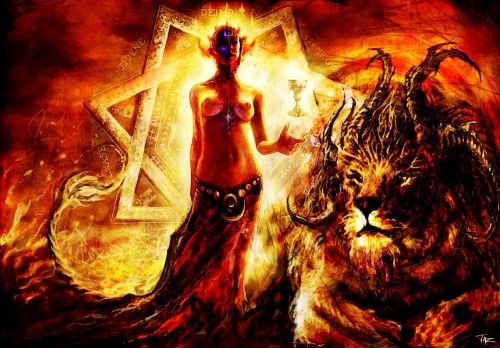
    Myth of the Baphomet derived from its usage in Provence the centre of the Cathar Church in France,
    Myth of the Baphomet derived from its usage in Provence the centre of the Cathar Church in France,

    We do not know for sure, why has Sufism so much common with Gnosticism. The reason is maybe, that both of these systems implanted their mystical ways, in the prophetic religion (Judaism,Christianity or Islam,) or in a deeper sense how to individually unite with God. We can also admit that the Gnostic Christianity could have influenced the early stage of Islam, particularly Arianism.

    The Sufi and also Gnostic view on the created world is sometimes very negative.“The world is a dunghill, and a gathering place of dogs; and meaner than a dog is that person who does not stay away from it.”  Sufi could not participate in secular affairs and he must know, that world is a merely an illusion. Even Jesus (highly considered by Sufis) said in the Gnostic Gospel of Thomas: “Whoever has cometo understand the world has found (only) a corpse, and whoever has found a corpse is superior to the world.”  We can clearly say that Gnostics and Sufis are not interested in the world or they despise it. Not only, the world is seen in the negative light, but also the work of the heavens and the time. According to the Gnostics, the mundane world is influenced and ruled by the lower heavens – seven spheres with one planetary ruler( archon).
    Gnosticism From ancient Oriental religion? Zoroastrian, Mesopotamian, Indian? From heterodox Judaism? Apocalyptic, mystical? From heterodox Christianity? From late Hellenistic philosophy? Neoplatonism?
    Gnosticism
    From ancient Oriental religion?
    Zoroastrian, Mesopotamian, Indian?
    From heterodox Judaism?
    Apocalyptic, mystical?
    From heterodox Christianity?
    From late Hellenistic philosophy?
    Neoplatonism?

    While Sufi teachings have been influenced by various religions, their practices also bear close similarities to those of Hinduism and other mystical religions of the East. The Sufi orders are led by shaikhs, who play the same role as Hindu gurus.  Most Sufi orders still consider the five pillars of Islam to be essential, and practice them piously, however, they go far beyond this, aiming to spiritual awakening. Central to all of these practices are ritual “invocations of the Divine Name,” also known as dhikr, which can be done either silently or in a chant. Here similarities with Hindu mantras are unmistakable.  The evidence of Sufi borrowings from other Eastern religions such as Hinduism and Zoroastrianism is certain. The similarities in teachings and ritual are overwhelming. It is no surprise then that the goals of Sufism reflect their pantheism and monism.  Of course it is one of the characteristics of living traditions that they are ultimately oral. The spark that kindles the enlightenment is rarely captured on paper: it shifts its emphasis and context with the times and the individual. In matters of the heart and soul, it is the experience of love or of the Self that resonates – not dogmas or theories. This aspect of Sufism is the hardest to convey: In Sufism, great importance is given to the complete human being, the one who is considered activated. It is through the guidance of such a human being that the inner process unfolds. Any particular beliefs in dogmas dissolve as the complete one assists the seeker to fall fully into his or her relationship with God and to recognize the importance of that essential experience.

    The socially approved knowledge of argumentation is not valid  – unless we have found it out ourself. The Sufi calls all things meaningless, if they are old or new, big or small, important or insignificant, because all things are separated in reality forms one and not. All things („the evident“) are merely bridges to the true reality. Rituals, symbols are representatives, are to reflexion of an internal truth they can be exterior dead and stereotyped; but they show that who can see a way to the internal truth. There is no external sign (like the Christians Cross or the Crescent of Islam) from which one could say this symbolises the Sufi being. Sufis use the most different symbols, quite knowingly that these are just represented phenomena.

    Sufism and female archetypes

    Fatimah – the primordial woman

    Fatimah Zehra wife of Ali
    Fatimah Zehra wife of Ali

    Fatimah, beloved daughter of the Prophet Muhammad, is the most prominent female in the Islamic tradition. Islam is aniconic. In other words, images, effigies, or idols her are not allowed, although verbal depiction is elaborate. She is regarded as a  primordial woman, a symbol of divine womanhood giving her many holy names. Shias revere the person of Fatimah, mother of the line of inspired imams who embodied the divine truth for their generation. She was the wife of the fourth Caliph, wife of Ali, mother of Hasan and Hussein and defended Ali’s cause, fiercely opposed the election of Abu Bakr. Fatimah is often associated with Sophia, the divine wisdom, which gives birth to all knowledge of God. She has thus become another symbolic equivalent of the Great Mother. When Fatimah,  enters the throne all 124,000 Prophets stand in respect. Around the world men and women of Islam and Sufism look to Fatimah for comfort and inspiration. Because of her special beingness of personality and beyond, Fatimah is considered by many Muslims as divine in origin and several variations of a major hadith describe how she was conceived on the night of Mi’raj (ascension).

    I heard the Apostle of Allah say, ‘I am a tree, Fatimah is its trunk and Ali is its pollen. Hassan and Hussein are its fruits, and our followers are its leaves. The roots of the tree are in the Garden of Eden, and its trunk, fruits and leaves are in Paradise.’ – Sacred tradition of Islam on the authority of ‘Abdu ‘r-Rahman ibn ‘Awf’

    Fatimah tul Zehra (Fatimah the Radiant, Fatimah the Brightest Star, Fatimah-Star of Venus, Fatimah-The Evening Star), the daughter of the Prophet, is the secret in Sufism. She is the Hujjat of ‘Ali. In other words, she establishes the esoteric sense of his knowledge and guides those who attain to it. Through her perfume, we breathe paradise. Though she was his daughter, the Prophet Muhammad called her Um Abi’ha (mother of her father). While Fatimah Zehra was Muhammad’s daughter, the Rasulallah (Prophet of God – Muhammad) understood that his gnosis was bestowed upon him from the Divine Feminine.

    In his allegorical book Herrman Hesse’s  “The Journey to the East” searches for a mystical woman named Fatima. Given that this is the author of Siddhartha, one might suppose that the league represents a group of individuals in search of eastern mysticism. The book has clear spiritual overtones.

    Sophia – Sufism’s goddess of wisdom

    At the very core of Sufism there is a vision of the gnostic Sophia. The philosopher Muid ad-Din ibn al-Arabi (1165-1240) saw a young girl in Mecca surrounded by light and realised that, for him, she was an incarnation of the divine Sophia. She is part of many mystical and religious currents and mentioned often by the psychoanalyst C.G. Jung.

    • Torah/Old Testament: Sophia is the Greek word for wisdom which is a “she” who personifies integrity, honesty, clear perception, the power by which kings and princes rule, and the creative power present with Yahweh at creation. (see also C. G. Jung’s Answer to Job about the “anamnesis of Sophia” referring to the recollection of God of Wisdom.)
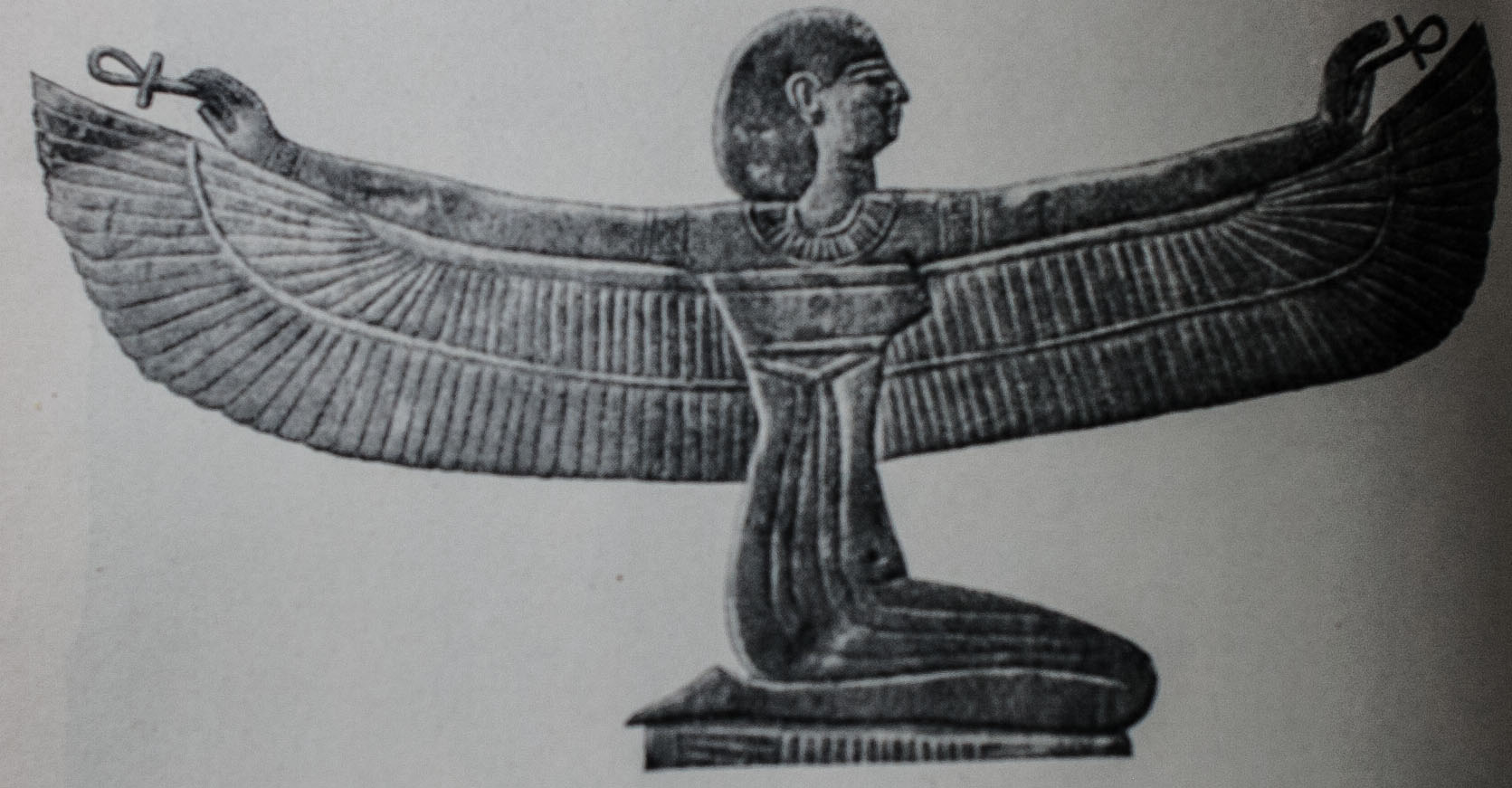
    • Ancient Wisdom Goddesses: Isis as the “Black One.”
    • Iranian Sufism: Sophia is Perfect Nature, the object of ecstatic ideation, which was described in an 11th century text as “the philosopher’s angel.” (Cf. H. Corbin, Man of Light in Iranian Sufism.)
    • Gnosticism: Two Sophias, higher and lower: Ogdoad and Sophia Achamoth, the generative wisdom of the world. (Cf. also “The Thunder Perfect Mind” in Nag Hammadi Library.)
    • Alchemy: Sapientia (Latin for Sophia, Wisdom). Moon, tree, ogdoad, alchemical salt. (Cf. Jung’s writings on alchemy.)
    • Christian Black Madonnas in churches throughout Europe: may represent Sophia (often likened to Mary Magdalene) in exile, blackened by association with either the sun, solar principle, or the earth, as in alchemy, black earth.
    • Western mystical /philosophical/ humanistic tradition: Dante, Boethius, Johann Wolfgang von Goethe, Rudolph Steiner . . .
    • Nietzsche: “Supposing truth is a woman . . .” (Beyond Good and Evil)
    • Jungian psychology:  anima development in male psychology; individuation concept.
    Sophia__Wisdom
    Sophia__Wisdom

    Sophia (Greek for “wisdom”) comes from Hellenistic philosophy (Platonism) and is important in Gnosticism, Orthodox Christianity and Christian mysticism. Sophia is honored as a goddess of wisdom by Gnostics, as well as by some Neopagan, New Age, and feminist-inspired Goddess spirituality groups. In Orthodox and Roman Catholic Christianity, Hagia Sophia (Holy Wisdom), is an expression of understanding for the second person of the Holy Trinity  as seen in the Book of Proverbs 9:1, but not a goddess.

    The earliest Gnostic forms of Sophia emphasized her power and influence on earth and in the human psyche.  In the ancient text of Hypostasis of the Archons, found at Nag Hammadi, it is written that Sophia preexisted and gave birth to the male godhead. She chastises his arrogance when he says there is no other god before him. She claims her spiritual authority. She says “you are wrong, Samuel” (meaning Lord of the blind) and stretches forth her finger to send light into matter. She then follows the light down into the region of “Chaos.”

    This power of Sophia within the earth realm was seen in early visions:  “I am nature, the universal mother, mistress of all the elements, primordial child of time, sovereign of all things spiritual, queen of the dead, queen of the immortals, My nod governs the shining heights of heaven, the wholesome sea breezes, the lamentable silences of the world below. I know the cycles of growth and decay.”  

    Black_Madonna_of_Einsiedeln
    Black_Madonna_of_Einsiedeln

    Certainly Sophia has been derived by the Great Mother(s) from whom all life arises and is sustained. The Great Mother was worshipped from 25,000 to 5,000 BC. Themes of the intertwining of nature and spirit, and the paradox of life and death are everywhere in images of the Great Feminine.  Muid ad-Din ibn al-Arabi  believed that women were the most potent icons of the sacred, because they inspired a love in men, which must ultimately be directed to God, the only true object of love. Ibn al-Arabi argued that humans have a duty to create theophanies for themselves, by means of the creative imagination that pierces the imperfect exterior of mundane reality and glimpses the divine within.

    The faculty of imagination is commonly associated with the Divine Feminine. The Sufi poetry teaches the feminine qualities of joy, love, tenderness and self sacrifice on a path of true knowledge derived from the spiritual heart. The spiritual rebirth of the individual is not unlike the trial and tribulation of physical childbirth, according to the Sufis. They take the principle of divine love and use it to facilitate the process of alchemical transformation from mundane human to spiritual being. Sophia is the mystical companion, which belongs to no race or religion exclusivly: ‘My place is the placeless, my trace is the traceless. ‘Tis neither body, nor soul, for I belong to the Soul of the Beloved.’40 Certainly, the Divine Feminine is so marginalized in Islam, that one might be forgiven for believing it to be totally absent.Both Mary and Fatimah are reverenced within esoteric Islam, for they are both mothers of the Logos, the Word. Fatimah inherits the role of Spenta Armaiti, within Shi’ism, for she is the mother of a lineage of imams. She is seen as symbolic of the ‘supracelestial earth.’  She is considered to be the source of the imam’s wisdom because she is lawh mahfuz or ‘the hidden tablet; upon which God has written.’  One of her titles in Ismaeli Shi’ism is Fatimah Fatir, or Fatimah the Creator, which recalls the Sophia Ergane of Proverbs.The nature of both the Black Goddess and Sophia are brought out in Islam. The exoteric fulminations about women, so similar to those found in Christianity and Judaism are, of course, negative polarizations of the devouring Goddess, yet this exists side by side with the positive image of the Ka’ba, Islam’s Black Madonna, preserves the veiled tradition of Sufism.

    The Peacock Angel and Sufi’s Iblis

    PeacockAngel
    PeacockAngel

    Considered a mystery by Orientalists, the Cult of the Snake and Peacock in Iraq was founded on the teaching of a Sufi Sheikh, Adi, son of Musafir, in the twelfth century, although they date their origin back 6,000 years or more.The Yezidi faith is syncretic and combines elements of Judaism, Christianity, Sufism, Manichaeism and the Persian Zoroastrianism faith in parallel and selectively.
    In Arabic, ‘Peacock’ also stands for ‘adornment’; while ‘Snake’ has the same letter-form as ‘organism’ and ‘life’. Hence the symbolism of the cryptic Peacock Angel Cult—the Yezidis—is a way of indicating ‘The Interior and the External’, traditional Sufi formula. The Cult has adherents in the West, but was largely unknown,  before CNN put the spotlight on them, because of their recent persecution (together with the Christians).

    In the Gnostic tradition (in which both Yezidi and Sufism have some roots), the Peacock Angel is analogous to the first son of the Goddess Sophia, who in the process of creating and governing the universe divided herself into seven rays or “sons.” Her seven sons were coeval with and governed one of the seven colors, tones, planets, etc. The  peacock was the first form of the Supreme God and one of the Seven Great Angels, named Tawsi Melek or Melek Tawus (the Ildabaoth of the Gnostic’s).

    Aroused snake by the entrance to a Yezidee-temple. It is blackened by soot.
    Aroused snake by the entrance to a Yezidee-temple. It is blackened by soot.

    However the Angel’ other name — Shaytan — means “devil” not only in Arabic, even in German Scheitan means Satan. Therefore Yezidi, have often seen as Devil worshippers, also through the manifestation the Peacock Angel as as a snake. This is analogous with the gnostic understanding of the Serpent on the Tree in the Garden of Eden –  interpreted in Christianity as Satan. Furthermore, because to the connection to the Sufi Iblis tradition, some equate the Peacock Angel with their own unredeemed evil spirit Satan. Iblis is a supernatural being — either a fallen angel or a diabolical fiery creature known as a jinn. In his disobedience against God and his role as tempter of mankind, again resembling the rebellious Satan in the Christian tradition. In fact, they are more remnant of pre Christian religion: the peacock angel being the mysterious Phoenix. The picture above shows an aroused snake by the entrance to a Yezidee-temple. It is blackened by soot. Yezidees (today almost a million believers) think, that in the last judgement the devil will be reconciled with God, and even play an important role in the final judgement of man.

    Mary – Sufism’s divine mother

    Holy Mary
    Mary – Divine Mother                       Maria-Hilf-Kirche. Murnau was the chosen residence of the famous painters – Blaue Reiter

    Mary, mother of Christ, is regarded as the most marvelous of all women, a high adept and living example of the pure and holy life. Later commentaries describe Mary as an intervening force between God and humanity. When Muhammad retook Mecca, he removed many frescoes and images from Kaaba, that he considered inauspicious but he specifically left on the walls a fresco of the Virgin Mary and her child.
    In one of the most powerful Hadiths ( prophetic sayings of Muhammad) it is reported that Muhammad said, “Paradise is at the feet of the Mother”. Muhammad was escorted by the archangel Gabriel (a masculine force) but the vehicle upon which he rode was the Buraq, a white horse with wings and the face of a woman, clearly suggesting a symbol Goddess or Divine Mother.

    A Sufi Ode to the Divine Mother

    On the face of the earth there is no one more beautiful than You
    Wherever I go I wear your image in my heart
    Whenever I fall in a despondent mood I remember your image
    And my spirit rises a thousand fold
    Your advent is the blossom time of the Universe
    O Mother you have showered your choicest blessings upon me
    Also remember me on the Day of Judgement
    I don’t know if I will go to heaven or hell
    But wherever I go, please always abide in me.

    While Sophia has noteworthy archetypal qualities, she lacks in some of the most virtuous aspects. Within the areas they lack in virtue and morality, the Virgin Mary, who is from Christian religions, make up for them. The Virgin Mary is the mother of Jesus, the Son of God. Mary is not the wife of God though. She was chosen by God to give birth to Jesus. “And behold, you will conceive in your womb and bring forth a Son, and shall call His name Jesus” (Luke 1:31). Mary represents everything good in the world. She has never been touched and is clean and pure. The Virgin Mary represents the woman that man wants. “She will conceive…a Son”. Mary is the subservient to man. She is not represented with any symbols, excepts for her pureness. She does not have any mystical powers, except for her conception of child without sex. The Virgin Mary is represented as a woman that has been graciously touched by God himself, and gives birth to the Messiah, Jesus Christ. Yet she is still a “handmaid of the lord”(Luke 1:38). The church, the creator of this story, was apparently concerned with the idolization of the Virgin Mary and wrote:

    God came down from heaven, the Word clothed Himself with flesh from a holy Virgin, not, assuredly, that the Virgin should be adored, nor to make her God, nor that we should offer sacrifice to her name, nor that, now after so many generations, women should once again be appointed priests…Let no one adore Mary. (Epiphanius 49)

    Here we can see man coming into the monotheism, where Christian belief is today. The Virgin Mary does represent a mother archetype, although it is not as prevalent as Demeter and Isis. Mary’s character is more housed, in a way that can be controlled and can be put into guidelines. Just as times before, man wants what he can not have. In Mary’s case, the forever virgin.
    Man needs to realize that men and women are different, and each has wonderful traits. Though many of these archetypes are brought on by the unconscious mind, which is the portion of one’s psyche which is outside of awareness, those thoughts should be left at the realization that they are thoughts. These goddess or mother archetypes are brought into our societies to teach man and woman the values in each other. To restore balance in one’s lives. Demeter, she helped to explain strange occurrences in Greece as well as reveal the importance of woman’s traits to give life. Isis, she kept the Egyptian nation strong and united during her reign by being everything at once. Mary, she has had mercy brought into the Christian beliefs against the sometimes stern male God. All three characters are important throughout history, and have managed to keep their legends alive.

    Conclusion

    The West is, as Herrman Hesses wrote 1920 in “The Longing of Our Time for a Worldview”.  We, in the West, “understand” Sufism, like the group of blind men (or men in the dark) who touch an elephant to learn what it is like. Each one feels a different part, but only one part, such as the side or the tusk. They then compare notes and learn that they are in complete disagreement. Some see Sufism as Neo-platonic, some connected with Manicheanism, some see Sufism as heretic Christianity and others as Persian sect (the latter three all may be interpreted as Gnosticism).  To me, Idries Shah’s presentation of Sufism as a form of timeless wisdom, that predated Islam makes sense. Sufis are connected with sacred sex and the movement of troubadours; quite a few important Sufi scholars were women. Sufism has often called the concept and denomination to love. Clearly the role of the Divine Feminine,  its principle has been described and explored at length in the tradition of Sufism. Sufism emphasizes passionate, mystical and individual adoration of God. Many Sufis (and other mystics in other religions) seek a spiritual union between themselves and the divine principle not unlike that between a child (the Sufi) and his mother (God) or a bride (Sufi) and the husband (God).

    Bibliography

    • Idries Shah The Sufis 1964, Translated 1980 „Die Sufis“, Diederich’s Gelbe Reihe
    • West-östlicher Divan. In: Project Gutenberg.
    • Philip Jenkins  Baylor University, History of Christianity: The Thousand-Year Golden Age of the Church in the Middle East, Africa, and Asia — and How It Died
    • “The Other God”.  Yuri Soyanov, Yale University Press, 2000
    • neo-sufism-the-case-of-idries-shah-reprint
    • Women and Sufism, by Camille Adams Helminski
    • Ibn ‘Arabi, SELECTED POEMS
    • KABIR HELMINSKI, THE POCKET RUMI 2011 Shambhala Publication
    • Mystische Dimensionen des Islam, Annemarie Simmel 3rd Edition, Munich 1995
    • CW9(i) = Jung, C.G. The Collected Works of C.G. Jung, Vol.9, Part I, The Archetypes of the Collective Unconscious  Zürich 1951, Rascher
    • CW9(ii) = Jung, C.G. The Collected Works of C.G. Jung, Vol.9, Part II, Aion Zürich 1951, Rascher
    • Jacobi, J. The Psychology of C.G. Jung.  Zürich 1961
    • Jung, C.G. Memories, Dreams, Reflections, London: Harper Collins, 1995, PG213.
    • The Yezidis http://www.yeziditruth.org/

    Appendix

    I encountered this fairly good paper and Hesses essay after I finished my article, which also investigated the fact that spiritual Sufi training is very similar to the process of Individuation.

    Spiritual Sufi Training is a Process of Individuation Leading Into the Infinite

    This paper was presented to the VIII International Conference of the International Transpersonal Association at Davos, Switzerland, Sept 1st, 1983, by Irina Tweedie

    (more…)
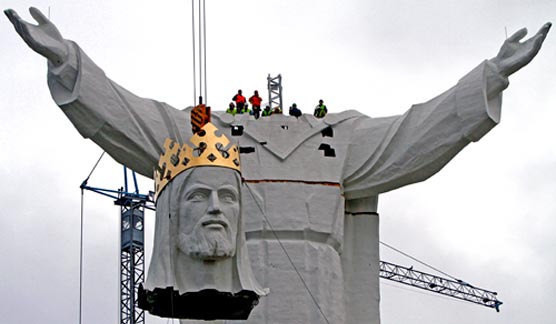
  • The many faces of Jesus from an Jungian view

    The many faces of Jesus from an Jungian view

    A recurring thought in books about The many faces of Jesus is the thought that every time created its own Jesus. Jesus, like the virgin birth, the crucifix and resurrection, is a major symbol in the Jungian sense of the word, an abstract archetype one can fill with our own multiple meanings recognized in very culture, even non-christian. Now if we look for the many faces of Jesus, we may get access to him as a person, scholarly (theologically), from contemporary views, from other main religions, from sworn enemies of any religion and from the father of symbols – C.G. Jung:

    Mny Faces of Jesus
    Mny Faces of Jesus
    • Jesus – seen archetypal
    • Jesus – seen biographical
    • Jesus – seen as private person
    • Jesus – seen from masculinism
    • Jesus – seen from feminism
    • Jesus – seen from world religions
      • Jesus – seen from Buddhism
      • Jesus – seen from Hinduism
      • Jesus – seen from Islam
      • Jesus – seen as cultural construct
        • Jesus – seen from the Egyptian god Aton
        • Jesus – seen from the Roman Mithras Cult
        • Jesus – seen from the Roman Isis Cult
        • Symbols of Christianity
        • Astronomical interpretation of mystery cults – Astral Religions
        • Historical evidence of Christianity
        • Conclusion

    The historical Jesus almost gets buried under his construction, even the catholic church rarely refers to him as real historic person in recent writings. Sometimes it seems that Jesus in the Gospel was also such a creation realizing the striking similarity of New Testament symbols with the Egyptian pantheon and myths. Those faces is what this article is all about. The best I have read in that regard about Jesus is from C.G. Jung,  so lets start with him. Warning, this is just an essay but a rather lengthy one.

    The Faces of Jesus

    Jesus – seen archetypal

    The Ego, the Self and God
    The Ego, the Self and Jesus – Individuation and Transcendence

    C.G. Jung says that humanizing Jesus is a regress, which ultimately leads to Arianism, rejection of trinity and Ebionitism, the idea that Jesus was a human being and not at all divine. This is a view god which is based more on the Old Testament or on Islam than in Christianity. Arianism does believe that Jesus Christ is less divine and is inferior to God the Father. Obviously if you look in the Jesus Wars, the regress in homoiousie is evident, since the early heryes denied the complex divine and human coexistence of the Caledonian Creed.

    The gospels are clearly non-historical, painting an image of Jesus, to emphasis his being as human and god, with a particular audience  in mind. I dare to say, the Gospels are the earliest and most beautiful faces of Jesus, deliberately created for effect. I think therefore, it is clear that Jesus lived but its historical details are less important  than the archetypal symbols he invokes. The gospels already hide his real being behind metaphysical constructs. The whole fertile ground of the Middle East and its religions are already visible creeping up. However, Jesus became an ultimate archetype of the collective unconsciousness in the West and the East as we shall see. C.G. Jung  actually saw all attributes of the hero myth in him: strange origin, holy parentage, endangered birth, narrow survival,  early  maturing, mastering death and separation, miracles, early death, symbolic way of death, postmortem deeds. To Jung the symbolic of the Gospel is a Marriage Made in Heaven : Trinity Finally Becomes a Quaternity. And Jesus is eventually the symbol of the Self and individuation, as I have written here.

    Jesus – seen biographical

    life of Jesus according to john
    life of Jesus according to john

    I think Jesus became such a strong symbol and archetype, that his biography is less important. Unlike most biographies, the Jesus Christ narrative of the gospels does not begin with his birth, or even with his conception. There are even few hard historical records proofing his very existence, as describe below. Clearly a charismatic movement can’t be started without the leader, so existed. The new archetype of Jesus, created by the gospels and St. John are so strong however, that his life before his preaching does not matter only those last two years. The essence of the powerful Jesus archetype is his death and resurrection. This is the most unique selling prepositions in comparison to other world regions. Another is that there were no heirs, was no real family, it was inconclusive if he had wife and kids, and no priest class based on heritage in Christianity after him. Jesus was an outcast, indifferent to family, money, property or rank.Unusual for the Middle East.  It is not true that his followers were only the pure, often they had high ranks – but the attraction was logos the word.

    Let’s say the narrative of the gospel are a somewhat trustworthy biography, therefore  I like to recollect it very briefly:.

    At an early age, Jesus and his family fled to Egypt because an angel warned Joseph in a dream of impending danger. When they returned from Egypt, they settled in Galilee, in the town of Nazareth.Then there is a big gap, only at one point touched by the gospel of Luke.  At the age of twelve, Jesus traveled to Jerusalem with Mary and Joseph to celebrate the Feast of the Passover and went missing nut the they found him talking with the priests and teachers. Based on the Writings found in Quaram 1947, one may assume that he belonged and was educated by the desert brotherhood of the Essenes, who lived on the north-west of the Dead Sea.

    At approximately 30 years of age, Jesus entered into the public space. John the Baptist had preached of the coming Messiah, preparing the way for Jesus’ ministry. John baptized Jesus. After this, Jesus went into the wilderness for a time of fasting and prayer . Then the devil came to him and tempted him unsuccessfully. Jesus began to preach a message of repentance, and from among his followers hand-picked twelve disciples, or the apostles. The teaching and preaching of Jesus convicted, challenged, or encouraged those who heard it. Jesus performed many miracles of healing and restoration, as well as miracles designed to teach a lesson. Then he provided the way of salvation from sin by way of the ultimate sacrifice, his crucifixion , followed by his resurrection from the dead after three days. The philosopher Karl Jaspers counts Jesus one of the most important men in humanity, together with Buddha, Socrates and Konfuzios. See below, how little we know from the historical Jesus.

    Jesus – seen as private person

    640px-Sandro_Botticelli_Lamentation over dead Christ
    Sandro_Botticelli_-_The_Virgin_and_Child_(The_Madonna_of_the_Book)_-_Google_Art_Project

    Nowhere in the gospel there is a hint that Jesus felt uncomfortable with women or vice versa, but quite the opposite. He was not a puritanical asket but almost a free spirit. His attitude towards women in adultery and prostitutes – if some of them were  prostitutes indeed at all – was understanding and feeling good about their companionship. Women were free to become his disciples and in general Mk 10.7-8 says: That’s why a man leaves his father and mother and gets married. He becomes like one person with his wife. Then they are no longer two people, but one.  If  you refer to gnostic or non-religious writing this goes even further. Yale Divinity School dean Harold Attridge asked the question about an erotic relationship recently in a short piece piece prepared in response to The Da Vinci Code based on his interpretation of the Gospel of Philip, one of the codices discovered in the 1940’s in Upper Egypt near the town of Nag Hammadi.  The Gospel of Philip has caused quite a stir for several reasons. It says Jesus’ companion (also translated as “consort”) was Mary Magdalen, and that he “loved Mary more than the rest of us because he used to kiss her on the ____ [hole in the text].” Philip also speaks of a “stainless physical union” which has great power. Early scholars translated the ‘union’ phrase as “undefiled intercourse,”. One wonders like many with the French scholar Jean-Yves Leloup, that the Gospel of Philip may speak of actual intercourse, and not the ritual kiss that “passes the peace.”

    Jesus – seen from masculinism

    Had Jesus a wife? pressHype-PsychologyToday
    Confusede? Jesus seen from masculinism -PsychologyToday

    No, I didnt’ make up the word. There has to be a balancing between the masculine and feminine energy in Christianity. That is why feminism is  a dead end: because they cannot give up what some have called “feminist dualism”. Having said that clearly the Vatican and  Christianity owes women their impact as a world religion.  “I and my Father are One” – says Jesus…..what does this mean? It explains more than the Trinity and Caledonian Creed: God the Father, God the Son, and God the Holy Spirit. They are all One yet they are separate as well. It als means, God is the Father, Jesus is His Son, and both feel good about this. Today most sons (and often fathers) say, “I and my Father are Not One – we are at variance or at odds “. This is a problem of the industrial revolution, but even before, the Catholic Church did well with Mary. I mean here Holy Mary but also Mary Magdalene. Lets face i,t the love of mother is perceived as unconditional, whereas father’s love was always connected with an important fact of socialization – conditional love. Today the father imago  is created almost exclusively by mothers or hostile media. But the Catholic church, depicting Jesus as  innocent blue eyed nice guy did not help either. The Church discarded the Shaman energy discard mal energy, still found in the fraternity of monks with the power to proselytise. Jesus thought highly of John the Baptist, the Wild Man. Only after he had been imprisoned he went North to found his movement.

    I mean really, much of Church teaching is alien to a dualistic (gnostic) understanding like God/Satan, good/evil, sacred/profane, pater/nun. In Jesus one would think, there would also be  ‘masculinism’ to counter balance ‘radical feminism’ but certaily also a male only hierarchy, todays pharisees. A lot of they published opinion on that, however, is not Christian, it’s not very Catholic either, but just profane voices out of the spiritual void to undermine Jesus’ one Holy, Catholic, Apostolic and not only the indeed very female Church. I have my doubts, we will ever get a sermon from Pope Francis denouncing radical feminism.  I suspect the fact that will ever happen is the biggest proof radical masculinism is alive and well in the Roman Catholic Church.

    Jesus – seen from feminism

    WolfFeminism
    Feminism

    Contemporary feminism believe that the “true” history of Jesus – without idolatry – will decide, if an own feminist religion must be constructed or a feminist Christianity may evolve. Obviously the have a problem with Jesus as a man and perceive especially priesthood as patriarchical relict. Pagan myths of the goodness who rests the dead hero in her lap are projected to historical women  from Mary Magdalene. Taking the gospel as history, indeed Many of Jesus’s followers were female. They were not included in the 12 apostles, but the community surrounding him was far larger than that. Women were also among his key supporters. I find myself in an interesting tension. I think overtly feminist views, especially those of the atheist-feminist circles miss the point but I do see may see as a shift from early Christianity towards a patriarchal religion.

    Jesus – seen from world religions

    Jesus – seen from Buddhism

    After individuation, or the suffering and the death of the Ego (the I) on the cross, we reach our self. A Buddhist might  say, welcome, we already here, we don’t even know the concept of Ego. It seems therefore the Cruzification must be disturbing for Buddhists.

    Jesus – seen from Hinduism

    Hinduism sees Jesus as a teacher, as the understand the relation between god and human an individual matter. This personal experience of one’s relationship with God is considered authoritative, for some, even more so than scripture. As an other religion, Hindus see the figure of Jesus Christ through the categories of their own world view. Time is not seen by Hindus in linear terms but in cyclical terms. As a human being one is subject to the round of birth, death and rebirth called samsara. The manner of one’s rebirth is governed by one’s karma.Two further issues must be considered. It is believed that from time to time God incarnates, particularly when evil seems to be gaining the upper hand within the world. So  Jesus is seen as:

    • Moral Teacher: Jesus is a great man and true guide to God
    • Incarnation: Jesus is as one with God and humankind’, stressing ‘divine humanity and absorption into God.
    • The Unbound Christ: Jesus is not bound by Christian dogma, or Western Church’s tradition, not bound by formulations which restrict, nor bound to that institutions.

     Jesus – seen from Islam

    Islam sees Jesus, as said before as a mere messenger and lesser prophet. They doubt that he died on the cross (Jusuf Ali’s translation):

     “We killed Christ Jesus the son of Mary, the Messenger of Allah”;- but they killed him not, nor crucified him, but so it was made to appear to them, and those who differ therein are full of doubts, with no (certain) knowledge, but only conjecture to follow, for of a surety they killed him not.”

    St. John Damascene’s critique of Islam was contesting Muhammad’s Arianist contention that only the appearance of Jesus was crucified, not the actual body of Jesus. “In Dante’s Inferno, Canto XXVIII puts Muhammad and Ali in the Circle of the Schismatics, not that of Heretics. The angel slashes at the damned schismatics to symbolize their tearing of the Body of Christ. Meanwhile, quite a few levels higher up, the heretics are interred alive in flaming coffins. Islam is seen from Christians as a heresy, and a recrudescence of Arianism as well as a weird forerunner of Jesus in feminism (which also denies the incarnation), but is reckoned a schism in the Inferno.

    This issue somewhat different with Shiites and quite different with Sufism, who refer to Jesus as wise ascetic man with secret knowledge.

    Jesus – seen as cultural construct

    Jesus as cultural Construct
    Jesus as cultural Construct

    There is a Peter Joseph’s Internet film series, Zeitgeist, which asserts that Jesus never existed and is in fact a mythical character, in a Jungian sense a symbol (derived of  collective archetypes), based on the Egypt sun god Aton. Some of what the Internet film asserts , essentially a New Age product, is true. Unfortunately, this is mixed with material that is only partially true and much that is plainly and simply bogus. He sees all the motifs and characters of the New Testament as coded astrological or solar references. The argument that Jesus was a mythical construct has been made and nowadays often commercially motivated —  there are a number of people claiming that the accounts of Jesus as recorded in the New Testament are simply myths borrowed from pagan folklore, such as the stories of Osiris and Mithras. The claim is that these myths are essentially the same story as the New Testament’s narrative of Jesus Christ of Nazareth. As Dan Brown claims in The Da Vinci Code, “Nothing in Christianity is original.” To discover the truth about the claim that the Gospel writers borrowed from mythology, it is important to (1) unearth the history behind the assertions, (2) examine the actual portrayals of other gods being compared to Christ, and (3) expose any logical fallacies being made. The claim that Jesus was a myth or an exaggeration originated in the writings of liberal German theologians in the nineteenth century.

    jesus_gnostic

    They essentially said that Jesus was nothing more than a copy of popular dying-and-rising gods in various places— Mesopotamia,  Syria, Asia Minor, and he trinity of Isis, Osiris and Horus in Egypt and asserted that there is no evidence for a historical Jesus. I am Christian, but I think this misses the point. The thesis ignores the messianic/apocalyptic aspects of the New Testament writings, that indeed a charismatic person is needed to kindle a spiritual movement. Religions are ritualized spiritual systems, but also cultural constructs which influence each other.  Successful religions utilize archetypes and symbols, often consciously or unconsciously borrowing of each other like great artists.  In the book – The lost history of Christianity – Philip Jenkings provided many insights of the Eastern Christians, particularly since he makes clear, that also religion history is written by the victor or winner. Religions deteriorate, vanish or die. Religions get killed and when that happens they leave ghosts or vanish without traces.That is very evident in the short-lived cultural revolution, which led to the worship of Sun God Aton and it failing after twenty years. This first attempt to a monotheistic religion also did not come out of thin air, but as  I have written most likely from Syria  in “Jungian archetypes of Nefertiti and the Heretic Pharaoh Akhenaten”. I suggest strongly, the gospel writers knew and learned from this failure. The gospels always had a target audience in mind.

    Jesus – seen from the Egyptian god Aton

    Aton
    Aton

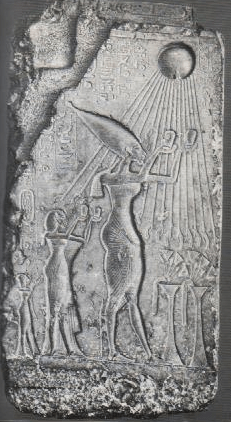
    Akhenaten, the pharaoh who carried out a religious revolution which, for a period of about twenty years,  replaced the age-old beliefs and practices of the Egyptian religion of about 2000 god and goddesses in human, composite or animal form for one single abstract concept  – the sun (Aton).  He did away with an elaborate and powerful system of priests, temples, and iconic images in particular with Amun the god of all gods. Its priests were at that time almost as powerful (and rich) as the Pharaoh.  Akhenaten alone was the mediator to god and asked to be worshiped, actually with his wife as holy family. He was the son of Aton. Akhenaten, the new capital with temples was built from scratch, like Brasilia, but Akhenaten  lasted only 20 years and almost destroyed the Egypt empire.

    “O Sole God beside whom there is none”.

    Akhenaten has often been brought in connection with Jesus and more often Moses. The worship of idols (symbols of transcendence) eases and ends with with pure monotheism. Strict monotheism prohibits images , rejects any magical acting ceremony and puts the emphasis on the writing and worldly ethical requirement as gods law without constraints of idolatry.  The murder of God , also known as parricide , is the main subject in Freud’s Moses and Monotheism religion – the historical truth of religion.  Moses is, according to Freud , ” the creator of the Jewish people ” (IX , p 553 ), and he explains this as follows: Moses himself was an Egyptian living in Egypt who imposed to a Jewish ethnic group the already banned again monotheism of Akhenaten as their own religion. Then, he led this people  (shortly after Akhenaten’s death ) out of Egypt.

    Jesus – seen from the Roman Mithras Cult

    mithraic-communion
    mithraic-communion

    I recently attended a lecture of an Mithras expert. He explained, that mainstream scholarship speaks of at least three Mithras: Mitra, the Vedic god; Mithra, the Persian deity; and Mithras, the Greco-Roman mysteries cult. There was, however, always a problem with Cumont’s assumption that the Mithraic mysteries derived from ancient Iranian religion, the iconography in ancient Iran was different from the primary fact of the Roman Mithraic cult.lSince the 1970s, scholars have generally argued against Cumont’s master narrative of east-west transfer. whereas recently now render a revised Cumontian scenario of east-west transfer including Armenian religion.

    The important icon in the Roman cult was the tauroctony. This scene shows Mithras in the act of killing a bull, accompanied by a dog, a snake, a raven, and a scorpion; the scene is depicted as taking place inside a cave like the mithraeum itself. If the god Mithras of the Roman cult was actually the Iranian god Mithra, we should expect to find in Iranian mythology a story in which Mithra kills a bull. However, the fact is that no such Iranian myth exists: in no known Iranian text does Mithra have anything to do with killing a bull. Franz Cumont, the major expert in the twentieth century had responded by pointing to on an ancient Iranian text in which a bull is indeed killed. However, in 1971 in the course of a Congress Cumont’s scholars at the Congress hypothesized  that the Roman cult of Mithras was actually a new religion, and had simply borrowed the name of an Iranian god in order to give itself an exotic oriental flavor.  A dam was broken in regards the study of the Mithraic mysteries, its pictorial may not be based on the Iranian myth, but rather something utterly different: namely, an astronomical star map and the cult an new astral religion, for soldiers of the declining Rome as Rober Tucan pointed out.

    As one of the competing cults in the second century, Mithraism has been compared to Christianity, pointing to numerous similarities. It should be kept in mind that if elements from Roman, Armenian and Persian Mithraism were utilized, not as a whole ideology but as separate items, that is a very usual behavior of religions, which utilize and occupy archetypes in Jungian sense to prevail.  Thus, the following list represents possible independence of Christianity and Mitra/Mithra/Mithras cult.

    The Roman Mithra cult has the following in common with the Jesus character:


    • Mithras was born on December 25th of the virgin Anahita.


    • He had 12 companions or “disciples.”


    • He performed miracles.


    • He ascended to heaven.

    The Roman Mithra cult has the following similarities with Christianity:

    • Mithras represents the “Way, the Truth and the Light,” the Redeemer, the Savior, the Messiah.

    • He is described as “hears all, sees all, knows all: none can deceive him.”


    • His sacred day was Sunday.


    • The Roman Mithra cult had a rite similar to the eucharist meal.

    • Mithraism had a sort of baptism although with ritual blood.

    The Roman Mithras cult has many other attributes not common with Christianity, particularly its central mythical secret, Mithra slaying the bull.

    Jesus – seen from the Roman Isis Cult

    The cult of Isis was the opposite of the “men religion”  of Mithras. As we see later, Jesus bears similarity with Horus, whereas Isis clearly had influence on the archetype of the Holy Mary in Christianity.  The cult of Isis entered around the Egyptian deities Isis and Osiris is very likely brought to Rome under Marcus Antonius. It had a popular following up until the fourth century AD, but as Christianity took a firmer hold was completely eliminated by the sixth century. The central image of the cult concerned the myth of the death and rebirth of Osiris. While the rituals of the cult remain a mystery even today, we do know that in the initiation ritual the initiate experienced symbolic “death” and “rebirth,” purified by the Goddess Isis.  The cult mainly concerned itself with concepts of material sacrifice (such as fasting and donations of wealth), and rituals involving symbolic death and the revelations of cult secrets. Unlike other mystery religions, there were both yearly rituals and daily services.  Rodney Stark suggests that the cult of Isis was the largest competitor for Christianity in the Empire, especially concerning the inclusion of women as priests and worshipers equally. I will go in the next chapter in the details of iconography of the Virgin Mary which often bears similarity to Isis, and Isis’ titles such as the “Queen of Heaven”  a reference to the Virgin still used. Finally, Osiris’s promise of eternal life (through his sacrifice) for his followers has clear parallels to early Christian understandings of Christ.

    Symbols of Christianity

    Christ and Trinity
    Christ and Trinity

    Certainly Christianity combined a bit of religious syncretism with quite unique selling propositions (see “Isis, Mithras and Jesus: Clash of male and female Archetypes in classical Rome“.  All religions did that and some are only cut and past or heretical offshoots.  Certainly the Egyptian culture has influenced much of the world over a period of centuries and millennia.  The Egyptian religion was, like that of many cultures, polytheistic and pantheistic at the same time and for a brief period even henotheistic,  often referred as first attempt to a monotheistic belief system. Religions are based on myths and beliefs, hence must be based on archetypes.

    A scholarly fashion claims that only by coincidence Christ and not the Egyptian Isis or the Persian Mithras gained the upper hand as a world religion. There is some truth in it, but also an utter disregard of the attractiveness of Christianity at that time and uniqueness of its offering. A globalized  Roman Imperia created a market of religions. Furthermore the exclusive – or shall I say smart – Christian religious offerings took in account the Romans’religious preferences and the  weaknesses of the many competing religions and cults. Its explosive growth was supported by a successful sociological approach and a savvy management style – strategic global, acting locally but centralizing its control over teachings. But most of all on powerful symbols and archetypes. So let us in this article analyze Jesus’ many faces, using Jungian methodology of symbols and archetypes.

    The cross

    The first assertion which can be made is, that the cross – was a known  symbol of Quaternity, explained here, and not only  a representation of the instrument of Jesus’ execution.  The Christian cross probably represents a melding of the real crucifix shape with the solar cross as a bit of religious syncretism. The cross has been always a symbol of the four cardinal directions and the four winds. Hence, the solar associations of the cross, calls on another archetype as symbol of the Crucifixion. That’s true enough but falsifies nothing.

    The resurrection

    When it comes to Egyptian sources of the Christ myth,  the Isis/Osiris/Horus myth,  by Plutarch, goes as follows: Set, the evil brother of the good Osiris, murders that god and cuts his body into 14 pieces. Isis, the wife of Osiris collects and reassembles the pieces, minus one, the phallus (such thirteen the unlucky number). She copulates – without phallus – with the dead god in the form of a bird, conceives Horus and gives birth to him and let him raise in secret. Osiris becomes resurrected from the dead, although only as God of the underworld. When Horus comes of age he does battle with his uncle Set. The physical resurrection of Osiris, even though it is in the underworld, is a significant precursor to Jesus as a dying and rising god, found in many other Indian, Asian and classical myths. Surprisingly, Joseph fails to mention this bit of classical mythology. Horus being born and nursed in the rushes of an island in the Nile is an important parallel to the infant Moses being found among the rushes. The underworld and hell is an old construct.

    The virgin madonna

    isis-and-nursing-horus the child (black maddonna)
    isis-and-nursing-horus the child (black maddonna)

    However, besides the resurrection of Osiris, there are other parallels between the Egyptian myth and the New Testament like the – sort of – virgin birth. Isis with the dead body of Osiris prefigures the imagery of the Pieta. More importantly, Christians definitely took over the imagery of Isis and the infant Horus in the form of the Madonna and child. Certainly, the virgin birth and the elevation of the Virgin Mary in the Gospel of Luke reflects pagan influences on the Christ myth, which can be seen in the Lucan Nativity and which sharply contrast to the messianic/Davidic kingship motifs of Matthew. As previously noted. Luke’s Nativity seems to be based on Egyptian panels from Luxor dating to the 18th dynasty and the reign of Queen Hatshepsut.

    The panels from Luxor depict the mother of Hatshepsut being told she will bear the divine child. Next, the god Amon-Ra consorts with Hatshepsut’s mother. Then the divine child (Hatshepsut) is adored by gods and mortals. This is probably the source of Luke’s Nativity. Mary is told by the angel Gabriel she will bear the divine child. The Holy Spirit overshadows her. Then angels and mortals (shepherds) adore Jesus. Copulating with Amon Ra was part of the standard Egyptian royal myth of each Pharaoh. Amon Ra, taking his father’s mortal form to have sexual relations with the Pharaoh’s mother here even more important because Hatshepsut, a rare female Pharaoh had to prove rank and heavily decent, because as a female, she was assumed to have ordinary mortal origins.

    Christ birthday

    The December 25 — is significant, but Mithra in his solar aspect as Sol Invictus (Latin for “Unconquered Sun”). The reason Mithra/Sol Invictus was born on December 25 was that in the Roman calendar of that day, that was the Winter Solstice, the 24-hour period having the fewest number of daylight hours.  True,  Christianity had a nasty habit to hijack pagan holiday, so the birthday of Mithra as a way of occupying a rival’s holiday.

    The three magi

    Furthermore there is one astronomical event the Christ myth. This is obvious with the magi following the star in the Nativity story of Matthew. In the original Greek of the New Testament, what is translated as “wise men” is magi, that is, Zoroastrian holy men. The Greek word magos is the source of our words mage, magic and magician. Second, Matthew nowhere says how many magi came to Jerusalem. So where did we ever get the idea there were three of them? Also, if they were actually following a star, it would have led them directly to Bethlehem. The star doesn’t actually lead the magi until they have been told by Herod’s scribes to go to Bethlehem. Only then does the following happen (Mt. 2:9–11). It is in these three gifts, along with the eastern origin of the magi, that we see the key to the actual myth in Matthew’s Nativity, which is political. Throughout Mathews Nativity account, the gospel’s author takes great pains to find fulfilled prophecies showing Jesus to be the messiah of the Davidic line of kings. He is born in Bethlehem because that was David’s home town, and Jesus must be born there to fulfill the prophecy in Micah 5:2, which the chief priests and scribes quote to Herod when the magi ask where the baby is that is born to be king of the Jews (Mt. 2:5, 6). So Bethlehem’s mythic associations have to do with Davidic kingship, not astrology. The three gifts also reflect Davidic kingship, since the Queen of Sheba gave King Solomon rich and kingly gifts (1 Kings 10:10). These included a great quantity of gold and, by implication, since Sheba, or Saba was located in modern Yemen, at the southern end of the Red Sea, frankincense and myrrh. Sheba, or Saba, in Yemen is at the southern end, the point of origin of an ancient caravan route that stretched from Yemen to Damascus called the “Incense Route,” since what was traded from the southern end of the Red Sea were two forms of incense, frankincense and myrrh. Thus, the infant Jesus received from the magi the same gifts given to Solomon by the Queen of Sheba.

    The passion myth

    Easter in the Passover season was probably originally a festival of first fruits, that is, a seasonal, agricultural festival relating to rebirth. However, Jewish seasonal festivals relating to a cyclic view of time were recast in messianic, apocalyptic terms as historical and related to a linear concept of time. In the case of Jewish belief, I believe it’s safe to say that the linear, historical view effectively eclipsed the original seasonal festival. Since the Christian Passion and Resurrection narratives reintroduce a dying and rising god meme into the holiday, the layering of Easter becomes far more complex. Easter blends apocalyptic messianism, emphasizing Christ’s death and resurrection as the critical turning point in God’s war with Satan, and portraying Jesus as the culmination of Israel’s hopes and dreams, with the dying and rising god motif, and the promise to Christians that they, too, would transcend death. It must also be remembered that the cult of Isis and Osiris, which spread through the Roman Empire about a century before the time of Jesus, was not entirely the same as the millennia old Egyptian fertility cult it had originally been. Rather, it was, in all probability, Hellenized and showed some of the refinements of Greek philosophy.  As to the sighting of Easter near the time of the Vernal Equinox, we must remember that the Passion is staged during Passover. There is a complex layering here that is lost if we simply relegate Easter to a celebration of the Vernal Equinox.

    The Number 12

    Jesus having 12 disciples relates more to Jewish Messianism. The 12 disciples relate to the 12 tribes of Israel, which, though they no longer existed as political entities, were important  to the extent that Paul could confidently claim to be of the tribe of Benjamin (Romans 11:1). Actually, there were 13 tribes, 12 plus the priestly tribe of Levites. Each tribe originally supported the Levitical priesthood and maintained the central shrine for one month a year. The division of the tribes worshipping Yahweh into 12 divisions may well reflect influences of the lunar calendar.

    Jesus’ crown of thorns

    Jesus’ crown of thorns, along with most of the specific details of the Passion — his being clothed in a purple robe and given a reed as a scepter, the mocking and scourging by the Roman troops, even his being put to death — were probably elements of the Zagmuku Festival, coming from Babylon after their captivity there (587–538 BC). Elements of this festival are to be found in the entirely fictional Book of Esther and the celebration of the Jewish holiday of Purim.

    Astronomical interpretation of mystery cults – Astral Religions

     Age of Taurus, Aries, Fish and Aquarius

    Aeons of Zodiac
    Aeons of Zodiac

    The dawn of Christianity coincided with the Symbol of the fish and its trouble with dawn of Aquarius. When Jung was dying in 1961, age-old and terminally ill from heart problems, his thoughts circled round the Far Eastern practice of the rebirth. Now, so he entrusted friends, he will probably learn shortly what the Self is all about. In 1958 Jung, in a writing with the title “a modern myth”, he had forecast the coming world order in the sign of the Aquarius: “Now we approach”, he announced, “the big change, with the entry of the spring equinox we expect the coming world order in Aquarius”  with “secular changes of the collective psyche”. Jung’ assistant , Aniela Jaffé tied it with transition with the (decline) of the Christianity whose symbol is the fish. She claims, that possibly thousand years ago – as the second part of the Pisces sign was touched, the age of the Antichrist begun whose climax we experience right now.

    The precession of the Earth and the Great or Platonic Year

    The zodiac is a spherical celestial coordinate system. It designates the ecliptic as its fundamental plane and the position of the Sun at Vernal equinox as its prime meridian in 12 equal parts. In astronomy, the zodiacal constellations are a convenient way of marking the ecliptic (the Sun’s path across the sky) and the path of the moon and planets along the ecliptic.  The gradual shift in the orientation of Earth’s axis of rotation changes the apparent position of the vernal equinox through all twelve traditional constellations of the zodiac, at the rate of about 2150 years for one of them (called a Great Month) in a full cycle of ca. 26,000 years (called a Great or Platonic Year). We have entered or will enter the Aquarian Age and looks like the beauty of it lies in the beholder.

    newWorldOrder

    The edge established between Pisces and Aquarius locates the beginning of the Aquarian Age around the year 2150. C.G. Jung followed interpretation that the Age of Aquarius will begin in AD 1997 but in the Mayan Calendar / Egyptian Cycle of the Phoenix begins AD 21 December 2012. We live indeed in emotional and intellectual disturbed times. .

    The reason of the Great Year is an axial precession of the earth similar to the precession of a spinning top due to gravity. The precession of the Earth’s axis has a number of observable effects. First, the positions of the celestial poles appear to move in circles against the space-fixed backdrop of stars, completing one circuit in 25,772 Julian years (2000 rate). Thus, while today the star Polaris lies approximately at the north celestial pole, this will change over time, and other stars will become the “alignment star” for star gazers. Secondly, the position of the Earth in its orbit changes relative to the backdrop of the stars and therefore also the vernal equinox slowly regresses a full 360 degree through all twelve traditional constellations of the zodiac, at the rate of about 50.3 seconds of arc per year.

    Modern astronomy aside, all religions and cultures have recognized the vernal equinox for thousands of years. The date is significant in Christianity because Easter always falls on the first Sunday after the first full moon after the vernal equinox. It is also probably no coincidence that early Egyptians built the Great Sphinx so that it points directly toward the rising Sun on the day of the vernal equinox. The first day of spring also marks the beginning of the Persian New Year in the 3,000-year-old tradition of Zorastrianism. Other important advanced civilisations of the humanity – Maya, Sumerian, Chaldaean, Egypt’s, Chinese etc. – held a similar idea of the change of Aeon’s and interpreted it in religious and mythical traditions . ‘Aeon’ comes from the Greek and means “long time” originally a name of the old Persian eternity God czar’s van akaran (=time without end). In the numerous mystic schools of the later Gnosis, which heavily influence C.G. Jung, “Aeon”, loses this original meaning and  defines those long zodiac periods 0f 2150 years.

    The areas of the Platonic Year

    So every 2150 years, we enter a new Area. As has been shown, the defection the transition into the Aquarius depends on arbitrarily agreed zodiac borders of the constellations, the change the age cannot be defined rationally or exactly. Thus very different times were calculated up to now for the Age of Aquarius.  2012 aligned with the Mayan calendar) and 2146 were given. The latter number arises if one defines the (Western notation) year 1 A.D. or Jesus as a beginning of this Pisces age. C.G.Jung has dated such a change of “Aeons” in his work, hence, on 1997.  Lets have a short look to the ages:

     Aeons

     YEARS

     FOCUS

     ARCHETYPES

     NOTES

     1 Age of Aquarius

     (AD 2150 to 4300)

    Aquarian age will foster in a period of mass consciousness. Furthermore we saw the appearance of dictators, extreme self-expression. Traits of Aquarius such as being ‘humanitarian’ but at the same time ‘unemotional’ may indicate to the emergence of active trans-governmental organisations and global “solidarity” movements. Alternatively, it may indicate individual New Age spiritual awakening.

     Aquarius Symbol of Chaos

    12 Age of Pisces

    (AD 1 to 2150)

    Christianity (Monotheism, Spirituality) The Age of Pisces is characterized by the rise of Christianity (founded 1st Century) and Buddhism (founded 6th to 4th Century BC) due to the “spiritual” nature of Pisces to go beyond the boundaries of the physical world.

    Fish Symbol of Christianity

     11 Age of Aries

     (2150 BC to 1 AD)

    Old Testament (War and Fire) When Moses descended from the mountain with the ten commandments (c. 17th – 13th century BC, the end of the Age of Taurus), he instructed the worshippers of the golden calve to be killed. Represents Moses “killing” the bull and ending the Age of Taurus, starting his Age of Aries.

    Ram Symbol of Jews

     10 Age of Taurus

    (4300 to 2150 BC)

    Earth, Agriculture: This age is notable for theEgyptian and Iranian Empire. Mithra was the Iranian god of the sun, justice, contract, and war in pre-Zoroastrian Iran. Mithras in the Roman Empire during the 2nd and 3rd centuries ad,  was honoured as the patron of loyalty to the emperor wit the “slying bull Icon. They personify structure, solidity, stability and attempts at eternity,  ‘strength’ but at the same time ‘sensuality’ may be attributed to civilizations such as Ancient Egypt’s and Persians.

    Bull Symbol of fertility cults

     9 Age of Gemini

    (6450 to 4300 BC)

    Trading: During this age writing developed, and trade started to accelerate. Both writing and trade (including messaging) are traditional archetypes belonging to the ruling planet Mercury or Gemini. The wheel, is an archetypes associated with it.

    Gemini

     8 Age of Cancer

    (8600 to 6450 BC)

    The Age of the Great Mother: Settlements and Farming: The Neolithic Revolution, including the beginning of civilization, with domestication and farming nomadic people settled down to living in permanent dwellings. Cancer is always associated with ‘protection’ by utilizing an external barrier

    Cancer

     7 Age of Leo

    (10,500- 8000 BC)

    The Golden Age: De-glaciation of what now constitutes much of the  habitable world. Leo is a Fire sign and is traditionally ruled by the Sun.

     Leo

     6 Age of Virgo

     12650 – 10500 BC End of last Ice Age. Clay Pottery. First intensive hunter-gatherer culture. First agriculture in near East.

     5 Age of Libra

     13800- 12650 BCLascaux cave paintings. Arrival of humans in America across Bering land bridge.

     4 Age of Scorpio

     14800- 12650 BC

     3 Age of Sagittarius

     16950- 14800 BC

      2 Age of Capricorn

     19000- 16950 BC


    Christianity as astral religion

    According to this scheme the Age of Taurus (the Bull) was ending or had ended when Moses led the Israelites out of Egypt and was being superseded by the Age of Aries (the Ram). This age was, in turn, superseded by the Age of Pisces, in which we live, but which is now winding down. It will soon be followed by the Age of Aquarius, hence the song by the same name from the musical Hair. The blowing of the shofar, specifically a ram’s horn, and other symbols indicate that Judaism came, initially, out of the Age of Aries. Since Christianity came into being at the beginning of the Age of Pisces, fish symbolism is particularly common in the New Testament. Thus Jesus tells the fishermen he recruits (Mark 1:17), “Follow me, and I will make you fishers of men.” Thus he feeds the multitude with loaves and fishes, and thus the fish is a Christian symbol. So, was the fish imagery in the New Testament a reference to the Age of Pisces? When Jesus spoke of the “end of the age,” was he referring to the transition from the Piscean to Aquarian age some 2,000 plus years into the future? More maybe than yes. First we must assume that the story of the golden calf in Exodus refers, as it would seem, to general idolatry. Fish certainly are major  images in the New Testament. Yet so are olive trees, fig trees, sheaves of grain, and, particularly, sheep and lambs.

    Mithras cult as astral religion

    Mithräum Nida (Frankfurt a. M. - Heddernheim)Ärchaologisches Museum Frankfurt am Main
    Mithräum Nida (Frankfurt a. M. – Heddernheim)Ärchaologisches Museum Frankfurt am Main

    The astromical explanation of the tauroctony is based on two facts. First, every figure found in the standard tauroctony has a parallel among a group of constellations located along a continuous band in the sky: the bull is paralleled by Taurus, the dog by Canis Minor, the snake by Hydra, the raven by Corvus, and the scorpion by Scorpio. Second, Mithraic iconography in general is pervaded by explicit astronomical imagery: the zodiac, planets, sun, moon, and stars are often portrayed in Mithraic art (note for example the stars around the head of Mithras in the carving of the tauroctony illustrated above); in addition, numerous ancient authors speak about astronomical subjects in connection with Mithraism. In the writings of the Neoplatonic philosopher Porphyry, for example, we find recorded a tradition that the cave which is depicted in the tauroctony and which the underground Mithraic temples were designed to imitate was intended to be “an image of the cosmos.” Given the general presence of astronomical motifs in Mithraic art and ideology, the parallel noted above between the tauroctony-figures and constellations is unlikely to be coincidence but of course a coincidence is never a proof in history.

    Historical evidence of Christianity

    “The Age of Freedom”  and political implications

    As I said before, the historical Jesus became meaningless but certainly is attractive. The cynical view  history – the story of the past, told at present for present purpose has never been so true,  The mentioned movie Zeitgeist asserts that Christianity was, in fact, developed by the Romans as a means of social control. He cites the Council of Nicaea in 325 as the beginning of it.  I would say the Romans tolerated Christianity as they considered it politically harmless, that is true and it had followers in high ranks. However who wants to understand, why academic Europeans turned to Indian gurus in the sixties and a sacral religion of supra-nationalism today, should rather read Jung than Freud; Jung is a precursor of that capitalism and civilisation criticism which becomes more than valid  in view of the menacing economic and spiritual disasters of literally dying societies.

    Though there are no parallel verses to this in the New Testament, it also proclaims the imminent end of the world (John. 5: 28, 29):

    Do not marvel at this, for the hour is coming when all who are in the tombs will hear his [Jesus’] voice and come forth, those who have done good to the resurrection of life, and those who have done evil, to the resurrection of judgment.

    Secularism in the West and  not bring enlightenment but a soft totalitarian Socialism in partnership with the New World Order of the “Masters of the Universe”.  Presumably before the start of the current global mess and violence, the age of the Aquarius promises an era of nonconformity and individualism defined by qualities like tolerance, openness and a non-egalitarian but elitarian world bourgeoisie. I don’t think elitarian is a word, but more feudalism and hidden goals. Hence, the Aquarius Age by worldwide interlinking and globalisation it creates the base to centralize the problems of the humanity worldwide essentially in a post democratic way but there is also a decentralized counter movement.  The New World Order or the emergence of a totalitarian trans-national government seem more likely than the anticipated new human millennium the musical anticipated.

    A not so secretive power elite with a globalist agenda will eventually rule the world through an authoritarian world government— replacing sovereign nation-states—and an all-encompassing propaganda that ideologizes its establishment as the culmination of history’s progress. Numerous historical and current events can be seen as steps to achieve world domination through financial powers and manipulated decision-making processes.  Pope Francis urged the world on 2014 to shed its apathy in the face of what he characterizes as a third world war, intoning “war is madness”, The pope said “even today, after the second failure of another world war, perhaps one can speak of a third war, one fought piecemeal, with crimes, massacres, destruction.” Pope Francis said also these wars are driven by “interests, geopolitical strategies, lust for money and power, and there is the manufacture and sale of arms.”

    Both the church and academia have gotten along successfully without the historical Jesus for centuries. The historical Jesus, the human being who walked the roads of ancient Israel, gathered disciples, and was executed by the Romans, is often contrasted with the “Christ of faith,” a supra-historical figure whose presence in the world has enlivened and nourished Christian communities. The latter has always been far more important for most Christians.

    Was there a real jesus?

    marc-chagall-agape
    marc-chagall-agape

    Many have assaulted on the historicity of Jesus, claiming that, outside the New Testament, there is no indication that Jesus ever existed.

    Was there a real Jesus? While the historical evidence is meager, it does exist. In his Antiquities of the Jews, book 20, chapter 9, item 1, referring to the execution of James, Josephus refers to him as the brother of “Jesus, who was called the Christ.” It is quite plain that Josephus didn’t see Jesus as the Christ (Christos, the Greek word meaning “anointed”), he merely recorded that James’ brother was the Jesus who had been called or was alleged to be the Christ .The Roman historian Tacitus said about Jesus early in the second century. Concerning rumors that had spread that Nero had deliberately set fire to the city of Rome, Tacitus says (The Annals of Imperial Rome, Book 1, Chapter 15):

    To suppress this rumor, Nero fabricated scapegoats — and punished with every refinement the notoriously depraved Christians (as they were called). Their originator, Christ, had been executed in Tiberius’ reign by the governor of Judea, Pontius Pilatus. But in spite of this temporary setback the deadly superstition had broken out afresh, not only in Judea (where the mischief had started) but even in Rome. All degraded and shameful practices collect and flourish in the capitol.

    That Tacitus is obviously a hostile witness makes it much more likely that he accepted Jesus as a real person. Had he reason to suspect he was nothing more than a fabrication, Tacitus would certainly have said so. That author’s claim that Jesus had been executed by Pontius Pilate could only have come from one of two possible sources: Either Tacitus knew this to be true from extant imperial records or he was repeating what Christians themselves had said of Jesus. Were Jesus a mythical character they had invented, they certainly wouldn’t have gone out of their way to invent his being a criminal who had been executed.

    Why is there so much attention now to the person of Jesus? Is it part of our interest in people’s private stories, an impulse that multiplies talk shows and sells People magazine? Is it our need to humanize our heroes to make them more accessible? Is it part of the search for roots, and our desire to reclaim our pasts in a way that contributes meaning to our present? Is it simply part of humankind’s enduring interest in religion, which takes many forms, but never really fades? The answer is probably a bit of each.

    Truth is the story of the past told at present for present purpose.
    Truth is the story of the past told at present for present purpose.

    In fact, the current wave of books constitutes a third quest for the historical Jesus. The first largely Protestant quest — from the late eighteenth to the late nineteenth century — breathed the air of the Enlightenment, presenting Jesus in utterly rational terms, explaining his miracles as natural phenomena, and depicting him as a teacher of timeless wisdom. It came to a close with Albert Schweitzer’s book, The Quest for the Historical Jesus, published in 1906. He concluded that the historical Jesus must be a “stranger and an enigma.” The Jesus designed by nineteenth-century rationalists never had any existence. Furthermore, what little we could know about this Jesus was irrelevant to theology. Jesus means something to our world because a mighty spiritual force streams forth from Him and flows through our time also,” wrote Schweitzer, “This fact can neither be shaken nor confirmed by any historical discovery.” The current generation of Jesus researchers have similarly bracketed questions of theology.

    The second quest was centered in Germany in the 1950s and 60s, led by Ernst Kasemann and others who were influenced by and in reaction to the towering New Testament scholar Rudolf Bultmann, who argued that most the Gospel accounts of Jesus’ life grew out of the mythos of the early church. These scholars argued that Christian theology could not be cut off from history and developed a set of criteria for deciding what is historical in the gospels. Although their existentialist theology now seems dated, many of their rules for assessing historicity continue to be utilized, for example by the current “Jesus Seminar,” a group of scholars re-examining the synoptic traditions and particularly the sayings of Jesus. They have produced The Five Gospels, a work that evaluates the four canonical gospels and the non-canonical Gospel of Thomas for authentic sayings of Jesus.

    Despite how often the question of recovering the Jesus of history has been declared hopeless, it has nevertheless generated a vast literature. What distinguishes the latest crop of Jesus scholars from their predecessors is that they understand Jesus within the context of Jews and Judaism in the first century.  This generation also has access to more materials. The Dead Sea Scrolls, only recently available to a wide range of scholars, do not mention Jesus, but they do illuminate a brand of apocalyptic thought and expectation alive in the first century. The urgency of the impending apocalypse that John the Baptist and Jesus preached has been muted by 2,000 years of church history, but the Dead Sea Scrolls remind us that many expected the end of the world would be violent and imminent.

    In addition to the information from the Qumran materials, recent archaeological finds correspond to details of the Gospel stories of Jesus. The skeleton of a crucified man was discovered in Israel on Giv’at ha Mivtar. His ankle bones were pierced and his legs broken, giving evidence of the nature of Roman crucifixion. In 1990, archaeologists discovered an ossuary containing the bones of Joseph Caiaphas, the high priest who interrogated Jesus in the Gospel of Matthew and is mentioned in the Gospels of Luke and John.

    A number of different portraits of Jesus have emerged. Marcus Borg portrays Jesus as a religious ecstatic, a teacher of wisdom and a social prophet, focused on the present. “Jesus’ relation to the Spirit was the source of everything that he was”, Borg claims. Burton Mack describes Jesus as a Jewish Cynic, a popular sage who shocked people into understanding with his sharp and disturbing sayings. Like Borg, he sees Jesus as focused on the present state of the world, a dispenser of timeless truths. Crossan pictures him as a preacher of radical egalitarianism, addressing a peasant society suffering in political and economic straits, offering a message of healing: “You are healed healers, so take the kingdom to others, for I am not its patron and you are not its brokers. It is, was, and always will be available to any who want it.”

    As these scholars further hone their theories, certain issues dominate the emerging picture of the historical Jesus:

    Jesus preached the kingdom of God, not himself. This kingdom is about God, not Jesus himself, and is on earth. It addresses two main concerns of peasants: bread and death. I am not surprised, that the he historical Jesus and the Jesus of the early church bear little resemblance to one another. Even more tenuous is the connection between the historical Jesus and later Christianity. Contemporary Jesus scholars seem to agree one can be a good Christian without knowing a bit about this Jesus of history. The flesh-and-blood Jesus in the late ’20s of the first century gave way to the reconstructed and interpreted Jesus of the gospels in the 70s and ’80s and was superseded by the “Christ of faith” of the later church. When believers speak of their faith in Jesus, it is this last figure to which they refer.
    Jesus’ view of himself also differed widely from the early church’s. Whether he saw himself as the Messiah is debatable, but he almost certainly did not see himself as divine. His followers, and even a non-believer like the Jewish historian Josephus, recall Jesus as a healer, exorcist, and miracle worker. Interestingly, his detractors neither call him a fraud, nor say the miracles were faked, but attribute his powers to Satan or demons.
    Except for a few of the women, the bulk of Jesus’ followers abandoned him at the time of his death. Nor did his family seem to support him during his ministry. At one point (Mark 3:20-2 1), they think he is possessed.
    Remarkably, Jesus’ death did not mark the end of his movement. His followers continued to believe in his message of God’s Kingdom. Other apocalyptic leaders have arisen throughout the course of Jewish history. When Jesus’ followers, probably in hiding somewhere, heard he was dead, it did not spell the end of his group. Somehow, hope persisted and was transmuted into a force that changed history. Anyone who looks at maps of established churches in the late first, second, and third centuries cannot help but marvel at the rapid spread of Christianity. There are treasons for that: History of Christianity: Success factors and USP’s. The persistence and extraordinary growth of Jesus’ following after his death no miracle. Indeed, the transformation of some disappointed followers of Messianism into a dynamic movement is one of the fascinating stories of history as Rodney Stark has written about in “The Rise of Christianity”

    Jesus & Mary Magdalene were ‘married with children,’

    Yet another story
    Yet another story

    I love the stories of Mary Magdalene, no only from a Jungian point of view. That Jesus was a devoted family man with two kids and Mary Magdalene for his wife, new history book always based on an ancient manuscripts claim every other year also 2014.

    Claims that Jesus was married have been published before. One of the latest cases was the 2012 discovery of an Egyptian papyrus fragment, which some scholars believed to be the first explicit reference to Jesus being married.  There most plausible and enigmatic story is connected with the Cathars. In “A Jungian journey through a land of heretics and Mary Magdalene” I have written a bit of it.  The anti-CatharErmegaud deBeziers and Durand de la Huesca wrote that the Cathars secretly taught that Mary Magdalene was the wife or concubine of Christ;and also that she was the woman ‘taken in adultery’ who Christ had saved from the Jews who wanted to stone her. According to his story, after Jesus’ death (or  ascend into heaven) she flew and moved to France. Petit Provence is the region in southern France adjacent to Aude andHerault where Mary Magdalene and the others came ashore at St.Maries de la Mer. A painting of Mary Magdalene is at the Church in LesSaintesMaries de la Mer, which is west of Marseille showing the boat carrying Lazarus, Martha, Mary Magdalene and a young girl named Sarah. Also the sister of the Virgin Mary and several others are shown on the boat. Often the jar in Mary Magdalene’s hand signifies the blood of Jesus. Left is the painting of the Crucifixion from the Basilica Sainte-Marie-Madeleine et le Couvent Royal, in St.Maximin. This is where Mary Magdalene was buried. She is shown at the foot of the cross in a very beautiful almost intimate pose.

    Sandro_Botticelli_Lamentation over dead Christ
    Sandro_Botticelli_Lamentation over dead Christ
    800px-Sandro_Botticelli_excerptMaryMagdalene
    Sandro_Botticelli_Lamentation over dead Christ _ecerpt Mary Magdalene

    From this allegations has arisen something of a conspiracy theory: It has it that knowledge of Christ’s alleged relationship with Mary (and perhaps proof thereof) passed from the Cathars to the Knights Templar. It was to remove the threat of this great secret, potentially damaging as it supposedly was to the Church, that the Catholic establishment suppressed the Templars, a century after the Albigensian Crusade. Although the theory probably has a particular appeal to those with a latent penchant for goddess worship in both cases, eliminating of the Cathars and the Templars was pure politics and greed. Many esoterics have additionally speculated that Mary Magdalene was herself of royal blood, or a priestess of some Isis/Ishtar cult, and that the Cathars and Templars regarded her almost as the embodiment of the feminine aspect of the divine and the personification of holy wisdom (Sophia to the Gnostics). Another theory has Mary and Jesus founding a dynasty, which fused with the Merovingian line.

    I saw Mary Magdalene statues or paintings in almost ever church. extensively in Rennes-le-Chateau. It must be remembered that she was a legitimate Catholic Saint. Her supposed relics had been claimed by the Benedictine Monks of Vezelay in Burgundy, Central France. The cult was in evidence there from the mid eleventh century. The abbey claimed that the relics had been brought there centuries before by a monk who had retrieved them from their original shrine near Aix in Provence, where Mary had supposedly been lain to rest after spending 30 years living as a hermit in a remote cave called la Sainte Baume .Mary Magdalene is usually thought of as the second-most important woman in the New Testament after Mary. Mary Magdalene traveled with Jesus as one of his followers. She was present at Jesus’ two most important moments: the crucifixion and the resurrection. Within the four Gospels, the oldest historical record mentioning her name, she is named at least 12 times more than most of the apostles.  In the New Testament, Jesus cleansed her of “seven demons”,[Lk. 8:2] [Mk. 16:9].

    Conclusion

    RENNES-LE-CHATEAU Mary Magdalen
    RENNES-LE-CHATEAU Mary Magdalene

    The images of Jesus throughout history are as varied as the people who have embraced him, the Son of God, the Divine Word by whom the world was created, the Passover sacrifice on behalf of the people, the Suffering Servant who takes on the sins of the world, the lesser Prophet, or more recently, Jesus the liberator of the oppressed, the New Age Sun God of the heretic Pharaoh Akhenaten, or a simple tabloid Jesus in love with a woman. The careful reader reader might have noticed, not only in this essay, that I am even fond of the myth around Mary Magdalene. However, each Zeitgeist and generation sees in Jesus a reflection of itself, but the Jesus archetype as cultural pattern C.G. Jung likened to the Self has been alive for 2000 years and is here to stay. That is the essence of C.G. Jung’s archetype, to be in the collective memory, constantly be reborn as symbol. And that is the power Christianity utilized to win and still has. I touched on the lecture about the Roman Mithras cult recently; interestingly almost the complete audience were rather, rather mature women and men. They listened approvingly like they would have done hundred years ago to a sermon, nodding happily on every suggestion that Christianity might have borrowed from Mithras Cult, like this would somewhat invalidate Christianity.  However, archetypes are not owned by any religion,  every religion uses archetypes in its narrative. They quote each other like another cultural achievement – great art. An exception of the rule is the archetype of Jesus – a god became human, died and became alive again and went to heaven.  This archetype is destined to stay, even if after Christianity eases in the mental fog  and violent turmoil of radical globalization and neo-feudalism. Religions get created, prosper and die, archetypes transcend history and reality but are stunningly real.

    Bibliography

    • The Other God: Dualist Religions from Antiquity to the Cathar Heresy (Yale Nota Bene),  Stoyanov, Yuri
    • The Cathars: The Rise and Fall of the Great Heresy by  Sean Martin
    • Gnosticism and Early Christianity by R. M. Grant
    • Jesus Wars Harper, 2010 by Phillip Jenkins
    • C.G. Jung,  Aion Untersuchungen zur Symbolgeschichte
    • A History of Egypt from the Earliest Times to the Persian Conquest, James Henry Breasted Kindle-Edition
    • The Religions of Ancient Egypt and Babylonia A. H. (Archibald Henry) Sayce Kindle-Edition
    • Malcolm Barber & Keith Bate (translators & editors), The Templars: Selected Sources (Manchester Medieval Sources Series, Manchester University Press, 2002)
    • The Rise of Christianity: How the Obscure, Marginal Jesus Movement Became the Dominant Religious Force in the Western World in a Few Centuries by Rodney Stark
    • The Lost History of Christianity: The Thousand-Year Golden Age of the Church in the Middle East, Africa, and Asia–and How It Died by Philip Jenkins
    • Historia Mundi Volume IV, Lehnen Verlag,  Die Kirche zur Zeit der Apostel und Märtyrer
    • The Cults of the Roman Empire, Robert Turcan
    • Haskins, S.  Mary Magdalene: Myth and meaning,  (1993) New York, NY: Riverhead Books
    • Mithra: The Pagan Christ


    Earlier Gnostic Writings and Cathar Texts

    • The Cathar religion represents a major medieval resurgence of Gnosticism, and we offer an important collection of Cathar Texts, including the complete manuscript of the Lyon Ritual, Interrogatio Iohannis, and The Book of the Two Principles.
    • While the Nag Hammadi Library represents the richest  source of classical Gnostic texts, many other primary Gnostic documents were discovered in the century prior to the Nag Hammadi find.  These are cataloged in the Classical Gnostic Scriptures and Fragments section.
    • Of associated interest is the Christian Apocrypha and Early Christian Literature, a section containing other important Christian texts surviving outside canonical tradition, some of which manifest Gnostic influence.
    • The G.R.S Mead Collection contains over a dozen volumes written by G. R. S. Mead (1863-1933), one the greatest early scholars of Gnosticism.  These works provide an invaluable evaluation of texts relating to Gnostic tradition available before discovery of the Nag Hammadi collection.
    • Opinion about the tradition was primarily based on Works Against the Gnostics by the Church Fathers.  I included is a full text site search function.
    • A large sample of these  is presented in the Manichaean Writings collection, along with an introductory lecture.
    • Also included in the library is a section devoted to Mandaean Texts and this still living Gnostic tradition.

    Contemporary Gnostic Writings and Jungian Texts

    Alchemy was recognized by C. G. Jung as another strand of Gnosticism;

    The Nag Hammadi Library

    • Excerpt from Elaine Pagels’ excellent popular introduction to the Nag Hammadi texts.
    • The Nag Hammadi Library, a collection of thirteen ancient codices containing over fifty texts, was discovered in upper Egypt in 1945. This immensely important discovery includes a large number of primary Gnostic scriptures — texts once thought to have been entirely destroyed during the early Christian struggle to define “orthodoxy” — scriptures such as the Gospel of Thomas, the Gospel of Philip, and the Gospel of Truth. The discovery and translation of the Nag Hammadi library has provided impetus to a major re-evaluation of early Christian history and the nature of Gnosticism.
    • We have add extensive resources on two centrally important texts from Nag Hammadi: The Gospel of Thomas and The Secret Book of John. Multiple authoritative translations of several Nag Hammadi scriptures are included in the collection.
    • Valentinus and Valentinian Gnosis. Valentinus was one of the most influential Gnostic Christian teachers of the second century A.D., and was the only Gnostic considered for election as Bishop of Rome (Pope). He founded a movement which spread throughout Europe, the Middle East and North Africa. Despite persecution by developing orthodoxies, the Valentinian school endured for over 600 years. A large number of texts in the Nag Hammadi collection are influence by Valentinian tradition. Due to its importance, we have a large section of the library dedicated specifically to Valentinus and the Valentinian Tradition.

    The Dead Sea Scrolls Collection

    • The Dead Sea Scrolls Collection in the Gnostic Society Library is one of the largest and most referenced Dead Sea Scroll resources on the internet. During the middle years of the twentieth century two important but very different collections of ancient religious texts were unearthed in Palestine and Egypt: the Dead Sea Scrolls and the Nag Hammadi Library.
  • Goddesses of ancient civilizations – Part I

    Goddesses of ancient civilizations – Part I

    Goddesses (and Gods) have been worshipped throughout history. Already the earliest advanced civilizations  had a rich set religious female spiritual and temporal archetypes which permeated every aspect of society. I want to invite the reader to follow with me the trail of Goddesses from the first advanced cultures until today’s global culture, from Babylon to Berlin, from Sophia to Mozart’s Magic Flute, from Cleopatra to Madame Mao, from Isis to Holy Mary, from Kali  to peacock worshippers. Part I focusses on ancient Asia, Europe and the Middle East. Part II will focus on the more shamanic aspects.
    Goddesses of ancient civilizations

    Isis is the ancient Egyptian goddess of magic, motherhood, healing, and protection. Known as the divine mother of the pharaohs, her Egyptian name (Aset) translates directly to “throne”. She is famously depicted wearing a throne-shaped headdress or a solar disk with cow’s horns. Here with Horus. A familiar Archetypal image?

    Life and death, recurring events of nature and patterns in the sky  led to the creation of a number of myths, to explain the unexplainable.  This mythology is the most archaic and profound record, we have of mankind’s essential spirit and nature. Discovering patterns of meaning – the archetypes or cultural DNA –  is how the Swiss psychoanalyst Carl Gustav Jung approached religion, understanding symbols, myths, and dreams as a fabric of even today’s globalized culture.
    Isis-and-Holy-Mary
    Isis-and-Holy-Mary

    Carl Gustav Jung. C.G. Jung defines an archetype as:  “Archetypes appear in conscious as a universal and recurring image, pattern or motif representing a typical human experience. Archetypal images come from the collective unconscious and are the basic concepts of religions, mythologies, legends and Arts…they emerge through dreams and visions…they convey a sense of transpersonal power which transcend the ego.” The female archetype has definite qualities of her own, such as, life giving, wisdom, and nurturing traits. As with all archetypes, not all the traits of female archetypes are good. There is the evil side of the mother archetype as well, such as, devouring sexuality and darkness, sin and death. All these aspects are taken into consideration when it comes to female archetypes.

    Although many of the religious aspects were known for centuries, it was not until recently that historians and archaeoastronomers attempted to find out how important Goddesses really were in religion and daily life. Western civilization is most familiar with the gods and goddesses of Egypt, Greece and Rome. Growing up, we all remember hearing stories of these ancient deities and their mythological relationship with human beings. However, sophisticated cultures of the antiquity already had powerful symbols: The Mother, the Lover from loyal spouse to the evil vampire,  Queen of the Heaven (and Hell), often depicted as bird or serpent, sun or moon, are examples of Jung’s Archetype and our Animas.

    Mesopotamian mythology

    Ishtar

    Ishtar
    Ishtar

    In ancient Mesopotamia, the Great Mother was depicted as Ishtar, with a winged headdress and holding the ring of divine authority.  Inanna, Sumerian goddess of love, fertility, and warfare named Ishtar as  Akkadian, Assyrian and Babylonian goddess of fertility, love, war and sexuality. She was sculpted with owls at her feet representing the secrets of the underworld and death. In pre-dynastic Egypt she was often shown as a bird goddess with her arms uplifted, again like wings. Another frequent association was with the lion: a fire symbol.  This theme was evident in the statues of Sekhmet. It was said that Sekhmet, carrying the paradox of fierce feminine power, would return in times of epochal change. The New York Times reports that 17 statues of Sekhmet have been found at Luxor in March 2006. Ishtar was the Babylon counterpart to the Sumerian Inanna and is the patroness of Nineveh. She is connected with the Lilith from a Jewish folk tale with mysterious origins that appear to reach back to Mesopotamia.

    Die Sinnlichkeit Franz von Stuck (1863-1928)  Die Sinnlichkeit (Sensuality)  etching  circa 1891
    Die Sinnlichkeit Franz von Stuck (1863-1928) Die Sinnlichkeit (Sensuality) etching circa 1891

    “Istahar” was the Queen of Heaven – Lilith the Queen of Hell. Lilith a demon associated with the winds was  the bearer of diseases, illness and death, and to some Lilith is the first wife of Adam before Eve. In Arabia and Jewish myths she is a succunus. She has many names such as Lilitu and Marililth. In Jewish lore she is the enemy of newborn baby’s because she cannot conceive herself.  Lilith, the darker aspect of the legend, uses seduction for the ineffable name, and subsequently falls from grace for her sexual promiscuity and demonic breeding. Istahar/’Asterah, on the other hand, gets elevated for her avoidance of sin and corruption – and is subsequently rewarded by God for remaining sexually pure. Lilith and Istahar resemble the dualism concept of Ishtar and Ereshkigal, a “goddess of heaven” and a “goddess of hell.” Istahar was elevated as a constellation in the heavens for her virtue, while Lilith was granted the power to drink blood, kill infants, and luring souls to Hell through sex. This has been masterly picked up by Franz Von Stuck who was an influential German Symbolist/Art Nouveau painter, sculptor, engraver, and architect at the “Königliche Akademie der bildenden Künste” (Royal Academy for the Fine Arts) in Munich. He was fascinated – remember that was the time of Freud and Jung  with mythical symbols of danger and femme fatal (see Appendix).

    See here a video of “The Sin” of Franz von Stuck modeled after Lilith.


    Below is a basic comparison of the legend of Lilith and Istahar:

    Lilith

    Lilith seduces God, acquires his Divine name, and uses it to escape Adam’s sexual dominance.

    Lilith is elevated as the consort of God.

    Istahar/’Asterah

    Istahar/’Asterah tricks God into giving her the ineffable Name of God, which she uses to escape his sexual dominance.

    Istahar was elevated into the stars.

    When it comes to Lilith herself, she undoubtedly resembles Innana/Ishtar in her darker moments (demonic clinging in ascent from Underworld, blood drinking after a rape), reinforcing the theory that Lilith may have been patterned after Innana/Ishtar’s dark side. This also reinforces Lilith’s role as “Queen of Hell.

    Sarpanit – Mother Goddess

    Sarpanit is a Mother Goddess and wife of Marduk. Their marriage was celebrated annually at New Year in Babylon. She was worshipped via the rising moon, and was often depicted as being pregnant. In Babylon, we have apparently already man in control, but the woman probably already tends to equality.  Marduk’s original character is obscure, but he was later on connected with water, vegetation, judgment, and magic and regarded as the son of Ea (Sumerian Enki) and Damkina and the heir of Anu. Father Ea voluntarily recognized the superiority of the son and hands over to him the control of humanity.

    At the time of Hammurabi, female deities were worshipped as goddesses of victory, as seen from letters of Hammurabi. Marduk and Sarpanit were the deities where the male God takes precedence. In Syria and Phoenicia female deities were more established. Especially in  Syria, the home of Astarte,  religion was also strongly mixed with sexuality as seen above.

    Peacock Angel Cult—  Yezidis

    PeacockAngel
    PeacockAngel

    Considered a mystery by Orientalists, the Cult of the Snake and Peacock in Iraq was founded on the teaching of a Sufi Sheikh, Adi, son of Musafir, in the twelfth century, although they date their origin back 6,000 years or more.The Yezidi faith is syncretic and combines elements of Judaism, Christianity, Sufism, Manichaeism and the Persian Zoroastrianism faith in parallel and selectively.
    In Arabic, ‘Peacock’ also stands for ‘adornment’; while ‘Snake’ has the same letter-form as ‘organism’ and ‘life’. Hence the symbolism of the cryptic Peacock Angel Cult—the Yezidis—is a way of indicating ‘The Interior and the External’, traditional Sufi formula. The Cult has adherents in the West, but was largely unknown,  before CNN put the spot light on them, because of their recent persecution (together with the Christians).

    In the Gnostic tradition (in which both Yezidi and Sufism have some roots), the Peacock Angel is analogous to the first son of the Goddess Sophia, who in the process of creating and governing the universe divided herself into seven rays or “sons.” Her seven sons were coeval with and governed one of the seven colors, tones, planets, etc. The  peacock was the first form of the Supreme God and one of the Seven Great Angels, named Tawsi Melek or Melek Tawus (the Ildabaoth of the Gnostic’s).

    Aroused snake by the entrance to a Yezidee-temple. It is blackened by soot.
    However the Angel’ other name — Shaytan — means “devil” not only in Arabic, even in German Scheitan means Satan. Therefore Yezidi, have often seen as Devil worshippers, also through the manifestation the Peacock Angel as as a snake. This is analogous with the gnostic understanding of the Serpent on the Tree in the Garden of Eden –  interpreted in Christianity as Satan. Furthermore, because to the connection to the Sufi Iblis tradition, some equate the Peacock Angel with their own unredeemed evil spirit Satan. Iblis is a supernatural being — either a fallen angel or a diabolical fiery creature known as a jinn. In his disobedience against God and his role as tempter of mankind, again resembling the rebellious Satan in the Christian tradition. In fact, they are more remnant of pre Christian religion: the peacock angel being the mysterious Phoenix.

    Shaushka, goddess of fertility, war and healing

    Shaushka  (Sauska) was the goddess of fertility, war and healing in during the Hittite empire. She was also the patron goddess of the famous Hittite king Hattusili III. She is depicted in human form with wings, standing with a lion and accompanied by two attendants.

    Egyptian mythology

    Nut

    Nut
    Nut

    In ancient Egypt, Nut was the night sky arching overhead and Geb her mate the earth below, directly the opposite of the Greek ordering of the universe. Nut was the mother of all the gods and goddesses. Among her children were both gods and goddesses of the sun. Nut’s longest lived daughter, Isis, was a sky goddess associated with tales of death and resurrection, though in her case it was her husband whom she helped bring back from the dead. This tremendously popular Goddess grew in power over time and continued to rule the heavens, even after Alexander conquered the Egyptians for Greece. When Rome did alike, the Romans fell under Isis spell as well.

    Isis

    isis-and-nursing-horus the child (black maddonna)
    isis-and-nursing-horus the child (black maddonna)

    Isis, goddess of motherhood, magic and fertility, is not he oldest, but certainly the toughest goddess ever was Isis, the center of Egyptian mythology. Isis was able to traverse through cultures and time,  from Iseum to Rome, survive in Gnosticism, hide in Christianity and is very alive today – 10.596 results at Amazon. Obviously greatly admired in her time, from  around 600 AD. Isis had all the qualities and more of a female  archetype. One particular quality she displayed was her mysteriousness. Man admires a woman for give life, nurture life and fears her secrets way to ways control life,  Isis got me interested to rediscover the history of goddesses.

    I am Isis, I am she who is called goddess by women
    I gave and ordained laws for humans, which no one is able to change
    I divided the earth from the heavens
    I ordered the course of the sun and the moon
    I appointed to women to bring their infants to birth in the tenth month
    I made the beautiful and the shameful to be distinguished by nature
    I established punishment for those who practice injustice
    I am Queen of rivers and winds and sea
    I am the rays of the sun
    Fate hearkens to me
    Hail Egypt that nourishes me.

    Isis was one of the oldest gods or goddesses of ancient Egypt first worshipped as a fetish in the Delta area of Lower Egypt and  the first shrine dedicated specifically to her was built by Nectanebo II (360–343 B.C).   Isis was her Greek name, but she was known to the ancient Egyptians as Aset (or Ast, Iset, Uset), which is usually translated as “(female) of throne” or “Queen of the throne”. The Book of the Dead describes her as “She who gives birth to heaven and earth, knows the orphan, knows the widow, seeks justice for the poor, and shelter for the weak” suggesting that she was considered to be more than simply a mere mortal. Isis was known as “Hent” (Queen) in every Nome, but she was also known by a bewildering number of names and titles throughout ancient Egypt and took on the aspects of many other goddesses. This resulted in a fairly complex relationship with the other gods and goddesses.

    The uniting of paradoxes is evident in Isis: the great Goddess of the two lands of light and dark of Egypt. She is the agent for the resurrection of Osiris; by conceiving Horus, she brings forth the basic symbol of transformation in the uniting of the paradoxes.

    Osiris, god of the afterlife, the dead, and the underworld agency that granted all life, including sprouting vegetation and the fertile flooding of the Nile River. Obviously greatly admired in her time, which lasted until around 600 AD. Isis had all the qualities and more of the mother archetype. One particular quality she displayed was her mysteriousness. She was everything, so it seemed, but no one really knew why she was all of this. This question allows one to ask, why have all of these traits as listed above, to one woman. The answer is the one and the same with the story of Demeter. Man admires woman for what she can do and for what he will never be able to do. Give life, nurture life and in many ways control life. Isis is the apex of all the goddesses and the mother archetype. The Egyptian culture must have had great respect for their women at the time the story of Isis was developed. This is evident in all the complexion they gave to Isis. She was nature, and everything that attributed to it.

    Qetesh, Astarte goddesses of sacred ecstasy and sexual pleasure

    Qetesh is originally a Semitic goddess of Syrian or Sumerian origin who has been assimilated into the Egyptian pantheon during the 18th dynasty of the New Kingdom, in which two significant women ruled, Hasheput and Echnatons wife Nofretete. Qetesh is the goddess of nature, beauty, sacred ecstasy and sexual pleasure.  She is known by the following epithets: “Mistress of All Gods” and “Lady of the Stars and Heaven”.

    Two Respresentations of Quetesh and Astarte
    Two representations of Quetesh and Astarte

    Qetesh was originally depicted as a nude woman standing on the back of a lion (a horse outside of Egypt) with a moon crescent in her head. She may also be depicted as a naked woman in full frontal stance carrying lotus blossoms (a symbol of the female genitalia and in homage to Min) on her left hand and snakes (a symbol of the male genitalia) or papyrus stems (in homage to Reshep) on her right hand thereby solidifying her stature as a goddess of fertility and eroticism. She is often associated with Hathor thus she may also take the form of a woman in a tight-fitting sheath dress with a headdress made of a pair of cow’s horns and a sun disk. This connection made her one of the goddess whose face is facing forward rather than in profile in conventional art forms like that of Bes (god of music and dance) and Hathor(goddess of love and fertility). In some occasions, she may be naked woman flanked by Min on her right and Reshep on her left – both of whom seem to stand on a plinth or shrine because their heights are almost equal that of the elevated goddess.

    She was also associated with other Northwest Semitic Aramean sensuality goddesses like Anat and Astarte who were familiar deities in ancient Egypt as well.

    Her name is from the Hebrew word “qedesh” is subject for debate. Her name is often linked with prostitution referring to a class of sacred prostitutes of the cult of Asherah mostly known as Quedeshot. Many votive and funerary stelae were found about her dating as far as 19th dynasty and was worshipped predominantly in Memphis.

    Asian mythology

    Chinese mythology

    Sexuality greensnake
    Sexuality greensnake

    When spirituality and sexuality fall into polarity, the sexual instinct, split off from spirituality and a concrete image of what was simultaneously feared and longed for: the swallowing genital of the female. As C. G. Jung put it: “What is  projected is unconscious; that’s the rule”.  Some things to keep in minds: The Snake is an important symbol,  cold blooded and dependent on their environment to keep them warm. Snakes lay eggs, and abandon them as soon as they have made their nest.  Snakes may not be a particularly cuddly, but they are certainly one of the most powerful and transformative. The snake has acted as a diverse symbol throughout history, representing immortality, evil, femininity, and sexuality. The Legend of the White Snake is one of the most famous folk tales in Chinese culture.  This my favorite Chinese myth, a love story about a man and a white snake. The first short tale was found during the Tang Dynasty (618 AD).and completed during the Ming Dynasty (1368 AD) and rewritten during Ching Dynasty (1644 AD).

    Once upon a time, a white snake and a green snake with magical power in the Mountain Er-Mei and had transformed into two beautiful young ladies, on white, one green. The white snake fell in love with a man named Hsu Sheng at first sight and got married soon after. One day a monk called Fa Hai saw the couples and warned Hsu Sheng that his wife was a white snake. During the Dragon Boat Festival,  Lady White was pregnant at that time and tried to drink wine to please her husband. Unfortunately, she couldn’t control herself and turned into her snake body in her bedroom. Hsu Sheng saw the white snake and was literally scared to death.In order to save her husband’s life, Lady White went to steal the resurrection plant on the Kunlun Mountain. She failed. But her true love won the resurrection plant and the life of Hsu Sheng was resurrected. The monk Fa Hai suggested Hsu Sheng become a monk to forget his wife. Fa Hai could take care the spirits. Lady White asked a great army of underwater creatures for help but Fa Hai had the magical power too, and asked the heavenly soldiers to save his temple. Since the Lady White was pregnant, she was too weak to fight harder, She gave up the battle and waited for the time after giving birth and Fa Hai imprisoned the White Snake inside the Thunder Pagoda. The Green Snake took revenge by destroying the Thunder Pagoda and rescued White Snake. White Snake reunited with her husband and her son. The story ended here – see a trailer of a real good visualization of this fight.

    See a trailer of the iconic 1993 fantasy film Green Snake (青蛇), directed by Tsui Hark.

    The unforgettable scene you are describing is the massive climax where the Buddhist monk Fahai (played by Vincent Zhao) stands directly in the rising floodwaters outside Jinshan Temple. The White Snake (Joey Wong) and Green Snake (Maggie Cheung) use their magical powers to summon a massive wall of water to submerge the temple and fight the monk – in the middle of this clip.

    Summary of the Climax and Ending

    • The Tragic Birth: Amidst the raging floodwaters at Jinshan Temple, Suzhen goes into labor. Because she gives birth to a human baby boy, she proves she has achieved true humanity.
    • Suzhen’s Sacrifice: To protect her newborn child from the collapsing temple structures and the rising water, Suzhen uses the last of her energy and is crushed and buried beneath the Leifeng Pagoda.
    • Fahai’s Realization: Seeing the human baby and Suzhen’s selfless love, Fahai is struck by immense guilt and spiritual confusion. He realizes his rigid obsession with destroying all demons was wrong, acknowledging that human evil is often worse than demon love. [1]
    • The Betrayal and Execution: Xiaoqing rescues Xu Xian from the temple, only to discover that his weakness and lack of faith caused the entire tragedy. Disgusted by human nature and his betrayal of her sister, Xiaoqing stabs and kills Xu Xian.
    • The Departure: Xiaoqing tells a broken, weeping Fahai that he will never truly understand love. She dives into the floodwaters, leaving the human world behind forever, while Fahai is left alone holding the crying baby.

    Since the story  of love and commitment is so popular, It was moved to Chinese opera, movies, novels, comics, cartoons and PC games. The beginning and the ending portions have been rewritten a lot. It  has many layers,  rebellion of Animism with its belief in spirits and a multitude against rigid, priest cast dominated anti-sexuality.

    Xi Wangmu

    Xi Wangmu (“Queen Mother of the West”) is a Goddess of prosperity, longevity, and eternal bliss. She is depicted holding court in her palace on the mythological Mount Kunlun. She also wears a headdress with the Peaches of Immortality suspended from it.

    Xihe – Goddess of the sun

    Xihe is a sun goddess and one of the wives of Emperor Jun, the most mighty God of them all. She was the mother of Ten Suns, in the form of Three-legged crows, who lived in a Mubbbllberry Tree. Each day Xihe bathed one of her children in the river and the child-Sun would fly up into the sky and be the Sun for each day. One day all ten sun birds came out on the same day, causing the world to burn. Houyi the archer shoot down all but one of the sun birds which has to be the Sun every day, so that the world has light. She is said to have created the calendar.

    Chang’e – Goddess of the Moon

    Chang’e (Chang-O) is the goddess of the Moon. She is the wife of Houyi, the god of archery. On Mid-Autumn Day, the full Moon night of the eighth lunar month, an open-air altar is set up facing the Moon for the worship of Chang’e.

    Chang’e and Houyi were originally immortals living in heaven, until one day the sons of the Jade Emperor transformed into ten suns, causing the earth to scorch. After killing nine of the sons they were sent as punishment to live as mere mortals on earth.

    To restore their immortality, they need to take half of the pill of immortality, which was in the possession of the Queen Mother of the West. However, Chang’e accidently swallowed the whole pill and floated into the air until she landed on the Moon.

    East Asian  mythology

    This is the Buddhist Earth Mother. Images of Phra Mae Thorani are common in shrines and Buddhist temples of Burma, Cambodia, Thailand and Laos. According to Buddhist myths Phra Mae Thorani is personified as a young woman wringing the cool waters of detachment out of her hair, to drown Mara, the demon sent to tempt the Buddha as he meditated under the bodhi tree.

    Indian  mythology

    Kali

    The great and cruel mother
    The great and cruel mother Kali

    With increasing awareness of mankind  the opposites of the Great Mother fell apart. This would create a good fairy and evil Witch, a benevolent and dangerous goddess. In Eastern cultures have been the opposites often combined in the same shape without the Awareness of this paradox (opposition). In Western antiquity moral ambiguity of the Goddess hat to be solved either wit a devaluation of the Olympic Gods and in Christianity, Job, the Jewish concept of God, the ambiguous Yahweh  became an exclusive good God, against the devil. In the East, however, the intuitive–intellectual attitude of having no right to decide, Kali was quite a different Madonna. The Blessed Mother kept her shadows completely, and was vulgar hell in the clear Deity Darkness
    Immeasurably increased. Christianity with all his power of monotheism had to preserve (single deity) and project the sin and evil to man (actually women).
    The Hindu religion had a myriad of Gods and Goddesses  and the most revered Goddess is Kali. She is usually pictured wearing a necklace of skulls and girdle of human hands, dancing on the body of her consort, Shiva. In many attributes the Mother clearly complements the Warrior. Wagner’s Valkyries, those tough maidens who took worthy fallen warriors to Valhalla also served as sources of inspiration for heroic action. Just as the Warrior appears most fully when he gives himself over to death in an act of self-denial, the Mother appears most fully when she gives birth. Warriors take life, Mothers give life. This is the source of her power. Both places them outside any human power evenly; thus, she has the power to inspire, to create. Kali, in this aspect is said to be “The hungry earth, which devours its own children and fattens on their corpses. Like all archetypes, they have a shadow. So Hindu goddess Kali embodies a cruel goddess, whose destruction is in the service of creation.

    Japanese mythology

    Amaterasu – Goddess of the sun

    Amaterasu (“shining in heaven”) is the Goddess of the sun and the universe. The Emperor of Japan is said to be a direct descendant of Amaterasu. Amaterasu is the sister of Susanoo, the god of storms and the sea, and of Tsukuyomi, the god of the moon.

    Izanami – Goddess of creation and death.

    Izanami (“she who invites”) (Izanami-no-Mikoto) is a Goddess of creation and death. With Izanagi, she is charged with creating the first land.  Izanami died giving birth to Kagu-Tsuchi (incarnation of fire) and was buried on Mount Hiba.

    Konohanasakuya-hime – Goddess of Mount Fuji

    Konohanasakuya-hime is the Goddess of Mount Fuji and all volcanoes. She is the blossom-princess and symbol of delicate earthly life. She is the wife of the god Ninigi.


    Greek mythology

    Demeter

    SymbI

    Demeter is from Greek mythology, and is known as the goddess of agriculture, grain crops, fertility and motherly relationships and most known for the story of her daughter, Persephone, being taken away by Hades. Hades was the God of the underworld. The story is to explain why there are seasons and why these seasons are repeated each year. The myth is fairly simple, Hades takes Persephone away from Demeter. Demeter was so sad by this, that she neglected her duties as goddess of the harvest and all the vegetation died. Zeus, who was the God of all gods, demanded that Hades return Persephone to Demeter. Hades did do so, but not without first giving a pomegranate seed to her for her to eat. This seed would make Persephone return to Hades in the underworld for four months each year. Thus giving the world its four months of winter, when no harvest shall grow. Demeter goes through the same cycle of turmoil every time her daughter leaves.
    Although Demeter, as a woman, appears to have the ability to give life with the harvests and child, she also has the ability to take that life away. This is one of the greatest distinctions of the mother archetype. To associate Demeter with life giving qualities, one can only expect the opposite in return. Her depiction of the power of growth and harvests is simply man’s representation of his own views on woman and their ability to give life and the awareness of taking that life away. The comparison of the seasons, with Demeter, is also man’s view on life. What man destroys, nature will help refurbish. Just as women can continue to bring in new life to the world. Demeter (Ceres to the Romans) also belongs to the first generation of Olympians and thus being the daughter of Rhea and Cronus and is therefore, sister of Hestia, Hera and Zeus. And equally as Hera, joined Zeus (before her sister) and had a daughter, Persephone. Shet was a beautiful woman whose golden hair probably alluded to wheat, her symbol. She wore a blue robe and was often represented as a matron. To understand Demeter we have to go straight to the most dramatic event of her life: the abduction of her daughter. Persephone was picking flowers when he came across a beautiful Narcissus. To get her, he opened up a crack in the earth through which emerged in Hades (or Pluto) in his golden chariot pulled by black horses, the dreaded God of Hell. Persephone had no chance to escape, despite having called her his father. From there began the passion (in the biblical sense) of Demeter: in desperation, she searched for her daughter tirelessly for 9 days and 9 nights without sleeping, eating. During all this time of suffering, other events occurred, but for simplicity, at the height of his sorrow, Demeter left Olympus and refused to function, which meant that nothing could flourish anymore. The human race was threatened and the other gods who would be deprived of their offerings and sacrifices. At this time, Zeus, aware of impending disaster, decided to take action by sending a messenger to beg Demeter back – in vain. While Zeus did not return his daughter, nothing done. Then, because of the determination of Demeter, Zeus capitulated. He sent Hermes to Hades with the request to give back Persephone back to her mother, to the general happiness of mankind.  Hades let her go. Persephone leapt with joy and followed Hermes to Demeter, who ran to embrace her beloved daughter.

    Hera – Goddess of Marriage and Birth

    susanseddonbouletheraqueenofthegods - Coutesy of SymbolReader Zurich
    susanseddonbouletheraqueenofthegods – Courtesy of SymbolReader Zurich

    Hera is the Great Queen of Mount Olympus and the Goddess of Marriage and Birth and women. Her Roman equivalent was Juno. Married to Zeus, theoretically ruler of the world, she had a jealous and vengeful nature, particularly against Zeus’s lovers and offspring, but also against mortals who crossed her. Hera was also worshipped as a virgin, and sometimes in triple form as Hera the Girl, the Adult Woman, and the Separated. She had a chariot pulled by peacocks. Hera presides over the right arrangements of marriage, women in general, women’s fertility, childbirth, heirs, kings and empires Hera, Demeter and Persephone represent, respectively, the traditional female roles of wife, mother and daughter.

    Vulnerable goddesses in myths were dominated, abducted, raped and humiliated by the gods. But each reacted in their own way: Hera, angry, Demeter and Persephone, sadly. Hera (Junoto the Romans) was the daughter of Rhea and Cronus, created by two deities of nature. A sister of Zeus, Hera became also his wife.  Zeus soon wanted to have her and then had the idea of metamorphosis (metamorphoses of Zeus are a constant in mythology) in fragile bird. Seeing him, Hera took pity on him and cradled him in her lap. At this point, Zeus took his true form and tried to take her by force – in vain. And so it was, Hera resists all attacks by Zeus, and imposes the condition only give if he would marry her. And so it was done. After honeymoon she became a difficult, but enduring wife famous for jealousy and anger.  There is also another dimension of Hera archetype: the capacity for commitment and unconditional loyalty, so necessary in a relationship.


    Etruscan mythology

    Thesan, goddess of the dawn, is associated with the generation of life, equivalent to the Roman Goddess Aurora and Greek Eos. Turan, the goddess of love, fertility and vitality, is equivalent to the Roman Goddess Venus and Greek Aphrodite. Of these Turan is the most frequently found.

    Persian mythology

    Anahita, goddess of fertility, healing and wisdom

    In Persia, Ardvigura is the well of the water of life. Ardvigura-Anahita is a goddess of water and love (just as Aphrodite is born from foam). The neo-Persians designate the Planet Venus and a nubile girl by the name ” Nahid.” In the temples of Anaitis there existed prostitute Hierodules (harlots). In the Sakaeen (in honor of Anaitis) there occurred ritual combats as in the festival of the Egyptian Ares and his mother. In the Vedas the waters are called Matritamah — the most maternal. All that is living rises as does the sun, from the water, and at evening plunges into the water. Born from the springs, the rivers, the seas, at death men arrive at the waters of the Styx in order to enter upon the ” night journey on the sea.” The wish is that the black water of death might be the water of life; that death, with its cold embrace, might be the mother’s womb, just as the sea devours the sun, but brings it forth again out of the maternal womb (Jonah motive 21 ). Life believes not in death.

    Roman mythology

    Cybele the Great Mother

    cybele
    cybele

    For a period of time Sophia was evident in the city states of Greece and Rome. Her qualities were expressed through the ancient goddess Cybele. Here, also, she was often shown with lions, thought to represent the fiery and ecstatic state associated with her worship. However, Cybele began to fade in Rome about 200 BC as did the goddesses worshipped elsewhere: Isis in Egypt, Artemis in Ephesus, and Demeter in Greece. Similarly, Athene (Minerva) goddess of wisdom; became redefined as the daughter of Zeus, now the goddess of civilization. She was occasionally portrayed with only a small reminder of her heritage: an owl in her hand. To add insult to injury, she was considered to be the inventor of the bridle to tame the horse. The Phrygian Earth Mother goddess who embodies the fertile earth  was credited with the Romans’ victory in the Second Punic War and the goddess Cybele is the protectress of the besieged.One of Cybele’s major attributes was that she protected people at war and, as such, was often shown wearing a crown of city walls symbolizing the defense she offered adherents. Also, as an earth-mother deity in origin, she bestowed fertility and governed creatures of the wild—ancient portraits show her riding in a chariot pulled by lions—and in both aspects she appealed to the Roman public whose lifestyle was still, for the most part, agrarian. Besides that, her powers included the ability to cure disease and predict the future, making Cybele an all-purpose deity if ever there was.

    The rites of Cybele revolved around not only the goddess herself, but also a young male consort of hers named Attis, who was said to die and be reborn annually. That is, myth held he perished each fall and returned each spring, an obvious reflection of plants and vegetation. Isis is related to the Cybele with her chubby lover Attis, who emasculated himself. Many terracotta figures witnesses that both were widespread in popular piety. These characters do show how deep the roots of Christian iconography are based in the religious imagery of the pagan “Oriental” cults of the Roman antiquity.

    The way Cybele’s adherents celebrated his renewal and restoration involved much lamentation and also wild behavior, ecstasy to put it technically—ecstasis in Greek means literally “standing outside (oneself),” in other words, the transportation of a person out of his or her body which allows spirits to possess it, much the same way mediums at séances act today—and worse yet, during her rites, worshipers produced this feeling of ecstasy by dancing and carousing, whipping themselves into a frenzy where they felt elated, in Latin “carried away.” At times this involved scanty clothing and mixed company.

    Ceres

    Ceres was the goddess of agriculture, grain crops, fertility and motherly relationships; equated with the Greek goddess Demeter.

    Diana

    Diana was the goddess of the hunt, wilderness, the moon and childbirth; equivalent to the Greek Artemis.

     Isis Cult – Holy Mary’s great predecessor

    IsisOsirisHorus
    IsisOsirisHorus

    The cult of Isis – practiced as a mystery or mystery cult – appealing to those who longed for a club with secret is mysterious to us today involving chorus singing and in general pageantry.  As private worship, the cult of Isis, probably came to Rome itself in the 30s or 40s BCE. About 50 years later, large temples, still private, were built for Isis. The maternal archetype of Isis is often shown, as a seated female figure, breast-feeding her son.
    The symbol of Isis in the heavens was the star Sept (Sirius), which was greatly beloved because its appearance marked not only the beginning of a new year, but also announced the advance of the Inundation of the Nile, which betokened renewed wealth and prosperity of the country. As such Isis was regarded as the companion of Osiris, whose soul dwelt in the star Sah, i.e., Orion. From what has been said above it is manifestly impossible to limit the attributes of Isis, for we have seen that she possesses the powers of a water goddess, an earth goddess, a corn goddess, a star goddess, a queen of the Underworld, and a woman, and that she united in herself one or more of the attributes of all the goddesses known to us.

    Scholars think that the Roman branch of Isis worship may have come to Rome as Delian and Capitoline cults, from slave trader cities set up  to a free port for commercial purposes by the romans.  Interestingly, temples Isis later became associated with freedom for slaves.  Apparently, the worship of Isis was spreading wildly throughout the Roman world and it made the rulers nervous. Rome and the follower of the Egyptian gods were long hostile to one another. On several occasions, Isis altars on the Capitol were destroyed at the initiative of the Senate. Many of their contemporaries thought it as an affront that Caesar erected  in the temple of Venus a golden sculpture of his beloved Cleopatra 44 BC. As Cleopatra as the incarnation of the Isis mind, which in turn was also the Roman Venus, came to the Egyptian goddess sacred honor.

    Somewhere between Tiberius’ reign and 65 CE, the worship of Isis received imperial sanction. Under Caligula and Vespasian, it apparently flourished.  By the second century CE, the worship of Isis had spread throughout the Roman Empire and Isis was being worshipped by people in every level of society, from emperors to slaves. Isis became the Universal Goddess; She was The One.

    Jesus Cult – Holy Mary and Mary Magdalene

    While Demeter and Isis both have noteworthy mother archetypal qualities, they lack in some of the most virtuous aspects. Within the areas they lack in virtue and morality, the Virgin Mary, who is from Christian religions, make up for them. However, there is another Marry.

    mary magdalen st-maxim-cross - petit provence
    mary magdalen st-maxim-cross – petit provence

    Something of a conspiracy theory: It has it that knowledge of Christ’s alleged relationship with Mary Magdalene. Although the theory probably has a particular appeal to those with a latent penchant for goddess worship in both cases, many esoterics have additionally speculated that Mary Magdalene was herself of royal blood, or a priestess of some Isis/Ishtar cult, and that the Cathars and Templars regarded her almost as the embodiment of the feminine aspect of the divine and the personification of holy wisdom (Sophia to the Gnostics). Another theory has Mary and Jesus founded a dynasty, which fused with the Merovingian line.

    I saw Mary Magdalene statues or paintings in almost every church and extensively in Rennes-le-Chateau. It must be remembered that she was a legitimate Catholic Saint. Her supposed relics had been claimed by the Benedictine Monks of Vezelay in Burgundy, Central France. The cult was in evidence there from the mid eleventh century. The abbey claimed that the relics had been brought there centuries before by a monk who had retrieved them from their original shrine near Aix in Provence, where Mary had supposedly been laid to rest after spending 30 years living as a hermit in a remote cave called la Sainte Baume.Mary Magdalene is usually thought of as the second-most important woman in the New Testament after Mary. Mary Magdalene traveled with Jesus as one of his followers. She was present at Jesus’ two most important moments: the crucifixion and the resurrection. Within the four Gospels, the oldest historical record mentioning her name, she is named at least 12 times more than most of the apostles.  In the New Testament, Jesus cleansed her of “seven demons”,[Lk. 8:2] [Mk. 16:9].

    Petit Provence is the region in southern France adjacent to Aude and Herault where Mary Magdalene and the others came ashore at St. Maries de la Mer. A painting of Mary Magdalene is at the Church in Les Saintes Maries de la Mer, which is west of Marseille showing the boat carrying Lazarus, Martha, Mary Magdalene and a young girl named Sarah. Also the sister of the Virgin Mary and several others are shown on the boat.  Often the jar in Mary Magdalene’s hand signifies the blood of Jesus. Left is the painting of the Crucifixion from the Basilica Sainte-Marie-Madeleine et le Couvent Royal, in St. Maximin. This is where Mary Magdalene was buried. She is shown at the foot of the cross in a very beautiful almost intimate pose.

    mary_magdalen_el_greco
    mary_magdalen_el_greco

    The Virgin Mary is the mother of Jesus, the Son of God. Mary is not the wife of God though. She was chosen by God to give birth to Jesus. “And behold, you will conceive in your womb and bring forth a Son, and shall call His name Jesus” (Luke 1:31). Mary represents everything good in the world. She has never been touched and is clean and pure. The Virgin Mary represents the woman that man wants. “She will conceive…a Son”. Mary is the subservient to man. She is not represented with any symbols, except for her pureness. She does not have any mystical powers, except for her conception of child without sex. The Virgin Mary is represented as a woman that has been graciously touched by God himself, and gives birth to the Messiah, Jesus Christ. Yet she is still a “handmaid of the lord”(Luke 1:38). The church, the creator of this story, was apparently concerned with the idolization of the Virgin Mary and wrote:
    God came down from heaven, the Word clothed Himself with flesh from a holy Virgin, not, assuredly, that the Virgin should be adored, nor to make her God, nor that we should offer sacrifice to her name, nor that, now after so many generations, women should once again be appointed priests…Let no one adore Mary. (Epiphanius 49).

    Venus, Roman goddess of love, beauty and fertility

    Aphrodite/Venus was generally worshipped in the Greco-Roman period as just one of many divine powers; yet she was sometimes accorded the special honor of a Great Goddess, the single most important ‘principle of life.’ Venus can represent love, beauty, sexuality and the feminine. Other images have her taking on responsibility for life in cultivated fields and among domesticated animals. Despite the apparent disappearance of this goddess in European Christianity during the past two thousand years, she could still be revered in the ‘human’ person of Mary, who gave miraculous birth to the saviour Jesus and was given the extraordinary title theotokos (‘bearer of God’). These archetypal images show us, at the least, that within the psyche-from the time of its emergence in a human being with a brain as large as our own-there has endured a reverence for some life-giving reality that is felt to be divine and experienced as female.

    Conclusion

    As far back as we are able to trace the origins of our species, we find myth and myth-making as the fundamental language through which man relates to life’s secrets and experiences. The world of female centered myth had its own laws and its own reality. The mythic image is not to be taken literally and concretely as it would be in the belief-system of a particular religion, nor is it to be dismissed as ‘mere illusion,’ as often happens in scientific circles. Instead, we must approach Goddesses symbolically as revealed eternal ‘truths’ about mankind’s psychic existence — about the reality of the psyche and  events that occur in eternal time, always and everywhere. Any myth is very much alive today. Every night in sleep, we sink back into that source of all mythological imagery, the unconscious psyche — the origin of dreams. All of our religions have their roots in mythology and much of contemporary art, literature, and politics is full of mythological themes.The comparative method is the basic key to a symbolic understanding of Goddesses . Through mythology we discover certain patterns which recur in widely varying cultures separated by an immensity of both distance and time. Jung called these underlying patterns ‘archetypes’ from ‘arche’ meaning primordial, and ‘typos’ meaning typical. Archetypal images embody the most essential elements of the human experience and drama. They manifest both as powerful images, and as dynamic behavioral patterns. They are a repertoire of instinctive human functioning, analogous in our species to the instinctive impulse that impels, say, Isis to build a beautiful teardrop nest, or Maria to return to heaven. The generality of these images results from recurrent reactions of human beings to situations and stimuli of the same general order, repeated over thousands of years

    Mary becomes Mother of God

    Sandro_Botticelli_-_The_Virgin_and_Child_(The_Madonna_of_the_Book)_-_Google_Art_Project

    The year 431 A.D. was a momentous one in the history of female archetypes.  That’s the year the church fathers, meeting in Ephesus in modern day Turkey,  officially declared that Mary is Theotokos, literally, in Greek, the one who gave birth to God. More commonly her title is paraphrased as Mother of God.  This was an important political step, as it clarified for the theologians that Jesus was both God and man.  Perhaps just as importantly, however, it pacified the people, who were demanding that Mary be acknowledged as a divinity.

    Technically, the church denied Mary as divine, as a Goddess, but in practical terms, it conveyed a sense of holiness which made her a viable rival to that other popular Roman/Greek/Egyptian hybrid Goddess of the time, represented variously as Diana, Cybele, and Isis.  As a result of their decision, Mary’s divinity has been able to shine through in art and writing and devotion of those who love her.

    Beautiful artwork throughout the world depicts Mary holding her infant son exactly as Isis had done for thousands of years before her.  Many a home today displays a Christmas creche with Mary tenderly watching over the babe who is God incarnate.  Mary is referred to as Mother of God in both the Roman Catholic and Eastern Orthodox churches, which together represent the majority of the Christian faithful.

    Many people pray to this Queen of Heaven to intercede for them and miraculous cures and protections of entire countries in war are attributed to her and to her icons.  The Vladimir Madonna, pictured above, is, for example, said to have saved Russia from Tamerlane in 1395, the Tatars in the 15th century, and even from Germany in World War II.  A similar icon in Cosenza, Italy, has a spot which was said to represent the icon’s having absorbed the plague in the 16th Century and protected the city’s residents from that dread disease.  And that’s just what her icons can do.

    Here is a copy of what is claimed to be a very ancient prayer to Mary, dating to perhaps the 2nd or 3rd century:

    We turn to you for protection,
    Holy Mother of God
    Listen to our prayers
    and help us in our needs.
    Save us from every danger,
    glorious and blessed Virgin

    Historical context of the year Mary was named Mother of God

    The Roman Empire was ailing in 431 A.D.  In just over 40 years, according to many historians, the Western Roman Empire, based in Rome, would fall.  The West and East had split into separate empires by this time and the Eastern Empire would be ruled for another thousand years from Constantinople (now called Istanbul) in Turkey.  We don’t hear as much about the Eastern half in school these days, but when we do, it’s usually referred to as the Byzantine Empire.  The people who lived there, however, didn’t call themselves Byzantines.  They called themselves Romans.  Culture and learning continued there as the West sank into the Dark Ages and then developed the Medieval culture celebrated so often in legend and fairy tales.  As the West declined, though, Christianity was on the rise.

    How did Christianity take over the West? It started about 100 years before the church fathers met in Ephesus, when the emperor of a then united Rome, Emperor Constantine, converted after a successful battle which he attributed to intervention by the Christians’ God.  The whole of Rome was converted officially under the later Emperor Theodosius in 391 AD. Then the empire split into eastern and western halves in 395 AD.  The eastern empire was ruled from Constantinople, a city which had earlier been founded by Constantine (hence the name) as a Christian city. Much later, in the 11th century, the religion of the east, including Greece, Turkey, and southeastern Europe, was to split from Roman Catholicism, becoming the Eastern Orthodox Church.  Orthodox worshippers, like Catholics, venerate Mary.

    In the year 431,  though, the church was still more or less united and the church fathers met for the Third Ecumenical Council in Ephesus.  Every time they met like this, theological ideas would be made into official dogma, churches with different theological ideas would be declared heretics and some churches would peel off from “mainstream” Christianity and generally fade into obscurity.  This time, 250 bishops showed up to vote on whether Jesus was God and man both at the same time and, hence, whether Mary was literally the Mother of God.  The pro-Theotokos (Mother of God) faction was backed, not surprisingly, by the Egyptians, who venerated images of Mary reminiscent of those of Isis. Bribes were given and fighting ensued in the streets in the lead-up to the bishops’ vote on this question.  They voted yes, a group called the Nestorians went home really mad (also, heretics), and the crowds went wild, cheering in the streets when the vote was announced.

    To understand why church decisions are made and how they are received, it’s often very important to step outside the official documents and take a look at what else was going on at the time.  It’s no coincidence, surely, that Ephesus was home to one of the Seven Wonders of the Ancient World, the Temple of Artemis.  Artemis (Roman Diana) was a powerful Greek Goddess, one of the 12 Olympians, a Virgin who protected mothers and children, a huntress often associated with the Moon. Her beautiful temple at Ephesus was reputedly torn down stone for stone by a Christian mob about 30 years before the Third Ecumenical Council  met.

    Artemis was, in Ephesus, merged, rather strangely, with the Earth Mother Goddess Cybele, who is the source of both the many breasted image of the Goddess (shown, left) and her association with animals. Perhaps most significantly, Cybele was the mother of a god-hero son Attis, who died and was resurrected by her.  Cybele’s worship in Turkey may have been very ancient indeed.  The Greeks considered her the Mother of the Gods, Magna Mater, and her symbolic images are consistent with those of a prehistoric Goddess worshipped in Turkey as early as 6,000 B.C. (That’s 2,000 years before some Biblical literalists believe the world began, and 4,000 years before Abraham became father of the Jewish people.  Also, obviously, 6,000 years  before the beginnings of Christianity.)

    The simple fact of the matter, I believe, is that the people needed a divine mother.  They had worshipped one for thousands of years here and with the church becoming increasingly male, patriarchal, monotheistic and intolerant of other religions, the people needed an outlet for their deeply felt desire to venerate the feminine divine.  So it is perhaps no surprise that the people demanded that Mary be called Mother of God. And so she was.  From 431 on, devotion to Mother Mary would grow in art and architecture, song and hymn.  Prayers would go up to the Queen of Heaven, as they had for millennia, but increasingly it was by her new name, Mary, that the Great Mother would be called upon by the faithful.

    Here we can see man coming into the monotheism, where Christian belief is today. The Virgin Mary does represent a mother archetype, although it is not as prevalent as Demeter and Isis. Mary’s character is more housed, in a way that can be controlled and can be put into guidelines. Just as times before, man wants what he cannot have. In Mary’s case, the forever virgin.
    Man needs to realize that men and women are different, and each has wonderful traits. Though many of these archetypes are brought on by the unconscious mind, which is the portion of one’s psyche which is outside of awareness, those thoughts should be left at the realization that they are thoughts. These goddess or mother archetypes are brought into our societies to teach man and woman the values in each other. To restore balance in one’s life. Demeter, she helped to explain strange occurrences in Greece as well as reveal the importance of woman’s traits to give life. Isis, she kept the Egyptian nation strong and united during her reign by being everything at once. Mary, she had mercy brought into the Christian beliefs against the sometimes stern male God. All three characters are important throughout history, and have managed to keep their legends alive.

  • The hero myth in a post-heroic society – seen from a Jungian view

    The hero myth in a post-heroic society – seen from a Jungian view

    Our identities as individual or as group are shaped by our heroes and the hero myths. Likewise our enemies (villains) define what we are not, or refuse to be ( Shadow in a Jungian sense). Postmodern philosopher pointed out, however, that the romantic attitude toward heroes made fascism possible and is also contra to Kant’s enlightenment and rationality. His dream of everlasting peace seemed to have succeeded in today’s post-heroic society, which has no desire for war nor heroes. Post-heroic societies are characterized in replacing passion, sacrifice and honor, by prosperity, temporal pleasures and personal happiness as guiding principles. This essay wants to explore the current interpretation of peace and hero myth, which symbolizes a personality formation which occurs only through struggle, suffering, and sacrifice. Does that mean the Jungian Hero myth died? How does a world without heroes look like? As it will shown, the discarded hero creeps back as two imperfect warrior archetypes (the weak and the cruel) as defined in my article: King, Warrior, Magician, Lover: Rediscovering the Archetypes of the Mature Masculine.

    Jung developed an understanding of archetypes as being “ancient or archaic images that derive from the collective unconscious”. There are many different archetypes, and Jung has stated they are limitless, but basic  archetypes (here functional complexes) in every person  include the ‘persona’, the ‘shadow’, the ‘anima’, the ‘animus’,  and the Self.  Four more archetypes “per se”  are prominently mentioned by C.G. Jung; ‘great mother’, the ‘trickster’ , the archetype of rebirth (transformation) and  spirit, the wolf can represent them all and more. Wolves reaching maturity leave the family pack (disperse) routinely for a dangerous quest for a princess or prince and own territory. It is interesting that so the wolf in a strange way can represent the hero and heroine too.

    The hero myth – basic plot of the hero’s journey.

    Night Journey
    Night Journey

    Inwardly, the whole history of the human race, back to the most primitive times, lives on in us and myths reflect the archetypes  of the  collective unconscious, universal themes which run through all human life.  A strong element is the line between good and evil, right and wrong, is crystal clear; it is absolute, like in Chinese wuaxi stories one can see the Archetypes of the shadow, animus and anima of the personal unconsciousness. The Chinese wuxia stories can be contrasted with martial codes from other countries, such as the Japanese samurai’s bushido tradition, the chivalry of medieval European knights and America’s Western but moral and laws of physics may not apply in this grene. But all hero myths contains a dangerous hero’s journey. Joseph Campbell recognized a basic pattern in many of those narratives and has named those necessary stages of  such a journey:

    • Separation and departure from the safe haven of home or childhood,
    • Initiation,
    • The fight or the underworld,
    • Return and reintegration.

    To accomplish his quest, the hero will need to call on his own strengths. These qualities are represented as companions with different qualities. The hero archetype and the warrior archetype are not the same although warriors per definition strive to be heroic. Heroes, however, are almost always the most unlikely person possible. The hero myth is also a symbol for transformation and a hero’s journey represents the Jungian individuation in the search of oneself and transcendence.

    In response to the call the hero undertakes a journey, usually a dangerous journey to an unknown region full of both promise and danger. Often the journey is a descent. Sometimes, as with Horus, Christ, and Psyche, it is a descent into the depths — the sea, the Egyptian underworld, or Hades itself. Always there is a perilous crossing. Sometimes the faintheartedness of the hero is balanced by the appearance of guardians.

    The ultimate epic, Homer’s Iliad, along with its companion-piece, the Odyssey, was venerated by the ancient Greeks themselves as the cornerstone of their civilization.The ancient Greek concept of hero (the English word is descended from the Greek), going beyond the word’s ordinary levels of meaning. In ancient Greek myth, heroes were humans, male or female, of the remote past, endowed with superhuman abilities and descended from the immortal gods themselves. In some stories, only gods miraculously restored the hero’s to life after death – a life of immortality. The story of Herakles, is perhaps the most celebrated instance. But even in such a case, the hero has to die first.

    The post-heroic society

    The hero myth
    Wolf-in-sheep’s-clothing or the other way around

    The post-heroic society is the socio-political foundation on which Kant’s ideal of ​​lasting peace abuses is characterized by three factors:

    • Open aggression is no option more – nobody wants to slay wolves or dragons anymore.
    • Then there is the demographic decline in reproductive rate –  instead of princesses and heaven the only goal is a status quo with the end in sight.
    • The place of the hero has been taken over by the victim.
    • Wars are outsourced by ‘rentier economies’.

    Finally, and in this attribute is mostly explored in this essay, post-heroic societies are cultural and spiritual cooled societies, whereby the central mobilizer for the sacrifice and endurance of hardship is missing. The contemporary French philosopher Pascal Bruckner called this “The sickness of modernity: I suffer so I am”. For a while religions had been substituted by extreme nationalism and political ideologies. Ideologies became, as Jung observed, particularly with person cults quasi-religions and led to disastrous results. With the erosion of the hero myths and its substitutes there is no socially accepted creation of meaning for neither heroes not even for victims.

    The long war

    Post-heroic societies pretend to pacify on their margins and peripheries, some say even marginalize male virtues within its area of influence (education, media) and seem to avoid open confrontation for as long as possible. Their sword has been exchanged by a dagger and poison – drones and financial warfare. There are no accepted archetypes anymore, when their mercenaries or soldiers come home they will be neglected. We speak of them as victims when their right to compensation is contested. Internal repression and  external aggression become interchangeable. One speaks of humanitarian interventions, of a “responsibility to protect” and so on. Under these circumstances, the eternal peace remains a project in the nascent state, a dream always slipping out of reach, or one, of which one is always rudely awakened. Of course such peaceful societies still must alway have their villains and are constantly in war.

    The lost Self

    The long internal and external war
    The long internal and external war

    The post-heroic society never sets out for a quest and subsequently never returns home. Without separation and departure,  the post-heroes never go through  an initiation, instead stay as children, victims, consumer and entitlement receivers. The individual never encounters his(her Self. Furthermore, as we can clearly see, the World Society as a whole is not post-heroic. The problem with this development is, that the post-heroic societies are surrounded by pre-heroic archaic societies and heroic warrior societies. You have to resist the threats emanating from them and intervene again and again to keep the challenges of peripheral control. As a result, post-heroic societies develop theorems, where aggression (war) is transformed into a model of a repression (police action), and outsourced aggression. Highly interesting is that also the opposite transformation happens, as post-heroic societies become destabilized not only by demographic problems but intrinsic contradictions.

    The post-heroic society and transcendence

    trust_the_lies_not_the-truth.
    trust_the_lies_not_the-truth.

    Post-heroic societies pretend generally strive for heaven on earth. To many it seems, they create more hell on earth, but surely they have no concept of transcendence nor a desire for a hero’s quest.  The Jungian shadow of the Western suppressed aggression are the international brigades of jihadism, which as it is said again and again, deny our universal values, political structures and social orders. A culture of death challenges the West on the preservation of the status quo. The emergence  of armed agents of change point to the main problem of worldly eternal peace: that it is based on the preservation of the status quo and resists any dynamic change  to destroy that peace. The everlasting peace is ultra rigid and sterile, and its hollow void is its Achilles heel. Post-heroic are dead societies, spiritual deaf  and ironically those are not peaceful societies. The heroic, or presumptuous, stretch for transcendence of religions, is simply beyond the imaginative reach of this post-heroic personage. It is a Freudian world, success is measured in money and sex where fear of death cannot by mitigated by spirituality and individuation. Why is that? Because the West is doomed to rationality by giving up intuition and and emotions. This changing view of emotions in philosophy is consistent with an emerging interest in emotion among moral psychologists, who suggest that emotions are related to or mediate various forms of ethical or unethical behavior. All emotions are responses to perceived changes, threats, or opportunities in the world, but in most cases it is the self whose interests are directly affected by these events. In contrast, moral emotions are connected to social events that often do not directly affect self-interest.

    The post-heroic society and peace

    logo_49549_paro

    In the modern Western world media has tended to engage in forms of evangelism and apologetics that emphasize rational argumentation in order to defend the accepted worldview and as a means of communicating images and symbols.  Therefore there is a significance of myths in popular culture, particularly for various new  movements, how popular culture and these religious movements often draw upon mythic archetypes and symbols.  Myths have long provided people and their cultures with narratives to live by. In the modern scientific age we are used to thinking of myths as unhistorical and false, but there are a variety of ways in which to think of myths and scholars define them variously. Myth have been defined as as “a story with culturally formative power” . The western symbol of peace is of course the paradise. Contrary to the Biblical story of paradise as a place of eternal peace, which had been destroyed by people under the influence of evil, is the worldly peace, historically considered to be achieved through political and cultural power of the people. Recent work on the history of violence claim that archaic societies must have been much more violent than modern societies even considering the terrible wars in the first half of the 20th century. The argument goes, violence seems to have been a constant companion of life in archaic societies. However, the same is true today today:  peace is just a pause in the long violence caused by the competition for scarce goods.

    We have not become increasingly peaceful in the course of our recent history, neither not in a continuous, nor in a development with setbacks. Extrapolating this trend into the future, the expectation that of war as organized violence will finally  disappear, is completely absurd.

    The dream of everlasting peace is old. This expectation is not new, but we find it already with the prophet Isaiah, with some writers in the context of the Emperor Augustus, especially Virgil, later in the philosopher  Kant. The dream of everlasting peace has been spelled out in quite different ways to make the hoped or expected transition from the dream of the real state plausible. It is the counter blueprint of St. Augustine “City of God”. In Isaiah, it is an eschatological peace: God himself intervenes, destroying the bad and transforming nature in such a way that all living beings can live together peacefully. There is peace not only between people, but also among animals. This is on the other end of the contemporary hero myth, that of the lone hero who rescues and regenerates society through violence.

    The post-heroic society and war

    By the dawn of the Middle Ages, successful states gradually managed to gain monopoly over the means of (legitimate) violence. Today even military violence tends to be hidden or dressed as video game. The hero’s death is a particular kind of mortality. This category imposed itself in a specific historical and cultural  context. In the domain of military death, it is not uncommon to meet expressions such as:‘‘hero,’’ ‘‘sacrifice not done in vain,’’ ‘‘patriotism,’’ ‘‘price to pay in the defense of liberty,’’ and so on. However, death is not a virtue in the current Western armed forces. Two experiences led us to this post-heroic stage: the monstrous sacrifice of mass heroism in World War I, and the misuse of the terms “honor” and “sacrifice” driven by totalitarian regimes in World War II. There is also demographic development. One-child families have a very different relationship to the loss of sons in the service of a nation than families with six or more children and a high child mortality rate.

    dronesThe post-heroic weak warrior

    The new post-heroic warrior might be a drone operator as shown left, an oligarch, a bankster or a corporate mercenary. Post-heroism  rests on the assumption, that war today is no longer fueled by heroic motivations, and does not produce any popular public heroes, particularly in “modern” societies. Willingness to kill or die for the cause of one’s socio-political community appears to be either a phenomenon of an historical stage that such states have long left behind, or an indicator of nationalistic or religious fanaticism. This is what has been described as the ‘post-heroic condition’ of societies. According to this view, demographic and cultural changes in the west have severely decreased the tolerance for any hardship. Today’s everlasting peace rapes the earth. This peace is at war with the creation. The peace within ourselves is put down as dream, on which all later peace ideas are based but because it exceeds the possibilities of human action, it must remain a dream.
    This dream of a peaceful time, connected into the Golden Age, with the mythical motif of the birth of a child, a peaceful hero is dismissed, only seen as mythological and literary exaggeration of an imperium, in which the competition of powers has been replaced by an unitlateral power. The West claims that God is dead and religious promise and political reality have converged today. Their guiding ideology would be the reign of Emperor Augustus, and its justification for the dissolution of the Republic as political ideal, against which all todays regulatory structures must be measured, because Augustus peace is an indicative measure of good government. In short, this view of peace throws spirituality and freedom together in the trash bin. The Iliad by Homer depicts the events of the Trojan War, with Achilles being the central character. The Greeks gathered all of their forces to attack the city of Troy led by Agamemnon and his brother Menelaus. Achilles initially declined the summons to war. but then fought fearlessly at Troy and distinguished himself as the best of the Greek warriors. When Achilles did not fight for the Greeks, the Trojans prevailed in battle. Not fully immortal, Achilles had one weak spot, his heel. The Achilles heel reflects not only individual’s weakness but the weakness of all heroes.

    The post-heroic cruel warrior (villain)

    IMF

    History repeats itself. Eight hundred years ago, the  Assassins a fanatical sect of Shi’ite Muslims, who had broken away in the late eleventh century from the Fatimids, the main Shi’ite regime, set themselves up in the Elburz mountains in northern Persia and later in the mountains of the Lebanon; their leader became known to the Franks as ‘the Old Man of the Mountains’.  In 1173, the King of Jerusalem, Amalric I (1162–74), attempted to negotiate an alliance with the Assassins, as Amalric was given to believe that the Old Man of the Mountains was about to convert to Christianity, as the Old Man had, just a few years earlier, abrogated the law of the Prophet and proclaimed the Millennium, thus making himself and the rest of the sect heretical. Traditional Islam was declared heresy. The Qiyama heresy was promulgated in Syria by the charismatic Assassin leader Sinan. He was a contemporary and sometime ally of both Saladin and Richard Lion-heart. The Syrian Assassins were the channel by which the Ismaili Gnostic current entered the Knights Templar Order which had uneasy and shifting relations with the Assassins.The medieval assassin, who was once the typical representative of asymmetric weakness, is now the terrorist, in particular the suicide bomber.

    WARNING GRAPHIC, RAW PHOTOS -- ISIS on Christians: ' By Catholic Online (NEWS CONSORTIUM)
    WARNING GRAPHIC, RAW PHOTOS — ISIS on Christians: ‘
    By Catholic Online (NEWS CONSORTIUM)

    Today, the Internet is the most popular means for recruiting from post-heroic societies, leading, and training terrorists. Guerrilla war was defensive, the war of terror is offensive. It takes place on the enemy’s territory. Like its enemy, the state, the terrorist, does not need the support of the population. It uses the  vulnerable infrastructure of the enemy. The medieval assassins targeted individuals, politicians, business leaders, and law enforcement agencies; instead today the target is public opinion, the Jungian archetypes structure of society.

    Symbols like landmark buildings, mobility carrier, public space, consume: the randomness of the victim selection is intended to spread worldwide fear and terror (hence “terrorism”) with the help of the sensation-obsessed media, create uncertainty, destroy confidence in the future. The murdered people are not the target, rather the survivors are, every one of us.

    With pictures like convoy of stolen vehicles  – and also with the horrible video of murder  – the new dragons target the people through the possibilities of modern communication. The asymmetrically weak person, the terrorist, has a very different relationship with time and space than the opponent, who is looking for a defined territory to dominate (Afghanistan, Iraq, Lebanon), and is in a hurry. The costs of war are enormous for the opponent, the patience of his own population is limited; without rapid victory, the legitimacy of political and military leaders quickly fades. The asymmetrically fighting weak person knows no defined territory. He is omnipresent, virtual and global. They know, victory depends not on tactical and operational successes, but instead on taking over the space of symbols to instill archetypal fear.  The act of beheading is preferred because it is gruesome and intimate. It’s painful and excruciating to the victim and takes time as opposed to simply being shot. Crude methods of execution are intended to serve as torture and intimidation. Note the arrangement of the four Alawites victims heads. Even crucifixions are being performed.

    The sacred whore is back

    “sacred whore;”
    “sacred whore;”

    The Whore of Babylon is the epitome of self deception. To understand the mystery of the whore and her evil city, we must familiarize ourselves with the culture of the architects that laid Babylon’s foundation; Semiramis and her son Nimrod. As a child, she listened Semiramis her Grandfather recite the sad history which led up to the great flood. Noah and his three sons had personally witnessed an entire civilization degrade into moral chaos. Although a dark chapter of man’s history came to an abrupt end, God predicted that mankind’s rebellion would continue.

    Volumes of books have been written about Mystery Babylon. The word “Babylon” represents confusion.  This means the place and origin of language confusion or where having different speech that causes confusion began.  Confusion or Babylon additionally meant not able to decide, determine, or think and understand according to one language or interpretation.  There was then a division between the mystery of Babylon and the revelation that came down to Abraham.  With a new religious interpretation manufactured by Nimrod and his wife Simeramus, this new mystic gnostic system was behind the building of the tower of Babel.  Mystery Babylon then represents all the present gates to hell.  Her religious perversion bring chaos, division, and confusion upon the minds and lives of her devotees.  Jerusalem is called a city of *confusion* in Isaiah 24:10. Because of the mixture of gnosticism and mysticism many chose  to seek sin, pleasure, wealth, cult practices, and philosophy.

    Much later, Immanuel Kant  design  of a comprehensive legalization of international relations reasoned on a largely deterministic evolution of society in peace. In this  society in which no violence, but work distribution of goods and life. Instead divine action or the uncontrollable course of history the political reason or social development ruled. For a short while the criticism of the idea of ​​perpetual peace became more vocal: It was no longer enough to dismiss it as a dream or a utopia, but to maintain the functionality of the war for the ordering of society and the development of humanity. Human race developed from a heteronomous  creature to take fate in its own hand to the post-heroic society of today. The Whore of Babylon again  rides the Seven-Headed Dragon. Like in John’s day the Whore represented the  emperor, and the Dragon the Empire. She rides the Dragon side-saddle, like the Great Lady she is, or pretends to be, riding in a rich red and purple robe, a Venetian-style dress like those worn by the most expensive whores of that city. In her right hand she holds a “golden cup”.

    Conclusion

    a-philosophy-now-cover

    The archetype of  the King. Warrior, the Magician and the Hero are all in trouble today. What we are witnessing at the moment in which negative archetypes produce deceiving mirages – symbols so false that they are the lever for the self-destruction when ‘no peace’ is a disguise for war. 

    Update: This post from 2014 has aged well. Back then, I wrote: “Our peaceful, post-heroic societies are not peaceful at all, but rather extremely vulnerable and easy to manipulate.” 2026: The pursuit of “Everlasting European Peace” (Pax Europaea), a centuries-old political philosophy tracing from the early Enlightenment and the Westphalian Peace as a diplomatic paradigm, to the framed imago of the European Union as an elite peace project, has revealed the global twilight condition: not yet a direct global war, but one literally claimed by elites as a state of “not peace.” As I wrote then, the discarded hero has crept back. He returned in the form of two imperfect warrior archetypes: the weak warrior and the cruel warrior. Today, in 2026, I would add imperfect king archetypes rule the post-heroic twilight from their castle(s), governing in increasingly autocratic ways while outsourcing their wars to warriors roaming without moral guardrails. Meanwhile, the globalist agenda(s) have acquired an increasingly unmistakable transhumanist scent. The promise of perpetual peace in reality looks increasingly like perpetual war.

    A not so secretive power elite with a globalist agenda may eventually rule the world through an authoritarian transhuman maze from more than one castle. No heroes are needed, roaming of violence under sheep is not objected. Today’s numerous historical and current events can be seen as steps in an on-going plot to strive for financial powers and manipulated decision-making processes.  Pope Francis urged the world on September,13th 2014, to shed its apathy in the face of what he characterizes as a third world war, intoning “war is madness”, The pope said “even today, after the second failure of another world war, perhaps one can speak of a third war, one fought piecemeal, with crimes, massacres, destruction.” Pope Francis said also these wars are driven by “interests, geopolitical strategies, lust for money and power, and there is the manufacturing and selling of arms.”

    God is dead said Nietzsche.  Friedrich Wilhelm Nietzsche was a 19th-century German philosopher wrote critical texts on religion, morality, contemporary culture, philosophy and science. Nietzsche’s influence remains substantial within and beyond philosophy, notably in existentialism and postmodernism, the gateway to today’s state of society. His key ideas include the death of God, perspectivism, the Übermensch, the eternal recurrence, and the will to power. The latter we see paired with boundless narcissism. In  short, without heroes and religion we are what we are.

    The Intelligence of Evil or the Lucidity Pact (2005), by Jean Baudrillard

    Mythology Comte, 1988

    Der Mensch und seine Symbole, C.G. Jung, Jaffe Olten 1968

    Richard Wagner, Ring des Nibelungen und seine Symbole, Donnington (Transl)

    Wes Nisker, 1990 Crazy Wisdom

    C.G. Jung Four Archetypes (Routledge Classics)

  • History of time III: From Solar to Lunar Year

    History of time III: From Solar to Lunar Year

    Nut

    History of time plays a major role as societies moved from from from per-historic to complex civilizations their calendar system adopted from nature and weather calendars to direct observation and lastly to calculated calendars (see here). In this transitions, the switch from lunar calendars to solar calendars (pure solar, lunar-solar or solar-lunar) was an important step seen in many cultures but most prominent in Egypt history which has spaned (or spawned) over 3000 years. The famous myth of Isis and Osiris written down by the Greek Plutarch shows a correspondence to the cultural shift from matriarchal to patriarchal society with complexer ritualized spirituality and civil administration. Isis prevails to a certain degree, making even a revival in Roman times and I would say in Christianity (see Isis, Mithras and Jesus: Clash of male and female Archetypes in classical Rome). Plutarch’s story of the fight between sun and moon, good and evil, yin and yang, based on Egyptian oral teachings  has beneath its astronomical setting psychoanalytical and sociological dimension.

    The Egyptian civil calendar, base of the Roman Julian and today’s Gregorian calendar, was the first  solar calendar known to use a year of 365 days, approximately equal to the tropical year. The Egyptians added 5 days to the schematic (astronomical) year of 30 x 12 = 360 days, invented by the Sumerians around 2400 B.C. to get a solar year. Epigone was the five days of holiday they set in to even the year before New Year. The Greek word means “born afterwards”. The Sumerians had also holidays and called them “sleepers days”. 

    The 360 days Sumerians (Chaldean) normal year equals with the 360 degrees of the epileptic divided by 12 sectors, the latter again unchanged until today. This astronomical calendar could be connected to the Sumerian civil lunar year of 354 days. On a side note, the Mesopotamians used also the first mathematical position system i.e, an sexgesimal arithmetic, which is method of comutation  by 360 of the full circle divided by 12 hours in 60 minutes and60 seconds and came up with weeks and months. Those numbers 5,7, 12, 60 were meaningful and sacred (some sources say also six, but it disturbes my sense of arithmetic):

    • Seven that is 5 visible planets to the sumerians plus (2) sun and moon.
    • Twelve, Jupiter completing a full cycle through the epileptic in twelve years

    • 60 years for 5 full Jupiter and 2 full Saturn  cycles the epileptic (5 and 2 again give 7); 5 times 12 of course giving 60, 360and in a way six.

    Back to Egypt, they simultaneously maintained the older lunar calendar, which  consisted of twelve months whose duration differed according to the length of a full lunar cycle (normally 28 or 29 days). Each lunar month began with the first visible new moon. Since the lunar calendar was 10 or 11 days shorter than the solar year, a 13th month (called Thoth) was intercalated every several years to keep the lunar calendar in rough correspondence with the agricultural seasons and their feasts. New Year’s Day was signaled by the annual heliacal rising of the star Sothis (Sirius), when it could be observed on the eastern horizon just before dawn in midsummer; the timing of this observation would determine whether or not the intercalary month would be employed. However, the new calculated solar calender with 365 days matched the tropical years and seasons much better, and here is the story of  how the additional five days were found:

    The following text an excerpt and translation based on a old narrative in German of Plutarch’s work found in the book of  Dr. Wiedemann, Muenster 1890. It can can be seen another myth, but to me there is much more in it: an astronomical revolution. Plutarch’s full text can be obtained in English: Part One of Plutarch’s Greek work entitled Moralia, which was published in Volume V of the Loeb Classical Library, 1936 edition (now in public domain).

    This Part One is entitled Isis and Osiris and the extract includes Plutarch’s version of the entire myth of the death and subsequent resurrection of the Egyptian god Osiris.  This version is the only relatively complete telling of this story that has survived down to the modern era, although all parts have found as piecemeal in Egyptian writings.

    nutgeb
    nutgeb

    Chronus (Geb , the god of the earth) and Rhea (Nut, the goddess of the night sky) angered the sun god Helios, their grandfather, because they were locked in a perpetual embrace thought to be in a constant state of love making. Helios (Ra), when he became aware of Rhea’s (Nut’s) intercourse with Chronus, invoked a curse upon her that she should not give birth to a child in any month or year; however Hermes (Toth), also being enamored of the goddess, helped her out and she gave later birth to five gods.

    Playing checkers with Selene (Goddess of the moon and and sister of the sun-god Helios), he won from her the seventieth part of each of her periods of illumination, and from all the winnings he composed five days, and inserted them as an addition to the three hundred and sixty days (12 x 30). The Egyptians intercalated these five days and celebrated them as the birthdays of the gods. Called Epigone, those days of holidays were set in to adjust to the solar (tropical) year before New Year. The Greek word means “born afterwards” when 5 days was added to 12 x 30 = 360 to even a year. The Sumerians had also those holidays. So the lunar year became a solar year  and Nut a chance to give birth to Osiris, Horus the Elder, Set (or Seth), Isis and Nephthys. Since Plutarch used Greek names for gods and goddess an explanation and name mapping is given in the Appendix.

    They relate that on the first of these days Osiris was born, and at the hour of his birth a voice proclaim with a loud voice that a mighty and beneficent king, Osiris, had been born; and for this Cronus entrusted to him the child Osiris, which he brought up. It is in his honor that the festival of Pamylia is celebrated, a festival which resembles the phallic processions. On the second of these days Arueris was born whom they call Apollo, and some call him also the elder Horus.
    On the third day Typhon was born, but not in due season or manner, but with a blow he broke through his mother’s side and leapt forth.
    On the fourth day Isis was born in the regions that are ever moist; and on the fifth Nephthys, to whom they give the name of Finality and the name of Aphroditê, and some also the name of Victory.

    There is also a tradition that Osiris and Arueris were fathered from Helios, Isis from Hermes, and Typhon and Nephthys from Cronus.
    For this reason the kings considered the third of the intercalated days as inauspicious. Nephthys became the unhappy wife of Typhon; Isis and Osiris were enamored of each other and even consorted together in the darkness of the womb before their birth and so Arueris (Horus the Elder) came from this union who was called Apollo by the Greeks.

    IsisOsirisHorus
    IsisOsirisHorus

    One of the first acts related of Osiris in his reign was to deliver the Egyptians from their destitute and brutish manner of living. This he did by showing them the fruits of cultivation, by giving them laws, and by teaching them to honor the gods. Later he traveled over the whole earth civilizing it without the slightest need of arms, but most of the peoples he won over to his way by the charm of his persuasive discourse combined with song and all manner of music. Hence the Greeks came to identify him with Dionysus.

    During his absence the tradition is that Typhon attempted nothing revolutionary because Isis, who was in control, was vigilant and alert; but when he returned home Typhon contrived a treacherous plot against him and formed a group of conspirators seventy-two in number and Aso, a queen from Ethiopia who was there at the time and whose name they report as Aso. Typhon, having secretly measured Osiris’s body and having made ready a beautiful chest.  Typhon jestingly promised to give it to the man who should find the chest to be exactly his length when he lay down in it. They all tried it in turn, but no one fitted it; then Osiris got into it and lay down. The plotters ran to it and slammed down the lid, which they fastened by nails. Then they carried the chest to the river and sent it on its way to the sea through the Tanitic Mouth. Wherefore the Egyptians even to this day name this mouth the hateful and execrable.

    The date on which this deed was done was the seventeenth day of Athyr, when the sun passes through Scorpion, and in the twenty-eighth year of the reign of Osiris; but some say that these are the years of his life and not of his reign.

    anubis
    anubis

    Isis, when the news reached her, at once put on a garment of mourning and wandered everywhere at her wits’ end; Isis, learning that Osiris in his love had consorted with her sister Nephthys through innocence, in the belief that she was Isis, sought to find this child; Dogs led Isis to it, it was brought up and became her guardian and attendant, receiving the name of Anubis, said to protect the gods just as dogs protect men.

    Later Isis learned that the chest had been cast up by the sea near the land of Byblus in the midst of a clump of heather which in a short time ran up into a very beautiful and massive stock, which enfolded and embraced concealed the within its trunk. The king of the country admired the great size of the plant, cut off the portion that enfolded the chest and used it as a pillar to support the roof of his house.
    Isis ascertained this by the divine intuation, and came to Byblus fragrant with ambrosia.  Isis was sent for the queen and became so intimate with the queen that the queen made her the nurse of her baby. They say that the king’s name was Malcander; the queen’s name some say was Astartê (Isis is the Egyptian name for Astarte, the major Phoenician goddess equivalent of the Sumerian goddess Ishtar) The Greeks would call Astartê later Athenaïs.

    They relate that Isis nursed the child by giving it her finger to suck instead of her breast, and in the night she would burn away the mortal portions of its body. When the queen saw her child on fire, gave forth a loud cry and thus deprived it of immortality. Then the goddess disclosed herself tothe queen and asked for the pillar. She removed it with the greatest ease and cut away the wood of the heather wrapped it up in a linen cloth and had poured perfume upon it and entrusted it to the care of the kings; and even to this day the people of Byblus venerate this wood which is preserved in the shrine of Isis. Then the goddess placed the coffin on board a boat and put out from land.

    In the first place where she found seclusion, when she was quite by herself, they relate that she opened the chest and laid her face upon the face within and caressed it and wept.

    isis-and-nursing-horus the child (black maddonna)
    isis-and-nursing-horus the child (black maddonna)

    Isis proceeded to her son Horus (the Elder), who was being reared in Buto, and bestowed the chest in a place well out of the way; but Typhon, who was hunting by night in the light of the moon, happened upon it. Recognizing the body he divided it into fourteen parts and scattered them, each in a different place. Isis learned of this and sought for them again, sailing through the swamps in a boat of papyrus. The traditional result of Osiris’s dismemberment is that there are many so‑called tombs of Osiris in Egypt; for Isis held a funeral for each one of the 13 parts when she had found it. Of the parts of Osiris’s body the only one which Isis did not find was the male member, for the reason that this had been at once tossed into the river, and the lepidotus, the sea-bream, and the pike had fed upon it; and it is from these very fishes the Egyptians are most scrupulous in abstaining. But Isis made a replica of the member to take its place, and consecrated the phallus, in honor of which the Egyptians even at the present day celebrate a festival. Osiris consorted with Isis after his death, and she became the mother of Harpocrates (Horus the Younger), untimely born and weak in his lower limbs.

    Later, as they relate, Osiris now god of the underworld came to Horus from the other world and exercised and trained him for the battle. After a time Osiris asked Horus what he held to be the most noble of all things. When Horus replied, “To avenge one’s father and mother for evil done to them,” Osiris then asked him what animal he considered the most useful for them who go forth to battle; and Horus said, “A horse,” because it served best for cutting off the flight of an enemy and annihilating him.

    Now the battle, as they relate, lasted many days and Horus prevailed. Isis, however, to whom Typhon was delivered in chains, did not cause him to be put to death, but released him and let him go. Horus could not endure this and laid hands upon his mother and wrested the royal diadem from her head (some say cut off er head); but Hermes put upon her a head of a cow.

    Horus was declared as legitimate child and Typhon was finally overcome in two more battles.


    The transition can be wonderfully seen in the tomb of Senemut,  chief architect . astronomer, and former lover and favorite of lover of Pharaoh Hatsheput.

    His tomb ceiling contains a presentation of the northern constellations with celestial objects, Osiris as Orion, Isis as Sirius, Horus as Jupiter, Horus again as Saturn.  A bird on the left represents Osiris as a phoenix linked with planet Venus as a morning star.  Another figure of Horus spears an ox representing Set-Apep as the constellation Ursa Major.

    senemut night sky
    senemut night sky

    As we learned that the solar (astronomical) year was divided in twelve times thirty days and set in five to six days as a holiday. We understand the synchronization of the sun year and the moon loops in the symbolism as a whole.

    The origins of the constellations in the Senenmut calendar are perhaps from about 2700 BC. It is depending on which star is the exact used in the constellation of either Ox or Scorpio.

    The black headgears in the rows are originally dark red and are surely moons. The fifth from right have a star symbol in the name and a dog-head. Compared to the Sumerian Dog it maybe was to be synchronized with Sirius.

     The asterisks Scorpio and Ox are fix stars of equinoxes and then they originate from ca 3100 BC. We see also twelve wheels as a calendar contending months. The thirteen moons are below and the changing of years is in the middle. The ongoing year is a hippopotamus with a crocodile on its back and the new little crocodile in hand. We see Horus the time or sun using a Stele pointing at the Taurus and the opposite Scorpio with a moon symbol.

    Some glyphs are special signs or icons in use with calendar or when writing about time. In the upper row fourth from right the symbol reads KA KA and in beginning of the third is a square with an eagle. In the second row the first wheel from right has a Hathor-cow icon with a year glyph.

    In the suite behind Taweret is Isis the leading one as she has been in Egypt for thousands of years before this drawing.


    Appendix:

    Plutarch uses Greek names for most of the Egyptian gods and goddess  (capital letters) so here is a short overview

    SmallEgyptianTree
    Small Egyptian Tree

    Sun (Helios)  AMUN-RA

    Ra (Re) was thought of as the “Sun God”, and was once the most important God of the Ancient Egyptians.   Ra had been combined with Amon / Amun (the “hidden” aspect of the one God) as Amon-Ra/Re, and with Atum (the “potentiality” aspect of the one God) as Atum-Re/Ra. The Egyptians thought that Nut, the sky-goddess, swallowed Ra each evening, when he then travelled through the underworld only to reappear and be reborn again every morning. Personified in this way as the sun Ra represented life, rebirth, health and vitality. He is not to be confused with the henotheistic abstract God under Akhenaten, ATON or ATEN the new god of the sun, an incarnation of Re. It was a monotheistic attempt, a revolution lasting only on reign.

    Rhea -NUT:    the sky-goddess, wife/lover/sister of Geb, the earth-god; represented as a woman, her naked body curved to form the arch of heaven. There is  a tradition that fromher five children, Osiris and Arueris were fathered from Helios, Isis from Hermes, and Typhon and Nephthys from Chronos.

    Chronus – GEB: the earth-god; husband/brother of Nut;  member of the ennead of Heliopolis; represented as a man. Geb and Nut angered the sun god Ra, their grandfather, because they were locked in a perpetual embrace.  However, Nut was found to be pregnant and gave birth to Osiris, Horus the Elder, Set, Isis and Nephthys. According to the creation myth, Geb still longed for his sister. He wept when he was separated from her, and so created the oceans of the world.

    Thoth Ra
    Thoth Ra

    Hermes – THOTH

    Thoth (also Djehuty or Tehuty) is the archetypal Lord of Wisdom and of learning, writing, speaking, medicine, pictures and symbols. He protects all writers, teachers and scribes and was considered to be the tongue or heart of Ra. He is often shown with the head of the sacred Ibis bird, and sometimes is pictured as a baboon. Thoth is also a master magician and alchemist, and hence sometimes is shown with a lunar disc (symbolising magic) over his head.

    MAAT

    The Goddess Maat can be described as being the Animus of  Thoth – Thoth having a wife called Seshat. Maat personifies the concepts of truth, justice, balance, order and Ma’at (the Divine laws) which prevent a return to chaos. To the Egyptian people Maat ruled good behaviour, morality and spiritual ideals. Her symbol is the black and white ostrich feather, which symbolizes duality.

    1) OSIRIS

    Osiris was husband and brother of Isis, and brother to Nepthys, Set and Horus. He has been called later Lord of the Afterworld and Father of Kings. Because of his legend, which was to do with death and resurrection, he became associated with the cycle of life and death, and with the annual inundation of the Nile. He represents the wise spiritual father, encouraging us on the path of order and self-discipline.  Osiris was regarded as the son or earthly representative of Ra (God) just as Jesus was regarded  son of Godfather.

     2)  ISIS

    Ishtar

    Isis (Eset, Aset) is the wife of Osiris, mother of Horus the Younger and Bast and sister of Nepthys and Set. Her name means “seat” or throne, and this is often pictured symbolically as a crown upon her head. Isis stands for love, magic, medicine and fierce feminine energy. Sothis (Sirius) was identified with Isis in many Egyptian texts Plutarch states that “The soul of Isis” is called Dog by the Greeks. There is also no coincidence that Isis is the Egyptian name for Astarte the major Phoenician goddess, equivalent of the Sumerian goddess Ishtar related to Venus.

    During the first century A.D., Alexandria, Egypt was a veritable hotbed of mystical activity, a crucible in which, according to Holy Blood, Holy Grail, “Judaic, Mithraic, Zoroastrian, Pythagorean, Hermetic, and neo-Platonic doctrines in an amalgamation or syncretism. Although they worshiped a Black Madonna as the Holy Virgin, she has an altogether different connotation to Gnostic than it does to Christians.  Legend connects this Black Madonna with both Isis and Magdalene.

    3) Typhon   – SET

    Set is the brother of Isis, Osiris, Horus the elder and Nepthys and wife of Nepthys and father of Anubis and uncle to Horus the younger. He is the equivalent of the archetypal “prince of darkness” in the Egyptian belief system, although he was intensly worshiped exactly for this.

    4) Arueris – HORUS the Elder

    Horus the Elder (Heru) was the son of Nut and Atum.

    Harpocrates – Horus the Child (Hor or Har) was a sky and solar god, son of Osiris and Isis, presumable pre-natal.  He is known as the God of Joy and of Light, and his symbol is the hawk – master of the skies and protector of kings. Many people confuse him with his grandfather Horus the Elder.

    5) Aphrodite    – NEPTHYS

    Nepthys was the sister of Isis, Set, Osiris and mother to Anubis and wife to Set. Nepthys wears the horns and solar disc, or may be shown with the vulture headdress. She is the guardian of all things hidden or concealed or not yet come into form; of  dream and represents psychic receptivity. She is the other side of Isis – Isis representing light and generation, Nepthys representing dark and dissolution. Nepthys represents that which is invisible and the darkness, whilst Isis represents that which is visible and the light.

    ANUBIS:

    Son of Nepthys and Set (or possibly Osiris) and nephew to Isis. Anubis (also called Anpu, Inpu, or Imeut) is not to be mistaken with Wepwawet.  Anubis is the jackal (wolf or dog) – headed God of the Underworld and of Embalming. He is the protector of the dead and overseer of the mummification process. Anubis sits on the boundaries of the living and of the dead.

    Google

    Relevantes sites one really shouldn’t miss.

    CairoAncient Memphis
    EgyptianTemples

    Pyramids of Giza
    Pyramids of Sakkara
    Pyramids of Dahshour
    Pyramids of Abu sir
    Pyamids of Mydoum
    Pyramids of eleisht.html
    Pyramids of Hawara.html
    Pyamrids of Abu Rawash
    Pyramids of EL Lahaoun
    Pyramids of Hawara
    Pyramid of Mazghuna
    The Egyptian Museum
    The Coptic Museum
    The Castle of Saladin
    The Old Market “Khan El-Khalili”
    The Hanging Church
    Santa BarbaraOld Islamic Cairo:

    Sultan Hassan Mosque
    Refai Mosque

    LuxorLuxor Temple
    Karnak Temple
    The Colossi Of Memnon
    Valley Of The Kings
    Temple of queen Hatshepsut
    Temple Of Medinat Hapu of Ramses III
    Valley Of The Queens
    Valley Of The Nobles
    Temple Of Dendera
    temple of Esna
    Temple Of AbydosCourt of Ramses II, which includes a shrine to Thutmose III
    Mosque of Sufi Shaykh Yusuf Abu al-Hajjaj
    Chapel of Alexander the Great
    AlexandriaThe Castle of Qaitbay
    The Pompeii Pillar
    The Catacombs of Kom El-Shouqafa
    The Amphitheatre of Kom El-Dikka
    The Montazah Palace Gardens
    SinaiThe city of Sharm El-sheik
    The city of Dahab
    The City of Nuweiba
    The City of Taba
    Red Sea CoastMonastery of St. Paul
    Mostry of St. Anthony
    Hurghada
    Safaga,
    Marsa Alam
    AswanTemple at Philae, island ancients island surrounded with a dam and inside dry.
    philae
      The main temple is dedicated to Isis and was the center of the cult of Isis and Hathor from 370 BC. The temple was finally closed by the Emperor Justinian in 535AD.
    Centre of the Nile Valley (Minya, Asyut and Sohag)Beni Hassan in Minya
    Monasteries of Asyut
    Temple of Abydos in Sohag
    Akhenaten’s city of Akhetaten at El- Amarna ( near Minya)