Tag: Buddhism

  • The Death of the Ego as prerequisite to find God

    The Death of the Ego as prerequisite to find God

    Translation of my article “Gedanken zur Predigt in St. Ottilien 2012-11-18 The Death of the Ego as prerequisite to find God
    By fallenAngel

    This Sunday sermon in St. Ottilien (2012-11-18-0915-konventamt.mp3) addressed an interesting line of thought: in order to experience God (via the Self), we need the death of the Ego in us first. A very tough call indeed. “We have to kill our own will”, as Paul wrote, “so that God lives in us instead.” According to Elisabeth Kübler-Ross, a Swiss-born American psychiatrist and founder of the so called “mortality research”, there are five psychological stages of dying. Those can be applied also to the  “Death of the Ego”:

    1. Isolation
    2. Anger
    3. Negotiation (here with God for pagan believers who knows)
    4. Depression
    5. Acceptance

    I must confess, that the thought has deeply unsettled me. Just after I had brought my rather pantheistic experience of God, individuation and the personal christian God more or less in line (I refer to my post “The Self – God’s window between pantheistic Taoism and Catholic personal god”) –  I was somewhat surprised by this deeply Buddhist image of the dissolution of Ego and Self (which of course makes sense from a monastic perspective).

    The Ego and the Self are terms which are often interchangeably used. Likewise often no distinction between personality and Self is made nor taken into account the subconscious.  The psychological term Ego is the center of consciousness and ensures the physical survival . Ego often has an extended meaning in the spiritual language and referrers in general terms to an obstacle for Self realization.
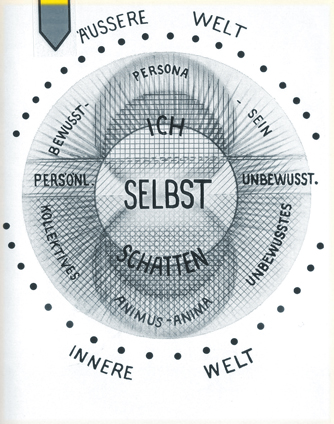
    The total psyche: (Mantra – Jolande Jacobi “The psychology of C.G. Jung”

    The model C.G. Jung does not have this limitation (see Mantra above from the book Jolande Jacobi, The Psychology of C.G. Jung). He distinguishes sharply between Ego and Self and differentiates the unconscious thoughts and feelings of both types of memories: the ones we can remember easily and those who are suppressed for some reason. In addition he introduced the collective unconscious, which belongs to the common humanity, as part of an individual psyche. This article wants to  investigate the “Death of the Ego” from that spiritual point of view and from a psychological perspective (in particular from  C.G. Jung’s individuation). I hope that the context of Jung’s model clarifies it (at least for me). As many, I  lived my life ignoring death, but since the death of my mother this attitude has changed.

    1. The Ego

    Ego is the correct  translation of the German “Ich (I)” used by C.G. Jung and Freud. The term Ego is also common in esoteric  writings often distinguishing the  Ego as a centre of the personality of a higher or true Self not unlike as in C.G. Jung’s psychoanalytic model. The term Ego is widely used In  translations of Buddhist texts for the “I” to overcome. In some languages it attends a negative meaning: to characterize, for example people with a selfish Ego. According to C.G. Jung the Ego can be equated with the conscious mind and includes all thoughts we think at that moment and also our current feelings. In the center of this consciousness we find that “I” or Ego. It guarantees the unity of (thinking, feeling, acting) is focused on physical survival and dealing with everyday demands. All religions (according to the Benedictine monk Anselm Gruen), demand more or less that we must become free from the Ego. This especially applies to our relationship with God. If we do not let go of our Ego we stay materialistic (at best).

    Egocentric-Thinking

    Jesus has spoken this wisdom of all religions in words, which are hard to understand today: “who wants to be my disciple, let him deny himself, take up his cross any day and follow me.” (Lk 9.23). To deny yourself is to say no to be ruled by monopolizing tendencies of the Ego, but distance us from it, to be free from its enslaving power. The Ego wants to impress, wants be presented (inflated) before others. Is the Ego our biggest enemy or our best friend, one might ask?  My usual answer to this question is: who can’t love himself can’t  love others nor God. It is just analogue not digital. The concept of unconditional love may answers this question differently: ” It is never an enemy. It is the best of us, who may feel neglected but in terms of love is always a very good friend .The Ego just wants to be loved – always.”

    But the trivial (or trivialized colloquial term) Ego wants also success, be better than others, wealth, recognition and so on.  In the end the effect is, it will not get love from others in this way. Why? Because it does not recognize that others are needed for this purpose. It calculates coldly cause and effect – feeling not loved (enough) in crises as profound illusion –  due to limited awareness. If we understand our commitment only from the inflated Ego,  my experience is, we may quite benefit in professional life but may get rather hurt in private relations. And: as the two Benedictine (and I think C.G. Jung) told us,  it prevents experiencing the religious dimension of our life.

    For the philosopher Boulad, the death of the Ego is the birth of the Self: we have only a single vocation: to be ourselves. We have only an obligation: especially do – to be to realize ourselves, to develop ourselves. Psychologist Hawkins described the Ego as a negatively oriented structure that denies the existence of God and wants to live independently. The Ego itself is afraid its resolution. And this would indeed happen if God influenced consciousness and we achieved higher levels of consciousness. The death of the Ego is “the final door” Hawkins or “the final moment” so a subjective enlightenment represents (as in Buddhism).

    • Freud: The Ego mediates between the demands of IT, the super-ego, and the social environment and needs a reality-oriented self-image, called Self.
    • C.G.Jung: the Ego represents the differentiation of the individual as a personality evolves. At birth, the Ego separates from the Self. In its development, the individual is always forced to adapt to its social environment; This will be done at the expense of positive attributes which are not valued or tolerated by the outside world. To protect his development, those will be negatively “charged”, fended off and become the Shadow. Furthermore adjusting of  the shared ideal of gender creates another functional complex, Jung calls the soul: the Anima (lat. soul) in men and the animus in women. Outwardly, another functional complex, called persona essential for life in society will be developed.  This is our task in the first half of our lifespan (35-40 years of age) to mature. For many people the end of mental development reached with the realization of the Ego. The life takes place only in socially prescribed patterns, fulfilling our primary need for security (and sexuality according Freud or power according to Adler). Only a few people imagine how to proceed in the midlife or thereafter, usually shaken by a crisis or emergency. The anxious questions of individuation, of Self realization, and meaning of life are major concerns of Jung.
    • Orthodox Islam knows many stages of the “I” (Arabic nafs), and to dissolve it. “The” Ego”is contrary to the spirit of [ruh] the part of the heart of man who was placed under its own control, in developing his soul”. Goal of Islam is to overcome that to a common “Ego” “We”. All people, also husband and wife, were created from a single soul (cf. Holy Quran ‘ at 7: 189). Somewhat different is the Sufi view, the mystical form of Islam. But here  too,  the goalis  the death of the Ego.

    2. The Self

    For me, the Self is again non-uniformly used term within their psychological, sociological, philosophical and theological importance variants. While Freud and Adler considered very narrow psychological driving forces, C.G. Jung understood a central integral concept of the human psyche manifested in the Self. This Self is the wholeness of the human psyche and includes the conscious and unconscious parts of the personality and aims toward the harmonization of the psyche. Only the ego-consciousness with the equipment in use is deliberately sensory perception and thinking, feeling, and intuition. The unconscious part of the people, which splits in the personal unconscious and the collective unconscious, is much more extensive than the ego-consciousness. The Self is the center of the whole personality and therefore the central control instance.  The Ego is the conscious of Self, its eye, with whose help the Self can recognize itself (almost like Adam and Eve after eating the apple). But the Self is the God in us. Individuation is to be who one really is, and a differentiation process that fosters the development of all skills, systems and possibilities of the individual through gradual awareness and realization.
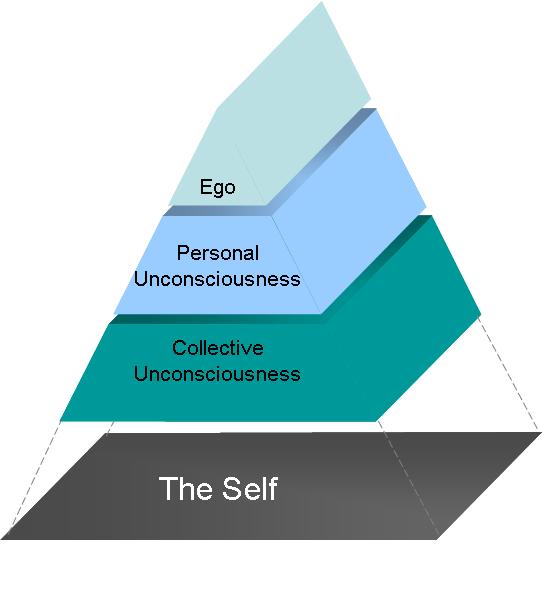
     

    •  C.G.Jung: The goal of life is to know the Self. The Self is a new Center, a better balanced position of our own psyche. Instead of the the trivialities of the persona and the education of the self I today little more worry on the self to all people, all life, the universe and God. The Self is an archetype, embodying the transcendence of all opposites so that each aspect of the personality is expressed correctly and fair. Then it is neither nor but both, male and female, conscious and unconscious, individual and the entirety of creation. The Self represents the mentally transcendent, and equates to a religious experience.
    •  Sociology: the sociological normal type of “community” is the “self”-benevolent introduced (during the normal type of ‘society’ “as “person”).
    •  Hinduism: self as inner, eternal, indestructible shape each being (Atman)
    • Buddhism: that denies “Even” the existence of a stable, unchanging identity in favour of the doctrine of the non-self
    • Orthodox Islam knows no self, the self” is roughly equivalent with the ‘Ego’, to resolve that it applies. “The” Ego “is contrary to the spirit of [ruh] the part of the heart of man who was placed under its own control, in developing his soul”. Goal of Islam is to overcome the “I” to a common “We”. All people, also husband and wife, were created from a single soul (cf. Holy Quran ‘ at 7: 189).
    The Ego, the Self and God
    The Ego, the Self and Jesus – Individuation and Transcendence

    3. The soul

    In today’s (secular) parlance, the totality of all emotions and mental processes in humans is meant and synonymous with the term psyche with soul often. Psyche (Greek ψυχή, breath) was in the classical antiquity a synonym for the word soul.

    The discussion of the 20th century has discussed various concepts of the concept of a “soul” and a wide variety of points of view. Roughly broken down, one can distinguish the following positions:

    3.1. A philosophical and theological definition,

    which means a one’s own substance ‘Soul’, emanating from the thinking and feeling, and other spiritual acts. In Christian philosophy, but often decidedly anti-Platonic views are represented, which consider body and soul in the sense of a holistic anthropology as a unit.

     Psyche in the sense of the new, Hellenic language exists – to the contrary to the Old Testament “Nefesh” – regardless of the body and can not be killed.

    Darkness-and-Light

    • Theological is the soul of the innermost core of a human person. And of course the question: what is the core? Belong to the soul also instincts, sexuality, hunger and thirst? These elemental feelings do not belong to the theological concept of the soul. Theologically, the soul is the spiritual, life-giving principle in man. The soul is the created by God spiritual and immortal beings form of man, which determines its distinctive individuality – according to the theologians today.
    • Unfortunately, there on the terms: soul ‘ and ‘Spirit’ false statements, you must come to the very right are different, between the biblical statements of AT and NT, Greek philosophy, and the Hindu and Buddhist understanding.  To clarify what the he Bible understands of the ‘soul’. It is necessary to learn how God created man. Moses 2.7: “Since God the Lord made man from clay (matter) from the field and blew the breath of life to him”. And so man became a “living soul”(living creature). Man consists of two components: 1. matter 2. breath giving life. Here it is important that the man get a breathed  a ‘soul’ but does not have one. Only the two components resulted in a “living soul.” The soul here stands for the people in his unity and wholeness. When we die not the soul, but the breath of life leaves us. The ‘immortal soul’ does not exist in the Bible.
    • The “psyché” of New Testament in Greek relates to the Hebrew “nephesch”. Especially in the Gospels, socialized people speak Yes Hebrew Aramaic of the soul. Nephesch means originally not soul, but throat, i.e. the perceptible movement of the throat if breathing, the essence of living. For the Bible, so has every breathing “soul”. “My soul” means something like “I” (Lk 1.46). The nephesch, of a person can take off power, “grieved be unto death”. In severe disease it fades. When dying, it (i.e. the breath of life) is returned God. Because God gave the people of his breath and so man became a living being. (Gen 2, 7B). The idea of the immortality of the soul comes from the Greek (Plato and Ptolemy) and was introduced over the Gnostics into Christianity. It has shaped the medieval Christianity (and Judaism!), but is not biblical. The notion of the soul, which independently could exist without the body comes not from the Bible, but has therefore its origin in the Greek philosophy. Unfortunately, many are believe that soul of Christian origin would be the immortals. This is important in this context. Note also what the Bible says about the death of the man. Moses 3.19: “; because you are clay (matter) and should be back to Earth”;
    • We have no immortal part within us, because sin and its consequences (Romans 6: 23) relates to the people as a whole and not only a part of it. To sinful man, could not immortal after the fall, it was blocked the way to the tree of life. Moses 3, 22: “now but that he now does not stretch forth his HAND and break even by the tree of life and you will find and live ETERNALLY.” The immortality of the people would be the UNADULTERATED communion with God and the access to the tree of life been subject to. He was subjected to death by man both had destroyed his relationship with God, and therefore had no access to the tree of life. He could not free himself from this hopeless situation, his mortality. Therefore, everything else what is in the Bible follows the gradual revelation of the redemption of man from sin and death. The rescue was made possible only by the sacrificial death of Christ, who died for us. Only through Christ alone, we can regain the lost immortality. People get this on the last day, when Jesus will come a second time. Then we regain immortality, which we have lost through Adam and Eve. Immortality we find the word, however, three times in the Scriptures.
      • In 1. Timothy 6.16 writes Paul, that God alone possesses immortality! Therefore, man has no immortal soul.
      • In 1. Corinthians 15: 51-55 Paul then finds: the devout man receives immortality only at the second coming of Jesus and the resurrection of the dead. She is so a gift of God to the end of the world and not an integral part of human nature. Not who makes the belief that gives immortal soul, the Christian faith so questionable, but who drops the hope of the resurrection of the dead at the return of  Jesus (1 Corinthians 15: 12-23).
      • The man has no immortality, thinking, feeling, wanting and acting (preacher 9,5.6.10) end at his death. The Bible compares his State with a sleep from which he will wake up at the end of the world (John 11.11; Daniel 12, 13).
    • In today’s religious and philosophical opinions, the soul is independent of the body and therefore immortal “Soul” an immaterial principle, a stable identity. The Greek term of ψυχή (psyche) occurs in the New Testament which is rendered with ‘Soul’ in older translations of the Bible. In the Gospels, where psyche is, to be alive, meant, specifically to the name of the property of a specific individual – human or animal – “Life” within the meaning of the Nefesh is at most. (MT 2.20), such as lack of food (Mt 6, 25) LK 12, 22f. ), or that she will be withdrawn (Luke 12.20) and is lost (MK 8.35-37). The psyche is the seat and starting point of thinking, feeling and volition. Other places, however, show that the New Testament relation of body and soul is complicated. The term psyche is ambiguous unclear, probably in some places, the transitions between its meanings are fluent.
    • In Plato’s philosophy has the soul (ψυχή, psych) as the intangible principle of life individually. Their existence is entirely independent of the body; She existed before his birth and persists after his destruction of intact (pre-and post existence). Plato and Aristotle differentiated between a senseless and a reasonable soul, psyche and nus.
    •  The Apostle Paul, however, rarely used the term psyche in his letters and avoids him for statements about life after death.
    • Augustine represented the Union of the soul against the Platonic doctrine of the soul parts, but made a promotion to the Aristotelian tradition within the soul: “just living” soul (vegetative), function, rational soul (soul function) with spirit (mens) and will and irrational soul function with motor, sensory perception and memory. Inbound Augustine sought proof of the Incorporeality, and the immateriality of the soul.
    • Particularly Thomas Aquinas conceived the ”nus poietikos” as the creating spirit, as the immortal part of our sou. But he is keen to avoid a rugged body-soul, which is why he, Aristotle then, the unity of the human stresses the unity of mind, body and soul dualism.
    • Orthodox Islamic scholars describe four stages of the soul in the Holy Qur’an ‘ (Sufi more), which correspond to human development. The commanding soul [al-nafs al-‘amara]: the State is the starting point. Like a wild horse, the soul tries to gain control of the “rider” and even “to throw off him”. He orders uncontrollable and harmful, and must be “tamed” are. Even the pure and healthy prophets know this state of mind, even if they have mastered it and point out, like for example Josef (a.) in the Holy Quran ‘ “…And I declare myself not even for the innocent. The soul commands evil emphatically yes, unless my Lord has mercy on himself. My Lord is forgiving, merciful.” (12: 52-53)
      • The plaintive soul [al-nafs al-lawwama]. In this stage, the soul has such self-knowledge that she see their own weaknesses and blames himself “I” to overcome the “self” or. This state of mind is so developed, swore at them: “no, I swear by the day of resurrection. No, I swear by the soul which they pronounce censure.” (75: 1-2)
      • The Inspiring soul [al-nafs al-mulhama]. At this level, the soul has the ability between the useful and harmful inspirations to distinguish and uses this ability to their own development: “…”and the soul and what way she shapes and gives her their Vice and their piety!” (91: 7-8). Freedom is the freedom of knowledge and the defense of the harmful through knowledge and the adoption of useful through knowledge for this soul.
      • The satisfied soul [al-nafs al mutma’innah ‘ inna]. The soul achieves the satisfaction of ALLAH in its perfection and is therefore also pleased about the grace of contentment: “O you satisfied soul, to your Lord satisfied and accompanied by his face return. Joins the ranks of my servants, and enter my paradise. (9: 27-29)

     3.2  Moderate positions,

    such as psychological definitions, may reject a materialism but do not grant the notion of a soul in a traditional sense, in particular not  immortality. Soul is the term for the totality of all conscious and unconscious emotional processes and of all spiritual and intellectual functions.

    •   In his treatise “on the soul” (“de Anima”) defines Aristotle the soul as: “The soul is the first Entelechy of the natural organic body” (full on. II 1, 412 b 4-6). Aristotle not is so not materially the soul but as an intangible entity, which is why Aristotle comes a strict body-soul dualism in question. According to Aristotle the soul is that which the body (which only potentially is a living being) really makes the creatures, the Entelechy biologically today can be seen as a goal-oriented regulation of vital functions as the software for the hardware, which is essential for a living organism in terms of forms. Aristotle States in his treatise “on the soul”, that “the soul from the body is separable and or certain parts of it” .The soul passes so with the body, when the animal dies.
    cropped-spiritualjung.jpg

    • C.G. Jung defines soul in the sense “guarding complex” (Anima) in contrast to the notion of the mind as a “Whole” all conscious experience qualities as well as of all unconscious phenomena. The mental energy occupies a central place in Jung’s psychology. Animus soul, spirit (as opposed to the body), memory, courage, exuberance, confidence, despite, resentment, anger, disposition, mood, passion, desiring soul, desire, desire, decision, desire, inclination; Anima, however, translated with air as element or breath of air, wind, breath, soul, life, or secluded soul. C.G. Jung summed up under the term soul both terms. The soul is dynamic. In humans, this is called also personality.
    • Kant maintains the metaphysical side of the soul, that it treated but related issue of freedom within the framework of practical reason. The soul is called the regulatory term within the framework of morality.

     3.3. Materialism or Neurobiology,

    rejects the existence of a soul, claiming that all talk of mental is reducible to the physical and/or neural States. Are the same soul and psyche and the soul is that which is the psychology and / or employed Neurology.

    •  Sigmund Freud, the founder of psychoanalysis, makes two assumptions for its model of the soul: a physical body (brain, central nervous system) as the place or “Scene” and awareness Act. “” We suppose that the soul-life is the function of an apparatus “, here it is clear that the doctor Freud attempts a neurological Foundation.” We have come to the knowledge of the psychic apparatus through the study of the individual development of the human being”.

    • The man has no soul — he has not even a substantial self, says one contemporary philosopher Thomas Metzinger. Phenomenal States, the experience itself, based on neural patterns, dynamically active nerve networks. The character of the subjective experience remains the same, regardless of whether you actually perceives something or just a hallucination. External factors in the environment, and society to decide whether this experience is considered as hallucination, a abnormal psychic disease wisdom or holiness. The totality of all emotions and feelings are not different for humans or animals. The soul is a portion of the spirit thus, if emotionless information processing in a human brain is excluded (what is hardly possible in reality). Animals have feelings too and therefore also a soul.. Thus overlaps the soul with our memory and learning, forgetting, perception, the totality of all inherited traits of an individual language, intelligence, motivation, will, emotion.

     3.4. Linguistic approach

    • German Seele, Psyche
    • English soul, psyche
    • Greek psyche
    • Hebrew nephesch, ruach
    •  Latin Anima
    • Arabic nafs (نفس) can mean “even” relevant mainly in the Sufi
    •  Chinese (traditional): (línghún) like spirit – or cloud completely invisible:
    • Finnish: sielu
    • French: âme
    • Indonesian: roh
    • Icelandic: sál
    • Italian: anima (female)
    •  Japanese: (kokoro)
    • Dutch: aim (female); spil
    •  Romansh: olma (female)
    • Romanian: restless
    • Russian: душа (duschá)
    • Spanish: alma (female)
    • Thai: วิญญาณ
    • Czech duše (female); Člen (male), obyvatel (male)
    • Turkish can; Ruh
    • Hungarian: lélek
    • Venetian: anema (female)

     4. Individuation versus death of the ego

    I like to understand Individuation not as death or dissolution of the ego. I have witnessed two deaths, an easy one and one prolonged suffering in a cold – not even ill-meaning – care machine. Psychological experiences of Ego death are particularly critical and generate fear: this transformation process is most difficult, because it demands to let go one’s own identity, it may interpreted as abandonment,´resolution, disintegration or fragmentation. All spiritual development processes, however, lead us through meditation and complete resolution of our self-esteem. The individuation is a mismatch  between the beginnings of biological aging and the possibility of another psycho-spiritual development. “It represents those critical situation in which one has arrived at the height of the life and suddenly or gradually is confronted with the reality of the end of death”(Jacobi 1971, p. 31). Quite true in my case. The more one approaches the midlife (as late as this may be)  having succeeded consolidation of  the outer life, personal attitude and social situation, the more one firmly believes having discovered the correct course of life, the right ideals and principles of behavior. Therefore it  requires eternal validity and virtue to move on – otherwise one is stuck. A significant fact is,  that the adaptation and functioning in reality happens at the expense of the totality of the (Self) personality. While the first half of life stood under the aspect of identity a re-orientation must occur,  fulfilling new tasks gains importance, in essence all this is the preparation for death. This turning point is not on a specific point in time (as one of my many “midlife crisis”), but  may extend over a long period of time. First ivomes the confrontation with the shadow, than with the complexes of the collective unconscious, manifesting in  the “Anima” and later the “Old Wise Sage”, or the  woman in “Animus” and “Great Mother”.

    The materialistic-oriented Freudian psychoanalysis has been increasingly questioned, while the spiritually inspired analytical psychology of C.G. Jung becomes lately more important again with religious quests and definitely important to me. Freud, who sees most conflicts as not properly processed (sexual) repression problems, is probably the psychologist of the first half of life. His psychology is retrospective. C.G. Jung’s psychology is more perspective. He has recognized that most of the problems of his patients over 35 were essentially religious in nature. He is the psychologist of the middle and the second half of life. Freud almost always looks back. C.G Jung looked forward. 

    5. My conclusion

    The death of the Ego is to me more of an integration with the Self. Individuation” has shown a way to the Self in the second half of my life, to the deepest innermost area of the personality and has opened the spiritual dimension. Hence it is not only a preparation for death but also a  preservation of body and soul for resurrection – the Self.

    Jacobi, Jolande: Towards the individuation, Walter, Olten 1971 and see also my other standard bibliography.

    .
     

  • The Self – God’s window between pantheistic Taoism and Catholic personal god

    The Self – God’s window between pantheistic Taoism and Catholic personal god

    Last Saturday (yesterday). I went on a retreat (religious exercise) at the Benedictine monastery St. Ottilien with twenty others men and women looking after their private center and true selves:

    “Looking for the self” What do we know of the psyche and soul?

    The discussion was lead by two monks – the longtime Prior Claudius and Pater Otto, who is catholic priest, Jungian psychologist and as he always proudly announces, orginally a cheese maker. Segments of discussion were preluded from the two monks with some food for thought: first from a catholic view of the wise and senior Bavarian monk and then from a psychological view from the energetic, versatile,  a curious (spiritual and intellectual) searcher in his soft American-Swiss accent. I have known both for a while, and do not  go along always with their statements or definitions. As often, many of the brief thought nuggets answered my current questions and difficulties but also opened more topics to meditated and think about. Never before have I seen priest sharing so openly their lifelong process of believing, their doubts and trust in following Christ. The (Catholic) belief they presented and have lived is one of a unique joyful religion for this life, of  boundless love, capable of deep mystic but also fully compatible with science and Jungian models.

    Life experience in an elevator pitch

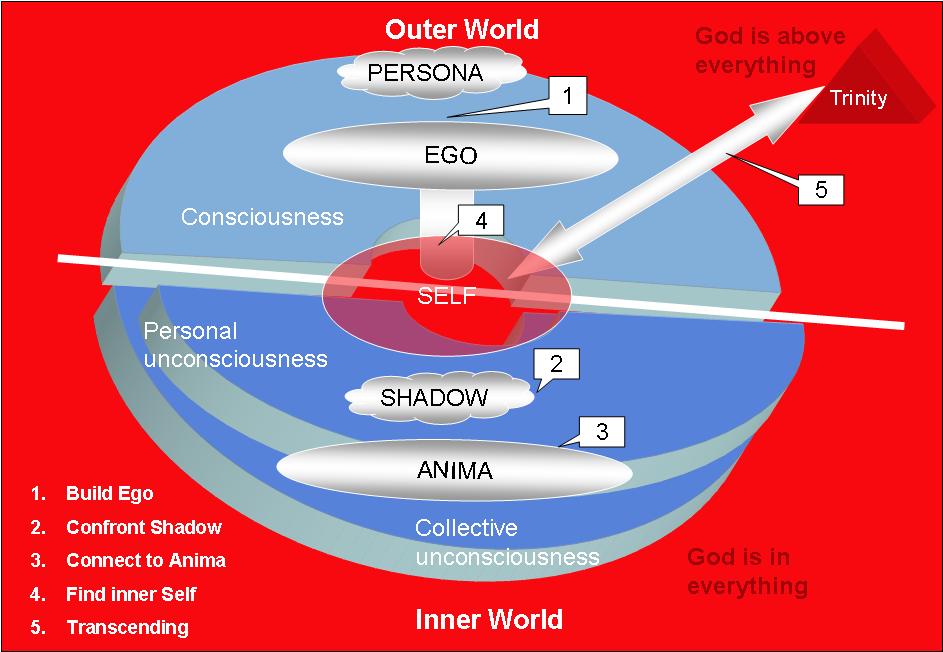
    Do you think, the Prior (second in charge of this monastery) told the audience some conventual belief and bigot phrases? Think again, some of his statements would force both the official church hierarchy together with the noisy know-better-modern- lay(wo)men of today in a tailspin. A concise opening statement of the Prior summed up what one has to do in life and how that helps finding God. I was taken back by its simplicity. His crisp world view came across as a result of his own thinking and experience as a monk without giving  psychoanalysis any deep consideration. But it could be easily matched to individuation of C.G. Jung. I included a crude visualisation below. Furthermore, the Prior eased my biggest problem with a personal god, having had my God experiences in the nature.

    First the Prior showed  us a pantheon (almost Taoist) image of god, how it relates the inner center our Self: God is in everything and above everything or God does not exist. Quite frankly, that resonated well with me, since I felt god the first time, during a backpacking week around Mount Rainer (Wonderland trail). That is – God is in everything  – after I crawled out of the tent and admired nature during the glowing sunrise.
    Secondly Claudius connected men’s outer world, with his inner world and with God –  as an individual to a personal (Du to Du).  It comprised what one has to accomplish in the first half of life ( and where materialism or Freud’s machine stops) and in the second part of life and beyond.  C.G. Jung defined that  without his empiric reach but definitely within his metaphysic view.

    Dealing with the outer world: You have a good meaningful job, live in a nice house, have a good handsome/pretty spouse,your kids turn out well. You sit down and see it is good. I think this relates to the developing an Ego and Persona in the first half of your lifespan. Later Pater Otto brought  the Ego in an Example of a Gel Tub, how the Ego,the center of consciousness is needed as an outer communicator and shell to protect your our Self and our Soul.

    Dealing with inner world: You have to look into yourself think and meditate, rid yourself of the negative. (P. Claudius avoided saying evil or demons). You sit down and see it is good. I think this relates to the Individuation, overcoming the own Shadow and finding the soul (Anima). Later Pater Otto told us about the soul (lat. Anima, gr. psyche ) how this relates our psyche and psychology in general.

    Find your inner center: You have to look beyond this world, to find the loving God in you ( P. Claudius meant looking for our soul). Men is a communicating species, but you have to  have found your inner center to do this successfully..You sit down and see it is good. I think this relates to the Individuation, overcoming the own Shadow and finding the Soul (Anima) and Self. Later Pater Otto told us about the Self, the forces in making cheese by steering in the milk  and the Axis (the big pipe) between the Ego and the Self.

    Communicate with the personal god: You have to connect with the personal God using your Self as window (or membrane). You sit down and see it is good. I think this connects the Individuation process with the  religious or transcendent dimension of an accomplished life. Later P.  Otto told us about special prayers (credo prayers) and Kreuzgänge (walking silent cross walks) how  we can show God we are ready. Now here the monks moved from pantheism to the loving Christian trinity. The communication between the personal God and us as individual is facilitated by the Self, our window to God.The bigger the pipe is between Ego and Self, the easier it is to experience God. Autonomous complexes or an inflated Ego prevents that.

    The Ego, the Self and God
    The Ego, the Self and God – Individuation and Transcendence


    One Questions two views but one answer

    I have never heard it so clear. The theoretical distinctions of the Self in the different teachings is often unclear and undifferentiated. For the psychologist C.G. Jung the ‘Self’ is an empirical concept for the total amount of all psychic phenomena in humans. It expresses the oneness and wholeness of total personality. The general question in the search for the ‘Self’ is: How can the lives of people succeed? The Prior formulated it in a Christian way,  explaining how to follow Christ; aiming to the realization of the true ‘Self’. I believe that, together with psychoanalytical contribution of C.G.Jung,  the Catholic faith sheds light on the basic “W” questions but also helps in this life. Jesus’ approach to the individual and freedom is unique. We are nor slaves of a cruel god, nor impersonal white noise to resolve our Ego better sooner than later in nothingness, nor a bunch of neurons (mis)firing. As the Prior said: “we can look into the starry sky and say Du,Du, Du”. And I would add, fully aware of todays astrophysical knowledge of our universe.

    God around everything and above everything

    The Self

    Psychological schools are just models. We can’t see atoms or quarks nor can we see our soul.  Therefore scientists and psychoanalysis come up with models, to understand and predict based on empirical data. Even if the Self is a non-uniformly used term with their psychological, sociological, philosophical and theological importance variants, the Jungian model is the closest to Religion. While Freud and Adler considered very narrow psychological drives, C.G. Jung understood the central integral concept of the human psyche as the Self. This Self is the wholeness of the human psyche and connecting the conscious and unconscious parts of the personality and aims toward the harmonization of the psyche. Only the ego-consciousness has the equipment to process deliberately sensory perception and thinking, feeling, and intuition. The unconscious part of the us, which splits in the personal unconscious and the collective unconscious, is larger and often more powerful than ego-consciousness. The ego,on the other hand can run amok and super-inflate. The Self is the center of the whole personality and therefore the central window or “membran”as Pater Otto called it to God. As I interpreted the Prior Claudius, it is also the Place where God or Jesus is in us.  The Ego is the conscious of self, his eye, with whose help the self itself can recognize. The self is the God in us. Individuation is to be who one really is, and thinks a differentiation process that has the development of all skills, systems and possibilities of the individual through gradual awareness and realization of the self to the target.

    Find my Self and inner Center again

    Religion is to C.G. Jung the opportunity to discover the soul. For Freud as for Marx, religion is just opium. Jung sees the benefit of religion (especially of catholic flavor) to deal with many similar psychic circumstances. Today’s psychology – influenced by Freud – to me is Godless and today’s Western theology – influenced by the age of enlightenment – to me often lacks soul. Spirituality and religion, together with logic and science, is focus for individual and political healing. The most important insight, which I understood this day: The impending disasters right now around me, are a direct result of my buried shortcomings like a pretty big Ego which served me well in my career (i.e. the disaster in me). Its is directly linked to Jung’s reminder, the inner world is very real. The evil is in us.

    Conclusion

    I considered myself blessed to get so many hints from the monks for my specific search in such a short time:

    • Who I was in the past, I who want to be in the future and how do I make the transition?
    • How I reflect my undesired aspects of my personality and keep my identity here?
    • What are root causes of interpersonal communication defects – last call to grow up?
    • What are cause and effect of those significant problems in my current professional transition?
    • How to use the current crisis as a momentum and I deal with transcendence and the death?
    • What needs successful self-development within my current life situation (e.g., toward individuation, religiosity)?

    Lots of other questions were discussed, which might “wind up” in another blog entry:

    • Does Evil exists – questions about the dualistic view (Good and Evil)?
    • Does the hell exist. Where does the picture of it come from?
    • What is the opposite of belief (trust in God) what means believing?
    • What is the opposite of love (indifference / egoism)?
    • Usefulness of the religious church hierarchies and dogmas?
    • Theory and praxis of dreams including dream phenomenology and hierarchy?
    • Emphasis on Christ’s suffering versus Christ’s resurrection (central altar figure in  St. Ottilien)?
    • Individual injuries because of rigid and/or bigot religious practices (understood first time how severe those could influence children, and the advantage of converts)
    • Descartes and Dualism
    • Common psychological disposition (e.g. narcisissm of super inflated egos)
    • Fatherly  versus motherly images of god (got lost of this one – thinking of Kali hardly a nice one).

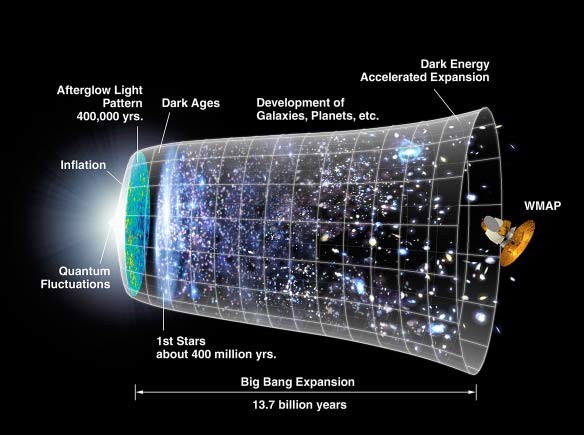
    I was also astonished about the  “Big Bang Didn’t need God to start universe doubt” discussion. To me, believing in God comes down to a personal experience that a benevolent deity is out there. People who are generally more intuitive in the way they think (in the Jungian sense) and make decisions are more likely to believe in God than those who ruminate over their choices. That suggests that basic differences of one’s personality type influences religious belief. Some say we believe in God because our intuitions about how and why things happen lead us to see a divine purpose behind ordinary events that don’t have obvious human causes. As on woman said in the discussion, “I translate believe in trust”. Individual’s belief is influenced by how much we trust natural intuitions. In the end, God can only be known by personal experience not by logic. If one does not experience god, too bad (for her or him). True, big bang and quantum mechanics  describe random fluctuations which can produce matter and energy out of nothingness. But quantum mechanics are just (proved) models too. I don’t doubt that physical laws can “produce” the cosmos. 

    However, minor asymmetries shortly after the beginning are the cause that matter and anti-matter (particle and antiparticle) did not annihilate itself immediately.  As an engineer, quite interested in astrophysics, physical laws do not at all affect my theological leanings. I see in such statements not attacks on the existence of God. Saying the Big Bang — a massive expansion 13.7 billion years ago that blew space up like a gigantic balloon — could have occurred without God is a far cry from saying that God doesn’t exist. With Jung, and many philosophers I don’t think one can use science to either prove or disprove the existence of God. The question, then, is, Why are there laws of physics? And one could easily say, those required a divine creator a spark that led from the laws of physics to these universes, maybe more than one.  Or, as I humbly admit, one can fall back to pantheistic belief, that ‘divine ‘ is in nature in everything  and produced the laws of physics. I would say let’s just leave that to theology, philosophy and C. G. Jung…

    Appendix :

    • The Persona : “The Persona is that which we present to the outside world. It isn’t really our selves, though there is a danger we can identify too much with it and believe it to be so. It is a mask. It’s not a bad thing to have, in fact it’s necessary for getting along with others.
    • The Ego: “The ego is the centre of consciousness. It is identity…But it is not the totality of the psyche.
    • The Shadow: “it is the receptacle for all of that which we have for one reason or another disowned. In truth there’s a great deal that’s very, very unpleasant here, since we have good reason for wanting to disown our darker natures but like the complexes it is not all evil. The avenue for an attempted redemption of the Shadow lies in the belief that everything disowned winds up here.”
    • The Anima/Animus: The Anima is the female soul image of a man, the Animus the male soul image of a woman. That is the most simple definition, and one which many struggle with, since Jung seems quite absolute in defining a person’s soul image as gender opposite. “Soul image” sounds very pretty, but the Anima/Animus is not without a negative pole as well….. If one is on good terms with one’s Anima/Animus he/she can prove a valuable messenger between the unconscious and the conscious, a connecting link – a veritable Hermes.”
    • The Self: “The Self is simply the centre and the totality of the entire psyche. It is the transcendental archetype which contains all the other archetypes and around which they orbit. Where God is within you, if you believe in God.
    • The Collective Unconscious lies under our personal unconscious, and contains the archetypes and mythical symbols that make up our human psyche. Connection to this in a healthy way is necessary for wholeness.
    • Archetypes (per se) templates (blueprints) for complexes. Note Archetypes and Complexes are used very ambiguous ind interchanged  ( I wrote a few articles just about them)
    • Complexes centers of physical energy (The can be autonomic, good or harmful and take over control.
    • Functional Complexes (The big five, Ego, Self,Persona, Anima, Shadow)
    • Synchronicity—when two or more events happen in a meaningful way to a person, and reveals something about our unconsciousness .
    • Individuation is central to all religion and all healing.
    • Quantum fluctuation is the temporary change in the amount of energy in a point in space arising from Werner Heisenberg’s uncertainty principle in quantum physics. That means that conservation of energy can be violated, but only for small times. This allows the creation of particle-antiparticle pairs important in the origin of the structure of the universe according to the model of inflation.
  • Alan Watts Tribute to C.G.Jung

    Alan Watts Tribute to C.G.Jung

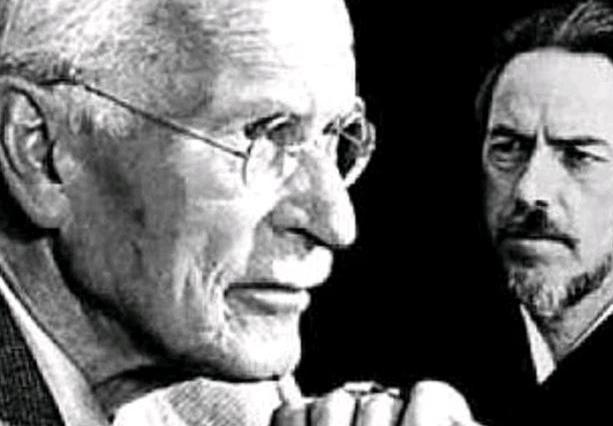
    This record of Alan Watts, done shortly after C.G. Jung’s death really blew  me away.  Alan Watts brings C.G. Jung’s concept of Good and Evil right to the  point. Listen to Alan Watts.  Watts believed that the key to the universe is fundamentally a higher consciousness or mind. The world is an emanation of the one Being or Consciousness. Unity is the nature of the universe while the distinctions between knowing subject and the objects of knowledge are actually expressions of unity.  True Zen, he said, was  liberation of the mind from traditional thought forms to raise human consciousness to identify with the Consciousness which is Reality.  Mystical thinkers of all traditions have discovered this, he said, and modern psychotherapy is coming to agree now. In Psychotherapy East and West (1961) Watts referred to Carl Jung,  bringing science closer to Eastern insight or as he said in this record – Western and Eastern minds arriving at the same point by different means.

    Alan Watts clarified that C.G. Jung viewed good and evil not as absolute, warring opposites, but as interconnected polarities of an underlying unity. Watts explained that to truly understand and integrate evil, one must first confront their own dark side without judgment..

    Alan Watts on Evil

    In his tribute to Carl Jung, Watts highlighted several key concepts regarding Good and Evil:

    The Polarity of Life

    Jung believed that existence requires duality and that opposites define one another. Just as you cannot understand “to be” without “not to be,” you cannot comprehend good without the existence of evil. Rather than an absolute cosmic battle that can never be harmonized, good and evil are two halves of a whole.

    Confronting the Shadow

    Watts stressed the importance of acknowledging your own inherent flaws. As Jung observed, the more we repress our “dark side,” the denser and more destructive it becomes. When we obsessively condemn evil in others, it is often a defense mechanism masking an unconscious awareness of the potential for that same evil within ourselves

    Alan Wilson Watts was born in England,1915 and had early interest in Eastern thought. He sought to apply its principles to modern psychology and argued for a common mystical core underlying all religions, reflecting the influence of Aldous Huxley, a major attempt to reconcile Christianity and Eastern thought. Watts taught comparative philosophy and psychology at the new American Academy of Asian Studies in San Francisco and still is much recognized in California. He wrote and lectured at colleges, universities, medical schools, and mental health institutions in the United States, Canada, Europe, and Asia, including Harvard; Yale; Cambridge; the Universities of Chicago, Michigan, Indiana, and Hawaii; and the C. J. Jung Institute (Zurich).

  • Jianghu seen as Archetypes defined by C.G. Jung (Magician, King, Lover, Warrior and Hero)

    Jianghu seen as Archetypes defined by C.G. Jung (Magician, King, Lover, Warrior and Hero)

    The Jianghu is the fictional alternative universe coexisting with the actual historical in which many Chinese wuxia stories are set. It seems jianghu, a literary tradition going back to the Ming Dynasty,  can easily be explained  as collective unconscious in which the Chinese universal themes which run through all human life. Inwardly, the whole history of the human race, back to the most primitive times, lives on in us and the wuxia stories are myths bringing the archetypes  of the  collective unconscious. A strong element in the structure of jianghu, is the line between good and evil, right and wrong, is crystal clear; it is absolute, an in this movie you can see the Archetypes of the shadow, animus and anima of the personal unconsciousness. Typically, the heroes in Chinese wuxia fiction do not serve a lord, wield military power or belong to the aristocratic class. The Chinese wuxia stories can be contrasted with martial codes from other countries, such as the Japanese samurai’s bushido tradition, the chivalry of medieval European knights and America’s Western but moral and laws of physics my not apply in this grene.

    One example  is the cult movie Ashes of Time,  Wong Kar-Wai’s wuxiapian is the most uncompromisingly complex film of thinking man’s martial arts melodrama with very little action outlined like a greek tragedy. It features some of the  biggest stars in Hong kong Cinema and Christopher Doyle’s usual magnificent visuals, and William Chang’s predictably sublime art direction,  derived from the two characters  from Lois Chas’s novel The Eagelshooting Heros: Xidu (Emperor of the West) and Dongxie (Emperor of the East).  One is the anti-thesis of the other, they are implemented as the two negative Archetypes Ouyang (The Magicician) and Huang (The Lover).

    Wong’s goal is focusing on the psychological and emotional reasons that brought the characters to the behavior we see in the novel. The most striking example is the principal character Ouyang Feng (Leslie Cheung). In the film he’s still a man who trusts people, and is not completely selfish. His troubled relationship with a woman (the famous Maggie Cheung) shapes his character, and leads to his change to an evil and treacherous man.  The movie took a de-humanized world (where heroism was often more important than sentiments) and injected humanity into it. We’re presented with allegedly invincible characters who turn out to  crumble under the pressure and pain of rejection and memory.

    It’s pointless trying to write about Ashes of Time’s plot, as doing so would be entirely too superficial, and leave out important facets of the story. With a careful eye and a few repeated viewings the film’s story is not so hard to grasp. What’s important is the mood Wong Kar-Wai creates, and the symbols and Archetypes we feel in each and every character. For those who seek metaphors,  the movie presents the eye as well as the illusions of vision. One character is nearly blind. Another, a swordsman, goes blind in the middle of a horrendous battle. Two characters, Yin and Yang—one presented as a man, the other as his sister—are identical. And there is a brief appearance by a legendary sword fighter who hones his skills against his own reflection. Plenty of visual symbolism , from the Yin/Yang character to the motifs of water and the desert landscape. Two women hopelessly in love with the man who pines away for the woman who will never be his (and whom we do not learn about until the very end).

    Ouyang Feng (Leslie Cheung Kwok-Wing) the fallen swordsman commissioning assassins later known as the Poison of the West.The impotent Lover becoming the (cruel) Magician
    Hong Qigong  (Jacky Cheung Hok-Yau) the young idealistic swordsman, going north with his wife The Warrior in its fullness – The Hero
    Murong Yin (Brigitte Lin Ching-Hsia) daughter of Murong clan; Murong Yang the Brother one schyzophrene personBrother want to have Huang killed because of rejection of Murong’s love she his brother Animus and shadow under control of ego
    The Blind Swordsman (Tony Leung Chiu-Wai)
     The (weak) wandering King – Ödipus at Colonos
    Ouyang Feng’s love (Maggie Cheung Man-Yuk) she married his brother, because he asked her too late and waits her whole live for him The Mother Earth – center of the pentagon
    Huang Yoshi (Tony Leung Ka-Fai) adventurous swordsman and longtime friend of Ouyang Feng Huang is a burnt-out womanizer later he will be known as the Evil of the East. The (addicted) Lover
    The girl with the mule (Charlie Young Choi-Nei) The virgin (Maria?)
    Hong Qigong’s wife (Li Bai) The loyal wife
    Blind Swordsman’s wife (Carina Lau) The queen

    Leslie Cheung Kwok-Wing, Maggie Cheung Man-Yuk, Tony Leung Chiu-Wai, Tony Leung Ka-Fai, Brigitte Lin Ching-Hsia, Carina Lau Ka-Ling, Jacky Cheung Hok-Yau, Charlie Young Choi-Nei, Lau Shun

    Occurring over the five months of the Chinese calendar, Ashes of Time spends most of its length with two characters in particular, Ouyang Feng (Leslie Cheung) and Huang Yaoshi (Tony Leung Ka-fai). Old friends who meet once a year to catch up and drink a magic wine, the two serve as the nexus for the film’s overlapping narratives, mired in their own emotional crises.  Ouyang Feng’s  inn is the center of the action, as the stories are told by and about the visitors in the great Chaucerian tradition. Ouyang is morally bankrupt, yet manages to come up with some of the most poetic observations of human nature in his ruthless monologues.The story is not circular, despite the essentially equivalent monologue delivered by the protagonist at both ends of the film.  Ashes of time is a study of personalities and as such follows the convoluted logic of human relationships.  For the first half of the film characters come and go in seemingly pointless chaos. Yet, the travelers at the inn are connected, and their fates intertwined by the simplest passions. In a bizarre twist, one woman is the reason for Feng’s self-imposed hermitage, for he rejected her to marry his older brother even though they had both been in love and connects all main characters.

    Raised by his elder brother, Ouyang’s ambition is to become a famous swordsman  and faced with a choice 10 years earlier between the said woman he loves and martial adventures, he chooses the latter. Ouyang becomes cynical and materialistic,  runs a small inn at the edge of the desert,  commissioning assassins by  hiring young but poor swordsmen. Every year during the season in which peach trees blossom a close friend visits him, Huang Yaoshi. This year Huang brought something for his friend Ouyang, a magical wine that would make one forget the past.

    Huang Yaoshi, has, like Ouyang, also  a sad love story to tell–he once had an unconsummated affair with the wife of his best friend – which turns out the blind swordsman – at Peach Blossom Land. Over the next year, in the different seasons, many travellers pass by the inn each bringing their stories, many of them being about lost love and why would one wish to forget the past.   Ouyang  becomes an assassin contract from the schizophrenic Murong Yang/Murong Yin (Sister and Brother). He meets the down-and-out swordsman with failing eyesight (who turns out to be Huang’s friend who seduced his wife); an impoverished young girl with an mule who wants to avenge her brother’s death; and Hong Qi, another aspiring poor swordsman, and his loyal wife.

    Murong Yin/Yang (Brigitte Lin) at first it appears as if Yin and Yang are brother and sister, the brother wanting to kill the womanizer Huang for rejecting his sister, and the sister wanting to kill her brother for interfering with her relationship. As it turns out, however, Yin-Yang are one and the same physical person, who has developed a severe split personality disorder because of Huang’s rejection of Murong’s love.

    The pentagon.

    The Blind Swordsman (Tony Leung Chiu Wai) also suffers from rejected love, his wife having been seduced by said Huang on their wedding night. He wishes to complete one last job to raise the money to return home to see the “peach blossom,” later revealed to be the name of his wife, before his creeping blindness ensures he can never see her again.

    Carina Lau, playing the Blind Swordsman’s wife is shown wordlessly caressing her horse with such tenderness that the stallion becomes as much a symbol of virility and sexuality, The Blind Swordsman’s last job has him saving a village from a swarm of bandits, and the ensuing bloodbath is more visceral than anything to crop up in the last decade’s boom of arty martial arts films. Yet even that sequence is undercut by Wong’s directorial flourishes, the image bleeding into white when the swordsman looks up and has his already weakened vision bleached out by the sun. The entire scene builds less a sense of heroism than a mounting futility.

    Achetypes

    The other two strangers, Hung Chi (Jacky Cheung) and the Young Girl (Charlie Yeung), arrive separately only to influence each other’s lives profoundly. She wants to hire Feng to arrange the murder of some men, who have killed her brother. She has nothing to offer except eggs and her mule and Feng refuses to help, but suggests that her body is more marketable than her pitiful eggs. She refuses to yield and waits for someone to agree to help her. The young Hung is a master swordsman, but also a bit of an idealist. He works for Feng for a while but eventually takes pity on the girl and goes on a murderous rampage, slaughtering all those who had participated in the killing of her brother. In the brawl he loses his finger and thus the ability to wield a sword. He is undeterred, however, and when Feng refuses to send for a doctor hinting to the Girl again that she might have to prostitute herself for the sake of Hung, he forbids her to do so. He picks up where the Blind Swordsman fails. Where he has spent his entire life counting the money of each job to collect wealth, Hong redeems himself when he helped the poor village girl who paied  him a single chicken egg. The girl, the virgin with the donky leaves without trace. Visually, she is almost like a distorted Eastern Version of the Virgin Mary. She is also the only one not interconnected in the pentagon.  After he recovered Hung, heads with his loyal wife north, leaving Feng in envy of fulfilled love.

    In the books to which Ashes of Time serves as a prequel, the Ouyang and Huang are hard-hearted and violent, Huang someone who still believes in love but can never have it himself, Ouyang a man who rejects love entirely. Ouyang has fled from the woman who loves him, while Huang never follows through with the love he inspires . Maggie Cheung arrives near the end of the film to deliver a devastating monologue to Huang. Ouyang’s ex-lover, Cheung’s character ultimately married the man’s brother because she tired of waiting for Feng to return to her. She clarifies the reasons for Huang and Ouyang’s annual meeting and the woman who links them in pain, and her speech, framed in a simple, wide-angle close-up without trickery that lets all focus rest on her words, speaks directly and piercingly to the pain of unrequited love. When the story comes full circle and the two main characters discover the uselessness  deception of themselves, that the attempt to forget only further ensconces painful remembrances in memory, Cheung’s pain is fully visited upon Ouyang and Huang. Maggie Cheung’s five-minute  are the undisputed centerpiece of the film both in terms of story (she is the one link between most of the characters) and acting. Wai’s camera stares intently at her while she gazes beyond time and relives the past full of regret.

    Maggie is an accomplished actress, but this performance was beyond description.

    Her subtle agony is expressed obliquely and the one has to look into her eyes to touch the intensity of her feeling. Ouyang’s ex-lover, Cheung’s character gives Huang  the wine to forget and  dies soon afterwards. When she dies, the expression is beyond visual. Her body seems to become colder and shrinks, the eyes close, the flower wilds. She dies as there is no reason to live.

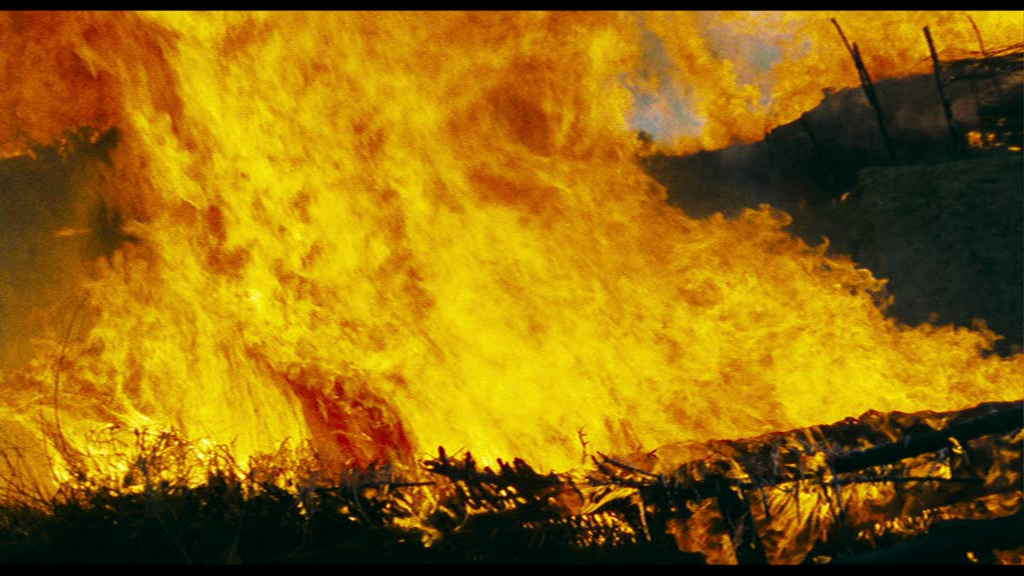
    The mesmerizing tale of lost chances, fear of abandoning oneself to another, and pain of betrayal stops by the individuation when Oyuand returns to White Camel Mountain after finding out that his beloved has died. Where in the youth he saw mountains only as obstacles that concealed a wonderful world behind them, where he would climb them, leaving his love to seek this world, where once there he would find that there’s nothing worth seeing; he now no longer wondered what hid behind the mountains. He burns  his inn and moves back later be known of the Poison of the West.

    The cinematography is out of this world. There is so much imagery that repeated viewing is a must. Complicated tracking shots, abrupt editing, impressionistic pastel-like blurred images, and static scenes, all mix together in a veritable whirlpool of technique and ideas. Christopher Doyle is perhaps one of the best, most imaginative, and daring cinematographers out there. Seeing is believing.

    http://www.youtube.com/watch?v=5VZfieiscO4

  • Christentum und Wissenschaft entlang der Seidenstrasse. Christentum in Asien.

    Christentum und Wissenschaft entlang der Seidenstrasse. Christentum in Asien.

    Viele hundert Straßen, Wege und Pfade summieren sich zu einem Geflecht, das heute als Seidenstrasse bekannt ist, und besonders intensiv von vielen Kaufleuten und Händlern genutzt wurde. Eroberer,  Gewürzhändler, Seidenverkäufer, buddhistische Mönche und Nestorianer bereisten diese schon vor mehr als tausenden von Jahren. Sogar der erste Vorstoss des Christentums – auf der Flucht – nach China, erfolgte über diese kulturelle Verbindung zwischen West und Ost.

    Verstossung des Nestorianismus

    Christological_heresies_in_Jesus_Human_Divine

    Der Nestorianismus der Antiochenischen Schule nahm die gegensätzliche Position zum Monophysitismus Alexandriens (Ägypten) ein. Die Antiocher gingen den “Zweinaturenweg”, die Alexandriner dagegen lehrten, dass die menschliche und die Logosnatur immer eins seien. Letztlich war das der Unterschied zwischen Stoa (Dyophysiten) und Platonikern (Monophysititen). Durch bewusst verfälschende Darstellung des Kyrill von Alexandria,  ein Widersacher von Nestorius (und der Antiochenischen Schule im heutigen Syrien) und unglückliche Formulierungen der nach Nestorius benannte Christologischen Lehre wurde  diese 431 auf dem Konzil von Ephesos verurteilt das ein voller „Erfolg“ der Alexandrischen Schule war. Angriffspunkt war, dass Nestorius den Gebrauch des Attributs Theotokos (Gottesgebärerin), in Bezug auf Maria, die Mutter Jesu, abgelehnt hat. Im der Christologie hat der  Nestorianismus mit seiner Lehre, dass es in Jesus Christus eine göttliche und eine menschliche Person gegeben habe, recht ähnliche Positionen vertreten, wie sie schließlich im Konzil von Chalzedon 451  mit zwei Naturen genauer definiert wurde. Diese Christologischen Lehre von Chalzedon war ein Kompromiss. niedergelegt von Papst Leo auf Basis der hochentwickelten griechischen Lehre. Letztlich siegte die neuplatonische, dialektische Erkenntnistheorie mit einer wunderbaren, effizienten und exakten Definition (siehe Anhang), welche bis heute die  Grundlage aller christlichen Kirchen und insbesondere des römisch-katholischen Glaubens ist.

    Die verlorene halbe Christen-Welt

    Trotz Zustimmung bekämpfte der Alexandrischen Monophysitismus (heute Kopten) weiterhin erbittert bis zur islamischen Erobererung diese Ansicht, was maßgeblich zum Verlust des Oströmischen Reiches beitrug. Danach unterwarf sich der Monophysitismus sich dem Dhimmi Rechtstatus und kollaborierte im Kampf gegen Byzanz und Rom. Als Alexandria 642 durch den Kalifen Umar ibn al-Chattab für den Islam erobert wurde, soll er der Überlieferung zufolge befohlen habe, noch vorhandene Bücher zu vernichten, die dem Koran widersprachen. Das Christentum verlagerte sich nach Europa.

     Nestorianer als kulturelle Agenten in Syrien und Ägypten

    Auch in den Gebieten unter islamischer Herrschaft in Syrien und Ägypten pflegten die Nestorianer die Wissenschaften. Philosophisch stützte sich der Nestorianismus auf Aristoteles. In Verbindung mit den Schriften des Aristoteles wurde auch das naturwissenschaftliche Erbe der Antike bewahrt. Die Pflege der Naturwissenschaften führte dazu, dass die Nestorianer als Ärzte, Bankiers und Juweliere in der Gesellschaft eine einflussreiche Stellung einnahmen. Griechische Schriften übertrugen berühmte nestorianische Übersetzer für jene ins Syrische (Syriac), für diese ins Arabische. Vieles was heute als islamische Kultur definiert wird, ist in Wahrheit von Nestorianern übersetztes  griechisches, syrisches und ägyptisches Erbe

    Nestorianer im Sassanidenreich (Persien)

    Nach dem Konzil von Ephesos 431 wanderten viele Nestorianer ins Sassanidenreich (Persien) aus. Die nestorianische Kirche wurde von den persischen Könige geduldet, da die persischen Christen Byzanz und Rom, dem primären Widersacher von Persien,  feindlich gegenüber standen. Das nestorianische Zentrum war Edessa, das heutige Urfa (bzw. Şanlıurfa) im Südosten der Türkei; Trotz mancher Behinderung konnte über die Seidenstraße, deren Arm durch Edessa führte, sich eine Missionstätigkeit entfalten. Nach der  Entscheidungsschlacht bei Hamadan 640 (Ekbetana) gegen das Sassanidenreich fallen große Teile des heutigen Iran in die Hand der muslimischen Eroberer. Dadurch kamen auch die Nestorianer, die  auch von den Sassaniden nur geduldet waren, unter islamischen Einfluss und es beginnen ausgedehnte Strafaktionen, Plünderungen, Versklavungen und Zwangsislamisierung, die erst um das Jahr 900 abgeschlossen sind.

    Ausbreitung der  Nestorianer  entlang der Seidenstrasse

    Nestorianische Gemeinden hingegen entstanden danach unter den Turkvölkern in Mittelasien und in Sinkiang (chin. Volksrepublik). Ab dem 8. Jahrhundert besteht wegen der islamische Eroberung von Westasien kaum mehr Kontakt der Christen mit dem Westen. Michael von Brück schreibt zur Situation der Christen der T’ang-Zeit Zeit (Mitte 7. Jhd. -Mitte 9. Jhd.):
    “Begegnungen zwischen Christentum und Buddhismus in China hat es durch die Einwanderung von nestorianischen Christen aus dem ostsyrischen Raum bereits im 6. Jahrhundert gegeben. Im Volk wurde das Christentum anfangs als eine buddhistische Sekte angesehen, und zwar einerseits wegen der Akkulturation des
    nestorianischen Christentums an den Buddhismus, andererseits auch aufgrund ähnlicher Charakterzüge in beiden Religionen (Abkehr von Diesseits um des Heils ineinem “Jenseits” willen, asketische Moralität, Mönchstum).
    Spuren dieser Missionstätigkeit wurden auch in auf Sumatra und in Südindien entdeckt. Aufgrund ihrer erfolgreichen Missionstätigkeit entlang der Seidenstrasse konnten die Nestorianer zwischen dem 7. und 14. Jahrhundert weitere Gemeinschaften in Zentralasien, in der Mongolei und in China gründen. Im riesigen Mongolenreich des 12./13. Jahrhunderts oblag die Verwaltung weitgehend nestorianischen Christen. Viele der mongolischen Prinzessinnen waren Nestorianerinnen. Im 13. Jh. blühte die Mission der Nestorianer neu auf, und zwar besonders unter den Mongolen, die im Laufe des 13. Jh. China eroberten. Die Nestorianer erfreuten sich unter Mongolenherrschaft zunächst religiöser Duldung. Ihre Geistlichen waren sogar von Steuern befreit. Teilweise wurden ganze Mongolenstämme christlich.

    Nestorianer und der Mongolensturm

    Mongolen-Khan Hulagu war Dschingis Kahn’s Enkel, Sohn der nestorianischen Christin Sorkhatani Beki und verheiratet mit einer christlichen Prinzessin. Er war dem Christentum sehr zugeneigt und es gibt Quellen (Armenischer Historiker Vardan Arewelc’i), dass er Christ war und vor seinem Tod zum Buddhistentum übertrat. Ursprünglich waren Mongolen Anhänger eines Schamanismus, den es heute dort noch gibt. Hulagu eroberte 1256 im Auftrag seines Bruders endgültig Persien und beendete die Herrschaft der Ismailiten (Assassinen) im Elburs, eroberte Bagdad und beendete damit das sunnitische Abbasiden-Kalifat. Hulagu’ s-Dynastie begründete in Iran und Irak das Reich der Ilchane, das bis 1353 Bestand hatte und nach mehrereen hundert Jahren der politischen Zerrissenheit eine iranische Renaissance bereitete . Marco Polo hielt sich drei Jahre in seinem Reich auf, bevor er nach die Seidenstrasse nach China zum Grossen Khan weiterzog.

    Bei der Eroberung der Festung Alamut gibt es gute Gründe anzunehmen, dass der gefangengehaltene herausragende (shiitische) Mathematiker und Astronom Al-Tusi den Plan für die Festung an Hulagu verraten hat. Al-Tusi nahm später am Feldzug Hulagus gegen die Abbasiden und 1258 n.Chr. an der Eroberung von Bagdad durch die Mongolen teil. Er hat auch eine kurzen Bericht über die Eroberung Bagdads geschrieben.   Al-Tusi wurde von Hulagu , weil er wissenschaftlich interessiert war, mit grssem Respekt behandelte und Al-Tusi wurde ein wichtiger politischer Ratgeber des Khans und sein Hofastronom. Er erhielt später von ihm den Auftrag, die Sternwarte von Maragha in der persischen Provinz Aserbaidschan zu errichten. Dort waren neben islamischen Forschern auch christliche armenische und georgische sowie chinesische Mathematiker und Astronomen beteiligt. Sie bestimmten z.B. die jährliche Präzession der Äquinoktien (Tag-Nachtgleichen) mit fast heutiger Genauigkeit. Al-Tusi ist außerdem der Autor von “Zidsch-Ilchani” (Tafel der Ilchane), welche die Position der Sterne und Planeten mittels verbesserten aber immer noch ptlomäischen Models beschreibt. Für sein Modell der Planetenbewegungen hatte al-Tusi die Tusi-Paare eingeführt, eine Methode eine oszillierende Linearbewegung durch die Überlagerung zweier Kreisbewegungen auszudrücken. Kopernikus verwandte ein ganz ähnliches mathematisches für die Behandlung der Trepidation. Einer von al-Tusi’s wichtigste mathematische Beiträge war die Schaffung der Trigonometrie als mathematische Disziplin. Vieles was heute als islamische Wissenschaft aus diesem Zeitabschnitt definiert wird, ist persischen bzw. asiatischen Ursprungs.

    Nochmaliger Aufstieg der Nestorianer

    Christen wurden von Hulagu weitgehend verschont und die Schiiten sollen die Mongolen bei der Zerschlagung des sunnitischen Kalifats unterstützt haben. Die Nestorianer feierten die Mongolen nach deren Siegen über die Araber in Mesopotamien und Syrien im Jahr 1259 als ihre Befreier und genossen bei den Mongolen hohe Achtung.  Viele Frauen der Mongolenherrscher waren Nestorianer mit Einfluss auf politische Entscheidungen. Jahr 1330 soll es mehr als 30.000 nestorianische Christen in China gegeben haben.

    Untergang der Nestorianer

    Ab dem 13. Jahrhundert, nach der Islamisierung der Mongolen und östlichen Turkvölker, folgte aber die nahezu vollständige Vernichtung. Aus politischen Gründen nahm der mongolische Herrscher Persiens den Islam an.   So war das 14. Jh. für die Nestorianer eine Zeitspanne innerer Auszehrung auch durch Übertritt der Eliten zum Islam im Rahmen des Dhimmi Systems. In diesem Zustand brach über die Nestorianer und andere morgenländische Christen ein maßloses Unglück herein: Timur Lenk (1336-1405) erklärte sich unter Verfugung auf den Koran zum Erneuerer des mongolischen Weltreiches und fügte den Nestorianern größten Schaden zu. Doch nicht nur in ihrem Stammgebiet, dem Zweistromland, erlitt die nestoriranische Kirche schwerste Einbußen, auch die Gemeinden in Zentral- und Ostasien erloschen. Die Stellung des Christentums in Asien ging unter wie die im Mittleren Osten, seiner Geburtsstätte des Christentums fünf hundert Jahre früher.

    silkroad

    Die spätere Entwicklung in China ist römisch-katholischen und stark mit dem Namen Matteo Ricci verknüpft, der im Jahr 1582 nach China. Als er 1610 als Li Mat-tou, seinem an das Chinesische angepassten Namen stirbt, schrieb der chinesische Kaiser Shen-tsung in einem Nachruf auf Matteo Ricci: “Er ist zu uns gekommen, uns Barmherzigkeit und Liebe zu lehren, und wir haben ihn als Gast aufgenommen. Er ist wahrhaftig einer von uns geworden, und in ihm haben wir dem Westen die Hand gereicht.
    1601 kam Ricci schließlich nach Beijing und dort auch in die “Verbotene Stadt”; er erhielt die Erlaubnis, sich in der Hauptstadt niederzulassen. Bald konnten ihm weitere Jesuiten aus Europa folgen. Wegen seiner mathematischen, geographischen und astronomischen Fähigkeiten wurde dann auch Kaiser Wanli auf ihn aufmerksam. Ricci war Vermittler zwischen zwei gegensätzlichen Kulturen. Die Chinesen überzeugte er durch christliche Verkündigung, interkulturelles Verständnis und mit hervorragenden Kenntnisse der Wissenschaft. Die Jesuiten waren mit ihrer Methode einer Bekehrung durch Wissenschaft zunächst ungeheuer erfolgreich in China. Von Ferdinand Verbiest wurde die Pekinger Sternwarte neu eingerichtet. Die Astronomie hatte in China eine große Tradition. Die Kenntnis des “rechten Augenblicks” gab einem genauen Kalender eine fundamentale Bedeutung. Hier konnten die Jesuiten Matteo Ricci, Johannes Schreck, Johann Adam Schall, Ferdinand Verbiest ansetzen. Schreck brachte das eben erst von Galilei erfundene Teleskop nach China mit und verfasste 1626 verfasste ein chinesisches Traktat darüber. Johannes Kepler schickte ihm 1627 seine damals genauesten astronomische Tabellen, die in China sofort eifrig studiert wurden. Schrecks Nachfolger wurde Adam Schall, seinerseits gefolgt von Ferdinand Verbiest, der 1674 die Pekinger Sternwarte mit den „neuesten“ europäischen Instrumenten (nach Tycho de Brahe) ausstattet.

    Die römisch-katholische Kirche vergibt eine zweite Chance für das Christentum.

    Als Papst Clemens XI. ein Verbot der chinesischen Bräuche aussprach, verbot Kaiser Yongzheng 1724 das Christentum in China, das kirchliche Leben wurde in den Untergrund abgedrängt. Nochmals wurde eine einmalige Chance war vertan. Das Reich der Mitte blieb auf sich bezogen und an den Anliegen der europäischen Kultur und Christentum nicht interessiert.

    Noch ein Hinweis. Diese Essays erheben nicht den Anspruch auf wissenschaftliche Genauigkeit. In diesem Bereich der Wissschafts- und Religionsgeschichte geht aber in zunehmenden Masse Objektivität verloren. Speziell die neuere deutsche Literatur und im Netz oft mit viel Geld erzeugte obskure Propaganda, aber auch wikipedia  sollte mit  Englischer, Französischer und “antiquarischer  Literatur” kritisch hinterfragt werden. “The sh..t piles up so fast in” de-constructed history, “you need wings to stay above it”.

    Anhang:

    Konzil von Chalzedon 451

    We, then, following the holy Fathers, all with one consent, teach people to confess one and the same Son, our Lord Jesus Christ, the same perfect in Godhead and also perfect in manhood;
        truly God and truly man, of a reasonable [rational] soul and body;
        consubstantial [co-essential] with the Father according to the Godhead, and consubstantial with us according to the Manhood;
        in all things like unto us, without sin;
        begotten before all ages of the Father according to the Godhead, and in these latter days, for us and for our salvation, born of the Virgin Mary, the Mother of God, according to the Manhood;
        one and the same Christ, Son, Lord, only begotten, to be acknowledged in two natures, inconfusedly, unchangeably, indivisibly, inseparably;
        the distinction of natures being by no means taken away by the union, but rather the property of each nature being preserved, and concurring in one Person and one Subsistence, not parted or divided into two persons, but one and the same Son, and only begotten God, (the Word, the Lord Jesus Christ;
        as the prophets from the beginning [have declared] concerning Him, and the Lord Jesus Christ Himself has taught us, and the Creed of the holy Fathers has handed down to us.