Tag: Shadow

  • Can Hitler go to heaven? The evil presented in Mao, Stalin, Hitler, Pol Pot.

    Can Hitler go to heaven? The evil presented in Mao, Stalin, Hitler, Pol Pot.

    The problem of evil has been a subject of interest in religion and philosophy.  For our purpose here we want to approach the question in a inductive and  psychoanalytic way looking at historic persons: Mao, Stalin, Hitler, Pol Pot: what is evil and what is the cause of it.  If we consider them evil – and I do – what criteriums have those in common; was their evilness a process (of their power) or their power a result of their evilness?  The article uses a clustering methodology, statistics and C.G. Jung’s Archetypes particularly the concept of the Shadow. Jung describes the shadow as those inferior aspects of the psyche that we (or culture we socialize into) dislike and suppress. The shadow sometimes contains unhealthy (evil) energies that the powers of civilization have apparently quelled but is not a synonym for or necessarily evil. For the most part, the shadow lies beyond the threshold of awareness, saying “…it is quite within the possibility for a man to recognize the relative evil of his nature, but it is a rare and shattering experience for him to gaze into the face of absolute evil.”

    What is evil – can you measure it?

    But first, how do we define evil? Webster defines it as morally reprehensible. Some say, there are two kinds of evil:  (moral) of men and of  impersonal (natural) or wicked powers (demons). Her we look only on moral evil (or sin), such as murder, rape, abuse, terrorism, or genocide. Something may be said to be evil when it takes human life, or if it causes humans to suffer in an inhumane way. Massive killings innocent and powerless is evil. Enslaving people against their will would be evil. One person killing another innocent person is evil.  Mao, Stalin, Hitler, Pol Pot did all of this.
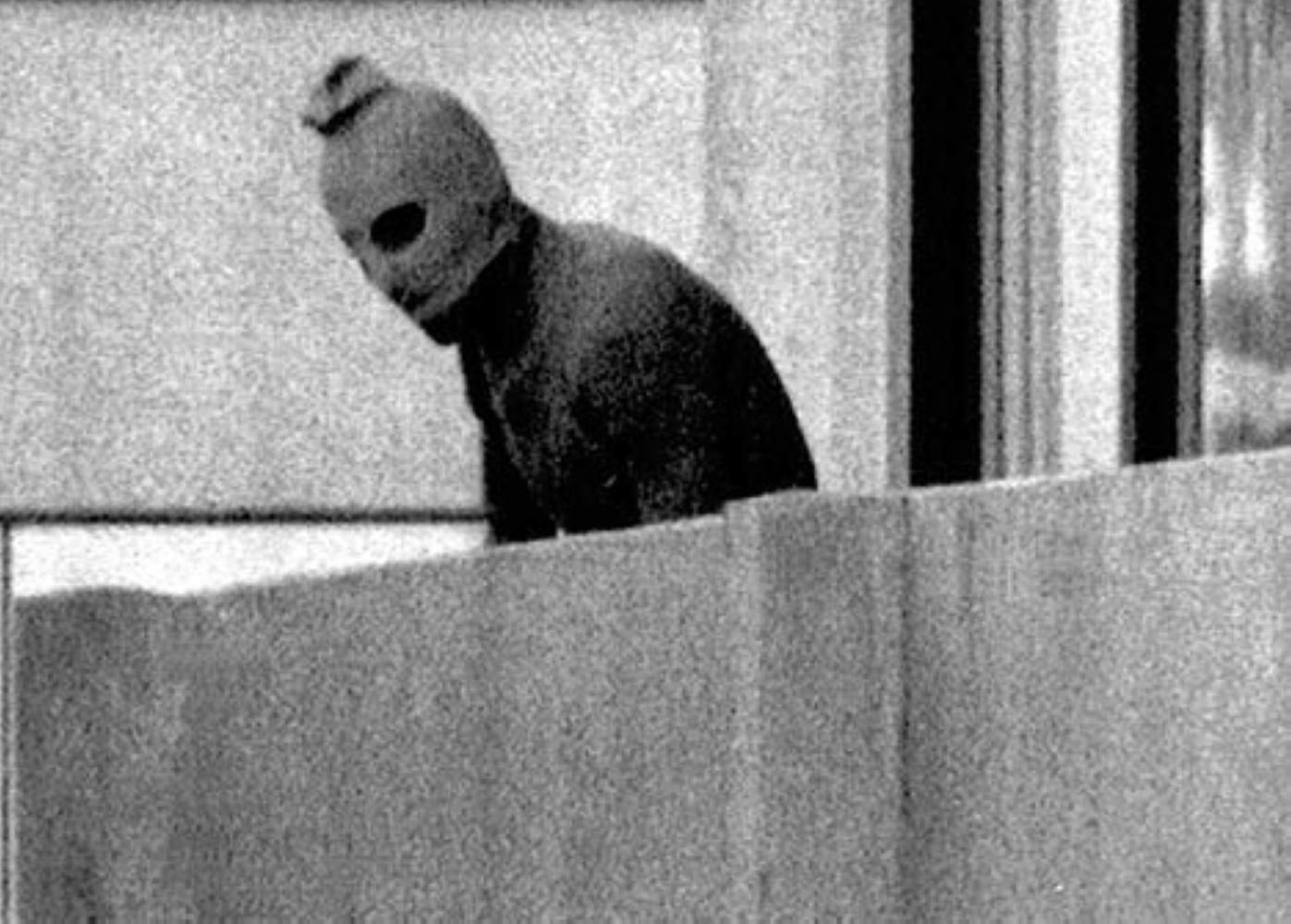
    Hostage taking during the Olympic Games
    Munich 1972 The Face of Terror Hostage taking during the Olympic Games

    Evil is merely an extension of the baseness of our nature. It is our shadow. Without us, evil does not exist. Evil is simply the absence of good (or god). Just as darkness is the absence of light and cold the absence of heat. Evil can only be defined in (our) relation to the good or (god). Good and Evil are the overarching opposites of all experience. They form a synergy, paired opposites. Each exists only in relationship to the other. Without their relationship, both would cease to exist.

    For simplicity I will omit simple political left/right categories and value statements of means and rationalization – simply we assume the more were killed the more evil was and some qualifiers.  If evil is measurable, than it has substance. It is a present force like gravity, magnetism, etc… these things were unknown to us before we understood them and could measure them. We’ve taken evil for granted. The time will come when even Non-Christians  “discover” that it is as real as anything else in this “physical” world. Is implication can be indirectly seen like Dark Matter.

    Correlate evil and power?

    There is definitely an affinity of evil and power. If one follows C.G. Jung, power is even is a (reciprocal) function of love.

    “Where love rules, there is no will to power; and where power predominates, there love is lacking. The one is the shadow of the other.” —The Psychology of the Unconscious, 1943

    The psychoanalytic C. G Jung analyzed Hitler and Stalin for the American Government during the second war. To him a complex  – and the Shadow is a functional complex –  has the capacity to gain autonomy and to escape the control of its creator to rise beyond it origins to reach an independent, and terrifying, reality.  An evil complex or (Evil) may take then control both in people and in the universe. Jung’s concept is, however one of an absolute evil which cannot be eliminated even with great effort, but only be controlled by examination of our dark side.

    In the Tao Te Ching, Lao Tse also presents the idea that evil is  created by missing wholeness. If there is no concept of good, there would be no concept of evil. Good and evil dependently  arise together. Like the Heisenberg uncertainty principle of quantum physics, that two complementary properties of a particle are not at the same time as exactly measurable, it is only the creation of dualistic concepts that allows for the perception of evil. In the whole, or the Tao, there would be no evil, for only that which is natural and appropriate would occur. 

    “The higher the sun rises, the less shadow it casts” —Lao Tse

    Religious believers wrestling with the emotional problem of evil may ask God in desperation, “Why?”. It is my view, that evil originates as a symptomatic expression of disharmony and it should not be attributed to either God or humans exclusively. Just as it is erroneous to blame a patient for becoming ill, it is wrong to blame either God or humanity for the origins of evil, which rises instead from the condition of the cosmos as a whole and as a result of the free will given to us. Both human and divine can cooperate in the evolution of the world and in the effort to create harmony. Harmony of this nature is found in the conjunction between God and humanity. That eases the logical tension in the following three statements: (1) God is all-powerful and all-good, (2) Men are neither, and (3) evil exists.

    It occurred to me reading their memoirs, that three definite non-Nazis and intelligible, creative persons who worked closely with Hitler, could all not bring the Hitler of the thirties and of the forties together. His architect, Speer but also the brilliant director Leni Riefenstahl and the economic genius Hjalmar Schacht  all asked, “Why?”.

    Can even Hitler go to heaven?

    A Benedictine monk, did say recently to me “even Hitler could go to heaven if he had confessed”.  Highly political incorrect, but within the “concepts” of Catholicism (and C.G. Jung).  Confess (or realize) your sins and you will connect to God (to your Self).

    According to Taoism even in the best possible world evil is necessary for its completion – two sides of a coin – there is no good without evil. C.G. Jung’s concept of integration calls for the integration of the Shadow into consciousness. Evil is real. Even if  you consider it not as personal, it is not merely an illusion.
    Will hitler go to heaven?
    Will hitler go to heaven?

    Christians often question  whether God is both all-powerful and all good. Evil is a result of people’s’ free will, so God is not accountable for evil. But even though Non-Christians want to think that they are autonomously in charge of everything, as Freud and C.G. Jung discovered their will is free only in the sense that they are only free to act in the conscious realm. According to C.G. Jung Humans are not absolutely free before the work out their shadow and complexes and reach their Self.  This models  adds to the Christians view problem of evil. Psychology and Religion do convincingly claim, evil is part of everybody.

    Religious dimension of evil

    Hitler’s, Stalin’s, Mao’s and Pol Pot’s approach had all in common that they all wanted to form new people. Their leadership cult and the state basically asked for religious obedience. If one looks closely we find, that the concepts of totalitarian religions and systems are similar. In their focus is hate, essentially hate religions against clearly defined external groups or simply against everybody, which in the last essence is self-hate.

    During an interview with H. R. Knickerbocker, first published in Hearst’s International Cosmopolitan (January 1939), in which Jung was asked to diagnose Adolf Hitler, Benito Mussolini, and Joseph Stalin, later published in Is Tomorrow Hitler’s? (1941), by H. R. Knickerbocker, C.G. Jung remarked: “There is no question but that Hitler belongs in the category of the truly mystic medicine man. As somebody commented about him at the last Nürnberg party congress, since the time of Mohammed nothing like it has been seen in this world. His body does not suggest strength. The outstanding characteristic of his physiognomy is its dreamy look. I was especially struck by that when I saw pictures taken of him in the Czechoslovakian crisis; there was in his eyes the look of a seer. This markedly mystic characteristic of Hitler’s is what makes him do things which seem to us illogical, inexplicable, and unreasonable. … So you see, Hitler is a medicine man, a spiritual vessel, a demi-deity or, even better, a myth.”

    In reference to the Nazi fervor that had gripped Germany like a religion C.G. Jung said 1938:

    “Hitler’s ‘religion’ is the nearest to Mohammedanism, realistic, earthy, promising the maximum rewards in this life, but with a Moslem-like Valhallah into which worthy Germans may enter and continue to enjoy themselves. Like Mohammedanism, it teaches the virtue of the sword. Hitler’s first idea is to make his people powerful because the spirit of the Aryan German deserves to be supported by might, by muscle and by steel.

    Perhaps my reasoning can be seen as biased, but I very much feel what Jung was saying does also relate to the 21st century issue of terrorism and religious extremism. The noted Jungian Psychologist J. Marvin Spiegelman’s stated in an article entitled “C. G. Jung’s Answer To Job:A Half Century Later”: “Jung had mentioned, in passing,that he felt the spirit of Islam in the military passion of the Nazis, without casting any aspersion on the religion of Islam itself. Rather, he sensed that passion, armed with divine mission, something missing from the West for some time, was a primitive invasion of soulless Europe.”  One might say, it is quite possible to apply this statement of C.G. Jung (in German it sounds even more prophetic) to the postmodern German romanticism of today’s Left.

    goetterdaemmerung
    goetterdaemmerung

    Hitlers rise was indeed in line with German idealistic anti-intellectualism of the “Romantic Area”  and quite contrary to the materialistic approach of the Communists.  C G. Jung foresaw the events “a “powerful eruption” of the collective unconscious, the “awakening of Wotan from thousand years sleep”, and the uprising of the Germanic soul in Nazi Germany against the “rationalism”. C.G. Jung called Hitler in the interview with US-Journalist H. R. Knickerbocker, also “a spokesman of the German soul, whose power was founded not politically, but magically, and… anti-intellectual”. He qualified also Stalin and Mussolini – equally unflattering. While Hitler’s economic success enabled him to better the life of the German’s after he took power, Stalin’s, Mao’s and Pol Pot’s vision (illusion) failed to provide even the most basic items and food. They brought chaos and hunger and needed to create zones of death and violence for all citizens. Certainly it helped Hitler, that he did not come to power due to a bloody civil war, but essentially was voted for and enabled by the elite , which he employed – used – later for his purposes. They thought they would control him. Within a year he controlled them, got rid of his political enemies and even the left wing of his own party. His welfare policies were essentially state subsidies for the lower middle class and (sometimes perfide) support for families. Like the Mao and Stalin regime, he indoctrinated the young and women.

    The rat race is over the pigs won.
    The rat race is over the pigs won.

    Stalin, Mao and Pol Pot simply had to reign with mass killings and famine – they had no other means. Anyone (former comrades, peasants, workers, common soldiers) could be anytime the enemy. Their regime created permanently enemies because of the huge gap between promises and reality and did not integrate the cultural history of their people but aimed to stamp it out. George Orwell’s iconic 1984 stand as perfect examples of this societal structures Jung warns against. Granted, all dystopian literature set in a totalitarian future could fall into this category, but two of his books are probably the two best examples of the genre. Animal Farm, and Orwell’s novel, Nineteen Eighty-four show totalitarian systems and are highly relevant today.

    Modeled after the Stalinism, the basic pattern was repeated by Mao’s Big Leap and the Cultural Revolution, by Pol-Pot. It’s about state totalitarianism, and if you look too much to right or to the left you become a road-kill again.

    Hitler

    Hitler based his power chiefly upon the lower middle class, workers (if not communists) and farmers (if not catholic).  The Germans are highly impressionable and indeed go extremes; are always a bit unbalanced. They desire to cosmopolitan, world citizens; easily lose their national (or cultural) identity. They like to be always to outdo others – the longer Hitler is dead, the larger the Hitler resistance movement grows today. Simply a psychologic projection of teir own shadow. But Hitler became also an international trademark (manifested symbol of the archetype) of Evil, which transcendents cultural borders even more than Mao and even more than Stalin. Everybody shudders and project all (of their) evil on him (and all the choose to connect with him) to feel all good.  Why is that so?  From a Jungian view, the alleged evils that Hitler saw in his enemies, were none other than his own shadow impulses. A shadow is a functional complex and is energy which can be utilized. Hitler mediated the power of the shadow with a charisma that charmed and swayed a great number of  people in an outside Germany. C.G. Jung classifies Hitler as an archetype of a seer or shaman. By integrating our dark impulses, we gain some degree of mastery over them.  In the beginning Hitler seem to be dimly aware of his shadow and his intuitive power. With the support of highly capable non-Nazis he definitely improved not only economic and political conditions of Germans. Germany was able to break the chains of her reparation payments and came out of the Great depression induced by the US banking and stock crash. Hitler was admired and politically supported by almost all foreign politicians and his party in the begin even funded by international investors. Himself of inferior taste in art, only a few great artists particularly in the movie industry worked for Hitler visualizing the mystic they felt around him.

    leni-riefenstah explaines her facination with Hitller
    leni-riefenstah explaines her facination with Hitller

    Process of Evilness: But when the war  began, and after initial successes brought defeats, his the shadow gripped Hitler’s personality. His righteousness and own truth become reality. The war in Russia was a turning point. The Germans entered a zone of in which terror and war had reigned from 1914 with terror from 1919. The Barbarossa campaign became a war with rules Stalin was comfortable with, a war of extinction.  Evil fueled (or consumed) itself.

    Numbers: From 1942, carbon monoxide was used at the polish death factories and Holocaust spread to the rest of occupied Europe, other Jews were gassed by hydrogen cyanide at Auschwitz-Birkenau.  Overall, according to the historians the Germans, with much local assistance, deliberately murdered about 5.4 million Jews an all in all. Such plans, though unfulfilled, provided the rationale for the bloodiest occupation in the history of the world. The Germans placed Soviet prisoners of war in starvation camps, where 3.1 million perished from hunger or were shot. A million Soviet citizens also starved during the siege of Leningrad. In “reprisals” for partisan actions, the Germans killed about 700,000 civilians in grotesque mass executions. There are claims Germans killed about 11 million non-combatant during war. All in all, the figure of 11 million non-combatants rises to more than 12 million if including foreseeable deaths from deportation and hunger.

    Intentions: In Hitlers mind he was the grand chief of a supposed master race and everything “other” was to be eradicated including the Germans who failed to prevail. Hitler came to power with the intention of eliminating the Jews from Europe; the war in the east changed this intention to mass killing. Hitler killed civilians almost exclusively in connection with the practice of racial imperialism and when he invaded the Soviet Union with elaborate colonization plans.  It has been said by many historians Germany bears the chief responsibility for starting first and second word war. That, besides we are living now in the area of pre-emptive wars, that should be qualified further, if not even urther investigated.

    Methods:  Under cover of the war the Nazi regime also killed the handicapped and others deemed unfit in a large-scale “euthanasia” program that brought asphyxiation by carbon monoxide to the fore as a killing technique a predecessor of killing by gas. Germans took so many Soviet prisoners of war in part because Stalin ordered his generals not to retreat. The Germans shot so many civilians in part because Soviet partisans deliberately provoked reprisals. As has been said, a lot of death in the occupied zones were also connected with Stalin’s policy to force his citizens to stay in combat or to-be combat zones. Furthermore, the Germans shot more than a hundred thousand civilians in Warsaw in 1944 after the Soviets urged the locals to rise up and then declined to help them.

    Stalin

    Even after reading a few books Stalin is still emotional remote to me.  I was only once in Russia on business and my connection to it is merely through my father who fought them. Emotional impressed I was of the story of “Hotel Lux” and of Trotsky murder in Mexico City. I once even visited Trotsky’s house there, which is a little private museum run by his grand son.

    In “Diagnosing the Dictators Hitler, Stalin, Mussalini, 1938” C.G. Jung saw Mussolini and Stalin, as chiefs or strong men in their own right. To him Stalin as destructive force:  Lenin, created; Stalin is devouring the brood. He is a conquistador; he simply took what Lenin made and put his teeth into it and devoured it. He is not even creatively destructive. Lenin was that. He tore down the whole structure of feudal and bourgeois society in Russia and replaced – it with is own creation. Stalin is destroying that. Mentally, Stalin is not so interesting as Mussolini, who resembles him in the fundamental pattern of his personality, and he is not anything like so interesting as the medicine man, the myth—Hitler. Anybody who takes command of one hundred and seventy million people as Stalin has done, is bound to be interesting, whether you like him or not. No, Stalin is just a brute—a shrewd peasant, an instinctive powerful, beast—no doubt in that way far the most powerful of all the dictators.

    Numbers: For the Soviets during the Stalin period, the analogous figures are approximately six million killed non-combatants rising to almost twelve million including starvation. This total figure of civilians deliberately killed under Stalinism of six million one must add indirect deaths of Stalin’s own people during the war. Million of Russian civilians would routinely left to starve in battle areas the Germans would invade after destroying any infrastructure and housing (scorched earth policy) even city battle areas like Stalingrad.

    instinctive powerful, beast
    Shadow- instinctive powerful, beast

    The Russian soldiers were not better off. Political commissars and NKDW in their back would shot them if they retreated. About two million ended up prison battalions, often used for human wave front assaults where their survival rate was a few days. After the war Russian POWs were screened and often sent to Gulags or shot.In pure numbers Stalin’s regime killed far, far more people than Hitler and less than Mao. Discussion of numbers, however, can blunt our sense of the horrific personal character of each killing and the irreducible tragedy of each death.

    Judging in detail and  from the Soviet records, the number of people who died in the Gulag the total figure for the entire Stalinist period is likely between two million and three million. In 1937, as his vision of modernization faltered, Stalin ordered the Great Terror in 1930s.  At the war’s end the Soviets killed tens of thousands of people in their own “reprisals,” especially in the Baltic states, Belarus, and Ukraine. Some 363,000 German soldiers died in Soviet captivity. The Great Terror and other shooting actions killed another million people.

    The largest human catastrophe of Stalinism was the famine of 1930–1933, in which more than five million people died. Of those who starved, the 3.3 million or so inhabitants of Soviet Ukraine who died in 1932 and 1933 were victims of a deliberate killing policy related to nationality. In early 1930, Stalin had announced his intention to “liquidate” prosperous peasants (“kulaks”) as a class so that the state could control agriculture and use capital extracted from the countryside to build industry. Tens of thousands of people were shot by Soviet state police and hundreds of thousands deported. Those who remained lost their land and often went hungry as the state requisitioned food for export just like Mao did 1958. The first victims of starvation were the nomads of Soviet Kazakhstan, where about 1.3 million people died. Stalin requisitioned grain in Soviet Ukraine which ensured mass death.

    Intentions: Beyond the numbers killed remains the question of intent. Stalin killed civilians almost exclusively in connection with the practice of eliminating large numbers of its own citizens particularly the elite and peasants. Mass murder in the Soviet Union also involved national and ethnic motivations, disconcertingly close to the Nazi ones. Indeed it was Stalin, not Hitler, who initiated the first ethnic killing campaigns in interwar Europe. Until World War II, Stalin’s regime was by far the more murderous of the two. Nazi Germany began to kill on the Soviet scale only after the Molotov-Ribbentrop Pact in the summer of 1939 and the joint German-Soviet invasion killing 200,000 Polish civilians, each regime responsible for about half of 200 000 deaths.

    Methods: Most of the Soviet killing took place in times of peace, some related more or less distantly to an ideologically flawed vision of modernization but mostly class warfare, one might say warfare against its own citizens and any human standard and nature.

    Mao

    Mao is more present in my generation than Stalin. Furthermore I worked in China and Asia on many occasions, this causing a desire to understand culture and history of China. I observed, that Mao is an icon, which still deeply influences Chinese emotions. When I worked in Beijing during the late nineties I got invited by a local resident consultant (an expat) to a dinner party at a very chic ethnic event restaurant.  Expats and local people from all over China would  dance after work together. The open spirit, however, became immediately sober when a Mao Zedong-double entered the stage.

    20080722.sosie-mao-double
    20080722.sosie-mao-double

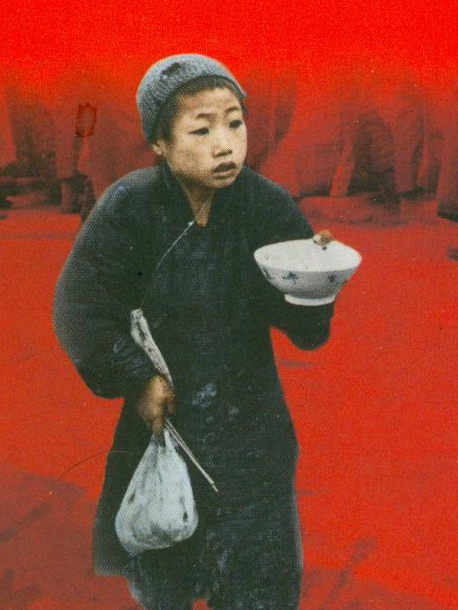
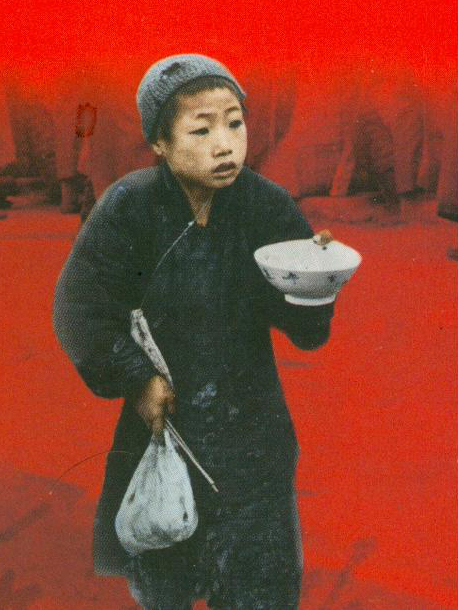
    The faces of the Chinese colleagues, of all Chinese, froze and some timidly touched the fabric of the actors costume, 20 years after Mao Zedong’s death, as if to make sure that “he” will not come back. Recently, more than ten years later,  I read the book of Frank Dikötter  Mao’s Great Famine: The History of China’s Most Devastating Catastrophe .

    Numbers: Somewhere near the Stalinist ledger must belong the forty million or more Chinese starved during the Great Leap Forward, as Mao followed Stalin’s model of collectivization and industrialization. In pure numbers Mao’s regime killed far, far more people up to 78 million.

    Intentions:  Mao’s popularity grew into an unbreakable faith in him around the time of Cultural Revolution. The people’s image of him became less like a great leader, but almost like a god. He was always right to the people and they gave in their complete trust. Through posters, school, media and personality, Mao was successful in creating the cult. His little red book became more a bible like than a piece of political philosophy writing.  Even I own one. The failure of the Great Leap Forward was caused by unmanageable goals ignoring local problems and situations  but foremost basic economy even logic. Shoddy quality wasted rare resources. Of course it is hard for government to control centrally a big country. Like in Russia  feedbacks to correct policies did not exist, because the terror and pressure inside the regime was to high and delegated top down. The cult of personality with Mao set free an evil autonomous complex in the masses. With total belief in Mao, especially the young Red Guards, like Pol Pot’s followers later, did not doubt their actions during the Cultural Revolution. The violent and cruel class struggles against intellectuals labeled rightist became a Shadow of revolutionary spirits.

    Methods: Most of the Chinese killings took place in times of peace, and was also related more or less distantly to an ideologically flawed vision of modernization and class warfare. During the Cultural Revolution organized starving as a mean of getting rid of segments of Chinese intensified. It was highly centralized mismanagement that can lead a country to disaster. All checks like tradition, family and religion were swept away leaving everybody, particularly the weak,  exposed without restraint to cruelty, pure arrogance, boundless ignorance and a merciless disregard of farmers, workers and even party members. Between the years 1959 and 1961, 30 to 45 million people were starved, killed or worked to death as a result of Mao Zedong’s failed attempt at industrialization in this period of the great leap. Research of using newly opened local archives makes his estimate all too credible  that the death toll of this famine alone reached 45 million people. The Chinese cultural revolution caused the death of another 30 million people (according to the current Chinese government).

    Conclusion:

    The assumed special quality of Nazi racism and evilness is diluted by the historical observation that Stalin’s motivations were often similar national or ethnic. The starving caused by failed industrialization policies or flawed visions can never be seen as a price to pay to enlightenment or to create a new man.  Stalin evilness was intentional violence as its own purpose. Mao was equally untouched by the death of double-digit millions of Chinese.  Both fought a war against the nature, reason and their own people. The Nazis planned to eliminate the Jews in any case,  but their evilness was fueled by the war against Stalin. Hitlers, Mao’s, Pol Pots, Stalin’s illusion of new societies, new men and totalitarian state religion crashed. A talk in NYC from Dikötter, which gives insights who the Hong-Kong history scholar is and what general conclusions he derived you find here.  When human beings are deprived of any means to own their living they reduced to numbers and seen as livestock – result versus costs: anyone who is old, weak, sick, unwilling or just inconvenient would be starved to death or killed. It is Dante’s hell – the opposite from imago dei.
    The geat faime
    The geat faime

    Were these dictators Archetypes of men’s inherent evil or absence of God? Both. Do numbers explain evil? No, not alone. Never forget: “History is the story of the Past, told at present for present purpose”.

    • Pol Pot (Cambodia, 1975-79) 1,700,000
    • Mao Ze-Dong (China, 1958-61 and 1966-69, Tibet 1949-50) 49-78,000,000 (around 40 million during the great leap) – Numbers disputed
    • Adolf Hitler (Germany, 1933-1945) 12,000,000 (5.8 million jews killed in concentration camps, plus non-combatants killed during WWII plus 2.6 million Russian POWs to die from hunger)
    • Jozef Stalin (USSR, 1932-53) 20-11,000,000 (the gulags plus the purges of the Great Terror plus Ukraine’s 5 millions famine) – Numbers disputed
    •  (Japan, 1941-44) 5,000,000 (civilians in WWII)

    Hamburg. "I wanted to do something extraordinary". Sir Harris
    Hamburg. “I wanted to do something extraordinary”. Sir Harris

    (Germany, 1933-1945) Civilians killed by Allied Aerial Bombardment  635 000 and Expulsion/Deportation Civilian Dead/Missing 1,260,000
  • (Turkey, 1915-20) 1,200,000 Armenians (1915) + 350,000 Greek Pontians and 480,000 Anatolian Greeks (1916-22) + 500,000 Assyrians (1915-20) – Numbers disputed
  • (Belgium Congo, 1886-1908) 8,000,000
  • Art and violence – evil and free will

    Art and violence – evil and free will

    Whether we like to admit it or not, we always have a choice to do evil. We can deny it as much as we want. We’re always as free as we want. There was a well written article by Cristian Mihai, discussing the connection between art and violence. In the end his question turned out to be about free will. I agree with his conclusion w’re the only ones responsible for our actions.

    The author uses a good analogy – martial arts training. It actually refers to the archetype of the warrior. One learns to fight by fighting. But it doesn’t makes necessarily a violent person. Because there is what the author calls convention and I would call rules, ethical reflection maybe moral.

    Georg Gross - The retreat

    The martial art example reveals the philosophical question behind the art topic (as well as some hints to the answer). Are we ultimately responsible for our deeds? Answer – yes we are. “We” translates in “you and me” as individual and our cultural entity (family, society, nation). While it may be an influencing factor, it is not wise, simply to shift the blame to art, to the media, to computer games, to weapons, to the not (yet) developed cortex. Violence has been always present. and it always needed the effort of the individual and culture (moral, ethic, religion, law) to restrain it.

    “The psychoanalytic C.G.Jung said under the impression of the second world war: We need more understanding of human nature, because the only real danger that exists is man himself. He is the great danger, and we are pitifully unaware of it. We know nothing of man, far too little. His psyche should be studied, because we are the origin of all coming evil.”

    Simpler said, We’ve all got both light and dark inside us. The Shadow, as C.G. Jung defined it, is in us. “Omne bonum a Deo, omne malum ab homine, i.e., “All good from God, all evil from man.” said the great (religious) philosopher Augustine of Hippo (Augustinus).

    AugustineOfHippo
    AugustineOfHippo

    The free will, as Augustine sees it, differentiates man from animals.

    Having said said, we not only deny the existence of the evil by shifting the blame to something impersonal but indeed intoxicate ourselves by shallow entertainment, consumerism,  graphic violence, “sex, drugs and rock en roll” and psycho-pharmaca.

    Some turn from violence to hard science. While I largely agree that most social sciences and the bankrupt humanities are not helpful, the belief of hard sciences as savior (physics, biology, chemistry, informatics, evolutionary psychology, cognitive and neurosciences) is mechanistic and naive. Their potential solutions to prevent evil, might create evil – might create a world, in which I do not want to live in. Lack of empathy is widespread today like a mental illness. That lack seems to be even collective. In that respect, we all,  whole societies are ill. And it is a lack of empathy (or love)  that allows one to enact violence upon another living creature. I doubt, empathy levels can be enhanced through neurobiology and scientific designer drugs or information technology nor through tons of social workers.

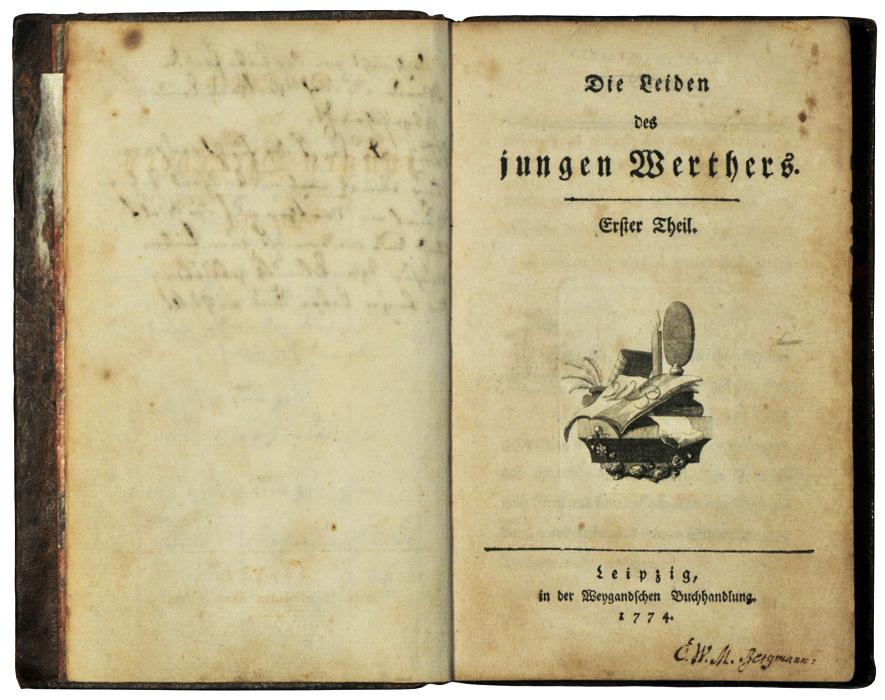
    Now is art to blame? What is art today, most of the stuff might not even be art. 1979 Francis Ford Coppola’s haunting, hallucinatory Vietnam War epic Apocalypse Now  was graphic and violent,  but visionary. It has been said, that  Coppola made art out violence by aesthetic means, thus legitimizing it. Goethe wrote 1774 a book, “Die Leiden des jungen Werther”, about an unfilled love in which the main character commits suicide.  Followers dressed in this fashion, and committed suicide in the double digits. The imitations of the Werther figure in real life, which were in suicide attempts and suicides, started a discussion about media effects, which runs up today. Since the 1970s, the psychology deals with the phenomenon of “media-mediated imitation”. Think also of the Danish caricatures, which resulted in many deaths –  the problem is global now.

    Will the easy fix help, should we forbid art (books,paintings, movies… Goethe),  forbid, internet, forbid weapons, forbid media?

    No, we have to think, feel and act properly and raise our kids within a minimum ethical context. With love (and also with fathers).  We must rely on science, as well as on metaphysics, common sense and psychology to cope with reality. but even more on intuitive understanding (“our inner self”) .  Free will is possible, it is possible to understand our genetic and biographical patterns of behavior, at least to an extent. It is called individuation. Still shooting massacre will happen. Lucky, if one can pray then, at least.

    FallenAngel (stottilien:http://wp.me/p2bcCT-15R)

  • Protected: Shadows of the Presidential debate 2012 part II : What is truth and does it matter?

    Protected: Shadows of the Presidential debate 2012 part II : What is truth and does it matter?

    This content is password-protected. To view it, please enter the password below.

  • C.G Jung and Wagner – Rainy Götterdämmerung in Munich.

    C.G Jung and Wagner – Rainy Götterdämmerung in Munich.

    This is a very personal take on Götterdämmerung the last one in the four of the opera cycle by Richard Wagner’s  “Ring” from a Jungian perspective. However also if the themes of the Ring, though universal, specifically apply to our lives today.

    The Conductor Kent Nagano

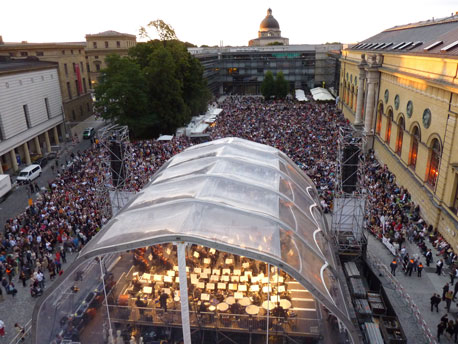
    The Munich Opera Festival draws for over 130 years opera fans to Munich, and as one of the oldest international festival continues far beyond the city and national borders. Since fifteen years there is a free eopen air event “Opera for all”.  Since the charismatic Conductor Kent Nagano came to Munich Opera, those two events “Opera for all” became even more cult for young folks not used to rattle the jewelry in plush seats. I saw him first time in California (Berkeley) and still appreciate Kent Nagano’s courageous and creative ways to transfer his subtle understanding of classical music to the audience. Already on Saturday – on a beautiful  night – he conducted open air with the Bavarian State Orchestra excerpts from Richard of Wagner’s “Ring des Nibelungen”, an arrangement on 16 hours of Wagner’s ring issues put together in one hours without singer. Already raising eyebrows, as a bonus, there he played still another ring – parts of the film music for “Lord of the Rings”.

    In any case, not entirely being  a usual Wagner fan.

    What’s the “Ring” all about?

    Actually, Richard Wagner wanted not only to edit the well-known the German and Scandinavia legend of Siegfried’s death, a saga of gods and people of faith and fraud. Wagner takes the world of the Norse gods to the ring as a template for a critical interpretation of human society, around the failed revolution 1848. The ring and the gold as symbols of power and of the capital,  the power versus rebellion and the failure of the hero Siegfried are all universal archetypes still up to date.

    The Casts

    In the figures we see the relationships of the various races of mortals and immortals: the immortal inhabitants of Valhalla, the Walküren who move between the worlds, the mortal Vaelsungs of the Forest, the Giants of Earth, the Gibichungs who inhabit the Rhine Castle, the Nibelung dwarfs of the shadows, and the Rhinemaidens who inhabit the source of life.

    • Rhinemaidens Woglinde (Sopran), Wellgunde (Mezzosopran), Floßhilde (Alt),
    • Alberich (Bariton), ugly dwarf and counterpart of Wotan
    • Wotan (Bariton),  the God
    • Fricka (Mezzosopran), Wife of Wotan
    • Freia (Sopran), Godness of etrnal youth
    • Donner (Bariton), God of Power and Thunder
    • Froh (Tenor),  Brother of Freya
    • Loge (Tenor),  TrickySemi God
    • Mime (Tenor),  brother of  Alberichs,   created stealth helmet
    • Fasolt and Fafner ( Bass),  Giants, Fanfer later turns into a dragon
    • Erda (Alt), Wise women and mother of  Walküre Brünnhilde (by Wotan)
    • Siegmund (Tenor)  Human and son of Wotans
    • Sieglinde (Sopran),  Sibbilibing of Sigmund and later his lover.
    • Hunding (Bass), Sieglinde’s Husband
    • The Birds (Waldvogel)
    • Brünnhilde (Sopran), Walküre, and favorite daugter of Wotan und Erda.
    • Eight other Walküren ((Gerhilde (Sopran), Ortlinde (Sopran), Waltraute (Alt), Schwertleite (Alt), Helmwige (Sopran), Siegrune (Mezzosopran), Grimgerde (Alt), Rossweiße (Mezzosopran))
    • Siegfried (Tenor), Son of Sieglinde und Siegmund  kills Fafner, wins the Ring and looses Brünnhilde
    • Dragon Fafner (Bass), guarding the the Ring
    • The Nornen (Sopran, Mezzosopran, Alt), three wise Daugters of  Erda
    • Gunther (Bariton), Leader
    • Gutrune (Sopran),  his Sister
    • Hagen (Bass), the son Alberichs and half-brother of Gunther.
    • Waltraute (Alt), Sister Walküren of Brünnhilde

    The Ring Cycle

    The Ring consists of four operas begins with a symbolics Genesis of the world (Water) and  with its destruction (Fire).

    • Das Rheingold, Munich, 22 Sep 1869
    • Day1  Die Walküre, first Munich, 26 Jun 1870
    • Day 2 Siegfried, first Bayreuth, 16 Aug 1876
    • Day 3 Goetterdaemmerung, first Bayreuth, 17 Aug 1876

    Prelude: The opera:  ” Rheingold“

    The Rhinemaidens have a magical gold treasures with magical powers. Alberich an ugly dwarf, trys to score on them but they laugh at him. So he robs their treasure with  the ring (the key to power and wealth). To do this, he must renounce love. At the same time had the gods (Wotan) built a castle (Valhalla) built by the Giants Fasolt and Fafner. They price is the goddess Freia who guards the secret of eternal youth of the gods.  As Wotan learns about Alberich’s theft he manages to remove the treasure and the ring, forged from the Rheingold from Alberich. Alberich curses the ring. The gods pay their castle with that treasure and the ring to the giants. The cursed ring does its effect one of the Giants (Fafner) which kills his brother (Fasolt). At the end of the story, the gods take the Castle Valhalla in possession. Wotan begins his reign based on free coexistence; from but still fears the danger of ring and its curse is not yet banned.

    Day1:  The opera “Die Walküren”

    Walküren collect heroes from the battlefields and bring them toValhalla. A pair of twins: Siegmund and Sieglinde are separated by fate and now meet again in Hundings house and fall in love.  Sieglindes husband, Hunding, challenges Siegmund therefore to fight with him.  Wotan gives  Brünnhilde (one of the Valkyries) order that should to support Siegmund.  The wife of Wotan, Fricka does not accept Siegmunds adultery and incest and Wotan has to reverse e the order. But Brünnhilde  decides to help him Siegmund anyway and Wotan influences the fight by himself. Siegmund  is powerless against Wotan and dies, his famous sword shattered. Brünnhilde advises Sieglinde, who is pregnant, to move  in the forest  where Fanfer the dragon the dragon lives.  Brünnhilde awaits Wotan’s anger and Wotan banishes her to a mountain, but  protects her wit a ring of fire which only strongest hero” can redeem her (Brünnhilde thought this might be Sieglindes son …).

    Day2:  The opera “Siegfried”

    Mime, Alberic’s brother and blacksmith raises Siegfried, Sieglindes son. Mime is hoping the boy would take  the ring  from Fafner who turned into a dragon .  Mime is not able make Siegfried a suitable sword, so he refurbishes himself  the sword Nothung of his father and kills the Dragon. A Bird (Waldvogel) whose song Siegfried can understand tells him what happens next: he should take the ring and the cloak of invisibility. Then, he advises him or how he would be  able to get “the most beautiful woman” – Brünnhilde – on their fire rocks. Siegfried gladly accepts this advice rushes to Brünnhilde and falls in love with in infinity.

    Day3:  The opera “Die Götterdämmerung”

    It is indeed my favorite Wagner opera. At the beginning, we see the Norns, weaving the rope of destiny. They tell the events of the beginning of conscious action on. As they approach they pull the rope. The Norns flee to Erda – the fate of the world is open.

    Brünnhilde and Siegfried had married. At the Court of the Gibichungen Hagen (their sleazy half-brother and  Ablrbrichs son) the weak royal brother and sister Gunther and Gutrune pointed out meanwhile that he can’t get Gunther Brünhilde as wife and Gutrune Sigfried as husband. Due to his magical drunk, Siegfried falls in love with Gutrune, and brings (his wife) Brünhilde to Gunter in the persona of Gunter and takes the ring from her.

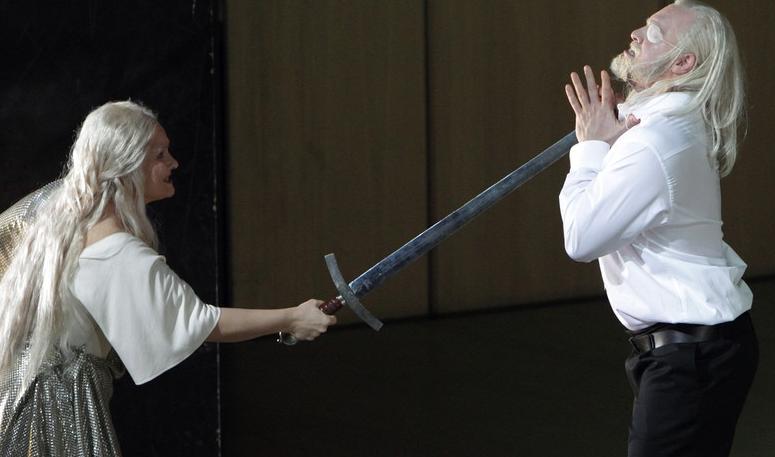
    The double marriage happens. Brünhilde, recognizes the Ring on Siegfried’s hand and outraged of Siegfried’s betrayal, let Hagen kill him. Haunted by nightmares Gutrune wanders through the night. The dead Siegfried is brought. Hagen boasts defiantly with murder and wants the ring. Gunther rejects, but Hagen kills him too and “grabs Siegfried’s hand which lifts up ithreatening”. Brünnhilde appears now. She orders to build a stake on the edge of the Rhine to burn Siegfried and herself. She draws the ring from Siegfried’s finger. As the fire blazes, the Rhine water comes over the shores with the Rhine maidens. who get the treasure back and pull Hagen into the depths. In a bright glow of fire in the sky, you can see the burning Valhalla. As the gods of the flames are completely hidden, the curtain falls.

    Götterdämmerung

    The most intense drama in the opera “Gotterdämmerung” as well as the ring cycle comes after Siegfried’s death,  the central character in Wagner’s opera. Siegfried is dead, and his body is brought back and shown to both Brunnhilde and Getrune,who are taken with attacks of grief at the sight of the corpse of the man whom they both loved. The only real issue for the mischievous Hagen is the ring and to whom it should go to and  he rids himself of his own brother to obtain the coveted ring.  Siegfried’s dead hand moves in a clear indication that he is not ready to give up the ring.  It is also as Siegfried’ body is being carried that we hear one of Wagner’s most powerful pieces which truly captures the moment with all that Siegfried was, the Archetype of the hero from dragon slayer to the one who was able to defeat Wotan but also Brunnhilde’s tender lover. In my opinion Wagner’s music captures the somber mood which is about as this once mighty hero lies dead and to illustrate in its harmonies the glory. Wagner’s music increases to the force of a hurricane as the fire from the pyre rises as high as to consume not only Valhalla but the deities who rule the world. Hagan however tries to prevent the ring from going back to where it came from and in doing so is drowned by the Rhine maidens, who finally have back what was taken from them at start.

    Wager and psychoanalytic models

    Lets allign  the key concepts of Wager to psychoanalytic models. Both the Freudian and Jungian models of the psyche rely on the  balance of forces among the elements of the psyche. A major difference between the two is in the chosen center-point or balance point. Freud’s model is primarily centered around the healthy functioning of the Ego in the society and (sexual) relationship; his model focusses on consciousness and the outer world – the unconsciousness is almost treated like a malfunction. By contrast, Jung’s model is Self-centered. That is, the whole self, conscious and alike. Jung uses the term Self both for the personal (experienced) god, and for the whole human psyche. Whereas Freud considered religion to derive from illusion, Jung considered religion as a way to the whole self, seeking to integrate the roalm of the spiritual with our lives in the outer world.

    The Freudian view

    Siegmund falls in love with his long lost sister Sieglinde. And, make no mistake, they know they are brother and sister and still engage in lust and plan on marriage even Sieglinde is already married. Their father is the god Wotan. Wotan had many affairs and Siegmund and Sieglinde are the product of one of those.  Those characters would indicate Freud’s approach, that all thrive comes from sexuality. Fricka, Wotans wife wants Siegmund killed in a fight despised by such immorality.  As the Goddess of marriage you’d expect her to say that, she represents the repressive factor.  Very simplistic.

    Adler’s view

    Another superhuman being, Alberich, has given up love to more fully pursue power.  Alberich’s giving up all love to gain power teaches Adler’s main force the lust for power may have different values but are playing to win. Wotan’s realization teaches us that power cannot be taken for granted and it cannot be sustained by constant uncontrolled,irresponsible and inconsiderate lust. Again too simplistic.

    The Jungian view

    Micha Brumlik interprets the depth psychology as romantic theory of the unconscious and uncovers their archetypical references to Richard Wagner’s magnificent operas, The Ring, provides an intense and amazing example. In high drama we get answers to the Authoritarian breakdown. Incest is one of this. There is some significance in Jung’s belief — or his occasional claim — that he was a descendant of Goethe. He was completely out of sympathy with the narrow materialism of nineteenth-century science. In an essay on Wagner, Thomas Mann quoted a dignitary of Seville cathedral, who is supposed to have said to the architect: ‘Build me a cathedral so enormous that people of the future will say: the chapter must have been mad to build anything so huge … ‘ Mann pointed out that the nineteenth century was full of this spirit of  Balzac’s Human Comedy, Hegel’s System, Zola’s Rougon Macquart cycle, Wagner’s Ring, Tolstoy’s War and Peace. Jung’s sympathy was all with transcendence and myths. His psychology is built of the same mythological material as Wagner’s Ring.

     Symbols

    Though there are many symbols in the story, four symbols of personal power are central to our theme:

    •  Wotan’s spear, his symbol of conscious (Ego) power is carved from the world ash tree of life.
    • The Chain of possession starts with the Rhinemaidens and ends with Flosshilde, a Rhinemaiden. The chain turns upon itself to form a ring.
    • The tarnhelm, or helmet, confers the power to change but it also entails the power to deceive. Wotan used it to get the ring from Alberich; Siegfried used it to regain the ring from Bruennhilde;
    • The sword, the weapon for the heroic struggle, was given by the father (grandfather Wotan), but it was broken; Siegfried had to reforged his own weapon for the struggle;

    The Self

    The ring itself represents for us the lure of gold, or or lust of power, from the Rhine,  a them which has been reused by the lords of the ring. Possession of the ring confers power over the world. We set out to relate the life-cycle of the ring to the life-cycle of the psyche. The figure suggests how this might be done. The story begins in the realm of the Self, which has its origin in the value of life.

    The Shadow

    Alberich and his son Hagen inhabit the realm of Shadow, where reside rejection, frustration, anger, hate, evil.

    In these storms of life are all the human ills — theft, deceit, betrayal, murder, incest, and all such. This is the considerable shadow energy of the psyche, seen in Alberich’s evil reaction to rejection, in Wotan’s awful betrayal of Youth and Beauty (Freia) to build his castle; in his stripping Bruennhilde of her immortality and his imprisoning her in the ring of fire in order to regain the ring of power.

    Shadow energy is also seen in the struggle between Siegfried and Mime, his evil stepfather — the orphaned Siegfried is raised by his shadow, Alberich’s brother! That same shadow energy also provides resistance to the reintegration of the psyche. Siegfried had to slay a dragon, but he also had to struggle with the Gibichungs. They defend the castle which guards access to the Rhine.  This reasoning teaches us that the underpinnings of morality rest on the ability to distinguish good from bad, the sacred from the profane.

    The Ego

    Wotan and his castle building express the realm of Ego inflation in which he and we deal with the giants of earth.The return of the ring into the deep currents of the flow of life completes this life cycle. The self is made whole. The cognitive conscious world of Ego is reconciled with its spiritual origin; the Self is reconciled.

    The Archetypal Hero – Animus and Anima

    Siegried reprents the  archetypal hero. But re-establishing balance in the psyche requires an heroic struggle. Siegfried’s slaying of the dragon represents the start of re-establishing balance. His love of Bruennhilde represents the necessary union between the conscious realm and the realm of his Anima.  In Siegfried’s death we see the individuation becoming, and in Bruennhilde’s immolation, similar burning away her self taken human mortality.

    The Persona

    As is morality, Wagner is very personal and philosophical. Wotan is a God.  Watching his son die will not be easy. But as his son has transgressed the basic rules of decency in society Wotan understands the necessity of killing him. He tells his daughter, Brunnhilde the Valkyrie, but emotions cause her to disobey the cold moral.Like all great art, Wagner’s The Valkyrie teaches fundamental cultural lessons about society.

    Rainy Sunday

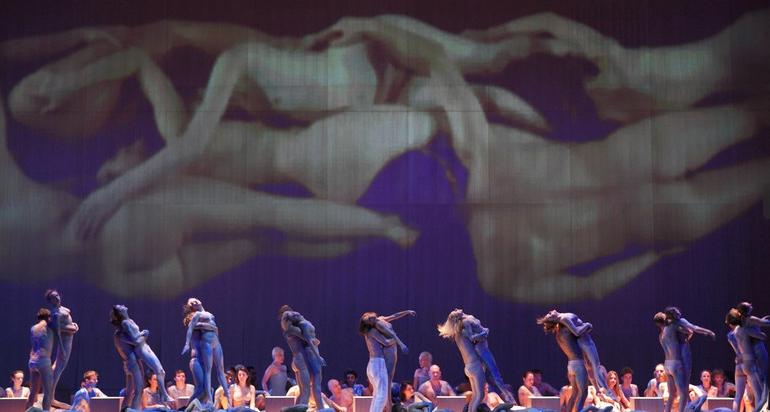
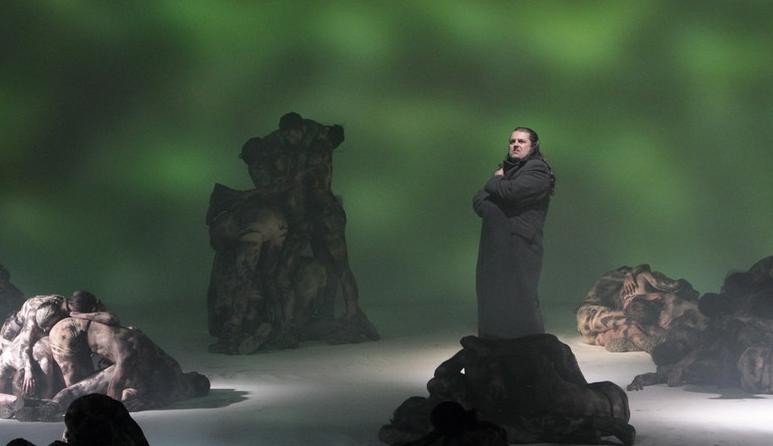
    On Sunday Nagano‘s  new production  “Götterdämmerung” of  National Theatre completely sold out for a long time, came on a big screen. The weather did not want to play along on that day, and so the Open-Air visitors were hit repeatedly by – some long-lasting – showers. But with the right equipment, some fans including me held out over six hours on the Max-Joseph-Platz before the National Theater and eagerly pursued the Opera broadcast on the big screen. The singers of this show and Conductor Kent Nagano came out after the end of the opera to say thank you for this dedication.

    Like the psyche, Wagner’s work has had influence for both good and evil. Nietzsche and Hitler both much admired Wagner’s work, and that nihilistic chain of influence was to give in the 20th century full expression to destruction and evil until today. Yet the same work also had a considerable influence on may others, notable King Ludwig the II. As we look back,  it often seems as if the necrophiliac shadow aspects of our collective psyche have had the upper hand. In Goetterdaemmerung, one of the three Fates sings that the rope of the world’s destiny has been severely frayed by evil. As she sings that, the rope breaks completely.

    We now are in Europe in the beginning of a turbulent transition from democracy to some new type of world-order at the threshold of another economic war – the “Third Geldkrieg”. The twilight of the gods will not be the twilight before the dawn, but before a new darkness. The lust for power and greed will represent the extinguishing of Psyche’s gods.

    In that respect, Wagner is pointing to the current economic system, whose manipulator think they are gods. Our society would be better grounded if  it spent more time with great art; pieces like Wagner’s Ring are entertaining, they create a shared vocabulary within our culture  just like C.G. Jung’s Archetypes.

    “Wagner’s Ring and Its Symbols” originally published 1984.  Robert Donington (Wagner seen mainly throug C.G. Jungs eyes)

    Index to “Richard Wagner”in the Collected Works of Carl G. Jung (mainly he was concerned with Wotan)

    Volume 5: Symbols of Transformation

    par. 421 (p.275) — fig. 28: Wotan on eight-legged horse Sleipnir; Wotan as Drosselbart  half-man, half-horse

    par. 422 (p.278) — horse \ wind; Wotan galloping in storm chasing the wind- bride

    par. 555 (p.358) — Siegfried’s hero’s entry; Siegfried’s feelings for Bruenhilde; brother-sister incest;

    Sieglinde as “human mother”, Br. as “spirit mother”; Br. banished by Wotan for complicity (approval) of incest; Siegfried \ Horus; Sieglinde’s “night-sea journey to the east”;

    par. 556 (p.358) — broken sword \ dismemberment

    par. 559 (p.359) — Wotan \ persecution motif

    par. 560 (p.360) — Bruenhilde “split off” from Wotan, a feminine emmisary for a martial god “somewhat remarkable”

    par. 563 (p.360) — Bruenhilde. as anima attached to masculine deity, a dissociation; Wotan unconscious of his own femininity

    par. 564 (p.361) — Wotan’s lament for Bruenhilde

    par. 565 (p.361) — Br. support of Siegmund; the incest a projection: Wotan’s entering “into his own daughter to rejuvenate himself

    par. 566 (p.361) — Sieglinde’s death; Mime of “a race who has abjured love”

    par. 567 (p.362) — Br. asleep in ring of fire; Mime a masculine representative of the Terrible Mother; Siegfried drawn away by longing for Mother-imago

    par. 568 (p.363) — the song of the Forest Bird \ mother Jung Index: “Richard Wagner” 10:18:36

    par. 569 (p.363) — gold \ “treasure hard to attain” \ the “mother” \ unconscious; “magic cap” (tarnhelm) changes Alberich into serpent \ motif of rejuvenation; dragon’s blood \ understanding nature.

    par. 598-600 (385-6) — Wotan (Wanderer) and Erda \ “fatal charm of the mother”

    par. 602-11 (p.387-391) — Siegfried’s encounter with Bruenhilde, evokes mother; Br. \ mother-sister wife anima archetype; Siegfried as archetypal hero

    Richard Wagner Links

    My Review Harry Kupfer Wagner Ring cycle

    Opera for All

    Richard Wagner from Scene to Scene utilizing C.G. Jung

    Vladimir Jurowski

    Bavarian State Opera

  • Mao’s great famine – Our blight is ideologies — Revolution is not a dinner party.

    Mao’s great famine – Our blight is ideologies — Revolution is not a dinner party.

    When I worked in Beijing during the late nineties I got invited by a local resident consultant (an expat) to a dinner party at a very chic ethnic event restaurant.  Mao’s great famine was long forgotten. My colleague was a little bit esoteric, but knew her city. There was good food and even a better spirit.  Expats and local people from all over China would  dance after work together, even onetime doing some kind of polonaise. The open spirit, however, became immediately sober when a Mao Zedong-imposer entered the stage. The faces of the Chinese colleagues, of all Chinese, froze and some timidly touched the fabric of the actors costume, 20 years after Mao Zedong’s death, as if to make sure that “he” will not come back.

    Recently, more than ten years later,  I read the book of Frank Dikötter  Mao’s Great Famine: The History of China’s Most Devastating Catastrophe . The book was selected as one of the Books of the Year in 2010 by The Economist, The Independent, the Sunday Times, the London Evening Standard (selected twice), The Telegraph, the New Statesman and the BBC History Magazine, and won the 2011 Samuel Johnson Prize for Non-Fiction, Britain’s most prestigious book award for non-fiction.

    Between the years 1959 and 1961, 30 to 45 million people were starved, killed or worked to death as a result of Mao Zedong’s failed attempt at industrialization in this period of the great leap.Frank Dikötter researched the catastrophe for years and documented his findings. It was h highly centralized mismanagement that can lead a country to disaster. All checks like tradition, family and religion were swept away leaving everybody, particularly the weak,  exposed without restraint to cruelty, pure arrogance, boundless ignorance and a merciless disregard of farmers, workers and even party members.

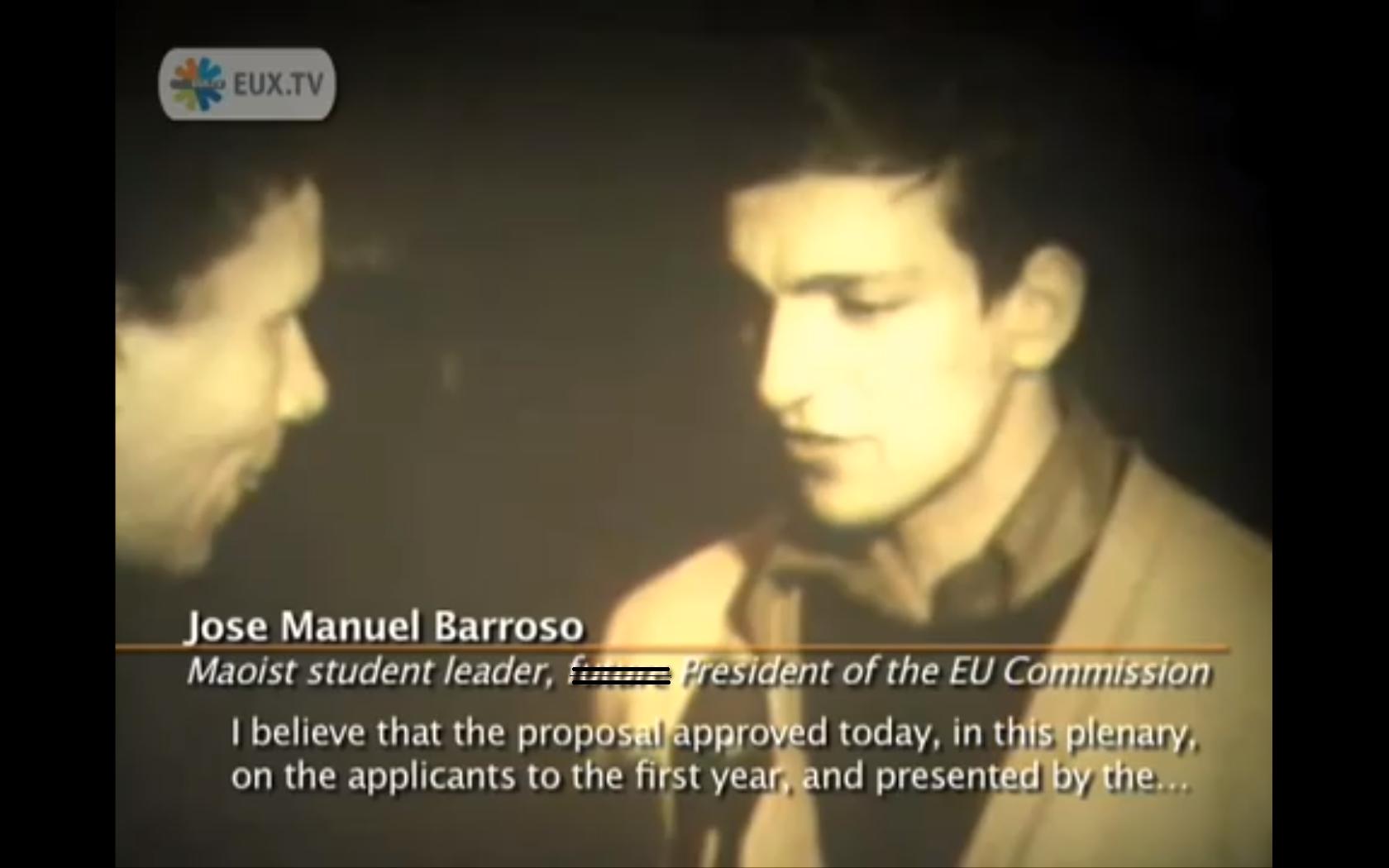
    I just knew just the basics of the big leap and the subsequent famine that hit the People’s Republic around 1960.  But Dikötter’s painstaking research using newly opened local archives makes his estimate all too credible  that the death toll reached 45 million people. The book opened my eyes, as the man-made disaster was on the scale of the Nazis, Stalin and Pol Pot, but different in a way as the intend supposedly was good in a “we know better” attitude. When I read the book , I was reminded to the bureaucracy of the European Union. We don’t get killed and starved yet (although the latter does happen in Greece), but the propaganda and the arrogance of the EURO-phil bureaucracy are very much the same. It is no coincidence, that many of the former and current EU leaders, those who pushed Maastricht treaty or the never ending crises measures through against all good advice of experienced experts, were former admirer of Mao or even active Maoists. Their leadership performance during the EU crisis is of striking similarity, mismanagement  runs Europe against the wall and destroys all tangible and non tangible assets.

    Dikötter provides a detailed list of the degree of suffering this “Great Statesman” unleashed and the inhumane manner in which his apparatus operated. Horrors pile up as he tells of the spread of collective farms and the vast projects that caused more harm than good and involved the press-ganging of millions of people into forced labour. As the pressure mounted to provide the all-powerful state with more and more output, the use of extreme violence became the norm, with starvation used as a weapon to punish those who could not keep up with the work routine demanded of them. The justice system was abolished. Brutal party cadres ran amok. “It is impossible not to beat people to death,” one county leader said.

    The inefficiency, waste and destruction in China were of course even more  gigantic. The masses in whose name the Communist party claimed to rule were eminently disposable. The economic campaign used farmers and industrial workers as fodder expected to sacrifice themselves for the cause dictated from on high purposefully trying to get rid of the weak,the women, the children, the elderly. Cannibalism and people eating mud in search of sustenance, was the outcome of the famine caused by the Great Leaps failure and the diversion of labour from farming.  Initially launched to enable China to overtake Britain and Russia, Mao’s programme took a deadly turn, In order to maintaining food exports when the country was starving, the slogan was: “When there is not enough to eat, people starve to death. It is better to let half of the people die so that the other half can eat their fill.”

    The book gives the details, but is extremely clearly written and presents the facts very structured: (1) The pursuit of Utopia;  (2) Through the Valley of death;  (3) Destruction;  (4) Survival; (5) The Vulnerable;  (6) Ways of Dying;  The book starts slow and becomes a page turner but can also be accessed afterwards via a good index.  It describes thourougly the Sino-Soviet split, and Mao’s tricks to blame the Russians ( and other factors) for his own doing,  after it was too late and the truth could not buried any more. As family bonds and every decency broke down, basically the whole country became one contraction camp. Methods were used in the cities, just like by the IG Farben in the second world war, working people to death in an unhealthy environment without pay and sometimes without food locked in the factory. Often there was not a direct intend to kill, but human were abundantly streaming to the factories. On the countryside  dissidents or underachievers, even people who digged one potato  became literally fertilizer. Kids were conveniently lost by mothers, women had to prostitute themselves or were routinely raped by local authorities routinely in some provinces .

    The Cultural Revolution is widely remembered, the Great Leap much less so. When Maoists launched the Cultural Revolution in 1966, the  Red Guards had little new to learn, as Frank Dikötter states. Stability returned to China with the Maoists’ ouster in the late 1970s. Having gone through those two experiences, not to mention the mass purges that preceded them and the Beijing massacre of 4 June 1989, it is little wonder if the Chinese of today are set on a very different course that rejects ideology in the interests of material self-advancement but also religion is on the rise.

    As soon as people get together in masses and submerge the individual, the shadow is mobilized, and, as history shows, may even be personified and incarnated. Carl Gustav Jung , The Archetypes and the Collective Unconscious , Collected Works, 9/1, par.478

    It is in this context it is  interesting to consider is Jung’s point of view toward religion in general, and his various attitudes with regards to fanatics and totalitarian ideologies and states: “Of course, it is not a spiritual religion in the sense in which we ordinarily use the term. But remember that in the early days of Christianity it was the church which made the claim to total power, both spiritual and temporal! Today the church no longer makes this claim, but the claim has been taken by the totalitarian states which demand not only temporal but spiritual power”.

    If one looks to his quotes closely we find, that he just says there are similar concepts between totalitarian religions and totalitarian systems. Jung is speaking about the UDSSR  and Nazi Germany in a sense that was not only religious, but also political. He then compares in the context of political figures.  Jung speaks here about religion not only demanding spiritual obedience but temporal as well and the beliefs not only cover the spiritual aspects of the human condition but also the mundane as well.  In Jung’s book “Psychology and the East”( From Vols. 10, 11, 13, 18 Collected Works), Jung recounts his journey to India. One of the essays entitled “The Dreamlike world of India” show Jung expressing his utter positive attitude and amazement at the Indian subcontinent and their religious and ethnic culture. In a second essay entitled “What India can Teach Us” he concludes that the psychological and religious claimant is something that we in the West should take a page from.  There is respect for and admiration to all religions and their text. I sometimes wonder what he would say today. Called or uncalled, God is present. Religious experience plays an important role in Jungian psychology. Jung, a Christian maybe of more Gnostic virtue, believed that this experience is nothing but a product of the psyche, and consequently viewed other world religions as an expression of one psychic function that has its roots deep in the collective unconscious of mankind. If religion is absent, this is rarely  good thing, but if it rules the secular space its worse…

    Our blight is ideologies — they are the long-expected Antichrist!  C. G. Jung The Tibetan Book of the Great Liberation (1954)