Category: Archetypes

Jungian Archetypes and Symbols

  • The dangerous serpent – a Jungian view

    The dangerous serpent – a Jungian view

    Soon there will the year of the (water) serpent. Whether a “water serpent” a The dangerous serpent depends heavily on the specific type, but true marine sea snakes possess incredibly potent venom and can be dangerous to humans. My sign in Chinese Zodiac is Serpent, therefore I have written a few articles in (her!) favor.

    The Serpent manifests itself consistently ambiguous as both ” evil adversary” and “holistic power, both source of “temptation” and “wisdom”. Jung’s discovery of how the psyche works and how consciousness entwine with unconsciousness,  also refers to this ambiguity depicting the serpent as a symbol of our unconsciousness. The Serpent encounters Jung many times throughout his journey in The Red Book.

    Around the world, for thousands of years, in one form or another, the reptilian Serpent has been an archetype for countless tribes, societies and civilizations. The serpent archetype is regarded with awe and fear. Why is that so? I will explore here the reasons what to make out with this symbol serpent, and where the given attributes may come from with most famous the symbol of a snake eating its tale is known as the Ouroboros.

    Symbol of versatility and transformation

    snake-inspired-transformation-metamorphosis
    snake-inspired-transformation-metamorphosis

    The serpent archetype stands for immense and powerful  movements deep under the earth, deep under the oceans, on the earth surface and in the sky. In fact, it is the very ability of serpents to move between various worlds and different dimensions, as indicated by their hibernation in winter and their life on and in the earth, which give them the aura of knowing and being, world-wide. Transformational qualities of serpents such as the shedding of their skins and regeneration add to the awe with which they are regarded. In Jungian reflections on various aspects of the transformation as individuation process—of the lived experiences of individuals and its impact on the experience of ego and Other, or the greater Self this is like the Serpent shading skins. There are potential states of consciousness and being that are actualized and incarnated in the individual personality as the individual develops a growing awareness of his/her relationship to the greater Self and the Ego.

    Symbol of the unknown and the unseen

    mermaid the unknown
    mermaid the unknown

    The serpent is a trans-cultural and global symbol which can be identified as a reptile, an earthly serpent, a flying dragon in the air, a water serpent, with many supernatural characteristics. The ancient Greeks believed that there were four elements that everything was made up of: earth, water, air, and fire (Aristotle) which became the cornerstone of philosophy, science, and medicine for two thousand years. But Aristotle came up with a fifth – invisible – element, the aether to explain the stars, one can easily associate with the serpent: The basic theme of mythology and psychoanalysis is that the visible world is supported and sustained by an invisible world, which has been proved by modern physics: the visible (and classical) world is supported and sustained by an invisible (quantum) world. Jung similar, interpreted snakes as symbolic of the conflict between conscious ego and conscious instincts likening in a way the dragon fight.to individation. This is even truer if it is a black snake which represents the hidden or subconscious. In some cultures snakes are highly regarded and symbolize the ability to transcend into higher levels of consciousness or into areas of knowledge that exist outside perceived time and space. Snakes do not have conventional eardrums. They actually sense what’s going on around them through the vibrations in the earth rather than by listening like things affecting upon a subconscious level.

    Symbol of sin and sexuality
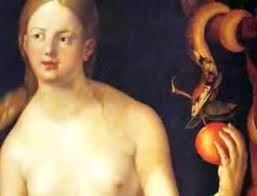
    The Sin Adam and Eve
    The Sin Adam and Eve

    In Judeo-Christian tradition, the story of Adam and Eve in the Garden of Eden, of the Bible, portrays the Serpent as the deceitful harbinger of sin – and sexuality. In Freudian terms, snake is a phallic symbol. It seems both cases represent the fear of sexuality, rather than sexuality.Eve has been so frequently allied with the serpent and with the devil, as though they were all on the same plane of symbols. The first association between Eve and the serpent comes in the closeness of their names, for the Hebrew Hawwah is very close to the Arabic and Aramaic word for serpent, which was noticed by the earliest Jewish commentators:

    The association between Eve and the serpent, and between the serpent and Satan (the Sammael of Jewish legend and the Shaitan of Iblis of the Qur’an) is made again and again in interpretations of the story of the creation and fall of the first humans . . . She is held to be the devil’s mouthpiece, Satan’s familiar. At times she herself is seen in some way to be the forbidden fruit, or the serpent in paradise, or even the Fall.

    Sexuality greensnake
    Sexuality greensnake

    When spirituality and sexuality fall into polarity, the sexual instinct, split off from spirituality and a concrete image of what was simultaneously feared and longed for: the swallowing genital of the female. As C. G. Jung put it: “What is  projected is unconscious; that’s the rule”.  Some things to keep in minds: They are cold blooded – they depend on their environment to keep them warm. Snakes lay eggs, and abandon them as soon as they have made their nest.  Snakes may not be a particularly cuddly, but they are certainly one of the most powerful and transformative. The snake has acted as a diverse symbol throughout history, representing immortality, evil, femininity, and masculinity. The Legend of the White Snake is one of the most famous folk tales in Chinese culture. Cleopatra identified with the snake during her life, and it becomes even more highly symbolic in her death. By examining three movies (DeMille’s Cleopatra, Mankiewicz’s Cleopatra and the ABC version of Cleopatra) and two dramas (Shakespeare’s Antony and Cleopatra and Mary Sidney’s Tragedy of Antonie) different symbolic representations of the snake emerge along with contrasting depictions of the Queen of the Nile. Cleopatra is a suiting product of myth.

    Symbol of knowledge and cunning

    serprent-woman

    There is the classical tradition of the snake, of the accumulation of wisdom. We cannot remain with one or the other exclusively, but must harmonise the two – logic and intuition….Jesus says he has come not to destroy law but to fulfill it in spirit. Meta noia – means not only change your ways but also, think further, because a time comes when respect and obedience to law keeps you from seeing god.  Another example from the Gospels that I like very much is when Jesus tells his disciples that when they go among men they should be ‘wise as serpents and harmless as doves’.

    In Christianity, the serpent also pertains to Satan and the world we currently live in. It also refers to the men and women of this planet as being self-centered and “fallen”. The whole idea of the serpent itself is that it reflects something that is re-creating itself. Be wise as serpents …  Genesis 3:1. Now the serpent was more crafty than any beast of the field which the LORD God had made. And he said to the woman, “Indeed, has God said, ‘You shall not eat from any tree of the garden’?” 2The woman said to the serpent, “From the fruit of the trees of the garden we may eat; 3but from the fruit of the tree which is in the middle of the garden, God has said, ‘You shall not eat from it or touch it, or you will die.’” 4The serpent said to the woman, “You surely will not die! 5“For God knows that in the day you eat from it your eyes will be opened, and you will be like God, knowing good and evil.”

    Fight the serpent Fear
    Fight the serpent Fear

    Symbol of protection and harm

    There is an obvious link between the serpent with poison and medicine. The famous symbol of the Caduceus, composed of twin snakes entwined around a staff with the wings of Hermes in the background, is a symbol of modern-day medicine. Again this association goes back to the ancient Greeks and linked to the Hippocratic Oath. Navajo have stories of giant serpents as protector and Pueblo tribes honor the great water serpents. the pre-Christian days, snakes were considered symbols of fertility, healing, and nurturing (the healing serpent representing a god). Serpents were therefore often linked to protection and guardianship in many cultures, including stories of Buddha who is often represented as being supported by the seven coils of a naga, with the cobra-like hood of the naga shielding him from harm while he meditates, as a storm is manifesting. But one proverb in many languages is, “he speaks with a forked-tongue,” a clear reference to the characteristic of deceit like the image of “poisoned relationships.

    Symbol of creation

    Again there is an obvious link between the fertile serpent with creation and the Serpent is often described as the primary figure in the chronicle of Creation.Today researchers and scientists through multiple academic disciplines have studied the relationship of the serpent to plants, animals, humans, chemistry, physics, and biology linking the significance of the serpent to DNA and the origins of life. The serpent archetype as it pervades many ingenious cultures seems to speak to the idea that our diverse cultures have some things in common. It was C.G. Jung who gave us the concept of the psychic unity of mankind to attribute such similarities to deep, inner templates learned in our human past and embedded as archetypes in our unconscious minds.

    Symbol of infinity

    We have all looked up at the night sky at some point and wondered about the bconnected myth. Some stars (animals), as well as planets (gods) are ‘eaten’ or then expelled and reborn anew by the actions of the celestial serpent.In the Greek and Roman astronomy we find different parts of a serpent. In the Greek lore Ophiuchus is holding a serpent, in the Norse myth Loki is bound with serpent-like entrails.
    SerpentAstronomy

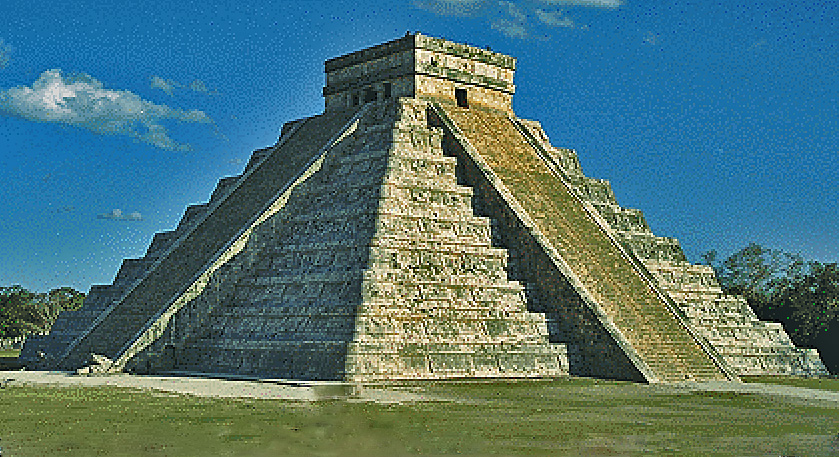
    In  Egypt, China, Southeast Asian, India, South America, Meso-America and ancient Sumeria, serpents carried a significant presence in the astronomical symbols from ancient times to today. The Mayan temple El Castillo shows the serpent shadow at equinox representing the serpent god “Kulkukan” for which it was built. Many stories of the serpent are linked to the Milky Way as a “serpent of light residing in the heavens.” This association goes back centuries to Egyptian and Greek stories and is linked to the Greek symbol “Ourobouros” the serpent that forms a circle with its tail within its mouth. This symbolic association includes the holistic universe which lead to infinity and holistic cycles.

    Conclusion

    Sometimes serpents represent negativity in our lives that threatens. In the long run the snake may be a positive symbol; to me they represent transition and transformation that lead us to the center of personality and result in feelings of completeness and transcendence.
    The dangerous serpent
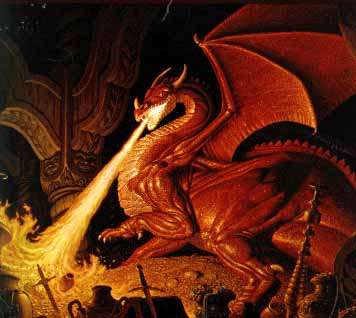
    Unfriendly fire. Serpent – Earth – Water – Air and Fire

    Carl Gustav Jung writes in his book, Man and His Symbols about the serpent:

    This is the universal quality of the animal as a symbol of transcendence. These creatures, figuratively coming from the depths of the ancient Earth Mother, are symbolic denizens of the collective unconscious. They bring into the field of consciousness a special chthonic (underworld) message …

    Appendix Archetypal images with the serpent:

    • Water: the mystery of creation; birth-death-resurrection; purification and redemption; fertility and growth. Symbol for the unconscious.
      •    The Sea: the mother of all life; spiritual mystery and infinity; death and rebirth; timelessness and eternity; the unconscious.
      •    Rivers: death and rebirth (baptism); the flowing of time into eternity;transitional phases of the life cycle; incarnations of deities.
    • Sun (fire and sky are closely related): creative energy; law in nature; consciousness (thinking, enlightenment, wisdom, spiritual vision); father principle; Solar year
      • Rising sun: birth; creation; enlightenment
      • Setting sun: death
    • Colors:
      • Red: blood, sacrifice, violent passion, disorder
      • Green: growth, sensation, hope, fertility, in ironical context may be associated with death and decay
      • Blue: usually highly positive, associated with truth, religious feeling, spiritual purity, security
      • White, highly multivalent; signifying in its positive aspects light, purity,innocence, and timelessness;
      • Black (darkness): chaos, mystery, the unknown, death, primal wisdom, the unconscious, evil, melancholy
    • Circle (sphere): wholeness, unity
      • Mandela (a geometric figure based upon the squaring of a circle around a unifying center; the desire for spiritual unity and psychic integration. Nunber 4
      • Egg (oval): the mystery of life and the forces of generation
      • Yang-Yin- the Chinese symbol representing the union of opposite forces of
        • Yang (masculine principle: light, activity, the conscious mind)
        • Yin (the feminine principle: darkness, passivity, and the unconscious mind).
      • Ouroboros: the ancient symbol of a snake biting its own tail, signifying the eternal cycle of life, primordial unconsciousness, the unity of opposing forces (as in Yang-Yin).
    •     Serpent (snake or worm): symbol of intellectual energy and pure force (cf. libido); evil,  corruption, sensuality; destruction; mystery; wisdom; the unconscious.
    • Numbers:
      • Three: light; spiritual awareness and unity (cf. The Holy Trinity); the male principle.
      • Four: associated with the circle, life cycle, four seasons; female principle, earth, nature; four elements (earth, air, fire, water).
      • Seven: the most potent of all symbolic numbers – signifying the union of three and four, the complement of the cycle, the perfect order.
    • The archetypal woman (Great Mother- the mysteries of life, death, and transformation):
      • The Great Mother (positive aspects of the Earth Mother): associated with the life principle, birth, warmth, nourishment, protection, fertility, growth,abundance (Cybele Demeter, Ceres).
      • The Terrible Mother: the witch, sorceress, siren, whore, femme fatale associated with sensuality, sexual orgies, fear, danger, darkness,dismemberment, emasculation, death; the unconscious in its terrifying aspects.
      • The Wise Women: the Sophia figure, Holy Mother, the princess or “beautiful lady” – incarnation of inspiration and spiritual fulfillment (Jungian anima)
  • C.G. Jungs Self in Quaternio Series of Aion – Jesus or Abraxas?

    C.G. Jungs Self in Quaternio Series of Aion – Jesus or Abraxas?

    C. G. Jung had shown a pronounced and informed interest in Gnosticism and Alchemy. This is evident in the Quaternio Series of the Self in his book. “Aion”.  In his early works “Seven Sermons to the Dead” (“Die sieben Reden an die Toten ”) and “The Red Book” (recently published) he perceived the outstanding psychological relevance of Gnostic insights. Was Jung really a Gnostic? I seems to me, that “Aion” and another late work The “Answer to Job” give some evidence to the assertion: No, he wasn’t.

    Quaternity in religion and psychoanalysis

    It is true that C.G. Jung saw in Quaternity a divine concept and welcomed the proclamation by the Pope Pius XII in the year 1950 adding the Catholic Holy Virgin Mary, expanding so the Christian Trinity. Neoplatonic philosophy ( and many other metaphysics e.g. Mayan) contained what Jung has called the element of “fourness,” or quaternity, that seems to be so prominent an aspect of the life of the unconscious collective landscape across various cultures. This quaternity is – as the one of the Christian cross – a (3+1) structure, meaning that three parts are equal and the fourth is the “totally different”. One of the most important ramifications, however, unacceptable to some Christians, of the Jungian quaternal recipe is bringing back the original nature of evil and its personification in the real or mythological being of the evil.

    In “Aion” (collected works 9ii) Jung summarizes his researches into the phenomenology of the Self, good and evil seen from Christianity, Alchemy and Gnosis . “Answer to Job” an interpretation of a book in the bible,(“Antwort auf Hiob”)  maybe interpreted as gnostic answer to the Bible  but to me is more a subtile but well-meaning ironic description of the omnipotent god Yahweh of the Old Testament who needs the reflection of the human Job to send his son Jesus to become a just God (again). In this article I want to investigate C.Jung’s starting point and journeys in regards to Jesus. C. G. Jung was a prolific writer and practitioner of psychoanalysis. The reader is invited to consult the C. G. Jung’s Work for expansion on the theme in this essay or to follow the links in this article (indicated in blue).

    Small recurs to Gnosticism

    Gnosticism is the knowledge of transcendence arrived at by way of interior, intuitive knowing (Gnosis). Gnosticism was primarily defined in Christian context also including pre-Christian religious beliefs common to early Christianity, Hellenistic Judaism, Greco-Roman mystery religions, Zoroastrianism (especially Zurvanism), and Neoplatonism. Gnosticism goes hand in hand with Kabbalah, which is the esoteric or mystic religion of Rabbinic Judaism. These occult teachings deal with magic, hypnotism, sorcery and all sorts of pagan practices collected throughout centuries borrowing from different cultures. The mixing of all these pagan traditions turned into a complicated set of Gnostic teachings with all sorts of perverted doctrines added to “Christian” mingling its pure and simple teaching with theosophy and even magic. Gnostic thought were stamped out by Christianity in a struggle of life and death. The Gnostic teacher Carpocrates, as opposed to the official Christian dogma that salvation is the result of a single, unrepeatable event – the crucifixion of Jesus – postulated this process as continuing through a number of lives of earth.  Abraxas, the summation and ruler of the sevenfold planetary spectrum, is thus the true archetype of man’s potential freedom and independence from unconscious psychological pressures and compulsions.

    The Nag Hammadi library, discovered in upper Egypt in 1945 provided a cache of new gnostic documents and its psychological importance was pointed out by C.G. Jung. After his death and the publication of his autobiography, Memories, Dreams and Reflections, and the Red Book, it became also clear that Jung underwent an intense period of spiritual experience between 1912 and 1917. The only fragment of his writings from that period which he permitted to be published was The Seven Sermons to the Dead, using terminology and style of second century Gnosticism. Jung attributes the authorship to Basilides, a Gnostic sage who taught in Alexandria around A.D. 125-140 (see below). It is clear, however, that Jung disagreed with Gnostics (and Buddhism) on the ultimate goal of the individual to return to a supreme, other-worldly re-unification with the Pleroma ( the superior unknown God) as this would be a total identification with the unconscious.

    Small recurs to Evil

    We can argue then that there are three types of evil. The first is relative, caused by the perception of the human mind which labels things it does not accept as evil. The second arises from imbalance. This evil originates in an action that comes at the wrong time for the wrong reasons and which causes much damage as a result. The evil that thus occurs is neither relative nor absolute but falls someplace in-between. The third type is absolute evil. It arises from imbalance but feeds on evil itself and soon grows like a cancer to spread through the body that gave rise to it. One can only fight this evil by trying to find one’s own balance and relationship to the Self.

    In his work The Archetypes of the Collective Unconscious Jung restated the message contained in the Second Sermon when he says: “Evil is the necessary opposite of good, without which there would be no good either. It is impossible to even think good out of existence.” Jung was insistent evil to be real, for he felt that western humanity, dwarfed the picture of evil. In Civilization in Transition he wrote that evil “is of gigantic proportions, so that for the Church to talk of original sin and to trace it back to Adam’s relatively innocent slip-up with Eve is almost a euphemism. The case is far graver and is grossly underestimated.”

    If you recall my article Can Hitler go to heaven? The evil presented in Mao, Stalin, Hitler, Pol Pot. you can only see them as anything but evil, if we take Jung’s point of view seriously. Of course there are many other kinds of what seems to be pure evil in the world. According to Jung, good and evil are not two opposite poles of a linear dimensionality. They resemble a circle wherein going far enough in either direction is likely to associate one with the opposite polarity. He said that there is no good that cannot produce evil and no evil that cannot produce good.

    Aion: Phenomenology of the Self

    Aion is one of a number of major works that Jung wrote during his seventies that were concerned with the relations between psychology, alchemy and religion. He is particularly concerned in this volume with the rise of Christianity and with the figure of Christ. He explores how Christianity came about when it did, the importance of the figure of Christ and the identification of the figure of Christ with the archetype of the Self. A matter of special importance to Jung in his seventies – the problem of opposites, particularly good and evil – is further discussed and the importance of the symbolism of the fish, which recurs as a symbol of both Christ and the devil, is examined. As a study of the archetype of the self, Aion complements The Archetypes and the Collective Unconscious.

    Jung does not decodes events in dreams and associated unconscious products as a facade behind which the true meaning lies, but takes those events themselves as important symbols. Hence, “symbols” must not be misunderstood. To Jung the symbol manifests an unconscious product in conscious form. To appreciate why symbols mean so much to Jung, we need to understand symbols are a bridge for religions which are an object with universally projected contents. That is why there are so much symbols in religion and also why Jung spent so much time looking into the meaning behind religious symbols, and symbols in other fields such as alchemy.  Symbols have often an irrational element, as well as a rational part. Within Jung’s Framework the specific process of successfully acknowledging and integrating the meaning behind (formerly) unconscious contents to the consciousness is called “individuation” and results in the individual achieving the realization of the “Self”  and thus finding transcendence, which is the main theme in this book. The story of the self and Jesus in his book resembles closely the story of the human psyche that loses its connection with the collective unconscious and needs to be rescued by the Self.

    Jung compares in this book also his concept of “self” with other teachings. Jung had never qualms about reducing religion or magic to a psychological process. However, that is not to say it is then worthless in the practical field, because Jung is dedicated to showing precisely how large a factor the psychic realm is in ordering our lives. It must not be forgotten that for Jung, Buddhism itself was originally a result of projected unconscious contents, and the broad parallels are there. In dualistic Gnostic  teaching, the Self is reached when we have rid ourselves of opposites. Jung’s reflections had long been influenced in the thought of the ancient Gnostics to such an extent that he quotes In Aion Second Book XIV Hipolytes: to him were Gnostics psychiatrists. One may go so far to considered them the virtual roots of his  ‘depth psychology’.

    In the light of such recognitions one may ask: “Is Gnosticism a religion or a psychology?” The answer is (in the broad sense) both, just like Jung’s thoughts can be interpreted religiously. Most mythologies found in Gnostic scriptures have psychological relevance and applicability. For instance, the basic Gnostic myth to Aeons, intermediate deific beings who exist between the ultimate, True God and ourselves. They, together with the True God, comprise the realm of Fullness (Pleroma) wherein the potency of divinity operates fully. The Fullness stands in contrast to our existential state, which in comparison may be called emptiness.  The false creator God  bears a close resemblance to the alienated human ego that has lost contact with the  Self. One of the aeonial beings who bears the name Sophia (“Wisdom”), referred to by C.G. Jung many times in his works,  is of great importance to the Gnostic world . Analogies of this sort exist in numbers.

    Highly interesting are Jung’s diagrams in Aion (CW 9ii, penultimate chapter) in which Jung summarizes his researches into the phenomenology of the Self. In those diagrams Jung works his way through 2000 Years of Christian (and Gnostic) symbols of the Self. Using four octahedrons (double pyramids, i.e. one the platonic solids), he clearly tries to enhance the trinity of religion (Christianity) and science (space, time, causality) with a fourth dimension (his concept of synchronicity).

    The Moses Quaternia

    The Moses Quaternia
    The Moses Quaternia

    Lower Adam corresponds to the ordinary mortal man Moses corresponds to the culture hero and lawgiver, personalised ally to the ‘father’ Zipporah corresponds to the ‘higher mother’ as the daughter of a king and priest Moses and Zipporah represent the ‘royal pair’ for the ordinary man (Lower Adam) which for Moses corresponds on the other hand to his ‘higher man’ (Higher Adam) and his anima, Miriam The higher man is synonymous with the ‘spiritual, inner” man, who is represented in the quaternio by Jethro Such is the meaning of the quaternio when seen from the standpoint of Moses. But since Moses is related to Jethro as the lower Adam, or ordinary man, is to Moses, the quaternio cannot be understood merely as the structure of Moses’ personality, but must be looked at from the standpoint of the lower Adam as well.

    The extended (shadow) Moses Quaternia

    The Extended Moses Quaternia
    The Extended Moses Quaternia

    Extensions of the ordinary man’s psychic structure downwards, towards the subhuman, the dark and evil side represented by the shadow – the extended Mose. Homo carnalis refers here to the human Mose as opposite of the spiritual lead. The black woman is his wife. The negative anima is represented by Miriam who was the sister of two powerful biblical figures, Moses and Aaron. Her name derives from the root Mary, Mariamne, or Maria, meaning “bitterness.” She remained steadfast in her determination to free the Hebrew people from the pharaoh’s oppression. But Miriam was human, and not perfect. For her pride and insubordination to the power of God working through Moses, she became afflicted with a disfiguring skin disease (leprous’).  Miriam ‘spoke against’ Moses and even stirred up his brother Aaron against him. because of the black(Ethiopian) woman whom he had married.

    The paradise Quaternia.

    The Paradise Quaternia
    The Paradise Quaternia

    The snake symbol brings us to the images of Paradise, trees and earth. This amounts to an evolutionary regression from the animal Kingdom back to plants and inorganic nature, epitomized in alchemy by the secret of matter, the lapis. Here lapis is not to be understood as the end product of the opus but rather as its initial material. This arcane substance was also called lapis by the alchemists.”  Lapis–a unity, often stands for the prima materia in general, consists of four elements or has to be put together from them.
    prima materia–a bit of the original chaos (increatum of Paracelsus) which was believed to be hidden somewhere in metals, particularly in mercury, or in other substances. Not in itself a simple thing (massa confusa). Elements are not united but merely coexistent in chaos, they are hostile to one another and will not unite of their own accord–must be combined through the alchemical procedure. Represents and original state of conflict and mutual repulsion. Splitting up or unfolding of the original unity into the multiplicity of the visible world.

    The Lapis Quaternio

    The Lapis (Alchemy) Quaternia
    The Lapis (Alchemy) Quaternia

    This primary substance is round (masa globosa, rotundum) like the world and the world soul; it is the ‘stone that has spirit’, in modern parlance the most elementary building-stone in the architecture of matter, the atom, which is an intellectual model. The alchemists describe the ’round element’ now as a primal water, now as a primal fire, or as pneuma, primal earth, or ‘corpusculum nostrae sapientiae’, the little body of our wisdom. As water or fire it is the universal solvent, as stone and metal it is something that has to be dissolved and changed into air (pneuma, spirit).
    Zosimos calls the rotundum the omega element, which probably signifies the head. The skull is mentioned as the vessel of transformation in the Sabaen treatise…the vas is often synonymous with the lapis, so that there is no difference between the vessel and its content; in other words, it is the same arcanum.

    In the hierarchical series of those four, Good and evil are clearly shown to arise from a deintegration of the central Serpens node, “the point of maximal tension in the psyche.” In the Serpens node itself, these extreme opposites presumably coexist without contradictions. In these Aion diagrams, Jung shows two distinct forms of the archetypal Self. Evil (Diabolos) and Good (Christos) arise only in the first hierarchical form of the Self. They do not occur at all in the circular forms of the Self—the ouroboric, rotational.

    Quaternio series: Moses - Shadow - Paradise - Lapis Quaternio
    Quaternio series: Moses – Shadow – Paradise – Lapis Quaternio

    Quaternio series; Man culminates in the of a good God, but rests below on a dark and evil principle (Devil or serpent). The serpent has its compliment in the Paradise Quaternio which leads into the world of plants and animals. Indeed, this serpent actually dwells in the interior of the earth and is the pneuma that lies hidden in the stone. The symmetrical compliment of the serpent, then, is the stone (earth) or in symbolism, the alchemical stage, whose central idea is the lapis which compliments the serpent. The stone is, however, not a human ego but a collective entity, a collective soul an hermaphrodite.The point of greatest tension between the opposites…(is)…the double significance of the serpent, which occupies the center of the system. Being an allegory of Christ as well as of the devil, it contains and symbolizes the strongest polarity into which the Anthropos falls when he descends into Physis. The ordinary man has not reached this point of tension: he has it merely in the unconscious, i.e., in the serpent.The Round is the primary substance (rotundum) like the world and the world soul; it is the ‘stone that has spirit’, in modern parlance the most elementary building-stone in the architecture of matter. The alchemists describe the rotundum the omega element.

    The hierarchical Quaternio series shows the highest central node, the Anthropos, evolving in four deintegrations  and reintegrations from the lowest central node, the rotundum. In doing so, it passes through four quaternios. A quaternio is a structure composed of two pyramids sharing a common base. If the apex of one pyramid points upward, the apex of the other necessarily points downward. It might be possible to construct a fifth quaternio above the Anthropos. It might deintegrate into God-Shekinah and Jesus-Mary, his mother. The reintegration would occur in the next higher central node which could be named simply “God.” But here the upward progression seems to end. What is beyond God? Jung addresses this particular problem by asking, rhetorically, what his diagram would be if its hierarchical nature were destroyed by bending it around so that the lowest node, rotundum, lay next to the highest node, Anthropos?

    In the circular Quaternio series

    Quaternio series circular
    Quaternio series circular

    the lowest node moves “upward” toward increasingly more comprehensive integrations.Can this upward movement continue indefinitely? Obviously it cannot. Much more can be said about the cricular one. For the present discussion of evil it is only necessary to point out that Evil belongs only to first quaterino. There is no place for Evil in the structure of second. Again, both good and evil arise from disintegration of the Serpens node, the “point of maximal tension in the psyche.

    Jung’s View on Jesus “Answer to Job”

    Jung agrees with all modern scholars of antiquity and biblical scholar that Jesus existed. He also does not question his metaphysical importance. His thoughts of Jesus must be seen from his framework and are strictly restricted strictly to psychoanalytic dimensions. He writes extensively in Aion about Jesus as a symbol (manifest and visible) of the archetype Self. But not the full Self. Since Jesus is all good, he feels that is missing his Shadow. The shadow is of course the devil (which was in Answer to Job als God son and Jesus brother). That Jesus was crucified by the order of the Roman Prefect Pontius Pilate is given great significance in the Quaternio series of his book Aion: The serpent is the central node and mediator between Jesus and Lucifer. In his book Aion Jung consistently opposes this summum bonum view of God. Jung, in his psychological works puts a strong emphasis on this (see also my article C. G. Jung’s “Antwort auf Hiob” und das “Johannes Evangelium”).  According to his theory of wholeness being the conjunction of opposites, Jung always affirmed conscious existence after death and, since one opposite is not possible without the other, neither is “good” or “bad” in itself as single entity.   As long as many, if not the majority of us, expect all problems to be solved outside of ourselves, they will be beset by “inhumanity upon inhumanity, holocaust upon holocaust”. To him Christianity of the old Testament has not solved the problem of evil. It flirts with two great metaphysical forces, Good and Evil (or God and the Devil), but always opts for the final supremacy of God. Lucifer is only a “fallen angel” whose true place is in the heavenly court.

    The story of Job, as seen by Jung in his Book Answer to Job (1952), is therefore  the culmination of the Old Testament leading to the Gospel: Job sees that “You (Yahweh) are not a man” (Job 9:32). When Yahweh finally appears to him, Job hopes for an explanation of why he, an honest and just man, had been sent such undeserved afflictions. Yahweh seems unaware of any ethical dimension whatsoever. He overwhelms Job by recounting his creative acts. Job does not so much see evil in Yahweh as he sees a mass of unbalanced forces (as in the Kabbalah and Taoism). Job accepts that he cannot expect justice from God as long as God is primarily identified with His power, His omnipotence. Job realizes that God himself is evolving. Thus Job is able to say, “I know that my redeemer liveth” (Job 19:25). That is, Job intuitively knows that God will evolve in himself the ethical sense that Job already has: to distinguish Right/Wrong and Good/Evil. Another move that Christianity makes is to assert that all good comes from God and all evil comes from man.

    Jungs View on Abraxas  “Seven Sermons to the Dead”

    With Abraxas (Greek Ἀβρασάξ, Ἀβράξας) Jung described Egyptian Gnostics of Basilides in Alexandria around the 2nd century the symbol of the highest Nikolaos, from which emerged the five primal forces Geist(nous), Word (logos), Providence (Phronesis), Weisheit(Sophia) and power as well as moral perfection and inner peace.The name Abraxas is presented on amulets with the head of a cock, dragon’s feet and a whip in his hand. Later, he is recorded as having the head of a king and demon’s feet. He was seen by the Basilidians (after Basilides), a group of twelfth century heretics) as the supreme god which claimed that Abraxas sent Jesus Christ to earth in the form of a benevolent spirit

    Basilides integrated various Christian Jewish, Persian, and neo platonic traditions to a dualistic view of the world. The early Christianity was heavily Gnostic-influenced. Gnostic directions also in Judaism and even Islam has its Gnostics (the Sufis). The gnostics believe that the core of every human is a “divine spark”. The spark of the divine is immortal, he exists outside of time and space. As long as the man but has not recognized its true state, he remains trapped in this world and must reincarnate again and again in a new body. Every once an envoy from the world of light comes but (Christ plays this role in the Gnostic Christians) at the material level in order to connect the souls that have become ripe with the light power of God, and to enable them to escape the access of the false God, the demiurge.

    The Abrahamic God (which describes Jung in “Answer to Job” is this demiurge. Therefore, early Gnostic Christians have roundly rejected the old testament.The Gnostics see Abraxas as Supreme God, good and evil in an entity “Whole”, who sent Jesus as God’s (Yahweh) son in the world.

    Followers of Basilides believed that the body of Jesus Christ was an illusion, visited while here on Earth. From this supreme deity which the followers of Basilides worshipped, emanated seven divine powers (according to the number of planets), the first realm from the gradually decreasing clarity 364 more ghost kingdoms, each with seven “eons”. If one summarizes the entire realms of spirits in the secret word Abraxas or Abrasax,  it contained the seven Greek letters which correspond numerically calculatedto  the number 365. Abraxas is classified under the Egyptian gods. He was depicted on amulets with a whip in his hand. been. The Mystic Word Abracadabra was derived from his name. These Gnostic symbols were adopted by many companies, operated the magic and Alchemy.

    C.G. Jung  wrote in “The seven Sermons of the dead” under the pen name Basilides about Abraxas. According to C.G. Jung Abraxas – man cannot be redeemed without that Satan is understood and integrated . But how will Satan, who represents evil, will be integrated? Jung asserts, only by a way to lift the evil (the shadow) in the consciousness. Before we are not fully aware of our our deeper spiritual needs we will not achieve the individuation, which creates a more and more mature personality.  The “Seven Sermons to the Dead”  was privately printed, without copyright or date, sometime between 1920 and 1925, and distributed only to a select group of friends.  The text is available for the interested in the internet.  But there is a significant translation of Stephan A. Hoeller in his book “The Gnostic Jung” in which Hoeller not only interprets “The Seven Sermons as a Gnostic document, but also claims that Jung himself was a modern Gnostic. The Gnostic Jung is essentially an attempt – and a very interesting one at that – to interpret the Seven Sermons. Along the way, Hoeller, an almost worshipful admirer of the “Wise Man of Küsnacht” as he calls him, gives us a clear, skillful elucidation of some of Jung’s essential ideas. But the question is: Was Jung really a Gnostic is answered with the late work.

    Conclusion

    Gnosticism may possess both a psychological and a religious authenticity. Gnostic psychology and Gnostic religion need not be exclusive of one another but may complement each other within an implicit order of wholeness. Gnostics have always held that divinity is immanent within the human spirit, although it is not limited to it. The convergence of Gnostic religious teaching with psychological insight is thus quite understandable. The Red Book reveals the experiential, Gnostic roots of Jung’s psychology and certainly Jung studied Gnostic thought and his works are liberally sprinkled with references to them. But he never called himself a Gnostic. Without doubt Jung’s kind of psychoanalysis was different. Mental illness was considered to be a divided or incomplete condition and health as a state of spiritual wholeness – or near wholeness which could be reached through a process Jung called individuation. Jung always insisted that his writings were based upon empirical evidence and personal experience – it seems he was be worried to be accused of mystical or metaphysical theories but he connected them very often explicit to (catholic) Christianity.

    This essay has delineated some of the main ways in which Jung can help us to understand the real meaning behind Christianity and Gnostics. It is not comprehensive and exhaustive, but shows how we as humans have a tendency to neglect our unconscious side, and the pressing need to recognize and integrate its contents (achieve individuation).  In plain English, Jung shows us, particularly in Aion  the salutary and prospective character of Religion.

    References

    CW9(i) = Jung, C.G. The Collected Works of C.G. Jung, Vol.9, Part I, The Archetypes of the Collective Unconscious  Zürich 1951, Rascher

    CW9(ii) = Jung, C.G. The Collected Works of C.G. Jung, Vol.9, Part II, Aion Zürich 1951, Rascher

    Jacobi, J. The Psychology of C.G. Jung.  Zürich 1961

    Jung, C.G. Memories, Dreams, Reflections, London: Harper Collins, 1995, PG213.

  • Mayan calenders and archetypes of apocalypse – a collective unconscious “death wish”?

    Mayan calenders and archetypes of apocalypse – a collective unconscious “death wish”?

    The world might come down tomorrow according to Mayan calendar. Actually the Mayan never predicted an apocalypse, but a reset sure would be nice, at least in politics. There are many of unlikely astronomic mishaps which could happen, but I am convinced mankind’s stupidity is on the very top of the list.The vigesimal system (that means that the number 20 was the basis of their arithmetic system of time-reckoning that produces the Mayan Long Count, a continuous count of the days from mythical beginnings (and is responsible for current fears that the end of the world will occur in tomorrow, December 21, 2012. The article explores the 2012 Bak’tun apocalypse from a personal, astronomical and psychological level.

    The Maya worshipped a pantheon of nature gods, each of which had both a benevolent side and a malevolent side. The most important deity was the supreme god Itzamná, the creator god, the god of the fire and god of the hearth. Mayan rulers were seen as intermediaries between the gods and the people, and as semi-divine themselves like the Agyptian Pharos. They were buried in elaborate tombs filled with valuable offerings.  The Mayan view of the afterlife consisted primarily of a dangerous voyage of the soul through the underworld, which was populated by sinister gods and represented by the jaguar, symbol of night. The majority of Maya, including the rulers, went to this underworld. Heaven was reserved for those who had been sacrificed or died in childbirth. Like in any ancient belief system, to the Maya, science and religion were one and the same. The Maya developed an impressive mathematical achievements included positional notation and the use of zero; and in astronomy, they accurately calculated a solar year, compiled precise tables of positions for the Moon and Venus, and were able to predict solar eclipses.

    Memory of a journey

    That triggered a memory. Exactly  December,20th 1988 we flew in to Cancun from SFO via Mexico City for Christmas holidays.I had picked up my then wife  a day before at SFO airport. From the mid eighties until the early nineties I worked in Silicon Valley. My wife lived in Europe, because her work leave could not be extended and she did not want to quit her job. I remember picking up the tickets, the travel agent seem to be relieved, because the agency had  tried to contact me numerous times but never reached me (no mobile then). “Is that your home phone” showing me a long telephone log … “yes ma’am”,  I said …  “but you are never there?”, “umm no ma’am”,  I said.

    Reason was I managed a pretty hot project at that time and was quite busy in this year (and others to come). In Mexico, I had just booked a hotel for one or two days and a rental car which was a red VW (beatle). VW’s had been built still built there at that time. Cancun has wonderful beaches and the water has a unique colour.  With all due respect, however, I did not care for the city because it was such a boring resort setting. We moved on fast. The water out of the pipe smelled like it was imported and the air condition in the hotel made me shiver.  I am not a beach whale and it was the aftermath of a big storm, lots of palm trees gone and still high waves.

    1988 the world isstillnot coming down
    1988 the world isstillnot coming down

    So my to-be-ex wife and I – we got divorced 10 years later – set with the banged up red VW to a memorable journey all over Yucatan . Oh, did I say my luggage was delayed, I had to buy some stuff and borrow some of her t-shirts and trousers (she was slim then). Always a systematic traveller, she had learned enough Spanish to ask for directions, order food or book hotels and figured what we must see. First we went to Tulum,  spent new year in Palenque, partying hard with a French group until the morning. Via Campeche we visited Uxmal continued to Merida. All historic sites are of great astronomical interest. In Merida I still remember a old hotel with a nice court yard and spicy food. Best Mexican food I ever had,and California’s food isn’t too bad Highlight was Chichen Itza and Palenque. Of course we saw the pink flamingos, hiring a boat.

    The astronomy view

    • Chichen Itza, is a regional civic-ceremonial polity by the end of the 6th century AD. It developed towards the Late Classic and the Terminal Classic periods(roughly 10th and 11th centuries). It declined after 1221 (because of a civil war).Deep within the jungles of Mexico and Guatemala and extending into the limestone shelf of the Yucatan peninsula lie the mysterious temples and pyramids of the Maya.  Without metal tools, beasts of burden or even the wheel they were able to construct vast buildings ina a jungle landscape with an amazing degree of architectural perfection and variety.
    chichen-itza
    chichen-itza

    Astronomical elements: El Castillo (Temple of Kukulcan) which displays the equinox phenomenon; El Caracol – the snail was for sure an observatory with wholes for solstice sunset alignments, sunset on the day of zenithal passage, the northernmost setting position of Venus, sunset at the equinoxes; the Great Ball Court (Temples of the Jaguar – pointing to the sunsets on April 29 and August 13); Las Monjas (pictorial representations of the Maya zodiac); Temple of Venus (iconographic representation of 8 solar years equalling 5 Venus cycles); Their legacy in stone lives on as do the seven million descendants of the classic Maya civilization. The name Chichén-Itzá is a Mayan word: CHI (mouth) CHEN (well) and ITZA (of the Itza tribe).  The site is divided into three sections. The North grouping of structures is distinctly Toltec in style. Much has been written about it. We visited Chichén Itzá in late in the afternoon.  Shown here is the central pyramid, also known as El Castillo, this spectacular, massive Mesoamerican step-pyramid.  Built by the Maya sometime between the 1000 and 1200 AD, El Castillo served as a temple to the god Kukulkan and is believed to have served as a calendar. Each of the structures four stairways contains 91 steps. When counting the top platform as another step, in total El Castillo has 365 steps, one step for each day of the year.  We also climbed on top of the pyramid and later visited the large ball court where Mayan men played a game in which each team had six field players who would attempt to pass the ball – using any body part except their hands – to their captain who would attempt the shot . The captain of the team that made the first successful shot was then decapitated as a sacrifice to the gods. One fact worth noting is the repetition of the number seven, which was also sacred to the Mayans. There were seven players on a team, the rings were seven meters high and if you clap your hands or shout in the court, the sound will echo exactly seven times. There are carvings on the stone walls that depict the ball players (some of which are remarkably intact) and after the captain was beheaded, it is said that seven serpents grew out of his neck. But the true mystery behind the ball court at Chichén-Itzá is the Mayan prophecy that on December 2012, the great warrior serpent Kukulkán will rise from the ground beneath the playing field and end the world for good.

  • Palenque is one of the most important Mayan sites, it reached its height between
    Palenque
    500 and 750 AD. Astronomical elements: inscriptions referring to the conjunction of planets (Jupiter, Saturn, and Mars and the Moon) and the birth of three ancestor gods and the First Mother, in July 690; the Temple of Inscriptions (with the tomb of Janaab´ Pakal); the Palace and the Group of the Cross. Records at the site suggest the site came under attack by another Maya center, Calakmul, in 599 and again in 611. The main point of interest about Palenque is not its size or age, as other sites are larger and likely much older, Its importance lies rather in its naturalistic sculpture, architectural inventiveness, and detailed epigraphic records. According to them the world will see a significant event but continue to exist after 2012 CE, since this date has just a spiritual meaning in the life of the ruler. As I remember, according to my travel guide one can see, birth , Accession, Death and Reign Post.
    • Uxmal is another  major Mayan centre, built between about 700 and 1100. Astronomical elements: the Governor’s Palace (alignments to the Venus extreme positions, (eastward or westward), iconographic representations of the Venus cycle and of the Mayan zodiac; the Nunnery Quadrangle (astronomical imagery), visual re
      uxmal-88
      lationships between the most important structures as viewed from the top of the Adivino (Pyramid of the Magician).

    The Maya were a clever kind of folks. Pre-Hispanic Mesoamerica made perhaps the best examples of calendrical-astronomical speculations and computation ever made by the populations of ancient America.Their civilization got started several thousand years ago and reached its height by 900 A.D., spread over the Yucatan Peninsula and what is today Guatemala (I unfortunately was never there). They had a sophisticated culture and were adept in agriculture and architecture. They had a complex written language and a keen system of mathematics. They were excellent astronomers, understanding the patterns of the stars and planets in the sky. And, as described, they had an advanced calendar.

    The Basics of the Mayan Calendar

    Keeping time is of paramount importance to any civilization. The Maya used different calendars for different purposes  The magic number is her 13th Bak’tun period – Mayans valued 13 and 7 and calcultated base 20 instead of the 12 most ancient astronomer used. The Mesoamerican calendrical system is displayed in the form of many different permutations, and expressed the universal laws governing the world as it was then conceived.he Maya understood 17 different Calendars based on the Cosmos.  The calendars that are most important to beings of earth are the Haab, the Tun-Uc and the Tzolk’in. The Tzolk’in is the most important and the one with the most influence.  The Haab is based in the cycles of earth. It has 360 + 5 days, totaling 365 days. The Haab uses 18 months with 20 days in each month. There is a 19th month called a Vayeb and uses the 5 extra unlucky days. Each month has it’s own name/glyph. Each day uses a sacred sun/glyph.  The Tun-Uc is the moon calendar. It uses 28 day cycles that mirrors the women’s moon cycle. This cycle of the moon is broken down into 4 smaller cycles, of 7 day each. These smaller cycles are the four phases of moon cycle. Portal days (p), on the calendar provided marks days using mathematics of 28 and therefore have a connection with the moon cycles.  The Tzolk’in is the sacred calendar of the Maya and is based on the cycles of 260 days. The cycle of the Pleiades uses 26,000 years, but but encompassing 260 days might allign the Venus cycle as shown below. The Mayas knew the importance of the period of 2920 days equal 8 years by 365 days, in which the Venus repeats its movement in relation to the sun, same as the Babylonian did. The “Dreseden codex”  in Germany contains tables for predicting solar and lunar eclipses and ephimerides fro Venus and Mars for two rounds.

    dresden_codex_germany
    dresden_codex_germany

    The morning star was seen as a male deity. Venus war regulary abserved as said using sacred numbers 13 and 20. The 13 represents the numbers and 20 represents the sun/glyphs.The Tzolkin calendar was meshed with a 365-day solar cycle called the “Haab”. The calendar consisted of 18 months with 20 days (numbered 0-19) and a short “month” of only 5 days that was called the Wayeb and was considered to be a dangerous time. It took 52 years for the religious Tzolkin (13×20)  and civil Haab (18×20+5) calendars to move through a complete cycle. We know from many other cultures, the year that previously worldwide had 360 days, was suddenly at any time to 5 days longer. You do not believe in the real 360-day year, but it was there really. Nothing demonstrates this more clearly than the Mayan calendar labels. If the count on the basis of 20 would have been a theoretical construction, so would do this twenty times that of a uinal (20 days) = 400 must be. But one year had 360 days. And all other calendar cycles are both multiples of 360.

    The baktun period of 144000 days shows that this system must be old. All astronomers who deals with the Mayan calendar, are of the opinion that the accuracy of the Mayan calendar must be based on a very precise, centuries-old day count. In addition, it is long since known that the Maya payed to the orbit of the planet Venus a particularr attention. This should be noted when one has the theory they  introduced the Tzolkinfor correction. The name implies that there cannot be a “liturgical year cycle”. Kin means yes day. There were days so kin = added. It was necessary to adapt their previous calendar to the new cosmic conditions. This applied particularly to the orbit of the planet Venus

    • 1440 = 18720 Days à 13 groups of four
    • In addition 13 Tzolkin à 20 days = 260 days
    • a total of 18980 days

    These are 52 years of Earth à 365 days.With this correction Tzolkin period, they had corrected not only the solar year, but also a relationship to the Venus year established. The Sidereal Period of an object is the time it takes to make a complete circuit of the celestial sphere with respect to the fixed stars. The Synodic Period is the time required to make a circuit of the celestial sphere with respect to the Sun – which is also moving eastward among the stars. The synodic period is always greater than the sidereal period, the difference being due to the apparent motion of the Sun. The synodic period as seen from the Earth (which is now the outer planet with orbital period one year) is 1.599 years.Venus needs thus – seen from the Earth –  584 Earth days, until Venus shows up again at the same point in the sky (Synodical year of Venus).Venus has an orbital (sidereal) period of 0.615 years. Venus needs thus – seen from the Earth 4745 Earth days, until Venus shows up again at the same point in the sky and compared with the stars.(Sidereal year of Venus).

    They had to wait 4 x 13 years for the fractions to sort themselves out. Only after 52 years did the two calendars finally get back to where they had both started. And that period of 52 years became known as the Calendar Round on what  the Dresden Codex is based on which escaped Bishop Diego da Landa’s bonfire of all the Mayan sacred books. The Dresden Codex lists the start dates in the tzolkin calendar for each phase of the Venus cycle – the 8 days of invisibility at inferior conjunction, the 236 days as morning star, the 90 days of invisibility at superior conjunction and the 250 days as evening star  for 2 requnds 104 years. Each circuit takes 8 years so 52 years = 6.5 circuits of the new pattern. So the scribes had to write out two Calendar Rounds to get the two calendars and the planets all back to their starting positions relative to the stars – now this shows an amazing match (common nominator):

    • 8 * 4745 (siderisch) = 37960 Tage
    • 65 * 584 (synodisch) = 37960 Tage
    • 104 * tun + 2 * tzolkin = 37960 Tage
    • 104 years with 365  days = 37960 Tage

    or

    • 13*2920 days = 8*4745 days = 2*18980 = 37960 days (104 years)
    • 46*260 days = 65*584 days = 104*365 days = 37960 days (104 years

    104 Earth years included so all the corrections and the absolute correspondence between the traditional 360-days calculation, the correction of the Tzolkin and sidereal and Synodic Venus circulation. This included the solar year.

    But the calendar we’re interested in regards to doomsday is called the Long Count. The Long Count, for which we do not know the Maya name, is commonly considered the Maya’s linear count of days. In truth it is yet another cycle, but its great length of at least 5126 years makes it essentially a linear count through  history beginning a cycle with 2,880,000 days thus very close to 7885 years. It was assumed that the universum is desströyed and reborn at every end of the cycle. When counting they favored a bas of twenty except in the second place they preferred 18 to aproximate a year, so the units were 20 (month), 360 (year), 7200 and 144,000 (half cycle).  That is of course  place holding notion. The cycle just ended began on 6. September 3114 BC (Julian Calender). The baktun digits run out in 4772 AD. We’re probably all right until then.

    These are the Mayan words for periods of time:

    • Day = Kin (keen)
    • Month of 20 days = Uinal (wee nal)
    •  Year of 360 days = Tun (toon)
    •  20 Tuns = K’atun (k’ ah toon)
    •  20 K’atuns = Baktun (bock toon)

    The earliest known Maya long count was recorded in year 32 AD at the site of Chiapa de Corzo in the Highlands of Chiapas, Mexico. Just like the Christian calendar, the long count has a start date: ours is January 1 of 0 AD, and theirs (by our reverse engineering) is August 11 of 3114 BC. But unlike our Christian calender, theirs also has an apparent end date, December 21 of 2012 AD. The long count is represented as a five place notation system of ascending cycles – kins (days), winals (20-day months), tuns (360 days), k’atuns (20 tuns), and bak’tuns (20 k’atuns). It is important to note that the long count’s version of a year, the tun, is only 360 days, not the solar count of 365. This means that the long count diverges from the Haab by five days every year, making it a completely unique and separate cycle.

    ongcount_positions
    longcount_positionsl

    The largest of the long count’s five cycles, the bak’tun, is a period equaling 400 tuns. Many people believe that the full cycle of the Long Count is complete when 13 bak’tuns have passed since the beginning of the creation of this current universe, identified as the 4th creation in the Maya “story of creation”, the Popol Vuh. That date, currently of such great interest to those anticipating an “end of days”, will occur on December 21, 2012 AD.  Astronomical practices by the Maya and the Mesoamerican system of time-reckoning are exceptional. A period of 260 days in combination with the 365-day year cycle, producing a ‘Calendar Round’ (cycle of roughly 52 years), is a method of marking the passage of time unique in the history of humankind. That das not mean a such apocalypse is foretold no Maya text – ancient, colonial or modern – ever predicted the end of time or the end of the world. Apocalypse is a Christian concept. Just a restart, after what Mayas considered a very long time. Noted Mayan scholar, admit that December 21, 2013, marks a special occasion in the ancient Mayan calendar. They hold that December 21, 2012, marks the end of the 13th Bak’tun period. The close of each Bak’tun period occurs approximately once every 5125 years.  “There can be little doubt the ancient Maya would have seen the date as a numerological echo of the current era’s start date, and they would have marked the occasion of the 13th Bak’tun with great solemnity and fanfare,” writes Callaway in a magazine article titled Ancient Endings and New Beginnings: Maya Cosmology, Just in Time for 2012.  The doomsday scenario is simply a human concoction. If anything, it would seem, that the image of the apocalypse in the name of the Mayans is a convenient projection to project a large section of our own society’s subconscious fears, insecurities and fantasies we certainly have in the west.

    The astrology view.

    Sun 29°59 Schütze Haus 10
    Moon 14°08 Widder Haus 1
    21.12.2012 12:00 Munich, Europe
    Aszendent FischemajaAspekte

    Merkur 14°41 Schütze Haus 9
    Venus 6°34 Schütze Haus 8
    Mars 26°25 Steinbock Haus 11
    Jupiter 8°54 Zwillinge Haus 3
    Saturn 8°39 Skorpion Haus 7
    Uranus 4°38 Widder Haus 1
    Neptun 0°48 Fische Haus 12
    Pluto 8°56 Steinbock Haus 10
    Mondknoten25°36 Skorpion Haus 8
    Chiron 5°37 Fische Haus 12
    Pholus 19°47 Schütze Haus

    Throw that in for completeness. Nothing unusual. Quite loaded but no doomsday.

    The psychoanalytical view.

    Sabina-Spielrein

    Two Twelver cycles later, happy 2012 close of each Bak’tun period. “The greatest threat to Earth in 2012, at the end of this year and in the future, is just from the human mind” C.G.Jung would have said. The word “Apocalypse” (revelation) is from the Greek meaning “uncovering what has been hidden.” In other words, the revelation of new truth. It is a concept very evident in Christianity and separates in four phases: revelation, judgment, destruction, and a new birth. If we look back over centuries, we see the revelation of torrents of new scientific, psychological and social truth; judgments or assessments made on the basis of this new truth; the collapse of beliefs and institutions based on the former truth, and are becoming dysfunctional within the context of the new truth; and the sprigs of the new worldview trying to blossom. Destruction and new birth take place simultaneously in Hinduism, although the popular use of the word apocalypse means now total destruction.  When Christianity took over the Roman Empire and became the second truly global organization (and the only one which still exist in Roman Catholicism) it was because Jesus articulated and manifested what had been gradually growing in the collective psyche, the political circumstances were ripe for a revolution and the Roman citizen’s vision, will and spirituality broken. All essential of a state were outsourced and the succession of rulers changed from bad to worse. It might be said that  evangelist were the master psychologist of his day.  Jung once said he loved to read the Bible not only for its spiritual insights, but also for its psychological significance. Again we’ve so completely alienated ourselves from nature and its essential role in the human psyche, and our state of knowledge and psychic development are driven by a media time, the concept of the global Now, the Bible no longer has the same numinosity to many in the West.

    So to summarize: the Mayan hype December 21st is the faint memory of the “archetype of the Apocalypse” essentially of numinosity. The concept of the “global Now”,  knows no God, certainly no Past and no Future anymore. People remember archetypes like the Zombies, who (or which) wander aimless in the shopping center, since that was once the center of their life.  George A. Romero conceived this allegory brilliantly in  the best legitimate zombie film ever, ” Dawn of the Dead” (1978). Likewise The collective “mind” of the twenty-first century seemed to have been obsessed with Apocalypse. There is little doubt that the culmination of this obsession echos destructive capabilities of the financial market (aptly named new world order) for political and social  autonomy. Thus, it may be the an unconscious “death wish”,  a psychological problem which Jung’s patient ( and the first female psychoanalytic) Sabine Spielrein discovered  in her paper, ‘Destruction as a Cause of Coming into Being’ (written immediately after she graduated with top honours). A death wish expressed collectively for its civilization–like once the Romans– which understand and avert its own demise. Read a German newspaper for instance – the death wish of a society – which does not even want to breed anymore –  is printed all over the place by zombie journalists.

    • “Cosmos An illustrated History of Astronomy and Cosmology”. John North 2008
    • “The exact Science in Antiquity”  O. Neugebauer, Dover Edition 1989
    • Heritage Sites of Astronomy and Archaeoastronomy in the context of the UNESCO World Heritage Convention: A Thematic Study. Other. ICOMOS,  2010 Paris
    • Letters of C.G. Jung and Sigmund Freud Princeton, 1974
    • World of Astrology, Dorling Kindersley
    • History of Astronomy, Couper, Henbest
  • Protected: Shadows of the Presidential debate 2012 part II : What is truth and does it matter?

    Protected: Shadows of the Presidential debate 2012 part II : What is truth and does it matter?

    This content is password-protected. To view it, please enter the password below.

  • Archetypes of the presidential debate 2012 part I

    Archetypes of the presidential debate 2012 part I

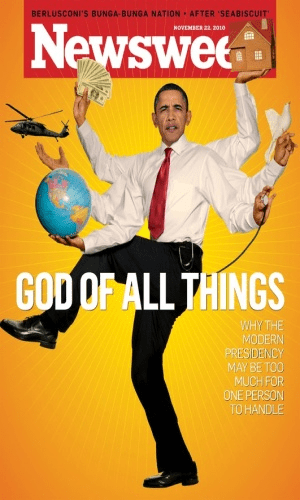
    This US presidential election is a (no-) choice between two similar masks  for the future of America in the the Presidential debate.  But Obama actually  backed off March 2009 when he had some power over the banks and did not touch Wall Street ever since. After that the financial empire became unstoppable and started to attack Europe on its weakest link (Greece) and used subsequently the crisis they induced themselves to take over positions in Europe – essentially taking over Europe.

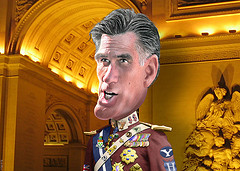
    The other choice is a more open-ended King Archetype  of entitlement due to personal virtues (or more likely personal wealth) who likes to fire people:

    The Vice Presidents debate left the impression – if not if a father son conflict – at least between an old cynical and a fresh (likable) Hero. The media too likes this sensationalism and the neck on neck horse race at 48%.

    Both President Obama and former Gov. Mitt Romney come with years of history, political and otherwise. One has a history of good rhetoric, and cool if not arrogant attitude. The other has a long history of deception, and ruthless business practices. One event – the media would like us to think it was the first debate – created myth and archetypes. Even the VP debate was influenced by it. Vice presidential candidate Paul Ryan’s workout photos were shot late last year, but Time delayed their release to achieve maximum embarrassment: It published them online just hours before the vice presidential debate, to discredit the young Hero (and make him look foolish).

    time_paulryan_theantihero
    time_paulryan_theantihero

    There is a long tradition of using archetypical images of male candidates—in most presidential races, the only kind—to illustrate their faults. Think of John Edwards fixing his hair, Michael Dukakis grinning from his perch on a tank,

    Michael_Dukakis_in_tank
    Michael_Dukakis_in_tank

    John Kerry windsurfing, and Nixon strolling down the beach in a pair of wingtips.

    These photos gained traction because they conformed with the electorate’s unconcisous idea of who these guys were: Edwards was all ego, Dukakis was a softie, Kerry was effete, and Nixon was the kind of unnatural creepy. And the Time photo shoot squares with Ryan’s vision of himself as Wisconsin’s own superhero, living at the peak of emotional and physical control. All the most powerful ideas in history go back to archetypes,” Jung wrote in his book The Structure of the Psyche. “This is particularly true of religious ideas”, but the central concepts of politics, science, philosophy, and ethics are no exception to this rule.

    Interested in the US election, I asked myself what are the archetypes used in the American election debate. Especially for the election debates pictures seem to be important, because they have a distinct advantage over the language effects: images transport more quickly archetypes than words – although they do – think of “Yes we can” of the last election. A further key stimulus is the (cross/specific) cultural body language, for which every human being has a genetically or by learning established. C.G. Jung drew up a picture of layers from personal unconscious to collective unconscious. He thinks that in all cultures, at all times and everyone was influenced from the collective unconscious expressed by those archetypes e.g. King. Warrior, Magician, The Great Mother, The Temptress, The Hero, Lover, Serpent, Dragon and many more, manifested by symbols. Those symbols are, according to Jung pictorial or gestural manifestations of archetypes.

    These symbols often find themselves in fairy tales, whereof politics is one of them. Jung says psychology was not necessary in the past because all cultures had their rituals and symbols to integrate these archetypes in the conscious living. That seems to be true for Religion, where psychoanalytic sessions replaced the confession. Many psychological problems exist only since there is the psychology before some religions ditched their symbols. However, rituals, the use of symbols, and the experience of the churches were not forgotten by the politics (and the politicians). Jung said also, that totalitarian systems want to replace and also ask for (and receive) religious worship. That was certainly true for Hitler, Mao, and Stalin not to speak of the Roman Caesars or Egyptian Pharos. I believe we move in this direction again also in the secular and so-called democratic states, especially at time of crisis. In today’s debate the Christian Division of good and evil and the symbol of fallen angel Lucifer symbolize the secession of evil from the good. We unconsciously lived this perception. A related feature of archetypes is that, while they shape our perceptions and behaviour, we only become conscious of them indirectly, as they are manifest in particular instances. It is rather like Schopenhauer and Kant’s notion of the inaccessibility of the “thing-in-itself”, upon which Jung drew: you can’t experience archetypes directly but only when they are manifested in symbols and images. Religious believers relate to the archetype of the wise man via the images available to them in their culture (given, for the sake of argument, that wisdom is what Jesus or the Buddha represent).

    But what does this mean? Look of the disastrous readings Obama got from the – traditional left leaning – media after the first election debate, almost a image of the fallen angel Lucifer crossed my mind. We often even do not understand why we reacted this way, and we feel guilty even if we are aware of it. At the case of presidential debates, what we see is an image but of the following plot we unaware. In history stories arise and figures emerge which made or broke the bid of presidency. One should interpret this flood of images and, it’s about experience the unconscious and not to interpret, because the unconscious is not fully open to rational analysis, logic, or form in otherwise. The most important task is to understand the dualism of good or evil in us. With other words we have to differentiate between Ego and Persona and recognize our Shadow and our Animus/Anima.How far you might want to follow Jung along this path is up to personal (i.e. cultural) experience. The shadow is a useful concept to many, as that side of our character which is often buried and sometimes, suddenly emerges. The notion of the animus and the anima, say, evident in Taoism.

    Seen from Europe, now what is the difference of the two presidential Egos in psychological terms after removing the mask? Answer, Nil.   Mitt Romney ran hard and successfully to the centre, and the president’s pathetic overall performance in the debate mirrored his economic performance the last four years.The same pathetic motivation speeches, but this time with bad bottom line economic figures on Obama’s watch. I have to admit, I liked the rhetoric four years ago, but it has become stale. The magic authority, his wisdom and magical transformation mantra (Yes we can) was not there anymore. Mitt Romney won the debate because he actually at least gave a convincingly impression, that he understands the issues and knows how he’s going to tackle them, not just presenting some empty rhetoric like Obama. Substance won over form, for a change. President Øbama was smart enough not to touch Wall Street the last four years, instead he left his US voters on dire street and supported the neo-con agenda in Europe to get better numbers at home  In foreign affairs, we will see. There Obama has not more to show, than his (correct) drone and terrorism strategy (i.e. Osama Bin Laden). That is not little, but in Europe and the Middle East he did not well and China does not take US (fiscal) policy serious anymore, working on plan B.

    This election is, as has been said, a (no-) choice between two similar masks (Persona) who both hide  by a plutocracy of wealth and corporate power; underway for 4 years by President Empty Chair or incoming President Cooperate Raider. Both  means that government would no longer serve the interests of the community but collaborate with their clients to establish a separate set of laws that entitle them to preferential treatment while creating barriers to competition by eliminating opportunities for others.

    The King seemed more centrist and plausible at the debate is because he crafted an exceptionally smart and pointed attack against the President’s record, and that stood in stark contrast to the lame deceptions of the Great Mother’s 30-second ads, sound bites and false and mischievous spin if the opposition intention. Mitt played actually quite reasonable and sophisticated the King’s role. For many Americans – including in my family – it was the first time they got a good impression of Mitt, and we will see if he can continue to ride on the white horse as the election approaches. Paul Ryan comes across young and authentic – not a superhero. He has potential. President Øbama was not helpful – if present at all – in Europe’s crises, Mitt could only be improvement but than he needs a steep foreign policy learning curve.

    Note October 16, 2012 – to be continued With no podium to hide behind in Tuesday’s debate, the candidates’ style and body language will be in the spotlight. In the shadow always wins the bank.