Category: Archetypes

Jungian Archetypes and Symbols

  • King, Warrior, Magician, Lover: Rediscovering the Archetypes of the Mature Masculine

    King, Warrior, Magician, Lover: Rediscovering the Archetypes of the Mature Masculine

    “King, Warrior, Magician, Lover – Review

    “King, Warrior, Magician, Lover – Rediscovering the Archetypes of the Mature Masculine” is a C. G. Jung based interpretation of masculine behavior and personality in the light of social context mythology, poetry and art. This book describes what it takes for a man (and boy) to grow up, what C.G. Jung defined as individuation process. The book presents those four archetypes and asserts that men need to embraces or control their positive and negative elements (shadows). C. G. Jung believed as depth psychologist that evolutionary and cultural roots manifested in archetypes to form our unconscious experience. The authors describe the potential in contemporary us and how to access those archetypes and utilize there energy within us.The book is organized in two major parts, the archetypes of boys and the archetypes of men and four subchapters the respective archetypes. All four representations of the archetypes have one positive (right amount) and 2 negative poles (deficit or surplus). For example, the positive lover archetype embraces the world with passion whereas the negative poles are the addicted lover and the impotent lover. Robert Moore and Douglas Gillette see every man (or boy) somewhere between these three extremes

    King, Warrior, Magician, Lover C_G_JUNG_FEMALE_and MALE ARCHETYPES
    C_G_JUNG_MOORE_MALE_FEMALE_ARCHETYPES
    • The King is the life giver and the most important responsible for the safety and well being. The book quotes from history and art that every society must have king or leader who is entrusted with guiding his people to success and comfort. The benefits and virtues of the king are many, but the responsibilities are many as well. And if the king fails in his duties he is traditionally disposed. The shadows sides are tyrant and the weakling.
    • The Warrior is today the most controversial of the archetypes, because of the cruel acts perpetrated by its shadow side. Yet aggressiveness is a highly needed characteristic responsible for our personal achievements and those of our culture. The authors suggest that properly accessed, the Warrior can do a great deal to empower us to live our lives, provide self-discipline, and protect. The two shadow sides are the Sadist and the Masochist. The Warrior is a destroyer who destroys the enemies and clears a space for renewal and change. The prototype of the warrior is the soldier.
    • The Magician, represents Logos according to Jung a masculine principle, is the archetype behind a multitude of professions like, lawyers but also engineers, scientists and priests. He sees the unseen. He is the mediator and communicator of secret knowledge, the healer, technologist, teacher, and spiritual. The Magician always has a tendency to abuse his power, being the negative Magician, the manipulator.
    •  The Lover like the feminine principle Eros manifests energy and fertility of the nature. The gendering of Eros and Logos and synergy is a consequence of Jung’s anima/animus synergy. Lovers are at easy with our own deepest and most central values and visions, and with others. And only through union of the feminine and the masculine our culture and personality prospers and grows. The “me- society” of the impotent is sterile and without compassion and the sex addict destroys any spiritual dimension.Gillette and Moore’s book asks valid questions and does right again on the misunderstood and suppressed aspects of masculine life.

    The book asserts also, that in former time these roles could be fulfilled by on person. The shaman as a holistic archetype has the King’s capacity to care, the Warrior’s capacity to fight and the Lover’s capacity to value someone or something enough to fight.
    There is much to contemplate in these books which can be mapped with political, mythic and culture examples. The self- evidence of this interpretation and its usefulness is overwhelmingly convincing. The book can be used for understanding history, analyzing the state of your society, for self reflection or spiritual exploration. For example, look at your politicians: Does one of them have the virtues of those positive archetypes? As a man look into yourself or ask your family – are you a good King, a good Lover, a good Warrior and a good Magician? I re-read this book after a monk, who not coincidently is also a trained Jungian, used it as guideline line in a weekends treat at a monastery.
    Robert Moore and Douglas Gillette have had great influence in the American men’s movement, but I approached this book from C. G. Jung, on which the concept of archetypes is based. The proposed archetypes of the book: “King, Warrior, Magician, Lover” of the book prove to be useful metaphors for men to work on themselves and to understand their sons. Hope that was not to lengthy…
  • Archetype of the Apocalypse

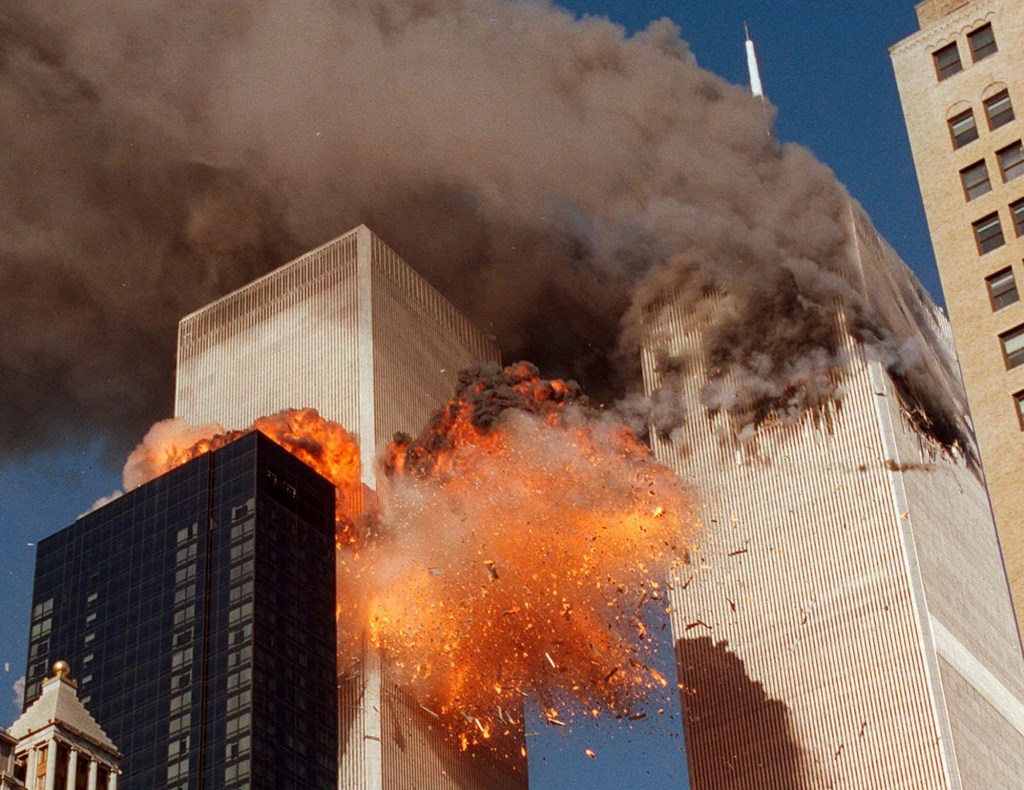
    There is a lot to say about this. 9/11 we lived in Switzerland on a farm. I learned about the Apocalypse in the car radio on one of my frequent trips between Bern and Zurich. Even as an Consultant I dislike TV, So all we got were – only BCC over shortwave no pictures. Me and my American wife went in the evening to the Zurich Bellevue, setting candles like many others did. I will not forget. Oriana Fallaci put this in better words. America killed the responsible for it. Its a war, America was attacked, but Europe is doomed despite or because of its Dimmnitude. Especially Germany.  The attacks were frightening enough, but they had another alarming aspect for me. And so we arrive at the Archetype of the Apocalypse.  Jung says, “The real existence of evil will have to be recognized. This problem can be solved neither by philosophy, nor by economics, nor by politics, but only by the individual human being, via his experience of the living spirit, whose fire descended upon , one of many, and despite all contemporary misunderstandings, was handed onward into the future.” (Jung) This is not to say that this archetype is evil personified. What this archetype is about is extremely difficult to understand not just because of our natural resistance to understanding of evil motives, especially if it is inside ourselves. Despite my respect for the intelligence and comprehensiveness of Carl G. Jung’s psychological insights, I did not have a very high opinion of his esoteric predictions, predictions that frankly sounded “far out” to me, even if  do like astrology. After all, who in the modern world (prior to 9/11) cared about pentagons  turning into four-sided figures (quaternities). Well, numbers and symbols are another thing.

    Apocalypse

    Or as Jung said, “[Our attainment of consciousness during the Christian era] [is] gravely threatened in our anti-christian age, not only the sociopolitical delusional systems, but above all by the rationalistic hubris which is tearing our consciousness from its transcendent roots and holding before it immanent goals.”.
    Rage and Pride
    Il Corriere della Sera- September 29, 2001
    Translated by Chris Knipp

    You ask me to speak this time. You ask me-this time at least-to break the silence that for years I have imposed upon myself in order that my voice not get mixed up with the sound of the cicadas. And I will break that silence-because I have learned that even in Italy some have rejoiced as the Palestinians in Gaza did the other night on TV. “Victory! Victory!” Men, women, and children. I assume that those who do such a thing can be defined as men, women, and children. I have learned that some high grade cicadas, politicians or so-called politicians, intellectuals or so-called intellectuals, and others who don’t deserve to be called citizens, have behaved in the same way. “Good!” they say, “The Americans deserve it!” And I’m very, very, very angry. I’m angry with a cool, lucid, rational anger, an anger that wipes out any detachment, any indulgence, that commands me to answer, and finally to spit on them. And I do spit on them. The African- American poet Maya Angelou, herself as angry as I am, yesterday roared: “Be angry! It’s good to be angry, it’s healthy!” But whether or not it’s healthy for me I don’t know. However I do know it’s not healthy for them-I mean whoever admires the Usama bin Ladens, whoever expresses understanding, sympathy, or solidarity toward them. You’ve fired a detonator that has too long wanted to explode, with your request. You’ll see. You’ve also asked me to explain how I myself experienced this apocalypse. In sum, to furnish my own testimony. And so I shall begin with that. I was at home-my house is in the center of Manhattan, and at exactly nine o’clock I had the sensation of a danger that probably would not touch me, but that certainly concerned me. The sensation one feels in war-or rather in combat-which each pore of your skin feels the bullet or the rocket coming in at you, and you prick up your ears and shout to whoever is standing beside you “Down! Get down!” I rejected it. I was certainly not in Vietnam. I was not in one of those fucking wars that have made a torment of my life ever since the Second World War. I was in New York, for God’s sake, on a beautiful September morning in the year 2001. But the inexplicable feeling continued to possess me. Then I did something that in the morning I never do. I turned on the television. Actually, the audio wasn’t working. But the screen was. And on each channel-here you have almost a hundred of them-you saw one tower of the World Trade Center burning like a gigantic matchstick. A short circuit? A little, careless plane? Or an act of terrorism? I stared almost paralyzed and while I was staring, while I was posing those three questions to myself, a plane appeared on the screen. It was big and white. A commercial airliner. It was flying very low. And, flying very low, it turned toward the second tower as a bomber aims at its target-throws itself at its target. And I understood. I understood also because at that moment the audio came back, transmitting a chorus of wild shouts. Repeated, wild shouts. “God, oh God! Oh, God! God! God! Goooooood!” And the plane slipped into the second tower as a knife slips into a slab of butter.

    Italian writer Oriana Fallaci is best known as an uncompromising political interviewer. Her subjects include Henry Kissinger, Willy Brandt, the Ayatollah Khomeini, and the late Pakistani leader Zulfikar Ali Bhutto, from whom she extracted such criticism of India’s Indira Gandhi that a 1972 peace treaty between the two countries almost went unsigned. Already as famous as many of the figures she interviews, Fallaci is a freethinker passionately committed to her craft.