Category: Archetypes

Jungian Archetypes and Symbols

  • C.G Jung Wittgenstein and Plato – Introvert and iNtuition

    C.G Jung Wittgenstein and Plato – Introvert and iNtuition

    Based on Carl G. Jung’s typology [Jung, 1921], Wittgenstein and Plato can be classified using four mental functions sensing, intuition, thinking and feeling together with the attitude (extraversion-introversion). Jung was fond of saying that personality types often change throughout ones life. So an answer to your question will be more or less inaccurate, depending upon which part of his life is under consideration. I find it understandable that several different personality types have attribute to Jung : INFP, INTJ, INFJ, INTP. Jung identified himself as both  ISTP (when he was young) and 1959 as INTP. I take the late C.G. Jung. There is almost consensus  that Jung was an iNtuitive Introvert, and thinking instead feeling but what is judging-perceiving preferences. Myers identifies Jung as an introvert. Keirsey & son identify Jung as INFJ. Von Franz identifies Jung as IN-J. 

    There is a funny story about an Introvert and iNtuition told by C.G. Jung. about a “lady with a snake in the abdomen” who lived in a private brothel without noticing it (BBC Interview Face to Face available in youtube). These individuals, Jung thought, are profoundly influenced by their internal motivations even though they do not completely understand them. They find meaning through unconscious, subjective ideas about the world. Introverted intuitive people comprise a significant portion of mystics, surrealistic artists, and religious fanatics. Pretty often they are mystic dreamers or shamans or seers. After World War I, this 28-year-old woman consulted Jung. She wanted “to be cured within ten hours” – that is, within only ten analytic sessions. The woman told Jung that “she had a black serpent in her belly.” That was the reason the woman had consulted him, “for she thought that it should be awakened” . The woman was “only intuitive, entirely without a sense of reality.” Then she announced that the snake, which had been dormant, had suddenly become active. “One day she came and said that the serpent in her belly had moved; it had turned around,” Jung says. “Then the serpent moved slowly upward, coming finally out of her mouth, and she saw that the head was golden.” Jung amplifies the image of the snake in the abdomen by reference to the serpent in Kundalini Yoga. “I told you,” Jung says, “the case of that intuitive girl who suddenly came out with the statement that she had a black snake in her belly.” He situates the snake in the context of the collective unconscious. “Well now, that is a collective symbol,” he says. “That is not an individual fantasy, it is a collective fantasy.” The image of the snake in the abdomen, Jung says, “is well known in India.” Although the woman “had nothing to do with India” and although the image “is entirely unknown to us,” he says that “we have it too, for we are all similarly human.” When the woman first told Jung about the snake in her belly, he wondered whether “perhaps she was crazy,” but then he realized that “she was only highly intuitive.” She had intuited a typical, or archetypal, image. “In India,” Jung says, “the serpent is at the basis of a whole philosophical system, of Tantrism; it is Kundalini, the Kundalini serpent.”

    Was Jung an INFP?

    Of the four types, INFP seems the least likely type for Jung. While capable of seeing the big picture and valuing holism to a certain extent, Jung was far too analytical, systematic, and attentive to detail to qualify as an INFP. He himself saw his feeling function inferior the 1959 interview below.

    Was Jung an INTP?

    This is most likely. The BBC Interview, Face to Face, aired 1959, with transcript published in the above mentioned C.G. Jung Speaking, Princeton University Press, 1977: “I most certainly was characterized by Thinking … and I had a great deal of iNtuition, too. And I had a definite difficulty with Feeling.” So what Jung is saying here is that his Dominant Function is Thinking, his Auxiliary Function is iNtuition and his Repressed Function is Feeling. The fact that INFP is Jung’s least likely type doesn’t bode well for the INTP though. On the other hand, his hunches ( of Nazi Germany) seem more consistent with that of a perceiver than a judger. So now we have INT_?_, and I have to guess a bit at P v. J. His struggle with feeling leads me to believe that his faculties of perception (i.e. intuition) were dominant over his faculties of judgment (i.e thinking).

    The Case for ISTP

    The manuscript prepared in 1926, published in English as Analytical Psychology: Notes of the Seminar Given in 1925: “As a natural scientist, thinking and sensation were uppermost in me and intuition and feeling were in the unconscious and contaminated by the collective unconscious. [Princeton University Press 1991 edition, p. 69]” I would attribute this as his persona (mask) and to establish the psychoanalytic method as science.

    Was Jung an INTJ or INFJ?

    Though his feeling preference was likely much less pronounced than his intuition, the most compelling reason for Jung being INFJ rather than an INTJ, would be Jung’s ineluctable attraction to religion and spirituality.  Jung consistently reiterated Feeling as his repressed Function. There is consensus that Wittgenstein and Plato was INFJ, heaven knows why.

    Perhaps the reason has its root in psychology. The Myers-Briggs ‘Thinking’ preference is associated with principled and rule-based thought, whereas its counterpart ‘Feeling’ is associated with decision making on the basis of values. At a statistical level, we can analyse patterns in such preferences, and it is not wholly surprising that the Myers-Briggs types associated with the job of programmer are all Thinking preference types (INTJ, INTP, ISTJ, ISTP, ENTP). Conversely, the job of writer is associated with Feeling preference (INFJ, INFP, ENFJ, ENFP – although also INTP and ENTP), as well the job of artist or composer (ISFP, INFJ, ENFP, INFP – although also INTP and ENTP). It should be stressed, those are just statistical tendencies.

  • Metaphysics and C.G. Jung in a post-metaphysic world

    Metaphysics and C.G. Jung in a post-metaphysic world

    In Europe we live in a post-metaphysic world.

    »There is no alternative to post-metaphysical thinking.« This statement, made by Jürgen Habermas in his 1988 collection of essays, Post-Metaphysical Thinking, sounds very much like “There is no alternative to the Euro-Zone”. Jürgen Habermas continues to develop his philosophical ideas with the shift in perspective from metaphysical worldviews to the phenomenal world (als C.G. Jung stressed) exposing the uneasy relationship between religion and post-metaphysical thinking. Habermas discussed and somewhat agreed with Pope Benedict XVI,  that »even in its post-metaphysical form, philosophy can neither replace nor suppress religion«,or diminish the role of religion on the political context of a post-secular, liberal society. Postmetaphysical thinking is, to the contrary, indifferent to any particular worldview and focuses on procedural rationality by reconstructing the normativity inherent in linguistic practices and detranscendentalizing postmetaphysical thinking. That is, putting reason within the context of (a Western) history and social reality. Whatever that means  for instance in a high context cultural environment – see also my definitions in the appendix. I admit its all this post’isms are alien to me.

    This article wants tho show metaphysics is important to understand C.G. Jung (who claimed not to strive into to it, but indeed did) and to us to navigate a post-metaphysic world. The term metaphysics is defined as following: “teaching of the last, not recognizable contexts of the existing” derived from Greek word Meta – behind and Physics – importance (of nature). The study of last things, the things behind everything created “the reality of the supernatural”. Christian metaphysics called metaphysics in the context of Roman and Byzantine Christianity and that term was introduced among others by Karl Jaspers. Every person is spiritual (metaphysical), by its very nature if he is looking for meaning and value. Common to all metaphysic systems are different, culturally related spiritual and / or religious views: the belief in a higher power of a creative intelligence, which “can be brought in for the purpose of creation of order and / or  salvation”. This is the metaphysical foundation: Faith is psychologically to hold true, to know without knowing. Religious belief is only one of them. Gnostic belief another.

    To the contrary, the central tenets of the ‘project of modernity’ including rationality and progress for which Habermas attempted 1981 to formalise it as practical achievements, should be seen against the dark context of today.  Fundamentalism shows a deliberate throwback to an archaic ‘society of ideology’, a society of savagery and a society with a lust for domination, control and power; a society which raises significant questions to the enlightenment project. Coupled with this, there have been periodic episodes of inhumanity which have ranged from the Middle East in the 8th century to genocide in Rwanda , from recent mass genocide and ‘ethnic cleansing’ in Sudan to the Arab Spring in the news today. The most spectacular  example was the terrorist attacks on ‘twin towers’ in New York. It is very difficult to implement Habermas’  universalized narratives and solution to a postmodern problem: for example, diversity of fundamentalist beliefs. For consequent actions (postmodern), communicative action is very brittle in overcoming instabilities of such beliefs (Habermas’ modernism).

    C.G. Jung’s  Humanistic Metaphysics

    C.G. Jung follows the Buddhist concept of reality, real to him is what works, psychoanalytic sessions, catholic confession, astrology, alchemy. C. G. Jung gave amazingly clear statements on the effectiveness of those as physician and therapist of empirically and analytical methods. The sureness of C.G. Jung when he described such medical operations, was based on a type of treatments which has been practiced for thousands of years. At first, there were the shamans and medicine men of different cultures that had religious and healing tasks combined. C.G. Jung regarded himself as empiricists and physician. As such, he represents the phenomenological point of view. As a scientist he felt not competent to apply philosophical or metaphysical points of view.  That is in line as Kant famously argues, that the concepts of traditional metaphysical speculation cannot be determined in any possible cognition (i.e. experience). Thus, such concepts — the existence of God, the immortality of the soul, and the freedom of the will — are necessarily unknowable.

    C.G. Jung’s Christian Metaphysics

    C.G. Jung psychological criticism of metaphysics, however, focuses only on the theological doctrine of the privatio boni (after Augustus), which concluded that the evil did not the contrast (and include) the good, but the evil is just a lack of good. By excluding the evil forces, Christ is only one half of the archetype; the other appears in the Antichrist. A denial of the reality of evil, with an ontological status of its own as an opposition of the good must lead to a metaphysical dualism, separated in the heaven and hell as hostile counter powers.  This was evident the heretical system of Christian Gnosticism.

    The psychological aspects of the individuation of the person have to be evaluated in the light of this Christian tradition, which was inclined to deny the reality of evil. Not only experience, but a number of symbols and history speaks against the exclusion of the evil forces from the empirical self. In her memoirs the famous director Leni Riefenstahl tried to cope with Hitlers – what she thought positive personality – and his evil dark side. She literally wrote, both slit personalities must have been combined.

    C.G. Jung model of the unconscious is much more enlightened than that of Freud who pressed human behaviour into a rigid mono-causal theory. It concludes a private unconscious and thus a “suppressed” part, which is called the “shadow”, i.e. that part of personality, we do not like to want to acknowledge. It goes down but further into the depths of the soul, and then you will find the fixed and fate-determining structures of animus and anima, which each contain the images of the “other family” in us for young. For C.G. Jung, the soul is a layered construction; It contains almost “geological” deposits of ancient mankind experience. Archetypes express analog to the instincts of animals certain behavioral dispositions. Beyond the personal unconscious, there is a collective “culture psyche” that may also have a “numinose” property. Archetypes appear in dreams, but also to the deliberate fantasies (imagoes’) and the spontaneous pictures (in psychotherapy as a helper method). In terms of Jungian psychology, one discovers even archetypal forms in the religions and myths, in the poetry of art at all. Even philosophical and social systems can be archetypical inspired. The “numinose” is the “archetype of the self”. This is enabled if the person on the way of “individuation” moves, which is awareness to Jung the actual objective of life. According to Jungian’s, the “loss of self” as well as the remoteness to God is the source of all neuroses.

    C.G.Jung saw clearly that he could provide information only about the existence of a God’s image in the human soul, and left the “existence of God” to theologians and metaphysicians. But already the thesis that the human psyche per se and indelible produces a God image is quite religious. C.G. Jung stressed that the soul was “naturaliter christiana et religiosa”. So, the collective unconscious contained an indirect commitment to the (not organized) religion. This is in contrary to materialist scientists who describe the universe, as a mechanical or biological system, a complicated super engine that spontaneously emerged and evolved, regulated exclusively by rigid natural laws, and completely determined.

    C.G. Jung’s  Nature Metaphysics

    One factor which has influenced Jung’s poor reputation was his tendency to cast his empirical ideas in terms of metaphysical explanation: like  his much misunderstood notion of the “archetype”. But his early work on word-association – basís of his analysis of complexes is empiricism at its best, and his comparative mythology gave him the insight that human problems are the same all the world over, and always have been. Jung regarded true to Kantian principles, that reason is best used and protected by understanding its limit(ation)s. “Reason is often not sufficient to modify the instinct and make it conform to the rational order”: an observation my daily experience all too often confirmed. Besides enormously tapping in religious symbolic C.G. Jung, used also non “numinose” experience systems e.g. the astrological world view that sees the universe as an organic system, in which the events in the psyche, the dynamics of the archetypal areas, and the events in nature are aligned with the movements of the planets and their angularness relations are symbolically linked. One of the most important principles of Western scientific thought is the linear causality. C. G. Jung has shown convincingly the existence of strange coincidences which are beyond any statistical probability, are a major objection to a conception of the universe as a system which is dominated exclusively by deterministic causal effects. This is even more striking when this coincidence brings a purely mental operation (such as for example a dream, a fantasy, or a vision) with events in the material world (consensual reality) in a meaningful relationship. This situation has called Jung synchronicity.

     Metaphysics is still alive

    Communicative Action challenges the Marxist focus on economics. Habermas argues that the key to emancipation is rather to be found in communication, that is, in free moral discourses between individuals amongst equal citizens. Ironically, there are two modernistic yet sociological grounds that Habermas fails to incorporate or appreciate in his analysis: human and cultural differences. The former because Habermas’ theorizing is built on a conception of the world in which, albeit essentialism characteristics but realities, ‘middle class’ ‘western’ ‘philosophers’ dominate. The whole ‘project of modernity’ and associated discourses of rationality and progress have historically sided with a small segment of Western thoughts. But Europe now is the weakest link in the West in defending Enlightenment.  Just think over todays self-censorship in regards to more vital cultures.  It seems C.G. Jung’s views are much better suited for todays need understanding cultural clashes between low and high context cultures. Metaphysics is not a science. It is not going to give you the price of apples. What metaphysics can do is start where physics ends. When physicists arrive at their final ultimate set of equations, they don’t have anything to say or when post-modern sociologist have nothing to say anymore the world ends in the unspeakable silence. Philosophers can always ask why things are the way they are. It is bold philosophy, and that is how I like it.

    Appendix Terms and Definitions:

    Post-metaphysical is a label which may be among other things:

    /1/ dismisses substantive conceptions of rationality in favor of procedural or formal assessments (e.g. “a rational person thinks like this”) – the basic of pc;

    /2/.replaced foundationalism (rationalism and empiricism) with fallibilism (being open to new evidence) with regard to valid knowledge may be achieved – which is routine to science at least from Galilei and Kepler;

    /3/ doubts that reason can be conceived abstractly beyond history and social reality but must contextualized or situated within actual historical practices – soft relativism;

    /4/ concern for pragmatic structures of language and action as part of the contextualization of reason instead of individual consciousness – ideology matters;

    /5/ replaces traditional theoretical truth with representational functions of language, i.e.  the moral and expressive functions of language as part of the contextualization of reason – deconstructivism.

    One may say, splitting hairs, that if communicative rationality is contextualized and historicised, it is still not relativistic holding reason to be only context sensitive instead context dependent. Logic-based examination of language is related to thinking and objectification uncovering presuppositions and validity dimensions of communication – while the relativist focus on the content. Postmodernism, Post-metaphysical sociology and late Logical Positivism are united in critique of foundationalism and metaphysics.

    Postmodernism is based on the position that reality is not mirrored in human understanding of it, but constructed in a own personal reality as truth relative to groups, cultures, traditions, or races, and gender. A general and wide-ranging term which is applied to literature, art, philosophy, architecture, fiction, and cultural and literary criticism,  it is largely a reaction to any scientific or objective efforts to explain reality.  Postmodernism relies on a socalled concrete (in reality white male subjective) “experience” over abstract principles, because the outcome will necessarily be fallible and relative and denies within the existence of any ultimate principles,  may they be scientific, philosophical, religious truth. Ironically, postmodernism becomes political correctness when it denies that it cannot on its own principles ultimately justify itself any more than can the various metaphysical system against which the “postmodern modern mind ” has defined itself.

    Postsecularism is a theoretical concept whose central idea is that Secularism may have come to an end.

    Metaphysical from the Greek meta ta physika (“after the things of nature”) refers to the studies that deals with the first principles of things, including abstract concepts such as being, knowing, cause. Areas of metaphysical studies include ontology, cosmology, and often, epistemology. Metaphysics is a type of philosophy or study that uses broad concepts to help define reality and our understanding of it. Metaphysical studies are concerned with explaining the features of reality that exist beyond the physical world and our immediate senses. Metaphysics, therefore, uses logic based on the meaning of human terms, rather than on a logic tied to human sense perception of the objective world. Metaphysics might include the study of the nature of the human mind, the definition and meaning of existence, or the nature of space, time, and/or causality. The origin of philosophy, beginning with the Pre-Socratics, was metaphysical in nature. For example, the philosopher Plotinus held that the reason in the world and in the rational human mind is only a reflection of a more universal and perfect reality beyond our limited human reason. He termed this ordering power in the universe “God.” Metaphysical ideas, because not verified by experiments are considered unverifiable by modern science. On the other hand in religion, validating of metaphysical claims like attempts to scientifically prove the existence of God and other nonobjective, nonhuman realities is seemingly impossible and meaningless. By its very nature, it cannot become an object of scientific studies.

    Relativism

    Recently, both metaphysics and science have come under attack the first for its apparent lack of access to real knowledge (in the religious context also for absolute ethics) , the latter in claiming absolute knowledge, surprisingly,  since the act of scientific observation itself always may influence the reality it hopes to explain, and scientific truths and laws continue be revised with new explanations of reality as new data comes in. Philosophical and sociological movements known as postmodernism and deconstructionism consequently issued a small-minded repudiation of both metaphysics and science.  Thus, being sarcastic, metaphysical universal knowledge fight together with objectivity (scientism) against pagan postmodern cultural and historical relativity of all knowledge.

    The correspondence theory of truth is often associated with metaphysical realism. Its traditional competitors, coherentist, pragmatist, and verificationist theories of truth, are often associated with idealism, anti-realism, or relativism

    Wittgenstein

    There are really two Wittgensteins; an early and a later one, both of whom significantly differed from each other. The early Wittgenstein was a logical positivist and mathematician who tried to dismiss all metaphysics by creating a system of logic in which the meaningfulness of propositions were evaluated in terms of how they pictured the external world. The later Wittgenstein is more psychological, more interested in linguistics. http://plato.stanford.edu/entries/wittgenstein/

    Habermas

    Recently Habermas has further developed his views on the relation between philosophy and faith in his dialogue with Cardinal Ratzinger (now Pope Benedict XVI). There he notes how much Western philosophy owes to its Christian heritage. The Christian idea of human beings as created in the image of God has been especially important for Western moral-political theory, which translated the religious idea into the secular view of persons as equal in dignity and deserving unconditional respect. Both, Habermas and  Pope Benedict XVI call for a dialogue in which secular and religious forms of thought mutually inform and learn from each other.

    http://plato.stanford.edu/entries/habermas/

    Other sources:

    • The Oxford Companion of Philosophy;
    • History of Western Philosophy, B. Russel
    • British Empirical Philosophers, Locke, Berkely, Hume
    • plato – augustin – kant, Karl Jaspers
    • Culture matters, L. Harrison S. P. Huntington
    • Dialektik der Säkularisierung, J. Habermas & J. Ratzinger
    • GK Pilosophie III, Philosophie des Geistes, Reclam
    • C.G. Jung Gesammelte Werke (see resources)

  • Make friend with our “Warrior”

    Make friend with our “Warrior”

    Recently I read  very good article and discussing a valid question, particularly for Germans. Yes, we do need also make friend with our “Warrior”.

    A year ago I went to a spiritual retreat in a catholic monastery led by a priest who holds a diploma in Jungian depth psychology. He based his group work on the Book on “King, Warrior, Magician, Lover – Rediscovering the Archetypes of the Mature Masculine” – a C. G. Jung based interpretation of masculine behavior and personality in the light of social context, mythology, poetry and art. Good book – that is if you cut out the New Age stuff. The book is loosely based on C.G. Jung using bipolar “shadows”.
    During one discussion the monk asked us – men of all walks of (middle class) live – which archetype we most like and describes us best. No one went for “The Warrior”. Now “The Warrior” is today the most controversial of the archetypes, because of the cruel acts perpetrated by its shadow side particularly in Germany. The prototype of the warrior is the soldier, yet aggressiveness (call it assertiveness) is a highly needed characteristic responsible for all personal achievements and those of our culture. Properly accessed, “The Warrior” can do a great deal to empower us to live our lives, provide self-discipline, and protect. The two shadow sides are the Sadist (too much) and the Masochist (too little) – the bully or the one being bullied.

    I that about this discussion mentioned above and came to the conclusion:
    /1/ Archetypes can be applied on Nations or social groups.
    /2/ Current German Culture clearly went on the “too little” side.
    /3/ There are many reason for this like: lots of (good) men (and women) died in the war and many of them also left Germany before and after ww2.
    /4/ Mediocrity stayed behind and imposed a “feminized male role imago” discrediting “The Warrior” even in its positive form.
    /5/ Unfortunately suppressed shadows creep up in their negative form – be it skinheads with their Teutonic symbols, neo Nazi ideologies but also the righteousness in the Anti-Nazi ideologies who are claiming fighting against Nazis but actually fight more against democracy and The Warrior”.

  • Richard Wagner from Scene to Scene utilizing C.G. Jung

    Richard Wagner from Scene to Scene utilizing C.G. Jung

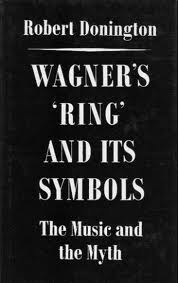
    “Wagner’s Ring and Its Symbols” originally published 1984.  (English and German article). Applied in my article C.G Jung and Wagner – Rainy Götterdämmerung in Munich.

    I wanted to learn more about Wagner and bought therfore recently a used copy of the English musicologist Robert Donington. He provides an allegorical interpretation of the Wagners Ring Cycle according to the criteria music, drama and the psychological analysis of C.G. Jung. I have worked through the book scene for scene based on a DVD of the Bayreuth production of Wagner’s “Der Ring des Nibelungen’ from the year 1991-92 (Kupfer / Barenboim). The author impresses with broad and in-depth knowledge suitable for the description of the complexity and richness of relationship the musical symbols of Wagner’s opera. Donnington analyzes and describes the entire ring from Rheingold and Götterdämmerung. The underlying ring myths and fairy tales are set in context with the poetic and musical symbols (e.g. recurrent sequences) of Wagner in an exciting way. From the symbolic and artistic consciousness he goes towards intellectual and analytical penetration of the substance. A very good appendix (notes of the sequences / relationship diagram) and scriptures complement the book.

    I am Opera fan, but (was) not a Wagner fan) but this very systematic approach in regards of general background lasting has significantly sharpened my senses (and reception). I have been subscribed to the scheme of C.G. Jung for a long time, and considers Robert Donnington’s approach to use it for Wagner brilliant and all in all valid. He does justice to the complexity of Wagner with a comprehensive knowledge of literary and musical material. C.G. Jung has dealt precisely with Archetypes of the hero and Wotan. Concepts of animus and Anima, shadow do very well describe Wagner’s poetic figures.Alberich pays by his own self. He gives up love for power, loses the power, which represents the Ring.  His life is hell.

    The appearance” of the “Unwillkürlichen”  is the subject of the ring according to Wagner’s own information. That fits in well with C.G. Jung’s unconscious, his view of consciousness functions – Sensing and Intuition and the a-causal contexts (synchronicity). Robert Donington used once in a while the vocabulary of modern psychology s quite arbitrarily. Then, I had to put a question mark and the edge in the “split shadow”. There is also a mix of Freud and Jung and concepts and occasionally heavily psychological charged sentences, whose meaning and benefit are not immediately clear to. However, for me a very successful and engaging introduction to The Ring.

    See also my article C.G Jung and Wagner – Rainy Götterdämmerung in Munich.

    Meine Rezension:  Richard Wagner’s ‘Ring des Nibelungen’ und seine Symbole: Musik und Mythos

    Der englische Musikwissenschaftler Robert Donnington gibt diesem Buch eine allegorische Deutung des Ring-Zyklus nach Kriterien Musik, Drama und der Psychoanalytik von C.G. Jung. Donnington analysiert und beschreibt den gesamten Ring von Rheingold bis Götterdämmerung. Die dem Ring zugrunde liegende Mythen und Märchen werden dabei auf sehr anregende Weise mit den poetischen und musikalischen Symbolen (z.B. immer wiederkehrende Sequenzen) von Wagner in Verbindung gebracht. Vom symbolischen und künstlerischen Bewusstsein geht es in Richtung intellektuelle und analytische Durchdringung des Stoffes. Ein sehr guter Anhang Noten der Sequenzen / Beziehungsvdiagramm) und Stichwortverzeichnis ergänzen das Buch. Ich habe das Buch Szene für Szene anhand einer DVD der Bayreuther Aufführung von Wagners ‘Der Ring des Nibelungen’ aus dem Jahre 1991/92 durchgearbeitet(Kupfer/ Barenboim). Bei der Beschreibung der Vielschichtigkeit und Beziehungsreichtum der musikalischen Partitur beeindruckt das breite und fundierte Wissen des Autors. Ich bin zwar Opern-Fan, aber (war) kein Wagner Fan) und diese sehr systematische Herangehensweise des Buches über gesamthaften Hintergrund und Zusammenhang hat meine Sinne (und Rezeption) entscheidend geschärft. Ich fühle mich durch die Systematik von C.G. Jung seit langem sehr angesprochen, und halte Robert Donnington’s Ansatz diesen bei Wagner zu verwenden, für brillant und alles in allem gültig durchgeführt. Der Komplexität von Wagner wird er mit einer umfassenden Kenntnis des literarischen und musikalischen Materials gerecht. C.G. Jung hat ja sich ja eingehend genau mit dem Archetypen des Helden und Wotan auseinandergesetzt. Konzepte von Animus und Anima, sowie Schatten beschreiben sehr gut Wagners poetische Figuren. Die “Darstellung des Unwillkürlichen” ist nach Wagners eigener Auskunft Gegenstand des Rings. Das deckt sich gut mit C.G. Jungs Unbewussten, seiner Sicht der Bewusstseinsfunktionen – Empfinden und Intuieren und der akausalen Zusammenhänge (Synchronizität). Nur verwendet Robert Donnington das Vokabular der modernen Psychologie einige Male recht willkürlich. Dann musste ich ein Fragezeichen and den Rand setzen, so bei den “gespaltenen Schatten”. Auch gibt es manchmal ein Gemengelage von Freud und Jung und gelegentlich stark mit Psychoanalytik geladene Sätze, deren Sinn und Mehrwert mir nicht sofort einleuchtet. Für mich ein sehr gelungene und fesselnde Einführung in den Ring.

  • C.G Jung and Wagner – Rainy Götterdämmerung in Munich.

    C.G Jung and Wagner – Rainy Götterdämmerung in Munich.

    This is a very personal take on Götterdämmerung the last one in the four of the opera cycle by Richard Wagner’s  “Ring” from a Jungian perspective. However also if the themes of the Ring, though universal, specifically apply to our lives today.

    The Conductor Kent Nagano

    The Munich Opera Festival draws for over 130 years opera fans to Munich, and as one of the oldest international festival continues far beyond the city and national borders. Since fifteen years there is a free eopen air event “Opera for all”.  Since the charismatic Conductor Kent Nagano came to Munich Opera, those two events “Opera for all” became even more cult for young folks not used to rattle the jewelry in plush seats. I saw him first time in California (Berkeley) and still appreciate Kent Nagano’s courageous and creative ways to transfer his subtle understanding of classical music to the audience. Already on Saturday – on a beautiful  night – he conducted open air with the Bavarian State Orchestra excerpts from Richard of Wagner’s “Ring des Nibelungen”, an arrangement on 16 hours of Wagner’s ring issues put together in one hours without singer. Already raising eyebrows, as a bonus, there he played still another ring – parts of the film music for “Lord of the Rings”.

    In any case, not entirely being  a usual Wagner fan.

    What’s the “Ring” all about?

    Actually, Richard Wagner wanted not only to edit the well-known the German and Scandinavia legend of Siegfried’s death, a saga of gods and people of faith and fraud. Wagner takes the world of the Norse gods to the ring as a template for a critical interpretation of human society, around the failed revolution 1848. The ring and the gold as symbols of power and of the capital,  the power versus rebellion and the failure of the hero Siegfried are all universal archetypes still up to date.

    The Casts

    In the figures we see the relationships of the various races of mortals and immortals: the immortal inhabitants of Valhalla, the Walküren who move between the worlds, the mortal Vaelsungs of the Forest, the Giants of Earth, the Gibichungs who inhabit the Rhine Castle, the Nibelung dwarfs of the shadows, and the Rhinemaidens who inhabit the source of life.

    • Rhinemaidens Woglinde (Sopran), Wellgunde (Mezzosopran), Floßhilde (Alt),
    • Alberich (Bariton), ugly dwarf and counterpart of Wotan
    • Wotan (Bariton),  the God
    • Fricka (Mezzosopran), Wife of Wotan
    • Freia (Sopran), Godness of etrnal youth
    • Donner (Bariton), God of Power and Thunder
    • Froh (Tenor),  Brother of Freya
    • Loge (Tenor),  TrickySemi God
    • Mime (Tenor),  brother of  Alberichs,   created stealth helmet
    • Fasolt and Fafner ( Bass),  Giants, Fanfer later turns into a dragon
    • Erda (Alt), Wise women and mother of  Walküre Brünnhilde (by Wotan)
    • Siegmund (Tenor)  Human and son of Wotans
    • Sieglinde (Sopran),  Sibbilibing of Sigmund and later his lover.
    • Hunding (Bass), Sieglinde’s Husband
    • The Birds (Waldvogel)
    • Brünnhilde (Sopran), Walküre, and favorite daugter of Wotan und Erda.
    • Eight other Walküren ((Gerhilde (Sopran), Ortlinde (Sopran), Waltraute (Alt), Schwertleite (Alt), Helmwige (Sopran), Siegrune (Mezzosopran), Grimgerde (Alt), Rossweiße (Mezzosopran))
    • Siegfried (Tenor), Son of Sieglinde und Siegmund  kills Fafner, wins the Ring and looses Brünnhilde
    • Dragon Fafner (Bass), guarding the the Ring
    • The Nornen (Sopran, Mezzosopran, Alt), three wise Daugters of  Erda
    • Gunther (Bariton), Leader
    • Gutrune (Sopran),  his Sister
    • Hagen (Bass), the son Alberichs and half-brother of Gunther.
    • Waltraute (Alt), Sister Walküren of Brünnhilde

    The Ring Cycle

    The Ring consists of four operas begins with a symbolics Genesis of the world (Water) and  with its destruction (Fire).

    • Das Rheingold, Munich, 22 Sep 1869
    • Day1  Die Walküre, first Munich, 26 Jun 1870
    • Day 2 Siegfried, first Bayreuth, 16 Aug 1876
    • Day 3 Goetterdaemmerung, first Bayreuth, 17 Aug 1876

    Prelude: The opera:  ” Rheingold“

    The Rhinemaidens have a magical gold treasures with magical powers. Alberich an ugly dwarf, trys to score on them but they laugh at him. So he robs their treasure with  the ring (the key to power and wealth). To do this, he must renounce love. At the same time had the gods (Wotan) built a castle (Valhalla) built by the Giants Fasolt and Fafner. They price is the goddess Freia who guards the secret of eternal youth of the gods.  As Wotan learns about Alberich’s theft he manages to remove the treasure and the ring, forged from the Rheingold from Alberich. Alberich curses the ring. The gods pay their castle with that treasure and the ring to the giants. The cursed ring does its effect one of the Giants (Fafner) which kills his brother (Fasolt). At the end of the story, the gods take the Castle Valhalla in possession. Wotan begins his reign based on free coexistence; from but still fears the danger of ring and its curse is not yet banned.

    Day1:  The opera “Die Walküren”

    Walküren collect heroes from the battlefields and bring them toValhalla. A pair of twins: Siegmund and Sieglinde are separated by fate and now meet again in Hundings house and fall in love.  Sieglindes husband, Hunding, challenges Siegmund therefore to fight with him.  Wotan gives  Brünnhilde (one of the Valkyries) order that should to support Siegmund.  The wife of Wotan, Fricka does not accept Siegmunds adultery and incest and Wotan has to reverse e the order. But Brünnhilde  decides to help him Siegmund anyway and Wotan influences the fight by himself. Siegmund  is powerless against Wotan and dies, his famous sword shattered. Brünnhilde advises Sieglinde, who is pregnant, to move  in the forest  where Fanfer the dragon the dragon lives.  Brünnhilde awaits Wotan’s anger and Wotan banishes her to a mountain, but  protects her wit a ring of fire which only strongest hero” can redeem her (Brünnhilde thought this might be Sieglindes son …).

    Day2:  The opera “Siegfried”

    Mime, Alberic’s brother and blacksmith raises Siegfried, Sieglindes son. Mime is hoping the boy would take  the ring  from Fafner who turned into a dragon .  Mime is not able make Siegfried a suitable sword, so he refurbishes himself  the sword Nothung of his father and kills the Dragon. A Bird (Waldvogel) whose song Siegfried can understand tells him what happens next: he should take the ring and the cloak of invisibility. Then, he advises him or how he would be  able to get “the most beautiful woman” – Brünnhilde – on their fire rocks. Siegfried gladly accepts this advice rushes to Brünnhilde and falls in love with in infinity.

    Day3:  The opera “Die Götterdämmerung”

    It is indeed my favorite Wagner opera. At the beginning, we see the Norns, weaving the rope of destiny. They tell the events of the beginning of conscious action on. As they approach they pull the rope. The Norns flee to Erda – the fate of the world is open.

    Brünnhilde and Siegfried had married. At the Court of the Gibichungen Hagen (their sleazy half-brother and  Ablrbrichs son) the weak royal brother and sister Gunther and Gutrune pointed out meanwhile that he can’t get Gunther Brünhilde as wife and Gutrune Sigfried as husband. Due to his magical drunk, Siegfried falls in love with Gutrune, and brings (his wife) Brünhilde to Gunter in the persona of Gunter and takes the ring from her.

    The double marriage happens. Brünhilde, recognizes the Ring on Siegfried’s hand and outraged of Siegfried’s betrayal, let Hagen kill him. Haunted by nightmares Gutrune wanders through the night. The dead Siegfried is brought. Hagen boasts defiantly with murder and wants the ring. Gunther rejects, but Hagen kills him too and “grabs Siegfried’s hand which lifts up ithreatening”. Brünnhilde appears now. She orders to build a stake on the edge of the Rhine to burn Siegfried and herself. She draws the ring from Siegfried’s finger. As the fire blazes, the Rhine water comes over the shores with the Rhine maidens. who get the treasure back and pull Hagen into the depths. In a bright glow of fire in the sky, you can see the burning Valhalla. As the gods of the flames are completely hidden, the curtain falls.

    Götterdämmerung

    The most intense drama in the opera “Gotterdämmerung” as well as the ring cycle comes after Siegfried’s death,  the central character in Wagner’s opera. Siegfried is dead, and his body is brought back and shown to both Brunnhilde and Getrune,who are taken with attacks of grief at the sight of the corpse of the man whom they both loved. The only real issue for the mischievous Hagen is the ring and to whom it should go to and  he rids himself of his own brother to obtain the coveted ring.  Siegfried’s dead hand moves in a clear indication that he is not ready to give up the ring.  It is also as Siegfried’ body is being carried that we hear one of Wagner’s most powerful pieces which truly captures the moment with all that Siegfried was, the Archetype of the hero from dragon slayer to the one who was able to defeat Wotan but also Brunnhilde’s tender lover. In my opinion Wagner’s music captures the somber mood which is about as this once mighty hero lies dead and to illustrate in its harmonies the glory. Wagner’s music increases to the force of a hurricane as the fire from the pyre rises as high as to consume not only Valhalla but the deities who rule the world. Hagan however tries to prevent the ring from going back to where it came from and in doing so is drowned by the Rhine maidens, who finally have back what was taken from them at start.

    Wager and psychoanalytic models

    Lets allign  the key concepts of Wager to psychoanalytic models. Both the Freudian and Jungian models of the psyche rely on the  balance of forces among the elements of the psyche. A major difference between the two is in the chosen center-point or balance point. Freud’s model is primarily centered around the healthy functioning of the Ego in the society and (sexual) relationship; his model focusses on consciousness and the outer world – the unconsciousness is almost treated like a malfunction. By contrast, Jung’s model is Self-centered. That is, the whole self, conscious and alike. Jung uses the term Self both for the personal (experienced) god, and for the whole human psyche. Whereas Freud considered religion to derive from illusion, Jung considered religion as a way to the whole self, seeking to integrate the roalm of the spiritual with our lives in the outer world.

    The Freudian view

    Siegmund falls in love with his long lost sister Sieglinde. And, make no mistake, they know they are brother and sister and still engage in lust and plan on marriage even Sieglinde is already married. Their father is the god Wotan. Wotan had many affairs and Siegmund and Sieglinde are the product of one of those.  Those characters would indicate Freud’s approach, that all thrive comes from sexuality. Fricka, Wotans wife wants Siegmund killed in a fight despised by such immorality.  As the Goddess of marriage you’d expect her to say that, she represents the repressive factor.  Very simplistic.

    Adler’s view

    Another superhuman being, Alberich, has given up love to more fully pursue power.  Alberich’s giving up all love to gain power teaches Adler’s main force the lust for power may have different values but are playing to win. Wotan’s realization teaches us that power cannot be taken for granted and it cannot be sustained by constant uncontrolled,irresponsible and inconsiderate lust. Again too simplistic.

    The Jungian view

    Micha Brumlik interprets the depth psychology as romantic theory of the unconscious and uncovers their archetypical references to Richard Wagner’s magnificent operas, The Ring, provides an intense and amazing example. In high drama we get answers to the Authoritarian breakdown. Incest is one of this. There is some significance in Jung’s belief — or his occasional claim — that he was a descendant of Goethe. He was completely out of sympathy with the narrow materialism of nineteenth-century science. In an essay on Wagner, Thomas Mann quoted a dignitary of Seville cathedral, who is supposed to have said to the architect: ‘Build me a cathedral so enormous that people of the future will say: the chapter must have been mad to build anything so huge … ‘ Mann pointed out that the nineteenth century was full of this spirit of  Balzac’s Human Comedy, Hegel’s System, Zola’s Rougon Macquart cycle, Wagner’s Ring, Tolstoy’s War and Peace. Jung’s sympathy was all with transcendence and myths. His psychology is built of the same mythological material as Wagner’s Ring.

     Symbols

    Though there are many symbols in the story, four symbols of personal power are central to our theme:

    •  Wotan’s spear, his symbol of conscious (Ego) power is carved from the world ash tree of life.
    • The Chain of possession starts with the Rhinemaidens and ends with Flosshilde, a Rhinemaiden. The chain turns upon itself to form a ring.
    • The tarnhelm, or helmet, confers the power to change but it also entails the power to deceive. Wotan used it to get the ring from Alberich; Siegfried used it to regain the ring from Bruennhilde;
    • The sword, the weapon for the heroic struggle, was given by the father (grandfather Wotan), but it was broken; Siegfried had to reforged his own weapon for the struggle;

    The Self

    The ring itself represents for us the lure of gold, or or lust of power, from the Rhine,  a them which has been reused by the lords of the ring. Possession of the ring confers power over the world. We set out to relate the life-cycle of the ring to the life-cycle of the psyche. The figure suggests how this might be done. The story begins in the realm of the Self, which has its origin in the value of life.

    The Shadow

    Alberich and his son Hagen inhabit the realm of Shadow, where reside rejection, frustration, anger, hate, evil.

    In these storms of life are all the human ills — theft, deceit, betrayal, murder, incest, and all such. This is the considerable shadow energy of the psyche, seen in Alberich’s evil reaction to rejection, in Wotan’s awful betrayal of Youth and Beauty (Freia) to build his castle; in his stripping Bruennhilde of her immortality and his imprisoning her in the ring of fire in order to regain the ring of power.

    Shadow energy is also seen in the struggle between Siegfried and Mime, his evil stepfather — the orphaned Siegfried is raised by his shadow, Alberich’s brother! That same shadow energy also provides resistance to the reintegration of the psyche. Siegfried had to slay a dragon, but he also had to struggle with the Gibichungs. They defend the castle which guards access to the Rhine.  This reasoning teaches us that the underpinnings of morality rest on the ability to distinguish good from bad, the sacred from the profane.

    The Ego

    Wotan and his castle building express the realm of Ego inflation in which he and we deal with the giants of earth.The return of the ring into the deep currents of the flow of life completes this life cycle. The self is made whole. The cognitive conscious world of Ego is reconciled with its spiritual origin; the Self is reconciled.

    The Archetypal Hero – Animus and Anima

    Siegried reprents the  archetypal hero. But re-establishing balance in the psyche requires an heroic struggle. Siegfried’s slaying of the dragon represents the start of re-establishing balance. His love of Bruennhilde represents the necessary union between the conscious realm and the realm of his Anima.  In Siegfried’s death we see the individuation becoming, and in Bruennhilde’s immolation, similar burning away her self taken human mortality.

    The Persona

    As is morality, Wagner is very personal and philosophical. Wotan is a God.  Watching his son die will not be easy. But as his son has transgressed the basic rules of decency in society Wotan understands the necessity of killing him. He tells his daughter, Brunnhilde the Valkyrie, but emotions cause her to disobey the cold moral.Like all great art, Wagner’s The Valkyrie teaches fundamental cultural lessons about society.

    Rainy Sunday

    On Sunday Nagano‘s  new production  “Götterdämmerung” of  National Theatre completely sold out for a long time, came on a big screen. The weather did not want to play along on that day, and so the Open-Air visitors were hit repeatedly by – some long-lasting – showers. But with the right equipment, some fans including me held out over six hours on the Max-Joseph-Platz before the National Theater and eagerly pursued the Opera broadcast on the big screen. The singers of this show and Conductor Kent Nagano came out after the end of the opera to say thank you for this dedication.

    Like the psyche, Wagner’s work has had influence for both good and evil. Nietzsche and Hitler both much admired Wagner’s work, and that nihilistic chain of influence was to give in the 20th century full expression to destruction and evil until today. Yet the same work also had a considerable influence on may others, notable King Ludwig the II. As we look back,  it often seems as if the necrophiliac shadow aspects of our collective psyche have had the upper hand. In Goetterdaemmerung, one of the three Fates sings that the rope of the world’s destiny has been severely frayed by evil. As she sings that, the rope breaks completely.

    We now are in Europe in the beginning of a turbulent transition from democracy to some new type of world-order at the threshold of another economic war – the “Third Geldkrieg”. The twilight of the gods will not be the twilight before the dawn, but before a new darkness. The lust for power and greed will represent the extinguishing of Psyche’s gods.

    In that respect, Wagner is pointing to the current economic system, whose manipulator think they are gods. Our society would be better grounded if  it spent more time with great art; pieces like Wagner’s Ring are entertaining, they create a shared vocabulary within our culture  just like C.G. Jung’s Archetypes.

    “Wagner’s Ring and Its Symbols” originally published 1984.  Robert Donington (Wagner seen mainly throug C.G. Jungs eyes)

    Index to “Richard Wagner”in the Collected Works of Carl G. Jung (mainly he was concerned with Wotan)

    Volume 5: Symbols of Transformation

    par. 421 (p.275) — fig. 28: Wotan on eight-legged horse Sleipnir; Wotan as Drosselbart  half-man, half-horse

    par. 422 (p.278) — horse \ wind; Wotan galloping in storm chasing the wind- bride

    par. 555 (p.358) — Siegfried’s hero’s entry; Siegfried’s feelings for Bruenhilde; brother-sister incest;

    Sieglinde as “human mother”, Br. as “spirit mother”; Br. banished by Wotan for complicity (approval) of incest; Siegfried \ Horus; Sieglinde’s “night-sea journey to the east”;

    par. 556 (p.358) — broken sword \ dismemberment

    par. 559 (p.359) — Wotan \ persecution motif

    par. 560 (p.360) — Bruenhilde “split off” from Wotan, a feminine emmisary for a martial god “somewhat remarkable”

    par. 563 (p.360) — Bruenhilde. as anima attached to masculine deity, a dissociation; Wotan unconscious of his own femininity

    par. 564 (p.361) — Wotan’s lament for Bruenhilde

    par. 565 (p.361) — Br. support of Siegmund; the incest a projection: Wotan’s entering “into his own daughter to rejuvenate himself

    par. 566 (p.361) — Sieglinde’s death; Mime of “a race who has abjured love”

    par. 567 (p.362) — Br. asleep in ring of fire; Mime a masculine representative of the Terrible Mother; Siegfried drawn away by longing for Mother-imago

    par. 568 (p.363) — the song of the Forest Bird \ mother Jung Index: “Richard Wagner” 10:18:36

    par. 569 (p.363) — gold \ “treasure hard to attain” \ the “mother” \ unconscious; “magic cap” (tarnhelm) changes Alberich into serpent \ motif of rejuvenation; dragon’s blood \ understanding nature.

    par. 598-600 (385-6) — Wotan (Wanderer) and Erda \ “fatal charm of the mother”

    par. 602-11 (p.387-391) — Siegfried’s encounter with Bruenhilde, evokes mother; Br. \ mother-sister wife anima archetype; Siegfried as archetypal hero

    Richard Wagner Links

    My Review Harry Kupfer Wagner Ring cycle

    Opera for All

    Richard Wagner from Scene to Scene utilizing C.G. Jung

    Vladimir Jurowski

    Bavarian State Opera