Category: C.G.Jung

The psychoanalytic Jung

  • The footprints of Aquarius and New World Order – a Jungian view

    The footprints of Aquarius and New World Order – a Jungian view

    The Aquarius Age (aka New Age or New World Order) is a period defined by the passage of the spring equinox (literally “Equal Night”) into the Aquarius zodiac sign. What does the Aquarius age promise? What are its footprints? Is it the blue pill or the red – hope or despair? What had Jung  to say…?

    The gradual shift in the orientation of Earth’s axis of rotation changes the apparent position of the vernal equinox through all twelve traditional constellations of the zodiac, at the rate of about 2150 years for one of them (called a Great Month) in a full cycle of ca. 26,000 years (called a Great or Platonic Year).

    Aquarius
    New World

    In our lifetime the earth is (was) on the brink of the Pisces Age to Aquarius age. Change has been positively embraced by the pop culture (like in the musical “Hair” in the sixties or Obama in his election rhetoric), by liberals, astrology and esotericism as way to equality and individualism. Syncretic and atheist movements have claimed it will bring forth global integration in a brave new world. Economy experts have offered endless growth. Today in retrospect the Aquarius age is more and more associated with the rise of the evil, the globalization and undemocratic transnational organizations and a New World Order controlled by secret power elites.I want to approach this essay by a Jungianan New Age book: “The Footprints of God: The Relationship of Astrology, C.G. Jung, the Gospels” by Luella Sibbald from the year 1988 – stripped of New Age content and trying to allign physical facts, underlying myths and astrological claims with historical facts of the past.

    Astronomy

    434px-Praezession

    The psychoanalyst Carl Gustav Jung was an early popularizer of the concept of the Age of Aquarius (already in the forties of last century). I might be drawn to C.G. Jung but certainly not to New Age, so lets look at the astronomical facts first. The reason of the Great Year is an axial precession of the earth similar to the precession of a spinning top due to gravity. The precession of the Earth’s axis has a number of observable effects. First, the positions of the celestial poles appear to move in circles against the space-fixed backdrop of stars, completing one circuit in 25,772 Julian years (2000 rate). Thus, while today the star Polaris lies approximately at the north celestial pole, this will change over time, and other stars will become the “alignment star” for us star gazers. Secondly, the position of the Earth in its orbit changes relative to the backdrop of the stars and therefore also the vernal equinox slowly regresses a full 360 degree through all twelve traditional constellations of the zodiac, at the rate of about 50.3 seconds of arc per year (approximately 360 degrees divided by 25,772), or 1 degree every 71.6 years.The Mayas observed with the help of the Venus orbit already this axial precession of our earth.

    Modern astronomy aside, all religions and cultures have recognized the vernal equinox for thousands of years. The date is significant in Christianity because Easter always falls on the first Sunday after the first full moon after the vernal equinox. It is also probably no coincidence that early Egyptians built the Great Sphinx so that it points directly toward the rising Sun on the day of the vernal equinox. The first day of spring also marks the beginning of the Persian New Year in the 3,000-year-old tradition of Zorastrianism. Other important advanced civilisations of the humanity – Maya, Sumerian, Chaldaean, Egypt’s, Chinese etc. – held a similar idea of the change of Aeon’s and interpreted it in religious and mythical traditions . ‘Aeon’ comes from the Greek and means “long time” originally a name of the old Persian eternity God czar’s van akaran (=time without end). In the numerous mystic schools of the later Gnosis, which heavily influence C.G. Jung, “Aeon”, loses this meaning and  defines those long zodiac periods.

    Astrology

    Age of Aquarius
    Age of Aquarius

    In Astrology, still of those darkened avenues considered off-limits of science the Great Year of have recognized the vernal equinox were interpreted by Babylonian astronomers. It is worth to mention, that in Babylonian times there was no difference between a priest and a doctor and up to the time of the Astronomer Kepler little difference between Astrology and Astronomy. In his research into the symbolic meaning of his patient’s dreams, conversations and paintings, Jung observed recurring mythical themes. Jung concluded that the constellations were originally inspired by projections of images created by the collective unconscious. Jung wrote “Astrology represents the sum of all the psychological knowledge of antiquity”.

    A vernal point moving through the randomly sized zodiacal constellations or sidereal zodiac  too erratic and suggest a false accuracy for  a long period transitions one may round all astrological ages to exactly 2000 years each: In that the Aries age is found from 2000 BC to 1 AD, Pisces age 1 AD to 2000 AD, the Aquarian age 2000 AD – 4000 AD, and so on. So the great year is defined by the vernal equinox sign placed in the particular house.

    houses_chart
    houses_chart

    The houses have certain meanings:

    • The 1st house ( Ascendant) Real Self, demeanour, and vitality
    • The 2nd house: possession and material goods.
    • The 3rd house: immediate surroundings, siblings, studies.
    • The 4th house, (Imum Coeli): family, home, origins,  and father.
    • The 5th house: creativity love, pleasure, leisure, and children
    • The 6th house: everyday life, service and health.
    • The 7th house (Descendant): Persona how to perceives, partnership, marriage
    • The 8th house: crises, transformations, death,  sexuality, occultism.
    • The 9th house: travels, mental explorations, philosophy, law and religion.
    • The 10th house, (mid-heaven): hope a professional destiny,  mother.
    • The 11th house: friends, hope and wishes, supports and protections
    • The 12th house: own undoing, enemies, difficulties, solitude, secrets

    The Zodiac is divided into four quadrants and hemisphere of the same size.

    •  The first quadrant comprises the 1st, 2nd, and 3rd houses. They symbolise levels of consciousness of egotistical nature
    •  The second quadrant comprises the 4th, 5th, and 6th houses. Sociability, creativity and work.
    • The third quadrant comprises the 7th, 8th, and 9th houses, which are of sheer interpersonal nature.
    •  The fourth quadrant comprises the 10th, 11th, and 12th houses, the sector of spiritual and humanitarian actions.
    • The Northern hemisphere comprises the 1st, 2nd, 3rd, 4th, 5th, and 6th houses and indicates a personal, egotistical, subjective, and internalized typology.
    •  The Southern hemisphere comprises the 7th, 8th, 9th, 10th, 11th, and 12th houses and indicates an active, objective, externalized, and group-oriented typology.
    • The Eastern hemisphere comprises the 10th, 11th, 12th, 1st, 2nd, and 3rd house, near the Ascendant it indicates a typology marked by independence and personal action.
    • The Western hemisphere comprises the 4th, 5th, 6th, 7th, 8th, and 9th houses, near the Descendant it indicates the importance of communication, dependency and relation with on other people

    “The Age of Freedom and the Water Bearer” (Aquarius AD 2150 to 4300)

    The edge established between Pisces and Aquarius locates the beginning of the Aquarian Age around the year 2600. C.G. Jung followed interpretation that the Age of Aquarius will begin in AD 1997 but in the Mayan Calendar / Egyptian Cycle of the Phoenix begins AD 21 December 2012.

    We live in emotional and intellectual disturbed times.  In (European) retrospect this has been caused by permanent indoctrination of sterile and spiritual deaf scholars in the sixties like Marxist Ernst Bloch who ridiculed Carl Gustav Jung, ” who offers art as a religious substitute, religion life substitute and both for a tired bourgeoisie” or petty revolutionary like Rudis Dutschkes comrades, little Red Guards who until today just can utter “Ultra reactionary”. When Jung was dying in 1961, age-old and terminally ill from heart problems, his thoughts circled round the Far Eastern practice of the rebirth. Now, so he entrusted friends, he will probably learn shortly what the Self is all about. In 1958 Jung, in a writing with the title “a modern myth”, he had forecast the coming world order in the sign of the Aquarius: “Now we approach”, he announced, “the big change, with the entry of the spring equinox we expect the coming world order in Aquarius”  with “secular changes of the collective psyche”.

    Jung and the Age of Aquarius

    As has been shown, the defection the transition into the Aquarius depends on arbitrarily agreed zodiac borders of the constellations, the change the age cannot be defined rationally or exactly. Thus very different times were calculated up to now:  1950, in 1962, but also in 1997, in 2012 (aligned with the Mayan calendar) and 2146 were given. The latter number arises if one defines the (Western notation) year 1 A.D. as a beginning of this Pisce age how it is mostly done for reasons of the descriptiveness. C.G.Jung has dated such a change of “Aeons” in his work, hence, on 1997. Aniela Jaffé in “C.G.Jung in his last years and other articles” and C. G. Jung in his work “Aion” (1950) interprets this change as a “synchronicity phenomenon”.  Aniela Jaffé ties it with the (decline) of the Christianity whose symbol is the fish. She claims, that possibly thousand years ago – as the second part of the Pisces sign was touched, the age of the Antichrist begun whose climax we experience right now.

    Who wants to understand, why academic Europeans turned to Indian gurus in the sixties and value Jung today, should rather read Jung than Freud; Jung is a precursor of that capitalism and civilisation criticism which becomes today more than valid  in view of the menacing economic and spiritual disasters of literally dying societies. Secularism in the West and  not bring enlightenment but a soft totalitarian Socialism in partnership with the New World Order of the “Masters of the Universe”. More still: The “wise old person of the Zurich lake”, as his disciples called him, opened his system of theories quite early to all sorts of occult influences which appears today meaningful in the post-scientific world view of the disappointed protagonists and the post-democratic reality: Myths and fairy tales, spiritualism, astrology, alchemy, shamanism, Catholicism, Zen and yoga – all this melted in the thinking of the psycho-magician Jung to a cosmic whole.  The “Self”  was Jung’s objective, a psychic integration of consciousness and unconscious and awareness of collective archetypes, so vivid needed in the fast paced globalisation and global communication which develop according to their own laws and are called upon by fanatics (or paid manipulators) with a mouse click to raise an angry religious or pseudo-secular (post-modern) mob.

    Below are excerpts of what Jung wrote of the Age of Aquarius..

    • C G Jung 1951 AD [for the German-language Version], Aion [published in the Collected Works 9, Part II] Chapter IV, The Sign of the Fishes:
      • “If, as seems probable, the aeon of the fishes is ruled by the archetypal motif of the hostile brothers, then the approach of the next Platonic month, namely Aquarius, will constellate the problem of the union of the opposites. It will then no longer be possible to write off evil as the mere privation of good; it’s real existence will have to be recognized. This problem can be solved neither by philosophy, nor by economics, nor by politics, but only by the individual human being, via his experience of the living spirit…”
      • ” Astrologically interpreted, the designation of Christ as one of the fishes identified him with the first fish, the vertical one. Christ is followed by the Antichrist at the end of time. The beginning of the enantiodromia would fall, logically, midway between the two fishes. We have seen that this is so. The time of the Renaissance begins in the immediate vicinity of the second fish, and with it comes the spirit which culminates in the modern age”
      • “Since the delimitation of the constellations is known to be somewhat arbitrary, this date is very indefinite. It refers to the actual constellation of fixed stars, not to the zodion noeton, i.e. the zodiac divided into sectors of 30º each. Astrologically, the beginning of the next aeon, according to the starting point you select falls between AD 2000 and AD 2200. Starting from the star “O” and assuming a Platonic month of 2 143 years, one would arrive at AD 2154 for the beginning of the Aquarian Age, and at AD 1997 if you start at star “a 113.” The latter date agrees with the longitude of the stars in Ptolemy’s Almagest, p. 199, n. 1.”
    • C G Jung 1959 AD: Flying Saucers, Introduction, pp xi – xii:
      • ” They are, it seems, changes in the constellation of the psychic dominants, of the archetypes or “Gods” as they used to be called, which bring about, or accompany, long-lasting transformations of the collective psyche. This transformation started within the historical tradition and left traces behind within it, first in the transition of the Age of Taurus to that of Aries, and then from Aries to Pisces, whose beginning coincides with the rise of Christianity. We are now nearing that great change which may be expected when the spring-point enters Aquarius. “
    newWorldOrder

    To others (presumably before the start of the current global mess and violence) the age of the Aquarius promises an era of nonconformity and individualism defined by qualities like tolerance, openness and a non-egalitarian but elitarian world bourgeoisie.I don’t think elitarian is a word, but I just declare it one.referring to a system of government, economics, or general society that is governed by a concept of an “elite”… this can include things from elements of EU commitess, Nazi Germany, IMF or the Bilderbergers with hidden goals. The problem is rather simple; under such structures, you assume a different type of dreaded brave new world “ethics”. You  offer  “bread and games” as well as projections of “bad” elements to a society of second class of citizen. People behave in Jungs’s conservative manner, the need spiritualiy surroundings, nurturing parents and community. The spirit of the Aquarius age will affect not only in research and science counterproductively, but  also encompasses a New World Order. Hence, the Aquarius Age by worldwide interlinking and globalisation it creates the base to centralize the problems of the humanity worldwide essentially in a post democratic way but also is decentralized counter movement.  It looks like the beauty of the Aquarian Ange lies in the beholder.

    quarian Age 1st housePisces  2nd house
    Aquarian Age 1st housePisces 2nd house

    Jung pointed out the vital necessity for a new religious myth that would support Western culture. He recognized that we are living in a time that has lost its central myth, which he understood as truly pathologic if not apocalyptic condition. Our civilization has become rudderless, without the means to steer Western societies in meaningful ways, without solid basis for decision-making. In earlier essays I discussed the collective archetypes and how current global conditions are leading us closer and closer to confronting our collective shadow. The emergence of the “communication outside the reach of the New World Order” is the only positive sign on the horizon that could avert global disaster. But for it to do so requires individuals to share that “treasure in the field”—the treasure that lies within each of us.

    Astrology gives those hints for the Sign of Aquarius:

    • Fixed water sign (resistance to change)
    • Rulers Saturn and Uranus
    • Uranus the planet of the unconsciousness and unconventionality
    • Saturn the planet of the caution and tradition
    • Ascendent is Leo – fire sign  (Ruler Sun) of strength and passion

    This fosters an expectation that the Aquarian age will foster in a period of group consciousness. Furthermore we saw the appearance of dictators, self-expression and the rising influence of the entertainment industry are linked to the Aquarian age by its opposite sign Leo. In popular culture, the expression “Age of Aquarius” usually refers to Hippie and New Age. The musical Hair brought the Aquarian Age concept 1967 to the attention of a huge worldwide audience. This New Age phenomenon is seen by some astrologers to be marked by the conjunction of the planet Uranus, ruler of the sign Aquarius, and the coming age, with Pluto, ruler of the masses, bringing radical change. However, as the Hair opening song relates, it is only considered by astrologers as the “dawning” or “cusp” of the Age

    Spiritual Archetypes: Traits of Aquarius such as being ‘humanitarian’ but at the same time ‘unemotional’ may indicate to the emergence of active trans-governmental organisations and global “solidarity” movements. Alternatively, it may indicate individual New Age spiritual awakening en mass, which although is not organized, spontaneously forms a worldwide ‘humanitarian’ yet ‘unemotional’ era of spiritual clarity and spontaneous friendship.

    “The Age of Monotheism, Spirituality, and the Fish” (AD 1 to 2150)

    This is technically the current age but there are many astrologers who believe that the Age of Aquarius has already arrived or will arrive soon (Mayan: ends 21 December 2012).

    • Pisces is a fixed water sign (selfishness)
    • Rulers are Jupiter and Neptune
    • Jupiter the planet of justice,  spirituality and compassion
    • Neptune the planet of artistic inspirations
    • Ascendent is Virgo – fire sign  (Ruler Mercury) service and rationality

    Spiritual Archetypes: The Age of Pisces is characterized by the rise of many religions such as Christianity (founded 1st Century), Islam (founded 7th Century) and Buddhism (founded 6th to 4th Century BC) due to the “spiritual” nature of Pisces and its ability to go beyond the boundaries of the physical world. The Age of Pisces is mainly marked by the continuous research of humanity about the truth hidden behind what’s perceived.

    “The Age of War, Fire and the Ram” (Aries  2150 BC to ca. 1 AD)

    • Fixed water sign (resistance to change)
    • Rulers Saturn and Uranus
    • Uranus the planet of the unconsciousness and unconventionality
    • Saturn the planet of the caution and tradition
    • Ascendent is Leo – fire sign  (Ruler Sun) of strength and passion

    Aries represents a Fire symbol as well as bold actions, such as the expanding empires of China, Persia, Greece and Rome, are often cited as examples of the archetypes of Aries in action. Also the Aries constellation shows a ram running. This could correspond with the sacrifice of Abraham’s Ram. The battering ram invokes the symbol of Mars, the planetary ruler of Aries, According to the Roman state religion, the Roman people were the “Sons of Mars” attributed to the various Wars of the time. Aries is associated with the metal iron, and iron ore was for the first time smelted and worked into iron swords in Anatolia during the early phase of this era, replacing the heavier, softer-metalled, duller-edged bronze swords of the previous Taurus Age.

    Spiritual Archetypes:The Age of Aries ushered in efforts to replace polytheism with monotheism. The earliest known attempt was by the Egyptian Pharaoh Akhenaten, who, in about 1350 BC, decreed the Sun God Aten to be the supreme deity, apparently in reaction to his earlier lack of inclusion in religious rites by his family. The symbol of Aries can be seen as representing the power of multiple gods streaming down into a single god-head. Moses, an early Biblical Hebrew religious leader, lawgiver, prophet, and military leader, condemns his own people upon finding them worshiping a ‘golden calf’ (a symbol of the previous Age of Taurus and of the worship of the bull deity).

    The Age of Earth, Agriculture and the Bull” (Taurus 4300 BC to 2150 BC)

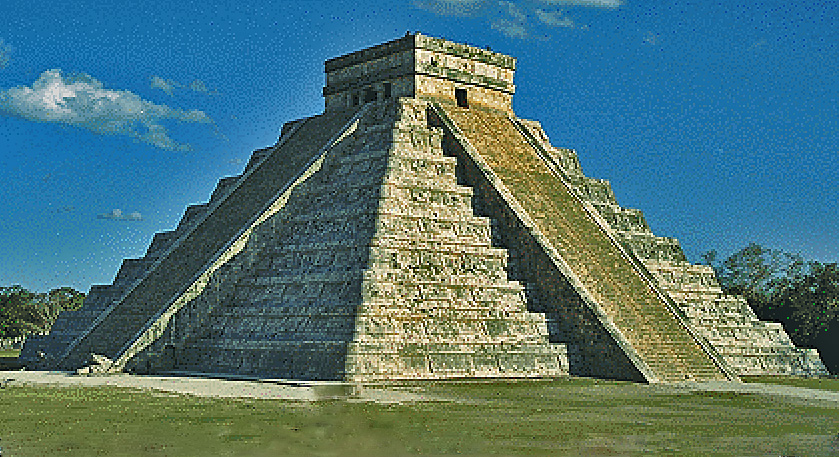
    This age is notable for the building of the Pyramids, during the Old Kingdom of Egypt and the Middle Kingdom of Egypt. They personify structure, solidity, stability and attempts at eternity, keywords of Taurus. The completed Great Pyramid of Khufu, clad in smooth pure white limestone, must have been a sight of dazzling beauty in the sunlight. Beauty is another keyword of Taurus. Taurus is associated with the metal copper, and bronze. Papyrus was invented during this time, enabling improved writing techniques. Traits of Taurus such as ‘stubbornness’ and ‘strength’ but at the same time ‘sensuality’ may be attributed to civilizations such as Ancient Egypt’s.

    Spiritual Archetypes: When Moses was said to have descended from the mountain with the ten commandments (c. 17th – 13th century BC, the end of the Age of Taurus), some of his people or followers were found by him to be worshipping a golden bull calf. He instructed these worshippers to be killed. This represents Moses “killing” the bull and ending the Age of Taurus, and ushering in the Age of Aries, which he represents.

    “The Age of Communication and Trade” (Gemini to 6450 to 4300 BC)

    During this age writing developed, and trade started to accelerate. This corresponds to the symbols the Gemini constellation represents believed by some to be symbolic for trade and communication of people. Both writing and trade (including messaging) are traditional archetypes belonging to the ruling planet Mercury. The wheel, which was used for local transportation are archetypes associated with the sign of Gemini.

    Spiritual Archetypes: Multiple gods, such as the pantheon of gods in Ancient Greek literature, are believed to have appeared in this Gemini age probably in Sumer (Mesopotamia).

    “The Age of the Great Mother” (Cancer ca. 8600 BC to ca. 6450 BC.

    The Neolithic Revolution, including the beginning of civilization, with domestication of farm animals including pigs, goats and bees. Some nomadic people settled down to living in permanent dwellings protected by a wall. Cancer is always associated with ‘protection’ by utilizing an external barrier. Cancer is ruled by the Moon, and is associated with the process of bearing, birthing, nurturing, and protecting.including anything to do with the home (including houses, place of residence, migration).Rise of pottery (a protective vessel conforming to one of Cancer’s archetypes).

    Spiritual Archetypes: Widespread evidence of the mother goddess in the Near East (the `mother’ archetype in all shapes and forms is always related to the sign Cancer).

     “The Golden Age” (Leo  ca. 10,500 BC to 8000 BC)

    The major event at this time was an ancient global warming to such a massive extent that it led to the de-glaciation of what now constitutes much of the modern habitable world. The sign Leo is a Fire sign and is traditionally ruled by the Sun in astrology.

    Conclusion

    The New World Order or the emergence of a totalitarian trans-national government seem more likely than the anticipated new human millennium the musical anticipated. A not so secretive power elite with a globalist agenda will eventually rule the world through an authoritarian world government— the EU just now replaces sovereign nation-states—and an all-encompassing propaganda that ideologizes its establishment as the culmination of history’s progress. Significant crisis in politics and finance are orchestrated or at least utilized by unduly influential banks and transnational shadow bodies through many front organizations. Numerous historical and current events can be seen as steps in an on-going plot to achieve world domination through financial powers and manipulated decision-making processes. Note 2014;  Pope Francis urged the world on September,13th to shed its apathy in the face of what he characterizes as a third world war, intoning “war is madness”, The pope said “even today, after the second failure of another world war, perhaps one can speak of a third war, one fought piecemeal, with crimes, massacres, destruction.” Pope Francis said also these wars are driven by “interests, geopolitical strategies, lust for money and power, and there is the manufacture and sale of arms.”

  • Queen, Mother, Wise Woman and Lover: Rediscovering the Archetypes of the Mature Feminine

    Queen, Mother, Wise Woman and Lover: Rediscovering the Archetypes of the Mature Feminine

    This article complements the concepts explored in my article “Archetypes of the Mature Masculine” and applies them to the other half of humanity—women. In doing so I apply the same principles, not in a mechanistic way, but in the spirit of Jung’s archetypes and their rationale. Let’s start with a few words of C. G. Jung himself, when he talks about the Anima.

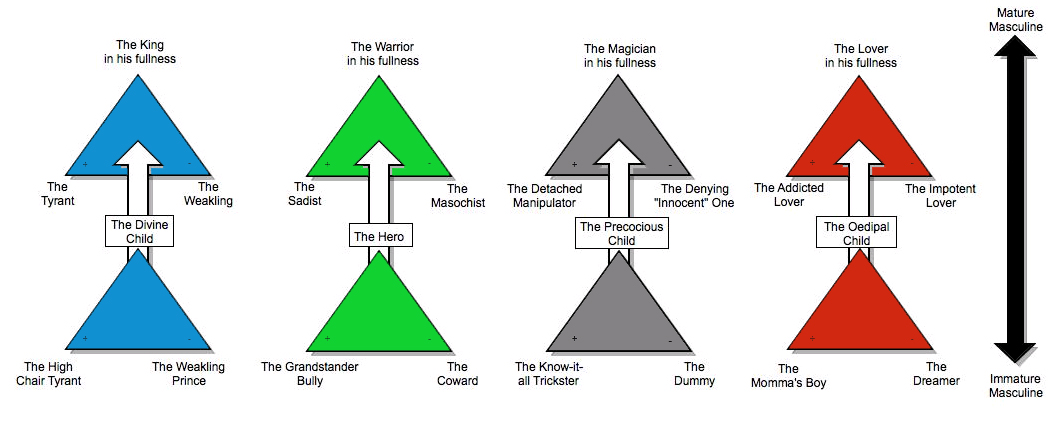
    Feamaland Male Shadow Triangle
    Male Shadow Triangle Source: King, Warrior, Magician, Lover: Rediscovering the Archetypes of the Mature Masculine by Robert Moore and Douglas Gillette

    Thomas Moore and Douglas Gillette adopted and extended Jung’s approach in their exploration of the masculine psyche by using the collective archetypes of the King, the Warrior, the Magician, and the Lover. Obviously those four male archetypes can be translated and mapped in female clusters of virtues, specific attributes associated with four major female archetypes: the Queen, the Mother, the Wise Woman and the (female) Lover found in history and  myths. This has been done before.

    Jean Shinoda Bolen, a Jungian psychiatrist, published in 1984 “Goddesses in Every Women: A New Psychology of Women”. She came up with seven feminine archetypes, based on ancient Greek mythology. Each Goddess represents a primordial image for women’s personality; they are: Hestia, Athena, Demeter, Aphrodite, Hera, Artemis, Persephone. Jennifer Baker and Roger J., Woolger in 1989 included only six of the Goddesses taking away Hestia. I think that is still a bit inflated, narrow and not powerful enough. I get lost on the many fairies and goddesses, and I miss the most powerful female Archetype – The Mother – of which C.G. Jung had written at great length.

    Toni Wolff, colleague and presumable lover of Carl Jung, identified four feminine archetypes:  Mother, the Amazon, the Hetaira, and the Medial.  Wolff at the first glance comes closer, but her model is a male-centered quadruple (male Anima structure) instead a male-female archetype symmetry: This is most evident in Wolff’s definition of the Amazon, who represents more a female in good contact with  her Animus, furthermore the semi-divine Queen is missing, while her Hetaira is not quite a full lover.

    Emma Jung, the wife of C.G. Jung, wrote two very concise papers about Animus and Anima. Those two functional complexes represent symmetrically the personality component of the opposite sex and, at the same time the image of the opposite sex. By their fundamental nature, Animus and Anima symbolize primal masculinity and femininity in general. In other words, the Anima figures represent the archetype of the feminine. Emma Jung gives various narratives of the Great Mother like Cybele, of Prophetess and the Love Goddess and animal or mixed human-animal semi-goddess motives like the swan-maiden in the Edda. Emma Jung refers to her husband, stating the male archetype is the one of meaning and the female archetype primarily of life. And indeed, life as such to me is about birth and death – between is wisdom, spirituality and individuation (redemption), if one is unlucky only staring at the Dow Jones.

    To me the reproductive Mother archetype is not only neatly symmetrical to the destructive warrior archetype, it is definitely a primary one. No individual is completely masculine or feminine though, good or evil, right or wrong. Tyrants and Weaklings for instance represent an imbalance, a shadow or missing quality of power, a failure to employ virtues, and a negative female Archetype drains away all male energy. Females in myths representing the Anima appear often in multiples e.g. three or nine like the Nordic Valkyries. Quadruple qualities, however, take later in account the important (particularly for C.G. Jung) number four. A quadruple seen by C.G. Jung might be thought of as the cross, a mantra or cardinal points that must be balanced in the fully realized being.

    Archetypes

    C.G. Jung totally differs from Sigmund Freud and most of his colleagues in that he thought (wo)men as “homo religious”. Freud’s deep fear of spiritualism was rooted in his urge, to establish psychoanalysis as science. Jung’s own approach to religion was complex, unorthodox, and open to the speculative ranging from affinity to Catholicism and Eastern thoughts to gnosis and alchemy. He recognized and valued collective cultural patterns (archetypes) but also individual enlightenment or at least development to find a person’s whole being (individuation).  He felt those were dismissed by modern positivistic science and political systems which recognizes only the material world and denies or claim any spiritual dimension (totalitarian systems with personal cult).
    The acceptance of the spiritual dimension allows us to understand holistic a person, society, cooperation —the complex of (conscious and unconscious) beliefs, attributes, and virtues that defines that entity.  Key to this understanding is Jung’s concept of the archetype. According to Jung, “The concept of the archetype is derived from the repeated observation that, for instance, the religious myths and fairytales of world literature contain many symbols which are manifestations of those archetypes”. There is a good book from his former assistant Jolande Jacobi about archetype, symbols and complexes to clarify Jung’s slight ambiguity using those terms over his lifetime.

    Proposed set of female Archetypes

    Significantly, female in myth and art can serve as vehicles for both the understanding and the modeling of these female archetypes. Jung’s theoretical framework of the human psyche follows Taoist principles and is remarkably symmetrical; the extrovert is balanced by the introvert; the material outer world by the inner world, the masculine principle—the Animus (Yang within the Yin) — is balanced by the feminine principle, the Anima (Yin within the Yang). Jung also favored strongly the number four and following Jung’s idea of the complementarity of opposites, a similar foursome archetype can be identified and used to provide a foundation for the understanding of the unique qualities that characterize the female psyche.

    All four representations of the archetypes have one positive (right amount – fullness) and 2 negative poles (deficit or surplus). For example, the positive lover archetype embraces the world with passion whereas the negative poles are the seductive (or promiscuous) lover and the frigid (or selfish) lover. One can see every woman (or girl) somewhere between these three extremes.

    • The Queen is the semi-divine leader responsible for the safety and well being. History and art have shown that every society must have not only a wise leader who is entrusted with guiding his people to success and comfort but navigate in unknown territory towards redemption. The responsibilities of the Queen are mainly on the unconscious side, but worldly benefits and virtues must be many as well. And if the Queen fails in her duties she is traditionally disposed and evil prevails. Her shadow sides are tyrant and weakling both disposing male energies.
    • The Mother is like the Warrior today the most controversial of the archetypes, because of  ideological former and current stereotypes. The two male (warrior) shadow sides are the Sadist and the Masochist. The Mother is a life giver who maintains humanity as the warrior clears the space for renewal and change. The prototype of the mother is, well – the mother.  But there are shadows here too – the careless and the devouring mother.
    • The Wise Woman, represents Logos according to Jung a feminine principle, is the archetype behind a multitude of professions like doctors, but also lawyers, teachers and priests. She sees the unseen. She is the prophetess, mediator and communicator of secret knowledge, the healer, counselor, teacher, and spiritual. The Wise Woman always has a tendency to abuse her power, being the negative , the witch.
    • The Lover like the feminine principle Eros manifests energy and fertility of the nature. The gendering of Eros and Logos and synergy is a consequence of Jung’s anima/animus synergy. Lovers are at ease with our own deepest and most central values and visions. And only through union of the feminine and the masculine our culture and personality prospers and grows. The “me- society” of the impotent is sterile and without compassion and destroys any spiritual dimension.

    All these roles could be fulfilled by one person. The shaman as a holistic archetype has the King’s capacity to lead, the Mother’s capacity to care and the Lover’s capacity to value someone or something enough to fight.

    C_G_JUNG_FEMALE_ARCHETYPES
    C_G_JUNG_FEMALE_ARCHETYPES Copyright @fallenangel, permission to mirror on fair usage policy with reference to owner.

    Despite the visible presence of men in political power and economic power in various cultures, social and hidden political power has been disproportionately exercised by women. Western culture has its religious sources in the Jewish-Semitic and the Greco-Roman political and philosophical traditions and of course Christianity. They were distinctly patriarchal on the outside, but quietly influenced by women. The success of Christianity was mostly based on  reaching out to females essentially with ancient female archetypes. Christianity entered the drama of ancient life—and, in particular, Roman urban culture—rather late in the play. Savvy architects with great insight —not to mention foresight— understood  ancient female archetypes as critical success factor for the spectacular growth rate of Christianity. If you look at the gospels and apocrypha  and the early church, you find little patriarchy at all. I have written here in my “Jungian journey through a land of heretics and Mary Magdalene” how vivid the archetypes of lover (Mary Magdalene), mother ( Holy Mary)  and wise women were.

    In the Western, Eastern and Orthodox political, religious, and economic spheres, however, the majority of kings has been male. In those cases, where women have been called upon to lead empires, they have exercised male-like leadership, even literally assuming a male role. Nonetheless, most cultures, including Hindu and Buddhist regarded women’s roles in the family highly. Tribal societies, of course dominated by the male Warrior archetype, have integrated the original matriarchal social system in parallel. All of these cultural frameworks employ both powerful male and female symbolism. Honor and respect is not enough. However. It is quite ironic, that in such a geographic proximity, there were major civilization, one as Egypt, which thrived on freedom for women for almost two thousand years, and others, predominantly some Muslim context, because having been much more restrictive of female freedom, have arguably suffered distinctive social and economic disadvantages, but gaining now not only demographically for this very reason.

    The Queen – Power

    The Faerie, the Goddesses—The Great Mother, the Wise Woman and the female Lover are found within the secondary C.G. Jung literature and in feminist and/or New Age books Goddesses are everywhere. Not so the Mother and only as a recent addition the Queen. As is the case with her male counterpart, the King, the Queen is the most holistic and temporal (worldly) of the female archetypes. But also the most simple to map to the Moore model. There have been weak and evil Queens and Kings at all times. The image of Queen serves as a center for the mature ordering of things; it includes and transcends the other archetypes of the Feminine. Ideally, all “leading” human would, to a greater or lesser degree, embody the ideal King or Queen. Now it  is evident, that the “Good King” in the temporal realm is an archetype of a good statesman. But recently we have many female leaders of the state. The acceptance is with ease, but they reflect more often an archetype of the Mother than of the Queen. One female politician’s nickname is even  “mom” and this is uttered in the context of the cold cruel mother. Why those symbols can be created so easily? Because, as we see below, all this female archetypes were here for thousands of years. Tell me what calendar (lunar, solar, event) you have and I can tell in which archetypical context you live (open or hidden). As societies moved from pre-historic to complex civilizations, their calendar system adopted from nature and weather calendars to direct observation and lastly to calculated calendars (see here). In these transitions, the switch from lunar calendars to solar calendars (pure solar, lunar-solar or solar-lunar) represented changing dominance of male or female archetypes (see here).

    The Queen
    The Queen

    In former times, the worldly Queen was also a priest, warrior and mother – sometimes even the ultimate archetype, the Self or goddess. It was rare, but did happen. One example, born in the 15th century BC, Hatshepsut, daughter of Tuthmose I and Aahmes, both of royal lineage, gained the throne upon the death of her father. To have a female Pharaoh was unprecedented. Although there were no wars during her reign, she proved her sovereignty being a master politician, and an elegant stateswoman with enough charisma to keep control of an entire country for twenty years.  In all, Hatshepsut accomplished what no woman had before her. She ruled the most powerful, advanced civilization in the world, successfully, for twenty years. Another  example, the mother and the father of a family would model them. In those not so rare cases where women become leaders of nations, the archetypical Queen may take visible form, wise or foolish, caring or cruel. Just as the King is not born as a King, but must start life as a divine child, so does the Queen. A powerful embodiment of this archetype is the Pharaoh, like in Egypt were those roles merged. Another example is Nefertiti, who oversaw the first semi-monetheistic attempt. Here the Queen Nefertiti and the Heretic Pharaoh Akhenaten became a mediator to an all-powerful God abstraction, the source of complete cosmic power – the sun (see here) and below.  As is true of her male counterpart, the Queen was the symbol for the leader of a nation as divine couple. However, all the essential attributes of the archetype of the Queen are present in any real woman wherever she plays a leading (if only herself) role, regardless of the scope her real responsibilities—be she queen of an empire, a nation, a clan, or her own family.

    The Mother – Creator

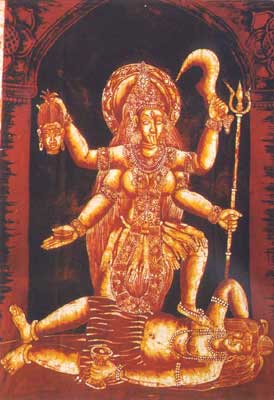
    This is the one archetype that is distinctly different for male and female development. Just as the Warrior is the most natural complement to the King and embodies a set of virtues that are necessary to defend the Kingdom, the Great Mother is the most natural complement to Queenship – and the King. The explosive, destructive energy of the  male Warrior archetype is balanced by the reproductive energy of the female Mother archetype. This is most evident in Kali-Ma the terrible mother. The Hindu religion has a myriad of Gods and Goddesses  and the most revered Goddess is Kali. She is usually pictured wearing a necklace of skulls and girdle of human hands, dancing on the body of her consort, Shiva. In many attributes the Mother clearly complements the Warrior. Wagner’s Valkyries, those tough maidens who took worthy fallen warriors to Valhalla also served as sources of inspiration for heroic action. Just as the Warrior appears most fully when he gives himself over to death in an act of self-denial, the Mother appears most fully when she gives birth. Warriors take life, Mothers give life. This is the source of her power. Both places them outside any human power; thus, she has the power to inspire, to create. Kali, in this aspect is said to be “The hungry earth, which devours its own children and fattens on their corpses.

    The great and cruel mother
    The great and cruel mother

    But the Mother archetype is also the symbol of all that is fair, all that is beautiful, all that transcends material existence. These concepts are not merely ornamental niceties, but are at the very center of Being. Indeed, in their mythological thinking, the Ancient Greeks recognized the importance of Skills in their concept of the Nine Muses—each the inspiration and source of such humane gifts as poetry, music, and history.  In their philosophical thinking, the Greeks recognized Beauty is an essential attribute of the Absolute Good. The Mothers’ virtues are intangible and ethereal; they often had been be self-sacrificial.  Consider the holy Mary and the real-life women who have embodied legions of Virgin-Martyrs venerated by the early Church attest to the power of the self-sacrificing, inspirational but unreachable mother. As a powerful archetype the “feminine” aspect the Mother come up in the Christian quadruple  conception of the Holy Mother.

    Like all archetypes, the Mother can appear as a shadow, the distant and cruel mother. Like any shadow, the cruel mother is not bad or evil. The cruel mother energy links  itself to the male archetype counterpart the warrior. Both are associated with death and destruction – actual physical death.  For instance the Hindu goddess Kali embodies a cruel mother, whose destruction is in the service of creation.

    The enigmatic chief queen Nefertiti (Neferneferuaten) of Akhenaten’s (Echnaton) is the most mysterious and interesting of all the ancient Egyptian queen and an example of a possessive mother symbol. Little is known about her and his overpowering mother Tiye  influence on the androgynous Pharaoh, who brought down the Egyptian empire with his daring cultural and religious revolution (see here).  After a few loving years, in which the couple celebrated publicly family life with six children, they separated. Close to her end, she reacted again, as it is believed that Nefertiti sent a frantic letter to the Hittite King Suppiluliumas after Tutankhamun died, begging the longtime enemy of Akhenaten and Egypt, for a marriage with one of his sons.

    cybele
    cybele

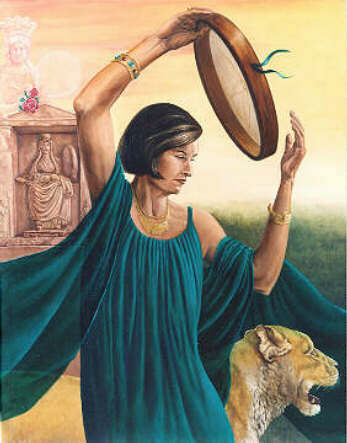
    In one of the oldest cults imported into Rome, the Great Mother Cybele’s major attributes was, that she protected people at war and, as such, was often shown wearing a crown of city walls symbolizing the defense she offered adherents. Also, as an earth-mother deity in origin, she bestowed fertility and governed creatures of the wild—ancient portraits show her riding in a chariot pulled by lions—and in both aspects she appealed to the Roman public whose lifestyle was still, for the most part, agrarian. Besides that, her powers included the ability to cure disease and predict the future, making Cybele an all-purpose deity if ever there was. I have written here about the  clash of male and female Archetypes in classical Rome. She was an ancient fertility goddess whose worship is thought to have spread from Anatolia to Greece in the Archaic period (c. 800-500 BC) and mysterious rites were performed in the name of Cybele — as they were for the other earth mother type goddesses, like Demeter and Isis. It is worth to note the ambiguity, which makes it possible to align many female mother archetypes with the lover and the warrior but not the queen.

    The Wise Women – Spirituality

    I like to think that psychoanalyst Sabina Spielrein a woman in the shadow of C. G. Jung and Sigmund Freud (see here), resembles the archetype of the Wise Woman or Queen (in exile). The archetype of the Wise Women inhabits not ethereal regions where all appears as bright and luminous, the Wise Women inhabits like the magician the shadows. She is at home near the earth, even inside the earth, inside the dark, moist, primordial womb, the source of all fertility. The Wise One is no longer young. She started as precious child, but is mature now, rooted. She is likely to be old. Like a priest, she may have even loved, but she has now transcended all sexuality and reproductivity and has reached a state of superior wisdom.

    The Wise Women
    The Wise Women

    Also in contrast to her male counterpart—the Magician— a non spiritual mind seeks not to penetrate beneath the surface of things and probe the mysteries of nature, rather, she looks inward into the mysteries of Being. This earthly knowledge extends to the body and more specifically to the very distinct realities of the female body, with its mysteries of fertility and procreation. Women who knew this much were much respected and feared. Mary Magdalene might be one of the wise women, Kassandra was one and in a way every midwife. Male resented them and worldly institutions persecuted this source of feminine power because it lay out of their control.  Antigone was one The mortal daughter of Oedipus and Jocasta she openly defied her evil uncle King Creon to bury her brother, Polydices. Creon sentenced her to be buried alive. Many Wise Women were later  accused of being “witches”.Saint Augustine of Hippo, the most influential Christian theologian argued around 400 AD that, neither Satan nor witches had supernatural powers and only pagan can believe this. In 1208, however, Pope Innocent III opened an attack on Cathar dualistic heretics who believed in a world in which God and Satan, both having supernatural powers, in a perpetual war. Many adherents of this secret dualistic sect had migrated into Germany and the Savoy where the first witch hunt started. It was natural for both Wise women and Magician, to seek separation from the world, but being a single woman – especially with low status and without children, was a major source of suspicion. Their quest for special knowledge requires long hours of solitude for study and reflection. Most often, both become a seer, an adviser. The Queen of Sheba, one of the most famous figures in the Bible visited King Solomon in Jerusalem after hearing of his great wisdom. According to legend, King Solomon was not only the wisest man in the land, but he also had magical abilities and could command demons. The Queen of Sheba tests Solomon’s wisdom, asking him many questions and giving him riddles to solve. He answers to her satisfaction and then he teaches her about his god Yahweh and she becomes a follower. The two most famous queens of Egypt Hatshepsut and Nefertiti  were also high priests and Wise One’s. Another powerful and inspiring embodiment of the archetype of the Wise One outside Christianity, is the gnostic Figure of Sophia.

    Sophia__Wisdom
    Sophia__Wisdom

    As equally powerful Christian archetype the “feminine” aspect the Wise Women come up in the Christian Trinitarian conception of the Holy Spirit. Who is Sophia? Literally, she is Wisdom, because the Greek word Sophia means “wisdom” in English. More than that, she has been revered as the Wise Bride of Solomon by Jews, as the Queen of Wisdom and War (Athena) by Greeks, and as the Holy Spirit of Wisdom by Christians. Solomon was considered to be married to Sophia. One of the many layers of symbolism attributed to the Song of Songs (also known as Song of Solomon or Canticle of Canticles) is that it speaks of Solomon’s marriage to Holy Sophia. Sophia surfaced in the Eastern Christian tradition with the construction of the Hagia Sophia cathedral in Constantinople (converted to a Mosque 1453 and today a Muslim museum in Istanbul). Sophia has survived in the West today, in the form of Gnosticism. Sophia plays a very active role in Jung’s Answer to Job (Hiob), where she also completes  Quaternity.

    Lover – Eros

    The fourth archetype of the mature feminine is the Lover, or Eros. The Lover is a life-affirming and sometimes hedonistic archetype which dislikes rigid order and sterile knowledge. But without love, without compassion those are nothing. I would argue that self-sacrifice belongs there too. The lover energy, arising as it does from the Oedipal child, is the source of spirituality and fertility. It is the attachment of the child to the parent of the opposite sex, accompanied by envious and aggressive feelings toward the parent of the same sex.

    The Sin Adam and Eve
    The Lover

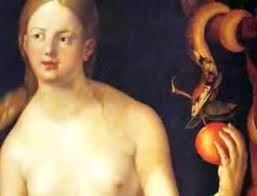
    A powerful female mythological archetypical lover complex runs deep in Eastern and Western Civilizations. In the cradle of civilization, it started with Astarte and Ishtar. Some scholars hold Astarte was a prototype of the Virgin Mary. Their theory is based on the ancient Syrian and Egyptian rituals of celebrating Astarte’s rebirth of the solar god on December 25th. Other counterparts are Isis of Egypt, Kali of India, and Aphrodite and Demeter of Greece and Venus of Rom. In China you have the archetype of the Green Snake and White Snake and the holistic archetype of Tao, which to me is the perfect example of the Self, integrating female and male love..

    Thus, the Lover intrudes powerfully into humanity’s collective consciousness and enthusiastic, connects with followers, inspiring them to accomplish the difficult deeds. The intoxication of love opens an alternate reality with its own truths which separates those in the grip of the Lover from mundane concerns. Thus, as is the case with the male Lover, the female Lover gains enormous powers of transcendence, but she, and he, are subjected to “the other” and therefore lack the freedom of the other archetypes. This is the power and limitation of the hierosgamos—the cosmic marriage of opposites. Without Jesus, our life would be meaningless, incomprehensible; Jesus explains our life. Joan of Arc, whose last recorded words before she was burnt at the stake were: “I pray you, go to the nearest church, and bring me the cross, and hold it up level with my eyes until I am dead. I would have the cross on which God hung be ever before my eyes while life lasts in me. Jesus, Jesus!” It appears again that the Lover archetype is essential. Of course, there is also the dark story of Salome, the infamous daughter of Kind Herod, has fascinated many painters for centuries. Paintings of her equally infamous dance with John the Baptist’s head evoke a sensual, evocative atmosphere.Salome’s story first appears as a fragment in the New Testament Gospel of Mark, where she dances in exchange for the head of John the Baptist on a silver charger, at her mother’s behest. In the Gospel version, the burden of wickedness thus falls upon Salome’s mother, Herodias, and Salome’s virtue remains ambiguous.

    salome-with-the-head-of-st-john-the-baptist
    salome-with-the-head-of-st-john-the-baptist

    Salome dances as a femme fatale for her stepfather, Herod Antipas, defying Herodias. The beheading of the Baptist is Salome’s own idea, for which she will pay with her own ghastly death. Nevertheless, John, the Evangelist, comes to prepare the way of Messiah with a new gospel of love, succeeds in coaxing the Judean princess to a personal epiphany, for the soul of Salome is not the same fetid sink as her mother’s. “Speak again,” Salome exhorts him, “Thy voice is as music to mine ear…. Speak again…and tell me what I must do.” But just when a prophet’s wisdom might have done some good, John is out of ideas, saying: “I will not look at thee. Thou art accursed, Salome….”

    Conclusion

    What can we learn from the examination of the archetypes of the mature feminine ? First, female like male, in order to fulfill their wholeness properly, would do well to embody the best qualities represented by all of their archetypes. When men and women do this, they model these archetypes inspire both of them on the path of virtue and spirituality. The archetypes are viable because they furnish us with a short-cut, an intuitive way to grasp the essence of a group of attributes that connects directly with the unconscious mind. Instead of patient intellectual analysis of each individual attribute of leadership, the ethos of each archetype is immediately accessible through a complex of cultural pattern which are instantly recognized even trans-cultural. These archetypes are emotional and spiritual pictures that have an immediate effect on individuals and groups. This effect is readily apparent when one compares the phrase “The Good King” with “a King who is good, strong, wise, just and so on”. The first phrase is incomparably richer in context and seems “alive” compared to a list of adjectives to describe a particular King. It evokes an instant visual image that has an immediate appeal. This is why the old Greek epics, the Bibles stories and Wagner’s opera are so powerful.

    Archetypes – actually “archetypes per se”- are, are cultural patterns and by their very nature, are universal and here to stay. Like the physical heritage, stored in our genes, cultural patterns are saved in our collective consciousness. They can be invoked or forgotten, or even suppressed. But even in materialistic, matriarchal or patriarchal cultures, that are hostile to spirituality, to the male. or the feminine, archetypes cannot forever be suppressed. Once more, external like internal suppression of archetypes is a case of too much, or of too little, of a needed cultural model for humanity to survive and for the individual to live a meaningful life. However, archetypes can be invoked as symbols any time — hence their power to manipulate, to motivate, to influence. There is much to contemplate in these archetypes which can be mapped with political, mythic and culture examples. The self-evident interpretation and its usefulness is overwhelmingly convincing.

    Women should be aware of her animus and thus with the aspects of the four male archetypes and for men to mature, they must meet and integrate their anima and learn from the four female archetypes. How does it look in your family or relationship? Suppression of an archetype only results in denial of attributes and spiritual resources that we, as humans, need. If one comes to terms with the Shadow and the Soul, one will encounter the enchanted castle with its King and Queen. This is a pattern of wholeness and individuation. The opposites of the outer and the inner life are now joined in marriage. Great power arises from this integration. Be aware of pretended or real archetypes in the public realm. For example, look at your (male or female) politicians: Does one of them have the virtues of those positive archetypes?

    Looking beyond herself, women should care how and if divine couple symbols (syzygy images) are invoked. Pharaoh and his Queen, Christ and the Church, God and Israel are syzygy images. Do we still have Divine Couples (Syzygy) and Divine Triads in the spiritual realm? The believer who aspires to be the “bride of Christ” is modeling his or her experience in response to the syzygy archetype. Next our hope is from the Child Archetype, a pattern with a promise of new beginnings. The birth of the Christ Child who unites Heaven and Earth, God became Man and God, is one of those powerful archetype creating a triad. Triads, like for example the Egyptian triad of Isis, Osiris and Horus are predecessors symbols of the Trinity. When the Mother Archetype joined the Holy Trinity Jung’s Quaternity was formed.

    What I am trying to say in a nutshell, is this: Good Kings (and Queens) need to encompass two Quaternities. Not only take care of your own set archetypes, which enhances your temporal virtues, we need also to understand our opposite sex archetypes – of our Animus or our Anima. According to C.G. Jung this will lead you to our Shadow, and if we integrate the Shadow, that opens us to our Self – the divine in us – or at least a communication path to it. God or goddesses are both holistic and androgen. The yin yang symbol from ancient China represents the belief that everything in the universe consists of two forces that are opposing but in need for each other. The Great Mother Cybele was Mother (in a narrow sense) and Warrior symbol.

    Copyright 2011-2014 stottilien.com – Text and illustrations may be used indicating stottilien.com ownership.

    Bibliography Links

    • Emma Jung. Animus and Anima – Two Papers
    • STRUKTURFORMEN DER WEIBLICHEN PSYCHE wolff Structural forms of the Feminine psyche (http://ufdc.ufl.edu/AA00001582/00001)
    • C.G. Jung Four Archetypes (Routledge Classics)
    • C. G. Jung Archetypen (dtv, Bd. 11)
    • King, Warrior, Magician, Lover: Rediscovering the Archetypes of the Mature Masculine by Robert Moore and Douglas Gillette (Aug 16, 1991)
    • Tao Te Ching The idea of the Ying-Yang duality
    • Jacobi, Jolande, Die Psychologie von C. G. Jung – Eine Einführung in das Gesamtwerk, mit einem Geleitwort von C. G. Jung [Gebundene Ausgabe]
    • Jacobi, Jolande, Complex/Archetype/Symbol in the Psychology of C.G. Jung (Bollingen Series) [Englisch] [Taschenbuch]
    • Theologische Aspekte der Tiefenpsychologie von C. G. Jung (Patmos-Paperback) (German Edition) by Herbert Unterste (1977)
    • Mandala: Bilder aus dem Unbewussten (German Edition) [Hardcover] 2.Auflage Olten 1977
    • Jung, C. G., Jaffé, A. (1962): Erinnerungen, Träume, Gedanken von C. G. Jung. Aufgezeichnet und herausgegeben von Aniela Jaffé. Olten: Walter
    • Jung, C. G., Kerényi, K. (1951): Einführung in das Wesen der Mythologie. Zürich: Rhein
    • C. G. Jung Grundausgabe CW 18

    See slide show with some basic concepts of C.G. Jung. Press buttons to change slides manually or switch to full screen:

    Google

  • Jungian Models applied to global corporations: Kings, warriors, magicians and lover archetypes

    Jungian Models applied to global corporations: Kings, warriors, magicians and lover archetypes

    Recently I attended yet another team building “Engagement workshop”. It occurred to me that Jungian Models are well performing in multinational corporation has rather particular objectives by its mission, why it has such multiple and interesting cultural contexts.

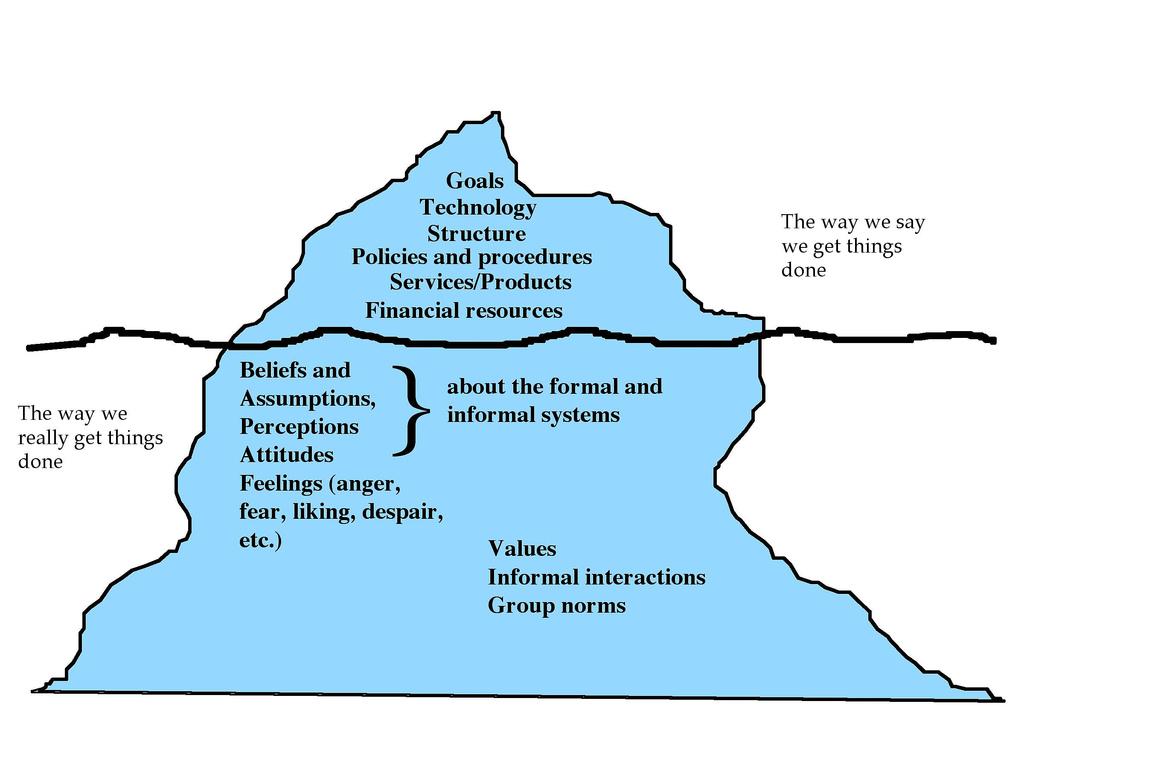
    Culture is something we all experience, but have great difficulties defining. I want in this article to align C.G. Jung’s models with organizational psychology in order to explore how organizations can somehow function and meet common goals. While Freud was fond of the iceberg analogy to explain the unconscious (the unconscious part of our mind and personality being the 90 percent of the glacier that is below the surface), Jung made the comparison of a cork gently bobbing on a vast ocean. The cork is our conscious mind, and the ocean is the unconscious.

    Personal Layers
    Personal Layers

    The cork is tossed about at the whim of the cruel sea unless we get a handle of the nature of the true Self (of which we are only dimly aware, if at all) via the reflective process . The ego is that cork bobbing on the ocean, and its goal is to seek what Jung called individuation, bringing together all the  elements of the human psyche into one Self: the complexes, the Shadow (in simple terms a person’s dark side), and the inner woman in a man or the inner man in a woman. That means feminine and masculine energy, which he labeled the anima (inner woman) and animus (inner man). Jung’s most famous theory is that of the collective unconscious, a shared memory of symbols, imagery, and memories that he called archetypes. In the iceberg analogy model which divides the organizational psyche in two layers – conscious and unconscious – the conscious layer is where the ego-driven actions and behaviors manifest and the unconscious layer shapes the organizational culture by archetypes. However, the unconscious layer, Carl Jung’s analytical psychology model provides, is further divided. That leads to the structures of the organizational conscious and unconscious which parallel what Jung conceived as the architecture of the individual psyche. I want to adopt this model and derive criterion which are unique to the psychology of troubled organizations.

    Conscious layer

    The conscious portion of the organization is the public face and its visible set of structure and processes. The core of consciousness is “analogous to Jung’s concept of the ego” its mask the persona. The Ego comprises all of the conscious activities performed in an organization, such as planning, managing, coordinating, core and support processes. The center of consciousness is composed of the collective egos in the organization arranged and empowered by the tone on the top. This organizational consciousness (in effect the processes and organisational structure) manifest its activities aligned with the archetypes that are predominant in organization and as function of their level of maturity. Organisations have masculine or feminine character. The persona is how individuals present themselves to the world and is driven by two sources: “the expectations and demands of the customer and stakeholders.  That is where the brand or corporate identity of the organization lives. The persona transmits the ideal images of itself to the outside world hiding aspects which are deemed “internal” by the organization’s ego (and leadership):

    • Mission, strategy and goals: Why are we all here in this organization? What are we collectively trying to achieve? Do we even know?
    • Goals derived from mission: What goals do we set as part of trying to realize that mission? Do we stick to those goals? How are they defined?
    • Measuring results and correction mechanisms: How will we know if we achieve those goals? How do we measure it?
    • Escalation and mitigation strategies: What do we do if something breaks or does not go as planned? Do we have a plan, or do we react?
    • Means to achieve goals (organization, applications, processes): How do we go about realizing our goals? Do we have systems and procedures in place, or do we trade on strength of personality?

    Personal unconscious layer

    The organizational unconscious are clusters of energies, beliefs and truths that bridge between the conscious organization and the collective unconscious. It provides the psychodynamic environment for these two forces to interplay. It is composed of the shadow, animus and anima, the complexes and the organizational self-reflection (i.e. the Self). The gender of an organization is driven by the organisational constituency but more by the manifestation of the anima and animus archetypes. Certain organizations, like a primary school, today operate openly  in an anima (feminine) set of characteristics because of the nature of their mission, regardless of how many male teacher it has (if any). Other organisations, say universities, suppress or conceal their “gender”.  The shadow comprises the collection of what has been repressed because the organization does not allow it by its rules, procedures or values. Note on the side: A few global organisations, like the EU, the IMF and to a certain degree the UN are examples of mentally pathologically disturbed organisations, in which the shadow and complexes reign, causing cause great harm to all of us. That has been also the case in some nations and  cultural contexts (like religious organisations).

    Hidden Censorship
    Shhs don’t ask don’t tell

    Organisations contain also complexes (other than functional) which represent both positive and negative energies and subtly affect how the conscious organization goes about its business. Organizational complexes are containers of memories, thoughts and feelings experienced as work progresses. They are in essence the underlying assumptions that form at the unconscious level in the act of doing business. Over time, these complexes uniquely identify an organization and provide the basis for its culture. Values and beliefs are built upon complexes and change over time as the environment and challenges change. The shadow contains features that are contrary to customs and group moral conventions.  In the context of organizations, the shadow’s projections would go to outside entities, like the competition, sometimes even to the customer, or would be channeled as projections between internal departments, which is particularly troublesome. The participation mystique is the part of the organizational unconscious that links individual egos to the organization. Participation mystique is a basic definition by Jung in his book “Psychological Types” (crediting Lucien Lévy-Bruhland with the term, as sociology and ethnology scholar). This mystical participation, refers to instinctive human ties to symbols (which are visible and utilized archetypes) and can describe how an organizational archetype connects to each individual.. The concept is closely tied to that of projection into situations and objects, including organisations as readily as we project color into the objects we perceive.

    The total psyche: (Mantra - Jolande Jacobi "The psychology of C.G. Jung"
    The total psyche: (Mantra – Jolande Jacobi “The psychology of C.G. Jung”

    The organizational archetype of enlightened organisations roughly corresponds to the archetypal self in individuals:

    • Common language and conceptual categories: What is the underlying framework of (mis-) communication?
    • Group boundaries and identity: How do we respect each other’s and the other group boundaries? Do we know who we are?
    • Incentives and punishments: How do we reward desirable behaviour and punish behavior deemed unacceptable?
    • Managing the unimaginable and explaining the unexplainable: When things happen we cannot explain nor foresee, what is the group response?
    • Rules for relationships: What are the rules for how we interact with each other and with those outside of the group?
    • Power, authority and status: How do we determine what gets done and who has the say or (informal) clout  to change direction?

    Collective unconscious layer

    The collective unconscious serves as the foundation for the entire psyche of the organization as it does for its individual Instincts are the consistent modes of action common to all humans that do not require cognitive engagement but as the controlling patterns in the mind that regulate how we experience reality. Its archetypes represent our basic responses to organizational life. For instance, leadership and collaboration has evolved to a much more subtile form:

    Organisational shadowTrinangle
    Organisational shadowTrinangle

    For instance the team aspect of work life is driven by the Lover archetype that regulates how people work and relate to one another. The degree of collaboration has a lot to do with this archetype. Those models are based on a book of Robert Moore for whom the archetypes king, warrior, magician, lover are pattern of matured masculinity. The psychological studies which lead to the naming of four archetypes are derived from four basic structures which form the depth structure of the psyche in dynamic interplay. The book is based on his image from archetypal itself, nevertheless, extends the understanding of the psyche of C.G.Jung. Each of these four qualities owns a positive side and a shadow side and that model can be applied to organizations:

    • The warrior (courage, concentration, motivation): The sales aspect of work life is driven by the Warrior (sales rep as street warrior) archetype that regulates how people work and relate to one another. Sales needs a lot of understanding of foe and friends.
    • The magician (intuition, wisdom): The creative aspect of work life represented by the magician  (development, designer).
    • The  lover (passion, empathy): The Lover archetype regulates how people work and relate to one another. The degree of collaboration within projects and teams has a lot to do with this archetype.
    • The King (responsibility leadership): The managerial aspect of organisation is driven by the King archetype that decides how the organisation performs. The degree of commercial success (and survival) has a lot to do with this archetype.
    WarriorThis is the most common archetype in western organizations. It brings the energy of working hard to make the world a better place. The Warrior translates into vitality, competition, discipline, focus and determination. There is a fair amount of self-sacrifice in the Warrior for the betterment of the larger whole. Warrior organizations usually have a cause and are able to enlist employees in working for it. These organizations value the actions of the Warrior and recognize them with a number of rewards. Organisations with strong warrior energy are ready to exert themselves completely for an important aim. They are purposeful, persevering, and well prepare for her challenges. They control her tools and act. As shadow forms they are hard, crude, fights without taking into consideration (human) losses.The negative Warrior creates the need for an enemy. This type of Warrior can be arrogant, impulsive, obsessive and ruthless. Negative Warrior organizations tend to overwork their people and expect ongoing sacrifices. These organizations also tend to be lower in their financial compensation than most.
    MagicianThis is the transformative energy inside any enterprise. It is responsible for the “level 2” changes. Innovation, high energy, and flexibility are characteristics of the Magician. Organizations with a highly developed Magician archetype are extremely adaptive and respond easily to changing markets and world conditions. Magicians are systems thinkers and natural change agents.and expresses innovation and the creative processes in an organization: In the magicians, there are elements of imagination, artistry, and vision. Organizations with strong magician energy want to know more, learn them and become engrossed in her matter.The negative Magician archetype is manifested in manipulative energy, lack of follow-through, and working on seemingly innovative tasks that have no purpose. Organizations with a negative Magician archetype start a lot more projects than they finish. The challenge for this archetype is its disdain for formality, bureaucracy (either real or perceived) and the potential of applying creative energy to non-necessary endeavors.
    LoverThe Lover is the necessary archetype for an organization to provide for the wellbeing of its employees. This care ranges from basic benefits to personal development. The Lover is also manifested by the care of the organization for the community and the social system in which it operates. Harmony, cooperation, and support for each other are characteristics experienced by the employees in Lover organizations.Negative Lover organizations tend to over work its people, experience burn out, have low mutual respect, and experience high turnover. Compensation is low and people are expected to work long hours. These organizations typically avoid confrontation being overly passive. Delegation is not actively practiced by management.The lovers energy appears in his enthusiasm ability, sensuousness, dear ability and passion, so as shadow forms the addict completely sets on in positive or negative sensations, takes over no responsibility for itself and others, needs permanent stimulation, is restless and indefatigable. The loveless lives coldly and without passion
    KingThis archetype is about maintaining order and creating harmony out of chaos. It implies a sense of responsibility, balancing and allocation of resources. Either as individuals or organizations, it is manifested as decisions, authority, process, systems, goals, and strategies. The challenge for the Ruler is being fair and non-tyrannical. Decisiveness and direction need balance with methods and unique situations of others. The King brings the sense of individuality, exploration, risk taking and self-discovery. This archetype is essential to the emancipation of the employees. The good King takes responsibility for his/her own learning and channels new intelligence into worthwhile decisions.Negative King organizations are hierarchical and bureaucratic. In addition, they tend to be less tolerant of diversity and appreciate people who do as they are told. Power is centered at the top of the organization and lower levels are viewed as lesser. Image is more important than actions. In extreme cases, negative organizations oppress, cut ethical corners, and are inflexible to change.

    Organisations have evolved from simple work containers to complex social structures with semi-democratic empowerment and demonstrable higher performance.

    • What is truth: What is the reality of the situation? How do we know what is really happening? Is it because someone says so, because everyone agrees, or because we all prove it to be so?
    • Time: Is time linear, in that things only happen sequentially, or does everything happen at once? If something needs to be done, can it be done immediately in parallel with everything else, or only after current tasks are done?
    • Space: How is everyone situation? How is the work process laid out? Is there a point when someone is invading personal space, or is publicity and intimacy generally accepted?
    • Human nature: Are people only there to achieve in sync with their intrinsic values, or are people complex individuals more than their position?
    • Appropriate human activity: Are we here to take control of our environment, are we here as a slave to circumstances to simply coexist (or fight) with our environment, or do we develop ourselves to work in harmony with our environment?
    • Nature of human relationship: Are we individuals or are we a collective? Do we see ourselves as a group or as individuals? What is the greatest gap distance between ourselves and the outside?

    With so many facets, one can see why an organisational culture is such a challenge. Culture is a protective mechanism. Each assumption works in collaboration to reinforce and support the other assumptions. The assumptions are also driven by the individuals or groups who have formal or informal influence within the organization. I have seen a few mergers, if you want to change the culture, you frequently need to change the Kings, almost every time physically replace them. It is so hard to change the character of Kings and that was true in history for negative real (literal) Kings and Queens.

    Appenix: participation mystique and projection

    For some information how Jung somewhat ambigious used the terms Archetypes, Archetypes per Se, Complexes and Symbols please read here. Jung defined projection as an initial objectified representation of the contents of the unconscious beyond the states of so-called “participation mystique” (mystical participation) and “archaic identity,” and he showed how the individual can be led to see through the illusions of projection and yet, at the same time, to experience symbolic life.

    As early as his psychiatric studies written between 1900 and 1908, and also in his thesis, “Psychology and Pathology of So-Called Occult Phenomena,” which he defended in 1902, Jung was investigating the internal coherence and meaning of representational systems that were largely being ignored by his contemporaries. His conception of “highly charged emotional complexes” (gefühlbetonte Komplexe) and his contact with Sigmund Freud led him to analyze, in his “Psychology of the Unconscious. Jung’s subsequent elaboration of his theory of projection was based on the analysis of states of participation mystique (he borrowed this French expression from the anthropologist Lucien LévyBruhl) or “archaic identity.”

    In the states of participation mystique and archaic identity there is no differentiation between object and subject and no distinction between lived experience and what the subject believes he or she perceives about the world. However, projection, which is more specific, enables the subject to apprehend and potentially recognize contents that are still unconscious. Thus, analysis of the religions of our ancestors, the literature and iconography of alchemy and, more generally, the arts, as well as the fantasmatic universe of a given group or individual from the perspective of modern psychology can be quite valuable.

    In fact, the Jungian Shadow, Anima, Animus, and Self, before being recognized as presences or inner agencies (functional complexes), are ordinarily projected onto typical figures or acquaintances of the subject, in the same way as they are projected onto the analyst in the transference relationship. The recognition and withdrawal of projections usually provokes a state of disenchantment or, conversely, elation and inflation of the ego; however, these processes can also open the way to a practice of the symbolic life and of human relations without too much alienation or mystification, especially through the experience and analysis of the transference.

    Some feared that Jung was indulging himself in an imaginary universe without concrete support. However, his analyses of the history of our culture, his position with regard to various religions and also within the history of psychoanalysis, and above all his ways of conceiving and eliciting the work of the unconscious, not only in its compensatory effects but also its effects of contradiction, give the means of avoiding this potential trap.

  • The dangerous serpent – a Jungian view

    The dangerous serpent – a Jungian view

    Soon there will the year of the (water) serpent. Whether a “water serpent” a The dangerous serpent depends heavily on the specific type, but true marine sea snakes possess incredibly potent venom and can be dangerous to humans. My sign in Chinese Zodiac is Serpent, therefore I have written a few articles in (her!) favor.

    The Serpent manifests itself consistently ambiguous as both ” evil adversary” and “holistic power, both source of “temptation” and “wisdom”. Jung’s discovery of how the psyche works and how consciousness entwine with unconsciousness,  also refers to this ambiguity depicting the serpent as a symbol of our unconsciousness. The Serpent encounters Jung many times throughout his journey in The Red Book.

    Around the world, for thousands of years, in one form or another, the reptilian Serpent has been an archetype for countless tribes, societies and civilizations. The serpent archetype is regarded with awe and fear. Why is that so? I will explore here the reasons what to make out with this symbol serpent, and where the given attributes may come from with most famous the symbol of a snake eating its tale is known as the Ouroboros.

    Symbol of versatility and transformation

    snake-inspired-transformation-metamorphosis
    snake-inspired-transformation-metamorphosis

    The serpent archetype stands for immense and powerful  movements deep under the earth, deep under the oceans, on the earth surface and in the sky. In fact, it is the very ability of serpents to move between various worlds and different dimensions, as indicated by their hibernation in winter and their life on and in the earth, which give them the aura of knowing and being, world-wide. Transformational qualities of serpents such as the shedding of their skins and regeneration add to the awe with which they are regarded. In Jungian reflections on various aspects of the transformation as individuation process—of the lived experiences of individuals and its impact on the experience of ego and Other, or the greater Self this is like the Serpent shading skins. There are potential states of consciousness and being that are actualized and incarnated in the individual personality as the individual develops a growing awareness of his/her relationship to the greater Self and the Ego.

    Symbol of the unknown and the unseen

    mermaid the unknown
    mermaid the unknown

    The serpent is a trans-cultural and global symbol which can be identified as a reptile, an earthly serpent, a flying dragon in the air, a water serpent, with many supernatural characteristics. The ancient Greeks believed that there were four elements that everything was made up of: earth, water, air, and fire (Aristotle) which became the cornerstone of philosophy, science, and medicine for two thousand years. But Aristotle came up with a fifth – invisible – element, the aether to explain the stars, one can easily associate with the serpent: The basic theme of mythology and psychoanalysis is that the visible world is supported and sustained by an invisible world, which has been proved by modern physics: the visible (and classical) world is supported and sustained by an invisible (quantum) world. Jung similar, interpreted snakes as symbolic of the conflict between conscious ego and conscious instincts likening in a way the dragon fight.to individation. This is even truer if it is a black snake which represents the hidden or subconscious. In some cultures snakes are highly regarded and symbolize the ability to transcend into higher levels of consciousness or into areas of knowledge that exist outside perceived time and space. Snakes do not have conventional eardrums. They actually sense what’s going on around them through the vibrations in the earth rather than by listening like things affecting upon a subconscious level.

    Symbol of sin and sexuality

    The Sin Adam and Eve
    The Sin Adam and Eve

    In Judeo-Christian tradition, the story of Adam and Eve in the Garden of Eden, of the Bible, portrays the Serpent as the deceitful harbinger of sin – and sexuality. In Freudian terms, snake is a phallic symbol. It seems both cases represent the fear of sexuality, rather than sexuality.Eve has been so frequently allied with the serpent and with the devil, as though they were all on the same plane of symbols. The first association between Eve and the serpent comes in the closeness of their names, for the Hebrew Hawwah is very close to the Arabic and Aramaic word for serpent, which was noticed by the earliest Jewish commentators:

    The association between Eve and the serpent, and between the serpent and Satan (the Sammael of Jewish legend and the Shaitan of Iblis of the Qur’an) is made again and again in interpretations of the story of the creation and fall of the first humans . . . She is held to be the devil’s mouthpiece, Satan’s familiar. At times she herself is seen in some way to be the forbidden fruit, or the serpent in paradise, or even the Fall.

    Sexuality greensnake
    Sexuality greensnake

    When spirituality and sexuality fall into polarity, the sexual instinct, split off from spirituality and a concrete image of what was simultaneously feared and longed for: the swallowing genital of the female. As C. G. Jung put it: “What is  projected is unconscious; that’s the rule”.  Some things to keep in minds: They are cold blooded – they depend on their environment to keep them warm. Snakes lay eggs, and abandon them as soon as they have made their nest.  Snakes may not be a particularly cuddly, but they are certainly one of the most powerful and transformative. The snake has acted as a diverse symbol throughout history, representing immortality, evil, femininity, and masculinity. The Legend of the White Snake is one of the most famous folk tales in Chinese culture. Cleopatra identified with the snake during her life, and it becomes even more highly symbolic in her death. By examining three movies (DeMille’s Cleopatra, Mankiewicz’s Cleopatra and the ABC version of Cleopatra) and two dramas (Shakespeare’s Antony and Cleopatra and Mary Sidney’s Tragedy of Antonie) different symbolic representations of the snake emerge along with contrasting depictions of the Queen of the Nile. Cleopatra is a suiting product of myth.

    Symbol of knowledge and cunning

    serprent-woman

    There is the classical tradition of the snake, of the accumulation of wisdom. We cannot remain with one or the other exclusively, but must harmonise the two – logic and intuition….Jesus says he has come not to destroy law but to fulfill it in spirit. Meta noia – means not only change your ways but also, think further, because a time comes when respect and obedience to law keeps you from seeing god.  Another example from the Gospels that I like very much is when Jesus tells his disciples that when they go among men they should be ‘wise as serpents and harmless as doves’.

    In Christianity, the serpent also pertains to Satan and the world we currently live in. It also refers to the men and women of this planet as being self-centered and “fallen”. The whole idea of the serpent itself is that it reflects something that is re-creating itself. Be wise as serpents …  Genesis 3:1. Now the serpent was more crafty than any beast of the field which the LORD God had made. And he said to the woman, “Indeed, has God said, ‘You shall not eat from any tree of the garden’?” 2The woman said to the serpent, “From the fruit of the trees of the garden we may eat; 3but from the fruit of the tree which is in the middle of the garden, God has said, ‘You shall not eat from it or touch it, or you will die.’” 4The serpent said to the woman, “You surely will not die! 5“For God knows that in the day you eat from it your eyes will be opened, and you will be like God, knowing good and evil.”

    Fight the serpent Fear
    Fight the serpent Fear

    Symbol of protection and harm

    There is an obvious link between the serpent with poison and medicine. The famous symbol of the Caduceus, composed of twin snakes entwined around a staff with the wings of Hermes in the background, is a symbol of modern-day medicine. Again this association goes back to the ancient Greeks and linked to the Hippocratic Oath. Navajo have stories of giant serpents as protector and Pueblo tribes honor the great water serpents. the pre-Christian days, snakes were considered symbols of fertility, healing, and nurturing (the healing serpent representing a god). Serpents were therefore often linked to protection and guardianship in many cultures, including stories of Buddha who is often represented as being supported by the seven coils of a naga, with the cobra-like hood of the naga shielding him from harm while he meditates, as a storm is manifesting. But one proverb in many languages is, “he speaks with a forked-tongue,” a clear reference to the characteristic of deceit like the image of “poisoned relationships.

    Symbol of creation

    Again there is an obvious link between the fertile serpent with creation and the Serpent is often described as the primary figure in the chronicle of Creation.Today researchers and scientists through multiple academic disciplines have studied the relationship of the serpent to plants, animals, humans, chemistry, physics, and biology linking the significance of the serpent to DNA and the origins of life. The serpent archetype as it pervades many ingenious cultures seems to speak to the idea that our diverse cultures have some things in common. It was C.G. Jung who gave us the concept of the psychic unity of mankind to attribute such similarities to deep, inner templates learned in our human past and embedded as archetypes in our unconscious minds.

    Symbol of infinity

    We have all looked up at the night sky at some point and wondered about the bconnected myth. Some stars (animals), as well as planets (gods) are ‘eaten’ or then expelled and reborn anew by the actions of the celestial serpent.In the Greek and Roman astronomy we find different parts of a serpent. In the Greek lore Ophiuchus is holding a serpent, in the Norse myth Loki is bound with serpent-like entrails.

    SerpentAstronomy

    In  Egypt, China, Southeast Asian, India, South America, Meso-America and ancient Sumeria, serpents carried a significant presence in the astronomical symbols from ancient times to today. The Mayan temple El Castillo shows the serpent shadow at equinox representing the serpent god “Kulkukan” for which it was built. Many stories of the serpent are linked to the Milky Way as a “serpent of light residing in the heavens.” This association goes back centuries to Egyptian and Greek stories and is linked to the Greek symbol “Ourobouros” the serpent that forms a circle with its tail within its mouth. This symbolic association includes the holistic universe which lead to infinity and holistic cycles.

    Conclusion

    Sometimes serpents represent negativity in our lives that threatens. In the long run the snake may be a positive symbol; to me they represent transition and transformation that lead us to the center of personality and result in feelings of completeness and transcendence.

    The dangerous serpent
    Unfriendly fire. Serpent – Earth – Water – Air and Fire

    Carl Gustav Jung writes in his book, Man and His Symbols about the serpent:

    This is the universal quality of the animal as a symbol of transcendence. These creatures, figuratively coming from the depths of the ancient Earth Mother, are symbolic denizens of the collective unconscious. They bring into the field of consciousness a special chthonic (underworld) message

    Appendix Archetypal images with the serpent:

    • Water: the mystery of creation; birth-death-resurrection; purification and redemption; fertility and growth. Symbol for the unconscious.
      •    The Sea: the mother of all life; spiritual mystery and infinity; death and rebirth; timelessness and eternity; the unconscious.
      •    Rivers: death and rebirth (baptism); the flowing of time into eternity;transitional phases of the life cycle; incarnations of deities.
    • Sun (fire and sky are closely related): creative energy; law in nature; consciousness (thinking, enlightenment, wisdom, spiritual vision); father principle; Solar year
      • Rising sun: birth; creation; enlightenment
      • Setting sun: death
    • Colors:
      • Red: blood, sacrifice, violent passion, disorder
      • Green: growth, sensation, hope, fertility, in ironical context may be associated with death and decay
      • Blue: usually highly positive, associated with truth, religious feeling, spiritual purity, security
      • White, highly multivalent; signifying in its positive aspects light, purity,innocence, and timelessness;
      • Black (darkness): chaos, mystery, the unknown, death, primal wisdom, the unconscious, evil, melancholy
    • Circle (sphere): wholeness, unity
      • Mandela (a geometric figure based upon the squaring of a circle around a unifying center; the desire for spiritual unity and psychic integration. Nunber 4
      • Egg (oval): the mystery of life and the forces of generation
      • Yang-Yin- the Chinese symbol representing the union of opposite forces of
        • Yang (masculine principle: light, activity, the conscious mind)
        • Yin (the feminine principle: darkness, passivity, and the unconscious mind).
      • Ouroboros: the ancient symbol of a snake biting its own tail, signifying the eternal cycle of life, primordial unconsciousness, the unity of opposing forces (as in Yang-Yin).
    •     Serpent (snake or worm): symbol of intellectual energy and pure force (cf. libido); evil,  corruption, sensuality; destruction; mystery; wisdom; the unconscious.
    • Numbers:
      • Three: light; spiritual awareness and unity (cf. The Holy Trinity); the male principle.
      • Four: associated with the circle, life cycle, four seasons; female principle, earth, nature; four elements (earth, air, fire, water).
      • Seven: the most potent of all symbolic numbers – signifying the union of three and four, the complement of the cycle, the perfect order.
    • The archetypal woman (Great Mother- the mysteries of life, death, and transformation):
      • The Great Mother (positive aspects of the Earth Mother): associated with the life principle, birth, warmth, nourishment, protection, fertility, growth,abundance (Cybele Demeter, Ceres).
      • The Terrible Mother: the witch, sorceress, siren, whore, femme fatale associated with sensuality, sexual orgies, fear, danger, darkness,dismemberment, emasculation, death; the unconscious in its terrifying aspects.
      • The Wise Women: the Sophia figure, Holy Mother, the princess or “beautiful lady” – incarnation of inspiration and spiritual fulfillment (Jungian anima)
  • C.G. Jungs Self in Quaternio Series of Aion – Jesus or Abraxas?

    C.G. Jungs Self in Quaternio Series of Aion – Jesus or Abraxas?

    C. G. Jung had shown a pronounced and informed interest in Gnosticism and Alchemy. This is evident in the Quaternio Series of the Self in his book. “Aion”.  In his early works “Seven Sermons to the Dead” (“Die sieben Reden an die Toten ”) and “The Red Book” (recently published) he perceived the outstanding psychological relevance of Gnostic insights. Was Jung really a Gnostic? I seems to me, that “Aion” and another late work The “Answer to Job” give some evidence to the assertion: No, he wasn’t.

    Quaternity in religion and psychoanalysis

    It is true that C.G. Jung saw in Quaternity a divine concept and welcomed the proclamation by the Pope Pius XII in the year 1950 adding the Catholic Holy Virgin Mary, expanding so the Christian Trinity. Neoplatonic philosophy ( and many other metaphysics e.g. Mayan) contained what Jung has called the element of “fourness,” or quaternity, that seems to be so prominent an aspect of the life of the unconscious collective landscape across various cultures. This quaternity is – as the one of the Christian cross – a (3+1) structure, meaning that three parts are equal and the fourth is the “totally different”. One of the most important ramifications, however, unacceptable to some Christians, of the Jungian quaternal recipe is bringing back the original nature of evil and its personification in the real or mythological being of the evil.

    In “Aion” (collected works 9ii) Jung summarizes his researches into the phenomenology of the Self, good and evil seen from Christianity, Alchemy and Gnosis . “Answer to Job” an interpretation of a book in the bible,(“Antwort auf Hiob”)  maybe interpreted as gnostic answer to the Bible  but to me is more a subtile but well-meaning ironic description of the omnipotent god Yahweh of the Old Testament who needs the reflection of the human Job to send his son Jesus to become a just God (again). In this article I want to investigate C.Jung’s starting point and journeys in regards to Jesus. C. G. Jung was a prolific writer and practitioner of psychoanalysis. The reader is invited to consult the C. G. Jung’s Work for expansion on the theme in this essay or to follow the links in this article (indicated in blue).

    Small recurs to Gnosticism

    Gnosticism is the knowledge of transcendence arrived at by way of interior, intuitive knowing (Gnosis). Gnosticism was primarily defined in Christian context also including pre-Christian religious beliefs common to early Christianity, Hellenistic Judaism, Greco-Roman mystery religions, Zoroastrianism (especially Zurvanism), and Neoplatonism. Gnosticism goes hand in hand with Kabbalah, which is the esoteric or mystic religion of Rabbinic Judaism. These occult teachings deal with magic, hypnotism, sorcery and all sorts of pagan practices collected throughout centuries borrowing from different cultures. The mixing of all these pagan traditions turned into a complicated set of Gnostic teachings with all sorts of perverted doctrines added to “Christian” mingling its pure and simple teaching with theosophy and even magic. Gnostic thought were stamped out by Christianity in a struggle of life and death. The Gnostic teacher Carpocrates, as opposed to the official Christian dogma that salvation is the result of a single, unrepeatable event – the crucifixion of Jesus – postulated this process as continuing through a number of lives of earth.  Abraxas, the summation and ruler of the sevenfold planetary spectrum, is thus the true archetype of man’s potential freedom and independence from unconscious psychological pressures and compulsions.

    The Nag Hammadi library, discovered in upper Egypt in 1945 provided a cache of new gnostic documents and its psychological importance was pointed out by C.G. Jung. After his death and the publication of his autobiography, Memories, Dreams and Reflections, and the Red Book, it became also clear that Jung underwent an intense period of spiritual experience between 1912 and 1917. The only fragment of his writings from that period which he permitted to be published was The Seven Sermons to the Dead, using terminology and style of second century Gnosticism. Jung attributes the authorship to Basilides, a Gnostic sage who taught in Alexandria around A.D. 125-140 (see below). It is clear, however, that Jung disagreed with Gnostics (and Buddhism) on the ultimate goal of the individual to return to a supreme, other-worldly re-unification with the Pleroma ( the superior unknown God) as this would be a total identification with the unconscious.

    Small recurs to Evil

    We can argue then that there are three types of evil. The first is relative, caused by the perception of the human mind which labels things it does not accept as evil. The second arises from imbalance. This evil originates in an action that comes at the wrong time for the wrong reasons and which causes much damage as a result. The evil that thus occurs is neither relative nor absolute but falls someplace in-between. The third type is absolute evil. It arises from imbalance but feeds on evil itself and soon grows like a cancer to spread through the body that gave rise to it. One can only fight this evil by trying to find one’s own balance and relationship to the Self.

    In his work The Archetypes of the Collective Unconscious Jung restated the message contained in the Second Sermon when he says: “Evil is the necessary opposite of good, without which there would be no good either. It is impossible to even think good out of existence.” Jung was insistent evil to be real, for he felt that western humanity, dwarfed the picture of evil. In Civilization in Transition he wrote that evil “is of gigantic proportions, so that for the Church to talk of original sin and to trace it back to Adam’s relatively innocent slip-up with Eve is almost a euphemism. The case is far graver and is grossly underestimated.”

    If you recall my article Can Hitler go to heaven? The evil presented in Mao, Stalin, Hitler, Pol Pot. you can only see them as anything but evil, if we take Jung’s point of view seriously. Of course there are many other kinds of what seems to be pure evil in the world. According to Jung, good and evil are not two opposite poles of a linear dimensionality. They resemble a circle wherein going far enough in either direction is likely to associate one with the opposite polarity. He said that there is no good that cannot produce evil and no evil that cannot produce good.

    Aion: Phenomenology of the Self

    Aion is one of a number of major works that Jung wrote during his seventies that were concerned with the relations between psychology, alchemy and religion. He is particularly concerned in this volume with the rise of Christianity and with the figure of Christ. He explores how Christianity came about when it did, the importance of the figure of Christ and the identification of the figure of Christ with the archetype of the Self. A matter of special importance to Jung in his seventies – the problem of opposites, particularly good and evil – is further discussed and the importance of the symbolism of the fish, which recurs as a symbol of both Christ and the devil, is examined. As a study of the archetype of the self, Aion complements The Archetypes and the Collective Unconscious.

    Jung does not decodes events in dreams and associated unconscious products as a facade behind which the true meaning lies, but takes those events themselves as important symbols. Hence, “symbols” must not be misunderstood. To Jung the symbol manifests an unconscious product in conscious form. To appreciate why symbols mean so much to Jung, we need to understand symbols are a bridge for religions which are an object with universally projected contents. That is why there are so much symbols in religion and also why Jung spent so much time looking into the meaning behind religious symbols, and symbols in other fields such as alchemy.  Symbols have often an irrational element, as well as a rational part. Within Jung’s Framework the specific process of successfully acknowledging and integrating the meaning behind (formerly) unconscious contents to the consciousness is called “individuation” and results in the individual achieving the realization of the “Self”  and thus finding transcendence, which is the main theme in this book. The story of the self and Jesus in his book resembles closely the story of the human psyche that loses its connection with the collective unconscious and needs to be rescued by the Self.

    Jung compares in this book also his concept of “self” with other teachings. Jung had never qualms about reducing religion or magic to a psychological process. However, that is not to say it is then worthless in the practical field, because Jung is dedicated to showing precisely how large a factor the psychic realm is in ordering our lives. It must not be forgotten that for Jung, Buddhism itself was originally a result of projected unconscious contents, and the broad parallels are there. In dualistic Gnostic  teaching, the Self is reached when we have rid ourselves of opposites. Jung’s reflections had long been influenced in the thought of the ancient Gnostics to such an extent that he quotes In Aion Second Book XIV Hipolytes: to him were Gnostics psychiatrists. One may go so far to considered them the virtual roots of his  ‘depth psychology’.

    In the light of such recognitions one may ask: “Is Gnosticism a religion or a psychology?” The answer is (in the broad sense) both, just like Jung’s thoughts can be interpreted religiously. Most mythologies found in Gnostic scriptures have psychological relevance and applicability. For instance, the basic Gnostic myth to Aeons, intermediate deific beings who exist between the ultimate, True God and ourselves. They, together with the True God, comprise the realm of Fullness (Pleroma) wherein the potency of divinity operates fully. The Fullness stands in contrast to our existential state, which in comparison may be called emptiness.  The false creator God  bears a close resemblance to the alienated human ego that has lost contact with the  Self. One of the aeonial beings who bears the name Sophia (“Wisdom”), referred to by C.G. Jung many times in his works,  is of great importance to the Gnostic world . Analogies of this sort exist in numbers.

    Highly interesting are Jung’s diagrams in Aion (CW 9ii, penultimate chapter) in which Jung summarizes his researches into the phenomenology of the Self. In those diagrams Jung works his way through 2000 Years of Christian (and Gnostic) symbols of the Self. Using four octahedrons (double pyramids, i.e. one the platonic solids), he clearly tries to enhance the trinity of religion (Christianity) and science (space, time, causality) with a fourth dimension (his concept of synchronicity).

    The Moses Quaternia

    The Moses Quaternia
    The Moses Quaternia

    Lower Adam corresponds to the ordinary mortal man Moses corresponds to the culture hero and lawgiver, personalised ally to the ‘father’ Zipporah corresponds to the ‘higher mother’ as the daughter of a king and priest Moses and Zipporah represent the ‘royal pair’ for the ordinary man (Lower Adam) which for Moses corresponds on the other hand to his ‘higher man’ (Higher Adam) and his anima, Miriam The higher man is synonymous with the ‘spiritual, inner” man, who is represented in the quaternio by Jethro Such is the meaning of the quaternio when seen from the standpoint of Moses. But since Moses is related to Jethro as the lower Adam, or ordinary man, is to Moses, the quaternio cannot be understood merely as the structure of Moses’ personality, but must be looked at from the standpoint of the lower Adam as well.

    The extended (shadow) Moses Quaternia

    The Extended Moses Quaternia
    The Extended Moses Quaternia

    Extensions of the ordinary man’s psychic structure downwards, towards the subhuman, the dark and evil side represented by the shadow – the extended Mose. Homo carnalis refers here to the human Mose as opposite of the spiritual lead. The black woman is his wife. The negative anima is represented by Miriam who was the sister of two powerful biblical figures, Moses and Aaron. Her name derives from the root Mary, Mariamne, or Maria, meaning “bitterness.” She remained steadfast in her determination to free the Hebrew people from the pharaoh’s oppression. But Miriam was human, and not perfect. For her pride and insubordination to the power of God working through Moses, she became afflicted with a disfiguring skin disease (leprous’).  Miriam ‘spoke against’ Moses and even stirred up his brother Aaron against him. because of the black(Ethiopian) woman whom he had married.

    The paradise Quaternia.

    The Paradise Quaternia
    The Paradise Quaternia

    The snake symbol brings us to the images of Paradise, trees and earth. This amounts to an evolutionary regression from the animal Kingdom back to plants and inorganic nature, epitomized in alchemy by the secret of matter, the lapis. Here lapis is not to be understood as the end product of the opus but rather as its initial material. This arcane substance was also called lapis by the alchemists.”  Lapis–a unity, often stands for the prima materia in general, consists of four elements or has to be put together from them.
    prima materia–a bit of the original chaos (increatum of Paracelsus) which was believed to be hidden somewhere in metals, particularly in mercury, or in other substances. Not in itself a simple thing (massa confusa). Elements are not united but merely coexistent in chaos, they are hostile to one another and will not unite of their own accord–must be combined through the alchemical procedure. Represents and original state of conflict and mutual repulsion. Splitting up or unfolding of the original unity into the multiplicity of the visible world.

    The Lapis Quaternio

    The Lapis (Alchemy) Quaternia
    The Lapis (Alchemy) Quaternia

    This primary substance is round (masa globosa, rotundum) like the world and the world soul; it is the ‘stone that has spirit’, in modern parlance the most elementary building-stone in the architecture of matter, the atom, which is an intellectual model. The alchemists describe the ’round element’ now as a primal water, now as a primal fire, or as pneuma, primal earth, or ‘corpusculum nostrae sapientiae’, the little body of our wisdom. As water or fire it is the universal solvent, as stone and metal it is something that has to be dissolved and changed into air (pneuma, spirit).
    Zosimos calls the rotundum the omega element, which probably signifies the head. The skull is mentioned as the vessel of transformation in the Sabaen treatise…the vas is often synonymous with the lapis, so that there is no difference between the vessel and its content; in other words, it is the same arcanum.

    In the hierarchical series of those four, Good and evil are clearly shown to arise from a deintegration of the central Serpens node, “the point of maximal tension in the psyche.” In the Serpens node itself, these extreme opposites presumably coexist without contradictions. In these Aion diagrams, Jung shows two distinct forms of the archetypal Self. Evil (Diabolos) and Good (Christos) arise only in the first hierarchical form of the Self. They do not occur at all in the circular forms of the Self—the ouroboric, rotational.

    Quaternio series: Moses - Shadow - Paradise - Lapis Quaternio
    Quaternio series: Moses – Shadow – Paradise – Lapis Quaternio

    Quaternio series; Man culminates in the of a good God, but rests below on a dark and evil principle (Devil or serpent). The serpent has its compliment in the Paradise Quaternio which leads into the world of plants and animals. Indeed, this serpent actually dwells in the interior of the earth and is the pneuma that lies hidden in the stone. The symmetrical compliment of the serpent, then, is the stone (earth) or in symbolism, the alchemical stage, whose central idea is the lapis which compliments the serpent. The stone is, however, not a human ego but a collective entity, a collective soul an hermaphrodite.The point of greatest tension between the opposites…(is)…the double significance of the serpent, which occupies the center of the system. Being an allegory of Christ as well as of the devil, it contains and symbolizes the strongest polarity into which the Anthropos falls when he descends into Physis. The ordinary man has not reached this point of tension: he has it merely in the unconscious, i.e., in the serpent.The Round is the primary substance (rotundum) like the world and the world soul; it is the ‘stone that has spirit’, in modern parlance the most elementary building-stone in the architecture of matter. The alchemists describe the rotundum the omega element.

    The hierarchical Quaternio series shows the highest central node, the Anthropos, evolving in four deintegrations  and reintegrations from the lowest central node, the rotundum. In doing so, it passes through four quaternios. A quaternio is a structure composed of two pyramids sharing a common base. If the apex of one pyramid points upward, the apex of the other necessarily points downward. It might be possible to construct a fifth quaternio above the Anthropos. It might deintegrate into God-Shekinah and Jesus-Mary, his mother. The reintegration would occur in the next higher central node which could be named simply “God.” But here the upward progression seems to end. What is beyond God? Jung addresses this particular problem by asking, rhetorically, what his diagram would be if its hierarchical nature were destroyed by bending it around so that the lowest node, rotundum, lay next to the highest node, Anthropos?

    In the circular Quaternio series

    Quaternio series circular
    Quaternio series circular

    the lowest node moves “upward” toward increasingly more comprehensive integrations.Can this upward movement continue indefinitely? Obviously it cannot. Much more can be said about the cricular one. For the present discussion of evil it is only necessary to point out that Evil belongs only to first quaterino. There is no place for Evil in the structure of second. Again, both good and evil arise from disintegration of the Serpens node, the “point of maximal tension in the psyche.

    Jung’s View on Jesus “Answer to Job”

    Jung agrees with all modern scholars of antiquity and biblical scholar that Jesus existed. He also does not question his metaphysical importance. His thoughts of Jesus must be seen from his framework and are strictly restricted strictly to psychoanalytic dimensions. He writes extensively in Aion about Jesus as a symbol (manifest and visible) of the archetype Self. But not the full Self. Since Jesus is all good, he feels that is missing his Shadow. The shadow is of course the devil (which was in Answer to Job als God son and Jesus brother). That Jesus was crucified by the order of the Roman Prefect Pontius Pilate is given great significance in the Quaternio series of his book Aion: The serpent is the central node and mediator between Jesus and Lucifer. In his book Aion Jung consistently opposes this summum bonum view of God. Jung, in his psychological works puts a strong emphasis on this (see also my article C. G. Jung’s “Antwort auf Hiob” und das “Johannes Evangelium”).  According to his theory of wholeness being the conjunction of opposites, Jung always affirmed conscious existence after death and, since one opposite is not possible without the other, neither is “good” or “bad” in itself as single entity.   As long as many, if not the majority of us, expect all problems to be solved outside of ourselves, they will be beset by “inhumanity upon inhumanity, holocaust upon holocaust”. To him Christianity of the old Testament has not solved the problem of evil. It flirts with two great metaphysical forces, Good and Evil (or God and the Devil), but always opts for the final supremacy of God. Lucifer is only a “fallen angel” whose true place is in the heavenly court.

    The story of Job, as seen by Jung in his Book Answer to Job (1952), is therefore  the culmination of the Old Testament leading to the Gospel: Job sees that “You (Yahweh) are not a man” (Job 9:32). When Yahweh finally appears to him, Job hopes for an explanation of why he, an honest and just man, had been sent such undeserved afflictions. Yahweh seems unaware of any ethical dimension whatsoever. He overwhelms Job by recounting his creative acts. Job does not so much see evil in Yahweh as he sees a mass of unbalanced forces (as in the Kabbalah and Taoism). Job accepts that he cannot expect justice from God as long as God is primarily identified with His power, His omnipotence. Job realizes that God himself is evolving. Thus Job is able to say, “I know that my redeemer liveth” (Job 19:25). That is, Job intuitively knows that God will evolve in himself the ethical sense that Job already has: to distinguish Right/Wrong and Good/Evil. Another move that Christianity makes is to assert that all good comes from God and all evil comes from man.

    Jungs View on Abraxas  “Seven Sermons to the Dead”

    With Abraxas (Greek Ἀβρασάξ, Ἀβράξας) Jung described Egyptian Gnostics of Basilides in Alexandria around the 2nd century the symbol of the highest Nikolaos, from which emerged the five primal forces Geist(nous), Word (logos), Providence (Phronesis), Weisheit(Sophia) and power as well as moral perfection and inner peace.The name Abraxas is presented on amulets with the head of a cock, dragon’s feet and a whip in his hand. Later, he is recorded as having the head of a king and demon’s feet. He was seen by the Basilidians (after Basilides), a group of twelfth century heretics) as the supreme god which claimed that Abraxas sent Jesus Christ to earth in the form of a benevolent spirit

    Basilides integrated various Christian Jewish, Persian, and neo platonic traditions to a dualistic view of the world. The early Christianity was heavily Gnostic-influenced. Gnostic directions also in Judaism and even Islam has its Gnostics (the Sufis). The gnostics believe that the core of every human is a “divine spark”. The spark of the divine is immortal, he exists outside of time and space. As long as the man but has not recognized its true state, he remains trapped in this world and must reincarnate again and again in a new body. Every once an envoy from the world of light comes but (Christ plays this role in the Gnostic Christians) at the material level in order to connect the souls that have become ripe with the light power of God, and to enable them to escape the access of the false God, the demiurge.

    The Abrahamic God (which describes Jung in “Answer to Job” is this demiurge. Therefore, early Gnostic Christians have roundly rejected the old testament.The Gnostics see Abraxas as Supreme God, good and evil in an entity “Whole”, who sent Jesus as God’s (Yahweh) son in the world.

    Followers of Basilides believed that the body of Jesus Christ was an illusion, visited while here on Earth. From this supreme deity which the followers of Basilides worshipped, emanated seven divine powers (according to the number of planets), the first realm from the gradually decreasing clarity 364 more ghost kingdoms, each with seven “eons”. If one summarizes the entire realms of spirits in the secret word Abraxas or Abrasax,  it contained the seven Greek letters which correspond numerically calculatedto  the number 365. Abraxas is classified under the Egyptian gods. He was depicted on amulets with a whip in his hand. been. The Mystic Word Abracadabra was derived from his name. These Gnostic symbols were adopted by many companies, operated the magic and Alchemy.

    C.G. Jung  wrote in “The seven Sermons of the dead” under the pen name Basilides about Abraxas. According to C.G. Jung Abraxas – man cannot be redeemed without that Satan is understood and integrated . But how will Satan, who represents evil, will be integrated? Jung asserts, only by a way to lift the evil (the shadow) in the consciousness. Before we are not fully aware of our our deeper spiritual needs we will not achieve the individuation, which creates a more and more mature personality.  The “Seven Sermons to the Dead”  was privately printed, without copyright or date, sometime between 1920 and 1925, and distributed only to a select group of friends.  The text is available for the interested in the internet.  But there is a significant translation of Stephan A. Hoeller in his book “The Gnostic Jung” in which Hoeller not only interprets “The Seven Sermons as a Gnostic document, but also claims that Jung himself was a modern Gnostic. The Gnostic Jung is essentially an attempt – and a very interesting one at that – to interpret the Seven Sermons. Along the way, Hoeller, an almost worshipful admirer of the “Wise Man of Küsnacht” as he calls him, gives us a clear, skillful elucidation of some of Jung’s essential ideas. But the question is: Was Jung really a Gnostic is answered with the late work.

    Conclusion

    Gnosticism may possess both a psychological and a religious authenticity. Gnostic psychology and Gnostic religion need not be exclusive of one another but may complement each other within an implicit order of wholeness. Gnostics have always held that divinity is immanent within the human spirit, although it is not limited to it. The convergence of Gnostic religious teaching with psychological insight is thus quite understandable. The Red Book reveals the experiential, Gnostic roots of Jung’s psychology and certainly Jung studied Gnostic thought and his works are liberally sprinkled with references to them. But he never called himself a Gnostic. Without doubt Jung’s kind of psychoanalysis was different. Mental illness was considered to be a divided or incomplete condition and health as a state of spiritual wholeness – or near wholeness which could be reached through a process Jung called individuation. Jung always insisted that his writings were based upon empirical evidence and personal experience – it seems he was be worried to be accused of mystical or metaphysical theories but he connected them very often explicit to (catholic) Christianity.

    This essay has delineated some of the main ways in which Jung can help us to understand the real meaning behind Christianity and Gnostics. It is not comprehensive and exhaustive, but shows how we as humans have a tendency to neglect our unconscious side, and the pressing need to recognize and integrate its contents (achieve individuation).  In plain English, Jung shows us, particularly in Aion  the salutary and prospective character of Religion.

    References

    CW9(i) = Jung, C.G. The Collected Works of C.G. Jung, Vol.9, Part I, The Archetypes of the Collective Unconscious  Zürich 1951, Rascher

    CW9(ii) = Jung, C.G. The Collected Works of C.G. Jung, Vol.9, Part II, Aion Zürich 1951, Rascher

    Jacobi, J. The Psychology of C.G. Jung.  Zürich 1961

    Jung, C.G. Memories, Dreams, Reflections, London: Harper Collins, 1995, PG213.