A fellow blogger, SymbolReader, pointed out the Rebirth Archetypes in the latest James Bond movie “Skyfall”. In my last article I presented transformation as key element in Tolkiens Lord of the Rings. Both triggered a brief follow up about the Rebirth Renovatio aspect of C.G. Jung’s Transformation Archetype – written in the Easter Night.
Jung’s Rebirth Archetypes and Transformation
Jung enumerates five plus one different meanings of Rebirth:
Metempsychosis – transmigration of souls
Reincarnation – continuity of personality (main Buddhist theme)
Resurrection – reestablishment of human existence after death (main Christian theme)
Rebirth Renovatio – rebirth in the narrow sense within a span of a life with the implication of healing, improvement
Rebirth Transmutation – such as transformation of a mortal in an immortal being
Participation in or witnessingof a process of transformation – mystery of ceremony.
Participation a process of transformation
In Lord of the Rings I understood the latter. The transformation (or the quest to counter Mordor transforming the world in a hell ruled by the evil enforced by Orks) takes place outside of the individual. In other words, Frodo has to take part in some rite of Transformation.
Witnessing a process of transformation – mystery of ceremony
Jung was, as Tolkien, leaning on the Catholic side (although Jung’s grandfather was a Free Manson and his Father an unconvincing Protestant Pastor). Jung meant here witnessing the transformation of a substance in ceremony such as a mass, e.g. the mystery of the Eucharist. It is of the five mysteries the Church cannot explain, Catholics have to accept them on faith. Of course there is also a strong pagan mystery in it: The grace (more the curse) of immortality. Jung refers to the Eleusinian Mysteries ceremonies held every year for the cult of Demeter and Persephone. based at Eleusis in ancient Greece (and every Easter in Washington State). Demeter’s rebirth is symbolic for the eternity of life that flows from generation to generation:
Truly the blessed gods have proclaimed a most beautiful secret Death comes as a blessing to men (Elusian epitaph, quoted by C.G Jung).
Resurrection – reestablishment of human existence after death
Today there is the mystery of the Easter Night – of Jesus’ Resurrection.
Rebirth “renovatio”
I saw the DVD of Craig’s latest 007 flick, “Skyfall recently. The plot has been kept relatively simple, when a hard drive listing all NATO operatives undercover in terrorist organizations is stolen, which cost M essentially her job. Bond sets out to recover the drive, this mission leads him to a man named Silva, who was once also (ab)used by M, questioning Bond’s loyalty to M. This movie tells a quite intelligent story with the key characters given much more depth and layers and being less playful than usual (and better than the last two before). In Skyfall, Sam Mendes has provided us with more visual movie than action thriller combining old school Bond with a psychoanalytical twist. It was significant (and had at least a double meaning) to hear James Bond claim “resurrection” as his hobby. To me it was a more a rebirth in the narrow sense within a span of a life and with the implication of healing, improvement. Here is why.
The movie opens with thrilling action, the Skyfall after he was shot bay another Agent (his Anima). This seemingly distressing outcome is critical to the plot, but looks like the end of Agent 007. In fact, the British Secret Service does think it is the end of him. Bond revels in the anonymity and decides to stay “dead.” His mission upon his “resurrection” is to get revenge for what’s happened to him. He was killed by his mother, giving the order to shoot, causing the Skyfall.James Bond “dies” and falls into deep water, with his eyes closed, unconscious. The fall is mighty, like that of a FallenAngel. Water is the symbol of the unconscious, the Female, back to the Uterus and of course of (Re)birth.
Jung noted in his book Answer to Job, Jahweh failed Job in this story in the Bible. Likewise M gave the order to sacrifice Bond. In a way he understood how she manipulated and used him and let her be killed. That was his revenge. To be honest, as a male Bond fan, I was relieved – almost sighing to the villain: “just shoot her now” to make her retire from the Bond series. Why? Well, l Bond movies were always more stereotypes than archetypes – that’s why they reflect the spirit of different times so well. And she was one too. But she overextended her stay. People realize today, women can be just as incompetent and ignorant as men – in politics and in corporations. I am sure the Bond producer understood that as well, that not Craig, but she became the weak link in the last Bond movies. Back to the roots: that was signalled by the choice of the car and Bonds new male Boss at the end of the movie. Anyway.
James Bond isn’t a spokesman on moral issues and Craig always had more the appeal of the British under class lad, coming drunken out of a bar in London Camden Town and vomiting on the side walk. I hated the scene where Bond dumped Mathis’s body in the dumpster after he died. After recent viewing of that earlier movie again, that scene really disturbed me. Dumping a dead friend into a dumpster, it just didn’t feel right… I’m sure there could have been a better way rather than dumping him with garbage at a nearby dumpster. But when he made this ressurection claim in that dry James Bond-ish way in Skyfall, it brought into a focus a major theme of the movie that is worth considering especially in the Easter night: coming back after everyone thought he was gone forever. And I changed my opinion, this guy finally gave his movie character depth. The plot and action lack, but visuals and symbolism is superior.
I agree with “symbolreader” the story is about Bond’s redemption and resurrection – not revenge. But there is also the story of Job in there, with an less than godly Jahweh. Resurrection is a religious word. The subject of resurrection is generally restricted to spiritual conversation. Contrast this, then, with the Christian resurrection. The genuine resurrection. That is, the resurrection of Jesus Christ. The whole point of Jesus’ death and resurrection was the opposite of revenge.
The point was restoration. Jahweh failed us and humankind rejected Him. He wanted to reunite with us. So he gave his Son Jesus to pay the penalty for our infraction.
Our rejection of God caused a huge gulf between Him and us. Jesus gave up His life and died to pay the price for our sin. With the penalty paid, we could be joined in relationship again with God. The role of the Son, Jesus, was (and is) to restore. That’s why we call Him Savior. He saved us. He brought us back to God.
When Bond returns, he is physically humiliated but spiritualized and mentally stronger. Although an oprphan, he is able to separate himself from his (cruel and more and more incapable) surrogate mother aptly named M. In a way, he accepted or at least was relieved that his Shadow Silva killed her.
In his masterpiece The Lord of the Rings, J.R.R. Tolkien created what he called a “new mythos”. There is undoubtedly much in Tolkien’s Lord of the Rings that invites us seeing it through the Jungian framework. However, on a closer look, comparatively few archetypes are present, and the main protagonist’s (Frodo’s) individuation arguably fails. A Jungian view must offer more than “In a fairy land lived a halfling who, together with some helper-figures, became a wiser and individuated hobbit’. On the first glance (and even on the second) Frodo listens more to his shadow than to his Anima – if he has an own Anima at all.
Now, how do we avoid the “If you have a hammer, everything looks like a nail“, problem? By systematically testing elements in the Jungian framework on its applicability to the Lord of the Ring and comparing the results with similar elements in Richards Wagner “Ring Cycle”. The result is surprising and I hope a bit entertaining.
Where is Frodo’s Anima?
anima
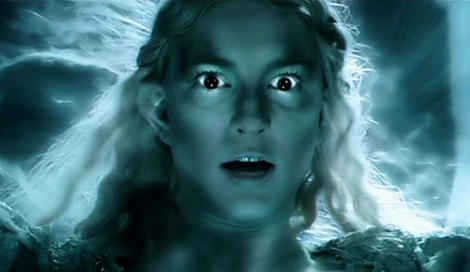
The story, set in a world Tolkien called Middle-earth, puts forth a possible alternative past for our Earth, one that could have occurred before our written history began. Tolkien was fascinated with the pre-Christian mythology of northern Europe. To make his story, he pulled elements from these myths. He also imbued it with elements from his own Catholic faith. The story follows a basic plot of a heroic quest. And here it gets meager for Frodo in regards to individuation and Anima. Without doubt Gollum is Frodo’s shadow. When the Fellowship goes out into the evil lands, passes the trials of Caradhras, the Wargs, and the Balrog, they encounter in Lothlorien a fair and terrifying Anima. Galadriel, who sees into one’s heart and forces people to look honestly at themselves, to see the shadow within, giving Frodos followers a hint of individuation – the initial dream.
While the characters with most depth are Hobbits, I am not quite sure, if you can interpret Frodo’s quest as his individuation, self-actualization and search for enlightenment. Without blasphemy, one may find a resemblance to Jesus’ hesitation to take the cross. Most of Tolkien’s writings can perceived in the dualistic view of good and evil in distinct ‘mythic’ flavor of a very personal evil and even an evil empire. However, unlike in opera or theatre, Tolkien’s Lord of the Rings is not myth per se, but a cleverly fabricated and artistically elaborated piece of art, more for effect than symbolic.
Many of Tolkien’s protagonists resemble thus somewhat more shallow characters of fairy stories, than those, say in Wagner’s Ring, which Jungian’s generally easily find representation of the collective unconscious. Tolkien’s (human) figures are more theatric than archetypal images – or archetypal per se (templates) : Sure, the King(s), the Warrior and the Wizard are quite obvious and map easily and directly to Jung’s “standard” archetypal images. But all in all it is more Shakespeare than Wagner. Why then, does Lord of the Rings have such an overwhelming emotional impact on me and on others? Precisely of that. For many of us, the simple identification with the most obvious Jungian archetypal images is the unconsciously response to a typical hero quest and the lure of alchemy. Take the wizard Gandalf, his name was part of 50 % of the root passwords in Unix systems, long before the movie came out. To the younger and/or non-techies, Unix was predecessor of Android OS and is after a rebirth in Linux still base of most Internet infrastructure.
Tolkien’s “brave old world” in Lord of the Rings
galadriel
As we experience today really, “The End of an Age,” people’s attitude toward religion in the contemporary West (true more than Europe than the United States) has changed. The Hobbit’s Shire creates a suitable sugary pagan (or pseudo religious) setting similar to Jean-Jacques Rousseau’s understanding of “good” nature and savage before Christianity and science took over. And as Campbell puts it, “It has always been the prime function of mythology and rite to supply the symbols that carry the human spirit.” This is why “Lord of the Rings” speaks as deeply to people who share neither Tolkien’s faith nor his opinions as it does to those who do. It transcends the personal and the particular to touch us all. As a put off, it is often argued that the “analytical psychology” developed by C. G. Jung in the early years of the last century was always more religion than a science anyway. Jung was intrigued by the imagery of dreams and waking visions experienced both by himself and his patients, and how this same symbolic imagery appeared repeatedly in religion, mythology and alchemy–areas of which the patients in question were most often ignorant. His concept of archetypes and archetypal imagery has permeated our culture, especially in the arts and humanities. Hence, an ‘emotional response problem is expected in Tolkien’s approach. It is one thing to like a piece of art, but another to analyse and assess it as a collective unconscious. One may value Tolkien’s Lord of the Rings as a book of undoubted literary quality, whereas even more respond enthusiastically to a trashy sequential also by another British. Lord of the Rings especially seems to have ‘spoken’ to many of its readers via its archetypal images and the “American National Park” motifs. I have heard, that he had traveled to the US – when I moved to the states and saw them for the first time I was able to map my own, self created images having read the book 10 years before.
Jungian framework and art
I want to suppress the understandable desire to prove that the book I love is also a ‘good’ book in a literary terms but look at it in another way of exploring the reader’s (my) psyche. Jungian literary criticism is, in my opinion, a method very well suited exploring the psychological dimension of fiction. I have written about, say Herman Hesse, Max Frisch. Both obviously succeeded in creating a work of art rooted in the Western tradition that ‘speaks’ to millions of readers, and a Jungian approach can give a reason for this success, namely that it constitutes a compensatory set of archetypal images that transcend age and culture for a greater balance. Yet, the Jungian framework also harbours some grave dangers – the subject of the analysis becomes too easily confused with the concepts and terminology of what should be the meta-language; the ‘critical’ distance between ‘theory’ and ‘object’ is often dangerously small and causes us to confuse and mix the two levels. It becomes post-modern mud like those ‘history studies’ blissfully ignoring sources, parallels and analogues and mixing facts and opinion. I use the Encyclopedia of Arda to keep me honest about the content, Timothy R. O’Neill’s book “The Individuated Hobbit: Jung, Tolkien and the Archetypes of Middle-Earth” of 1979 and Wagner’s Ring and Its Symbols” originally published 1984 from the English musicologist Robert Donington, both major landmarks in the uncovering mythical-archetypal structures in art. I found little other (and better) than that. O’Neill’s 1979 book-length study comes from an army psychologist but is not based on professional training in analytical psychology. I am also aware of the study of Jungian analyst Pia Skogemann “Where the Shadows lie” in 2009.
The Heroic Journey
Tolkien started out just to write a sequel to The Hobbit. Tolkien tells us in the Foreword to The Lord of the Rings that “the tale grew in the telling” into something much larger, darker, and complicated than his original intent. At the end of his first draft of Chapter III, Tolkien wrote to his publisher that the story “has taken an unpremeditated turn.” By the time he was writing Chapter VII, he reported that “It is now flowing along, and getting out of hand . . . [it] progresses towards quite unforeseen goals.” When Faramir appeared, Tolkien reported to his son that “I am sure I did not invent him, I did not even want him . . . but there he came walking into the woods of Ithilien . . .” Later he said “Gollum continues to develop into a most intriguing character.”The Lord of the Rings follows the basic plot of the hero’s journey.
Night Journey
Joseph Campbell recognized a basic pattern in many of those narratives and has named those necessary stages to this journey:
Separation and departure from the safe haven of home or childhood,
Initiation,
The Fight or the underworld,
Return and reintegration.
To accomplish his quest, the hero will need to call on his own strengths. These qualities are represented as companions with different qualities. Heroes are almost always the most unlikely person possible. Each time Frodo and Sam begin another stage of their journey, they encounter one or more threshold guardians (wise men or wise women).
Spot the archetype
The method is playing “spot the archetype” with Tolkien’s characters is a game that many scholars have played with relish – functional complexes or archetypes as Ego, Shadow, Anima and Self and collective archetypes as Warrior, Magician, Hero, King, among others.
Archetypes (per se) are described as structural templates in the collective unconscious, invisible nuclear elements and potential carrier of meaning. C.G. Jung stresses the point that aarchetypes are not inherited but only structural patterns of potential representation. When they are touched by the light of the conscious mind they may become in the lower plane instincts and the higher realm images. Archetypes (not per se!) may be equated with complexes, particularly the those of personal unconscious (like shadow) which are often refered as functional complexes.
Complexes according to C.G. Jung are described as sources of intensity or energy around a nucleus ( an archetype per se) which may drain (or provide) energy and integrity from/to the conscious Ego and are typically in the personal unconscious but also in the collective unconscious, Jolande Jacobi describes the “complex” as a node of unconscious feelings and beliefs, detectable only indirectly, through behavior.
Symbols are perceptible to the conscious mind and are for the most part a representation of archetypes per se conscious mind. Obviously they can be inherited and they my personal or collective as source of all mythic, symbolic and dream representations. This mankind’s experience and knowledge is not available directly — only its images and created patterns can become manifest as symbols potentially unlimited in number and variety. Symbols are the core of our culture being the universal patterns of myth, religious symbols and Tolkien.
Symbols in Lord of the Rings
Though there are many symbols in the story, four symbols of personal power are central to our theme:
The evil ring, and the relationship with the other rings.
The phial of light.
The invisibility cloak, confers the power to change but it also entails the power to deceive.
The sword, stinger, the weapon for the heroic struggle against the Orks.
The number four is very significant in Jung’s analytical psychology.Jung loves the number four. One can compare the three Elven rings plus the One Ring to Jung’s analysis of the Christian age in the light of alchemical symbolism, with the good Trinity and the hidden (evil) or later in live (female) fourth. by Pia Skogemann argues that the Fellowship is not really nine but eight, divided into two quaternities.
Functional Archetypes
The total psyche: (Mantra – Jolande Jacobi “The psychology of C.G. Jung”
The Ego and the Self are terms which are often interchangeably used. The psychological term Ego is the center of consciousness and ensures the physical survival . Ego often has an extended meaning in the spiritual language and referrers in general terms to an obstacle for Self realization.
Jung distinguishes sharply between Ego and Self and differentiates the unconscious thoughts and feelings of both types of memories: the ones we can remember easily and those who are suppressed for some reason. In addition he introduced the collective unconscious, which belongs to the common humanity, as part of an individual psyche.
The Ego
Frodo and the Shire express the realm of Ego. The Ring is the Ego inflation The return of the ring into the deep currents of the fire completes this life cycle. The self is made whole. The cognitive conscious world of Ego is reconciled with its spiritual origin; the Self is reconciled. Howver, the Ego must also be overcome and accept the shadow. When Galadriel shows Boromir his shadow, he refuses to see. As C.G. Jung said, people would do anything to avoid admitting failings and working to overcome them. This is part of the power of the shadow. Frodo passes this test, but the price is loosing himself, dissolving the Ego.
Animus and Anima
galadrielAndFrodo
It has been noted, the beautiful Galadriel, who forces people to look at themselves, is the primary Anima. Through her, Gimli realizes that not material wealth but love is the highest form, Merry and Pippin begin to grow up and take responsibility, Sam makes his final commitment to the quest going with Frodo all the way and Legolas, another Elf answers the call to action and joins the fellowship. Boromir fails this test.
Frodo represents the archetypal hero of the Lord of the Rings, but I am missing a dedicated love (or female) who represents the necessary union between the conscious realm and the realm of his Anima. He does not come close to her, and thats in my opinion why he in end fails on the mountain of doom to give up the ring. The gifts from Galadriecome with the words: “And you, Ringbearer’ she said, turning to Frodo. ‘I come to you last who are not last in my thoughts. For you I have prepared this.’ She held up a small crystal phial: it glittered as she moved it and rays of white light sprang from her hand. ‘In this phial,’ she said,’ is caught the light of Earendil’s star, set amid the waters of my fountain. It will shine still brighter when night is about you. May it be a light to you in dark places, when all other lights go out. Frodo took the phial, and Stinger (that symbol should be clear) and the dangerous female become again “like a queen, fair and beautiful.” Only later in Golums’s death we see him freed by the burning away of his accepted shadow. Love might be found between Aragorn and Arwen. When Arwen and Aragorn commit to each other forever, Arwen chooses to turn and embrace her shadow, her human side, and remain in Middle-earth. The rest of Elvendom chooses to remain within the rapidly shrinking circles of light until finally they lose the world entirely. Arwen, by committing to Aragorn, gives him the inspiration to complete his part of the quest. Aragorn becomes through her the leader he is meant to be.
shadow
The Shadow
In the realm of Shadow, represented in Lord of the Rings by Gollum reside rejection, frustration, anger, hate, evil. According to Jung, we all must struggle with our shadow. The shadow is our unconscious self, all the parts of ourselves that we refuse to acknowledge or are shamed by. The more we try to flee from or ignore the shadow, the more it grows and the more power it gains over us. To master the shadow, we need to stop running, turn, and face it. “The hero . . . must realize that the shadow exists and that he can draw strength from it. He must come to terms with its destructive powers if he is to become sufficiently terrible to overcome it. Gollum is Frodo’s shadow made manifest. He represents Frodo’s biggest fear: that he will succumb to the Ring’s siren call. Frodo fears and even hates Gollum up until the moment he actually meets the wretched creature. Once he sees Gollum in the light of day, his heart is moved to compassion. We cannot gain mastery over our weaknesses until we first admit that we have them and then forgive ourselves for that. Only then can we see clearly how to overcome them. Looking at Gollum, Frodo feels pity. Out of this pity he finds the strength to control Gollum — who even calls him “master” — and resist the lure of the Ring.
The Self
To me Samin Lord of the Rings represent the Self. He is the only one who can resists the ring. In the end Frodo leaves the shire and Sam inherits it. The ring itself represents for us the lure of gold, or lust of power. Possession of the ring confers power over the world. We set out to relate the life-cycle of the ring to the life-cycle of the psyche. The circle of a ring suggests how this might be done. The story begins in the realm of the Self, which has its origin in the value of life. O’Neil’s book identifies (wrongly) the thoroughly evil “One Ring” with the Self, based on its superficial symbolic characteristics. Sam is a much more satisfying and nuanced view of both of the Self archetype.
The Persona
In Wagner’s The Valkyrie teach in “The Ring” a fundamental cultural lessons about society. I do not really see a complement in Lord of the Rings.
Autonomous Complex
It is on of the effects of the Ring–“the normal identity disappears and is taken over by the norms and values of autonomous complex (The Ring) takes over. Gollum is clearly an overpowered Ego becoming a merge of Shadow and an autonomous Complex. In one scene his remaining good and bad side even talk even to each other.
Archetypes of Transformation (Rebirth)
The landscape of Middle-earth and the actual journey of the Fellowship have particular archetypal significance : rivers and forests; descent (death and rebirth); changing of the wind; and man-made towers. Significant are borders, crossroads, river crossings and other points of decision, and their relationship to the unconscious. Jung enumerates five plus one different meanings of Rebirth:
Metempsychosis – transmigration of souls
Reincarnation – continuity of personality (main Buddhist theme)
Resurrection – reestablishment of human existence after death (main Christian theme)
Rebirth Renovatio – rebirth in the narrow sense within a span of a life with the implication of healing, improvement
Rebirth Transmutation – such as transformation of a mortal in an immortal being
Participation in a process of transformation.
In Lord of the Rings I see the latter. The transformation (or the quest to counter Mordor transforming the world in a hell ruled by the evil enforced by Orks) takes place outside of the individual. In other words, Frodo has to take part in some rite of Transformation. Jung was, as Tolkien, leaning Catholic (although Jung’s grandfather was a Free Manson and his Father an unconvincing Protestant Pastor). Jung meant witnessing the transformation of a substance in ceremony such as a mass, e.g. the mystery of the Eucharist. It is of the five mysteries the Church cannot explain,Catholics have to accept them on faith. Of course there is also a strong pagan mystery in it: The grace (more the curse) of immortality. Jung refers to the Eleusinian Mysteries ceremonies held every year for the cult of Demeter and Persephone. based at Eleusis in ancient Greece (and every Easter in Washington State). Demeter’s rebirth is symbolic for the eternity of life that flows from generation to generation:
Truly the blessed gods have proclaimed a most beautiful secret Death comes as a blessing to men (Elusian epitaph, quoted by C.G Jung).
Collective Archetypes
In his book Four Archetypes C. G. Jung refers to the Mother, Rebirth, Spirit and Trickster. The mother is just very brief present in the second book (the self sacrifice) and at the very end when Sam becomes father. There are strong women visible, but the narrative is a men’s world. As presented above, one of the five aspects of the Transformation archetype participation in a transformation – is the core of the Narrative. In addition, “King, Warrior, Magician, Lover – Rediscovering the Archetypes of the Mature Masculine” , a C. G. Jung based interpretation of masculine behavior is very applicable to the human fictional characters ´Tolkien. All four representations of the archetypes have one positive (right amount) and 2 negative poles (deficit or surplus). For example, the positive King archetype rules his world wise whereas the negative Kings are the weakling and the tyrant. The Hero or warrior archetype is a timeless, present in all art and global. Two examples of my articles: Jianghu seen as Archetypes defined by C.G. Jung (Magician, King, Lover, Warrior and Hero) and Wagner’s Ring, Richard Wagner from Scene to Scene utilizing C.G. Jung.
C_G_JUNGFEMALE and MALE ARCHETYPES
The Magician
The Magician, Trickster or Wise Man, represents Logos according to Jung a masculine principle, is sees the unseen. He is like Gandalf the mediator and communicator of secret knowledge, the healer, technologist, teacher, and spiritual. A wizard or a witch, a man or woman of power, advises and sometimes accompanies the hero . This person represents supernatural aid and is another sign that the quest is guided and blessed. But we do not see Gandalf’s true power until Frodo and Sam have gone on without him. Magician, however, always has a tendency to abuse his power, being the negative Magician, the manipulator like Sauron, the most powerful of the wizards,. But Saruman has let his shadow control him. He lies to others and to himself about his true motives. Lies are always a sign that the shadow is in control.
The King
The King is the life giver and the most important responsible for the safety and well being. The book quotes from history and art that every society must have king or leader who is entrusted with guiding his people to success and comfort. The benefits and virtues of the king are many, but the responsibilities are many as well. And if the king fails in his duties he is traditionally disposed. The shadows sides are tyrant and the weakling. The Aragon of volume III may be seen as a personification of the the King. The self-effacing Ranger, Strider, learns to embrace his heritage and destiny. He has to rise above his self-doubts and take on his rightful role as the King of Men, which he does on the plains of Rohan: It is only after he declares himself openly to Eomer and takes his full power that Aragorn can look Sauron in the face and not be conquered.
The Warrior (or Hero)
The Warrior is a destroyer who destroys the enemies and clears a space for renewal and change. The prototype of the warrior is the soldier. In The Lord of the Rings, we have many heroes (and even more warriors), but the two primary heroes are Frodo and Sam. Both express aspects of the archetypal hero. Frodo is an orphan and the adopted and spiritual heir of Bilbo Baggins, who himself does not quite fit in the Shire. Frodo appears to be a normal hobbit up until Bilbo’s disappearance. The Warrior is besides the Wizard the most viable of the archetypes. It is vital that this quest be accomplished not by God or agents of God, but by a mortal being. And the hero must fulfill the quest using his own strengths alone. This is the only way he can learn what those strengths are. The lesson for us here is that when we find ourselves in great trouble, not to despair, for that’s when we’ll learn who we really are. The hero must make a formal commitment. His aggressiveness are a highly needed characteristic responsible for his achievements and those of middle earth. Properly accessed, the Warrior provides self-discipline, and protects. The two shadow sides of the Hero are the Sadist of Mordor, the Orks. The other pole, the Masochist, is not visible in Lord of the Ring.
The Lover
The Lover like the feminine principle Eros manifests energy and fertility of the nature. The gendering of Eros and Logos and synergy is a consequence of Jung’s anima/animus synergy. Generally the Lovers are represented by the elves, easy with our own deepest and most central values and visions, and with others. Those are archetypal parents, people and more power and wisdom than the hero does at this stage of his development offer place of safety where the hobbits can relax and and give gifts to help the hobbits on their way. At the Council of Elrond, the true scope of the quest is made clear: to take the Ring to Mount Doom and destroy it. Frodo is still hoping that the quest is not his. But the wise Elves, brave Men, and strong Dwarves sit in silence. I will take the Ring,” says Frodo, “though I do not know the way.”
Furthermore one has to deal with the so-called archetypes of transformation and more general concepts. Tolkien resembles individuation, how humans develop into mature, emotionally healthy adults. C. G. Jung: “. . . the essential function of the heroic myth is the development of the individual’s ego-consciousness — his awareness of his own strengths and weaknesses — in a manner that will equip him for the arduous tasks with which life confronts him.”
Personal Layers
Jungian Types
Skogemann examines the four hobbits as “team consciousness” with each individual representing one of the four Jungian psychological functions (thinking, intuition, sensation, feeling). Repeated literal losses of consciousness and subsequent awakening of the hobbits correlate with the awakening of the various psychological functions. That may be the case, but this team building aproach is ultimatly not helping much.
Individuation
The Jungian concept of individuation is tailor-made for studying the coming-of-age story, and The Lord of the Rings is rife with such stories. Frodo and Sam an descent into the Underworld. This is the descent into the darkest parts of one’s own soul. Before the hero can face the One problem, or destroy the One Ring, he has to master his own shadow. Frodo allows his shadow Gollum to be his guide through the Underworld. They traverse the Dead Marshes and Shelob’s tunnel. Here, Frodo is betrayed by Gollum and appears to die. This is Sam’s crisis, that he would not be able to protect Mr. Frodo. But he resists the Ring, takes on a tower full of Orcs, and rescues Frodo. The initiation continues as Frodo and Sam are tempered by their passage through the shadow lands of Mordor. Frodo, who is still struggling with his shadow, cannot see anything beyond that. But Sam, here almost being Frodo’s Ego has gained perspective. Finally they reach Mount Doom. At the ultimate moment, Frodo succumbs to the temptation of the Ring and claims it for his own. However, his earlier compassion for this failing saves Frodo from a terrible fate. Because of both Sam and Gollum the quest of Frodo can be fulfilled.
Eternity and Judgment Day
The Ego, the Self and God – Individuation and Transcendence
Once the quest in Lord of the Rings has been fulfilled, supernatural power can be used freely, so Gandalf and the Eagles can save Frodo and Sam as Mount Doom erupts and Barad-dur collapses. Barad-dur crumbling means Sauron has been completely defeated.
The World Tree, the Tree of Life, has bloomed. This tree only blooms in the garden where there is no shadow. The restoration of the White Tree in Gondor and the presence of the mallorn in the Shire let us know that things are truly balanced and healed. After wholeness has been restored, it is time for unions. Sam marries Rosie, Eowyn and Faramir marry and solidify the ties between Gondor and Rohan. And Aragorn, now King Elessar, marries Arwen. This is the Great Marriage, the union of the mortal hero with the immortal goddess, that ensures that the world will be renewed.
The time for judgment has come. Aragorn sits in judgment on Men, and his decisions reflect the wisdom and mercy of the returned King the world is now ready for. Sauron is condemmed to endless existence as a “mere shadow of malice. Saruman’s fate turns out to be the same as that of the master he served and betrayed. Those who cannot become whole and balanced, who remain in the power of their shadows, are cast out from the reborn world.
No marriage forFrodo. But he said to Gandalf: “At last I understand why we have waited! This is the ending.” and finally leaves Middle-earth. This can be interpreted two ways. In a first interpretation, Frodo did, in a sense, fail. Secondly his disappearing resmbles essentially the dissolving of his ego, which is one common way to see individuation (see The Death of the Ego as prerequisite to find God). In any case, Frodo’s fate is bittersweet. Sam becomes Frodo’s spiritual and material heir – the Self. He also becomes a parent, symbolic of true maturity. It was a simple story, but had all ingredients of C. G. Jung’s Red Book ( C. G. Jung’s Red Book in a hurry – Narrative)
Conclusion
Analytical psychology acknowledges the importance of the spiritual life, but is not tied to a specific religion. Those focused on Tolkien as a Christian author might find Jung’s alternative psychological explanations thought-provoking. Like Wagner’s Ring, Tolkien starts with a world of animistic beliefs threatened by modern science, a trajectory that leaves people cut off from the idea of nature. It may very well be, that Tolkien’s and Jung’s early experiences with the Perilous Realm (whether one calls it Catholic Mystic or the Unconscious) had much in common, even the style of the language in which their experiences were expressed. In his “Red Book” Jung found such language to be a characteristic of archetypes. Both, Jung and Tolkien had serious problem with their era and its lack of any means of spiritual transformation, overwhelmed by science and technology. The Lord of the Rings is and the Red Book not an allegory of World Wars, however World War II affected the conception and portrayal of Mordor and the Red Book anticipated the streams of blood in World War I.
Sources
O’Neill, Timothy R. The Individuated Hobbit: Jung, Tolkien and the Archetypes of Middle-earth. Boston: Houghton Mifflin, 1979
Robert Donington, Wagner’s Ring and Its Symbols”, originally published 1984 both antiquaries
Today I received the last print of the Newsweek. From now on all my information (and 5% of the new books) will be electronically, that is to say via Internet. I discarded all unreliable sources like TV and local newspaper long ago. Time wasters. Now all have been replaced by Blogs, Skype Video, Twitter, WhisperNet and Internet in various shades including Internet Radio. That trend indicates an enormous fragmentation of information seekers and a lot of work for them. Even more time consuming, because often it means checking raw information. In my case all what has been kept is Newsweek, the Economist and a Zürich daily newspaper besides from some science magazines. I see no big difference between blogs and so called quality journalism and prefer free unprocessed information. With unprocessed Information one knows the need to check facts and analyze them. In todays real-time journalism, declaring what one won’t report can be just as important as what one will. However, with the paper goes also last illusion of credibility.I am careful with the net – always double check with the help of (old) books. Philosopher Paul Ricoeur has defined history as “a story about the past told to the present for present purposes” and that is more than ever true in the net and any media.
“Mistakes are, after all, the foundations of truth, and if a man does not know what a thing is, it is at least an increase in knowledge if he knows what it is not.“― C.G. Jung
The evolution of what media theorist have called “networked journalism” has made the business of news much more chaotic, since it now consists of thousands of voices instead of just a few prominent ones who happen to have the connections to make themselves heard. If there is a growth area in media, it is in the field of “curated news,” which needs real-time filters verify and re-distribute the news that comes in from tens of thousands of sources to present a coherent picture of what is happening on the ground. Mainstream media outlets would like to play a key role in the dissemination of news during such events (however journalists just tend to retweet other journalists more often than they do non-mainstream sources just like copycat newswire and government briefing info). That worked well in Egypt during the revolution in February, but not in more chaotic (or controlled) Syria. Reality can be twisted by the media. Largely sanitized and devalued, it is too often spoon fed to the public by mainstream outfits whose mission is to coerce us into sharing their values. To make us feel good about the way we’re increasingly pawns for global so-called elites. Complicit in exploiting planet and people, preparing us gently for a corporate world government. Will the media ever explain how the governments of the West are party-political stitch-ups, apologists and legitimizers, public relation and lobby managers for the global finance?
It’s interesting to note that with the advent of the Internet and all other new alternatives, they have not had significant impact on the traditional mediums, except for terristic radio, which was declining before these (new mediums) arrived. But now, with Internet radio, they too can be heard globally. Americans 2012 spend more than 33 hours per week watching video across the screens, according to the latest Nielsen Cross-Platform Report. Almost the same proportion of the population is reading newspapers and magazines and the vast majority still watching commercial television – but it’s what is happening underneath these overall figures that is critical. For instance, whilst newspapers have held ground in readership, the humble newspaper format has morphed into non paper issues – Newsweek as a credible early adopter of that transition – and, sometimes will change into readers-per-copy. That is raising the question “Does anyone still read the same newspaper from cover to cover?”
What is today the difference between a good quality blog and a non-paper news outfit, say like The Daily Beast / Newsweek (which I still give a lot of credit)? Little? One example, CNN on the news about Syria: The news come unprocessed and unilateral from so-called activists. Their clips feel like CIA embedded journalism sometimes intellectually insulting. The news reports from Europe’s “State-TV” and conforming newspaper is no inch better: plain one-sided pro-EU propaganda grossly distorting the facts. As we look at the way news and information flows in this new world of social networks, and what has been called “random acts of journalism” by those who may not even see themselves as journalists, it’s easy to get distracted by how chaotic the process seems, and how difficult it is to separate the signal from the noise. But more information is better — even if it requires new skills on the part of us when it comes to filtering that information — and journalism, as once pointed out, tends to get better when more people do it. I am convinced today any free and critical citizen will (and must) strive to be a journalist. The official lies pile up so fast in Europe, US and Middle East you need to have wings to stay above it.
trust_the_lies_not_the-truth.
Today media are top notch blogs to me. Most media not even that anymore. In cases where I knew by chance the background, it seemed to me the quality press does definitely not care more than social media on the whole about checking sources or presenting the facts. In the economic crises, the lies distributed by the media are so evident to anyone, I started to process numbers and ignore politicians (and mass media). Newsweek is a perfect example that new media will not simply replace old media, but rather will learn to interact with it in a complex relationship which is called “convergence culture.” Thus the move is not primarily a technological revolution but more a cultural shift, dependent on the l bidirectional and active participation of the information sources and sinks working in a social dynamic. Today in many internet newspaper sites there is more information in the comment area than in the article, that means like many bookstores before Amazon, those journalists are living deads in their profession.
Hidden Censorship
As I said before in another of my blogs, it is up to you to create order within this chaos and find the patterns that will help you to understand what is true, what could be true, and what is outright false. In order to do all this, you need to have a firm grip on what is objective and what is subjective, on not touched by the writer’s previous experiences or interests. It is verifiable by looking up facts numbers or performing mathematical calculations. Subjective is a statement that has been colored by the character of the writer. It is, I am sorry to say, also an element of trust and hunch. But often one knows a bit about a country or an event. If a source lies once, discard it. After all Journalists get paid and competition is fierce. The random journalist is like the court jester, he has no official interest or stakes. He or she will have opinions but not lie to get a pay cheque. In large media organizations, journalists and writers trained in critical thinking, analysis, research, and freedom of information values must undergo acculturation to the “common sense” of their organizational structure in order to remain employed. Understandings regarding objective reporting, standards of critical inquiry, sociopolitical perspectives, conflict of interests, and other abstract values are organizationally created and interpreted to new employees as “the way we do things.” These organizational values are understood instinctively through both word and positive feedback for the new employee’s advancement and promotion (if they bend or omit the truth).After all, there is nothing illogical about this process. Monetary capital seeks the most profitable return on investment, and media/information technology properties are seen as the future growth market of the world. Furthermore lots of stakeholder money belongs to cultural opinionated and access to the powerful needs to be earned. Literature and fine art is similar, one is able to see better things in self press blogs not censored by marketing than the contemporary stuff which hangs and sits in plushy museums.
One thought and lot of credit to WordPress, they are culture changer too. I love to fly with them. I started this Blog just for myself and this blog got about 10,000 views in 2012. As the report encourages, “if every person who reached the top of Mt. Everest viewed this blog, it would have taken 16 years to get that many views”. I guess, on my topic some sort of niche, it is not too bad. I thank my readers for the interest. What is equally important to me – the readers came from 102 countries in all. Most visitors came from Germany. The United States & Switzerland were not far behind. One top of this I learned a lot from my fellow bloggers. I am interested in cultures, to reach out globally – more modest to be understood globally – is one of my major goals.
The last day of the year – Walk in the Park
Thanks for an exiting year. I started this Blog to sort my thoughts. I am “wordly” as well as visual. In the this year I have met people who gave me complete new insights, I could “watch” bloggers with excellent writing style and excellent photographers and learn from them. I will keep Newsweek if they keep up their quality, but still feel a bit sad not having a paper copy anymore. Time is critical, I know – in the words of Pope Benedict the XVI:
The faster we can move, the more efficient our time-saving appliances become, the less time we have. And God? The question of God never seems urgent. Our time is already completely full. But matters go deeper still. Does God actually have a place in our thinking? Our process of thinking is structured in such a way that he simply ought not to exist. Even if he seems to knock at the door of our thinking, he has to be explained away. If thinking is to be taken seriously, it must be structured in such a way that the “God hypothesis” becomes superfluous. There is no room for him. Not even in our feelings and desires is there any room for him. We want ourselves. We want what we can seize hold of, we want happiness that is within our reach, we want our plans and purposes to succeed. We are so “full” of ourselves that there is no room left for God. And that means there is no room for others either, for children, for the poor, for the stranger.
Whether we like to admit it or not, we always have a choice to do evil. We can deny it as much as we want. We’re always as free as we want. There was a well written article by Cristian Mihai, discussing the connection between art and violence. In the end his question turned out to be about free will. I agree with his conclusion w’re the only ones responsible for our actions.
The author uses a good analogy – martial arts training. It actually refers to the archetype of the warrior. One learns to fight by fighting. But it doesn’t makes necessarily a violent person. Because there is what the author calls convention and I would call rules, ethical reflection maybe moral.
The martial art example reveals the philosophical question behind the art topic (as well as some hints to the answer). Are we ultimately responsible for our deeds? Answer – yes we are. “We” translates in “you and me” as individual and our cultural entity (family, society, nation). While it may be an influencing factor, it is not wise, simply to shift the blame to art, to the media, to computer games, to weapons, to the not (yet) developed cortex. Violence has been always present. and it always needed the effort of the individual and culture (moral, ethic, religion, law) to restrain it.
“The psychoanalytic C.G.Jung said under the impression of the second world war: We need more understanding of human nature, because the only real danger that exists is man himself. He is the great danger, and we are pitifully unaware of it. We know nothing of man, far too little. His psyche should be studied, because we are the origin of all coming evil.”
Simpler said, We’ve all got both light and dark inside us. The Shadow, as C.G. Jung defined it, is in us. “Omne bonum a Deo, omne malum ab homine, i.e., “All good from God, all evil from man.” said the great (religious) philosopher Augustine of Hippo (Augustinus).
AugustineOfHippo
The free will, as Augustine sees it, differentiates man from animals.
Having said said, we not only deny the existence of the evil by shifting the blame to something impersonal but indeed intoxicate ourselves by shallow entertainment, consumerism, graphic violence, “sex, drugs and rock en roll” and psycho-pharmaca.
Some turn from violence to hard science. While I largely agree that most social sciences and the bankrupt humanities are not helpful, the belief of hard sciences as savior (physics, biology, chemistry, informatics, evolutionary psychology, cognitive and neurosciences) is mechanistic and naive. Their potential solutions to prevent evil, might create evil – might create a world, in which I do not want to live in. Lack of empathy is widespread today like a mental illness. That lack seems to be even collective. In that respect, we all, whole societies are ill. And it is a lack of empathy (or love) that allows one to enact violence upon another living creature. I doubt, empathy levels can be enhanced through neurobiology and scientific designer drugs or information technology nor through tons of social workers.
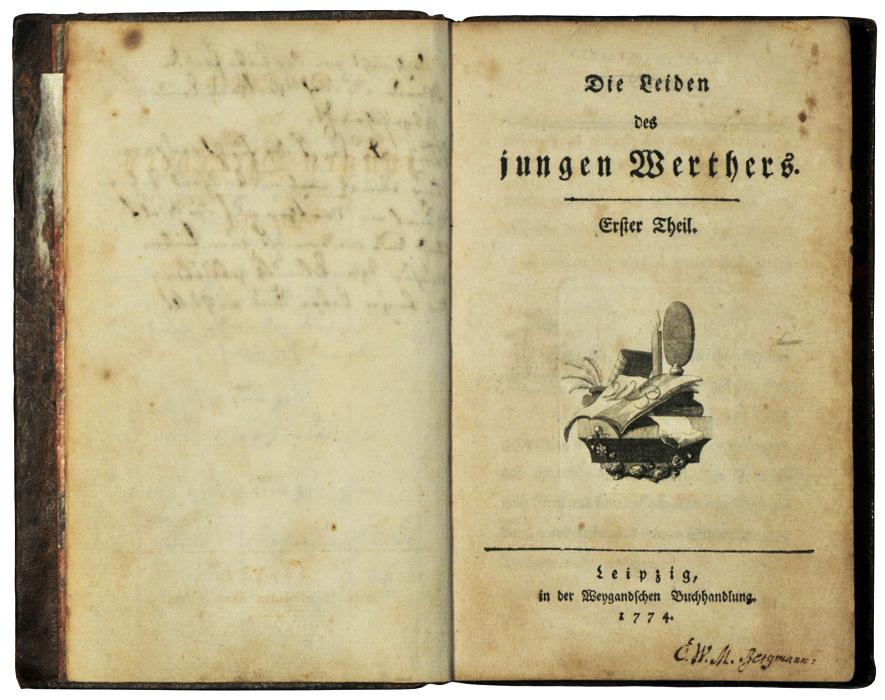
Now is art to blame? What is art today, most of the stuff might not even be art. 1979 Francis Ford Coppola’s haunting, hallucinatory Vietnam War epic Apocalypse Now was graphic and violent, but visionary. It has been said, that Coppola made art out violence by aesthetic means, thus legitimizing it. Goethe wrote 1774 a book, “Die Leiden des jungen Werther”, about an unfilled love in which the main character commits suicide. Followers dressed in this fashion, and committed suicide in the double digits. The imitations of the Werther figure in real life, which were in suicide attempts and suicides, started a discussion about media effects, which runs up today. Since the 1970s, the psychology deals with the phenomenon of “media-mediated imitation”. Think also of the Danish caricatures, which resulted in many deaths – the problem is global now.
Will the easy fix help, should we forbid art (books,paintings, movies… Goethe), forbid, internet, forbid weapons, forbid media?
No, we have to think, feel and act properly and raise our kids within a minimum ethical context. With love (and also with fathers). We must rely on science, as well as on metaphysics, common sense and psychology to cope with reality. but even more on intuitive understanding (“our inner self”) . Free will is possible, it is possible to understand our genetic and biographical patterns of behavior, at least to an extent. It is called individuation. Still shooting massacre will happen. Lucky, if one can pray then, at least.
In Hermann Hesse’s The Glass Bead Game, Castalia and the “Feuilletonistic Age” represent two diametric extremes of human civilization. Castalia is a sterilized, ascetic order of intellectuals dedicated to the preservation of pure, objective knowledge. In contrast, the Feuilletonistic Age—representing Hesse’s cynical view of the early 20th century—is characterized by mass consumerism, trivialized culture, and superficial media. In Castalia a hypothetical meta-game often described as a “neural network of the cosmic mind” is played. Hesse’ metaphors are used to analyze today’s digital social and knowledge networks as if they were iterations of the Glass Bead Game. I approach this through two distinct hypotheses:
‘feuilletonistic‘ media culture
The book presents the Glass Bead Game as a prophecy of interconnected knowledge and a potential remedy for today’s trivialized, “feuilletonistic” world.
Conversely, the book prophesies the very disease afflicting our current feuilletonistic media culture—a culture of which the internet is a central part.
Also published under the title Magister Ludi (named after its main character), the novel is beautiful but demanding. While its length is not prohibitive, its prose is dense and highly descriptive. This essay focuses primarily on the Glass Bead Game itself, an activity that encompasses all human intellectual and mental faculties within the worldly environment. It synthesizes all fields of science and art that serve as the inventory of human orientation.
Hesse describes the rules as follows:
“These rules, the sign language and grammar of the game, represent a kind of highly developed secret language, in which several sciences and arts, in particular mathematics and music (or the science of music) participate which are able to express the contents and results of practically all of the sciences and relate them to each other.”
It occurred to me that the underlying purpose—and curiosity—driving much of my own activity in the blogosphere is similarly devoted to connecting these disparate topics.
Prophecy of the ‘Feuilletonistic’ World
The novel is set in the distant future, in a world that has evolved past what Hesse calls the “Feuilletonistic Age.” This age mirrors our own postmodern, post-metaphysical society, where culture is trivialized and the boundary between truth and lies has dissolved.
The fundamental clash between these two eras highlights Hesse’s ultimate philosophical warning about the human condition:
The Feuilletonistic Age (Triviality & Chaos): Described in the novel’s introduction, this era is marked by a bloated surplus of information and a degraded intelligentsia. Intellectuals use their skills not to seek truth, but to entertain the culture-hungry masses. Hesse viewed this age as a period of cultural exhaustion and ideological manipulation where meaningful values are drowned out by trivial, sensationalist media.
Castalia (Sterility & Detachment): Formed in response to the collapse of the Feuilletonistic Age, Castalia is an elitist, monastic province of secular scholars. To protect absolute truth from being cheapened, the Castalians completely isolate themselves from the rest of society. However, in doing so, their pursuit of abstract knowledge (via the Glass Bead Game) becomes sterile, emotionally bankrupt, and divorced from real human life.
The Clash of Extremes: The conflict is ultimately one of engagement versus isolation. The Feuilletonistic Age demonstrates the dangers of a society completely immersed in superficial information without substance. Castalia demonstrates the failure of a society that retreats so far into the ivory tower of objective intellectualism that it loses its soul.
Hesse’s protagonist, Joseph Knecht, ultimately realizes that both extremes are flawed. He discovers that true human wisdom requires bridging the gap: an intellectual must synthesize pure, objective ideals with an active, empathetic responsibility to the imperfect, chaotic real world. The climax of the book conveys, that Joseph Knecht, the Magister Ludi (Master of the Game, Leader of Castalia), looks at this perfect, beautiful machine of knowledge and realizes it is not rigor nor wisdom but a dead, lifeless prison, its ‘elite’ already on a way to bureaucratic mediocrity.
He walks away from Castalia to go into the real world to teach a single, real human child to do better, to create synergy. He trades perfect, infinite, automated symbols for messy, fragile, mortal human connection. He follows this human child Tino, the son of his lifelong friend Plinio Designori into the icey lake water of a mountain lake and drowns.
Tino Designori looks back, try to find and save him. Exhausted he swims to the shore, warms himsel in Knecht’s bathrobe, taking over Knecht’s quest and responsibility.
Alexander Shubin – The Glass Bead Game
The Glass Bead Game serves as a fascinating prophecy of modern life, as well as a classic of Jungian-influenced literature. Hesse’s cultural critique describes a world divided between a shallow, feuilletonistic media culture and a sterile academic elite whose scholarship has no impact on real life. We can find both extremes in our contemporary landscape of knowledge distribution networks and social media. While the blogosphere generally contains less trivia than mainstream media, a deeper problem remains: without the material stakes of physical existence, how can we sustain responsibility for our spoken or written words? How can people say what they mean and mean what they say? In short, what does the global language of the internet actually refer to?
The Game
To understand this, let us take a step back. The foundational layer of the book is framed as a chronicle written after the chaos of the “Millennium Wars” in Castalia—a secular, pedagogical province located in the country of Waldzell that enjoys peace and prosperity.
In this society, the academic pursuit of pure knowledge has transformed into an aesthetic discipline. This is personified by a philosophical game where players use glass beads to track their conceptual progress. The ultimate goal is to discover hidden interconnectedness across the realms of art and science—such as linking the precise mathematical notation of a Bach fugue to the structural interdependencies of music and literature.
Master Ludi
In its purest manifestation, the game allows philosophy, art, music, and scientific law to be appreciated simultaneously. It is played by scholar-elites in an autonomous institution wholly devoted to thinking and intuition (notably, two of the four Jungian functions). Set around 2500 AD, this ideal place evokes the inner harmony of a Benedictine monastery, the vast cultural synthesis required to make subtle intellectual connections, and the detached mindfulness of Chinese Zen masters. Essentially, the game can be interpreted as an attempt to discover a Grand Unified Theory of science (such as physics) and meaning (such as religion), using music and mathematics as its lingua franca. Ludwig Wittgenstein famously demonstrated that our language is not founded upon a set of hard-wired, absolute rules, but rather consists of fluid “language games.”
The Magister Ludi
The book tells the story of Joseph Knecht, who at the beginning is a young initiate in Castalia, a monastic order of secular scholars. His fellow monks study various subjects, but they are linked by a vaguely defined activity called the Glass Bead Game. Hesse never explains the game, except to say that it involves all forms of knowledge, particularly mathematics and music.
Knecht works his way up in the order, finally becoming the Magister Ludi, or master of the game.The games are played according to strictly prescribed rules, overseen by an elite class of trained experts under the leadership of the Magister Ludi (the Master of the Game).
The C.G. Jung Connections
Beyond the structural alignment of the four Jungian functions with the novel’s four biographical narratives (the main biography of Josef Knecht and the three alternate life stories in the second part), the Glass Bead Game serves as a metaphor for a sterile knowledge society. However, if one looks for spiritual parallels, the structure of Hesse’s novel feels less like a traditional Christian text and more like the mystical, faintly Gnostic Gospel of John. Indeed, it frequently reads like a Gnostic or alchemical treatise.
Many core concepts of Carl Jung’s analytical psychology—such as psychological typology, archetypes, and the collective unconscious—reverberate throughout the book. Hesse was deeply fascinated by the concept of individuation. He underwent psychoanalysis with Jung’s assistant, J.B. Lang, and visited Jung himself several times in 1921 for therapeutic discussions to overcome a severe creative crisis.
The biographical parallels between Jung and Hesse are striking. Both had remarkably similar upbringings, including intense friction with rigid, religious fathers (Hesse’s father was a Pietist missionary, while Jung’s was a Swiss Reformed pastor), and both struggled against their conservative upbringings. In their respective spiritual searches, both men remained open to Western mysticism, Eastern philosophy, and Gnostic ideas. Later in life, both also faced criticism for their perceived compliance with Nazi ideology.
The Jungian influence on Hesse’s creative output is undeniable; I find Jung’s psychology indispensable for fully understanding and appreciating Hesse’s writing. Jungian symbols and archetypes are vividly evident across his work. Today, both Jung and Hesse seem largely tuned out by the mainstream. Yet Hesse, like Jung, was a true seer—an intellectual explorer who was unafraid to look further, daring to examine anything that held psychological truth, whether it was Gnosticism, astrology, alchemy, or Eastern philosophy.
Archetypal Knowledge
This systematic, global approach to a universal game carries a profound methodological consequence. As Hesse states:
“The Glass Bead Game is thus a game with all the contents and values of our culture; it plays with them as, in the heyday of the arts, a painter may have played with the colors on his palette. What humankind has produced in its creative epochs in terms of knowledge, noble thoughts, and works of art—what successive epochs of learned reflection have conceptualized and claimed as intellectual property—all of this extraordinary material of intellectual values is played by the Glass Bead player like an organ is played by an organist. This organ is of a hardly graspable perfection; its manuals and pedals scan the whole spiritual cosmos, and its registers are almost uncountable. Theoretically, the complete intellectual contents of the world could be reproduced by playing.”
Today, the concept of such a playful virtualization of the world is far more familiar than it was in Hesse’s time. Our modern inclination is to visualize the world in strict analogy with a network, utilizing the concept of the digital social grid as a guiding paradigm for grasping reality. This grid serves as a matrix, acting as a meta-language for content.
Master of the Glass Bead Game
It has often been said that our vision of the future includes the possibility of universal, “global” communication that is entirely independent of regional cultural contexts. Hesse saw this approach realized through the convergence of mathematics and art (specifically music), much like Johannes Kepler—who notably was one of the first to use the term archetype in a scientific context.
Ironically, our contemporary iteration of Hesse’s Glass Bead Game is the internet, coupled with today’s Kafkaesque transnational systems and bureaucratic bodies. In many ways, have we not already arrived in Castalia’s administrative system of the year 2500? We live surrounded by institutional instances, administrative rules, game commissions, elite committees, game masters, specialized courses, systemic laws, massive data archives, controlled media, and Orwellian information gatekeepers. Meanwhile, the ordinary citizens—much like the prisoners in Plato’s Cave—remain below, viewing only the deceiving reflections of this grand game through today’s media.
A Conceptual View
The Glass Bead Game itself is a fascinating mathematical, aesthetic, philosophical, and mystical concept. To me, it lays the foundation for an artistic ritual that integrates all fields of human—and perhaps spiritual—knowledge through dense symbolism. As Hesse writes:
“How far back the historian wishes to place the origins and antecedents of the Glass Bead Game is, ultimately, a matter of his personal choice… We find it foreshadowed, as a dim anticipation and hope, in a good many earlier ages. There are hints of it in Pythagoras, for example… and the path of its prehistory leads on through Scholasticism and Humanism to the academies of mathematicians… and on to the Romantic philosophies and the runes of Novalis’ hallucinatory visions.”
The Game can be interpreted through C.G. Jung’s concepts or Wittgenstein’s language games, which organize the world through clusters of criterion properties. Music, particularly the Bach fugue, serves as a vital component in its ideal relation to mathematics, echoing Douglas R. Hofstadter’s Gödel, Escher, Bach. Fortunately, Hesse did not provide an explicit, unambiguous manual for the Game, providing instead an ascetic framework for interpretation.
Broad Bandwidth/Flattened World
To me, the Glass Bead Game is a metaphor to bring all relevant knowledge and art together. One example is how the inherent and direct feedback of blogs is used to learn, improve, and fine-tune on a Glass Bead Board (or net). We are embracing three megatrends in the Brave New World of digital media, science, art, and politics:
A shift from presentation to participation by bidirectional communication
Using technology to connect—or disconnect
Using social media interaction to make the world better—or worse
The present (and future) seem like a net of interconnected social communication beyond AOL and Facebook trivia. Like any powerful change agent, social media interaction cannot only be used to make the world better but also worse. It is not surprising that blogging offers, beyond knowledge, a useful platform or medium for both serious and more trivial discussions about belief, belonging, and the distribution of self-published art. In recent years, this has taken place increasingly on weblogs which may or may not have been established by single-topic institutions, organizations, or groups. Unlike those dedicated to sports and politics (to take two obvious examples), serious blogs frequently engender passions and psycho dynamic energies which move significantly beyond the mere agenda of the targeted communities.
Clearly, the Internet provides (as it does, respectively, for almost every area of human knowledge) a much-appreciated and used gateway for accessing and retrieving significant resources. However, it also offers at the same time a powerfully seductive arena in which belief systems do not merely get presented and convivially discussed but also baldly and repeatedly asserted. Taken together, the bidirectional communication in blogs constitutes a more efficient technological platform for a contest that has been ongoing in the real world for millennia: the control, manipulation, and, most significantly, replication of symbolic resources—archetypes—because of its theoretical ability to allow the opinions (and feedback) of anyone to be published without reference to tradition, canon, or other relevant authority—past or present.
However, the blogosphere increases risk by limiting our ability to evaluate the truth of claims. For many, blogs bring the internet to life through participation rather than just perusal. Consequently, controversies often appear on blogs rather than moderated, official pages. Furthermore, the idea that the internet makes “geography history” conflicts with fundamentalist beliefs or political systems grounded in specific times and places.
Real Variants on Hesse’s Game
Generally, I am not interested in playing games (with the exception of chess), but I became fascinated by its psychoanalytic (C.G. Jung), religious (i.e., meditative), and philosophical aspects (in particular, Wittgenstein). I was thoroughly impressed by the complex and many incarnations of this game which have been posted up to today, and I will point out some of those games. What continues to strike me as I come across new games is the way in which different designers emphasize (“capture”) different aspects of the game.
Here is a brief overview of a variety of current attempts to create playable variants of Hesse’s Game. The Game Hesse describes in his novel—and this is a very brief and dense overview—is played with ideas. The ideas themselves can be of any kind (musical, mathematical, verbal, or visual), but the game draws its profound beauty from the nodes of those ideas: the symbols. The ideas played are linked to one another, Hesse tells us, in much the same way in which melodies are presented in a musical form such as a Bach fugue. In another metaphor, he compares the Game to games of chess in which symbolic meaning has somehow been added to every move in its own concise and beautiful calligraphy.
This calligraphy, in turn, is inscribed on beads, and these are displayed on a board. The hieroglyphs and “meanings” of games of merit are then stored in a Games Archive, so that they can be called into play again in future games. The moves and links themselves become the subjects of formal meditation. In the most lofty of games—the annual Solemn Games over which the Magister Ludi himself presides—the beads with their hieroglyphs are ceremoniously presented on a large board to an attentive and cultivated audience for their edification and contemplation. There is also a form of the Glass Bead Game which he describes in his poem Hours in the Garden. In this simpler form, the game consists of imagining the great minds and hearts of the past—”wise men and poets and scholars and artists”—meeting across the centuries and talking.
Conclusion fifteen years later (2026)
The original essay was written by someone who was still optimistic that the Internet might become Hesse’s “Glass Bead Game.” Reading it today is almost poignant because many of my hopes have not merely failed—they have inverted:
“The present (and future) seem like a net of interconnected social communication…”
Almost two decades later, this hope deserves neither ridicule nor apology. It reflected the experience of those who knew the early Internet before it became a commercial enterprise. The Internet of UUCP, Usenet, ASCII discussion groups, mailing lists and the academic ARPANET culture rewarded curiosity more than visibility. Information traveled slowly, communities were largely self-governing, and participation required genuine engagement rather than algorithmic optimization. The dominant currency was contribution, not attention.
Today’s network is structurally different. It has become an economy of attention. Visibility is no longer primarily earned through intellectual value but increasingly allocated by recommendation algorithms whose objective is engagement. Hesse’s Feuilletonistic Age a satirical and cultural term coined Hermann Hesse is describing intellectual levity, and a lack of genuine cultural depth that appears less as an historical curiosity than as an uncanny anticipation of a culture in which immediacy continually displaces reflection.
Exhibit I: Chess and the I Ching
“A reader who chanced to be ignorant of the Glass Bead Game might imagine such a Game pattern as rather similar to the pattern of a chess game, except that the significance of the pieces and the potentialities of their relationships to one another and their effect upon one another multiplied many fold and an actual content must be ascribed to each piece, each constellation, each chess move, of which this move, configuration, and so on is the symbol.”
William Horden’s Intrachange performs a skillful marriage of Chess and the I Ching, providing an exceptional current expression of the Glass Bead Game as a chess-like matrix. Horden takes brilliant advantage of the structural correspondences between the two systems:
The 64 hexagrams of the I Ching align with the 64 squares of the chessboard.
The 8 trigrams correspond to the 8 files of the board.
The 6 lines of a hexagram match the 6 unique pieces in a chess set.
The foundational Yin and Yang dynamics mirror the two opposing sides of the game.
Exhibit II: The Language Game
“Joculator Basiliensis applied himself to the problem. He invented for the Glass Bead Game the principles of a new language, a language of symbols and formulas, in which mathematics and music played an equal part, so that it became possible to combine astronomical and musical formulas, to reduce mathematics and music to a common denominator, as it were.”
Mark Line’s Waldzell Glass Bead Game Approach features the development of a unique “constructed language” (conlang) for gameplay. This framework allows players from different linguistic backgrounds and cultures to utilize a shared, unambiguous semantic language to structure and express their moves.
Exhibit III: Symbols and Decipherable
“Each country’s Commission possesses its Archive of the Game, that is the register of all hitherto examined and accepted symbols and decipherments, whose number long ago by far exceeded the number of the ancient Chinese ideographs.”
Ron Hale-Evans’s Kennexions Glass Bead Game offers a playable, real-world framework. These “Kenning Games” can be played right now. However, they will truly come into their own as their respective digital archives expand to cover a much wider, more interconnected universe of human ideas than they do at present.
Exhibit IV: The Meditative Game
“Every transition from major to minor in a sonata, every transformation of a myth or a religious cult, every classical or artistic formulation was, I realized in that flashing moment, if seen with a truly meditative mind, nothing but a direct route into the interior of the cosmic mystery, where in the alternation between inhaling and exhaling, between heaven and earth, between Yin and Yang, holiness is forever being created.”
Variants of the game played via email give participants a direct experience of counterpointing the ego idea with the shadow idea—regardless of whether those ideas are musical, mathematical, verbal, or visual. Players name and quote the ideas directly without relying on a fictional hieroglyphic language, placing them on a spatial board layout that allows everyone to visualize and meditate on the deep correspondences between them.
Terence MacNamee’s Ludus Solemnis: MacNamee brings an understanding of liturgical drama to his games. This provides a clearer insight into the mystical, dramatic ritual presentations of Hesse’s work, striking a deeply Jungian chord.