Category: Literature & Art

Books, Movies and Fine Art

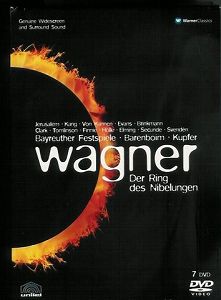
  • Wagner Ring Cycle – so called Kupfer Version at Bayreuth (German).

    Wagner Ring Cycle – so called Kupfer Version at Bayreuth (German).

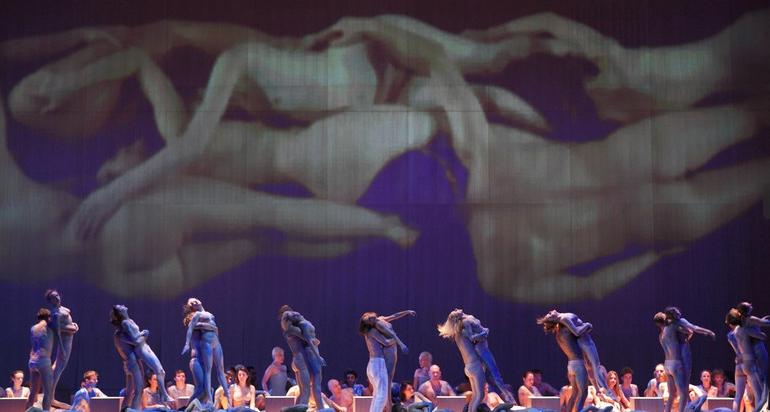
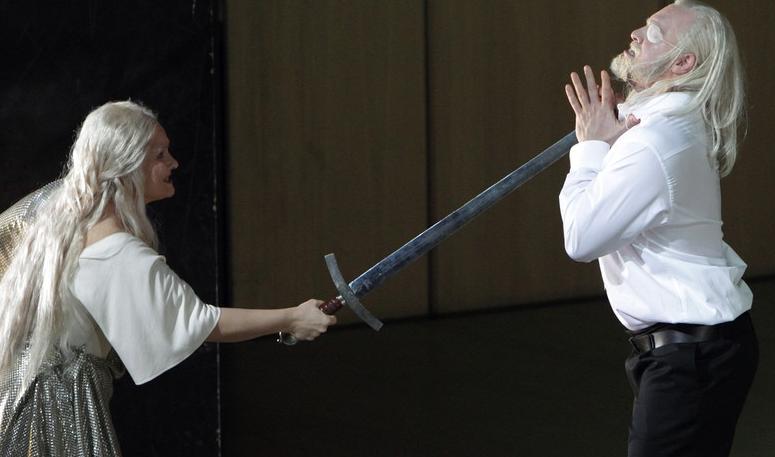
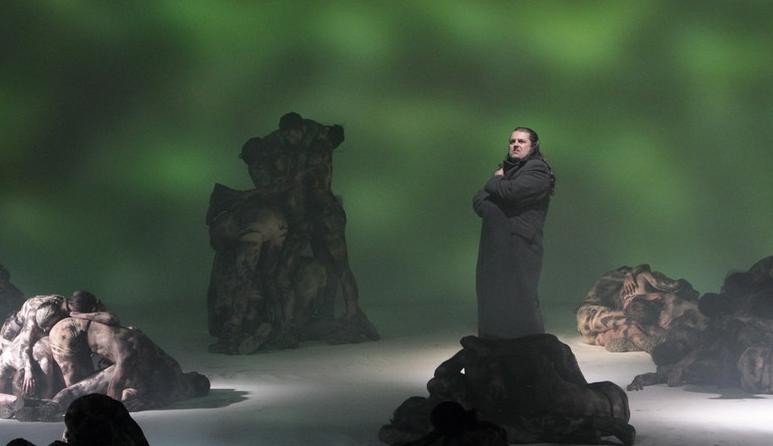
    Harry Kupfer’s Wagner Ring Cycle, particularly its opening conception of Die Walküre. Kupfer’s Bayreuth Ring demonstrates that radical abstraction need not obscure Wagner’s dramaturgy. His minimalist stage language consistently serves a single conceptual idea. One may disagree with his interpretation, but it remains internally coherent. Compelling theatrical images arrive at an equally clear interpretative centre.

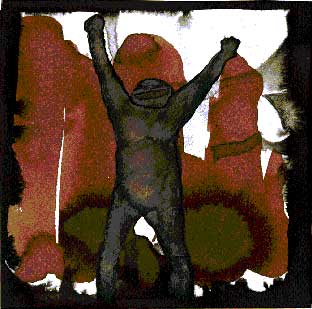
    In Harry Kupfer’s legendary Bayreuth Ring production (1988–1992, designed by Hans Schavernoch), the traditional World Ash Tree (Weltesche) in Die Walküre was reimagined within a bleak, post-apocalyptic universe.

    Ich maße mir nicht an ein Kunst- oder gar Wagnerkritiker zu sein. Es geht um 7 hochwertige DVDs und ob diese Bayreuth und Wagner korrekt abbilden. Die Antwort ist, ja unbedingt.
    Die Neuauflage der Produktion bietet Breitwandformat und Surroundklang, so dass die Aura Bayreuths zumindest technisch ins Wohnzimmer übertragbar ist. Wagnerliebhaber – und solche wie ich die es werden wollen – sollten hier nicht vorbeigehen. Günstiger kann große Kunst nicht erfahren werden. Sowohl Kamera als auch Ton sind von hoher technische Qualität und das Orchester und die Stimmen in optimaler Balance. Die Darsteller des Bayreuther Rings haben wie zu erwarten Weltklasse, allen voran Siegfried Jerusalem als Siegfried, dramatisch Anne Evans als Brünnhilde und der starke Bass Philip Kangs als Hagen überzeugen. Die Nahaufnahmen, welche die Kameraperspektive ermöglicht, zeigen die Gestik alle Protagonisten allerdings teilweise in sehr gewöhnungsbedürftigen Kostümen. Die musikalische Leitung Barenboims wurde seinerzeit groß bejubelt und gefeiert – meines Erachtens nicht zu Unrecht. Barenboim hat Kupfer bis an die Grenze des vom Gesang her Möglichen nachgegeben – es wird gerannt, gelegen, geklettert, gerutscht, gekniet. Parallel zur Oper lese ich ein Buch des Kunsthistorikers Richard Wagner’s Robert Donington ‘Ring des Nibelungen’ und seine Symbole: Musik und Mythos. Er zitiert in der Einführung Richard Wagners Bemerkung sinngemäss: “Ein allzu offenes Aufdecken der Absicht stört das richtige Verständnis durchaus: es gilt im Drama – wie im Kunstwerk überhaupt – nicht durch Darlegung der Absichten, sondern durch Darstellung des Unwirklichen zu wirken”. Anders gesagt, Kunst kann durch sich selbst überzeugen. Ich kein Freund der unbedingten Werktreue, aber mit der Bühnenbildgestaltung durch Hans Schavernoch und der Inszenierung Harry Kupfers kann ich mich anfreunden. Wenn ich mich auf den Begriff Regietheater mal einlasse, sollte es besser Musiktheater heißen, mit guten Regisseuren und klugen Dramaturgen. Die Regie sollte nicht vorne stehen.
    Bei Wagner frage ich Simpel mich zudem immer, transportieren die Inszenierung die Bilder der Symbole und Mythen in der ganzen Vielschichtigkeit? Ein klares Ja, bei der genialen Laser Unterwasserszene in Rheingold (die den Ton störte), geschieht das hier immer. Die Götterdämmerung ist ganz besonders beeindruckend.
    Ein durchgängiges Moment des Regietheaters im negativen Sinne ist ja der pädagogische Zeigefinger: man will aufklären, erklären, den wahren “Gehalt” des Kunstwerkes zeigen, den Komponisten und Textdichter besser verstehen als der Bildungsbürger (der ja dafür zahlt), die Wichtigkeit des Werkes für heute zeigen. Letzteres ist ja auch in Ordnung. Zwei Kinder suchen den Weg aus der Katastrophe und ziehen von der Bühne.
    Die Konzeption des Gesamtkunstwerks der Ring entstand zur Zeit zwischen 1850-1890. Diese Epoche ist durch die Erstarrung des Bürgertums nach dem Scheitern der Märzrevolution (1848). Dies Erstarrung der Bürgertums – oder was heute noch davon übrig ist – und die Kapitalismuskritik Wagners ist heute aktueller den je. Andreas Kriegenburg im derzeitigen Ring im Nationaltheater München transportiert Wagners Metaphern meines Erachtens etwas besser. Trotzdem, unbedingt hörenswert, sehenswert – ganz besonders wenn man minimalistisch mag,

  • Richard Wagner from Scene to Scene utilizing C.G. Jung

    Richard Wagner from Scene to Scene utilizing C.G. Jung

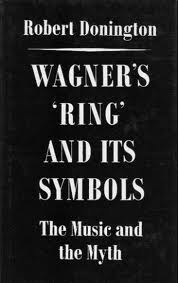
    “Wagner’s Ring and Its Symbols” originally published 1984.  (English and German article). Applied in my article C.G Jung and Wagner – Rainy Götterdämmerung in Munich.

    I wanted to learn more about Wagner and bought therfore recently a used copy of the English musicologist Robert Donington. He provides an allegorical interpretation of the Wagners Ring Cycle according to the criteria music, drama and the psychological analysis of C.G. Jung. I have worked through the book scene for scene based on a DVD of the Bayreuth production of Wagner’s “Der Ring des Nibelungen’ from the year 1991-92 (Kupfer / Barenboim). The author impresses with broad and in-depth knowledge suitable for the description of the complexity and richness of relationship the musical symbols of Wagner’s opera. Donnington analyzes and describes the entire ring from Rheingold and Götterdämmerung. The underlying ring myths and fairy tales are set in context with the poetic and musical symbols (e.g. recurrent sequences) of Wagner in an exciting way. From the symbolic and artistic consciousness he goes towards intellectual and analytical penetration of the substance. A very good appendix (notes of the sequences / relationship diagram) and scriptures complement the book.

    I am Opera fan, but (was) not a Wagner fan) but this very systematic approach in regards of general background lasting has significantly sharpened my senses (and reception). I have been subscribed to the scheme of C.G. Jung for a long time, and considers Robert Donnington’s approach to use it for Wagner brilliant and all in all valid. He does justice to the complexity of Wagner with a comprehensive knowledge of literary and musical material. C.G. Jung has dealt precisely with Archetypes of the hero and Wotan. Concepts of animus and Anima, shadow do very well describe Wagner’s poetic figures.Alberich pays by his own self. He gives up love for power, loses the power, which represents the Ring.  His life is hell.

    The appearance” of the “Unwillkürlichen”  is the subject of the ring according to Wagner’s own information. That fits in well with C.G. Jung’s unconscious, his view of consciousness functions – Sensing and Intuition and the a-causal contexts (synchronicity). Robert Donington used once in a while the vocabulary of modern psychology s quite arbitrarily. Then, I had to put a question mark and the edge in the “split shadow”. There is also a mix of Freud and Jung and concepts and occasionally heavily psychological charged sentences, whose meaning and benefit are not immediately clear to. However, for me a very successful and engaging introduction to The Ring.

    See also my article C.G Jung and Wagner – Rainy Götterdämmerung in Munich.

    Meine Rezension:  Richard Wagner’s ‘Ring des Nibelungen’ und seine Symbole: Musik und Mythos

    Der englische Musikwissenschaftler Robert Donnington gibt diesem Buch eine allegorische Deutung des Ring-Zyklus nach Kriterien Musik, Drama und der Psychoanalytik von C.G. Jung. Donnington analysiert und beschreibt den gesamten Ring von Rheingold bis Götterdämmerung. Die dem Ring zugrunde liegende Mythen und Märchen werden dabei auf sehr anregende Weise mit den poetischen und musikalischen Symbolen (z.B. immer wiederkehrende Sequenzen) von Wagner in Verbindung gebracht. Vom symbolischen und künstlerischen Bewusstsein geht es in Richtung intellektuelle und analytische Durchdringung des Stoffes. Ein sehr guter Anhang Noten der Sequenzen / Beziehungsvdiagramm) und Stichwortverzeichnis ergänzen das Buch. Ich habe das Buch Szene für Szene anhand einer DVD der Bayreuther Aufführung von Wagners ‘Der Ring des Nibelungen’ aus dem Jahre 1991/92 durchgearbeitet(Kupfer/ Barenboim). Bei der Beschreibung der Vielschichtigkeit und Beziehungsreichtum der musikalischen Partitur beeindruckt das breite und fundierte Wissen des Autors. Ich bin zwar Opern-Fan, aber (war) kein Wagner Fan) und diese sehr systematische Herangehensweise des Buches über gesamthaften Hintergrund und Zusammenhang hat meine Sinne (und Rezeption) entscheidend geschärft. Ich fühle mich durch die Systematik von C.G. Jung seit langem sehr angesprochen, und halte Robert Donnington’s Ansatz diesen bei Wagner zu verwenden, für brillant und alles in allem gültig durchgeführt. Der Komplexität von Wagner wird er mit einer umfassenden Kenntnis des literarischen und musikalischen Materials gerecht. C.G. Jung hat ja sich ja eingehend genau mit dem Archetypen des Helden und Wotan auseinandergesetzt. Konzepte von Animus und Anima, sowie Schatten beschreiben sehr gut Wagners poetische Figuren. Die “Darstellung des Unwillkürlichen” ist nach Wagners eigener Auskunft Gegenstand des Rings. Das deckt sich gut mit C.G. Jungs Unbewussten, seiner Sicht der Bewusstseinsfunktionen – Empfinden und Intuieren und der akausalen Zusammenhänge (Synchronizität). Nur verwendet Robert Donnington das Vokabular der modernen Psychologie einige Male recht willkürlich. Dann musste ich ein Fragezeichen and den Rand setzen, so bei den “gespaltenen Schatten”. Auch gibt es manchmal ein Gemengelage von Freud und Jung und gelegentlich stark mit Psychoanalytik geladene Sätze, deren Sinn und Mehrwert mir nicht sofort einleuchtet. Für mich ein sehr gelungene und fesselnde Einführung in den Ring.

  • C.G Jung and Wagner – Rainy Götterdämmerung in Munich.

    C.G Jung and Wagner – Rainy Götterdämmerung in Munich.

    This is a very personal take on Götterdämmerung the last one in the four of the opera cycle by Richard Wagner’s  “Ring” from a Jungian perspective. However also if the themes of the Ring, though universal, specifically apply to our lives today.

    The Conductor Kent Nagano

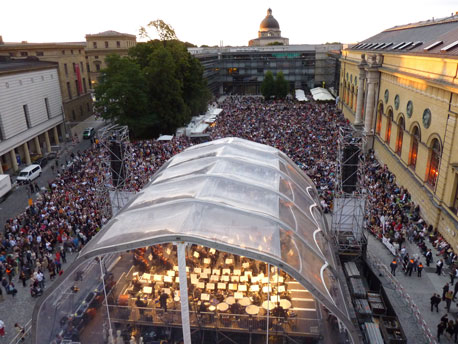
    The Munich Opera Festival draws for over 130 years opera fans to Munich, and as one of the oldest international festival continues far beyond the city and national borders. Since fifteen years there is a free eopen air event “Opera for all”.  Since the charismatic Conductor Kent Nagano came to Munich Opera, those two events “Opera for all” became even more cult for young folks not used to rattle the jewelry in plush seats. I saw him first time in California (Berkeley) and still appreciate Kent Nagano’s courageous and creative ways to transfer his subtle understanding of classical music to the audience. Already on Saturday – on a beautiful  night – he conducted open air with the Bavarian State Orchestra excerpts from Richard of Wagner’s “Ring des Nibelungen”, an arrangement on 16 hours of Wagner’s ring issues put together in one hours without singer. Already raising eyebrows, as a bonus, there he played still another ring – parts of the film music for “Lord of the Rings”.

    In any case, not entirely being  a usual Wagner fan.

    What’s the “Ring” all about?

    Actually, Richard Wagner wanted not only to edit the well-known the German and Scandinavia legend of Siegfried’s death, a saga of gods and people of faith and fraud. Wagner takes the world of the Norse gods to the ring as a template for a critical interpretation of human society, around the failed revolution 1848. The ring and the gold as symbols of power and of the capital,  the power versus rebellion and the failure of the hero Siegfried are all universal archetypes still up to date.

    The Casts

    In the figures we see the relationships of the various races of mortals and immortals: the immortal inhabitants of Valhalla, the Walküren who move between the worlds, the mortal Vaelsungs of the Forest, the Giants of Earth, the Gibichungs who inhabit the Rhine Castle, the Nibelung dwarfs of the shadows, and the Rhinemaidens who inhabit the source of life.

    • Rhinemaidens Woglinde (Sopran), Wellgunde (Mezzosopran), Floßhilde (Alt),
    • Alberich (Bariton), ugly dwarf and counterpart of Wotan
    • Wotan (Bariton),  the God
    • Fricka (Mezzosopran), Wife of Wotan
    • Freia (Sopran), Godness of etrnal youth
    • Donner (Bariton), God of Power and Thunder
    • Froh (Tenor),  Brother of Freya
    • Loge (Tenor),  TrickySemi God
    • Mime (Tenor),  brother of  Alberichs,   created stealth helmet
    • Fasolt and Fafner ( Bass),  Giants, Fanfer later turns into a dragon
    • Erda (Alt), Wise women and mother of  Walküre Brünnhilde (by Wotan)
    • Siegmund (Tenor)  Human and son of Wotans
    • Sieglinde (Sopran),  Sibbilibing of Sigmund and later his lover.
    • Hunding (Bass), Sieglinde’s Husband
    • The Birds (Waldvogel)
    • Brünnhilde (Sopran), Walküre, and favorite daugter of Wotan und Erda.
    • Eight other Walküren ((Gerhilde (Sopran), Ortlinde (Sopran), Waltraute (Alt), Schwertleite (Alt), Helmwige (Sopran), Siegrune (Mezzosopran), Grimgerde (Alt), Rossweiße (Mezzosopran))
    • Siegfried (Tenor), Son of Sieglinde und Siegmund  kills Fafner, wins the Ring and looses Brünnhilde
    • Dragon Fafner (Bass), guarding the the Ring
    • The Nornen (Sopran, Mezzosopran, Alt), three wise Daugters of  Erda
    • Gunther (Bariton), Leader
    • Gutrune (Sopran),  his Sister
    • Hagen (Bass), the son Alberichs and half-brother of Gunther.
    • Waltraute (Alt), Sister Walküren of Brünnhilde

    The Ring Cycle

    The Ring consists of four operas begins with a symbolics Genesis of the world (Water) and  with its destruction (Fire).

    • Das Rheingold, Munich, 22 Sep 1869
    • Day1  Die Walküre, first Munich, 26 Jun 1870
    • Day 2 Siegfried, first Bayreuth, 16 Aug 1876
    • Day 3 Goetterdaemmerung, first Bayreuth, 17 Aug 1876

    Prelude: The opera:  ” Rheingold

    The Rhinemaidens have a magical gold treasures with magical powers. Alberich an ugly dwarf, trys to score on them but they laugh at him. So he robs their treasure with  the ring (the key to power and wealth). To do this, he must renounce love. At the same time had the gods (Wotan) built a castle (Valhalla) built by the Giants Fasolt and Fafner. They price is the goddess Freia who guards the secret of eternal youth of the gods.  As Wotan learns about Alberich’s theft he manages to remove the treasure and the ring, forged from the Rheingold from Alberich. Alberich curses the ring. The gods pay their castle with that treasure and the ring to the giants. The cursed ring does its effect one of the Giants (Fafner) which kills his brother (Fasolt). At the end of the story, the gods take the Castle Valhalla in possession. Wotan begins his reign based on free coexistence; from but still fears the danger of ring and its curse is not yet banned.

    Day1:  The opera “Die Walküren”

    Walküren collect heroes from the battlefields and bring them toValhalla. A pair of twins: Siegmund and Sieglinde are separated by fate and now meet again in Hundings house and fall in love.  Sieglindes husband, Hunding, challenges Siegmund therefore to fight with him.  Wotan gives  Brünnhilde (one of the Valkyries) order that should to support Siegmund.  The wife of Wotan, Fricka does not accept Siegmunds adultery and incest and Wotan has to reverse e the order. But Brünnhilde  decides to help him Siegmund anyway and Wotan influences the fight by himself. Siegmund  is powerless against Wotan and dies, his famous sword shattered. Brünnhilde advises Sieglinde, who is pregnant, to move  in the forest  where Fanfer the dragon the dragon lives.  Brünnhilde awaits Wotan’s anger and Wotan banishes her to a mountain, but  protects her wit a ring of fire which only strongest hero” can redeem her (Brünnhilde thought this might be Sieglindes son …).

    Day2:  The opera “Siegfried”

    Mime, Alberic’s brother and blacksmith raises Siegfried, Sieglindes son. Mime is hoping the boy would take  the ring  from Fafner who turned into a dragon .  Mime is not able make Siegfried a suitable sword, so he refurbishes himself  the sword Nothung of his father and kills the Dragon. A Bird (Waldvogel) whose song Siegfried can understand tells him what happens next: he should take the ring and the cloak of invisibility. Then, he advises him or how he would be  able to get “the most beautiful woman” – Brünnhilde – on their fire rocks. Siegfried gladly accepts this advice rushes to Brünnhilde and falls in love with in infinity.

    Day3:  The opera “Die Götterdämmerung”

    It is indeed my favorite Wagner opera. At the beginning, we see the Norns, weaving the rope of destiny. They tell the events of the beginning of conscious action on. As they approach they pull the rope. The Norns flee to Erda – the fate of the world is open.

    Brünnhilde and Siegfried had married. At the Court of the Gibichungen Hagen (their sleazy half-brother and  Ablrbrichs son) the weak royal brother and sister Gunther and Gutrune pointed out meanwhile that he can’t get Gunther Brünhilde as wife and Gutrune Sigfried as husband. Due to his magical drunk, Siegfried falls in love with Gutrune, and brings (his wife) Brünhilde to Gunter in the persona of Gunter and takes the ring from her.

    The double marriage happens. Brünhilde, recognizes the Ring on Siegfried’s hand and outraged of Siegfried’s betrayal, let Hagen kill him. Haunted by nightmares Gutrune wanders through the night. The dead Siegfried is brought. Hagen boasts defiantly with murder and wants the ring. Gunther rejects, but Hagen kills him too and “grabs Siegfried’s hand which lifts up ithreatening”. Brünnhilde appears now. She orders to build a stake on the edge of the Rhine to burn Siegfried and herself. She draws the ring from Siegfried’s finger. As the fire blazes, the Rhine water comes over the shores with the Rhine maidens. who get the treasure back and pull Hagen into the depths. In a bright glow of fire in the sky, you can see the burning Valhalla. As the gods of the flames are completely hidden, the curtain falls.

    Götterdämmerung

    The most intense drama in the opera “Gotterdämmerung” as well as the ring cycle comes after Siegfried’s death,  the central character in Wagner’s opera. Siegfried is dead, and his body is brought back and shown to both Brunnhilde and Getrune,who are taken with attacks of grief at the sight of the corpse of the man whom they both loved. The only real issue for the mischievous Hagen is the ring and to whom it should go to and  he rids himself of his own brother to obtain the coveted ring.  Siegfried’s dead hand moves in a clear indication that he is not ready to give up the ring.  It is also as Siegfried’ body is being carried that we hear one of Wagner’s most powerful pieces which truly captures the moment with all that Siegfried was, the Archetype of the hero from dragon slayer to the one who was able to defeat Wotan but also Brunnhilde’s tender lover. In my opinion Wagner’s music captures the somber mood which is about as this once mighty hero lies dead and to illustrate in its harmonies the glory. Wagner’s music increases to the force of a hurricane as the fire from the pyre rises as high as to consume not only Valhalla but the deities who rule the world. Hagan however tries to prevent the ring from going back to where it came from and in doing so is drowned by the Rhine maidens, who finally have back what was taken from them at start.

    Wager and psychoanalytic models

    Lets allign  the key concepts of Wager to psychoanalytic models. Both the Freudian and Jungian models of the psyche rely on the  balance of forces among the elements of the psyche. A major difference between the two is in the chosen center-point or balance point. Freud’s model is primarily centered around the healthy functioning of the Ego in the society and (sexual) relationship; his model focusses on consciousness and the outer world – the unconsciousness is almost treated like a malfunction. By contrast, Jung’s model is Self-centered. That is, the whole self, conscious and alike. Jung uses the term Self both for the personal (experienced) god, and for the whole human psyche. Whereas Freud considered religion to derive from illusion, Jung considered religion as a way to the whole self, seeking to integrate the roalm of the spiritual with our lives in the outer world.

    The Freudian view

    Siegmund falls in love with his long lost sister Sieglinde. And, make no mistake, they know they are brother and sister and still engage in lust and plan on marriage even Sieglinde is already married. Their father is the god Wotan. Wotan had many affairs and Siegmund and Sieglinde are the product of one of those.  Those characters would indicate Freud’s approach, that all thrive comes from sexuality. Fricka, Wotans wife wants Siegmund killed in a fight despised by such immorality.  As the Goddess of marriage you’d expect her to say that, she represents the repressive factor.  Very simplistic.

    Adler’s view

    Another superhuman being, Alberich, has given up love to more fully pursue power.  Alberich’s giving up all love to gain power teaches Adler’s main force the lust for power may have different values but are playing to win. Wotan’s realization teaches us that power cannot be taken for granted and it cannot be sustained by constant uncontrolled,irresponsible and inconsiderate lust. Again too simplistic.

    The Jungian view

    Micha Brumlik interprets the depth psychology as romantic theory of the unconscious and uncovers their archetypical references to Richard Wagner’s magnificent operas, The Ring, provides an intense and amazing example. In high drama we get answers to the Authoritarian breakdown. Incest is one of this. There is some significance in Jung’s belief — or his occasional claim — that he was a descendant of Goethe. He was completely out of sympathy with the narrow materialism of nineteenth-century science. In an essay on Wagner, Thomas Mann quoted a dignitary of Seville cathedral, who is supposed to have said to the architect: ‘Build me a cathedral so enormous that people of the future will say: the chapter must have been mad to build anything so huge … ‘ Mann pointed out that the nineteenth century was full of this spirit of  Balzac’s Human Comedy, Hegel’s System, Zola’s Rougon Macquart cycle, Wagner’s Ring, Tolstoy’s War and Peace. Jung’s sympathy was all with transcendence and myths. His psychology is built of the same mythological material as Wagner’s Ring.

     Symbols

    Though there are many symbols in the story, four symbols of personal power are central to our theme:

    •  Wotan’s spear, his symbol of conscious (Ego) power is carved from the world ash tree of life.
    • The Chain of possession starts with the Rhinemaidens and ends with Flosshilde, a Rhinemaiden. The chain turns upon itself to form a ring.
    • The tarnhelm, or helmet, confers the power to change but it also entails the power to deceive. Wotan used it to get the ring from Alberich; Siegfried used it to regain the ring from Bruennhilde;
    • The sword, the weapon for the heroic struggle, was given by the father (grandfather Wotan), but it was broken; Siegfried had to reforged his own weapon for the struggle;

    The Self

    The ring itself represents for us the lure of gold, or or lust of power, from the Rhine,  a them which has been reused by the lords of the ring. Possession of the ring confers power over the world. We set out to relate the life-cycle of the ring to the life-cycle of the psyche. The figure suggests how this might be done. The story begins in the realm of the Self, which has its origin in the value of life.

    The Shadow

    Alberich and his son Hagen inhabit the realm of Shadow, where reside rejection, frustration, anger, hate, evil.

    In these storms of life are all the human ills — theft, deceit, betrayal, murder, incest, and all such. This is the considerable shadow energy of the psyche, seen in Alberich’s evil reaction to rejection, in Wotan’s awful betrayal of Youth and Beauty (Freia) to build his castle; in his stripping Bruennhilde of her immortality and his imprisoning her in the ring of fire in order to regain the ring of power.

    Shadow energy is also seen in the struggle between Siegfried and Mime, his evil stepfather — the orphaned Siegfried is raised by his shadow, Alberich’s brother! That same shadow energy also provides resistance to the reintegration of the psyche. Siegfried had to slay a dragon, but he also had to struggle with the Gibichungs. They defend the castle which guards access to the Rhine.  This reasoning teaches us that the underpinnings of morality rest on the ability to distinguish good from bad, the sacred from the profane.

    The Ego

    Wotan and his castle building express the realm of Ego inflation in which he and we deal with the giants of earth.The return of the ring into the deep currents of the flow of life completes this life cycle. The self is made whole. The cognitive conscious world of Ego is reconciled with its spiritual origin; the Self is reconciled.

    The Archetypal Hero – Animus and Anima

    Siegried reprents the  archetypal hero. But re-establishing balance in the psyche requires an heroic struggle. Siegfried’s slaying of the dragon represents the start of re-establishing balance. His love of Bruennhilde represents the necessary union between the conscious realm and the realm of his Anima.  In Siegfried’s death we see the individuation becoming, and in Bruennhilde’s immolation, similar burning away her self taken human mortality.

    The Persona

    As is morality, Wagner is very personal and philosophical. Wotan is a God.  Watching his son die will not be easy. But as his son has transgressed the basic rules of decency in society Wotan understands the necessity of killing him. He tells his daughter, Brunnhilde the Valkyrie, but emotions cause her to disobey the cold moral.Like all great art, Wagner’s The Valkyrie teaches fundamental cultural lessons about society.

    Rainy Sunday

    On Sunday Nagano‘s  new production  “Götterdämmerung” of  National Theatre completely sold out for a long time, came on a big screen. The weather did not want to play along on that day, and so the Open-Air visitors were hit repeatedly by – some long-lasting – showers. But with the right equipment, some fans including me held out over six hours on the Max-Joseph-Platz before the National Theater and eagerly pursued the Opera broadcast on the big screen. The singers of this show and Conductor Kent Nagano came out after the end of the opera to say thank you for this dedication.

    Like the psyche, Wagner’s work has had influence for both good and evil. Nietzsche and Hitler both much admired Wagner’s work, and that nihilistic chain of influence was to give in the 20th century full expression to destruction and evil until today. Yet the same work also had a considerable influence on may others, notable King Ludwig the II. As we look back,  it often seems as if the necrophiliac shadow aspects of our collective psyche have had the upper hand. In Goetterdaemmerung, one of the three Fates sings that the rope of the world’s destiny has been severely frayed by evil. As she sings that, the rope breaks completely.

    We now are in Europe in the beginning of a turbulent transition from democracy to some new type of world-order at the threshold of another economic war – the “Third Geldkrieg”. The twilight of the gods will not be the twilight before the dawn, but before a new darkness. The lust for power and greed will represent the extinguishing of Psyche’s gods.

    In that respect, Wagner is pointing to the current economic system, whose manipulator think they are gods. Our society would be better grounded if  it spent more time with great art; pieces like Wagner’s Ring are entertaining, they create a shared vocabulary within our culture  just like C.G. Jung’s Archetypes.

    “Wagner’s Ring and Its Symbols” originally published 1984.  Robert Donington (Wagner seen mainly throug C.G. Jungs eyes)

    Index to “Richard Wagner”in the Collected Works of Carl G. Jung (mainly he was concerned with Wotan)

    Volume 5: Symbols of Transformation

    par. 421 (p.275) — fig. 28: Wotan on eight-legged horse Sleipnir; Wotan as Drosselbart  half-man, half-horse

    par. 422 (p.278) — horse \ wind; Wotan galloping in storm chasing the wind- bride

    par. 555 (p.358) — Siegfried’s hero’s entry; Siegfried’s feelings for Bruenhilde; brother-sister incest;

    Sieglinde as “human mother”, Br. as “spirit mother”; Br. banished by Wotan for complicity (approval) of incest; Siegfried \ Horus; Sieglinde’s “night-sea journey to the east”;

    par. 556 (p.358) — broken sword \ dismemberment

    par. 559 (p.359) — Wotan \ persecution motif

    par. 560 (p.360) — Bruenhilde “split off” from Wotan, a feminine emmisary for a martial god “somewhat remarkable”

    par. 563 (p.360) — Bruenhilde. as anima attached to masculine deity, a dissociation; Wotan unconscious of his own femininity

    par. 564 (p.361) — Wotan’s lament for Bruenhilde

    par. 565 (p.361) — Br. support of Siegmund; the incest a projection: Wotan’s entering “into his own daughter to rejuvenate himself

    par. 566 (p.361) — Sieglinde’s death; Mime of “a race who has abjured love”

    par. 567 (p.362) — Br. asleep in ring of fire; Mime a masculine representative of the Terrible Mother; Siegfried drawn away by longing for Mother-imago

    par. 568 (p.363) — the song of the Forest Bird \ mother Jung Index: “Richard Wagner” 10:18:36

    par. 569 (p.363) — gold \ “treasure hard to attain” \ the “mother” \ unconscious; “magic cap” (tarnhelm) changes Alberich into serpent \ motif of rejuvenation; dragon’s blood \ understanding nature.

    par. 598-600 (385-6) — Wotan (Wanderer) and Erda \ “fatal charm of the mother”

    par. 602-11 (p.387-391) — Siegfried’s encounter with Bruenhilde, evokes mother; Br. \ mother-sister wife anima archetype; Siegfried as archetypal hero

    Richard Wagner Links

    My Review Harry Kupfer Wagner Ring cycle

    Opera for All

    Richard Wagner from Scene to Scene utilizing C.G. Jung

    Vladimir Jurowski

    Bavarian State Opera

  • Wong Kar Wai’s 2o46 – Hongkong’s Age of Aquarius?

    Wong Kar Wai’s 2o46 – Hongkong’s Age of Aquarius?

    Wong Kar Wai’s 2046  while still a beautiful movie, at first sight it is a bit disappointing after all the others spellbinding  subtle storylines. 2046 doesn’t come near to it for me – some part of the story is even repetitive. Visually still top-notch as ever like Wong’s earlier works with his signatures throughout: quick cutting, slow motion, fast motion, freeze frames, black and white, tilt shots, color filters, neon-sign lighting, aided ably by three able cinematographers.  Music by Shigeru Umebayashi is haunting and sets the right mood. While doing the stills, I tought every second scene – if not every one – was a pure and strangely beautiful picture.  A photographers movie indeed.

    Wong Kar Wai apparently  intended initially  to do three separate stories, all exploring the idea of sexual relations between humans and androids.

    There are three different intermingled trails and  flashbacks playing in reality that Tony Leung Chiu-Wai  as Chow Mo-wan meets after losing his love:

    • Maggie Cheung as Su Li-Zhen, the lost love of “in the Mood for Love”

    • Gong Li as Another Su Li-Zhen. the “professional gambler”. Note the death card, coming up twice in this movie. I am very impressed about the gambler. A shadow of his old love Su  maybe?

    • Faye Wong Wang Jing Wen “hotel owners daughter with the Japanese lover”. After finding out that she still misses her ex in Japan, he takes her to his office so that she can call him.
    • Zhang Ziyi as Bai Ling.  beautiful call girl heart-broken by him. Big star in Hongkong and in Chungking Express.

    The fourth is the world of 2046 and concerns futuristic train passenger falling in love with an android in the train to (or from) 2046.

    The story is complex – I recommend the wiki article for hints about the plot. But what is it all about? I have three hypothesis.

    (1)  A sequel of in the Mood For Love.

    In the eighties there was a documentary cult book in the liberal, leftist circles in Germany  – „Tod des Märchenprinzen“  .-  death of the fairy prince, an authentic story written from the point of view of a women. It was answered with a little brochure from the Märchenprinz in the book: „Ich war der Märchenprinz – I was the prince, to set things right.  Similar, in a  follow-up to the film, 2046 covers the aftermath of the doomed affair between Chow Mo-wan (Tony Leung Chiu Wai) and Su Li-zhen Chan (Maggie Cheung) from the „Mood For Love“, told from Chow’s perspective. In the first movie he was a the “Quiet Asian” and in 2046 he has become a lost womanizer, a typical addicted (weak) lover like in Ashes of Time .

    (2)  Symbolic interpretation – C,G. Jung’s Archetypes.

    That is one way to tell this story. From a Jungian point of view the change is from the „impotent lover“ to the Addicted Lover“. But there is a complete different angle.  Like ashes of time the few key final scenes have put all the random pieces together so perfectly to deliver a simply truth about transaction based love and the connected loss and  Chow only once, with the hotel owners daughter becomes caring and human again. In all other cases he makes women unhappy and women make him unhappy. The Addicted Lover is a collector–of experiences, possessions, or women. But without any structure, unable to connect the women he collects, his life feels fragmentary and the Lover’s energy shatters into a million directions. A man possessed by the Addicted Lover is, as Moore puts it in his book,  King, Warrior, Magician, Lover: Rediscovering the Archetypes of the Mature Masculine , “eternally restless.”

    (3)  The number 2046 and 2047.

    With a fellow blogger in Hongkong I discussed the year 2047, that’s when Hongkong  might lose its status as a window to the outside, its currency and will be fully integrated in the People Republic of China(PRC). Hong Kong  is supposed to remain status quote up to 2047. Deng allowed HK another 50 years to “enjoy” the systems described in 2046.  Wong Kar Wai picked 2046 as a title, thats when currency and  fiscal sovereignty is handed over – which translates in political freedom.  HK is on “borrowed time, borrowed place” . In Hongkong the change will be gradual so by 2047 HK will naturally and smoothly will become just another leading city of China.

    The movie 2046 takes place in the late 1960’s, where Chow moves in the Orient Hotel, Hong Kong where he writes a science fiction novel. After a quick encounter with Mimi/Lulu, she gets killed in rom 2046 by her boyfriend. The number triggers the idea to the title. Since the bloodstained room needs to be cleaned he moves in room 2047 and stays there. So the big change is due 2047.

    That maybe one reason, that Wong  2046 turns out it  to be occupied by one of his old flames Lulu (Carina Lau), who was a former tenant in room 2046 before mysteriously vanishing. Some stills with Lulu are Art Nouveau. Fascinating red, and asynchrone camera  angles.

    The number triggers reflections on where he and Su Li-zhen used to go for afternoon romps, and serves as artistic inspiration. He creates a story about a place called 2046, where people go to find love and recall old memories. It’s a futuristic world with fast-paced trains,  surreal colors, androids, and raw perspective not found regularly in real life. It resembles an acid-trip dream as enticing as it is frightening. As said before, the slow motion acting of the Androids don’t work.

    The movie jumps back and forth from the present (1960’s) to the future (2046) where his fictional story is centered.

    Reality: While staying at the hotel, Chow meets a gorgeous high-class call girl named Bai Ling (Zhang Ziyi). They become lovers and go out together, but he manages to  provoke her to fall hopelessly in love with him. He treats her poorly, soliciting 10 USD per interaction for their afternoon encounters, even though she fell deeply for him. She ultimately breaks down from the emotional abuse, and let him go. To add insult to injury,  he tells her to come over anytime she wants a quickie.

    A new Su Li-zhen comes up, an enigmatic gambler and finally his old love Su  in a flashback (below).

    The daughter of the hotel owner, Jing (Faye Wong) is madly in love with her Japanese man, whose nationality leads her father Mr. Wang (Wang Sum), to sternly disapprove of them seeing each other. Chow befriends her and helps the two of them stay in contact by gathering love letters and arranging phone calls. In the process, he starts to have some feelings for her, acting even like a fatherly caring protector –almost like the cynical Rick in Casablanca discovering his good heart and quick to cover it up.

    Further encounters take place in Chow’s life, but none that match the love story he experienced during In The Mood For Love. The most tortured woman in the movie is certainly Bai Ling, acted with sheer perfection by Zhang Ziyi, who expresses bottomless agony with a single teardrop.

    Fiction: The futuristic story of 2046 is Chow’s way of  turning those women into fictional. It’s his method of reflecting similar to the way discussing it within psychoanalysis. The random flashes into the world of 2046 are a therapy session in which Chow confronts his shadow and express the feelings that he has locked away inside. But what the use of those slow-moving androids? In a bad mood I would call it close to a boring relationship movie your wife/girlfriend drags you in.  The pictures are great, however, the metaphor may hint either the politics or addicted lover theme.

    2046 is a sequels  and it shows. I have viewed all movies of Wong Kar Wai. Usually I write reviews of books or movies which are important to me, to collect my understanding of them.  So far I did not understand 2046 yet. Chungking Express, Fallen Angles – source of my Avatar – provide fascinating psychoanalytic symbols and pictures but best of the best is Ashes of Time.  So I thought, at least  until I saw the last scene of 2046 a few times.

    Last scene; Chow is stunned when Bai hands him a stack of money, each $10 bill representing one night they had spent together. He sets himself free  staring empty into space, as the camera slowly follows a moving taxi. The last minutes makes the story round again. Lost souls.

    Still highly recommended.  I take my initial critique back, the last 5 minutes fuse all the story trails together. 2046 is  actually a great movie, but not what it seems to be or the sound bites “The ultimate Love Film” suggests . As a man I give a piece of advice. Don’t drag your date on the first night in this movie (except she is an art movie buff). I did this one time with Chungking Express, with little success. Didn’t break the relationship, but she always was on guard after that. Suppose 2046 would work either…

  • Male and female archetypes in Wong Kar Wai Films – Draft

    Male and female archetypes in Wong Kar Wai Films – Draft

    For the uninitiated, Wong Kar Wai’s films seem pointless and confusing, which is reinforced by the director’s trademark cinematic indulgences, laggard pacing and minimalist plotting. However, upon closer inspection, it is easy to become intrigued by the rampant symbolism, the metaphor-laden dialogue, and the philosophical and psychological underpinnings of his films. Maybe its a problem of “if you have hammer, everything looks like a nail”, but I cant help his movies remind me on C.G. Jung: Failed individuation, shadows, persona and archetypes manifest in the here and now. But are there common elements that tie his entire body of work together? Is there some underlying structure or theme by which one can gain a better comprehension of his sometimes cryptic images and symbols?

    The classic archetypes  in Wong Kar Wai Films

    One way of approaching the cure for the modern malaise in his films may come from the book King, Warrior, Magician, Lover: Rediscovering the Archetypes of the Mature Masculine, by Jungian psychologist Robert Moore and mythologist Douglas Gillette. Moore argues that masculinity is made up of four archetypal male energies which serve different purposes: King, Warrior, Magician, Lover. Like much of the literature in the mythopoeic realm, KWML is grounded in the psychology of Carl Jung, particularly in his idea of psychological archetypes. While Jung suggested a number of universal archetypes (Mother, Hero), the four personal ones are: the Self, the Shadow, the Animus and Anima, and the Persona. They play a role too, as they are parts of the personal unconscious. I like to investigate, here some archetypes and their shadow representation ( and symbols which are archetypes in the here and now). Each of the four consists according to Moore of three parts: the full and highest expression of the archetype and two bi-polar dysfunctional shadows of the archetype. To better understand this, Moore portrays each archetype as a triangle full (to weak, to strong, and an bi-polar shadow split.  These shadows are the result of the archetype not being integrated in a healthy and coherent way. The two shadows of the Lover archetype are the Addicted Lover and the Impotent Lover. A man possessed by the Addicted Lover is, as Moore puts it, “eternally restless.”Men dogged by the Impotent Lover archetype feel depressed, flat, and dead inside. Nothing brings them joy anymore. They’ve lost their passion for life and become cynical. Relationships, whether romantic or platonic, struggle and falter.

     Ashes of Time is best candidate applying this framework, as it is almost a greek tragedy. You find the cynical magician, the weak king (note the absence of the positive king), the full warrior who becomes a hero and the addicted lover who cannot love. The women are brilliant too, there is the virgin, the animus, the unfaithful and loyal wife and there is Maggie Cheu.

    Brigitte Lin in Ashes of Time (1994)

    Wong’s films, at their most basic level, are an exploration of the double-edged sword known as memory, which may be seen as consciousness. This strong thematic undercurrent is expressed through subtext in the dialogue, characterizations, and the often-minimalist plotting. Pain of loss and the tenacity of remembrance are both destructive forces, yet essential for survival. All the characters in his films are products of this loss, and their actions in the present stem from their reactions to that loss. Unfortunately, the results are often tragic. In ashes of time the girl with the donkey begs the agent for assassins  ( in my view a cynical materialistic magician type):

                  Please help me. I beg of you.

    It’s no use. I’m just an agent. You must solve your own problem.

    “Ashes of Time”

    Ouyang Feng’s lost love ( Cheung’s character in Ashes of Time)  ultimately married his brother because she tired of waiting for her real love return to her. Wai’s camera stares intently at her while she gazes beyond time and relieves the past full of regret to his “friend. She dies as there is no reason to live.  Besides being one of the strongest impression of melodrama, it is also the most puzzling. I noted two times the look in the mirror, visually and verbal in the film. It almost seems tis relates to the pain to learn about ourselves.

    Do you know what the most important thing is in my life?

    Maggie Cheung ponders in Ashes of Time (1994)

    Your son?

    I thought so too. But as he grows up, I know he’ll be leaving me one day. Nothing’s important to me now. I thought the words ‘I love you’ really mattered. I thought they meant a lifetime commitment. But looking back, nothing matters… because everything changes. I thought I was the winner, until one day I looked into the mirror and saw the face of a loser. I failed to have the person I loved most to be with me in my best years. How wonderful it would be if we could forget the past…

    “Ashes of Time”

    The post-modern archetypes  in Wong Kar Wai Films

    His other films are mostly a study of relationships in the post-modern world, in which the exchange of goods and services serves as the basis of all relationships, instead of emotional connection– a representation of cosmopolitan life in modern Hong Kong – and elsewhere. Very few of the relationships found in Wong’s films are based on emotional connection, and the struggle that his characters face is to cultivate deeper forms of association. Unfortunately, many of his characters do not form these emotional connections, out of fear of rejection, and find it much easier to have transaction-based encounters. After thinking this through, and stereotypes not being archetypes, it appears to me that his central archetypes of loneliness are (negative) lover and warrior.

    When I am about to leave, I ask him to take me home. I haven’t ridden on a motorbike for a long time. Actually, I haven’t been so close with a man for a while. The road isn’t that long, and I know that I’ll be getting off soon, but I’m feeling such warmth this very moment.

    “Fallen Angels”

    The most important aspect of Wong’s thematic focus is the transience of relationships. Even if the characters manage to find an emotional connection with one another, they learn to accept the fact that all relationships must end, and those who survive at the end of the film have learned to embrace the moment. This theme was best represented by #223’s (Takeshi Kaneshiro) ‘expiry date’ speech in “Chungking Express”, and the final soliloquy given by the nameless agent (Michelle Reis) while riding into the Hong Kong night on the back of a motorcycle. Not surprisingly, this can also be seen in Wong’s fascination with images of smoke and drifting clouds– like these transient phenomena, relationships form like a puff of smoke, only to quickly lose their cohesion and dissipate into the night. To embody these themes within his films, Wong populates his films with a number of archetypal characters: the ‘impotent lover’, the ‘carefree lover’, and sometimes, ‘the indecisive warrior’.

    The impotent lover

    Tony Leung Chiu Wai as the Blind Swordsman in Ashes of Time
    Tony Leung Chiu Wai as the Blind Swordsman in Ashes of Time

    The impotent lover has been seen in many forms, but their origins and current condition are always the same: the small time gangster Wah Ha-tau (Andy Lau) from “As Tears Go By”, both Yuddy (Leslie Cheung) and the soda counter girl Su Lizhen (Maggie Cheung) in “Days of Being Wild”, the Blind Swordsman (Tony Leung Chiu Wai) in “Ashes of Time”, and Police Officer #663 (Tony Leung Chiu Wai) in “Chungking Express”.

    This the time of year to change into a summer uniform. I don’t know if it is the weather, but I feel that things are changing.

    “Chungking Express”

    The impotent lover is in a constant state of emotional paralysis, arising from his or her inability to forget the pain of a broken relationship. Blinded by the haze of nostalgia and desperately attempting to hang on their halcyon days, they miss the opportunities of the present and are completely unaware of the incessant progression of time.

    Go ahead. I just want you to hate me. That way, at least you won’t forget me.

    “Days of Being Wild”

    #663 of “Chungking Express” is another good example of the impotent lover. Always waiting for his stewardess ex-girlfriend (Zhou Jialing) to return, he is completely oblivious to the fact that Fay (Faye Wong), the counter girl at a local fast food place, has been breaking into his apartment and rearranging his belongings. He does not notice that his canned food tastes different, or that the number of goldfish in his aquarium is increasing.

    To capture the impotent lover’s introspective point-of-view visually, Wong employs a number of cinematic techniques. His use of the Godard-ian jump cut seamlessly blends temporally-exclusive scenes together, making the passage of time unnoticeable. Other Godard-ian touches include the many shots of clocks, which remind the viewer that despite the blind mourner’s fixation on the past, time continues to move on and that moments in the present are fleeting.

    Tony Leung Chiu Wai and Faye Wong share a moment in Chungking Express

    Another interesting technique, seen in “Chungking Express”, clearly represents the lover’s detachment from reality– the film is sped up, but the actors move very slowly. The resulting visual effect then conveys that while the rest of the world blurs by like the flapping of a hummingbird’s wings, the impotent lover is in a stagnant state of existence, lost within their own nostalgic thoughts.

    The addicted lover

    I’ve heard that there’s a kind of bird without legs that can only fly and fly, and sleep in the wind when it is tired. The bird only lands once in its life… that’s when it dies.

    “Days of Being Wild”

    In contrast to the impotents lover is the other staple characterization of Wong’s films, the ‘addicted lover’. Characters that fall into this classification include the hotheaded Fly (Jackie Cheung) from “As Tears Go By”, the lonely beat cop (Andy Lau) from “Days of Being Wild”  an mostely the amnesic Huang Yoshi (Tony Leung Ka-Fai) from “Ashes of Time”, and the fickle Ho Wo Ping (Leslie Cheung) of “Happy Together”.

    I never think about the next time when doing anything.

    “As Tears Go By”

    The carefree addicted lover is a character oblivious to history with no appreciation for the lessons of the past. As a result, their actions usually end up destroying the lives of those they come across. In “As Tears Go By”, it is clear that Fly is the carefree wanderer, since it is his reckless actions that end up destroying three lives, despite the escalating consequences of his previous misdeeds and the volatile situations he manages to entangle himself in.

    Tony Ka Fai Leung drinks the magic wine in Ashes of Time (1994)

    The more wine you drink, the warmer you’ll get. Water will only make you feel cold.

    “Ashes of Time”

    The most literal interpretation of the carefree addicted lover was seen in “Ashes of Time“. Huang Yoshi has his memory of the past erased after drinking a magical wine called ‘A Happy Go Lucky Life’ which erases memory. While the wine has eased the pain of the past for Huang Yoshi , it has also made him forget his emotional connections with others. As a result, his ‘carefree’ existence ends up destroying the lives of the other characters, including the split-personality Murong Yin/Yang (Bridget Lin) and the Blind Swordsman wife but mostly Ouyang Feng’s love  and his “friend” Ouyang Feng .

    Similarly, Ho Wo Ping in “Happy Together” has a shiftless existence living for only the moment. His inability to recognize his history with Lai Yiu Fai (Tony Leung Chiu Wai) ends up relegating him to a lonely permanence of his own doing.

    I used to think there was a kind of bird that, once born, would keep flying until death. The fact is that the bird hasn’t gone anywhere. It was dead from the beginning.

    “Days of Being Wild”

    Through this stock character, Wong illustrates the other extreme to the impotent lover. While the addicted lover is not subject to the anguish of remembrance, they too are caught in a stagnant existence. Instead of missing the opportunities of the present due to an obsessive fixation on some past trauma, they never learn from their mistakes, nor do they ever form stable relationships with those around them. However, the result is the same– a lonely existence in isolation.

    Do you remember at 3pm on April the sixteenth last year, what you were doing?

    Why this question?

    Well, I have a friend who challenges my memory. She asked me what I did on that day. I wouldn’t remember. Do you?

    She told you?

    I thought you would have forgotten.

    What’s to be remembered, I would always remember. So you knew each other?

    For a period of time. I left for the sea, and we lost contact. How about you?

    Me? It’s off. What else did she tell you?

    Not much. We’ve actually only known each other for a short period of time.

    Did you love her?

    Not exactly… just friends.

    If you see her again in the future, tell her I’ve forgotten her. That’ll be better for everyone.

    I’m not sure I’ll see her again. Maybe, she would have forgotten about me too.

    “Days of Being Wild”

    The indecisive warrior

    michelle reis as the killer’s agent in Fallen Angels

    The best thing about my profession is that there’s no need to make any decision. Who’s to die… when… where… it’s all been planned by others. I’m a lazy person. I like people to arrange things for me. That’s why I need a partner.

    “Fallen Angels”

    This last archetype is a more recent innovation in Wong’s films, first seen in “Fallen Angels”. To me it seams, it is a parody of a warrior. The male leads, hit man Wong Zhiming (Leon Lai) and mute 223 (Takeshi Kaneshiro), are both in search of a sense of belonging, but end up in pathological situations where they lose their identity. Zhiming muses that the best thing about his ‘job’ is that he never has to make any decisions of his own, since everything he does has been arranged for him by his partner, the unnamed agent. When he finally does realize that he must take a more active role in the job, he is too late– ironically he is gunned down in an ambush set up by his lovelorn agent.

    Charlie Yeung and Takeshi Kaneshiro in Fallen Angels

    They say that love can change a man. I start to find myself looking better and more charming, and suddenly I discover that I’m turning blonde.

    “Fallen Angels”

    Leon Lai in Fallen Angels

    223 has a similar problem. Creating a state of moral contradiction, 223 breaks into other people’s businesses at night such that he can ‘be his own boss’. However, in actuality, he has merely taken decisions that have been made by others and uses them, instead of making his own. He also hooks up with brokenhearted woman (Charlie Yeung) who is obsessed with getting revenge on a woman named Blondie. Together, they traverse the Hong Kong nightscape in search of Blondie, and in the process, blonde hairs begin to sprout from 223’s head, a metaphor for his adoption of his newfound partner’s system of values.

    Like the impotent lover and the carefree lover, the life of the indecisive warrior is a lonely one. However, unlike the tragic note that Zhiming’s story ends one, 223’s outcome is certainly more upbeat. He ends up being rejected by the jilted woman and learns to make decisions for himself in the process (visually conveyed by his blonde hairs disappearing), the first of which is to give Zhiming’s former agent a ride home on his motorcycle.

    Conclusion

    So instead of being confusing jumbles of abstract dialogue and quirky characterizations, the films of Wong Kar Wai have a consistency in structure and theme. The archetypal characters of Wong Kar Wai’s angst-ridden narratives are classical different perspectives on man and women. While some of these characters do meet tragic ends resulting from their inability to change, the director does provide a glimmer of hope in the characters that do survive the melancholic plot.