Wong Kar Wai’s 2046 while still a beautiful movie, at first sight it is a bit disappointing after all the others spellbinding subtle storylines. 2046 doesn’t come near to it for me – some part of the story is even repetitive. Visually still top-notch as ever like Wong’s earlier works with his signatures throughout: quick cutting, slow motion, fast motion, freeze frames, black and white, tilt shots, color filters, neon-sign lighting, aided ably by three able cinematographers. Music by Shigeru Umebayashi is haunting and sets the right mood. While doing the stills, I tought every second scene – if not every one – was a pure and strangely beautiful picture. A photographers movie indeed.
Wong Kar Wai apparently intended initially to do three separate stories, all exploring the idea of sexual relations between humans and androids.
There are three different intermingled trails and flashbacks playing in reality that Tony Leung Chiu-Wai as Chow Mo-wan meets after losing his love:
Maggie Cheung as Su Li-Zhen, the lost love of “in the Mood for Love”
Gong Li as Another Su Li-Zhen. the “professional gambler”. Note the death card, coming up twice in this movie. I am very impressed about the gambler. A shadow of his old love Su maybe?
Faye Wong Wang Jing Wen “hotel owners daughter with the Japanese lover”. After finding out that she still misses her ex in Japan, he takes her to his office so that she can call him.
Zhang Ziyi as Bai Ling. beautiful call girl heart-broken by him. Big star in Hongkong and in Chungking Express.
The fourth is the world of 2046 and concerns futuristic train passenger falling in love with an android in the train to (or from) 2046.
The story is complex – I recommend the wiki article for hints about the plot. But what is it all about? I have three hypothesis.
(1) A sequel of in the Mood For Love.
In the eighties there was a documentary cult book in the liberal, leftist circles in Germany – „Tod des Märchenprinzen“ .- death of the fairy prince, an authentic story written from the point of view of a women. It was answered with a little brochure from the Märchenprinz in the book: „Ich war der Märchenprinz – I was the prince, to set things right. Similar, in a follow-up to the film, 2046 covers the aftermath of the doomed affair between Chow Mo-wan (Tony Leung Chiu Wai) and Su Li-zhen Chan (Maggie Cheung) from the „Mood For Love“, told from Chow’s perspective. In the first movie he was a the “Quiet Asian” and in 2046 he has become a lost womanizer, a typical addicted (weak) lover like in Ashes of Time .
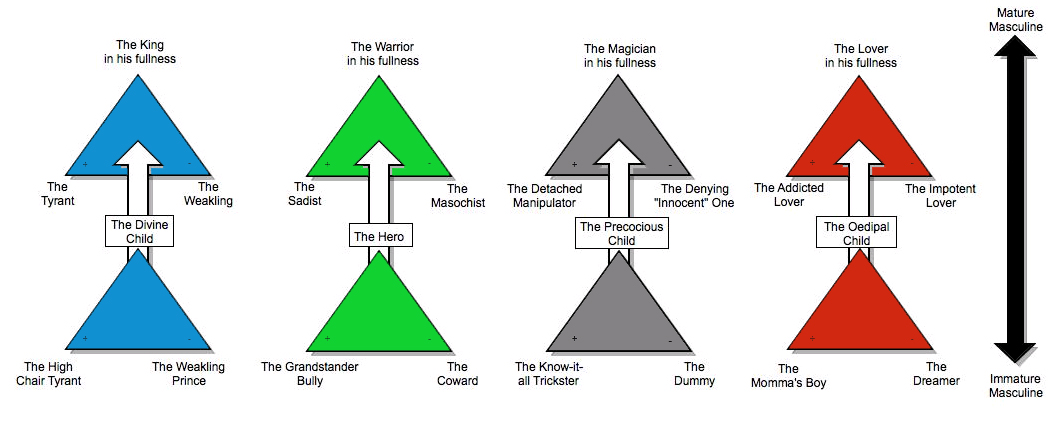
That is one way to tell this story. From a Jungian point of view the change is from the „impotent lover“ to the „Addicted Lover“. But there is a complete different angle. Like ashes of time the few key final scenes have put all the random pieces together so perfectly to deliver a simply truth about transaction based love and the connected loss and Chow only once, with the hotel owners daughter becomes caring and human again. In all other cases he makes women unhappy and women make him unhappy. The Addicted Lover is a collector–of experiences, possessions, or women. But without any structure, unable to connect the women he collects, his life feels fragmentary and the Lover’s energy shatters into a million directions. A man possessed by the Addicted Lover is, as Moore puts it in his book, King, Warrior, Magician, Lover: Rediscovering the Archetypes of the Mature Masculine , “eternally restless.”
(3) The number 2046 and 2047.
With a fellow blogger in Hongkong I discussed the year 2047, that’s when Hongkong might lose its status as a window to the outside, its currency and will be fully integrated in the People Republic of China(PRC). Hong Kong is supposed to remain status quote up to 2047. Deng allowed HK another 50 years to “enjoy” the systems described in 2046. Wong Kar Wai picked 2046 as a title, thats when currency and fiscal sovereignty is handed over – which translates in political freedom. HK is on “borrowed time, borrowed place” . In Hongkong the change will be gradual so by 2047 HK will naturally and smoothly will become just another leading city of China.
The movie 2046 takes place in the late 1960’s, where Chow moves in the Orient Hotel, Hong Kong where he writes a science fiction novel. After a quick encounter with Mimi/Lulu, she gets killed in rom 2046 by her boyfriend. The number triggers the idea to the title. Since the bloodstained room needs to be cleaned he moves in room 2047 and stays there. So the big change is due 2047.
That maybe one reason, that Wong 2046 turns out it to be occupied by one of his old flames Lulu (Carina Lau), who was a former tenant in room 2046 before mysteriously vanishing. Some stills with Lulu are Art Nouveau. Fascinating red, and asynchrone camera angles.
The number triggers reflections on where he and Su Li-zhen used to go for afternoon romps, and serves as artistic inspiration. He creates a story about a place called 2046, where people go to find love and recall old memories. It’s a futuristic world with fast-paced trains, surreal colors, androids, and raw perspective not found regularly in real life. It resembles an acid-trip dream as enticing as it is frightening. As said before, the slow motion acting of the Androids don’t work.
The movie jumps back and forth from the present (1960’s) to the future (2046) where his fictional story is centered.
Reality: While staying at the hotel, Chow meets a gorgeous high-class call girl named Bai Ling (Zhang Ziyi). They become lovers and go out together, but he manages to provoke her to fall hopelessly in love with him. He treats her poorly, soliciting 10 USD per interaction for their afternoon encounters, even though she fell deeply for him. She ultimately breaks down from the emotional abuse, and let him go. To add insult to injury, he tells her to come over anytime she wants a quickie.
A new Su Li-zhen comes up, an enigmatic gambler and finally his old love Su in a flashback (below).
The daughter of the hotel owner, Jing (Faye Wong) is madly in love with her Japanese man, whose nationality leads her father Mr. Wang (Wang Sum), to sternly disapprove of them seeing each other. Chow befriends her and helps the two of them stay in contact by gathering love letters and arranging phone calls. In the process, he starts to have some feelings for her, acting even like a fatherly caring protector –almost like the cynical Rick in Casablanca discovering his good heart and quick to cover it up.
Further encounters take place in Chow’s life, but none that match the love story he experienced during In The Mood For Love. The most tortured woman in the movie is certainly Bai Ling, acted with sheer perfection by Zhang Ziyi, who expresses bottomless agony with a single teardrop.
Fiction: The futuristic story of 2046 is Chow’s way of turning those women into fictional. It’s his method of reflecting similar to the way discussing it within psychoanalysis. The random flashes into the world of 2046 are a therapy session in which Chow confronts his shadow and express the feelings that he has locked away inside. But what the use of those slow-moving androids? In a bad mood I would call it close to a boring relationship movie your wife/girlfriend drags you in. The pictures are great, however, the metaphor may hint either the politics or addicted lover theme.
2046 is a sequels and it shows. I have viewed all movies of Wong Kar Wai. Usually I write reviews of books or movies which are important to me, to collect my understanding of them. So far I did not understand 2046 yet. Chungking Express, Fallen Angles – source of my Avatar – provide fascinating psychoanalytic symbols and pictures but best of the best is Ashes of Time. So I thought, at least until I saw the last scene of 2046 a few times.
Last scene; Chow is stunned when Bai hands him a stack of money, each $10 bill representing one night they had spent together. He sets himself free staring empty into space, as the camera slowly follows a moving taxi. The last minutes makes the story round again. Lost souls.
Still highly recommended. I take my initial critique back, the last 5 minutes fuse all the story trails together. 2046 is actually a great movie, but not what it seems to be or the sound bites “The ultimate Love Film” suggests . As a man I give a piece of advice. Don’t drag your date on the first night in this movie (except she is an art movie buff). I did this one time with Chungking Express, with little success. Didn’t break the relationship, but she always was on guard after that. Suppose 2046 would work either…
For the uninitiated, Wong Kar Wai’s films seem pointless and confusing, which is reinforced by the director’s trademark cinematic indulgences, laggard pacing and minimalist plotting. However, upon closer inspection, it is easy to become intrigued by the rampant symbolism, the metaphor-laden dialogue, and the philosophical and psychological underpinnings of his films. Maybe its a problem of “if you have hammer, everything looks like a nail”, but I cant help his movies remind me on C.G. Jung: Failed individuation, shadows, persona and archetypes manifest in the here and now. But are there common elements that tie his entire body of work together? Is there some underlying structure or theme by which one can gain a better comprehension of his sometimes cryptic images and symbols?
The classic archetypes in Wong Kar Wai Films
One way of approaching the cure for the modern malaise in his films may come from the book King, Warrior, Magician, Lover: Rediscovering the Archetypes of the Mature Masculine, by Jungian psychologist Robert Moore and mythologist Douglas Gillette. Moore argues that masculinity is made up of four archetypal male energies which serve different purposes: King, Warrior, Magician, Lover. Like much of the literature in the mythopoeic realm, KWMLis grounded in the psychology of Carl Jung, particularly in his idea of psychological archetypes. While Jung suggested a number of universal archetypes (Mother, Hero), the four personal ones are: the Self, the Shadow, the Animus and Anima, and the Persona. They play a role too, as they are parts of the personal unconscious. I like to investigate, here some archetypes and their shadow representation ( and symbols which are archetypes in the here and now). Each of the four consists according to Moore of three parts: the full and highest expression of the archetype and two bi-polar dysfunctional shadows of the archetype. To better understand this, Moore portrays each archetype as a triangle full (to weak, to strong, and an bi-polar shadow split. These shadows are the result of the archetype not being integrated in a healthy and coherent way. The two shadows of the Lover archetype are the Addicted Lover and the Impotent Lover. A man possessed by the Addicted Lover is, as Moore puts it, “eternally restless.”Men dogged by the Impotent Lover archetype feel depressed, flat, and dead inside. Nothing brings them joy anymore. They’ve lost their passion for life and become cynical. Relationships, whether romantic or platonic, struggle and falter.
Ashes of Time is best candidate applying this framework, as it is almost a greek tragedy. You find the cynical magician, the weak king (note the absence of the positive king),the full warrior who becomes a hero and the addicted lover who cannot love. The women are brilliant too, there is the virgin, the animus, the unfaithful and loyal wife and there is Maggie Cheu.
Brigitte Lin in Ashes of Time (1994)
Wong’s films, at their most basic level, are an exploration of the double-edged sword known as memory, which may be seen as consciousness. This strong thematic undercurrent is expressed through subtext in the dialogue, characterizations, and the often-minimalist plotting. Pain of loss and the tenacity of remembrance are both destructive forces, yet essential for survival. All the characters in his films are products of this loss, and their actions in the present stem from their reactions to that loss. Unfortunately, the results are often tragic. In ashes of time the girl with the donkey begs the agent for assassins ( in my view a cynical materialistic magician type):
Please help me. I beg of you.
It’s no use. I’m just an agent. You must solve your own problem.
“Ashes of Time”
Ouyang Feng’s lost love ( Cheung’s character in Ashes of Time) ultimately married his brother because she tired of waiting for her real love return to her. Wai’s camera stares intently at her while she gazes beyond time and relieves the past full of regret to his “friend. She dies as there is no reason to live. Besides being one of the strongest impression of melodrama, it is also the most puzzling. I noted two times the look in the mirror, visually and verbal in the film. It almost seems tis relates to the pain to learn about ourselves.
Do you know what the most important thing is in my life?
Maggie Cheung ponders in Ashes of Time (1994)
Your son?
I thought so too. But as he grows up, I know he’ll be leaving me one day. Nothing’s important to me now. I thought the words ‘I love you’ really mattered. I thought they meant a lifetime commitment. But looking back, nothing matters… because everything changes. I thought I was the winner, until one day I looked into the mirror and saw the face of a loser. I failed to have the person I loved most to be with me in my best years. How wonderful it would be if we could forget the past…
“Ashes of Time”
The post-modern archetypes in Wong Kar Wai Films
His other films are mostly a study of relationships in the post-modern world, in which the exchange of goods and services serves as the basis of all relationships, instead of emotional connection– a representation of cosmopolitan life in modern Hong Kong – and elsewhere. Very few of the relationships found in Wong’s films are based on emotional connection, and the struggle that his characters face is to cultivate deeper forms of association. Unfortunately, many of his characters do not form these emotional connections, out of fear of rejection, and find it much easier to have transaction-based encounters. After thinking this through, and stereotypes not being archetypes, it appears to me that his central archetypes of loneliness are (negative) lover and warrior.
When I am about to leave, I ask him to take me home. I haven’t ridden on a motorbike for a long time. Actually, I haven’t been so close with a man for a while. The road isn’t that long, and I know that I’ll be getting off soon, but I’m feeling such warmth this very moment.
“Fallen Angels”
The most important aspect of Wong’s thematic focus is the transience of relationships. Even if the characters manage to find an emotional connection with one another, they learn to accept the fact that all relationships must end, and those who survive at the end of the film have learned to embrace the moment. This theme was best represented by #223’s (Takeshi Kaneshiro) ‘expiry date’ speech in “Chungking Express”, and the final soliloquy given by the nameless agent (Michelle Reis) while riding into the Hong Kong night on the back of a motorcycle. Not surprisingly, this can also be seen in Wong’s fascination with images of smoke and drifting clouds– like these transient phenomena, relationships form like a puff of smoke, only to quickly lose their cohesion and dissipate into the night. To embody these themes within his films, Wong populates his films with a number of archetypal characters: the ‘impotent lover’, the ‘carefree lover’, and sometimes, ‘the indecisive warrior’.
The impotent lover
Tony Leung Chiu Wai as the Blind Swordsman in Ashes of Time
The impotent lover has been seen in many forms, but their origins and current condition are always the same: the small time gangster Wah Ha-tau (Andy Lau) from “As Tears Go By”, both Yuddy (Leslie Cheung) and the soda counter girl Su Lizhen (Maggie Cheung) in “Days of Being Wild”, the Blind Swordsman (Tony Leung Chiu Wai) in “Ashes of Time”, and Police Officer #663 (Tony Leung Chiu Wai) in “Chungking Express”.
This the time of year to change into a summer uniform. I don’t know if it is the weather, but I feel that things are changing.
“Chungking Express”
The impotent lover is in a constant state of emotional paralysis, arising from his or her inability to forget the pain of a broken relationship. Blinded by the haze of nostalgia and desperately attempting to hang on their halcyon days, they miss the opportunities of the present and are completely unaware of the incessant progression of time.
Go ahead. I just want you to hate me. That way, at least you won’t forget me.
“Days of Being Wild”
#663 of “Chungking Express” is another good example of the impotent lover. Always waiting for his stewardess ex-girlfriend (Zhou Jialing) to return, he is completely oblivious to the fact that Fay (Faye Wong), the counter girl at a local fast food place, has been breaking into his apartment and rearranging his belongings. He does not notice that his canned food tastes different, or that the number of goldfish in his aquarium is increasing.
To capture the impotent lover’s introspective point-of-view visually, Wong employs a number of cinematic techniques. His use of the Godard-ian jump cut seamlessly blends temporally-exclusive scenes together, making the passage of time unnoticeable. Other Godard-ian touches include the many shots of clocks, which remind the viewer that despite the blind mourner’s fixation on the past, time continues to move on and that moments in the present are fleeting.
Tony Leung Chiu Wai and Faye Wong share a moment in Chungking Express
Another interesting technique, seen in “Chungking Express”, clearly represents the lover’s detachment from reality– the film is sped up, but the actors move very slowly. The resulting visual effect then conveys that while the rest of the world blurs by like the flapping of a hummingbird’s wings, the impotent lover is in a stagnant state of existence, lost within their own nostalgic thoughts.
The addicted lover
I’ve heard that there’s a kind of bird without legs that can only fly and fly, and sleep in the wind when it is tired. The bird only lands once in its life… that’s when it dies.
“Days of Being Wild”
In contrast to the impotents lover is the other staple characterization of Wong’s films, the ‘addicted lover’. Characters that fall into this classification include the hotheaded Fly (Jackie Cheung) from “As Tears Go By”, the lonely beat cop (Andy Lau) from “Days of Being Wild” an mostely the amnesic Huang Yoshi (Tony Leung Ka-Fai) from “Ashes of Time”, and the fickle Ho Wo Ping (Leslie Cheung) of “Happy Together”.
I never think about the next time when doing anything.
“As Tears Go By”
The carefree addicted lover is a character oblivious to history with no appreciation for the lessons of the past. As a result, their actions usually end up destroying the lives of those they come across. In “As Tears Go By”, it is clear that Fly is the carefree wanderer, since it is his reckless actions that end up destroying three lives, despite the escalating consequences of his previous misdeeds and the volatile situations he manages to entangle himself in.
Tony Ka Fai Leung drinks the magic wine in Ashes of Time (1994)
The more wine you drink, the warmer you’ll get. Water will only make you feel cold.
“Ashes of Time”
The most literal interpretation of the carefree addicted lover was seen in “Ashes of Time“. Huang Yoshi has his memory of the past erased after drinking a magical wine called ‘A Happy Go Lucky Life’ which erases memory. While the wine has eased the pain of the past for Huang Yoshi , it has also made him forget his emotional connections with others. As a result, his ‘carefree’ existence ends up destroying the lives of the other characters, including the split-personality Murong Yin/Yang (Bridget Lin) and the Blind Swordsman wife but mostly Ouyang Feng’s love and his “friend” Ouyang Feng .
Similarly, Ho Wo Ping in “Happy Together” has a shiftless existence living for only the moment. His inability to recognize his history with Lai Yiu Fai (Tony Leung Chiu Wai) ends up relegating him to a lonely permanence of his own doing.
I used to think there was a kind of bird that, once born, would keep flying until death. The fact is that the bird hasn’t gone anywhere. It was dead from the beginning.
“Days of Being Wild”
Through this stock character, Wong illustrates the other extreme to the impotent lover. While the addicted lover is not subject to the anguish of remembrance, they too are caught in a stagnant existence. Instead of missing the opportunities of the present due to an obsessive fixation on some past trauma, they never learn from their mistakes, nor do they ever form stable relationships with those around them. However, the result is the same– a lonely existence in isolation.
Do you remember at 3pm on April the sixteenth last year, what you were doing?
Why this question?
Well, I have a friend who challenges my memory. She asked me what I did on that day. I wouldn’t remember. Do you?
She told you?
I thought you would have forgotten.
What’s to be remembered, I would always remember. So you knew each other?
For a period of time. I left for the sea, and we lost contact. How about you?
Me? It’s off. What else did she tell you?
Not much. We’ve actually only known each other for a short period of time.
Did you love her?
Not exactly… just friends.
If you see her again in the future, tell her I’ve forgotten her. That’ll be better for everyone.
I’m not sure I’ll see her again. Maybe, she would have forgotten about me too.
“Days of Being Wild”
The indecisive warrior
michelle reis as the killer’s agent in Fallen Angels
The best thing about my profession is that there’s no need to make any decision. Who’s to die… when… where… it’s all been planned by others. I’m a lazy person. I like people to arrange things for me. That’s why I need a partner.
“Fallen Angels”
This last archetype is a more recent innovation in Wong’s films, first seen in “Fallen Angels”. To me it seams, it is a parody of a warrior. The male leads, hit man Wong Zhiming (Leon Lai) and mute 223 (Takeshi Kaneshiro), are both in search of a sense of belonging, but end up in pathological situations where they lose their identity. Zhiming muses that the best thing about his ‘job’ is that he never has to make any decisions of his own, since everything he does has been arranged for him by his partner, the unnamed agent. When he finally does realize that he must take a more active role in the job, he is too late– ironically he is gunned down in an ambush set up by his lovelorn agent.
They say that love can change a man. I start to find myself looking better and more charming, and suddenly I discover that I’m turning blonde.
“Fallen Angels”
223 has a similar problem. Creating a state of moral contradiction, 223 breaks into other people’s businesses at night such that he can ‘be his own boss’. However, in actuality, he has merely taken decisions that have been made by others and uses them, instead of making his own. He also hooks up with brokenhearted woman (Charlie Yeung) who is obsessed with getting revenge on a woman named Blondie. Together, they traverse the Hong Kong nightscape in search of Blondie, and in the process, blonde hairs begin to sprout from 223’s head, a metaphor for his adoption of his newfound partner’s system of values.
Like the impotent lover and the carefree lover, the life of the indecisive warrior is a lonely one. However, unlike the tragic note that Zhiming’s story ends one, 223’s outcome is certainly more upbeat. He ends up being rejected by the jilted woman and learns to make decisions for himself in the process (visually conveyed by his blonde hairs disappearing), the first of which is to give Zhiming’s former agent a ride home on his motorcycle.
Conclusion
So instead of being confusing jumbles of abstract dialogue and quirky characterizations, the films of Wong Kar Wai have a consistency in structure and theme. The archetypal characters of Wong Kar Wai’s angst-ridden narratives are classical different perspectives on man and women. While some of these characters do meet tragic ends resulting from their inability to change, the director does provide a glimmer of hope in the characters that do survive the melancholic plot.
Das Werk des Schweizer Tiefenpsychologen C.G.Jung spielt in der heutigen öffentlichen Diskussion Deutschlands kaum eine Rolle obwohl fast alle Konzepte von ihm selbstverständliche Werkzeuge von Psychologen und Consultants und manche seiner Begriffe Teil der Alltagssprache sind. Ähnlich werden Leni Riefenstahls damals die Zukunft verwegnehmenden, filmischen Konzepte – Die Macht der Bilder – in Film und Kunst routinemässig eingesetzt. Da ich Jung für den Psychanalytiker des 20. Jahrhunderts halte, der gerade zu Religion und Mythen uns heute noch viel zu sagen hat, ist es für mich notwendig, etwaige Vorwürfe mit dem innersten Kern seines Werkes zu vergleichen. Dabei stiess ich auf Leni Riefenstahl, ähnlich brilliant und ebenso negiert in Deutschland. Leni Riefenstahl schuf in ihren 101 Jahren ein beeindruckendes Werk aus Filmen und Photos. Sie war gleichzeitig eine der einflussreichsten und eine der umstrittensten Filmschaffenden. Während ihre ästhetischen Ansätze und dokumentarischen Methoden noch heute vielfach imitiert werden, wurde ihr Name gleichbedeutend mit den Gegenständen ihrer Filme: Die Glorifizierung des Nazi-Regimes. .
Woman in blonde wig (Brigitte Lin) Somehow I’ve become very cautious. When I put on a raincoat, I put on sunglasses too. Who knows when it will rain, or when it will turn out sunny?
Oppertunismus und Karriere
Auf dringende Bitten seiner Kollegen übernahm Jung den Vorsitz der “Ärztlichen Gesellschaft für Psychotherapie”, die einen internationalen Charakter hatte, und nutzte seinen Freiraum als Schweizer, um den internationalen Status und die politische Neutralität der Organisation zu garantieren und brachte auch den Nazis Missliebige in der internationalen Sektion unter. Es gab also einen internationalen Dachverband mit verschiedenen Ländergruppen. Die offizielle Zeitschrift der internationalen Vereinigung war das “Zentralblatt für Psychotherapie”. Ein Stein des Anstoßes sind einige Formulierungen Jungs aus einem Aufsatz, den er 1934 im “Zentralblatt für Psychotherapie” veröffentlichte. Probleme entstanden für Jung, als Prof. Göring (der Vorsitzende der deutschen Ländergruppe) 1934 ein deutsches Beiheft (“Deutsche Seelenheilkunde”) plante, das auch in der regulären Nummer des Zentralblattes erschien, wodurch der Herausgeber Jung unfreiwillig in die Rolle des NS-Befürworters geriet.
Leni Riefenstahl wird in Peter Wartson’s “German Genius” erwähnt. Leni Riefenstahl zeigte im “Blauen Licht” (1932), ihrer ersten eigenen Produktion, in der sie obendrein – aus Geldmangel – Regie führte was in ihr steckte. Der Film gewann bei der Biennale in Venedig Silber und viele weitere Auszeichnungen. Mit der Machtübernahme boten sich der Riefenstahl neue Aufgaben. Aufgaben, denen sie sich aber nur widerstrebend hingegeben haben will. Da kam der Hitler dazwischen, der Film “Blauen Licht” und “Der heilige Berg” haben ihm gefallen. Sie machte Dokumentarfilme, die Meilenstein der Filmästhetik waren, andererseits perfekte Überhöhungen und Symbolik für das damalige Deutschland und die Nationalsozialisten boten.
Zeitgeist
Problematischer Zeit völkerpsychologische Unterscheidungen zwischen “Germanen” und “Juden” erwiesen sich als fatal. Unterscheidungen zwischen der Mentalität verschiedener Völker hatte zwar auch Jung’s Lehrer Sigmund Freud vorgenommen, der etwa seinem Kollegen K. Abraham schrieb, dass dieser aufgrund seiner jüdischen “Rassenverwandtschaft” Freud’s Auffassung von Psychoanalyse näher stünde als Jung. (2) l. So schrieb C.G. Jung in dem Aufsatz “Zur gegenwärtigen Lage der Psychotherapie”, der Jude sei aufgrund seiner langen Leidensgeschichte desillusionierter, habe keine eigene Kulturform und brauche zu seiner Entfaltung “ein mehr oder weniger zivilisiertes Wirtsvolk”. Demgegenüber seien die noch jungen germanischen Völker energiegeladener und enthielten “Spannkräfte und schöpferische Keime von noch zu erfüllender Zukunft.” (3).
Liest man diese Begriffe ohne den Kontext des Gesamtwerkes, erschrickt man zunächst, aller5dings bewertet Jung keineswegs das “Barbarische” des Germanen pauschal höher gegenüber einem für minderwertig erklärten Judentum. Wenn er vom unterdrückten Barbaren im Deutschen spricht, schwingt immer auch Schrecken und Warnung mit. Schon in seiner Krise 1918 sah er voraus, dass archaische und unterdrückte Regungen gerade auch bei diesem “Kulturvolk” ein besonders gefährliches politisches Potential bilden könnten: “Das Christentum zerteilte den germanischen Barbaren in seine untere und obere Hälfte, und so gelang es ihm – nämlich durch Verdrängung der dunklen Seite – die helle Seite zu domestizieren und für die Kultur geschickt zu machen. Die untere Hälfte aber harrt der Erlösung und einer zweiten Domestikation. Bis dahin bleibt sie assoziiert mit den Resten der Vorzeit, mit dem kollektiven Unbewußten, was eine eigentümliche und steigende Belebung des kollektiven Unbewußten bedeuten muß. Je mehr die unbedingte Autorität der christlichen Weltanschauung sich verliert, desto vernehmlicher wird sich die ‘blonde Bestie’ in ihrem unterirdischen Gefängnis umdrehen und uns mit einem Ausbruch mit verheerenden Folgen bedrohen.” (4)
Solche Formulierungen werden “(politisch) korrekten” Historikern nicht sonderlich gefallen, sind aber bedenkenswert, vor allem wenn man sich mit der deutschen Neigung zum Undemokratischen auch mit psychologischen Überlegungen nähern will. Jung wertet die Juden nicht einfach ab, sondern sieht in ihnen ein im Gegensatz zu den Germanen viel älteres und abgeklärteres Kulturvolk, das sich infolge seiner langen Geschichte menschlicher Schwächen bewußter sei. Dies ermögliche ihnen, “mit vollem Bewußtsein in wohlwollender, freundlicher und duldsamer Nachbarschaft ihrer eigenen Untugenden zu leben, während wir noch zu jung sind, um keine ‘Illusionen’ über uns zu haben.” (5) Jung hat – bereits damals für solche Äußerungen angegriffen – seine Aussagen zunächst als legitime “Völkerpsychologie” bezeichnet, die einem Forscher erlaubt sein müsse, um Unterschiede herauszuarbeiten. Er hat ausdrücklich betont, dass es sich dabei nicht um Werturteile handle. Auch die Feststellung von Differenzen zwischen englischer und chinesischer Mentalität seien ja normal und
schlössen nicht den Respekt vor einer alten Hochkultur aus. M.L.v.Franz vertritt mit C.G.Jung die These, dass sich, tiefenpsychologisch gesehen, hinter dem Phänomen des Nationalsozialismus ein religiöses Problem verberge. Es gehe um die Erneuerung des Gottesbildes. Das nationalsozialistische Hakenkreuz kann durchaus als der Schatten des christlichen Kreuzes verstanden werden. Auch die DDR (und das heutige Deutschland) kannte und kennt pseudo-religiöse Rituale und die Ausgrenzung – heute als Rassist.
Doch wäre es berechtigt, die Kapitalismuskritik von Karl Marx als Ganzes zu diffamieren, nur weil er den “Schacher” als das “Wesen des Judentums” bezeichnete oder von den Slawen als “Völkerabfällen” sprach, die vom nächsten Weltkrieg “vernichtet” werden müßten? (8) Jung mußte seinen eigenen Schatten – und die Antipathie zum Freudschen System – abarbeiten. Schon 1936, zwei Jahre nach den oben genannten problematischen Äußerungen, hält C.G. Jung einen Vortrag in London, wo er sich bestürzt über die politische Entwicklung in Deutschland äußert:
“Wenn vor dreißig Jahren jemand vorauszusagen gewagt hätte, daß die psychologische Entwicklung in Richtung eines Wiedererwachens mittelalterlicher Judenverfolgung gehen, daß Europa erneut vor den römischen Liktorenbündeln und unter dem Marschtritt der Legionen erzittern würde … und daß statt des christlichen Kreuzes eine archaische Swastika Millionen von Kriegern zu Todesbereitschaft anködern würde – man hätte diesen Mann als einen mystischen Narren verschrien. Und heute? So bestürzend es erscheinen mag, dieser ganze Wahnsinn ist gräßliche Wirklichkeit.” (9)
1933-1936 Bilder und Mythen
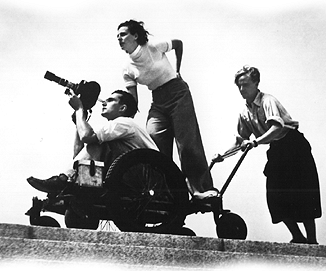
Nach der Machtergreifung holte Propaganda Minister Göbbels alle Filmemache zu sich und zeigte Ihnen den Film von Eisenstein, ” Panzerkreuzer Potkim” – so wollte er Filmkunst gestalten – Kunst mit(unauffälliger) Propaganda und mit Dokumentationen. Leni Riefenstahl war damals eine wenig bekannte Schauspielerin aus Weimar, die sich als Regisseur gerade selbst neu erfand. Sie machte 1934 “Triumph des Willens” – der Nürnberger Parteitag der NSDAP, die Ankunft Hitlers und seiner Helfer. Bewegte Kamera, wechselnde Perspektiven, souveräne Montagetechnik. „Triumph des Willens“ wurde durch Hitler selbst in Auftrag gegeben, der sie sehr zum Unmut von Göbbels direkt protegierte (sie belegte zeitweise sein ganzen Kameras). Der Film fing die erste Parteiversammlung in Nürnberg mit 16 Kameras ein. Nach zwei Jahren schneiden kam ein Film mit durchschlagendem Effekt heraus. Noch cleverer war „Olympia“ der die Spiele 1936 aufnahm. Ihr Ziel war – wieder mit hohem technischem Aufwand (89 Kameraleuten) und einer heute kaum mehr erreichten Astethik – „ennobled good losers, supreme winners, and endwelled on fine musculature particularly of Jesse Owns … to Hitlers extreme displeasure.“
Ebenfall 1936 (dem Jahr des Olympia Dokumentarfilms von Leni Riefenstahl) erscheint Jung’s berühmter “Wotan”-Aufsatz, der vom Aufbrechen eines “furor teutonicus” unter der dünnen Schicht christlich-aufgeklärter Kultur spricht und Deutschland als “geistiges Katastrophenland” bezeichnet, wo die Menschen eher von etwas “ergriffen” werden statt es zu “begreifen” (10). Alle von Jung’s folgenden Äußerungen zum Nationalsozialismus umkreisen von nun an die Frage, wie es ausgerechnet in einem hochentwickelten Kulturland zu einem solchen Verhängnis kommen konnte und aktualisieren seine Einsicht von der Notwendigkeit, sich intensiver mit den archaischen Regungen unterhalb der Zivilisationsoberfläche auseinander zusetzen. Was ihn einmal partiell fasziniert hatte – die euphorische Aufbruchsstimmung zu Beginn des Dritten Reiches – führt jetzt nicht nur zu Bestürzung und Ohnmacht, sondern zu tieferen Geschichtsanalysen, um einer bis heute kaum verstandenen Dynamik auf die Spur zu kommen. Dabei gibt es im Denkansatz übrigens Parallelen zur Frankfurter Schule, die ebenfalls im Nationalsozialismus eine nicht für möglich gehaltene Wiederkehr des Mythischen in “aufgeklärter Zeit” erblickten.(11) Jung findet seine alte Forschungshypothese bestätigt, daß Archetypen, kollektive Verhaltensmuster und archaische Bildwelten bewußt durchgearbeitet statt verdrängt oder unbewußt ausgelebt werden müßten. Nicht nur in Deutschland, sondern in ganz Europa sieht er das Phänomen der “Dissoziation” vor sich: eine Spaltung der Kultur in einen rational-fortschrittlichen Teil, der glaubt, “primitive Stufen” überwunden zu haben, während diese in Wirklichkeit verdrängt worden seien. Denn gerade das, was Christentum und Aufklärung verhindern wollten, geschah trotzdem: Kollektivrausch statt individueller Freiheit, Blutmystik statt Verstandesklarheit, Kriegerkult statt Pazifismus, Anbetung von archaischen Symbolen statt christlicher Werte von Mitleid und Versöhnung. Interessant und bis heute zu wenig bedacht sind Jung’s auf Gesamteuropa ausgedehnte Schlußfolgerungen, zu denen er seine Analyse des Nationalsozialismus erweitert: Auch die Inquisition, die Hexenverfolgung, kolonisatorische Raubzüge des “weissen Mannes”, blutige Revolutionen oder das Vernichtungspotential der Atombombe seien letztlich Folgen einer “schizophrenen” europäischen Kulturentwicklung, die vorgab, mittelalterliche “Primitivität” überwunden zu haben, um in noch barbarischere Exzesse zurückzufallen.(12) Eine wichtige und bestürzende Erkenntnis, die – wie wir im Hass auf alles religiöse sehen – auch heute noch kritisches Potential in sich birgt.
Leni Riefenstahl bezeichnet sich als politisch nicht interessiert. Sie habe sich daher überfordert gefühlt von Hitlers Wunsch, dass sie den Parteifilm machen müsse. Doch hat sie, intuitiv oder geplant, Ablauf und Symbolik der Aufmärsche sofort erfasst – und filmisch überhöht. Sieht man “Tiumph des Willens”, scheint das also ein korrekte Analyse. Auch im Film “Triumph des Willens” ist ja nichts gestellt. Leni Riefenstah: “Das ist ein Zeitdokument. Das haben auch die Richter bei den Entnazifizierungen so gesehen. Es ist ein Zeitdokument. Ob es der Arbeitsdienst ist, oder ob es der Vorbeimarsch ist, oder die Jugend, vor der Hitler eine Rede hält. Das war damals so. Und damals waren die Leute, und nicht nur die Deutschen, auch die Ausländer, fasziniert. Und glauben Sie, dass der “Triumph des Willens” von Frankreich eine Goldmedaille bekommen hätte, kurz vor dem Ausbruch des Krieges, wenn sie den als Propagandafilm gesehen hätten, vorm Krieg, die Franzosen?”.
Nach dem Krieg
In einem 1946 geführten Gespräch mit dem Rabbiner und Auschwitz-Überlebenden Leo Baeck hat Jung Fehler eingestanden und sich entschuldigt, was zu einer Versöhnung zwischen den beiden führte. Der Kabbala-Spezialist Gershom Sholem berichtete diese Begebenheit, die für ihn ausschlaggebend war,weitere Einladungen Jung’s zu dessen Eranos-Tagungen anzunehmen. (13) Interessant ist diesbezüglich vor allem die Tatsache, daß sich jüdisch-amerikanische Gelehrte und Psychotherapeuten viel intensiver mit diesem Problem befaßten als ihre deutschen Kollegen. So gab es 1989 in New York eine wissenschaftliche Tagung (“Lingering Shadows”), die sich ausschließlich mit den Antisemitismusvorwürfen gegenüber Jung beschäftigte.(14) Hierbei wurde nicht mit Kritik gespart, doch ohne zu pauschalieren. Vor allem wurde auf das gespannte Verhältnis von Jung zu seinem jüdischen Lehrer Freud hingewiesen, das zu einigen überspitzten Verallgemeinerungen in dem oben genannten Aufsatz führte. Freud und Jung – anfangs auch eine Vater-Sohn-Beziehung – entzweiten sich unter Streit und Schmerzen, als die Unterschiede in ihrer Beurteilung der spirituellen Dimension der Seele zu eklatant wurden. Während Freud in der Religion nur unbewältigte Vaterproblematik, Aberglauben und Projektion erblickte, waren mythische Bilder und Gottsuche für Jung elementare Bedürfnisse des Menschen, sich mit verborgenen und transzendenten Kräften auseinander zusetzen. Er sah in Freud den Prototyp des säkularisierten Juden, der alle Spiritualität zugunsten eines “modernen” naturwissenschaftlichen Erkenntnisideals verleugnete und übertrug diese Meinung voreilig auf das gesamte Judentum.
Leni Riefenstahl stieß als Fotografin nach dem Krieg rasch in die Weltspitze vor. Bildberichte über ihre Aufenthalte bei den Nuba erschienen zuerst in den Zeitschriften »Stern«, »The Sunday Times Magazine«,»Paris Match«, »L’Europeo«,»Newsweek« und »The Sun«. Vor allem ihre Bildbände »Die Nuba« und »Die Nuba von Kau« brachten ihr weitere Ehrungen und Auszeichnungen ein. Im Alter von 71 Jahren besucht Leni Riefenstahl einen Tauchkurs, um künftig auch als Unterwasser-Fotografin arbeiten zu können. Bald schon erwies sie sich auch in diesem Metier als Meisterin. Nochmal Leni Riefenstahl: “Insofern fühl ich mich schuldig, dass ich am Anfang, in den ersten Jahren so fasziniert war weil Hitler sein Versprechen gehalten hatte die Arbeitslosen wegzufischen und die ganze Not aus Deutschland zu verbannen. Aber ich hätte ja ebenso wie die anderen auch sehen müssen, dass man nicht in jüdischen Geschäften einkaufen durfte, sollte. Ich habe gekauft in jüdischen Geschäften aber es war an sich nicht erwünscht. Das alleine hätte mir zu denken geben müssen und das kann ich nicht verstehen heute, dass das nicht der Fall war. Ich war eben mit angesteckt von der ganzen fast hysterischen Begeisterung, die damals war.” Ich habe einmal eine Schauspielerin kennengelernt. die in dieser Zeit jung und produktiv waren. Vor diesem Hintergrund klingt das – für mich – plausibel- naiv .
Gottesbilder und atheistischen Utopien
J. Marvin Spiegelman’s “Judaism and Jungian Psychology” (1993) weist daraufhin, daß gerade nach dem Zerfall der marxistisch-atheistischen Utopien in aller Welt Fragen nach religiösen Wurzeln und Identitäten wieder neubelebt würden. (16) Die spirituellen Bedürfnisse der Seele seien mehr als bloßes “Wunschdenken”.
Tiefgreifende Lebensereignisse wie Tod, Verlust, Liebe, Krise und Verwandlung wollten auch bildhaftrituell erlebt werden. Gerade die Beschäftigung mit Jung habe Spiegelman auch wieder zu den eigenen religiösen Texten geführt und – etwa durch die Lektüre von dessen berühmter “Hiob” – Interpretation – zu einem vertieften Verstehen des jüdischen Gottesbegriffes.(19) Diesen wichtigen Essay von Jung ignoriert z.B. auch Richard Noll, der 1993 versuchte, dessen Psychologie als eine Art völkischer Ersatzreligion zu entlarven. (20) War Jahwe für Jung vielleicht anfangs noch eine einseitig strafende und überdimensionale Vaterfigur, so wird ihm 1952 durch die Lektüre der alttestamentarischen “Hiob”-Geschichte eine größere Vielschichtigkeit im Verhältnis von Jahwe zu den Menschen klar. (21) . Jung’s “Hiob”-Lektüre wird eine intensive Begegnung mit jüdischer Religion, aber er versucht auch, die Kontinuität innerhalb der Bibel zu verstehen, ohne das Alte gegenüber dem Neuen Testament abzuwerten. Im Gegenteil: Die Figur des Jesus Christus scheint ihm noch als zusätzliche Erfahrungsstufe Jahwes Sinn zu machen, aber als Jung bei der Johannes-Offenbarung ankommt, hat man den Eindruck, daß er die komplexe Figur des jüdischen Gottes doch seinem einseitig “guten” christlichen Pendant vorzieht. Er sieht sogar eine Gefahr darin, daß sich das Christentum hier zu einem schroff dualistischen Denken verengt, welches das “Böse” als “Satan” abspaltet und glaubt, es durch Verbannung aus der Welt schaffen zu können. Dies sei unrealistisches Wunschdenken, widerspräche der Realität der menschlichen Psyche und berge in sich die Anlage für zukünftige Katastrophen: “Als Ganzheit ist das Selbst … immer eine complexio oppositorum, und seine Erscheinungsweise ist umso dunkler und drohender, je mehr das Bewußtsein sich Lichtnatur vindiziert und daher auf moralische Autorität Anspruch erhebt.” (22)
Gut und Böseund Leni Riefenstahl
Gerade die Lektüre von Jung’s “Hiob” eröffnet auch ein tieferes Verständnis der Problematik des “Bösen”: Nur wer lerne, in sich das gegensätzliche Nebeneinander von “Licht” und “Dunkel” zu akzeptieren, könne letztlich auch der Erfahrung des Göttlichen eine angemessene Heimstatt bieten. (23) Übertragen auf den Nationalsozialismus könnte das heißen: Der, der die Möglichkeit der eigenen Verfehlung für denkbar hält, ist gefeiter gegen ideologische Verführung und dualistisches Feindbilddenken, weil dieses ja stets die eigenen Schatten nach außen projiziert. Was hat uns die Jung’sche Psychologie darüber hinaus heute noch zu sagen? Jung’s Archetypenlehre wird manchmal vorgeworfen worden, reaktionär zu sein, weil sie unbeweisbare “Urbilder” oder “ewige Grundmuster” statuiere und damit den Menschen zur unfreien Marionette gegenüber statischen Kräften mache. Doch eigentlich ist das Gegenteil der Fall: Jung wiederholt in seinem gesamten Werk immer wieder die Forderung, unbewußte Verhaltensmuster und suggestive Bilder ins Bewußtsein zu heben, um den Menschen einen freien Umgang mit ihnen zu ermöglichen.
Im Nationalsozialismus und mit Riefenstahl-Filmen geschah genau das Umgekehrte. Die Menschen gerieten in einen Rausch und überließen sich unbewußt atavistischen Strömungen und Symbolen, wurden von etwas “ergriffen” statt es zu “begreifen”. Sie traten nicht in ein kritisches oder befragendes Verhältnis zu archaischen Inhalten, sondern verfielen ihnen in blinder Hörigkeit. Ein Beispiel wie mächtig Bilder sind, zeigte der Film “Triumph des Willens” eine Auftragsarbeit für die NSDAP von einer offensichtlich intelligenten jungen Frau und brillianten Künstlerin, die sich mit kulturlosen Halsabschneidern einliess. Es liegt im Wesen des Films (und von Bildern), dass die Umstände seiner Entstehung verblassen. Riefenstahls Werke sind dabei, etwas zu werden wie Jungs Werke, dem man das Leben und Leiden, das sich um ihn herum abspielte, nicht mehr ansieht. Es bleibt nur noch das Bild – und so wird es den Riefenstahl-Filmen auch ergehen. Der Werbefilm ist zu weiten Teilen von Riefenstahl beeinflusst, was sich im Mystifizieren und Dramatisieren von Dingen zeigt, sei es ein Trainingsschuh oder ein Auto. Extreme Kamerawinkel, Kreisfahrten, Auflösungen, Schnitttechniken – was sie erfunden hat, wenden die Werberegisseure heute alle an, vom Nike-Spot bis zu MTV. Die “Krieg der Sterne”-Trilogie enthält Anleihen bei Riefenstahl; der Helm von Darth Vader sieht aus wie von der Wehrmacht ausgeliehen, und die Klonkrieger in der neusten Folge marschieren wie bei Truppen beim Parteitag. Ohne Standpunkt (“gut” oder “böse§ kann man keine realen Alltagssituationen dokumentieren, keine Figuren entwickeln und keine Geschichten erzählen. Um die Inschrift zu paraphrasieren, die C.G. Jung auf seinen Grabstein setzen ließ: „Ob gerufen oder nicht, Gott wird da sein.“ Es liegt nahe, daß große Bilder eine große Ausstrahlung haben. Auch heute ist diese Problematik trotz aller “Aufklärung” nicht aus der Welt. Aber “Vielleicht bedeutet die Kunst gar nichts, hat gar keinen Sinn, wenigstens so wie wir vom Sinn sprechen.” (23)
Zusammenfassung Jung fordert keine nostalgische Aufwärmung alter Mythen, sondern eine neue Theorie symbolischen Denkens – sein Horizont ist jedoch weiter als der von seelisch verarmten Rationalisten aber auch von denen dem Unbewussten mit Bildern huldigen, weil er die menschliche Sehnsucht nach Mythen und Bildern nicht nur verdammt, sondern ernstnimmt, aber ihre bewußte Durchdringung fordert. Im Gegensatz ging Leni Riefenstahl im Sog der Symbole unter. Dass nach wie vor viele Menschen mythischen Bildern erliegen, die in Gewalt und Abhängigkeit münden können, beweisen problematische Kino- und Videofilme, politische Korrektheit, religiöser, anti-religiöser und anti-westlicher Fundamentalismus , rechte und linke Ausgrenzungswahn, ja auch die Wiederkehr von pseudo-religöser Symbolik in der Politik.
1) Aniela Jaffé: Aus Leben und Werkstatt von C.G.Jung, Zürich und Stuttgart 1968, 89f
2) Ebd. 95
3) C.G. Jung, Gesammelte Werke, Band 10, Solothurn und Düsseldorf 1995, 190f
4) Ebd. 25
5) Ebd. 190
6) Ebd. 106, Jung spricht hier sogar vom “arischen Raubvogel” und seiner “unersättlichen Beutegier”, die ihn “über alle ihn nichts
angehenden Länder führt” sowie von unserem “Größenwahn, der sich zum Beispiel einbildet, das Christentum sei die einzige
Wahrheit, der weiße Christus der einzige Erlöser.”
7) Ebd. 61f
8) Karl Marx: “Zur Judenfrage”, MEW Bd.1, 376f und “Neue Rheinische Zeitung” 1849, zitiert in Konrad Löw: Das Rotbuch der
kommunistischen Ideologie, München 1999, 74f. (Diese Stelle ist in der Marx-Engels-Gesamtausgabe nicht enthalten)
9) Jung, Gesammelte Werke, Bd.9/1, 60f
10) Jung, Gesammelte Werke, Bd.10, 203ff
11) Max Horkheimer/ Theodor W. Adorno: Dialektik der Aufklärung, Philosophische Fragmente, Frankfurt/Main 1973
12) Jung, Gesammelte Werke Bd. 10, 221f, 237f, 268ff, 273,
13) Aniela Jaffé: a.a.O. 103f
14) Aryan Maidenbaum/ Stephen A. Martin (Hg.): Lingering Shadows: Jungians, Freudians and Anti-Semitism, Boston/ London
1991
15) Ebd. 277ff
16) J. Marvin Spiegelman: Judaism and Jungian Psychology, Boston/ London 1993, 21f
17) Ebd. 47
18) Ebd. 25f, 40
19) Ebd. 56ff
20) In seinem Buch “The Jung Cult. Origins of a Charismatic Movement” (Princeton 1994) versucht Richard Noll in reiner Konzentration auf das Frühwerk und auch dort vereinfachend nachzuweisen, daß Jung aus Aversion gegen das “Semitische” nur die “arisch-indoeuropäischen” Mythen interessiert hätten. Doch kommen in dessen frühen Schriften auch Symbole und
Göttervorstellungen aus Ägypten und Asien vor. Ein paar Bemerkungen über “Siegfried”, “Walhall” und die “Walküren” sowie reale bzw. vermutete Bekanntschaften mit völkischen Autoren reichen noch nicht aus, um aus Jung einen völkisch orientierten Germanenmystiker á la Guido von List zu machen.
21) C.G. Jung, Gesammelte Werke, Bd. 11, 363ff, siehe auch Micha Brumlik: C.G.Jung. Zur Einführung, Hamburg 1993, 110 ff
22) C.G. Jung, Ges. Werke, Bd 11, 445
23) C.G. Jung, Ges. Werke, Bd 15, 49/50
24) C.G. Jung, Kommentar zu Richard Willhelm, das Geheimnis der Goldenen Blüte