We’ve all heard the phrase “the banality of evil”, coined by the political theorist Hannah Arendt. Her 1951 masterwork, “The Origins of Totalitarianism,” about the parallels between Hitler’s Third Reich and Stalinist Russia, made her an intellectual celebrity. In her book, she argued that totalitarian regimes seek to dominate every aspect of everyone’s life as … Continue reading
Tag Archives: Evil
Personality models and Meta-Data – the Big Five (Eyes) and MBTI
This is a short snippet, not an analysis but a warning to watch your friendly data collector near to you and your friendly government’s use of phobias. A paper published in the Proceedings of the 6th International Conference on Social Computing, Behavioral-Cultural Modeling and Prediction shows that collected communication and social network trails, may turn … Continue reading
Shakespeare’s “Macbeth” from a Jungian view
This article explores the psychological underpinnings of Shakespeare’s “Macbeth” from a Jungian view. Carl Jung left a great deal of ambiguity surrounding his work. He understood, as long as there have been men and they have lived, they have all felt this tragic ambiguity and everybody must accept his or her “Shadow” during the individuation process. Ambiguity between good an evil, and a failed individuation is … Continue reading
Archetype Lupus and Astronomy – the Sirius Case
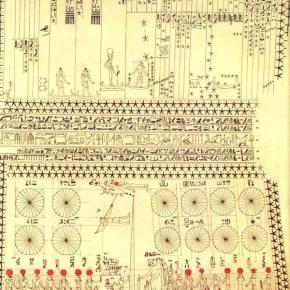
This is an extension of the last post: the archetype of the wolf. I am a hobby astronomer and fond of its older sister Astrology. So lets look to the Wolf from that perspective. The wolf is inherently pagan and shamanic, that means American Indian, Chinese, Egyptians, Babylonians should have big stakes in in its Astronomy … Continue reading
Jungian Archetype of the wolf – gods and godnesses, warriors and mothers, demons and outlaws, evil and uebermensch
In a few weeks, there is Whitsun, and I will make one of my occasional trips to the monastery. The rock monastery St. George is a development center of the Benedictine order in the Austrian Inn valley. From the monastery to the St. George mountain (Karwendel) on foot takes approximately one hour. The religious exercise will be lead by a Benedictine monk, who happens … Continue reading
You must be logged in to post a comment.