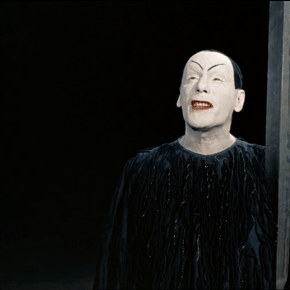
Immanuel Kant saw the universe as a profound source of aesthetic experience, especially through the concept of the sublime, which he distinguished from beauty. Beauty reflects harmony between imagination and understanding, while the sublime emerges when we face something so vast or powerful—like the infinite cosmos or a violent storm—that our imagination is overwhelmed. This … Continue reading
Category Archives: Archetypes
Faust and C.G. Jung – What holds the world together at its core
Goethe and C.G. Jung “Faust I”, the Germans’ favorite drama is about a scholar who wants the impossible, who wants to know what keeps the world together at heart. Goethe’s Faust failed on this worldly question, which ultimately leads either straight to Augustine’s heaven or Dante’s hell. Therfore Faust needed and accepted diabolical assistance. But … Continue reading
“The Monk by the Sea” – infinity and mortality
The Monk is back. Two of the most famous paintings from Germany’s Romantic period are back on display at a central Berlin museum after a two-year restoration. I recently visited that exibition and appreciated the famed landscape painter Caspar David Friedrich. The making of a perfect piece of art has always been a purification process … Continue reading
al-Andalus – a failed Renaissance
Last fall, I travelled all over Al-Andalus in the footsteps of philosophers, poets, warriors and great mystics Sufi’s like Ibn-Arabi. If you are interested in philosophy, science history and intercultural transmission of knowledge, Al- Andalus is your place and I invite you to read further. Al-Andalus represents a singular, tragic and wonderful moment of cultural … Continue reading
Dante’s Divine Comedy – symbolism and archetypes
Dante is not just any poet. With his epic poem “Commedia”, in English “Divine Comedy” he created an Italian cultural Monument, a journey through Hell, Purgatory and Paradise full of symbols, archetypes, historical and allegorical references. The article wants to revisit the work of Poet Dante Alighieri from a Jungian view in the light of … Continue reading
You must be logged in to post a comment.