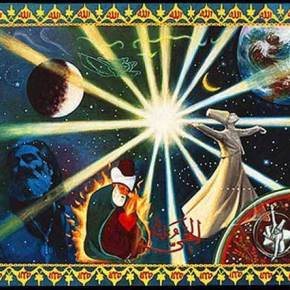
I followed the footsteps of the Templars and the heretic Cathars. This essay will focus on their similarity with early Christian and Jewish Gnostic thoughts, in which C.G. Jung was very interested. Where did the Cathars came from and what were there beliefs? What was the mystic and symbolic importance of Mary Magdalene, who is still worshiped prominently there in Catholic Churches? Continue reading
Category Archives: Philosophy
The banality of evil from a Jungian view
We’ve all heard the phrase “the banality of evil”, coined by the political theorist Hannah Arendt. Her 1951 masterwork, “The Origins of Totalitarianism,” about the parallels between Hitler’s Third Reich and Stalinist Russia, made her an intellectual celebrity. In her book, she argued that totalitarian regimes seek to dominate every aspect of everyone’s life as … Continue reading
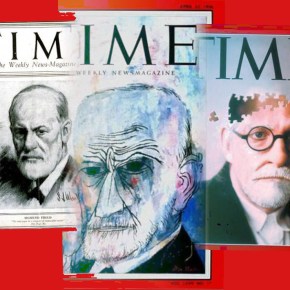
Who killed Freud? And is Psychoanalysis dead too?
Arguably no other notable figure in history was as wrong as Freud was about every important thing he had to say. He was a favorite of the avantgarde from the begin of last century until its sixties, but while the theories of his contemporary colleagues, C.G. Jung, Adler and Wilhelm Reich aged well, little of … Continue reading
The Black Swan as Acausal Connecting Principle
Nassim Nicholas Taleb’s The Black Swan – highly improbable market events – meet C.G. Jung’s Synchronicity – An Acausal Connecting Principle. Nassim Nicholas Taleb is a mathematician who has made a fortune by betting on highly improbable market events.Carl Jung warned that if societies do not attend to their collective shadow, a world crisis can result. Our era is one of failing elites and broken social covenants is fraught with the dangers of unleashed economical, millitary and social chaos. We each can do our part to safeguard each other by unterstanding black swans. I want to apply C.G. Jung’s wisdom as intuitive thinker on Taleb’s book (The Black Swan) beneficial to analyze external events – and yes, I am afraid this has something to do with the financial crisis and current geopolitical risks. Continue reading
Shakespeare’s “Macbeth” from a Jungian view
This article explores the psychological underpinnings of Shakespeare’s “Macbeth” from a Jungian view. Carl Jung left a great deal of ambiguity surrounding his work. He understood, as long as there have been men and they have lived, they have all felt this tragic ambiguity and everybody must accept his or her “Shadow” during the individuation process. Ambiguity between good an evil, and a failed individuation is … Continue reading
You must be logged in to post a comment.