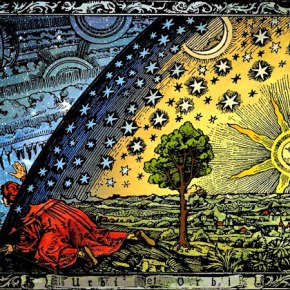
Immanuel Kant saw the universe as a profound source of aesthetic experience, especially through the concept of the sublime, which he distinguished from beauty. Beauty reflects harmony between imagination and understanding, while the sublime emerges when we face something so vast or powerful—like the infinite cosmos or a violent storm—that our imagination is overwhelmed. This … Continue reading
Category Archives: Astronomy
One day later – The vicious aspect of publish or perish
Originally posted on The Renaissance Mathematicus:
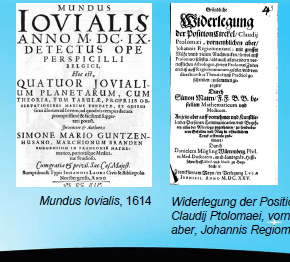
In my last post I commented on the priority disputes that Galileo carried out with other users of the telescope in the early years of telescopic astronomy. Some of his most vitriolic comments were launched from the pages of his polemical pamphlet The Assayer against the Franconian astronomer Simon…
History of time III: From Solar to Lunar Year
As societies moved from from from per-historic to complex civilizations their calendar system adopted from nature and weather calendars to direct observation and lastly to calculated calendars (see here). In this transitions, the switch from lunar calendars to solar calendars (pure solar, lunar-solar or solar-lunar) was an important step seen in many cultures but most … Continue reading
History of Time Part II: Calendar basics
Calendar Basics About prehistoric calendar not much is known, and even the old calendar of literate cultures can often only reconstructed incomplete. However, a comparison with various known types of calendars can historically classify calendars. This is a supplementary draft is an overview of the calender development in North Africa, Middle East (including Egypt and … Continue reading
History of Time I: The face of God from ancient cultures to the big bang.
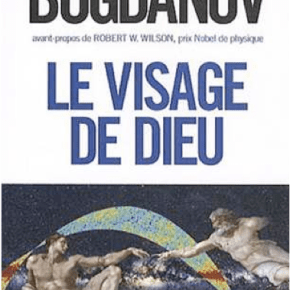
The history of time reflects culture – interconnecting temporal powers, religion and science. For millenniums priest were gatekeeper of time and calendar(s). Now scientists have taken over. Today we are able to contemplate beyond the creation of time, even beyond the big bang. I got the idea to this essay after I read a book, … Continue reading
You must be logged in to post a comment.