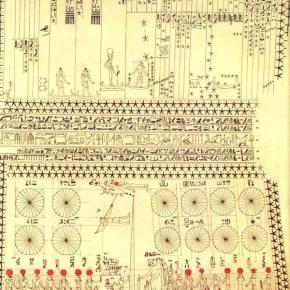
The history of time reflects culture – interconnecting temporal powers, religion and science. For millenniums priest were gatekeeper of time and calendar(s). Now scientists have taken over. Today we are able to contemplate beyond the creation of time, even beyond the big bang. I got the idea to this essay after I read a book, … Continue reading

Tag Archives: Psychology
Shakespeare’s “Macbeth” from a Jungian view
This article explores the psychological underpinnings of Shakespeare’s “Macbeth” from a Jungian view. Carl Jung left a great deal of ambiguity surrounding his work. He understood, as long as there have been men and they have lived, they have all felt this tragic ambiguity and everybody must accept his or her “Shadow” during the individuation process. Ambiguity between good an evil, and a failed individuation is … Continue reading
Archetype Lupus and Astronomy – the Sirius Case
This is an extension of the last post: the archetype of the wolf. I am a hobby astronomer and fond of its older sister Astrology. So lets look to the Wolf from that perspective. The wolf is inherently pagan and shamanic, that means American Indian, Chinese, Egyptians, Babylonians should have big stakes in in its Astronomy … Continue reading
Jungian Archetype of the wolf – gods and godnesses, warriors and mothers, demons and outlaws, evil and uebermensch
In a few weeks, there is Whitsun, and I will make one of my occasional trips to the monastery. The rock monastery St. George is a development center of the Benedictine order in the Austrian Inn valley. From the monastery to the St. George mountain (Karwendel) on foot takes approximately one hour. The religious exercise will be lead by a Benedictine monk, who happens … Continue reading
Abraxas und “Die sieben Reden an die Toten”
Mit Abraxas (griechisch Ἀβρασάξ, Ἀβράξας) bezeichnete der ägyptische Gnostiker Basilides in Alexandria um das 2. Jahrhundert das Symbol des höchsten Urwesens, aus dem die fünf Urkräfte Geist(Nous), Wort ( Logos), Vorsehung (Phronesis), Weisheit(Sophia) und Macht sowie sittliche Vollkommenheit und innerer Friede hervorgingen.Basilides verarbeitete verschiedene christlich-jüdische, persische und neuplatonische Überlieferungen zu einem dualistischen Weltbild. Das frühe Christentum … Continue reading
You must be logged in to post a comment.