Tag: Reviews

  • The many lives of Global Christianity

    The many lives of Global Christianity

    The book – The lost history of Christianity – from Philip Jenkings showed the The many lives of Global Christianity and provided many insights of the Eastern Christians to me, particularly since it makes clear, that also religion history is written by the victor. The book describes with great detail and accuracy how Religions deteriorate, vanish or die. How, religions get killed and when they leave ghosts or vanish without traces. It explains how religions emigrate and go underground. Philip Jenkings complements Will Durant explaining how Christianity, ‘ not only spiritually ‘ but as a global organisation took over the Roman empire by the rise and struggle of Eastern Christanity in the lost heartland in the Middle East and its expansion to Asia and Africa. The time horizon is mainly from the great schisms until the almost extinction in the 15th century. At that time the Eastern Christian world was destroyed so completely that its history is almost forgotten in the West – the first genocide. Wheras “the essential cause of Rome’s decline lay in her people, her morals, her class struggle, her failing trade, her bureaucratic despotism, her stifling taxes, her consuming wars” (‘Will Durant in Caesar and Christ), the essential cause of the decline of the Eastern Christian world was internal dogmatic disputes, political fighting and the exhaustion of the two regional powers, the second Persian Empire, the Sassanid dynasty and the East Roman (Byzantine) Empire. ‘A great civilization is not conquered from without until it has destroyed itself from within’.

    Christological_heresies_in_Jesus_Human_Divine

    The book explains very brief and precise the subtile differences which caused schism but also the global power, the toughness and shrewdness of the full flock of Christianity under often hostile political systems and religions (Zoroastrianism and Islam) in the cradle of  christianity (Syria, Persia, Turkey and Egypt) during the time of  the Islamization.  The Eastern Christians were and still are often engine of the social and technological development in the Arab area. Through multilingualism and by experiences during foreign travel and stay, they made contributions to the secularization, science and medicine, education, journalism and culture generally. The cultural mediator position of the Syrian writers in particularly affected deeply the Muslim but also Europe culture, writing and science.

    1000px-ChristianityBranchescopy

    East Syrian Nestorianism defined, contrary the conjoined view of Chatolizism, the disunion between the human and divine natures of Jesus and deny Mary the title Mother of God. It is the antithesis to monophysitism, and spread it widely from Syria across Asia with strongholds in Persia. Today it can still found in the modern Assyrian Church of the East.
    The Monophysites, organized as Jacobites first in West Syria insisted on “one divine nature” of Jesus. It held considerable strength in Syria, Iraq, Iran, Turkey Armenia, Egypt (Coptic) and Ethiopia and concludes today the Oriental Orthodox.  Even 1900, the Christian in the middle East (including Egypt, Anatolia and Persia) comprising Greek (Eastern) Orthodox, Armenian Orthodox, Copts, Maronites, Nestorian, Melchites, Protestant, Aramean Catholic, Jacobite, Chaldean, Syrian was sobering. Today the numbers are even smaller. One common denominator of the Eastern churches was that they based their believes much on the early Syrian version of the gospels. The Old Syrian language is Aramean. There is a.o. an Eastern and a Western dialect. The Western dialect was the language of Jesus and is close to Hebrew. The Oriental Christians were ambivalent against Islam as a defense against Constantinople (Greek Orthodox) and those against the Latin (catholic) ambitions of the Western churches and power . This weakened the entire Christianity and only minor groups of the Oriental Christians survived.

    Syrian-orthodox christians

    The Syrian-Orthodox church survived Islam and the Christian schisms. They had own monasteries with religious schools and a patriarch at Antioch (today at Damascus). The liturgic language was Aramean, later limited to an old-syrian dialect . The congregations often used Arabic as their common language.

    Nestorians

    The Nestorians are followers of the patriarch Nestorius of Constantinople who came from Antioch.  The Nestorian moved further to the East and settled in Persia which removed them from the catholic sphere of influence. Their liturgic language was kaldéan, an Aramean dialect. The Nestorian influence spread further East with the old caravan trading roads, beginning a long and successful missionary enterprise which encompassed nearly a millennium of expansion into much of Asia. By the 8th century, the Nestorian already oversaw a greater geographic area (and probably more people) than any pope before the Age of Exploration. Mongols and Turks were also evangelized during  the 10th and 11th century who gave up partially their indigenous Shamanist religion for Christianity prior to the Arab invasion. The Christian sympathies of the court, primarily through the influential wives of the khans, led often to changes in military strategy. The grandson of Genghis Khan, son of an Nestorian Mother Hulegu Khan, whose favorite wife was also Nestorian took Baghdad in 1258. On the way he defeated the Assassins, taking famous Alamut ( rumors have it with the help of Nasir al-Din al-Tusi, an outstanding Persian astronomer and mathematician). Together with the Shiite minority in Baghdad as well as Christians and other non-Muslims he brought the 500-year old Islam dynasty to an abrupt end causing a shift of Islamic influence to the Mamluks (Slave Warriors) in Cairo.  Some Nestorian groups are today affiliated with Roman Catholicism.

    Thomas christians

    The Thomas Christians are a very old group in India believed to have been founded by the Apostle Thomas. At first they were affiliated to the Nestorians. Later they were by united with the Catholics for a period. Now, they are mainly affiliated with the Syrian-orthodox Church.

    Coptic christians

    The Copts are the early Egyptian people.  The Coptic language is not semitic like most other languages in the Middle East but still the religious language of the Copts. The Coptic Christians are included in the group of Oriental Christians or better pre-Chaldeans. They have their own translation of the gospels.The first Coptic Christian converts were won by the apostle Mark who went to Alexandria.  The Coptic Church survived not only the Greek influence but later even the Islamic expansion.

    Ethiopian christians

    The Ethiopians became Christians about 300 years AC. The Ethiopians had very early, several hundred years before, contact with Jewish missionaries and possibly settlers. This explains a strong Jewish influence within the Christian church here. In our times many surviving Ethiopian Jews were repatriated to Israel.

    Maronites

    The Maronites are another Oriental Christian Church. It is called after Maron, a Syrian, and its central point is the monastery of St Maron in Libanon. About 20% of the Libanese were Maronites before the recent civil wars and the influx of Palestinian refugees. Since th 11th century they are united with the Roman Catholics but select their own bishops and archbishop.

    Common Christian identity

    In 1988, then-Cardinal Joseph Ratzinger published a collection of essays under the title of Church, Ecumenism and Politics. In it, he argued our economic system is little better than national socialism or communism, in that all three propose false idols (prosperity, the Volk, and the state, respectively). Ratzinger said that to build a humane civilization, the West must rediscover two elements of its past: its classical Greek heritage and its common Christian identity. I would assume, that he also include the Eastern Christians, in particular the Copts which currently again suffer persecution. Pope Benedict XVI seems cleary worried of the threatened Eastern Christian populations in the Middle East, asked Christians not to lose hope despite the serious difficulties they face.

    Conclusion

    For any Western Christian, even if accustomed with the history in the near east, this book opens the eye for common and global Christian identity, also with the Orthodox brothers and sisters and those which were labeled heretics by the mainstream church. The book has a haunting chapter about the terrible massacres of Nestorians and Chaldaeans and the genocides of Arameans and other Christians during and after the first world war. It describes the subsequent survival strategies of the Christians and events in the Middle East and Asia Minor until the “Arab Spring”. This part provides an especially concise and informative background what and why things happened there and its connections with Christians involved.  In a lessons learned approach the book discusses what  positively or negatively influences chances of survival prior to invasion and persecution and working strategies when in the minority position – example why could the Copts cope and Northern Africa’s Christianity fell apart within decades. Particularly interesting, the complex and difficult decision general Churches faces when and to which degree to collaborate with the political power. Chilling, when the book explains strategies of governments which actively pursue removal or exchange of the indigenous church, religion and culture or of foreign religions to gain majority and supermajority by migration, forced migration and “outbreeding” .

    The book gives great hope in the current Western situation, that is, for Christianity -not- for Europe.  For the Middle East, it argues the two crucial lines, majority and super majority have been crossed.  A real eye opener.
    The book is structured along the logic of its arguments rather than time, persons, faiths, empires or location. An already good knowledge of this part of history is a definite plus for the reader.

    ———————————————-Appendix ———————————————————-

    There are currently 23 sui juris churches that make up the Catholic Church. They include:

    1. Latin Catholic church
    2. Coptic Catholic church
    3. Ethiopian Catholic church
    4. Maronite church
    5. Syriac (Syrian) Catholic church
    6. Syro-Malankara Catholic church
    7. Armenian Catholic church
    8. Chaldean Catholic church
    9. Syro-Malabar church
    10. Albanian Greek Catholic church
    11. Belarusian Greek Catholic church
    12. Bulgarian Greek Catholic church
    13. Byzantine church of the Eparchy of Krizevci
    14. Greek Byzantine Catholic church
    15. Hungarian Greek Catholic church
    16. Italo-Albanian Catholic church
    17. Macedonian Greek Catholic church
    18. Melkite Greek Catholic church
    19. Romanian church United with Rome
    20. Russian Catholic church
    21. Ruthenian Catholic church
    22. Slovak Greek Catholic Church
    23. Ukrainian Greek Catholic church

    22 of these 23 churches are Eastern churches; only the Latin church is Western. But the primary reason most people don’t know about all these Eastern churches is that the Latin Catholic church makes up 98% of all Catholics worldwide.
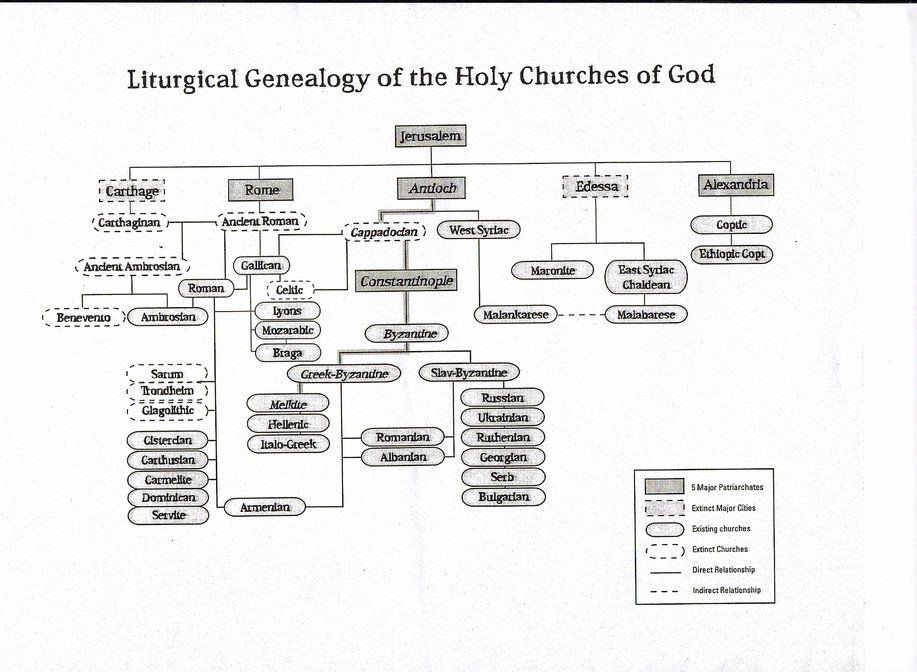
    Another thing that people often confuse is the difference between a “rite” and a “church”. The churches above are NOT rites; instead they each practice a rite. A rite is a liturgical patrimony: it is the way in which a church worships. There are primarily six different rites within the Catholic church (with many variations within the different churches). They are:

    1. Alexandrian
    2. Antiochian
    3. Armenian
    4. Byzantine
    5. Chaldean
    6. Latin

  • Die Psychologie von C. G. Jung: eine Einführung in das Gesamtwerk.

    Ich kaufte Jolande Jacobi ’ s klassisches Buch Die Psychologie von C. G. Jung – seit 60 Jahre auf dem Markt – in Zürich von meinem Lieblings-Antiquariat.  Es ist eine deutsche Ausgabe aus dem Jahre 1972 und kam mit vielen Markierungen, zu denen ich noch mehr addierte. Jolande Jacobi ’ s bietet dem Leser eine konzentrierte Zusammenfassung des Jungschen Systems an. Als Studentin von C.G. Jung und seine engste Mitarbeiterin, beschreibt sie  in diesem Buch souverän Grundlagen, Terminologie und Konzepte von Jung ‘s  Psychologie. Das Buch gibt den Laien eine verständliche Einleitung in seine Arbeit und erlaubt ein tieferes Verständnis der Analytischen Psychologie. Sogar Fachleute verwenden ja oft Sekundärliteratur um sich durch C.G. Jung Werk zu navigieren.  Das Buch umfasst neun schöne Farbenplatten mit Mandalas und viele hilfreiche Abbildungen, die Konzepte und Modelle der psychischen Strukturen und Prozesse exzellent visualisieren (10 einfarbige Abbildungen und 19 Diagramme). Durch Jung’ s Forschung wissen wir, dass die einzelne Psyche nicht nur ein Produkt der persönlichen Erfahrung ist, sondern auch der kulturellen Geschichte mit den Universalmustern und Bilder, wie wir sie von allen Religionen und Mythologien her kennen.

    Das links gezeigte Diagramm ist von meinem Verständnis der im Buch dargestellten Konzepte abgeleitet worden. Die wichtigsten Leitvorstellung von C. G. Jung kommt bei Jolande Jacobi in der ersten Hälfte des Buches in Form einer Trias sehr gut zur Geltung:

    Zum ersten, das für Jung die Person in seelischen Kraftfeldern zwischen Ich- Bewusstsein, personalen und transpersonalen Unbewussten eingelassen ist. Das Transpersonale sprengt den Erklärungsraum bei Untersuchung von internalisierten Objektbeziehungen und des persönlichen Schicksalsverlaufs. Die  seelischen Wirkungsfaktoren werden mit dem Begriff des Archetypus konzeptionell erfasst.

    Das zweite Merkmal ist die besondere Psychologie des Selbst, das einen personale und eine transpersonale Seinscharakter hat. Das Ich und das Selbst sind eine ungleiches wie unzertrennliches Paar und wobei das Selbst das Zusammenspiel von Bewussten und Unbewussten von personalen und transpersonalen garantiert und die Offenheit des Jungschen System für Spirituelle begründet. Je näher wir unserer eigenen Seele sind, des näher sind wir der Weltseele. Der Archetypus  Selbst ist die Schnittstelle zum Transzendenten.

    Das dritte Merkmal ist dasVerständnis des psychisch Unbewussten als Dynamik und energetisch produktiver Faktor. Die Energiezentren des Unbewussten geben Antrieb und die Imagination ermöglicht ein wichtiges Korrektiv. Die Aktive Imagination, eine von C. G. Jung wieder entdeckte Möglichkeit aktiv mit der eigenen Seele in Beziehung zu treten, wird ausführlich beschrieben. Sie ist ein im Zustand des Wachseins entstandenes Fantasiebild, an welchem das Ich aktiv beteiligt ist.

    Ebenfall sehr gut wird Methodik  wie Individuation und Amplifikation und Anwendung des Jungschen Systems in der zweiten Hälfte des Buches beschrieben. Zu kurz kommt die Phänomenologie und das Zusammenspiel von Komplex, Archetypus, Symbol in der Psychologie C. G. Jungs. Zu diesem Thema würde ich ein weiteres exzellentes Buch von Jolande Jacobi mit genau diesem Titel verweisen.

    Das Buch wird durch eine gute Bibliografie und Index komplettiert und alle Hinweise machen es einfach diese in C.G. Jungs Orginaltexte zu vertiefen.  C.G.Jungs beträchtliche Hinterlassenschaft, kann nach dem Lesen von Jolande Jacob’ s präzisen und kompakten Buch – voila – einfacher verstanden werden.

  • “Der gnostische Jung und die sieben Reden an die Toten” von Stephan A. Hoeller

    “Der gnostische Jung und die sieben Reden an die Toten” von Stephan A. Hoeller

    C.G. Jung ließ die “Septem Sermones ad Mortuoa” (Sieben Reden an die Toten – Transcript), die er in der Zeit seiner Krise um 1916 verfasst hatte, als Broschüre im Privatdruck erscheinen. Im Buchhandel war sie lange nicht erhältlich, aber  verschenkte sie gelegentlich an Freunde.

    Die Schrift besitzt gerade in der heutigen Zeit immer noch eine hochgradige Aktualität, in der heftige, aber trivialisierte Diskussionen zwischen Esoteriker, Bibelgläubigen, Nichtsgläubigen und Materialisten ablaufen. Die tiefe Sehnsucht nach der Religion, welche C.G. Jung konstatiert, wird von den immer sterileren Kirchen und der immer anti-religiöseren Gesellschaft  – speziell der veröffentlichen Meinung – schwer gemacht.
    “Septem Sermones ad Mortuoa” enthält bildhafte Andeutungen oder Vorwegnahmen von Gedanken, die in Jungs wissenschaftlichem Werk später eine Rolle spielten, vor allem die Gegensatznatur zwischen Innerlichkeit und Ichbewusstsein und das Streben nach Ganzheit. Das Denken in Paradoxien, Methaphern und die reichen Allegorien war es, das Jung bei den Gnostikern – und den östlichen Religionen – angezogen hatte. Deshalb schrieb er unter dem “Pseudonym”  des Gnostiker Basilides (Anfang des 2.Jahrhunderts AD.).  Manche Gedanken erinnern mich an den Tao Te Ching,   wie ja die nicht-christliche Gnostik durch persisches Gedankengut inspiriert sein könnte:

    Die Toten kamen zurück von Jerusalem, wo sie nicht fanden, was sie suchten. Sie begehrten bei mir Einlass und verlangten bei mir Lehre und so lehrte ich sie:
    Höret: Ich beginne beim Nichts. Das Nichts ist dasselbe wie die Fülle. Das Nichts oder die Fülle nennen wir das PLEROMA.

    Vergleiche:
    Der TAO ist ewig ohne Schöpfung,  aber Nichts bleibt ungemacht.

    C. G. Jung hielt zum Teil an der Terminologie des Gnostiker Basilides, z.B. Abraxas fest. Kommend aus der Iris-Mythologie Ägyptens, spielte Abraxas eine große Rolle in der Gnosis der ersten nachchristlichen Jahrhunderte. Abraxas taucht bei C. G. Jung als der „Schreckliche” auf, der mit demselben Wort oder derselben Tat zugleich Wahrheit und Lüge, Gut und Böse, Licht und Finsternis erzeugen kann. Auch Hermann Hesse, einmal ein Patient von C.G. Jung,  erwähnt Abraxas in einen seiner Romane „Demlan“ als Gottheit, die gute und böse Elemente in sich vereint.

    C. G. Jungs Sieben Reden an die Toten ist wie “Das Rote Buch” ein Zeugnis, in denen er nicht als Wissenschaftler spricht, uns an seiner Suche in alle Richtungen teilhaben lässt. Stephan Stephan A. Hoeller, ein Kenner des antiken Gnostizismus wie auch der Psychologie C. G. Jungs gibt in diesem Buch einen sehr stimmungsvollen Prolog aus der Wiener Nachkriegszeit über den Magier von Zürich und sehr gute Einführungen zu den einzelnen “Reden”.

  • The Psychology of C.G.Jung Walter-Verlag 1972

    I bought Jolande Jacobi’s  classic book Psychology of C.G.Jung – for 60 years on the market –  in Zurich from my favorite second hand bookshop (Antiqariat sounds better). The hardcover edition is  in German and came with lots of marks – I added even more. Jolande Jacobi’s offers the reader a comprehensive review of the central content of C.G. Jung’s system. Jolande Jacobi, student of him and his closest colleague, succeeded it in this book to present the fundamental terms and concepts of Jung’ psychology clearly and descriptive.  The book gives an understandable introduction to the Jung’ work to laymen and makes possible for specialists to arrive at a deeper understanding of the analytic psychology.

    The book also includes beautiful eight color plates among the “pictures from the unconscious” and other illustrations which give a better idea of the psychic structure process than can be conveyed in words.

    Through Jung’s research we now know that the individual psyche is not just a product of personal experience, but has an evolutionary history resulting in a transpersonal dimension manifested in universal patterns and images such as are found in all the worlds’ religions and mythologies. Jung further discovered that the psyche has a structure or ordering principle that unifies the various archetypal contents. The archetype of wholeness is the central archetype that Jung calls the Self. The Self is the supreme psychic authority and compreise all others. The system an the archetypes are represented by mandalas and and diagrams ar typically circles. The diagram above has been derived from my understanding of the presented concepts in the book.

    The book is completed by a good  bibliography and all references make it easy to go C.G.Jungs vast writings, which – voila – can be easier understood after reading Jolande Jacobi’s  clear and concise book.

  • Complex Archetype Symbol in the Psychology of C.G. Jung by Jolande Jacob

    Complex Archetype Symbol in the Psychology of C.G. Jung by Jolande Jacobi, Ralph Manheim (Translator) – Princton University Press 1959

    The title covered the major concepts , but I couldn’t get a German version anymore so I settled for the translation which seems to be good. Most of more recent C.G. Jung scientific research is only available in English anyway.

    There have always been discussions about the nature of the terms complex, archetype and symbols and their interrelation, not to mention my confusion. In  the foreword to Jolande Jacobi’s book,  Jung wrote: “for reasons that I cannot enter into here, I have chosen the term “archetype” for this formal aspect of the instinct . . . . the concept of the archetype has given rise to the greatest misunderstandings and—if one may judge by the adverse criticisms—must be presumed to be very difficult to comprehend”.

    As a layman, I do enjoy C.G. Jung’s ambiguity and mystic,  but my more rational side wanted clear definitions especially on these three interrelated concepts.  Jolande Jacobi has gained a considerable reputation as an expositor of Jung’s theoretical formulations.  I have read more than work of her and never grasped Jung’s concepts as clearly and logical as in her books.  Jacobi makes these basic concepts accessible, last but not least when she tries to visualize them with diagrams (which she doesn’t in this book.

    The first part of her book divides into three sections defining, examining and exploring complexes (typically in the personal unconscious), archetypes per se (collective  unconscious)  and symbols (archetypes represented in the conscious mind).  Quite frankly, it was the first time I understood the  interrelation – and – Jolande Jacob dryly notes, that in a way, these term complexes, archetypes (not per se) and symbols are used by C.G. Jung interchangingly. The complex usually denotes something nonperceptible, whereas the term symbol denotes something image-like, perceptible and accessible from the conscious mind. But both are charged entities around a nucleus. 

    • Complexes are described as sources of intensity or energy around a nucleus ( an archetype per se) which may drain (or provide) energy and integrity from/to  the conscious Ego and are typically in the personal unconscious.  The book presents also a well written phenomenology of complexes as they can come the personal unconscious, or the collective unconscious,   may be also partly conscious or even conscious.  Jolande Jacobi describes the “complex” as a node of unconscious feelings and beliefs, detectable only indirectly, through behavior. The book explains also the difference of Freud and C.G. Jung on this matter.  Complexes  consist primarily of a “nuclear element,” an archetype per se as common vehicle of meaning, which is beyond the realm of the conscious will, unconscious and uncontrollable; and secondarily, of a number of associations connected with the nuclear element.
    • Archetypes (per se) are described as structural factors in the collective unconscious, invisible nuclear elements and potential carrier of meaning.   Jolande Jacobi presents them first  from a biological and philosophical angle. Among the first to formulate a hypothesis about the archetypes was the Greek philosopher Plato.  Jung has pointed out the term is also mentioned by a few of the early Christian writers and he took it taken from his alchemist studies. The concept can also be found in Kepler’s astrology and in Teihard de Chardin’s book “The Phenomenon of Man.” At least several of Teihard’s concepts of the emergence of reflective thought toward collective can be related to the evolution of the archetype. As C.G. Jung, the books stresses the point that archetypes are not inherited  only  structural patterns of potential representation. When they are touched by the light of the conscious mind  they may become in the lower plane instincts and the higher realm images. If I understood right,  archetypes (not per se!) may be equated with complexes,  particularly the those of  personal unconscious (like shadow)  which are often refered as functional complexes.
    • Symbols  are  perceptible to the conscious mind  and are for  the most part a representation of archetypes per se conscious mind. Obviously  they can can be inherited and they my personal or collective as  source of all mythic, symbolic and dream representations. According to the psychological model of C. G. Jung the archetypes originate in the collective unconscious, described as a repository for all of mankind’s experience and knowledge and are therefore  not available directly —only its images and created patterns can become manifest as symbols potentially unlimited in number and variety. Symbols are the core of our culture being the universal patterns of myth, religious symbols and ideas.

    Jolande Jacobi’s book gives  also a good explanation of how archetypes, complexes and symbols are perceived , interact with each other and gain autonomous power.   Jacobi’s analysis delivers the structure in the Jungian theory, which I expected but always with hooks from to C.G. Jung’s original text. In all her books, also in this one, I’ve highlighted one or two sentence per page, as her texts are concise and straight to the point.

    The second part of the book gives very good Jungian dream analysis.  This chapter is heavy and shows a very different Jolande Jacobi. It is really a separate work – an interpretation of one dream – written in a poetic way.The dream is a little hidden door in the innermost of the soul, according to C.G. Jung the royal way. Jolande Jacobi describes  THE DREAM OF THE BAD ANIMAL, a dream of an eight year old girl, who died a year later of scarlet fever.  The dream is explained and interpreted in great detail: the hermaphroditic aspect of the animal,   the meaning of dragon and snake, the horn and the  serpent, the dual psychological aspect of the animal,  the little animals  and  the blue fog or vapor in the dream. The mystic  of  “the four”,  “the one and four”  in the dream is explained and  the rite of the  night sea journey as a metaphor for life,  death and rebirth.

    .