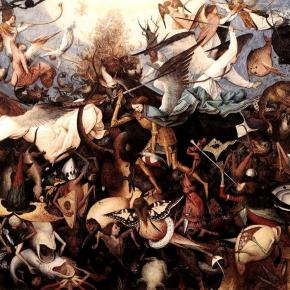
Gut und Böse
C.G.Jung / Philosophy / Religion

Gut und Böse


Bestärkt von seinem Freund Wolfgang Pauli, dem weltbekannten Physiknobelpreisträger, nahm Jung an, das Prinzip der Komplementarität habe nicht nur in der Physik, sondern auch in der menschlichen Seelenkunde Geltung. Er verstand kausale und nicht-kausale Erklärungen, Trieb und Willen, aber auch – am umstrittensten – Gut und Böse als einander ergänzende Größen. Viele Begriffe Jungs, bilden … Continue reading

C.G. Jung – German romanticism and National-Socialism as a totalitarian religion
C.G.Jung / History / Religion

C.G. Jung – German romanticism and National-Socialism as a totalitarian religion


Vocatus atque non vocatus, Deus aderit. Called or uncalled, God is present. Religious experience plays an important role in Jungian psychology. Jung, a Christian maybe of more Gnostic virtue, believed that this experience is nothing but a product of the psyche, and consequently viewed other world religions as an expression of one psychic function that has its … Continue reading

Abraxas und “Die sieben Reden an die Toten”
C.G.Jung / Gnostic / Religion

Abraxas und “Die sieben Reden an die Toten”


Mit Abraxas (griechisch Ἀβρασάξ, Ἀβράξας) bezeichnete der ägyptische Gnostiker Basilides in Alexandria um das 2. Jahrhundert das Symbol des höchsten Urwesens, aus dem die fünf Urkräfte Geist(Nous), Wort ( Logos), Vorsehung (Phronesis), Weisheit(Sophia) und Macht sowie sittliche Vollkommenheit und innerer Friede hervorgingen.Basilides verarbeitete verschiedene christlich-jüdische, persische und neuplatonische Überlieferungen zu einem dualistischen Weltbild. Das frühe Christentum … Continue reading

Omne bonum a Deo, omne malum ab homini – the supressed Evil.
Religion / Spiritual

Omne bonum a Deo, omne malum ab homini – the supressed Evil.


In pagan societies  and religions which are not based on the Old Testament,  God(s) were Good and Evil. That did not pose any problem in polytheistic belief systems,  but it did in monotheistic religions striving to monotheism and to conceptualize and label God. The Tao, right translated by the Jesuits as God is  referring to God in the unknowable sense, … Continue reading