Ich kaufte Jolande Jacobi ’ s klassisches Buch Die Psychologie von C. G. Jung – seit 60 Jahre auf dem Markt – in Zürich von meinem Lieblings-Antiquariat. Es ist eine deutsche Ausgabe aus dem Jahre 1972 und kam mit vielen Markierungen, zu denen ich noch mehr addierte. Jolande Jacobi ’ s bietet dem Leser eine konzentrierte Zusammenfassung des Jungschen Systems an. Als Studentin von C.G. Jung und seine engste Mitarbeiterin, beschreibt sie in diesem Buch souverän Grundlagen, Terminologie und Konzepte von Jung ‘s Psychologie. Das Buch gibt den Laien eine verständliche Einleitung in seine Arbeit und erlaubt ein tieferes Verständnis der Analytischen Psychologie. Sogar Fachleute verwenden ja oft Sekundärliteratur um sich durch C.G. Jung Werk zu navigieren. Das Buch umfasst neun schöne Farbenplatten mit Mandalas und viele hilfreiche Abbildungen, die Konzepte und Modelle der psychischen Strukturen und Prozesse exzellent visualisieren (10 einfarbige Abbildungen und 19 Diagramme). Durch Jung’ s Forschung wissen wir, dass die einzelne Psyche nicht nur ein Produkt der persönlichen Erfahrung ist, sondern auch der kulturellen Geschichte mit den Universalmustern und Bilder, wie wir sie von allen Religionen und Mythologien her kennen.
Das links gezeigte Diagramm ist von meinem Verständnis der im Buch dargestellten Konzepte abgeleitet worden. Die wichtigsten Leitvorstellung von C. G. Jung kommt bei Jolande Jacobi in der ersten Hälfte des Buches in Form einer Trias sehr gut zur Geltung:
Zum ersten, das für Jung die Person in seelischen Kraftfeldern zwischen Ich- Bewusstsein, personalen und transpersonalen Unbewussten eingelassen ist. Das Transpersonale sprengt den Erklärungsraum bei Untersuchung von internalisierten Objektbeziehungen und des persönlichen Schicksalsverlaufs. Die seelischen Wirkungsfaktoren werden mit dem Begriff des Archetypus konzeptionell erfasst.
Das zweite Merkmal ist die besondere Psychologie des Selbst, das einen personale und eine transpersonale Seinscharakter hat. Das Ich und das Selbst sind eine ungleiches wie unzertrennliches Paar und wobei das Selbst das Zusammenspiel von Bewussten und Unbewussten von personalen und transpersonalen garantiert und die Offenheit des Jungschen System für Spirituelle begründet. Je näher wir unserer eigenen Seele sind, des näher sind wir der Weltseele. Der Archetypus Selbst ist die Schnittstelle zum Transzendenten.
Das dritte Merkmal ist dasVerständnis des psychisch Unbewussten als Dynamik und energetisch produktiver Faktor. Die Energiezentren des Unbewussten geben Antrieb und die Imagination ermöglicht ein wichtiges Korrektiv. Die Aktive Imagination, eine von C. G. Jung wieder entdeckte Möglichkeit aktiv mit der eigenen Seele in Beziehung zu treten, wird ausführlich beschrieben. Sie ist ein im Zustand des Wachseins entstandenes Fantasiebild, an welchem das Ich aktiv beteiligt ist.
Ebenfall sehr gut wird Methodik wie Individuation und Amplifikation und Anwendung des Jungschen Systems in der zweiten Hälfte des Buches beschrieben. Zu kurz kommt die Phänomenologie und das Zusammenspiel von Komplex, Archetypus, Symbol in der Psychologie C. G. Jungs. Zu diesem Thema würde ich ein weiteres exzellentes Buch von Jolande Jacobi mit genau diesem Titel verweisen.
Das Buch wird durch eine gute Bibliografie und Index komplettiert und alle Hinweise machen es einfach diese in C.G. Jungs Orginaltexte zu vertiefen. C.G.Jungs beträchtliche Hinterlassenschaft, kann nach dem Lesen von Jolande Jacob’ s präzisen und kompakten Buch – voila – einfacher verstanden werden.
C.G. Jung ließ die “Septem Sermones ad Mortuoa” (Sieben Reden an die Toten – Transcript), die er in der Zeit seiner Krise um 1916 verfasst hatte, als Broschüre im Privatdruck erscheinen. Im Buchhandel war sie lange nicht erhältlich, aber verschenkte sie gelegentlich an Freunde.
Die Schrift besitzt gerade in der heutigen Zeit immer noch eine hochgradige Aktualität, in der heftige, aber trivialisierte Diskussionen zwischen Esoteriker, Bibelgläubigen, Nichtsgläubigen und Materialisten ablaufen. Die tiefe Sehnsucht nach der Religion, welche C.G. Jung konstatiert, wird von den immer sterileren Kirchen und der immer anti-religiöseren Gesellschaft – speziell der veröffentlichen Meinung – schwer gemacht.
“Septem Sermones ad Mortuoa” enthält bildhafte Andeutungen oder Vorwegnahmen von Gedanken, die in Jungs wissenschaftlichem Werk später eine Rolle spielten, vor allem die Gegensatznatur zwischen Innerlichkeit und Ichbewusstsein und das Streben nach Ganzheit. Das Denken in Paradoxien, Methaphern und die reichen Allegorien war es, das Jung bei den Gnostikern – und den östlichen Religionen – angezogen hatte. Deshalb schrieb er unter dem “Pseudonym” des Gnostiker Basilides (Anfang des 2.Jahrhunderts AD.). Manche Gedanken erinnern mich an den Tao Te Ching, wie ja die nicht-christliche Gnostik durch persisches Gedankengut inspiriert sein könnte:
Die Toten kamen zurück von Jerusalem, wo sie nicht fanden, was sie suchten. Sie begehrten bei mir Einlass und verlangten bei mir Lehre und so lehrte ich sie: Höret: Ich beginne beim Nichts. Das Nichts ist dasselbe wie die Fülle. Das Nichts oder die Fülle nennen wir das PLEROMA.
Vergleiche: Der TAO ist ewig ohne Schöpfung, aber Nichts bleibt ungemacht.
C. G. Jung hielt zum Teil an der Terminologie des Gnostiker Basilides, z.B. Abraxas fest. Kommend aus der Iris-Mythologie Ägyptens, spielte Abraxas eine große Rolle in der Gnosis der ersten nachchristlichen Jahrhunderte. Abraxas taucht bei C. G. Jung als der „Schreckliche” auf, der mit demselben Wort oder derselben Tat zugleich Wahrheit und Lüge, Gut und Böse, Licht und Finsternis erzeugen kann. Auch Hermann Hesse, einmal ein Patient von C.G. Jung, erwähnt Abraxas in einen seiner Romane „Demlan“ als Gottheit, die gute und böse Elemente in sich vereint.
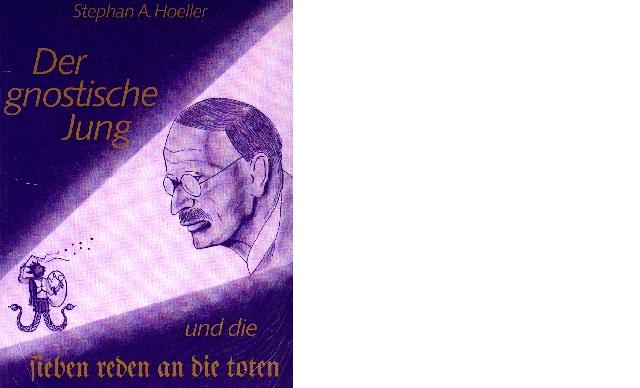
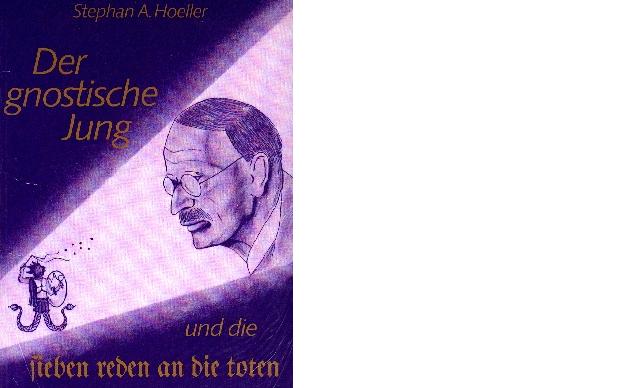
C. G. Jungs Sieben Reden an die Toten ist wie “Das Rote Buch”ein Zeugnis, in denen er nicht als Wissenschaftler spricht, uns an seiner Suche in alle Richtungen teilhaben lässt. Stephan Stephan A. Hoeller, ein Kenner des antiken Gnostizismus wie auch der Psychologie C. G. Jungs gibt in diesem Buch einen sehr stimmungsvollen Prolog aus der Wiener Nachkriegszeit über den Magier von Zürich und sehr gute Einführungen zu den einzelnen “Reden”.
Gnostiker sind besonders angetan von dem Markenzeichen “Logos” in der Einleitung des Johannes Evangeliums, welches C.G. Jung, in seinem Buch “Antwort auf Hiob”, ja auch sofort als “Nous” oder Sophie interpretiert. Viele Kritiker meinen, dass das Johannes Evangelium ein gnostisches Evangelium ist und gnostische Sprache und Begriffe verwendet. Er beschreibt Sophie (Weisheit) als die Gemahlin von Jahwe, eine gute “Co-Autorin” dieses Demiurgen, dem Schöpfer der materiellen Welt. Nach C.G. Jung versagt, der Demiurg (bei den Gnostikern ein ignoranter Halbschöpfer), als Gott bei Hiob und ist als Schöpfer unserer materiellen Welt der „Urheber der Übel” , der seine Sache mit den Menschen schlecht gemacht hat unter tatkräftiger und zugelassener Obstruktion des Satans. Eine Lösung ist ein neuer Ansatz, ein neuer Sohn. Dieser Christus soll wie Adam, leidensfähig und sterblich, andererseits “nicht bloßes Abbild, sondern Gott selber sein, als Sohn den Vater verjüngend.” Als Sohn Marias, die wie leicht ersichtlich, ein Abbild Sophies ist, ist Jesus Logos (synonym mit “Nous” ein Begriff von Aristoteles) als solcher auch Werkmeister der Schöpfung.
Philo (20 BC – 50 BC), ein hellenisierter Jude aus Alexandrien, verwendete den Ausdruck “Logos, um ein unvollkommenes göttliches Sein (Demiurge) zu bezeichnen. Er folgte der platonischen Unterscheidung zwischen unvollständiger und vollkommene Idee – Demiurge (Halbschöpfer) kommt aus den platonischen und neoplatonischen Schulen. Das Johannes Evangelium identifiziert “Logo” dagegen direkt mit Jesus. Für Christen ist Johannes Evangelium 1,1 somit ein zentraler Text, welcher die Dreieinigkeit erklärt und das Vater, Jesus, und der Heiliger Geist gleichgestellt und Eins sind.
Dieser erste Vers im Johannes Evangelium reflektiert die “Schöpungsgeschichte” und ist eine der sprachlich schönsten und mächtigsten Stellen der Bibel:
Am Anfang war der Logos das Wort, und das Wort war Gott, und Gott war das Wort. Dieses war im Anfang bei Gott. Alles ist durch dies geworden und es ward auch nicht eines von dem, was geworden. In ihm war das Leben, und das Leben war das Licht der Menschen. Das Licht leuchtet in der Finsternis, doch die Finsternis hat es nicht ergriffen.
„Im Anfang war das Wort“: Die Person, von der hier geschrieben wird – Jesus Christus, der Sohn Gottes – ist als solche ewig. Denn in jedem Anfang, den man sich (aus)denken könnte, war Er schon. Und Er wird das „Wort“ genannt. Das heißt, Er ist der vollkommene und vollständige Ausdruck Gottes. Er ist es immer schon gewesen.
„Und das Wort war bei Gott“: Dieses Wort wird unterschieden von Gott. Es war eine Person, die bei Gott war. Wenn jemand bei einer anderen Person ist, dann kann er unmöglich diese Person sein. Er muss eine eigene Identität haben. So wird das Wort – der Sohn Gottes – von Gott unterschieden.
„Und das Wort war Gott“: Wenn auch das Wort von Gott unterschieden wird, so ist es zugleich dennoch Gott. Es ist wesensgleich mit Gott, weil es Gott ist.
„Dieses war im Anfang bei Gott“: Die Person, die das Wort ist – also der Sohn – war in dieser Beziehung schon immer – im Anfang – bei Gott und Gott. Er wurde nicht erst Gott, Er kam nicht erst in die Beziehung Vater-Sohn, als Er auf diese Erde kam. Nein, vor Grundlegung der Welt, schon immer, war das Wort der Sohn.
” …und das Wort wurde Fleisch und wohnte unter uns, und wir haben seine Herrlichkeit angeschaut”: Das Johannes-Evangelium schildert das Leben Jesu also von der Ewigkeit her.
Und damit ist nur eine Besonderheit dieses einzigartigen Evangeliums genannt, das im Quartett der Evangelien eine Sonderstellung einnimmt. Folgende grobe Gliederung erscheint möglich:
Einleitung: Kapitel 1,1-18
Der öffentliche Dienst des Sohnes Gottes: Kapitel 1,19-12,50
Der Dienst und die Worte des Sohnes für die Familie Gottes: Kapitel 13,1-17,26
Tod und Auferstehung: Kapitel 18,1-20,31
Prophetischer Ausklang: Kapitel 21
Nach Ansicht mancher ist das Johannes Evangelium im ersten Viertel des zweiten Jahrhunderts entstanden. Der Verfasser ist laut Evangelium der Apostel Johannes, Jesu Lieblingsjünger. Historisch ist dies umstritten, kirchliche Lehre gibt daher eher Ende des ersten Jahrhunderts an. Sicher ist: Der Autor hat sich viel stärker als die anderen drei Evangelisten mit einer Lehre auseinandergesetzt, die das junge Christentum schließlich entschlossen als Irrlehre bekämpfte: die so genannte Gnosis (griechisch: Erkenntnis).
In gnostischer Sicht war der Kosmos ein dualistisches Weltbild, gespalten in ein Reich des Materiellen und eine himmlische Lichtwelt. Die Seele des Menschen war ein Splitter des Lichts, der auf der Erde gefangen ist im Leib des Menschen. Erkenntnis – Gnosis – war der Weg zur Erlösung, die Erinnerung an die eigene Herkunft aus dem Licht. Die materielle Welt war nach dieser Lehre erfüllt von „Einsamkeit“, von „furchtbarer Angst“ vor dämonischen Mächten. Alle Lebensvollzüge erscheinen als „vergiftet, dämonisch infiziert“. Wie im Buddhismus besteht die Welt aus Leiden. Sogar der Gott der Gnosis, wenn man den Dimurgen so nennen will, war lebens- und weltfeindlich, unfähig zu lieben und zu leiden, vor allem: uneins mit seiner Schöpfung. Der wahre Gott ist im Hintergrund ist radikal Nicht-Welt.
Jesu Weltoffenheit dagelegen, die Offenheit, mit der er auf Geächtete, auf Sünderinnen, auf vermeintlich Unreine, auf schuldig Gesprochene zugeht, diese Furchtlosigkeit, mit der er sich der Welt öffnet – all das war eine radikal gute Botschaft. Sprache wird für Johannes zu einem mystischen Tor zwischen der Welt Gottes und der des Menschen. Das ist nicht nur theologische Theorie – dieser Ansatz formt die Sprache bei Johannes in einzigartiger Weise. „Im Wort war das Leben, und das Leben war das Licht des Menschen.“ Johannes setzt der Mystik von Bildern eine Mystik des Wortes gegenüber, und zwar des schöpferischen, göttlichen Wortes, das die Schöpfung trägt.
Sprache entfaltet sich bei Johannes allegorisch: Ein Wort bezeichnet ein Ding und etwas anderes; die Materie glänzt auf einmal vor Sinn und Vieldeutigkeit. Da sind etwa die vielen „ICH bin“-Worte Jesu – Worte voll theologischer Kraft: Ich bin die Wahrheit, die Auferstehung und das Leben, ich bin der gute Hirte, „ich bin die Tür, wenn jemand durch mich hineingeht, wird er selig werden“. Gott hatte sich Moses gegenüber als der „Ich bin, der ich bin“ offenbart (2. Mo 3, 13-15). Johannes greift diesen Namen Gottes ganz besonders wieder auf und es ist Jesus selbst, der diesen Namen für sich in Anspruch nimmt und damit eigene Herrlichkeiten verbindet. Sieben verschiedene spezielle Herrlichkeiten seiner Person fügt Jesus dem betonten „ICH bin“ hinzu. Der messianische Anspruch wird in solchen Worten mit einer unerhörten Vollmacht beansprucht und zugleich in einer poetischen Dichte, die einzigartig ist im Neuen Testament.
“Ich bin das Brot des Lebens”, sagt er beim Stichwort Essen. Als seine Jünger ihn einmal suchten, fanden und dann fragten: „Rabbi, wann bist du hergekommen?“, da antwortet er auf die banale Frage mit einer Meditation über das Suchen, die in einer Selbstoffenbarung gipfelt: „Denn ich bin vom Himmel gekommen, nicht damit ich meinen Willen tue, sondern den Willen dessen, der mich gesandt hat.“
In solchen Passagen wird immer wieder deutlich: Die ganze Welt, das Leben, jedes Detail und jeder Lebensvollzug ist so etwas wie eine Metapher für Höheres. Die Außenseite der Welt spiegelt den Himmel wieder; man muss nur hinsehen oder eben hinhören, denn all das ist ja verborgen in der Sprache, im Wort, das für Johannes göttlichen Ursprungs ist und dessen Abglanz jedes Menschenwort mit Geist erfüllt.
Bei Johannes ist eine einschließende Sinnfülle zu spüren. Erlösung und Gotteserkenntnis sind keine Geheimwissenschaft für Eingeweihte, sondern liegen offen und klar zu Tage. Die Welt ist ein Zeichen, das von Gott kommt und auf ihn zurückweist. Das ist das Evangelium, die frohe Botschaft.
Johannes, „der Jünger, den Jesus liebte“, beschrieb hauptsächlich die göttliche Seite: Der Vater hat den Sohn lieb und hat ihm alles in Seine Hand gegeben. Wer an den Sohn glaubt, der hat das ewige Leben (3,35-36). In den Abschiedsreden Jesu findet sich echter Trost: In der Welt habt ihr Angst, aber seid getrost, ich habe die Welt überwunden (16,33).
Die letzten Worte im Johannes-Evangelium künden von diesem Glauben an die Fülle und die Nähe Gottes: „Es sind noch viele andere Dinge, die Jesus getan hat. Wenn aber eins nach dem andern aufgeschrieben werden sollte, so würde, meine ich, die Welt die Bücher nicht fassen, die zu schreiben wären.“
The relationship of the depth psychologist Carl Gustav Jung with Carl Gustav Jung in Gnosticism, Christianity, Buddhism and Taoism, religion, in particular Gnosticism and Zen Buddhism is of great interest. Religion and its psychological interpretation by C.G. Jung, which is based entirely on empirical facts, is ambiguous and often rejected, or – too frequently – simply ignored. To understand Carl Gustav Jung correctly is not simple. He was it more mystic than systematic. On the other hand we miss often the necessary cultural impartiality to understand the meaning of his terms. True, Jung’s ideas are cited frequently, but for some reason the systematic body of thought he left behind has not attracted Jungian’s as enrichment of spirituality of our age. In this essay I would like to draw attention to what I see as an unnecessary closure in Jung’s idea of the psyche and to suggest how its opening could provide a (my) missing link between Humanism, Christianity, Gnostic thoughts as well as Taoism and Buddhism. The body of writings Jung left behind is intimidating and fascinating. The sheer volume of his output, which continues to grow as notes from his seminars and other unpublished material are added, makes it more and more unlikely that one becomes familiar with the whole writings. For the same reason, general readers, as me but also commentators, and critics, tend to dip into his writings randomly according to their needs and to rely on secondary sources for general outlines of his thought. As a result, Jung’s model of the psyche, the wealth of his mystic, religious and historical references can be interpreted in many ways also due to Jung’s language of ambiguity.
For C. G. Jung the religious function of the soul is of importance because it contributes an important part to find the transcendental and mental wholeness. I want to explore Jung’s view on individuation the Self and/or God image and it is transcendental value to the conscious Ego:
Is God for C.G. Jung only a projection of the soul, a purely internal-mental reality of the soul?
Does Jung’s concept of Self represent the “imago Dei” like Christian belief postulates – man as the image of God?
Is the Self after the individuation process a result similar as obtained through Buddhism?
Provided Taoism the fundamental formative influence on C.G Jung’s notion of “synchronicity,” correlative parallels between the inner and the outer realms of experience?
Or is C.G Jung a Gnostic, as his remark indicates: “Ich glaube nicht, ich weiß.“?
Of what flavour is Jung’s mysticism – as in any case he was a mystic?
C. G. Jung’s personal faith
In its writings Jung does not leave any doubt, which essential meaning religion has for the mental life. He does not regard religion in contradiction with his psychology, but views religion from the psychological point of view. If he speaks of the transcendent, he means it as a psychological term.
The literature differentiates between three phases in C. G. Jung of faith development.
a)In the fist phase C. G. Jung interprets the God picture as sublimation of infantile sexuality and projection of the father Imago following Freud (see “The meaning of the father for the fate of the Individual.” 1909). During this time he undergoes his own psychology training.
b) In the agnosticism phase C. G. Jung increasingly appreciates the psychological function of the religion in their meaning for the future. The conclusion God seems to be explainable as a pure psychological function can be drawn easily from his purely psychological statements. “Der Gottesbegriff ist eine schlechthin notwendige psychologische Funktion irrationaler Natur, die mit der Frage nach der Existenz Gottes überhaupt nichts zu tun hat. Denn diese letzte Fra-ge kann der menschliche Intellekt niemals beantworten, noch weniger kann es irgendeinen Gottesbeweis geben. Überdies ist ein solcher auch gänzlich überflüssig, denn die Idee eines übermächtigen göttlichen Wesens ist überall vorhanden, wenn nicht bewußt, so doch unbewußt, denn sie ist ein Archetypus.” C. G Jung follows Kant who considers metaphysical realities unrecognizable, since only psychological experiences are directly given to humans. It is only necessary to make the archetypical conceptions conscious. “Der Glaube sollte durch Verstehen ersetzt werden.”
c) The phase with ” Psychology and Religion” (1937) brings new realizations, both to psychological and religious. While he strongly keeps his empirical point of view, he recognizes now the religious character of the “Selbst”. Faith and religion lead now to the highest human development and do not only have to be overcome by reasoning.
1. The science view
C.G. Jung regards himself as empiric and as such he holds the phenomenological point of view. As a scientist he does not feel himself entitled and competent to use philosophical or metaphysical criteria correctly. One must be careful, however, to restrict this scope too much. From phenomenological view C.G. Jung regards the psyche as only recognizable reality and subsequent ally was blamed that he reduces religion on arbitrary subjective creation. C.G. Jung stressed however, there are humans, who have conceptions of God and God belongs evenly to psychology and religion. According to Jung many hold “the prejudice that the psyche and its contents are nothing more than our own arbitrary invention or more or less illusory product of assumptions and judgment”, but certain ideas do not come from the individual but just impended to the individual consciousness. 2. The mystic and alchemist view
Carl G. Jung pointed out in Aion, Researches into the Phenomenology of the Self (1951), when referring to the coming astrological Age of Aquarius: “Starting from the star ‘O’ and assuming a Platonic month of 2,143 years, one would arrive at A.D. 2154 for the beginning of the Aquarian Age, and at A.D. 1997 if you start from star ‘a 113.’ The later date agrees with the longitude of the stars in Ptolemy’s Almagest… Since the delimitation of the constellations is known to be somewhat arbitrary, this date is very indefinite.” Kepler believed that the great conjunctions of Jupiter and Saturn in the sign of Pisces truly noted the full beginning of the Age. It should be noted, that here Jung was not using the mean precession of the constellations. Carl G. Jung was one of those who dealt most directly with the passage of the Piscean Period to the Age of Aquarius. He analysed astrological imagery embodied in Zodiacal ages in order to deal with the psychological problems of this period of transition. The astrological sign of Pisces is often represented as two fish – one light, the other dark in color – swimming in opposite directions. The Age of Pisces which started roughly at the same time as the birth of Jesus is the period in which Christianity developed and became the normative spiritual influence for much of the world. The Piscean Period, true to its image of the fish going in opposite directions, has been one in which the dominant ideologies have been of opposing dualism: the kingdom of the saved and the world of the damned in Christianity, the dar al-Islam and the dar al-harb (the region of Islam and the region of war) in Islam, the antagonist socialist and capitalist worlds in Marxist thought.— tbc under construction —
3. The Christian view
The overwhelming majority of Christians have probably never heard of C. G. Jung, but his influence in the church is vast and affects sermons, books, and activities. One may be more aware of the use of the Myers-Briggs Type Indicator (MBTI) by management seminaries. Jung’s legacy to “Christian psychology”, however, is both direct and indirect. Myself as professing Christian, who has been influenced by Jung’s teachings, wants to integrate aspects of Jungian theory into my own understanding of psychotherapy. To many Jung’s legacy has not enhanced Christianity, as psychotherapy in general has supposedly undermined the doctrines of Christianity. Sigmund Freud’s attitudes towards Christianity were obviously hostile. His colleague Carl Jung, on the other hand, may not be quite as obvious in his disdain for Christianity but he did silently diminished Christian doctrines by putting them at the same level as those of all religions. Just because Jung left room for religion, however, many Christians – and myself – feel comfortable with his ideas. Thus it is important to look at Jung’s attitudes towards Christianity. His book “Psychologie und Religion”offers a detailed explanation of the Christian Mass and “Symbole der Wandlung” describes this context from a much broader (also pagan) view. Jung evidently saw that religion was very meaningful to many people and that religions could be useful (at first) as myths. His choice to consider and evaluate all myths (and religions) was further influenced by his view of psychoanalysis. According to Viktor Von Weizsaecker, “C. G. Jung was the first to understand that psychoanalysis belonged in the sphere of religion.” One may add, that to deal people who were possessed by demons (or complexes) was the task of priests since the time of Babylon. That Jung’s theories constitute a religion can be seen in his view of God as the collective unconscious and thereby present in each person’s unconscious. For him religions revealed aspects of the unconscious and could thus tap into a person’s psyche. He also used dreams as avenues into the psyche for self-understanding and self-exploration. One can come to the conclusion, that religion was only a tool for him to tap into the self and if a person wanted to use Christian symbols that was fine with him. — tbc under construction —
4. The Buddhist view
There is much in Jung’s distinction between Ego and Self that the Buddhist mind will alien, just as much of the other way around. Insofar as Jung stands accused of being deceived by vague of terminology, the mere application of his concepts to Buddhist material will not do. The easiest response is to cast the matter aside with so simple a wave of the hand and gloss over the efforts that have been made to study the value of Jung’s thought as a bridge from the Christian West to the Yogic, Hindu, Taoist, Tibetan, Mahyna, and Zen, traditions of the East is likely to content only the most dogmatic of temperaments. Insofar as these questions belong to the history of ideas, a tougher, more patient approach is in order – a shift in the basic structure of worldview. If, as I believe to be the case, the worldviews of Buddhism and Christianity may be cut of the same cloth as the classical cosmos of Jung’s thought, then the discussion of different ideas of Self and Ego needs some rethinking. Beliefs in higher reality and higher consciousness are allowed to solicit new formulations or they replace them. What we see happening today—in both Christianity and Buddhism—is a tilt towards the latter, to which the interreligious dialogue may even be adding its weight. The openness to a united view of the psyche and the cosmos, may contribute to it. — tbc under construction —
5. The Taoist view
Jung became interested in Taoism by meeting in 1922 Richard Wilhelm, a German missionary to China, who had become in close contact to Taoism. Jung viewed Wilhelm and his work as creating a bridge between East and West. Wilhelm was the messenger from China who was able to express profound things in plain language which disclose something of the simplicity of great truth and deep meaning. Wilhelm had translated and analysed a Taoist healing text The Secret of the Golden Flower to which Jung wrote a psychological commentary published in 1929. Wilhelm had also produced a translation of Lao Tzu’s Tao Te Ching, as well as the I Ching (The Book of Changes) – a widely used book of Chinese divination, some of which predates the rise of Taoism in the 6th century BC. Lao Tzu’s Tao Te Ching is great source of meditation, the statements are mostly in form of a paradox statement.
The Chinese Taoists were directly concerned with mental health and healing, and there were contemporary healers which Wilhelm had met. The Taoist balance between what could be considered at one level as opposites was close to Jung’s psychoanalytical efforts where he contrasted the introvert and the extrovert, thought and feeling, the person and the shadow.. As Rosen points out, the essential task of Jung’s psychology is to help in the process of “individuation” –a process toward wholeness, which like Taoism is characterized by accepting and transcending opposites.
As Lao Tzu wrote “Let the Tao be present in your life
And you will become genuine.
Whoever is planted in the Tao
Will not be rooted up.”
On the nature of tao – From Jung’s Collected Works 6, Psychological Types (1921): “This psychological attitude is…an essential condition for obtaining the kingdom of heaven, and this in its turn – all rational interpretations notwithstanding – is the central, irrational symbol whence the redeeming effect comes. The Christian symbol merely has a more social character than the related conceptions of the East….
According to the central concepts of Taoism, Tao is divided into a fundamental pair of opposites, yang and yin. Yang signifies warmth, light, maleness; yin is cold, darkness, femaleness. Yang is also heaven, yin earth. From the yang force arises shen, the celestial portion of the human soul, and from the yin force comes kwei, the earthly part. This not far from C.G. Jungs theory of anima and animus.
6. The gnostic view
C. G. Jung has shown a pronounced and informed interest in Gnosticism. In “Den sieben Reden an die Toten ” he perceived the outstanding psychological relevance of Gnostic insights. Just recently the “Red Book” is available for the interested layman. Both books were written during his early year, crisis years after her broke with Freud.
Gnosticism is the knowledge of transcendence arrived at by way of interior, intuitive means (Gnosis). Gnosticism was primarily defined in Christian context also including pre-Christian religious beliefs common to early Christianity, Hellenistic Judaism, Greco-Roman mystery religions, Zoroastrianism (especially Zurvanism), and Neoplatonism. The importance of the Nag Hammadi library, discovered in upper Egypt in 1945, was pointed out by C.G. Jung. His Book “Antwort auf Hiob” is a downright gnostic answer to the Bible´, written with subtile but well meaning irony.
Jung’s reflections had long been influenced in the thought of the ancient Gnostics to such an extent that some considered them the virtual roots of his ‘depth psychology’ . In the light of such recognitions one may ask: “Is Gnosticism a religion or a psychology?” The answer is that it may very-well be both, just like Jung’s thought may be interpreted religiously. Most mythologies found in Gnostic scriptures possess psychological relevance and applicability. For instance, the basic Gnostic myth to Aeons, intermediate deific beings who exist between the ultimate, True God and ourselves. They, together with the True God, comprise the realm of Fullness (Pleroma) wherein the potency of divinity operates fully. The Fullness stands in contrast to our existential state, which in comparison may be called emptiness. The false creator God bears a close resemblance to the alienated human ego that has lost contact with the Self. One of the aeonial beings who bears the name Sophia (“Wisdom”), referred to by C.G. Jung many times, is of great importance to the Gnostic world view and resembles closely the story of the human psyche that loses its connection with the collective unconscious and needs to be rescued by the Self. Analogies of this sort exist in great profusion.
Gnosticism may possess both a psychological and a religious authenticity. Gnostic psychology and Gnostic religion need not be exclusive of one another but may complement each other within an implicit order of wholeness. Gnostics have always held that divinity is immanent within the human spirit, although it is not limited to it. The convergence of Gnostic religious teaching with psychological insight is thus quite understandable. The Red Book reveals the experiential, Gnostic roots of Jung’s psychology. — tbc under construction —
Note: This work in progress. I plan to carefully study this issue, fan out in special articles for each subcharter. Right now, I have not make my mind on which of the beliefs C.G. Jung finally leaned. My current guess is, he war great integrator of Eastern Thought – found psychological terms for their concepts – but was more on the Mystic, Gnostic, Alchemist side, although still affiliated to catholic belief (but not the church), as least to Christianity.
Again, Jungians were faster to search for symbols of the film noir. I just saw some old movies again, including Pulp Fiction, Blade Runner, Rosmary´s Baby and 2001 – A Space Odyssey and some film noir movies. I was interested how Jungian ideas could help me understand the films from a different angle and advance with a little project since I read Marcus – the image of the good and the evil, deamons and shadows. I thought this was an original thought, but no, of course a few articles had been written already.
In Pulp Fiction, Jules (the hit man) expresses his idea of religion: “There’s a passage I got memorized. Ezekiel 25:17. “The path of the righteous man is beset on all sides by the inequities of the selfish and the tyranny of evil men. Blessed is he who, in the name of charity and good will, shepherds the weak through the valley of the darkness. For he is truly his brother’s keeper and the finder of lost children. And I will strike down upon thee with great vengeance and furious anger those who attempt to poison and destroy my brothers. And you will know I am the Lord when I lay my vengeance upon you.” I been sayin’ that shit for years. And if you ever heard it, it meant your ass. I never really questioned what it meant. I thought it was just a cold-blooded thing to say to a motherfucker ‘fore you popped a cap in his ass. But I saw some shit this mornin’ made me think twice. Now I’m thinkin’, it could mean you’re the evil man. And I’m the righteous man. And Mr. 9mm here, he’s the shepherd protecting my righteous ass in the valley of darkness. Or it could be you’re the righteous man and I’m the shepherd and it’s the world that’s evil and selfish. I’d like that. But that shit ain’t the truth. The truth is you’re the weak. And I’m the tyranny of evil men. But I’m tryin’. I’m tryin’ real hard to be a shepherd”. Sounds like Nietzsche’s Zarathustra, the weak men need the strong independent man without moral.
For the viewer of Pulp Fiction, the five-fold pattern punched out by the bullet tracks soon after the film has begun is like Quentin Tarantino’s message. This is the film for anyone to see who wants to understand better what our violent, fear-ridden society may unconsciously be aiming at beyond its own self-destruction. From one side of the ambivalent feeling it sets off, Pulp Fiction is a sharply funny satire of the violence of our culture, offering itself, with its vulgar language and tense set-pieces, as a supreme occasion for indulging our regret at the deterioration of our culture’s values. For me, Pulp Fiction feels like a weirdly hopeful, even religious, film, an angel carrying the message that our collective weariness with violence is a deconstruction within the Western shadow itself.
Five is 4 + 1 or 2 + 3. In the first case its the symbol of the rule of the spirit over the four elements symbolizes (white) magic. In the second case it is the combination of the first female with the first male number and becomes the symbol of the sensuality and (predominantly male) sexuality. In the Christianity its symbolized by the five wounds of Christ a . Five was subordinated in the Christian culture of the four: the the four books of the New Testament. Five was also the number of the old-Babylonian goddess Ischta and in the Alchemie by it quinta essentia, the spirituelle quintessence was the spirit, which was symbolized by the rule of the upright-standing Pentagramm over the four elements. Darkly is the fallen Pentagramm, which symbolized the subordination of the spirit under the raw forces – the spiritual fall. It is symbol for the black magic.
Five bullet holes appear in the wall behind Vincent and Jules, hit men who have come to discipline a flat full of drug dealers for holding back a stash that they owe to the drug lord Marsellus Wallace. Discovering that they have survived an unexpected counterattack from a hidden observer, the two react quite differently. For the yuppier of the pair, coolly slack Vincent (John Travolta), the close call is another occasion to express his dismay at the way things go in our unmannerly society. The more reflective, intense Jules (eloquent Samuel L. Jackson) takes the sparing of his life as a religious rather than social sign, an indication that God wants to keep him alive. He uses the event as an opportunity for a reappraisal of his own relation to the culture of violence.
Five brings me to the next movie: Rosemary’s Baby. The Pentagramm served gnostics and pagans as protection against night daemons (Drude, “weibliche Nachtgeister” like Animus) and bad powers . In Goethe’s Faus Mephisto cannot cross the door limit, because a Pentagramm is scratched there. In the hermetic traditions is the Pentagramm one of the most important symbol. Since the antiquity this symbolism possibly relates to the periodic motion of the planet, whose positions describe every eight years an accurate Pentagramm. Geometry has two great treasures; one is the Theorem of Pythagoras; the other, the division of a line into extreme and mean ratio. The first we may compare to a measure of gold, the second we may name a precious jewel (Johannes Kepler). The Divine Proportion plays an essential role in the construction of the pentagon and five-fold symmetry. The reverse five-pointed star, however, used in the movie, is the most well-known indication of the Satan. The reverse cross standing on the head symbolizes refusal of the Christian cross and 666, the number of the anti-Christian from the “Offenbarung” of Johannes, all are used in Rosemary’s Baby.
Polanski’s Nóż w wodzie – Knife in the water (1962), Repulsion (1965), Dance of the Vampires (1967), Rosemary’s Baby (1968), The Tragedy of Macbeth (1971) and Chinatown are all dark haunted movies. In particular Rosemary’s Baby connects directly to the catholic church. Polanski’s movies paint poetic soul landscapes, whose origins may lie in his personal trauma experiences. As a child the Polish producer survived the Holocaust, which took its mother to it. On August 9th 1969 his high-pregnant wife Sharon Tate was murdered by the Charles Manson gang , a murder for which many held the movie (more Polanskis indirect connection to Manson due to his tideous research)partially responsible. Polanskis experiences with anti-Semitism, force and murder play a central role in this film. His unconcisiouness ceates artistic imageswhich are symbols of shadowly creatures.
Though there have long been films that featured demonic activity, devil worshippers, or appearances by Satan, the release of Rosemary’s Baby marked a significant t new openness to mystical and to explicitly religious themes. Rosemary’s Baby can be seen as nothing more than a well-crafted movie that plays on the timeless and archetypal fear of “the Devil”. However, when one looks at the movie’s precise timing in American history and the incredible series of events that followed its release, the movie becomes unsettling. The same way Rosemary discovers the workings of an international witch coven, Western society “discovers” a darker side of europeanl politics. Media slaves are unleashed in the public, shocking anti-christian events occur and Western culture becomes a celebration of depravity. In terms of mysticism, the unconscious is direct link to our psychic interpretation and divine inspiration. In psychological terms, it would best be associated to what Carl Jung described as the ‘Collective Unconscious.’ Specific cultural archetypes, as Jung described, are able to be found universally through this Collective Unconscious, or that common inner experience that we all share. The projections of these archetypes, such as angelic beings or deamons like in Rosemary’s Baby are simple representations of one’s inner self -of our society that is to say- that can be projected or confronted: ” Angst ist Forderung und Aufgabe, denn nur das Wagnis kann von der Angst befreien. Und wenn es nicht gewagt wird, so ist […] alle zukunft zu hoffnungsvoller Plattheit verdammt, zu einer Dämmerung, die nur noch durch Irrlichter erhellt wird” (C.G. Jung Symbole der Wandlung). Rosemary bore the devil. “Satan” is clearly an archetype for the Reptilian race. “Satan” was often symbolized as a dragon, a snake, a lizard or a strange looking bi-pedal, upright standing and cleverly cunning, half human/half reptile creature (refer to the Gnostic texts for this Reptilian being known as ‘Nachash’). The Jewish Haggada also describes in great detail, amongst a plethora of other ancient accounts, the nature and appearance of this Reptilian race that seeded and interbred with mankind.Rosmary, however, resigns herself to this situation. She gave the Evil existence and shape. She looks at this terrible creature in the cradle (with te reverse cross), the cradle song rings out. It is their child. She bore it. The Good and the Evil are mother and father of this child, which we believed are not part of us. Rosemary’s hesitant, insecure faith no match for the evil of the coven and the good and the evil falls outside of comfortable dualities and binary oppositions.