I followed the footsteps of the Templars and the heretic Cathars. This essay will focus on their similarity with early Christian and Jewish Gnostic thoughts, in which C.G. Jung was very interested. Where did the Cathars came from and what were there beliefs? What was the mystic and symbolic importance of Mary Magdalene, who is still worshiped prominently there in Catholic Churches? Continue reading
Category Archives: Spiritual
The four archetypes of love and their shadows – an Jungian view
The four shades of love – derived from the different Greek words for love: agápe, éros, philía, and storgē.
Storge (στοργή) means “affection” in ancient and modern Greek. It is natural love. Philia (φιλία) is “conscious” love, a feeling of friendship. Agape (ἀγάπη) means love in a “spiritual” sense and ” unconditional love”. Eros (érōs) is “physical” passionate love, with sensual desire a withoutcontrol of the consciousness… Continue reading
One day later – The vicious aspect of publish or perish
Originally posted on The Renaissance Mathematicus:
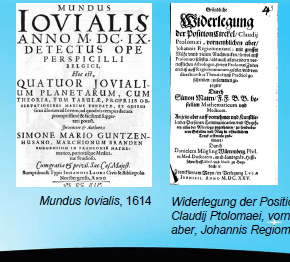
In my last post I commented on the priority disputes that Galileo carried out with other users of the telescope in the early years of telescopic astronomy. Some of his most vitriolic comments were launched from the pages of his polemical pamphlet The Assayer against the Franconian astronomer Simon…
History of Time I: The face of God from ancient cultures to the big bang.
The history of time reflects culture – interconnecting temporal powers, religion and science. For millenniums priest were gatekeeper of time and calendar(s). Now scientists have taken over. Today we are able to contemplate beyond the creation of time, even beyond the big bang. I got the idea to this essay after I read a book, … Continue reading
Jungian archetypes of Nefertiti and the Heretic Pharaoh Akhenaten
Akhenaten (Echnaton) is the most mysterious and interesting of all the ancient Egyptian pharaohs. In the following essay I will try to interpret what little is known about the androgynous pharaoh, who brought down the Egypt empire with his daring cultural and religious revolution, the enigmatic chief queen Nefertiti (Neferneferuaten), and his overpowering mother Tiye. Continue reading
You must be logged in to post a comment.