Category: Contemporary

Contemporary History

  • PTSD and Moral Injury seen from C.G. Jung – Achilles in modern wars

    PTSD and Moral Injury seen from C.G. Jung – Achilles in modern wars

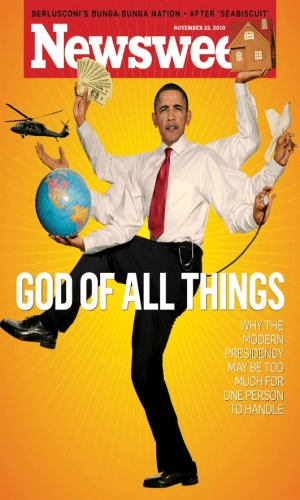
    The Newsweek article “A New Theory of PTSD and Veterans: Moral Injury” was probably the best article I ever read about PTSD – besides Shay’s Achilles in Vietnam. Yes most important factors may very well be moral injury, traumatic events and being betrayed by leadership.  But, there is more  – ethical, Jungian depth psychological and political circumstances:

    • Villains don’t get PTSD: The individual (and its society) has to have moral standards and be reflective to experience moral injury.
    • Adding insult to injury:  Societies project their shadows on the soldiers traumatic events.
    • The line between Good and Evil:  PTSD is an Achilles heel made visible by modern media
    • Serving the Devil:  Differences between societies collective and individual  belief systems – the coming home effect (after winning and loosing) and the authoritarian mass psychology.
    • The contemporary despise of the Archetype of the Warrior – Do nothing, see nothing, hear nothing, and go nowhere, feeling good looking away.

    People never come back from war unchanged.

    I’m glad that the issue for individuals of crossing previously taboo lines of behavior, in the context of combat/trauma, is recognized as a significant factor. The example of the Marine Fox Company is very convincing and the arguments make a lot of sense. Send people to war today and a certain percentage will get PTSD, commit or see war crimes and suffer after coming home. Because war transforms also the country at war. Sometimes with a time delay. It took 50 years (protected by the American soldiers) before European social scientists and media were allowed to stereotype their fathers – all soldiers as war criminals.

    My father, a country boy, who was drafted with 17 during the Second World War, fought basically as “grunt” for his life. He served in Russia until 1945 and subsequently three years longer as prisoner of war in coal mine under very harsh conditions. 1948 he returned to Germany with empty hands, which lost not only a war but any moral standards and cared little about  foot soldiers busying itself with clearing the rubble and starting the Wirtschaftswunder. Nevertheless, he became a good father and husband and raised me fairly well. He told me little about this time, only that he almost got court marshalled two times. Once he was watched laughing over a propaganda poster and one time after a frontal assault of the russians (he was an army machine gunner). Reason was, he had to open his last ammunition box, having killed wave after wave of soldiers driven into the bullet hail by Stalin’s commissars. It was us or them, but his last box unfortunately contained food which he stashed away. But there is always more ammunition.

    Why was PTSD a lesser issue after the 2nd world war?

    It must be todays schism of moral standards imposed on the soldiers and reality – the  increased awareness of rotten political leadership sending them to war. I would argue it is the incredible difference between reality and moral standards reflected as hypocrisy of the society. If we’re serious about ending PTSD we must be serious about our shadow. Yes, there is moral injury, caused in large part by betrayal — not only from a field commander putting career over the lives of soldiers or betrayal by one’s government, namely, being sent to a war based on lies but also by us watching the war on TV projecting our undesired and evil wishes on them. The first duty of the ethically minded person is, from Jung’s psychological perspective, to become as conscious as possible of his or her own shadow.

    The good and the Evil – “good wars” and “wars of aggression”

    I would also argue there have been no “good wars” anymore after the second world war. If – and that’s at least a little  IF – even the Second World War was one. Lets assume it was. Outside of the political correct realm the older Germans remember the American soldiers (correctly) as a kind victor.

    But why did the RAF pilots who executed  ‘Bomber Commander Sir Arthur Harris’s  industrialized burning of German cities and civilians  not develop PTSD? Harris was appointed chief of Bomber Command in February 1942. His first raids were bombing of medieval Lubeck (‘more like a fire-lighter than a human habitation’, in Harris’s words) and the 1,000-bomber raid on Cologne. The Operations Order for the bombing of Hamburg in July envisaged the ‘total destruction’ of the city. And so it did. At least Harris was honest: his aim was to destroy whole German cities and their inhabitants. Others were not. The official British line was dishonest. The fires were far away. So I guess.

    Firestorm-1943: Source Universty of Exter
    Firestorm-1943: Source Universty of Exter

    Not comparing, evil with evil, few Nazis developed PTSD either. Derived from the history of  Nazi Germany, Jung would have to confront the shadow within the larger structures of any society. The ways in which a society is set up, through its laws and customs, has a lot to do with how evil is handled and perceived within its precincts. “Moral man and immoral society,” a concept of Reinhold Niebuhr’s, may be a guide here. Many scrupulous and well-intentioned individuals end up serving the Devil by being good and obedient citizens. And nobody is free of opportunistic strains, some outstanding artists and brilliant experts served dictators more or less knowingly or naively.

    Responsibility and Truth

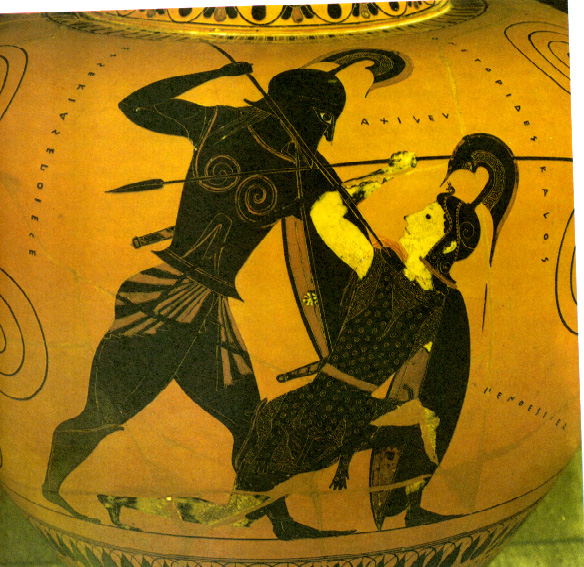
    PTSD is itself not a moral injury. The Newsweek article rightfully does not equate PTSD with moral guilt. It makes the case, that there is a certain kind of (combat) guilt that could exacerbate or even trigger PTSD. The analysis does not blame the victim or smear the character of anyone else who suffers from PTSD. We are each responsible for our actions, but the “monies” who create the conditions and send people to war bear ultimate responsibility. That’s why the Nuremberg Tribunal judges ruled (before pre-emptive strikes became fashionable) that a “war of aggression” is the primary source of all other war-related evils – war crimes and crimes against humanity — flow. Sadly, we all own a piece of the responsibility regarding the latest generation of returning veterans and to believe what stipulates a war of aggression. War and guilt has been topic from greek tragedies, as Dr. Jonathan Shay’s points out very well in his “Achilles in Vietnam”.drshaybookachilles

    Guilt is a reflection of Evil. But what is Evil?

    It seems you need to reflect and to have a soul to develop PTSD, to accept a line between good and evil based on moral standards and coming to the conclusion to have failed on them.

    We need more understanding of human nature, because the only real danger that exists is man himself. He is the great danger, and we are pitifully unaware of it. We know nothing of man, far too little. His psyche should be studied, because we are the origin of all coming evil.(C. G Jung in an Interview , Bollinger Series or YouTube).

    Jung’s question to the problem of evil were:

    • Is the unconscious evil?
    • What is the source of evil?
    • What is the relation between good and evil?*
    • How should human beings deal with evil?

    Surely to him the unconscious is not the source of evil and Jung would answer in the affirmative that, yes, evil is real and it cannot be written off as the absence of good. Evil can inflict injuries indeed. Jung felt that a view like that  Augustin’s who espoused in his doctrine of “privatio boni” underestimated the problem of evil. Jung did not want to be soft on evil, which he thought is part of us. And yet, Jung did not want to see evil as an independent, self-standing and inherent part of nature, psychological, physical or metaphysical. This would lead to dualism. To him Evil is (like PTSD) most primarily a category of conscious thought, a judgment of the Ego, and therefore dependent for its existence upon consciousness:

    With no human consciousness to reflect themselves in, good and evil simply happen, or rather, there is no good and evil, but only a sequence of neutral events, or what the Buddhists call the Nidhanachain, the uninterrupted causal concatenation leading to suffering, old age, sickness, and death.

    The source of what we perceive as evil, then, is a mixture of psychological content (as defined by C.G. Jung as Shadow) and psychological dynamics that allow for, encourage, or require shadow enactments.

    Do nothing, see nothing, hear nothing, and go nowhere – But what is Good?

     chickenhawk-robert-mason-paperback-cover-art
    chickenhawk-robert-mason-paperback-cover-art

    I recently read Robert Mason’s narrative  of his experiences as helicopter pilot during the Vietnam War, “chickenhawk”. He comes across as perfectly decent and reflected person, who wanted to fly, enlisted and survived the war but failed bitterly afterwards in private life. Almost a prototype of the moral injury argument. He functioned perfectly in his profession, get shot at during more than thousand sorties, lost comrades, witnessed cruel violence, was abused by incompetent leadership and coming back home spit at by a society, which fancied the Anti-Archetype of the Warrior. Causes for PTSD include things like child abuse, rape, bad car accidents, or emergency calls. Some people are less prone to experience post-traumatic stress. But the only sure way to prevent PTSD is to do nothing, see nothing, hear nothing, and go nowhere, project all the own aggressions to the veterans – just be good – and let the evil, the “monies”, the Pol Pots, the Mao’s, the Stalin’s, the Hitler’s have their way.

    Religions and pseudo religions

    It has been said God is dead. Dimwits proudly announce on TV, that they are transcendental deaf and the anchoresses roll over in delight. In his reflections on Western religious history in Aion (C,G. Jung CW 9/2), published in the aftermath of the Second World War, Jung interprets the future with reference to the astrological sign of the Fishes. In this Platonic Year (the “aion” of Pisces), which has lasted for two thousand years, there has been an underlying theme of conflict between great opposing forces, which is symbolized in astrology by two opposite fishes. As Jung delineates this history, he sees the conflict as raging between spirituality and materialism (spirit vs. body) and a parallel conflict between good and evil.

    There is in Jung’s work a significant differentiation of collective shadow and individual shadow. At the very end, political correctness may be seen as today’s collective shadow. We want the paradise now and here. Ironically, the nickname of the Fox company was Saints and Sinners, but the concept of sin and confession has been largely discredited blocking to help mortals with the work of shadow awareness and integration. This is left now to a large extent to the single individual, often patched over by pharmacy or drugs. However, the work of confronting evil and dealing with it continues.The wider area of society and politics fanatical ideologies become demonic materialistic or ideological pseudo religions depending for their existence upon abuse of archetypal images, worshiped by the “Never Did Anything”.

  • Presidential debate 2012 part III : Down in the catacombs of C.G. Jung’s collective unconscious

    Presidential debate 2012 part III : Down in the catacombs of C.G. Jung’s collective unconscious

    Thanks to the very unassuming moderation of Mr. Schieffer,  the Monday presidential debate was civilized and pleasant. How boring. Who won? Let’s look in the catacombs of C.G. Jung’s collective unconscious.

    As debates has become more ritualized over the decades, journalists (particular from CNN) have begun to sound like art or sport critics. Contests are analyzed on aesthetic or numerical grounds almost as though they are movies or football games.

    Third presidential’s debate split/smoke screen – The Romney/Obama Siamese twin show

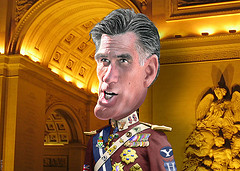
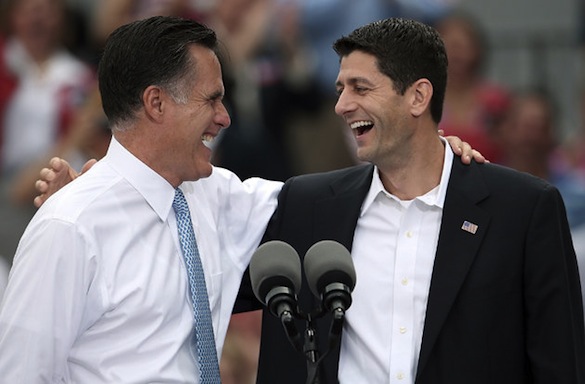
    A consensus emerged among the critics about Mondays debate: The foreign policy debate is a flop: Romney/Obama Siamese twins.The problem with treating politics as stagecraft, particularly this election, is that it mistakes the policies for the play and confuses theater with politics. Maybe not. Theater should provide entertainment, politicians should provide leadership. And it’s at this psychological level that this campaign is singularly confusing. Down in the catacombs of C.G. Jung’s collective unconscious where elections really occur, where the commenters don’t reach, and where the polls can barely penetrate, a mythological struggle is unfolding between two profoundly different archetypal figures: a lost boy who grew up with questions of identity, and a favorite son. Barack Obama, a lonely meritocratic smooth talker and Mitt Romney, from a family of pioneers. They’re even further divided by what they have in common. Both are outsiders, one because of the color of his skin, one because of the nature of his Mormon faith. One is caught in a politically (correct) suitable social worker language, the other in a CEO lingo.

    Mirror worlds

    Both candidates are campaigning in mirror worlds. Obama’s followers (also in Europe) have euphoric tendencies and a proven tolerance for paradox. The idea of “soft power” (killing by drones) makes sense to them, as does the notion that going into debt helps lift a sinking economy. Romney’s vision is a binder of women and balanced checking account, strictly suppressing his faith or any transcendent thought. In C.G. Jung’s Four Functions of Personality Obama is intuitive thinking and extrovert, Romney extrovert and sensing, and their contest strikes us as garbled and annoying because they create dissonances of a Mars and Venus sort of thing.

    Not since John F. Kennedy faced Richard Nixon, a good-looking man against a five o’clock shadow, has U.S. presidential politics united such constitutionally different beings. One man clings to words, the other to numbers. One educated himself by reading books, the other by scrutinizing balance sheets. On the screen, both personas and images (in the narrow meaning) seem almost identical fakes, like Siamese twins.

    I liked Mr. Schieffer’s Obama Bin Laden slip. It was not his fault, however, that it turned into an uninformative and rather anti-intellectual foreign debate. In this state of the race it was predictable that the candiates relied on rhetorics,  repeated soundbites and strayed to domestic economics.

    If you stop drinking the Whine of Change and smoking Hopium

    As usual Obama played ‘commander-in-chief’ card  – his most memorable (and correct) statement was: here’s one thing I’ve learned as commander in chief.. You’ve got to be clear, both to our allies and our enemies, about where you stand and what you mean. Was he the last 4 years?  To his enemies maybe – with the drone policy. To Europe, certainly not. In any case one should stop congratulating Obama for killing Bin Laden. The Navy Seals killed Bin Laden.

    Romney hit more content focused:  attacking me is not an agenda. Attacking me is not talking about how we’re going to deal with the challenges … we can’t kill our way out of this mess…

    Romney came across at least as informed and quick study and held his ground. Romney stated that the weak economy and apologetic policies are national security issue that has weakened America’s standing in the world.

    Hedge Funds Hot for Ailing Greece’s Debt again. Papanicolaou and his predecessor, Christoforos Sardelis, revealed a contract that helped Greece mask its growing sovereign debt to meet European Union requirements.“In secret deals, intermediaries have the upper hand and use it to squeeze taxpayers,” “The bargaining power is in investment banks’ hands.”

    Problem with Obama is, if you stop drinking the Whine of Change and smoking Hopium he has little to show of his first four years than headaches. In foreign policy – especially in the Middle East – he mostly reacted. During the banking crisis November 2008 actually Obama  proped up a financial system that was essentially a dead man walking. Some portrayed his top officials as, in effect, tools of Wall Street . These men and women have “no venality,” Krugman (NYT) hastened to say March 2009 in an interview with NEWSWEEK. But they are suffering from “osmosis,” from simply spending too much time around investment bankers and the like. Details of the administration’s bank-rescue plan  i.e. Troubled Asset Relief Program (TARP) settled on a financial plan that, in essence, assumes that banks are fundamentally sound and that bankers know what they’re doing. It’s as if the president were determined to confirm the growing perception that he and his economic team are out of touch, that their economic vision is clouded by excessively close ties to Wall Street.” When he had his chance to go after the big banks  March 2009 he didn’t touch them, sacrificing Europe (and the US citizens) to the big money complex. Resolving a systemic financial crisis ever since means now recapitalising weak financial institutions and moving their bad loans from the private to the public sector (vulgo taxpayer). The bail out money is borrowed by private banks increasing the deficit that gives him today the only good grade – from the financal system.  One wonders why.

    The election has a serious “B” word hang-up. Barack, Binders, bayonets, Big Bird, Benghazi, Bush, and recently bullshitter:

    The attack in Benghazi was by a spontaneous mob in response to some obscure YouTube video.” #Bullshitter

    You know who’s a #bullshitter? The guy who repackages his failed first term agenda and promises, no really, I’ll get it done this time.

    Not convinced of both.

    If you are satisfied with the next 4 years repeating the previous 4 years, then Obama is your man, if you are serious about something (unknown) not too different choose Romney. Both are in the pockets of Wall Street. The speculative money complex  has a binder full of European and American politicians.

  • Attraction of “Adolf Hitler and Obersalzberg” – shadows of the dictator

    Attraction of “Adolf Hitler and Obersalzberg” – shadows of the dictator

    In September we camped on the lake “Königsee” enjoying a few beautiful Indian Summer days. The Königsee is only a few miles away from Obersalzberg, once Hitlers mountainside retreat. There is now a luxury hotel “Intercontinental” in this area situated above the market town of Berchtesgaden in Bavaria, Germany, located about 120 kilometres southeast of Munich.

    1935 Obersalzberg 

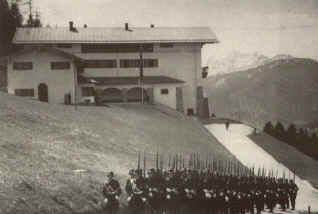
    After 1935 Obersalzberg became very fashionable under the National Socialists top brass and almost a second government district of the Third Reich. Before Hitler owned Haus Wachenfeld (later renamed the “Berghof”), and Hermann Göring a small rustic house there. This photo below shows the Obersalzberg area in the summer of 1936, following the conversion of Hitler’s Haus Wachenfeld into the Berghof. The view is looking southeast, with the Berghof in the center.

    Obersalzberg

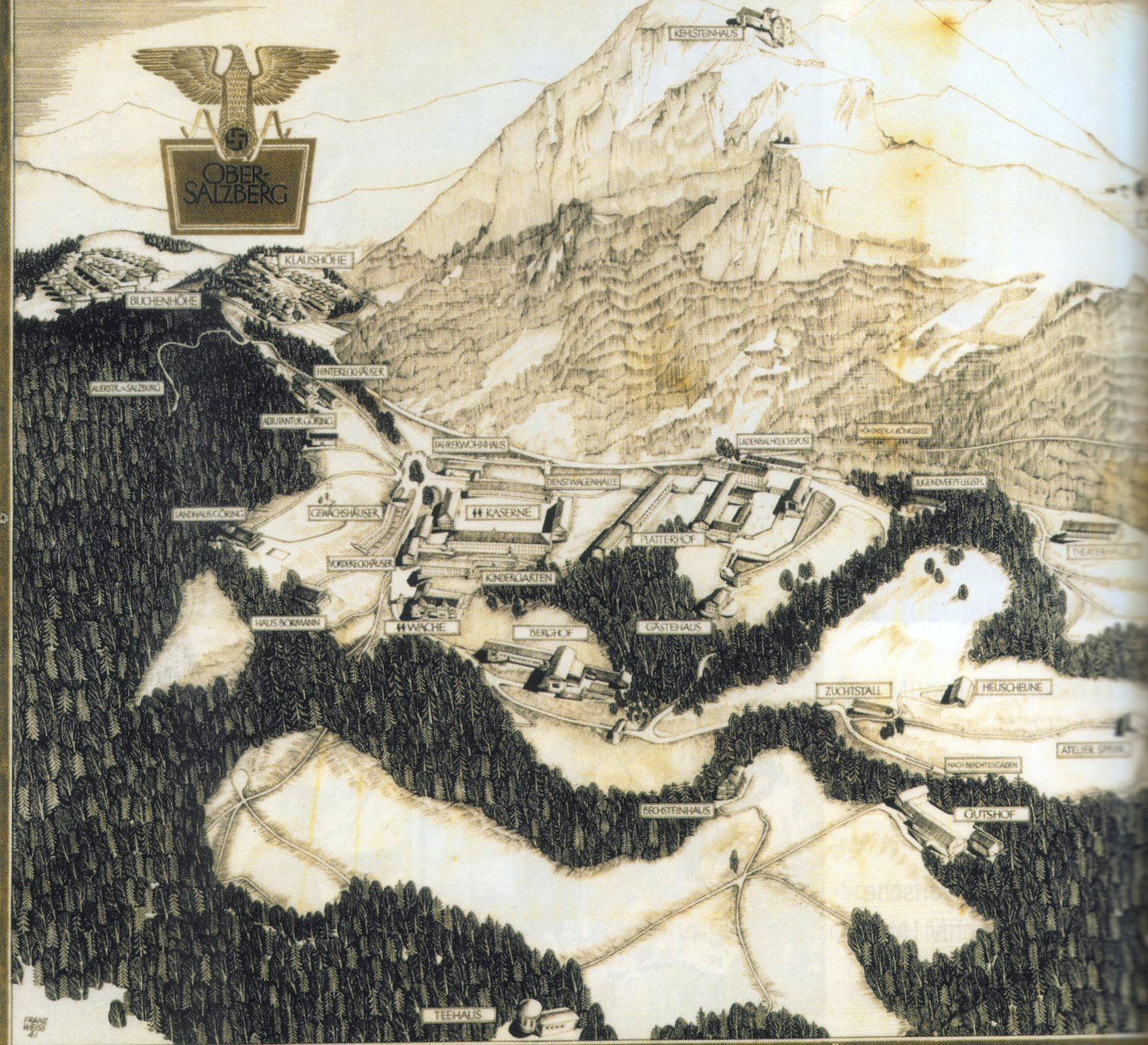
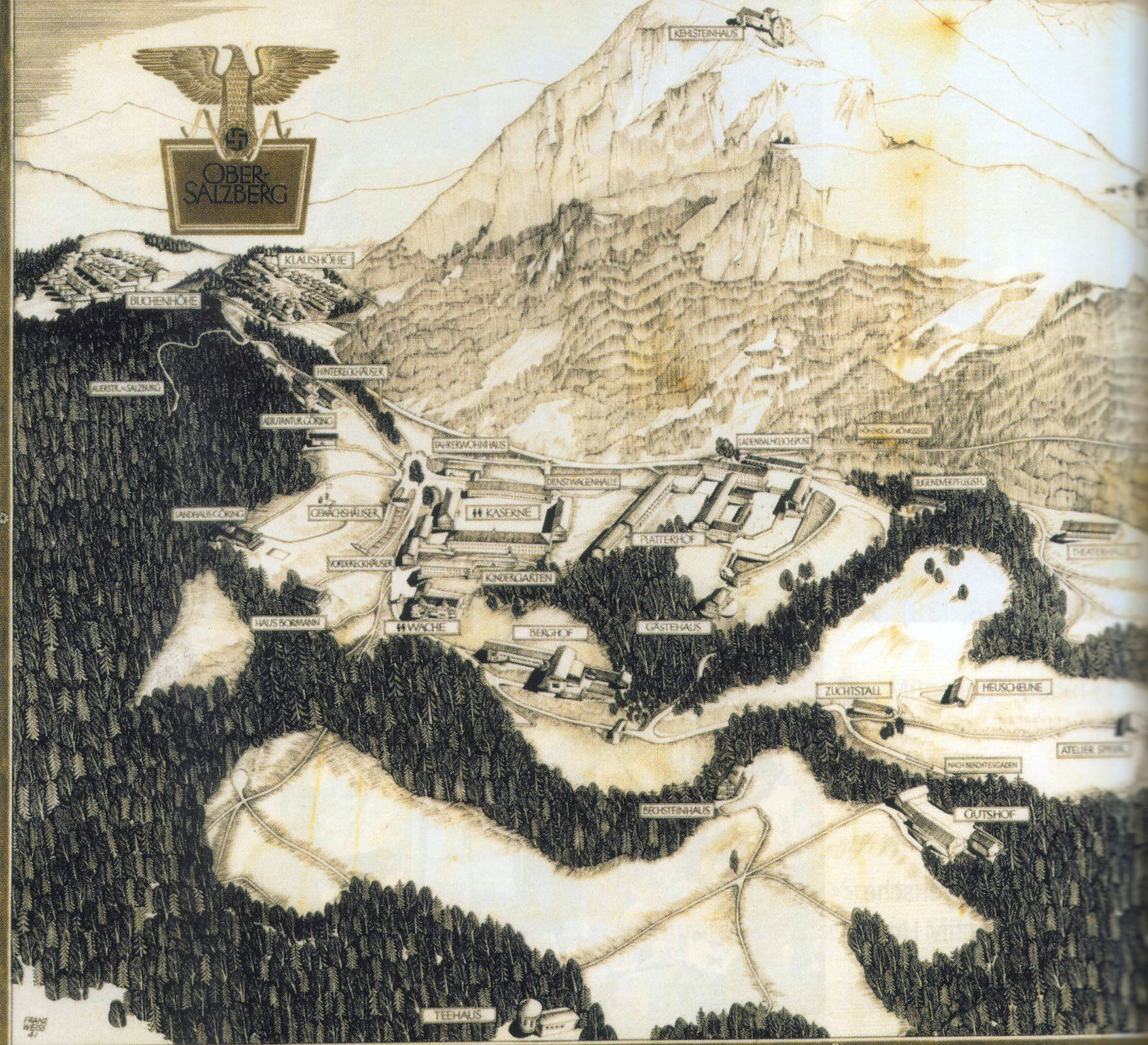
    Later Bormann’s and Göring’s houses, the Platterhof, Gästehaus and Kampfhäusl, the Hotel Zum Türken, an elaborate bunker system, the Kehlsteinhaus (Eagles Nest), SS barracks, the Gutshof, the Teehaus and miscellaneous buildings were built there or bought along with the land. The “purchases” were generous and cheap buyouts, accompanied by arm twisting or substantial threats or plainly disowned.1941 the whole area was completed as the picture below shows (Source: “Die Tödliche Utopie”, Exhibition catalogue of the documentation center).

    1945 Obersalzberg 

    Shortly after the war, “everybody from the US Army and his bother” wanted to visit this famous place and it the area was used by the US Army until it was given back to the Bavarian state. The slide show gives an impression about the surroundings, which is today a natural reserve or nature park with building restrictions like a national park in the US.

    This slideshow requires JavaScript.

    In Obersalzberg is a political Memorial Museum (the documentation center) and the Kehlsteinhaus, known in English as the Eagle’s Nest. It is open to the public and accessible via a breathtaking bus journey and a luxurious brass elevator up through the rock. The Kehlsteinhaus is the last not destroyed example of historic architecture in stunning alpine setting.

    To control the crowds who came to see their Führer and Reichskanzler in his home in Berchtesgaden, SS guards were brought in, barracks had to be built, lodgings for all the workers needed for the construction and remodeling were required, accommodations for important guests were necessary, housing for all the needed staff had to be built, kindergartens for their children. Soon the mountain area was a vast scene of construction, and a high fence was built around the entire area to keep the crowds away.

    berghofcloseup
    berghofcloseup

    Eventually, mostly by design of Nazi Reichsleiter Martin Bormann (who ran the Obersalzberg complex), Hitler’s palatial Berghof (no longer a rustic mountain lodge) was surrounded by a security area from which the common people of the Third Reich were excluded. Some of these buildings can be seen in this 1981 post card, taken from the Kehlsteinhaus almost 3000 feet higher on the Hoher Göll mountain overlooking the Obersalzberg.

    OberSalzbergFromKehlstein
    OberSalzbergFromKehlstein

    Many of these buildings were severely damaged and substantially destroyed in a Royal Air Force bombing attack on 25th April 1945.  Although Bavaria in 1947 tried hard to wipe out the last visible traces of the third of Reich after the partial returns by the Americans and blew up 1952 the remains of the destroyed Hitler domicile, the Obersalzberg is a historical area until now. The 1999 furnished “Documentation Center Obersalzberg” a memorial museum channeled the “wild” Hitler tourism in the sense of a critical – sometimes to obvious – engagement. At the same time, the permanent exhibition inspired the tourist assault on the town, which counts about 150,000 visitors annually. In addition to this permanent exhibition,  temporary exhibitions, lectures and events, and an extensive training programme was designed and is supervised on behalf of the State of Bavaria. The exhibitions offers the possibility to deal with the history of the Obersalzberg area and  national socialism at the historic site. It is good when it stays focussed on Obersalzberg. The title of the catalogue (in German only) is actually misnomer – it is about myths not about utopia – but quite good too.

    Quite a few question were left unanswered though: What has fascinated people in Hitler ever since? And what fascinates them today? If internet is the guide, the longer he is dead, the more about him is thought, processed and reproduced as the incorruptible Google timeline shows. I don’t know why, but I felt a bit uneasy after the exhibition. I was missing something. Something was also not quite right presented. I re-read the catalogue, and then I came to an observation.

    truthIsRelativeSomeTimes I
    truthIsRelativeSomeTimes I

    The inflation time was described by the exhibition almost as a natural catastrophe with children cards, although it was entirely men made. The underlying  reasons and the most important persons like Schacht and Streseman ,solving the crisis, were not mentioned. Dr. Hjalmar Schacht  was the Currency Commissioner and President of the Reichsbank under the Weimar Republic, who later (1930) resigned over disagreements about the reparation negotiations and economic issues with the German government. He fixed pretty single-handed the hyper inflation, to a big degree fueled by foreign currency speculation (besides caused by the crippling reparation payments).The same was true for the deflation time triggered by the Black Friday 1929, which he fixed as well. Schacht, a committed conservative democrat who never been a member of the Nazi Party supported Hitler from 1931 based on the common fight against the treaty of Versailles. He became President of the Reichsbank 1933 again and 1934 Minister of Economics untill he was forced out of the government. Later he went in the resistance against Hitler and thrown in the concentration camp (and from there (!) to the Nuremberg trial).Thirdly omitted was the incredibly economic turnaround engineered from 1934 to 1936. The story in the exhibition went fast forward from 1933 almost starting with the beginning of the war 1941 and the death camps 1942. The time before was hazy, as the structure of the exhibition was organized topic rather than time driven (which makes it easy to confuse people). There is nothing wrong to emphasise on the terrible deeds, but one could get the impression, that totalitarian systems are switched on instantly, like a light bulb and its cruelty and evil intentions are visible to everybody immediately.

     connerie de nobel de la paix, totalitarisme soft, union européenne
    connerie de nobel de la paix, totalitarisme soft, union européenne

    That is not the case, dictatorship may also creep on us with velvet steps and seemingly very reasonable changes, or think blockades (TINA – there is no alternative). Until its to late.

    Today’s Obersalzberg 

    There is generally an abnormal relation of today’s Germans with their Nazi Germany past and the Jews. Germany is still fighting her own shadow, her own suppressed antisemitism with think blockades and disinformation. The diagnosis was summed up once in in two sentences. The first came from the Israeli  psychoanalyst Zvi Rex: “The Germans will never forgive the Jews Auschwitz”.  As de German Journalist Henryk M. Broder, also Jewish, once dryly noted, “Germans remember two things from Jews: that they have tried to eradicate my species, and that they have failed it, which is even worse”. Auschwitz raises thus not only “concern”, but also an incredible shame and resulting aggression. The second statement comes from the journalist Johannes Gross: “The longer  the Third Reich is gone, all the more the resistance against Hitler and his regime is increasing.” He describes the strange retrospective anti-fascism of today’s German society at least in the media and the political theater. The Germans are fascinated by Nazism and deal obsessively with it – only almost always for the wrong reason. It is not progress that people oppose  after decades of repression with the Nazism era.  Usually this involves and provokes only artificial outrage of the cheapest variety a tendency to virtual acts and symbolic reactions. The next Nazis need only to say, “we are the Anti-Nazis”. Totalitarian systems always manage to mask themselves – good and evil is  never neatly separated. How difficult it was, even for highly intelligent people to see through the criminal regime, and how easy it is at hindsight to know it all. Same today, I thought, hiking in this beautiful area.

    Obersalzberg Documentation Center

  • Archetypes of the presidential debate 2012 part I

    Archetypes of the presidential debate 2012 part I

    This US presidential election is a (no-) choice between two similar masks  for the future of America in the the Presidential debate.  But Obama actually  backed off March 2009 when he had some power over the banks and did not touch Wall Street ever since. After that the financial empire became unstoppable and started to attack Europe on its weakest link (Greece) and used subsequently the crisis they induced themselves to take over positions in Europe – essentially taking over Europe.

    The other choice is a more open-ended King Archetype  of entitlement due to personal virtues (or more likely personal wealth) who likes to fire people:

    The Vice Presidents debate left the impression – if not if a father son conflict – at least between an old cynical and a fresh (likable) Hero. The media too likes this sensationalism and the neck on neck horse race at 48%.

    Both President Obama and former Gov. Mitt Romney come with years of history, political and otherwise. One has a history of good rhetoric, and cool if not arrogant attitude. The other has a long history of deception, and ruthless business practices. One event – the media would like us to think it was the first debate – created myth and archetypes. Even the VP debate was influenced by it. Vice presidential candidate Paul Ryan’s workout photos were shot late last year, but Time delayed their release to achieve maximum embarrassment: It published them online just hours before the vice presidential debate, to discredit the young Hero (and make him look foolish).

    time_paulryan_theantihero
    time_paulryan_theantihero

    There is a long tradition of using archetypical images of male candidates—in most presidential races, the only kind—to illustrate their faults. Think of John Edwards fixing his hair, Michael Dukakis grinning from his perch on a tank,

    Michael_Dukakis_in_tank
    Michael_Dukakis_in_tank

    John Kerry windsurfing, and Nixon strolling down the beach in a pair of wingtips.

    These photos gained traction because they conformed with the electorate’s unconcisous idea of who these guys were: Edwards was all ego, Dukakis was a softie, Kerry was effete, and Nixon was the kind of unnatural creepy. And the Time photo shoot squares with Ryan’s vision of himself as Wisconsin’s own superhero, living at the peak of emotional and physical control. All the most powerful ideas in history go back to archetypes,” Jung wrote in his book The Structure of the Psyche. “This is particularly true of religious ideas”, but the central concepts of politics, science, philosophy, and ethics are no exception to this rule.

    Interested in the US election, I asked myself what are the archetypes used in the American election debate. Especially for the election debates pictures seem to be important, because they have a distinct advantage over the language effects: images transport more quickly archetypes than words – although they do – think of “Yes we can” of the last election. A further key stimulus is the (cross/specific) cultural body language, for which every human being has a genetically or by learning established. C.G. Jung drew up a picture of layers from personal unconscious to collective unconscious. He thinks that in all cultures, at all times and everyone was influenced from the collective unconscious expressed by those archetypes e.g. King. Warrior, Magician, The Great Mother, The Temptress, The Hero, Lover, Serpent, Dragon and many more, manifested by symbols. Those symbols are, according to Jung pictorial or gestural manifestations of archetypes.

    These symbols often find themselves in fairy tales, whereof politics is one of them. Jung says psychology was not necessary in the past because all cultures had their rituals and symbols to integrate these archetypes in the conscious living. That seems to be true for Religion, where psychoanalytic sessions replaced the confession. Many psychological problems exist only since there is the psychology before some religions ditched their symbols. However, rituals, the use of symbols, and the experience of the churches were not forgotten by the politics (and the politicians). Jung said also, that totalitarian systems want to replace and also ask for (and receive) religious worship. That was certainly true for Hitler, Mao, and Stalin not to speak of the Roman Caesars or Egyptian Pharos. I believe we move in this direction again also in the secular and so-called democratic states, especially at time of crisis. In today’s debate the Christian Division of good and evil and the symbol of fallen angel Lucifer symbolize the secession of evil from the good. We unconsciously lived this perception. A related feature of archetypes is that, while they shape our perceptions and behaviour, we only become conscious of them indirectly, as they are manifest in particular instances. It is rather like Schopenhauer and Kant’s notion of the inaccessibility of the “thing-in-itself”, upon which Jung drew: you can’t experience archetypes directly but only when they are manifested in symbols and images. Religious believers relate to the archetype of the wise man via the images available to them in their culture (given, for the sake of argument, that wisdom is what Jesus or the Buddha represent).

    But what does this mean? Look of the disastrous readings Obama got from the – traditional left leaning – media after the first election debate, almost a image of the fallen angel Lucifer crossed my mind. We often even do not understand why we reacted this way, and we feel guilty even if we are aware of it. At the case of presidential debates, what we see is an image but of the following plot we unaware. In history stories arise and figures emerge which made or broke the bid of presidency. One should interpret this flood of images and, it’s about experience the unconscious and not to interpret, because the unconscious is not fully open to rational analysis, logic, or form in otherwise. The most important task is to understand the dualism of good or evil in us. With other words we have to differentiate between Ego and Persona and recognize our Shadow and our Animus/Anima.How far you might want to follow Jung along this path is up to personal (i.e. cultural) experience. The shadow is a useful concept to many, as that side of our character which is often buried and sometimes, suddenly emerges. The notion of the animus and the anima, say, evident in Taoism.

    Seen from Europe, now what is the difference of the two presidential Egos in psychological terms after removing the mask? Answer, Nil.   Mitt Romney ran hard and successfully to the centre, and the president’s pathetic overall performance in the debate mirrored his economic performance the last four years.The same pathetic motivation speeches, but this time with bad bottom line economic figures on Obama’s watch. I have to admit, I liked the rhetoric four years ago, but it has become stale. The magic authority, his wisdom and magical transformation mantra (Yes we can) was not there anymore. Mitt Romney won the debate because he actually at least gave a convincingly impression, that he understands the issues and knows how he’s going to tackle them, not just presenting some empty rhetoric like Obama. Substance won over form, for a change. President Øbama was smart enough not to touch Wall Street the last four years, instead he left his US voters on dire street and supported the neo-con agenda in Europe to get better numbers at home  In foreign affairs, we will see. There Obama has not more to show, than his (correct) drone and terrorism strategy (i.e. Osama Bin Laden). That is not little, but in Europe and the Middle East he did not well and China does not take US (fiscal) policy serious anymore, working on plan B.

    This election is, as has been said, a (no-) choice between two similar masks (Persona) who both hide  by a plutocracy of wealth and corporate power; underway for 4 years by President Empty Chair or incoming President Cooperate Raider. Both  means that government would no longer serve the interests of the community but collaborate with their clients to establish a separate set of laws that entitle them to preferential treatment while creating barriers to competition by eliminating opportunities for others.

    The King seemed more centrist and plausible at the debate is because he crafted an exceptionally smart and pointed attack against the President’s record, and that stood in stark contrast to the lame deceptions of the Great Mother’s 30-second ads, sound bites and false and mischievous spin if the opposition intention. Mitt played actually quite reasonable and sophisticated the King’s role. For many Americans – including in my family – it was the first time they got a good impression of Mitt, and we will see if he can continue to ride on the white horse as the election approaches. Paul Ryan comes across young and authentic – not a superhero. He has potential. President Øbama was not helpful – if present at all – in Europe’s crises, Mitt could only be improvement but than he needs a steep foreign policy learning curve.

    Note October 16, 2012 – to be continued With no podium to hide behind in Tuesday’s debate, the candidates’ style and body language will be in the spotlight. In the shadow always wins the bank.

  • The evil sentence “The games must go on” 1972 and 2012

    The evil sentence “The games must go on” 1972 and 2012

    Yesterday there was a memorial service in Fürstenfeldbruck for the victims of the terrorist attacks in during the Olympic Games in Munich on the 5th September 1972. Nine hostages were killed in the attack and a police officer died. I took the effort to see live in BR, local provincial TV. The world/CNN did not care.

    There was a remarkable – and understandable emotional  – speech of Mr. Graumann, President of the German association of Jews. Grauman stated that the sentence “the games must go on” by IOC President Avery Brundage “was cool and cold” disregarding the victims. So was the decision of the International Olympic Committee (IOC), to refuse the “minute of silence” during the opening of Olympic Games to appease Arabic interests. I do agree with this but for other reasons. The decision to continue the games after a short break 1972 was a political wrong decision, giving the impression that in the West money stands high above moral and human lives. 2012, yes that seems more correct than ever.

    Munich’s Mayor Christian Ude asked for fairness – despite the obvious shortcomings of the authorities the “exclusive guilt of the “perpetrators” should be remembered. The deeds of the Palestinian terrorists should never been be forgotten nor excused. I do agree with this as well. Besides of the dilettantism of the German authorities, the Israeli authorities were indirectly involved in the disaster of Munich. A Government’s internal government report said that in particular the Israeli Embassy in Bonn was “responsible for the fiasco”, since the security officer of the Embassy would have to ask for a security concept by the German authorities for the Israeli Olympic team. Journalist and intelligence expert Yossi Melman : “two things have surprised me: first, that there was evidence of the attack, though no concrete –  ten days before the attack and this is the biggest surprise – no efforts were made to protect the Israeli team.” Recently we know, German authorities had the information too.

    Both, Mr. Graumann and Christian Ude connected Munich 1972 with Berlin 1936.  Mr. Graumann stressed the  continuation via Avery Brundage (IMHO  referring to some major dissent between IOC and Jewish organisations 1936 and an issue 1972 about the appointment of Leni Riefenstahl as a photugrapher) whereas current Munich’s Mayor Christian Ude used the discontinuation (contrast to 1936) as an excuse not providing not enough police. I politely disagree with both. The terrorist gave 1972 Munich its famous five minutes of Andy Warhol and Munich and Germany failed utterly. It was a trailer of today’s Mama state lacking any warrior archetype.

    The West failed 1936 and 1972, ignoring its values, not understanding the evil paradigm. Brundage, like many others in the Olympics movement, initially considered 1934 moving the Games from Germany. It then emerged victorious from the 1936 Olympiad. Its athletes captured the most medals overall, and German hospitality and organization won the praises of visitors. Most newspaper accounts agreed  with The New York Times that the Games put Germans “back in the fold of nations”.  Broad acceptance continued well after the Olympics with the international release in 1938 of Olympia, Leni Riefenstahl’s brilliant film documentary of the Games which won many international prices. It is still true, what Avery Brundage, president of the American Olympic Committee 1936, stated: “The very foundation of the modern Olympic revival will be undermined if individual countries are allowed to restrict participation by reason of class, creed, or race.” But if some threaten to stay away – as 2012 – let them.

    As a Munich native I feel sad for the victims of the terrorist attacks and that 1972 Munich was not a better host.