Tag: Rezensionen

  • Art Symbols future and past – Ernst Ludwig Kirchner 2014 and 1937

    Art Symbols future and past – Ernst Ludwig Kirchner 2014 and 1937

    Reminds me of Beckmann
    Symbols to mask connotations that are unclear or hidden

    Now, what is art anyway? Ernst Ludwig Kirchner’s art works are symbolic patterns, which have connotations that are unclear or hidden. They may have interferences  with the Zeitgeist and references to the past, both integrated through and with  the individual artist’s situation at a given moment. Art, like the symbol has a future in a psychoanalytic sense.

    To the psychoanalytic C.G. Jung, a symbol is a real instance of a collective or personal archetype from the past. The past does not suffice to interpret it – neurologically speaking, everything beyond 3 seconds, is considered future to our brain. The current exhibition by the  “Pinakothek der Moderne”, using UV, infrared and X-ray images, make signatures and overpainting visible and to give a comprehensive insight into the working process of the artist.  We see by those means the past of an art work. Good art at the time of creation in its environment is encrypted future. So this essay is about past, present and future of Kirchner’s art work – 2014, 1937 in Munich.

    Short excursion to history. Kirchner must have love-hated Munich. 1937 there was a opening of two exhibitions in Munich, the first “Great German Art Exhibition” in the then newly built “Haus der Kunst” and the “Degenerate Art” exhibition in the Hofgarten,  it was ultimately the shunned modern art which triumphed. While the artificially created chaos of the “degenerate” art show – which included Kirchner’s work, who lived in Switzerland already –  provided viewers with a unique overview of modern German and international art and got 2 million visitors, the properly displayed paintings and sculptures in the light-filled halls of the “House German Art” showed merely mediocre, provincial works, art that was not, like Hitler promised, revolutionary, but rather aesthetic primitively politicized. 

    Fast forward to 2014. The German Expressionists Ernst Ludwig Kirchner and the Norwegian Edward Munch are my most favourite painters. Although Kirchner played a determining role as a pioneering “bridge” Artists for the color revolution at the beginning of the last century, he was scarcely been recognized as the cunning “color man” he was (at least to me). Particularly photographs, but also drawings, sketchbooks, prints show Kirchner’s multi-talented cross-media design and give insight to his private life. Major loans from many museums in Europe, especially from Switzerland, as well as high-ranking German and Swiss private collections help quite a bit, because Munich for various reasons has had not as many “Kirchners” it should, although this has been getting much better lately. For the first time, both sides of selected double-sided painted canvas were made accessible. Handwritten revisions allow to present another unusual practice of Kirchner: The correction of his earlier work and the adaptation to his current style. The stunning Kirchner exhibition gives insight in his systematic way to color and his confrontation with the controversial tradition of color theory. Basis of the presentation is a joint research project, which was conducted by the Bavarian State Painting Collections in cooperation with the State Academy of Fine Arts in Stuttgart and the Kirchner Museum Davos in Switzerland to examine systematically Kirchner’s painting technique.

    IMG_20140803_131200_bearbeitet-2

    Ernst Ludwig Kirchner studied  art in Munich at the Kunsthochschule. Though critics have often tied Kirchner to influences such as Fauvism (Matisse in particular), Cubism, and Post-Impressionism, the artist himself always denied the influence of others. True, while Kirchner shows a very subjective response to reality and bold, undisguised brushstrokes and vibrant colors those did not come directly from the tube at all. Nor were they spontaneous – Kirchner was a pioneer new tar (artificial carbon) colours and he uniqely himselfprepared the canvas and mixed them with wax an cleaning solution to get the results he wanted. Like Klee he digged in colour theory als physically shown nicely in the presented dancing scenes. The Fauvist movement and German Expressionism, both projecting  indebted to the same late nineteenth-century sources, especially Van Gogh. Hoewver, the French were more concerned with the formal aspects, while the German Expressionists were more emotionally involved in their subjects.

    In 1905, Kirchner became one of the founding members of the “Die Brücke” group of avant-garde artists. These artists worked together to develop cross-media skills in drawing, painting, woodcut and lithography. Even when the design was based on his paintings, Kirchner’s preparation of the matrices and often hand-coloring of the prints, made each print became a unique artistic work. Their group lived counter culture, Kirchner’s studio was real bohemian, full of paintings lying all over the place, drawings, books and artist’s materials — much more like an artist’s romantic lodgings than the home of a well-organised architecture student, a place without social conventions to allow casual love-making and frequent nudity. Kirchner moved to Berlin in 1911, where he produced his most forlorn street scenes, such as the painting, “Potsdamer Platz” and the related woodcut, “Women in Potsdamer Platz”. The city facinated him, in particluarly varite, circuse and – dancers. Many of his friends and models were dancers, Erna and Nina Hard and/or very young women.

    Like Lina Franziska Fehrmann (1900-1950), the adolescent model for Seated Girl, who met Kirchner in 1910. She and her siblings regularly posed for artists in the Die Brücke group. Today Kirchner most likely he would share the fate with Roman Polanski. The painter’s point of view as an expressionist is summed up in a letter which Kirchner wrote to his friend and dealer, Curt Valentin, in 1937 – oned year before his suicide “Dear Mr. Valentin,. . . Did you know that as far back as 1900 I had the audacious idea of renewing German art? Indeed I did, and the impulse came to me while looking at an exhibition of the Munich Secessionists in Munich. Their pictures were dull both in design and execution, the subjects uninteresting, and it was quite obvious that the public was bored. Indoors hung these anemic, bloodless, lifeless studio daubs and outside life, noisy and colorful, pulsated in the sun. In those days I was a strong and healthy lad, not like I am today when the spirit is still active but the body often fails me. I was filled with the desire to try and grasp what they had missed; I did and I am still doing so today.“

    Not only were teenage models somehow more “authentic” than adults, they also had the advantage of being much more sympathetic to artists. Girls’ slender, nearly hermaphroditic bodies could be sexual without being exploited. Much art was in effect allowing artists to run through feelings on paper or canvas before committing to full-fledged adult relationships. In this respect, the Kirchner’s teenage nudes constitute one component in the process of identity formation as he, like almost all the Expressionists, were in their twenties when he executed his breakthrough works.

    After the separation from the Brücke Group 1913 he established an individual artist identity. Despite Kirchner’s artistic success during the Berlin years, identity crisis hit the troubled artist. His neurosis may be largely influenced, like those of C.G. Jung and Herman Hesse by the impending war, which all three had viewed with a tragic sense of foreboding and fear from the outset. According to the psychoanalyst C.G. Jung, the unconscious expresses itself primarily through symbols. Although no specific symbol or image can ever fully represent an archetype (which is a form without specific content), the more closely a symbol conforms to the unconscious material organized around or in us, the more it evokes a strong, emotionally charged response. The symbol has a very complex meaning because it defies reason; it always presupposes a lot of meanings that can’t be comprehended ill a single logical concept. The symbol has a future. The past does not suffice to interpret it, because germs of the future are included in every actual situation That’s why, in elucidating a case, the symbolism is spontaneously applicable for it contains the future. Jung is concerned with two kinds of symbols: individual and collective. By individual symbols Jung means “natural” symbols that are spontaneous productions of the individual psyche, rather than images or designs created deliberately by an artist. In addition to the personal symbols found in an individual’s dreams or fantasies, there are important collective symbols, which are often  images such as the cross, the six-pointed Star of David, and the Yin Yang symbol. Symbolic patterns and images represent concepts that we cannot completely define or fully comprehend.

    In a state of nervous anxiety, and fearing that he would get called up, Kirchner began to drink absinthe and developed an increasing dependency on sleeping pills and morphine. He volunteered to the Great Wat, but was discharged after a complete nervous breakdown. Due to mental deterioration, Kirchner emigrated 1917 to Switzerland and was admitted to the Bellevue Sanatorium and became patient of the psychoanalytic Ludwig Binswanger, whose patients  included illustrious names: the Russian dancer Nijinsky, the actor and director  Gustaf Gründgens and many others. Ernst Ludwig Kirchner made 22 woodcuts there.

    He settled finally in the Swiss mountains near Davos.  He remained in a log cabin for the rest of his life, receiving medical treatment at regular intervals. Although he continued to paint this inspired him to depict alpine scenes of mountain farmers, rather than the urban milieu of Dresden and Berlin.  His reputation grew through the rest of the decade; he became a member of the Prussian Academy of Arts in 1931. By this time, all the major museums of modern art had acquired works by him and he was regularly included in exhibitions. That changed after the Nazis came to power in 1933.

    Kunst

    In October 1991 a Los Angeles art show – tentatively titled ”1937: Modern Art and Politics” paied homage to the artists the Nationalsozialists attemped to degrade. Of the 650 works exhibited by the Nazis in Munich only 150 appeared in there.
    During the eighties and the early 90ties I lived in California and ha a chances to see the restaging of the Munich “Degenerate Art” exhibition at the Los Angeles County Museum of Art.
    The original exhibition Degenerate Art” first  opened in Munich on 19 July 1937 and showed 650 works of art confiscated from 32 German museums. By April 1941, the show had  travelled to twelve other cities and attracted over 3 million visitors. This ”Entartete Kunst,” or ”Degenerate Art,” was displayed the Nazis with the aim of demonstrating the ”immoral” influence of the avant-garde on German culture. Besides denouncing the great artists of the avant-garde, it disparaged Picasso, Wassily Kandinsky and Paul Klee and  hundreds of others whose work was considered ”un-German.” Jews and communists, abstract pioneers, and especially the Expressionists of the “Die Brücke”were condemned as sick, poisonous artists. It was one of the most infamous exhibitions of the 20th century; it was also one of the best from contents and best attended. And its effects are being felt even today – numerous paintings in that show had been sold worldwide. That is the reason that one needs to travel, if you like German expressionists. A total of 639 works by Kirchner alone were identified as “degenerate” by the Nazis and subsequently confiscated from museums, before being sold abroad or destroyed, prompting the first thoughts of suicide in Kirchner. In 1938, soon after Nazis annexed Austria, Kirchner becomes increasingly paranoid, destroys some of his works and finally committed suicide. His longtime companion Erna, gets legal custody of his work and stay in the cabin until her death 1945. Ironically, in a Fahrenheight 451 even,  customs police recently discovered in Munich  an unimaginable artistic heritage of classical modernism. A cache of approximately 1,500 saved painting by Picasso, Matisse and others which were hidden in the apartment of a 80year-old including many works that had been confiscated by the Nazis.


    Contemorary_20140803_140218_bearbeitet-1
    Contemporary modern art. Forgot name and artist….

    While I strolled out of the special exhibition I saw this gray painting of contemporary art. If this reflects our life, watching wars on TV, why art today seems to be void of any despair I feel in Kirchner’s work? It is easy to point out the psychologically disturbed or cynical players who learn to manipulate the system to get their fifteen minutes or a nice big check from a foundation, or the hangers-on who play the game in order to get invited to the right parties. But every human field of endeavor has its hangers-on, its disturbed and cynical members, and they are never the ones who drive the scene.

    The question is: Why did cynicism and commerce come to be the game you had to play to make it in the world of art? By now the main themes of modern art are clear to us. Standard histories of art tell us that modern art died around 1970, its themes and strategies exhausted, and that we now have more than a quarter-century of postmodernism behind us. The big break with the past occurred toward the end of the nineteenth century. My take is that post-modern art never challenged political powers like modern art did. Edvard Munch got there first (The Scream, 1893): If the truth is that reality is a horrifying, disintegrating swirl, then both form and content should express the feeling. Kirchner, C.G. Jung, Herman Hesse got there felt it and many others. Francis Coppola and Oliver Stone felt it.If the truth is that reality is fractured and frightening, then both form and content must express that.  If the truth is, that reality is unintelligible, then art can teach this lesson by using realistic forms against the idea that we can distinguish objective reality from irrational, subjective dreams. It has always been my understanding that the truest definition of art is something that touches us in some way,emotionally, or makes us think.That needs skills and hunches. I still adhere to this.
    Artistic revolutions are made by a few key individuals. At the heart of every revolution is an artist who achieves originality. A novel theme, a fresh subject, or the inventive use of composition, figure, or color marks the beginning of a new era. Artists truly are gods: they create a world in their work, and they contribute to the creation of our cultural world.Throughout the history of art it seems that a any new artistic movement is born of a rebellion against its predecessor.  have seen many artists in recent years seemingly create for the shock value. Many times it comes across as simple disrespect and disdain, perhaps revealing the insecurities and psychological devils of the creator. I have always had a problem with a select few dictating what is art and what isn’t art, when it is a very personal thing.  The Greek said: beauty cannot be evil. Keats said it: beauty and truth. What to move on to next? Perhaps the pendulum will always swing back. This world could use more focus on beauty and truth at the moment. And no, it’s not a celebrate  beauty. And we should have expectations of art. Art is future coded in symbols.

    As always, pictures if not indicated otherwise are mine but can be used giving proper credit.

    • Kirchner Museum Davos
    • The Brücke Museum, Berlin
    • Ernst Ludwig Kirchner, Mountain life, Kunstmuseum Basel
    • Ernst Ludwig Kirchner,in Berlin, Brücke Museum Berlin 2009
    • Expressiv, Albertina Wien
    • Expressionisten, Sammlung Bucheim, München
    • The Museum og Modern Art, New York
    • The Expressionists, Thames and Hudson
    • Farbenmensch Kirchner Link

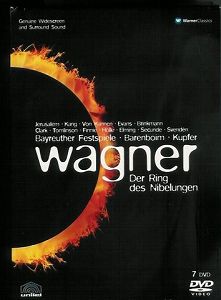
  • Wagner Ring Cycle – so called Kupfer Version at Bayreuth (German).

    Wagner Ring Cycle – so called Kupfer Version at Bayreuth (German).

    Harry Kupfer’s Wagner Ring Cycle, particularly its opening conception of Die Walküre. Kupfer’s Bayreuth Ring demonstrates that radical abstraction need not obscure Wagner’s dramaturgy. His minimalist stage language consistently serves a single conceptual idea. One may disagree with his interpretation, but it remains internally coherent. Compelling theatrical images arrive at an equally clear interpretative centre.

    In Harry Kupfer’s legendary Bayreuth Ring production (1988–1992, designed by Hans Schavernoch), the traditional World Ash Tree (Weltesche) in Die Walküre was reimagined within a bleak, post-apocalyptic universe.

    Ich maße mir nicht an ein Kunst- oder gar Wagnerkritiker zu sein. Es geht um 7 hochwertige DVDs und ob diese Bayreuth und Wagner korrekt abbilden. Die Antwort ist, ja unbedingt.
    Die Neuauflage der Produktion bietet Breitwandformat und Surroundklang, so dass die Aura Bayreuths zumindest technisch ins Wohnzimmer übertragbar ist. Wagnerliebhaber – und solche wie ich die es werden wollen – sollten hier nicht vorbeigehen. Günstiger kann große Kunst nicht erfahren werden. Sowohl Kamera als auch Ton sind von hoher technische Qualität und das Orchester und die Stimmen in optimaler Balance. Die Darsteller des Bayreuther Rings haben wie zu erwarten Weltklasse, allen voran Siegfried Jerusalem als Siegfried, dramatisch Anne Evans als Brünnhilde und der starke Bass Philip Kangs als Hagen überzeugen. Die Nahaufnahmen, welche die Kameraperspektive ermöglicht, zeigen die Gestik alle Protagonisten allerdings teilweise in sehr gewöhnungsbedürftigen Kostümen. Die musikalische Leitung Barenboims wurde seinerzeit groß bejubelt und gefeiert – meines Erachtens nicht zu Unrecht. Barenboim hat Kupfer bis an die Grenze des vom Gesang her Möglichen nachgegeben – es wird gerannt, gelegen, geklettert, gerutscht, gekniet. Parallel zur Oper lese ich ein Buch des Kunsthistorikers Richard Wagner’s Robert Donington ‘Ring des Nibelungen’ und seine Symbole: Musik und Mythos. Er zitiert in der Einführung Richard Wagners Bemerkung sinngemäss: “Ein allzu offenes Aufdecken der Absicht stört das richtige Verständnis durchaus: es gilt im Drama – wie im Kunstwerk überhaupt – nicht durch Darlegung der Absichten, sondern durch Darstellung des Unwirklichen zu wirken”. Anders gesagt, Kunst kann durch sich selbst überzeugen. Ich kein Freund der unbedingten Werktreue, aber mit der Bühnenbildgestaltung durch Hans Schavernoch und der Inszenierung Harry Kupfers kann ich mich anfreunden. Wenn ich mich auf den Begriff Regietheater mal einlasse, sollte es besser Musiktheater heißen, mit guten Regisseuren und klugen Dramaturgen. Die Regie sollte nicht vorne stehen.
    Bei Wagner frage ich Simpel mich zudem immer, transportieren die Inszenierung die Bilder der Symbole und Mythen in der ganzen Vielschichtigkeit? Ein klares Ja, bei der genialen Laser Unterwasserszene in Rheingold (die den Ton störte), geschieht das hier immer. Die Götterdämmerung ist ganz besonders beeindruckend.
    Ein durchgängiges Moment des Regietheaters im negativen Sinne ist ja der pädagogische Zeigefinger: man will aufklären, erklären, den wahren “Gehalt” des Kunstwerkes zeigen, den Komponisten und Textdichter besser verstehen als der Bildungsbürger (der ja dafür zahlt), die Wichtigkeit des Werkes für heute zeigen. Letzteres ist ja auch in Ordnung. Zwei Kinder suchen den Weg aus der Katastrophe und ziehen von der Bühne.
    Die Konzeption des Gesamtkunstwerks der Ring entstand zur Zeit zwischen 1850-1890. Diese Epoche ist durch die Erstarrung des Bürgertums nach dem Scheitern der Märzrevolution (1848). Dies Erstarrung der Bürgertums – oder was heute noch davon übrig ist – und die Kapitalismuskritik Wagners ist heute aktueller den je. Andreas Kriegenburg im derzeitigen Ring im Nationaltheater München transportiert Wagners Metaphern meines Erachtens etwas besser. Trotzdem, unbedingt hörenswert, sehenswert – ganz besonders wenn man minimalistisch mag,

  • Mao’s great famine – Our blight is ideologies — Revolution is not a dinner party.

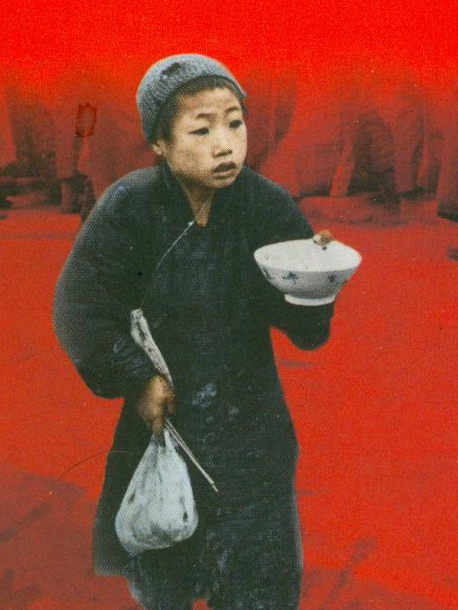
    Mao’s great famine – Our blight is ideologies — Revolution is not a dinner party.

    When I worked in Beijing during the late nineties I got invited by a local resident consultant (an expat) to a dinner party at a very chic ethnic event restaurant.  Mao’s great famine was long forgotten. My colleague was a little bit esoteric, but knew her city. There was good food and even a better spirit.  Expats and local people from all over China would  dance after work together, even onetime doing some kind of polonaise. The open spirit, however, became immediately sober when a Mao Zedong-imposer entered the stage. The faces of the Chinese colleagues, of all Chinese, froze and some timidly touched the fabric of the actors costume, 20 years after Mao Zedong’s death, as if to make sure that “he” will not come back.

    Recently, more than ten years later,  I read the book of Frank Dikötter  Mao’s Great Famine: The History of China’s Most Devastating Catastrophe . The book was selected as one of the Books of the Year in 2010 by The Economist, The Independent, the Sunday Times, the London Evening Standard (selected twice), The Telegraph, the New Statesman and the BBC History Magazine, and won the 2011 Samuel Johnson Prize for Non-Fiction, Britain’s most prestigious book award for non-fiction.

    Between the years 1959 and 1961, 30 to 45 million people were starved, killed or worked to death as a result of Mao Zedong’s failed attempt at industrialization in this period of the great leap.Frank Dikötter researched the catastrophe for years and documented his findings. It was h highly centralized mismanagement that can lead a country to disaster. All checks like tradition, family and religion were swept away leaving everybody, particularly the weak,  exposed without restraint to cruelty, pure arrogance, boundless ignorance and a merciless disregard of farmers, workers and even party members.

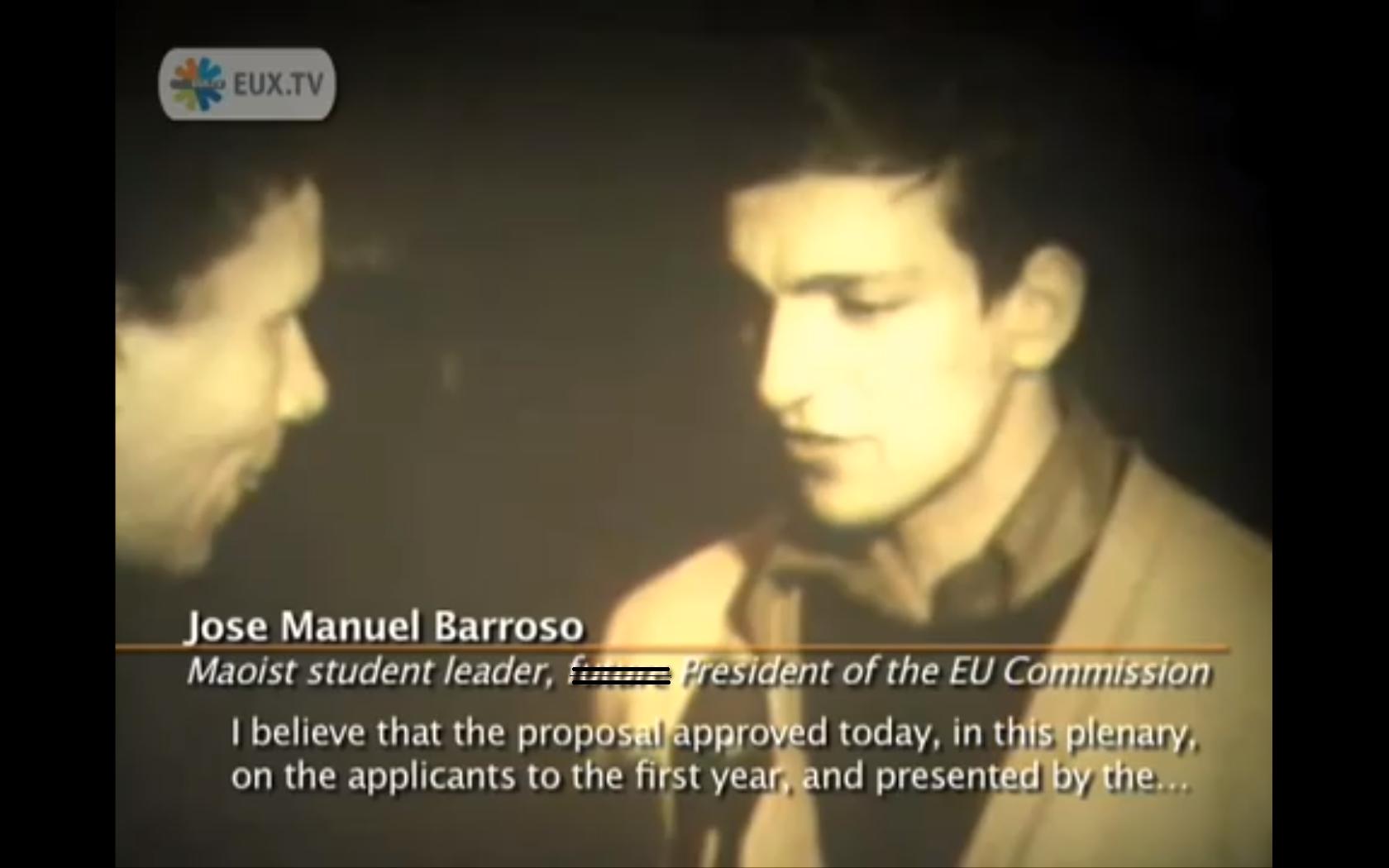
    I just knew just the basics of the big leap and the subsequent famine that hit the People’s Republic around 1960.  But Dikötter’s painstaking research using newly opened local archives makes his estimate all too credible  that the death toll reached 45 million people. The book opened my eyes, as the man-made disaster was on the scale of the Nazis, Stalin and Pol Pot, but different in a way as the intend supposedly was good in a “we know better” attitude. When I read the book , I was reminded to the bureaucracy of the European Union. We don’t get killed and starved yet (although the latter does happen in Greece), but the propaganda and the arrogance of the EURO-phil bureaucracy are very much the same. It is no coincidence, that many of the former and current EU leaders, those who pushed Maastricht treaty or the never ending crises measures through against all good advice of experienced experts, were former admirer of Mao or even active Maoists. Their leadership performance during the EU crisis is of striking similarity, mismanagement  runs Europe against the wall and destroys all tangible and non tangible assets.

    Dikötter provides a detailed list of the degree of suffering this “Great Statesman” unleashed and the inhumane manner in which his apparatus operated. Horrors pile up as he tells of the spread of collective farms and the vast projects that caused more harm than good and involved the press-ganging of millions of people into forced labour. As the pressure mounted to provide the all-powerful state with more and more output, the use of extreme violence became the norm, with starvation used as a weapon to punish those who could not keep up with the work routine demanded of them. The justice system was abolished. Brutal party cadres ran amok. “It is impossible not to beat people to death,” one county leader said.

    The inefficiency, waste and destruction in China were of course even more  gigantic. The masses in whose name the Communist party claimed to rule were eminently disposable. The economic campaign used farmers and industrial workers as fodder expected to sacrifice themselves for the cause dictated from on high purposefully trying to get rid of the weak,the women, the children, the elderly. Cannibalism and people eating mud in search of sustenance, was the outcome of the famine caused by the Great Leaps failure and the diversion of labour from farming.  Initially launched to enable China to overtake Britain and Russia, Mao’s programme took a deadly turn, In order to maintaining food exports when the country was starving, the slogan was: “When there is not enough to eat, people starve to death. It is better to let half of the people die so that the other half can eat their fill.”

    The book gives the details, but is extremely clearly written and presents the facts very structured: (1) The pursuit of Utopia;  (2) Through the Valley of death;  (3) Destruction;  (4) Survival; (5) The Vulnerable;  (6) Ways of Dying;  The book starts slow and becomes a page turner but can also be accessed afterwards via a good index.  It describes thourougly the Sino-Soviet split, and Mao’s tricks to blame the Russians ( and other factors) for his own doing,  after it was too late and the truth could not buried any more. As family bonds and every decency broke down, basically the whole country became one contraction camp. Methods were used in the cities, just like by the IG Farben in the second world war, working people to death in an unhealthy environment without pay and sometimes without food locked in the factory. Often there was not a direct intend to kill, but human were abundantly streaming to the factories. On the countryside  dissidents or underachievers, even people who digged one potato  became literally fertilizer. Kids were conveniently lost by mothers, women had to prostitute themselves or were routinely raped by local authorities routinely in some provinces .

    The Cultural Revolution is widely remembered, the Great Leap much less so. When Maoists launched the Cultural Revolution in 1966, the  Red Guards had little new to learn, as Frank Dikötter states. Stability returned to China with the Maoists’ ouster in the late 1970s. Having gone through those two experiences, not to mention the mass purges that preceded them and the Beijing massacre of 4 June 1989, it is little wonder if the Chinese of today are set on a very different course that rejects ideology in the interests of material self-advancement but also religion is on the rise.

    As soon as people get together in masses and submerge the individual, the shadow is mobilized, and, as history shows, may even be personified and incarnated. Carl Gustav Jung , The Archetypes and the Collective Unconscious , Collected Works, 9/1, par.478

    It is in this context it is  interesting to consider is Jung’s point of view toward religion in general, and his various attitudes with regards to fanatics and totalitarian ideologies and states: “Of course, it is not a spiritual religion in the sense in which we ordinarily use the term. But remember that in the early days of Christianity it was the church which made the claim to total power, both spiritual and temporal! Today the church no longer makes this claim, but the claim has been taken by the totalitarian states which demand not only temporal but spiritual power”.

    If one looks to his quotes closely we find, that he just says there are similar concepts between totalitarian religions and totalitarian systems. Jung is speaking about the UDSSR  and Nazi Germany in a sense that was not only religious, but also political. He then compares in the context of political figures.  Jung speaks here about religion not only demanding spiritual obedience but temporal as well and the beliefs not only cover the spiritual aspects of the human condition but also the mundane as well.  In Jung’s book “Psychology and the East”( From Vols. 10, 11, 13, 18 Collected Works), Jung recounts his journey to India. One of the essays entitled “The Dreamlike world of India” show Jung expressing his utter positive attitude and amazement at the Indian subcontinent and their religious and ethnic culture. In a second essay entitled “What India can Teach Us” he concludes that the psychological and religious claimant is something that we in the West should take a page from.  There is respect for and admiration to all religions and their text. I sometimes wonder what he would say today. Called or uncalled, God is present. Religious experience plays an important role in Jungian psychology. Jung, a Christian maybe of more Gnostic virtue, believed that this experience is nothing but a product of the psyche, and consequently viewed other world religions as an expression of one psychic function that has its roots deep in the collective unconscious of mankind. If religion is absent, this is rarely  good thing, but if it rules the secular space its worse…

    Our blight is ideologies — they are the long-expected Antichrist!  C. G. Jung The Tibetan Book of the Great Liberation (1954)

  • Andreas Püttmann: Gesellschaft ohne Gott

    Lassen Konsum, Frieden und Wohlstand das Bedürfnis nach Kirche und den Glauben an Gott nach und nach verschwinden? Eine “Gesellschaft ohne Gott” mag sich der Bonner Publizist Andreas Püttmann in seinem Buch nicht ausmalen.

    Es wäre eine Gesellschaft, die nicht nur geistig und spirituell verarme, sondern auch ökonomisch an Boden verliere. Dafür gebe es viele Beispiele: Deutschlands erfolgreichste Bundesländer liegen heute im weniger entchristlichen Süden. Der Untertitel des Buches das mir zufällig in Amazon – persönlich – empfohlen wurde, lautet „Risiken und Nebenwirkungen der Entchristlichung Deutschlands“. Das klingt strukturiert, ist es auch, zunächst wird analysiert, im Anschluss daran eine Prognose gegeben und dannach eine auf den konkreten Fall ganz persönliche abgestimmte Verhaltensänderung vorgeschlagen. Das Buch Gesellschaft ohne Gott“ ist in drei Abschnitte gegliedert: „I. Diagnose“, „II. Prognose“ und „III. Therapie“.Püttmann hat recherchiert, sein Buch enthält wissenschaftlich fundierten Daten und Fakten und manchmal auch platte Wertungen. Trotzdem ist das Buch flüssig geschrieben. Positiv anzumerken auch, dass „Gesellschaft ohne Gott“ aktuell ist – selbst auf den Missbrauch der Missbrauchsfälle in kirchlichen Einrichtungen geht der Autor höchst nachvollziehbar ein.Püttmann schiebt die Schuld an der Entchristlichung Deutschlands uns und auch den Kirchen zu. Er stellt dar, welche Fehler Kirchen gemacht haben, wobei er die Keule dann und wann nicht so stark schwingt, wie andere es getan haben, sondern eine genauere Differenzierung fordert. Beispiel sexueller Missbrauch: Er kritisiert hier die Medien, und zwar wie folgt: „Die Fälle (…) müssten in Art und Schwere mehr unterschieden werden, als dies allgemein unter dem Schlagwort ‘Missbrauch’ geschah. Er beschreibt die Instrumentalisierung der Opfer durch die Presse welche auch dem früheren Bürgermeister von NYC zu weit ging.

    Wie wichtig christliche Werte für eine Gesellschaft sind, kommt in aller Deutlichkeit zur Sprache. Auf einer Seite listet Püttmann diverse Krisensymptome auf, wobei er den Bogen von der Ökonomie – Stichwort: Wirtschafts- und Finanzkrise – über Vandalismus, Drogenmissbrauch, Bildungsmisere bis hin zu gestiegenen Scheidungsraten, Egozentrik, Politikverdrossenheit und Verantwortungsscheu spannt. Er konstatiert: „Weder Sozialismus noch Liberalismus, weder Nationalismus noch Ökologismus, weder Atheismus noch Esoterik halten ein Ethos bereit, welches Antworten, Maßstäbe und Handlungsorientierungen für diese Breite von Problemen geben könnte. Daher dürfte Benedikt XVI. mit seinem Ausspruch Recht haben, ‘dass die Zustimmung zu den Werten des Christentums ein nicht nur nützliches, sondern unverzichtbares Element für den Aufbau einer guten Gesellschaft und einer echten ganzheitlichen Entwicklung des Menschen ist’“. Eindringlich belegt Papst Benedikt XVI. auch in seiner Rede zur Religionsfreiheit 2011 http://www.vatican.va/holy_father/bened … ce_ge.html diese als Grundlage einer freien Gesellschaft.

    Hoffnung macht Püttmann schließlich im dritten Kapitel durch Therapiemaßnahmen zur „Regeneration der zentralen Vitalfunktionen“´. Zu diesen Maßnahmen zählt unter anderem ein „Vier-Punkte-Programm zur geistlichen Revitalisierung“. Das ist sehe praktisch, klar und prägnant, der beste Teil vom Buch.

    Wir sind dabei, uns von unserem Grundfundament in Europa zu verabschieden: vom Christentum. Dass das nicht nur Folgen für die Kirchen hat, sondern sich negativ auf die gesamte Gesellschaft auswirkt, darauf weisen vermehrte öffentliche Gewalt und Scheidungszahlen hin. Damit ein jeder die „Risiken und Nebenwirkungen der Entchristlichung Deutschlands“ erkennt, aber auch um des dreieinigen Gottes selbst willen und um den Glauben an ihn zu bewahren, wieder zu stärken sowie um christliche Werte zurück in den Mittelpunkt unserer Gesellschaft zu rücken, war es höchste Zeit für dieses Buch

  • Die Psychologie von C. G. Jung: eine Einführung in das Gesamtwerk.

    Ich kaufte Jolande Jacobi ’ s klassisches Buch Die Psychologie von C. G. Jung – seit 60 Jahre auf dem Markt – in Zürich von meinem Lieblings-Antiquariat.  Es ist eine deutsche Ausgabe aus dem Jahre 1972 und kam mit vielen Markierungen, zu denen ich noch mehr addierte. Jolande Jacobi ’ s bietet dem Leser eine konzentrierte Zusammenfassung des Jungschen Systems an. Als Studentin von C.G. Jung und seine engste Mitarbeiterin, beschreibt sie  in diesem Buch souverän Grundlagen, Terminologie und Konzepte von Jung ‘s  Psychologie. Das Buch gibt den Laien eine verständliche Einleitung in seine Arbeit und erlaubt ein tieferes Verständnis der Analytischen Psychologie. Sogar Fachleute verwenden ja oft Sekundärliteratur um sich durch C.G. Jung Werk zu navigieren.  Das Buch umfasst neun schöne Farbenplatten mit Mandalas und viele hilfreiche Abbildungen, die Konzepte und Modelle der psychischen Strukturen und Prozesse exzellent visualisieren (10 einfarbige Abbildungen und 19 Diagramme). Durch Jung’ s Forschung wissen wir, dass die einzelne Psyche nicht nur ein Produkt der persönlichen Erfahrung ist, sondern auch der kulturellen Geschichte mit den Universalmustern und Bilder, wie wir sie von allen Religionen und Mythologien her kennen.

    Das links gezeigte Diagramm ist von meinem Verständnis der im Buch dargestellten Konzepte abgeleitet worden. Die wichtigsten Leitvorstellung von C. G. Jung kommt bei Jolande Jacobi in der ersten Hälfte des Buches in Form einer Trias sehr gut zur Geltung:

    Zum ersten, das für Jung die Person in seelischen Kraftfeldern zwischen Ich- Bewusstsein, personalen und transpersonalen Unbewussten eingelassen ist. Das Transpersonale sprengt den Erklärungsraum bei Untersuchung von internalisierten Objektbeziehungen und des persönlichen Schicksalsverlaufs. Die  seelischen Wirkungsfaktoren werden mit dem Begriff des Archetypus konzeptionell erfasst.

    Das zweite Merkmal ist die besondere Psychologie des Selbst, das einen personale und eine transpersonale Seinscharakter hat. Das Ich und das Selbst sind eine ungleiches wie unzertrennliches Paar und wobei das Selbst das Zusammenspiel von Bewussten und Unbewussten von personalen und transpersonalen garantiert und die Offenheit des Jungschen System für Spirituelle begründet. Je näher wir unserer eigenen Seele sind, des näher sind wir der Weltseele. Der Archetypus  Selbst ist die Schnittstelle zum Transzendenten.

    Das dritte Merkmal ist dasVerständnis des psychisch Unbewussten als Dynamik und energetisch produktiver Faktor. Die Energiezentren des Unbewussten geben Antrieb und die Imagination ermöglicht ein wichtiges Korrektiv. Die Aktive Imagination, eine von C. G. Jung wieder entdeckte Möglichkeit aktiv mit der eigenen Seele in Beziehung zu treten, wird ausführlich beschrieben. Sie ist ein im Zustand des Wachseins entstandenes Fantasiebild, an welchem das Ich aktiv beteiligt ist.

    Ebenfall sehr gut wird Methodik  wie Individuation und Amplifikation und Anwendung des Jungschen Systems in der zweiten Hälfte des Buches beschrieben. Zu kurz kommt die Phänomenologie und das Zusammenspiel von Komplex, Archetypus, Symbol in der Psychologie C. G. Jungs. Zu diesem Thema würde ich ein weiteres exzellentes Buch von Jolande Jacobi mit genau diesem Titel verweisen.

    Das Buch wird durch eine gute Bibliografie und Index komplettiert und alle Hinweise machen es einfach diese in C.G. Jungs Orginaltexte zu vertiefen.  C.G.Jungs beträchtliche Hinterlassenschaft, kann nach dem Lesen von Jolande Jacob’ s präzisen und kompakten Buch – voila – einfacher verstanden werden.